All posts by Gruista

SEO writer

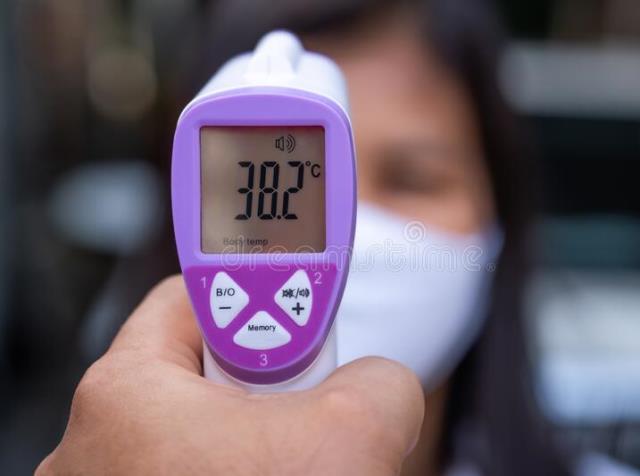
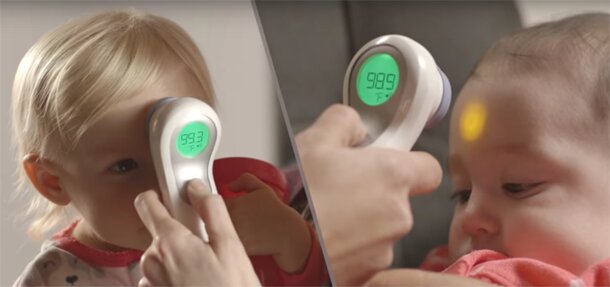
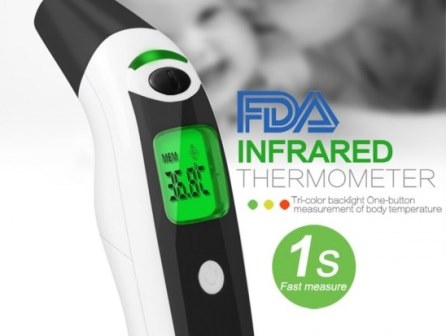
Infrared Thermometer Body Temperature Forehead

Body temperature can be measured in a number of ways. Traditionally, body temperature has been measured using contact thermometers that are placed on the forehead or in the mouth, ear, armpit, or rectum.

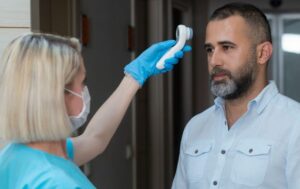
Infrared thermometers allow a person’s temperature to be taken with minimal (tympanic) or no (Non-contact infrared thermometer, thermal scanner) contact with the person.


Infrared Thermometer Body Temperature Forehead

Normal human body temperature

You can take a temperature using the mouth (oral), anus (rectal), armpit (axillary), or ear (tympanic). But the temperature readings vary depending on which one you use, and you need an accurate body temperature to determine if a fever is present.

Medical research hasn’t determined an exact correlation between oral, rectal, ear, armpit, and forehead temperature measurements. Generally, the correlation between temperature results are as follows:

  • The average normal oral temperature is 98.6°F (37°C).
  • A rectal temperature is 0.5°F (0.3°C) to 1°F (0.6°C) higher than an oral temperature.
  • An ear (tympanic) temperature is 0.5°F (0.3°C) to 1°F (0.6°C) higher than an oral temperature.
  • An armpit (axillary) temperature is usually 0.5°F (0.3°C) to 1°F (0.6°C) lower than an oral temperature.
  • A Forehead (temporal) scanner is usually 0.5°F (0.3°C) to 1°F (0.6°C) lower than an oral temperature.
Forehead Thermometer for body temperature

Non-contact Thermometer for body temperature

This means the temperature can be measured without the discomfort of having to sit still with a thermometer in the mouth, armpit, or rectum long enough to obtain a correct temperature reading.

The lack of contact also means the disinfection process between patients for the thermometers is minimal or unnecessary, allowing for easier and faster use when screening large numbers of people in settings like airports or border crossings.

The main types of non-contact thermometers are non-contact infrared thermometers, tympanic thermometers, and thermal scanners.

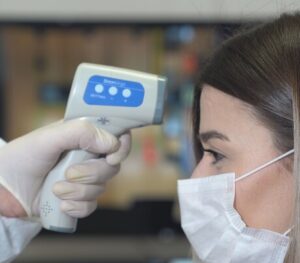
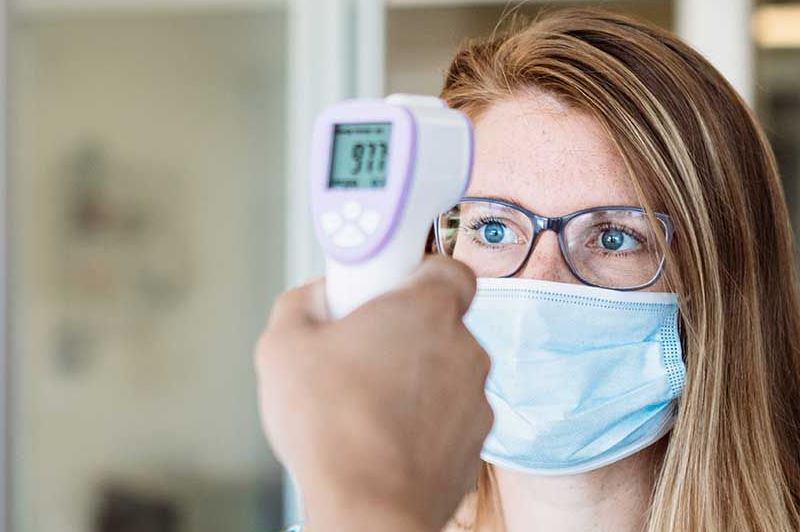
  • Non-contact infrared thermometers are held three to 15 cm away from the patient and typically measure temperature on the forehead or temple.
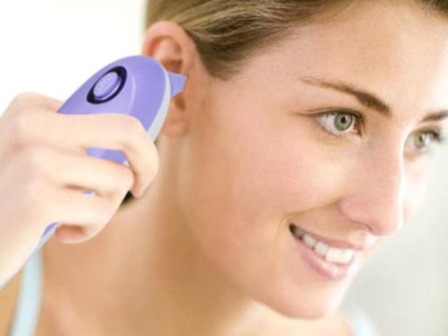
  • Tympanic thermometers measure the thermal radiation from the tympanic membrane and within the ear canal.
  • Handheld thermal scanners can be used to take a person’s temperature from a greater distance than other non-contact thermometers, which may make them a good candidate for use in mass screening situations.

The optimal cut-off temperature for determining fever differs for each device. However, not everyone who has an infection or is infectious will have a fever. Additionally, fevers can be lowered by using antipyretic medications.

Infrared Thermometer Body Temperature Forehead

How to measure body temperature?

Temperature Taking Hints and Tips:

  • Make certain the thermometer is in FOREHEAD MODE.
  • Non-contact infrared thermometers measure surface temperature. Hold the device approximately 1 inch (2-3 cm) from the center of the forehead to capture just the forehead temperature and not the temperature of other surrounding objects.
  • Always hold the thermometer and the forehead steady when taking a reading. Do not move the thermometer until you hear the final beep.

The device is designed to be used indoors. Users and the thermometer should be at the same ambient temperature for at least 10 minutes before taking a reading.

  • The tested individual should be away from extreme temperatures for at least 10 minutes before taking a measurement. Recent exposure to hot or cold temperatures will impact your reading.
  • Do not take temperatures with this thermometer near places that are very hot, such as fireplaces and stoves.
  • The tested individual should not drink, eat, or be physically active before/while taking the measurement.

Remove hair, sweat, oils, cosmetics, or dirt from the forehead before taking a measurement. Wait at least 10 minutes after washing the forehead area before taking a reading. Remove hats and wait 10 minutes before taking a reading. Bangs may cause higher readings.

What are sites for measuring body temperature?

What are sites for measuring body temperature?

Temporal artery temperature changes are faster than a temperature taken rectally, orally or under the arm. A difference of 1°F (.6°C) is normal. Body temperature can change throughout the day.

Consistently low-temperature readings may be caused by a dirty instrument window. Use an alcohol wipe or a cotton swab moistened with alcohol (70% isopropyl) to clean the instrument window and housing. Gently wipe and let air dry.

DO NOT use any other cleaning liquids or immerse the thermometer in water. Wait 10 minutes after cleaning to take a temperature. See the manual for complete cleaning instructions.

Normal forehead temperature

Fast-read digital thermometers use a method called “peak hold” that is often less accurate than a digital thermometer that needs to be held in the mouth for 60 seconds or more.

  • It is helpful to know each individual’s normal temperature when they are well.
  • This is the best way to accurately diagnose a fever.
  • To determine normal temperature, take multiple readings when healthy.
  • Re-measure with a standard digital thermometer for confirmation. This thermometer displays an oral equivalent temperature reading.
  • Oral readings are approximately 0.9°F (0.5 °C) lower than a rectal digital measurement.
  • When comparing temperature taken with different thermometers at different sites, it is important to start with the most accurate oral temperature that can be achieved.

It is best to correlate other types of temperature taking to a baseline oral temperature taken with accurate oral thermometers, (those without the “peak hold” function).

Infrared Thermometer Body Temperature Forehead

What is normal forehead temperature with infrared thermometer?

The forehead temperature is several degrees lower than the core body temperature of 98.6 F (37 C). Forehead medical thermometers make a mathematical adjustment to show an equivalent oral temperature.
When general-purpose infrared thermometers are used to read forehead temperature, the readings are likely to be less than 98.6 F, even if there is a fever.

What is a normal forehead temperature?

The normal temperature of the skin of the forehead can vary several degrees depending on your environment (indoor or outdoor), exercise, perspiration, direct heat or air conditioning, etc.
It would be normal to read an actual forehead skin surface temperature between 91 ° F and 94 ° F if you use a general-purpose infrared thermometer.

The most read

Infrared Thermometer for Humans

Infrared thermometers for humans allow users to measure body temperature quickly and non-invasively.
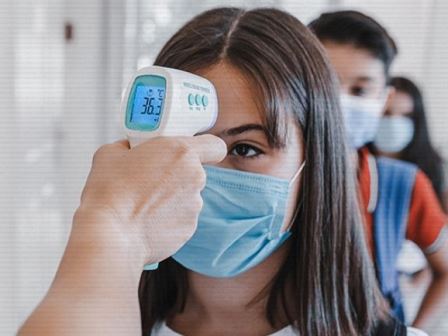
What is a Normal Forehead Temperature?

What is a “normal” human body temperature? That question is a bit more difficult to answer than you think.
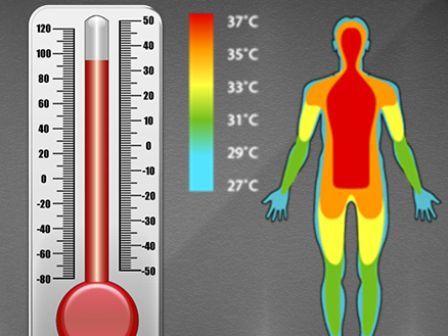
Normal Body Temperature

Your body has an internal thermostat and your goal is to keep your temperature as close to your goal as possible. What’s the normal body temperature?
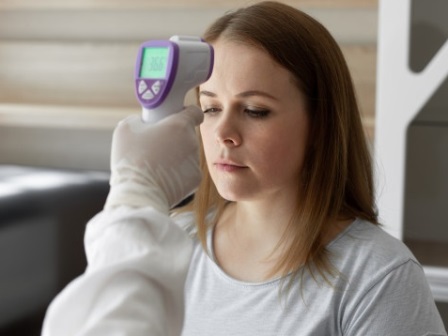
Non-contact Infrared Thermometer

Looking for the best non-contact medical thermometer

How do I check my Temperature with an Infrared Thermometer

An infrared thermometer is an affordable and effective tool for measuring a person’s temperature from a distance.

Here we will go over some best practices for using these tools which will help you get the best results.

Keep in mind that when using an infrared thermometer, how and where it is used may affect the measurement – for example, head coverings, the ambient environment, and the reading location on the forehead can all affect results.

You should strictly follow the manufacturer’s guidelines for your thermometer to avoid measurement errors.
Then many people wonder:
How to use a non-contact infrared thermometer?
How do I check my Temperature with an Infrared Thermometer?

How do I check my Temperature with an Infrared Thermometer?

How to check body temperature with an infrared thermometer?

The first step to using a non-contact infrared thermometer is to evaluate your testing environment:
  • it should be free of air drafts
  • out of the direct sun, and
  • away from radiant heat sources.

The environmental temperature should be in line with the specifications in the manual for your thermometer. The best practice is to leave your thermometer in the testing environment for at least ten minutes prior to use so it can adjust to the environment.
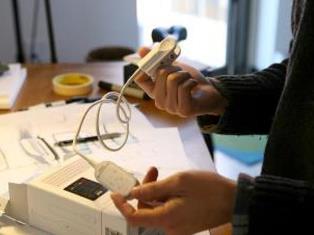
Next, you must make sure the subject is ready to be tested by making sure that the test area of the forehead is clean, dry, and unobstructed.

You must also verify that the temperature of the person’s forehead has not been influenced by wearing excessive clothing or head covers, or by using facial cleansing products like cosmetic wipes. Any outside influence on a person’s forehead temperature prior to testing will skew your measurements.

How do I check my Temperature with an Infrared Thermometer?

Infrared Thermometer distance
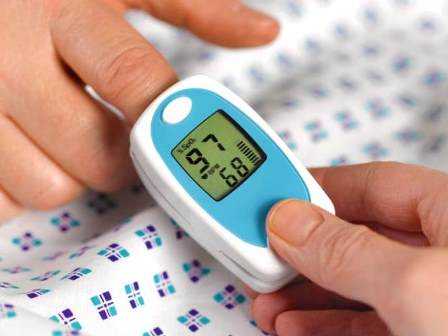
Measuring distance of infrared thermometer:

When taking measurements, keep in mind that measurement distance from the subject is different for every infrared thermometer – check the manual for your device to determine the correct distance.

To correctly take a measurement, hold your thermometer perpendicular to the subject’s forehead at the manufacturer’s recommended distance. Make sure you hold the device directly perpendicular to the forehead or readings will be incorrect. If outdoors, make sure the subject is out of direct sunlight. Failure to do so will also result in incorrect readings.

Infrared Thermometer accuracy

The question arises whether you can take body temperature with an infrared thermometer, and you can with a high-quality medical infrared thermometer under certain conditions.

Problems arise, however, especially during the pandemic scare. An infrared thermometer can be highly inaccurate, mostly because of operator mistakes.

Inaccuracies include operating errors and misinterpretations of readings. People who don’t know how to use thermometers can get inaccurate readings for a number of different reasons. These include:

  • Not Following Instructions: Infrared Thermometer must be used at the proper distance – not too close or too far away – to get an accurate reading.
  • Only Accurate for Reading Surface Temps: The infrared thermometers only measure the surface temperature of the skin. That can fluctuate for many reasons, and the guns don’t measure internal temperature like a probe.
  • Needs Skilled Adjustment: A infrared thermometer needs to be adjusted to read the temperatures of different surfaces.
  • Subject to Environmental Influences: Frost, rain, and other conditions can affect surface temperatures. Rapid changes in the ambient temperature of a room can also skew readings. Electromagnetic field and radio frequency interference can cause inaccurate readings.
  • Not Transparent to Glass and Other Substances: Infrared thermometer can’t read temperatures through the glass and other transparent materials. Instead, they make the surface temperature of the barrier instead of the target.
How do I check my Temperature with an Infrared Thermometer

Measuring body temperature

General Guidelines on measuring body temperature and using an infrared thermometer

  • Compare the accuracy, suitability, convenience, and price of infrared thermometers before purchase.
  • Choose an infrared thermometer and method of measurement which suit the individual’s age and health condition; Consult healthcare professionals if in doubt.
  • Patients with communicable diseases should use personal thermometers to avoid cross-infection.
  • Familiarize with the correct use of infrared thermometer and temperature reading by referring to the user instructions provided by manufacturer.
  • Avoid activities that would distort temperature measurement (e.g. drinking hot water immediately before taking oral temperature).
  • Clean and maintain the infrared thermometer according to the procedures recommended by the user instructions.
  • In case body temperature needs to be taken regularly, take the temperature at the same time of each day and use the same temperature-taking method to allow comparison.
  • If there is any doubt about the body temperature reading, please consult healthcare professionals.

The most read

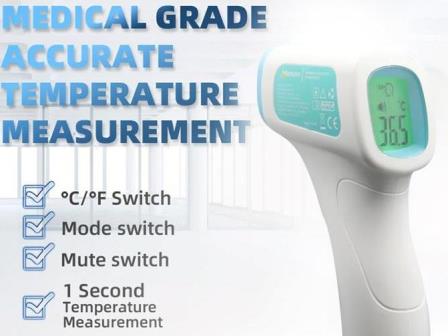
Medical Grade Thermometer

As people plan to get back into a rut, many are considering buying technologies that can detect elevated temperatures. While it is not guaranteed that it can be determined if someone has an infection, temperature detection has its benefits.

More on this story

Infrared Thermometer made in USA

  • What is Top 10 Thermometer Made In the USA in 2020?
  • What is the best medical infrared thermometer made in the USA?
  • What is the best-infrared thermometer made in the USA?

What is a Normal Forehead Temperature?

What is a “normal” human body temperature? That question is a bit more difficult to answer than you think.

How do you read a Pulse Oximeter?

How do you read a pulse oximeter?

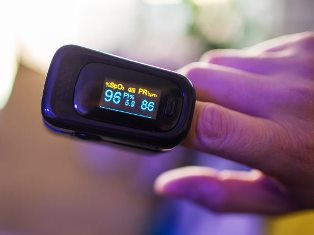
The pulse oximeter will thus be able to tell you your oxygen saturation levels along with your heart rate.

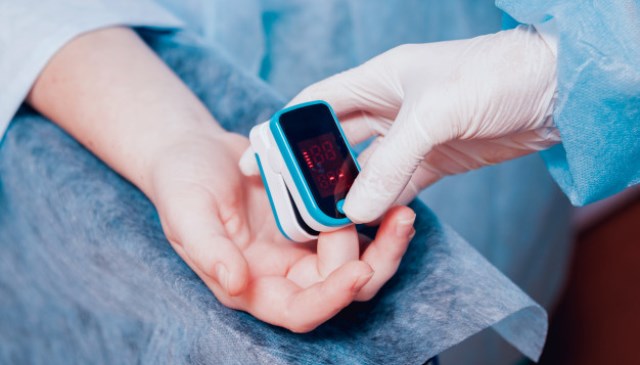
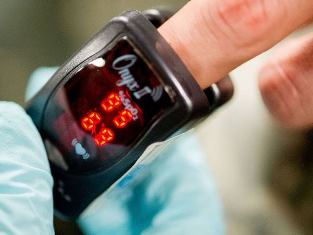
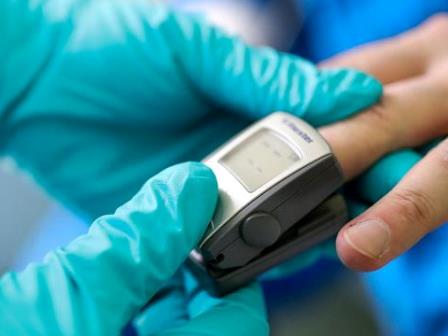
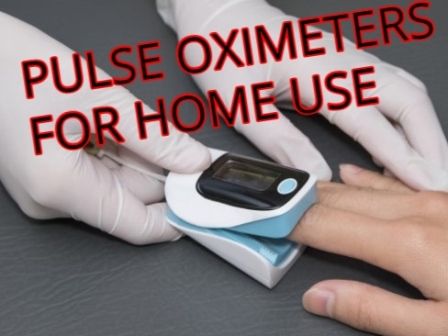
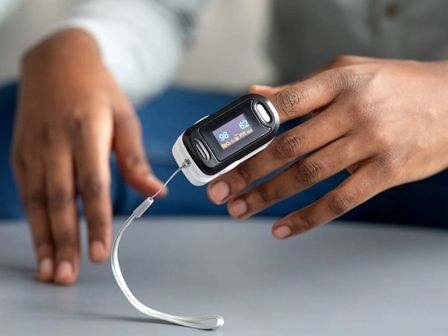
  • During a pulse oximetry reading, a small clamp-like device is placed on a finger, earlobe, or toe.
  • Small beams of light pass through the blood in the finger, measuring the amount of oxygen.
  • It does this by measuring changes in light absorption in oxygenated or deoxygenated blood.
  • This is a painless process.
How do you read a Pulse Oximeter?

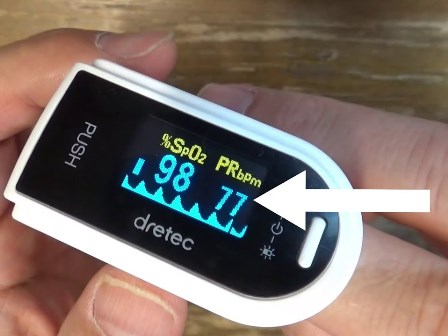
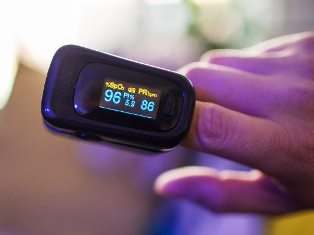
What are the 2 readings on a pulse oximeter?

Whether you are ill, experiencing a medical emergency, or the victim of an accident, the first thing a nurse will do is slip what looks like a small clip on one of your fingers to gather two pieces of information:

  • Measure blood oxygen saturation (SpO2) and
  • Pulse rate with a home pulse oximeter.

This non-invasive device clips onto the index finger to measure changes in the light wave spectrum through the finger during pulsation of blood, which generates a measure of blood oxygenation and pulse rate sent to the pulse oximeter.

How to use pulse oximeter?

Your pulse oximeter will give you a numerical reading — a percentage that indicates the level of oxygen saturation in your blood. If you’ve been to a doctor in the past years, you’ve experienced pulse oximetry.

The device works better with warmer hands than cold hands. And because oxygen levels can fluctuate, consider taking measurements a few times a day.

Also try it in different positions, such as while lying flat on your back or while walking. Keep notes to share with your doctor if needed.

Pulse oximeter – how it works?

Before you can really understand how a pulse oximeter works, you have to understand what it is measuring.

Oxygen is vital to life

Every organ, muscle, nerve, and tissue in the body needs oxygen to function the way it should. However, for oxygen to be used by the body, it must travel from the lungs to the intended destination via hemoglobin, or red blood cells.

If half of your hemoglobin cells are carrying oxygen, your oxygen saturation is 50 percent. If all of them are carrying oxygen, your oxygen saturation is 100 percent.

Blood is not stagnant in your veins

Instead, with every heartbeat, your blood travels too and from your extremities where your oxygen levels are often tested.

However, rather than trying to pulse red and infrared light through your finger and hopefully capture a reading timed perfectly with your heart rate, the pulse oximeter emits a constant stream of light.

It must, therefore, calculate the “changing absorbance” in your finger – the light absorbance that happens with every heartbeat. That is why a pulse oximeter produces two readings – your pulse rate and your oxygen absorption.

Can the oximeter be used at home?

Pulse oximeters can also be used at home to monitor and provide peace of mind for anyone with a condition that may cause them to experience periods of low oxygen levels.

What are pulse oximeter used for?

For the measurement of oxygen level in the blood, the pulse oximeter indicates how well the heart pumps oxygen throughout the body. For this reason, pulse oximeters are used most often in hospital settings. They can quickly alert clinicians to low oxygen levels in patients, especially newborns and patients under anesthesia, and help clinicians assess whether a patient needs or responds well to supplemental oxygen.

More on this story

Pulse Oximeters: Answering Your Frequently Asked Questions

Which finger is best for pulse oximeter?

As per the studies, your right hand’s middle finger shows the best results. Make sure to take off any nail polish and avoid using cold fingers as the readings may not show correctly.

What are the 2 readings on a pulse oximeter?

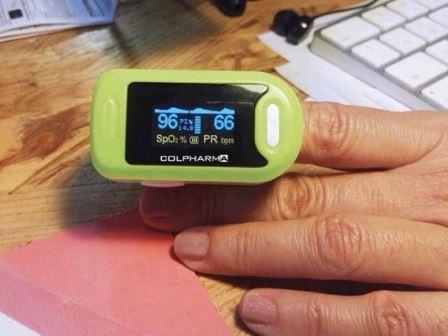
A finger pulse oximeter measures two things:
-Blood Oxygen Saturation
-Pulse Rate

Pulse Oximeter made in USA

  • Ever wonder if there are pulse oximeters made in the USA?
  • How many medical device manufacturers are there in the United States?

Normal pulse rate in Oximeter

A normal resting heart rate for adults ranges from 70 to 99 beats per minute. Generally, a lower heart rate at rest implies more efficient heart function and better cardiovascular fitness.

Pulse Oximeters

  • What is the best pulse oximeter?
  • what is a normal oxygen saturation level?
  • Are any oximeters made in the USA?
  • Pulse oximeters FDA approved and more…

Best Oximeter Brand

While you should always consult your doctor first if you are concerned about your blood oxygen levels, a pulse oximeter can check your levels periodically on a daily basis. Your symptoms may be mild, but a sudden drop in your blood oxygen saturation can be an early warning sign to see your doctor as soon as possible.

Pulse oximeters have traditionally been used by nurses and physicians, or for home monitoring for conditions such as chronic obstructive pulmonary disease or pulmonary fibrosis.

The device is a painless and reliable way to check a person’s oxygen saturation or the amount of oxygen that is currently being pumped through the blood.

Pulse oximeter best brand

This article looks at the best brands of pulse oximeters, including their usefulness, what to consider when selecting one, and some options that people may want to consider.

In addition to measuring oxygen levels, many devices can provide a pulse reading.
Although finger pulse oximeters can provide information about a person’s health, they are not without limitations.

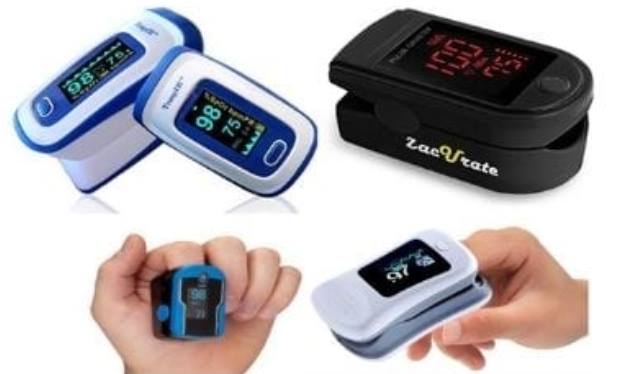
  • Contec pulse oximeter
  • Innovo pulse oximeter
  • Nonin Pulse Oximeter
  • Wellue pulse oximeter
  • Omron pulse oximeter

Contec pulse oximeter

The pulse oximeter is suitable for home, strenuous exercise, or on the go.

It can accurately and reliably measure your SpO2 (blood oxygen saturation) and pulse rate.

Designed for seniors, pregnant women, sports enthusiasts, pilots, trainers, cyclists, climbers, or anyone who wants to get SpO2.

Innovo pulse oximeter

The Innovo Deluxe Fingertip pulse oximeter shows your measured SpO2 and Pulse Rate on a high-quality OLED screen and Perfusion Index (PI – Numerical representation of your pulse strength).

No more second-guessing if the readings are reliable or why the pulse oximeter is not giving a reading. Using a vastly improved sensor, the Innovo deluxe pulse oximeter can also now correct for small movements, allowing more versatile usage.

Nonin Pulse Oximeter

The Nonin Onyx Vantage 9590 Finger Pulse Oximeter is a small, lightweight, portable device indicated for use in measuring and displaying functional oxygen saturation of arterial hemoglobin (%SpO2) and pulse rate of patients who are well or poorly perfused.

It is intended for spot-checking of adult and pediatric patients on digits (fingers, thumb, toes) in a wide range of environments to include hospitals, clinics, long-term care facilities, skilled nursing facilities, emergency medical services, and home healthcare services.

Wellue pulse oximeter

Easy and Efficient Operation To Get Accurate SPO2 & PR Readings. Bluetooth To Connect The Device To Smart Phone Or Tablet.

The Bluetooth Finger Oximeter provides the essentials you need to keep an eye on your blood oxygen levels (SpO2) and pulse rate (PR) in an easy-to-use way.

Pulse bar and waveform are displayed on OLED screen that can also prompt warnings when irregular SpO2 or PR is detected.

FS20F finger oximeter comes with Bluetooth connectivity so that accurate data can sync to mobile devices from it. You can therefore measure, track, and manage the vital information of SpO2 and PR to paint a better picture of your overall health.

Omron pulse oximeter

The Omron Silver Wireless monitor stores up to 80 Blood pressure readings for 1 user, and also features Bluetooth connectivity to sync with the free Omron Connect app for unlimited memory, graphs, and trend tracking, as well as Unlimited users. It also works with Amazon Alexa-enabled devices using the Omron Health skill.

Pulse oximeter fda approved brands

In February 2021, the Food and Drug Administration (FDA) trusted source issued a warning about oximeters. The warning indicates that certain variables, such as having a dark skin tone, can affect the results of an oximeter reading.
What the experts say

Most pulse oximeters on the market are larger in size and designed to be worn on an adult’s fingers, but if the pulse oximeter is too loose while it is placed on a finger, you may not be able to get a reading. accurate.

If you plan to use a pulse oximeter on a child or person with fragile hands, it would be better to purchase a smaller pediatric device.

Top oximeter brands

The outbreak of the pandemic has dramatically changed the fingertip pulse oximeter industry. Globally, the industry saw signs of recovery, but the industry remains concerned about the long-term recovery prospects as cases continue to rise.

Since the start of the pandemic, the industry has received a series of shocks and surprises. The pandemic has also caused many changes in the behavior and attitude of shoppers.

Therefore, it is putting additional pressure on the industry. This, in turn, is expected to slow market growth.

The finger pulse oximeter market is divided by type and application. For the 2021-2030 period, cross-segment growth provides accurate calculations and forecasts of sales by type and application in terms of volume and value.

The brands of oximeters on the market have been identified through secondary research, and their market shares have been determined through primary research.

Where to buy FDA approved pulse oximeter?

Where to buy FDA approved pulse oximeter?

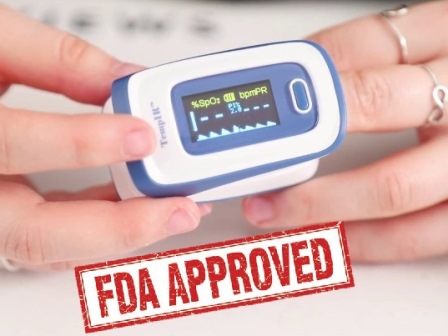
Oximeters sold in the United States are FDA approved. This approval, officially recognized under a code called 510k certification.

Which company oximeter is best?

Nonin Medical designs and manufactures noninvasive pulse oximeters, regional oximeters, and capnographs for patient monitoring in a variety of industries. Nonin is considered one of the best in producing medical devices such as the oximeter.

Which brand pulse oximeter is best?

Nonin, for more than 30 years, Nonin Medical has designed and manufactured noninvasive patient monitoring devices for healthcare professionals and individual users.

More on this story

FDA approved pulse oximeter Brands

  • Which pulse oximeters are FDA approved?
  • What is the best FDA-approved pulse oximeter?

Pulse oximeter Normal Reading

Blood gas measurements provide critical information regarding oxygenation, ventilation, and acid-base status.

Best Pulse Oximeter for Overnight Monitoring

Here, we explore some of the best pulse oximeter for overnight monitoring, considering key features and user experiences.

what is the best pulse oximeter for overnight monitoring?

In the realm of healthcare, continuous monitoring of vital signs is essential for managing chronic conditions and ensuring overall well-being.

One of the most critical tools for such monitoring is the pulse oximeter, a non-invasive device that measures oxygen saturation levels (SpO2) and pulse rate.

For individuals requiring overnight monitoring, selecting the right pulse oximeter is paramount to ensure accurate readings, comfort, and ease of use.

Key Features to Consider

  1. Accuracy and Reliability: The primary function of a pulse oximeter is to provide accurate readings of SpO2 and pulse rate. Ensure the device has been clinically validated and has positive reviews for accuracy.
  2. Comfort: Since the device will be worn overnight, it should be comfortable and non-intrusive. Look for lightweight designs and soft, adjustable straps or rings.
  3. Battery Life: A pulse oximeter used for overnight monitoring must have a long battery life to last through the night without interruption. Rechargeable options are also advantageous.
  4. Data Recording and Storage: The ability to store data for later review is crucial. Look for devices with built-in memory or connectivity features that allow data transfer to apps or computers.
  5. Alarm Features: Some advanced models offer alarm functions that alert users if oxygen levels drop below a set threshold, which can be crucial for individuals with conditions like sleep apnea.

Top Pulse Oximeters for Overnight Monitoring

1. Wellue O2Ring

The Wellue O2Ring is a standout choice for overnight monitoring. Its ring design ensures comfort and stability, reducing the chances of it slipping off during sleep. Key features include:

  • Continuous Monitoring: Provides continuous SpO2 and pulse rate monitoring with high accuracy.
  • Vibration Alerts: Vibrates to alert users if oxygen levels fall below the preset threshold.
  • Data Storage: Stores up to four groups of 10-hour data sessions, with easy transfer to the app for detailed analysis.
  • Long Battery Life: Offers up to 16 hours of battery life on a single charge.

2. Masimo MightySat

The Masimo MightySat is another top-tier device known for its advanced technology and reliable performance. Features include:

  • High Accuracy: Utilizes Masimo’s SET technology, known for its accuracy in motion and low perfusion conditions.
  • Comfortable Design: Lightweight and ergonomically designed for overnight use.
  • Bluetooth Connectivity: Syncs with the Masimo app for real-time data tracking and historical data review.
  • Customizable Display: Allows users to personalize display settings for easier reading.

3. Contec CMS50F

The Contec CMS50F is a wrist-worn pulse oximeter that combines convenience with functionality, making it suitable for overnight monitoring. Key features:

  • Wristband Design: Ensures comfort and stability during sleep.
  • Continuous Recording: Monitors and records SpO2 and pulse rate continuously throughout the night.
  • USB Interface: Allows data transfer to a computer for detailed analysis.
  • Affordable: Offers a cost-effective solution without compromising on essential features.

Most accurate pulse oximeter

Choosing the best pulse oximeter for overnight monitoring involves considering factors like accuracy, comfort, battery life, data recording capabilities, and additional features such as alarms.

Devices like the Wellue O2Ring, Masimo MightySat, and Contec CMS50F are excellent options that meet these criteria, ensuring reliable and comfortable monitoring for a better night’s sleep and improved health management.

As always, consulting with a healthcare provider before making a purchase is advisable to ensure the chosen device meets specific health needs.

More on this story

Pulse Oximeter Readings Chart

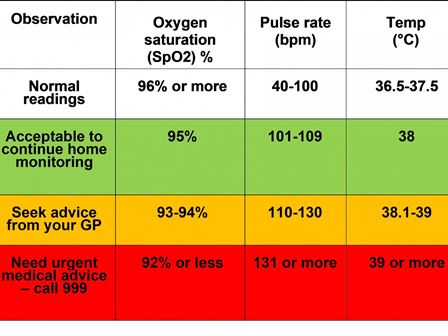
There is no universal SpO2 number that indicates a person’s oxygen levels are healthy and ideal.

What causes high pulse rate?

What causes high pulse rate? What is a dangerous heart rate for adults?

How to measure blood oxygen level?

Pulse oximetry is a way to measure how much oxygen your blood is carrying. By using a small device called a pulse oximeter, your blood oxygen level can be checked without needing to be stuck with a needle. The blood oxygen level measured with an oximeter is called your oxygen saturation level (abbreviated O2sat or SaO2).

This is a percentage of how much oxygen your blood is carrying compared to the maximum it is capable of carrying. Normally, more than 89% of your red blood should be carrying oxygen.

How to measure blood oxygen level

How to check oxygen level at home?

Why is it important to have my blood oxygen level checked?

If you have a lung disease, your blood oxygen level may be lower than normal. This is important to know because when your oxygen level is low, the cells in your body can have a hard time working properly.

Oxygen is the “gas” that makes your body “go,” and if you are low on “gas,” your body does not run smoothly. Having a very low blood oxygen level also can put a strain on your heart and brain.

Most people need an oxygen saturation level of at least 89% to keep their cells healthy. Having an oxygen level lower than this for a short time is not believed to cause damage.

However, your cells can be strained or damaged if low oxygen levels happen many times. If your oxygen level is low on room air, you may be asked to use supplemental (extra)oxygen.

The oximeter can be used to help see how much oxygen you need and when you may need it. For example, some people need more oxygen when asleep than when awake. Some need more oxygen with activity than when at rest.

How does a pulse oximeter work?

A pulse oximeter comes either as a small unit with a built-in finger/toe clip, or a small handheld device that has a wire probe that can attach or be applied to your finger, toe, or earlobe. The small unit is less expensive and more practical for home use.

Beams of light from the device pass through the blood in your finger (earlobe or toe) to measure your oxygen.

You will not feel this happen. The beams of light are “read” to calculate the percentage of your blood that is carrying oxygen. It also provides a reading of your heart rate (pulse).

To make sure the oximeter is giving you a good reading, count your pulse for one minute and compare the number you get to the pulse number on the oximeter. If they are the same, you are getting a good signal.

Should I get a pulse oximeter?

Most people do not need a pulse oximeter. Some people have prescribed a pulse oximeter if they have or could have periods of low oxygen; for example, when you are exercising or if you travel to high altitude.

Having a pulse oximeter in these cases will allow you to monitor your blood oxygen level and know when you need to increase your supplemental oxygen flow rate. Ask your health care provider what oxygen saturation number(s) they want you to maintain.

Pulse oximeters are available online or by prescription from your local pharmacy or medical supply company. In some cases, your insurance company will cover the cost of a pulse oximeter.

Cause of discrepancy between pulse oximetry and arterial blood gas

What is the difference between the oxygen information reported from an oximeter versus from an arterial blood gas?

An oximeter indirectly measures the amount of oxygen that is carried by your blood. An arterial blood gas (ABG) directly measures both the amount of oxygen carried by your blood and the actual amount of gases (oxygen and carbon dioxide) that are in your blood. To get an ABG, blood is taken directly out of your artery (usually from the
wrist) and can be painful. Oximetry is painless but is not as accurate as an ABG. Also, a pulse oximeter does not measure your carbon dioxide level.

How accurate is the pulse oximeter?

The oxygen level from a pulse oximeter is reasonably accurate. Most oximeters give a reading 2% over or 2% under what your saturation would be if obtained by an arterial blood gas.

For example, if your oxygen saturation reads 92% on the pulse oximeter, it may be actually anywhere from 90 to 94%. The oximeter reading may be less accurate if a person is wearing nail polish, nail polish only affects readings if the sensor is placed over the polish. See that the sensor is at the base of the nail.

If artificial nails are too long, may need to clip the nail shorter, trying putting the probe on sideways, or try using a toe instead. A pulse oximeter may also be less accurate with very low oxygen saturation levels (below 80%) or with very dark skin.

When should I use a pulse oximeter?

If you have been prescribed an oximeter by your health care provider, ask them when they want you to use the oximeter to monitor your blood oxygen level. Ask your health care provider when you should change the flow rate on your supplemental oxygen and at what reading you should seek medical attention.

When using an oximeter what is a normal reading?

Times, when an oximeter reading may be helpful, are:

  • When you are first prescribed oxygen. This helps your health care provider know if and how your oxygen saturation levels change when doing activities at home.
  • During or just after exercising. Your body, like your car, needs more oxygen (“gas”) when you are moving. Your oxygen saturation might be checked during activity to see if you have low oxygen that might not be an issue at rest. Your health care provider will decide with you what to do if you have oxygen problems with exercise.
  • If you are flying or traveling to a high altitude location, your supplemental oxygen needs may increase during these times.

what are the 2 readings on a pulse oximeter?

  • oxygen saturation
  • pulse rate

How can I get the best reading from my pulse oximeter?

Your pulse oximeter measures your oxygen saturation or percentage of blood carrying oxygen.

To get the best reading from your oximeter, you need to make sure enough blood is flowing to the hand and finger wearing the device. The best reading, therefore, is achieved when your hand is warm, relaxed, and held below the level of your heart.

If you smoke, unfortunately, the reading on your oximeter may be higher than your actual oxygen saturation. This is because smoking increases carbon monoxide levels in your blood, and the oximeter cannot tell the difference between the gas carbon monoxide from oxygen.

If you smoke, talk to your health care provider about how to properly read your oximeter numbers.

In addition to the inaccurate readings described above, sometimes you can get abnormal readings from your oximeter because the probe of the oximeter is not functioning properly. You can bring your oximeter to your health care provider’s office or equipment company to have it checked against theirs for accuracy.

How can I check my oxygen level at home?

Using a Finger Pulse Oximeter, which is a small device that is attached to your finger to measure the amount of oxygen in the blood travelling round your body. The Oximeter takes an SpO2 reading – an estimation of the amount of oxygen in your blood.

More on this story

Pulse Oximeters: Answering Your Frequently Asked Questions

How to check oxygen level without oximeter?

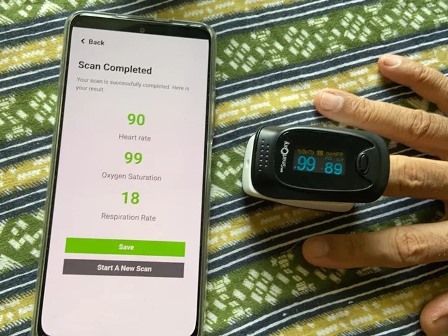
The app uses “reflective pulse oximetry,” which allows the light source and sensor (the camera in this case) to be next to each other.

Pulse Oximeter accuracy comparison

Pulse oximetry is so widely prevalent in medical care that it is often regarded as a fifth vital sign.

Prescription Pulse Oximeter

Can you get a prescription for a pulse oximeter?

SaO2 meaning

SaO2 is oxygen saturation as measured by blood analysis (e.g. a blood gas) and SpO2 is oxygen saturation as measured by a pulse oximeter. What does this mean?

How to increase Blood Oxygen Level?

A low level of oxygen in the blood, in addition to revealing the presence of possible lung disease.