Category Archives: measurement instruments

Are Non-contact Thermometers Accurate?

It is essential to evaluate fever status in admitted to triage rooms. Accurate, rapid, and safe measurement of core body temperature is very important. The gold standard is rectal temperature; however, taking this temperature is invasive, impractical, and time-consuming in triage rooms with high patient flows and is associated with the possibility of perforation.

Are Non contact Thermometers Accurate?

Axillary thermometry is noninvasive and safe, and the results correlate well with rectal temperature.

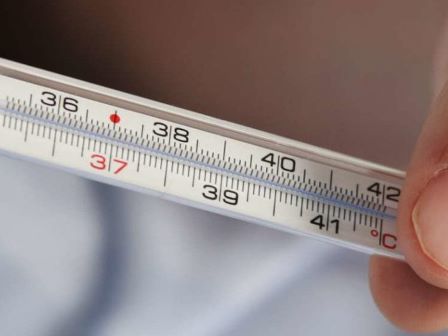
However, axillary thermometers are also impractical and measurements are time-consuming in crowded hospital settings. Indeed, glass mercury thermometers are no longer used in Turkey because of the risk of metal toxicity.

Are Non contact Thermometers Accurate

Most accurate infrared thermometer

Body temperature is very important when making triage decisions. Infrared thermometer (IFR thermometry) is safe, simple, comfortable, and rapid; thus, it is an attractive alternative to rectal and axillary measurements. However, are IFR measurements reliable? Only a few studies have compared IFR thermometers with axillary devices, and the results have been inconsistent.

We found that forehead IFR thermometry did not reliably predict axillary temperature. However, as an alternative to axillary measurements, particularly in children aged 2 to 6 years, IFR measurements performed on the lateral side of the neck are reliable, comfortable, rapid, and noninvasive. Such measurements should be used to screen for fever in busy settings such as pediatric triage rooms.

Are Non contact Thermometers Accurate

If the question is: Are Non contact Thermometers Accurate?

The sensitivity and specificity for the non-contact thermometer is 97%. The non-contact infrared thermometer is a reliable, comfortable, and accurate option for measurement of temperature and is very useful for the screening of fever in the pediatric population.

When non-contact readings are critical, the tool needed for this job: infrared thermometer!

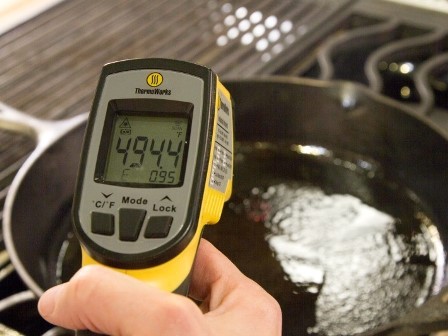
The measuring surface temperature can provide clues to such problems as leaky ductwork, over-stressed motors, faulty equipment, or food that is in danger of spoiling.

There is no easier way to take such readings than with an infrared thermometer! Ideal for use when objects are extremely hot, moving quickly, difficult to reach, or vulnerable to contamination.

IFR thermometer

Lightweight, Compact, Quick, and Easy to Use.

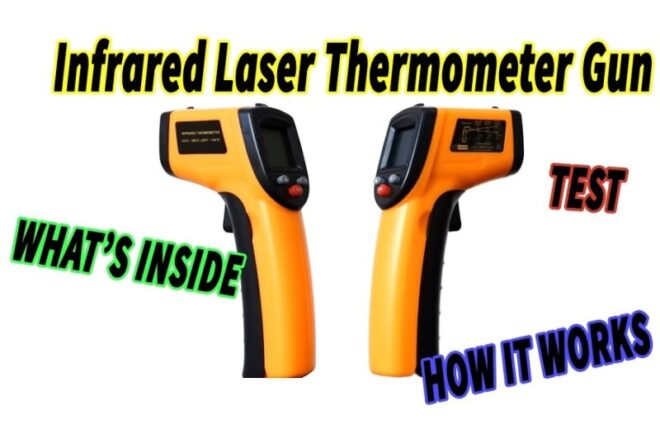
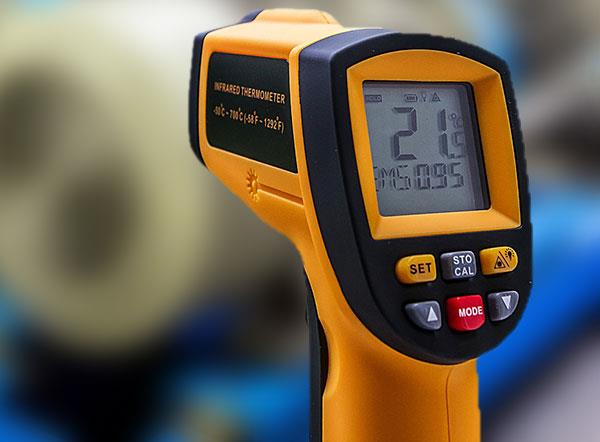
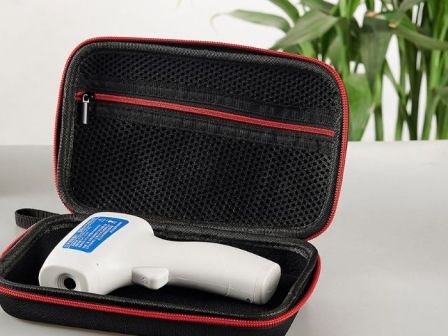
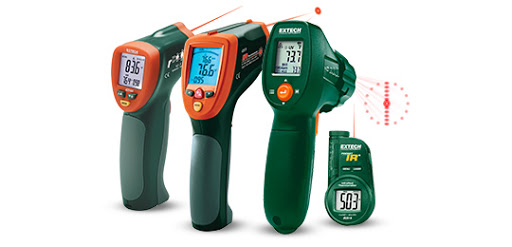
Noncontact infrared (IR) thermometers use infrared technology to quickly and conveniently measure an object’s surface temperature. They provide fast, accurate, repeatable readings without ever touching the target. Just aim, pull the trigger, and read the temperature on the LCD.

  • • Safely measure hot, hazardous, or hard-to-reach surfaces
  • • Measure food temperature without contaminating or damaging product
  • • Log several readings per second instead of waiting several minutes for a single reading from a contact thermometer

How does IR work?

IR thermometers capture the invisible infrared energy naturally emitted from all objects. Infrared radiation is part of the electromagnetic spectrum which includes radio waves, microwaves, visible light, ultraviolet, gamma, and X-rays.

On the spectrum, infrared falls between visible light and radio waves. Infrared wavelengths are usually expressed in microns with the infrared spectrum extending from 0.7 to 1000 microns. In practice, the 0.7 to 14-micron band is used for IR temperature measurement.

How to ensure accurate temperature measurement?

A solid understanding of infrared technology and its principles lies behind accurate temperature measurement. When the temperature is measured by a non-contact device, the IR energy emitted from the measured object passes through the optical system of the thermometer and is converted to an electrical signal at the detector.

This signal is then displayed as a temperature reading. There are several important factors that determine the accurate measurement. The most important factors are emissivity, distance-to-spot ratio, field-of-view, and location of a hot spot.

Distance-to-spot ratio.

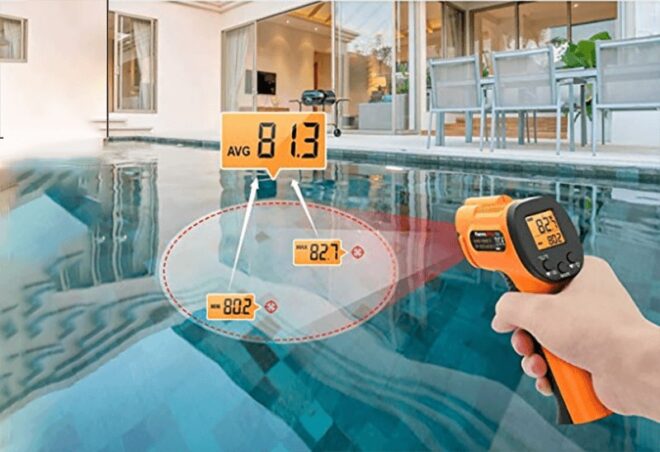
The optical system of an infrared thermometer collects the infrared energy from a circular measurement spot and focuses it on the detector. Optical resolution is defined by the ratio of the distance from the instrument to the object compared to the size of the spot (90% of energy) being measured (D:S ratio). The larger the ratio number the better the instrument’s resolution, and the smaller the spot size that can be measured.

The laser sighting included in some instruments only helps to aim at the measured spot. A recent innovation in infrared optics is the addition of a Close Focus feature, which provides accurate measurement of small target areas without including unwanted background temperatures.

Field-of-view: Make sure that the target is larger than the spot size the unit is measuring. The smaller the target, the closer you should be to it. When accuracy is critical, make sure that the target is at least twice as large as the spot size.

How to take temperature measurement?

To take a temperature measurement, just point the unit at the object you wish to measure. Pull the trigger and read the temperature on the unit’s LCD. Be sure to consider the distance to-spot size ratio and field-of-view. There are important things to keep in mind while using infrared thermometers:

  • Measure surface temperature only: The IR thermometer cannot measure internal or direct contact temperatures.
  • Do not take temperature measurement through the glass: Glass has very distinctive reflection and transmission properties that do not allow accurate infrared temperature reading. Infrared thermometers are not recommended for use in measuring shiny or polished metal surfaces (stainless steel, aluminum, etc.).
  • Locate a hot spot: To find a hot spot, aim the thermometer outside the area of interest, then scan across with an up-and-down motion until you locate the hot spot.
  • Watch for environmental conditions: Factors such as steam, dust, and smoke can prevent accurate measurement by obstructing the unit’s optics.
  • Ambient temperatures: If the thermometer is exposed to abrupt ambient temperature differences of 20° or more, allow it to adjust to the new ambient temperature for at least twenty minutes.
Are Non-contact Thermometers Accurate?

The accuracy of the handheld IR thermometer is primarily determined by the distance-to-spot ratio. This ratio is the size of the area being evaluated by the IR thermometer as it relates to distance. In other words, the area being measured becomes larger as the distance increases.
The smaller the target, the closer you should be to it. This ratio will have a significant impact on the accuracy or precision of the reading.

How Accurate Is an Infrared Thermometer?

The non-contact infrared thermometer is a reliable, comfortable, and accurate option for measurement of temperature and is very useful for the screening of fever in the pediatric population. The sensitivity and specificity for the non-contact thermometer is 97%. The negative predictive value is 99%, which is especially important to rule out fever and avoid unnecessary laboratory workup.

The most read

More on this story

Non-Contact Medical Thermometer

Looking for the best non-contact medical thermometer and contactless thermometer to quickly check your and your family’s temperature?

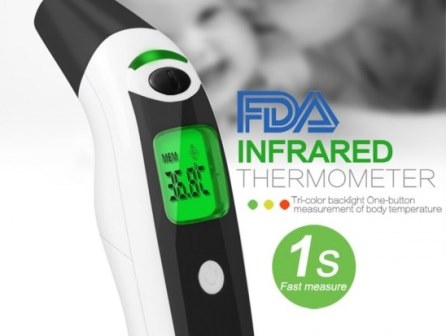
Infrared Thermometer made in USA

  • What is Top 10 Thermometer Made In the USA in 2020?
  • What is the best medical infrared thermometer made in the USA?
  • What is the best-infrared thermometer made in the USA?

Infrared Thermometer Body Temperature Forehead

Body temperature can be measured in a number of ways

Can you Take Body Temperature with Infrared Thermometer?

An infrared thermometer is actually reading the temperature above, below or around where you see the laser, and “shoots out” in a cone shape. The farther away you are from your target object, the larger the spot you will be measuring.

Can you Take Body Temperature with Infrared Thermometer?

The infrared thermometer has a Distance to Spot ratio (D:S) of 12:1, meaning at 12 inches away, you are measuring a spot that is 1 inch in diameter.

When taking the temperature, hold the thermometer at a distance of 12 inches to give a consistent reading. The reading is a surface temperature only, and cannot be used to establish the internal temperature (hot or cold).

How do I use it? Depress the trigger and release it quickly. The thermometer measures temperature instantaneously and keeps the temp displayed when you release the trigger.

Can you Take Body Temperature with Infrared Thermometer

Clinical temperature measurement

The primary objective of clinical temperature measurement is to accurately assess a patient’s core body temperature.

In almost all clinical settings, nearly every patient is first monitored for vital signs (temperature, heart rate, blood pressure, and respiration rate) to screen for the presence or absence of a clinical condition requiring medical treatment.

In the inpatient setting, vital signs are often taken 4-6 times per day or more, depending on the patient unit. Oncology units often take temperatures more frequently. In the non-surgical setting, “accurate temperature measurement is critical to the assessment and management of temperature fluctuation in the acutely ill adult.

According to Principles of Internal Medicine, normal internal body temperature is 37.0°C (98.6°F). Oral (sublingual) temperature is approximately 0.4°F lower than Core Body, compared to measurements from “the esophagus or nasopharynx.” Oral measurements, therefore, are typically not as accurate when screening for diseases based on Core Temperature readings.

Tympanic membrane thermometers are often cumbersome, may cause pain to the patient, and may be difficult to get accurate placement or readings due to tortious ear canals, cerumen, otitis media, hearing aids, poor operator placement, and other impediments.

Many of the other instruments available for inpatient hospital temporal artery thermometry also require expensive probe covers and touch the patient. This produces medical waste and the risk of iatrogenic infection.

Can you Take Body Temperature with Infrared Thermometer

Forehead thermometer accuracy

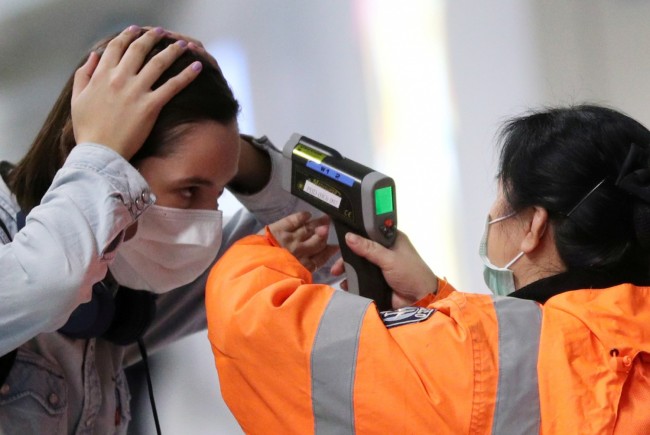
The question arises whether you can take body temperature with an infrared thermometer, and you can with a high-quality medical infrared thermometer under certain conditions. Problems arise, however, especially during the Coronavirus scare. Thermometer guns can be highly inaccurate, mostly because of operator mistakes

Inaccuracies include operating errors and misinterpretations of readings. People who don’t know how to use thermometers can get inaccurate readings for a number of different reasons. These include:

  • Not Following Instructions
    • Thermometer guns must be used at the proper distance – not too close or too far away – to get an accurate reading.
  • Only Accurate for Reading Surface Temps
    • The thermometer guns only measure the surface temperature of the skin. That can fluctuate for many reasons, and the guns don’t measure internal temperature like a probe.
  • Needs Skilled Adjustment
    • A non-contact thermometer needs to be adjusted to read the temperatures of different surfaces.
  • Subject to Environmental Influences
    • Frost, rain, and other conditions can affect surface temperatures. Rapid changes in the ambient temperature of a room can also skew readings. Electromagnetic field and radio frequency interference can cause inaccurate readings.
  • Not Transparent to Glass and Other Substances
    • Thermometer guns can’t read temperatures through the glass and other transparent materials. Instead, they make the surface temperature of the barrier instead of the target.

Can you Take Body Temperature with Infrared Thermometer?

Can you Take Body Temperature with Infrared Thermometer?

Yes, most of the infrared thermometers can be used for monitoring the temperature of both bodies and objects. With a one-touch button, you can adjust the settings to get accurate readings whenever you are measuring the temperature.

what is the benefit of use an infrared thermometer?

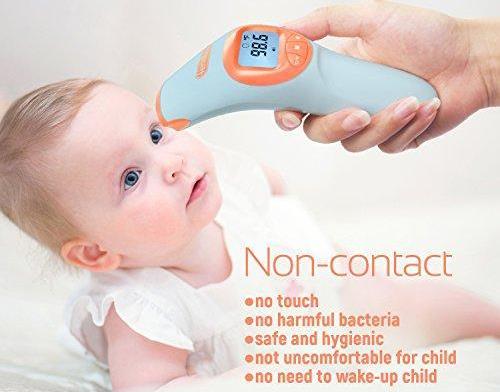
Being a non-contact object, there is a lesser chance of passing on the infection or germs from one person to another. Unlike a contact thermometer, you do not have to wash these thermometers after every measurement making these devices suitable even for bulk or professional temperature monitoring. If you have a baby at home, you can measure the body temperature easily with an infrared thermometer even when your kid is sleeping.

The most read

More on this story

Infrared Thermometer made in USA

  • What is Top 10 Thermometer Made In the USA in 2020?
  • What is the best medical infrared thermometer made in the USA?
  • What is the best-infrared thermometer made in the USA?

How to use Infrared Thermometer with Laser Pointer?

The infrared thermometer measures the surface temperature of an object. The unit’s optics sense emitted, reflected, and transmitted energy which is collect and focused onto a detector.

How to use Infrared Thermometer with Laser Pointer?

How does it work?
How to use Infrared Thermometer with Laser Pointer?

The infrared thermometer measures the surface temperature of an object. The unit’s optics sense emitted, reflected, and transmitted energy which is collect and focused onto a detector.

The unit’s electronics transmitted energy, which is display on the unit. For increased ease and accuracy the laser pointer makes aiming even more precise.

How to use Infrared Thermometer with Laser Pointer

Infrared thermometer how to use

Infrared thermometers (temperature laser guns) give you a means to take the temperature of objects that are too difficult or dangerous to access otherwise, by using an infrared beam to collect the amount of transmitted, reflected and emitted energy off an object. Electronic sensors in the temperature gun convert these values into a measurement of the heat energy from the object (temperature).

Infrared temperature measurement: MEASUREMENT CONSIDERATIONS

How to use Infrared Thermometer with Laser Pointer?

Theory of measurement

Every object emits infrared energy in accordance with its temperature. By measuring the amount of this radiant energy, it is possible to determine the temperature of the emitting object.

Facts about infrared waves

Infrared radiation is a form of light (electromagnetic radiation) and has the property that it passes easily through the air while it is easily absorbed by solid matter.
With an emission thermometer that operates by detecting infrared radiation accurate measurement is possible, irrespective of the air temperature or the measurement distance.

Infrared radiation thermometer

Infrared radiation which has been emitted from the object is focused upon an infrared radiation sensor, via an optical system. This includes a lens that is transparent to infrared radiation. And 5.3µm cut off filter. The output signal from the infrared radiation sensor is input to an electronic circuit along with the output signal from a standard temperature sensor (Thermopile).

Infrared energy

All objects emit invisible infrared energy. The amount of energy emitted is proportional to the object’s temperature and its ability to emit IR energy. This ability, called emissivity, is based upon the material that the object is made of and its surface finish. Emissivity values range from 0.10 for a very reflective object to 1.00 for a black body. Factory set an emissivity value of 0.95, which covers 90% of typical applications.

  • If the surface to the measured is covered by frost or
    other material, clean it to expose the surface.
  • If the surface to be measured is highly reflective, apply
    masking tape or matt finish black paint to the surface.
  • If the meter seems to be giving incorrect readings check the front cone. There may be condensation or debris obstructing the sensor; clean per instructions in the maintenance section

The most read

More on this story

Infrared Thermometer made in USA

  • What is Top 10 Thermometer Made In the USA in 2020?
  • What is the best medical infrared thermometer made in the USA?
  • What is the best-infrared thermometer made in the USA?

Infrared Thermometer Accuracy

To test the accuracy of an infrared thermometer requires access to a stable surface of known temperature. Body temperature is an indication to express the health condition or pathological state.

How to use non-contact Infrared Thermometer?

When buying medical equipment or digital medical instrument for temperature measurement, most people wonder: How to use non-contact Infrared Thermometer?

Temperature is one of the vital signs used by clinicians, parents, and carers to assess children during acute illness episodes. It is measured using electronic contact thermometers, chemical thermometers, or infrared thermometers.

How to use non-contact Infrared Thermometer?

How to take temperature with infrared thermometer?

  • Before using the thermometer for the first time, allow it to acclimatize to the ambient temperature. This can take up to 2 hours.
  • Turn the unit on by pressing the scan button. Press the middle button to select centigrade or Fahrenheit as your preference.
  • The mode button is used to cycle between body, room, or surface options. To take a person’s temperature you will need to set it to ‘body’.
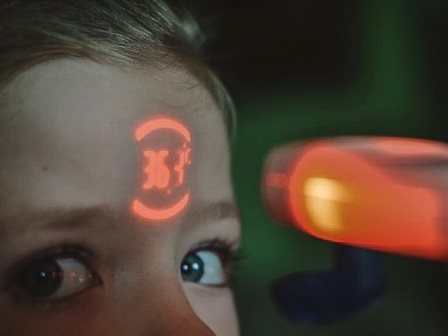
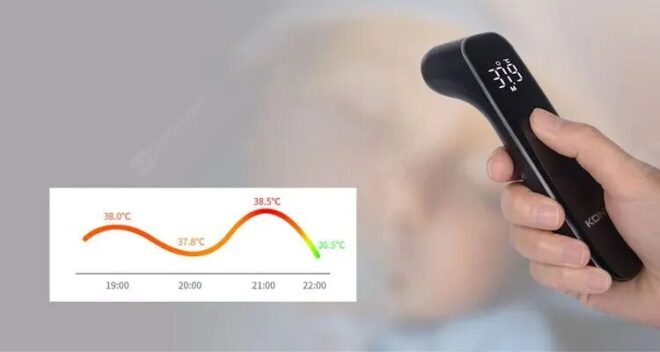
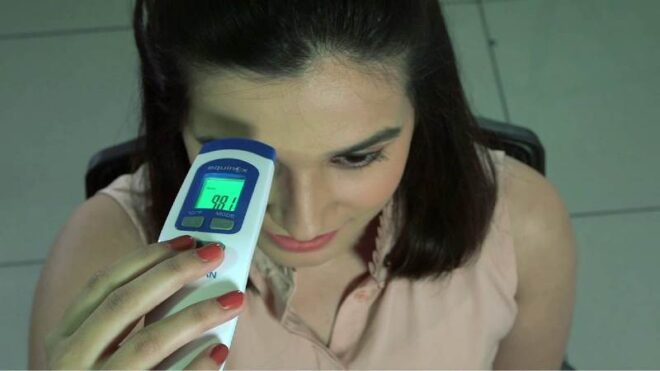
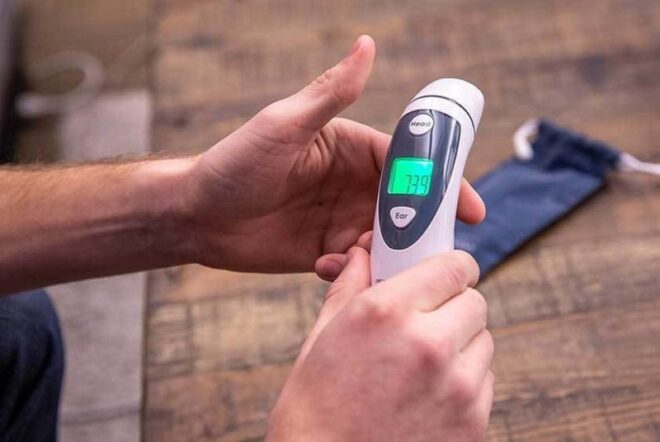
  • Body temperature readings are taken from the temporal region of the forehead a few centimeters behind the eye socket. Point the thermometer at the skin from between 3 and 5 cms and press the scan button for about a second.
  • It is also important that the hair does not obstruct the reading.
How to use non-contact Infrared Thermometer

What is the difference between accuracy and precision?

Infrared (IR) thermometers enable you to measure temperature quickly, at a distance, and without touching the object you’re measuring. They are so useful, easy, and even fun to use that they have become as common in kitchens as they have on factory floors. Infrared thermometers are often used to find overheated equipment and electrical circuits, but they have hundreds of other uses.

How to use non-contact Infrared Thermometer?

Non-contact Infrared thermometer for industrial use

  • Finding faulty terminations in high power electrical circuits
  • Locating overloaded circuit breakers
  • Identifying fuses at or near their current rated capacity
  • Identifying problems in electrical switch gear
  • Monitoring and measuring bearing temperatures in large motors or other rotating equipment
  • Identifying “hot spots” in electronic equipment
  • Identifying leaks in sealed vessels
  • Troubleshooting steam traps
  • Finding faulty insulation in process pipes or other insulated processes

Non-contact infrared thermometers offer a great combination of speed, convenience, and accuracy, but only when they’re used correctly.

Infrared thermometer distance

Every infrared thermometer has a “distance-to-spot” ratio that tells you the diameter of the area being measured compared to the distance from the target. For example, if your thermometer has a distance-to-spot ratio of 12:1, it measures an approximately one-inch-diameter spot when it’s 12 inches from the target. If you try to use that thermometer to measure a two-inch area from even just a few feet away, you’re not going to get an accurate result because the thermometer will also be measuring the temperature outside the area you want to measure.

Infrared thermometer laser pointer

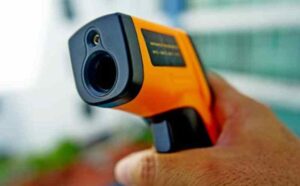
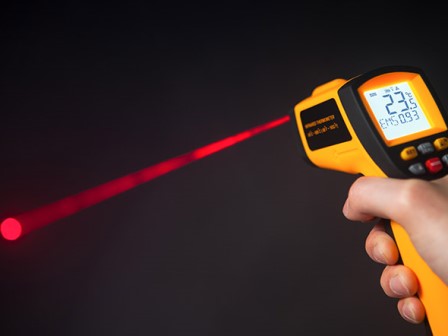
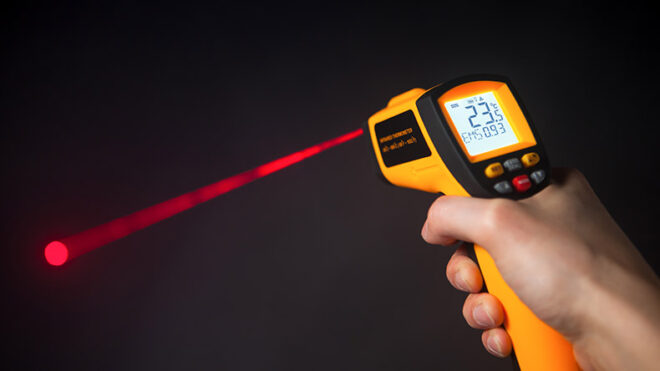
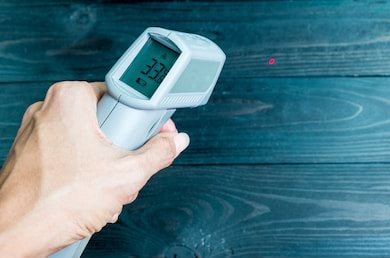
Most handheld infrared thermometers have laser pointers that show the approximate center of the measurement area. It’s important to know that the laser is only a pointer and not used for the actual temperature measurement. Another common misconception is that the thermometer is measuring the area illuminated by the laser beam. The measurement spot is always wider.
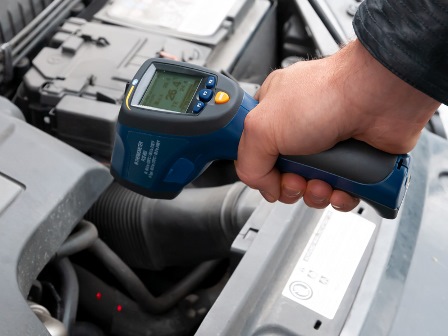
infrared thermometer accuracy

Where you use your infrared thermometer can also affect its accuracy. For example, if there is steam or dust in between the target and the thermometer, some of the IR energy may be deflected before reaching the thermometer. Similarly, a dirty or scratched lens on your IR thermometer may impair its ability to “see” the IR energy that it needs to make a measurement.

A lens that has fogged when the thermometer is brought into a warm room from a colder environment can also affect accuracy.

infrared thermometer temperature

For the highest accuracy, it’s best to allow some time (about 20 minutes is usually enough) for your IR thermometer to come to the temperature of its surroundings when bringing the thermometer into surroundings that are significantly warmer or colder than where it has been stored.

How to use non-contact Infrared Thermometer?

Non-contact infrared thermometer provides an instant and accurate way for clinicians to take a temperature without contact in a multi-patient environment were efficacy, accuracy, and efficiency matter every day.

A non-contact infrared thermometer is a professional grade thermometer that measures body (forehead), surface, and room/ambient temperature instantly and accurately. The Non-contact Infrared Thermometer can be used as a non-invasive screening tool in a multi-patient environment:

  • Non-touch digital infrared thermometer
  • No probe covers required resulting in significant annual savings
  • No contact with resident’s skin reduces the risk of cross-contamination
  • Ideal for sleeping or combative residents
What is an infrared thermometer and how do they work?

IR thermometers are temperature-sensing devices used for measuring temperatures in electrical systems and circuit boards, for medical applications, domestic use, HVAC’s, Automobiles and equally help ascertain correct cooking temperatures when cooking, baking and grilling.

are infrared thermometers safe for humans?

IR infrared thermometers are extremely safe; they actual avoid dangerous situations by allowing you to measure temperatures from a safe distance

how do you calibrate an infrared thermometer?

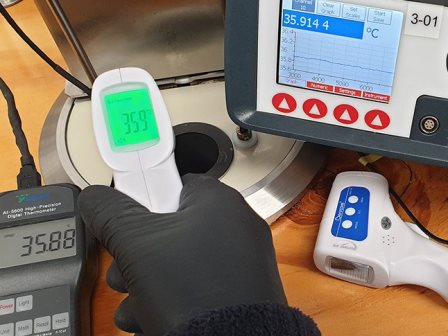
You can easily calibrate an IR thermometer by mixing crushed ice in a bowl with water. The temperature should be as close to 0 degrees Celcius. Used the IR thermometer to measure the temperatures, therefore, ascertaining the accuracy

Does temporal thermometer need to be calibrated?

Just as you would with any piece of technical or mechanical equipment, your forehead thermometer requires some maintenance from time to time. To ensure it’s always working its best and giving you the most accurate result possible, one of the most important parts of this maintenance is calibrating the device.
More on this story

Infrared Thermometer made in USA

  • What is Top 10 Thermometer Made In the USA in 2020?
  • What is the best medical infrared thermometer made in the USA?
  • What is the best-infrared thermometer made in the USA?

Non-Contact Medical Thermometer

Looking for the best non-contact medical thermometer and contactless thermometer to quickly check your and your family’s temperature?

Non contact Infrared Thermometer for Body Temperature

Use this document to learn about different Non contact Infrared Thermometer for Body Temperature.

A non-contact infrared thermometer is a way to take someone’s temperature without touching them. Non-contact infrared thermometers are as accurate as contact thermometers and are low cost. Training is easier and the thermometers are easier to use and do not need as much work to set them correctly.

Thermal scanner cameras can measure temperature from a greater distance although they have not been evaluated for use as a primary diagnostic tool or for screening multiple individuals in an uncontrolled environment, such as an airport. They are not as accurate as of the non-contact infrared thermometer and may be more difficult to use effectively.

Non contact Infrared Thermometer for Body Temperature

Check body temperature without thermometer

Body temperature can be measured in a number of ways. Traditionally, body temperature has been measured using contact thermometers that are placed on the forehead or in the mouth, ear, armpit, or rectum. For children, in particular, rectal temperature measurement is often considered to be the gold standard.

Non contact infrared thermometer allows a person’s temperature to be taken with minimal (tympanic) or no contact with the person. This means the temperature can be measured without the discomfort of having to sit still with a thermometer in the mouth, armpit, or rectum long enough to obtain a correct temperature reading.

The lack of contact also means the disinfection process between patients for the thermometers is minimal or unnecessary, allowing for easier and faster use when screening large numbers of people in settings like airports or border crossings.

Non-contact Infrared Thermometer for Body Temperature

How to test body temperature without thermometer?

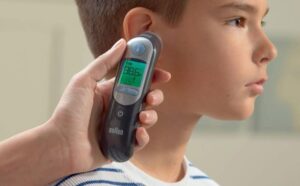
The main types of non-contact thermometers are non contact infrared thermometers, tympanic thermometers, and thermal scanners. Non-contact infrared thermometers are held three to 15 cm away from the patient and typically measure temperature on the forehead or temple.

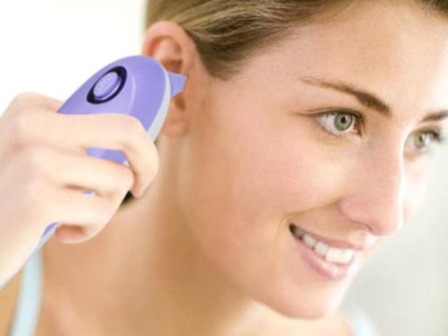
Tympanic thermometers measure the thermal radiation from the tympanic membrane and within the ear canal. Handheld thermal scanners can be used to take a person’s temperature from a greater distance than other non contact infrared thermometers, which may make them a good candidate for use in mass screening situations. The optimal cut-off temperature for determining fever differs for each device. However, not everyone who has an infection or is infectious will have a fever. Additionally, fevers can be lowered by using antipyretic medications.

The objective of this report is to determine the effectiveness and accuracy of non-contact thermometers for the detection of febrile individuals.

Non-contact Infrared Thermometer for Body Temperature

Best non contact thermometer for body temperature

Whenever you are looking through non-contact thermometer reviews, you may be inclined to believe that most of the options available on the market are somewhat equally good.

Best non contact infrared thermometer

However, if you do know what to look for, you’ll find that there are some essential features that a good thermometer should have. We’ve put together the most important factors to be taken into consideration when looking for such a device.

Infrared thermometer accuracy

Accuracy beats everything: The most important reason why accuracy trumps everything else is that most of the consumers who opt for such a device have a child. When it comes to monitoring a kid’s health, it is crucial to have an accurate instrument, as it will both save you useless trips to the hospital and it will also alert you whenever the child has the slightest symptom of fever.

Uses of infrared thermometer

Another indicator of the product’s quality in this respect is whether it can offer both Celsius and Fahrenheit readings. The reason for this is not the possibility to switch between these two per se, but the fact that this type of feature is a good indicator of the company’s interest for intuitive use.

Chances are that a room thermometer offering readings in both Celsius and Fahrenheit was created to please the customer to the slightest detail, and the product comes with other accessibility perks as well.

Precision infrared thermometer

As we’ve established that this kind of non contact infrared thermometer is for family use, we should further consider children being a part of the family. As children tend to be impatient, especially when they feel sick, it is highly recommended for the temperature readings to be fast, before anything else.

Most of the good products deliver a safe and accurate read in a matter of seconds, precisely because a person who is not willing to wait for two minutes with a thermometer in their mouth will most probably not stay still for a non-contact thermometer to measure their temperature either.

Non-contact Infrared Thermometer for Body Temperature

Best infrared thermometer for body temperature

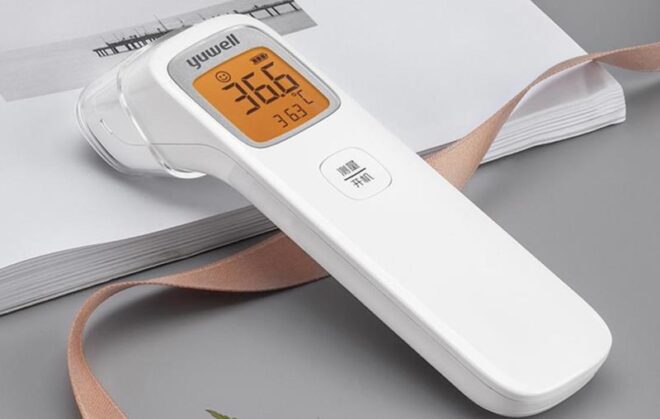
BERRCOM Non-Contact Infrared Thermometer uses state of the art non-contact infrared technology to measure body temperature. With a one-button operation and accurate results in just one second, you can quickly and easily measure body temperature as well as the temperature of surfaces and objects around the home.

Best non contact thermometer

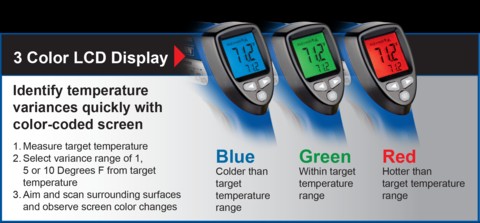
  • NON-OFFENSIVE TESTING: The Infrared FOREHEAD Thermometer accurately measures a person’s body temperature in as little as one second. A reading is taken as soon as an individual’s forehead is detected within 2-4 inches of the thermometer’s sensor. A green light will indicate that their temperature is within a normal range, and a flashing red light and an audible alarm will indicate that the person has a high temperature.
  • NON-CONTACT HAND FREE MEASURING: To maintain safe levels of social distancing, our infrared thermometer can identify individuals with high temperatures without requiring physical contact from healthcare workers or with the equipment. The device can operate independently without human assistance, and forehead temperatures can be read from a distance of 4 inches from the device sensor.
What is the average temperature of a human?

Normal human body temperature is the typical temperature range found in humans. The normal human body temperature range is typically stated as 36.5–37.5 °C (97.7–99.5 °F).

what is a normal temperature for a human?

Among adults, the average body temperature ranges from 97°F (36.1°C) to 99°F (37.2°C). Adults over age 65. In older adults, the average body temperature is lower than 98.6°F (36.2°C).

How do I check my temperature with an infrared thermometer?

You just need to turn on the button and point out the thermometer towards the target body or object and the temperature reading will be displayed on your screen within a few seconds.

Can I use a general-purpose infrared thermometer to measure human forehead temperature?

Here is the problem: objects emit infrared more efficiently, the darker they are. There is a reason why IR emission from hot objects is called “black body radiation”. The lighter the object is, ie, the closer to white or reflective it is, the less IR it emits for a given temperature.
Medical IR thermometers are calibrated for the approximate color of skin. I’ve often wondered about their performance for different skin colors, but perhaps in IR, all skin is roughly the same tone.

The most read

More on this story

Infrared Thermometer for Humans

Infrared thermometers for humans allow users to measure body temperature quickly and non-invasively.

Celsius to Fahrenheit Fever

Human body temperature information and conversion tables include normal, high and low readings and fever readings from Celsius to Fahrenheit.

Infrared Thermometer Price

A home use infrared thermometer is a medical device intended for users in any environment outside of a professional healthcare facility.

Industrial Digital Thermometer

Industrial thermometer types: Industrial digital thermometers are used for temperature measurement in many industrial applications. They are generally more durable than laboratory thermometers. The way an industrial thermometer works depends upon the type of temperature sensor it uses. Sensor options include bimetal, liquid or gas-filled, electronic, or infrared (IR).

Industrial Digital Thermometer

Digital Thermometer for Industrial use

Temperature measurement in today’s industrial environment encompasses a wide variety of needs and applications. To meet this wide array of needs the process controls industry has developed a large number of sensors and devices to handle this demand.

Temperature is a very critical and widely measured variable for most mechanical engineers. Many processes must have either a monitored or controlled temperature. This can range from the simple monitoring of the water temperature of an engine or load device, or as complex as the temperature of a weld in a laser welding application.

More difficult measurements such as the temperature of smokestack gas from a power generating station or blast furnace or the exhaust gas of a rocket may need to be monitored. Much more common are the temperatures of fluids in processes or process support applications, or the temperature of solid objects such as metal plates, bearings, and shafts in a piece of machinery.

Industrial Digital Thermometer

Industrial thermometer types

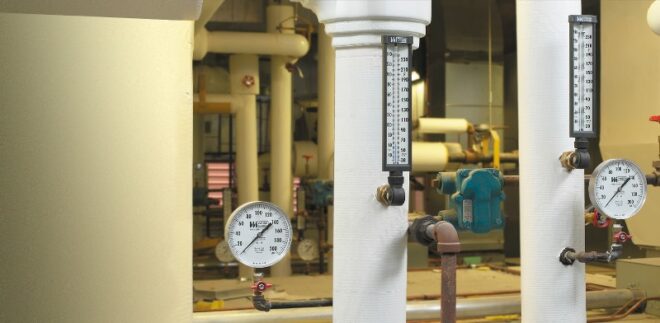
Industrial thermometer types: In most industries, industrial thermometers are used to ensure that processes are monitored and controlled. However, care must be taken in selecting the right thermometer for accuracy and efficiency. There are numerous types of industrial thermometers that are available in the market today.

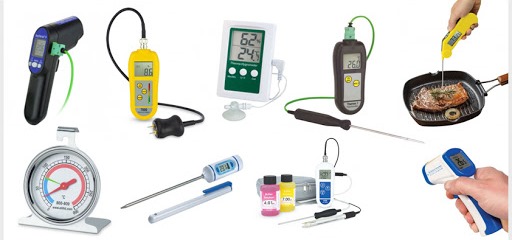
There are many types of thermometers, but some common thermometers are laboratory thermometers, clinical thermometers, thermocouples, Bimetallic strip thermometers, Pyrometers, etc.

You will have a wide range of selections to choose from. It is important that you understand the nature of your industrial process before you choose the thermometer.

You need to know the operating temperatures, operating pressures, and the chemicals that are involved in different processes in the industry. When you have this knowledge then it will be easier for you to choose the best thermometer.

Laboratory thermometers

It is used to measure the room temperature of hot solids and liquids in experiments. It measures temperature in the range of 5 °C to 110 °C and on higher temperatures.

Digital thermometers

Digital thermometers measure the temperature by means of an electronic circuit. The information they capture is sent to a microchip that processes it and displays it numerically on the digital screen. They are easy to use, fast, accurate and inexpensive. These are advanced thermometers used to measure the temperature of a body of a high level of accuracy.

Infrared thermometers

Infrared thermometers capture body heat in the form of infrared energy given off by a heat source. This type of thermometer is based on the fact that the laws that govern the radioactive emission of bodies allow the precise calculation of the temperature of the radiating object from its emission spectrum, without requiring direct contact with it.

Probe thermometers

Probe thermometers are easily one of the most common types of thermometer. They deliver instant temperature readings of foods, liquids, and semi-solid samples. The probe is often equipped with a pointed tip making them ideal for penetration and immersion.

They are ideal for use in the catering trade for hygiene testing, retail outlets, and laboratories.

Thermocouple sensor

A Thermocouple is a sensor used to measure temperature.

Thermocouples consist of two wire legs made from different metals. The wire’s legs are welded together at one end, creating a junction. This junction is where the temperature is measured. When the junction experiences a change in temperature, a voltage is created. The voltage can then be interpreted using thermocouple reference tables to calculate the temperature.

Thermocouples are used in many industrial, scientific, and OEM applications. They can be found in nearly all industrial markets: Power Generation, Oil/Gas, Pharmaceutical, BioTech, Cement, Paper & Pulp, etc. Thermocouples are also used in everyday appliances like stoves, furnaces, and toasters.

Temperature data loggers

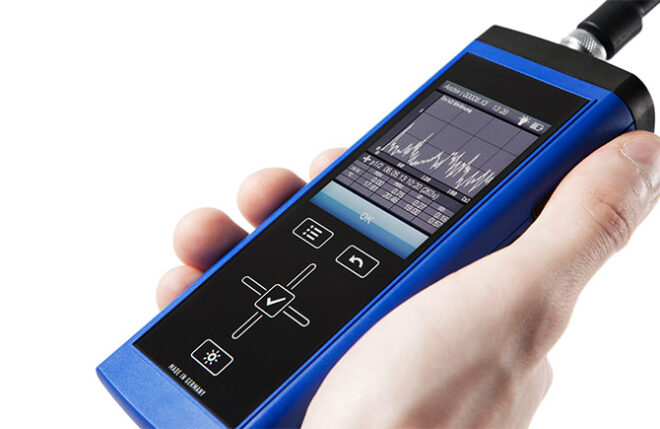
Temperature data loggers allow the recording of continuous temperature measurements. Once activated, they record the temperature at predetermined intervals and save it to memory. It is typical to download the data and view it on a graph but some devices display the data in real-time.

Most devices are compatible with any pc, laptop or tablet. Their design allows them to track heat levels in critical areas where a constant temperature must exist.

HVAC digital thermometer

HVAC digital thermometers are most commonly used to measure air, water, refrigerant, and copper lines’ temperatures, and these measurements are vital to locating the source of potential hazards or defects.

Automotive thermometer

The thermometer in your car isn’t actually a thermometer. Technically, it’s a thermistor, a device that measures temperature based on the change in electrical current that temperature can cause, instead of the expanding or contracting of a liquid like mercury.

analogue thermometers

A thermometer is an instrument that measures the temperature of a system in a quantitative way. By the word Analog thermometer we usually mean to say mercury thermometer due to the silvery-white liquid “mercury” inside it. Analog thermometers are often one the cheapest and most popular types of thermometers. They are ideal for use in the home or in non-specialist environments where traceable accuracy is not required.

Dual sensor thermometers

Dual Sensor Thermometers are typically used for environmental monitoring. They are ideal for comparing two environments simultaneously. The units have one internal sensor that can track the immediate surrounding environment.

industrial digital thermometer with probe

A digital probe thermometer, or digital temperature probe, is a device that uses sensitive resistors in a stainless-steel probe to measure temperature. Unlike traditional mercury thermometers that take some time to read temperature change, readings on a digital probe thermometer are much quicker.

High accuracy thermometer

The range of a thermometer and its reading accuracy is dependent on the size of the hole, the length of the tube, and the fluid in the thermometer. Typically the smaller the reading increment, the less range it will have.

As an example, a 0.1° C accuracy mercury thermometer with a range of 100°C will typically be about 600 mm long. The restrictions rest with how well the maker can fabricate a readable scale.

To increase readability some manufacturers have moved to non-round thermometer bodies, The rounded corner on the reading side acts as a magnifying glass, making the liquid column show up wider, and easier to read.

The round thermometer is still the standard and there are a variety of holders and seals to fit them. There are also armored sleeves to put them in that allow them to be used, but reduce the chance of breakage.

Industrial Digital Thermometer
What is a infrared thermometer used for?

Infrared (IR) thermometers enable you to measure temperature quickly, at a distance, and without touching the object you’re measuring. They are so useful, easy, and even fun to use that they have become as common in kitchens as they have on factory floors.

What is a digital thermometer used for?

Digital thermometers contain a small computing mechanism and a resistor. A change in temperature causes the sensor to notice a change in resistance. The computer converts the difference in resistance into a difference in temperature and offers a digital readout in degrees. A digital thermometer is used to take an oral temperature. It is a small hand-held device with a “window” showing your temperature in numbers.

More on this story

Thermometer for Industrial Use

An industrial thermometer is an instrument designed to measure and indicate the temperature of a specific application or condition.

Infrared Thermometer Calibration

Regular thermometer calibration ensures that your device is operating at its highest possible level of accuracy.

The most read

Infrared Thermometer made in USA

  • What is Top 10 Thermometer Made In the USA in 2020?
  • What is the best medical infrared thermometer made in the USA?
  • What is the best-infrared thermometer made in the USA?