All posts by Loganx

Professional Web Writer | Motor Enthusiast | Content Creator | Logan is a dedicated and skilled web writer, passionate about engines and machines and with a talent for creating engaging and informative content. She specializes in writing about a diverse range of topics including construction, forklifts, heavy equipment, excavators, etc. SEO Optimization: Proficient in SEO best practices, ensuring high visibility and engagement for all published content.

How much do Tower Crane Operators make?

The salary of tower crane operators can vary widely based on factors such as location, experience, industry, and employer. Here is a general overview:

  1. United States:
  • Average Salary: The average annual salary for a tower crane operator in the U.S. is typically between $50,000 and $80,000.
  • Hourly Wage: On an hourly basis, this translates to roughly $25 to $40 per hour.
  • Top Earners: Experienced operators in high-demand areas or working on large-scale projects can earn upwards of $100,000 per year.
  1. United Kingdom:
  • Average Salary: In the UK, tower crane operators usually earn between £30,000 and £50,000 per year.
  • Hourly Wage: This equates to about £15 to £25 per hour.
  • Top Earners: In some cases, experienced operators can earn over £60,000 annually, particularly in London or other high-demand areas.
  1. Canada:
  • Average Salary: The average salary for tower crane operators in Canada ranges from CAD 50,000 to CAD 80,000 per year.
  • Hourly Wage: This is approximately CAD 25 to CAD 40 per hour.
  • Top Earners: Experienced operators in major cities or on significant projects can earn over CAD 100,000 per year.
  1. Australia:
  • Average Salary: In Australia, tower crane operators typically make between AUD 60,000 and AUD 100,000 annually.
  • Hourly Wage: This corresponds to about AUD 30 to AUD 50 per hour.
  • Top Earners: In high-demand areas, especially in major cities, experienced operators can earn significantly more.

These figures can fluctuate based on the demand for construction in a given region, the complexity of the projects, and the economic conditions affecting the construction industry. Unionized workers may also have different wage scales and benefits compared to non-unionized workers.

How much do tower crane operators make per hour in the US?

In the intricate world of construction, tower crane operators hold a pivotal role, maneuvering massive structures and materials high above the ground with precision and skill.

As urban landscapes expand and skyscrapers reach new heights, the demand for proficient tower crane operators continues to rise. But how much do these critical workers earn for their expertise and risk-taking?

Average Hourly Wage

In the United States, the hourly wage for tower crane operators generally ranges from $25 to $40 per hour. This average reflects the significant responsibility these operators bear, as well as the specialized training and certification required to safely and efficiently manage crane operations on bustling construction sites.

Entry-Level Operators

For those just starting in the field, the pay can be lower, typically around $20 to $25 per hour. Entry-level operators are usually in the process of honing their skills and gaining the necessary experience to handle more complex tasks and larger cranes. Training programs and apprenticeships are common pathways into the profession, with wages increasing as proficiency and safety records improve.

Experienced Operators

Operators with several years of experience and a proven track record can expect to earn between $30 and $40 per hour. These seasoned professionals are often entrusted with the most challenging projects, where their expertise can ensure both safety and efficiency. Their deep understanding of crane mechanics, load dynamics, and site logistics make them invaluable on any construction site.

Top Earners

At the upper end of the spectrum, highly experienced tower crane operators, particularly those working on high-profile projects in major metropolitan areas, can earn upwards of $50 per hour.

These top earners are typically involved in large-scale developments, such as skyscrapers, major commercial complexes, and significant infrastructure projects. Their role requires not only advanced operational skills but also the ability to coordinate with multiple teams, navigate complex building codes, and adapt to rapidly changing site conditions.

Factors Influencing Wages

Several factors influence the hourly wages of tower crane operators:

  • Geographical Location: Wages can vary significantly based on the location of the job. Operators in cities with high construction activity and cost of living, such as New York, San Francisco, or Chicago, often command higher wages.
  • Union Membership: Unionized operators tend to have better wage scales, benefits, and job security compared to their non-unionized counterparts. Unions such as the International Union of Operating Engineers (IUOE) negotiate wages and working conditions on behalf of their members.
  • Type of Projects: The complexity and scale of the project also play a crucial role. Operators working on high-rise buildings, major bridges, or other intricate structures are often paid more due to the higher risks and skills involved.
  • Experience and Certifications: Advanced certifications and a strong track record of safety and efficiency can significantly boost an operator’s earning potential.

High rise crane operator salary

Tower crane operators are essential to the construction industry, playing a key role in the assembly of our urban landscapes. Their wages reflect the critical nature of their work, the expertise required, and the risks they manage daily.

As the construction industry continues to evolve, the demand for skilled tower crane operators is likely to remain robust, ensuring competitive wages for those willing to take on this challenging yet rewarding profession.

More on this story

Crane operator salary

How long does it take to become a high-rise crane operator? Who is the highest-paid crane operator?


Tower Cranes

Types of Tower Cranes and specifications
Are the Spaces Left by Tower Cranes for Elevator shafts?

In modern construction, especially in high-rise buildings, the space initially occupied by tower cranes is often repurposed for building amenities, including elevators. Here’s a detailed look at how and why these spaces are converted, and the process involved:

Repurposing Tower Crane Spaces for Elevators

Initial Placement of Tower Cranes

Tower cranes are typically installed in strategic locations within the building footprint to maximize reach and efficiency during construction.

These locations are often within the core of the building, which is also the most stable and least obstructive place for vertical transport mechanisms like elevators.

Why Use Crane Spaces for Elevators?

  1. Optimal Location: Tower cranes are often located in the building core, which is the ideal place for elevator shafts due to structural stability and central access.
  2. Utilizing Existing Openings: The spaces left by the crane mast can be seamlessly converted into elevator shafts, reducing the need for additional demolition or construction.
  3. Efficiency in Construction: This approach allows continuous use of vertical space and minimizes the time and cost associated with creating new shafts.

The Conversion Process

  1. Removal of the Tower Crane:
  • Dismantling: The crane is dismantled piece by piece, usually from the top down, using smaller cranes or mobile cranes.
  • Lowering: Components are carefully lowered to the ground, ensuring safety and avoiding damage to the structure.
  1. Preparation of the Space:
  • Cleaning and Inspection: The area is cleaned of any residual construction debris, and structural integrity is inspected.
  • Reinforcement: If necessary, additional reinforcement is added to the walls of the shaft to ensure it can handle the loads imposed by the elevator system.
  1. Installation of Elevator Components:
  • Guide Rails: Vertical guide rails are installed along the walls of the shaft.
  • Elevator Car and Counterweights: The elevator car and its counterweights are installed within the shaft.
  • Electrical and Control Systems: Wiring, control panels, and safety systems are integrated.
  1. Testing and Commissioning:
  • The elevator system is rigorously tested to ensure it meets all safety and operational standards.
  • Final adjustments and inspections are conducted before the elevator is put into service.

Benefits of Using Crane Spaces for Elevators

  1. Space Efficiency: Maximizes the use of available space within the building’s footprint.
  2. Cost Savings: Reduces the need for additional construction work to create new elevator shafts.
  3. Structural Integrity: The building core, where cranes are usually located, is the strongest part of the structure, ideal for supporting elevator systems.
  4. Streamlined Construction: Simplifies the transition from construction to operational phases by utilizing existing openings.

Examples in Real-World Projects

  1. High-Rise Buildings: In skyscrapers, using the crane’s space for elevators is a common practice due to the need for multiple high-capacity elevators.
  2. Mixed-Use Developments: Buildings with a mix of residential, commercial, and retail spaces benefit from this efficient use of central space.
  3. Office Towers: Office buildings often repurpose crane spaces to house service elevators or high-speed elevators for upper floors.

Do cranes become elevator shafts

The practice of converting the spaces left by tower cranes into elevator shafts is a practical and efficient solution in modern construction.

It optimizes space usage, reduces costs, and aligns with the structural design principles of high-rise buildings.

By strategically planning the placement and eventual repurposing of tower cranes, construction projects can achieve a seamless transition from building to operational phases, enhancing both functionality and efficiency.

Are the spaces left by tower cranes for elevator shafts?

Yes, in many modern high-rise construction projects, the spaces initially occupied by tower cranes are often repurposed for elevator shafts or other essential vertical transportation systems.

This practice is common due to several practical and logistical advantages.

The Process of Converting Crane Spaces into Elevator Shafts

1. Planning Stage

  • Design Integration:
  • During the design phase, architects and engineers plan the crane’s location with the future use of the space in mind. This involves ensuring that the crane’s mast and the eventual elevator shaft align with the building’s structural grid.

2. Crane Installation and Operation

  • Foundation and Core Construction:
  • The building’s core is constructed first, providing a sturdy base for the crane. This core is typically designed to eventually accommodate elevator shafts.
  • The tower crane is erected and used throughout the construction process to lift materials and facilitate construction.

3. Crane Dismantling

  • Removal of Crane:
  • Once the major structural work is completed, the tower crane is dismantled. This process often involves using smaller cranes or mobile cranes to safely remove the crane components from the top down.

4. Conversion to Elevator Shaft

  • Cleaning and Reinforcement:
  • After the crane is removed, the space is cleared of any debris. The shaft is inspected and reinforced if necessary to ensure it can safely support the elevator system.
  • Installation of Elevator Components:
  • Guide Rails: Vertical guide rails are installed along the walls of the shaft.
  • Elevator Car and Counterweights: The elevator car and counterweights are installed.
  • Mechanical and Electrical Systems: Electrical wiring, control panels, and safety systems are integrated into the shaft.
  • Finishing and Testing:
  • The elevator system undergoes rigorous testing to ensure it meets all operational and safety standards. Final adjustments are made to ensure smooth operation.

Benefits of This Approach

  1. Space Optimization:
  • By utilizing the existing core space initially used by the crane, the overall building layout remains efficient, minimizing wasted space.
  1. Structural Integrity:
  • The building core is the most robust part of the structure, providing an ideal location for the heavy and dynamic loads of an elevator system.
  1. Streamlined Construction Process:
  • This approach allows for a smoother transition from the construction phase to the operational phase, as the essential vertical transport systems are already integrated into the building design.

Examples in Practice

  • Skyscrapers: High-rise buildings often use this method, as it simplifies the logistics of constructing tall structures and ensures efficient vertical transportation.
  • Mixed-Use Developments: In buildings that combine residential, commercial, and office spaces, central elevator shafts are crucial for accessibility and usability.

Conclusion

Repurposing the spaces left by tower cranes for elevator shafts is a practical, efficient, and cost-effective strategy in high-rise construction.

By planning ahead and integrating crane positions with future elevator locations, construction projects can optimize space usage, enhance structural integrity, and streamline the transition from construction to operation.

This approach exemplifies modern engineering’s blend of foresight and efficiency, ensuring that buildings are both functional and safe.

More on this story

Tower Cranes

Types of Tower Cranes and specifications
Types of Tower Cranes

Mobile Tower Crane, Fixed Tower Crane, Stationary crane, hammerhead crane, self erecting, etc…

Tower Crane Foundation Design calculation example

Tower cranes are a critical component of modern construction projects, enabling the lifting and placement of heavy materials with precision and efficiency.

However, the towering structures we often see dotting the skyline rely on a meticulously calculated foundation to ensure they remain stable and safe.

The foundation design of a tower crane is a complex process that involves understanding and balancing various forces to prevent tipping, sliding, or excessive settlement.

Here, we delve into the intricacies of this crucial aspect of construction engineering.

Crane Operator Logbook

Daily Lift Record & Safety Checklist Log: Track Operation Hours, Loads, Equipment Checks & Site Details | For Mobile, Tower, and Overhead Crane Operators

Tower Crane Foundation Design

Understanding the Forces at Play

The foundation of a tower crane must support several types of loads, each with its unique characteristics:

  • Dead Load (DL): This includes the self-weight of the crane and the foundation itself.
  • Live Load (LL): The maximum load the crane is expected to lift.
  • Wind Load (WL): Wind forces that exert lateral pressure on the crane, especially at higher elevations.
  • Moment Load (ML): The overturning moment generated by the crane’s working radius and the loads it lifts.

Steps in Foundation Design Calculation

  1. Determine the Loads Acting on the Foundation
  • Calculate the self-weight of the crane and its maximum lifting load.
  • Estimate wind forces based on local wind speed data and the crane’s exposed surface area.
  • Assess the moment load by considering the furthest point where the crane can lift its maximum load.
  1. Calculate the Total Vertical Load
  • Combine the dead load and live load, incorporating a safety factor to account for uncertainties.
  • For example, a crane with a self-weight of 200 tons (1962 kN) and a maximum load of 10 tons (98.1 kN) results in a total vertical load of 2060.1 kN. Applying a safety factor of 1.5, the design load becomes 3090.15 kN.
  1. Calculate the Overturning Moment
  • Determine the maximum moment at the base due to the load at the maximum radius. For instance, if the maximum load is 98.1 kN at a radius of 60 meters, the moment is 5886 kNm. Applying a safety factor of 1.5 results in an overturning moment of 8829 kNm.
  1. Check the Soil Bearing Capacity
  • Ensure the foundation area is sufficient to distribute the vertical load within the soil’s allowable bearing capacity.
  • Using an assumed foundation area (e.g., 8 m x 8 m), calculate the bearing pressure. If the vertical load is 3090.15 kN over an area of 64 m², the bearing pressure is 48.28 kN/m². This must be less than the soil’s allowable bearing capacity, typically around 200 kN/m².
  1. Tower crane foundation size: Determine the Footing Dimensions
  • Adjust the dimensions to maintain bearing pressure within safe limits and to prevent settlement.
  • The foundation must also counteract the overturning moment by having an adequate width and depth.
  1. Check Stability Against Overturning and Sliding
  • Calculate the factor of safety against overturning by comparing the resisting moment (due to the foundation weight) with the overturning moment.
  • For sliding, ensure the resisting force (due to friction between the foundation and soil) is greater than any horizontal forces, such as wind load.

Practical Application and Adjustments

In practice, foundation design involves detailed site-specific assessments. For example, if the effective width considering eccentricity is reduced, the bearing pressure must still remain within the allowable limits.

If not, the foundation dimensions must be adjusted accordingly. Similarly, factors like soil type, groundwater conditions, and construction material properties play significant roles in finalizing the design.

Final calculation

The foundation design for a tower crane is a critical engineering task that ensures the stability and safety of these essential construction machines.

By meticulously calculating and balancing various loads and forces, engineers can design foundations that support the crane’s operations under all expected conditions. This process not only involves mathematical precision but also a deep understanding of materials, soil mechanics, and structural behavior.

As construction projects continue to evolve in complexity and scale, the role of foundation design remains fundamental to the success and safety of modern engineering feats.

The foundation design meets the bearing capacity and stability requirements. Adjustments to dimensions or depth can be made based on more precise load calculations or site-specific conditions. Always consult with a qualified structural engineer to ensure the design adheres to all relevant codes and standards.

What kind of footing do you need for a tower crane?

The type of foundation needed for a tower crane depends on several factors, including the crane’s specifications, soil conditions, load requirements, and the height of the crane. Here, we explore the common types of foundations used for tower cranes and the considerations involved in selecting the appropriate foundation type.

Types of Foundations for Tower Cranes

  1. Concrete Mat (Raft) Foundation
  2. Pile Foundation
  3. Anchored Base Foundation
  4. Hybrid Foundations

1. Concrete Mat (Raft) Foundation

A concrete mat foundation, also known as a raft foundation, is a large, thick, reinforced concrete slab that spreads the load of the crane over a wide area. This type of foundation is commonly used when the soil has a good bearing capacity but is not uniformly strong or when the crane is relatively short.

Advantages:

  • Distributes load evenly over a large area, reducing bearing pressure.
  • Simple to construct and relatively cost-effective for small to medium-sized cranes.
  • Suitable for sites with relatively uniform soil conditions.

Design Considerations:

  • Thickness of the slab typically ranges from 1.5 to 3 meters, depending on the load.
  • Reinforcement is essential to handle the tensile stresses and moments.
  • The size of the mat must be sufficient to prevent excessive settlement and tilting.

2. Pile Foundation

Pile foundations involve driving or drilling piles into the ground to reach stable soil layers or bedrock. The crane’s base is then connected to these piles with a pile cap.

Advantages:

  • Suitable for sites with poor or variable soil conditions.
  • Can reach deeper, more stable soil layers, providing greater stability for tall cranes.
  • Reduces settlement issues and increases load-bearing capacity.

Design Considerations:

  • Types of piles (bored, driven, or micro-piles) depend on soil conditions and load requirements.
  • The number, diameter, and length of piles must be carefully calculated based on the load and soil analysis.
  • Properly designed pile caps are essential to distribute loads from the crane to the piles.

3. Anchored Base Foundation

An anchored base foundation involves securing the crane to a concrete base with large anchor bolts or tension anchors. This method is used when the crane needs to be mounted on an existing structure or when space is limited.

Advantages:

  • Provides strong anchorage in limited space.
  • Suitable for temporary installations where the crane needs to be moved frequently.
  • Can be used on top of existing structures, reducing the need for extensive excavation.

Design Considerations:

  • Anchor bolts or tension anchors must be designed to handle both tensile and shear forces.
  • The existing structure or concrete base must be evaluated for sufficient strength and stability.
  • Proper alignment and securing of anchors are crucial for maintaining crane stability.

4. Hybrid Foundations

Hybrid foundations combine elements of the above types, such as using both piles and a mat foundation, to address specific site conditions and load requirements.

Advantages:

  • Offers flexibility in design to cater to complex site conditions.
  • Can provide additional stability by combining the strengths of different foundation types.
  • Suitable for large cranes with high load requirements.

Design Considerations:

  • Requires detailed site analysis and load calculations to determine the optimal combination.
  • More complex to design and construct, often requiring specialized engineering expertise.
  • Cost and construction time may be higher compared to single foundation types.

Key Considerations in Foundation Design

  1. Load Requirements: The total weight of the crane, including its maximum load capacity, must be considered in the foundation design.
  2. Soil Conditions: A thorough geotechnical investigation is essential to determine the soil bearing capacity, settlement characteristics, and presence of groundwater.
  3. Crane Specifications: The height, type, and operational range of the crane influence the foundation design.
  4. Safety Factors: Adequate safety factors must be incorporated to account for dynamic loads, wind forces, and potential overloads.
  5. Construction Constraints: Site accessibility, available space, and construction timelines can affect the choice of foundation type.

Conclusion

Selecting the appropriate foundation type for a tower crane is a critical decision that involves a comprehensive analysis of the crane’s load requirements, soil conditions, and site-specific constraints.

Whether opting for a concrete mat, pile foundation, anchored base, or a hybrid solution, the goal is to ensure that the crane remains stable and safe throughout its operational life.

Consulting with structural and geotechnical engineers is essential to achieve a foundation design that meets all safety standards and project requirements.

More on this story

Tower Cranes

Types of Tower Cranes and specifications

Tower Crane Foundation

How big is the base of a tower crane? How is the base of a tower crane built?

How much does a Tower Crane cost to Rent?

The cost of renting a tower crane can vary widely based on several factors, including the crane’s size, type, duration of the rental, and geographic location. Here’s a general breakdown of the potential costs:

Tower crane rental price

  1. Small to Mid-Sized Tower Cranes:
  • Monthly Rental: $8,000 to $20,000
  • Installation and Dismantling: $15,000 to $30,000
  • Other Costs (e.g., transportation, permits): $5,000 to $10,000
  1. Large Tower Cranes:
  • Monthly Rental: $20,000 to $50,000
  • Installation and Dismantling: $30,000 to $60,000
  • Other Costs: $10,000 to $20,000

Key Factors Influencing Costs:

  1. Crane Type and Specifications:
  • Capacity, height, and reach of the crane can significantly affect rental costs.
  • Specialized cranes for particular tasks might cost more.
  1. Rental Duration:
  • Long-term rentals often have discounted rates compared to short-term rentals.
  1. Location:
  • Urban areas with high construction activity may have higher rental costs.
  • Transportation costs also vary based on distance to the construction site.
  1. Additional Services:
  • Installation, dismantling, transportation, maintenance, and permits can add significantly to the overall cost.
  1. Market Conditions:
  • Supply and demand dynamics can influence rental rates.

Example:

For a typical mid-sized tower crane used in a standard commercial construction project, you might expect:

  • Monthly Rental: $12,000
  • Installation and Dismantling: $20,000
  • Transportation and Permits: $7,000

Total Initial Cost (first month): $39,000
Total Monthly Cost (subsequent months): $12,000

These figures are averages and can vary. It’s always best to obtain quotes from several rental companies and consider all associated costs to get a precise estimate for your specific project.

Is tower crane rental profitable?

Renting out tower cranes can be profitable, but the profitability depends on various factors including initial investment, operating costs, market demand, and effective management. Here’s a detailed look into the profitability of tower crane rentals:

Initial Investment and Costs:

  • Purchase Cost:
    • Tower cranes can cost anywhere from $150,000 to $500,000 or more depending on the type and specifications.
  • Depreciation:
    • Cranes typically depreciate over 15-20 years.
  • Maintenance and Repairs:
    • Regular maintenance is crucial and can be costly. Annual maintenance costs can range from $10,000 to $50,000 depending on the crane’s usage and condition.
  • Insurance:
    • Comprehensive insurance coverage is necessary, costing a significant amount annually.
  • Storage and Transportation:
    • When not in use, cranes need to be stored securely, and transportation to and from job sites can be expensive.

Revenue:

  • Rental Income:
    • As mentioned earlier, rental rates can range from $8,000 to $50,000 per month depending on the crane type and project scale.
  • Additional Services:
    • Fees for installation, dismantling, transportation, and permits can add to revenue.

Profitability Calculation:

To determine profitability, let’s consider an example with a mid-sized tower crane:

Annual Income:

  • Monthly Rental: $15,000
  • Installation/Dismantling/Transport Fees per Project: $25,000 (assuming 4 projects/year)
    • Annual Rental Income = 15,000 x times 12 = $180,000
    • Additional Fees = 25,000 x times 4 = $100,000
    • Total Annual Revenue: $280,000

Annual Expenses:

  • Depreciation: $25,000
  • Maintenance: $20,000
  • Insurance: $10,000
  • Storage and Transportation: $20,000
  • Operational Costs: $25,000 Total Annual Expenses: $100,000

Annual Profit:
(Total Annual Revenue – Total Annual Expenses) = ($280,000$100,000 = $180,000)

Considerations for Profitability:

  • Utilization Rate:
    • Higher utilization rates improve profitability. Idle time reduces revenue potential.
  • Market Conditions:
    • Demand for construction services, economic conditions, and competitive landscape affect rental rates and utilization.
  • Management Efficiency:
    • Efficient operations, regular maintenance, and effective logistics management reduce costs and downtime.
  • Geographical Factors:
    • Urban areas with high construction activity can lead to higher rental rates and better utilization.

Tower crane rental can be highly profitable if managed well with a steady demand in the market. Properly balancing costs, ensuring high utilization rates, and maintaining the equipment can lead to substantial returns on investment. However, careful financial planning and market analysis are crucial to minimize risks and maximize profitability.

More on this story

Tower Cranes

Types of Tower Cranes and specifications
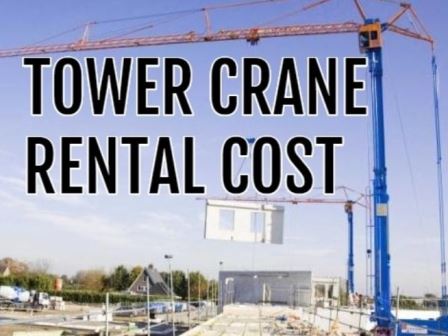
Tower Crane Rental

The economic benefits obtained at the end of a certain project are directly related to cost planning and programming.

How much do Tower Cranes Cost?

The cost of a tower crane can vary widely depending on several factors, including the type, size, and brand of the crane, as well as whether the crane is new or used. Here are some general price ranges:

Tower Crane prices

  1. Small to Medium-Sized Tower Cranes:
  • New: $100,000 to $500,000
  • Used: $70,000 to $250,000
  1. Large Tower Cranes:
  • New: $500,000 to $1,500,000+
  • Used: $300,000 to $1,000,000
  1. Specialized Tower Cranes (e.g., very high capacity or with advanced technology):
  • New: $1,500,000 to $5,000,000 or more
  • Used: Prices vary significantly based on condition, age, and specific features.

Additional Costs

In addition to the base cost of the crane itself, there are several other costs associated with acquiring and operating a tower crane:

  • Transportation and Delivery: Depending on the location, this can add significant costs.
  • Assembly and Disassembly: Requires skilled labor and equipment, which can be costly.
  • Foundation and Installation: Setting up the crane on a stable foundation.
  • Permits and Licenses: Necessary for legal operation on construction sites.
  • Maintenance and Inspections: Regular upkeep to ensure safety and functionality.
  • Insurance: To cover potential accidents and liabilities.

Leasing or Renting

For many construction projects, especially those with shorter durations, renting or leasing a tower crane can be more cost-effective:

  • Monthly Rental: $10,000 to $50,000 depending on the crane’s size and specifications.
  • Long-term Lease: Often includes maintenance and support, with costs varying widely based on the contract terms.

The overall cost of a tower crane is influenced by its specifications and additional operational costs. Whether purchasing or renting, it’s crucial to consider all associated expenses to determine the most cost-effective approach for your specific project needs.

Which type of tower crane is cheapest?

The cost of a tower crane can vary based on its type, size, and capacity. Among the various types of tower cranes, the self-erecting tower crane is generally the cheapest. Here’s why:

Self-Erecting Tower Cranes

  • Cost: Typically ranges from $100,000 to $200,000 for new models.
  • Usage: Ideal for small to medium-sized construction projects, residential buildings, and sites with limited space.
  • Advantages:
  • Quick Setup: Can be assembled and disassembled relatively quickly without the need for large mobile cranes.
  • Mobility: Often mounted on wheels or tracks, making them easy to move around the job site.
  • Compact Design: Takes up less space, making them suitable for confined construction sites.

Comparison with Other Types

  1. Hammerhead Tower Cranes:
  • Cost: $200,000 to $700,000 (new)
  • Usage: Suitable for a wide range of construction projects.
  • Larger and more versatile but also more expensive and complex to set up.
  1. Luffing Jib Tower Cranes:
  • Cost: $300,000 to $1,500,000 (new)
  • Usage: Ideal for urban environments where space is limited and there are height restrictions.
  • More expensive due to their advanced design and capabilities.
  1. Flat Top Tower Cranes:
  • Cost: $250,000 to $1,000,000 (new)
  • Usage: Useful for sites with multiple cranes working simultaneously.
  • Mid-range cost, designed for quick assembly and flexibility.

Considerations

  • Project Requirements: The type of crane needed depends on the specific requirements of the project, including load capacity, height, and site constraints.
  • Rental Options: For short-term projects, renting a crane can be more cost-effective than purchasing. Self-erecting cranes are also cheaper to rent compared to larger models.
  • Maintenance and Operation: Cheaper cranes might have lower operational costs, but it’s important to factor in maintenance and the ease of operation.

Self-erecting tower cranes are the most economical option for many construction projects due to their lower purchase price, quick setup, and ease of use. However, the choice of crane should ultimately depend on the specific needs and constraints of the project.

More on this story

Tower Crane Rental

The economic benefits obtained at the end of a certain project are directly related to cost planning and programming.

Tower Cranes

Types of Tower Cranes and specifications

What is the Tip Load of Tower Crane

The “tip load” of a tower crane refers to the maximum load that can be safely lifted at the maximum radius (distance from the crane’s center of rotation to the load) that the crane can reach.

This value is crucial for crane operators and site planners as it directly influences the crane’s lifting capacity and the safety of operations.

Understanding the tip load is essential for proper planning and safe operation on construction sites, ensuring that the crane can handle the required loads without risking collapse or tipping.

Key points about tip load

Maximum Load at Maximum Radius: The tip load is the heaviest weight that can be lifted when the crane’s jib (horizontal arm) is fully extended.

Crane Stability: The tip load is influenced by the stability of the crane. The further out the load is from the center of rotation, the more leverage it exerts, potentially making the crane unstable.

Safety Limits: Crane manufacturers provide detailed load charts that specify the maximum loads for various radii. These charts must be adhered to in order to ensure safe operation.

Counterweights and Structural Limits: The tip load is also a function of the counterweights used on the crane and the structural limits of the crane itself. The crane’s design, including its foundation, counterweights, and the strength of its components, all play a role in determining the tip load.

What is the tip load of a tower crane?

The tip load of a tower crane varies depending on the specific model and manufacturer of the crane. Each crane has its own load chart, which outlines the maximum loads that can be safely lifted at different radii.

To give you a concrete example, let’s look at a typical tower crane load chart and its tip load.

For instance, consider the Potain MDT 178 tower crane, a popular model in the construction industry. Here’s a simplified example of what its load chart might look like:

  • At 10 meters radius: Maximum load = 12,000 kg
  • At 20 meters radius: Maximum load = 6,000 kg
  • At 30 meters radius: Maximum load = 3,000 kg
  • At 60 meters radius (maximum radius): Tip load = 1,200 kg

In this example, the tip load of the Potain MDT 178 at its maximum radius of 60 meters is 1,200 kg. This means that when the crane’s jib is fully extended to 60 meters, the maximum load it can lift without compromising safety is 1,200 kg.

It’s important to consult the specific load chart for the model of crane you are using, as these values can differ significantly between different cranes and manufacturers.

The load chart takes into account factors such as crane configuration, counterweights, and other operational conditions to ensure safe lifting operations.

More on this story

Tower Crane Load chart

The lifting capacity of the crane depends on several factors. The limitation for lifting weight begins at the base of the tower crane. Each and every component of the crane affects the lifting capacity of the load.

Tower Cranes

Types of Tower Cranes and specifications