All posts by Loganx

Professional Web Writer | Motor Enthusiast | Content Creator | Logan is a dedicated and skilled web writer, passionate about engines and machines and with a talent for creating engaging and informative content. She specializes in writing about a diverse range of topics including construction, forklifts, heavy equipment, excavators, etc. SEO Optimization: Proficient in SEO best practices, ensuring high visibility and engagement for all published content.

Warehouse Storage Solutions

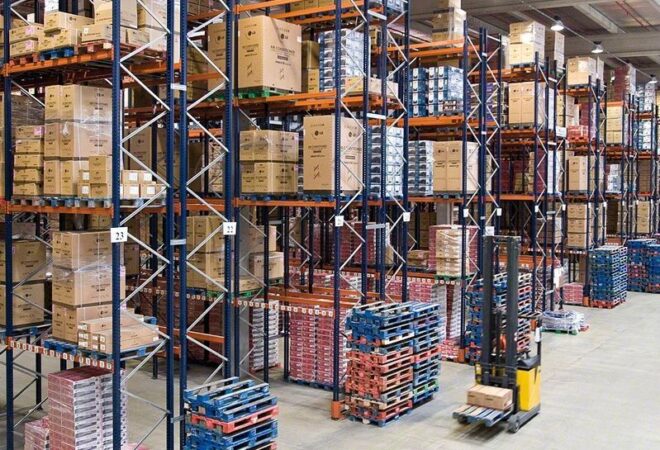
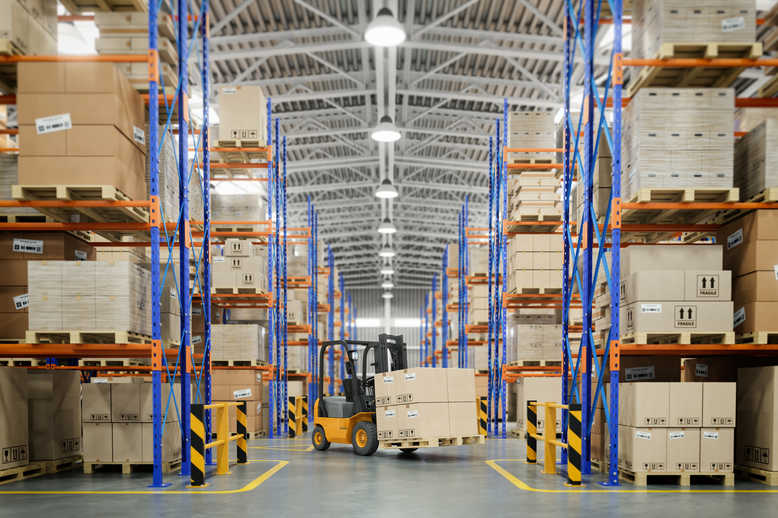
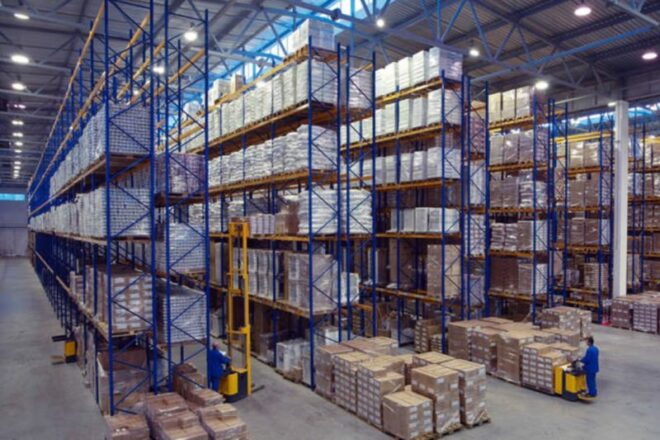
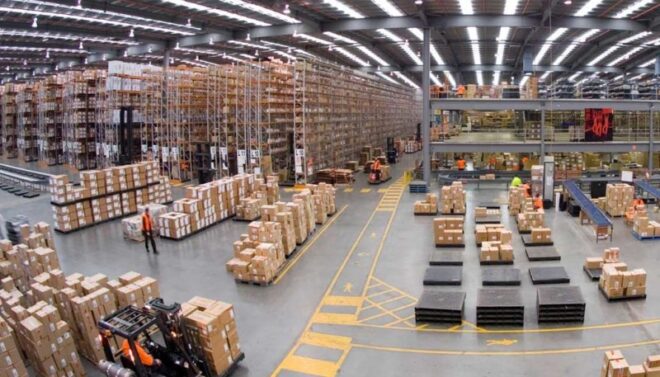
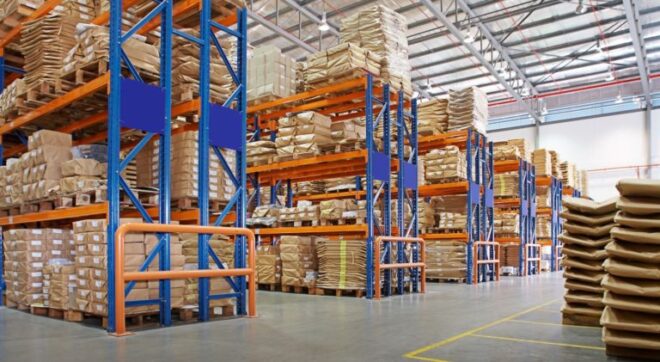
Different types of storage – warehouse storage solutions: There are a number of warehouse storage solutions out there, and while a couple of these may ‘work’ for your operation, there’s likely one that is the most beneficial. Identifying and utilizing this ideal storage solution will ensure optimized density and selectivity, increasing efficiency, and ultimately profits.

Warehouse Storage Solutions

Automated Warehouse Storage Solutions

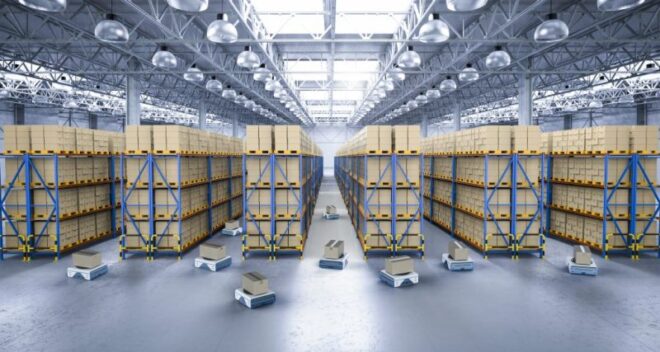
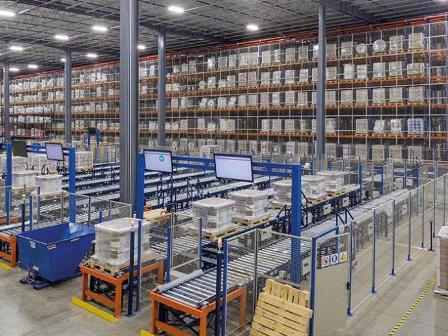
Automated Warehouse Storage Solutions: As space gets more confined and labor costs continue to rise, storage solutions are necessary for the automated you need to optimize warehousing operations in the years ahead.

Today’s modern warehousing systems are required to process increasingly complex tasks and provide reliability and flexibility for future needs. The high-density increase warehouse efficiency by:

  • Maximizing available storage space in existing structures, avoiding off-site storage and expansions
  • Minimizing overall building footprint up to 50% versus conventional warehouses
  • Reducing energy costs by 40% in cooler environments
  • Reducing labor and product damage costs
  • Increasing inventory accuracy and customer service
Warehouse Storage Solutions

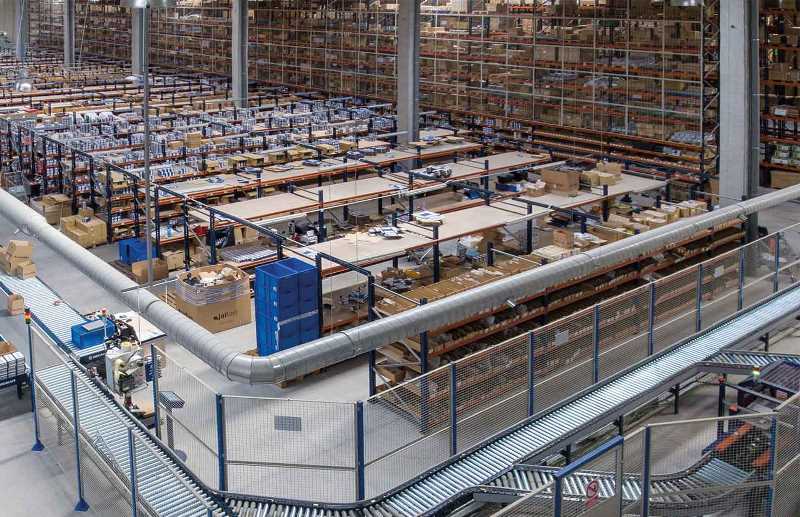
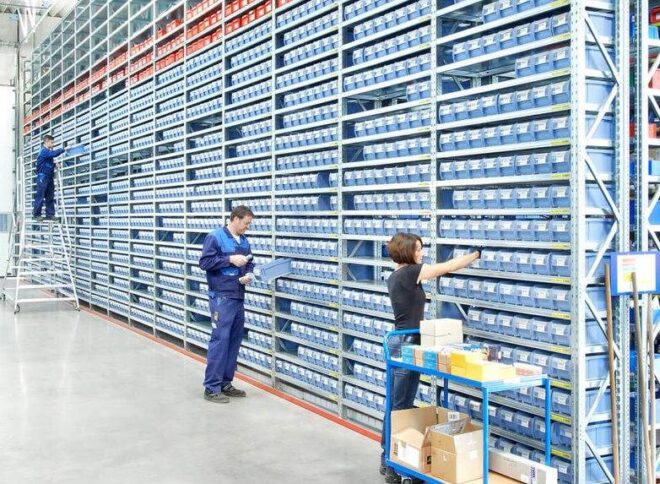
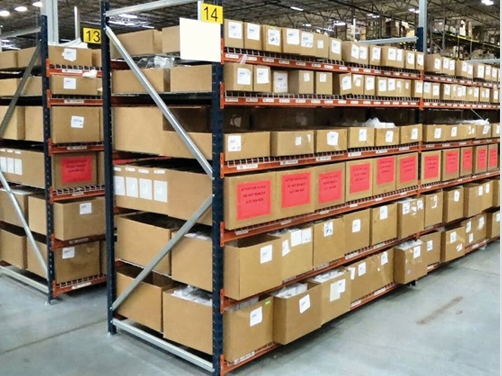
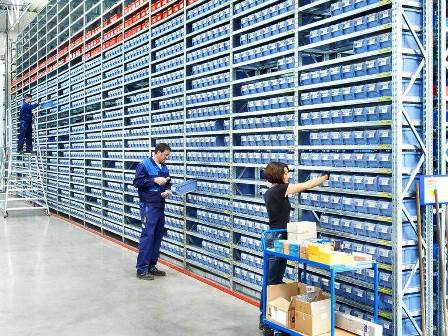
Shelving for storage and order picking

Optimum access to any article.

Characteristics: Shelving over multiple levels made of steel plate or wood is used for storage. Shelving is available as a slot together or bolted style. It is also suitable for high rack installations over 12 m high.

Storage application: Shelving facilitates the storage of goods with large articles ranges in small to medium quantities. The racking can be universally utilized in all industry branches for small parts but also for bulky parts.

Order picking application: When making goods available – according to the “man to goods” principle – attention must be paid to goods being directly available for the order picker. The order picking racking provides the best preconditions for this. Flexible in the application and easily adjustable, it is particularly suitable for large volume, bulky goods, and containers. Order picking by hand is easier, picking times are reduced.

Operation: By hand, with horizontal/vertical order pickers or rack servicing cranes (RBG).

  • Advantages
    • Immediate access to all articles
    • Flexible and expandable
    • Easy to assemble

Drive-through racking for small parts

The solution for Fifo

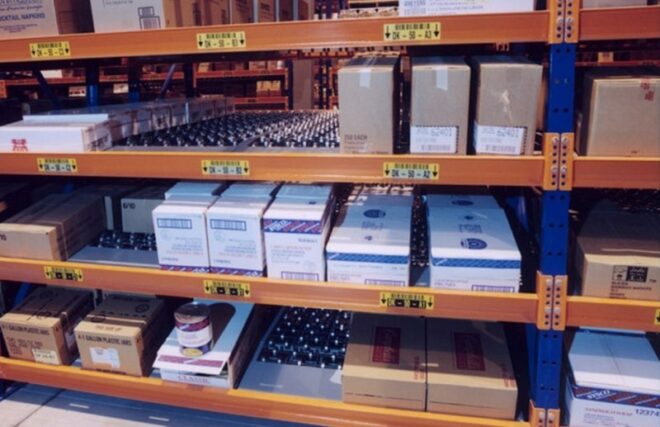
Characteristics: Drive-through racking works according to the Fifo method for small parts or packages of any size. Roller conveyors ensure that stored goods move forward automatically to the retrieval point. This strict adherence to sequence ensures that nothing gets out of date in drive-through racking. This extremely compact form of storage ensures very short order picking distances. Clear demarcation also helps avoid errors.

Application: Drive-through racking is mainly utilized for order picking work. Roller conveyors can also be retrofitted in any standard racking and they are also available for cold stores. A pick-by-light solution can also be integrated into drive-through racking.

Operation: The racking is operated manually or with horizontal or vertical order pickers. Order picking platforms are inserted in multistorey installations.

  • Advantages
    • Fewer working aisles
    • Continuous reserve zones
    • Separate depositing and retrieval
    • Retrofitting possible
    • Fifo method

Automatic small parts storage (mini-load)

Top performance in warehouses

Characteristics: Automatic small parts storage ensures excellent space-saving storage of small parts in containers, stillages, or cartons. These are stored on angled supports – with full utilization of room height.

Application: AKL mainly serves for the storage of small parts with a large number of articles in limited unit numbers per article and with high throughput requirements.

Operation: Depositing and retrieval are carried out with automated rack servicing cranes.

  • Advantages
    • Short picking times
    • High throughput performance
    • Optimum space utilization
    • Direct access to every article

Warehouse storage options

Long goods storage and platforms

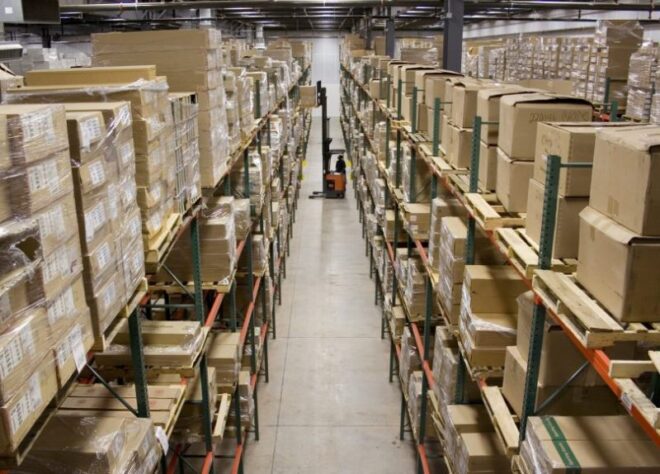
One of the first steps that must be taken in order to craft a warehouse that’s functional and organized is to select your storage system (or systems).

Naturally, this is not a choice that should be taken lightly; warehouse storage systems are a major capital investment that, depending on the design and the way they fit into your warehouse floor plan and processes, can either help or hurt your throughput.

Warehouse Storage Solutions

Cantilever racking

For long goods of any type

Characteristics: There is practically no limit to the length of the cantilever arm racking. This racking for the storage of long goods such as poles, pipes, and boards. Each racking upright is equipped with several cantilever arms (supports) for carrying the load. The distance between uprights depends on the weight of the goods to be stored.

Application: Goods that are heavy and small to large quantities per article at medium throughput are stored on cantilever arms.

Operation: The racking is serviced by forklift trucks such as multiway reach trucks. They work without turning in the aisle and therefore only require very narrow aisle widths.

  • Advantages
    • Extendable to any length and expandable
    • Flexible adjustment to changes in the range of goods

Mezzanine platforms

Additional storage space in existing buildings

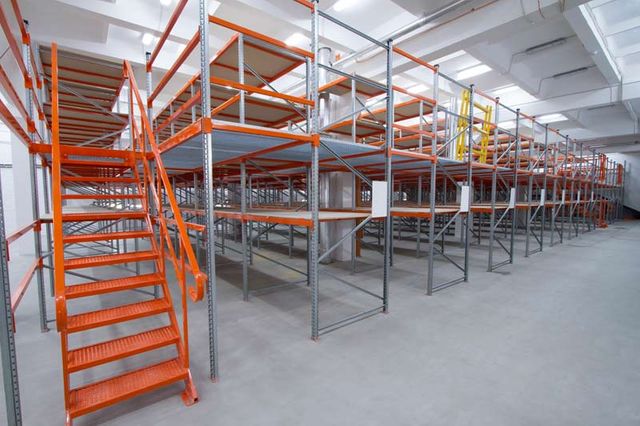
Characteristics: The mezzanine platform is a self-supporting walk-on steel construction. It is erected in an existing building.

Application: Mezzanine platforms create additional storage areas on the platform itself and at the same time room underneath – e.g. for production. Compared with integral mezzanine floors, racking platforms offer many individual design options. For instance, they can also be used as order picking platforms.

Operation: Mezzanine platforms can be designed so that not only hand pallet trucks but also electric forklift trucks can work on them. Forklift trucks or conveyors take care of the material flow from ground level to the platform. Personnel access is provided by stairs.

  • Advantages
    • Extension of storage area
    • Efficient utilization of room height
    • Flexibility on/underneath the platform

Multi-tier shelving

Mezzanine platform with integral shelving

Characteristics: Dependent on the type of goods, operational capacity, and available picking time, a combination of two existing systems often provide an economic solution.

Best example: Order picking platforms, i.e. a combination of shelving and storage platform. This multi-tier construction has the main advantage of operators being able to retrieve stored goods on several levels simultaneously.

Application: Order picking platforms incorporate the upper levels into the order picking zone. The utilization of vertical order pickers is therefore not required.

Operation: Hand pallet trucks and electric forklift trucks support the order picking process. Chutes or conveyor belts take goods to the ground floor. The racking is fed from the outside with forklift trucks.

  • Advantages
    • Optimum space utilization
    • Short order picking routes

Racking accessories

From “upright protectors” for the protection of racking to numbering the entire racking installation, provides you with everything you require for the optimum interface of the truck and racking: signage for racking rows, racking aisles and racking positions, warning signs, information signs, directional and prohibiting signs, load guards, mesh and chipboard bases. Accessories we are unable to offer will have to be invented first!

Warehouse signs: numbering is the first step for getting a warehouse under control. Organizational numbering is also the basis for manual and IT-supported management systems.

Warehouse Storage Solutions

Rack inspection

Essential safety in the warehouse

For safety reasons, the owner of the warehouse is obliged to inspect or have inspected all warehouse equipment – including powered and static racks – systematically and at regular intervals, lays down the procedure and scope of these checks:

  • Regular checks and inspections:
    • Visual inspections (e.g. weekly). This can be performed by the employer’s safety officer.
    • Detailed inspections (at least annually).
  • These must be performed by an expert. “Expert” means that the inspector
    • knows the legislation, regulations, and decrees of the trade associations as well as European standards, and
    • has detailed technical and static knowledge of the specific warehouse setup/rack.

In-house trained rack inspectors

Rack inspections carried out by in-house trained inspectors. Personnel with many years’ experience in racking attain the title of “Industry approved rack inspector” after days of practical training in approved institutes and passing an exam.

  • Inspections are carried out during normal warehouse operations. In this case, the rack inspector carries out a visual inspection. The checks include:
    • Visually identifiable defects (e.g. bent or damaged racks)
    • Compliance with the manufacturer‘s load specifications
    • Compliance with regulations and safety measures

The inspection is carried out systematically on the basis of a standard inspection checklist. The inspection is then officially documented with a test plate that can be attached to each rack. This ensures efficiency and transparency for each inspection. And even after the inspection: If you discover any damage or deficiencies, the rack team can of course rectify the situation. Ensuring your rack system meets all your requirements.

  • The advantages of inspection
    • Early identification of damage and its causes
    • Prevent serious accidents
    • Prevent consequential damage
    • Reduce repair costs
    • Greater safety for man, machine and stored goods

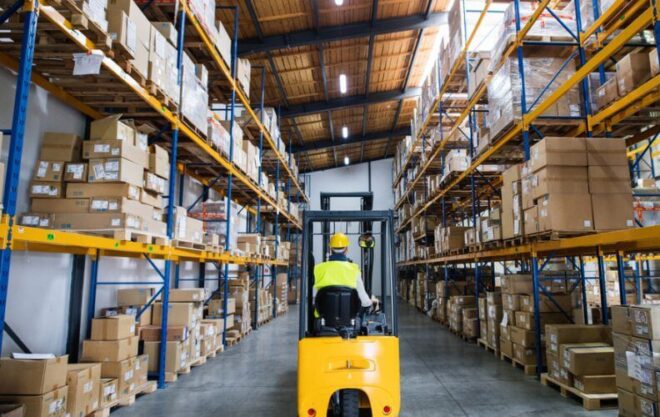
As you can see, there is a nice range of warehouse storage systems available, and as we move into the future, warehouse storage systems are only getting more lightweight, affordable, and technologically-advanced.

Warehouse Storage Solutions

The most read

More on this story

Pallet Rack Inspection checklist

Few warehouse operators have aggressive in-house rack inspection programs in place. Forklift accidents, collisions, dropped or misplaced loads, and other incidents that result in rack damage may or may not get promptly reported.
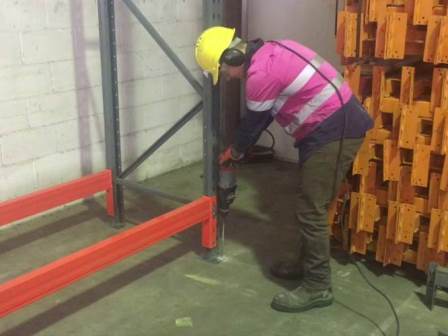
How to secure pallet racking to the floor?

Pallet storage and pallet rack installation jobs require an experienced crew with the proper tools and equipment. Many people involved in pallet racking jobs don’t really know how to install a pallet rack. 

Types of Racks in Warehouse

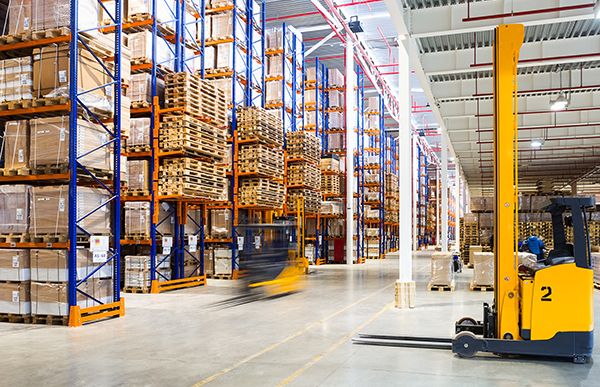
Warehouse storage racks – Types of racks in warehouse: Racking is much more than just steel. Racking is the key to optimum throughput efficiency because the efficiency of the entire material flow is optimized only through the requirement-specific design of a racking system.

The keys to designing: warehouse Racking systems, mezzanines, and self-supporting stores (silos). For the warehouse storage of pallets, containers, and stillages – for cartons or long goods – offers you the complete solution: comprehensive warehouse planning that sees racking and trucks/rack servicing cranes as one system working “hand in hand”. From initial planning and projecting up to hand over.

Types of Racks in Warehouse

Warehouse Storage Racks types

The options seem endless when looking to outfit your office, industrial business, or warehouse. Based on your specific industry, your needs will be drastically different. For a business that requires massive amounts of space and moves many thousands of units per day, you can’t allow poor warehouse shelving options to hold your business back.

Types of Racks in Warehouse

Adjustable pallet racking

The classic among racking systems

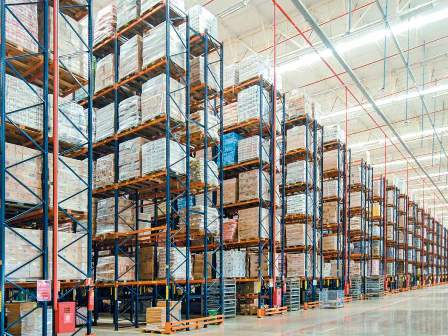
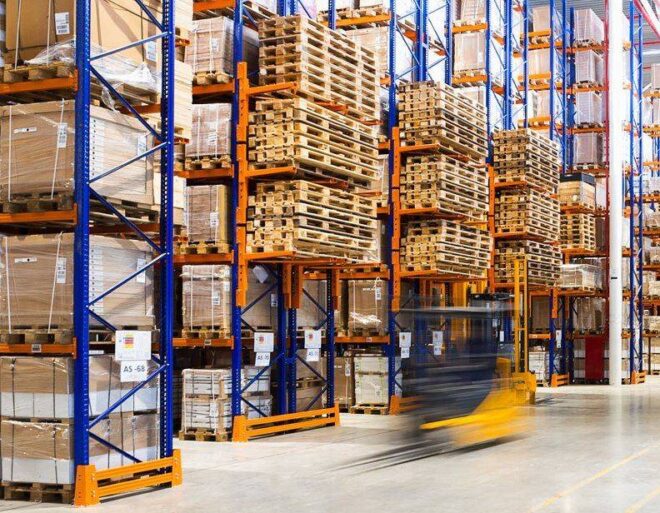
Adjustable pallet racking is the most common racking system. In contrast to single position racking, it carries several pallets between two uprights on every level. In the standard design, it reaches heights of 8 to 10 m and it can also be raised to high racks with 12 m height and in automatic operation up to 30 m height.

Adjustable pallet racking is particularly suitable for large quantities of individual, mainly palletized articles. In contrast to block stacking, there is no contact between pallets which allows direct access to all pallets. Easy adjustment of racking levels ensures optimum warehouse storage utilization. Double-deep storage can also be realized.

The racking is loaded in the same way as single position racking with forklift trucks or rack servicing cranes. Lengthways storage and retrieval are also possible by utilizing narrow aisle trucks. This would reduce the aisle width required.

  • Advantages
    • Direct access to all articles
    • Available for manual/automatic rack servicing
    • Random storage position allocation

Narrow aisles racking

The racking giant: Adjustable pallet racking for narrow aisles

Narrow aisle systems are the giants among multi-position racking systems. They have the performance characteristics of multi-position racking (see pages 10/11) at heights over 10 m and are free-standing. Reduced requirement for working aisles and extremely high lift heights are their distinguishing features.

  • Narrow aisle systems are used specifically where:
  • a) space is limited an
  • b) it is necessary to increase throughput compared with multi-position racking.

Here, narrow-aisle stackers (rail or inductive guidance with the choice of automatic height selection) or rack servicing cranes (RBG) are utilized.

High rack stackers (rail or inductively guided) with automatic height selection or rack servicing cranes take on stacking and retrieval operations.

Availability is ensured by cantilever arms at the head of the racking aisles, high racks are freestanding. They are not a permanent part of the building and thus extremely adaptable during a possible reorganization.

  • Advantages
    • Excellent space utilization
    • High throughput performance
    • Low working aisle widths
    • Gradual upgrading possibilities up to the fully automatic operation

Single-sided cantilever racking

Optimum space utilization especially for box pallets: Single position racking

Single position racking carries one load unit per bay between two uprights on every level. Angle profiles arranged in-depth direction take on the shelf function – additional space is gained through the omission of beams.

Single position racking is particularly suitable for storing ranges with large quantities per article and heavy goods. With the accessible arrangement of load units, single position racking is always advantageous when orders are picked straight from the pallet or box pallet.

The operation of single position racking can be either manual or automatic – using either stackers or rack servicing cranes. Due to low shelf heights, the stacking process is particularly speedy and safe. Compared with block-stacking, direct access to all load units and safe stacking up to height is an advantage.

  • Advantages
    • Direct access to all articles
    • Available for manual or automatic rack servicing
    • Random storage space allocation
    • Operator-friendly order picking

High rack storage

Storage in all dimensions: High rack silo (Clad rack)

Clad rack silos are racking constructions to which roof and walls are fixed. The stores are automatically controlled and reach heights up to 40 m. The silo design provides the shortest construction times and offers interesting depreciation opportunities.

High rack silos are used for storing large quantities of high throughput articles.

The racking system is operated with automatic rack servicing cranes. Rack servicing cranes ensure operation up to a height of 40 m. They can transfer freely from one aisle to the next. Their curve-going ability linked with the Europe-wide patented points system is at the heart of aisle transfers. This system facilitates safe and fast aisle transfer effortlessly.

  • Advantages
    • Heights up to 40 m achievable
    • The utilization of storage space to full height
    • Reduction in the use of conventional buildings
    • Reduced construction time
Types of Racks in Warehouse

Mobile racking storage systems

Optimum space utilization with variable working aisles.

Mobile racking is mounted on motorized mobile bases. This facilitates the opening of a racking aisle at any position of the system.

Mobile racking saves working aisles and created warehouse storage space (up to 90 % compared with traditional racking). It nonetheless provides access to every load unit. Mobile racking is particularly suitable for medium quantities of goods and a medium number of different articles with low access requirements.

Mobile racking is serviced by trucks in individual aisles. Racking aisles can be controlled locally from an individual rack or by remote control. Photoelectric safety barriers at both racking fronts activate an emergency stop as soon as they hit an obstacle.

  • Advantages
    • Saving of up to 90 % racking aisles
    • Better space utilization
    • Single position access

Pallet live storage

Excellent space utilisation for Fifo method.

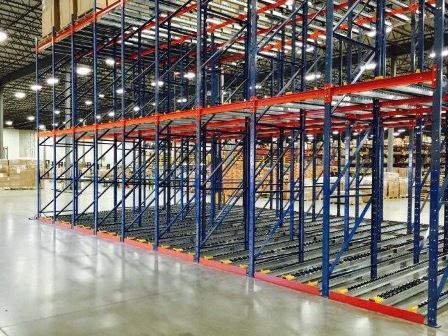
Pallet live storage consists of racking uprights forming a channel. Warehouse Storage is carried out on one side and retrieval on the other side of the racking. As soon as a pallet is retrieved, the other pallets move up automatically to the retrieval position on inclined roller conveyors. Brake rollers keep gravity under control and an automatic separating device ensures that the pallet at the front is never under impact pressure from the following pallet. Automatically driven roller beds in the channel are optionally available.

Pallet live storage is suitable for large quantities of the same articles. In keeping with the Fifo method, they ensure that goods are rotated effectively.

Warehouse Storage typically in lengthways direction with forklift trucks or also with support arm stackers.

  • Advantages
    • Optimized filling ratio
    • Optimized space utilization

Push back racking

Excellent space utilisation for Lifo method.

Characteristics: Push-back racking consists of racking uprights forming a channel. The conveyor’s slope between 3 and 5 %. Deposit and retrieval in this system are carried out on the same racking side. If there are already load units in one of the channels, the new load unit has to push the one previously deposited against the slope. Pallets already in the channel move up automatically when a pallet is retrieved. There are typically three pallets one behind the other in the channel.

  • Application: Push-back racking is suitable for storing medium quantities of the same articles.
  • Operation: Operated by forklift trucks as well as support-wheel stackers.
  • Advantages
    • Optimized filling ratio
    • Optimized space utilization

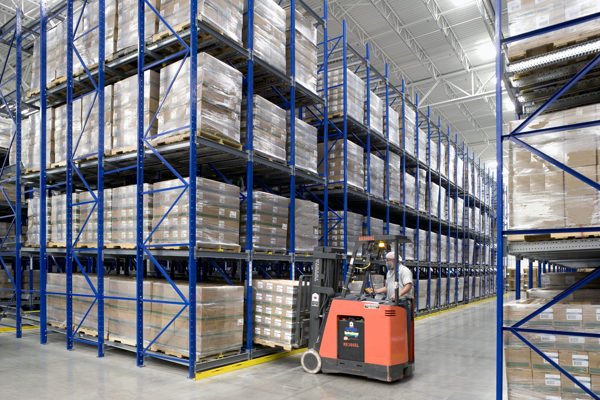
Drive-in/drive-through racking

Compact warehouse storage system.

Characteristics: With drive-in/drive-through racking several load units are stored behind each other in the rack on two pallet support bars (pallet rails). A loading/unloading cycle per racking lane from the top to the bottom (or the other way round) must be observed during depositing and retrieval. The trucks can drive into the racking lanes.

With drive-in racking, rack servicing is only possible from one side (Lifo method). With drive-through racking, in contrast, depositing can be carried out from one side and at the same time retrieval from the other side (Fifo method). Compared with drive-in racking, throughput is, therefore, higher with drive-through racking.

Application: Drive-in and drive-through racking are optimally suitable for storing goods with a low variety of articles. The racking system combines the advantages of block stacking and rack stacking: compact space utilization at height and careful warehouse storage of goods.

Operation: Before entering the aisle, the truck lifts the pallet to the required racking level. The truck must not be wider than the pallet. Sideways seat stackers are particularly suitable as they provide the operator with unobstructed visibility also during reverse travel.

  • Advantages
    • Excellent space utilization
    • Easy to expand
    • Particularly suitable for the warehouse storage of seasonal goods
Types of Racks in Warehouse

Shuttle racking

Deep – Compact – Efficient: Shuttle compact warehouse systems

Features: Pallet carriers that can travel autonomously in pallet channels lie at the heart of shuttle compact warehouse storage systems. They are part of a complete solution, consisting of channel racking, carrier truck, and carrier modules.

The unique thing about shuttle systems is that they are designed both to go under pallets (Under Pallet Carriers, UPCs) and enter pallets (In Pallet Carriers, IPCs). With shuttle systems, you can have fewer aisles and more pallet space over the same surface area, and therefore more efficient cube utilization (in particular with different articles).

The application areas are the same as for drive-in and drive-through racks (see page 24/25). However, they have the added advantages in that the shuttle system throughput is greater and that you only have to store one type of article per channel. This enhances cube utilization significantly.

The system is designed not only for a large but also for a medium number of items with medium to large distances between them. Typical application fields include cold stores, production buffer stores, picking replenishment stores, and the transporting service sector as a whole.

Pallet shuttle automation

In Pallet Carrier (IPC) operation: High throughput levels with frequent channel changes (e.g. due to a small number of pallets per item, shorter channels, combined orders from various articles, or replenishment in picking tunnel systems). Pallets are raised by the carrier truck directly with the IPC and used together in the channel. Stacking can then begin immediately.

Under Pallet Carrier (UPC) operation: High throughput levels with frequent channel emptying/filling (e.g. due to a greater number of pallets per item, longer channels, or combined orders for largely the same items). Pallets are deposited by the carrier truck onto a UPC on the channel. During the carrier journey, the truck driver can fetch another pallet and deposit it at the start of the channel. The next stacking operation can therefore already begin. Retrieval is carried out in the same way.

  • Advantage
    • Excellent surface area and cube utilization
    • High throughput levels
    • Load-saving handling
    • Two carrier types for different applications
    • Lifo (last in first out) and Fifo (first in first out) can be performed with both types
    • Different pallet types can be used in the same racking system
    • Ideally suited to trucks and racking systems through an individual interface and optimum residual capacity utilization
Types of Racks in Warehouse

The most read

Different types of racks in warehouses

If you are considering moving inventory to a warehouse, you should be aware of the different types of racks in warehouses.

More on this story

Pallet Racking Types

Pallet racking is a material handling storage rack system designed to store products and materials on pallets in horizontal rows and on multiple levels.

Pallet Rack Inspection checklist

Few warehouse operators have aggressive in-house rack inspection programs in place. Forklift accidents, collisions, dropped or misplaced loads, and other incidents that result in rack damage may or may not get promptly reported.

Pallet rack anchoring requirements

Pallet rack anchoring requirements:

Selective Pallet Rack Installation

  • Layout the floor as described.
  • Stand the first two uprights in a row and install all beams. Rough plumb the first bay so that the row does not lean too much as the install proceeds. Typically, if only the first level of beams is tightened, it will hold the starter bay plumb. Be sure to loosen these beams when the row is complete and ready to plumb in the down aisle direction.
  • Anchor these uprights at the appropriate points on the grid, but only set the anchors halfway into the holes and do not tighten.
  • Proceed with the erection of the balance of the row. Install the beams, but leave the connections loose.
  • It is recommended that the uprights be anchored as the erection proceeds, but only by setting the anchors halfway into the holes. This ensures that when the rack is cross aisle plumbed, there is enough length left in the anchor bolts to add shims if necessary.
  • Once the row is completed, make sure it is anchored, but only set the anchor s half way down.

Storage rack design guidelines

  • Make sure the uprights are positioned accurately to the layout grid.
  • Shim the rack cross aisle. Place a plumb bob on each upright and shim either the front or rear base plate to straighten the frame. See shimming guidelines & diagram page 9.
  • Once the row is anchored and shimmed cross aisle, proceed with tightening the anchor bolts.
  • Proceed with the installation of pallet supports and back ties. This can be done at the same time as installing individual bays, but leave the bolts loose.
  • With the row anchored, detailed, and plumbed cross aisle, begin plumbing the row in the down aisle direction.
  • Attach a cable to the top beam elevation of the first upright on the front or aisle side post, in the row of sufficient length to reach 5 to 6 uprights back at the base.
  • Hang a plumb bob, use a transit or a bazooka bob, to determine in which direction the row of needs to be pulled.

Industrial storage Rack design

Check both the front and rear posts of the upright. It is possible that the front post of the upright may need to go in one direction and the rear post in the other down aisle direction.

If this occurs, add additional cables to the rear post as well, to pull the row square.

  • Attach a come-a-long to the end of the cable to aid in pulling the row.
  • Check the first and last frame in the row and if it is within tolerance, tighten all bolts in the beams, pallet supports and back-to-back ties with the cables in place. If the last upright in the row is out of tolerance, attach a second cable at the rear 5 bays and pull the row in the opposite direction, to eliminate any growth that may have occurred due to the slop in the beam and upright holes and then tighten all bolts in the row.
  • If the row of rack is particularly long, this process should take place in 25 bay sections.
  • The row is complete once all bolted connections are tight.

Each row of rack should be plumbed in this fashion. If you choose to plumb a back-to-back row down aisle with the back ties installed, you must be sure that all four upright posts are in the line with each other in the cross aisle direction. Both rows must be aligned with each other.

Do not use a 4-foot level to plumb any rack over 10 feet tall. This method is very inaccurate and should not be used.

More on this story

How to secure pallet racking to the floor?

Pallet storage and pallet rack installation jobs require an experienced crew with the proper tools and equipment. Many people involved in pallet racking jobs don’t really know how to install a pallet rack. 
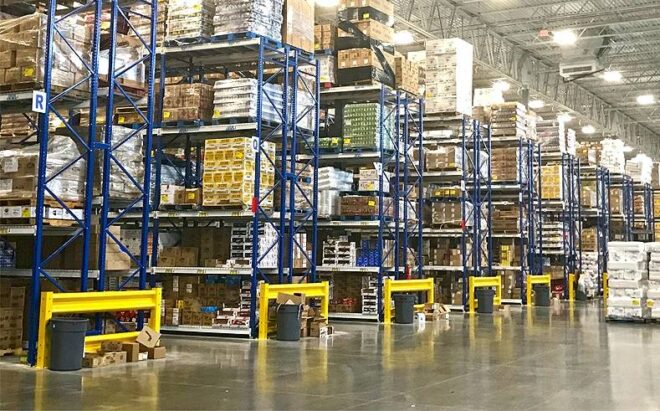
Pallet Rack Inspection checklist

Few warehouse operators have aggressive in-house rack inspection programs in place. Forklift accidents, collisions, dropped or misplaced loads, and other incidents that result in rack damage may or may not get promptly reported.

Working under pallet racking

Pallet racks are designed to easily hold pallets loaded to maximum capacity and could theoretically support more weight.

After all, the steel structure is what supports many skyscrapers.

The steel frame that makes up most warehouse racks is generally built to handle one of six ISO standard pallet sizes and whatever cargo those pallets can normally carry.

The typical figure is approximately 2,000 pounds of static load for the typical North American Grocery Manufacturers Association (GMA) specification pallet, and the racks will be constructed with a centerline beam that can support at least 2,000 pounds. on each side of the beam facing the aisles.

Exact loads may vary depending on pallet rack configuration and the types of pallets used.

A Guide to Storing Difficult, Bulky and Long Loads

Storing rolls and reels

Rolls, reels and other spooling loads can be stored on pallet racks. To accomplish this, special reel pockets are placed on the upright and then fitted with a horizontal bar.

Rolled items like film, wiring, cables or paper are placed on the bar, and can be dispensed. The capacities for these racks must be understood, since the loads are dynamic. Reel pockets have capacities (calculated per pair) that must be taken into account.

Long item storage

Many long items can be better stored on cantilever than pallet racks, but there are applications where pallet rack fits better in the storage strategy of your facility.

We’ve done projects, for instance, where long rolls of film or fabric can’t be stored on cantilever arms because the arm would dent fragile materials and full support is needed.

You may already have pallet racks and want to adapt them to store longer loads. Pallet racks can be adapted with relative ease for these applications.

What can you do to reduce risks?

Load the rack with adequate clearances

Load your racks with acceptable tolerances above and to the sides of each pallet and the frames. You should have 10” head clearance between the top of load and the bottom of the beam above it.

Add technology to help drivers see

Technology is only an enhancement to training. It can’t prevent accidents on its own, but can help drivers see and understand the situation better.

Options include cameras that let drivers see the load and beam, laser tine guides, tine leveling alarms and more.

Install product/pallet fall protection systems

If forklift drivers bump a pallet and knock it, or a palletized carton or other loads-off, then protective systems like safety netting, straps, back beams/bars, or wire panels can stop the fall and help prevent damage and injuries.

More on this story

Pallet Rack Inspection checklist

Few warehouse operators have aggressive in-house rack inspection programs in place. Forklift accidents, collisions, dropped or misplaced loads, and other incidents that result in rack damage may or may not get promptly reported.

Storage Pallet Rack

Storage Systems Options – Storage Pallet Rack: Every company faces unique situations when considering their warehouse storage and design options.

  • This can include:
    • Expanding an existing location
    • Opening a facility in a new market
    • Adding more products and services
    • Offering new sales channels such as e-commerce or direct-to-consumer

The essential purpose of a pallet racking system is to support the largest load possible in relation to its self-weight while maintaining ready access to individual pallets and preventing damage to stored goods.
In general, the design is complicated by the semi-rigid nature of beam/upright and upright/floor connections, and by the use of perforated upright members in large, multistorey sway frames.

Facility changes come down to different types of storage solutions for product handling, manipulation, or picking.

Even though companies face a variety of unique situations, the same challenge still exists for all of them: implementing physical and operational changes without affecting the customer.

Typically, in warehouses and distribution centers, facility changes come down to different types of storage solutions for product handling, manipulation, or picking.

Storage Pallet Rack

Storage pallet racks system

The most common types of storage solutions come from four categories:

  • Bulk Storage
  • Pallet Rack
  • Shelving
  • Carton Flow

When planning for these different systems, you need to ensure that whichever you choose, they fit well in the footprint of your facility. Often times, building internals are overlooked in place of overall square footage. This can lead to a lot of underutilized space.

Ideally, the storage systems would be identified and designed prior to the selection or building design, however, this isn’t always possible. When selecting a building for your next facility location, keep in mind these considerations:

  • Building Column Layout
    • How does the layout relate to the aisles and major equipment design?
  • Building Clear Height
    • Are you allowing for any useable vertical space below the roof or ceiling?
  • Overall Square Footage
    • How much useable floor space will you have?
  • Permanent and Semi-Permanent Obstructions
    • Does your new facility have HVAC, offices, electrical, sprinklers, lighting, etc.?
  • The simplicity of Building Layout
    • Keep in mind that a rectangular building is typically more conducive to efficient storage design than one that has large square footage through multiple build-outs.
  • Dock Door Placement
    • Where are the dock doors located in relation to the rest of the space?
  • Environmental Factors
    • How are the airflow, humidity, and other environmental factors?

If you keep these tips in mind, it will be much easier to get a facility that meets your unique needs and maximizes space and efficiency.

  • When making changes to your warehouse or distribution center to maximize space, you usually have four storage system options:
    • Bulk Storage
    • Pallet Rack
    • Shelving
    • Carton Flow
Storage Pallet Rack

Bulk storage racks

Bulk storage is also known as “floor stacked” and is the most basic form of warehouse storage. It consists of no physical storage system other than the building’s square footage.

Products are stored directly on the warehouse floor and are typically arranged several pallets deep and are possibly stacked depending on the type of product.

  • This method is low in cost and is ideal when:
    • Pallets are stackable
    • Ceiling height prevents vertical racks
    • Products are not sensitive to (FIFO) First-In-First-Out sequencing
    • Storage density is not a concern
  • With these benefits, though, come to some challenges as well, such as:
    • Low space utilization (60-70%) since vertical space is not effectively used
    • Increased possibility for product damage due to stacking
    • Inefficient product location and picking due to cumbersome product access and poor product location identification.

Bulk storage is usually a starting point for facilities before they move into some of the other storage system options.

Bulk storage racks

Industrial Pallet Racks

Pallet racking consists of a set of upright frames connected in various ways by horizontal beams to provide storage for the palletized or non-palletized products depending on the rack configuration and beam supports used.

  • There are five basic types of pallet racks:
    • Drive-In/Drive-Thru
    • Selective
    • Pallet Flow
    • Pushback
    • Cantilever
Industrial Pallet Racks

Drive-In/ Drive-Thru

The drive-in/drive-thru pallet racking consists of a multi-level system of rails forming several levels of continuous pallet storage.

It can be installed as a drive-in system, which is accessible for product delivery and retrieval from only one side (LIFO) LastIn First-Out. It can also be installed as drive-thru, which typically delivers the product to one side and retrieves it from the opposite thereby preserving FIFO sequencing.

This type of storage is used when storage density desired is high (potentially 85%) and SKU base is low. It is well suited for refrigerator or freezer environments where square footage costs are significantly higher. This is why this type of pallet storage is often used in the grocery industry.

  • Challenges with this storage system include:
    • It requires highly skilled forklift drivers since they enter the rack system every time they deliver or retrieve products.
    • It also requires quality pallets since they reside on rails that suspend them on each end.
    • There is no easy access to the internal pallets leading to trapped product
    • The system is designed for specifically sized pallets and cannot be easily modified to accommodate larger or smaller width pallets.
    • There is an increased potential for injury and damage due to forklift impact.

When deciding on this type of storage, it is best to keep in mind your inventory receiving and delivering process, the number of SKU’s, and your FIFO and LIFO product needs.

Selective Pallet Racking

Selective pallet racking comes in two varieties: single or double deep. Single deep selective racking is the most common type of pallet racking in use and is one of the least costly types of basic storage.

This is the type of racking used in many popular warehouses, such as Home Depot, Lowes, and Costco. Single deep also offers access to every location giving users flexibility in product storage and retrieval.

Though single deep is flexible and at a low cost, it comes at the cost of space utilization. This can only be regained through the use of higher lift technology to reduce aisle space. It is best used when:

  • 100% access is required or desired
  • Large numbers of SKU’s are handled relative to a total storage
  • Access trumps cube utilization

On the other hand, a double deep selective rack allows for better space utilization and is no more costly per pallet location than a single deep rack. However, it should only be used if storage density is more important than 100% access since the product can become trapped and require additional labor to maneuver. This type of racking also requires specific lift equipment that can retrieve pallets from double-deep locations.

Pallet Flow Racking

Pallet flow systems consist of a rail or conveyor system installed in a pallet rack that can be 20 or more pallets deep. There are many versions of the flow mechanism, but the basic premise is to feed pallets in one end and pick them up on the other.

Typically some sort of speed restrictor is installed in deeper systems to prevent impact damage.

  • These systems provide the density and FIFO storage possible with drive-thru without the requirements to drive into the rack system. It is used when:
    • SKU count is low
    • FIFO is desired
    • Square footage is tight

It is significantly more costly than single deep or drive-thru racking and requires the use of quality pallets to prevent the product from hanging up in deep locations.

Pushback Pallet Racking

Pushback pallet racking consists of carts installed into pallet racks. The carts are stacked and allow for storage of up to six pallets deep, although they most typically are no more than four pallets deep.

The product is placed on a cart and then pushed back when the next pallet is placed in front of it. This is done until the final cart is pushed back and the last pallet is stored onto the rack beam. When a pallet is removed, the successive pallets move forward because the carts are installed on a slight decline toward the front beam.

This system provides high storage density and is used when deep storage is desired near a wall or for medium turnover products with multiple pallets per SKU.

This storage system is also used when LIFO is an acceptable means to rotate inventory. Pushback racking is typically the most costly type of manual pallet storage.

Cantilever Pallet Racking

Cantilever racking is a very specific type of racking used extensively in the furniture and lumber industry for long products that are better supported by arms instead of beam levels.

Cantilever must be designed specifically for the products they support and may require special considerations based on product size, weight, and rigidity

Shelving pallet racks

Much like, pallet racking, shelving is made up of upright frames, but instead of being connected by horizontal beams, they are connected by shelves. These are typically used for lighter, smaller items when pallets are not required.

Shelving pallet racks

Wide Span Shelving

Wide Span Shelving is typically a lighter duty version of a standard pallet rack. It provides the same versatility, access, and sizing as selective pallet racking, but is used when the overall capacity stored is less than light-duty pallet rack standards.

This shelving isn’t typically designed for pallet storage, but is ideal for cartons, hand stacked storage, bin or tote storage, etc.

Wide-span shelving is most common in a loose pick, totes, and small-item storage. It can also be stacked to form shelf supported mezzanine structures that can maximize vertical storage.

Industrial Shelving

This type of storage offers multiple levels of storage or picking in a relatively small footprint. These shelves typically store anywhere from 300 to 1,000 pounds per shelf level. They can incorporate dividers, drawers, and many other accessories that augment the product stored.

Industrial shelving is extensively used in the automotive and electronics industries for small parts picking. It is also versatile and can be stacked to form multi-level mezzanine supports.

It is less durable than pallet rack or wide span shelving, but is significantly less costly per storage location.

Carton Flow racks

Carton Flow is a form of shelving that uses gravity feed rear-load design. This storage system helps to keep the product more organized because it is automatically rotated on a FIFO basis.

  • The decision to use carton flow depends on many factors such as:
    • Overall footprint available
    • Consistency of product sizes and weights
    • SKU quantity
    • SKU velocity

The size, weight, and consistency of your merchandise will determine which type of carton flow is best for your application. There is a big difference in carton flow requirements for a warehouse that picks products from consistently sized and weighted boxes or containers, and a warehouse where size and shape vary greatly.

  • There are a few basic types of carton flow including:
    • Wheel Track
    • Full-Width Roller
    • Skatewheel

Any of these types of carton flow can be configured as either standalone units or rows integrated into an existing storage system.

Carton Flow racks

Wheel Track Carton Flow

Wheel track carton flow consists of a frame or shelf assembly, wheel tracks or rails, and dividers, which are most likely full length and adjustable. The frame is welded, bolted, or bracketed, and the wheel tracks are typically about 1” wide roll formed channels with integrated plastic wheels on roughly 2” centers. These wheels may or may not have
axles.

Wheel tracks are a very useful type of carton flow in that:

  • Their wheel tracks and dividers are adjustable so you can modify the carton flow as your product mix changes.
  • The tracks and dividers are not part of a composite unit, so they can be replaced as they degrade or are damaged.
  • The shelves can integrate many types of accessories for product presentations, such as knuckle over trays.
  • The shelves are not bound by the depth of the storage media, allowing for ergonomic shelf positioning or excess depth where applicable.
  • Additional tracks may be added to allow easier product travel.

Though there are many benefits to wheel tracks, there are also some drawbacks, such as:

  • The wheels can bind or eventually cause friction that reduces product flow. The boxes may conform to wheels in high humidity environments depending on the product type, resulting in hang-ups.
  • The tracks can be difficult and time-consuming to adjust once installed, especially when some presentation accessories are also present.
  • Adding additional tracks to allow smoother product conveyance quickly adds incremental cost to each pick line.
  • This system also has a limited width since the entire assembly must be supported by the shelf or frame the tracks are attached to. Typically the system will have 96” wide shelves, but sizes approaching 144” can be challenging especially with heavier products.
  • A small amount of pickable space is lost in both depth and width due to the use of shelf structure for primary support.

Full-Width Roller Carton Flow

The full-width roller carton flow typically consists of gravity roller conveyor tracks of varying widths, roller centers, and capacities.

As with wheel track, it relies on pallet rack or standalone supports to provide the structural support, but typically uses standard pallet rack beams as the primary means for installation.

Tracks can either be confined to the depth of the racking using rack beams as end stops or mounting areas for accessories, or attach on top of the beams allowing for more depth, ergo, and accessory options.

Some require brackets that allow the track to be attached to the beam and others simply lay in place and are secured as is.

Deep lane applications may require additional beams for support above and beyond the infeed and discharge zones, although this is typically accomplished through the use of intermediated beams within the normal pallet rack structure.

Some manufacturers may also provide a shelf or frame that allows accessories to be installed and depth adjustment beyond beam support.

  • Some advantages to the full-width roller include:
    • They provide more surface area contact and may provide better conveyance for products with flimsy bottoms or in high humidity environments.
    • The width is only confined by the total bay width and beam capacities if no support shelf or frame is used.
    • This results in no lost pickable space
    • The roller centers and track widths can be modified to strike a balance between cost and functionality. Some products overhang is allowable.
    • Tracks are easy to install as a new product or in a retrofit. This typically involves infeed and discharge brackets and a lay-in section of conveyor for rack beam installation.
  • In addition to these advantages, full-width rollers also have some drawbacks, such as:
    • The specific width means you are limited in the size of the product you can accommodate if a business changes. They may be too large or too small as things change.
    • Cost is typically higher per bay than wheel track applications.
    • There is no ability for width adjustments once installed. Tracks are fixed width so the new product is required if changes are desired.

Skatewheel Carton Flow

Skatewheel carton flow blends the concepts of both full-width roller and wheel track into a fixed-width bed of skate wheel.

Its beds can be inserted to cover the entire bay width so that no gaps are present. Lane entry guides or full-length dividers are used to separate lanes. The wheels can be aligned or staggered depending on the manufacturer and are typically much larger than those on wheel track rails. Wheels ride on an axle and are held in place in various ways.

  • Skatewheels offers many benefits as a storage system, including:
    • There is no loss of pickable space since the entire bay is one big carton flow section.
    • The lane entry guides are adjustable to accommodate any product size or changes.
    • The number of wheels per foot can typically be adjusted by changing the axle centers, which mitigate costs.
    • It has larger wheels which provide less friction and more alignment with the full-width roller surface area. This lessens the chances of boxes forming around the wheels in high humidity.
    • This system is also very easy to install.
  • With these many benefits, though, come some drawbacks, such as:
    • Higher costs due to its full bay coverage, number of wheels, and larger axle sizes than other options.
    • The product may skew during transit if the entry guides are not full length.
    • Depth is usually limited to beam to beam depth of the pallet rack unless using a standalone rack.
Pallet rack safety

Rack Safety Tips:

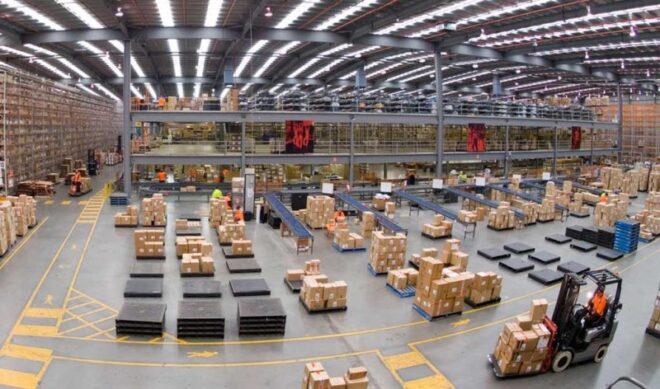
One of the most overlooked areas of warehouse layout is safety guarding for people and for the storage products themselves. The question isn’t if you are going to incur damage to your rack storage system, it’s when.

Almost every warehouse will experience some level of damage based on the level of complexity of the building and storage layout, the experience of lift drivers, aisle width, type of lift, type of product, etc.

Here are some safety tips to keep in mind for prevention:

  • Consider installing pallet rack guarding: The incremental cost of using pallet rack guarding will typically pay for itself fairly quickly by preventing more costly damage to the structural components of the system.
  • Utilize floor mounted column protection: Unless you are using self-guided lifts that are highly unlikely to impact your rack system, you will need a barrier between your equipment and your pallet racks. Installing floor mounted column protectors can protect your racking from being damaged.
  • To provide the most protection, protectors with internal anchors are preferred because they absorb the impact so that the pallet racks do not. It is much easier to replace guarding than it is to replace a pallet
    rack system.

Warehouse racking safety standards

Though internal anchors tend to be more labor-intensive, they don’t cause the damage to forklift wheels that exposed anchors do. This results in less time spent maintaining the wheels.

  • Use full-length end-of-aisle guarding: Full-length end-of-aisle guarding in high traffic areas provides a visual and physical barrier to lift equipment. These areas, along with tunnels, are at greater risk of impact, so they are well worth
    protecting.
  • Ensure transition points are well lit and clearly marked: Making sure that all transition points for lift equipment are well lit, visually clear, and marked appropriately helps even inexperienced operators clearly understand traffic patterns.
  • Installing double highway rails: Double highway rails are used to separate operational areas where personnel and powered lift equipment operate in close proximity. Handrails may provide a visual deterrent in these areas, but highway rails are more likely to prevent major accidents.
  • Maintain a rigorous training program: A rigorous training program ensures all operators are qualified to operate their respective lift equipment an use its associated safety equipment.

By keeping these tips in mind, you can prevent damage to your racking and ensure that your operators are practicing safe driving procedures.

The most read

More on this story

Pallet Racking Types

Pallet racking is a material handling storage rack system designed to store products and materials on pallets in horizontal rows and on multiple levels. Most warehouses prefer using pallet racking systems to maximize the storage space they have available.

Pallet Rack Inspection checklist

Few warehouse operators have aggressive in-house rack inspection programs in place. Forklift accidents, collisions, dropped or misplaced loads, and other incidents that result in rack damage may or may not get promptly reported.

Warehouse Racking Design

Warehouse Racking Design: The efficient, safe design and use of pallet racking storage systems, pallets and materials handling equipment depend on a number of factors.

This guide is intended to give an indication of best practice and advice to anyone involved in the planning of a new warehouse or storage facility.

It is of equal value to the warehouse manager/operator for information on operation, maintenance and health and safety matters for those who may not be a specialist with regard to this type of equipment or in the detail design related to the storage facility.

Covering Industry and Technical Standards and relevant storage and warehouse legislation this guide is a handy reference tool for any personnel working within a warehousing/operations environment.

Warehouse Racking Design

Warehouse racking layout

Warehouse and Storage Planning

Warehouse planning and implementation

Warehouse racking design: Warehouse Planning Do’s and Don’ts:

Design from the inside, out: Warehousing is all about efficient space utilization and cost-effective materials handling. These essentials must be considered first, before the building structure

  • The roof is only there to keep out the weather!
  • It is more economical to build upwards than outwards (per cubic meter of space)
  • Think building volume, not floor area, in storage zones
  • Think of the amount of activity that is to take place and ensure that adequate movement space is also provided
  • Building related costs are often quite high, largely “fixed” and can literally become a “millstone around your neck” if you get your planning wrong!

Unitise and Standardise: Whether handling small parts, palletized goods, or large loads, make sure that you:

  • “Unitise” goods for ease of handling and storage
  • Use industry-standard pallets and containers to eliminate double-handling, minimize the risk of product damage and make the best use of space
  • Minimize the number of different standard sizes and loaded weights of the unit load devices that you use in order to maximize flexibility
  • Instruct your suppliers to use only those standard-sized units, in order to minimize transport and handling costs
  • Work with your customers to deliver in standard unit load quantities and lot sizes, in order to minimize handling and delivery costs

Warehouse implementation plan

Plan for Good Space Utilisation: Space costs money ….. Use it wisely

  • Use Pareto (A, B, C) analysis to categorize products according to their storage, handling, and throughput characteristics
  • Use the available building height to maximum advantage
  • Select storage systems which offer good space utilization good selectivity stock rotation
  • Select handling equipment which complements the storage systems and also facilitates good space utilization (i.e. which will allow you to work with the narrowest practicable aisles)
  • Remember, handling and storage equipment usually accounts for only a relatively small proportion of total warehousing costs. Investment in the right equipment can save a great deal more, both in terms of building costs, and labor costs
Warehouse Racking Design

Warehouse material handling equipment

Plan for Efficient Materials Handling Flow

  • Why meander when you can travel in straight lines?
    • Through-flow or ‘U’ flow?
  • Plan flow-efficient layouts in terms of:
    • stock layout (by-product popularity or another appropriate grouping)
    • processes, including receiving, putaway, picking, packing, and despatch
  • Select appropriate types of handling equipment according to:
    • the types of load to be moved
    • the rates of movement
    • travel distances

Plan for Productivity

warehouse racking design:

  • Labor costs are usually controllable; therefore minimize them
  • Benchmark your performance against “best in class”
  • Focus on Order Picking – it can account for half or more of labor costs. Identify picking methods which:
    • reduce picker travel distances
    • maximize accuracy
    • eliminates paper encourage high productivity, or
    • bring the goods to the picker
  • Introduce performance standards
  • Monitor individual and group KPI’s and performance
  • Train staff
  • Reward good performance

Warehouse dimensions

Prepare the building performance specification only after planning the storage and handling systems and internal layout. (warehouse racking design )

  • Key items to specify, include:
    • Dimensions of the structural column grid
    • Clear operating height from floor to top of the very top load
    • Floor loadings, flatness, and finishes
    • Loading dock arrangements
    • Mezzanine floors; heights, types, and loadings
    • Lighting levels, heating, and environmental needs
    • Fire protection and compartmentalization
    • Offices and employee amenities

warehouse best practices

Think outside the box – avoid congestion: At large D.C.’s over 60% of site area can be allocated to roadways, parking, and external activities.

Make sure that:

  • The site has a secure perimeter
  • Employee car parking is secure and separated from the main site
  • Proper routes are defined and marked for commercial vehicles
  • Adequate parking is provided for commercial vehicles and private cars
  • All-access and egress is controlled, security-wise
  • Pallets, cages, and waste are stored in properly designated, enclosed areas
  • Pedestrian routes are safe and properly defined
  • Plan to avoid congestion: Don’t over-develop the site !!

Future of warehouse

Future Proof the Design – Business is Dynamic. Future-proof your investment, in terms of:

  • Process flexibility
  • Process reliability
  • Process resilience
  • Reverse logistics
  • Allowing for future changes in
    • business needs
    • product ranges
    • stockholding policy
    • customer demands
  • Changes in handling and storage technology and Information Technology
  • Ultimate property disposal
Warehouse Racking Design

Warehouse racking codes

Planning your Racking & Storage:

Matching business needs with the appropriate pallet racking system is critical and entails asking the right questions as well as providing flexibility in solutions that can accommodate variables such as capital resources, anticipated growth, and variable product lines.

Choosing the right storage system involves a solution process, and that begins with considering the flow of merchandise. That will dictate your density requirements – how “tightly” the merchandise should be stored. From that key decision follows a series of specifications: the material and type of racking, pick systems, ancillary material handling, etc.

Warehousing with high-density storage solutions usually has a large or complete turnover of inventories during specific intervals or seasons. Merchandise could be stored in large bays with a few access aisles to maximize floor space.

Conversely, lower density warehousing is appropriate for parts or retail distribution centers where customer orders are picked continuously to fulfill Just In Time (JIT) requirements.

Warehouse Racking Design

Warehouse Racking Design

Storage Analysis & Planning: The data collection stage of the design process defines data requirements and results in the development of two “Planning Bases”.

  • Today’s picture of flows and quantity movements.
  • Tomorrow’s requirements, which may show the transitional steps at specific time-points where significant events are expected to take place e.g. new product launches or new contracts expected/lost.

In almost all circumstances it is important to gain an understanding
of the following;

  • How are the goods received and in what volume? How are they expected to be received and to be stored and put away – and at what rates and volumes?
  • Which product lines are expected to be held as stock – together with the physical characteristics for each stock keeping unit (SKU) passing through the warehouse?
  • What volume of goods needs storing in each of the family or subgroups?
  • What are the typical order profiles (analyzed by division and family groups or subgroups)? Must orders be checked and/or repacked? What are the work content and physical volume to be handled in each task area?
  • Must goods be staged if they cannot be direct-loaded? What is the quantity of inbound and outbound vehicles the facility will need to provide for within the warehouse area (for undercover loading) and within the yard, including any stand trailers or containers?
  • What additional yard space should be allocated to product handling equipment, such as pallets, and should these be of a consistent size for ease of operating the warehouse?

What effect do days of the week or month or other seasonal factors
have on the throughputs and inventory levels? There are two basic data collection tasks that almost always apply:

  • warehouse analysis and improvement
  • Movement Analysis

warehouse analysis and improvement

Storage Analysis: Defining the right balance between the conflicting objectives of efficient storage and frequent order accessories (picking slot visits) is a key part of the decision process. This balance can only be achieved after proper analysis of product lines to be stored and the rates at which they have to move through the warehouse. In this regard compilation of ranked product storage and ranked product movement rate data is invaluable.

Warehouse racking design

To demonstrate this in graphical form, the storage analysis graph in Figure 1.1 shows the number of pallets to be stored for each line. This information combined with the total quantity of pallets or units to be stored provides a very good guide in the selection of storage systems.

Movement Analysis

A movement graph, as illustrated in Figure 1.2 shows the rate at which each product line moves through the warehouse with indications of whether it moves out in pallet or carton quantities.

This provides further guidance to the selection of storage system and the most appropriate handling equipment and, in particular, the order picking system.

In a small operation, this information may be observed manually. As the size and complexity of the warehousing requirement grows, the only practical way to define requirements is to collect data in electronic form and develop a database, allowing the data to be manipulated as required. Typical measures would include number of pallets per day, (e.g. a number of picks or order lines per day), based on known ratios or validated assumptions.

Planning the building footprint and layout

Critical components of a building footprint as it relates to a pallet
racking is:

  • Building column layout
  • Building clear height (usable vertical space below the roof or ceiling)
  • Overall square footage
  • Permanent and semi-permanent obstructions (offices, sprinklers, lighting, etc.)
  • The simplicity of building layout (a rectangular building is typically more conducive to efficient storage design than one that has large square footage through multiple build-outs)
  • Dock door placement
  • Safety requirements (egress paths, forklift aisles, etc.)
Warehouse Racking Design
What is a warehouse design?

The goal of warehouse designing is to optimize warehousing operations and achieve maximum efficiency. Maximum efficiency can be reached by implementing solutions. In short, the warehouse design element aims to maximize the utility of space, equipment, and efficiency of operations.

What is the objective of designing an ideal warehouse layout?

A well-optimized layout also helps employees to ensure time-bin replenishment to make sure the warehouse has optimum space utilization, reduce storage costs, and improve employee efficiency.

How does pallet racking work?

Pallet/Gravity Flow: Pallet flow rack uses metal rollers and the force of gravity to feed pallets into the rack’s pick position and is used for its ability to get warehouses flowing. Like drive-in racking and other engineered systems, pallet flow works by eliminating aisles in order to maximize the available space.

The most read

More on this story

Warehouse Storage Solutions

There are a number of warehouse storage solutions out there, and while a couple of these may ‘work’ for your operation, there’s likely one that is the most beneficial. Identifying and utilizing this ideal storage solution will ensure optimized density and selectivity, increasing efficiency, and ultimately profits.

Types of Racks in Warehouse

Racking is much more than just steel. Racking is the key to optimum throughput efficiency because the efficiency of the entire material flow is optimized only through the requirement-specific design of a racking system.