Category Archives: forklift

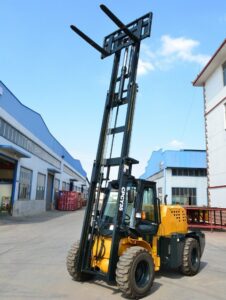
3 Stage Mast Forklift

3 stage mast forklift: A three-stage mast consisting of an outer mast, a middle mast, and an inner mast, each mast slidably and nestable engaging an adjacent mast and configured for a positive and negative lift along the length of each mast.

A first linkage system comprising a cylinder assembly mounted on the outer mast and a chain fixed at opposite ends to the outer and middle masts, therebetween engaging a pulley on the cylinder assembly, wherein the first linkage system achieves a 2:1 movement ratio of the middle mast to the cylinder assembly.

And a second linkage system comprising a chain fixed at opposite ends to the outer and inner masts, therebetween engaging a pulley on the middle mast, wherein the second linkage system achieves a 4:1 movement ratio of the inner mast to the cylinder assembly

3 Stage Mast Forklift

3 Stage forklift

3-Stage – A three-stage mast, or triplex, is the most versatile forklift mast and also the most popular. The outer rails allow for free lift, and the two inner sections can lift loads higher than a two-stage. This mast type is a good choice for general warehouse applications.

Container mast forklift

The term container mast is widely used in the forklift industry.

Most Container masted forklifts are also 3 stage masts. They achieve lift heights of up to 4.7 meters in a standard forklift and up to 5.0 meters in a compact and some electric counterbalance units.

Basically, you can drive inside a container or under a mezzanine floor and lift up, without putting the mast of the forklift through the roof or the floor of your Mezzanine. Hence the term container mast.

The combination of a machine that can lift in a container and still lift outside the container makes container mast units very versatile, but like everything, there is a trade-off.

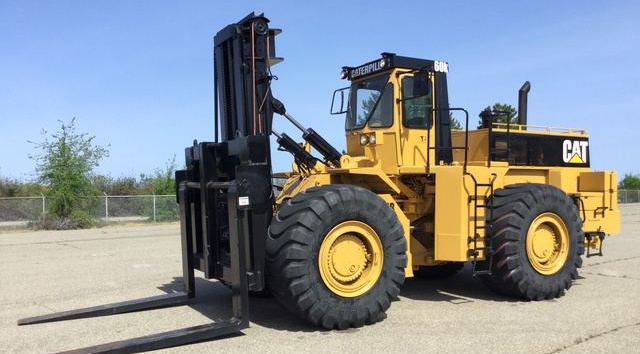
3 Stage Mast Forklift

Forklift mast types

3 stage mast forklift

Forklift truck masts are typically described in two ways:

  • The number of carriages within the overall mast mechanism
  • The lift mechanism

The number of carriages within the overall mast mechanism denotes how many ‘stages’ there are within a mast. A duplex mast has two carriages, or stages, whereas a triplex mast has three carriages or stages. Triplex masts are generally more sought after as the inclusion of an additional carriage ensures maximum lift height that condenses down into minimal closed height.

The lift mechanism within a forklift truck mast is typically either ‘standard’ or ‘full free lift.’

A standard mast offers maximum visibility to the driver as there is a clear gap between the outside of the lift carriage, however for the forks to move, the mast itself must move.

A ‘full free lift’ mast allows the lifting of the forks without the raising of the mast itself. This is particularly useful if operating in tight overhead height restriction. The inclusion of full free lift does impair the driver’s visibility however, as the mechanism requires a hydraulic ram situated within the center of the mast.

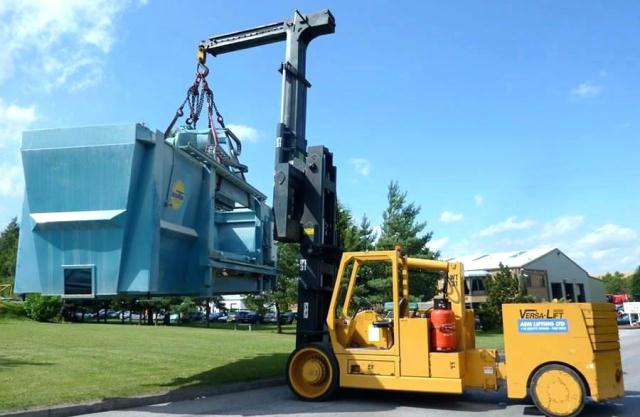
3 Stage Mast Forklift

What is a forklift mast?

The mast is the system in a forklift that performs load lifting.

The mast consists of a fork and an elevation mechanism, associated with the lift truck’s hydraulic assembly. Two systems of classification have arisen to describe a forklift truck’s mast in detail.

An operating manual may classify the mast either by the lift mechanism or by the number of mast “sections”. Regardless of the terminology, it’s important to know the difference in forklift mast types when choosing the right forklift mast for your facility.

The mast makes a big difference in the functionality of a forklift within a particular environment. The single mast elevates the inner mast section along with the load. It requires additional overhead space to allow for the channels of the mast to raise higher than the load. This can be problematic in narrow aisles and tight quarters at lower forklift lift heights.

What is a 3 stage forklift?

What is a 3 stage forklift?

3-Stage – A three-stage mast, or triplex, is the most versatile forklift mast and also the most popular. The outer rails allow for free lift, and the two inner sections can lift loads higher than a two-stage.

what is single stage mast forklift?

The single-stage mast has one channel with a limited lifting height. Free lift (the ability to lift the load and forks without moving the mast channels) is not available. Due to this limitation, the mast must extend higher than other mast options in order to stack loads. This type of mast is frequently seen in outdoor applications where overhead clearance is not a concern, due to the lack of height clearance restrictions.

What is a mast on a forklift?

Also referred to as an ‘Upright’, the mast is the vertical assembly on the front of the forklift that does the work of raising, lowering, and tilting the load. Most masts are ‘three stages’ meaning there are three channels on each side.

What is Forklift Free lift?

‘Freelift’ refers to a forklift trucks ability to lift its forks without raising the masters. This is particularly useful when operating within tight height restrictions.

How does a forklift lift?

The lift handle is attached to an electrical air pump at the base of the forklift. Once the handle is pressed, it triggers the air pump that draws the outside air through a filter and forces it into a tube reaching to the hydraulic cylinders.
Lifting Mechanism: Hydraulic Cylinders

How much does a forklift mast weight?

The average automobile weighs approximately 3,000 lbs and the average forklift weighs close to 9,000 lbs. Also, forklifts are heavier in the rear to counter the weight of items being carried in the forks.

The most read

Stand-up Forklift

Stand-up forklifts (also known as stand-on and electric riders) are designed for applications where the operator must get on and off the lift truck frequently.
More on this story

Forklift rules and regulations

Forklift loader rules, guidelines, and regulations, forklift rules and regulations, fork truck safety, forklift training license.

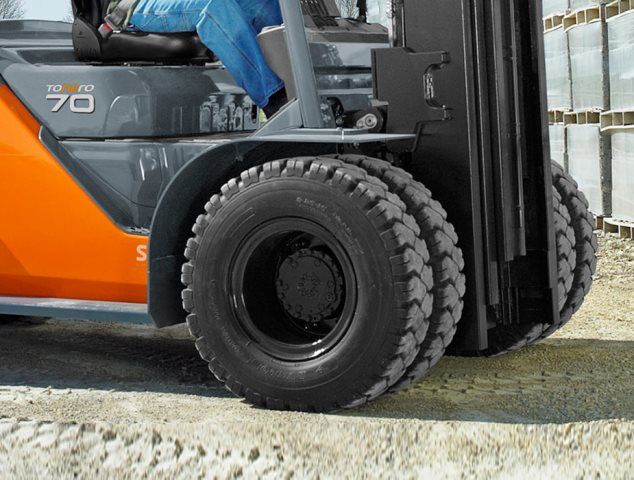
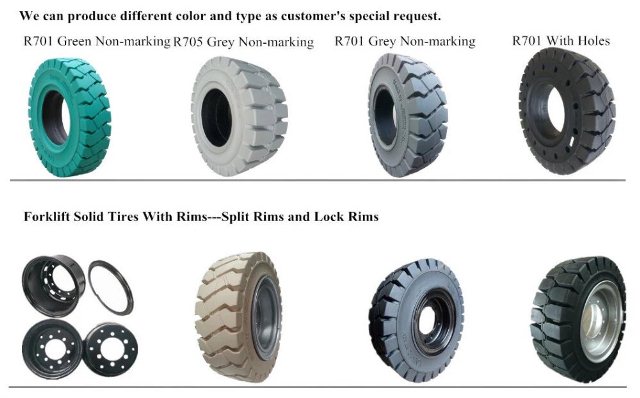
Types of forklift tires

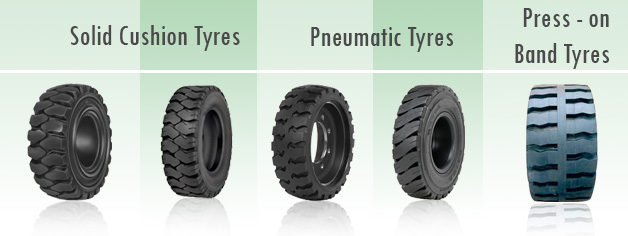
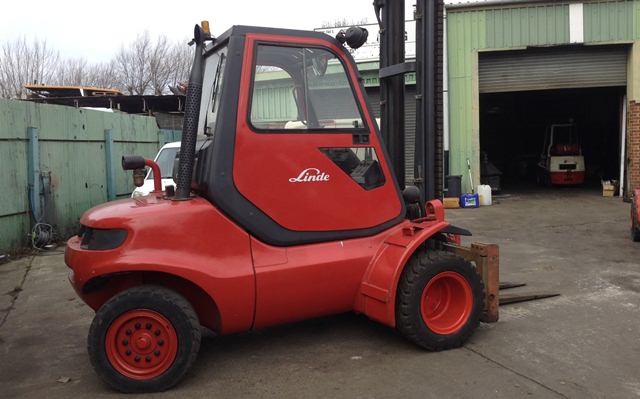
Overall, there are three basic types of forklift tires: cushion, pneumatic air, and solid pneumatic. Since each type of forklift tire is designed for specific usages and applications, there is a direct correlation between tire type and the overall design and dimensions of a forklift.

The by-product of this relationship is a categorization system that identifies forklifts by tire type above other – seemingly more important – considerations. In accordance with this correlation, it is essential that potential buyers consider both their operating conditions and work environment during the purchasing process.

Types of forklift tires

Forklift tyre types

The forklift tire is the most integral part in determining on what surface a forklift is meant to work (smooth, flat factory floor, rough outdoor yard, etc.). There are three basic types of forklift tires: Pneumatic Forklift Tires, Cushion tire forklift, and Solid pneumatic tires.

What are the 3 types of forklift tyres?

  • Pneumatic forklift tires
  • Cushion tire forklift
  • Solid pneumatic tires

Pneumatic forklift tires

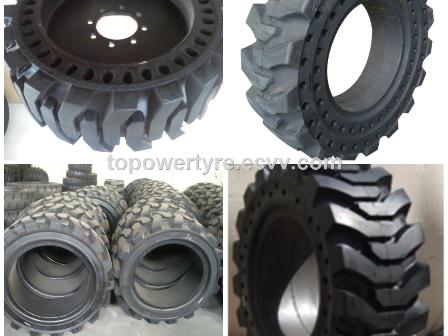
Pneumatic tires are similar to a car or truck tire and offer high performance and versatility. Pneumatic tires provide a strong grip on uneven surfaces and tough terrain and are popular on construction sites, in lumber yards and indoor/outdoor warehouses. There are two types of pneumatic tires: Solid Pneumatics, which are made of solid rubber and are more puncture-proof, and Air Pneumatics, which are air-filled.

Cushion tire forklift

Cushion tires are made of smooth solid rubber and are fitted around a metal band. They are cheaper to manufacture and easier to maintain, but cushion tires do not get the same level of traction as a pneumatic tire, particularly outdoors. Cushion tires are best for smooth surface applications, primarily indoors or on loading docks. They also help with handling in smaller spaces, as they facilitate a smaller turning radius.

Solid pneumatic tires

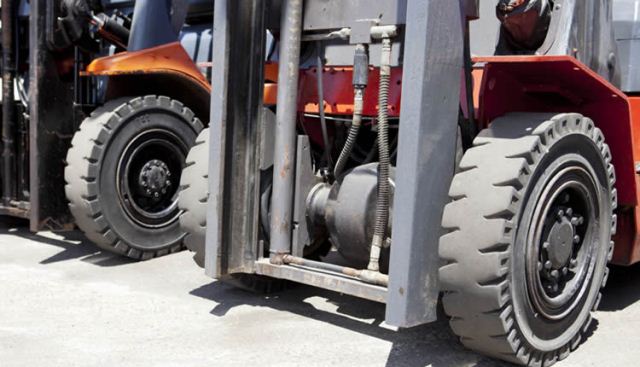
Similar to pneumatic air tires, solid pneumatic tires are constructed of aggressively layered rubber with one distinct difference – the absence of a hollow internal cavity. Solid pneumatic tires are best viewed as a mix between the solid construction of a cushion tire and the durability of a pneumatic tire.

The net effect of this combination is a forklift tire that is less susceptible to punctures or damage from sharp, irregular objects or debris typically found in storage facilities, lumber mills and scrap metal yards. This dynamic construction also ensures that solid pneumatic tires are more versatile than the other two tire types, enabling owners to utilize them in small to mid-sized operations with both indoor and outdoor applications.

Specialty Forklift Tires

Fiberglass forklift tires

Fiberglass: Friction causes tires to heat up when used for long periods or over long distances. Since tires are fundamentally made of rubber, heat is not a good thing. It can cause forklift tires to start to lose integrity. Fiberglass-impregnated tires have a higher resistance to the effects of heat. These tires last longer and match the use and demand for better.

Polyurethane forklift tires

Polyurethane: When a forklift moves extremely heavy loads only short distances, polyurethane tires are a better choice than rubber. These tires hold their integrity extremely well, and they tend to be chemical-resistant, which is good for a forklift that will be working in an area where chemicals hit the floor on a regular basis.

Anti-static forklift tires

Static-resistant: Some manufacturing facilities deal with materials that are highly combustive or explosive. As a result, static electricity has to be reduced or avoided as much as possible, particularly around materials that give off fumes that flammable as well. Static-resistant tires are available and are specifically designed to prevent static discharge for such environments.

walnut winter tires

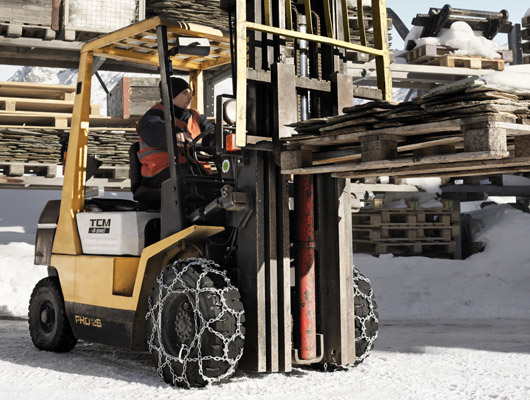
Cold-prepped: Temperature has a huge impact on the performance and life of forklift tires, and the cold is no exception. Cement and flat surfaces can easily build up ice causing slippage. Cold-prepped tires with a “walnut” surfacing provide the necessary traction for such environments, ensuring forklifts can work as needed when carrying loads without risk.

Cheap forklift tyres

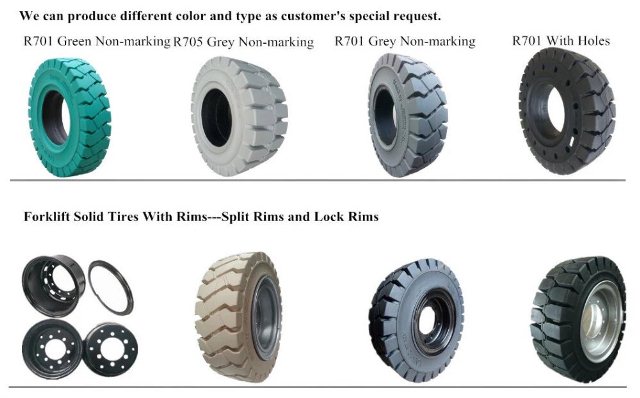
Avoid cheap tires: Lower-quality tires break down far faster than higher-quality products. The inevitable skid marks when making turns or moving heavy loads in multiple directions will be far more apparent with lower-quality tires, making quite a mess on a facility floor over time. Non-marking tires prevent this problem and keep your facility looking professional and clean.

Did you know: after a tire has worn 40%, the forklift and the driver will absorb over 84% of the shock if it’s being run over a rough surface.

When to replace solid forklift tires?

Signs it’s time to replace your tires:

Because tires that need to be replaced can become a hazard, it’s important to know how to tell when it’s time to change yours.

During your inspection, make sure to look for these warning signs that your tires may need to be replaced, and contact your local authorized dealer for assistance if any of them are detected.

  • Tires are worn over the wear line: Many forklift tires have a wear line, often called the 50% wear line. When the wear of your tires reaches that line, it’s time to replace it.
  • Chunking: If pieces, or chunks, of your forklift tires, are falling off, that’s a good sign you need to replace them.
  • Tearing on the tires: Similar to chunking, if your tires are tearing off in spots, they need to be replaced.
  • Flat Spots: Your tires should be round, if they’re flat in any place, it’s time to replace them.

Are forklift tires solid?

Are forklift tires solid?

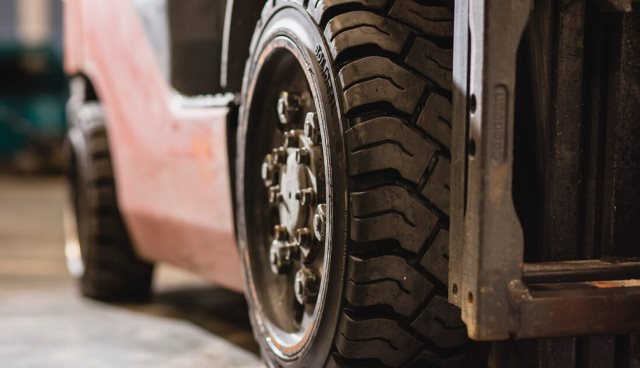
Cushion Tires are composed of solid rubber and are directly pressed onto the wheel. They have a deep tread and are made of strong, long-lasting rubber material. These tires are better for rough, outdoor terrain.

Can you put pneumatic tires on a cushion tire forklift?

To combat this dilemma, many cushion tire forklift users put traction tires on the front of their forklifts. Solid pneumatic tires are made of solid rubber. These are more expensive than air pneumatic tires because you can’t pop, puncture or gouge them as they are 100% rubber.

When should I replace my forklift solid tires?

As a general rule, when there is less than one inch from the lettering on the tires to the top of the tires, it is time to change the tires.

How are forklift tires measured?

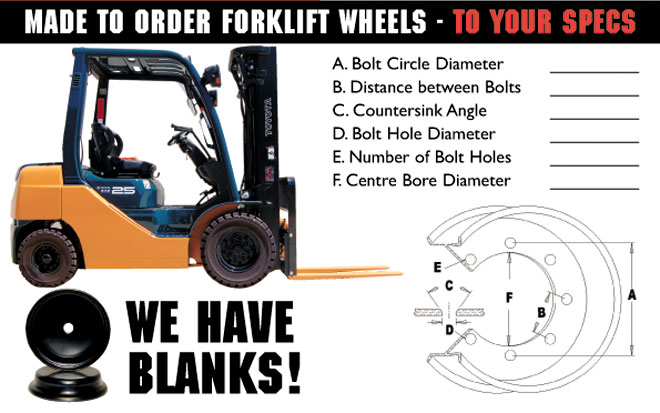
Usually, the tire size is printed on the sidewall. However, if it isn’t printed on the tire or it has worn off then you’ll need three measurements to determine the correct size tire for your machine. You’ll need to measure: Outside Diameter, Width Of The Steel Band, and Inside Diameter.

What is a pneumatic forklift?

Pneumatic tires provide a strong grip on uneven surfaces and rough terrain and are popular on construction sites, in lumber yards and indoor/outdoor warehouses. There are two types of pneumatic tires: Solid Pneumatics, which are made of solid rubber and are more puncture-proof, and Air Pneumatics, which are air-filled.

More on this story

Forklift Tires for Sale

Forklift Tires are one of the decisions that affect the budget of a company, so you have to find out and compare what models exist in distributors.

Solid Pneumatic Forklift Tires

Before you make your initial forklift purchase, decide whether a pneumatic or cushion tire forklift is best for you. Start by determining how the forklift will be used. Consider your capacity and any multi-use functions.

Solid Pneumatic Forklift Tires

Solid Pneumatic Forklift Tires: Before you make your initial forklift purchase, decide whether a pneumatic or cushion tire forklift is best for you. Start by determining how the forklift will be used. Consider your capacity and any multi-use functions. Then, consider space constraints and application; will it be used inside or out, or both? Will it be used on smooth or rough terrain?

Solid pneumatic tires

Remember that most forklifts require specific tires so do some research before you make your initial forklift purchase to be sure it will work for you.

Solid pneumatic forklift tires are similar to a car or truck tire and offer high performance and versatility. Pneumatic tires provide a strong grip on uneven surfaces and rough terrain and are popular on construction sites, in lumber yards and indoor/outdoor warehouses. There are two types of pneumatic tires: Solid Pneumatics, which are made of solid rubber and are more puncture-proof, and Air Pneumatics, which are air-filled.

Solid Pneumatic Forklift Tires

Solid cushion forklift tires

Forklift cushion tireCushion tires are made of smooth solid rubber and are fitted around a metal band. They are cheaper to manufacture and easier to maintain, but cushion tires do not get the same level of traction as a pneumatic tire, particularly outdoors. Cushion tires are best for smooth surface applications, primarily indoors or on loading docks. They also help with handling in smaller spaces, as they facilitate a smaller turning radius.

Solid Pneumatic Forklift Tires

Cushion tires vs pneumatic tire

Difference Between Pneumatic and Cushion tires: Solid Pneumatic Forklift Tires

People refer to forklifts as either pneumatic tire, cushion tire or rough terrain forklifts because forklifts are categorized by tire type. While it is commonly understood that rough terrain forklifts are generally used outdoors in rougher terrain as its name implies, there is still some confusion about the differences between pneumatic and cushion tires and which tires would be most useful on your forklift.

Choosing the right tires significantly impacts forklift handling and safety characteristics. But before you start searching for tires, see if your forklift gives you the option to choose different tires.

The majority of forklifts have frames that will only accept a specific tire type. This is why choosing the right tire really means choosing the right machine for the work you plan to do.

Solid Pneumatic Forklift Tires

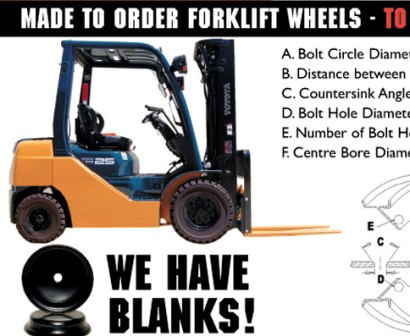
Forklift truck wheels

Solid Pneumatic Forklift Tires:

If most of your lifting will take place indoors or with light outdoor usage on asphalt, then cushion tires will do the job. Cushion tire forklifts have a smaller chassis and sit much lower to the ground than pneumatic forklifts. Cushion generally provide great traction on smooth surfaces and have along life.

However, with little ground clearance, it’s easy to see why cushion tire forklifts can get hung up easily outdoors. To combat this dilemma, many cushion tire forklift users put traction tires on the front of their forklifts.

Traction style tires will give better traction on rough terrains like asphalt or packed gravel. That said, it is still not recommended to drive on dirt or grass. A big advantage to using cushion tire forklifts is their smaller turning radius, making them ideal for manufacturing facilities that have less space than a warehouse. Forklifts with cushion style tires are less expensive and are much easier to come by than pneumatic lifts.

Solid Pneumatic Forklift Tires

Pneumatic forklift tires

Similar to the tires on a car, pneumatic tires have air in them, and are most useful outdoors on gravel or in yard work, though they can be used inside as well. Pneumatic tires are longer and wider than cushion tire lifts which is why they are primarily used outdoors.

There are two types of pneumatic tires – solid and air. Solid pneumatic tires are made of solid rubber. Solid Pneumatic Forklift Tires. These are more expensive than air pneumatic tires because you can’t pop, puncture or gouge them as they are 100% rubber. They’re ideal for lumber yards and scrap yards where there is a lot of sharp metal scrap debris and nails.

Like solid pneumatics, air pneumatics work well outdoors on asphalt, in gravel, and in yards, but they can be punctured so you’ll want to make sure your work area is free of any sharp objects before you begin making your lifts. Air tires also tend to give a bouncy ride and thus, air pneumatic users foam fill their tires, giving themselves a smoother ride than the one experienced on solid pneumatic tires yet a less bouncy ride than pure air-filled.

Solid Pneumatic Forklift Tires

Forklift load capacity

Both cushion and pneumatic tire forklifts can be obtained with almost any load capacity (from less than 2,000 pounds to more than 200,000 pounds). But pneumatic Tire Forklifts are in high demand. Brand new Pneumatic Tire Forklifts pricing ranges between $20,000 and $25,000.

For this reason, pneumatic tire forklifts sell quickly in the used market. Forklift America’s pre-owned forklifts are dependable, good running, quality machines, so you really do get what you pay for.

Before you decide on cushion or pneumatic tires for your forklift, determine the type of work you plan to do. While cushion tire forklifts are ideal for indoor lifting, pneumatic forklifts are better suited for outdoor lifting. But both offer almost any load capacity

Solid Pneumatic Forklift Tires

Forklift dock ramp

Be advised: ramps with metal teeth can damage traction tread tires. With the traction tread, the teeth grab more and rip the lugs off. Do not drive a traction tire truck up a ramp with metal teeth. The damage will not be covered by any manufacturer’s warranty.

Forklift industrial Tyres

Solid Pneumatic Forklift Tires: Selection the right forklift tire

When choosing the right tire for your forklift, the most common options are pneumatic forklift tires or cushion forklift tires. These two types of tires have significant differences between them that should be considered when evaluating which works best for your application.

Choosing the right tire impacts the handling and safety of your forklift. The majority of forklifts are specifically designed for a particular tire and tires are designed for specific applications or industries.

Before you make your initial forklift purchase, decide whether a pneumatic or cushion tire forklift is best for you. Start by determining how the forklift will be used. Consider your capacity and any multi-use functions. Then, consider space constraints and application; will it be used inside or out, or both? Will it be used on smooth or uneven terrain?

What is a solid pneumatic forklift tire?

What is a solid pneumatic forklift tire?

Solid pneumatic forklift tires are similar to a car or truck tire and offer high performance and versatility. Pneumatic tires provide a strong grip on uneven surfaces and rough terrain and are popular on construction sites, in lumber yards and indoor/outdoor warehouses. There are two types of pneumatic tires: Solid Pneumatics, which are made of solid rubber and are more puncture-proof, and Air Pneumatics, which are air-filled.

Should I Use Smooth or Traction Tires?

In general, smooth tires give better traction on dry surfaces and can give you more rubber for the dollar spent. If your working environment has exposure to moisture, a traction tire is usually a better option.
If you use a cushion tire forklift outside, traction tires can give better grip and help reduce the chance of the tire “Chunking.”

Can I put pneumatic tires on a cushion truck?

In general, the answer is no. Axles and tires are specific to a forklift frame and lifting capacity. Forklift manufacturers build forklifts build them to operate safely with specific wheels and tires.

What about foam filling?

“Foam Filling” is an alternative to solid tires and is generally used to help prevent flat tires when using air tires in an environment where your equipment is exposed to nails or other sharp objects. Foam filling can also be used where there is no solid tire available.
Foam filling usually takes 2 to 3 days to fill and cure. Foam-fill and solid tires can usually be used with your existing wheels. Always follow manufactures specs and the professional recommendation from your local dealer.

Can I use solid and air tires on the same forklift?

You can use solid tires on the front of the lift and air on the back, or vice versa. You must run the same type of tire on the opposite sides, drive and steer axles.

When to Replace Forklift Tires?

As a general rule, when there is less than one inch from the lettering on the tires to the top of the tires, it is time to change the tires.

Did you know: after a tire has worn 40%, the forklift and the driver will absorb over 84% of the shock if it’s being run over a rough surface?

The transmission has to work much harder to turn the tires the same amount of rotation, which can result in a breakdown. Changing tires is an inexpensive way to keep your forklift and operator in good condition!

The most read

Forklift Tires for Sale

Forklift Tires are one of the decisions that affect the budget of a company, so you have to find out and compare what models exist in distributors.

Types of forklift tires

Overall, there are three basic types of forklift tires: cushion, pneumatic air, and solid pneumatic.

More on this story

Mecanum Wheels Forklift

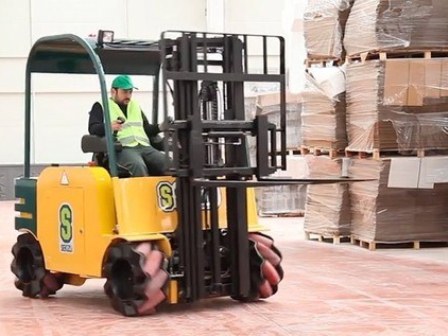
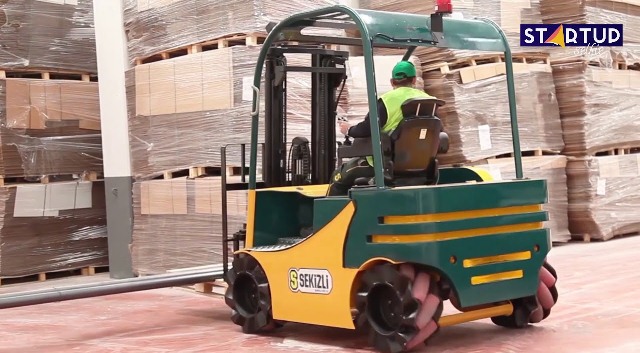
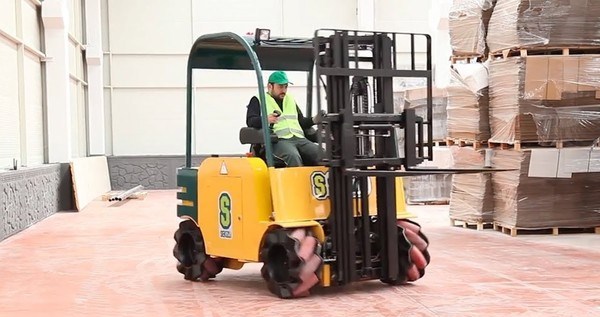
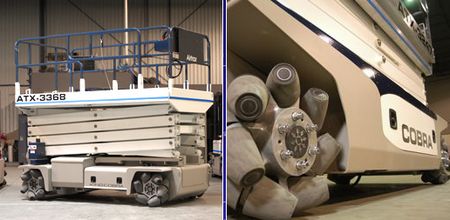
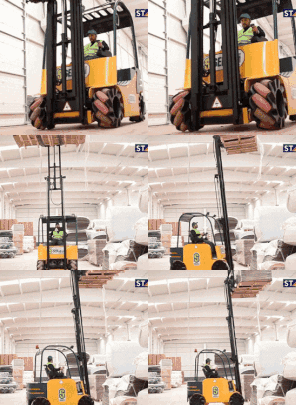
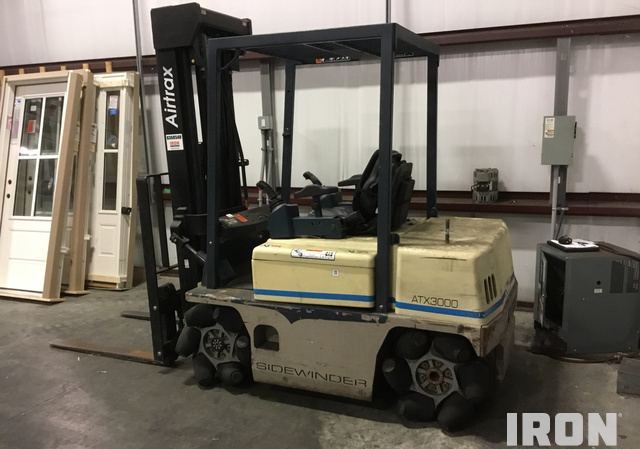
The fork truck mecanum utilizes uniquely designed wheels for omnidirectional movement.

Mecanum Wheels Forklift

Mecanum Wheels Forklift: The fork truck mecanum utilizes uniquely designed wheels for omnidirectional movement.

Around the circumference of each wheel are spindles canted at an angle, with each spindle containing a pair of rollers. Each wheel is independently controlled; the speed and direction with which each wheel moves determines the trajectory of the vehicle.

Forklift with mecanum wheels

The wheels can be used for normal directional control for forwarding and backward movement with all wheels going in the same direction. They can also pivot on the spot like a tank using skid steering with one sides wheel goes forward and the other side goes backward. The controls for the forklift is done using 2 joysticks

So how does a machine face forward and drive sideways? It all has to do with the wheels, mecanum wheels consist of a hub with rollers oriented 45° to the axis of rotation.

The angle is important because each wheel can be operated separately which forces of the wheels working in opposite directions to let the rollers to come into play and cause the sideways movement.

These mecanum wheels have been used in robotics for a few years at this point but these new tires for forklifts allow to navigate tight spaces letting you optimize every square foot of space in a warehouse. The full 360 degrees of mobility is perfect for reaching hard to get locations.

Unfortunately, these can’t just put slapped on any old forklift, you have to have the proper controls and motors set up but the benefits on mobility seem worth it. It might be interesting to see on other types of vehicles with these wheels, and I have to say these would make parallel parking a lot easier.

Mecanum forklift

Industrial forklifts excel in applications requiring tight maneuvering or transporting long loads sideways through standard sized doors or narrow aisleways.

The unique, Omni-Directional movement allows it to travel in all directions thus making it an ideal vehicle to work in tight spaces where turns are not possible and finite control is a necessity.

The forklift truck features 48-volt transistor controls with state-of-the-art technology, infinitely variable travel, lift and lower speeds, excellent visibility, ergonomic controls, and operator comfort.

The unique design of the four 21×12 independently driven Mecanum wheels enables the Omni Directional capabilities.

Each wheel is directly driven by individual transaxles. The wheels consist of a large, heavy-duty hub with 12 uniquely designed polyurethane rollers. The wheel and roller design provide the Omni-Directional movement of the vehicle based on the speed and direction of each wheel as determined by the operation of the traction joystick. Each roller incorporates bearings that do not require periodic greasing or maintenance under most conditions. Since each roller rotates freely, scrubbing against the floor is minimized while turning or moving sideways.

How do mecanum wheels work?

Mecanum wheels, also known as Omni wheels or ilon wheels, consist of a hub with rollers oriented 45° to the axis of rotation. Perfect for tight spaces, they enable conventional forward & backward movement as well as side to side and even rotation. To accomplish this, each wheel turns independently.

Omnidirectional forklift

Forklifts have greatly facilitated indoor and outdoor materials movement in manufacturing and logistics companies all over the world. The Omnidirectional forklift is a unique kind of forklift that is equipped with omnidirectional wheels. Unlike regular or 4-way forklifts, Omnidirectional forklift not only moves in two or four directions but in all directions. This has the potential to ease the handling of materials and products in production facilities or warehouses.

Forklift design

Design and Features

Omnidirectional forklift: is designed based on a unique mobility technology that allows 360 degrees movement. The machine is equipped with a synchronous motor drive that is responsible for its high-energy efficiency. Omnidirectional forklift consumes about 30-50% less power than similar devices. There is also a patented SAE safety system that helps the driver to avoid collisions and crashes.

Versatility

One of the many unique features of the Omnidirectional forklift is its admirable level of versatility. With a wide range of attachments such as service platforms, lifting beams and alternative forks, the device can act as more than a forklift. The device is designed such that the service tools can be changed easily.

Battery-powered forklift

Special battery trolley

In addition to its energy-saving operation, Omnidirectional forklift further comes with a special battery trolley that houses an extra battery. The operator can easily replace the machine’s battery, giving room for 24-hour operation.

Driving a forklift

Two driving modes

To suit the needs of a wide variety of factories, Omnidirectional forklift has two driving modes. The driver has the freedom to choose between driving the forklift like the omnidirectional truck it is designed to be or driving it like a conventional forklift. Switching between the two modes could prove very useful for drivers that alternate between straightforward and difficult terrains.

Perfect control

The patented safety system ensures the driver has perfect control over the Forklift at all points in time. All important operating parameters such as speed and stability are controlled by the safety system. The driver can concentrate on the core task at hand, rest assured that the machine would not overspend or tilt over.

Ergonomic design

An omnidirectional forklift is designed to be comfortable and safe for both the driver and other workers alike. The design is such that the driver has a full view of the work environment thus minimizing collisions. All the controls of the machine are also situated at points where they can be easily seen or operated by the driver.

What is Mecanum drive?

What is Mecanum drive?

Mecanum drive is a method of driving using specially designed wheels that allow the forklift to drive in any direction without changing the orientation of the robot. A mecanum forklift can move in any direction without first turning and is called a holonomic drive.

How do mecanum wheels work?

Mecanum wheels, also known as Omni wheels or ilon wheels, consist of a hub with rollers oriented 45° to the axis of rotation. Perfect for tight spaces, they enable conventional forward & backward movement as well as side to side and even rotation. To accomplish this, each wheel turns independently.

How are forklift tires measured?

Usually, the tire size is printed on the sidewall. However, if it isn’t printed on the tire or it has worn off then you’ll need three measurements to determine the correct size tire for your machine. You’ll need to measure: Outside Diameter, Width Of The Steel Band, and Inside Diameter.

When should forklift Tyres be replaced?

As a general rule, when there is less than one inch from the lettering on the tires to the top of the tires, it is time to change the tires. Did you know: after a tire has worn 40%, the forklift and the driver will absorb over 84% of the shock if it’s being run over a rough surface.

What is a solid pneumatic forklift tire?

There are two types of pneumatic tires – solid and air. Solid pneumatic tires are made of solid rubber. These are more expensive than air pneumatic tires because you can’t pop, puncture or gouge them as they are 100% rubber.
They’re ideal for lumber yards and scrap yards where there is a lot of sharp metal scrap debris and nails. Like solid pneumatics, air pneumatics work well outdoors on asphalt, in gravel, and in yards, but they can be punctured so you’ll want to make sure your work area is free of any sharp objects before you begin making your lifts. Air tires also tend to give a bouncy ride and thus, air pneumatic users foam fill their tires, giving themselves a smoother ride than the one experienced on solid pneumatic tires yet a less bouncy ride than pure air-filled.

The most read

Forklift Tires for Sale

Forklift Tires are one of the decisions that affect the budget of a company, so you have to find out and compare what models exist in distributors.

More on this story

Forklift rules and regulations

FORKLIFT SAFETY: forklift loader rules, guidelines and regulations, forklift rules and regulations, fork truck safety, forklift training license.

What is a Counterbalance Forklift?

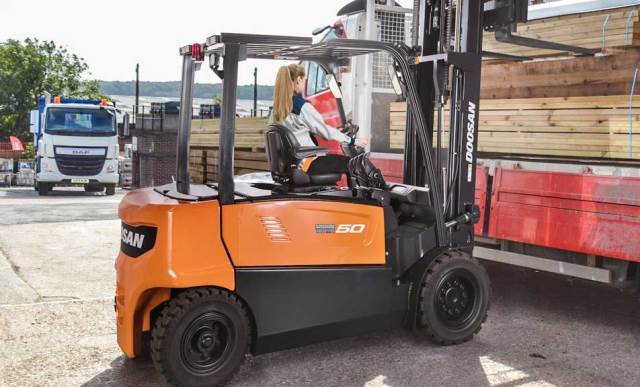
It is the most common forklift truck, the counterbalanced forklift has two forks in the front and has the ability to get close to a load to lift and move it.

The name comes from the counterweight at the rear of the vehicle. This is to compensate for the heavy load that is lifted in the front.
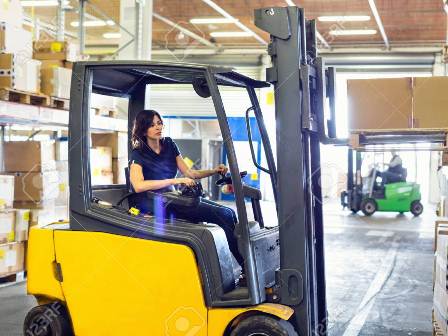
Counterbalanced forklifts are versatile and can be operated both indoors and outdoors. They drive best on flat, smooth surfaces and should be used in more open spaces due to their large turning radius.

What is a counterbalance Forklift?

Counterbalanced forklift types

The counterbalanced forklift, without this weight your forklift would become unbalanced and tip over due to the added weight on the forks.

Comes in a variety of three and four wheels and can run on gasoline, diesel, and electric. They are very powerful trucks and useful for several different environments, lifting a variety of heavy loads.

counterbalance vs reach forklift

Counterbalanced forklifts are designed with the forks protruding from the front of the vehicle and do not have protruding legs or arms to stabilize them.

This means that you can drive your forklift to the precise points where your load or rack is located.

You don’t need a reach facility to access and deposit your cargo. The rear wheels are the rotating wheels of a counterbalanced forklift.

Reach Truck Forklifts:

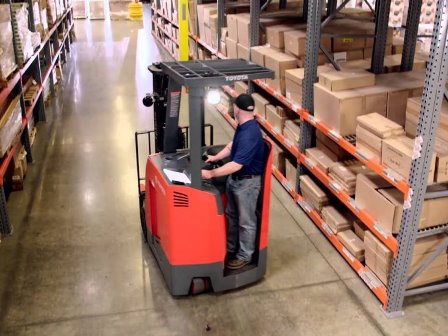
As the name implies, the Reach Truck is primarily designed for lifting tall loads on shelves or storage. They serve a different type of work than counterbalanced forklift in a number of ways.

Reach forklifts work best indoors, in environments like warehouses. They are very maneuverable and are perfectly suited for weaving between narrow aisles.

They have the ability to reach high-sitting loads and can extend distances beyond their stabilizing legs. It is the combination of these stabilizer legs and the battery that eliminates the need for a cumbersome counterweight to balance the truck.

A reach truck offers a variety of functions to help you get the job done. Some reach trucks come with a tilt mechanism in the cab to help the driver get a better view of the operation.

Others have an open protective roof to optimize the view of the unit. In addition to this, reach trucks can be equipped with a camera that shows the driver what is happening overhead on a video screen.

What makes a forklift counterbalanced?

The counterbalance forklift features two forks at the front and has the ability to drive up close to a load to pick it up and move it. The name comes from the counterweight in the rear of the vehicle. This is to compensate for the heavy load being lifted at the front.

More on this story

Forklift Brands

Forklift Brands and models: Which forklift brand is best? Top brands in the world: Caterpillar, Toyota, Volvo, Hyundai, forklift brands and models, top 10 forklift brands.

Forklift Safety Procedures

Forklifts are extremely useful workplace vehicles, as long as they are used safely and appropriately by operators who are appropriately trained and competent to use them

Forklift Seat Belt

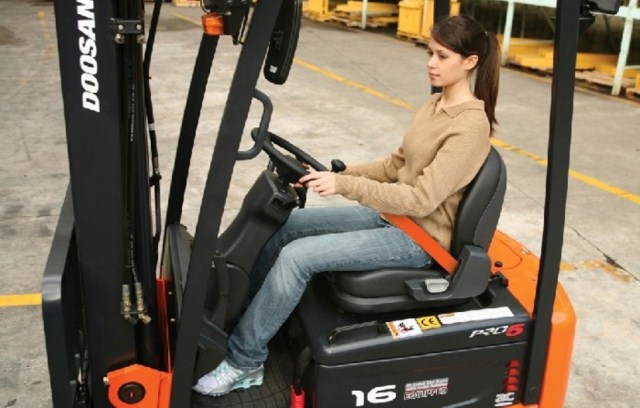
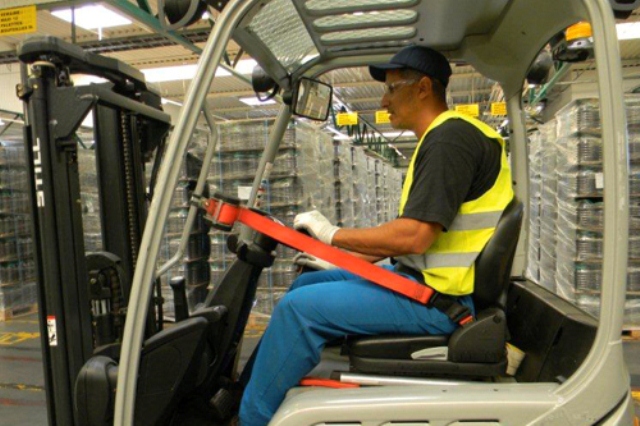
Forklift Seat Belt: Unlike cars, forklift seat belts are not meant to protect drivers from high-speed collisions. Instead, forklift seat belts are intended to protect drivers from being crushed, or “mousetrapped,” in the event the forklift tips over. As the forklift begins to tip, the driver’s natural urge is to jump out. This can lead to the driver becoming crushed between the forklift and the ground. The seat belts save lives by preventing drivers from jumping.

Forklift Seat Belt

OSHA forklift seat belt

Forklift Seat Belt:

Requirements: OSHA does not have a specific rule requiring forklifts to have seat belts. However, employers are required to protect employees from “serious and recognized hazards.” All powered industrial trucks manufactured after 1992 are required by OSHA to have seat belts or another type of restraint specifically to reduce the risk of being crushed, or “mousetrapped,” in the event that the forklift overturns. Mousetrapping is a recognized and serious hazard, and OSHA would enforce the need to have seat belts on forklifts under this rule.

Retrofitting: If a forklift does not have a seat belt, OSHA can mandate the installation of one. This requires the employer to be notified by the forklift manufacturer that mousetrapping hazard exists and that a retrofitting program has been initiated. If the employer does not take advantage of the retrofitting program, once it knows it exists, OSHA can cite the company for failure to comply.

Forklift Seat Belt

Forklift safety belt

Fork lift Seat Belt: Wearing Seat Belts

OSHA requires that operators use seat belts when they are furnished. Employers are responsible for ensuring that forklift operators are wearing their seat belts. If the operator does not use seat belts, the employer could be cited for failure to comply with OSHA standards which require companies to protect employees from recognized hazards.

Forklift Seat Belt: Penalties and Compliance

An OSHA compliance officer who observes a forklift operator not using a seat belt can issue a citation to the employer for failing to comply with OSHA regulations. Before issuing the citation, the compliance officer is required to check with the manufacturer of the forklift to make sure that the machine either was manufactured with a seat belt or that a retrofit kit had been made available to the employer.

If the forklift has a seat belt, or if there is a retrofit kit available, the officer will issue a citation. The employer also may have to pay a penalty to OSHA. The amount of the penalty depends on the degree of danger and whether the employer had previous citations

Forklift Seat Belt

Forklift seat belt safety

We are all aware of the importance of safety when operating forklifts. A forklift can cause just as much injury as an average dump truck. Yet the refusal to comply with safety regulations has led to many dismissals and fines for both employees and employers. This raises some important questions:

  • What are the dangers of not wearing a seatbelt when operating a forklift?
  • If an accident occurred, resulting in injury or death as a consequence of the operator not wearing a seatbelt, who should be held accountable?

The Dangers of not wearing a Seatbelt whilst operating a Forklift

Overturning poses the biggest threat of danger to forklift operators and is the leading cause of deaths involving forklifts, accounting for one in every six. When a forklift overturns, the safest place for an operator is in the cabin with the seatbelt on. This ensures the operator cannot try to jump out of the way or fall underneath the forklift if it tips. (Forklift Seat Belt)

Forklift Seat Belt

Forklift safety regulations

Forklift Seat Belt:

Work Health and Safety regulations state that a seatbelt must be worn in a forklift. An employee must not be exposed to the risk of falling out of the vehicle. An employer must think of the risk of:

  • Powered mobile plant overturning
  • Objects falling on the operator
  • The operator being ejected from the plant

Risk must be eliminated as far as reasonably practicable, or if not practicable to eliminate the risk, reduced so far as reasonably practicable.

Work Health and Safety regulations place accountability on the employer. But what if the employer has followed regulations and an accident occurs? Should they still be held accountable?

Forklift Seat Belt

Forklift seat belt interlock

Forklift Seat Belt:

“Many don’t realize the power they wield when using forklifts or how deadly even a bump to a person can be. Seat belt use is better at big companies these days, but small to mid-size companies it is enforced much less. If you have the belt on and tip over, you live 99.9% of the time, if not you may get severely injured or killed.”

Forklifts can average around 9,000 lbs. As strong drivers think they are, 9,000 lbs is not a weight they can even begin to compete with. No amount of training or machine maintenance will ever eliminate the risk of industrial accidents, but the death and injuries from tip-overs can be avoided by simply taking a moment to put on a seat belt.

Forklift injuries can be life-altering for not only you but for your friends and family. A couple of seconds is all it takes. It’s worth it. Buckle up.

Forklift Seat Belt

Forktrack system

Forklift Seat Belt: Safety Mechanisms

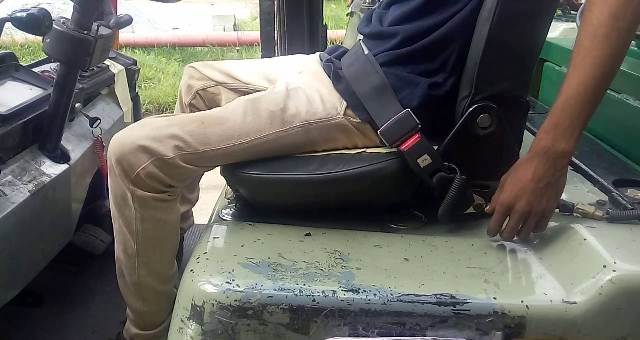
Some cases see experienced and trained forklift drivers continuing to ignore safety procedures. A way around this for employers is the use of systems such as Forktrack. Forktrack reduces the likelihood of employees failing to wear their seatbelts. In particular, Forktrack features an intelligent seat/seatbelt interlock that ensures operators are wearing their seatbelts at all times. Attempts to bypass the system will alert the management of tampering and stop equipment from starting.

Fork truck seat belts

Fork lift Seat Belt:

Ignoring safety warnings and failing to wear a forklift seatbelt or failing to enforce the use of seatbelts is dangerous. One should not take the attitude that an accident will never happen to them or their employees.

Depending upon the situation accountability can land on either the forklift operator or the employer. Experienced operators who work for companies, who enforce safety regulations and provide refresher training, should know the importance of wearing a seatbelt.

If they do not follow company policy the employer should have in place appropriate consequences for the breach in company policy. Employers who do not have safety procedures in place should and will be held accountable in the face of an accident. The correct training needs to be in place in every working environment to ensure the safety of all forklift operators.

Forklift safety tips

Forklift seat belt: Tips for Mounting and Dismounting Safely

When mounting or dismounting a forklift, always:

  • Face the vehicle
  • Never jump off
  • Use a three-point stance (always have both hands and one foot or vice-versa in contact with the unit)
  • Wear certified safety shoes (oil resistant and non-slippery)
  • Wear suitable clothing (do not wear loose clothing or dangling jewelry)
  • Check the area around the forklift to make sure the floor is free of fluid or other debris that could cause a slip
  • Check for other traffic

forklift seat belt: Once aboard a counterbalanced forklift, the operator is required to wear a seatbelt.

There is a litany of reasons why operators do not wear seat belts, such as that they have to get on and off far too often, or that in the event of a tip-over, they could jump clear more quickly. The reality is that operators rarely jump clear more quickly. Tip-overs happen in extreme rapidity and can be fatal if the operator is not wearing a seatbelt. Additionally, operators tend to think that a tip-over situation simply would not happen for them. Operators do not anticipate a tip over until it is too late. Be prepared for the unexpected by wearing a seatbelt.

Forklift seat belt extender

Fork lift Seat Belt: forklift seat belt extender.

Seat belts were introduced on forklifts during the late 1980s. Although not all, many manufacturers offered retro-fit kits to install seat belts on older forklifts. In many cases, the adjustment went beyond bolting on a seat belt. Instead, the requirements included a change in the hood, latch and hinge design or battery retention systems.

Some forklifts went as far as to require an overall seat redesign. Because of the complexity, some manufacturers offered kits, others did not and some offered solutions for select models only.

The best safety precaution is to replace a pre-1988 forklift. If that option is not possible, record the model and serial number on the forklift and contact the manufacturer to inquire about installing a seat belt retrofit kit.

Forklift seat belt policy

Why is forklift safety important?

As you can see, forklift driver safety training is crucial. It can minimize accidents and fatalities on the job while also reducing financial losses from damaged goods. Forklift drivers who operate this machinery without training pose an immediate danger to both themselves and everyone in the work area.

Are you required to wear a seatbelt on a forklift?

Employers are responsible for ensuring that forklift operators are wearing their seat belts. If the operator does not use seat belts, the employer could be cited for failure to comply with OSHA standards under the Occupational Safety and Health Act, which requires companies to protect employees from recognized hazards.

Forklift Seat Belt

Why don’t forklift operators wear seat belts?

There are several different reasons as to why forklift operators do not wear seat belts while operating a forklift. Material Handling and Logistics compares it to the transformation a driver takes on when operating a car. “An interesting transformation happens when someone gets into a car. The vehicle becomes a suit of armor and the occupant becomes a warrior.”
Unfortunately, this warrior mentality also exists in the warehouse “where forklifts become industrial-strength suits of armor in the minds of poorly trained operators.”

What is a safe speed for a forklift?

Regulating an industrial lift truck’s speed plays an important part in keeping the workplace safe. The maximum allowable speed of a forklift truck is 8 mph, but in areas where pedestrians move about, the forklift should not move faster than 3 mph.

Are seat belts required on forklifts?

OSHA does not have a specific rule requiring forklifts to have seat belts. However, employers are required to protect employees from “serious and recognized hazards.”

Why do forklifts have seat belts?

The Occupational Safety & Health Administration requires that operators use seat belts when they are furnished. Employers are responsible for ensuring that forklift operators are wearing their seat belts.

Do forklifts have to have fire extinguishers?

Federal OSHA does not specifically require employers to equip forklifts with portable fire extinguishers. However, depending on the hazards present in an area where the trucks travel, OSHA may have requirements for fire protection in that specific hazardous location.

The most read

Forklift Safety Procedures

Forklifts are extremely useful workplace vehicles, as long as they are used safely and appropriately by operators who are appropriately trained and competent to use them.

More on this story

Forklift rules and regulations

Forklift loader rules, guidelines, and regulations, forklift rules and regulations, fork truck safety, and forklift training license.