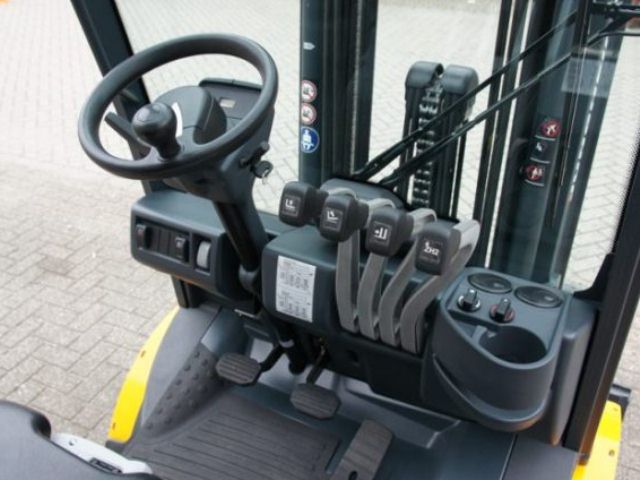
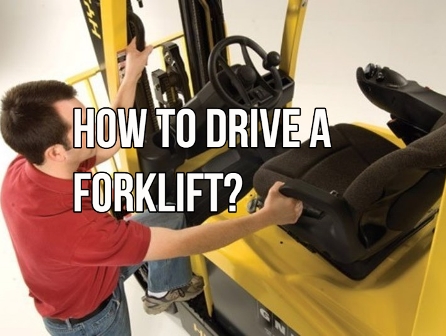
The four main levers on a forklift typically control the following functions:
Lift Lever: This lever is used to raise and lower the forks. Pulling the lever back raises the forks, while pushing it forward lowers them.
Tilt Lever: This lever controls the tilt of the mast and forks. Pulling the lever back tilts the mast backward (toward the operator), which helps to secure the load during transport. Pushing the lever forward tilts the mast and forks forward, which is useful for picking up and placing loads.
Side Shift Lever: This lever moves the forks side to side. It allows the operator to shift the forks left or right without moving the entire forklift. This is useful for precise positioning of loads.
Auxiliary Lever: Depending on the forklift model, this lever can control various attachments or additional functions such as fork positioning, rotating forks, or operating a clamp. The exact function of the auxiliary lever can vary based on the specific attachments and capabilities of the forklift.
These levers provide the operator with control over the essential functions needed to handle loads safely and efficiently.
Forklift lever functions
What do the levers on a forklift do?
The levers on a forklift control various functions essential for operating the machine and handling loads safely and efficiently. Here is a detailed breakdown of the typical functions of the levers:
Lift Lever:
Function: Controls the vertical movement of the forks.
Operation:
Pulling the lever back raises the forks.
Pushing the lever forward lowers the forks.
Usage: Used to lift loads to the desired height for transport or placement.
Tilt Lever:
Function: Controls the tilt of the mast and forks.
Operation:
Pulling the lever back tilts the mast and forks backward (toward the operator).
Pushing the lever forward tilts the mast and forks forward.
Usage: Tilting the mast backward helps secure the load during transport, while tilting it forward assists in picking up and placing loads.
Side Shift Lever:
Function: Moves the forks horizontally (side to side).
Operation:
Moving the lever to the left shifts the forks to the left.
Moving the lever to the right shifts the forks to the right.
Usage: Allows precise positioning of the load without needing to move the entire forklift, which is especially useful in tight spaces.
Auxiliary Lever (if equipped):
Function: Controls additional attachments or functions specific to the forklift model.
Operation: The exact operation depends on the attachment or function it controls. Examples include:
Fork positioning: Adjusts the distance between the forks.
Rotating forks: Rotates the forks for dumping or repositioning loads.
Operating a clamp: Opens and closes a clamp attachment for handling non-palletized loads.
Usage: Enhances the versatility of the forklift by allowing it to perform specialized tasks based on the attachments used.
These levers are integral to the operation of a forklift, providing the operator with precise control over the machine’s movements and load handling capabilities. Proper training and understanding of each lever’s function are crucial for safe and efficient forklift operation.
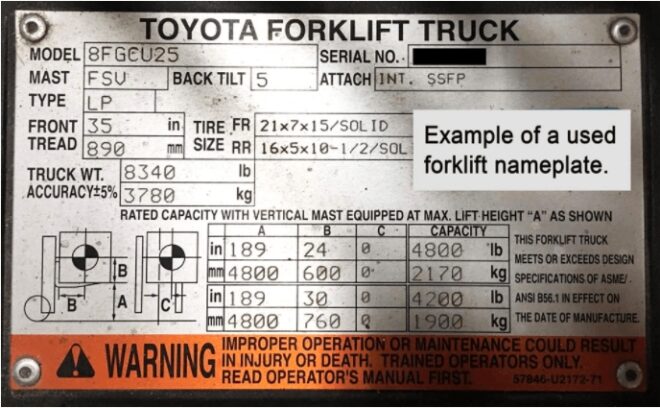
True it is to say that every forklift has a data plate that is designed to give the employer and the operator the information necessary to prevent accidents. True it is that the data plate is very rarely read or referred to by the operator – the majority of drivers would not have a clue as to what is safe or not. How to read forklift load capacity chart?
How to read Forklift Load Capacity Chart
Forklift load capacity chart
What is a Forklift load capacity?
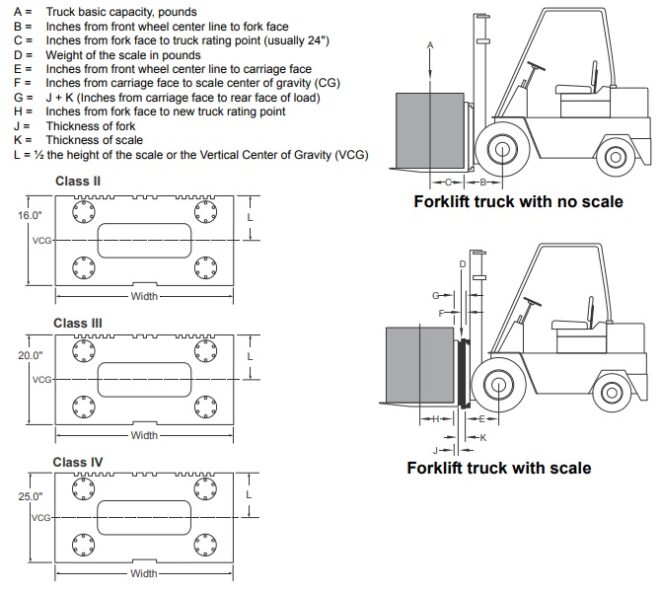
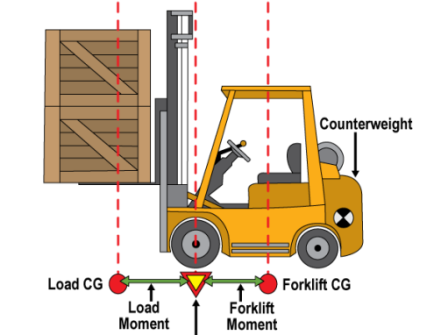
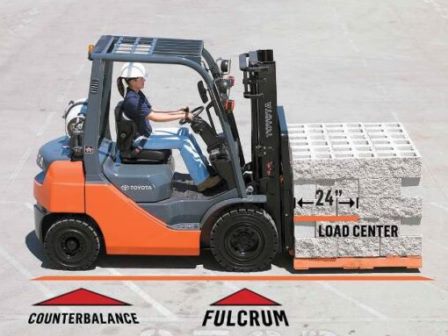
The stated capacity of a forklift only applies to the load center indicated on the capacity plate. If the load’s center of gravity is not centered at the specified position, the forklift’s capacity will be reduced. Loads come in all shapes and sizes, not just symmetrical boxes.
How to read Forklift Load Capacity Chart
Read Forklift Load Capacity Chart
Typical questions an operator may need to consider are things like:
How are the loads packaged and their weight?
Will they need to use a fork carriage or some other attachment?
How high and how far will they need to retrieve or place the load?
I believe that data plates are not user friendly. The vast majority of operators can not explain what the load center distance refers to. Manufacturers have done their own thing since day one, there is no common data plate design therefore confusion is abundant.
Some plates have multiple masts on them, which one applies?
You Can’t, there is not the required information given to calculate it.
Does the data plate include the side shift or not, because some of the manufacturers include the side shift as standard fitting and not an attachment they do not specify an altered safe working load and that would be ok if one standard was adhered to so that operators can clearly ascertain the safe working load (SWL)
One chart must provide the information for all possible situations on that particular machine.
How to read Forklift Load Capacity Chart
Forklift capacity plate information
These plates are a requirement of OSHA regulation and must be displayed on all forklifts approved for service. The data plate must include data and approval provided from a nationally recognized testing laboratory that has verified the listed specifications for the forklift. The initial data plate is installed by the manufacturer and it is important for any operator to review, verify, and update information as needed.
What information is on a forklift data plate? – Sometimes referred to as a capacity plate or a forklift nameplate, the forklift data plate includes important information such as weight, fuel type, and forklift load capacity. Associates need to read the data plate during training and before use to help build the culture of safety in your facility.
Relatively quickly, you’ll need to know some quick information about your forklift’s capabilities.
Luckily, a forklift data plate is installed on every truck on the market to help you understand what your forklift can do and provide vital information.
Forklift data plate requirements
It is the responsibility of the operator to understand the capabilities of each forklift and to properly maintain the data plate to ensure it is legible and complete. Recommended best practices include conducting proper training, using durable and corrosion-resistant nameplates, and documenting important information related to the forklift operation and maintenance based on the specifications. It is also important never to operate a forklift with a severely damaged or missing nameplate.
The forklift data plate can be found on the instrument panel near the operating controls:
Basic Information
Brand
Model
Serial Number
Forklift Type
Parts & Components Information
Mast Type
Front Tire Tread
Tire Sizes
Tire Type
Weight & Load Information
Truck Weight
Battery Weight
Attachments Included In Weight Calculation
Back Tilt
Forward Tilt
Load capacity
Maximum Lift height
Load center distances
Down rating of lift capacity (if the mast is fitted)
Down rating for attachments (as specified on the capacity plate)
The capacity factor is important in your selection regardless of whether you are buying the truck with the attachment or are adding the attachment to a truck yourself.
Powered Industrial Truck Types: Powered industrial trucks, commonly called forklifts or lift trucks, are used in many industries, primarily to move materials. They can be used to move, raise, lower, or remove large objects or a number of smaller objects on pallets or in boxes, crates, or other containers.
Powered Industrial Truck Types
Types of powered industrial truck
Forklifts and their many cousins in what OSHA lumps together as “powered industrial trucks” are among the most common vehicles on worksites – so common that it’s easy to take these workhorses for granted.
The number one rule is that anybody who uses a forklift must receive formal classroom training and hands-on training in its use and safety procedures.
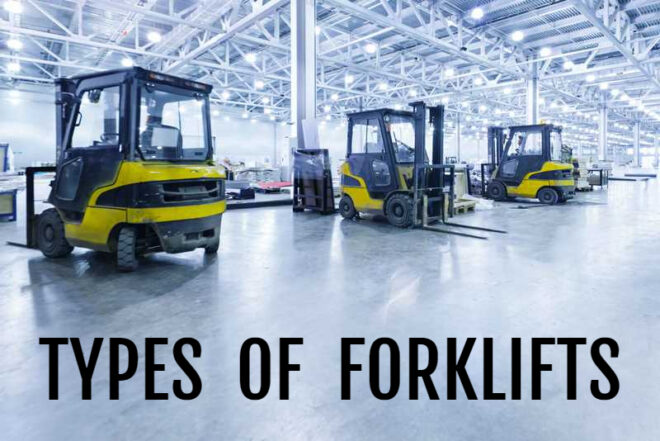
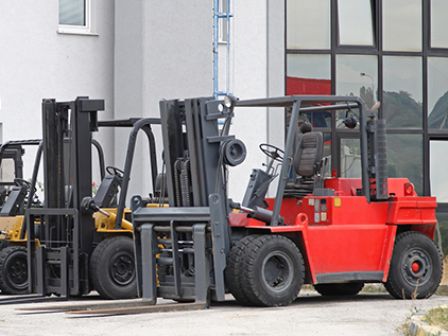
The term forklift truck is a fairly broad term that can be used for a number of different vehicles. When people think of forklifts, they usually imagine the small vehicle with two forks on the front that’s used for lifting pallets. However, forklift trucks come in a number of different sizes and models.
With so many forklift types to choose from it can be difficult to find the forklift perfect for your environment. Choosing the wrong forklift can waste time, money, and effort. Let’s take a look at some of the most popular forklift classifications. (Powered Industrial Truck Types)
Powered Industrial Truck Types
Electric Motor Rider Trucks
Class 1 electric motor rider trucks:
They are ideal for applications where air quality and fuel fumes are a concern. Most class one forklifts are used indoors with cushion tires designed for use on smooth floors. They can also be outfitted with pneumatic tires and used in dry, outdoor applications.
Electric Motor Narrow Aisle Trucks
class 2 electric motor narrow aisle trucks:
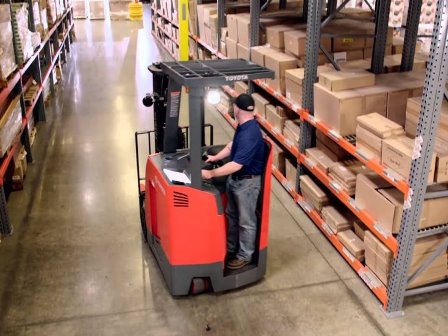
Operations that need to maximize their storage space use narrow-aisle material handling equipment such as reach trucks and order pickers to handle pallets and move inventory. These class two lift trucks need minimal space to operate and are powered by an electric motor.
Electric hand trucks
class 3 electric motor hand truck:
These are hand-controlled forklifts, meaning the operator is in front of the truck and controls the lift through a steering tiller. All controls are mounted on the top of the tiller, and the operator moves the tiller from side to side to steer the truck. These vehicles are battery-powered, and the smaller capacity units use industrial batteries.
Internal Combustion Engine Trucks
class 4 Internal Combustion Engine Trucks: (Solid/Cushion Tires)
These forklifts are used inside on smooth dry floors for transporting palletized loads to and from the loading dock and the storage area. The cushion-tired forklifts are lower to the ground than forklift trucks with pneumatic tires. Because of that, these forklift trucks can be useful in low-clearance applications.
Internal Combustion Engine Trucks
class 5 Internal Combustion Engine Trucks: (Pneumatic Tires)
These trucks are most commonly seen in warehouses. They can be used either inside or outside for virtually any type of application. Because of the large capacity range of this series of a lift trucks, they can be found handling small single pallet loads to loaded 40-foot containers.
The cushion-tired forklifts are lower to the ground than forklift trucks with pneumatic tires. Because of that, these forklift trucks can be useful in low-clearance applications.
Internal Combustion Engine Tractors
class 6 Internal Combustion Engine Tractors:
An internal combustion (IC) engine on a forklift works much like the engine on your personal car or truck and uses fuel to run. In the case of a forklift for sale or rent, this fuel is usually gasoline, diesel, liquefied petroleum gas, or compressed natural gas. The internal combustion engine is one of the most common types of engines in industrial equipment such as forklifts and with good reason.
Rough Terrain Forklift Trucks
class 7 Rough Terrain Forklift Trucks:
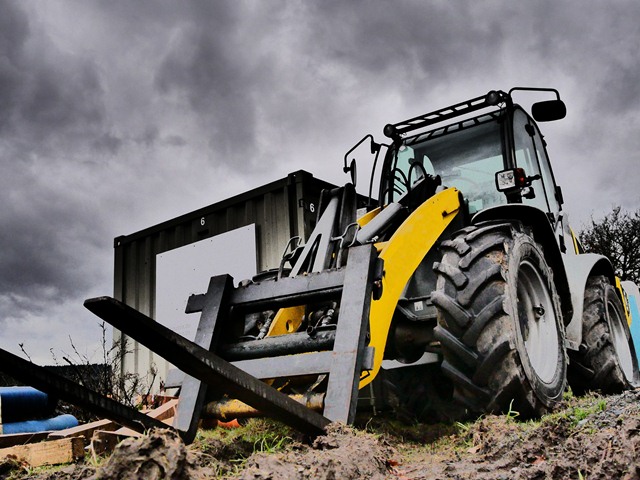
Rough terrain forklift is a generic term used to describe forklifts typically intended for use on unimproved natural terrain and disturbed terrain construction sites. However, the term “rough terrain” does not imply that the forklift can be safely operated on every conceivable type of terrain. Rough terrain forklifts have inflatable tires with thicker treads which allows it to gain stability on uneven surfaces.
Although a typical forklift has four wheels and a steering column, it’s not at all like driving a car or truck. First, forklifts usually weigh at least twice as much. The seat tends to be elevated, creating a higher center of gravity that is less forgiving when it comes to tipping over.
They’ll turn on a dime, but the back end has a wider swing than other types of vehicles. Wheelbases tend to be even narrower than what you’ll find on a Mini Cooper. Turn too sharply while going quickly, or carry the load just a little too high, and there’s a good chance you’ll be on your side with a damaged load.
Training must cover inspection, the operation of the vehicle, proper loading and movement, safety precautions when operating around other people, and emergency procedures.
Once a worker has been trained on a particular type of equipment, he or she should be able to operate other makes and models of similar types with a brief orientation. However, just because an employee is trained for a forklift doesn’t mean he or she is ready to operate other types of powered equipment. If you’re in doubt, err on the side of extra training.
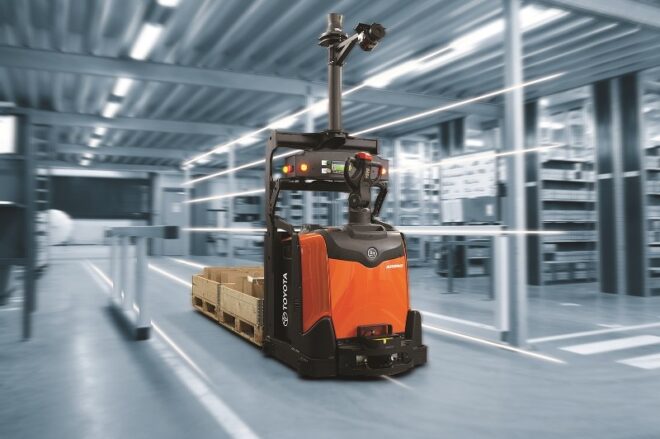
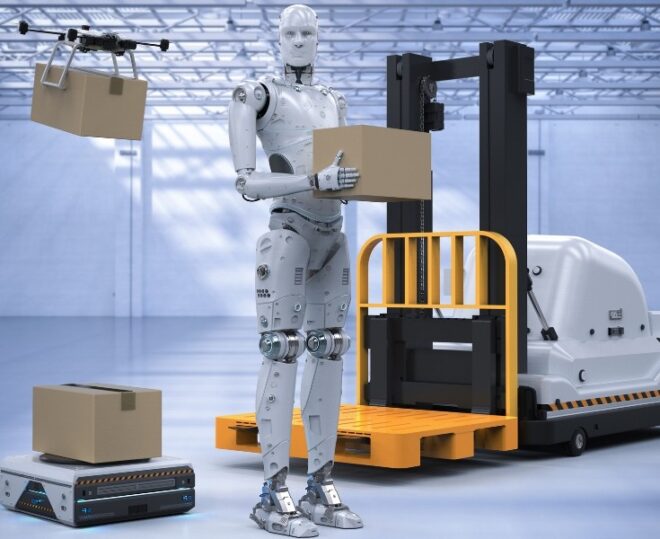
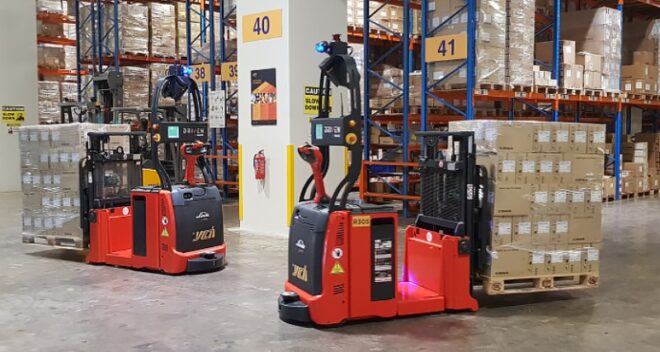
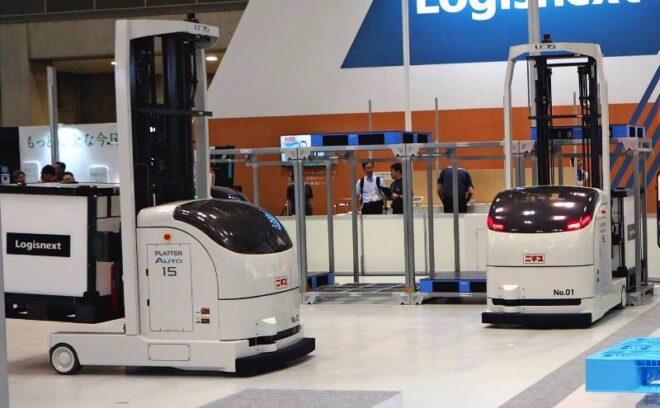
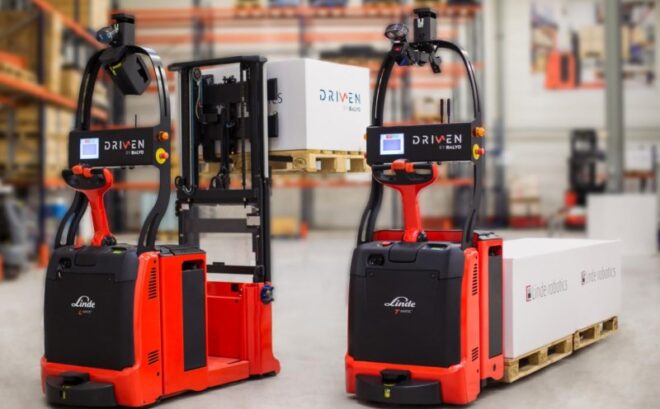
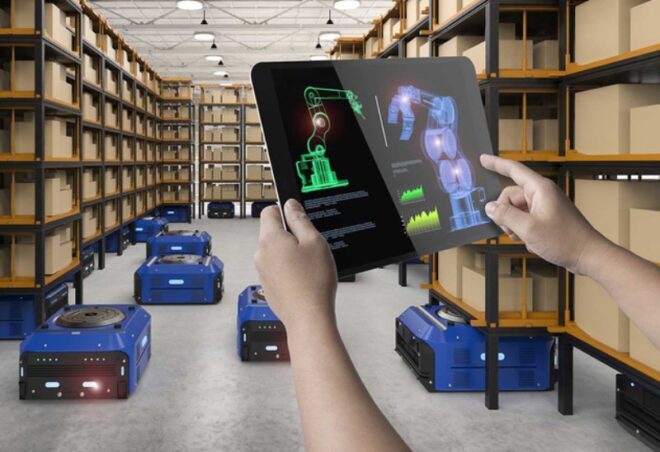
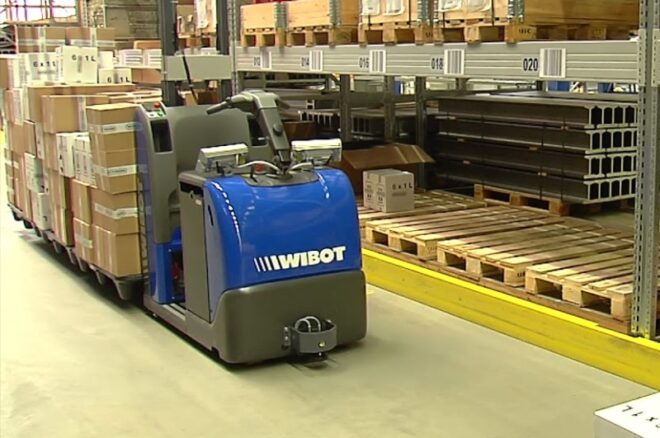
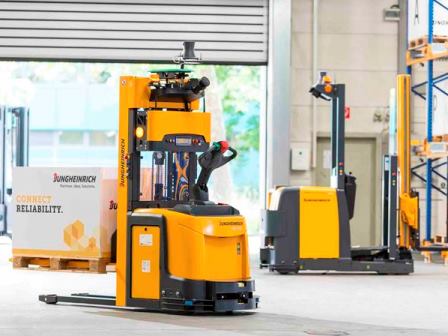
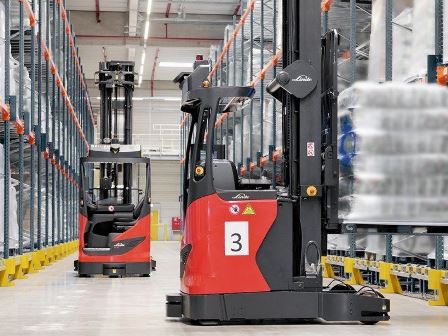
More efficiency with Transport Robots – Autonomous Forklift: Automated Guided Vehicles and Systems make a significant contribution to the optimization of processes in intralogistics. They ensure that the right part is always in the right place at the right time. When using transport robots you increase the productivity of your company significantly.
Autonomous Forklift
Autonomous vehicle technology
Many people outside this industry don’t know that autonomous vehicles in logistics have already taken on a significant part of the logistics work process. Although there are still no autonomous trucks that transport thousands of tons of goods on the open road, autonomous forklifts, and robot arms are a common piece of technology in modern warehouses.
They load, unload and transport goods within the warehouse area, by connecting to one another and forming flexible conveyor belts. These tasks require advanced sensors, as well as vision and geo guidance technology. In addition to warehouses, we can also see autonomous vehicles in logistics in airports, harbors, and yards.
Still, this is far from autonomous driving on the open road. The future of logistics will include large autonomous trucks, delivering goods. Autonomous forklifts will then unload the packages and put them in their place using a network of conveyor belts and robot arms. Some truck manufacturers have already made significant steps to introduce the first fully autonomous heavy-duty freight vehicles.
Autonomous Forklift
Intralogistics meaning
If logistics is defined as moving things efficiently from point A to point B, then intralogistics is a similar but much-expanded concept. It involves, within a distribution center or warehouse, optimizing and managing the logistical flow of information along with physical materials management. Intralogistics is not a new idea in the supply chain, but now it has a trendy name. The main aim is to optimize productivity through combined and improved use of technology, labour and equipment. The benefits are the same ones that all supply chain managers pursue: minimizing inventory, faster speed to market and reduced costs.
autonomous forklift companies
We’re still years away from driverless cars, but self-driving forklifts are here. In the next couple of decades, autonomous vehicles will play a supporting role in the automated logistics process.
This technology will help drivers avoid potential dangers, by calculating the safest maneuvers in tough situations. This will drastically reduce the number of road accidents, but a complete machine overtake of logistics processes will need to wait for at least 50 years.
We still have a ways to go before we have autonomous vehicles that can drive on different roads, traffic and weather conditions. But the technology is ready for narrow domains, such as driving and controlling forklifts in warehouses and industrial complexes.
In contrast to passenger cars, the challenges of automating forklifts are fewer and easier to master, and they’re already becoming a reality in warehouses and industrial complexes.
Autonomous forklift market
The detailed research study provides a qualitative and quantitative analysis of the autonomous forklifts market. The market has been analyzed from demand as well as the supply side. The demand side analysis covers market revenue across regions and further across all the major countries. The supply-side analysis covers the major market players and their regional and global presence and strategies.
The geographical analysis done emphasizes each of the major countries across North America, Europe, Asia Pacific, Middle East & Africa, and Latin America.
In terms of revenue, the global autonomous forklifts market is expected to reach US$ 6,500 Mn by 2027 owing to a growing need for an automated warehousing management system.
On the basis of region, the Asia Pacific is expected to register the robust growth in the autonomous forklift trucks market with the rise in the manufacturing and transportation industry in this region.
Some of the players operating in the global autonomous forklifts market are AB Volvo, Anhui Heli, BALYO, Crown Equipment Corporation, Dematic, Doosan Industrial Vehicle America Corp, Gen Surv Robotics, Godrej Material Handling, Hyundai Construction Equipment, Jungheinrich AG, Kollmorgen, Linde Material Handling, Mitsubishi Caterpillar Forklift America, Nichiyu Forklift, Northland Industrial Truck Company, Scott, Seegrid Corporation, Swisslog Holding AG, TOYOTA Industries Corporation, UniCarriers Americas Corporation, among others.
Autonomous Forklift
Technology in self-driving cars
The challenges of autonomous driving in warehouses.
The unpredictable and complexity of self-driving cars have also made it challenging to regulate them. For instance, we still don’t have proper rules to define who will be held to account if a driverless car becomes involved in a fatal accident.
In contrast, factories and industrial complexes are closed environments and are much more predictable. There’s no threat of kids running in the forklift’s path, and the lighting, weather and traffic conditions are usually constant.
“The rules for forklifts are easier than self-driving cars because the environment is structured”.
The goal is bringing the same level of autonomy expected of cars to forklifts. “The challenges are different but more manageable”. So while there’s an estimation that it will take another five to ten years for self-driving cars to become a normal sight in streets, it believes that the forklift industry is ready to be automated today.
Autonomous Forklift
Autonomous forklift cost
About a million forklift trucks are sold each year. But the most expensive item is the operator, not the vehicles.
Forklift operators get an average of $50,000 per shift per year. Every forklift is used by more than one operator, sometimes in two or three shifts round the clock. So the operating costs of a single forklift can raise to more than $150,000 per year.
“Compared to the operating costs, the forklift price and maintenance costs are negligible”
Another problem with operating forklifts is that industrial environments are often not favorable for human operators, putting too much strain on the driver. There’s already a huge demand for forklift operators, and in many sectors, there’s a shortage of talent.
Self-driving forklifts
Automate forklifts by fitting them with its proprietary AI hardware and software. This means the hardware can be installed on existing vehicles of various models and makes and doesn’t require changes to the warehouse’s infrastructure. “There’s already a huge install-base of these machines”.
Self-driving forklifts take advantage of the extensive AI research done to help driverless cars to make sense of their surroundings. While we’re still chasing the dream of creating fully autonomous vehicles, the advances in artificial intelligence and robotics will enable us to automate simpler tasks.
Autonomous Forklift
Impact of artificial intelligence on employment
Artificial intelligence the impact on employment and the workforce: What happens to forklift operators when AI takes their jobs?
The benefits of automated forklift operations are obvious: reduced costs of operation, 24/7 functionality, and improved safety. But what happens to the forklift operators? In the past years, there’s been a growing interest (and fear) about the effects that AI and automation will have on human labor. Many economists and tech analysts have warned that the increased use of artificial intelligence will cause mass unemployment.
This means that while humans will not be sitting behind the forklifts most of the time, it doesn’t mean that they won’t have anything to do. While the possibilities in forklift driving and operation are much more limited than cars, the automation is not perfect yet.
Autonomous Forklift
Automated guided forklift
Who’s Driving that Forklift?
The robot forklift will be equipped with advanced computer vision and AI to detect, track and predict the behavior of humans and to plan movements based on the machine’s own observations of warehouse lay-outs and patterns of activity.
While the aim is to develop a reliable robotic solution flexible enough to support intra-logistics in many different industries, the researchers will use the fresh food sector as their development setting. This is due to the industry’s particularly challenging requirements: short shelf life of products, need for complete traceability, high cost of wastage, and pressure for rapid responses to changing market needs.
Movement costs per pallet and per case are tracked as key performance indicators in most warehousing and distribution operations, he notes. “Robots seamlessly integrating alongside humans, often working collaboratively, will unlock significant productivity advances in the sector while also serving to help address anticipated challenges resulting from increased competition and escalating operating costs over the coming years.”
They can also be configured to stack loads in racks. Autonomous forklifts and automated lift trucks are increasingly becoming a must in manufacturing premises and warehouses where operations are highly standardized, repetitive, and easily accomplished without the need for human intervention.
Autonomous Forklift
What is an autonomous Forklift?
What is an autonomous forklift?
It’s simple, it is just a Self-Driving Forklift. So a forklift moving around and transporting goods on its own without human intervention, it’s just a driverless forklift. This specific type is inspired by conventional human manned forklifts. The autonomous forklift is designed to provide both horizontal and vertical movement of the load.
How much do automated forklifts cost?
The product will be priced in the $50,000 to $75,000 price range, depending on whether the system uses, forklifts, or other material handling options. By comparison, forklifts typically cost between $ 20,000 and $ 50,000.
Automated Guided Vehicles and robotic forklifts are increasingly becoming a mainstay in manufacturing facilities where tasks are highly standardized and easily accomplished without the need for advanced human management.
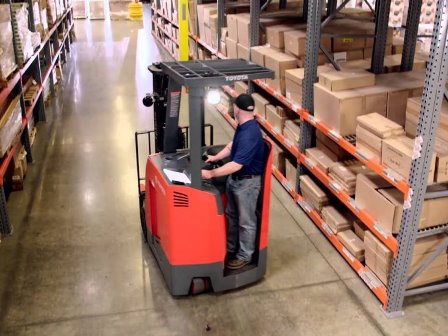
Stand-up forklifts (also known as stand-on and electric riders) are designed for applications where the operator must get on and off the lift truck frequently.
When Traveling with a Load the Load Should be Lifted?
To handle a load safely, a forklift operator must consider dangers ranging from improper load weights to blind spots and hazards on the ground.
When lifting, moving or lowering a load with a forklift, smooth operation is essential for maintaining stability. This safety training aid looks at the correct way to load, carry, and unload when operating a forklift.
When Traveling with a Load the Load Should be Lifted
Forklift traveling with a load
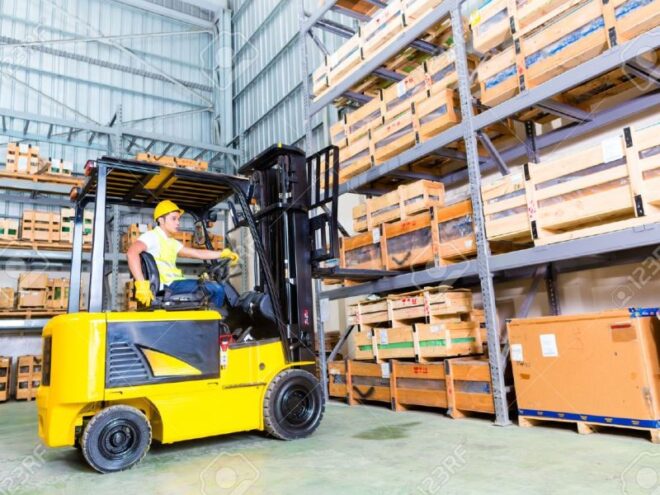
When traveling with a load, always make sure to tilt the mast of the forklift backward so that the load will firmly place against the backrest to make it more secure during transport. By doing this, you move the center of gravity towards to rear of the forklift making it more secure when traveling.
Forklift loading:
Fasten your seat belt.
Make sure the load is within the forklift’s rated capacity. The nameplate on the forklift lists its maximum load weight. Never exceed it!
Use the proper lift fixture for the type of loads, such as a carpet spike or drum grappler.
Make sure the load is stable and centered; stack or tie uneven or loose loads.
Spread the forks as wide as possible for even distribution and load stability.
Approach the load squarely, positioning and inserting the forks far enough to be sure the pallet is completely on the forks. Take care not to damage materials stacked next to the pallet.
Drive under the load until it touches the carriage. Tilt the forks back to shift the weight of the load and make it more stable.
If the load is unbalanced, keep the heavier end closer to you. Tilt the mast back.
Lift the load and tilt it back a little more before traveling.
When Traveling with a Load the Load Should be Lifted
Forklift carrying loads
As more forklift options and attachments become available, it is increasingly important for forklift operators to have a clear understanding of their forklift’s load capacity and the risks that are involved in exceeding it.
Forklift: Carrying the load
Keep the forks 6 to 10 inches above the ground to avoid potential hazards on the ground.
Remember that forklifts are top-heavy. Carry the load low and tilted back.
Use caution when carrying a load on an uneven surface; it creates a tip-over hazard.
Don’t carry anything on the overhead guard.
Travel in reverse if the load blocks your vision.
Always look in the direction of travel.
Keep your arms and legs inside the forklift.
Never reach through the mast to adjust the load.
Do not raise or lower the load while moving.
Use a spotter if you don’t have a clear view.
Exercise caution and adjust your driving and speed to current weather conditions, particularly on wet surfaces.
Travel at a speed that will allow the forklift to be brought safely to a stop.
Loading and unloading trucks with forklift
To ensure truck loading and unloading operations are conducted safely, to eliminate the potential for injuries, particularly as a result of vehicle and human interaction.
The following are general loading and unloading procedures for trucks:
Turn the forklift slowly into position, squaring it up to the drop-off location.
If unloading onto a semi-truck and trailer:
before driving in, visually inspect the inside of the trailer to ensure that the bed is in good condition and of adequate height to accommodate the forklift;
make sure the trailer’s rear wheels are chocked, the parking brake is set, and the dock plate is down and secure;
slowly drive-in, position the load, and tilt it forward until it is even with the surface of the unloading location;
then lower the load and release it.
If unloading onto a stack:
position the forklift properly before lifting the forks;
check for overhead clearance before raising the load;
raise and position the load to the correct height – 2 inches above the stack;
allow 2 to 3 inches of clearance at the sides and back of the load;
move the load slowly into position;
tilt the load forward, then lower it;
level the forks so they are no longer tilted; and
pull the forks back slowly.
If unloading onto a trailer or onto a stack:
before reversing, check the clearance behind you, sound the horn, and with the backup alarm sounding, back up slowly while looking over your shoulder; and
once you are clear, stop the forklift and lower the forks as far as possible. On a flat floor, lower them until they are 2 to 5 inches above the floor. On rough terrain, lift the forks higher to accommodate uneven ground.
When Traveling with a Load the Load Should be Lifted
Loading trucks with forklift
Be aware of pinch points and crush hazards during the loading and unloading process. Keep hands away from cargo and truck trailer during loading and unloading and avoid touching the load with your hands while it is moving or suspended. Utilizing hands-free tools and tag lines for assisting load control is appropriate.
Truck drivers are not to walk into the work area during cargo handling operations unless authorized by an employee;
Truck drivers must stay in the safe zone, for example, next to the cab, until the load has been loaded or unloaded and/or the truck driver has been authorized to leave the safe zone by the KPA dogman or forklift operator;
If trucks are required to reverse on port lands and/or the wharf then a spotter is required at all times during the reversing operation.
Truck drivers to remain with their vehicles unless there is an operational requirement to do otherwise;
It is the responsibility of the truck driver to ensure that a spotter is in place. The spotter could be an employee, another truck driver, a competent vessel crew member.
Reversing alarms must be installed and in good working order on all trucks. In addition, it is recommended that truck trailers have reversing beepers.
Unloading trucks with forklift
Any loads or items placed on the wharf from a vessel or truck must be placed in a planned methodical way considering good housekeeping practices and well clear of the hazard line to maintain sufficient room for any mooring or unmooring that may arise.
No items are to be stored on or inside the hazard line. In addition, trucks must park away from the hazard line to ensure that the driver does not need to enter the hazard zone to exit/enter the cab unless a safety control is in place (i.e. PFD or safety rail in place).
When Traveling with a Load the Load Should be Lifted?
Check that there is adequate overhead clearance before raising the load. This is especially true when high tiering or in a confined space like a truck trailer. There must be sufficient headroom under overhead installations, lights, pipes, sprinkler systems, etc.
Forklift safety is of the utmost importance, and driving a forklift improperly presents various risks to both yourself and others, as well as your surroundings and the things you’re lifting.