Thinking about body temperature has changed a bit based on more current data. But in the post-pandemic era, where fever is a primary symptom, how does this change affect the way doctors determine a high body temperature? Let’s examine the evidence.
How have normal temperatures changed for adults?
36.6 c to f
The new data appears to point to a downward trend in temperatures over the past century and a half. A study that looked at body temperature and found a steady decline, a fraction of a degree, every decade, even when different methods of measuring temperature are taken into account.
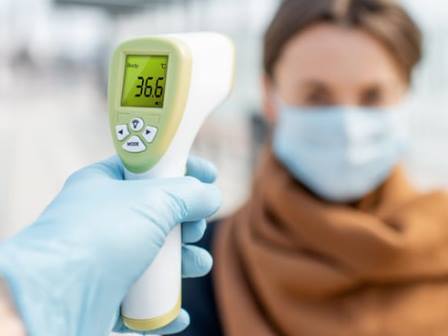
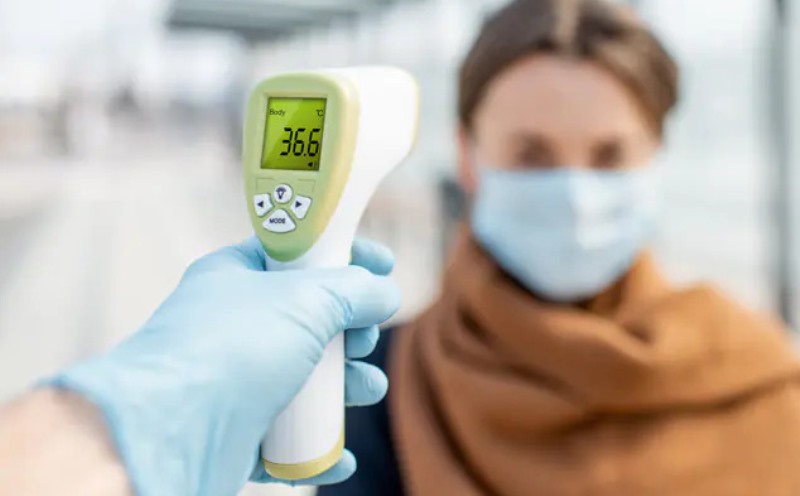
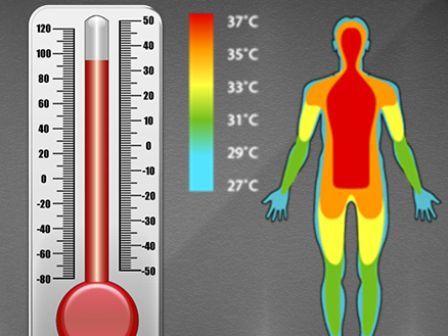
A recent large study found that the average temperature for adults today is 36.6 Celsius (97.8) degrees F.
It seems that people’s bodies are actually less warm than they used to be. Doctors are now recognizing this variation in temperatures.
What is the normal body temperature?
Normal body temperature can be slightly above or below 98.6 degrees F.
For a typical adult, body temperature can range from 97 to 99 degrees F.
Can fever be treated at home?
If your fever is mild (less than 101 ° F), then no medical treatment is required. Just be sure to drink plenty of fluids (not alcohol) and get plenty of rest.
For higher temperatures, there are many effective ways to control a fever. The most common form includes medications such as aspirin, acetaminophen, and ibuprofen.
Taking a warm bath (around 98 ° F) can also help lower your body temperature.
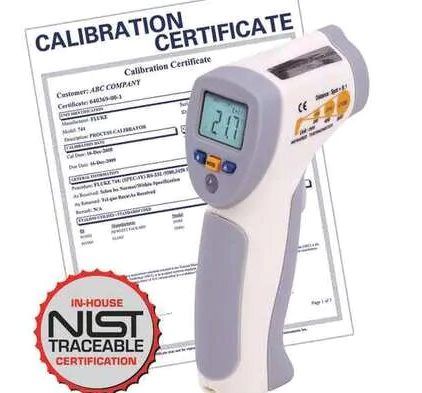
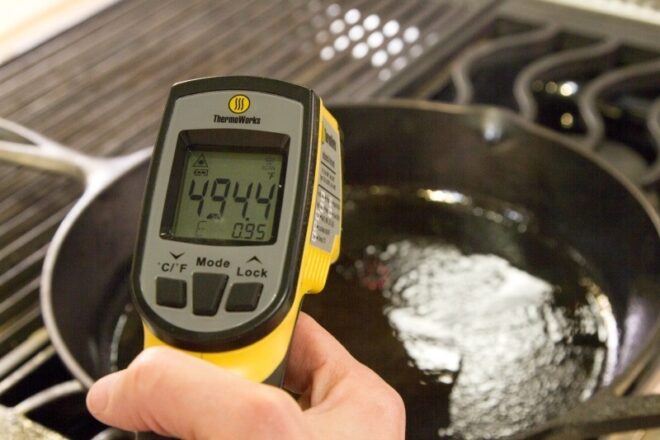
Infrared Thermometer Accuracy – how to check accuracy of infrared thermometer? : To test the accuracy of an infrared thermometer requires access to a stable surface of known temperature.
How to check Accuracy of Infrared Thermometer?
How do I know if my infrared thermometer is accurate?
Non-contact thermometer accuracy
Measurement of body temperature has become an essential diagnostic method for medical treatment. There are two traditional methods to measure body temperature.
Body temperature is an indication to express the health condition or pathological state.
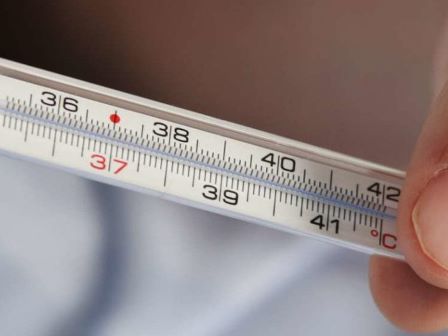
The first type is the glass mercury thermometer. This thermometer is inexpensive and easy to use. However, the response time is from 3 to 5 minutes. The glass material is extremely fragile and can be dangerous to the human body.
The second type is the electronic digital thermometer. Its sensing element is made of a thermistor or resistance detector. This meter can measure the temperature within several seconds. However, the electronic device is affected by aging problems.
The sensing elements of a digital thermometer still need to have contact with the human body.
Can you take body temperature with an infrared thermometer?
Several problems exist in the clinical operation. The patient reaction, such as children or infants, could affect the measurement of these contact thermometers. The best method is to measure the core body temperature, such as the temperature of coronary arteries.
how do i know if my infrared thermometer is accurate?
How to check infrared thermometer
The following simple instructions should help you perform a field check of an Infrared thermometer at moderate temperatures:
The infrared thermometer should be at or near the room temperature where the test will be conducted. For example, if you just took the thermometer out of a hot or cold car, or you retrieved it from a cooler, or you are outdoors let it sit for 15-20 minutes at the new room temperature before performing the next precision test.
Ensure that the lens or IR sensor is free of debris, grime, or condensation which can affect the accuracy of the reading. Use a soft cotton swab and alcohol to gently wipe it clean if needed. Avoid scratching the lens or sensor.
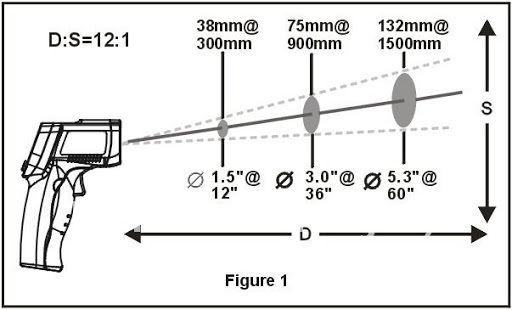
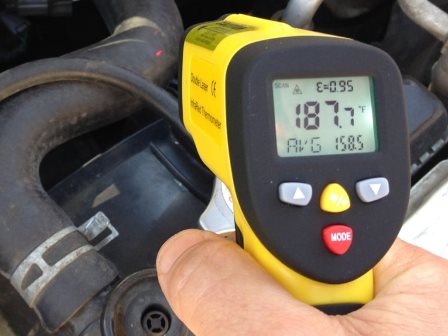
Distance to Target Ratio: The Distance to Target Ratio is normally indicated on each thermometer or in the instructions. Example: For a 12:1 ratio, at a 12″ distance from the test object the target diameter being measured will be approximately 1″ diameter. Further in distance will increase the test area creating a larger diameter of surface area being tested. The temperature reading will be an average of the temperature in the target diameter.
Infrared thermometer test
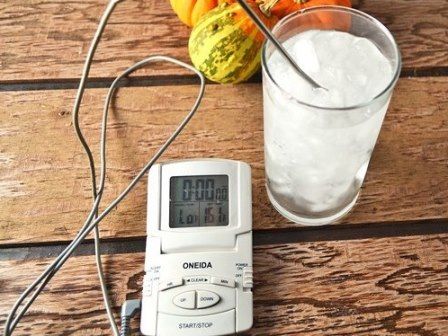
Ice Water Test: Fill a glass with ice and add only enough water to fill the gaps between ice pieces. Allow the ice/water to rest for a minute or two. Stir a few times for uniformity. Hold the infrared thermometer directly over the top of the ice/water at a distance of about 3″.
Make sure the lens is at a 90° angle and that the lens itself is centered over the ice/water per the illustrations shown here. If you aim at an angle, your field of view will include the walls of the glass or the background of the tabletop and your readings will not be accurate. If you perform the test correctly, and your IR thermometer is accurate, it should read approximately 32.0°F within the stated accuracy specification of your thermometer.
Infrared Comparator Cup: (fig C) This device allows you to compare the accuracy of an infrared thermometer to a calibrated immersion type thermometer at a temperature other than ice/water. Inside the machined aluminum cup is a flat surface with a solid matte black coating.
The cup walls shield the surface from air currents in the room. The mass of the base provides for some stability in the temperature. Once inserted, the reference thermometer is allowed to stabilize for several minutes. The IR thermometer is then carefully pointed at the target inside the cup, using the same care as used with the ice/water test. The reading of the IR thermometer should match that of the reference thermometer within the stated specification.
Infrared Thermometer Accuracy
Infrared thermometer testing
The Infrared Temperature Measurement System
Each body with a temperature above the absolute zero (-273.15°C = 0 Kelvin) emits electromagnetic radiation from its surface, which is proportional to its intrinsic temperature. A part of this so-called intrinsic radiation is infrared radiation, which can be used to measure a body’s temperature. This radiation penetrates the atmosphere.
With the help of a lens (input optics) the beams are focused on a detector element, which generates an electrical signal proportional to the radiation.
The signal is amplified and, using successive digital signal processing, is transformed into an output signal proportional to the object temperature. The measuring value may be shown in a display or released as an analog output signal, which supports an easy connection to control systems of process management.
Infrared thermometer advantage and disadvantage
The advantages of non-contact temperature measurement are clear – it supports:
Temperature measurements of moving or overheated objects and of objects in hazardous surroundings
Very fast response and exposure times
Measurement without interreaction, no influence on the measuring object
Non-destructive measurement
Long-lasting measurement, no mechanical wear
How to check accuracy of infrared thermometer?
Measurement Preparation: How to Calibrate an Infrared Thermometer
Now that you know how to obtain prompt readings using a laser point thermometer, you need to focus on gaining more accuracy by way of calibrating it.
Use infrared comparator cup- Simple to utilize yet inexpensive; the Comparator Cup helps you calibrate your laser point thermometer for temperature readings occurring more than once.
Use an ice bath- This method resonates around factoring in a liquid’s boiling point when calibrating your infrared Thermometer. Variables such as elevation and air pressure can tamper with readings. Still, the surface of a well-tended ice bath should give you optimum zero degrees to attain the desired accuracy.
Laboratory-based calibration- If you prefer to utilize more advanced means to calibrate your infrared Thermometer, perhaps you should consider using black bodies certified by Accuracy Standards worldwide. The good thing about black bodies is that they approximate non-existent ambient radiation and can give back a typical 0.95 emissivity value.
Infrared thermometer accuracy
How to check accuracy of infrared thermometer?
To test the accuracy of an infrared thermometer requires access to a stable surface of known temperature. You cannot verify the accuracy of an IR thermometer by comparing it to an immersion type thermometer that is beneath the surface of a liquid or semi-solid in a non-controlled experiment.
How to use infrared thermometer with laser pointer?
To get heat readings from your target object, you have to know how to use an infrared thermometer with a laser pointer: -Adjust the switch to your desired measurement unit. -Turn on the temperature laser gun using its power button, if any. -You can depress the trigger to obtain hidden temperature units. -Aim the laser point towards the object from which you want to collect temperature readings. -Stand as near as possible to the target object for pinpoint readings, unless you feel that it’s too dangerous for your health to get closer. -Pull the trigger to get temperature readings from the infrared Thermometer’s digital display.
If you think you can trust your smoker’s built-in thermometer, then you’re going to have a tough time cooking. So, how to choose the best meat thermometer for smoking?
Trying to cook a barbecue without an accurate smoker thermometer setting is not recommended, it’s really hard to produce a perfect slow roast when you can’t keep your smoker’s temperature constant.
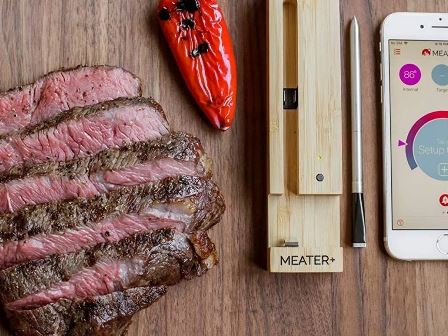
You can avoid many bad barbecues and dramatically simplify temperature control for your next smoke by having a quality wireless thermometer in your hands.
A wireless thermometer is the best barbecue thermometer for most people due to its rugged design, speed of reading, and accuracy.
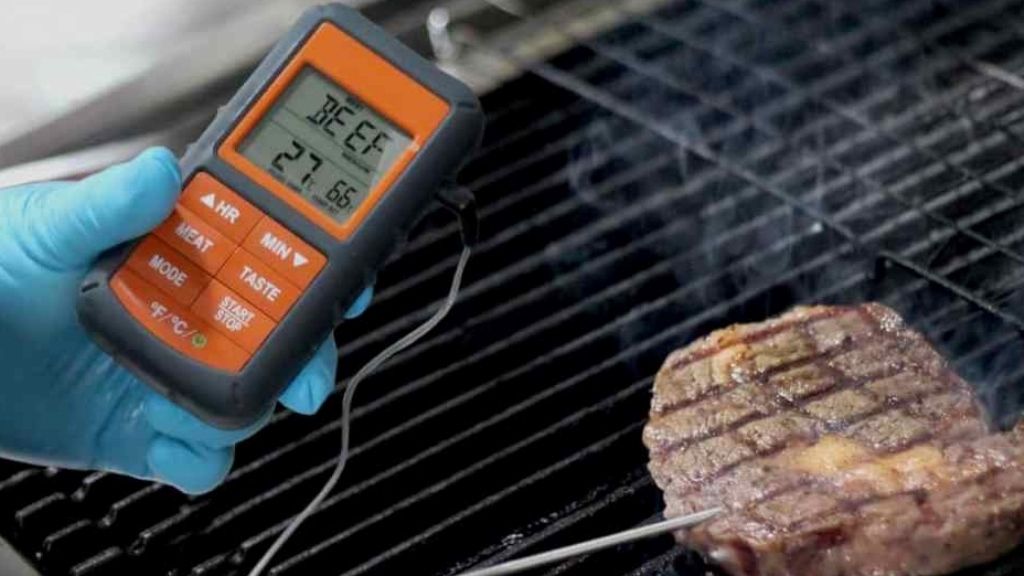
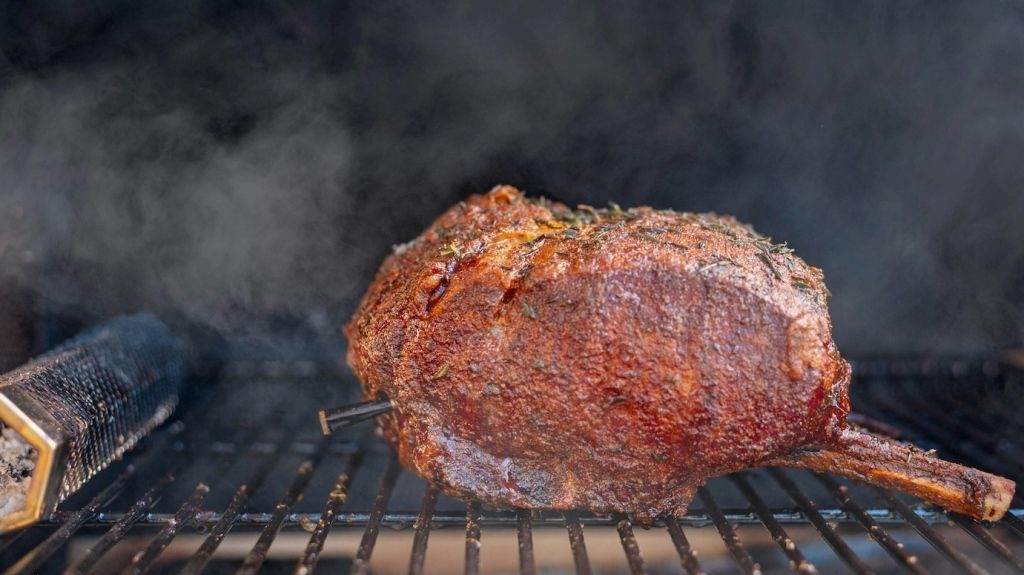
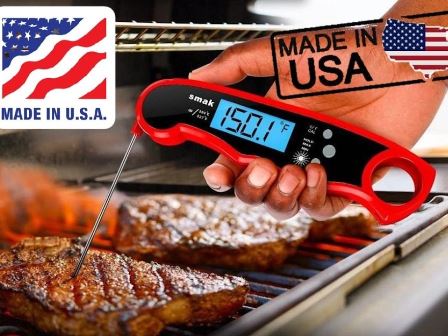
A thermometer with a wired temperature probe can be used continuously while the meat is smoking. The probe is left inside the meat for the duration of smoking.
The temperature reading can be viewed without having to open the smoker.
Can you leave a meat thermometer in the smoker?
Yes. To ensure that meat and poultry are smoked safely, you will need two types of thermometers: one for the food and one for the smoker. A thermometer is needed to monitor the air temperature in the smoker or grill to ensure that the heat remains between 225°F (107.2°C) and 300°F (148.8°C) throughout the process of cooking.
Thermometer for smoker
For consistently good results, you need to be able to monitor and see at a glance both the internal temperature of the meat you’re cooking so you know when it’s done and that of your smoker or grill so you know what temperature it’s cooking to.
Having at least one thermometer is important. The peace of mind you get from knowing your smoked meats are cooking safely is an important reason to have at least one quality meat thermometer for your smoker.
Cooking should be an enjoyable experience, and you don’t want to spend your time worrying about meat temperature. This can cause unnecessary stress, not to mention health and safety hazards.
Grill Thermometer
For barbecues, smoker probes are commonly used to monitor the ambient temperature of the smoker grate or the protein of the food you are cooking.
It is important to be able to control the temperature of the barbecue smoker. You’ll want to cook with confidence at the room temperature that suits your recipe.
Sometimes you’ll want to keep it low and slow at around 230 F for long cooks. Other times you will want to cook hot and fast around 300 F°.
Knowing and recording the temperature on an easy-to-read graph helps you know if any spikes or dips in temperature negatively affected the cooking time of the meat.
Food probes are primarily used to tell when dinner is ready.
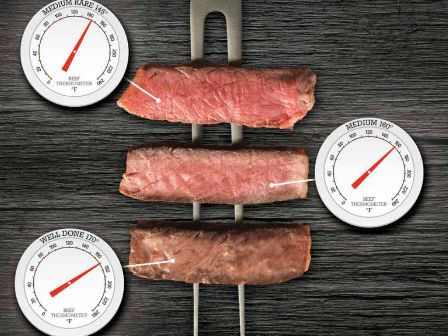
You want the protein to cook safely to standard internal food temperatures, and similarly, you don’t want to overcook the food.
Safely monitor the temperature of your food during the cooking time to make sure you don’t overcook it.
It is also important to use when cooling, reheating, and defrosting foods to control and ensure safe temperatures.
Depending on the thermometer, it can give you accurate readings during barbecue, oven and stovetop cooking.
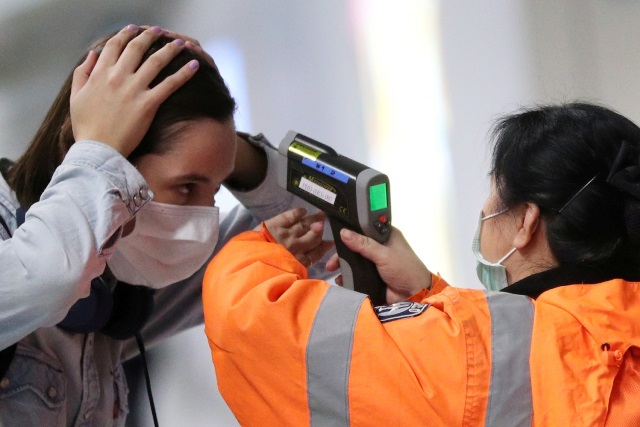
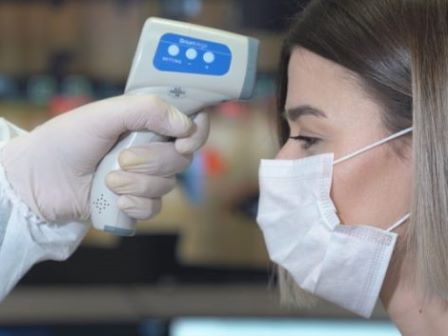
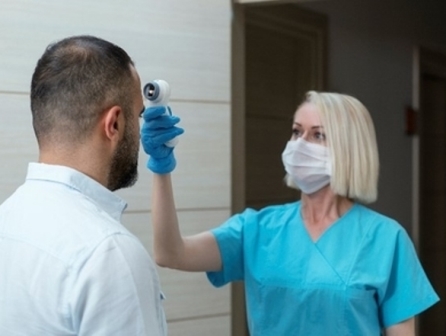
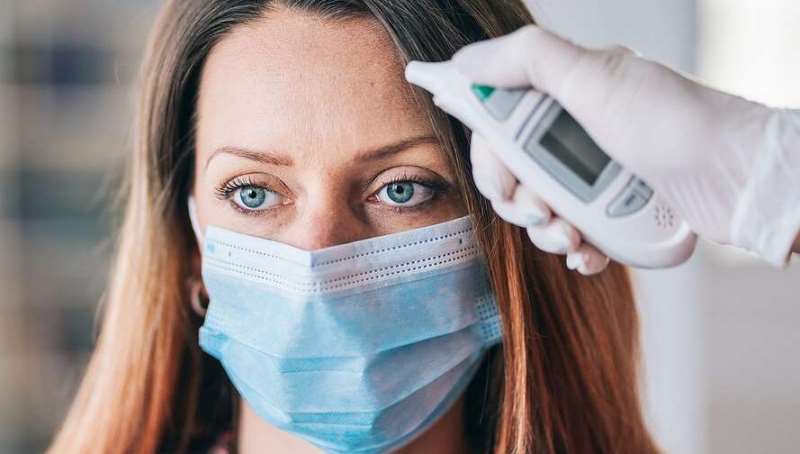
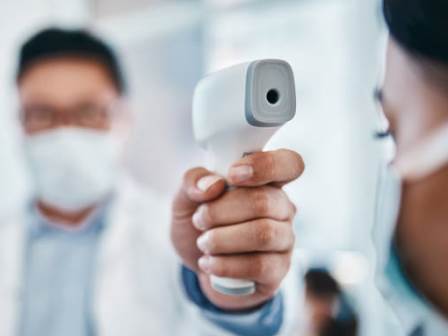
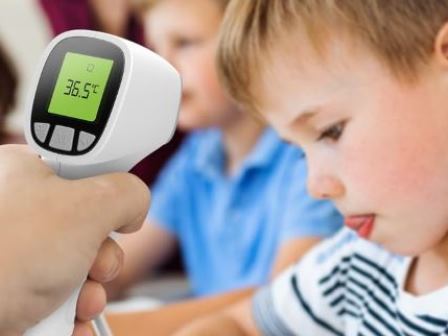
Measuring a person’s temperature can be done in several ways. One method to measure a person’s surface temperature is with the use of non-contact infrared thermometers.
A non-contact Infrared Thermometer may be used to reduce cross-contamination risk and minimize the risk of spreading disease. While typically 98.6°F is considered a “normal” temperature, some studies have shown that “normal” body temperature can be within a wide range, from 97°F to 99°F.
Non contact Infrared Thermometer
Non contact Medical thermometer
Before NCITs are used, it is important to understand the benefits, limitations, and proper use of these thermometers. Improper use of NCITs may lead to inaccurate measurements of temperature.
Benefits of Non-contact Infrared Thermometer
Measuring a person’s temperature can be done in several ways. One method of measuring a person’s surface temperature is with the use of non-contact infrared thermometers, these thermometers can be used to reduce the risk of cross-contamination and minimize the risk of spreading disease.
Contactless approach can reduce the risk of spreading disease between people tested, easy to use, easy to clean, and disinfect.
Quickly measures temperature and displays a reading, providing the ability to quickly retake a temperature.
Limitations of Non-contact Infrared Thermometer
How and where the Non-contact Infrared Thermometer is used may affect the measurement (for example, head covers, environment, positioning on forehead).
The close distance required to properly take a person’s temperature represents a risk of spreading disease between the person using the device and the person being evaluated.
List of the non contact Infrared Thermometer
Thermobio non-contact infrared thermometer
Berrcom non-contact infrared thermometer
Braun non contact infrared thermometer
Medsource non-contact infrared thermometer
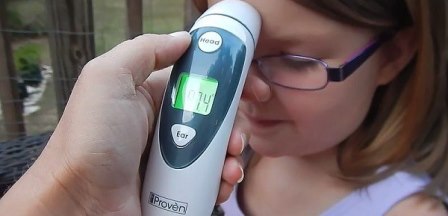
Iproven non contact thermometer
Exergen non contact thermometers
Vicks thermometer for babies
Homedics thermometer
Non contact Infrared Thermometer
Contacless infrared thermometer medical
The medical thermometer is the world’s first non-contact device with Touch-Free technology developed by the team that invented tympanic thermometry!
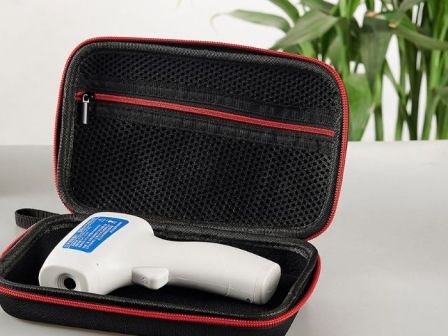
The professional thermometer is a clinical-grade infrared thermometer for the measurement of forehead temperature in adults, children, and infants without contact.
It is designed for use in a wide variation of medical settings and can also deliver ambient/skin surface temperatures with the flick of a switch.
The FDA-approved devices can be used by consumers in home settings and doctors and nurses in a clinical setting. The FDA-approved Non-Contact Infrared Thermometers, give you the ability to take a body temperature while never touching the patient.
Engineered with advanced infrared technology to accurately measure body temperature from a distance without making any contact. Simply point, measure and get instant results in 1 second.
Get easy-to-read, highly accurate results in seconds. Definitely good for kids when they are confused and can’t get them to sit still for a second. Just put it on their forehead and you will get your answer, they have a fever. Highly recommended!
BERRCOM Non-Contact Digital Infrared Thermometer uses state-of-the-art non-contact infrared technology to measure body temperature. With a one-button operation and accurate results in just one second, you can quickly and easily measure body temperature as well as the temperature of surfaces and objects around the home.
Non-contact technology enables accurate readings by placing the probe near the forehead so there is no need to disturb or wake the individual when monitoring their temperature.
The Braun thermometer offers clinically proven quick, precise, and accurate readings without struggle or hassle from invasive thermometers. The color-coded screen changes from green to yellow to red, depending on the temperature reading and unique on-screen positioning systems confirm proper distance for taking temperature and gentle guidance light directs you for accurate aiming. This non-contact thermometer is safe and hygienic with no need for expensive replacement probe covers.
The Ihealth Infrared Non-Contact thermometer is specially designed to take a human body temperature while never touching the patient. It uses an infrared detection system and displays temperatures in Celsius and Fahrenheit on a backlit screen.
They can detect surface and ambient temperatures in addition to body temps. These thermometers also display readings in either Celsius or Fahrenheit. They are intended to measure human body temperature on the forehead by consumers in a home setting and primary care settings as a screening tool.
Temporal artery thermometers often sold as forehead thermometers, use an infrared scanner to measure the temperature of the temporal artery in the forehead. Temporal artery thermometers can record a person’s temperature quickly and are easily tolerated.
You can take a temperature using the artery (forehead). But the temperature readings vary depending on which one you use, and you need an accurate body temperature to determine if a fever is present.
With iProven’s Infrared Non-contact Medical Thermometer, you make temperature checking comfortable for your sick family member. The thermometer allows you to check the temperature with unmatched accuracy at a distance of 0.4 to 2 inches.
The TemporalScanner Thermometer is a totally non-invasive system with advanced infrared technology providing maximum ease of use with quick, consistently accurate measurements. Advanced, patented technology measures temperatures with a gentle stroke across the forehead.
The TemporalScanner Thermometer has been clinically tested for accuracy making it the ideal thermometer for use with newborns, infants, children, or adults.
Keep a non-contact thermometer handy to take the baby’s temperature, and you’ll be able to truly determine if your child needs a dose of medication, to see the pediatrician or just watchful waiting.
Baby thermometers basically fall into these three basic types:
Digital thermometers: Digital thermometers take a minute or less to record the temperature.
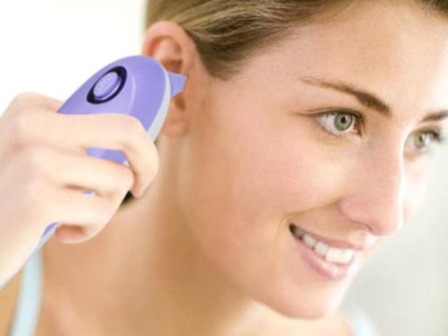
Ear thermometers: Quick and generally comfortable, ear thermometers measure the temperature inside the ear and are safe to use on babies six months and older.
Forehead thermometers: More accurately known as temporal artery thermometers, these thermometers are swiped across the forehead to read the temperature of the major vein located there.
The Vicks Forehead Thermometer is quick and easy to use. How the Vicks Forehead Thermometer measures temperature?
The Vicks Forehead Thermometer measures infrared energy emitted from the skin above the eyebrow area and the surrounding tissue. This energy is collected through the lens and converted to a temperature value. The temperature reading is obtained by scanning above the eyebrow area which provides the greatest accuracy.
Homedics digital medical infrared forehead and ear thermometer, good safety, easy operation, 1-second quick measurement for baby, kids, and adults.
Do you have a fever? The HoMedics® Non-Contact Infrared Thermometer will let you know instantly!
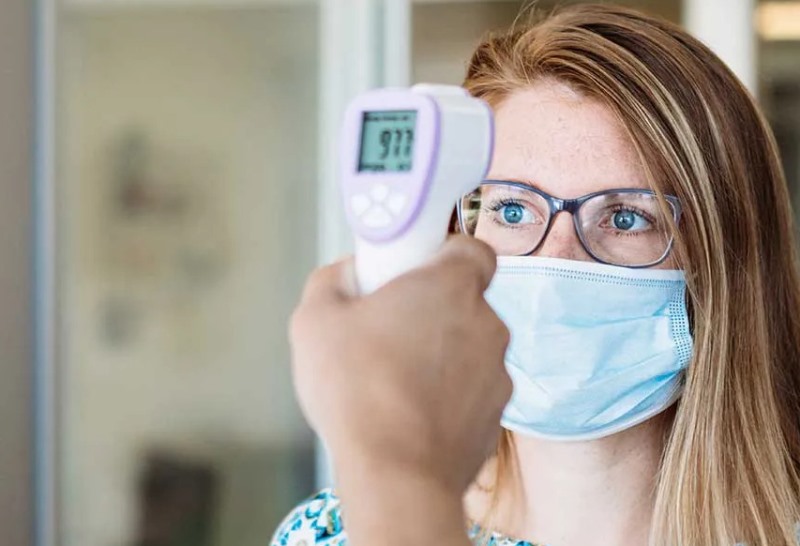
Take a non-contact temperature by pointing the thermometer at a person’s forehead.
Instant, accurate readings:
This device ensures accurate results and using advanced infrared technology, the body temperature is detected and displayed in one second.
Ergonomically designed, the forehead thermometer takes the guesswork out of placement with the gently angled forehead probe and lens for reliable results every time.
Fast, Gentle, and Easy to Use:
Homedics digital thermometer is designed to take the body temperature of your family in a fast, gentle, and easy to use way and easy to read backlight display.
This fever thermometer is a perfect device for adults and kids.
This device ensures accurate results and infrared technology that takes the temperature in a few seconds.
The non-contact forehead thermometer offers instant, accurate temperatures, and easy-to-use features that professionals have asked for:
Proven accuracy, documented clinical accuracy in a wide range of medical settings. Greater efficiency reduces the time to monitor vital signs.
Ease of use, simple positioning, one-button operation, bright backlit display. Non-contact offers improved hygiene with reduced risk of cross-contamination, minimizes the risk of operator error, provides immediate access to a measurement site, without inconvenience to the patient.
Multi-tasking capability, also measures room temperature, skin temperature, surface temperature with the flick of a switch; Celsius to Fahrenheit switchable with one touch.
Are all infrared thermometers non-contact?
Yes, Infrared Thermometer can be used for measuring the temperature of the forehead or by placing it outside the ear but they can not be used by directly having contact with the skin.
What type of thermometer is most accurate?
For general home use, forehead thermometers will give you an idea of whether or not a person has a fever. However, according to one study, forehead thermometers are less accurate than other temperature reading methods, such as oral, rectal, or tympanic (ear) temperature readings.
A industrial thermometer is an instrument designed to measure and indicate the temperature of a specific application or condition.
An Industrial Thermometer, commonly known as a “Liquid-In Glass” or Light-Powered Digital Thermometer, is installed at the point of measurement and is usually read from that location.
Which thermometer is used for industrial application?
Principles of Operation:
Liquid-in-Glass
This thermometer is comprised of a liquid-filled sealed glass tube and bulb, which is affixed to the front of a metal temperature scale, and extends into a metal bulb chamber (stem).
Flaked graphite is used within the bulb chamber to transfer the measured temperature to the glass bulb. Temperature changes cause the thermo-active fill to expand or contract within the tube. This activity is instantly visible in the tube against the calibrated markings of the temperature scale. For purposes of readability, the tube is formed with a lens front to create a magnified indicating column.
Light-Powered Digital
This thermometer is comprised of a thermistor wire that extends into the stem. Flaked graphite is used to transfer the measured temperature to the thermistor. Temperature change causes a change in the output of the thermistor; this output is translated through a pre-programmed algorithm in the microprocessor resulting in a digital display of the temperature.
All industrial thermometers should be carefully selected to meet the demands of the particular application.
The information is offered only as a guide to assist in making the proper selection. Improper applications may cause the failure of the instrument, resulting in possible personal injury or property damage. For applications where the process media may be corrosive or contained under pressure, the use of a thermowell is required to prevent damage to the thermometer and facilitate its removal from the process.
Thermowell thermometer
For applications where the process media may be corrosive or contained under pressure, the use of a thermowell is required to prevent damage to the thermometer and facilitate its removal from the process.
Thermowells are available in various lengths, connections, sizes, and materials.
A digital thermometer should always return accurate readings. Whether you use it for measuring body temperature, atmospheric temperature, or any other relevant use.
Seek medical attention for your fever if your temperature is high and has not dropped after taking fever medicines. Your temperature lasts for several days or keeps coming back. So, fever in adults when to worry?
Fever is a temporary increase in body temperature and a sign that your body is fighting an illness or infection. Usually, there is no cause for concern, but certain situations warrant a visit to the doctor or even the emergency room. Learn when it’s time to seek treatment.
Fever in adults when to worry?
What causes a fever in adults?
Fever is an elevated body temperature, which means your temperature is 100.4 degrees F or higher. Fever is the body’s way of fighting infection by naturally raising the body’s temperature to “kill the germ.”
The medical community likes to say that fever is a “good thing” in most cases.
And yes, it is entirely possible for adults to develop a fever without other symptoms and for doctors to never really find the cause. Viral infections can commonly cause fever, and such infections include the pandemic virus, cold or flu, respiratory tract infection such as bronchitis, or the classic stomach virus.
This is why you often hear the word “viral” as an explanation because these types of infections often clear up on their own after a few days.
How long does a fever last in adults?
Most fevers go away on their own within a few hours or days as your body wears off the infection. If your fever lasts longer than 3 days, it is important to see a doctor. A relapsing fever, however mild, can be a sign of a more serious condition. An urgent care center is a quick and convenient place to seek treatment for mild fevers.
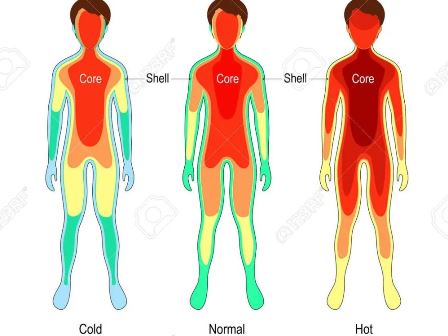
Humans, like all mammals, are warm-blooded, which means that our bodies stay warm or at a fairly constant temperature, even when the temperature of our environment changes.
For most of us, our bodies tend to range between 97 and 99 degrees Fahrenheit. But under certain circumstances, our body temperature rises, resulting in fever.
Your body’s immune system creates a fever to fight infection.
Fever in adults when to worry?
Fever is a symptom caused by a wide variety of diseases. Fever can occur in anyone at any age.
We have all experienced the wave of chills and exhaustion that fever causes.
Fever rarely occurs without other symptoms. It is often accompanied by specific complaints, which can help identify the illness causing the fever. This can help the doctor determine what treatment is necessary.
when to worry about a fever in adults?
When to worry about a fever in adults?
Get medical attention for your fever if: Your temperature is high and has not gone down after taking Tylenol or Advil. Your temperature lasts several days or keeps coming back. You have serious health conditions like diabetes, heart disease, or sickle cell anemia.
How long does a fever last in adults?
Most fevers go away on their own within a few hours or days as your body wears off the infection. If your fever lasts longer than 3 days, it is important to see a doctor. A relapsing fever, however mild, can be a sign of a more serious condition.