Category Archives: port crane

Storage Logistics

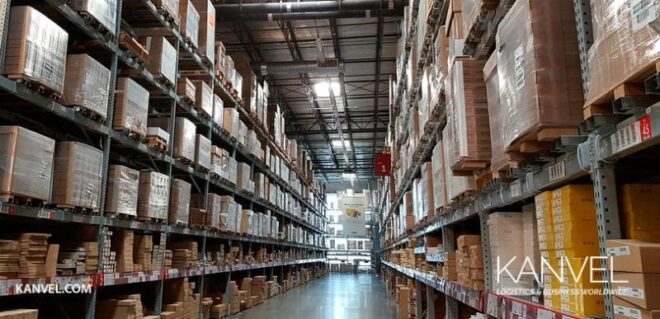
Definition of storage logistics: We define storage logistics, such as the management and operations necessary for the reception, storage, and movement of the products of an online store.

E-commerce, like any other type of business that sells physical products, needs to have control of the stock of its products. Know how many units are left of a certain article. The moment in which a product is out of stock, or where the store is located. These are some of the questions that online stores ask themselves every day.

These questions are answered in adequate storage logistics and inventory control.

Storage logistics definition

Warehouse Management

From their point of origin, until they leave e-commerce. All the tasks carried out by the online store for the supply, storage, and access to the products of its warehouse would, therefore, be included in the storage logistics.

  • All the tasks of warehouse logistics seek to achieve a series of objectives. How it can be to maximize the space.
  • Minimize inventory costs
  • Reduce the routes in the picking process.
  • Perform all store operations in the shortest possible time.
  • Avoid stock breakages or guarantee the supply of products.

Logistics and storage

What is the warehouse?

The classification of the warehouses according to their degree of mechanization; not all warehouses have the same degree of mechanization, mainly because not all goods can be treated with the same mechanical means, therefore the warehouses according to their degree of mechanization in conventional warehouses, high-density warehouses, and automatic warehouses.

Conventional stores: Those whose height does not exceed 10 meters in height. And that they are equipped with shelves and simple means for the internal transport, of the type of a forklift truck, which forces that the distance between shelves is greater due to the maneuverability of the forklift.

Due to the importance of forklifts (forklifts) in the actions to be carried out in warehouses, we can classify the warehouses depending on the use of these cranes in:

Warehouses that use counterbalanced forklifts

The height of the shelves can not exceed 4 meters in height which are the length of the mast of the conventional forklift. The width of the corridors will be a function of the maneuverability of the truck and the weight of the load to be handled, being normal width of about 3.5 meters, although if some type of accessory for the truck is needed, this width could reach be older

Warehouses using retractable mast forklifts

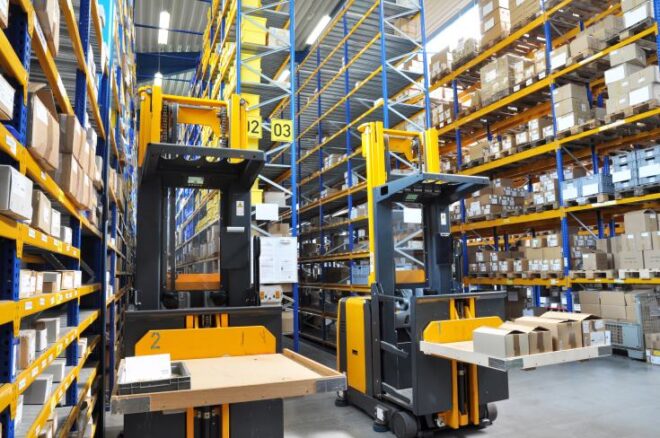
The use of forklift trucks of the retractable mast, allows stores to gain in height since already mast can reach 10 meters in height, so unlike conventional trucks the mast cannot be tilted, it is also reduced the width of the corridors, since by design it allows the mast to retract on lower guides that are introduced in the chassis of the machine, being able to be the width of the corridors of 2.5 meters.

Drive-thru storage

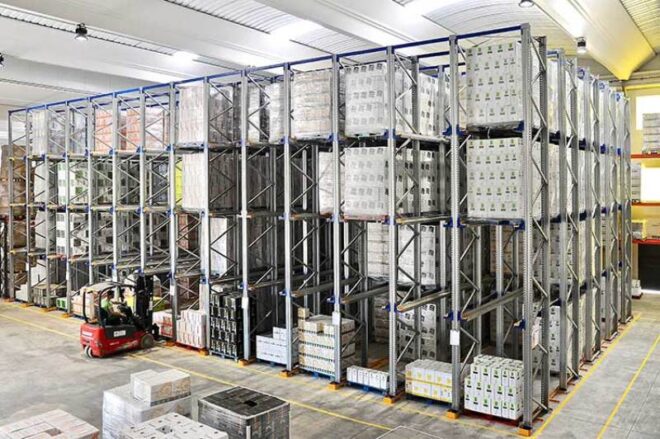
Conventional warehouses with drive-in and drive-through shelves: The drive-in and drive-through shelves are ideal for storing large quantities of heavy goods with a small variety of items. The shelving system combines the advantages of block stacking and stacking of shelves: compact use of space with high stacking heights and care of stored goods.

Before entering the desired channel, the truck raises the pallet to the level of the desired shelf level. The truck must not be wider than the pallet. The stacker with a transversal seat is very appropriate for this job since it also offers the driver good visibility in reverse.

These types of shelves are capable of storing several load units, one behind the other, distributed in-depth and on two brackets.

Industrial Racks

For storage and storage, one cycle must be maintained per shelf module, from top to bottom (and vice versa).

The trucks have the possibility to enter the shelving modules. If it is a drive-in bookcase, it can only be accessed from one side, the Lifo method, that is, the merchandise that first enters the store is the first one to leave.

On the other hand, with a drive-through shelf it can be stored on one side and, simultaneously, stored on the other side, the Fifo method, that is, the last merchandise that has entered the warehouse is the first one that comes out.

For this reason, the performance in the shipment of goods from the drive-through shelves is higher than that of the drive-in shelves.

Dynamic Rack

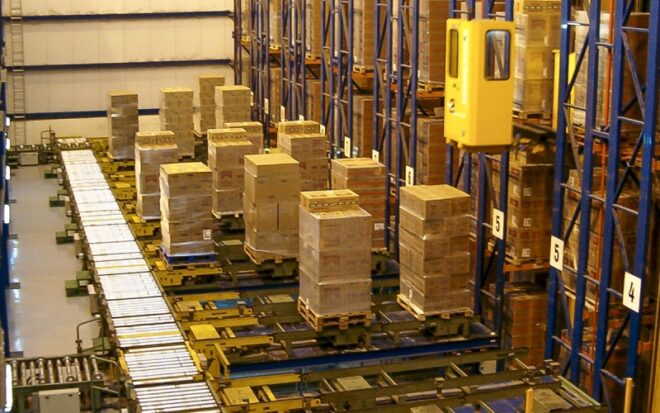
Warehouses equipped with dynamic shelves: The warehouses equipped with dynamic shelves can be considered to constitute an intermediate stage toward the systems in which the product flows to the operator without it having to move.

The FIFO principle is applied (first palette that enters, first one that leaves). The pallets are moved by slightly inclined rollers.

  • They present the possibility of incorporating small reducing motors or air cylinders for the drive of the roller rows.
  • They are recommended especially for intermediate warehouses, shipping areas, etc.
  • They are recommended for homogeneous and perishable products.
  • They provide organized storage for a quick location and with them, the displacements of the trucks are minimized.
  • Increase the number of articles of direct access, greatly reduce the trajectory times to the product and downtime, reduce the superfluous areas.

High-Density storage

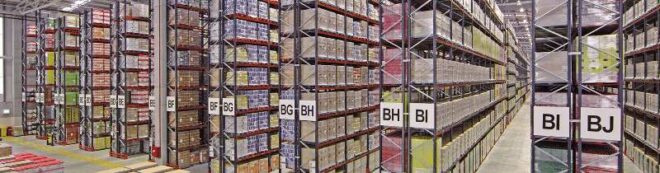
High-density warehouses: They require the use of specific means in order to achieve the highest possible density of packages located per square meter of storage area.

  • High-density warehouses require shelves adapted to the dimensions of the packages.
  • The dimensions of the corridors for the same machine must be the same.

Due to the difficulty to use material handling equipment outside the high-density areas, it implies the use of very specific machines and not conventional means, trilateral forklifts are generally used.

Due to the characteristics of this type of warehouse, there is a high demand in terms of the resistance and flatness of the floor and the leveling of shelves so that it is possible to maneuver the trucks safely.

Smart Warehousing

With this type of warehouse, total accessibility to the products and high use of the volume of storage, and optimization of surfaces and routes are achieved.

The warehouses, due to the use of space, have a normally high height and are therefore reduced in the maneuvering corridors. These warehouses are usually used in companies that have a dimensional homogeneity of the merchandise and that present the impossibility of having a larger storage surface.
Warehouse Automation

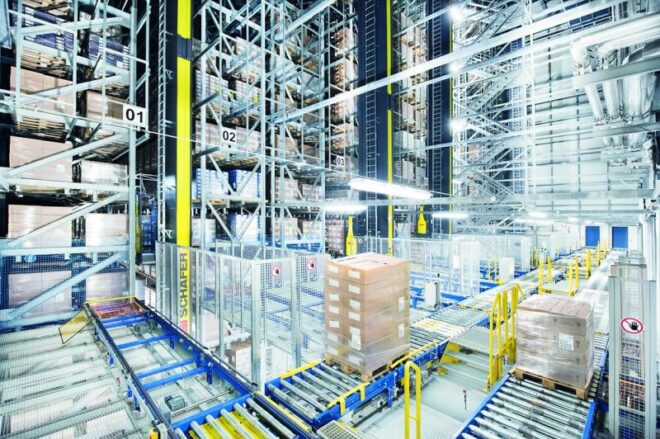
Automatic warehouses are structures, generally, high-rise, where the storage elements and the maintenance elements are integrated and controlled by a computer system.

Depending on the size of the cargo, we can distinguish two types of warehouses.

Modular Rack

If the load is large, they are called ASRS, meaning, in this case, loads greater than one pallet.

This type of warehouse usually exceeds 35 meters in height, and is usually formed by self-supporting structures, which support all the loads of the structure of the building.

They are recommended for companies with a high rotation of articles, a very wide range of references, of homogeneous units of pallet volume or higher where the available surface requires high storage heights.

Mini loader

If they are used for small units, they are called “Mini-Load”.

When using smaller cargo volumes than in the case of ASRS, the height of these warehouses does not usually exceed 12 meters in height.

They are recommended for articles of low volume and a high number of references. With a very high movement of articles.

Stacker crane

In both cases, when the order is given to the computer system to locate or remove material, it does so through the stacker crane.

The advantages of this type of warehouse lie in the optimum use of the available land, the absolute control of the stock, and the reduction in direct workers dedicated to storage and maintenance.

However, they have the disadvantage of having to support a very high initial investment, the need to implement a very robust computer system, and the maintenance costs.

Importance of storage in logistics

Storage is the activity of storing products in warehouses and logistics centers. Its function is to provide a constant supply of goods to the market to fill the temporary gap between producers and consumers. It also plays an important role in maintaining quality in souls.

What is the difference between logistics and warehousing?

Warehousing and logistics are two different sides of the same coin. Warehousing is the safe & economical storage of goods, inventory, information, etc. within a specified area or building. Logistics is generally the detailed organization and implementation of a complex operation in different management tomes.

How is supply chain management different from logistics?

Logistics focuses on transporting goods while supply chain focuses on the finished products and/or customers. Logistics has to do with the coordination and movement of goods. The supply chain involves multiple facets such as operations and procurement that keep a company running smoothly.

What are warehousing services?

It may involve warehouse pickup, packaging, and labeling. There are many variations depending on the client, but the most basic services provided are storage and warehousing, order processing, pick and pack, shipment of product, returns and exchanges, call center, invoicing, and order administration.

What is logistics in warehousing?

In the simplest possible terms, logistics may be defined as the detailed planning, organization, management, and implementation of complex operations. In many industries, including warehousing, logistics also extends to the flow of both physical goods and information.

What is the difference between warehouse and warehousing?

A warehouse is a place for storing large amounts of products (wares) in logistics, a place where products go from the manufacturer before going to the retailer while warehousing is the act of storing goods in a warehouse.

The most read

Container Crane

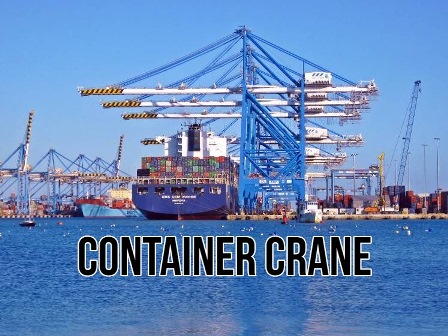
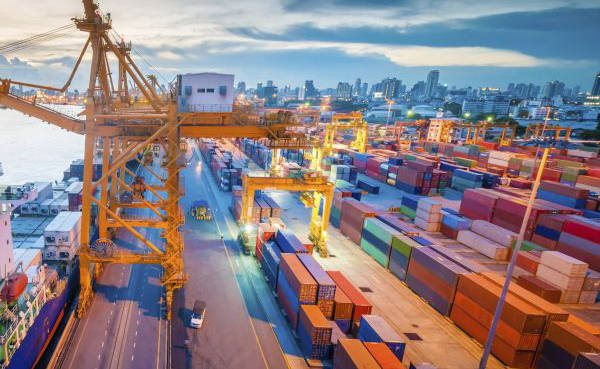
Container cranes consist of a supporting framework that can traverse the length of a quay or yard on a rail track. Instead of a hook, they are equipped with a specialized handling tool called a spreader.
More on this story

Straddle Carrier

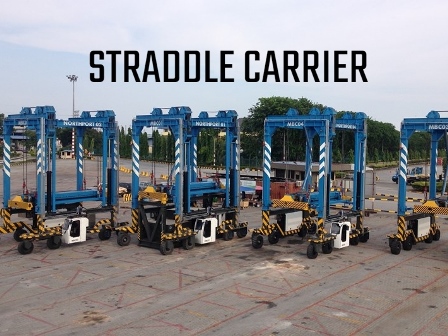
Globalization combined with the success of containerization has brought about tremendous increases in the transportation of containers across the world.
Automated Stacking Cranes

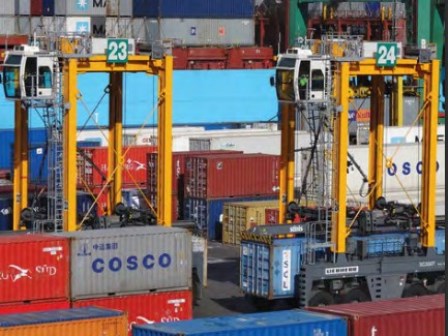
One of the basic infrastructures for the handling of merchandise and ships in all types of ports is the mechanical automated Stacking Cranes.

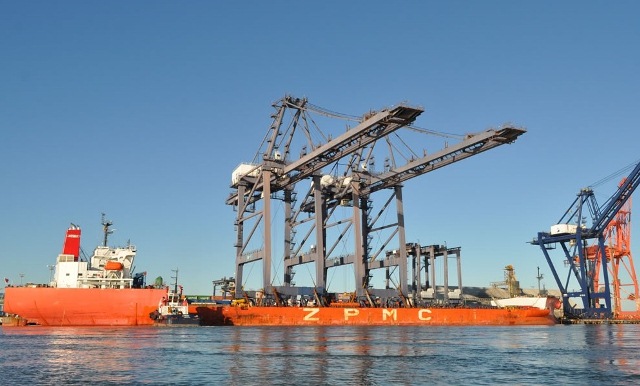
Port cranes

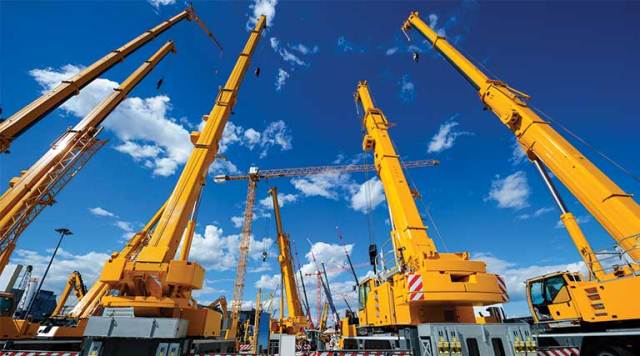
At present, there are many different types of cranes, depending on where they work, the loads they have to hoist and the tons they support, as well as the mechanisms they use (pulleys, counterweights, rails, wheels, etc.). The most common cranes are:

Port Operations

Efficiency is a decisive factor when handling cargo in both seaports and in inland ports. The loading and unloading times must be minimal, the logistics infrastructure must be flexible and the price-quality ratio must be optimal.

All these elements make port facilities stand out in the competitive international panorama.

The port equipment contributes enormously to the success of these facilities with a range of products that offers specific answers for all types of cargo. The most advanced technologies and the highest levels of quality guarantee the maximum performance and the highest availability of the equipment.

Cargo Cranes

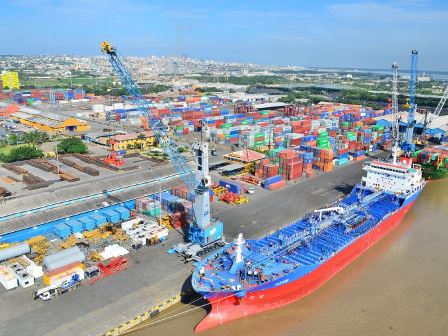
Customized solutions for loading and unloading vessels of any size with port cranes:

  • cranes for containers,
  • mobile port cranes,
  • crane installed fixedly on a foundation column,
  • Translation cranes on rails.

Each of them includes a variety of optional equipment to adapt them to the nature of the work with the highest quality and availability of a first class product.

Stacking crane

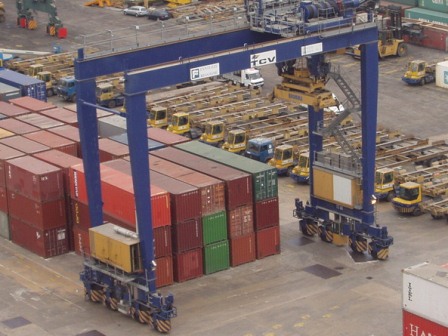
  • Stacking cranes on rails
  • the stacking cranes on container tires,
  • the bridge elevators and
  • Reachstacker

They stand out for their technical superiority, which is demonstrated thanks to the precise handling, the synchronized movements and the great speed of work offered by these machines.

In addition, with very low costs per container. These first quality standards allow the team to operate safely 24 hours a day

Load handling

It also occupies the first position in flexibility: for general cargo and bulk, it offers a range of specially adapted equipment, from handling machines to cranes on chains, hydraulic excavators, loaders on chains and on tires.

The fast operating cycles and the high handling volume make these machines highly profitable.

Types of cranes used in shipyard

Different types of cranes used in ports

Ports have different lifting and lowering mechanical devices, some of which include cranes. These machines are capable of lifting different weights for and from various heights and from any boat or ship. To work effectively, hoists use cables and pulleys. There are different types of cranes used in ports, and which include the following names.

Floating Crane

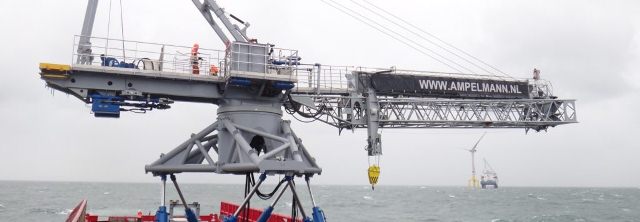
These are vessels that consist of winches attached to them. They are mostly used in the construction of harbours and bridges.

These devices are also used in loading and unloading of unusually heavy objects in the port. Vessel hoists have the ability to lift over ten thousand tonnes.

The floating type can also be used to recover sunken ships by use of the crane hook. Another important feature is that these vessels can move from one place to another. This means that they are flexible enough to move objects to designated locations. Some common types include semi-submersible and sheer legs.

Bulk Handling Crane

In ports, the most efficient and reliable method of handling the numerous amounts of bulky goods is by the use of grabbing hoists, which are operated through riggings. Bulk-handling winches are very efficient when it comes to controlling such materials as gravel, coal, and foodstuffs like grain.

Basically, they are useful in loads that prove difficult for man and other machines to handle. These devices are available as mobile or fixed devices. Bulk-handling machines can help a crane operator to handle about 2,300 tonnes every hour.

Gantry Crane

Gantry cranes can be used in different industries. These machines are available in fixed or adjustable heights and are either made of steel or aluminum, depending on their purpose.

The basic design of these machines features two upright beams that are attached to each other by a horizontal one. These two upright beams are linked to two A-shaped frames, which have wheels attached to them.

This feature makes them movable and portable. The smaller version of gantry cranes is mostly used to move larger objects in the construction industry and in docks to move containers. In other instances, larger versions of this lifting device are used in such working areas as warehouses.

Hammerhead Crane

This is one of the most common types of cranes used in ports and it’s also known as a giant cantilever. Hammerhead winch consists of a tall steel tower, which holds a horizontal double cantilever fitted with a lifting trolley that has a crane hook. The jib extends backward, an important aspect for weight balancing.

Note that the hammerhead wrench system is made with a racking motion that allows back and forth movements of the trolley. This motion also prevents interference with the height of the load. These cranes are also created in huge sizes and can lift loads of over 350 tones.

Tower Crane

This is a modern type of balance wrench that is usually fixed on the ground. Tower cranes give a good combination of lifting capacity and height. They are mostly used to lift loads to very high heights, especially in shipyard constructions and to lift containers in havens. Extremely tall cranes can reach up to 1,000 meters high with a base of about 3.5 meters.

Deck Crane

A deck crane can be found on a ship or boat. They are mostly used for cargo operations such as loading and unloading. These machines are also very useful for goods retrieval on shores that do not have unloading devices. Most of them are hydraulically operated. This means that they either use the electric or diesel-hydraulic system.

Types of cranes used in ports

Other types of cranes used in ports include:

Rough Terrain Crane

Normally, this is mounted on a carriage that is fitted with four wheels and is designed for places with rough terrain. When hoisting, the outriggers extend both horizontally and vertically to balance and keep it stable.

These rough terrain hoists use a single engine to power both its winch and undercarriage. The ability of this machine to maneuver through rocky and gravel filled places makes it very effective for carrying heavy loads through construction sites.

Overhead Crane

This device is also called a suspended crane. Although they are mostly used in factories to lift heavy loads, a goliath crane is also used in a shipyard. They consist of hoists that are set on trolleys.

The trolley is fitted in a way that allows it to travel along one or two beams. It also moves at angles in the same direction along the ground and elevated level.

Overall, these mechanical devices that are very interesting and powerful machines. A crane operator is highly trained to control and maintain these devices. Due to their ability to lift heavy and bulky loads for great heights, the gadgets are very useful for construction and port operations.

How tall are container cranes?

How tall are container cranes?

Megaships can be up to 1,300 feet long and carry nearly 23,000 cargo containers. Containers are stacked up to 12-high above deck on the largest vessels. Taller cranes are required to reach the top of the stacks.

What is Port Equipment?

The fast and efficient transfer of cargo between ships and land-based modes of transport is the goal of ports throughout the world. The TTS range of port equipment offers a number of flexible options for access and for the management of traffic when loading or unloading ships.

What is a container handler?

The Loaded Container Handler is the king of the port. Popular in ports, terminals and shipping yards, the Loaded Container Handler will provide fast lifting cycles, high stacking and reduced freight costs.

What is a marine terminal?

A terminal is a place where the loading and unloading of people or goods take place e.g. a bus terminal or a train terminal. Marine terminals just form a part of the port where goods and cargo can be loaded into a ship and unloaded in case a ship comes to the port.

The most read

Types of Port Cranes

One of the basic infrastructures for handling merchandise and ships are all types of port cranes.

More on this story

RTG Crane

Rubber Tyred Gantry Crane, Container Terminal, what is an RTG crane? RTG crane parts name, RTG crane manufacturers, specification.

Types of Sea Ports

A container port or container terminal is a facility where cargo containers are transshipped between different transport vehicles, for onward transportation.

Crane Operator Salary

Crane Operator Salary – Longshoreman crane operator salary: Moving heavy objects and materials is an essential task in many industries like construction, manufacturing, and mining. Cranes are machines that lift and move large objects using suspended wires or chains and are commonly used in building and bridge construction. Formal education is not required to become a crane operator since necessary skills can be acquired through on-the-job experience.

Longshoreman crane operator salary

Tower crane operator salary

As of Jul 30, 2019, the average annual pay for a Tower Crane Operator in the United States is $71,859 a year.

While seeing annual salaries as high as $115,500 and as low as $49,500, the majority of Tower Crane Operator salaries currently range between $52,000 (25th percentile) to $90,000 (75th percentile) across the United States.

The average pay range for a Tower Crane Operator varies modestly (up to $38,000), which suggests there may be fewer opportunities for advancement based on skill level, but increased pay based on location and years of experience is still possible.

Based on recent job posting activity, the Tower Crane Operator job market is not very active as few companies are currently hiring. People working as a Tower Crane Operator in your area are making on average $71,859 per year or the same as the national average annual salary of $71,859. ranks number 1 out of 50 states nationwide for Tower Crane Operator salaries.

Income Range:

  • The Bureau of Labor Statistics reports that the average annual income of crane and tower crane operators was $50,000
  • This annual income figure is based on an average wage of $24.00 an hour and 2,080 hours of work per year.
  • The top 10 percent of crane operators made more than $78,850 a year, while the bottom 10 percent earned less than $28,680.
  • Half of all workers in the occupation had annual incomes between $35,510 and $ 61,060.

Union crane operator salary

The top States. Data provided by the Bureau of Labor Statistics show that:

  • Alaska was the highest paying state for crane operators in May 2011 and that workers in the state earned $77,800 a year on average.
  • Average incomes in other top states included $73,270 in Washington, $71,490 in Nevada and $68,390 in Hawaii.
  • Texas employed the most crane operators of any state, and workers in Texas made $46,830 a year on average.
Longshoreman crane operator salary

Top industries in the US

Top Industries. Many sub-industries within the manufacturing and construction industries hire crane operators to assist with the moving of materials. The Bureau of Labor Statistics says that:

  • Crane operators working for specialty trade contractors made $59,040 a year on average in May 2011,
  • workers involved in support activities for water transportation earned $58,660 on average and,
  • operators working in the iron and steel milling industries made $45,710 on average.
  • Crane operators performing support activities for mining made $47,010 on average and,
  • operators engaged in nonresidential building construction earned $53,070 on average.
Longshoreman crane operator salary

Crane Operator jobs

Job Outlook: The Bureau of Labor Statistics expects jobs for crane operators to grow 16 percent from 2010 to 2020, which is two percentage points higher than the national average for all jobs.

Employment growth is likely to be driven by a recovery in the construction industry and increased need for crane operators at ports to load and unload cargo ships.

The Bureau expects 31 percent job growth for crane operators in the construction and 26 percent growth for crane operator jobs related to water transportation. Job prospects should be favorable for new workers due to stable job growth and a need to replace workers who leave the occupation to pursue other opportunities.

Machine Operators

Salary Information for Material Moving Machine Operators:

  • Material moving machine operators earned a median annual salary of $34,530 in 2016, according to the U.S. Bureau of Labor Statistics.
  • On the low end, material moving machine operators earned a 25th percentile salary of $28,210, meaning 75 percent earned more than this amount.
  • The 75th percentile salary is $42,810, meaning 25 percent earn more.
  • In 2016, 681,900 people were employed in the U.S. as material moving machine operators.

Longshoreman salary

The Average Wage for a Longshoreman

Longshoremen work at docks across the country where they make sure the correct incoming and outgoing cargo is loaded or unloaded without damage.

They belong to one of two unions that represent longshoremen and maritime workers. The union provides the necessary training to use the equipment and follow safety standards.

Working as a longshoreman requires that you’re physically strong and able to pass medical examinations. Working hours can be irregular depending on your union contract. Unions set the pay rates for longshoremen based on when they join and how many years of experience they possess. Rates increase with time and contract changes.

Longshoreman crane operator salary

Longshoreman job description

Job Description. As a longshoreman, you are responsible for the cargo that arrives on ships at ports where you’re assigned:

  • The work includes docking the ships, loading and unloading cargo, checking for specific containers, and inspecting cargo for damage.
  • Longshoremen often use heavy equipment such as forklifts and cranes to move cargo to or from a ship and the desired storage location.
  • When unloading cargo, you usually do thorough inspections to ensure the shipment is complete and keep detailed records of all cargo that comes through the port.
  • Being physically strong and having stamina is important because there can be hundreds or thousands of containers to unload in a set time period.
  • Being dexterous helps with docking the ship and using hand tools.

Longshoreman education requirements

Education Requirements. To seek a longshoreman job, you need to acquire the Transportation Worker Identification Credential that allows access to docks and then seek a labor union that hires longshoreman.

The union you choose depends on the area of the country where you work. The two unions are the International Longshoreman’s Association (ILA) for workers on the East Coast and Gulf Coast and the International Longshore and Warehouse Union (ILWU) for those on the West Coast.

  • You must be 18 or older and in good physical condition to find work through the union, which will train you to use all the necessary equipment and perform repairs.
  • You’ll typically do casual work until you have enough experience for the union to offer permanent work status and official membership.

Longshoreman jobs salary

The ILA set the starting pay rate for longshoremen entering between October 2017 and September 2018 at $22.00 an hour, while the ILWU offered those starting between July 2017 and late June 2018 $29.49 an hour.

  • Longshoremen overall earned an average hourly wage of $24.98 an hour.
  • The bottom 10 percent of longshoremen made under $39,671 a year and the top 10 percent made more than $134,653 annually.

Container terminal jobs

Longshoremen work for ports around the country and spend most of their time outdoors loading and unloading cargo.

  • They also work with other longshoremen to secure the ship to the dock.
  • The work environment requires working regardless of the weather and following protocols to prevent accidents from operating heavy machinery, lifting heavy cargo, and working from heights.
  • Union contracts usually specify work shifts for longshoremen.

For example, the ILA contract notes that longshoremen have a regular Monday through Friday schedule with consistent daytime work hours, but managers can require nighttime, holiday or weekend work when necessary.

In contrast, the ILWU contract mentions day, afternoon and night shifts as common for longshoremen.

Longshoreman crane operator salary

Longshoreman crane operator salary

Years of Experience. Longshoremen receive hourly pay increases based on how many contract years they have worked as well as when they started working with the company.

  • Per the current contract, new longshoremen who are ILA members earn a pay increase from $20.00 to $23.75 an hour after two years of work experience.
  • Their pay grows to $29.40 an hour with four years of experience and $35.00 an hour with six years of experience.
  • From July 2017 to late June 2018, new ILWU members earned hourly rates of $29.49 with up to 1,000 hours of experience, $30.49 for 1,000 to 2,000 hours, $32.49 for 2,001 to 4,000 hours, and $40.93 with 4,001 or more hours of experience.
Longshoreman crane operator salary

Longshoreman average salary

Salary website PayScale reported the average annual longshoreman salary based on experience as of 2018:

0 to 5 years$53,000
5 to 10 years$54,000
10 to 20 years$81,000
20 or more years$83,000

Average salary in us

Job Growth Trend. According to the Bureau of Labor Statistics, an average rate of job growth of 7 percent is expected for all material movers and hand laborers, including longshoremen.

This large occupation had around 3.9 million people employed in 2016 and is expected to grow to 4.2 million employed by 2026. While equipment has made it easier to move materials, this fact does not harm employment prospects because people are still needed to operate it.

Job turnover leads to better prospects for finding work as a longshoreman.

Crane operator course

The Crane Operator (Any Motive Power Except Steam) Passbook® prepares you for your test by allowing you to take practice exams in the subjects you need to study.

It provides hundreds of questions and answers in the areas that will likely be covered on your upcoming exam, including but not limited to:

  • Rules and regulations governing erection and dismantling of climber and tower cranes
  • Computation of weights and materials to be lifted
  • Safe loads on various types and sizes of rigging equipment including fiber and wire ropes, chain hoists, blocks, gin poles, shear legs, cranes and hydraulic rams
  • Ability to handle practical crane erection problems
  • Knowledge of safety measures and accident prevention; and more.

How much does a gantry crane operator make?

How much does a gantry crane operator make?

The Bureau of Labor Statistics reports that the average annual income of crane and tower crane operators was $50,040 in May 2011. This annual income figure is based on an average wage of $24.06 an hour and 2,080 hours of work per year.

How much do crane operators get paid?

In 2017, the Bureau of Labor Statistics indicated that the average, annual crane operator salary was $55,690. Experienced crane operators that are working on large-scale projects may make as much as $84,290.

Is crane operator a dangerous job?

While workers face many dangers on construction sites, crane operators are often at risk for catastrophic injuries. While crane accidents aren’t always caused by negligence, more often than not, they are preventable.

Should I become a crane operator?

Most crane operators get their experience through on-the-job training or apprenticeships. Apprenticeship candidates generally must be 18 years or older, have a school diploma or equivalent and be in fit physical condition.

How much can a longshoreman make?

Wages for West Coast longshoremen vary widely depending on experience, skill and time of day worked. Hourly base pay ranges from $25.71 to $41.48, but workers can earn significant premiums for overtime or late shifts.

How much does crane operator school cost?

If you will be taking both the mobile crane and overhead crane operator training programs together, you will only pay $50 for the PPT written test and $85 for CBT test. The practical exam cost is $50.

The most read

More on this story

Container Crane

Container cranes consist of a supporting framework that can traverse the length of a quay or yard on a rail track. Instead of a hook, they are equipped with a specialized handling tool called a spreader.

Straddle Carrier

Globalization combined with the success of containerization has brought about tremendous increases in the transportation of containers across the world.