Category Archives: port crane

Container Reach Stacker

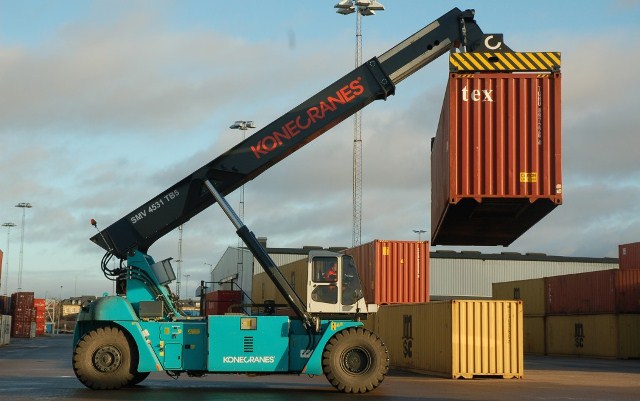
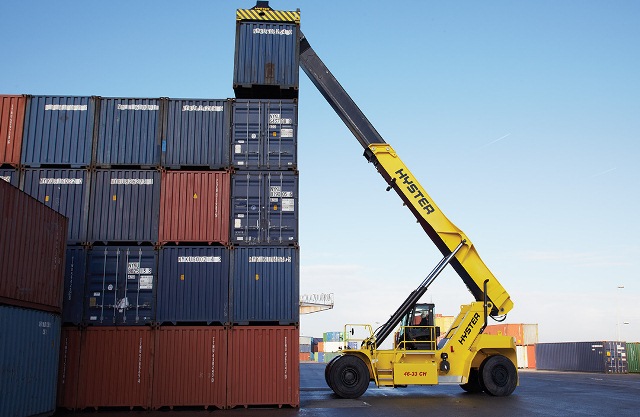
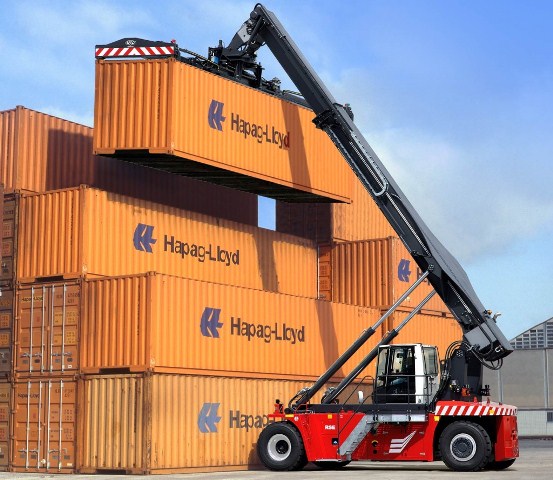
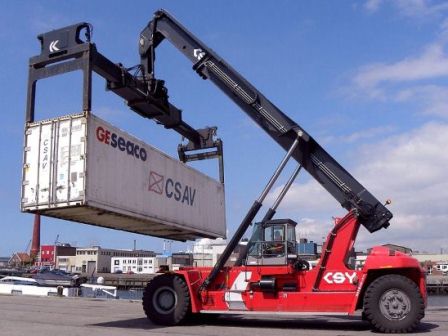
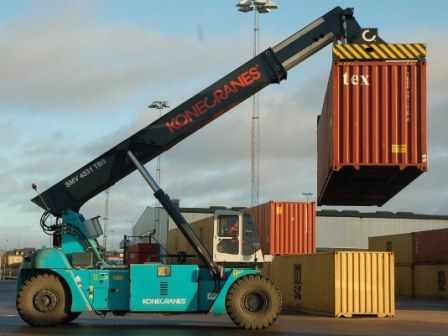
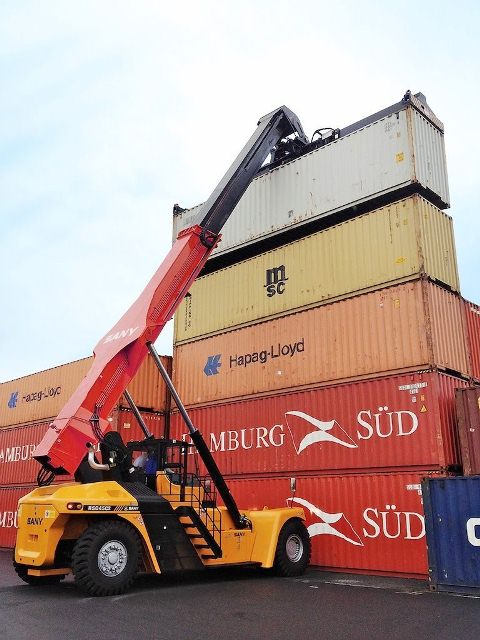
Container handling with a reach stacker is one of the most flexible handling solutions whether to operate a smaller one unit terminal or a medium-sized port.

A reach stacker can handle loaded containers quickly and efficiently in narrow spaces, while still ensuring the driver has optimum visibility.

The extensive freedom allowed by the lifting equipment, boom and attachment, and its rotation possibilities, give that the driver can improve the work efficiency of the unit, by not needing to approach the container from a 90 degrees position.

Forklift Operator Training: U.S.A. Edition

This curriculum is intended to be used during Forklift Operator Training. Employers can assign an existing trained operator as their in-house trainer. This publication includes a copy of the exam, operational test, certificate & wallet card templates.

Container Reach Stacker

Port Cranes

There is a long history of working with container ports and intermodal terminals that are expert buyers and operators of reach stackers. Container handling customers demand a lot.

Larger reach stackers are needed for railroad stacking. To load and unload on more than one track you need a flexible reach stacker with a large lifting capacity and an extended set of functions. You will find a reach stacker in our range that will meet the specific requirements of your terminal.

Container Reach Stacker

Industrial crane

Many industrial companies need customized reach stackers for their specific industry. Reach stackers are remarkably adaptable to industrial cargo handling.

The reach stackers special spreaders incorporating steel grabs, lifting magnets, vacuum grippers and coil C-hooks among other attachments.

What kind of material do you need to lift and move?

Applications

  • Container ports and terminals
  • Railroads and intermodal
  • Trimodal river handling
  • Transport, shipping, and logistics
  • Steel and aluminum
  • Automotive
  • Oil and gas
  • Wind power
  • Nuclear power
  • Waste-to-energy

Reach stacker safety

Security measures related to container transport:

  • Operating the reach stacker without proper training.
  • Operating the machine without understanding that rated capacity is dependent on boom position.
  • Braking too hard or too quickly with a load; accelerating too quickly.
  • Turning too sharply or too quickly; turn the steering wheel slowly.
  • Raising the load when wind velocity is excessive.
  • Operating the machine on uneven surfaces or in unstable yard conditions.
  • Extending or lowering the boom with a load, not over a stack, or railcar.
  • Traveling with the load raised too high or extended too far.
  • Traveling without the seat belt fastened.
  • Jumping from a moving or tipping machine.
  • Handling an off-center load improperly.
  • Traveling on an incline with the load downhill
  • Backing away from a load in a rack or stack without completely releasing the load
  • Operating the machine in areas with an inadequate overhead clearance
Container Reach Stacker

Safety rules in the workplace

Some of the security measures to take into account during operations are:

  • Operating the reach stacker before checking for proper operation of all functions and safety devices.
  • Moving or lowering the cab before checking the area around and below the cab and around the cab stairs.
  • Allowing personnel under the attachment or load.
  • Operating the reach stacker when it needs maintenance when safety devices are not functioning properly or are missing when ground personnel is working in an unsafe manner, when the wind is too high, when the grade is too steep, or if any other unsafe condition exists.
  • Operating or parking the reach stacker in an area where the slope is too steep or has insufficient strength to support the weight of the machine.
  • For reach stackers with moveable cabs, traveling the reach stacker when the cab is not properly positioned.
  • For reach stackers with stationary cabs, traveling the reach stacker when the cab is not properly secured.
  • Lifting a load that exceeds the rated capacity of the reach stacker.
  • Raising the load so it is directly over the reach stacker cab.
  • Lifting a container without all four twist locks fully locked.
  • Leaving the reach stacker with a load suspended.
  • Backing away from the load in a rack or stack without the complete release of the load.
  • Starting the engine if a “Do Not Operate” tag is on the operator’s controls, ignition switch, battery disconnect switch, or engine control panel.
  • Parking the reach stacker in an unsafe area (in areas not designed to reach stacker travel, or on grades that are too steep).
  • Operating the reach stacker while the personnel is on any part of the machine.
  • Operating a reach stacker in areas without proper overhead clearance.
  • Operating a reach stacker in areas where power lines are present.

For your safety you must:

  • know the reach stacker’s size
  • know the reach stacker’s operating capacity at various boom positions
  • know how to operate the reach stacker
  • know what safety features are available
  • know the safe operating procedures at your worksite
  • check the reach stacker daily for proper operation
  • use every safety feature
  • follow safe operating procedures
  • be alert and use common sense
  • know the reach stacker’s two basic modes of operation
Container Reach Stacker

Reach stacker safety procedures

Safety measures for pedestrians are listed below:

  • Operating the reach stacker in an environment that is not ergonomically designed.
  • Traveling forward with a load that blocks visibility.
  • Walking or standing between a machine and/or a load, a rack, stack, or other objects.
  • Operating a machine with riders on the truck.
  • Groundsmen or other personnel in “blind spots.”
  • Moving a machine without clearing all blind spots.
  • Relying on a back-up alarm or flashing light and not looking in the direction of travel.
  • Failure to properly instruct and safeguard transients.
  • Relying on mirrors.
  • Relying on cameras.
  • Not ensuring the path of the machine’s tail swing is clear.

Pedestrian vehicle safety rules

Three things to keep in mind in the workplace:

1

The operator must fail to “look in the direction of and keep a clear view of the path of travel.” Assuming the reach stacker/pedestrian contact was not intentional, the operator may have relied on mirrors thus not having a completely clear view of the path of travel, may have used an improper carry position thus blocking his view of the path of travel, or simply may not have looked, instead relying on motion alarms, strobe lights, or engine noise to alert pedestrians to the machine’s presence.

The operator must lean side to side and forward and back to clear all blind spots before putting the reach stacker in motion.

2

The pedestrian must be located within an area in which reach stackers travel and fail to keep a proper lookout. While the operator plays a large part in safe reach stacker operation, safety can not be solely the operator’s responsibility.

Pedestrians who work in and around reach stackers have a responsibility to watch out for reach stacker travel and stay clear of the reach stacker. Pedestrians should wear high visibility vests, maintain eye contact with reach stacker operator at all times, and stay out of marked reach stacker travel lanes, or stay within marked pedestrian lanes. Pedestrians must never assume that the operator sees them, and must keep a proper lookout.

3

The employer must fail to either establish reach stacker/pedestrian lanes or to enforce the restrictions. Employers govern the activities of each and every person on the work premises. Employers can not assume that operators nor pedestrians know the dangers of the workplace.

The employer must, therefore, educate operators and pedestrians and take affirmative steps to separate reach stacker travel from pedestrian travel. The employer, ultimately, has the means at its disposal to prevent reach stacker/pedestrian accidents. Accidents do not just happen, they are caused by someone. Likewise, safety does not just happen, it is caused by someone.

Ergonomic design

Pedestrian crossing incidents are among the occupational hazards. The only reliable way to prevent this is to ergonomically design the environment so that pedestrians and stackers cannot cross and so that operators always follow OSHA rules to:

  • always look in the direction of and keep a clear view of the path of travel;
  • slow down and sound the horn at cross aisles and other locations where vision is obstructed;
  • travel with the load in defined travel position for optimum visibility;
  • Travel with the load trailing if forward visibility is obstructed.

and follow the Operator’s Guide to:

  • Do Not operate the vehicle until both forward and reverse travel paths are clear;
  • Be sure tail swing paths are clear;
  • Do Not operate the vehicle when bystanders are present;
  • Ensure all travel alarms and strobes are functioning and the video cameras are working properly

What is the reach stacker?

What is the reach stacker?

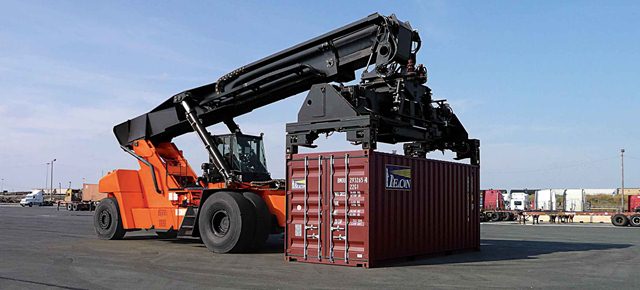
A reach stacker is a vehicle used for handling intermodal cargo containers in small terminals or medium-sized ports. Reach stackers are able to transport a container short distances very quickly and pile them in various rows depending on its access.

How do shipping container cranes work?

The crane is operated by a specially trained crane operator from within the cabin located on the top end of the crane and suspended from the trolley. It is the operator who lifts the container from the ship or dock for unloading or loading of cargo.

How do shipping ports work?

Typically, containers arrive via specialized ships at designated ports that have the particular equipment for unloading and loading the cargo as well as loading it onto trucks that can bring the goods to their destinations. For exporters, who move containers from truck to ship, this process operates in reverse.

Why are ports so important?

Ports constitute an important economic activity in coastal areas. Ports are also important for the support of economic activities in the hinterland since they act as a crucial connection between sea and land transport. As a supplier of jobs, ports do not only serve an economic but also a social function.

The most read

Reach Stacker Crane

Container reach stacker, reachstackers, kalmar reachstacker, Container Handler, What is a reach stacker?
More on this story

RTG Crane

Rubber Tyred Gantry Crane, Container Terminal, what is an rtg crane? RTG crane parts name, RTG crane manufacturers, specification.
How Far can a Cargo Ship Travel in a day?

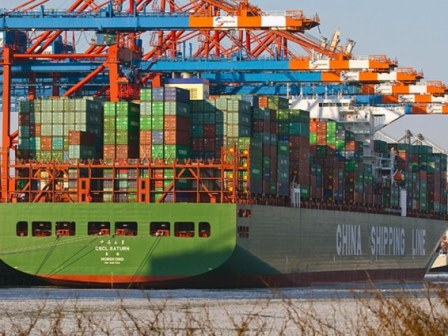
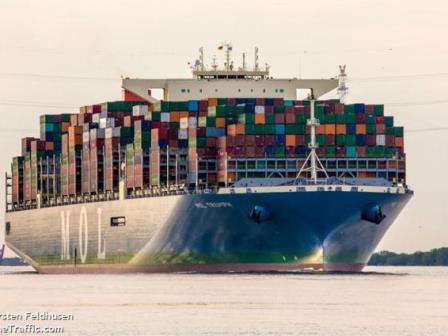
In recent years, rising oil prices, adverse market conditions, strict regulations, and environmental issues regarding ship emissions have made it very important to study the importance of a ship’s speed.

Vessel speed plays a very important role in various environmental factors as well as economic factors for the vessel operator.

In this article we will look at how ship speed is measured, what are the various design speeds of different types of cargo ships, what are the various factors that affect ship speed, and why it is important to understand and regulate the speed of ships. boat speed.

How fast does a cargo ship travel mph?

Cargo ships travel at various speeds, many around 20 knots (or 23 mph), a day you’ll get 480 nautical miles or 552 miles.

Many cargo ships could travel at 25 knots, but they don’t because they use more fuel (660 nautical miles/day or 760 miles/day).

Some container ships travel as slow as 12 knots to save fuel. They only travel about 288 nautical miles per day (336 miles). The type of cargo they carry also influences the speed at which ships go.

Ship speed has a non-linear relationship with fuel consumption; the slower ship will have lower emissions than a faster ship. The speed of the ship has an impact both at the design level and at the operational level.

Maximum speed of ship in sea

Will cargo ships ever go fast?

When you sail cargo ships, you can’t make mistakes. It takes concentration and skill to steer a 700 foot boat at that speed. Fully manual steering, without putting it on autopilot.

There are Navy ships that can outspeed container ships, but a fully manned Navy ship is a far cry from a cargo ship.

These don’t even take into account the huge difference in fuel consumption, not to mention the safety concerns.

Freighters are fast enough already.

More on this story

Types of Port Cranes

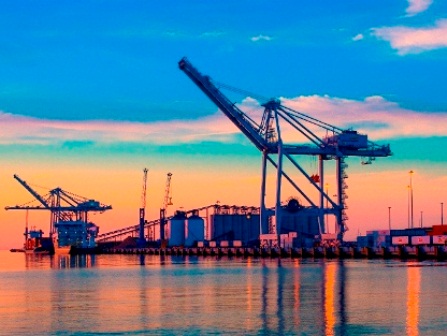
One of the basic infrastructures for handling merchandise and ships is all types of port cranes.

Super Container Ship

We take a look at the world’s ten super container ships (ordered by number of TEUs) built to date.

Port Cranes

Container cranes, RTG, types of ports in logistics, reach stackers, sidelifter and more.

On ocean freighters: How do the cargo cars that are stacked keep from shifting or sliding off?

There is a method to stop shipping containers from slipping. Lower or “first level” shipping containers are secured with twist locks, locking them to the ship’s deck.

Tie rods and turnbuckles are used as additional strength to help secure and hold containers in place.

The lower containers support the weight of all the additional containers that were stacked on top. Intermediate or “higher level” bins lock with an automatic twist lock.

These mechanisms engage when the unit is lifted from the dock onto the cargo ship. When the shipping container is placed on top of another container, the automatic twist lock snaps into the lock position, locking them together.

When a shipping container is unloaded, there is a special rod that is used to unlock the twist locks. Most cargo ships have vertical slots made by long metal rails, in the cargo holds, that hold the units in place to prevent shifting or sliding.

How many containers are stacked on ships?

How high can shipping containers be stacked?

Before the sophistication of twist locks and cells, freight forwarders could only stack boxes 5 or 6 high. These days, you can see them in stacks 10 to 12 tall.

Lost shipping container salvage

Shipping containers lost at sea:

It is estimated that hundreds or even thousands of shipping containers are lost at sea each year. Most of the time, a shipping container that falls overboard is due to inclement weather at sea, such as hurricanes.

Containers don’t just fall off ships. While most losses are due to weather, there are cases where it was due to negligence, incorrect container weight, or incorrect stowage planning.

What do cargo ships carry?

General cargo ships carry packaged items such as chemicals, food, furniture, machinery, motor and military vehicles, footwear, clothing, etc.

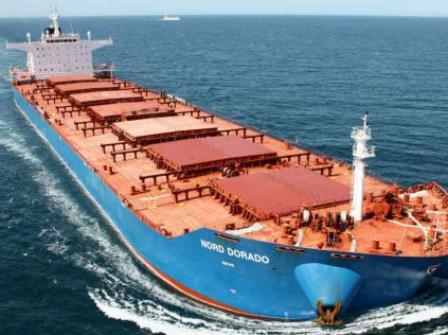
Container ships (sometimes referred to as container ships) are cargo ships that transport all of their cargo in truck-sized intermodal containers, in a technique called containerization.

More on this story

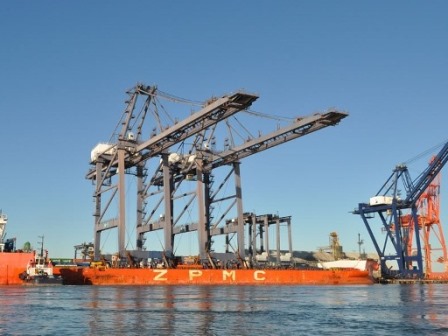
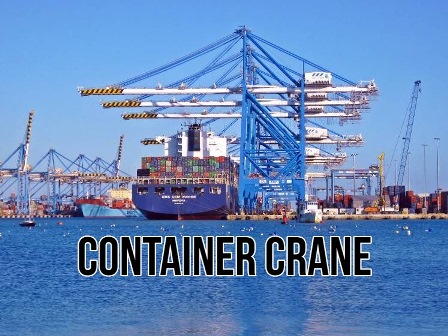
Container Crane

Container cranes consist of a supporting framework that can traverse the length of a quay or yard on a rail track. Instead of a hook, they are equipped with a specialized handling tool called a spreader.

Container Reach Stacker

Container handling with a reach stacker is one of the most flexible handling solutions whether operating a smaller one-unit terminal or a medium-sized port.

Super Container Ship

We review the ten super container ships in the world (ordered by the number of Teu) built to date. Our top ten is opened by the Maersk E class.

Types of Port Cranes

One of the basic infrastructures for handling merchandise and ships is all types of port cranes, especially in commercial ports where loading, unloading, storage, and unloading.

Types of Cargo Ship

Mobiles, installed in a fixed way on a foundation column cranes on rails, gantry, telescopic. Container handling equipment

Automated Stacking Cranes

One of the basic infrastructures for the handling of merchandise and ships in all types of ports are the mechanical automated Stacking Cranes, especially in the commercial ports where the loading, unloading, storage, and unloading are key actions for the development and operation of these ports.

The stacking cranes are used to load between the port and the ship, in order to organize and stack it. After the large port cranes, the structures that usually occupy the line of sight of ports around the world, we find the smallest formats, capable of working in even smaller spaces. The first of these cranes is the reach stacker crane, also known as a forklift.

Automatic Stacking Crane

Cranes and other stacking equipment: When very efficient management of the container terminal is required, the port cranes and stacking equipment demonstrate their technological advantages.

It’s precise handling, synchronized movements and high speeds guarantee high load cycles at a low cost.

Its high quality and ease of maintenance reduce downtime and increase profits.

Rubber Tyred Gantry Crane

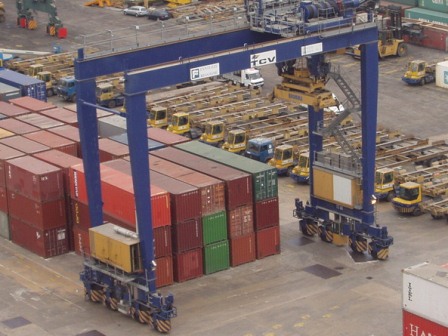
Tire container cranes (RTG) are manufactured in different models and according to the individual needs of each client.

These cranes can handle lines of between five (5) and eight (8) containers (in addition to a truck lane) and elevation heights between one (1) over three (3) and one (1) over six (6). ) containers.

RTG cranes are designed in a configuration of eight (8) or sixteen (16) wheels with AC or DC transmission control.

Special design features such as DGPS automatic steering, profiling, semi-automation and remote access are also available.

We also offer a wide variety of power options for different models.

Whether diesel, electric, hybrid or combined, RTGs guarantee the highest productivity.

Rail Mounted Gantry Crane

Rail-mounted cranes (RMG) are manufactured according to the individual needs of each customer and include all the design and technology advances that have been made in the last four decades.

Numerous design features are available such as automation, remote control, profile stacking, and remote access.

The stacking cranes on rails are presented in several models that cover lines from 20 meters to 72 meters.

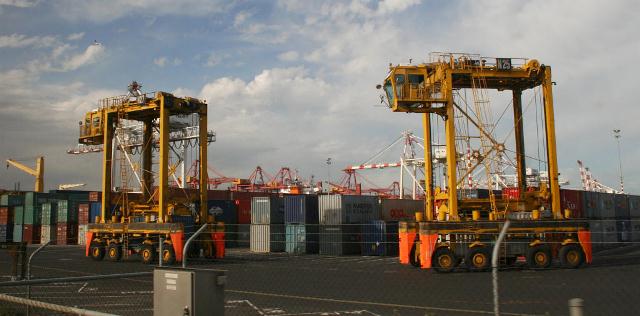
Straddle Carrier

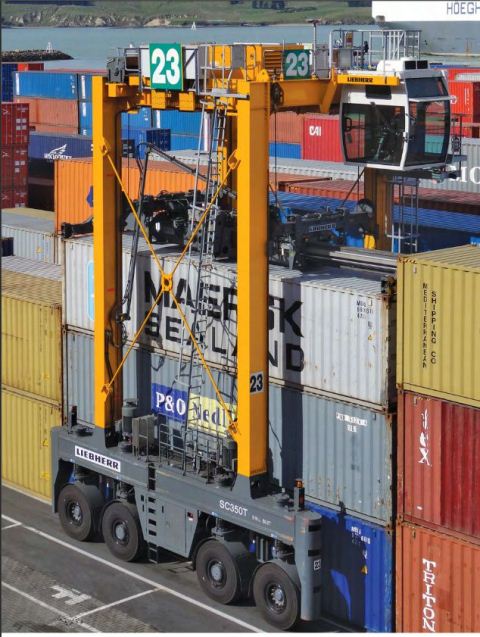
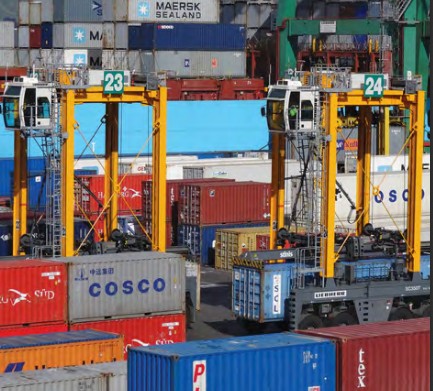
Straddle Carriers are custom built with two standard heights, the height of 3 containers (1 on top of 2) and a height of 4 containers (1 on top of 3).

The Straddle Carriers are designed for both single and dual-lift operation.
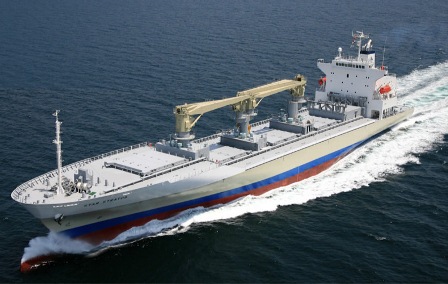
8 wheels mounted on four steering axles together with the superior response of the drive and control system offer the maximum in terms of maneuverability and stability.

Thanks to the innovative positioning design of the hydraulic components at a low level, more dynamic response of the steering and braking system are obtained.

The improvements in the design with respect to other models guarantee the advantages of the Straddle Carrier of Liebherr, that is to say, a few costs of maintenance more reduced and more profitability of fuel with an increase of the productivity.

The truck has been developed based on an experience of more than 40 years in container handling and introduces new features in this market.

Technical specifications:

  • Smooth translation control and fast positioning on the container.
  • Steering and brake by means of a cable control system, guaranteeing a greater dynamic response regardless of the speed.
  • Impact protection and automatic tire alignment.
  • Four steering axles with two and four wheels, with increased stability in both straight lines and curves, maintaining maximum agility when positioning.
  • Extensive component life and reduced tire wear, resulting in higher container handling averages and lower operating costs.
  • Spacious and well-equipped operator cab with an ergonomic design and improved visibility.
  • Location of winch with easy access, external disc brakes, and simple cable forwarding.
  • Parallel operating brake system – Hydraulic and electric regenerative wet disc brakes.
  • Regeneration of power between the systems of translation and elevation.

Reach stacker

To expand the successful line of sea freight handling equipment, its own reach stacker concept has been introduced.

This powerful machine, which is characterized by its telescopic boom in a curved shape, offers to handle possibilities hitherto unseen and many unique features such as fully hydrostatic transmission, independent traction, and a highly efficient shock absorber system.

Technical specifications

Thanks to the revolutionary design pen, it is possible to access the second and third container line without having to remove the containers from the front line.

  • It is easy to load/unload containers from or below ground level, as it offers direct access to the spreader from the ground.
  • The progressive control of the speed by means of an automatic power regulator allows smooth and easily controllable translation movements and offers maximum efficiency, which is reflected in the notable reduction in fuel consumption.
  • The easy and ergonomic operation of the reachstacker is controlled from a wide and well-equipped cab in which the operator enjoys 360-degree visibility.
  • Special damping measures increase driver comfort, extend reachstacker life and reduce maintenance costs

Automated stacker crane

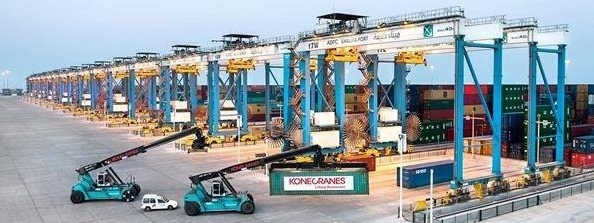
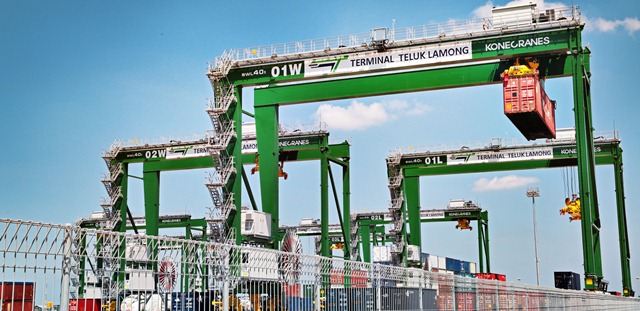
Konecranes Automated container crane systems

The automated handling of containers is the next step in the evolution of container crane technology that began with the introduction of containerized shipping in the 1960s. The Konecranes Automated RMG (ARMG) system offers valuable advantages in an ever-more automated industry. These advantages are being realized by leading container terminals around the world where Konecranes ARMG systems are hard at work.

Technology proven in the real world: The Konecranes ARMG crane design drew upon rail and yard conditions that are the daily reality in container terminals around the world and brought in the proven technology of our Rubber Tired Gantry cranes. Konecranes ARMGs have a light, intelligent steel structure. When this is combined with our Active Load Control (ALC) technology, the cranes deliver fast, accurate container stacking over a range of real-world conditions.

Hard-won experience: Konecranes can deliver a field-proven, complete ARMG system on time and within budget. We have an excellent track record of ARMG system project delivery, from the system design phase through to commissioning and hand-over.

Container stacking crane

A container is a cargo container intended for international and national transportation through sea, inland waterway and/or air routes.

The size and shape of it vary depending on the length and height. The form and characteristics of the same are regulated in accordance with the ISO-668: 2 (International Organization for Standardization), for that reason in some places containers are also known as ISO containers.

This regulation also facilitates the handling of the same to the decks of the ships and the cargo spaces of ships and trucks.

As for the characteristics of the containers, it should be noted that they are usually made mainly of steel, but there are also some made of aluminum and some others made of wood reinforced with fiberglass. In most cases, the floor is made of wood, although there are recent examples where the floor is made of bamboo.

Inside they have a special anti-humidity coating, designed to avoid humidity and incumbencies of time along the way.

Another distinctive feature of any container is that they have hooks on each corner that allow them to be hooked by cranes, as well as their lashing on boats and trucks.

As for the identification, all the containers carry an alphanumeric identification to follow up and avoid its loss. These codes are usually four letters and seven numbers. As an example: MDGU 154570. The maximum load of a container generally varies according to the shipping company responsible for carrying out the transport and the type of container. Containers with an international standard of 20 feet have a maximum gross weight of about 29 tons – including the load plus the weight of the container itself – and the largest of 40 feet have a maximum gross weight of 32 tons.

What is an Automated Stacking Cranes?

What is an Automated Stacking Cranes?

The automated handling of containers is the next step in the evolution of container crane technology that began with the introduction of containerized shipping in the 1960s. Automated stacking cranes (ASC) are rail-mounted cranes used for yard-stacking and in-stack transportation of containers. ASCs deposit and pick up containers from dedicated interchange areas located at both ends of the stack.

What is an automated straddle carrier?

Straddle carriers are trusted by terminal operators around the world for their ability to enable faster ship-to-shore crane operations and more efficient landside operations. Straddle carriers are highly versatile machines that can be used for a wide variety of applications and terminal operating modes.

What is autonomous straddle carriers?

The straddle carrier can undertake self-repositioning, handling, stacking, loading, and unloading, as well as transporting empty containers. The benefits of automating these tasks include energy savings, lower maintenance costs, environmental protection, and regulatory compliance. The straddle carrier has high mobility and flexibility, enabling modular retrofit for current operations in existing terminals.

What is RTG crane?

A rubber-tired gantry crane is a mobile gantry crane used in intermodal operations to ground or stack containers. Inbound containers are stored for future pickup by drayage trucks, and outbound are stored for future loading onto vessels.

The most read

More on this story

Storage Logistics

Storage logistics: management, transport, inventory in warehouses with drive-through shelves, forklifts, stacker cranes. cold storage warehouse.

Ship to Shore Crane

The gantry crane for containers: panamax, post panamax, operator, uses, characteristics, ports, docks, transport, maneuvers, parts, container

Tropical Storm Risk

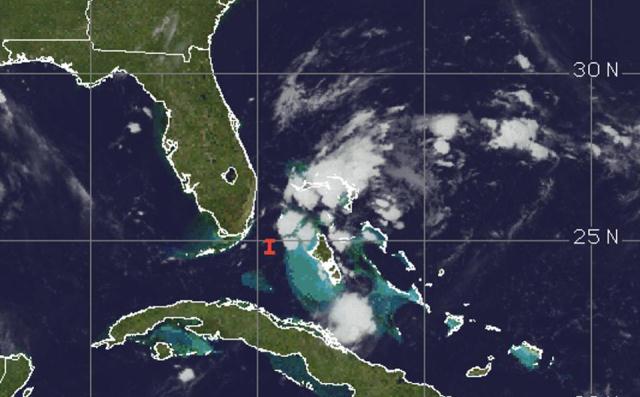
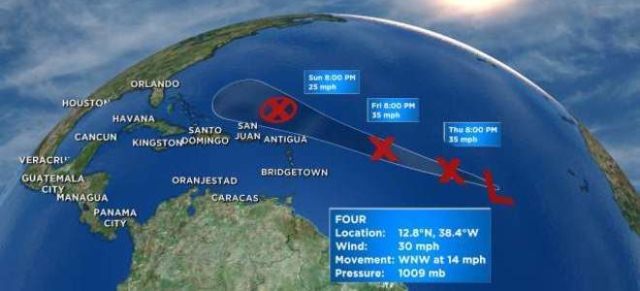
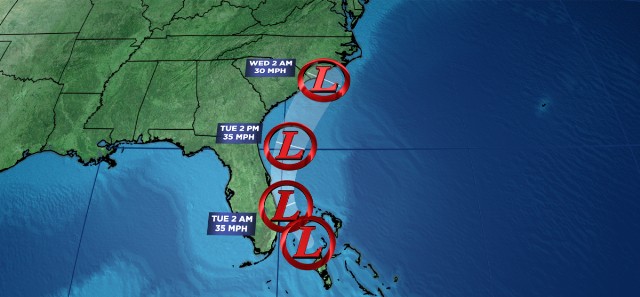
Tropical storm risk – Tropical depression in the Gulf: Tropical cyclone intensity change remains a forecasting challenge with important implications for such vulnerable areas as the U.S. coast along the Gulf of Mexico.

Analysis of 1979–2008 Gulf tropical cyclones during their final two days before U.S. landfall identifies patterns of behavior that are of interest to operational forecasters and researchers. Tropical storms and depressions strengthened on average by about 7 kt for every 12 h over the Gulf, except for little change during their final 12 h before landfall. Hurricanes underwent a different systematic evolution. In the net, category 1–2 hurricanes strengthened, while category 3–5 hurricanes weakened such that tropical cyclones approach the threshold of major hurricane status by U.S. landfall.
This behavior can be partially explained by consideration of the maximum potential intensity modified by the environmental vertical wind shear and hurricane-induced sea surface temperature reduction near the storm center associated with relatively low oceanic heat content levels. Linear least-squares regression equations based on initial intensity and time to landfall explain at least half the variance of the hurricane intensity change.

Applied retrospectively, these simple equations yield relatively small forecast errors and biases for hurricanes.

Characteristics of most of the significant outliers are explained and found to be identified a priori for hurricanes, suggesting that forecasters can adjust their forecast procedures accordingly.

Tropical Storm Risk

Tropical storm update in the gulf of mexico

Tropical cyclones1 can devastate the U.S. Gulf coast (e.g., Rappaport and Fernandez-Partagas 1995; Blake et al. 2007). The infamous Galveston hurricane of 1900 took at least 8000 lives and ranks as the deadliest single-day disaster in United States history. The loss of life (Beven et al. 2008) and the way of life suffered in 2005 from Hurricane Katrina show that the region remains at great risk.

About three tropical cyclones, including one hurricane, make landfall along the U.S. part of the Gulf Coast each year on average (e.g., McAdie et al. 2009). Over the past 30 yr, the Gulf coast accounted for almost two-thirds (34 of 54) of the hurricane landfalls in the contiguous United States.

A ‘‘major’’ hurricane (MH), category 3 or higher on the Saffir–Simpson hurricane wind scale (SSHWS; Schott et al. 2010; Simpson 1974), strikes the northern Gulf coast almost every other year on average. While major hurricanes constitute only one-quarter of U.S. landfalling hurricanes, they cause around 85% of the damage (Pielke et al. 2008) and most of the fatalities (Blake et al. 2007).

Mitigating hurricane risk requires a more informed public, both well before and upon the final approach of a storm. Accurate operational tropical cyclone forecasts are essential. They are the responsibility of the U.S. National Hurricane Center (NHC) (e.g., Rappaport et al. 2009), a part of the National Weather Service (NWS). NHC’s track prediction errors have been cut roughly in half over the past 15 yr, mirroring gains in operational computer model guidance (e.g., Franklin 2009).

Tropical storm hurricane forecast

Significant improvements in storm intensity forecasts, on the other hand, remain an unmet goal spanning decades (e.g., Hebert 1978, p. 831). The inability to make consistently accurate intensity forecasts has led NHC to list intensity forecasting as its top priority for the research community (JHT 2009) and NOAA has made it a focus of their recently established Hurricane Forecast Improvement Project (HFIP 2009).

NHC’s intensity forecast errors in the Atlantic basin currently average about 10 kt2 for 24-h forecasts and 15 kt for 48-h forecasts (Franklin 2009), a range corresponding to roughly a one category interval on the SSHWS. ‘‘Rapid intensification,’’ or RI, when systems intensify by at least 30 kt (about two SSHWS categories) in 24 h, occurs about 6% of the time (Kaplan et al. 2010) and rarely, if ever, is forecast accurately by the NHC.

Kaplan et al. (2010) discuss three influences on tropical cyclone intensity change identified by Marks et al. (1998): inner-core, large-scale atmosphere, and ocean processes.

Their Statistical Hurricane Intensity Prediction System (SHIPS) developed for the Atlantic hurricane basin is among the best-performing intensity forecast guidance schemes available to operational forecasters (Franklin 2009).

Tropical Storm Risk

Long range hurricane forecast

It is in this era of limited intensity forecast capability that a spate of tropical cyclones occurred recently over the Gulf of Mexico. From 2003–05, for example, 15 tropical cyclones–including eight hurricanes, made landfall on the U.S. Gulf Coast.

The behavior of these storms reinforced a perception held by NHC hurricane specialists (forecasters) and others (e.g., Vickery and Wadhera 2008) that strong hurricanes, like Katrina and Rita in 2005, often weaken in their final hours prior to landfall along the northern Gulf coast. Both of those hurricanes reached Category 5 intensity over the central Gulf before coming ashore at category 3 strength.

Tropical Storm Risk

Tropical storm tropical depression

This study looks more closely at the intensity change characteristics of the Gulf of Mexico tropical cyclones before their U.S. landfall. It begins by examining a basic potential relationship between a storm’s ‘‘initial’’ intensity at periods of up to 2 days prior to landfall and its landfall intensity.

That focus is prompted by a combination of the forecasters’ perceptions, the reality that empirical intensity forecast methods remain competitive with more sophisticated approaches, and the observation that initial intensity information [sometimes expressed as a deficit from the maximum potential intensity (MPI), e.g., Emanuel (1988); Holland (1997)] contributes positively on average within the basin-wide framework to SHIPS. We seek to identify such relationships in the Gulf of Mexico region and the underlying causes for these systematic patterns of behavior.

The goal of this study is to provide hurricane forecasters with improved objective intensity forecast guidance that can assist them in this important and challenging science and service area.

Tropical Storm Risk

Hurricane tropical storm forecast path

Tropical cyclones undergo systematic patterns of behavior when approaching the U.S. Gulf coast. Intensity change of tropical storms and tropical depressions is a strong function of time to landfall, but not of initial intensity.

On average, they strengthen by about 7 kt per 12 h, except for slight change during their final 12 h over water. Hurricane intensity change prior to landfall correlates strongly with initial intensity at all lead times (forecast periods) through at least 48 h. The variance explained by a linear fit to the initial intensity increases from 50% at 12 h before landfall to 92% at 48 h for hurricanes.

On average, category 1–2 hurricanes strengthen and category 3–5 hurricanes weaken by landfall, such that they approach the threshold intensity for major hurricanes.

This pattern of behavior can be partially explained by consideration of the maximum potential intensity modified by the environmental vertical wind shear and hurricane-induced sea surface temperature

reduction near the storm center as storms approach the northern Gulf coast. The high OHC regions in the central Gulf are very deep mixed layers, which prevent the SST reduction. The OHC in the northern Gulf is much lower, however; so, the SST reduction lowers the average shear-modified MPI to the category 2–3 threshold.

Simple predictive linear regression equations applied to the dependent database for hurricanes yield relatively small forecast (‘‘hindcast’’) errors compared to the model guidance and official forecasts. They could provide useful guidance during future hurricanes, and even more so when systems can be identified and excluded at forecast time as belonging to one of the following outlier groups:

  • hurricanes with a Gulf roughening period PrG (extent of 34-kt winds in the direction of motion divided by the forward speed) # ; 6 h;
  • hurricanes with a PrG of more than about 20 h, for example, by stalling, moving slowly (,;5 kt), or looping; and
  • hurricanes with an inner-core convective structure significantly disrupted by a previous passage over land.
Tropical Storm Risk

Tropical storm risk

In the first exception, a hurricane stronger than predicted by the equations, with possible RI, should be anticipated. For the latter two cases, the system can be expected to be weaker than projected by the equations.

For real-time and training considerations, applying operationally the concepts and equations presented here could require some forecaster and end-user recalibration, especially for MHs.

The findings in this study suggest a follow-on line of work. The importance of Gulf tropical cyclones and their intriguing behaviors imply that a regional version of the SHIPS program (perhaps limited to hurricanes) could be useful for forecasters. For example, the impacts of OHC in this study appear to be more important than in the basin-wide version of SHIPS, which could be due to the larger gradients of OHC in the Gulf compared to the Atlantic basin as a whole.

A Gulf-region version of SHIPS, potentially using a higher-resolution OHC climatology (e.g., Shay and Brewster 2010), could provide a step toward meeting the HFIP goal of a 50% improvement in intensity forecast guidance, at least for this important subset of tropical cyclones that accounts for most U.S. hurricane landfalls.

Hurricane names

  • List of 2019 Atlantic Hurricane Names:
    • Andrea.
    • Barry.
    • Chantal.
    • Dorian.
    • Erin.
    • Fernand.
    • Gabrielle.
    • Humberto.

Tropical Storm Risk

How far out can hurricanes be predicted?

Once a hurricane has formed, it can be tracked. Scientists can usually predict its path for 3-5 days in advance. They can only say that there is a five percent chance of a major hurricane hitting the coast from April to November.

Will 2019 be a bad hurricane season?

The 2019 Atlantic hurricane season starts on June 1 and will run until Nov. 30. However, Subtropical Storm Andrea has already formed, making 2019 the fifth consecutive year to have a named storm outside of the Atlantic hurricane season.

Has a hurricane ever formed in the Gulf of Mexico?

Tropical systems usually form in the Gulf of Mexico or off the east coast of the United States. Since 1851, a total of 81 tropical storms and hurricanes formed in the month of June.

How many hurricanes are in the Gulf?

On average, 10 named storms occur each season, with an average of 6 becoming hurricanes and 2 becoming major hurricanes (Category 3 or greater).

Will Florida be hit by a hurricane in 2019?

Researchers at Colorado State University are maintaining their prediction of a near-average 2019 hurricane season. Updated projections released on Tuesday predict 13 additional named storms will form in 2019, with six becoming hurricanes and two classified as major hurricanes.

The most read

More on this story

Types of Cargo Ship

CRANES FOR CONTAINERS: mobiles, installed in a fixed way on a foundation column cranes on rails, gantry, telescopic. Container handling equipment

Ship to Shore Crane

The gantry crane for containers: panamax, post panamax, operator, uses, characteristics, ports, docks, transport, maneuvers, parts, container

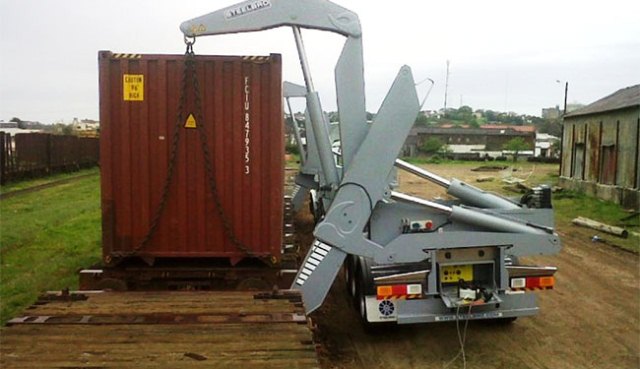
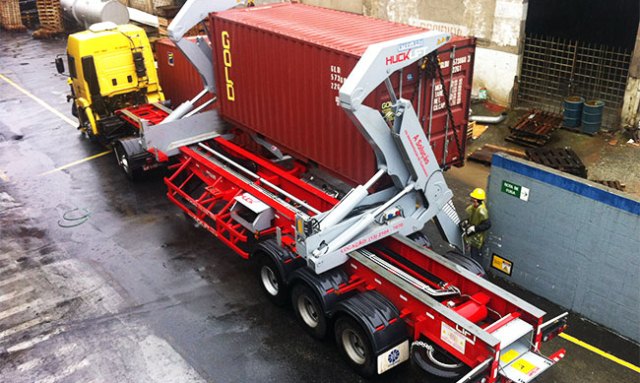
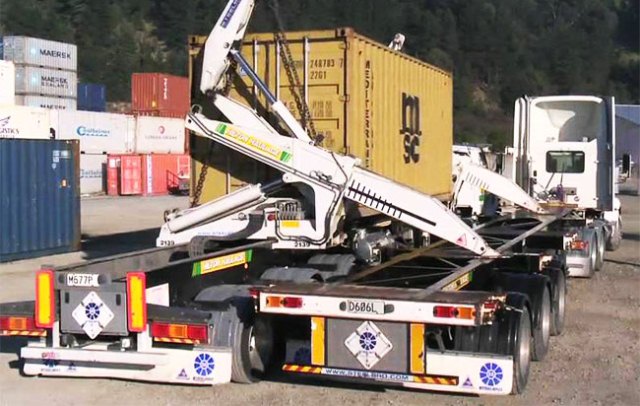
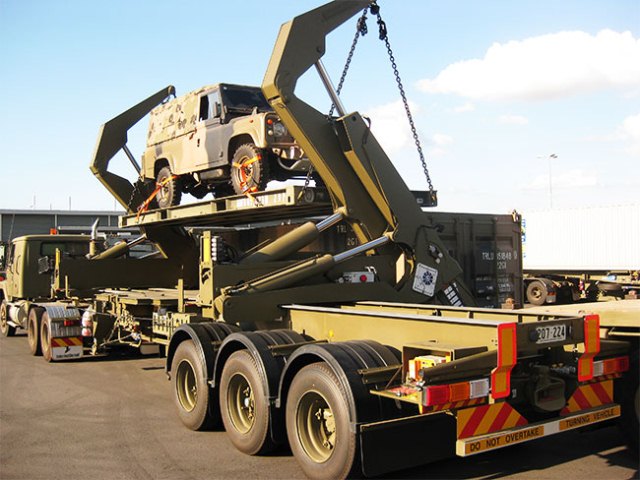
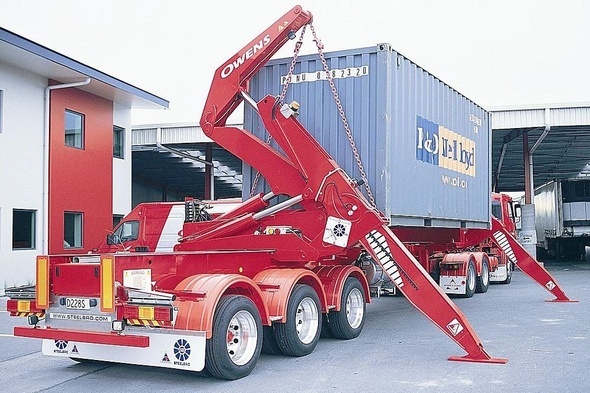
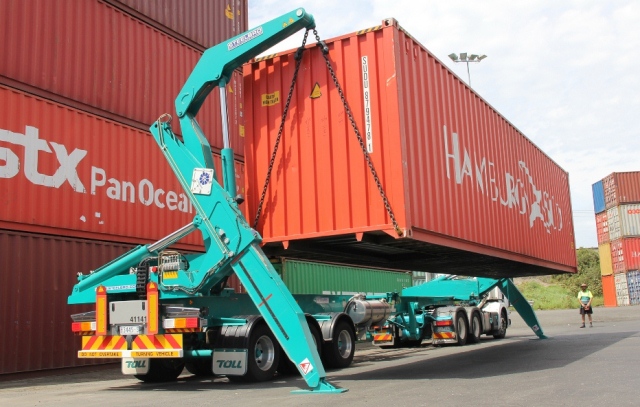
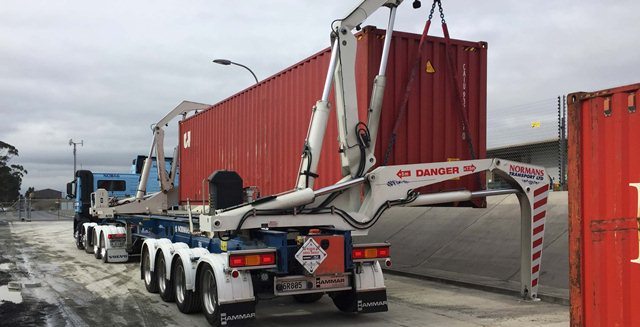
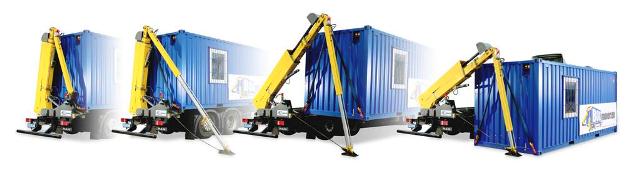
Side loader truck: sidelifter

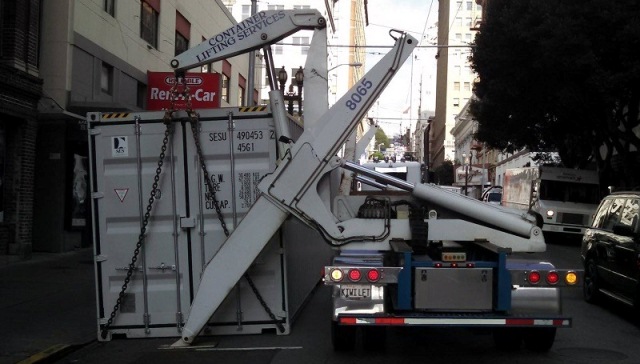
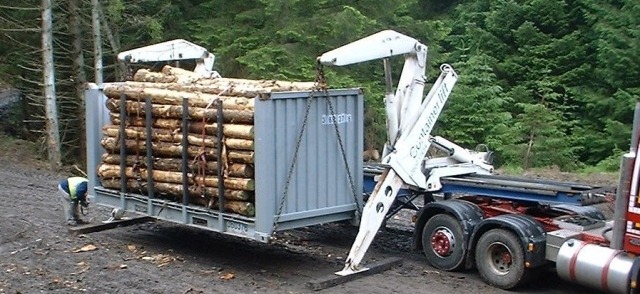
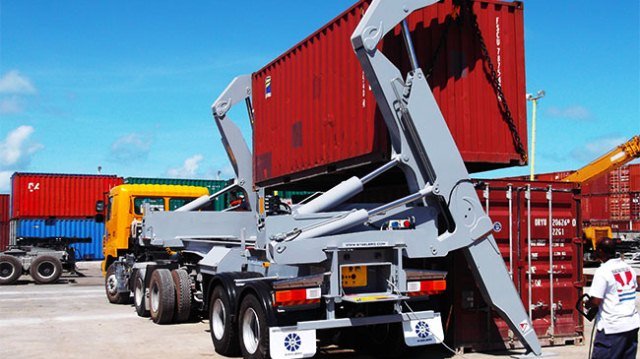
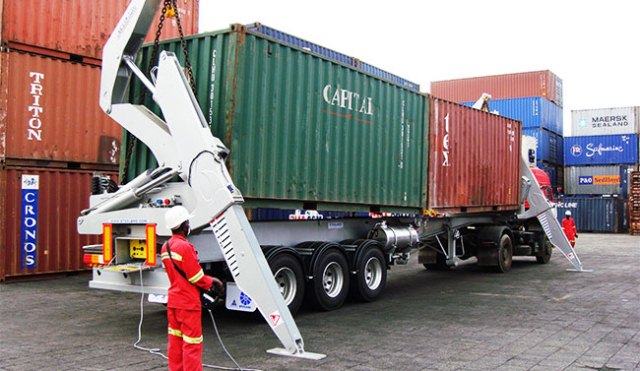
A Sidelifter is a semi-trailer built especially for this purpose, in which a set of cranes specially designed to lift and transport containers is mounted

It is a truck crane that incorporates a lateral elevator in the semi-trailer. Also called side loader container.

Also used for the handling of loads in the dock as the gantry truck, however, its use is more linked to rail.

It is used in both trains and trucks, leaning on the side of these as well as on the ground, to load and unload the containers laterally.

A Sidelifter is a semi-trailer built especially for this purpose, in which a set of cranes specially designed to lift and transport containers is mounted

side loader truck

Side loader container

How is it used? Two hydraulic arms, mounted on an attached vehicle, on the trailer of a truck, on a standard 2 or 3-axle truck, or on a railroad car, which allow access to the load, make it possible to load or unload standard containers from a maximum weight of 32 tons.

The process is executed by means of a radio control system located in the truck. It is important to note that the sidelifter is not capable of stacking containers.

The chassis is ideal for accurately placing shipping containers anywhere a truck can access, and then loading or unloading the container on the ground.

side loader truck

Sideloader

Advantages of using a sidelifter crane:

The loading and unloading of containers can take place on the ground, reducing the risk of injury.

The waiting time is eliminated so that other lift-type machines are available, as well as the need for expensive land preparation.

This not only saves money for the transport operator; It also saves time for importers, manufacturers, and distributors.

When transporting a sidelifter by road, operators can easily load containers into trailers without the help of cranes.

This means that, in addition to transporting their own containers, a Sidelifter can load and unload entire container convoys without the need to relocate independent heavy equipment.

This eliminates the cost associated with leaving the trailers on the site and increases the opportunities for the number of pickups and deliveries in each cycle.

It can also free up personnel and equipment for other tasks, thus increasing efficiency and reducing operating costs.

side loader truck

Side Loader Container Truck

Where is it used?

The field of application of this type of cargo handling system is wide, as wide as the use of the container for transporting goods.

Railway transfer

Because it does not require a lot of expensive infrastructures, just enough space to load or unload the wagons.

side loader truck

Container loading

The self-loading and unloading capacity of a container eliminates the need for forklifts and other heavy equipment available at both ends of the container route.

Industrial Transport Services

producing companies use these vehicles for their merchandise.

side loader truck

Intermodal transportation

characterized by a frequent transshipment of cargo between roads and railways and because it requires an uninterrupted transport chain.

side loader truck

Crane design

Who designed this Crane?

The sidelifter was invented during the 1960s in Germany, with a focus on military operations.

In the beginning, they were heavy and not profitable in the commercial area.

It was purchased by the Steelbro brand in New Zealand, which has developed the Sidelifter to be lighter and commercially acceptable.

It was also developed by the Hammar Maskin AB brand in Sweden. Since then, it has become a vehicle commonly used in intermodal facilities around the world.

The main alternative to expensive sidelifter machinery is the use of interchangeable body containers, which are too light to be stacked but can be unloaded from a truck by means of folding legs.

Today, the most important manufacturers are Hammar, Valart, Boxloader, and Steelbro, followed by other regional minority manufacturers.

side loader truck

Industrial Crane Design

Design of a Sidelifter Crane: Sidelifters cranes generally have the following attributes:

Crane Lift

Hydraulically powered cranes lift the container (from the ground, the loading dock, another vehicle, the rail car or from the top of another container placed on the ground or other location) into and out of the chassis.

These cranes are placed in the upper part of the side chassis and can usually be moved along the chassis moving with hydraulic cylinders or hydraulic motors to load different lengths of containers.

Power Supply

While cranes are usually driven by a diesel engine mounted on a trailer or gasoline engine, the cranes have sometimes driven through a power take-off from the truck or tractor.

Trailer Stabilizer Legs

These are equipped with hydraulic legs that are necessary to allow the lifting of loads of up to 44 tons without tilting the vehicle.

These can be adjusted to help the operation in a level less terrain and facilitate greater safety margins and load limits when stacking containers.

side loader truck

Chains

They are attached from the top of the cranes to the corner corners at the base of the container (s) during lifting operations.

There is a special link device that, when placed between two 20-foot containers, allows the user to lock two 20-foot (2 TEU) containers together, which allows the container-lifter to lift them up as if they were a 40-foot container. feet.

Truck cab

Drag the trailer, and in some cases supply power through the PTO. This tractor/cab always supplies the compressed air for the brakes of the sidelifter wheels. Normally, the sidelifter cannot be operated without being connected to the Tractor because even if the power unit is below the sidelifter, the tractor provides compressed air for the trailer brakes and also additional stability for the lifting operation.

Chassis

It supports the weight of the container when it is loaded, it also supports the cranes.

Remote Control

A device with control levers and buttons that are usually connected by a multiple-pair electric cable or by a radio signal, allows the operator to walk around the container and view the unit from several different angles during the operation.

side loader truck

Chassis Extension

Sometimes called a trombone chassis, which allows the unit to expand and contract to accommodate containers of 20 feet, 40 feet or even 45 feet. These trombone units are especially suitable for small secondary roads where curves are quite difficult with 40-foot trailers.

Sidelifter machines are designed to lift up to a maximum of 44 tons (49 short tons, 43 long tons) although there are smaller machines.

In addition to controlling the lifting and lowering of cranes, the operator can sometimes tilt the chassis using the stabilizing legs, which provides a limited capacity to operate on uneven terrain.

Crane Safety

Safety during maneuvers:

A sidelifter is classified for ISO containers, with a maximum total weight specified and a maximum distance from the sidelifter chassis (also called maximum range or maximum radius).

This information is found on an identification plate provided by the manufacturer, and the loads must not exceed these specifications.

It is known that side units flip like any other crane, especially when they lift loads that are heavier than the maximum allowed weight or when they operate at a radius greater than the maximum allowed radius.

Units should always be operated only by trained personnel. Local legislation sometimes requires security devices such as the Electronic Stability System that prevents the sidelifter from moving.

Side lifter trailer

SIDELIFTERS – SELF LOADING TRAILERS

STEELBRO strives to offer the world’s best-valued side lifter self-loading trailers.

STEELBRO Sidelifter is the most versatile and cost-effective container transport equipment.

Steelbro self-loading trailers are ideal for placing shipping containers with precision anywhere a truck can access, then loading or unloading the container on the ground. No other way of delivering and retrieving containers matches the accuracy and precision of STEELBRO Sidelifter technology.

Steelbro sidelifter

The STEELBRO Sidelifter self-loading trailer with the lightest tare weight ever subject to specifications.

Deliver higher payload and improve your fuel returns. The SB362 Lightweight has been specially engineered to have the lowest tare weight of any other 36-tonne sidelifter.

An outreach of over 4 meters allows transfers to and from flatbed rail wagons and companion vehicles making transitions quick, easy, and efficient.

Hammar Side Loader

Hammar Maskin AB is developing manufacturing, and marketing side loaders, also known as Sidelifters, Swinglifters, or Self-loading trailers, under the brand name HAMMAR.

Since its start-up in 1974 the company has been focusing on side loaders only, this dedication has made it possible for Hammar Maskin to become the world’s leading supplier of Sidelifters.

HAMMAR side loader has been sold in more than 111 countries worldwide.

Container Side Lifter

Prompt service saves time and money

Today Hammar has customers who travel here from other countries to get their HAMMAR serviced, and that says a great deal about our efficiency.

  • In the Service and Repairs Unit, the red route is designed to reduce waiting times for our customers.
  • Waiting around costs money, but our efficient operating methods enable us to save the customer a lot of time.
  • Hammar has production facilities where crane and chassis parts are built from scratch, Hammar can simply go in and select those spare parts which your customers require. We are therefore able to offer prompt service with short lead times.
  • In the case of major damage and breakdowns which take longer to remedy, Hammar service is absolutely first class.
  • We are always able to offer the loan of a replacement trailer as a standby, which means that our customers never need to interrupt their work schedule.
  • After all major repairs and renovations, the trailer is inspected and checked just as if it were new.

Port cranes

Alternatives to the Sidelifter:

The mobile container loader/stacker. A rubber leg crane is another device for loading containers into trucks (as well as around the port).

What is a side loader?

What is a side loader?

A side loader does exactly what its title suggests. It loads and unloads from the side of the machine. Instead of the forks being located in front of the equipment like on a standard forklift, a sideloader’s forks are located on its side.

what benefits does a side loader have over a standard forklift?

1. Sideloaders don’t need to turn like standard forklifts, so they can drive up alongside the rack or the truck and easily unload and load from the side
2. Sideloaders are designed to work in narrower aisles and doorways
3. Long loads such as timber, steel or pipes are more easily handled because the load is facing in the direction being traveled, reducing the overall width of the equipment and load
4. A flatbed allows the load to be stabilized, ensuring safer movement
5. Since the load is carried on the side, the operator has clear visibility in front and behind
6. New side loaders have been developed as multidirectional machines, so they can move in all 4 directions by changing the direction of the wheels

A few things to be aware of with side loaders

-Sideloaders are not as maneuverable as standard forklifts (although multidirectional sideloaders offer advances in this area)
-Sideloaders are a specialized machine.
-While they are great for long or awkward loads, think about what else you are trying to move and whether you need your machine to handle different types of loads, or whether a combination of different equipment would work best.
-Another alternative to a side loader is a multidirectional forklift, such as the range from Combilift, which offers the benefits of a side loader and standard forklift.

what is a Combilift?

All over the world, Combilift is revolutionizing the way companies handle and store materials, especially long and awkward loads, or when space is limited. Our pioneering product range includes multi-directional, articulated, pedestrian forklifts as well as straddle carriers.

Image gallery

The most read

Container Crane

Container cranes consist of a supporting framework that can traverse the length of a quay or yard on a rail track. Instead of a hook, they are equipped with a specialized handling tool called a spreader.

More on this story

Reach Stacker Crane

REACH STACKER CRANE: container reach stacker, reachstackers, kalmar reachstacker, Container Handler, What is a reach stacker?