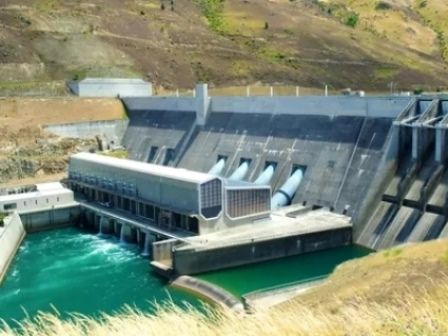
Category Archives: topography

What is the use of Surge Tank?

Surge tanks are applied in hydropower plants to reduce the pressure forces during acceleration of the water, and to enable speed governing of the turbines.

There are two main types of surge tanks; the open surge tank connected to atmospheric air, and the closed surge tank constructed as a closed volume filled with pressurized air.

However, numerous variants exist within the two main types. The different variants have different benefits and challenges, and the selection of design is dependent on site and project-specific factors.

A surge tank uses, with presentation and comparison of all the different types and variants of surge tanks, would enable hydropower engineers to make an easier and improved selection for new hydropower projects.

The surge tank is located between the almost horizontal or slightly inclined conduit and steeply sloping penstock and is designed as a chamber excavated in the mountain.

Surge tanks serve a threefold purpose:

  • Release excessive pressure.
  • Reduce overpressure due to water hammers.
  • Provide water supply to the turbines in case they start up.
What is the use of Surge Tank?

Use of surge tank in hydro power plant

Release excessive pressure

Upon the rapid closure of the turbine, water masses moving in the pressure tunnel and in the penstock are suddenly decelerated.

Owing to the inertia of moving masses, F = ma, high overpressures develop at the lower end of the penstock, which are propagating upwards in the penstock in the form of the pressure waves. The magnitude of the so-called water hammer, caused by the moving masses by closure, will depend upon the dimensions and elastic properties of the conduit.

The overpressure due to the water hammer travels along the closed conduit and is not relieved until a free water surface is reached.

An important function of the surge tank can be summarized like this. The turbines to the reservoir are practically interrupted by the surge tank to prevent the pressure wave due to the water hammer at the free water surface and to free the pressure tunnel from excessive pressures.

Reduce overpressure due to water hammer

The surge provides protection to the penstock against damage from the water hammer. The overpressure depends upon the length of the penstock (the closed conduit). The surge tank, by interrupting the closed system of the penstock and of the pressure tunnel, reduces the overpressure due to the water hammer.

Provide water supply to the turbines

The third purpose of the surge tank is to provide water supply to the turbines in case of starting up. The amount of water required during these changes in operating conditions is supplied by the surge tank installed in the conduit.

The capacity thereof should be selected to ensure the required water supply during the most unfavorable increase in demand until the water mass in the tunnel has attained the necessary velocity. Air should be prevented from entering the penstock even in case of the deepest down surge in the chamber.

The function of a surge tank is?

Where is the surge tank located in a hydroelectric power plant?

The height of the surge tank is governed by the highest possible water level that can be expected during operation. Variations in demand initiated by a rapid opening or closure of the valve or turbine are followed by a time lag by the water masses moving in the tunnel.

Upon the rapid and partial closure of the valve following a sudden load decrease, water masses in the penstock are suddenly decelerated, and one part of the continuous supply from the tunnel fills the surge tank. The water surface in the surge chamber will be raised to above static level.

In the case of rapid opening, the flow in the tunnel is smaller than the turbine’s demand to supply water to the turbine. The water surface in the chamber will start to drop below the steady-state level.

To establish steady-flow conditions, the water surface will again start to rise from the low point, but owing to the inertia of moving water, will again rise over the steady level. The cycle is repeated all over again with amplitudes reduced by friction, i.e. the oscillation is damped.

The phenomenon described is the water surface oscillation. The maximum amplitude of water surface oscillation can be observed when the water demand is suddenly stopped.

More on this story

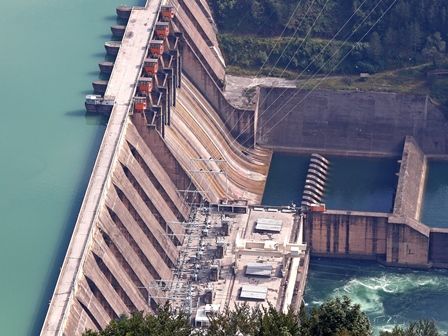
Surge Tank in Hydroelectric Power Plant

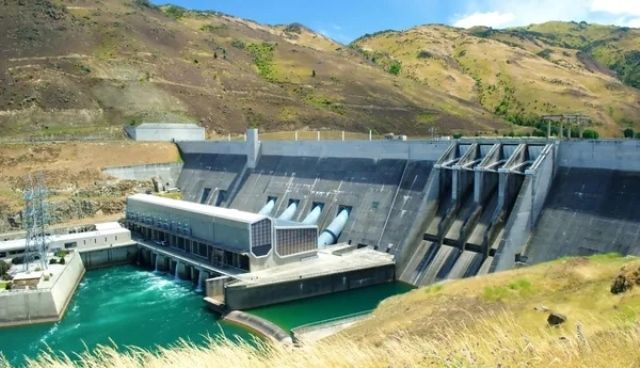
A surge tank is a water storage device that is used in a hydroelectric power plant, to cushion the variation of excess pressure.
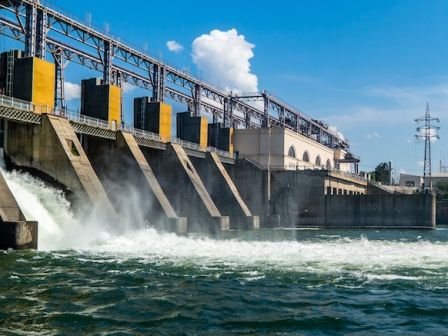
Surge Tank in Hydro Power Plant

Surge tanks can provide a fundamental feature for the hydraulic design of hydropower projects
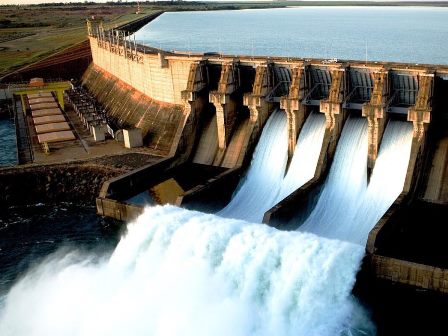
Hydropower Advantages

Hydropower or hydroelectric power is the process of producing electricity utilizing the power of water.


Land Survey Cost

How much does a land survey cost?

It is advisable to complete a topographic survey before paying construction costs. The landlord must comply with local zoning laws and ordinances.

Variables you will want to consider include: how long the survey is valid, and how long it will take to complete.

When you have a contractor ready to start an improvement project, you shouldn’t keep him waiting while you complete a survey.

Rush jobs generally add $ 100 – $ 200 per day. Before letting a surveyor get started, make sure you have everything in writing to avoid problems.

The cost of a topographic survey depends on the type of survey required.

Land Survey Cost

Land survey cost calculator

Get quotes and costs for a land survey.

When buying or selling a property, the real estate agent can use a particular appraiser and add his or her price to the closing costs or get the money upfront.

In many states, if you are the seller, you can request that the land survey be done by the buyer.

However, an appraisal could be completely different from a land survey and include the value of the home and property, not just lines and property lines.

To get a realistic estimate of how much a land study will cost when buying or selling a property, the best place to start is with a reputable local realtor.

Another source for an independent land survey team is the building inspector or the tax assessor’s office. They both deal with ground survey teams on a regular basis and know who will give them a fair price.

Land survey corner markers

How to find your property corner markers?

corner markers or boundary monuments are metal pins placed at every corner of the property, including any angle or change of direction of the boundary line.

Each pin is shown on the survey of each property.

Property markers are required to verify property lines when obtaining permits for certain projects, such as fences, sheds, and additions., when construction is close to required setbacks or the line itself.

Property marker location is important information to avoid legal and neighborhood disputes. Property lines or boundary lines are the defined points where one person’s land ends and the neighboring land begins.

The wood markers and pin flags that are commonly seen are not the property corner themselves.

They are witness items to help you find the property corner that is located flush with the ground

How much does a land survey cost?

The cost of a land survey varies depending on the type of survey and the size and shape of the property. The cost of a property inspection will also vary based on the travel time of the professional surveyor.

Most surveying costs between $ 500 and $ 1000, averaging $ 800. The costs of a land survey will be higher for properties with more acres or more corners.

Land surveys have a higher average cost due to the additional work involved in researching documents and providing more details. The average cost of a land survey is between $ 2,000 and $ 3,000.

Keep in mind that these costs are averages across the US The cost of a residential survey can vary greatly depending on the particular market and available public records.

For example, the cost of a land survey in Florida is different from Texas, in California it can range between $ 5,000 and $ 10,000 so in each state the price is different, it will be necessary to make a quote. That number can be even higher depending on the complexity of the survey.

What is included in a land survey?

What is included in a land survey?

A land survey is conducted to locate, describe, and map the boundaries and corners of a parcel of land or property. It can also include the topography of the parcel and the location of buildings and other improvements made to the parcel.

What does the final price of the land study depend on?

Prices vary widely and depend on several factors including the terrain, surveyors charge a premium for the most difficult to access terrain. Land size (surveyors charge per acre). Location and travel time, surveyors charge for travel time. Type of topographic survey, Basic boundary surveys cost less than full surveying or mortgage. You can pay more for topographic elevation or a fence.

Should I get corner markers?

Boundary lines displayed on a property topographic map can be difficult to accurately locate on the ground without markers denoting the property’s corners. Placing markers helps avoid future disputes and allows you to identify the physical location of your property.

Land surveyor near me

Professional land surveyors are trained to use an intricate combination of law, mathematics, engineering, and physics to determine and establish property boundaries.

They use specialized equipment such as GPS, prisms, software, radios, and robotic total stations to complete the survey.

In many states only professional surveyors licensed by the State Board of Engineers and Surveyors are authorized to survey.

what does a land surveyor do?

Limit the property

A home is usually the largest investment of your life, and only a professional surveyor can determine property boundaries and make sure you are getting all the land you think you will have. By inspecting your property before buying, he will know where all the property lines are, what he is buying, and if any natural or man-made features near the property lines are found on that property.

Determine the elevation of the floodplain

When a lender requires a property to have flood insurance, the surveyor can determine the elevation of the nearest floodplain relative to your property. Having your property analyzed by a surveyor can be the difference between a homeowner paying for expensive flood insurance.

Do a land survey

When you install a fence, garden, or make other improvements to your property; Doing a land survey first, you can plan your project and make sure it is within the boundaries of your land. If fences encroach on a neighbor’s property, they have the potential to turn good neighbors into bad neighbors.

Topographical survey

When building an addition to your home, a new garage, or other structures, when a homeowner constructs an addition or a new building, the surveyor can locate all the property features that help determine the building’s location and size of the addition or new structure allowed.

When you need professional service, you need to know exactly what you are getting. A professional surveyor will take the time to understand your surveying needs.

Surveyors who are members of your local, state, and national professional organizations are showing that they are concerned about changes in law and technology.

They are afforded the greatest opportunity for continuing education and changes affecting the surveying profession. Always consider hiring a member of your local or state professional surveying organization

More on this story

Topographic Survey Cost

As a home or property owner, you may need to inspect your land. What is the cost of the topographic survey?

Types of Topographical Survey

While most people think of land surveys in the most basic sense, that is, the drawing of the boundaries of a property, there are actually many different ways of surveying that service many different industries.

C Map Charts

C-MAP, a leader in digital marine charting and cloud-based mapping, announced the next generation of C-MAP Contour charts, preloaded on sounders and plotters.

The new charts provide even more data with a significant increase in lake contours (over 15,000 US lakes and 9,400 Canadian lakes) in addition to other enhancements, including updated depth contours and depth shadings.

Covering inland and near-shore coastal areas of the U.S. In addition to Hawaii, Bermuda, and Canada, the C-MAP Contour charts include custom depth shading on all lakes, high-resolution bathymetry on more than 15,000 lakes in US and 9,400 Canadian lakes, fishing POIs and standard navigation data, including tides and currents for coastal areas.

Released in June 2020 as a significantly improved preloaded mapping solution for new displays, C-MAP Contour, now with even more graphics data and a larger file size, will not be available via a downloadable software update.

Displays are programmed to be preloaded with the Contour + graphic at the factory beginning March 1, 2021.

Current registered customers can purchase the Contour + Map Card for a nominal fee of $ 35, beginning February 1 through April 1, 2021.

Additionally, customers who purchase an HDS LIVE display between February 1 and April 1, 2021 will be eligible for a free upgraded C-MAP Contour + card through online rebate.

C Map Charts

Cmap vs navionics

Having hydrographic maps is very convenient for fishermen.

It is important to know where the best depth is and what shallow areas to avoid.

To access this information, you will need to obtain specific graphics.

Both CMap and Navionics are very popular and offer some great features.

Of course, there are also some differences, and each fisherman must choose according to his personal needs.

C-map marine charts

Lowrance-owned CMap offers high-quality hydrographic charts for fishing.

Charts are available for inland and coastal waters, making them ideal for all anglers.

When it comes to coverage, CMap covers most of the world, especially popular fishing spots.

The graphics are very detailed and you can choose from many options.

CMap will allow you to see the seabed in detail. From structures and reefs to holes and ledges, these bathymetric images will amaze you.

This option is ideal for fishermen, as well as divers, as it provides information on tides, currents, marine parks, and the like. You can also add layers like satellite images and depth shading.

Boating enthusiasts and fishermen will enjoy the marina’s large database.

Continental charts are available to freshwater fishermen. These maps have a great coverage, it gives you a high detail view.

Most importantly, CMap is compatible with major fish finder brands such as Lowrance, Simrand and B&G. You can even check the compatibility table on the official website.

For saltwater anglers, there are wide and local charts, which include all the premium features such as bathymetric imagery, custom depth shading, satellite view, and 3D. Both local and wide graphics are equally detailed, only varying in coverage area.

These two also include CMap Genesis, which allows you to create your custom maps.

US users will be delighted to know that there are charts covering lakes in the US Unfortunately this option is not available for the rest of the world.

Navionics marine charts

Navionics is a similar navigation tool that provides hydrographic charts for fishermen.

It has worldwide coverage and offers detailed maps of the interior and the coast.

It is owned by Garmin and is compatible with all major fish finder manufacturers.

Navionics has one cool feature, and it’s the fish attractors.

It shows more than 10,000 sunken structures, made to attract fish, and that is valuable to fishermen, especially when fishing in an unfamiliar area.

The enhanced version provides shading, 3D photos, and panoramas.

Chart customization such as contour density and shallow area highlighting are part of Navionics. This is a great feature for knowing which places to avoid with a boat, and also for knowing where certain depths are where you can find target fish species.

There is also a SonarChart live option, which allows you to create maps with the latest bathymetry. Similar to CMAp, you can upload your data and add it to data created by other users.

It also offers community editions, where you can find information provided by local fishermen, mainly related to buoys, boat ramps, and similar changes.

C Map Charts

  • How do nautical chart data providers work?
  • How do you get the graphics corrections?

Vendors that provide chart data are constantly working on improvements, fixes, and updates to their entire chart portfolio like C-MAP.

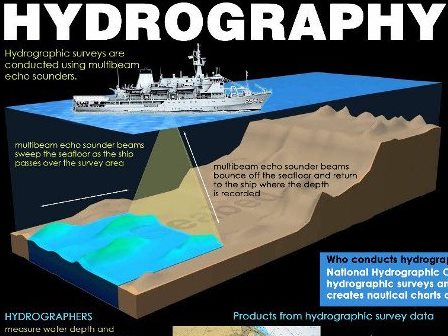
This can be done by conducting surveys on the ground, through private partners or through Hydrographic Services.

This is ongoing work and requires substantial resources for these investigations and verifications.

In this case, a special effort will be made in these regions, so that there is a greater possibility that everything will be corrected, but once again, this is not a certainty if you have not had enough information beforehand.

It is impossible for anyone to be aware of every sailing change or new marina around the world comprehensively and at the same time.

There are still some nautical charts that haven’t been updated in a couple of years. It does not mean that C-map is using an old chart, this is impossible.

The same is true for navigational charts and this update delay is certainly more prominent with Hydrographic Offices, as the frequency of their chart updates is quite slow.

In fact, they are less reactive when it comes to the integration of new marinas. Editions and revision dates are generally older.

More on this story

Bathymetric Survey

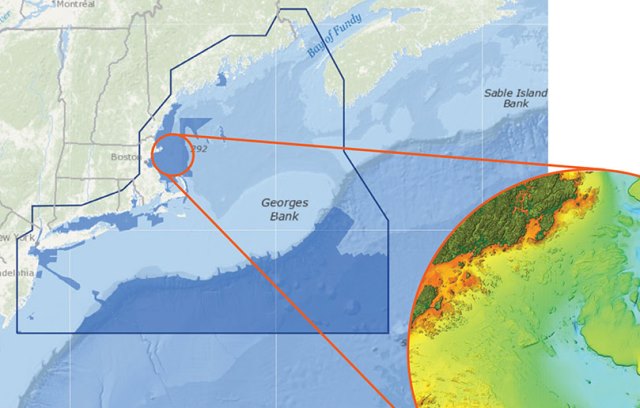
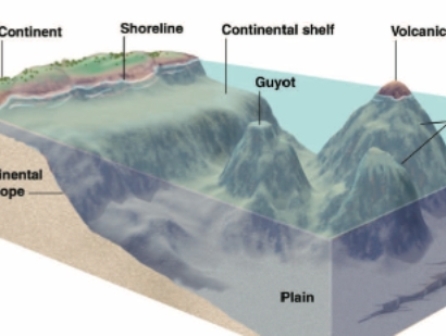
The variation in relief constitutes the morphology of the ocean floor. Charting of the ocean is very important for many reasons: it affects circulation, a potential site for living and non-living resources, submarine navigation, geophysical exploration, etc.

Underwater Topography Maps

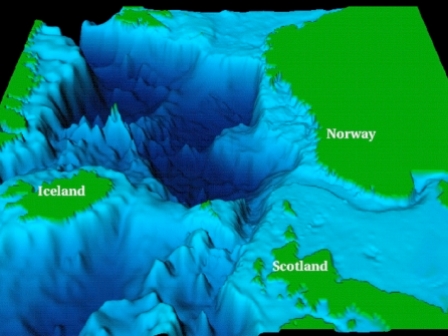
Topographic maps of the seafloor. Detailed depth contours provide the size, shape, and distribution of underwater features. The map serves as a tool for performing scientific, engineering, marine geophysical and environmental studies, that are required in the development of energy and marine resources.

Surge Tank in Hydroelectric Power Plant

A compensation tank is a water storage device that is used as a pressure neutralizer, in the water conduction systems, of a hydroelectric plant, to cushion the variation of excess pressure.

In short, the surge tank mitigates pressure variations due to rapid changes in water velocity.

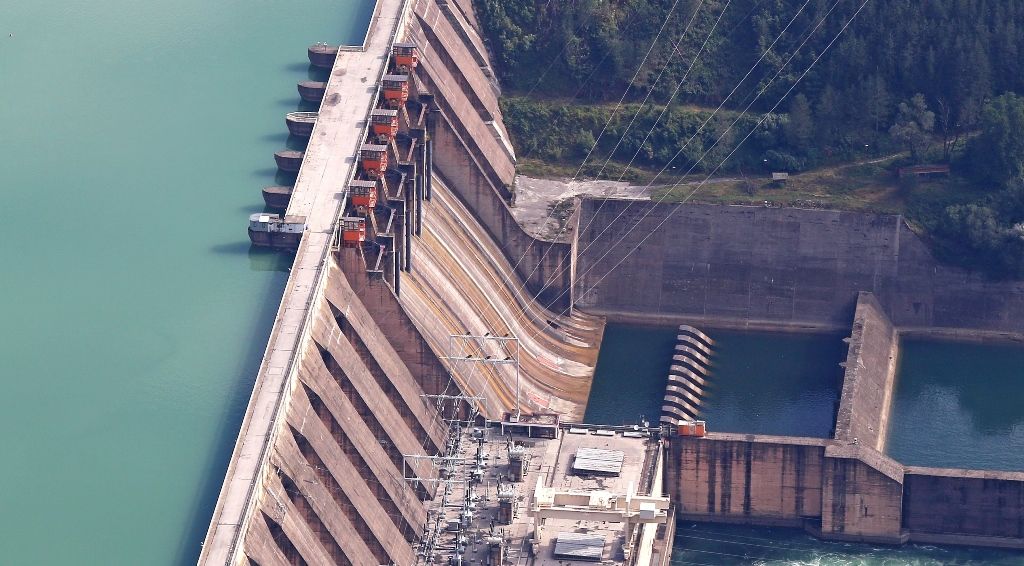
For hydropower uses, a surge tank is an additional storage space between the main storage reservoir and the powerhouse, as close to the powerhouse as possible.

The main functions of the surge tank are:

  1. When the load decreases, the water backs up and is stored in it.
  2. When the load increases, the surge tank will provide an additional supply of water.
Surge Tank in Hydroelectric Power Plant

Hydroelectric Power Plant is

The most common type of hydroelectric power plant is a reservoir facility.

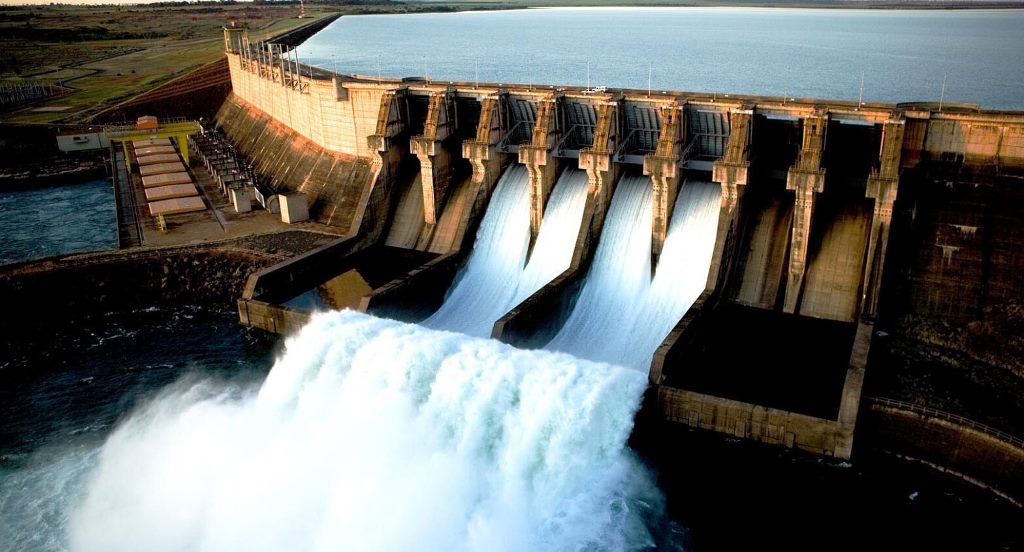
A reservoir facility, usually a large hydroelectric system, uses a dam to store river water in a reservoir.

The water released from the reservoir flows through a turbine, causing it to spin, which in turn activates a generator to produce electricity.

Water can be released to meet changing electricity needs.

The energy produced by the hydel power plant is

The electricity, a hydraulic turbine converts the energy of flowing water into mechanical energy. A hydroelectric generator converts this mechanical energy into electricity.

A turbine and generator produce the electricity

Electricity demand is not “flat” and constant. Demand goes up and down during the day, and at night there is less need for electricity in homes, businesses and other facilities.

For example, at 5:00 p.m. m. On a hot weekend day, there is a huge demand for electricity to run millions of air conditioners.

Pumped storage hydropower

Hydroelectric plants are more efficient at meeting peak energy demands for short periods than nuclear and fossil fuel plants, and one way of doing this is through “pumped storage,” which reuses the same water more than one time.

Pumped storage is a method of keeping water in reserve for peak period power demands, by pumping water that has already flowed through turbines back to a storage pool above the power plant. at a time when customer power demand is low, such as overnight.

The water is then allowed to flow back through the turbine generators at times when demand is high and a heavy load is placed on the system.

Hydroelectric energy renewable or nonrenewable

The main advantages of hydropower are that it is 100% renewable, can generate electricity at any time of the day or night, and is generally safe to operate.

However, it is a challenge to build hydroelectric plants because a river needs to be completely dammed. Not many utilities can afford this, and governments usually foot the bill for hydroelectric plants.

Interestingly, states with lots of hydroelectric plants tend to have cheaper electricity costs.

So if states are willing to pay the upfront costs to build hydroelectric plants, they can lower consumers’ electricity bills.

Solar power is a cheap source of renewable energy, but hydropower is more consistent as water runs through turbines 24/7 compared to the sun only shining during the day.

While wind power is also a very consistent form of renewable energy, wind turbines will have a higher maintenance cost than hydroelectric plants because the turbines are larger and constantly moving, which means they break down more easily.

When it comes to biofuels, hydropower is superior because once the plant is built and running, the environmental impacts are less.

With biofuels, you have to constantly cut down trees or plants that will be burned for fuel.

But with hydropower, water is plentiful and doesn’t emit CO2 when it powers the plant.

More on this story

Surge Tank in Hydro Power Plant

Surge tanks can provide a fundamental feature for the hydraulic design of hydropower projects

Bathymetric Survey

The variation in relief constitutes the morphology of the ocean floor. Charting of the ocean is very important for many reasons.

Topographic Survey Cost

As a home or property owner, you may need to inspect your land. What is the cost of the topographic survey?

Topographic Survey Cost

As a home or property owner, you may need to inspect your land.
What is the cost of the topographic survey?

Surveys are most often used to find the boundary or edges of your land or property by marking all four corners. They can also be used to locate sloping floodplains, determine terrain, and find locations for septic tanks or oil wells.

Most owners conduct topographic surveys prior to any transaction or project. This may mean having an inspection done before selling the property, building a fence, or putting up a new building.

Laws indicate how close to a boundary line you can build, drill, or excavate, so an accurate topographic survey ensures that you are following the correct rules.

Topographic Survey Cost

How much does it cost to survey land?

How much does a topographic survey cost?

Landowners report that the average cost of the land survey is $ 500. This includes the price of hiring a surveyor, which ranges from $ 350 to $ 700.

The total depends on the size, location, and property as well, and some properties cost $ 1,000 or more.

These topographic surveys effectively give you a legal description of the exact boundaries of where your property boundaries begin and end.

They can save a lot of trouble and money in case of disputes because they are legally binding and professionally certified.

Boundary survey cost

Many factors influence the cost of your land survey, including the type of topographic survey, the size, boundaries, and shape of the property, the terrain, and the difficulty of accessing the property.

With these variations, the national average cost ranges from $ 500 to $ 1,200. For most homeowners, a land survey conducted for mortgage purposes on a standard-size lot costs $ 600.

You can do a single boundary inspection in a well-kept yard, working with existing deeds for about $ 400. A multi-acre parcel with four new boundary markers and a topographic drawing costs about $ 6,000.

Topographic survey vs boundary survey

A land survey clearly defines the boundaries and topography of the property, including GPS coordinates, measurements for each side, location, and any road that touches the property line.

In addition to a written description of the property, a land survey has the street address, the location of the building and adjacent properties, and even details of any improvements to the land that an owner may make.

In summary, a property topographic survey includes:

  • Precise borderlines of the property.
  • Specific locations of structures, additions, and improvements.
  • Geographic characteristics (slope, floodplain, etc.) that affect land use.
  • The location of easements, public services, and right of way.

A boundary survey is an important component of pre-construction due diligence. Boundary study establishes the perimeter of a property in relation to the legal description of a site. The partner’s licensed surveyors will review the recorded documents and perform a physical inspection to determine the physical boundaries of the site.

How much does a land survey cost?

The national average cost to purchase a topographic survey ranges from $ 350 to $ 700, with most homeowners spending approximately $ 500. The final price depends on factors such as the complexity of the terrain, the size and shape of the plot, the type of study of the land and the location of the property.

why are land surveys so expensive?

Some of these factors increase the cost:

  • Surveying: Surveyors often charge a premium for land that is more difficult to access or navigate. These could be properties on a slope or those with many trees or a fence.
  • Parcel Size: Since surveyors charge per acre, the larger the property, the higher the cost of surveying.
  • Property Research: Surveyors don’t just measure your land property. They also verify your historical and public information. They may add a fee depending on how much research is required to study your property.
  • Land Location: Most surveyors charge for travel time to reach your property, especially if it is far away or difficult to access.
  • Type of topographic survey: Basic boundary surveys cost much less than full mortgage surveys or topographic surveys.

Land survey cost calculator

By finding prices, reviews, recommendations, and other information useful for a survey or similar service, a consumer can attempt to make an informed decision about how to purchase these services.

The information available online can often be inaccurate, especially for a professional service like land surveying.

In a Google search for prices or quotes, it appears: “Nationally, the average cost to contract a land survey is approximately $ 500 with a range between $ 350 and almost $ 500.

These figures can vary greatly based on location and a host of other factors.

Land survey cost in the USA

The cost of a survey varies greatly based on location and a variety of factors that drive up the final price.

The information that stands out the most for a consumer is the “national average.”

The complexity of the survey will determine the exact cost.

The price of a topographic survey depends in the first place on the state where you reside (Kansas is not the same as New York), if it is an urban area or the countryside, etc.

Websites show a national average cost of a topographic survey and lead the customer to have unrealistic expectations of the final cost.

Residential land surveyor

When websites claim that the average cost of a survey is $ 700, or that a typical price range is $ 400-500, some consumers may not stop to think about where these sites got these numbers, or Most importantly, what quality of survey work would this price tag carry.

The lowest price is not necessarily the best investment for a consumer who needs an earth survey.

Price is sometimes a priority, but it is also important for a customer to consider:

  • responsiveness
  • fast service
  • the proper license
  • the right insurance
  • Constant comunication

Ultimately, a professional surveying company is the best resource for this information. Consumers are free to compare prices and consult several different sources, but only qualified professionals will be able to offer them a realistic pricing proposal.

Unlike what can be found on web pages, a professional proposal is not simply an informed guess about what a job will cost.

Professional surveyors consider job size, time constraints, engineering needs, customer needs, and other factors when preparing a survey proposal or budget.

What is a Topographic survey?

What is a Topographic survey?

A topographic survey, also known as a location or property survey, is a professional drawing that outlines the exact boundaries of your property.

What is included in a land survey?

It also includes the exact dimensions and location of your home, any structures, or facility additions. Additionally, it can include all fence locations, elevation, or topographic details.
Simply put, a land survey is a written legal document that reflects the graphical representation of a parcel of land.

More on this story

Types of Topographical Survey

While most people think of land surveys in the most basic sense, that is, the drawing of the boundaries of a property, there are actually many different ways of surveying that service many different industries.

Types of topography

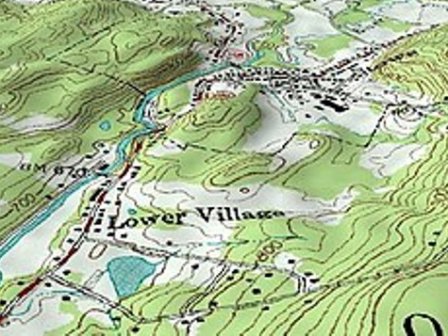
Topography is the study of the shape and features of land surfaces. The topography of an area could refer to the surface shapes and features themselves, or a description.

Land Survey Cost

  • How much does a land survey cost?
  • What is included in a land survey?

Hydropower Advantages

Hydropower or hydroelectric power is the process of producing electricity utilizing the power of water. Water can move fast or slow, there can be a lot of it or a small amount.

Utilizing waterpower to create a maximum amount of electricity differs depending on your system. In terms of a hydroelectric generator, this means, figuring out a location for a generator and seeing how the water in that location could best generate energy.

To determine these types of things in a system it is often efficient to make use of the terms flow or flow rate and head.

Hydropower Advantages

How does hydropower work?

Flow is how much water passes through a location given a period of time (volume over a given time). With greater amounts of water, like in rivers and oceans, the movement of the water over time is much greater since there is so much more water in general.

Streams and creeks often have much less water traveling through them and while it can be moving at high or low speeds, the general amount of water (given a specific location and over a time period) is less. The other important factor in a water source is called head.

Head race in hydro-power plant

Head essentially is the water levels over a certain distance or the height that the water travels. In a river, the heads are generally very low, as the water level doesn’t drop much over a distance.

Places with high heads are waterfalls or dams, where water is falling a significant distance over a short amount of time. High heads correspond to high distances, just as large amounts of fast-moving water correspond to high flow rates.

Types of water turbines

These two factors influence the different types of water turbines that are made to produce electricity and they are two ideas I needed to understand in order to make the decision about what turbine I should use for my generator.

I began looking into hydro turbines to discover what might be the best system to implement in my situation.

That also meant that I had to come to the conclusion of what my situation was, or in other words where was I going to place my hydroelectric generator.

Hydro-Turbines

A hydro or water turbine is a rotary device that takes the potential and kinetic energies of running water and converts it into mechanical work. There are two main types of hydro turbines, impulse, and reaction.

An impulse turbine is a system that channels water and directs it into a blade, bucket, or runner, moving the runner by a collision with the water.

Impulse turbines are made for high-head situations, where water travels far distances and gains potential energy. It then is channeled into a nozzle which converts the potential energy into kinetic.

How do hydro turbines work?

The nozzle sprays the water at a blade, runner, or bucket on the turbine.

The collision between the runner and the water transfers the kinetic energy of the water to the blades causing the mechanism to spin and generate energy in the form of mechanical work.

Depending upon the setup of a generator the spinning of the turbine will drive the rotation of magnets around coils which will create electricity as a result of the water. On the other hand, a reaction turbine is a system that relies on a combination of pressure and moving water.

Here, the turbine is placed directly in the body of water so that instead of hitting each runner individually, the water flows over all the runners at once.

The differences in water pressure between the front and the back of the runners allow them to move and convert kinetic energy into mechanical work.

More on this story

Surge Tank in Hydroelectric Power Plant

A surge tank is a water storage device that is used in a hydroelectric power plant, to cushion the variation of excess pressure.

Surge Tank in Hydro Power Plant

Surge tanks can provide a fundamental feature for the hydraulic design of hydropower projects

What is the use of Surge Tank?

Surge tanks are applied in hydropower plants to reduce the pressure forces during acceleration of the water, and to enable speed governing of the turbines.

Topographic Survey Cost

As a home or property owner, you may need to inspect your land. What is the cost of the topographic survey?

Underwater Topography Maps

Detailed depth contours provide the size, shape, and distribution of underwater features. The map serves as a tool for performing scientific, engineering, marine geophysical, and environmental studies.