Category Archives: tower crane

Light Tower with Generator

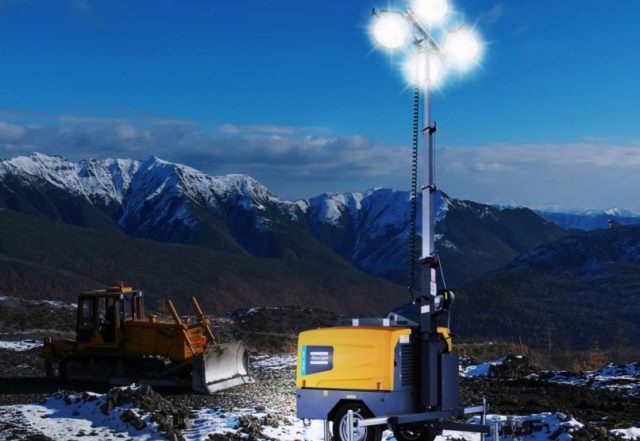
Light tower with generator is made with the components of generator sets, lights, masts, trailers, and canopy. It is designed for working outside in wind speeds up to designed specifications and is rainproof.

The trailer allows it to be drawn by different kinds of vehicles. Its flexibility and reliability make it ideal for the use of night construction, emergency handling, rescuing, special events, etc.

Combination light towers with generators represent a complete mobile outdoor lighting system providing the ability to produce high-power illumination in almost any setting.

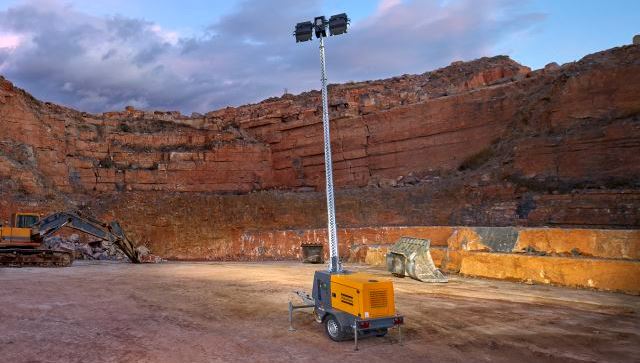
Light tower with generator

Lighting Tower Generator

Combination light towers with generators represent a complete mobile outdoor lighting system providing the ability to produce high-power illumination in almost any setting.

Combination light towers with generators represent a complete mobile outdoor lighting system providing the ability to produce high-power illumination in almost any setting.

  • Light tower with generator – The selection of light tower and generator systems cover everything from:
    • compact portable tower
    • generator systems designed for smaller worksites
    • full-size mobile tower generators capable of illuminating over 10 acres.

The light towers are available with a variety of lamp configurations including the most popular metal halide and LED fixtures, and manual and hand-operated tower assemblies in a variety of heights as well.

Manufacturers can tailor light towers to customer requirements, as well as service the equipment they sell.

They also provide replacement, overhaul, and upgrade parts, as well as industrial-grade electrical accessories.

Manufacturers are craftsmen who can customize any lighting system or fixture to fit the unique demands of their operation.

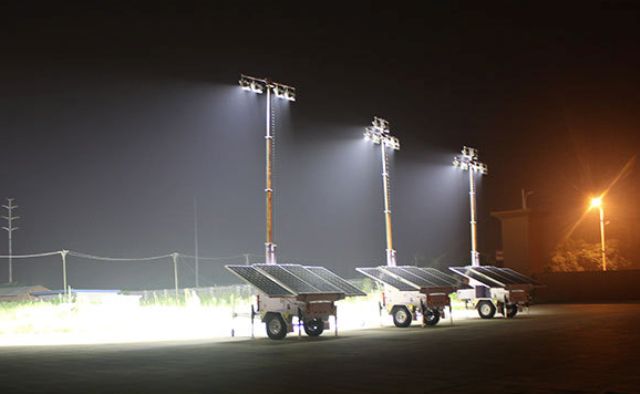
Lighting Tower Generator with LED

Light tower inspection checklist

Make sure you are completely familiar with the safe operation of this equipment. This equipment may be connected to other machines that have rotating parts or parts controlled by this equipment. Improper use can cause serious injury or death.

Receiving & Inspection: when you receive your equipment, there are several things you should do immediately. Light tower with generator checklist:

  • Observe the condition of the equipment and report any damage immediately to the carrier that delivered your system.
  • Verify that the part number of the system you received is the same as the part number listed on your purchase order.
  • If the system is to be stored for several weeks before use, be sure that it is stored in a location that conforms to published storage temperature and humidity specifications.

Lifting the Equipment

When lift or hoist equipment is used to lift the equipment and move it to position, be careful not to contact overhead wires or other obstacles. Be sure lift or hoist equipment has appropriate tires for the terrain to avoid becoming stuck or tipping over. The lift slots are designed for use with a forklift. A spreader bar and chains can also be used.

Light Tower Installation

The light tower is delivered completely assembled, tested, and ready for use. No assembly is required.

However, before putting the light tower to use the system should be completely checked to ensure it is ready for operation.

The light tower has six major systems that will be checked individually before use, these are:

  • Trailer
  • Engine/Generator
  • Trailer Stabilization System
  • Light Mast
  • Light Fixtures
  • Electrical Systems

Light Tower Checks

Trailer Stabilization Checks Consists of 2 rear-mounted outrigger assemblies and the jack on the trailer tongue.

  • Verify that the jack rotates and locks into position.
  • Ensure that all bolts, nuts and other hardware are tight and not missing.
  • Verify that the rear outriggers extend and rotate into position.
  • Ensure that the lock mechanisms operate correctly.

Light Mast Checks

a 4-section 30-foot mast can be rotated 360 degrees.

  • Ensure that all bolts, nuts, and other hardware are tight and not missing.
  • Verify that the cables for Tilt and Lift winches are not frayed or damaged.
  • Verify that the Tilt and Lift winches are not damaged.
  • Verify that the Tilt Lock and Mast Lock hardware is present and not damaged.

Light Fixtures Checks

  1. Ensure that all bolts, nuts, and other hardware are tight and not missing.
  2. Verify that the electrical cables are not frayed or damaged.
  3. Verify that the light bulbs, covers, and other hardware are not damaged.

Electrical Systems Checks: Verify that the wiring cables, switches, etc. are not damaged.

Generator Installation The generator is delivered completely assembled, tested, and ready for use. No assembly is required.

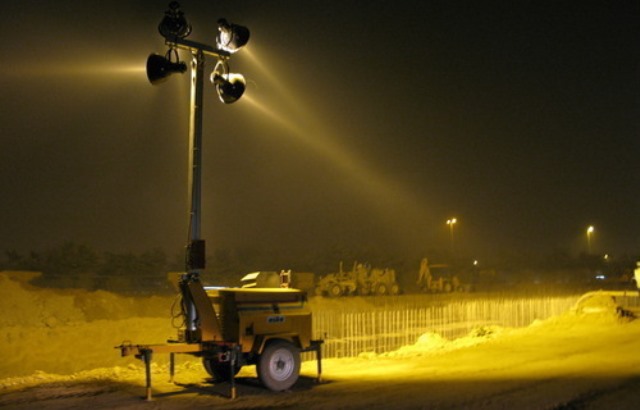
Light tower with generator

Generator safety checklist

Always disconnect all electrical loads before starting the equipment.

Installation and repair procedures require specialized skills with electrical generating equipment and liquid-cooled engine systems.

Any person that installs or repairs this equipment must have these specialized skills to ensure that this generating unit is safe to operate.

Seek expert advice for repairs or any questions you may have about safe installation and operation.

The precautionary statements are general guidelines for the safe use and operation of this equipment.

Light Tower with Generator specs

Therefore, if you use a procedure that is not recommended in the manual you must determine if it is safe for the operator and all personnel in the proximity to the equipment and connected loads.

If there is any question of the safety of a procedure please seek expert advice before starting or stopping the equipment.

This equipment contains high voltages. Electrical shock can cause serious or fatal injury.

Only qualified personnel should attempt the start−up procedure or troubleshoot this equipment.

This equipment may be connected to other machines that have rotating parts or parts that are driven by this equipment. Improper use can cause serious or fatal injury.

Only qualified personnel should attempt the start−up procedure or troubleshoot this equipment.

  • System documentation must be available to anyone that operates this equipment at all times.
  • Keep non-qualified personnel at a safe distance from this equipment.
  • Only qualified personnel familiar with the safe installation, operation, and maintenance of this device should attempt start-up or operating procedures.
  • Always stop the engine before making or removing any connections.
  • Always stop the engine and allow it to cool before refueling.
Light tower with generator

Mobile lighting tower

No matter what your lighting needs, mobile light towers offer the options and durability to deliver consistent, reliable light to your job site.

Built to light up the toughest job sites from construction and mining to oil field applications. The 30ft extended-height floodlight tower provides 4000W of light. The 360º tower rotation permits pinpoint positioning of the light. The -20ºC to 55ºC working temperature enables lighting under extreme weather conditions.

Every mobile light tower undergoes rigorous testing keeping in mind customer peace of mind and user-friendliness in operating control.

Choosing generator

How to calculate what size generator I need?

Choosing a generator or light tower can be a critical decision, especially if you power multiple tools from the generator set.

The right light tower is key for night work in the workplace, as well as for safety needs. A few calculations and a few spec comparisons before choosing will save you headaches in the long run.

Whether you need a 1,000-watt or 10,000-watt generator, a basic knowledge of the average power requirements for your tools helps you determine the power rating you will need from the unit.

However, remember that the wattage required to start a tool can be several times the wattage required to run the tool.

Fans, pumps, and compressors can require up to five times more energy to start than to run continuously.

“Starting power requirements should be factored into your sizing measurements”

“Check equipment nameplates to determine power requirements.”

When choosing a light tower, know approximately the size of the area you want to light and choose a unit with features to suit your application.

Light tower Troubleshooting

The lightweight masts that are easy to extend can be raised and retracted by one person, and the hot-dip galvanized sections prevent binding, rubbing, or rusting.

Look carefully at the lamps themselves. “Metal halide lamps mounted on an elliptical fixture provide improved coverage”

Metal halide lamps are more popular than high-pressure sodium lamps.

“They are basically the industry standard”

“Metal halide lamps provide a bright white work light, ideal for the workplace. High-pressure sodium emits a rosier light, similar to street lamps. They are also a bit more expensive. “

The lamps are great for the workplace, the bright intensity of metal halide lamps can cause visibility problems for oncoming traffic, please note that high-power metal halide lamps take up to five minutes to turn on and up to 20 minutes to restart.

Light towers also come standard with outriggers for stability in high winds – most towers are rated to withstand between 50 and 60 mph winds.

Also, consider maneuverability on the Jobsite and fuel tank capacity and compare them with your requirements.

Light tower generator rental

Once you’ve decided what you’re looking for in a generator set or light tower, decide whether you should rent the units or buy them.

Generator rental costs vary widely, depending on the size of the unit you need.

  • Generator rental costs can range from:
    • $ 1,000 per month for a 30 kW unit
    • $ 8,000 per month for 400 kW, and upto
    • $ 32,000 per month for a 2-megawatt generator

However, if you come to a long-term rental location, you may want to consider purchasing one.

The general rule of thumb is that if the rental period rate is more than a third of the purchase price, then it is time to consider purchasing a generator.

Light tower problems

Maintenance is also a factor when making a purchase decision. If you don’t have the capacity or manpower to perform maintenance, keep the rental option.

Generator maintenance is an important consideration, in addition to engine service, it includes electrical tests to verify proper operation plus full load bank capacity to prevent wet stacking (fuel overload caused by running diesel engines with light loads for long periods of time)

Typically, the rental-store can provide better maintenance in these cases.

More on this story

Tower Crane Equipment

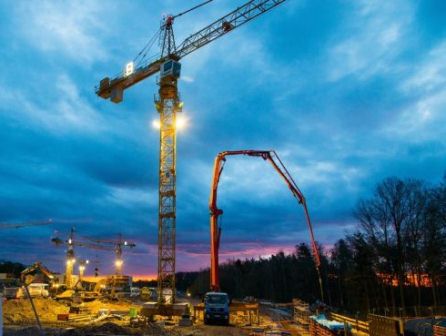
A tower crane is a construction machine designed to load and unload different materials. This load is distributed through the use of a hook that remains suspended thanks to the use of a cable.

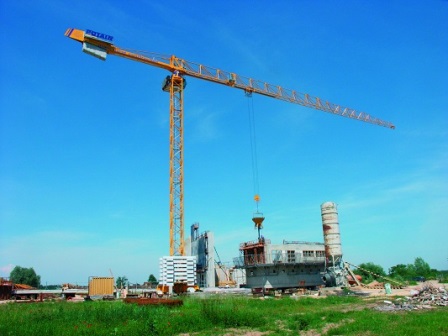
Tower Crane Specifications

The study of the tower crane will include knowing the structures that make it up, as well as knowing the elements that are part of this and that will allow the crane to perform the tasks for which it has been designed.
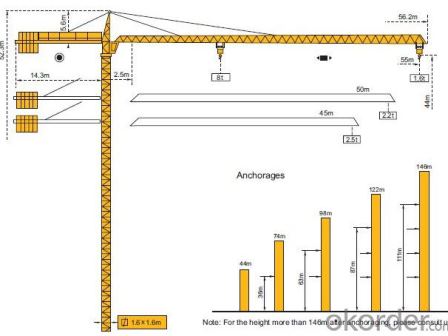
Tower Crane Dimensions

This manual has been provided as a reference source. The materials it contains provide technical information, specifications, load charts, and general information about tower cranes.

The information obtained here is not specific to a single manufacturer. Furthermore, none of the information should be used for the erection, dismantling, climbing, operation or maintenance of any tower crane.

This information should be obtained from the manufacturer’s operation manual specific to the type of crane involved.

Typical tower crane dimensions

Tower crane base dimensions

The base support is the part of the tower crane that attaches the tower to the surrounding ground or structure. When a crane is fixed to the ground, it is usually done with reinforced concrete, as well as with piles to extend the support to the bedrock. It is important to hire an engineer to design this tower component.

Tower crane mast dimensions

It is a metal lattice structure with a normally square section, whose main mission is to provide the tower crane with sufficient height. Normally it is formed by lattice modules that facilitate the transport of the crane, the dimension of the main section is determined by the maximum height.

Tower crane section dimensions

The dimensions of the tower crane section vary according to the type of tower crane (Hammerhead, Self-erecting, Flat-top), these are important because it determines the load and lifting capacity of a tower crane, the main sections are the base, which It depends on the working height and the boom that determines the maximum reach.

Tower crane boom dimensions

Typical capacities and dimensions for most tower cranes are:

  • Boom length: 60mMaximum
  • lifting capacity: 10TFree
  • height: 50m, can add up to 200m

More on this story

Tower Crane Load chart

The lifting capacity of the crane depends on several factors. The limitation for lifting weight begins at the base of the tower crane. Each and every component of the crane affects the lifting capacity of the load.

Tower Crane Mast

It is a metal lattice structure with a normally square section, whose main mission is to provide the tower crane with sufficient height.

It is normally made up of lattice modules that facilitate the transport of the crane. For mounting, these modules will be attached using screws, all of which will be attached at the projected height. Its shape and dimension vary according to the necessary characteristics of weight and height.

In the upper part of the mast is the rotation zone that gives the crane a horizontal movement of 360º. Also depending on the model, a cabin may be available for operation by an operator.

Mast section of tower crane

One variant is piled base cast in fixing angle type with top-slewing tower crane which needs mast anchorage tie to ascertain stability beyond working manufacturer specified freestanding mast height.

The major challenge arises at the time of fixing ties with the existing building or structure as shape, location, distance, load-bearing capacity of the structure may differ from project to project.

Consulting manufacturer service department may not be possible all the time. An attempt is made to find an approximate value of the forces to be encountered by the ties in-service condition and designing the ties.

Tower crane mast dimensions

Among different types of lifting gear tower cranes are most popular and most effective for high-rise buildings, chimneys, towers, power plants, etc.

Space requirement is less. Loads can be lifted at a greater height with a wide coverage area. The selection of tower crane type depends on site conditions and requirements.

Depending on the model type, size, counterweights, and configuration of the crane, these cranes have maximum rated load capacities determined by the manufacturer. Typically the longer the boom length and greater the radius, the rated capacity is lowered or reduced.

Tower cranes can be erected on construction sites to be free-standing, self-climbers or interior climbers.

More on this story

Tower Crane parts name

Components and main functions of a crane such as: the mast, the counterweight, the arrow, the cabin, the controls, lights or the anti-collision system.

Tower Crane Specifications

The study of the tower crane will include knowing the structures that make it up, as well as knowing the elements that are part of this and that will allow the crane to perform the tasks for which it has been designed.
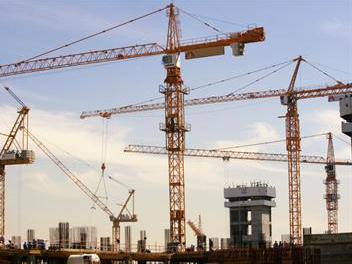
Tower Crane Boom Length

The new tower cranes feature new technologies that raise performance to a new height. Precise work with high-lift cranes depends on precision and speed, while lifting for general construction work demands reliable safety and a sufficient work area.

The versatile tower crane meets all of these requirements in one rugged unit. Its powerful lift booms can easily handle precise and continuous jobs, while the new hydraulic system, working in combination with a large drum capacity, offers ultra-smooth operation.

Of course, tower cranes are known for their productivity-boosting technical advancements, backed by extensive use in the construction machinery field.

How long is the boom on a tower crane?

The maximum reach distance of a tower crane is determined by the weight to be lifted, to calculate this distance, is the table of capacities of each crane. The boom length of each tower crane determines its maximum capacity.

Elevation range

Just as important as lift capacity is lift range. For that, a range diagram is usually included in each graph that illustrates how much boom length is needed to lift and lift a load both from distance and height.

Example: You need to lift a load 25 feet and lift it to the top of a five-story building. Referring to the reach diagram, 69 feet of boom are required to perform the lift.

Tower Crane Boom Length

The tower crane exemplifies this engineering excellence, offering dependable durability, excellent lifting performance, economical transport, smooth control functions, and a wide range of safety features.

In short, it can handle all types of crane jobs, ensuring maximum customer satisfaction.

Designed for easy maintenance and reliable performance for excellent uptime, the Hammerhead Tower Crane Series provides excellent maneuverability and load moment precision.

Equipped with a comfortable ergonomic cab, high-performance load diagram, and built-in safety features, time-tested, reputable design quality and components are designed to deliver safe, reliable, and cost-effective performance over long hours of operation.

More on this story

Tower Crane Load chart

The lifting capacity of the crane depends on several factors. The limitation for lifting weight begins at the base of the tower crane. Each and every component of the crane affects the lifting capacity of the load.

How to Assemble a Self-erecting Tower Crane?

Assembling a self-erecting tower crane involves several steps, and it’s important to follow the manufacturer’s instructions and guidelines for the specific model you are working with. Here is a general guide on how to assemble a self-erecting tower crane:

This is a general overview, and the specific steps may vary based on the crane model. Always refer to the manufacturer’s documentation for precise instructions. Additionally, assembling a tower crane should be done by qualified personnel with proper training and experience.

  • Site Preparation:
    • Ensure the site is level and stable.
    • Set up the crane on a solid foundation, following the manufacturer’s recommendations.
  • Transport and Unloading:
    • Transport crane components to the site safely.
    • Unload components using appropriate equipment.
  • Base Installation:
    • Assemble the base section according to the manufacturer’s specifications.
    • Secure the base to the foundation.
  • Tower Erection:
    • Attach the tower sections vertically, following the assembly sequence specified by the manufacturer.
    • Use appropriate tools and equipment to secure the tower sections together.
    • Ensure that all bolts and connections are tightened to the specified torque.
  • Mast and Slewing Unit:
    • Install the mast and slewing unit on top of the tower.
    • Connect the slewing unit to the tower and secure it in place.
    • Ensure proper alignment and levelness.
  • Boom Assembly:
    • Assemble the boom sections according to the manufacturer’s guidelines.
    • Connect the boom to the slewing unit.
    • Install the counterweight as required.
  • Electrical and Control System:
    • Install the electrical components and control system according to the manufacturer’s instructions.
    • Connect power sources securely.
    • Test the control system to ensure proper functionality.
  • Testing and Commissioning:
    • Perform a pre-operational inspection of all components.
    • Conduct functional tests to ensure that all movements are smooth and controlled.
    • Verify the crane’s load capacity and safety features.
  • Operator Training:
    • Ensure that operators are trained and certified to operate the specific crane model.
    • Provide information on safety procedures and emergency protocols.
  • Documentation:
    • Keep comprehensive records of the assembly process, inspections, and tests.

Compact self-erecting tower crane

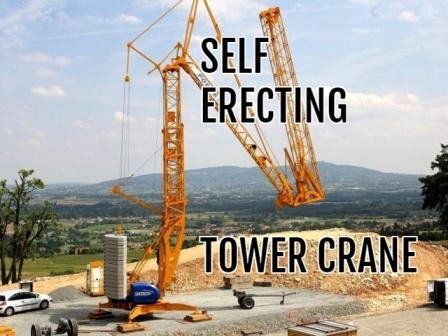
A self-erecting tower crane is compact, easy to erect and operate, and has several transport options. Wireless remote controls, quiet and efficient electric motors, state-of-the-art variable frequency motor drives, and overload protection systems are standard.

Contractors in the US cut the construction time of new homes by three weeks by using one self-erecting crane that could reach the entire job site.

By erecting a crane with a footprint of just 15 sqft between both builds which could lift most materials and reach the whole site with 80 ft of jib radius, the contractor had no requirement for additional mobile cranes or forklifts.

The remote-controlled self-erecting tower crane helped in all stages of the building process by lifting and placing floor joists, wall segments, and roof trusses.

In construction, the self-erecting crane helps you stay ahead of schedule by two to three weeks.

It helps to save a lot of time because it is very fast and easy to operate. They use it to lay floors, walls, and roof trusses, among other tasks.

By placing self-erecting tower cranes between houses where multiple units are being built, contractors can increase construction efficiency by building two or more houses at the same time.

Using the crane is useful and easy. It works easily after you get it quickly.

With the remote control, you don’t have to sit on the lift. It just gives you a better idea of what you are doing at work because you can move around and see things for yourself.

Crane building itself

The Self-erect portable tower cranes represent a new type of technology, which is increasingly utilized in Europe to construct and service low to mid-rise buildings.

Despite the similar name, self-erecting tower cranes are not assembled or operated as traditional high-rise tower cranes. Self-erecting tower cranes are driven to the job site and can be set up in under an hour by unfolding in a controlled sequence.

Mobile Tower Crane

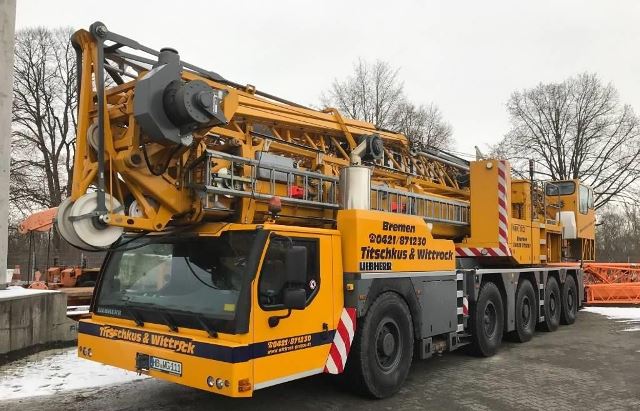
It is the combination of a self-propelled tower crane and a mobile crane, you can also add some sections. The use of these types of cranes in the construction of small heights and open spaces has already become very popular.

Small capacity models have generally been used. Today, however, there is a wide range that includes cranes with up to 130 tons of load capacity.

These cranes are easily portable as they can be shipped as compact units on a trailer, with their counterweights, even large capacity ones.

This type of crane has incorporated the possibility of climbing to achieve greater heights of use, so that to the advantages of a rapid movement from one place to another, the possibility of using them in higher constructions is added.

The development trends of these cranes have been aimed at achieving greater installation and assembly possibilities that can be summarized as follows:

  • Easily clear obstacles such as antennas, chimneys and adjacent buildings, using the crane by raising the boom at a 45º angle.
  • Reduce the radius of rotation of the base by modifying the design of the base and counterweights.
  • Allow the assembly of the booms to be carried out in increasingly reduced spaces by means of joints and folding of the same.
  • Reach higher heights through simple and fast ascent processes.

Mobile tower crane rental

Basic rental tower crane consists of the following specifications:

Specs
Load Capacity:132 tons
Maximum Load:10,000kg (up to 13.2m)
Tip Load:1,700kg
Max. Radius:60m
Lifting Height:35m (Under Hook)
Max. Lifting Height:64.2m (30° luffed jib)
Axles:6
mobile crane specifications
Mobile Tower Crane

More on this story

Self Erecting Crane

A self-erecting crane is compact, easy to erect and operate, and have several transport options. Wireless remote controls, quiet and efficient electric motors.