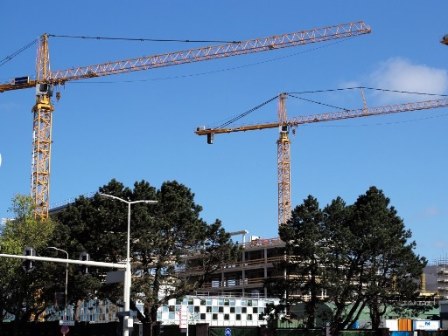
The skyline of any city will likely include at least a few tower cranes, which are among the largest pieces of equipment used in building projects.
Construction companies use tower cranes to lift heavy materials such as steel and concrete.
Large devices like acetylene torches, motors, and generators are also transported using tower cranes.
Since tower cranes are slender compared with high-rise buildings, their lifting capacity can be easily underestimated based on appearance.
How are cranes built?
How can the tower crane stand without tipping over?
How is it capable of lifting so much weight?
Does the crane become taller along with the building?
In this post, the basic principles of tower cranes and their functionality will be discussed.
One of the first questions someone looking at a tower crane may ask is how these structures stay upright. Several elements contribute to the tower crane’s stability.
How Are cranes built on skyscrapers?
Tower cranes are delivered to construction projects in parts, which are then assembled on-site.
Qualified installers assemble the jib and the machinery section, these horizontal elements are then positioned on the mast, which is only 40 feet tall initially.
Once this assembly is completed, the counterweights are placed by a mobile crane. The mast rises from the concrete pad, and it remains upright thanks to its triangulated structure.
To increase the crane height, the crew adds sections to the mast with a climbing frame:
A weight is hung on the jib to balance the counterweight. The slewing unit is detached from the top of the mast and hydraulic rams in the top climber push the slewing unit up 20 feet.
The crane operator uses the crane to lift another 20 ft mast section into the gap and then it is bolted in place.
These steps are repeated continuously until the desired height is achieved.
Once it is time to remove the tower crane from the construction site, the crane disassembles its own mast and smaller cranes are used to disassemble the rest.
Why Don’t Tower Cranes Fall Over?
This is mostly down to the concrete base, which is massive and needs to be poured weeks before the crane arrives. The triangulated cross-member structure of the mast gives it more stability and prevents bending. Plus, it’s anchored and bolted to the ground.
To lead in the purchase, sale, and distribution of tower cranes; It must have competitive advantages in the import and export of building materials, as well as complete sets of machinery and equipment, engineering, and project contracting.
The supply of construction machineries such as tower cranes, forklifts, suspended platforms, concrete formwork, road machinery such as excavators, pavers, backhoes, and spare parts for concrete pumps; packaging machinery such as cement paper bag machinery, shopping paper bag machinery, and industry-related machinery, also be the largest steel distributors.
Tower crane parts are one of the key products, and with the experience in producing mast sections, now we could provide the world with high-quality tower crane parts, including different types of mast section, anchor collar, and frame base for tower cranes of famous brands.
Intruder Alert Alarm System
Maintaining the safety of your crane is paramount to ensuring public safety and the smooth running of the project in question. A digital radio anti-climb detector system has been developed to complement the physical barrier systems on the market.
The system is based on Motorola’s highly durable telemetry platform and consists of two high-powered infrared beacons that are strategically mounted on the crane’s internal climbing tower, crossing to form an infrared array.
If an intruder climbs the crane without authorization, either internally or on the outside of the tower, the infrared array will break, automatically setting off an audible alarm for the radio system on the ground.
This radio will also receive an SMS, which is clearly visible on the radio screen and will indicate which crane has been breached.
A 10w loudspeaker is installed inside the crane tower, which will receive the voice transmission from the radio system on the ground, thus warning the intruder that it has been identified and that action has been taken. A simple upgrade will allow external text messaging, email alerts, and a recorded voice message, should external monitoring be required.
Ascent Deterrence Device
This device is a security measure designed to deter unauthorized climbers from the crane.
The hatch hatch located in the staircase denies any access through the stairway and the panels around the exterior of the tower section deny any access around the exterior.
Base Enclosure Ascent Deterrent
A security measure designed to deter unauthorized climbers or intruders around the base of the crane. Available at 3m or 4.5m in height with a lockable door system with key
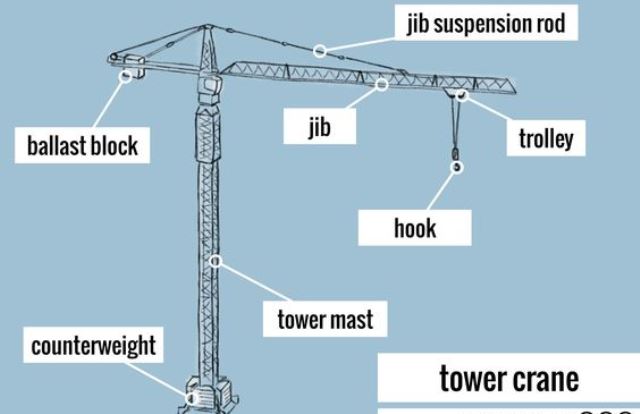
Components and main functions of a crane such as: the mast, the counterweight, the arrow, the cabin, the controls, lights or the anti-collision system.
A tower crane is a large piece of construction equipment used to lift and move heavy materials on construction sites. It consists of various parts that work together to perform specific functions. Here’s a brief overview of the main parts of a tower crane and their functions:
Mast (Tower): The vertical structure that supports the entire crane. It is attached to the building or a stable foundation and provides the height necessary for the crane to reach the required lifting height.
Slewing Unit: This is the rotating part of the crane, allowing it to turn and move horizontally. It sits on top of the mast and contains the motors and gears needed for rotation.
Jib: The horizontal arm of the crane that extends from the slewing unit. The jib is used to position the hook and lift the load. It can be fixed or luffing (able to move up and down).
Counter Jib: The counterweight at the opposite end of the jib, provides balance to the crane. It helps counteract the weight of the load being lifted and keeps the crane stable.
Counterweights: Additional weights are attached to the crane to maintain stability. They are strategically placed on the crane to balance the weight of the load and the crane’s structure.
Hoist Unit: The mechanism responsible for raising and lowering the load. It consists of a motor, brake, gear, and a drum on which the hoist rope is wound.
Hook Block: The assembly that includes the hook and the tackle. The hook is used to attach and lift the load, and the tackle multiplies the lifting force.
Hoist Rope: A strong cable or rope that is wound around the drum of the hoist unit. It is attached to the hook block and is used to lift and lower the load.
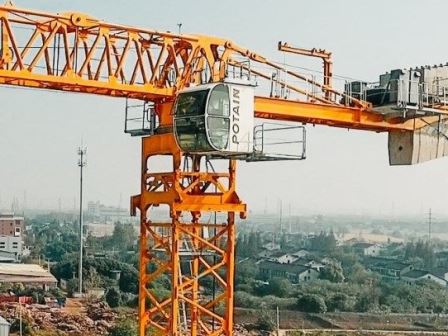
Cabin or Operator’s Cab: The control center where the crane operator sits. It provides a vantage point for the operator to oversee the construction site and operate the crane’s controls.
Base or Concrete Foundation: The structure that supports the entire crane. It is crucial for ensuring the stability and safety of the crane during operation.
Parts of a crane diagram
Understanding the parts of a tower crane is essential for both crane operators and construction personnel to ensure the safe and efficient use of the equipment on construction sites. Different types of tower cranes may have additional features or variations in their components, depending on the specific design and purpose of the crane.
Considerable effort and research are needed to determine the minimum signaling and lighting systems for tower cranes or the quality of materials that will produce an acceptable level of aviation safety.
The FAA will recommend only those signaling and lighting systems that meet established technical standards.
While additional lights may be desirable to identify an obstruction to air navigation, and sometimes more than one may be recommended, the FAA will recommend minimum standards in the interest of safety.
Therefore, to provide an adequate level of safety, obstruction lighting systems should be installed, operated, and maintained in accordance with the recommended standards herein.
Crane Lighting Regulations
Structures to be Marked and Lighted.
Any temporary or permanent structure, including all appurtenances, that exceeds an overall height of 200 feet (61m) above ground level (AGL) or exceeds any obstruction standard, should be marked or lighted.
The absence of signage or lighting impairs aviation safety, the object may present such extraordinary hazard potential that higher standards for increased visibility may be recommended to ensure aviation safety.
In general, commercial outside lighting should not be used in lieu of FAA-recommended marking or lighting.
Recommendations on marking or lighting structures can vary, depending on terrain features, weather patterns, geographic location, and in the case of wind turbines, the number of structures and overall design layout.
The FAA may also recommend marking or lighting a structure that does not exceed 200 (61m) feet standards because of its particular location.
Guidelines for Crane Obstruction Lights
Since there is such a variance in cranes, each case should be assessed individually.
Cranes segment is enormous: from floating cranes to mobile cranes, to tower cranes, to telescopic cranes, to self-erecting cranes, to level luffing cranes, to deck cranes, to jib cranes, to loader cranes, to stacker cranes.
There is no single standard defining minimum mandatory requirements governing the design and installation of obstruction lighting.
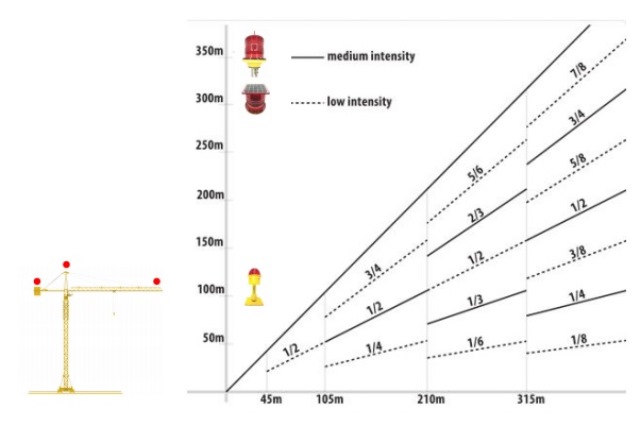
Most important points to night marking cranes lights and their arrangement on the crane shall be such that the structure is indicated from every angle in azimuth; the number of lights to be installed at the top and at each level depends on the type of crane; the number of light levels depends on the height of the structure.
Lighting Levels
Number and types of lighting levels (structure height)
Hight
Lighting Levels
H < 45m
1 level of low-intensity obstruction lights shall be used
45m < H < 105m
2 levels of obstruction lights shall be used: top level with medium intensity, intermediate with low intensity
105m < H < 210m
4 levels shall be used: top with medium intensity, 1st intermediate with low intensity, 2nd intermediate with medium intensity, lower level with low intensity
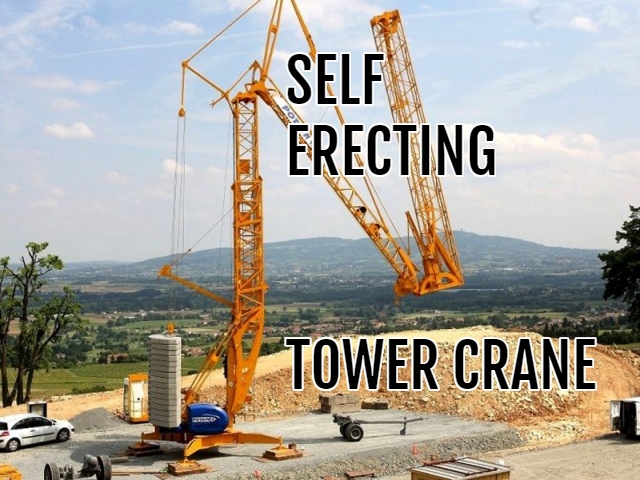
A self-erecting tower crane is compact, easy to erect and operate, and has several transport options. Wireless remote controls, quiet and efficient electric motors, state-of-the-art variable frequency motor drives, and overload protection systems are standard.
Self Erecting Tower Crane
Self-erect portable tower cranes
The Self-erect portable tower cranes represent a new type of technology, which is increasingly utilized in Europe to construct and service low to mid-rise buildings.
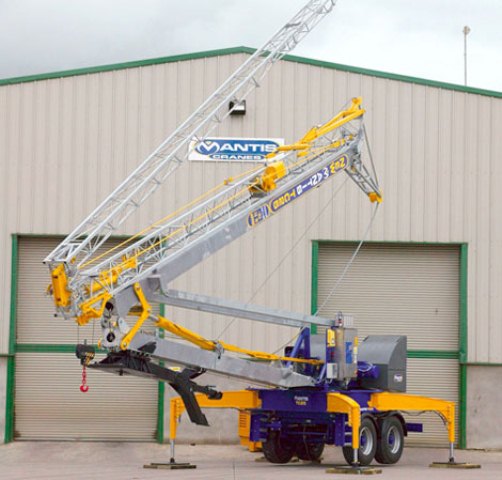
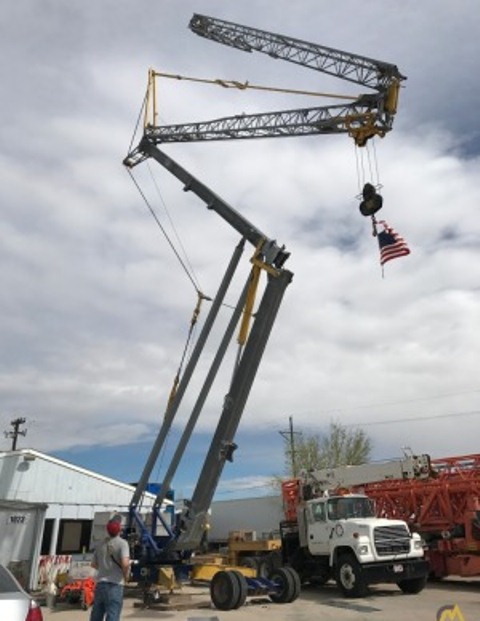
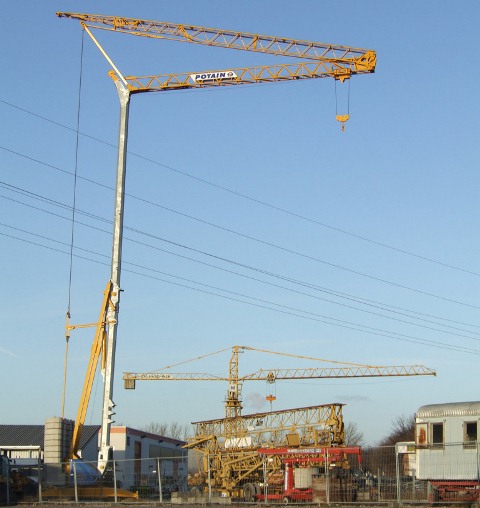
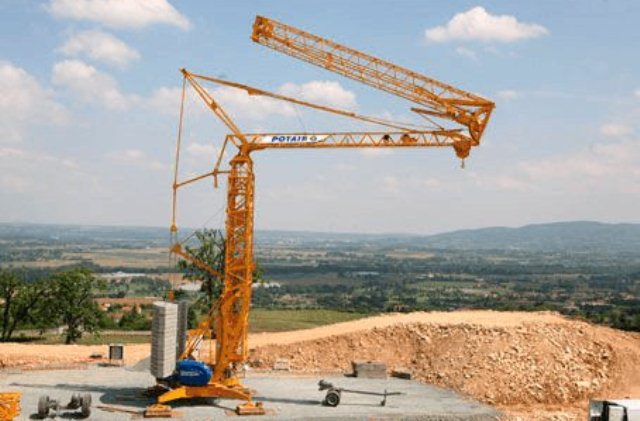
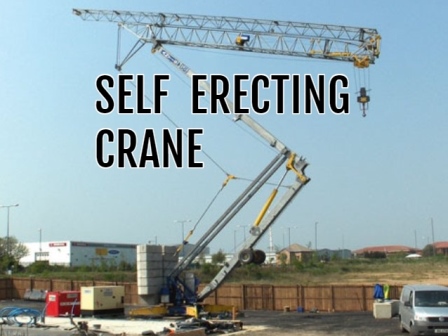
Despite the similar name, self-erecting tower cranes are not assembled or operated as traditional high-rise tower cranes. Self-erecting tower cranes are driven to the Jobsite and can be set up in under an hour by unfolding in a controlled sequence.
They provide good reach and lifting capacity while having a small footprint, making them suited to operating within tight spaces.
The current crane regulations do not address self-erecting tower cranes. It is recommended that develop a regulatory and licensing system specific to self-erecting tower cranes. This will enable the industry to utilize the flexibility and efficiencies offered by self-erecting tower cranes while ensuring safe operation.
Self erecting tower crane specifications
Benefits of using a Self Erecting Tower Crane: (SETC)
Self Erecting Tower Cranes (SETCs) are all operated by radio remote control, allowing the Crane Operator the flexibility to move with his load and deliver it exactly to where it is required.
SETC will improve productivity by delivering the material exactly to point of use thus reducing additional labor costs.
SETC occupies a small footprint and could service your site from the one location, giving you more storage space for materials.
SETC can reduce the requirement for vehicle movements on-site and also reduce the amount of material handling on-site, thus increasing site safety whilst saving you money.
Self Erecting Tower Crane
Mobile Tower Crane
Tower cranes are mounted on a mast and fixed in place. They are divided into two general categories:
Luffing boom: A tower crane with a boom that can be raised or lowered
Hammerhead: A tower crane with a horizontal boom equipped with a trolley that can traverse the boom.
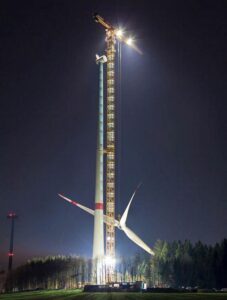
A hammerhead tower crane as the building under construction rises, new mast sections can be added to the tower crane to increase its height, a process known as jumping. A jump can take up to a day.
Separate from the traditional types of tower cranes described above, manufacturers are introducing new technology, the self-erecting tower crane.
Despite the similar name, self-erecting tower crane is not assembled or operated as a traditional high-rise tower crane.
Self-erecting tower cranes are driven to the Jobsite and can be set up in a short amount of time by unfolding in a controlled sequence. They provide good reach and lifting capacity while having a small footprint, making them suited to operating within tight spaces. Unlike traditional tower cranes, currently available models of self-erecting tower cranes are limited in height and cannot be jumped to a newer height.
Self-erecting tower cranes are not common in the United States but are increasingly utilized in Europe to construct and service low to mid-rise buildings.
Self Erecting Tower Crane
Self erecting mobile tower cranes
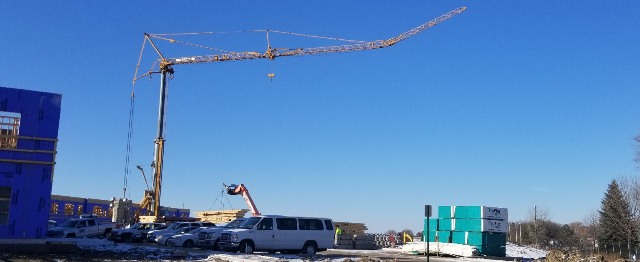
Self-erecting tower cranes (SETCs) have become increasingly popular on small construction sites where the size of the project does not justify the installation of a conventional top slew tower crane. The management of the installation and use of self-erecting tower cranes follows exactly the same principles as top slew tower cranes.
The details, however, vary between the two generic types and the purpose of this Best Practice Guide is to provide guidance on the safe siting, erection, use, maintenance, thorough examination, and dismantling of SETCs, together with the management and planning of these activities.
Self Erecting Tower Crane
Self erecting tower
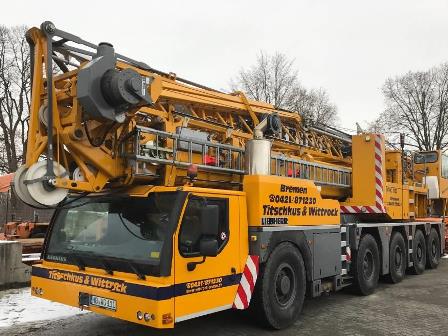
In addition to Self-erecting tower cranes -SETCs- that are towed or transported to the site on a vehicle, truck-mounted tower cranes have become popular in the UK over the past few years. These cranes, which have many of the attributes of the self-erecting tower crane, are permanently mounted on a mobile crane carrier chassis and in operational requirements fall between SETCs and conventional mobile cranes. This Best Practice Guide does not address many aspects of truck-mounted tower crane operation.
This distinct type of crane will be covered by a future Best Practice Guide SETCs are sometimes referred to as “pedestrian operated tower cranes”. This may not always be correct, as although the majority of SETCs are operated with the operator standing on the ground adjacent to the crane using remote controls, some are provided with cabs at a high level or operating stations at the base. It is also possible for some conventional top-slew tower cranes to be operated by remote controls at ground level.
Erecting a tower crane
The crane supplier/manufacturer will be able to advise on the maximum in-service and out-of-service wind conditions for the specific model of a crane to be used.
The out-of-service wind loadings will often be much greater than the in-service loads and the load-bearing capability of the ground (foundation) must be sufficient for the extra imposed loads due to the out-of-service wind. Where the SETC is to be taken down when high winds are anticipated, the operator must be made aware of any wind speed restrictions for dismantling.
There have been a number of accidents where the ground conditions were not suitable for the out-of-service loadings or SETC have been dismantled at wind speeds in excess of the manufacturer’s maximum recommended speeds.
SETC’s should be left in free slew when out of service to allow the crane to “weathervane”, to ensure that the out-of-service foundation loads are not exceeded.
The Approved Code of Practice to LOLER says that “Where lifting equipment, and/or its load, may be affected by the high wind the equipment should be fitted with appropriate devices so as to detect dangerous situations and allow measures to be taken to cease using the equipment”. Consequently, all SETCs should be fitted with an anemometer (many new cranes are now supplied with an anemometer as a standard fitting). A record of wind speed monitoring should be kept and electronic wind recording systems are now available for this task.
All operating personnel should be aware of wind speed action levels for the particular crane in use. It is important to note that the maximum wind speed at which the jib of an SETC can be safely folded back is often lower than the maximum in-service wind speed. Ignoring this has led to a number of accidents.
Self Erecting Tower Crane
Self erecting crane hire
The area in which a self-erecting tower crane -SETC- is to be sited must be carefully assessed to ensure that it is suitable before the crane is taken to the site and put into service. During this assessment, the following points should be considered.
Tower crane clearance requirements
The area chosen must be of sufficient size to enable the SETC to be maneuvered into position, set up, operated, and dismantled, with sufficient clearances between the crane and surrounding structures, as detailed in the manufacture’s operation and instruction manual. This is to ensure that trapping points are not created and that damage does not occur to either the crane or the surrounding structures (including the building under construction).
Tower crane installation
Insufficient consideration and assessment of ground conditions have been found to be a major cause of accidents with self-erecting tower crane -SETC-.
All SETCs rely for their stability on the ability of the ground on which they are standing to safely absorb the loads imposed by the crane. Most SETC manufacturers supply information on the loads imposed by the crane on the ground in the various operating and set-up configurations of the crane.
These generally consist of :
Maximum vertical load per stabilizer
Maximum horizontal reactions
Dimensions of the stabilizer support plate (pad)
Ground-level pressure under the stabilizer support plate
Self Erecting Tower Crane
Ground conditions in the construction
An assessment of the ability of the ground to accept these loads should be made by a competent person.
This assessment may indicate that the ground has the insufficient bearing capacity to accept the loads imposed by the crane, in which case additional measures will need to be taken before the crane can be set up. These may include using timber sleepers, proprietary mats or concrete pads to spread the applied load to an acceptable bearing pressure.
In extreme circumstances, piled foundations may be required. Wherever a concrete pad, steel grillage or piled foundation is constructed to accept the loads from an SETC, the contractor constructing the foundation should complete a foundation completion form to certify that the foundation has been correctly designed and constructed before the erection of the crane starts.
Where timber is to be used it is important that the timber sections employed are of sufficient dimensions and strength to transmit the applied loads to the ground and that the timbers are pinned together to form a grillage. The use of individual loose timbers has been found to be a major cause of accidents.
When siting the crane, consideration should be given to the length of time that the crane will be erected in one position and the likely deterioration of the supporting ground or foundation over time (e.g. timber rotting, undermining by water or frost, drying out, adjacent excavations).
Tower cranes and trespass to airspace
If the siting of the crane will result in oversailing of an adjacent property, not in control of the Principal Contractor, oversailing rights must be obtained in advance by the Principal Contractor (hirer).
Consideration needs to be given to inadvertent oversailing whilst the crane is left, when not in use, in free slew. Should the crane need to be guyed, tethered, or the slew locked, when out of service this must be considered at the initial planning stage and foundation loads for the specific configuration obtained from the manufacturer.
This information must be provided to the hirer and included in both the erection and use method statements. Cranes should not be left in a part erected condition overnight ( i.e. jib partially folded back) unless allowed for in the manufacturer’s manual or without prior written approval from the crane manufacturer.
Tower crane air rights
A self-erecting tower crane was erected on a site adjacent to a row of occupied houses. Over the first weekend, the occupants of the houses became alarmed when the crane, which had been left in free slew, moved over their houses. Their concern was heightened by the presence of a generator slung from the hook. A complaint to the Health and Safety Executive resulted in a prohibition notice being served on the construction company.
Where the crane’s jib and/or mast is to be folded to avoid oversailing when out of service the operator must be competent to carry out this procedure. The maintenance schedule for the crane will need to be adjusted accordingly.
What is a self erecting tower crane?
What is a self-erecting tower crane?
A Self Erecting Tower Crane (SETC) is a Tower Crane that can be easily inserted on a site with restricted space in a short period of time. These cranes operate from a fixed position and must be safely placed on-site by qualified field engineers familiar with the mechanisms that they are using.
Who invented the self-erecting tower crane?
Hans Liebherr helped develop the mobile tower crane in the late 1940s with the help of a team of design engineers. They invented the very first mobile tower crane, which was, as its name would suggest, a crane that construction companies could move around while still enjoying the benefits of the tower crane.
What is tower crane safety?
Tower cranes are widely used for lifting operations in the construction industry. Statistics show that tower cranes contribute to quite a number of serious accidents. Property damage and bodily injuries can be avoided if they are properly used.
What is Crane checklist?
This crane safety checklist covers: -Checking and inspecting the area of operation -Checking for visible damages including wire ropes, crane hook, outriggers. etc. -Checking the machine condition such as control, brakes, warning signs and more -Checking for adequate housekeeping and other machinery house inspection
Tall structures like large buildings and towers aren’t built in a single week or month. It takes a huge amount of effort and time in order to build one.
When these kinds of structures are being constructed, the need for temporary cranes arises, as they are really a great help in speeding up the building process.
So the topic points to the main purpose of the cranes and also the safety lights that are used.
We will briefly discuss the need for crane safety lights and also the specific type of lights that are used for them.
Tower Crane Lights
Tower crane lighting requirements
A crane is a type of machine that uses one or more simple machines to create a mechanical advantage and move heavy loads. It is mainly used for lifting and lowering construction materials and transporting them from one place to another.
Construction of large infrastructures and buildings requires a lot of materials to be used, and most of them are so heavy that transporting them from one place to another requires a lot of time.
In this case, the use of cranes speeds up the transporting and lifting process in which manpower alone would not suffice. Tower cranes are one of the types of cranes that offer the best combination of height and lifting capacity and are mainly used in the construction of tall buildings.
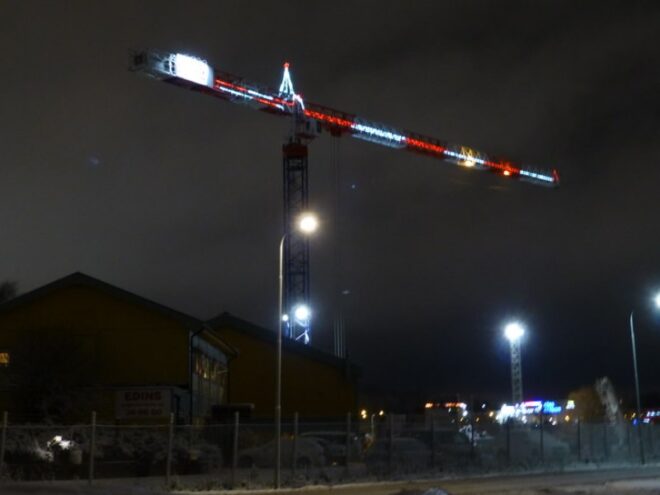
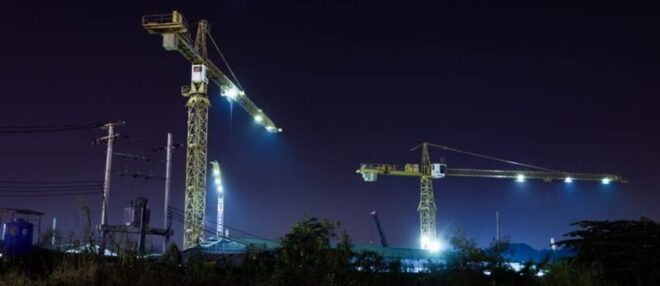
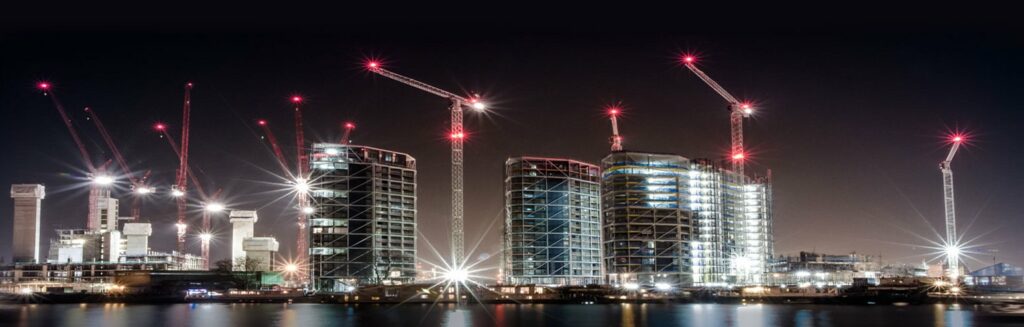
As with any tall structure, the presence of a single or a number of cranes has the potential to cause an accident and be an air navigation obstacle. As a solution to this potential danger, cranes are installed with obstruction lights for increased conspicuity, especially for nighttime operations.
Tower Crane Lights
Aviation light for tower crane
According to Federal Aviation Administration (FAA) and International Civil Aviation Organization (ICAO) tower lighting requirements, all structures exceeding 200 feet above ground level (AGL) must be appropriately marked with tower lights or tower painting. In addition, the Federal Communications Commission governs monitoring requirements.
Tower crane aviation lights
Tower cranes with a height of less than 150m may require obstruction lighting only if they are considered a significant navigational hazard. However, if a tower crane’s height is 150m or more and is not near an aerodrome, CAA (Civil Aviation Authority) requires the use of obstruction lights.
Tower crane aviation lights
Steady Red Lights
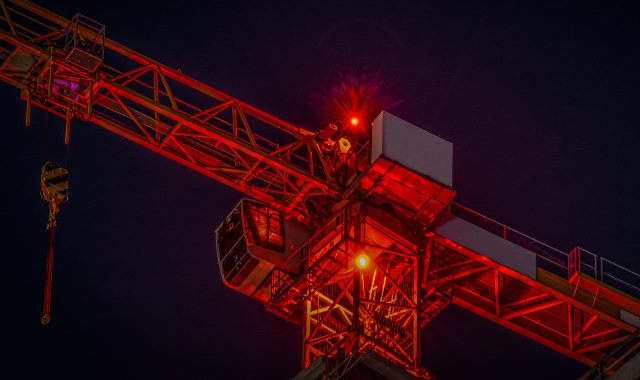
Medium Intensity Steady Red Lights (for cranes with a height of 150m and above) – This type of obstruction light is usually mounted or positioned as close as possible on the top of the crane at an intermediate level not exceeding 52 meters, and has a luminous intensity of 2000 candela. These obstruction lights are lit at night (Night is defined for civil aviation purposes as the time from half an hour after sunset until half an hour before sunrise).
Medium Intensity Steady Red Lights
Medium Intensity Steady Red Lights (for cranes between 90m to 150m high) – Cranes that are between 90 meters and 150 meters high are also equipped with medium intensity steady red lights that are positioned at the highest point and both ends of the crane jib. The lighting will be an indication of the crane’s height and as well as the radius of the crane jib. These obstruction lights are also displayed at night and are positioned to a place where it can be visible from all directions.
Low Intensity Steady Red Lights
Low-Intensity Steady Red Lights – Cranes that are 60 meters to 90 meters high are installed with low intensity steady red lights with a minimum luminous intensity of 32 candelas. They are positioned as close as possible to the highest point. And for tower cranes, they are positioned to the top of the fixed structure so that when displayed especially at night, it will be visible from all directions.
Crane warning light
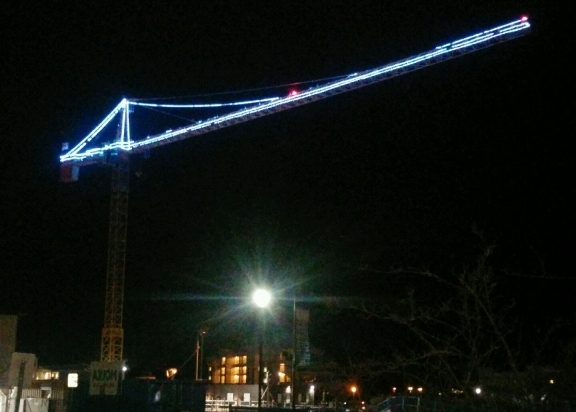
These obstruction lights are typically xenon based lamps because of its outstanding brightness which are very suitable for increased conspicuity at night compared to the other types of lamps. But there are some who prefer using LED to reduce power consumption and ensure longer operating life which reduces maintenance cost.
Cranes are one of the most essential things in the field of construction today. Imagine how long would it take for a building to be finished without this. Without the help of cranes, perhaps it may take several years and unexpected accidents may also happen. And to conclude, it seems this type of machine is truly a masterpiece.
Tower Crane Lights
Crane safety light
Since there is such a variance in Cranes, each case should be assessed individually.
Cranes segment is enormous: from floating cranes to mobile cranes, to tower cranes, to telescopic cranes, to self-erecting cranes, to level luffing cranes, to deck cranes, to jib cranes, to loader cranes, to stacker cranes.
There is no single standard defining minimum mandatory requirements governing design and installation of obstruction lighting; on the other hand, the most common and widespread regulations are ICAO’s and FAA’s.
Most important points to night marking cranes
Lights and their arrangement on the crane shall be such that the structure is indicated from every angle in azimuth.
the number of lights to be installed at the top and at each level depends on the type of crane.
the number of light levels depends on the height of the structure.
Number and types of lighting levels (structure height)
H=height
Number and types of lighting
h < 45 m
1 level of low-intensity obstruction lights shall be used
45m < H < 105m
2 levels of obstruction lights shall be used: -top-level with medium intensity. -intermediate with low intensity.
105m < H < 210m
4 levels shall be used: -top with medium intensity. -1st intermediate with low intensity. -2nd intermediate with medium intensity -lower level with low intensity.
Led strobe warning lights
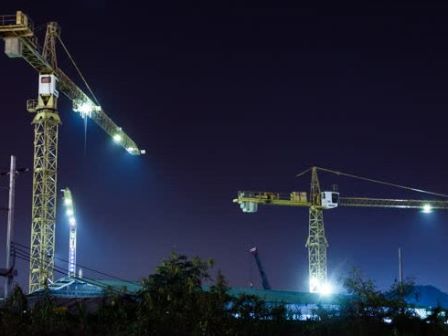
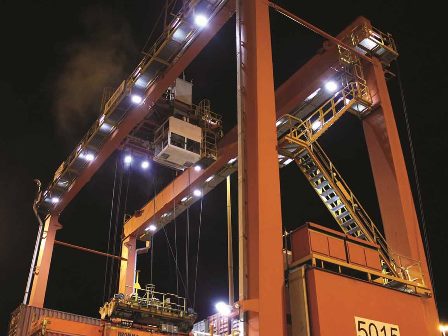
Searchlights for tower cranes example: illuminate the working area under the tower crane.
LED Crane Lighting fixtures must be mounted in the 70-meter jib, located at a height of about 85 meters from the ground.
Halogen spotlights were previously used for this purpose but lately LED floodlights have been proven as ideal crane lights.
A 300 Watt floodlight, and sometimes a 1000 watt led flood light for the crane (depending on the projects), achieve easily the minimum ground lux requirements.
Solution: replace halogen counterparts and achieve regulatory illumination using LED spotlights at 400 watts power. Naturally, this light will have to be propelled, in order to reach the ground. Using primary and secondary optics in the form of lenses with a corresponding degree will focus and aim the light flux in the right direction.
Outcome: accomplish an installation with a uniform light without glare, achieve a surface illumination of 10 to 20 lux, which is above standard, reduce power consumption by 70%.
Advantages of led lights
Other Advantages of LED Crane Lighting for Mounting on Tower Cranes include:
High luminous efficiency: with 150 lm/W;
High efficiency, reaching 96-98%;
Protection from surges and overloads in the mains voltage, and high temperature;
A minimum ripple of light, which does not exceed 1%;
Working life: more than 80,000 hours;
Protection against high voltage surge.
Tower Crane Lights
Why do cranes have lights?
Why do cranes have lights?
When high-rise structures are being constructed temporary cranes are erected which quickly poses a hazard to airborne traffic. Low maintenance lights are ideal for various types of cranes where obstruction lighting has been specified.
How tall does a tower have to be to have a light?
Broadcasters and tower companies have long relied on FAA rules that generally don’t require the lighting of towers under 200 feet in height except when these shorter towers may interfere with the flight path of an airport.
Why do tall buildings have red lights on top?
They have a red light to avoid a collision from an airplane and helicopter, putting a red light pilot gets a notification that there is some object. This is called aviation light or Aircraft warning lights.
Why are antenna towers painted red and white?
It makes them easier to see by aircraft, red and white make a good contrast. It’s also why they have blinking lights on them, to make them visible at night or in fog. Towers are painted in orange and white in some sections.
How tall can a tower be without lights?
Any structure taller than 200 feet is subject to FAA lighting requirements. Structures that are shorter than this height may also require lighting, depending on the structure’s location.
Radio remote controls are now standard equipment on most self-erecting tower cranes and are even becoming common in some parts of Europe for a flat-top tower crane.
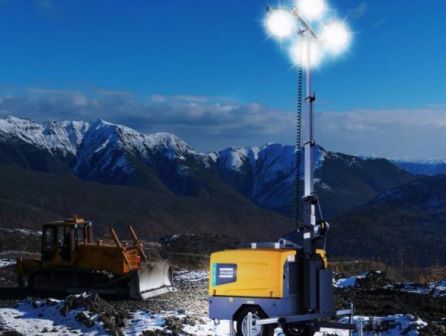
Light tower with a generator is made with the components of generator sets, lights, masts, trailers, and canopy. It is designed for working outside in wind speeds up to designed specifications and is rainproof.