In a professional kitchen, maintaining your kitchen tools and equipment is an essential part of your routine. You keep your knives sharp and your food surfaces clean.
Another key element is the calibration of your food thermometers.
Using an inaccurate or poorly calibrated thermometer presents a food quality problem and, more importantly, a food safety threat.
What we ask ourselves is: How Frequently should a Thermometer be Calibrated for accuracy?
The exact calibration schedule depends on the type of thermometer you use and how you use it. The following are some guidelines on when you should recalibrate your thermometers.
In general, you should calibrate bimetal thermometers before every single shift.
Calibrate digital thermometers every week or month.
Always calibrate new thermometers or a thermometer that has been dropped.
It’s also a good idea to calibrate a thermometer after using it to measure significantly different temperatures.
For best results, follow the manufacturer’s instructions.
How to calibrate a thermometer?
To calibrate a thermometer, you must first test its accuracy on a substance with a known temperature. It will then adjust the thermometer to match that temperature.
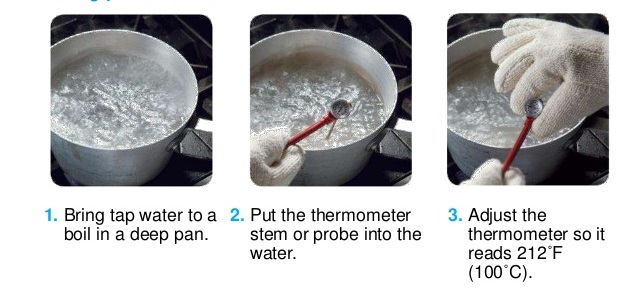
There are two common methods for calibrating thermometers in food service: the boiling point method and the freezing point method.
Now more than ever it’s important to learn how to calibrate a thermometer. Since we’re not all so lucky to own the world’s best and most accurate thermometer.
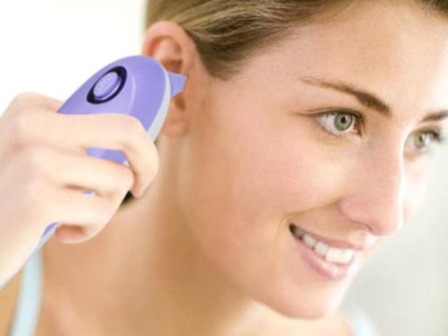
A digital thermometer should always return accurate readings. Whether you use it for measuring body temperature, atmospheric temperature, or any other relevant use.
The temperature range at which disease causing bacteria grow best in time/temperature control for safety food (TCS) is called the temperature danger zone.
Temperature danger zone is between 41°F and 135°F:
TCS food must pass through the temperature danger zone as quickly as possible.
Keep hot food hot and cold food cold. Always use a thermometer to check food temperatures
Best way to reheat food
When reheating leftovers, be sure they reach 165° F as measured with a food thermometer. Reheat sauces, soups and gravies by bringing them to a rolling boil. Cover leftovers to reheat. This retains moisture and ensures that food will heat all the way through.
Food made in-house and reheated for hot holding must reach an internal temperature of at least 165°F for 15 seconds.
Food made in a food processing plant, opened in the food establishment, and reheated for hot holding must reach a temperature of 135°F.
Food that has been cooked and cooled properly may be served at any temperature if it is going to be served immediately.
Food safety reheating guidelines
To what minimum temperature should food that is cooked cooled and reheated for hot holding?
Potentially hazardous foods support the rapid growth of disease-causing bacteria when these foods are kept in the danger zone. Examples of potentially hazardous foods include beef, poultry, pork, shellfish, dairy products, eggs, cut melons, and high-protein foods such as beans, rice, and noodles, as well as cooked vegetables and garlic in oil.
Reheating food temperature celsius
Controlling food temperatures during preparation prevents the growth of disease-causing microbes in potentially hazardous foods.
The range between 41 and 135º F is called the Danger Zone because bacteria can grow rapidly in this temperature range.
A digital thermometer should always return accurate readings. Whether you use it for measuring body temperature, atmospheric temperature, or any other relevant use.
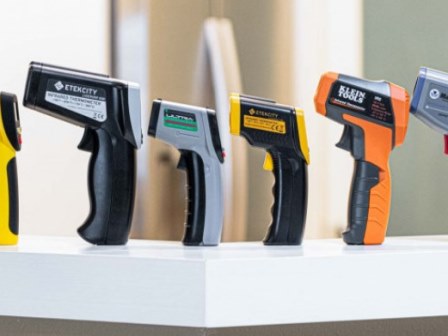
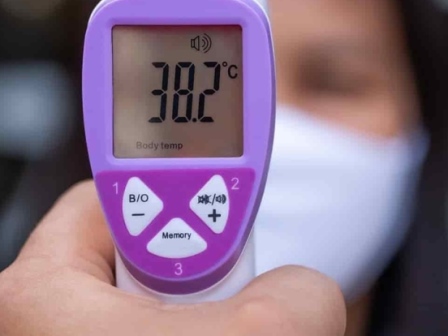
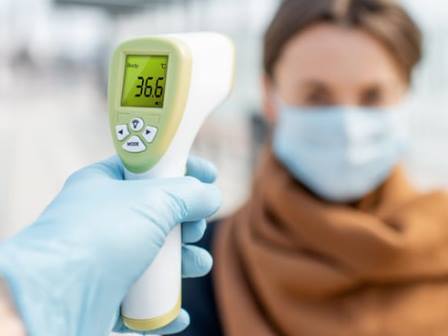
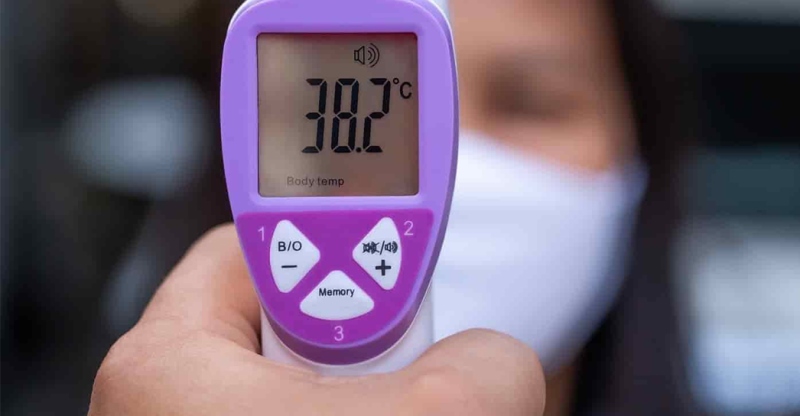
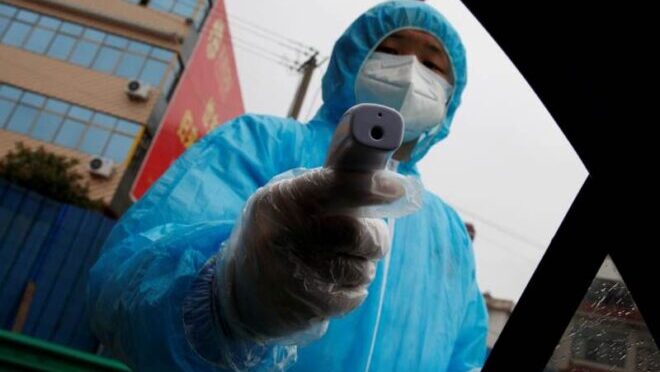
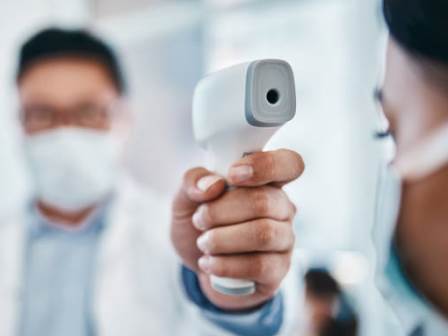
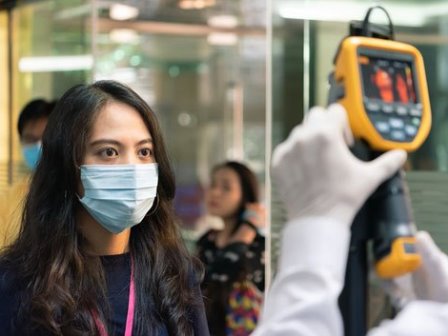
An Infrared Thermometer is a handheld device that can display a temperature readout on it after scanning portions of an object or area with the built-in laser.
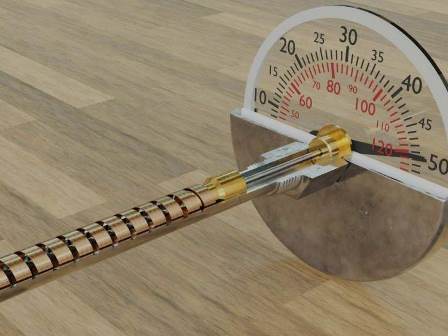
Bi-metallic stemmed thermometers: The bi-metallic stemmed thermometer is the most common type of foodservice thermometer. It measures temperature through a metal stem with a sensor in the lower end. The sensing area is from the tip to a half-inch past the dimple. The temperature is read on the dial face.
When selecting this type, look for an adjustable calibration nut, easy-to-read temperature markings, and a dimple marking the end of the sensing area. These should not be left in food that is cooking in an oven or a microwave, or on a stovetop.
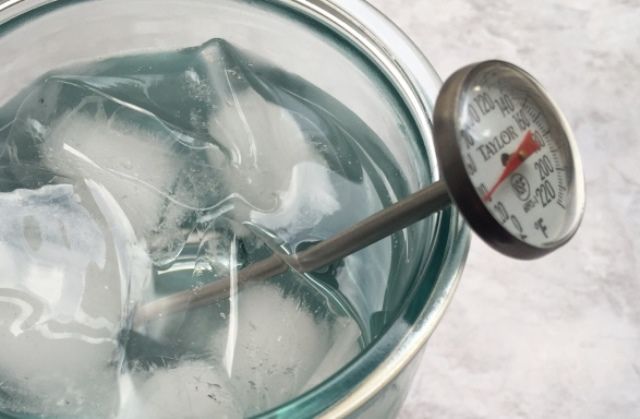
Bimetallic stemmed thermometers are calibrated using the ice-point method.
Calibrate on a regular basis and after using the thermometer with very hot or very cold foods, or after dropping or jarring it.
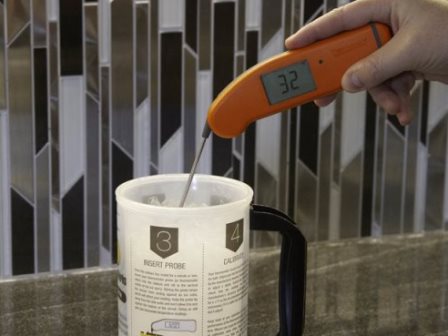
In a clean styrofoam cup, make an ice water slush by filling the cup halfway with ice cubes and the rest with water.
Stick the sensing tip of the thermometer into the cup being sure not to touch the sides or bottom of the cup.
Wait four or five minutes or until the needle is steady. If the needle does not read 32 degrees F (0 degrees C) then turn the nut under the dial until it does.
Clean and sanitize the thermometer and its case before the next use.
What is the most accurate method for calibrating bimetallic Thermometers?
Calibrate bimetallic thermometer
Temperature is a critical measurement for ensuring the safety and quality of many products. There are a variety of commercial temperature monitoring devices available.
Whether monitoring temperatures at receiving, throughout production, or final product storage and distribution, thermometer calibration is essential.
The validation, verification reassessment section of the Hazard Analysis and Critical Control Point system stated in the Code of Federal Regulations specifies that instruments used for monitoring critical control points must be calibrated.
How do you calibrate a bimetallic stemmed thermometer
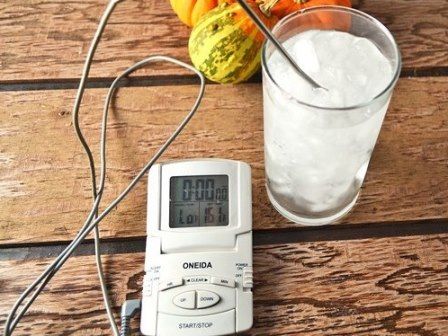
Fill a large container with ice
Add clean tap water until the container is full. Stir the mixture well.
Put the thermometer stem or probe into the ice water
Make sure the sensing area is underwater and not touching the sides of the container. Wait 30 seconds or until the reading stays steady.
Adjust the thermometer so it reads 32°f (0°c)
Hold the calibration nut securely with a wrench or other tool and rotate the head of the thermometer until it reads 32°F (0°C).
How to calibrate a bimetallic thermometer?
How to calibrate a bimetallic thermometer?
Bimetallic thermometers are calibrated using the ice-point method. Calibrate on a regular basis and after using the thermometer with very hot or very cold foods, or after dropping or jarring it.
What is the most accurate method of calibrating bimetallic thermometers?
Periodically, all thermometers must be calibrated or adjusted to accurately measure temperature. Here’s how to do it: Check the accuracy of thermocouples and digital thermometers regularly using the ice point method described above. If the reading is incorrect, try a new battery. If that doesn’t correct the problem, have the thermometer checked.
How to calibrate a bimetallic stemmed thermometer?
If you ever drop a bimetallic stemmed thermometer, you need to calibrate it. If a thermometer goes through a wide variety of temperatures (from freezing temperatures to boiling temperatures), it also needs to be calibrated more frequently. Every time you invest in a new thermometer, calibrate it before use, follow the steps above.
Now more than ever it’s important to learn how to calibrate a thermometer. Since we’re not all so lucky to own the world’s best and most accurate thermometer.
A digital thermometer should always return accurate readings. Whether you use it for measuring body temperature, atmospheric temperature, or any other relevant use.
A digital infrared thermometer should always return accurate readings.
Whether you use it for cooking, to measure body temperature, atmospheric temperature, or any other relevant use, a thermometer should always be made to ensure the correct temperature.
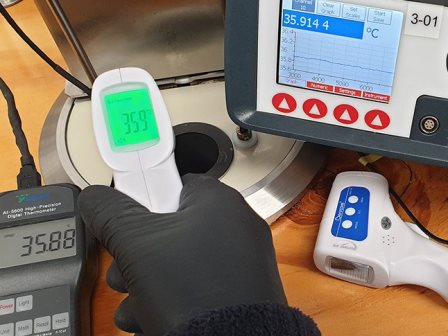
From time to time, digital infrared thermometers will require recalibration. It is, thankfully, a very simple task.
Reset digital thermometer: Some digital thermometers do not require any adjustment of the screw or nut. You simply need to find the reset button.
If the infrared thermometer does not work, you simply need to reset the medical device.
“Er” will appear on the display when the unit needs to be restarted. To reset the unit, remove the batteries, wait a few minutes, and then reinstall the batteries.
Check the following article for complete instructions on how to do it:
A digital infrared thermometer should always return accurate readings. Whether you use it for cooking, for measuring body temperature, atmospheric temperature, or any other relevant use, a thermometer should always be made to provide the correct temperature.
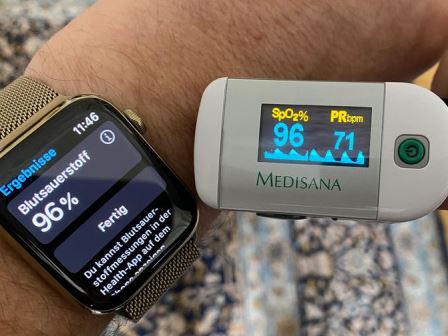
Fluctuations in SpO2 readings are common, but what matters is whether they are associated with:
Any known lung disease or
Any symptoms experienced by the patient.
For example: shortness of breath, chest pain, dry cough, etc.
In the absence of any of the above, a fluctuating oxygen saturation level between 92 and 97 should not be a cause for alarm, as long as it does not drop below 88 to 90%.
An SpO2 reading below 90 is generally indicative of chronic obstructive pulmonary disease and you should seek immediate medical help.
If you wonder why these fluctuations occur, it is mainly due to changes during physical activity, rest, after sleeping, etc. Although the flow, or volume of blood in our arteries remains more or less constant, the difference in the pulsations can cause slightly fluctuating readings.
What is oxygen saturation?
SpO2, also known as oxygen saturation, is a measure of the amount of hemoglobin that carries oxygen in the blood relative to the amount of hemoglobin that does not carry oxygen.
Oxygen saturation is the fraction of oxygen saturated hemoglobin in relation to total hemoglobin (unsaturated + saturated) in the blood. The human body requires and regulates a very precise and specific balance of oxygen in the blood.
Who needs to monitor their SpO2 level?
In addition to patients with respiratory problems, patients with cardiovascular problems, there is a group of people who should be attentive to their blood oxygen level:
People who snore
Snoring can cause continuous or transient disturbance of breathing and insufficient oxygen inhalation, resulting in poor quality of sleep and even damage to internal organs.
White collar workers
Highly stressed workers consume more oxygen than normal. And if the brain is regularly starved of oxygen, it can cause memory loss, drowsiness, lack of strength, and drowsiness.
High endurance athletes
Endurance, speed, and efficiency are important goals for any athlete, and maintaining an effective oxygen range can dramatically improve overall performance and help develop these components.
Outdoor activities in heights.
As the oxygen level is relatively low on the plateau, those who like outdoor activities, especially hiking and mountaineering, should always pay attention to their SpO2 level to avoid altitude sickness.
How to check oxygen level at home?
This shows that the fluctuation of the oximeter always reflects the health of our body. However, is there a more convenient device compared to single function, heavy pulse oximetry?
Also, how can we accurately measure the level of oxygen saturation in the blood in our daily life?
How does an infrared thermometer work? An Infrared Thermometer is a handheld device that can display temperature readout on it after scanning portions of an object or area with the built-in laser.
Infrared thermometers are used to measure, surface temperature up to 1500 ºC.
The main use of the infrared thermometer is to read a particular spot on a surface of the human body, food, machinery, or equipment that emits heat.
Infrared Thermometer how it works?
How does an infrared thermometer work?
An infrared thermometer is a non-contact temperature measurement device. Infrared Thermometers detect the infrared energy emitted by all materials, at temperatures above absolute zero, (0°Kelvin)– and convert the energy factor into a temperature reading.
The most basic design consists of a lens to focus the infrared (IR) energy onto a detector, which converts the energy to an electrical signal that can be displayed in units of temperature after being compensated for ambient temperature variation.
How infrared thermometer works?
This configuration facilitates temperature measurement from a distance without contact with the object to be measured. As such, the infrared thermometer is useful for measuring temperature under circumstances where thermocouples or other probe-type sensors cannot be used or do not produce accurate data for a variety of reasons.
Some typical circumstances are where the object to be measured is moving; where the object is surrounded by an EM field, as in induction heating; where the object is contained in a vacuum or other controlled atmosphere; or in applications where a fast response is required.
Digital Infrared Thermometer
What do infrared thermometers measure?
What temperatures do infrared thermometers measure?
Infrared thermometers allow users to measure temperature in applications where conventional sensors cannot be employed.
Why should I use an infrared thermometer to measure temperature in my application?
Specifically, in cases dealing with moving objects (i.e., Rollers, moving machinery, or a conveyor belt), or where non-contact measurements are required because of contamination or hazardous reasons (such as high voltage), where distances are too great, or where the temperatures to be measured are too high for thermocouples or other contact sensors.
What should I consider about my application when selecting an infrared thermometer?
The critical considerations for any infrared pyrometer include a field of view (target size and distance), type of surface being measured (emissivity considerations), spectral response (for atmospheric effects or transmission through surfaces), temperature range, and mounting (handheld portable, or fixed mount).
Other considerations include response time, environment, mounting limitations, viewing port or window applications, and desired signal processing.
Digital Infrared Thermometer
Infrared thermometer range
A most accurate temperature reading. What is meant by Field of View, and why is it important?
The field of view is the angle of vision at which the instrument operates, and is determined by the optics of the unit.
To obtain an accurate temperature reading, the target being measured should completely fill the field of view of the instrument. Since the infrared device determines the average temperature of all surfaces within the field of view, if the background temperature is different from the object temperature, a measurement error can occur.
Digital Infrared Thermometer offers a unique solution to this problem. Many infrared Thermometers feature a laser dot. A single laser dot marks the center of the measurement area.
Infrared thermometer working principle
Applications of digital thermometer: Working with an Infrared Thermometer.
Infrared Thermometers are ideal for investigations because they respond to temperature changes instantly. The key to successfully using an infrared thermometer is to understand exactly what it is that you are measuring.
Most infrared thermometers contain a built-in laser pointer to help the user determine which direction the thermometer is pointed to.
Many people incorrectly assume that when they are using an infrared thermometer, they are measuring the temperature of whatever the dot happens to be touching.
While an infrared thermometer does measure the temperature of the object that it is pointed at, the accuracy of the measurement varies with distance.
If you measure an object’s temperature at point-blank range, then for all practical purposes the temperature that is being displayed is the object’s temperature.
If you measure the same object’s temperature from 20 feet away, you will likely get a very different measurement.
The reason why this occurs is that the size of the cone that is being measured increases with distance.
Therefore, you aren’t just measuring the object that the thermometer is pointed at. The thermopile is also collecting infrared energy from the air between itself and the object. You may also be collecting infrared energy from other nearby objects. In these types of situations, the thermometer may report an average temperature or a dominant temperature.
Infrared thermometer how it works?
When using an infrared thermometer on an investigation, investigators should try to take measurements from as close to the target object as possible in order to ensure accuracy. It is also important to realize that an infrared thermometer is not usually capable of measuring a floating cold spot.
Working of digital thermometer:
Pointing the thermometer at a cold spot will yield the aggregate temperature of the cold spot, it is not actually displaying the cold spot’s temperature, but rather what you are seeing is the cold spot’s influence on the aggregate temperatures of nearby objects.
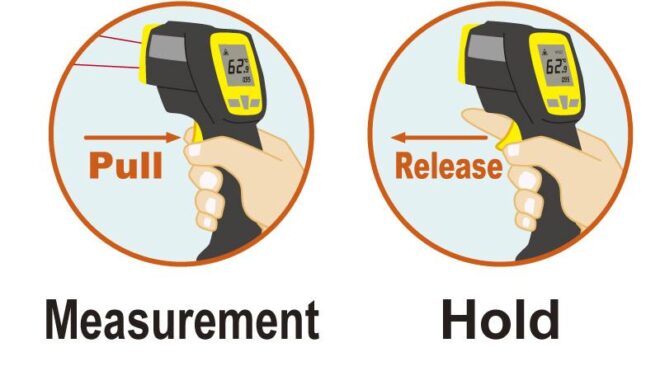
Holding the meter by its handle, point the IR Sensor toward the object whose temperature is to be measured. The meter automatically compensates for temperature deviations from the ambient temperature.
Keep in mind that it will take up to 30 minutes to adjust to wide ambient temperatures are to be measured followed by high-temperature measurements, some time (several minutes) is required after the low (and before the high) temperature measurements are made.
This is a result of the cooling process, which must take place for the IR sensor.
What does an infrared thermometer measure?
what does an infrared thermometer measure?
Infrared Thermometer Basics: Infrared thermometers measure temperature from a distance. This distance can be many miles or a fraction of an inch. Infrared thermometers are often used in circumstances when other sorts of thermometers are not practical. If an object is very fragile or dangerous to be near, for example, an infrared thermometer is a good way to get a temperature from a safe distance.
What temperature do infrared thermometers measure?
What Infrared Thermometers Do? Infrared thermometers work based on a phenomenon called black body radiation. Anything at a temperature above absolute zero has molecules inside of it moving around. The higher the temperature, the faster the molecules move.