All posts by Loganx

Professional Web Writer | Motor Enthusiast | Content Creator | Logan is a dedicated and skilled web writer, passionate about engines and machines and with a talent for creating engaging and informative content. She specializes in writing about a diverse range of topics including construction, forklifts, heavy equipment, excavators, etc. SEO Optimization: Proficient in SEO best practices, ensuring high visibility and engagement for all published content.

Is a Pallet Jack considered Heavy Machinery?

Is there a clear definition of heavy equipment in the workplace? What is a pallet jack? Heavy equipment is defined as:

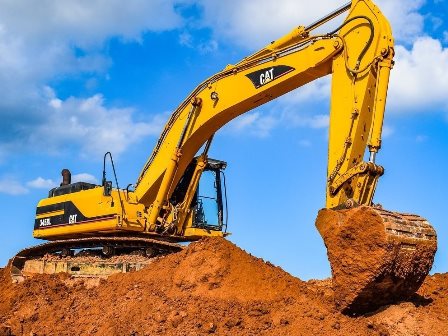
Heavy vehicles, specially designed to perform construction tasks, most often those involving earthmoving operations. They are also known as construction equipment, construction plants, excavators, engineering vehicles, or simply equipment.

They are usually made up of equipment systems: traction, structure, power train, control, information, etc.

That’s a great definition, especially the last part that names team systems.

What should be noted is that the word “heavy” is not mentioned in reference to weight. In fact, weight is not an issue in today’s workforce, as can be seen from the use of skid steers and mini excavators.

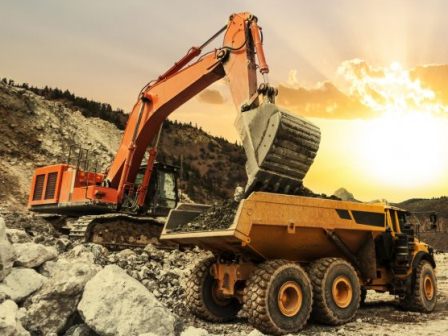
While they are relatively lightweight, they are still classified as heavy equipment. Generally speaking, the following vehicles are typical of what might be described as heavy equipment:

  • backhoes
  • Wheel Loaders
  • scrapers
  • Excavators
  • dozers
  • road graders
  • rock trucks
  • Skid Steers
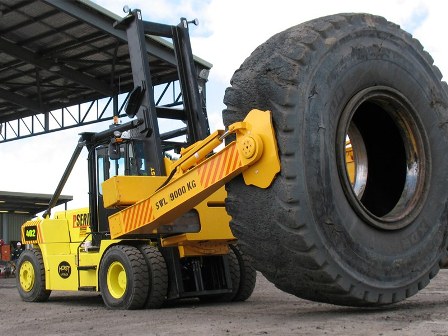
  • All Terrain Forklifts
Is a Pallet Jack considered Heavy Machinery?

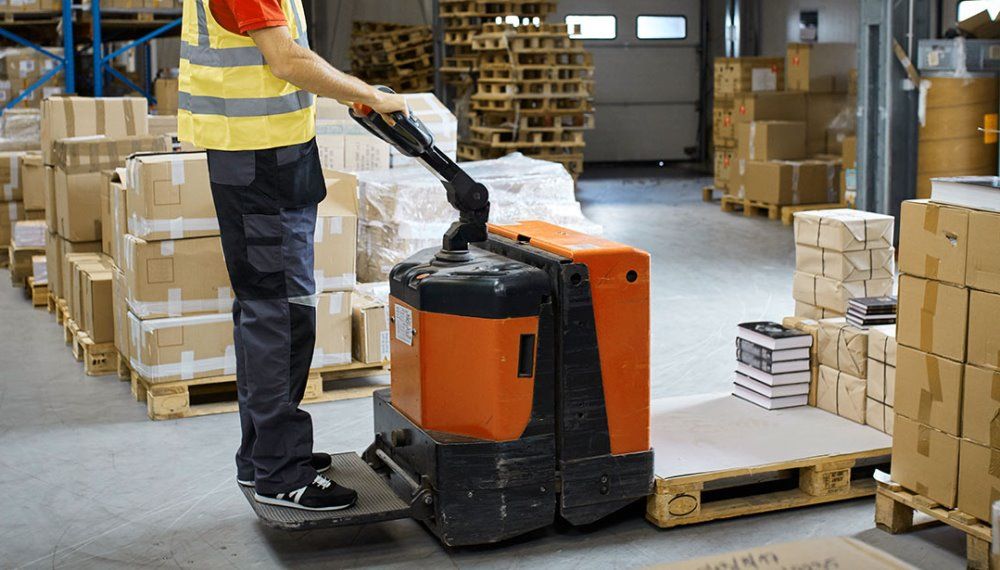
Comparing pallet trucks and forklifts often comes down to the job you are trying to do. Forklift trucks are larger in scale and have more lifting, loading, and moving capacities than pallet trucks.

Forklifts, due to their ability to extend vertically, they are used for stacking and retrieving heavy goods loads.

An advantage of pallet trucks is that they do not need to be recharged or recharged. They can also be stored in smaller spaces.

However, pallet trucks cannot handle heavier loads or perform the same types of jobs as forklifts.

It is important to keep this distinction in mind when deciding between a forklift and a pallet jack. For those who need more power than a pallet truck offers and have storage space, forklifts are well worth the extra cost.

What is a pallet truck used for?

With the variety of different pallet trucks available to you, there are also a wide variety of uses for these pallet trucks, including:

  • Hand Pallet Truck, Heavy Duty is most often used to manually lift and carry loads up to 2500 kg and is the standard type of pallet truck.
  • Electric Pallet Trucks – Often used for high spec builds and takes most of the manual work out of the task of moving transport loads.
  • High Rise Pallet Trucks – Often used to lift loads much higher than a standard pallet truck, while also functioning as a lift table and workbench.
  • Weighing Pallet Truck – These can be used to weigh anything you are transporting up to certain quantities, while still providing the efficiency and use of a normal pallet truck.

So you can see that pallet trucks have a wide variety of different uses, and also that for a particular job you may need a specific type of pallet truck, such as an electric pallet truck if you’re looking to take as much of the job off the job as possible.

More on this story

What is heavy equipment?

If you are new to construction and drilling, it’s important to understand the types of equipment that will be used on the job.
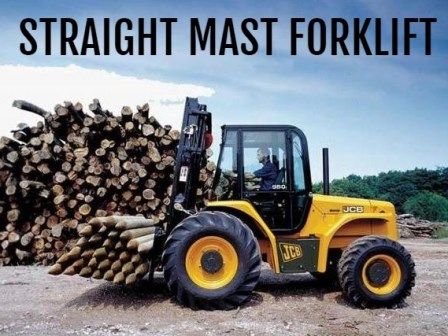
Is a Forklift considered Heavy Equipment?

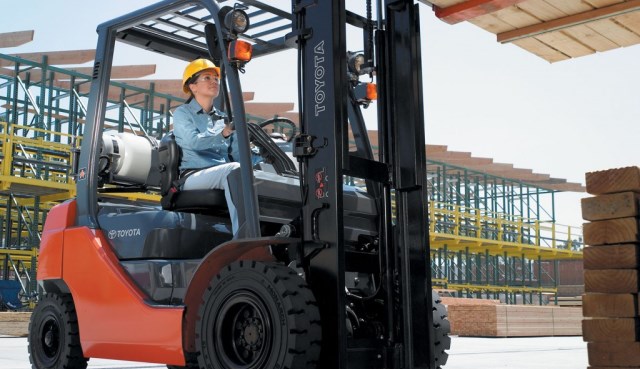
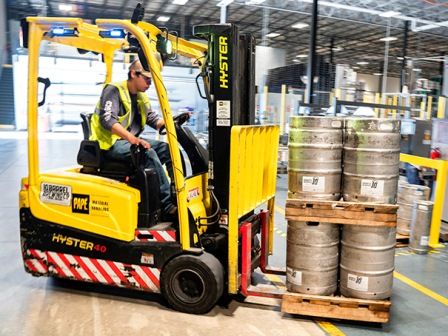
A forklift is a primarily industrial vehicle that uses a two-prong forked front attachment to lift materials.
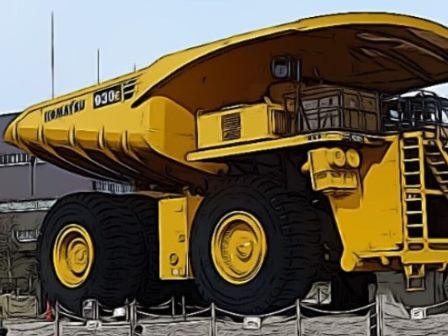
Is a dump truck considered heavy equipment?

What does heavy equipment mean to you? Is there a clear definition?
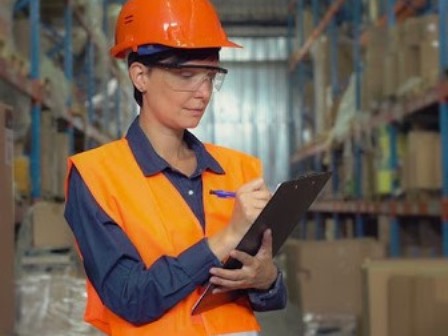
Can you walk under pallet racking?

I have come across this situation many times before and have never had a problem with it.

Stock pickers are working under the shelves all the time to retrieve items from the back of the bays.

A shelving collapse will be catastrophic regardless of where a staff member is in the warehouse.

By providing mesh on the back and sides, it seems reasonable to add security.

There should be no unsecured loads stored on a high-rise pallet and a racking inspection and damage reporting scheme should ensure that the racks are stable.

Pallet Racks Safety Tips

Pallet rack beam capacities are pretty simple. They’re rated per pair for evenly distributed, properly-positioned loads. But upright capacities are more complex because their capacity is calculated on vertical beam spacing.

The largest vertical gap dictates the capacity, so be aware of tall loads, which can stress a rack more than a squat, heavy load because extra beams act as lateral support. Get these factors right, and your rack will be safe and stable.

More on this story

Working under pallet racking

Few warehouse operators have aggressive in-house rack inspection programs in place. Forklift accidents, collisions, dropped or misplaced loads, and other incidents that result in rack damage may or may not get promptly reported.

Electric front end Loader for Garden Tractor

Today some lawn tractors have hydraulic drive systems and you can take advantage of those systems or create one for other hydraulic applications. Two versatile applications would be a front loader and a snow plow. There are smaller commercial machines that perform these functions, but they are very expensive to acquire for a normal owner.

The proposal is to build a prototype hydraulic front loader system (maybe even be able to connect other accessories like an electric auger for owners to place on fence posts, footings, sprinkler heads, and more) that will be mounted on a personal lawn. tractor.

There are two main parts / systems to this project. These systems will include the controls and the hydraulic distribution lift system. The second will be the bucket / plow lift assemblies and the tractor mounting points.

Electric front end Loader for Garden Tractor

How to make a front end loader for a Lawn Mower?

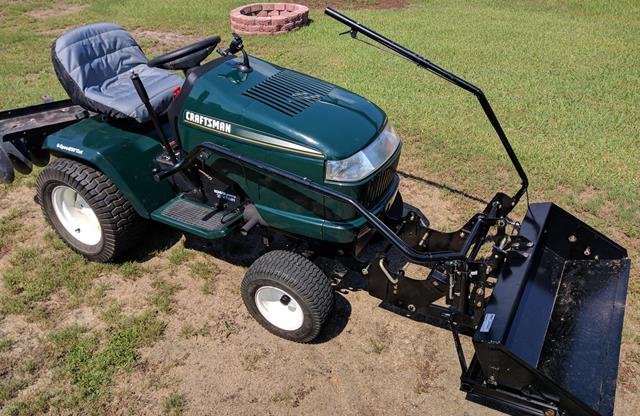
This is a design project that has been developed to assist homeowners with their landscaping needs. What was developed was a proposal for a prototype hydraulic front loader. This prototype was created to help eliminate the need for a machine and an additional expense for the owner.

This front loader will attach to the existing frame of a personal riding mower while minimizing modifications. The hydraulic and mechanical components of the prototype were bolted to the existing frame and chassis components.

The use of lightweight material, strong steel bushings and gaskets allows the charger to outperform the competition in today’s market. One of the greatest benefits of this design is that it allows the mower table to remain attached to the tractor while offering “quick disconnect” functions.

Quick disconnect features allow for one person operation and storage. The loader arm and bucket assemblies are completely removable from the tractor.

This prototype also allows for a greater load capacity and lift range. The load capacity is 350 lbs. And it has enough lifting capacity to fit loads of mulch, dirt and gravel in a ¼ ton truck.

The market comparisons for this size of tractor are very different. They only allow a maximum load of 150 pounds and a lift height of 5 to 10 inches. This type of minimal load capacity and lifting characteristics limits the owner’s ability to perform normal landscaping tasks.

Currently, if you want a higher load capacity and lift height, you have to buy a separate machine to get the job done. Typically this additional machine would be much larger and costly to maintain. That is why this Design Project was developed. Therefore, the prototype helps eliminate additional storage space and additional cost to the owner.

All the components, mechanical and hydraulic, have been developed for a standard riding mower. However, it is possible to modify and connect this prototype to three other tractor models.

Lawn Mower Front end Loader Kit

This particular lawn tractor has a hydrostatic driveline and built-in safety features. The beauty of the loader hydraulics is that it works simultaneously with the tractor driveline.

However, the sealed hydraulic system works completely independently. Another great feature of the hydraulic system is that it uses the same built-in safety features as the tractor.

Therefore, this eliminates the need for additional wiring complexity and mechanical safety features that would add expense, weight, and complexity to maintaining the home itself.

The hydraulic system uses O-rings to help eliminate the possibility of leaks and contamination of the systems. It also has a single joystick controller to allow the operator to focus on the loading system.

The system also has integrated “Dripless” hydraulic disconnect fittings. This not only removes potential contamination and oil loss from the system, it also helps keep the environment free of added contaminants.

This design project has many components, but the most important element is its performance. Testing shows that the system completes the tasks and functions that you have defined.

More on this story

Lawn Mower Front end Loader Kit

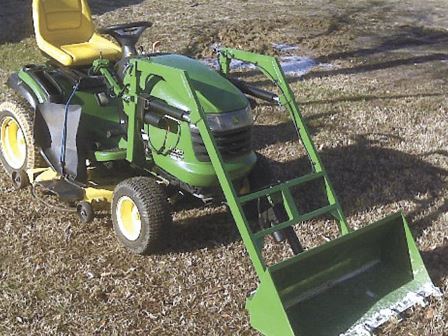
Whether you call it a bucket, a scoop, or a front loader, the solution for handling materials with a lawnmower is through a kit, which you must install in your equipment.

Forklift SOP

The term Powered Industrial forklift Truck refers to a motorized, power-driven vehicle used to carry, push, pull, lift, stack, or tier material.

This definition generally includes vehicles that are commonly referred to as high lift trucks, counterbalanced trucks, cantilever trucks, rider trucks, forklift trucks, high lift platform trucks; low lift trucks, low lift platform trucks; motorized hand trucks; narrow aisle rider trucks; high lift order picker rider trucks; and counterbalanced front/side loader lift trucks.

The formal instruction component is achieved when a trainee completes the Powered Industrial Truck Web based training module.

Other options include equivalent training provided by equipment distributors, community colleges, or similar training providers.

Departments can use their own training materials, so long as the training materials meet or exceed OSHA’s requirements.

Practical training consists of instruction regarding workplace-specific factors and conditions, PIT specific considerations (e.g., location of controls, nameplate information, warnings, manufacturer’s operating instructions, etc.), as well as hands on exercises of typical vehicle inspections, operations, and maneuvers that will be conducted at the specific worksite by the operator.

Forklift SOP

SOP forklift operation

Generally, the trainer will demonstrate proper operation and techniques, followed by the trainee repeating those operations and techniques.

This should be with the same or similar equipment that the trainee will be using and in the same or similar location where the employee will be operating the PIT.

This is a reiterative process that allows the trainee to achieve competency in the safe operation of the PIT. Topics for practical training include:

  • Specific pre-operational checklist for the equipment used.
  • Specific operating instructions, warnings, and precautions as listed in the operator’s manual for the specific type of truck the trainee will operate.
  • Surface conditions where the PIT will be operated.
  • Composition and stability of loads to be carried.
  • Load manipulation, stacking, and unstacking.
  • Pedestrian traffic in areas where the PIT will be operated.
  • Narrow aisles and other restricted places where the vehicle will be operated.
  • Hazardous (classified) locations where the vehicle will be operated.
  • Ramps and other sloped surfaces could affect the vehicle’s stability.
  • Closed environments and other areas where insufficient ventilation or poor vehicle maintenance could cause a buildup of carbon monoxide or diesel exhaust.
  • Other unique or potentially hazardous environmental conditions in the workplace could affect safe operation.

Forklift SOP

This Standard Operating Procedure (SOP) was written to incorporate all comprehensive training activities into one system to ensure that all personnel acquires the skills, knowledge, and qualifications needed to effectively carry out their duties and tasks.

What is standard operating procedure?

A standard operating procedure (SOP) is a set of step-by-step instructions compiled by an organization to help workers carry out routine operations. SOPs aim to achieve efficiency, quality output, and uniformity of performance while reducing miscommunication and failure to comply with industry regulations.

More on this story

Forklift Safety Procedures

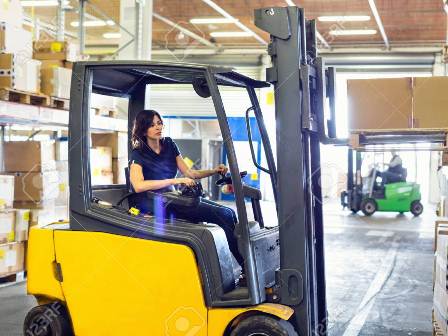
Forklifts are extremely useful workplace vehicles, as long as they are used safely and appropriately by operators who are appropriately trained and competent to use them.

Standard Operating Procedure for Driving a Forklift

Safe Forklift Operation according to OSHA

Standard Operating Procedure for Forklift Operation

An untrained operator of a forklift can be as dangerous as an unlicensed operator of a motor vehicle.

How Much does it Cost to Rent a Bulldozer?

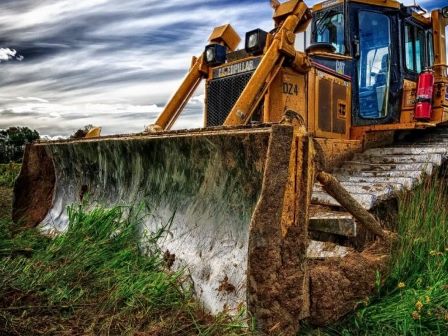
Rental rates for most bulldozers depend on the size, horsepower, and operating weight of the machine, among other things, such as dealer location, year, make, and model of the machine.

If you want to rent an 80 horsepower bulldozer for 4 hours, it will cost you around 600 dollars.

If you need to rent an 80hp bulldozer on a weekly basis, it will cost you around $1600 and the monthly fee for the same machine will be around $5000.

If you want an 80hp wide track bulldozer, it will cost you $700 for a daily rental, $1800 for a weekly rental and $5000 for a monthly rental.

Bulldozer rental rates

Most bulldozer rental prices are quite reasonable and can easily be incorporated into your overall pricing schedule.

You must consider the many factors that change rental rates. These factors make it difficult to compare them with each other.

Bulldozer rental costs vary with many different factors. Depending on the daily, weekly and monthly rental, the discounts increase, for a long-term rental compared to a short-term contract.

Rental prices go down, mainly because expenses such as cleaning, repair and maintenance, and transportation costs go down significantly when equipment is not returned at the end of each day.

Let’s look at some of the other important factors that affect your bulldozer rental cost.

A rental agreement gives you full access to the equipment right away, or usually at least in a couple of days.

The rental company delivers to the site and takes care of repairs and maintenance. Rentals are for shorter periods and are much more flexible regarding the length of the rental period.

If you finish a job ahead of schedule, the rental company will not normally penalize you financially. In fact, you can usually call the company and cancel your hire on the spot.

Servicing equipment like bulldozers needs qualified mechanics who can work on these specialized vehicles.

Although a large company that uses many construction plant parts may have a full-time mechanic on standby, the average construction company will not.

So, in this case, renting machinery is a much better option compared to buying. The rental company has experienced operators in the maintenance of these elements. And, they know the specifications of each one.

More on this story

Bulldozer rental cost

If you are looking for machinery, it is important to understand the rates for this equipment that will be used on the job.

Heavy Equipment Rental

Rental is a prominent and growing model in the construction business. The development of the rental industry in new markets requires a certain level of trust in a country and in society.

Forklift Blue Light Installation

People’s lives depend on the correct and safe installation of emergency lights. It is important to read, understand and follow all instructions shipped with products and accessories. Also listed are some other important safety instructions and precautions that you should follow:

To properly install a light kit, you must have a good understanding of forklift electrical systems and procedures, as well as the installation and use of safety warning equipment.

To be an effective warning device, these types of products produce a bright light that can be dangerous to your eyes when viewed up close. Do not look directly at this lighting product at close range or you may experience permanent damage to your eyes.

Your lighting system should be inspected frequently to ensure it is working properly and securely attached to your truck.

Forklift Blue Light Installation

Forklift pedestrian safety toolbox talk

People who are not paying attention are at greater risk, particularly those who walk near and around forklifts. People don’t pay attention because they are busy. Or they are engrossed in their smartphone or in a conversation with someone.

The reasons vary, but when it comes to forklifts, the results can be accidents.

Most experts agree that the key is training for both pedestrians and forklift drivers, and that’s true, but it shouldn’t be the end of the story.

You should enhance the training with various facility and equipment upgrades.

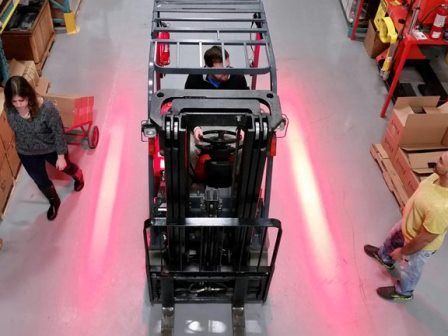
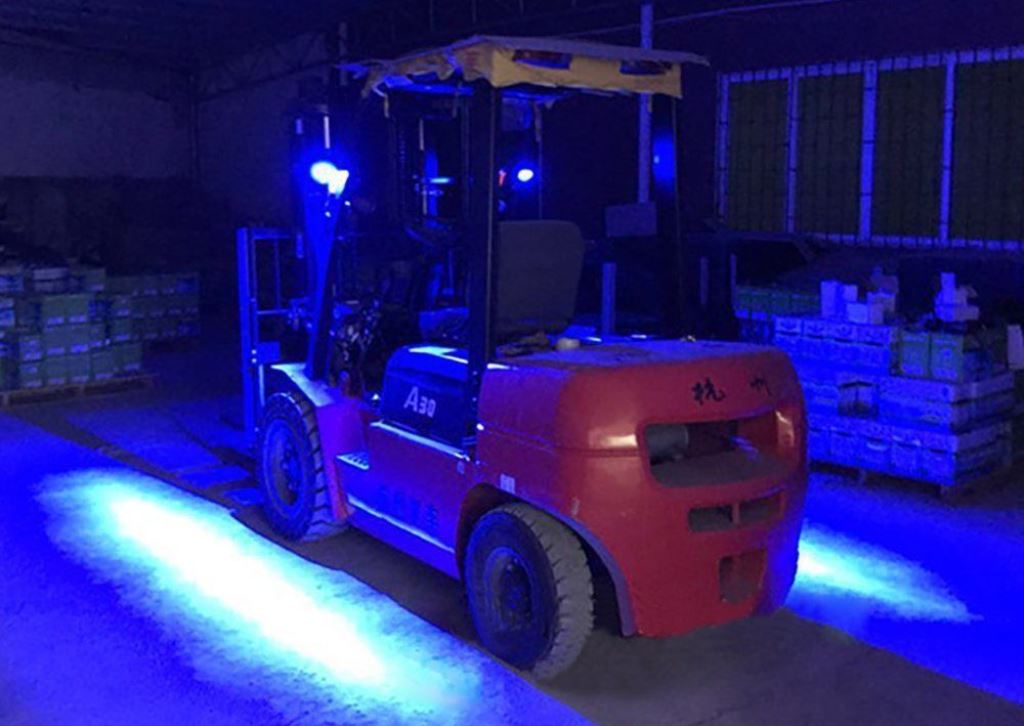
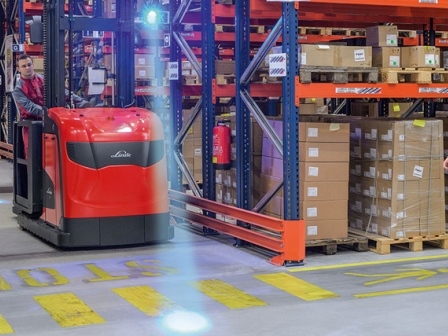
That’s why many companies have installed forklift warning lights, often called “blue lights,” which project a disk of light that precedes the forklift as it moves.

Since the forklift is often the most dangerous piece of equipment in any facility that uses it, these types of low-cost upgrades are sensible and easy.

Blue lights are very effective in part because they are “eye-catching.” Unlike tape or paint lines for traffic management or static signage.

Since these lights are installed on so many forklifts, it is important to understand exactly how they should be mounted for maximum effectiveness.

Related Topics

More on this story

Forklift Blue Light

It is critical that forklifts and other vehicles be visible and keep workers aware of traffic.

Forklift Safety Procedures

Forklifts are useful in the workplace, as long as they are used safely and properly by competent operators.

Forklift Pedestrian Safety Warning Spotlight

The warning spotlight projects a clearly visible blue beam of light onto the floor, alerting pedestrians and other vehicles to the nearby presence of the forklift.