All posts by Loganx

Professional Web Writer | Motor Enthusiast | Content Creator | Logan is a dedicated and skilled web writer, passionate about engines and machines and with a talent for creating engaging and informative content. She specializes in writing about a diverse range of topics including construction, forklifts, heavy equipment, excavators, etc. SEO Optimization: Proficient in SEO best practices, ensuring high visibility and engagement for all published content.

Gantry Crane Price

Different types of gantry cranes and gantry girder designs are for specific load and use situations, mobile cranes have lower load capacity than a fixed crane, aluminum cranes are for light but precise work, etc.

When buying one of this equipment, use and load considerations are necessary, whether they are for work at home or for a workshop.

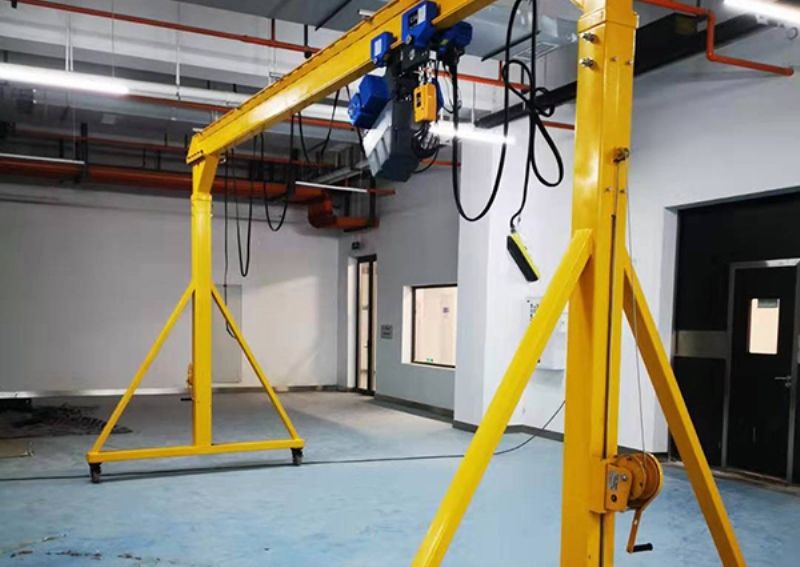
Gantry Crane Price

Gantry crane price

Every day, customers wonder how to quote a new gantry crane installation, they need to know the final price.

They may be moving into a new building, replacing old or outdated equipment, or they may be purchasing a gantry crane for the first time and are looking to expand the material handling capabilities of their business. The bottom line is that they are looking for the cost of a gantry crane.

If you are just beginning your research, we understand that the process of purchasing and installing a gantry crane at your facility may seem somewhat difficult.

First, we will discuss the different gantry crane models and uses that affect the cost of any type of gantry crane, and then we will discuss the prices of common types, sizes, and configurations of gantry cranes.

Gantry Crane for sale

Gantry cranes are a subset of cranes that have a hoist that runs horizontally along rails, usually installed on a single girder.

With the hoist attached, most gantry cranes can be used to lift heavy objects ranging from 250 pounds to 10 tons.

Additionally, gantry cranes are equipped with casters and casters that allow easy mobility under heavy loads.

The supply and selection of gantry cranes for sale come in a variety of options and capacities, from fixed-height, adjustable-height gantry cranes to three-way adjustable steel gantry cranes.

Portable Gantry Crane for sale

Portable gantry cranes come in many different sizes that can be used in many different types of industries, for example, there are small and large cranes available that can be used in small industries and workshops, respectively.

Besides that, portable gantry cranes also have an adjustable height function where some cranes are such that their height can be adjusted while others are fixed.

These types of cranes are usually made of aluminum or steel. Portable gantry cranes are designed with two vertical girders and also one cross girder. The crane also consists of two legs that are shaped like an A-frame design with wheels on the bottom to make it portable and mobile.

The smaller version of the portable gantry crane is used in fabrication jobs to move large parts to an off-site location or between the assembly and the work station.

Whereas in department stores portable gantry cranes are used to move heavier and bulkier materials. At that time they move across the work area. They have a capacity of almost four tons.

Mobile Gantry Crane for sale

A mobile gantry crane is one of the many cranes that lift objects by a hoist that is fitted in a hoist trolley and can move horizontally on a rail or pair of rails fitted under a beam.

Mobile gantry cranes have been known for being able to lift very heavy weighing objects.

The small gantry cranes can be used in workshops like lifting automobile engines out of vehicles.

Durable polyurethane wheels make it easy to move around your facility or are on rails on a predefined path.

Aluminum gantry crane for sale

Made of lightweight aluminum, the gantry crane components are easily installed and assembled by one or two people.

This allows the crane to be easily shipped to a job site and even carried up a ladder to a rooftop work area.

The adjustable height ensures a single ergonomic lifting solution for areas with little headroom and a wider lifting range in other areas.

Simple installation and disassembly allow the aluminum gantry cranes to be disassembled and stored when not in use.

Adjustable gantry crane for sale

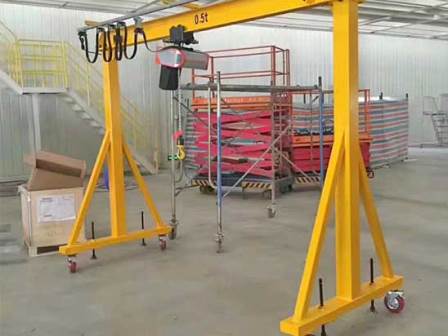
Adjustable gantry cranes for sale have different uses and applications. Adjustable gantry cranes are perfect for applications where you need an inexpensive, portable way to lift materials anywhere in your facility.

An adjustable bridge crane provides a cost-effective lifting solution for infrequent lifting areas than a permanent jib crane or an overhead bridge crane.

These adjustable cranes provide a heavy-duty end frame design with square tube studs, knee pads, and channel base that provide a very stable base.

These adjustable bridge cranes for sale factor 20% of crane capacity for hoist and trolley weight, with an additional 25% of the allowable capacity for impact. All adjustable bridge cranes for sale are certified and have a capacity placard installed prior to shipment.

More on this story

Small Gantry Crane for Sale

Small gantry cranes are the perfect solution when heavy-duty lifting equipment that is versatile and easy to set up and use is required.
Mobile Gantry Crane for Sale

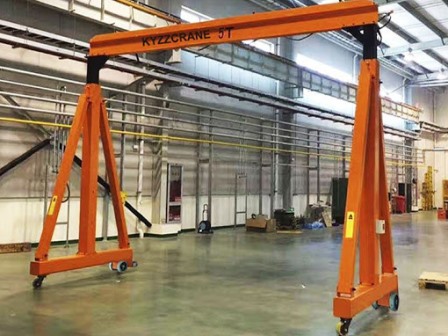
Mobile Gantry Cranes in freestanding, portable, fixed height, or adjustable height configurations that are ideal for your warehouse or workshop.
Gantry Crane

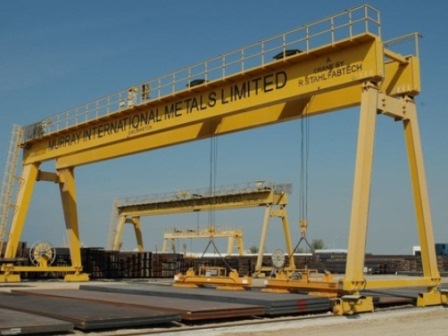
They are very similar in nature to bridge cranes; the only difference between the two configurations is the gantry crane’s mobility compared to bridge cranes.

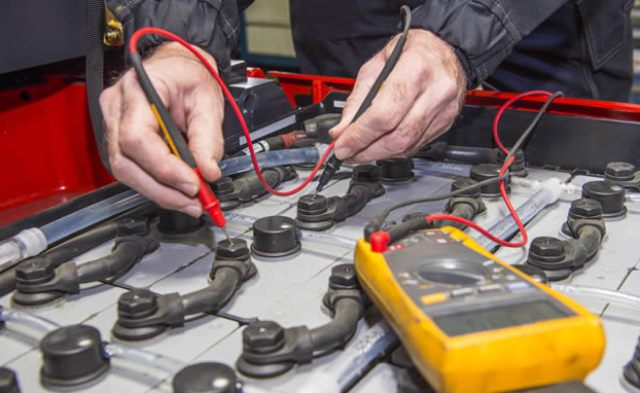
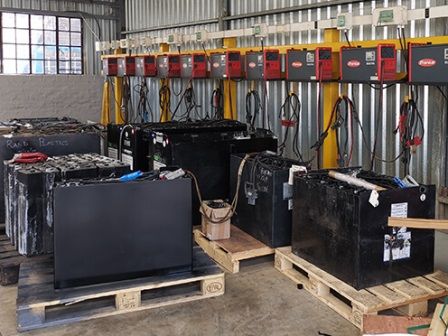
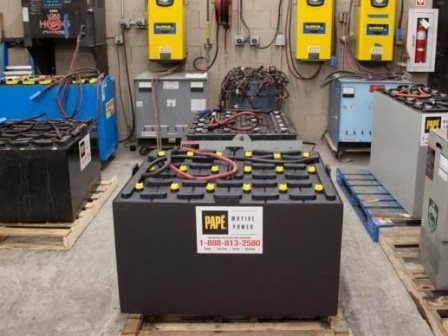
Forklift Battery Repair

What happens if you don’t clean the batteries?

  • Battery life can be shortened
  • Corrosion can cause battery cells to rupture and leak.
  • Metal boxes can corrode
  • Electrolytes can damage operator clothing and irritate skin.
  • Voltage leaks to ground can create electrical faults.

In addition to routine maintenance, forklift batteries may, at some point in their useful life, require more extensive care.

This care should be given as soon as it has been determined that a problem exists or could be developing.

As a result, this section deals with ways to identify existing or impending problems and offers possible solutions.

If the suggested operational remedies are ineffective, it can be assumed that there is an internal problem and the cell (s) will need to be disassembled to thoroughly inspect the elements and sediment.

If the cause of the problem can only be corrected by completely rebuilding the forklift cells or battery, the designated authorized personnel should be reported.

Forklift Battery Repair

Forklift Battery Maintenance Guide

Most lead-acid forklift batteries provide around 2,000 charge cycles, which usually translates into about five years of service life. But even this lifespan can only be reached with proper maintenance.

Establish regular maintenance intervals for all industrial batteries to realize the full value of your investment. With the right care, many batteries can last well beyond the length of their warranties, powering forklifts for years past the typical battery lifespan.

There are three essential maintenance tasks that provide reliable service for forklift batteries: watering the cells, washing the battery case, and conducting regular equalization charges. A detailed explanation of each task follows, along with tips to perform each job safely.

Forklift Battery Watering

The battery electrolyte is a mixture of sulfuric acid and water. When water levels get low, the battery’s plates can be exposed to open air. This causes oxidization, which permanently reduces capacity and shortens overall battery life.

In addition to water losses from simple evaporation, the charging process breaks water down into its composite molecules. As hydrogen and oxygen float out of battery vents, the water level within the cells will deplete.

Excessive water loss might be a sign that the battery is gassing more than it should. If you notice a battery losing more water than usual during a charge, have a technician inspect the battery and the charger.

Equalization Charges

Over time, different cells within forklifts may develop slightly different power capacities.

When this happens, users can’t charge batteries to full power; one cell may be fully charged while another only holds a half-charge.

Equalization charges prevent this inefficiency. Essentially, the equalization charge is a purposeful overcharge.

The typical charge cycle lasts about eight hours, while an equalization charge tacks on an additional three hours or so. Chargers continue to provide a low stream of power for those final hours.

Washing Forklift Batteries

There are a few ways that forklift battery electrolyte can escape to accumulate on battery cases:

  • As batteries release gas during charges, a fine acidic vapor may drift to the tops of battery cases.
  • Agitated electrolytes can spill out of battery vents during the charging process, an occurrence typically known as “boil-over.” Over-watering cells increase the risk of boil-over.
  • Batteries may leak electrolytes. If they are stored in tiered racks, and drip pans are not installed or changed regularly, the batteries on the upper levels might drip electrolyte onto those below.

The acidic residue built up on forklift battery cases can cause all sorts of problems. First off, it may create a conductive circuit between lead posts and the steel case. This causes a low-level but constant self-discharge, burning through charge cycles and limiting the lifespan of the battery.

Secondly, acid accumulation can corrode terminals. Damaged terminals may cause electrical problems in lift trucks, as well as limited battery capacity. They might even render a battery unfit for use.

How to reverse battery sulfation?

Undercharging a forklift battery, even to a small degree, if continued, leads to excessive “sulfation.”

The same is true of forklift batteries which have been left standing in an uncharged state for an extended period. High temperatures rapidly accelerate sulfation when forklift batteries are left standing in a partially charged condition.

The cells of a sulfated battery will give low specific gravity and voltage readings. The forklift battery will not become fully charged after a single normal charging when sulfation has taken place over a prolonged period.

If the sulfation has not progressed too far, it may be possible to restore the forklift battery to a serviceable condition by using the following special procedures:

  1. Thoroughly clean the forklift battery
  2. Bring the electrolyte level up to a point that is just visible over the separator protector by adding approved water.
  3. Put the forklift battery on charge at the prescribed finishing rate until the rated ampere-hour capacity has been returned to the forklift battery.
  4. Place the forklift battery into service and discharge it to a fully discharged condition.
  5. Charge the forklift battery again until the specific gravity shows no change during a 3 hour period.
  6. Repeat the cycling process until the specific gravity rises to within 30 points of a normal fully charged forklift battery, then place the forklift battery back in routine service.

How To Repair Electric Forklift Batteries?

A forklift battery can weigh hundreds of pounds and a person may need a forklift to remove it.

Users should check the faulty forklift’s user manual for specific instructions on battery removal and maintenance.

  • Upon removal, the user should place the battery in a well-ventilated concrete wash.
  • Record the voltage readings, using a voltmeter.
  • Check the battery label for an indication of the battery’s voltage.
  • Discharge the battery to 80 percent of its labeled voltage.

Battery acid tester

Measuring The Acidity Of The Battery Water:

The user needs to remove the cell caps to access the battery water. Battery water should contain 30 percent sulfuric acid and 70 percent water. Use a hydrometer to measure and record the acidity for each cell. This information indicates how much water or acid the user should add to each cell.

Battery sulfation removal

Sulfation is one of the most common causes of lead-acid battery failure.

While using a battery, small crystals of sulfate form. These are generally not harmful, but when a battery is not charged properly or fully, this lead sulfate turns into a crystalline form that deposits on the battery’s negative plates, forming large crystals.

These reduce the active material in the battery responsible for the low resistance and high capacity and reduce charge acceptance. Charging takes longer due to higher internal resistance.

Users can reverse some types of sulfation. An anti-sulfation or desulfation device applies pulses to the battery terminals to prevent and reverse the process.

These devices tend to reduce sulfation in healthy batteries, but may not be able to completely reverse the condition in damaged batteries. As a preventive measure, use a special desulphation charger to reduce the likelihood of new or good batteries being damaged.

More on this story

Reconditioned Forklift Battery

Servicing a forklift battery is almost identical to servicing a regular 12-volt automotive battery.

Forklift Battery Service and Maintenance

Maintaining your battery is critical to prolonging the performance and life of your forklift.

EOT Crane Questions and Answers

The operator’s job is to operate bridge cranes for the safe transfer of raw materials, intermediate products, and finished products within the plant upon receiving the signal. To work in this position, it is necessary to pass an exam with EOT crane questions and answers.

Overhead crane operator training is conducted at customer locations and training centers upon request.

The course is designed to increase the level of knowledge of the participants in the proper use and pre-operational inspection of overhead cranes. The course uses hands-on sessions where participants move loads using the Operator’s Checklist.

The course is 12 hours in length and meets the recommendations for overhead crane operators, including practical load moving sessions, written exam, and practical operational assessments.

Crane operator test questions and answers

These sample questions are intended to convey some of the style and content of the national operator certification program exam developed and administered by the National Commission for the Certification of Crane Operators.

They are not actual exam questions, nor do they attempt to address all areas of knowledge tested on the certification exam.

The answer to these questions is not necessarily an indication of performance on the exams.

Crane Operator practice test

  • What are the minimal requirements to meet crane operator qualifications?
    1. High School Diploma
    2. CDL with on the job training
    3. Physical, Written Test, Practical Test
    4. CDL physical, employers written permission
  • When can a crane be side-loaded?
    1. Dragging a load
    2. With a freely suspended load
    3. Never
    4. Pile-driving
  • The deflection of a boom will cause the load to _______.
    1. side load the boom
    2. decrease the radius
    3. increase the radius
    4. have no effect
  • Cranes should be load tested when?
    1. Periodically
    2. Every year
    3. After modifications
    4. Every six months
  • Crane stability is based on _____.
    1. ability of crane hoist to lift load
    2. load position
    3. lever principle
    4. Quadrant of operation
  • What percentage of the crane chart is considered a critical lift?
    • 50%
    • 60%
    • 75%
    • 55%
  • The load chart is matched to the crane by:
    • Model number
    • Manufacturer
    • Serial number
    • Part number

NCCCO Practice Test

NCCCO test questions and answers:

This mobile crane preparation certification study manual is all you need to prepare to take the certification exams for all types of mobile cranes without wasting your time.

It is easy to read and understand using images when possible.

It includes selected information to help make sure you learn exactly what you need and avoid all the clutter. Includes 5 valuable prep tests (with answer keys) for you:

  • General knowledge test (100 questions)
  • Technical knowledge test (66 questions)
  • Site Specific Test (42 Questions)
  • Crane Load Chart Test (49 questions) and
  • Practical evaluation test form for your practical operational use.

A free mobile crane inspection checklist is also provided for your use.

More on this story

Overhead Crane Test Questions and Answers

Tips for Passing the NCCCO Exams.

Overhead Crane Safe Work Procedure

What happens when there are structural defects in an overhead crane?

Mobile Crane Test Questions and Answers

The following practice questions are representative of a Level 1 Mobile Crane Theory Exam.

Overhead Crane Safety Training

The safe operation of cranes requires that operators have the knowledge and competence to avoid an accident, in addition to the safe work procedure of the bridge crane.

Automated Stacking Cranes

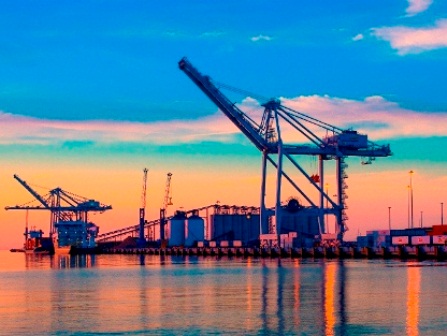
One of the basic infrastructures for the handling of merchandise and ships in all types of ports are the mechanical automated Stacking Cranes, especially in the commercial ports where the loading, unloading, storage, and unloading are key actions for the development and operation of these ports.

The stacking cranes are used to load between the port and the ship, in order to organize and stack it. After the large port cranes, the structures that usually occupy the line of sight of ports around the world, we find the smallest formats, capable of working in even smaller spaces. The first of these cranes is the reach stacker crane, also known as a forklift.

Automatic Stacking Crane

Cranes and other stacking equipment: When very efficient management of the container terminal is required, the port cranes and stacking equipment demonstrate their technological advantages.

It’s precise handling, synchronized movements and high speeds guarantee high load cycles at a low cost.

Its high quality and ease of maintenance reduce downtime and increase profits.

Rubber Tyred Gantry Crane

Tire container cranes (RTG) are manufactured in different models and according to the individual needs of each client.

These cranes can handle lines of between five (5) and eight (8) containers (in addition to a truck lane) and elevation heights between one (1) over three (3) and one (1) over six (6). ) containers.

RTG cranes are designed in a configuration of eight (8) or sixteen (16) wheels with AC or DC transmission control.

Special design features such as DGPS automatic steering, profiling, semi-automation and remote access are also available.

We also offer a wide variety of power options for different models.

Whether diesel, electric, hybrid or combined, RTGs guarantee the highest productivity.

Rail Mounted Gantry Crane

Rail-mounted cranes (RMG) are manufactured according to the individual needs of each customer and include all the design and technology advances that have been made in the last four decades.

Numerous design features are available such as automation, remote control, profile stacking, and remote access.

The stacking cranes on rails are presented in several models that cover lines from 20 meters to 72 meters.

Straddle Carrier

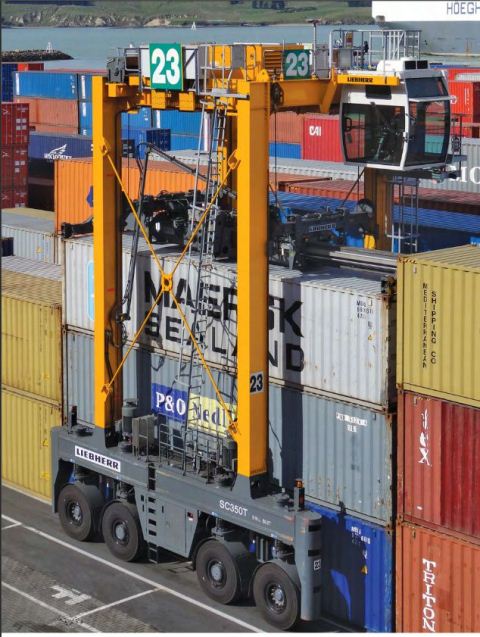
Straddle Carriers are custom built with two standard heights, the height of 3 containers (1 on top of 2) and a height of 4 containers (1 on top of 3).

The Straddle Carriers are designed for both single and dual-lift operation.

8 wheels mounted on four steering axles together with the superior response of the drive and control system offer the maximum in terms of maneuverability and stability.

Thanks to the innovative positioning design of the hydraulic components at a low level, more dynamic response of the steering and braking system are obtained.

The improvements in the design with respect to other models guarantee the advantages of the Straddle Carrier of Liebherr, that is to say, a few costs of maintenance more reduced and more profitability of fuel with an increase of the productivity.

The truck has been developed based on an experience of more than 40 years in container handling and introduces new features in this market.

Technical specifications:

  • Smooth translation control and fast positioning on the container.
  • Steering and brake by means of a cable control system, guaranteeing a greater dynamic response regardless of the speed.
  • Impact protection and automatic tire alignment.
  • Four steering axles with two and four wheels, with increased stability in both straight lines and curves, maintaining maximum agility when positioning.
  • Extensive component life and reduced tire wear, resulting in higher container handling averages and lower operating costs.
  • Spacious and well-equipped operator cab with an ergonomic design and improved visibility.
  • Location of winch with easy access, external disc brakes, and simple cable forwarding.
  • Parallel operating brake system – Hydraulic and electric regenerative wet disc brakes.
  • Regeneration of power between the systems of translation and elevation.

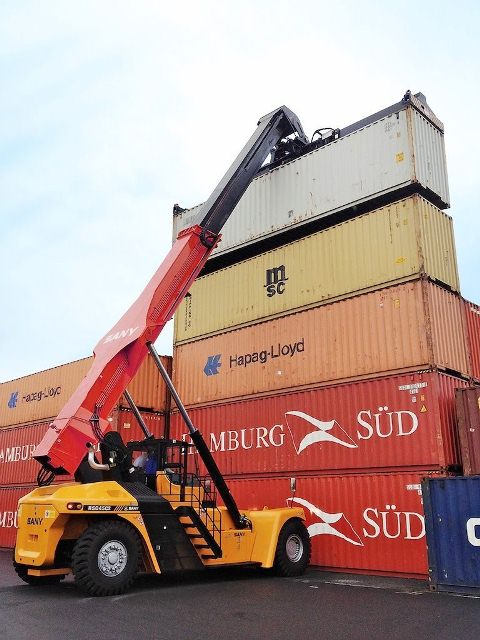
Reach stacker

To expand the successful line of sea freight handling equipment, its own reach stacker concept has been introduced.

This powerful machine, which is characterized by its telescopic boom in a curved shape, offers to handle possibilities hitherto unseen and many unique features such as fully hydrostatic transmission, independent traction, and a highly efficient shock absorber system.

Technical specifications

Thanks to the revolutionary design pen, it is possible to access the second and third container line without having to remove the containers from the front line.

  • It is easy to load/unload containers from or below ground level, as it offers direct access to the spreader from the ground.
  • The progressive control of the speed by means of an automatic power regulator allows smooth and easily controllable translation movements and offers maximum efficiency, which is reflected in the notable reduction in fuel consumption.
  • The easy and ergonomic operation of the reachstacker is controlled from a wide and well-equipped cab in which the operator enjoys 360-degree visibility.
  • Special damping measures increase driver comfort, extend reachstacker life and reduce maintenance costs

Automated stacker crane

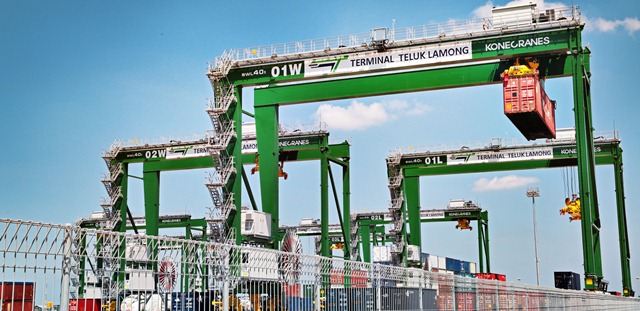
Konecranes Automated container crane systems

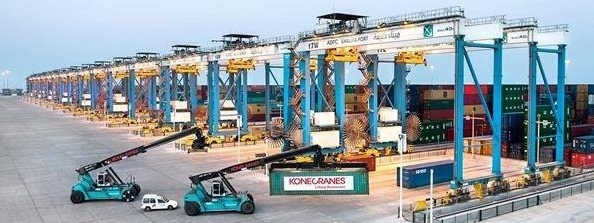
The automated handling of containers is the next step in the evolution of container crane technology that began with the introduction of containerized shipping in the 1960s. The Konecranes Automated RMG (ARMG) system offers valuable advantages in an ever-more automated industry. These advantages are being realized by leading container terminals around the world where Konecranes ARMG systems are hard at work.

Technology proven in the real world: The Konecranes ARMG crane design drew upon rail and yard conditions that are the daily reality in container terminals around the world and brought in the proven technology of our Rubber Tired Gantry cranes. Konecranes ARMGs have a light, intelligent steel structure. When this is combined with our Active Load Control (ALC) technology, the cranes deliver fast, accurate container stacking over a range of real-world conditions.
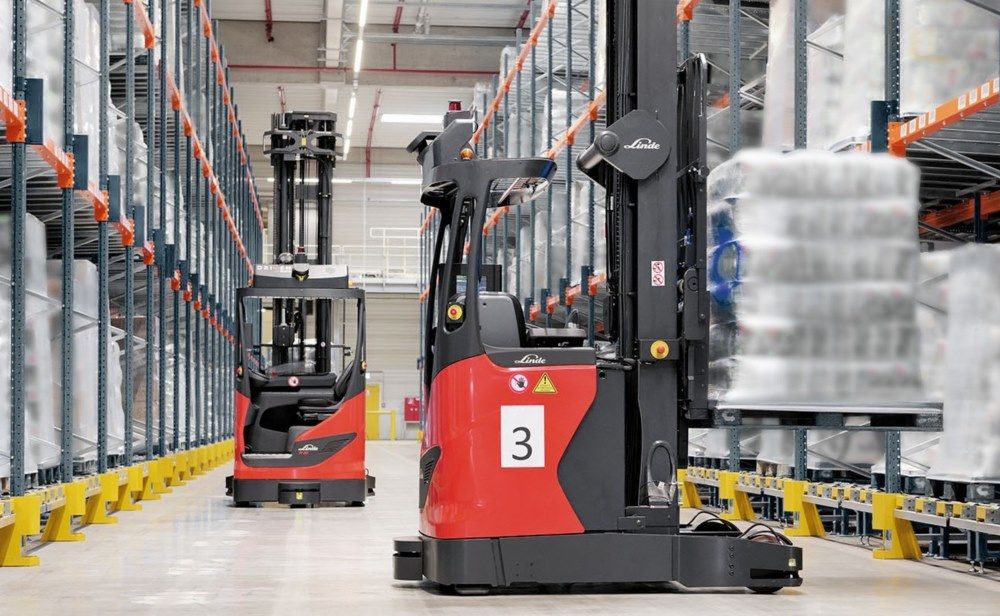
Hard-won experience: Konecranes can deliver a field-proven, complete ARMG system on time and within budget. We have an excellent track record of ARMG system project delivery, from the system design phase through to commissioning and hand-over.

Container stacking crane

A container is a cargo container intended for international and national transportation through sea, inland waterway and/or air routes.

The size and shape of it vary depending on the length and height. The form and characteristics of the same are regulated in accordance with the ISO-668: 2 (International Organization for Standardization), for that reason in some places containers are also known as ISO containers.

This regulation also facilitates the handling of the same to the decks of the ships and the cargo spaces of ships and trucks.

As for the characteristics of the containers, it should be noted that they are usually made mainly of steel, but there are also some made of aluminum and some others made of wood reinforced with fiberglass. In most cases, the floor is made of wood, although there are recent examples where the floor is made of bamboo.

Inside they have a special anti-humidity coating, designed to avoid humidity and incumbencies of time along the way.

Another distinctive feature of any container is that they have hooks on each corner that allow them to be hooked by cranes, as well as their lashing on boats and trucks.

As for the identification, all the containers carry an alphanumeric identification to follow up and avoid its loss. These codes are usually four letters and seven numbers. As an example: MDGU 154570. The maximum load of a container generally varies according to the shipping company responsible for carrying out the transport and the type of container. Containers with an international standard of 20 feet have a maximum gross weight of about 29 tons – including the load plus the weight of the container itself – and the largest of 40 feet have a maximum gross weight of 32 tons.

What is an Automated Stacking Cranes?

What is an Automated Stacking Cranes?

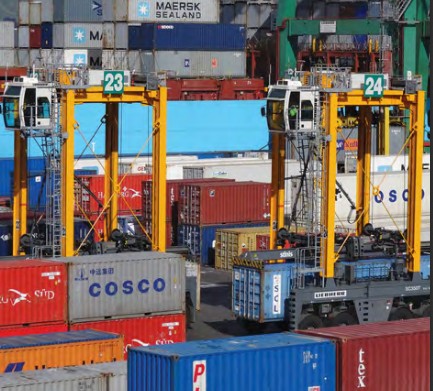
The automated handling of containers is the next step in the evolution of container crane technology that began with the introduction of containerized shipping in the 1960s. Automated stacking cranes (ASC) are rail-mounted cranes used for yard-stacking and in-stack transportation of containers. ASCs deposit and pick up containers from dedicated interchange areas located at both ends of the stack.

What is an automated straddle carrier?

Straddle carriers are trusted by terminal operators around the world for their ability to enable faster ship-to-shore crane operations and more efficient landside operations. Straddle carriers are highly versatile machines that can be used for a wide variety of applications and terminal operating modes.

What is autonomous straddle carriers?

The straddle carrier can undertake self-repositioning, handling, stacking, loading, and unloading, as well as transporting empty containers. The benefits of automating these tasks include energy savings, lower maintenance costs, environmental protection, and regulatory compliance. The straddle carrier has high mobility and flexibility, enabling modular retrofit for current operations in existing terminals.

What is RTG crane?

A rubber-tired gantry crane is a mobile gantry crane used in intermodal operations to ground or stack containers. Inbound containers are stored for future pickup by drayage trucks, and outbound are stored for future loading onto vessels.

The most read

More on this story

Storage Logistics

Storage logistics: management, transport, inventory in warehouses with drive-through shelves, forklifts, stacker cranes. cold storage warehouse.

Ship to Shore Crane

The gantry crane for containers: panamax, post panamax, operator, uses, characteristics, ports, docks, transport, maneuvers, parts, container

Is a Forklift considered Heavy Equipment? A forklift is a machine or vehicle?

It should be noted that the term “heavy” does not refer to the weight or size of the machine, but to the heavy-duty nature of the tasks it performs.

  • What does heavy equipment mean to you?
  • Is there a clear definition?

In today’s workforce, the consensus is that heavy equipment refers to heavy vehicles that are specifically designed for construction and earthmoving tasks.

What makes things a bit ambiguous is that many terms are used to describe heavy equipment, including heavy machines, heavy trucks, construction equipment, engineering equipment, heavy vehicles, and even heavy hydraulic systems.

Whatever term you want to use, it includes machines like:

  • Backhoe loaders
  • Bulldozers
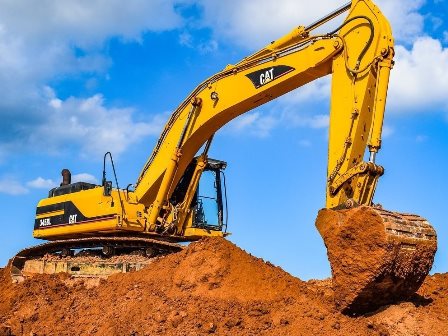
  • Excavators
  • Backhoes
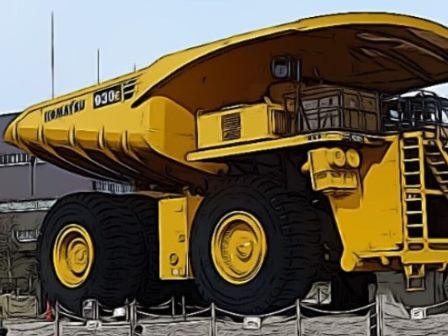
  • Dump trucks
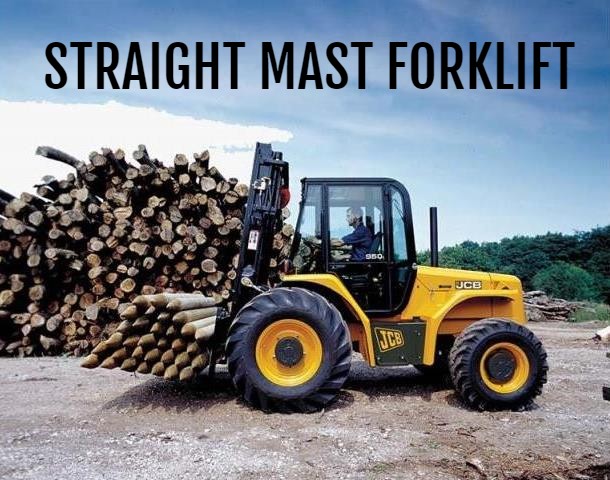
  • All-terrain forklifts

OSHA Forklift Trainingh Handbook

The purpose of this book is to help companies comply with the Powered Industrial Trucks Standard. Powered industrial trucks make the top ten cited violations from OSHA every year.

What Is a Forklift?

A forklift is also called a forklift, forklift truck, and all-terrain forklift. A forklift is a primarily industrial vehicle that uses a two-prong forked front attachment to lift materials. Often times this material is found on a wooden deck or pallet.

Forks are often used to move products and materials that are on a pallet or other platform. A forklift has the ability to lift and lower material.

Unlike other machines that can be equipped with a forked attachment, such as a telehandler, a forklift is beneficial for projects that require a lot of material movement.

More on this story

What is heavy equipment?

If you are new to construction and drilling, it’s important to understand the types of equipment that will be used on the job.

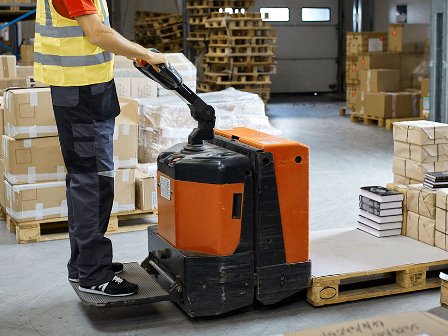
Is a Pallet Jack considered Heavy Machinery?

What is a pallet truck used for?

Is a dump truck considered heavy equipment?

What does heavy equipment mean to you? Is there a clear definition?

Automated Forklift Cost

AGVs (Automated Guided Vehicles) and AGCs (Automated Guided Carts) are automated material handling equipment using similar operating components and navigation methods.

Each is versatile and can offer as much flexibility as its intended design allows for moving a load from point A to point B.

In short, an AGC is a type of AGV but it is designed for lighter loads by virtue of its small chassis and low profile.

Automated Forklift Cost

Automated guided vehicle cost

It depends! There are unlimited unique situations.

AGV system costs depend on a number of variables that can greatly affect the overall cost.

  • What kind of AGV robots are we talking about?
  • How many AGVs are involved?
  • How complex is the installation?

The cost of a driverless robot depends on the type of vehicle:

  • starting at $ 15,000 for an AGC,
  • about $ 30,000 for a towing tractor,
  • $ 60,000 for an automatic pallet jack,
  • about $ 80,000 for an AGV forklift and
  • $ 150,000 for an automated VNA.

Automated Guided Vehicles

An Automated Guided Vehicles (AGV), is a mobile robot that can use one or more different navigation methods and uses computer controls to move loads and materials.

They are most often used in industrial applications to move materials through a manufacturing facility or warehouse. There are many different types of AGVs, including AMR, tugboat, forklift, loader, AGC, and more.

AGVs are designed to suit a multitude of applications, industries, environments, and load capacities, sometimes exceeding an impressive 250,000 pounds.

Automated forklift system

Autonomous forklifts have been a natural addition to the growing suite of remote operations solutions.

Now more than ever, the logistics industry is focused on workforce health and safety, operational resiliency, and vehicle uptime.

An unmanned forklift solution enables customers to optimize for these goals.

Real-time wireless communication software and unique remote human-in-the-loop approach enable logistics operators to deploy unmanned forklifts today with the highest levels of fleet uptime and workforce health and safety.

Trained human operators, who may be seated in a centralized control center or even in their own homes, can use software to remotely monitor, remotely assist, and remotely drive any forklift from up to thousands of miles away.

The interoperable platform also enables customers to add the same remote operation capabilities across multiple fleet including yard trucks, tuggers, warehouse robots, and other unmanned vehicles.
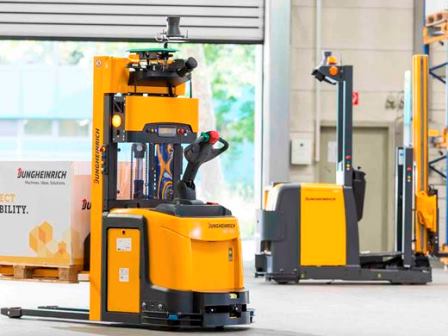
Automated Forklift Cost

How automated guided vehicles work?

How automated guided vehicles work?

Its movement is guided by a combination of software and sensor-based guidance systems. Because they move in a predictable route with precisely controlled acceleration and deceleration and include automatic obstacle sensing bumpers, AGVs provide safe movement of loads.
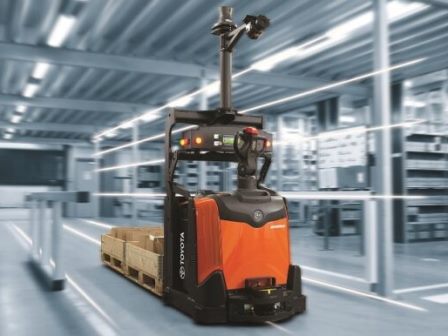
What is the difference between AGV and AGC?

AGVs (Automated Guided Vehicles) and AGCs (Automated Guided Carts) are both automated material handling equipment, utilizing similar operational components and navigation methods. In short, an AGC is a type of AGV but is intended for lighter loads by virtue of its small chassis and low profile.

More on this story

Automated Guided Vehicle Price

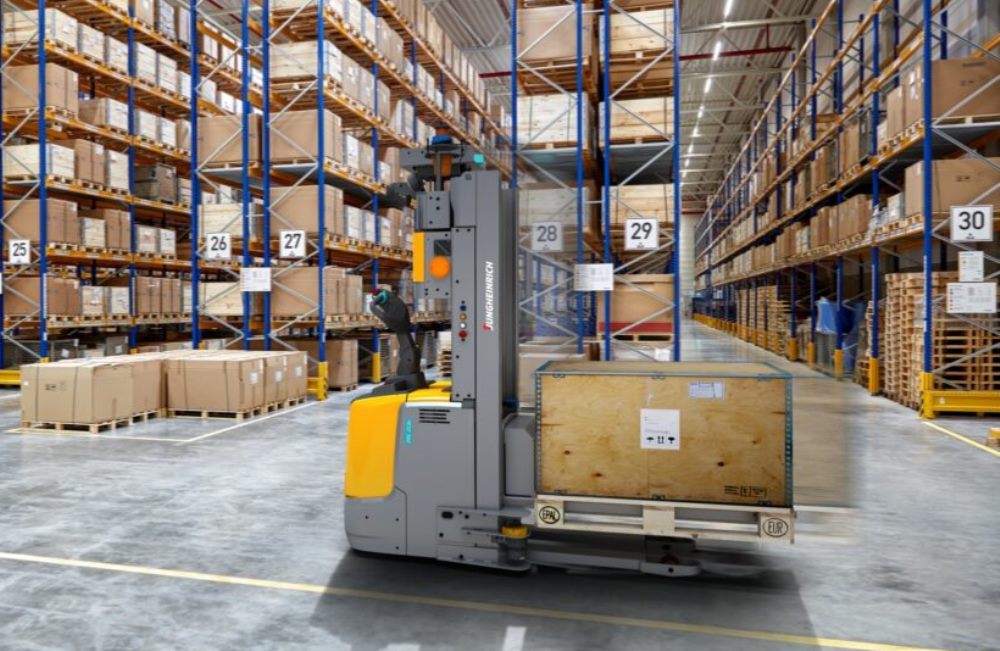
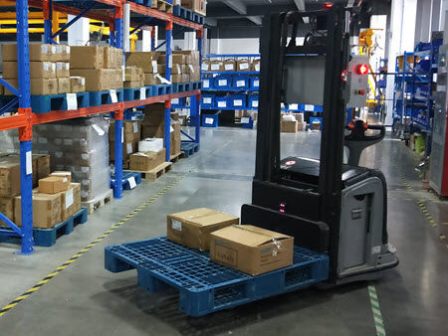
Robotic forklifts are increasingly becoming a mainstay in manufacturing facilities and distribution center operations

Robotic Forklift

Robotic forklifts are increasingly becoming a mainstay in manufacturing facilities and distribution center operations

Autonomous Forklift

When using transport robots you increase the productivity of your company significantly.