All posts by Loganx

Professional Web Writer | Motor Enthusiast | Content Creator | Logan is a dedicated and skilled web writer, passionate about engines and machines and with a talent for creating engaging and informative content. She specializes in writing about a diverse range of topics including construction, forklifts, heavy equipment, excavators, etc. SEO Optimization: Proficient in SEO best practices, ensuring high visibility and engagement for all published content.

Pallet Rack Safety Regulations

Pallet Rack Inspection checklist – Pallet Rack Safety Regulations: Few warehouse operators have aggressive in-house rack inspection programs in place. Forklift accidents, collisions, dropped or misplaced loads, and other incidents that result in rack damage may or may not get promptly reported.

  • When do warehouse storage racks need an inspection?
  • When was the last time you had your warehouse and storage racks independently inspected for integrity and safety?
  • Would any of your supervisors or line managers respond, “What do I mean “independent” inspections?
  • Or — of greater concern — would they scratch their heads and ask “What do you mean rack inspection?”
Pallet Rack Safety Regulations

Pallet racking inspection checklist 

But even when a forklift hitting the front end corner of a rack gets reported, a typical management response never goes beyond “let’s go take a look,” as if a quick visual inspection alone will confirm that load limits and structural integrity of the rack have not been affected by the accident.

It’s as if, while other hazards “stand out” to otherwise reasonable and prudent supervisors, there often is an absolute lapse in concern for 100,000 pounds of rack and product collapsing in a pile across the tight confines of a busy warehouse.

It is especially important to have trained, competent, and concerned rack safety personnel when there is a high degree of activity in the warehouse, where there is the greatest risk of rack damage due to mechanical materials handling equipment.

When a rack has been struck by a forklift, one of the first priorities should be to identify any unsafe components in order to reduce the dangers of collapse.

Specific precautions and taking damaged segments out of service immediately may be the only prudent response to prevent possible risk of injury to personnel caused by continued use of damaged racking.

Rack safety is the employer’s moral responsibility and comes with substantial legal liabilities (civil and criminal). Racking inspection checklist – But supervisors should also realize the potential hidden costs of a rack collapse:

  • Replacing materials and damaged goods
  • Use of temporary storage facilities
  • General disruption
  • Workers’ compensation, general liability, and
  • Insurance rate hikes following the loss
  • Legal expenses from defending actions resulting from an accident
  • Potential fines relating to violations of statutory safety requirements.
Pallet Rack Inspection checklist

Pallet rack safety regulations

Warehouse racking safety checklist:

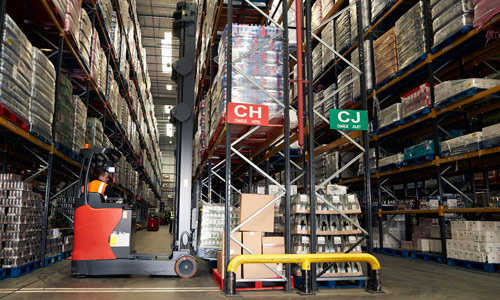
If you operate mechanical handling equipment, it’s critical to inspect your pallet racks. They are excellent storage equipment, but when damaged or incorrectly loaded or installed, they can become dangerous. It’s flat-out smart business to engage in regular inspections.

The process will not only help you comply with safety regulations and work safer, but it will also help you spot poor practices in your operation that might otherwise go unnoticed.


Pallet Rack Inspection checklist

Racking design and Materials Handling Equipment

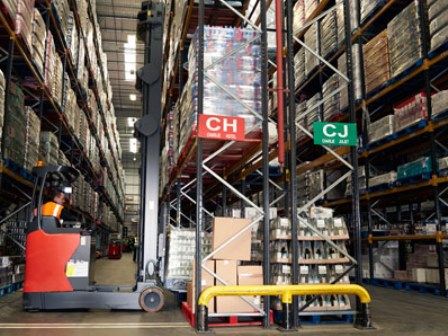
Storage racking for products on pallets should be designed specifically for the size, shape, and weight of the products being stored. The racking design should be compatible with the pallets and the materials handling equipment in use within the workplace.

Aisle width should be matched to the turning circle of the forklift or other materials handling equipment used to put-away, replenish or pick.

Safe Working Loads

Regular inspection of racking should be conducted both in-house and independent to check its integrity, identify maintenance requirements, and to ensure racking is not overloaded.

Do not exceed the Safe Working Limit (SWL) for the unit load or the safe working total load per bay for the racking.

There should be some means of ensuring that workers using the racking are aware of its Safe Working Limit; e.g. having one or more signs inconspicuous locations, such as at the end of all aisles, which contain the following information:

  • racking manufacturer’s name and trademark.
  • safe working unit load.

Safety Sign Regulations

It is now a legal requirement that if a risk or hazard exists, the employer after appropriate measures have been taken to reduce or eliminate that risk or hazard shall use appropriate safety signage to advise, warn and instruct personnel of the nature of the risks – and take the necessary measures to avoid or protect against them.

It is also a requirement that each employer provides (and ensures that each of their employees receives) accurate, comprehensible, and relevant information regarding safety signage. Also, they must ensure that suitable and sufficient training is given in relation to the meaning of safety signs and the measures needed to be taken in relation to them.

Altering the racking design or components

Any alterations to the racking should be scrutinized by a competent person and should take into account the effects on the Safe Working Limit. Operating procedures, signs and drawings should be amended accordingly.

In a broad sense, a competent person is an individual who, by way of training and/or experience, is knowledgeable of applicable standards, is capable of identifying storage equipment hazards relating to the specific operation, is designated by the employer, and has authority to advise on appropriate actions

Physical alterations to uprights, bracings, beams, or components, such as welding on additional components, should not be made.

Replacement of uprights, bracings, beams, clips, or other components should be with compatible parts. If not practicable, an engineering report should be obtained confirming the integrity and SWL of the racking with these alternative replacement parts.

Operating instructions

Procedures need to be in place within the workplace to ensure that operations are conducted safely with regard to the racking design, the load and capability of lifting equipment, a typical sign that can be used to remind managers and employees of workplace procedures for the safe use of racking.

Operating instructions need to be provided which include but are not limited to:

  1. the correct application and use of the equipment
  2. the safe working loads to be adhered to
  3. prohibitions on unauthorized alterations

The requirement to report any damage incurred due to impact so that its effect can be inspected and assessed (see also Inspection of Pallet Racking below).

Goods on Pallet to be stored in racks

Goods stored on pallets destined for storage are termed Unit Loads. The design of the pallet should take into account the nature of the goods in the unit load. A change in the pallet design should not be permitted unless the:

  • racking design is suitable to support the weight of the unit load, and
  • pallet design keys into the racking and so prevents the unit load from being dislodged.

An assessment of any change to the pallet design should be conducted by a competent person to prevent storage problems arising, such as:

  • changing from wooden pallets to post pallets meaning that the legs do not key into racking
  • using pallets larger than allowed for in double pallet racking, as they can overlap pallets behind or push them off their supports
  • using pallets smaller than allowed for in the racking, as they can drop through
  • using skid pallets in racking without timber decks, as they can drop through.

Boxes, cartons and other such items stored on pallets should not overhang the pallet. Unit loads on upper levels containing boxes, cartons, and other loose loads should be effectively prevented from falling by wrapping, strapping, or by some other means.

Anti collision system for racking

Collision protection: Bottom portions of those frames that are exposed to possible collisions by forklifts or other moving equipment should be protected with post protectors.

Damage reporting: Employees are responsible to report any damage or near-miss occurrences, however minor, to the supervisor so that its effect on safety can be immediately assessed and the hazard eliminated or risks reduced.

Pallet Rack Inspection checklist

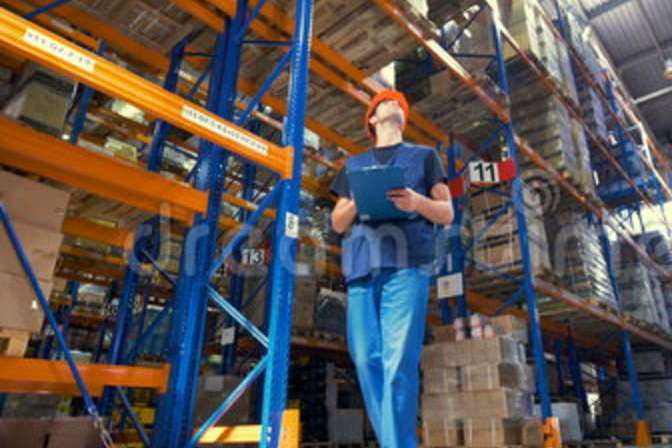
Pallet racking safety inspections

Pallet Rack Inspection checklist – warehouse inspections what to look for?

Safe working limits

Are rack load signs posted? …Check that the bays conform to the SWL signs provided by the designer/installer and that the racks have not been altered.

Pallet rack upright sizes

Uprights and footplates

Are uprights damaged? … If the upright shows significant damage, or is twisted or contains splits or cracks, then replace it or splice a new section in. If the upright is damaged and is to be replaced, ensure the footplate is also replaced as it will also have sustained damage.

Are splices in good condition? … Check the condition of any splices. Ensure that they are in accordance with the manufacturer’s technical specifications.

Out of Plumb Racking

Is the racking vertical? … Out of plumb racking is usually due to incorrect installation. Contact the manufacturer or installer.

Pallet rack Braces

Are racking braces damaged? … Replace bent horizontal or diagonal braces. See the attached table.

Are floor anchors installed? … Check that floor anchors are installed and are not damaged. Replace as required. If the floor anchor has been damaged, it is likely that the footplate will have also received damage and may need replacing.

Pallet rack beams

Are beams overloaded? … A large amount of beam deflection indicates the overloading of the racking (the maximum deflection of the beam should not exceed L/180 of the box sections length). Where two beams connect at an upright, the beam connectors should remain reasonably parallel. If racking is overloaded or has occurred previously, the beam connectors will form a `V’. This is a quick and easy guide.

Are beams damaged? … Check for obvious signs of beams being hit by a pallet or forklift. Damaged beams should be replaced.

Are beam connectors or safety clips missing? … Examine beams for damage and replace missing clips immediately. If clips are regularly being dislodged, contact the manufacturer or installer to determine why they are being dislodged, and implement corrective action.

Has a beam popped out of its upright? … Check that beams have not popped out of the upright and are suspended on one end connector only.

Are welds damaged? … If a beam has been hit and may only show minor damage, ensure welds are checked by a competent person for cracking.

Working under pallet racking

Can you walk under pallet racking?

There shouldn’t be any unsecured loads being stored on a pallet at height and a scheme of racking inspections and damage reporting should ensure that the racking is stable. Lighting may be an issue.

Does shelving need to be inspected?

Shelving does require regular inspection to ensure it is safe, particularly if it is in the vicinity of where materials handling equipment such as forklifts are used because the damage will be more common.
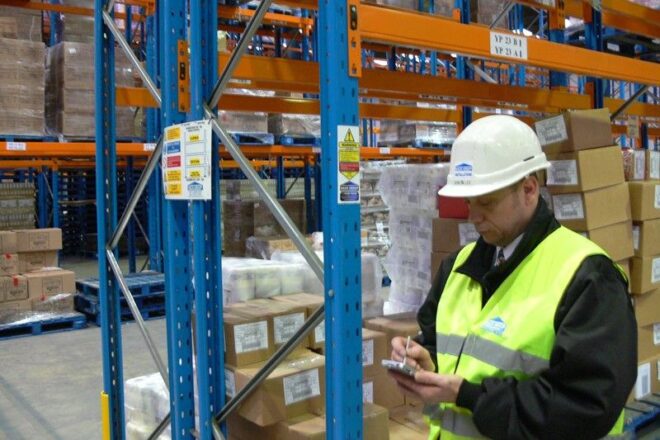
Pallet Rack Inspection checklist

The most read

More on this story

Pallet Racking safety standards

Selecting warehouse storage rack systems involves careful planning and appropriate system choices to ensure you get the most from your capital expenditures, reduce overhead, and respond quickly to distribution needs.
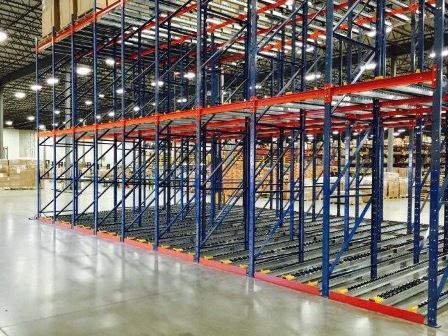
Pallet Racking Types

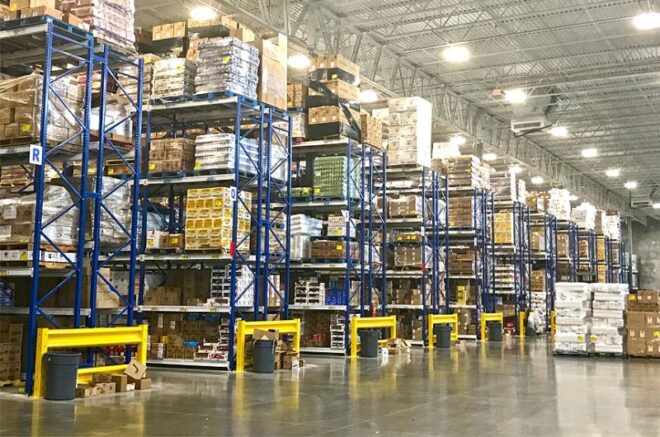
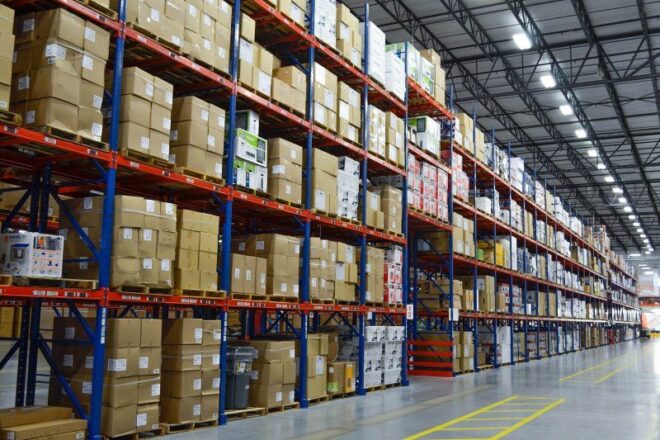
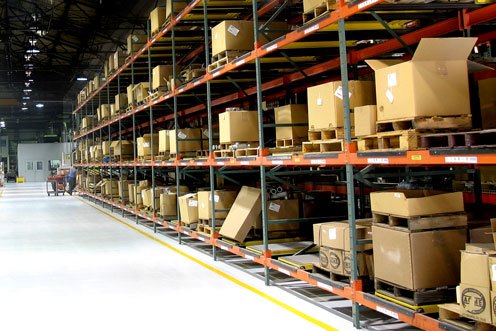
Pallet racking is a material handling storage rack system designed to store products and materials on pallets in horizontal rows and on multiple levels. Most warehouses prefer using pallet racking systems to maximize the storage space they have available.

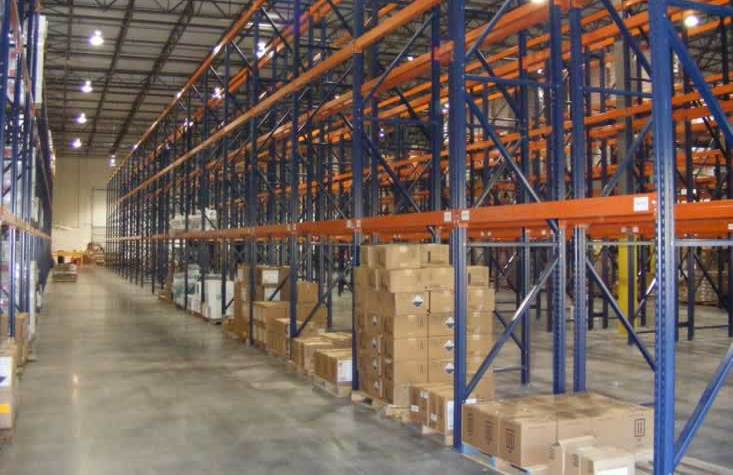
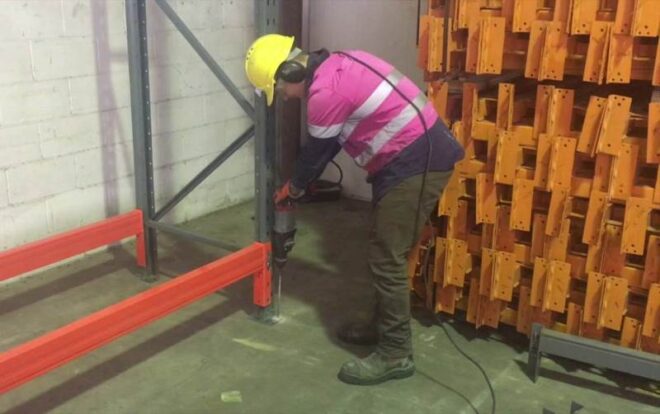
How to Secure Pallet Racking to the floor?

Pallet storage and pallet rack installation jobs require an experienced crew with the proper tools and equipment. Many people involved in pallet racking jobs don’t really know how to install a pallet rack. The installation needs to adhere to the design created by skilled engineers who took into account load levels, environmental considerations, building codes, and other important factors when designing the system.

How to secure pallet racking to the floor?

As complex as modern warehouse racking systems are, conveyor installation is a magnitude greater in both complexity and difficulty of installation or configuration. Larger conveyor installation jobs are jobs that should only be attempted by professionals. Many factors must all come together for a conveyor system to function properly and efficiently.

How to secure pallet racking to the floor?

How to secure pallet racking to the floor?

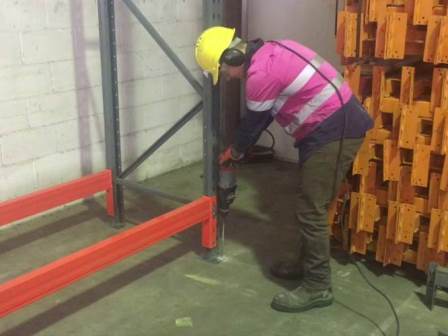
How to Anchor Pallet Racks to Concrete? … Pallet racks are essential to warehouses and retail centers, as well as to many industrial and commercial facilities. Regardless of the facility, all racks must be anchored for stability and security.

There are several common types of pallet racks available, with each type designed for specific functions.

  • The type of racking required depends on certain factors:
    • desired storage density
    • inventory rotation
    • storage design
  • Some types of pallet racks include:
    • selective
    • structural
    • push back
    • narrow

Once the type of pallet racking has been determined, a floor plan must be designed to allow for adequate aisle spacing. If the storage space requires a tighter configuration, then pallet racking designed for narrow aisles is available.

After the facility racking floor plan is designed and the racks are assembled, the decision to purchase the anchors to secure the racks to the concrete slab must be carefully considered.

How to secure pallet racking to the floor

Pallet rack anchoring standards

Warehouse racking codes

Standards for Securing Pallet Racks – warehouse racking codes:

The ANSI document contains recommendations for securing storage racks of various types and heights to increase their stability and decrease the chance they will be accidentally pushed or pulled over.

This is typically achieved by two means; first is to insert anchor bolts into the floor through holes in the base plates provided by the steel storage rack manufacturers. And second is to secure the racks to either the wall (if a single row is positioned along a wall) or to each other (if positioned back-to-back) to provide additional stability.

The exact means and methods to be used to secure shelves and racks are usually dictated by several factors, including but not limited to the height/base width ratio of the racks, whether or not the racks are loaded/unloaded with forklifts, and even if there is a potential for seismic activity in the area.

There are also methods discussed in the ANSI document for securing storage racks and shelves installed in different configurations, and for protecting them from damage caused by strikes from forklifts and other mobile equipment.

In addition, the recommended means and methods to secure storage racks are also typically included in the manufacturer’s information that accompanies the racks when purchased.

How to secure pallet racking to the floor

Standard pallet rack dimensions

Pallet rack safety measures – Standard pallet rack dimensions:

Before you construct your pallet racks, however, it is essential to consider safety measures that must be taken to ensure the well-being of workers. When installing new shelving, purchase additional safety accessories to prevent damage during the shelving’s installation and subsequent use.

When installing pallet racks, you must address several potential safety concerns to minimize risk and protect your business.

The first of these concerns is the layout of the warehouse where the company needs its industrial shelving.

Pallet rack anchoring requirements

Considering the type of inventory stocked, fulfillment rates, turnover, and other relevant factors are important when gauging safety accessory needs.

Safety guard rails are a popular choice for protection against layout-related accidents.

Another concern to take into account before construction is the protection of the pallet rack’s upright posts. You can accomplish this with a number of accessories designed to protect these weight-bearing columns from collision damage.

There are a large number of other safety options available, such as safety bars, backstop beams, rub rails, guide angles, et cetera. However, there is one safety accessory you should never neglect: Floor bolts.

The most read

More on this story

Pallet Racking Types

Pallet racking is a material handling storage rack system designed to store products and materials on pallets in horizontal rows and on multiple levels. Most warehouses prefer using pallet racking systems to maximize the storage space they have available.

Warehouse Racking Design

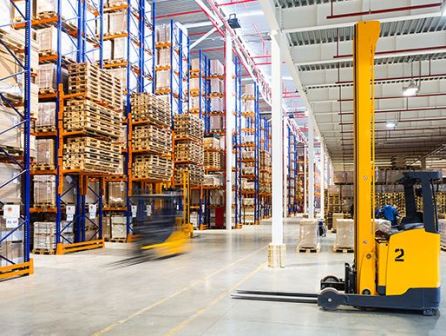
The efficient, safe design and use of pallet racking storage systems, pallets and materials handling equipment depend on a number of factors. This guide is intended to give an indication of best practice and advice to anyone involved in the planning of a new warehouse or storage facility.

Pallet Rack Design Layout

Pallet racking system – Pallet Rack Design Layout: Selecting warehouse storage rack systems involves careful planning and appropriate system choices to ensure you get the most from your capital expenditures, reduce overhead, and respond quickly to distribution needs.

Pallet racking systems are just as practical as the euro and industrial pallets themselves.

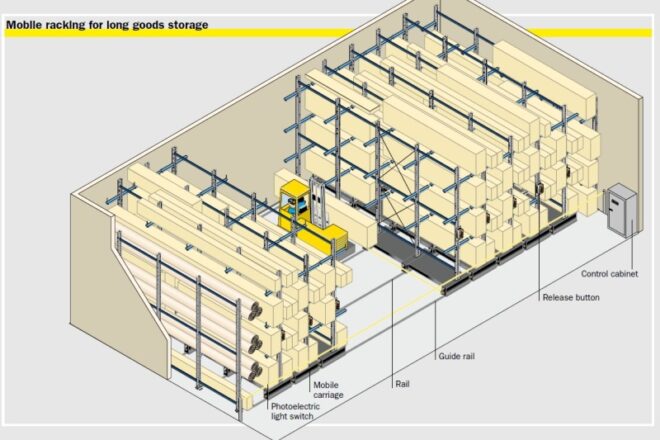
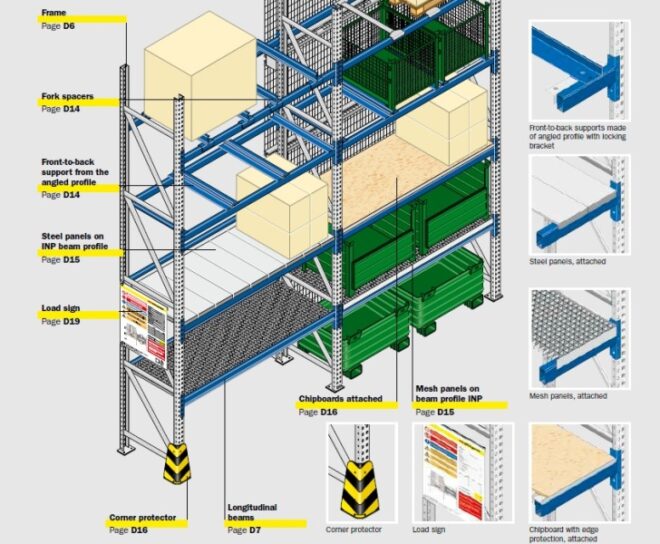
Whether flat pallets, mesh box pallets, or other load carriers –longitudinal beam racks for single or multi-space storage ensure excellent mobility for rapid goods turnaround. Multi-space longitudinal beam rack systems are used in diverse areas ranging from wholesale or spare parts warehouses in the electronics, engineering, and automotive industries.

Single-space longitudinal beam rack systems are ideal for storing goods with the same base area and different heights. Drive-in racking systems have proven their value especially when storing a very large quantity of a limited range of different articles.

Combined with suitable accessories, pallets, and containers, this solution enables products with the most diverse dimensions to be stored optimally.

Pallet Rack Design Layout

Warehouse racking system design

Whether setting up or replacing storage rack systems, warehouse operators are often confronted with an overwhelming number of choices. That can be daunting since their selections profoundly affect the “throughput” and the profitability of the operation. On the other hand, they may be offered limited choices because a rack manufacturer or dealer specializes only in certain types of racks, a scenario that is often even more problematic.

Warehouse racking system design:

Because warehouse storage and material handling have a pivotal impact on business, manufacturers, and distributors often turn to storage rack specialists to ensure that their warehouse systems fit their needs. Matching business needs with the appropriate the rack system is critical and entails asking the right questions, as well as planning for the flexibility you need as your business grows and evolves. That flexibility requires doing business with a supplier who can offer a variety of rack system designs, structural materials, accessories, and in some cases, customized equipment.

Pallet Rack Design Layout

Storage design

Because no two warehouses are identical in every respect, it is important to consider and resolve structural requirements and potential building obstructions. It could be that a variety of pallet rack systems of varying densities provide the best solution. Often a customized or modified rack system is needed. Working with suppliers who comply with essential safety and structural standards set forth by the Rack Manufacturers Institute (RMI) is also strongly advised. It may be worth retaining a Material

Handling Specialists to ensure accurate specification requirements and storage rack layout, along with a team of specialists that can help you navigate the increasingly complex process of storage design.

Pallet Racking Design Layout

Warehouse layout design

In order to determine your ideal storage solution, there are important safety and design considerations.

Product turnover rate

Product and Turnover: The type of rack, as well as the shelf elevations and storage bay width, will, to a great degree, be determined by your product and stock rotation requirements.

  • How many different product SKUs will be stored?
  • What type, size, and the number of pallets will be used?
  • How often will pallets be accessed?
  • Do you require FIFO (first-in, first-out) or LIFO (last in, first out)?
  • Will processing/picking operations require the integration of automation into your system?

Pallet rack weight capacity

Load Capacity: Load capacity takes into account maximum pallet load, average pallet load, as well as maximum carton load, average carton load, and storage utilization factor.

Rack frame

Rack Frame and Beam Material: The type and configuration of your upright rack frames are determined by both the capacity they need to support and their exposure to potential impact during loading and unloading. Unlike some rack suppliers, Steel King has manufacturing facilities that specialize in both hot-rolled (structural) and roll-formed steel, so it is your racking needs that determine the type of steel that is used.

Existing Facility Features

In addition to the floor space of your facility, take into account all features of your existing structure – ceiling height, sprinkler systems, columns, floor drains. Be sure to account for sloping floors within your facility, as you will be required to ensure that your rack uprights are plumb.

Check your slab-on-grade capacity. Can your existing concrete floors accommodate the weight of the system you plan to install? Do they require any special rack anchoring considerations? You will also need to map out your means-of-egress for both personnel and forklift access to ensure that maximum distances to egress are within code, especially for raised work areas.

Production Zones

Production Zones and Work Flow Areas: Consider the space needed for your production work to safely occur. This is especially important in manufacturing, where you have materials movement around equipment. For a stock and ship operation, adequate space is required for packing, shipping, and receiving areas.

Material Handling Equipment

The material handling equipment to be employed for the movement of the goods will impact rack design factors. Some of the items to be considered are the type, size, and number of pallets to be used, as well as the type of fork truck vehicle being used, required aisle width, and the maximum lift height of the truck

Industrial racking systems

Rack collapse – Industrial racking systems: Why are seismic specifications so critical to pallet rack design?

Seismic building code standards are becoming tougher and more pervasive: Most regions of higher seismic activity now require the seismic design of storage racks.

Seismic zone designations are changing: Seismic zone designations (0 to 4) are no longer in use. Instead, the United States Geological Survey (USGS) uses ground acceleration values, referred to as Seismic Design Categories (SDC) from A to F.

With seismic requirements increasing in many parts of the country and with a better understanding of structural performance during an earthquake event, these standards will continue to evolve, placing more demand on the rack design.

Because the RMI Standard is the recognized U.S. specification for the design, testing, and utilization of industrial steel storage racks, responsible rack users will want to demonstrate that their racks meet this recognized standard for seismic design.

Pallet racking system

Pallet racking suppliers

Rack manufacturers: RMI created the R-Mark Certification Program as a way for storage rack users and customers to clearly identify those rack manufacturers whose components and design are in accordance with the RMI Specifications.

One of the continuing trends within warehousing includes automation – in the form of both pick modules and automated storage and retrieval systems.

Both of these systems raise the stakes of a potential rack collapse – in terms of expensive equipment and the lives of people working within the structure. Rack systems should be designed, manufactured, installed, and used in accordance with seismic requirements for maximum safety.

Pallet racking system

High density storage

Consider storage density:

Choosing the right storage rack system involves a solution process, beginning with the flow of merchandise which will determine your density requirements – how “tightly” that merchandise should be stored.

Warehouses with high-density storage solutions usually have high or even complete turnover of inventories during specific intervals or seasons. During these times, merchandise is often stored en masse in large bays with few access aisles to maximize floor space.

Conversely, lower-density warehousing is appropriate for parts or retail distribution centers where custom orders are picked continuously to fulfill JIT or other time-critical requirements – bulk shipments coming in one set of dock doors and customized packages going out another set of dock doors. Often located near the center of a distribution center are rack-supported pick modules that specialize in this repackaging effort.

Pallet racking system

Pallet Rack Design Layout

Generally speaking, warehouse designers have to work with a space in which certain factors limit the surface area available. This is why the layout has to be carefully planned.

  • When deciding on the internal and external layout of a warehouse, there are three possible scenarios that could necessitate a different assignment of space:
    • the installation of new warehouses,
    • the extension of existing facilities and
    • the reorganization of those currently operating

Even though the last of these options do not involve making extremely important decisions that will affect the development of the business over the medium- to long-term.

Nonetheless, despite the specific circumstances, the general layout of a facility must cover all these needs: (Pallet Rack Design Layout)

  • Making the most of the available space
  • Reducing the handling of goods to a minimum
  • Providing easy access to the stored product
  • Having the highest rotation ratio possible
  • Offering maximum flexibility in the positioning of products
  • Controlling the amounts stored

To achieve these objectives, the first step is to create a warehouse layout, where the design of the warehouse is represented in the form of a plan.

The most read

More on this story

Pallet Racking Types

Pallet racking is a material handling storage rack system designed to store products and materials on pallets in horizontal rows and on multiple levels. Most warehouses prefer using pallet racking systems to maximize the storage space they have available.
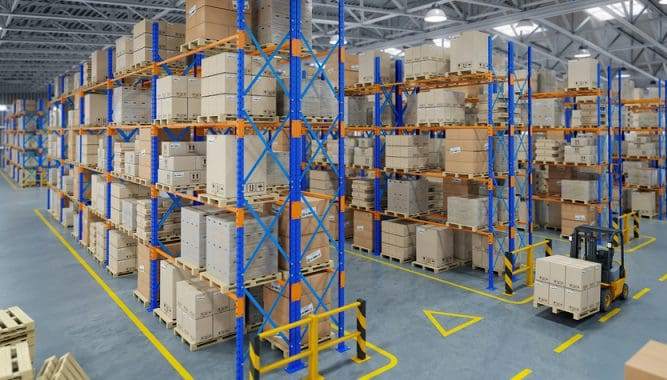
How to secure pallet racking to the floor?

Pallet storage and pallet rack installation jobs require an experienced crew with the proper tools and equipment. Many people involved in pallet racking jobs don’t really know how to install a pallet rack. 

Pallet Racking Types

Pallet Racking Types: Pallet racking is a material handling storage rack system designed to store products and materials on pallets in horizontal rows and on multiple levels. Most warehouses prefer using pallet racking systems to maximize the storage space they have available.

Since they come in a variety of systems depending on your specific needs, it can often be difficult to decide what type to choose of pallet rack for your warehouse. Pallet racking is made up of horizontal cross beams that attach to vertical upright frames – thus creating industrial shelving to support palletized material that can be easily accessed by forklifts.

Pallet Racking Types

Types of pallet racking

Types of racking system:

However, while these systems have significant storage advantages, a lot needs to be considered when adding pallet racking to your warehouse.

To make this process easier for you, here’s a breakdown of the most common types of pallet racking systems:

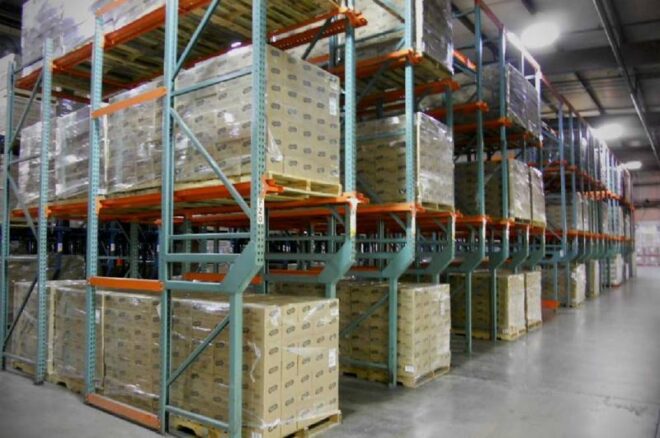
Selective pallet racking

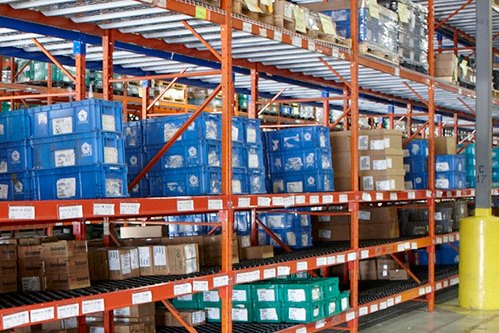
The most versatile choice, selective pallet racking is popular as it provides immediate access to every pallet position – meaning you can have as many SKUs as you have pallet positions. Making it the most flexible solution for changing warehouses.

  • Easiest to reconfigure / add-on
  • Lowest initial investment
  • Highest operating costs
  • Least dense
  • Ideal for low volume; high SKU count
  • FIFO inventory rotation

Given the standard nature of the product and limited engineering requirements, it has the lowest initial investment. But, it requires numerous aisles and has the lowest storage density.

The industry-standard for the selective rack is teardrop style pallet racking. The boltless hardware-free design featured on modern brands makes selective racking easy to assemble, reconfigure and re slot.

Double-deep racking, a variant of the standard selective rack allows pallets to be stored two-deep, but still maintains accessibility. To access the rear pallet load, the front pallet position must be empty, and you must have a forklift that can reach two pallets deep. Upper levels can be fitted with guide rails to assist forklift drivers in locating pallets.

To ensure FIFO accounting, two pallets with the same product are stored in a slot of the double-deep rack.

Selective pallet racking

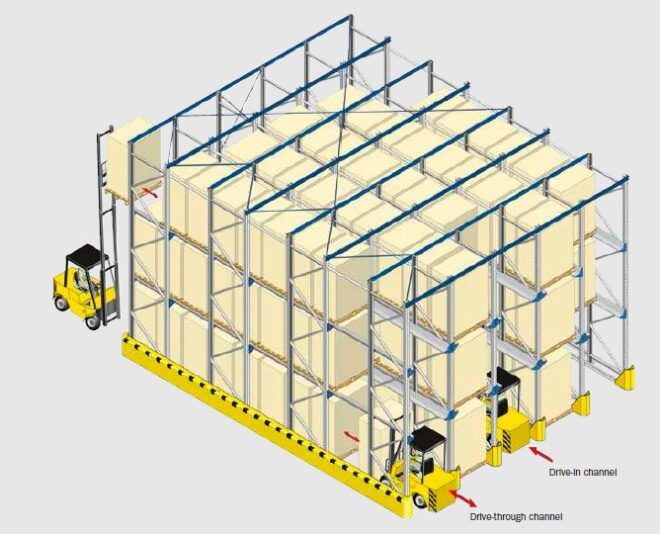
Drive in drive through racking system

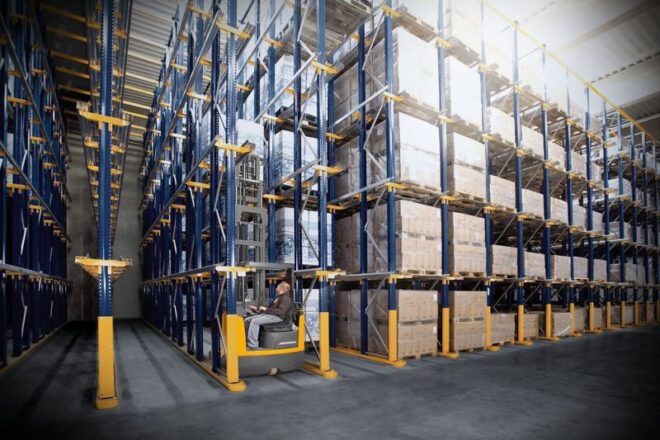
By eliminating aisles drive-in rack prioritizes density over selectivity to deliver maximum storage density. In fact, a drive-in rack system can increase pallet storage by as much as 60% – 75% when compared to a selective rack. But, offers less selectivity than selective racking.

Each bay is typically dedicated to a single product. They work well where an entire bay of product is moved at once, such as in staging products for shipping. Mostly used when you have seasonal items that move quickly in and out of inventory.

When you have limited space or high operational costs like cold rooms and freezers. Drive-in systems are designed for the specific product they are storing. The highly engineered nature of the system makes it difficult to reconfigure or re-slot a drive-in or drive-through system.

  • Ideal for high volume; Low SKU count
  • Greatest storage density
  • Low initial investment
  • FIFO inventory rotation (drive-through)
  • LIFO inventory rotation (drive-in)

A variant of a drive-in, the drive-through rack has an entrance at both ends of the system. While the additional entrance reduces storage density, it allows for FIFO inventory rotation.

When used incorrectly, “honeycombing” can potentially occur. Honeycombing occurs when excess racking goes unoccupied due to poor inventory cycling.

Lower initial investment than a pallet flows racking system.

Designing the system out of structural racking limits damage from fork truck operators driving in and out of the system and lowers ongoing operating costs.

Drive in drive through racking system

Push back racking system

Push-Back Racking: It requires less space than flow racking because you don’t need an aisle at the back to load the product. Unlike a single-deep pallet rack, a dynamic pushback system allows the storage of pallets two to five deep. Unlike drive-in rack, push-back provides easy access to a variety of different SKUs. Pallets are stored behind each other in a series of nested carts and are loaded from the same side of the system, eliminating separate aisles for each function. When one pallet is pulled, the one behind it rolls forward.

It can decrease labor costs and is relatively low maintenance.

Similar to flow rack, except the pallets, are loaded and unloaded from the front of the system. The pallets can rest on either nested carts or gravity rollers. You only need one aisle for unloading and loading. But, can only be stored 4 to 5 pallets deep. Operates under a LIFO inventory system since the most recent pallet is the first one available.
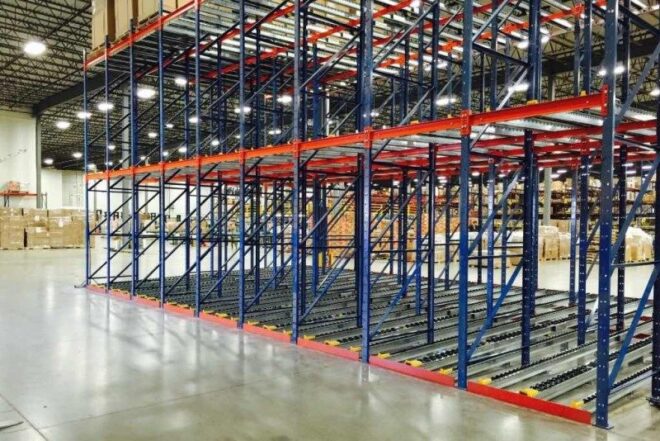
  • Similar SKU access to selective, but more density
  • Hard to reconfigure due to engineering requirements
  • Ideal for medium quantities of homogenous products
  • High initial investment
  • LIFO inventory rotation

Great alternative if you don’t have enough product to satisfy the ‘Rule of Three’. With ever-increasing pressure to decrease inventories, few have enough pallets of a single, particular SKU to fully utilize a drive-in system. Hence, pushback, which allows users to efficiently store smaller lots, is growing in popularity.

Push back racking system

Pallet flow racking system

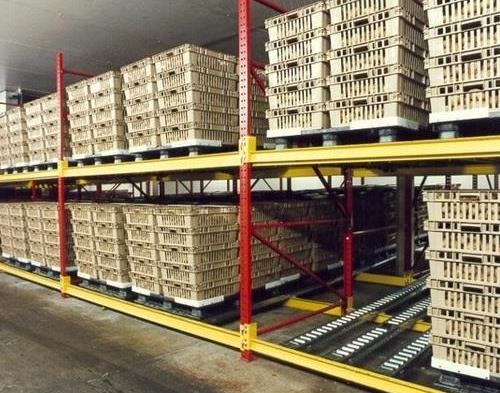
Pallet Flow Racking: Combines a stationary rack structure with a skate wheel or roller conveyor to create a dynamic storage system.

Pallets are loaded into the back end of the rack then travel down the slightly inclined plane of the conveyor so they can be retrieved from the front. Because there is more engineering involved, they are more expensive than others.

Gravity flow pallet rack systems use metal rollers and the force of gravity to feed pallets to the front of the system, where they’re unloaded. Like drive-in, they maximize storage space by minimizing aisles. Unlike drive-in systems, they operate on a first-in, first-out (FIFO) inventory rotation.

They are custom engineered to meet a need and can store as many as 20 pallets per storage lane. They are usually made using structural racking. Pallet flow has the highest investment when compared to other storage options, but there is no need for drivers to enter the system, so operating costs are lower than drive-in rack since it isn’t damaged as often.
  • High density, low SKU access
  • Ideal for coolers, freezers or other expensive operating environments
  • Automatic FIFO product rotation
  • Hard to reconfigure due to engineering requirements
  • Highest initial investment

In order to ensure you have enough product to make a pallet flow system work, you’ll want to consider the “Rule of Three”. This general rule is a quick way to determine if you have enough pallets to make the system work. For example, if you are considering a 15 deep pallet flow rack system, you’ll want to have a minimum of 45 pallets of that specific product. Any less and you’ll find yourself with a system that isn’t being utilized and/or honeycombing.

Once loaded, FIFO product rotation is automatic and the rack eliminates the need for additional labor or forklift operation to arrange loads. Forklifts are only required for the initial and final unloading. Since only two aisles are necessary, aisle space can be reduced by 75% and up to 100% more products can be stored than a traditional selective pallet racking system.

Pallet flows entry guides can be installed to improve pallet flow in the lanes and allow more forgiving pallet placement.

Pallet flow racking system

Carton flow racking

Accommodates high-volume order picking and reduces the need for operator activity. Similar to pallet flow racking, carton flow racking uses gravity to ‘flow’ cartons and boxes down rollers.
Carton flow has numerous advantages: It operates with FIFO order picking, it can lower labor costs and it is compatible with existing teardrop style pallet racking.

  • Ideal for picking by the piece or case
  • Easy to reconfigure
  • Highest SKU access
  • Automatic FIFO inventory rotation
Carton flow racking

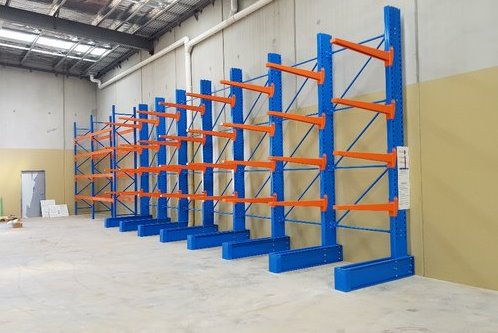
Cantilever racking system

Designed for products that are long, irregular, and awkwardly shaped. They are ideal for storing non-standard sized items, such as tubing doors and packs of timber or furniture. Relatively easy to install and reconfigure. It is not ideal for storing pallets.

  • Ideal for long, bulky items
  • Easy to reconfigure
  • Single-sided can be converted to double-sided

Ideal for storing long items in continuous horizontal runs because there are no upright frames in the way. Lacks front side obstructions, making loading and picking easier. It can be built as high as service machinery will go. Single-sided can convert to double-sided.

Cantilever racking system

Racking system design

A properly designed racking system can increase productivity and add significantly to your bottom line. This is especially important at a time when labor is scarce and the price of warehouse space continues to increase.

Pallet racking systems can typically be divided into two broad categories: low-density systems that allow easy access to product or high-density systems that make better use of space but limit access to stored product. Given the unique nature of each system, typically see two or more systems in a warehouse.

Any storage solution should target 75 percent occupancy as the minimum acceptable utilization. But, when utilization surpasses 85%, there is typically a corresponding reduction in warehouse productivity. In many cases, the lifespan of a warehouse can be extended by simply changing the type of storage systems in use.

But, before analyzing any particular system you’ll want to collect some basic information:

  • Capacity needs: Number of SKUs / products and the number of pallets per product
  • Dimensions of a typical pallet load
  • Do You Need FIFO or LIFO Accounting?
  • Typical incoming and outgoing quantities and picking profiles
  • How often do you need to access the product?

Combining different types of teardrop style pallet racking with a warehouse execution or management system offers optimum efficiency and use of available floor space. As a result, you will reduce the costs of managing inventory, including damage, obsolesce, and carrying costs.

What are the different types of pallet racking?

What are the different types of pallet racking?

To make this process easier for you, here’s a breakdown of the most common types of pallet racking systems:
-Cantilever Racking.
-Selective Racking.
-Push Back Racking.
-Drive-In Racking.
-Pallet Flow Racking.
-Carton Flow Racking.

What is selective pallet racking?

Selective pallet racking is the most commonly used pallet racking system. These systems are called “selective” because they allow users to select any pallet load from the pallet racking system without having to move any other pallets.

The most read

More on this story

Pallet Racking system

Selecting warehouse storage rack systems involves careful planning and appropriate system choices to ensure you get the most from your capital expenditures, reduce overhead, and respond quickly to distribution needs.

How to secure pallet racking to the floor?

Pallet storage and pallet rack installation jobs require an experienced crew with the proper tools and equipment. Many people involved in pallet racking jobs don’t really know how to install a pallet rack. 

How to read Forklift Load Capacity Chart

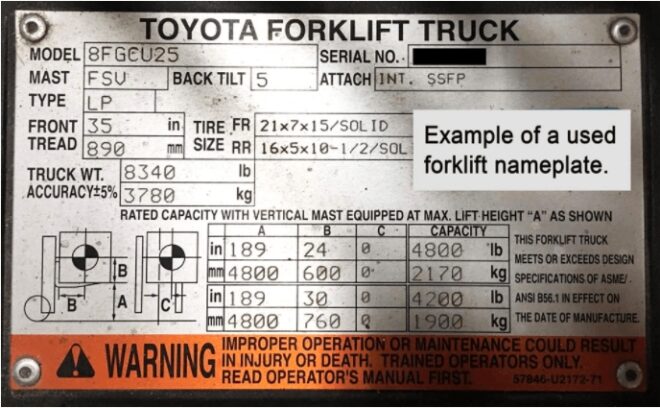
True it is to say that every forklift has a data plate that is designed to give the employer and the operator the information necessary to prevent accidents. True it is that the data plate is very rarely read or referred to by the operator – the majority of drivers would not have a clue as to what is safe or not. How to read forklift load capacity chart?

How to read Forklift Load Capacity Chart

Forklift load capacity chart

What is a Forklift load capacity?

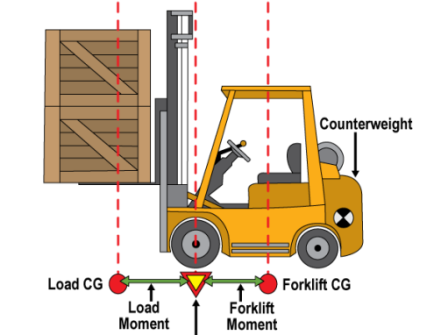
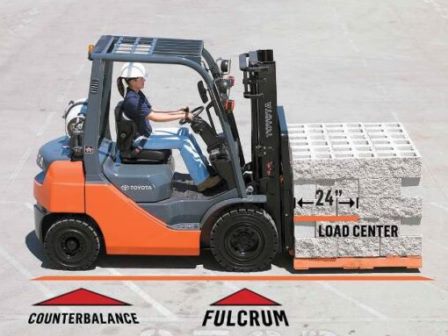
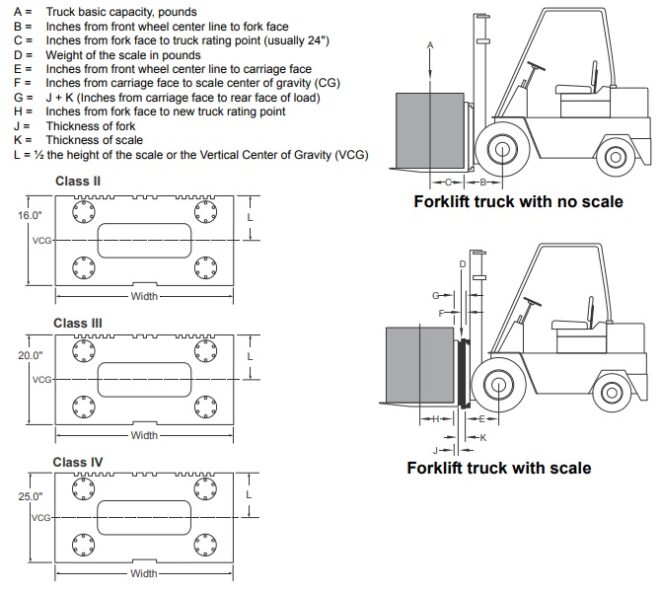
The stated capacity of a forklift only applies to the load center indicated on the capacity plate. If the load’s center of gravity is not centered at the specified position, the forklift’s capacity will be reduced. Loads come in all shapes and sizes, not just symmetrical boxes.

How to read Forklift Load Capacity Chart

Read Forklift Load Capacity Chart

Typical questions an operator may need to consider are things like:

  • How are the loads packaged and their weight?
  • Will they need to use a fork carriage or some other attachment?
  • How high and how far will they need to retrieve or place the load?

I believe that data plates are not user friendly. The vast majority of operators can not explain what the load center distance refers to. Manufacturers have done their own thing since day one, there is no common data plate design therefore confusion is abundant.

Some plates have multiple masts on them, which one applies?

You Can’t, there is not the required information given to calculate it.

Does the data plate include the side shift or not, because some of the manufacturers include the side shift as standard fitting and not an attachment they do not specify an altered safe working load and that would be ok if one standard was adhered to so that operators can clearly ascertain the safe working load (SWL)

One chart must provide the information for all possible situations on that particular machine.

How to read Forklift Load Capacity Chart

Forklift capacity plate information

These plates are a requirement of OSHA regulation and must be displayed on all forklifts approved for service. The data plate must include data and approval provided from a nationally recognized testing laboratory that has verified the listed specifications for the forklift. The initial data plate is installed by the manufacturer and it is important for any operator to review, verify, and update information as needed.

What information is on a forklift data plate? – Sometimes referred to as a capacity plate or a forklift nameplate, the forklift data plate includes important information such as weight, fuel type, and forklift load capacity. Associates need to read the data plate during training and before use to help build the culture of safety in your facility.

  • Relatively quickly, you’ll need to know some quick information about your forklift’s capabilities.
  • Luckily, a forklift data plate is installed on every truck on the market to help you understand what your forklift can do and provide vital information.

Forklift data plate requirements

It is the responsibility of the operator to understand the capabilities of each forklift and to properly maintain the data plate to ensure it is legible and complete. Recommended best practices include conducting proper training, using durable and corrosion-resistant nameplates, and documenting important information related to the forklift operation and maintenance based on the specifications. It is also important never to operate a forklift with a severely damaged or missing nameplate.

The forklift data plate can be found on the instrument panel near the operating controls:

Basic Information

  • Brand
  • Model
  • Serial Number
  • Forklift Type

Parts & Components Information

  • Mast Type
  • Front Tire Tread
  • Tire Sizes
  • Tire Type

Weight & Load Information

  • Truck Weight
  • Battery Weight
  • Attachments Included In Weight Calculation
  • Back Tilt
  • Forward Tilt
  • Load capacity
  • Maximum Lift height
  • Load center distances
  • Down rating of lift capacity (if the mast is fitted)
  • Down rating for attachments (as specified on the capacity plate)

The most read

Forklift Capacity Calculator

The capacity factor is important in your selection regardless of whether you are buying the truck with the attachment or are adding the attachment to a truck yourself.

More on this story

How to operate a stand-up forklift?

Two main ways of operating a forklift exist. Operating while sitting down, and operating while standing up.

Powered Industrial Truck Types

Powered Industrial Truck Types: Powered industrial trucks, commonly called forklifts or lift trucks, are used in many industries, primarily to move materials. They can be used to move, raise, lower, or remove large objects or a number of smaller objects on pallets or in boxes, crates, or other containers.

Powered Industrial Truck Types

Types of powered industrial truck

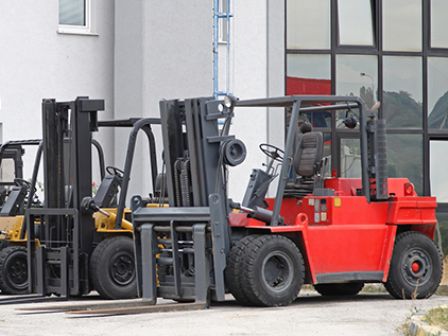
Forklifts and their many cousins in what OSHA lumps together as “powered industrial trucks” are among the most common vehicles on worksites – so common that it’s easy to take these workhorses for granted.

The number one rule is that anybody who uses a forklift must receive formal classroom training and hands-on training in its use and safety procedures.

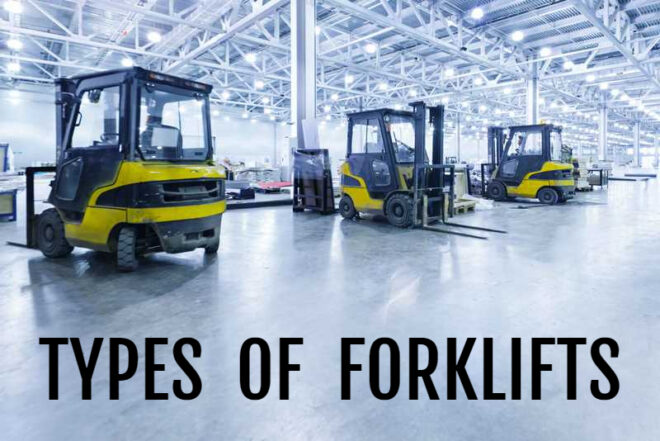
The term forklift truck is a fairly broad term that can be used for a number of different vehicles. When people think of forklifts, they usually imagine the small vehicle with two forks on the front that’s used for lifting pallets. However, forklift trucks come in a number of different sizes and models.

With so many forklift types to choose from it can be difficult to find the forklift perfect for your environment. Choosing the wrong forklift can waste time, money, and effort. Let’s take a look at some of the most popular forklift classifications. (Powered Industrial Truck Types)

Powered Industrial Truck Types

Electric Motor Rider Trucks

Class 1 electric motor rider trucks:

They are ideal for applications where air quality and fuel fumes are a concern. Most class one forklifts are used indoors with cushion tires designed for use on smooth floors. They can also be outfitted with pneumatic tires and used in dry, outdoor applications.

Electric Motor Narrow Aisle Trucks

class 2 electric motor narrow aisle trucks:

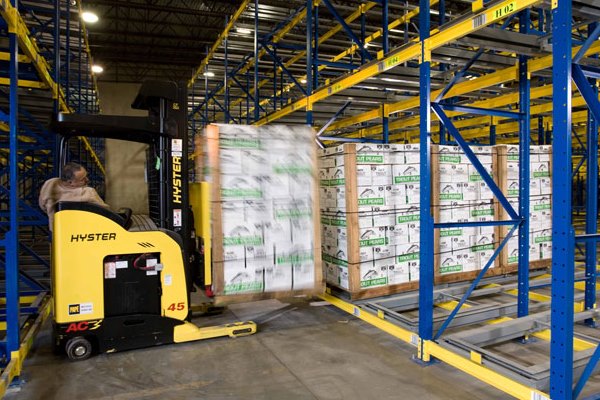
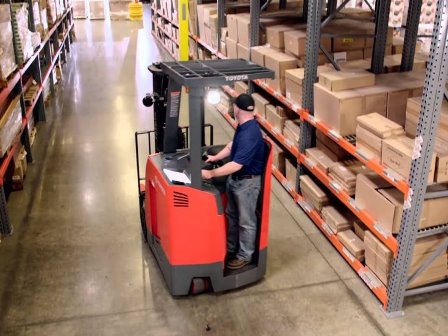
Operations that need to maximize their storage space use narrow-aisle material handling equipment such as reach trucks and order pickers to handle pallets and move inventory. These class two lift trucks need minimal space to operate and are powered by an electric motor.

Electric hand trucks

class 3 electric motor hand truck:

These are hand-controlled forklifts, meaning the operator is in front of the truck and controls the lift through a steering tiller. All controls are mounted on the top of the tiller, and the operator moves the tiller from side to side to steer the truck. These vehicles are battery-powered, and the smaller capacity units use industrial batteries.

Internal Combustion Engine Trucks

class 4 Internal Combustion Engine Trucks: (Solid/Cushion Tires)

These forklifts are used inside on smooth dry floors for transporting palletized loads to and from the loading dock and the storage area. The cushion-tired forklifts are lower to the ground than forklift trucks with pneumatic tires. Because of that, these forklift trucks can be useful in low-clearance applications.

Internal Combustion Engine Trucks

class 5 Internal Combustion Engine Trucks: (Pneumatic Tires)

These trucks are most commonly seen in warehouses. They can be used either inside or outside for virtually any type of application. Because of the large capacity range of this series of a lift trucks, they can be found handling small single pallet loads to loaded 40-foot containers.

The cushion-tired forklifts are lower to the ground than forklift trucks with pneumatic tires. Because of that, these forklift trucks can be useful in low-clearance applications.

Internal Combustion Engine Tractors

class 6 Internal Combustion Engine Tractors:

An internal combustion (IC) engine on a forklift works much like the engine on your personal car or truck and uses fuel to run. In the case of a forklift for sale or rent, this fuel is usually gasoline, diesel, liquefied petroleum gas, or compressed natural gas. The internal combustion engine is one of the most common types of engines in industrial equipment such as forklifts and with good reason.

Rough Terrain Forklift Trucks

class 7 Rough Terrain Forklift Trucks:

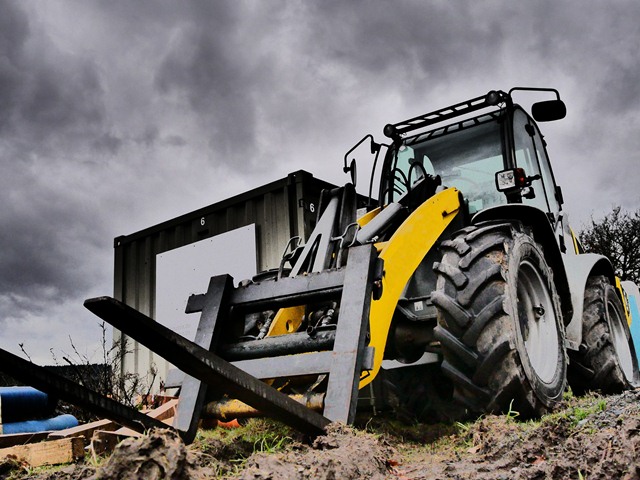
Rough terrain forklift is a generic term used to describe forklifts typically intended for use on unimproved natural terrain and disturbed terrain construction sites. However, the term “rough terrain” does not imply that the forklift can be safely operated on every conceivable type of terrain. Rough terrain forklifts have inflatable tires with thicker treads which allows it to gain stability on uneven surfaces.

Powered industrial truck training

Powered Industrial Truck Types – Powered industrial truck training:

Although a typical forklift has four wheels and a steering column, it’s not at all like driving a car or truck. First, forklifts usually weigh at least twice as much. The seat tends to be elevated, creating a higher center of gravity that is less forgiving when it comes to tipping over.

They’ll turn on a dime, but the back end has a wider swing than other types of vehicles. Wheelbases tend to be even narrower than what you’ll find on a Mini Cooper. Turn too sharply while going quickly, or carry the load just a little too high, and there’s a good chance you’ll be on your side with a damaged load.

Training must cover inspection, the operation of the vehicle, proper loading and movement, safety precautions when operating around other people, and emergency procedures.

Once a worker has been trained on a particular type of equipment, he or she should be able to operate other makes and models of similar types with a brief orientation. However, just because an employee is trained for a forklift doesn’t mean he or she is ready to operate other types of powered equipment. If you’re in doubt, err on the side of extra training.

Powered Industrial Truck Types

The most read

When operating a Powered Industrial Truck it is Essential that you …

This safety tip looks at the rules and regulations concerning forklift safety and provides tips for eliminating powered industrial trucks hazards.

More on this story

As the load center on the forklift increases the weight capacity, does what?

How does increasing the load Centre affect the capacity of a forklift truck?

Forklift rules and regulations

Forklift loader rules, guidelines, and regulations, forklift rules and regulations, fork truck safety, forklift training license.