Category Archives: forklift

Hand Pallet Jack

Hand Pallet jack: manual and electric; parts of a skid steer, use, and maintenance manual; stainless steel, low skate; parts and types.

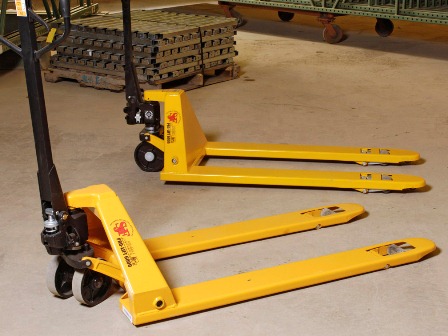
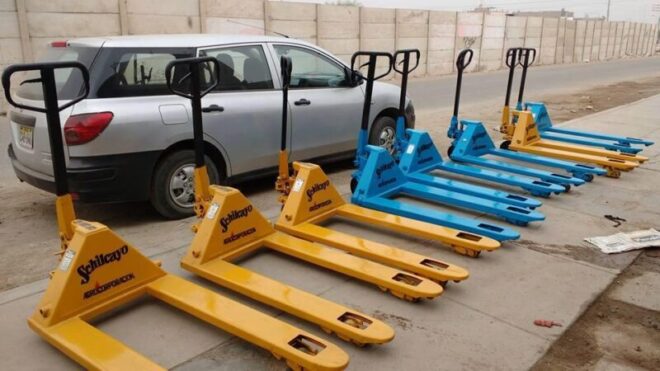
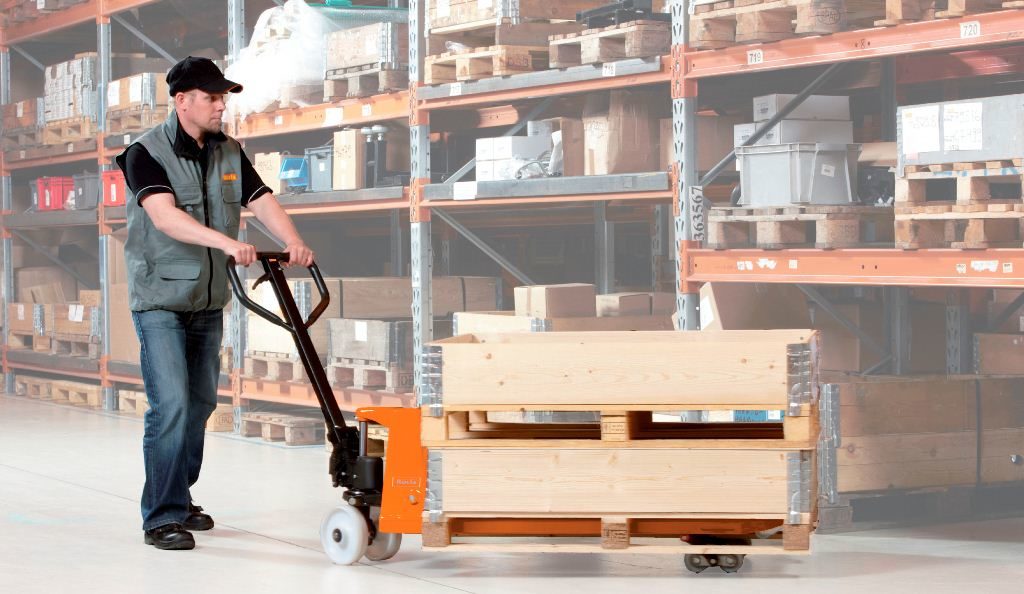
It is a mechanism that is used to easily move platforms with objects. They are manufactured in different sizes and materials, for example, nylon, polyurethane or neoprene.

They bear loads from 1 to 5 tons. These mechanisms, save you time and money, with its three wheels and its lever, helps the movement of objects is fast and efficient.

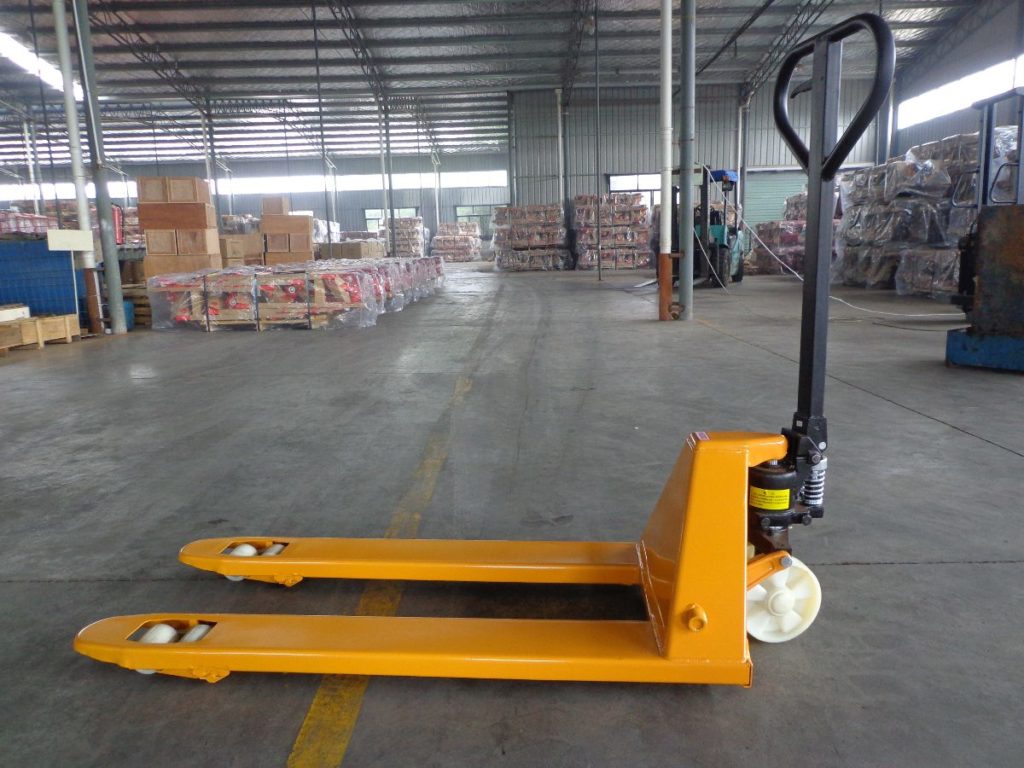
Hand pallet jack

What is a pallet jack?

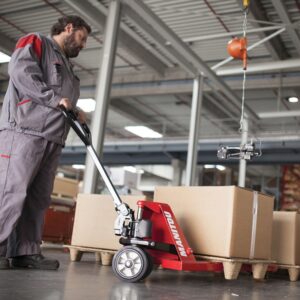
Hydraulic skids, loading skids, hand pallet jacks or also called hydraulic trucks are used to perform various tasks related to the handling of merchandise in warehouses, such as loading, unloading and moving from one area to another and “picking” operations. of orders).

Use of hand pallet jack

Why use cargo skids?

The hydraulic skids or load skids are essential in cargo handling due to their simplicity and efficiency in their operation. They save considerable time when moving large volumes of goods in a few movements, thus protecting the worker, making the load slide with little effort.

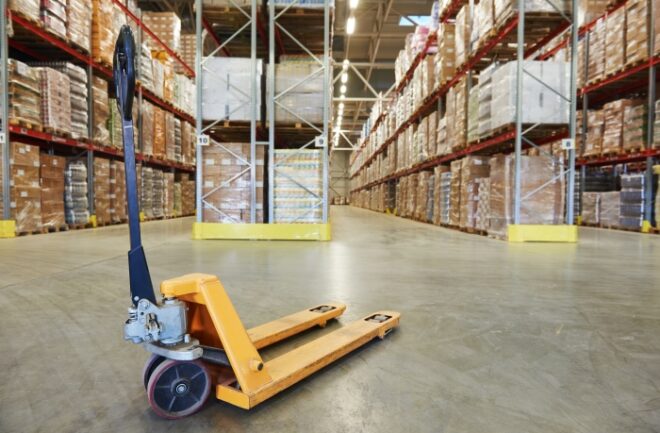
Hand pallet jack

How does pallet jack work?

Why choose hydraulic skids?

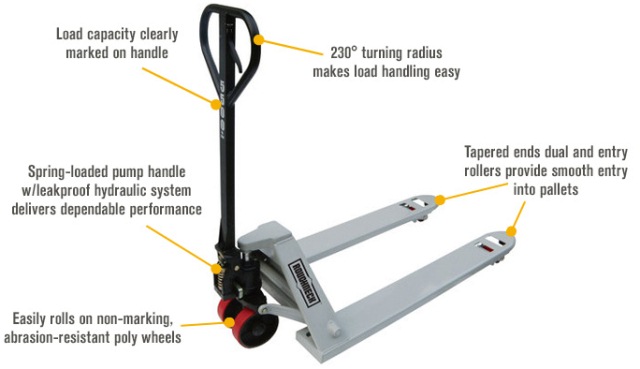
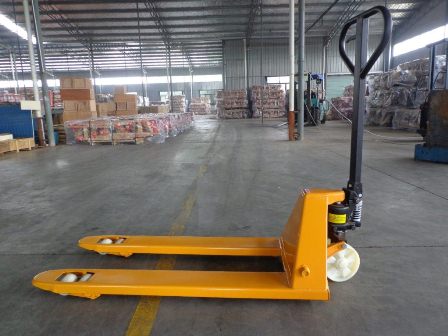
The hydraulic skids have forks of robust construction with channels of treated steel type “C”, reinforcements along these, and a reinforced push bar, making the equipment is a hydraulic truck construction ideal for heavy-duty work.

Its three-position handle allows you to operate them quickly and easily.

They have a leak-proof galvanized hydraulic pump that maximizes its efficiency.

Lubrication fittings at key points allow smooth handling at all times.

In the theme of the tires, the skates can have polyurethane wheels, for smooth and/or epoxy floors, or nylamid, for battered or cracked surfaces.

The configuration of the load wheels can be simple (a single wheel), or tandem (two wheels), which allows the skate does not to get stuck.

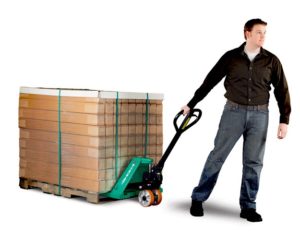
Hand pallet jack

Other names

In the various Spanish-speaking countries it is called in many different ways:

  • Pallet Jack: United States
  • Manual forklift: Spain
  • Traspaleta: Spain
  • Pallet truck: Spain, Chile
  • Platform skate: Mexico

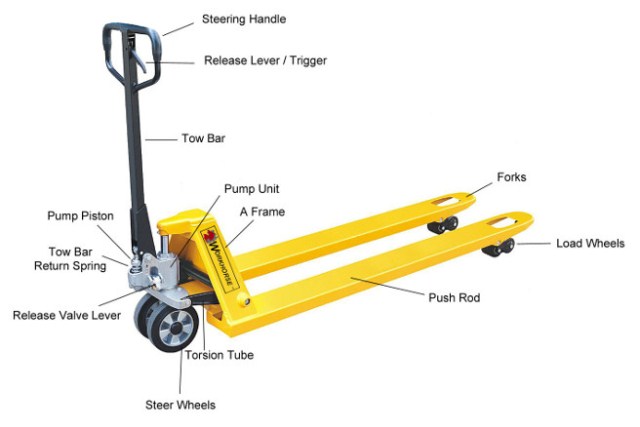
Pallet jack parts

  • Parts of a hydraulic skate
    1. Brake
    2. Levitation mechanism
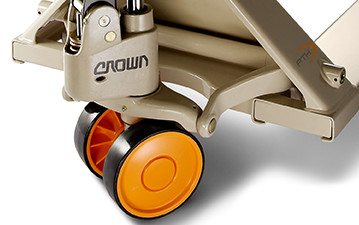
    3. pallet jack Wheels
    4. Forks
    5. Turning mechanism
  • Parts of an electric skate
    1. Electronic controllers
    2. Electric motor
    3. Drive wheels
    4. Batteries and connections
Hand pallet jack parts

Types of pallet jacks

The range of hydraulic skids is wide to meet each of the needs of different sectors of the industry, from skids

  • STANDARD: Hydraulic 3 ton skid; which is used to easily move platforms with objects.
  • ANGOSTOS SKATES: of 3 tons; They have the ideal width to transport narrow European-type pallets, commonly used in the publishing, paper and grocery industries.
  • MINI: Hydraulic 3-tonne skid; can be used in small places in your company, the ideal to maneuver inside a truck or container box, and commonly used in printing pallets.
  • WITH BRAKE: Of 3 tons; Its brake system applied to the steering wheels allows the equipment to be used on surfaces with a slope or inclined ramp and can be handled with greater safety.
  • STAINLESS STEEL: Hydraulic 2-tonne skid; Its stainless steel structure allows it to be used in the handling of meats, marine products, wines, beverages, chemical products, etc. This skate can work in very low temperatures, such as cooling chambers.
  • LOW PROFILE: 1.5 tons, designed to be used with low bed platforms.
  • GALVANIZED: Of 3 tons; recommended for applications with extreme conditions to humidity, chemicals, low temperatures, etc.
  • PROFILE UNDER SUPER WIDTH : 3 tons; the best skate designed to handle platforms with four entrances and with a minimum height of 50 mm.
  • EXTRA LONG: Of 3 tons; Without a doubt, the best option to handle two pallets at the same time.
  • OF SCISSORS: Used in work stations when elevating materials to the desired height and using it as a work table.
  • WITH SCALE: Of 2 tons; used to move and weigh the load at the same time.
  • MULTIDIRECTIONAL: 2.5-tonne hydraulic deck; designed to move goods in very narrow and confined places in which to turn with an impossible conventional skate.
  • SEMI ELÉCTRICOS: Scissor skate that thanks to its electrical system can be used as a work table protecting operators from back injuries.
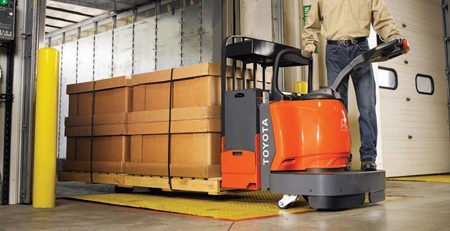
  • ELECTRICAL: Feel the comfort of handling your loads without any effort, improve the performance of your operators, especially when handling goods over long distances.
Hand pallet jack types

Forklifts and pallet jack

Forklifts, also known as motorized industrial trucks, are an important part of material handling in many industries. Forklifts are also a source of serious accidents in the workplace.

Injuries and/or fatalities indicate that many workers and employees are not using or are not aware of the correct safety procedures for handling forklifts and skids.

The purpose of this guide is to help instructors in the workplace with safety training programs in the use of forklifts and hydraulic skids.

This guide is not intended to cover all safety risks or situations involved with forklifts and should be used as a supplement to the forklift operation manual supplied by the manufacturer.

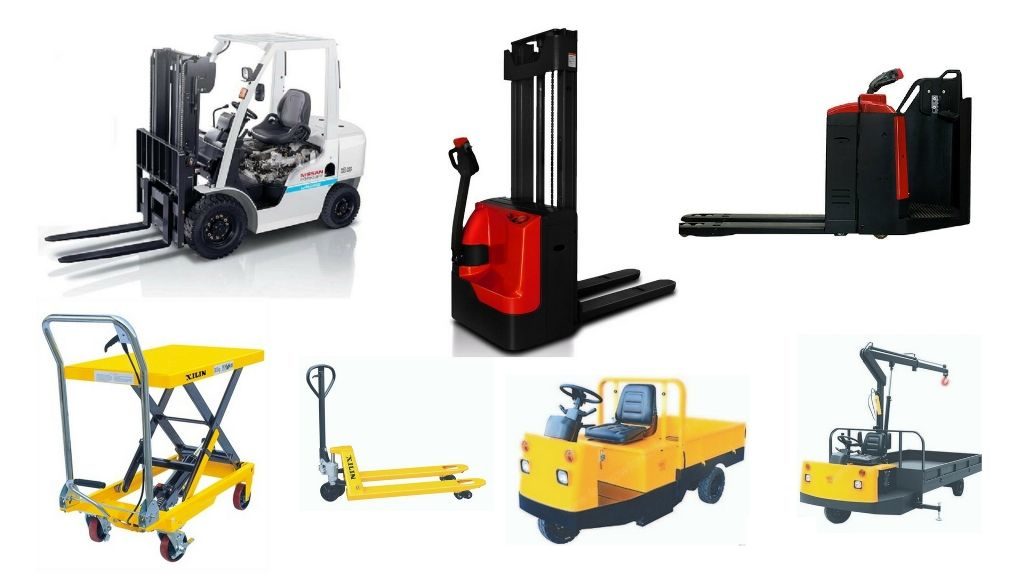
forklift and Hand pallet jack

Hand pallet jack safety

hand pallet jack safety – Occupational hazard:

  • Overexertion, for using manual pallet trucks, for handling loads that are too heavy, or for locking the wheels.
  • Strikes and entrapments, when maneuvering in reverse near walls, columns, shelves, etc.
  • Running over the feet of the operator of the pallet jack when using the machine walking in front of it.
  • Strikes and collisions of feet, of other operators next to the machine, when descending the load or when traveling with the pallet truck near them.
  • Operator slips due to loss of balance due to oils and other types of soil dirt.
  • Drops of the operator of self-propelled pallet trucks, (in a standing position on the platform), by blows or when performing abrupt maneuvers.
  • Load drop due to lack of centering of the pallet on the fork.
  • Collapse of the load by sudden starts and/or brakes, too fast turns, irregularities or deterioration of the pavement.
  • A drop of the pallet truck and the load on the operator, by staying in front of it, on the descent down a ramp.
  • Strikes and entrapments in the hands due to improper handling of the rudder/traction bar or hitting fixed objects. Falls, trips, blows, etc., when hitting the badly parked machine.
Hand pallet jack

Health and safety in the workplace

  • When using a hydraulic skate it is necessary to check that the load is tied and balanced to the mechanism.
  • The hydraulic skate has to be in excellent condition to avoid accidents with the load.
  • Do not put more load than the skate supports.
  • Always avoid lifting the load with one hand.
  • To lower the load, the lever must be pulled up to prevent the skate from moving.

Pallet jack risk assessment

Security measures – Of a general nature:

  • The use of self-propelled pallet trucks is only allowed to personnel authorized by the company.
  • All the protections and devices of the pallet trucks will be respected and used. In no case will the maximum load established by the manufacturer be exceeded.
  • In the case of observing anomalies or poor functioning, it will be communicated immediately, and if applicable, the breakdown and prohibition of the use of the pallet truck will be signaled.
  • The pallet trucks will be used only and exclusively for the functions and work of their condition and structure.
  • In cargo or empty, do not transport or hoist people. Do not handle the pallet truck with wet hands or shoes or with grease.
  • Respect the routes and rules of circulation of the company, use the established itineraries.
  • Do not access gateways, elevators, elevators, etc. without having ascertained that they support the weight and volume of the pallet truck and/or its load.
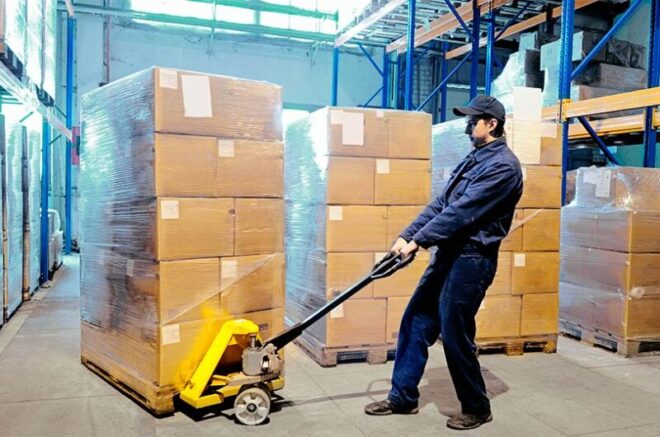
Pallet jack hazards

Prevention of occupational hazards – Before starting to use them:

  • Check the machine at the beginning of the work checking:
    • The raising and lowering of the fork.
    • The pouring of liquids.
    • The operation of braking systems.
    • The state of the battery (self-propelled pallet trucks).
    • The uniform speed.
  • In the manual pallet trucks, the correct sliding of the wheels; and in the automotive companies check the proper functioning of the traction system.
  • In the automotive pallet trucks, the correct operation of the brake, with the rudder in a vertical and horizontal position, the horn and the counter-switch.

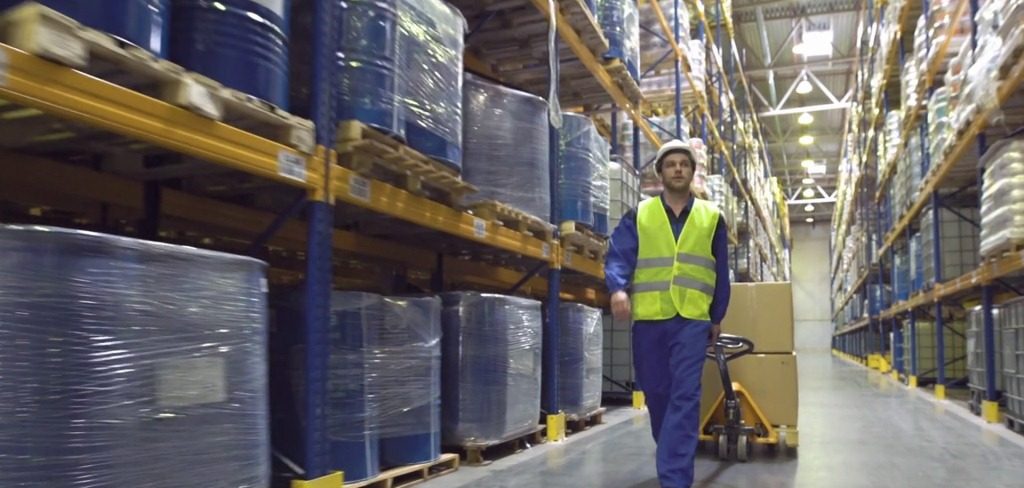
Pallet jack safety OSHA

Pallet jack safety OSHA – Industrial Security:

  • Check that the weight of the load is adequate for the capacity of the pallet truck.
  • The pallet or support to be transported is in good condition and use.
  • The loads must be perfectly balanced, shod or tied to their supports.
  • Take the load by placing the forks centered on the pallet.
  • Insert the forks through the narrowest part of the pallet, until reaching the bottom below the load.
  • If it is necessary to use load entry limiters, it must be borne in mind that if the ends of the forks protrude from the pallet or transported support, when removing or depositing the load the materials stored next to it can be damaged.
  • Avoid lifting the load with only one arm of the fork.
  • When lowering the load check that on the ground nothing can damage or destabilize it, check that nobody has his foot near the pallet truck.

Pallet jack operator

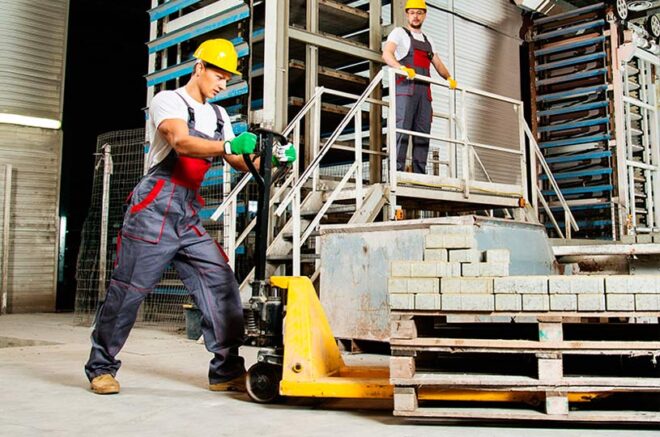
  • When moving manual pallet trucks, keep to the side of the pallet truck by pulling it so that the arm is in a straight line with the drawbar.
  • Look in the direction of the march and maintain good visibility of the route.
  • Avoid sudden starts and brakes, as well as fast turns that favor the fall of the load.
  • Pay utmost attention to crossings, corners, doors, etc., as these are points with minimum visibility and maximum accident risk.
  • When maneuvering backward near a wall, column, shelving, pay attention you can be injured by being caught by the rudder. On self-propelled pallet trucks, reduce speed and use the horn.
  • When climbing a ramp, it must always be placed in front of the pallet truck.
  • When going down a ramp, it must always be placed behind the pallet truck.
  • If the pavement is wet or defective, increase the precautions.
  • Check that the record covers, drain racks, etc., are properly positioned and adjusted.
  • Park the pallet truck out of aisles and passageways, remove the ignition key (if automotive), and check that the rudder is held in an upright position.

Loading docks for trucks: Check that the vehicle is correctly attached to the dock and immobilized, to use self-propelled pallet trucks, it is advisable to use chocks for the vehicles to be unloaded.

Personal protection equipment:

  • Security shoes.
  • Protective gloves against mechanical risks.
  • Mittens against the cold; according to the activity, etc.

Pallet jack specifications

how do you select the one that is right for your needs?

This will outline five key considerations when looking to purchase a quality pallet jack that meets your needs.

Pallet jack fork dimensions

Before purchase ensure that the pallet jack forks are the correct length. Having excess or short forklift length impacts the loads the pallet jack may carry. Excessively long forks may also affect the maneuverability of the pallet jack due to its wider turning circle requiring a larger clear space for turning.

Forks that are too short will may not be able to fully support a pallet when picked up and may become a safety hazard due to the unstable nature of the load and the possibility it could fall.

Pallet jack load capacity

Load capacity is probably the most important question to ask before purchase. If the pallet jack is not certified to carry the weight limit you require then do not consider purchasing. An overloaded pallet jack is easily damaged or broken and presents a significant safety risk to operators.

Pallet jack weight limit

Overall unit weight is an essential consideration especially when the pallet jack is to be used inside of containers or for vehicle loading. The pallet jack will be of a significant weight before any load is added. It is essential that this weight is taken into consideration when operating on certain surfaces, such as container floors or vehicle trays as they may not be reinforced to support the heavier combined weight of the pallet jack and its load.

How to maneuver a pallet jack?

Lower/Raise Height Ability

If you are required to raise pallets, ensure the jack is able to comfortably reach your desired height. Another essential consideration is that the jack can reach your desired height whilst safely lifting a load. The rated capacity of the jack may vary depending on how high it is raised. An overloaded jack that has been raised is a potential safety hazard as there is a greater risk it could tip over.

Pallet jack wheels

Wheel selection is important to not only correctly support the pallet jacks load but also to provide smooth and easy maneuvering. High-quality wheels will also protect flooring when the pallet jack is operational.

Hand Pallet Jacks

how does a pallet jack work

The pallet jack is steered by a ’tiller’ like a lever that also acts as the pump handle for raising the pallet jack. A small handle on the tiller releases the hydraulic fluid, causing the forks to lower.

What are pallet jacks used for?

A pallet jack, also known as a pallet truck, pallet pump, pump truck, dog, or jigger is a tool used to lift and move pallets. Pallet jacks are the most basic form of a forklift and are intended to move pallets within a warehouse.

What is the difference between a pallet jack and a forklift?

A pallet jack is the most basic type of forklift. They perform best when used to transport long distances either full or partial pallet loads. The difference between a pallet jack and a pallet truck is quite simple: a pallet jack is driven manually, while a rechargeable battery powers a pallet truck.

Do you push or pull a pallet jack?

Pulling is more effective. You must know that the friction experienced by a body is directly proportional to the normal force acting on it. We can see that when pulling, the force applied reduces the normal and hence the friction and pushing increases it. Hence pulling is better.

Is a pallet jack a forklift?

A pallet jack, also known as a pallet truck, pallet pump, pump truck, dog, or jigger is a tool used to lift and move pallets. Pallet jacks are the most basic form of a forklift and are intended to move pallets within a warehouse.

Do you need to be certified to use an electric pallet jack?

Certification for the use of electric pallet jacks is provided by the company you work for. OSHA doesn’t require or have a standard certification, but instead asks all companies using pallet jacks to have a certification program for its workers.

The most read

Types of Pallet jack

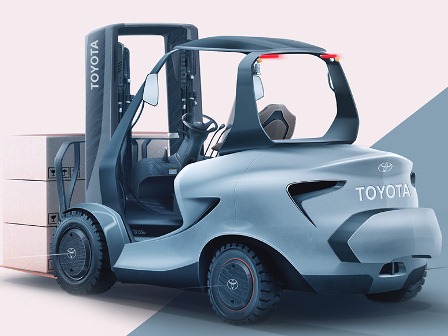
Pallet jacks are the most basic form of forklift trucks and are designed to move heavy or light pallets inside a warehouse.
More on this story

Forklift Battery

Its main function is based on storing enough energy to start the forklift engine. Its secondary function is to store the remaining energy for later use in equipment for extended periods.

Types of Pallet Jacks

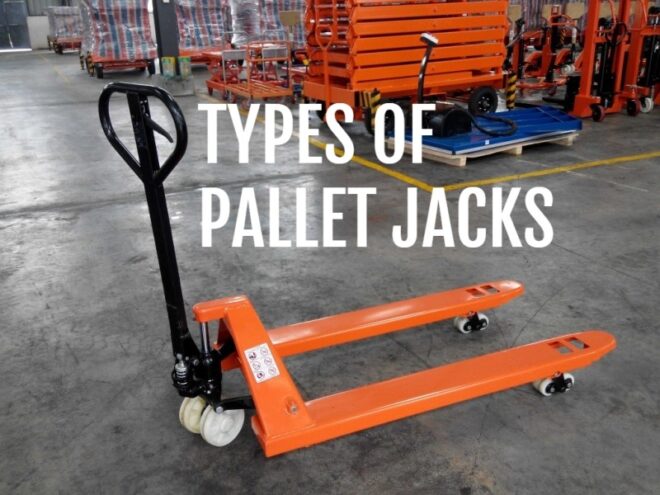
Different Types of Pallet Jacks: Tips for buying a hand pallet truck and our comments on the 10 best pallet pallets

If you come across this page, it is likely that you are not maintenance staff, but a professional who is looking for real plans to buy your Jack pallet. You are in the right place.

If you already know which pallet jack to choose but you want to find a supplier in your area, we recommend that you browse this site that classifies the suppliers with some criteria that include the geographical area of the country.

If you are looking for more general considerations, you will find some articles that will inform you below as our reviews of the ten best pallet jacks you can buy.

Types of Pallet Jacks

Different types of pallet jacks

What is a palette used for?

A paddle jack, also known as a pallet truck, a pallet pump, a pump, a dog or a rig is a tool used to lift and move paddles.

Pallet jacks are the most basic form of forklift trucks and are designed to move heavy or light pallets inside a warehouse.

What are the different types of pallet jack? It can be distinguished:

Hydraulic pallet jack

The pallet truck is made up of a cold-bent, welded and mechanized metal chassis. Visually it looks like a skateboard. The hydraulic manual pallet trucks are handling equipment that allows transporting the palletized goods using a double fork, three wheels, and a handle. This allows to guide the machine and slow down its progress. The lifting of the pallet is done manually by activating the grip connected to a hydraulic system.

Generally, manual hydraulic pallet trucks support a maximum load of 3500 kg (although this depends on the models). They are ideal for transporting pallets throughout the length and width of the warehouse, but they do not allow the load to be raised at high altitudes, even though there are special ones such as the scissor pallet trucks (its reach is 800 mm).

Types of Pallet Jacks

Manual pallet jack

Manual pallet cat and most commonly seen in personal storage and retail operations. It can carry a load of up to 5,500 pounds (2500 kg). This type of vane pump is a low lift classification used to move palletized loads over small distances.

The first types lifted the forks and were loaded only by mechanical joints. A more modern type uses a hydraulic pump pumped by hand to lift. The first appeared in 1918 as shown in the image below.

Types of Pallet Jacks

Electric pallet jack

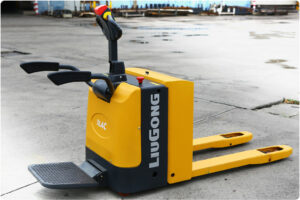
Electric pallet trucks, also known as electric pallet trucks, walkies, single or double pallet jacks, or power jack, are motorized to allow the lifting and movement of heavier and stacked pallets. Some contain a platform for the user to stand while moving pallets.

This type of vane pump is ideal for warehouses where heavy loads of pallets weighing more than 5,000 pounds are handled. The electric jack for pallets has a load capacity of up to 6,000 pounds.

They are best for use in loading docks and preparation areas. Some of them can even lift much more.

Types of Pallet Jacks

Ride on Pallet Jack

The rider pallet jack is the big brother to the electric walk behind pallet jack. It is about as close to a full-size forklift as pallet jacks get. Instead of walking behind the pallet jack, the operator is afforded a platform which he or she can step on to and ride along with the pallet jack as it drives. This is a great option for large warehouse operations where a lot of area needs to be covered quickly.

Types of Pallet Jacks

Pallet jack Price

How much does a pallet jack cost?

The standard pallet jack is the “5500 lbs (2.5 tons)”: see the image above. The first prices start at $ 250 on Amazon, while it seems that there are low-cost prices of $ 119 on Alibaba.

Pallet jack dimensions

How wide is a standard palette cat?

The North American industry seems to have “standardized” pallet taps in several ways: Width of each of the two forks: Fork width of 7 “, that is, the dimension between the outer edges of the forks: available as 20¼” ( 51.4 cm) and 27 “(68.6 cm).

How to use a pallet jack?

To raise the forks, push the drive lever down and pump the handle up and down until the platform has reached the desired height.

A one-inch space between the floor and the pallet is usually enough to move the load. To move a load, place the drive lever in a neutral or middle position.

Pallet jack for sale

What are the best manual pallet jack available in the market?

Now that you know almost everything about pallet jacks, you may be looking for a pallet jack for your business, there are many options to choose from and you are asking yourself “Which of them is better for my money?”

Let’s review some of the best palette shots available, and you can check our reviews below.

Standard pallet jack

Features to consider before buying a pallet jack:

It would be difficult to list all the advertising features of the different pallet jack manufacturers. Consequently, we have listed the key characteristics that we see as remarkable and appropriate for comparison.

For example, greasable bushings: these are the small metal sleeves inside the pivot point and the axles that support the platform jack wheels. The bushings can be made of brass or steel. When the platform jack is raised or lowered, these bushings will experience wear. With greaseable hubs, the company offers you the possibility of increasing the useful life of your pallet truck, which is a sign of durability.

Pallet jack Weight

We review the platform jack weight because the major forklift manufacturers make claims about the quality and durability of their equipment based on weight.

For example, Crown Lift compares the weight of its electric pallet trucks with other manufacturers to claim quality and durability. We know that steel is heavy and expensive and that more steel in a pallet truck can indicate a cause for a higher price.

On the contrary, we could expect a lighter palette cat to cost less.

Pallet jack wheels

Pallet paddle wheels are usually made of polyurethane and should be easy to change as they wear out. This ease of operation is an important feature and will extend the lifespan of your platform jack.

Pallet jack warranty

We assume that the guarantee offered by a company reflects the confidence they have in their products. But, it also adds cost and value.

It is expected that a paddle jack with a higher warranty will have a higher price than a paddle jack with a smaller warranty.

This is something that must be taken into account when looking for the best pallet cat that exists!

Pallet jack short forks

Pallet jack lowering height: The lowering height of the pallet fork is an important point to consider. The reason is simple; If the pallet forks of the platform can descend to a low profile, it would enter the platform more easily.

And with the various sizes of pallets available in the market, we often find cheap pallets with a smaller opening, which makes it difficult for pallet forks to enter the forks’ pockets.

Which pallet jack is better?

We will not declare a winner in this review since the purpose is mainly to help you find the one that best suits your needs.

But the general considerations are:

  • A heavy pallet truck
  • A low height pallet truck
  • A good capacity
  • With greasable bushings (brass)
  • Long warranty

The pallet shots we choose for our reviews comply with these considerations and, in our opinion, are the best.

Types of Pallet Jacks

Pallet jack manufacturers: Review of the ten best pallet trucks available.

Review of the ten best pallet trucks available:

Vergopallet jack

This pallet truck – the S5500L – is one of the best pallet trucks with a load capacity of 5,500 pounds, protective polyurethane wheels and 27 x 48 inches L-forks.

It measures 48 inches tall, weighs 160 pounds and measures 65 inches in length. The conical design of its input rollers, the integrated pump without welding, the overload valve in the pump and the control of the descent speed make it more efficient in its class.

We also like that you have a 210-degree directional arc for easy handling, durable steel construction with a powder coating finish so you can use it for a long time.

This pallet truck has a reasonable price and is made of high-quality construction.

Crown pallet jack

Manual pallet for heavy-duty. This manually operated hydraulic skid that supports the 5,000-pound weight has industry-leading quality, support, and durability.

It is the best option for the transport of pallets since it will recover from its own weight every day for many years.

It has an ergonomic handle and a three-position lever with lifting, lowering and neutral positions, and also has a steering angle of 200 degrees.

You’ll love it that comes with a factory warranty and, if you need a new part, Crown Heavy will make sure the parts you need are available and easy to replace.

The construction is fantastic, and currently, you would not find this type of construction in any other similar product available in the market.

Sandusky

Heavy-duty manual pallet truck -TT5027- This heavy-duty hydraulic pallet from Sandusky has two forks, a handle, nylon wheels and rollers that are used to transport and lift pallets.

It is made of steel, can transport up to 5,500 pounds, resists corrosion, rusts and wears out.

The shape of the handle facilitates the transport of your loads since it has a trigger that frees and lowers the forks.

You will also love that the wheels are made of nylon and that they do not scratch your floors. Its weight is 198 pounds, making it easy to move and transport while loading large loads.

JET

The model -PTW2748- In addition to being able to move the load up to 6,000 pounds, this paddle jack can rotate 200 degrees so that it can move in tight spaces.

It is made of solid steel and, for this reason, its push rods will never have to be adjusted, which is a great advantage.

Poly-aluminum steel wheels are possible for this pallet truck to move through uneven floors.

It has knobs and handles with padded grip for easy handling. It is possible to use this pallet truck with one hand. It also has a two-year warranty.

Roughneck

The -4,400- model is one of the best manual pallet jacks with a load capacity of 5,500 pounds. It allows you to raise the load from 3 “to 7 1/2” with the control of the finger lever. The touch of a switch allows you to lower it and keep it in a neutral position.

Goplus

Heavy-duty, this Goplus hydraulic jack for vanes is made of high tensile strength steel, so it will easily resist wear and corrosion.

Its load capacity is 5,500 pounds. Lift and transport the pallets easily and without problems. Ensure there are no leaks with your integrated pump without welding.

The company offers a 100% satisfaction guarantee to make it safe for its customers, which is a great advantage.

Roughneck – 2,200 lb

If you are looking for a pallet truck to move small pallets, then this Roughneck pallet truck is for you.

He is the little brother of Roughneck 4,400 lbs. You can use it to move safes of weapons and seeds or food.

It can also be used in garages, stores, convenience stores, retail stores, etc … It can transport up to 2,200 pounds, and small forks and width facilitate the transport of small loads.

Eoslift

The model -E20V- of capacity of 4400 lb. The opening of this pallet truck is specially designed according to the standards of the American pallets.

Its design facilitates the insertion and removal of the forks of the pallets.

It can withstand up to 4,400 pounds of load due to its sturdy steel construction.

Vestil pallet jack

Model EPT-2748-33, 3300 lb capacity, 48 “long x 27” wide. This electric jack for pallets makes moving pallets a game.

It is easy and convenient because it has buttons to go up and down with the tips of your fingers, a safety back button and an accelerator to advance and reverse the direction that is easy to use. The horn will alert people that you are approaching. It comes with a standard battery charger (24 volts) and can operate for eight hours with a charge. This yellow and black pallet weighs 671 pounds.

Prime Scales

The model PS-5000PJ is one of the best pallets available. It has a built-in scale to calibrate its performance and has been made by manufacturers with more than 30 years of experience in pallet trucks.

They ensure the maximum performance for each part of their products, either in relation to the handling of materials or their weighing. With its low profile, it fits most of the different sizes of pallets.

What are pallet jacks used for?

What are pallet jacks used for?

A pallet jack, also known as a pallet truck, pallet pump, pump truck, dog, or jigger is a tool used to lift and move pallets. Pallet jacks are the most basic form of a forklift and are intended to move pallets within a warehouse.

What pallet jack should I buy?

the pallet you get for your business will depend on what you need, small or large loads, low profile, scale … there are pallet sockets for every need. You will not be mistaken with any of the pallet trucks reviewed in this article. I hope you find the most suitable for your business and do not forget to compare its features and prices to buy the best one within your budget.

Do you push or pull a pallet jack?

A person can push almost four times the weight they can pull. That’s why when the choice to push or pull a pallet jack arises, it’s generally safer to push it. Using both arms to pull a pallet jack behind you is a recipe for being run into by the pallet if you have to stop suddenly.

What is the difference between a pallet jack and a forklift?

A pallet jack is the most basic type of forklift. They perform best when used to transport long distances either full or partial pallet loads. The difference between a pallet jack and a pallet truck is quite simple: a pallet jack is driven manually, while a rechargeable battery powers a pallet truck.

The most read

Hand Pallet Jacket

It is a mechanism that is used to easily move platforms with objects. They are manufactured in different sizes and materials, for example, nylon, polyurethane or neoprene.

More on this story

Forklift Battery

Its main function is based on storing enough energy to start the forklift engine. Its secondary function is to store the remaining energy for later use in equipment for extended periods.

Forklift Purchase

Forklift Purchase: If you’re in the forklift market for the first time, have returned to the market after a long absence, or just need to go back to the basics, understanding where to start in buying a new forklift can seem like a complex process.

And it can be. That’s why getting organized in your pursuit of buying the best forklift is a great place to start. Use this guide, which will show you what to expect, offer a few tips to help you succeed, and help you recognize a few pitfalls to avoid.

Forklift Purchase

Forklift purchase price

Buying a forklift is not a small investment and it shouldn’t be treated as such. When pursuing the purchase of a new forklift or forklift fleet there is a wide variety of considerations to take into account. And not all of these are singularly focused on forklift specs.

This is what we, forklift experts, consider the main areas to consider when evaluating one brand of forklift over another.

Forklift Purchase

Forklift spare parts

If we were buying a forklift, we’d want to make sure that parts are available and your equipment won’t be down and inoperable because a part is back-ordered.

Parts support comes in a few different forms. Certainly having an inventory of a part is the most obvious measurement of whether or not the manufacturer supports the equipment. But other real-world scenarios involve the support the manufacturer provides in the form of parts and service manuals.

We’ve seen plenty of instances where the manufacturer couldn’t even come up with a part number for the part needed, let alone give an answer on whether or not the part was in stock.

Forklift spare parts suppliers

What sort of components are used in the forklift? – Suppose you’re buying an electric forklift. Ask who manufacturers the electric motor. Ask who makes the control system. Certain control systems are easy to find parts for (such as GE, Curtis, Zapi) but others can be really difficult to obtain parts for.

Years ago Yale used Mazda diesel engines. Not a bad engine, but Mazda Japan’s only customer for diesel engines in the USA was Yale forklift. That became a problem years after the trucks were sold as there was virtually no aftermarket support for Mazda diesel in the USA.

forklift software

There are forklift mechanics who will work on the model and brand of forklift you’re looking at buying. This seems pretty simple. But some newer models sometimes require unique software that is only available to the dealer.

That fact alone is not enough to condemn a particular brand of equipment since sometimes the software is only required for quite obscure repairs.

But there are certain brands and models of equipment that forklift mechanics don’t like to work on for various reasons. Ask your mechanic if they’re OK working on the model of forklift you’re considering purchasing. If there is only one dealer or one mechanic willing to work on the brand/model of forklift you’re considering, you’ll have very few options in case your mechanic can’t figure out a particular repair.

Ask whoever is selling you the forklift if there are non-OEM mechanics that work on the brand of forklift you’re considering.

Forklift maintenance cost

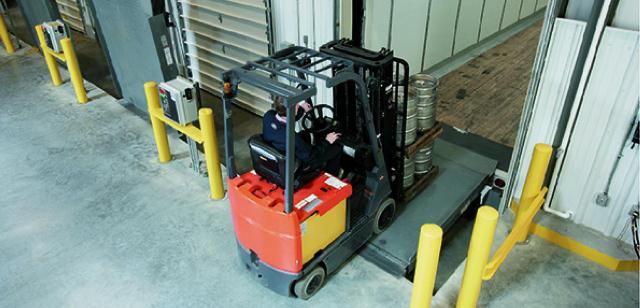
In general, forklifts made by American companies tend to be less expensive than European or Japanese brands.
Exceptions to this rule can be found but in general, it holds true. Historically Japanese forklift manufacturers would keep their parts prices very high and defend those prices by pointing out to customers that their forklift was more reliable.

The argument went something like this: Sure our forklift’s torque converter is expensive at $2200.00 but we only sell one torque converter for every 10,000 forklifts in population. Not a bad argument but pity the poor guy who indeed needs a torque converter and it costs 5 times the amount as an American built forklift.

Forklift brands and models

If you’re thinking about buying a forklift that has rarely been sold in your country, you’re probably asking for trouble. We’ve seen this countless times with obscure European brands coming to North America, and obscure American brands arriving in Europe. It’s very difficult for manufacturers to support equipment that is rarely sold in your area.

Today they might say they have plenty of parts on the shelf, but what happens in 5 or 10 years when you still have the forklift but priorities have changed, parts for your forklift are considered ‘deadstock’ for lack of sales, and no one remembers the promises made to you. Which leads us to our final point.

Lots of forklifts sold—you’re not buying a unique or rare model of forklift. Why?

We’ve all heard the expression “success breeds success”. Well, it’s similar to forklifts. The more of a certain type of forklift that gets sold, the more likely there will be competitively priced aftermarket forklift parts, and the more likely that there will be technicians that can work on your forklift, and the more likely you will have competitive choices when it comes to maintaining your forklift.
Best forklift to buy

“What’s the best forklift brand?”

It’s a good question, and one we hear pretty regularly. But here’s the truth: there is no best forklift brand or manufacturer.

Most forklifts you can buy or rent have distinct advantages and drawbacks. So while there isn’t a best overall, there’s likely a best forklift brand for what your team does.

The best forklift brand for the type of work you do

Supply chains and warehouse operations need more specialized equipment. To narrow your search for a forklift brand by focusing on your facility’s needs.

  • If you work with narrow-aisle or very narrow aisle (VNA) racking, narrow aisle lifts and swing-mast forklifts are both excellent models to look into.
  • If you need a lift for aerial work, such as a telehandler or boom lifts, a brand specializing in aerial lifts should be your go-to.

The best forklift brand for your employees

Your forklifts are only going to be as good as the people operating them, and your operators need to be as comfortable with the equipment as possible to use them to their full capacity. So take your employees into account when looking for the right forklift brand.

  • What makes and models do they have experience with?
  • What forklifts other than those you already have they had training in?
  • What forklift brands can you get forklift operator training near you?
Forklift Purchase

Buy forklift truck

Forklift operator training:

Speaking of nearby forklift operator training, where your workplace is located could also be a big factor in what the best forklift brand for your team could be.

Don’t think just about the climate or terrain, but also what’s going to be the easiest and most cost-effective in getting your forklifts maintained.

Are there certified dealers or suppliers nearby where you can quickly order replacement parts from, or would it take weeks and money spent on shipping to get a specialized part in from a brand that operates a few states away?

It’s always going to be easier to keep your material handling equipment handled locally, so if you’re in the market for new or used forklifts from such brands as Yale, Genie, Cushman, Drexel, Bendi and more, turn to the nearest supplier, for all your makes and models of forklift you need.

Forklift Purchase

Forklift purchase – where to buy a forklift?

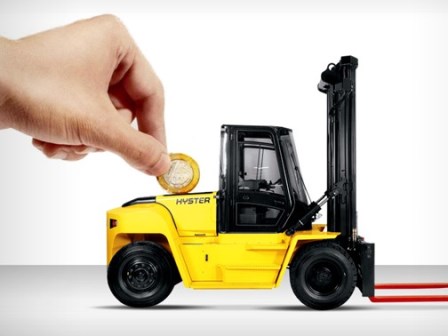
How much does a forklift truck cost?

A typical forklift, like the one you see in most warehouses, should cost anywhere from $15,000 to $30,000 depending on capacity, tires and fuel type. As a general rule, the acquisition price of an electric forklift is roughly 50% higher than a comparable Internal Combustion (IC) lift truck.

Why are electric forklifts so expensive?

Electric forklifts are more expensive to purchase than their internal combustion (IC) counterparts. This is because there are more upfront costs involved, such as multiple battery packs per forklift, battery rechargers, battery swapping equipment, battery-charging space, and battery swapping personnel.

What is the useful life of a forklift?

The most read

New Forklift Price

When you are purchasing a piece of equipment, you obtain competitive quotes, verify specifications and generate a purchase order. For that matter, just about anything we purchase goes through the same process.

More on this story

Forklift Brands

FORKLIFT BRANDS: Which forklift brand is best? top: Caterpillar, Toyota, Volvo, Hyundai, forklift brands and models, top 10 forklift brands, list

Forklift Ramp Design – Building a Loading dock ramp

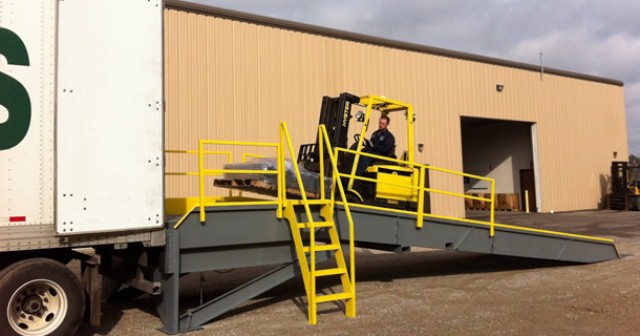
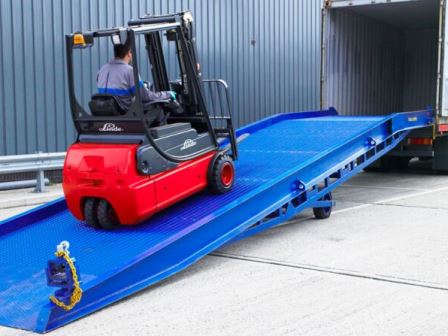
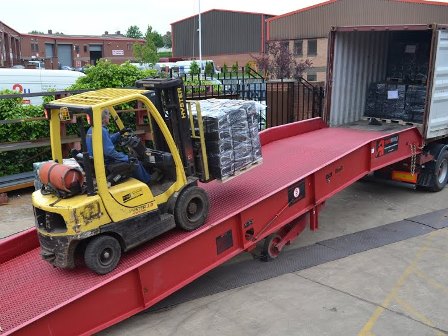
Forklift Dock Ramp – Loading Dock Ramps for Forklift: Loading docks perform a critical function in the logistics system infrastructure. They form the link between manufacturing and transportation, and between transportation and storage functions.

Since logistics is becoming more and more scrutinized in the overall effort to drive down costs, it follows that loading docks must be efficient and meet high standards.

Forklift Dock Ramp

Forklift ramp design

Forklift Dock Ramp:

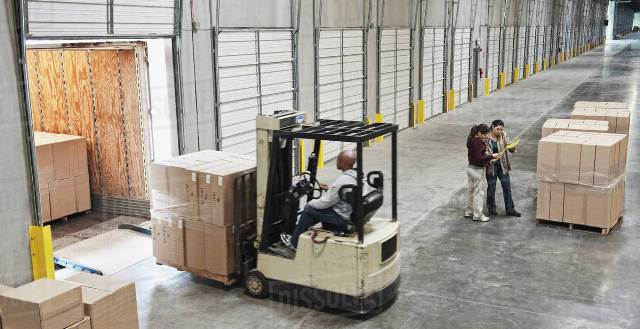
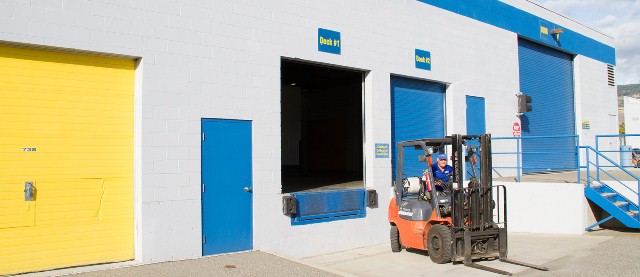
The typical loading dock for palletized goods includes a raised loading platform, a dock leveler that forms a ramp between the dock and the delivery trucks, a trailer restraint to positively lock the trailer in place during loading/unloading and forklifts or pallet jacks to move the goods in and out of the trucks.

Designing the loading dock is an integral part of the facility process design. The planning starts at the point where traffic enters the facility property from the public road and ends where the trucks leave the property.

The dock marks the beginning and the end of material flow through the facility. It integrates material handling inside the building with truck traffic outside the building. To maintain productivity, it must be as efficient as the facility it serves.

A loading dock is also a place of a potential hazard. To protect workers, design it with the same high safety standards you apply to the rest of the facility.

Forklift Dock Ramp

Typical loading dock dimensions

Locating the Loading Docks

To reduce material handling costs, locate the loading dock where it minimizes in-plant forklift traffic. It is easier to move a loaded truck to specific points around the building than it is to move the contents of that truck pallet-by-pallet inside the building.

Choose the loading dock location based on the needs of the in-plant process. Typically, loading docks are placed in one of two patterns:

  • Combined, so that shipping and receiving are together.
  • Separated, with shipping and receiving at different locations

The combined dock is a good choice for smaller plants, with little receiving or shipping. However, since it has to serve both functions, its location often increases the travel distances for in-plant traffic.

Plan for separated docks at plants where the materials enter the production line in one part of the building and the production is completed in another. This arrangement minimizes the in-plant movement of materials.

Forklift Dock Ramp: Planning On-Site Traffic Flow

The truck driver has a better view of and control of a truck when sitting on the inside of the turn. So, plan traffic flow around the facility that places the truck driver on the inside of each turn. Where the driver sits on the left side of the truck cab–in countries with right side road traffic–plan for counter-clockwise truck movement around the building.

For efficient on-site truck traffic, including the following elements in your design:

  • An entrance driveway that is large enough to handle the turning radius of the longest truck serving the site. For efficiency and safety, permit trucks to be driven forward onto plant property, rather than backed up.
  • Right angle turns onto the site that has a minimum inside radius of 26′ and a minimum outside radius of 50′.
  • One-way access roads that are at least 13′ wide and two-way roads that are at least 26′ wide.
  • Employee roadways that are separate from truck traffic.
  • Truck waiting areas adjacent to the loading docks.

Unless you design the loading docks for peak arrival traffic, the waiting area has to accommodate all waiting trucks.

Forklift Dock Ramp

Truck apron space

Forklift Dock Ramp: Designing Apron Space

The Apron Space is the space between the loading platform and the fence line or nearest obstruction.

It includes the parking area, where the truck is parked during loading, and the maneuvering area; the space needed to maneuver the truck in and out of the parking area. The minimum recommended a center distance between the dock positions is 12′.

The minimum apron space needed depends on the centerline distances between the parked trucks at the dock, the length of the trucks, and the steering geometry of the trucks. Also, if the trailers will be parked with the tractors detached, less apron space is needed.

We recommend this as the minimum. If the expected trucks are longer than that, increase the space proportionately, e.g. if the dock will handle 48-foot trailers, increase the space shown in the table by 20%. If the traffic pattern is such that the driver will make an outside turn add 50′.

If the plant floor is at grade or has a low grade, recess the truck parking area so that the trailer bed will be at about the same height as the floor.

The parking area will then slope down toward the dock. Ideally, this slope should be 6% or less.

Forklift Dock Ramp

Concrete loading dock design

If heavy loads will be handled, the slope should be no more than 3-5%. However, if space does not permit, you may increase the slope to an absolute maximum of 10%, and this will work only for light loads. Steep slopes force dock workers to load on an incline inside the truck and may cause loads to topple.

Forklift Dock Ramp: Also design drainage for recessed parking areas.

As part of this design, the area next to the building should slope slightly away from the building for 1′ to 3′ (Fig. 9). A short area is preferable because the position of the trailer’s rear axle will then have less of an effect on the height of the trailer bed at the dock.

If the truck parking area is unpaved or is paved with asphalt, provide a concrete, landing gear pad at a suitable distance in front of and parallel to the dock wall. This pad is needed to support the trailer’s landing gear when the trailer is parked without its tractor. For a standard 40′ container chassis, the landing gear is about 33′ from the back of the trailer, for a 20′ chassis the gear is about 11′. Design a pad wide enough to handle the expected variety of trailers.

It is also good practice to extend the pad all of the ways back to the loading dock. To sustain a fully loaded trailer or a partially loaded trailer with a forklift on board, design the pad to support two-point loads of 25,000 lbs. each, 6′ apart.

Forklift Dock Ramp

Loading bay ramp

Selecting the Loading Dock Configuration: Forklift Dock Ramp

Security, traffic control, safety, worker comfort, space availability, and climate help determine which dock configuration you need. Based on the relationship of the building and the trailer, the two most common dock configurations are the inside/outside dock and the open dock.

Inside loading dock

Inside/Outside Dock: Forklift Dock Ramp

This common design places the loading platform inside the building, while the trailer remains outside. With the proper door seals or shelter, the design offers excellent weather protection and security.

A common variation of the inside/outside dock is the refrigerated dock.

The inside/outside dock design sometimes requires that you set back the building wall from the edge of the dock. This is the case particularly for docks with recessed parking areas. The setback is needed to:

  • Protect the wall from being hit by trucks
  • Protect building projections, such as overhangs or signs
  • Facilitate the installation of door seals
  • Minimize the risk of injury

Allow at least an 8″ clearance between the rear of the truck and the building wall, measured at a height of 6′ above the dock platform. Also, allow at least 6″ of clearance between the top of the trailer and the building wall.

For refrigerated docks include a vestibule between the loading platform and the refrigerated area.

The vestibule creates an airlock between the outside and the refrigerated area. The airlock minimizes the inflow of warm air and humidity. A well designed refrigerated dock reduces refrigeration power consumption by 50% or more and it reduces refrigerant coil defrosting by as much as 96%, compared to an open loading dock.

Open loading dock

Open Dock: Forklift Dock Ramp

This design places both the loading platform and the trailer outside the building. Open docks are commonly used for general warehousing in temperate and warm climates. You can protect the open dock somewhat by adding a canopy over the platform and sliding curtains around the dock perimeter.

The open dock requires sufficient forklift maneuvering space between the building wall and the dock levelers.

Also, you must add concrete posts and safety chains, or other barriers, to reduce the risk of forklifts driving off the dock.

Saw-Tooth Dock

If there is insufficient space available between the dock and the nearest obstruction to truck flow, a saw-tooth layout can solve the problem. This design lessens the apron space required to move the trucks into and away from the loading area.

Pier Dock

When the building lacks enough wall space for the required dock positions, or if the building and process layout do not permit placing dock positions along the building perimeter, you can design a loading dock pier.

Free Standing Dock

When there is limited space inside the building for a loading platform, you can add a free-standing do

Forklift Dock Ramp

Loading dock code requirements

Calculating the Number of Dock Positions: Forklift Dock Ramp

To calculate the number of dock positions a facility needs you to need to know the number of trucks that will be served, the average time required for loading or unloading each truck, and the timing of truck arrivals and departures.

For operations with seasonal processes, provide enough dock positions to handle peak periods–whether they are on a daily, weekly, monthly, or yearly cycle. When laying out dock positions, also consider providing one dock position for trash disposal.

Sometimes it is not practical to provide enough dock positions to handle peak truck traffic. In such cases, provide a truck waiting area. Truck waiting times and waiting areas can be traded off against the cost of more dock positions. When truck arrivals are numerous, fewer dock positions will mean longer waiting times and larger waiting areas.

You can estimate the number of dock positions you need for a certain truck volume by multiplying the number of trucks per hour times the turnaround time, in hours, for each truck to park, load and leave.

Loading dock fall protection

Dock Run-off Protection: Forklift Dock Ramp

It is important to provide run-off protection on unoccupied dock positions. If protection is not in place, lift trucks can inadvertently drive off the edge of the loading dock, exposing the dock worker to serious injury or death and damaging the lift truck and cargo.

Causes for dock run-off include:

  • Slippery dock conditions: rain, snow, ice, and condensation can cause slippery conditions that increase the chances of personnel and equipment sliding off the dock.
  • Backing out of a trailer: when loading/unloading a trailer, a lift truck operator frequently backs onto the adjacent dock leveler. If this dock position is vacant and the lift truck operator backs too far, the equipment and operator could go over the edge.
  • Equipment problems: mechanical problems such as brake failures, steering problems, and accelerator problems can lead to inadvertent dock run-off.
  • Wheeled carts: for years several dock equipment purchasers have installed run-off guards to keep rolling carts from dropping off the dock.

There are two types of dock run-off protection, gate barriers, and lip barriers.

Forklift Dock Ramp

What is the standard height for a loading dock?

In North America, the most common dock height is 48–52 inches (120–130 cm), though heights of up to 55 inches (140 cm) occur as well. A dock leveler bridges the gap between a truck and a warehouse to safely accommodate a forklift.

What is a recessed loading dock?

A loading dock is a recessed bay in a building, where trucks are loaded and unloaded. Commonly found at manufacturing plants, warehouses and other industrial buildings. They are the primary location of the movement of product, coming in and out of a facility.

What is a dock apron?

Loading dock apron space is the area required to maneuver and position trailers into place at the loading dock. Planning the loading dock apron space requires recognizing the amount of trailer movement and the amount of room it takes to achieve that movement.

what is a loading dock?

A loading dock or loading bay is an area of a building where goods vehicles are loaded and unloaded. They are commonly found on commercial and industrial buildings, and warehouses in particular. Loading docks may be exterior, flush with the building envelope, or fully enclosed.

The most read

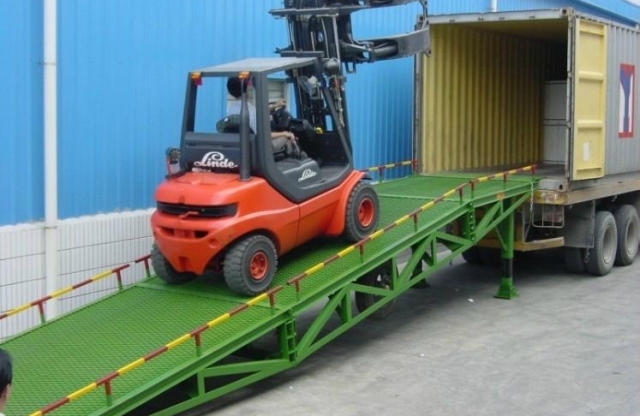
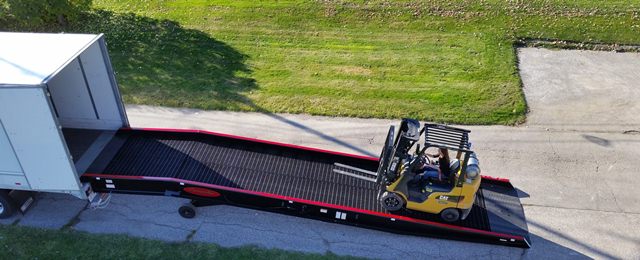
Forklift Container Ramps for Sale

  • What kind of forklift ramps are there?
  • How much does a container ramp cost?

More on this story

Forklift Yard Ramp

Forklifts are extremely useful workplace vehicles, as long as they are used safely and appropriately by operators who are appropriately trained and competent to use them.

Blue led Forklift Pedestrian Safety Warning Spotlight

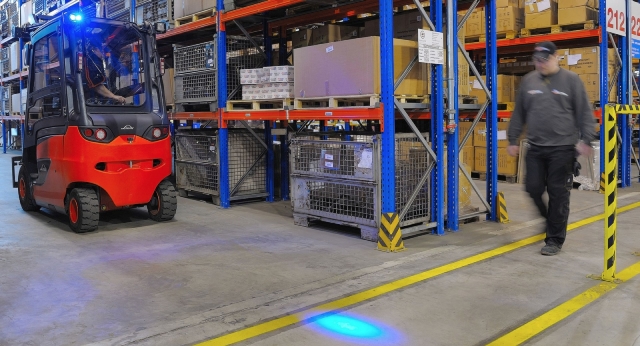
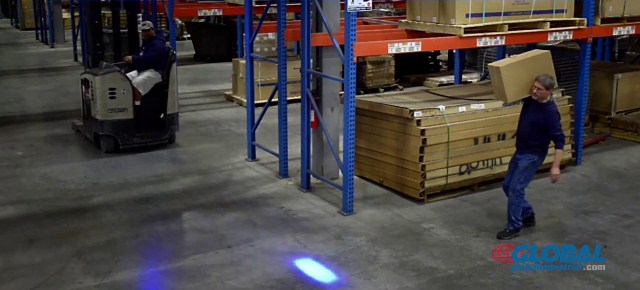
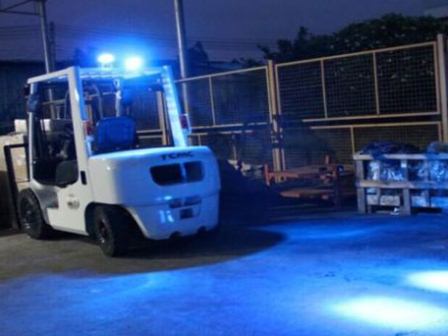
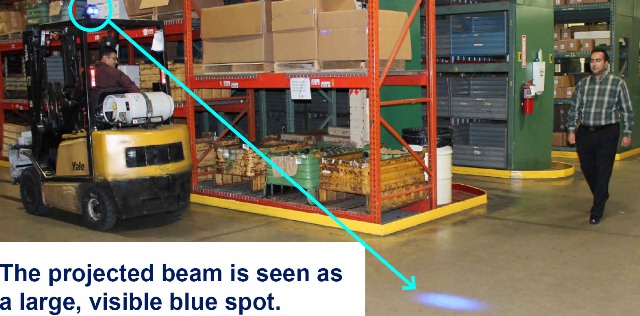
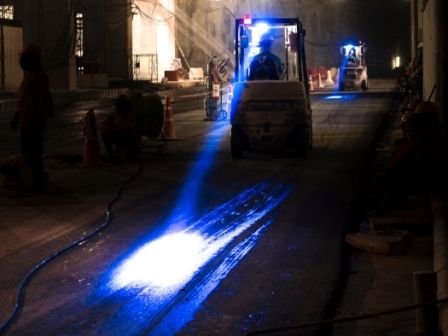
While traditional audio back-up alarms can warn workers of your location, it often gets tuned out and blended into the ambient noise of the building. The Safety Warning Spotlight projects a clearly visible blue spot beam onto the floor that alerts pedestrians and other vehicles of the nearby presence of the forklift. (Blue led Forklift Pedestrian Safety Warning Spotlight)

Blue led Forklift Pedestrian Safety Warning Spotlight

Blue forklift led warning spotlight

Blue led Forklift Pedestrian Safety Warning Spotlight:

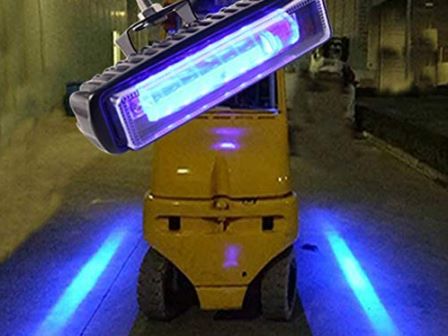
This Safety Warning Spotlight can be easily mounted to the front or the rear of any forklift. It’s constructed using a twin 5 watt solid-state, shock-resistant, Cree LED lights, yielding 600 lumens, and enclosed in an IP68 rated housing with a UV-resistant PMMA polycarbonate lens.

The LED Safety light operates using the forklifts vehicle electrical power and configured for a 10 volt to 80 volt DC input range with reverse voltage protection.

That is where the vehicle approach warning light helps prevent dangerous collisions. As the forklift or other vehicle travels, a bright blue light glides across the floor about 15 feet ahead of or behind it (depending on the mounting location), letting pedestrians know that a fork truck is approaching.

Blue led Forklift Pedestrian Safety Warning Spotlight

Forklift pedestrian safety

Forklift Pedestrian Safety Tips: Operator and Pedestrian Training

  • Operators should yield the right of way to pedestrians: This is an OSHA recommendation that all forklift drivers should be aware of. Because of the size and power of the forklift, operators should stop and wait for pedestrians to clear the area before proceeding along their route with caution.
  • Pedestrians should never assume that a forklift operator sees them: While pedestrians have the right of way in forklift operating areas, that doesn’t mean an operator will always see them. A pedestrian should keep his or her eyes on a moving forklift whenever in its vicinity.
Blue led Forklift Pedestrian Safety Warning Spotlight

Forklift safety tips for pedestrians

warehouse pedestrian safety: Blue led Forklift Pedestrian Safety Warning Spotlight

  • Operators and pedestrians should have a clear system of hand signals for communication.
  • Developing a system of hand signals, such as a pedestrian always pointing in the direction they intend to walk in a facility or an operator using their hand to signal the direction of a turn, helps to increase communication and awareness.
  • It’s important to make sure that this system of communication is known to all associates and visitors in order to avoid confusion.
  • Operators should obey OSHA guidelines when operating a forklift.
  • It’s not just the responsibility of the pedestrian to reduce the risk of accidents, operators need to be trained to handle various situations as well.
  • Be sure to stop, honk the horn, and proceed cautiously at intersections to warn pedestrians of the forklift’s presence.
  • All travel and braking should be performed smoothly and in a controlled manner.
  • When vision is impaired, be sure to use a spotter and travel in reverse if a load is blocking forward visibility.
  • Your operator’s manual has tips for safe operation pertaining to your specific forklift.
  • Be sure to read and understand these guidelines prior to operating your forklift.

Types of forklift lights

Blue led Forklift Pedestrian Safety Warning Spotlight:

  • sealed beam forklift lamps
  • halogen forklift lamps
  • led forklift lights

Sealed beam forklift lamps

The most basic type of light, sealed beams are commonly used in front-facing lights in applications such as headlamps. While simple and affordable, sealed beam lights are fairly fragile, have a lower lifespan than other options, and have a lower lumen output when compared to more high-end lights. More often than not these should mainly be used indoors, where forklift visibility is already fairly good.

Halogen forklift lamps

A step up from sealed beam lights are halogen lamps. Halogen lamps are fairly recognizable, as they’ve been the standard for car headlights for several years. As such, they’re able to project a much stronger beam of light when compared to sealed beams. They’re also incredibly easy to install and simply snap into place to a connector.

Since they’re so small, they can be a bit fragile (though with slow forklift speeds, this usually isn’t an issue), and need to be handled with care during installation.

LED forklift lights

The highest quality forklift lights are far and away LED lights. They last an incredibly long time (close to 30 times the lifespan of a sealed beam light), can put out more than 1,000 lumens of light and are extremely durable when compared to other forklift lights.

With that high quality can also come a little higher price tag. However, if your forklifts are doing work that requires powerful lights, LED forklift lights are absolutely worth the investment.

Blue led Forklift Pedestrian Safety Warning Spotlight

Blue led Forklift Pedestrian Safety Warning Spotlight

What kind of warning lights for forklifts do I need?

Like with any complex machine, each part of your forklift needs to function properly to ensure proper and safe operation. Even those forklift parts that may not seem completely essential to the operation, such as the forklift lights, are important to maintaining an efficient and safe workplace.

Why are the warning lights on the forklift important?

Just like with any motor vehicle, the lights on your forklift are essential for visibility and safety. Some people may think that since forklifts rarely go faster than 6-7 mph, forklift lights are unnecessary. However, anyone who’s spent time in a factory or warehouse knows that isn’t true. Oftentimes workers wear earplugs, listen to headphones, are concentrated on their work, are surrounded by loud machinery, or otherwise have one or more of their senses distracted.

What are the types of forklift lights?

There are a few different types of forklift lights, each offering varying strengths, and lifespans. The most common are sealed beams, halogen lamps, and LEDs.

The most read

Forklift Blue lights

36% of serious forklift-related injuries involve someone other than the driver. That is where the vehicle approach warning light helps prevent dangerous collisions.

More on this story

Forklift Safety Procedures

Forklifts are extremely useful workplace vehicles, as long as they are used safely and appropriately by operators who are appropriately trained and competent to use them.

Forklift Blue Light – Forklift approach warning light

Forklift Blue Light: Making fork trucks and other vehicles in your facility more noticeable and keeping workers warned of approaching traffic is critical to reducing the potential for catastrophic, sometimes lethal injury. 36% of serious forklift-related injuries involve someone other than the driver. That is where the vehicle approach warning light helps prevent dangerous collisions.

Forklift Blue Light

Forklift blue safety lights

Forklift blue spotlight – Forklift blue safety lights – Forklift Blue Light:

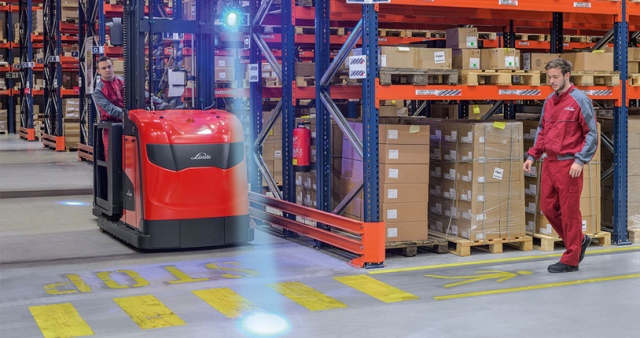
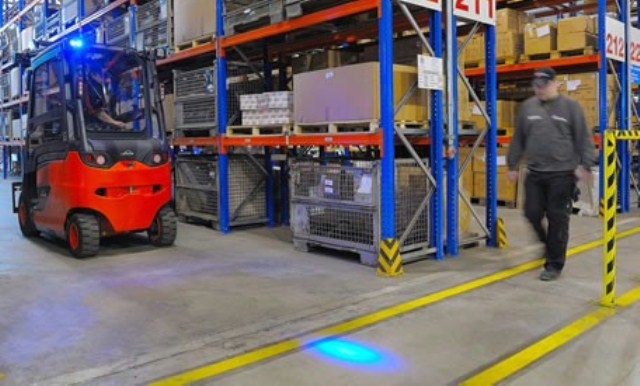
As the forklift or other vehicle travels, a bright blue light glides across the floor about 15 feet ahead of or behind it (depending on the mounting location), letting pedestrians know that a fork truck is approaching. When workers are alerted by the bright light moving across the floor, they know a vehicle is on the way.

Since the light moves only when the vehicle does, pedestrians can understand when the vehicle is stationary or on the move.

  • An easy install system virtually any maintenance department can execute.
  • Magnetic mounting option removes the need to drill your roll bar when installing the light
  • Mounts to front, back, or both ends of a vehicle (we recommend both for most forklifts)
  • 2 LED lights with powerful beam per unit are long-lasting. Multi-voltage is capable of 12V – 110V. Uses vehicle power to operate. The light runs anytime forklift is turned on – no one has to remember to activate it
Forklift Blue Light

Forklift safety light

Forklift Blue Light:

A range of visual warning devices suitable for any type of material handling equipment has been developed.

The range of safety lighting has been developed to improve site safety and increase pedestrian awareness of the presence of moving hazards.

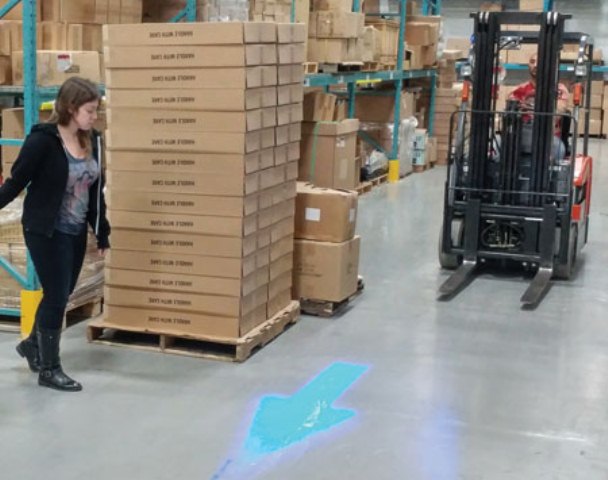
The range includes multiple solutions that offer various visual warning styles from points, arrows, danger zones and safety repeaters, all designed to increase the security of the site by using the light as a visual warning device.

Forklift blue spotlight

Forklift Blue Light: Safety Spot Light

The safety spotlight consists of two energy-efficient, long-life LED lights attached to materials handling equipment to project a large spotlight onto the floor a few meters ahead of the direction of the truck’s travel (forwards or backward). This acts as a warning to approaching pedestrians and can be lit constantly or in some cases when the direction of travel is engaged. This product is available in multiple voltages and is available in either Blue or Red.

Forklift headlights

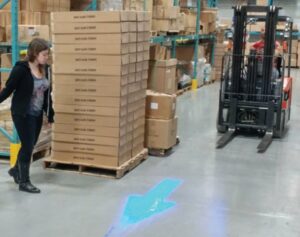
Forklift Blue Light: Safety Arrow Light

The safety spotlight consists of two energy-efficient, long-life LED lights attached to materials handling equipment to project a large arrow light onto the floor a few meters ahead of the direction of the truck’s travel (forwards or backward). This acts as a warning to approaching pedestrians and can be lit constantly or in some cases when the direction of travel is engaged. This product is available in multiple voltages and is available in either Blue or Red.

Forklift Blue Light

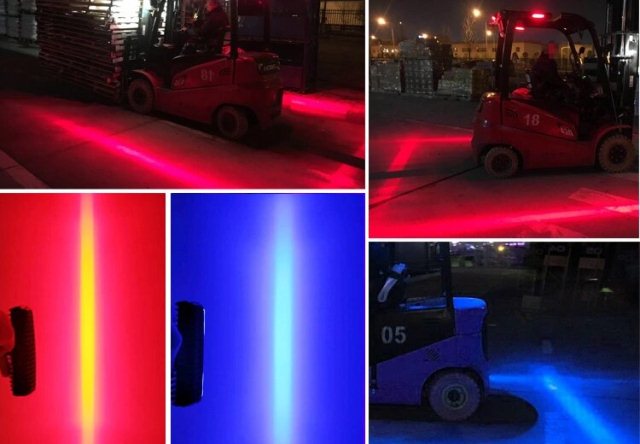
Danger zone light

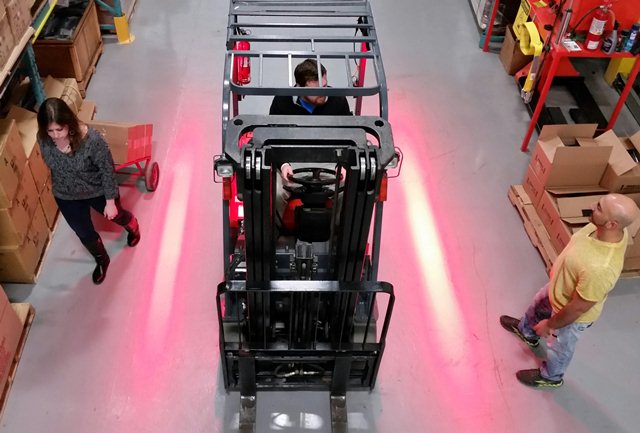
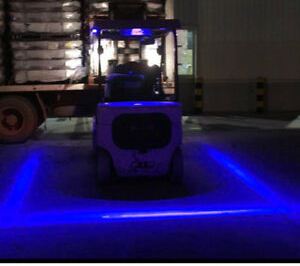
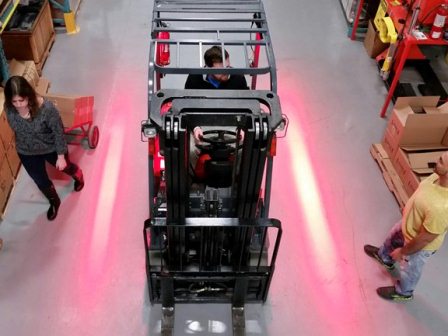
The purpose of the danger zone light is to ensure pedestrians stay a safe distance away from the forklift. The danger zone light projects a bright red or blue line on the floor to keep pedestrians away.

This zone can be adjusted to the distance of your choice. This helps prevent foot injuries and collisions from rear end swing, as well as, showing a NO GO ZONE around any piece of materials handling the equipment.

This product is available in multiple voltages and is available in either Blue or Red.

Repeater light

Forklift Blue Light: Safety Repeater Light

The safety repeater light is a high-intensity mini light bar capable of projecting different flash patterns designed to highlight the presence of materials handling equipment in the area. The purpose of such a light is to draw pedestrian attention to potentially dangerous materials handling the equipment. This product is available in multiple voltages and is available in either Blue or Red

Forklift Blue Light: Benefits of repetitive light

  • Cost Effective Warning Device
  • Can be fitted/retrofitted to any MHE
  • Robust & durable
  • Increase Site Safety
  • Long-life LED lights

Forklift safety lights red

Forklift Blue Light: Red Zone Danger Area Warning Light

40% of all forklift accidents involve a pedestrian. Ensure pedestrians stay a safe distance away from the forklift with the Red Zone Danger Area Warning Light.

  • The Red Zone puts a bright red line on the floor to keep pedestrians away. This zone can also be called the HALO ZONE and can be adjusted to the distance of your choice.
  • This helps prevent foot injuries and collisions from rear end swing, as well as, showing the NO GO AREA around any piece of mobile equipment.
  • The Red Zone is mounted on the sides of the forklift and can also be mounted on the rear and/or front to create a complete zone.
  • Each side of the forklift you want to protect will require one Red Zone light.
  • The Red Zone can also be combined with our advanced warning Forklift Blue Spot Lights, to create a complete pedestrian safety system for your facility.

Blue lights for forklift trucks

Blue forklift safety light – Forklift Blue Light – Blue Forklift Warning Light: A bright blue circle of light on the floor warns workers of an approaching vehicle.

Forklifts warning lights

Forklift Blue Light: Forklifts & pedestrians don’t mix

Forklifts cause 20,000 serious accidents a year—and a fatality every three days. They’re usually the most dangerous machine in any operation that uses them.

Pedestrians may not see or hear industrial traffic around a corner, emerging from a rack aisle, around a corner, out of a trailer, or backing up while loading or unloading.

These lights project a beam of light onto the floor ahead of or behind a moving vehicle (depending on light placement) to help warn people up to 15 feet in advance.

Forklift approach warning light

Strobe lights for trucks – Bright and highly noticeable – Forklift approach warning light – Forklift Blue Light: Warning devices such as strobes are most effective when a pedestrian is able to see the forklift coming. If the pedestrian isn’t paying attention, or if the lift truck is emerging from a rack aisle or blind corner, strobes may not be helpful. But the warning light precedes the truck, signaling its approach.

Forklift Blue Light

Forklift warning lights

Forklift warning lights are essential and there are many different types of forklift safety lights depending on the types of use or operation you enter.

Due to all the light combinations that can end up on a forklift, it can be confusing to understand what each one does. Let’s explore if you need a forklift light, the meaning of what a forklift light communicates when it is on, and how forklift lights can be part of a safe work environment.

The most common lights on a forklift are the headlights and taillights, or brake lights. When configured on a forklift, the headlights are located at the front of the forklift and the taillights are located at the rear or rear of the forklift.

Three other common forklift lighting accessories useful in a wide variety of operations are strobe lights, blue pedestrian lights, and red pedestrian sidelights.

When included on a forklift, these lights are generally located on the rear, front, and sides in order to increase safety in forklift operation.

Do you need any of these forklift lights? The short answer is: it depends. The optional lights that you put on your forklifts depend on your specific operation.

Forklift Blue Lights

What Are Forklift Safety Lights?

Forklift safety lights can greatly decrease the number of forklift-related deaths and injuries. Contact to have forklift safety lights installed on all of your lift trucks today!

How do Forklift Safety Lights work?

Forklift safety lights project an intense blue or red beam of light onto the floor in front, behind, or to the side of your forklift’s path. This spot of light will effectively warn any pedestrians of your approaching forklift and which direction it is coming from. When a pedestrian sees the light, they can safely stop before the forklift hits them.

Why Forklift Safety Lights Are Important for Protecting Your Employees?

Forklift safety lights can effectively warn pedestrians of approaching forklifts. Lights can be more effective than warning sounds, especially if you are wearing protective headphones. As well, lights can more accurately indicate the precise location and direction of the oncoming forklift than a warning alarm, as sounds can be misleading as to where they are coming from.

How to Get Your Forklift Safety Lights?

Amazon is your online dealer for forklift safety lights. Amazon sells safety lights for all of your lifting devices. Blue forklift safety light is manufactured from die-cast aluminum and delivers multi-voltage functionality. These highly durable lights are manufactured with LED lights for the utmost in light projection.

The most read

More on this story

Forklift Blue Light Installation

People’s lives depend on the correct and safe installation of emergency lights.

Forklift Safety Procedures

Forklifts are useful in the workplace, as long as they are used safely and properly by competent operators.

Forklift Pedestrian Safety Warning Spotlight

The warning spotlight projects a clearly visible blue beam of light onto the floor, alerting pedestrians and other vehicles to the nearby presence of the forklift.

Blue Back up Lights Forklift

The Safety Warning Spotlight projects a clearly visible blue spot beam onto the floor that alerts pedestrians and other vehicles of the nearby presence of the forklift.