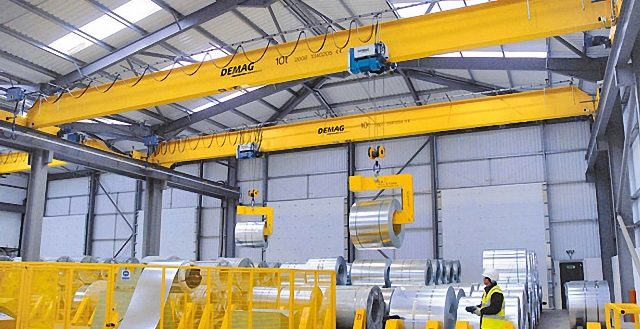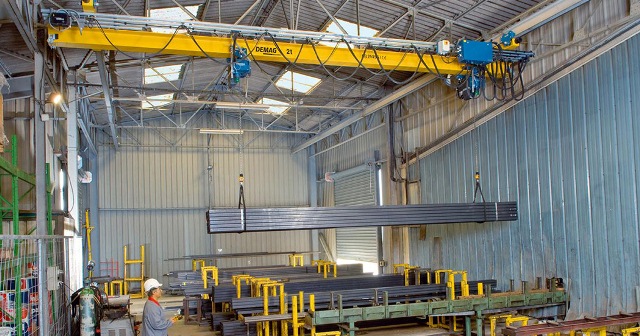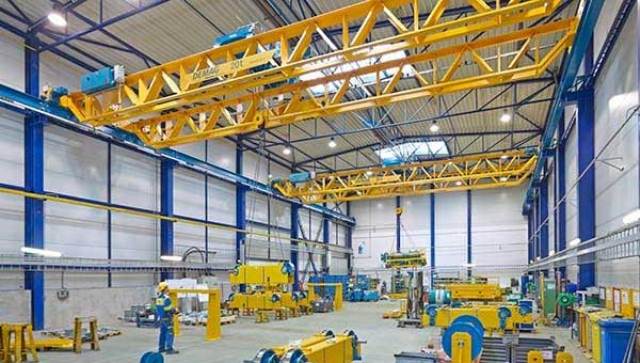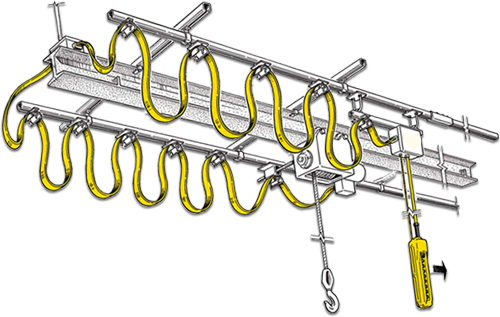
Category Archives: overhead crane

Overhead Crane Hoist

Overhead Crane Hoist – overhead hoist – double hoist overhead crane – hoist crane – bridge crane hoist – hoist crane design – hoist overhead crane – what is a crane hoist?

Crane vs. Hoist: What’s the Difference?

First things first – a hoist helps to do one thing: move heavy loads up and down. An elevator is probably the most well-known hoist. Elevators are the perfect machine for transporting loads vertically, but in no other direction (unlike a crane’s functionality).

On the other hand, a crane can move in two or three dimensions. Overhead cranes suspend from a beam or move along a rail. Just like cement is a component of concrete, a hoist is a central part of an overhead crane. Essentially, the crane moves the hoist around.

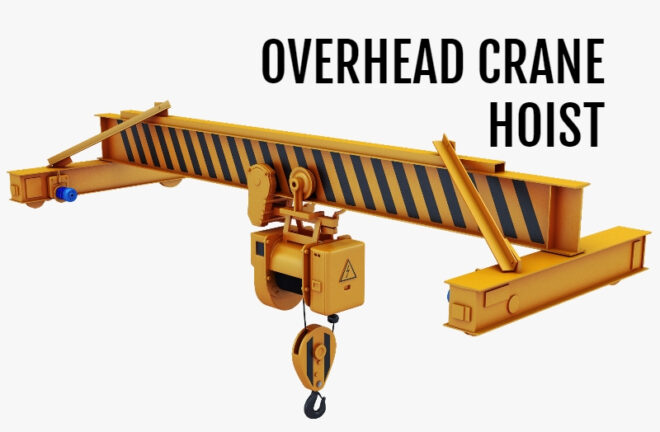
suspend from a beam or move along a rail. Just like cement is a component of concrete, a hoist is a central part of an overhead crane. Essentially, the crane moves the hoist around.

Overhead Crane Hoist

Overhead hoist

Chain hoist crane – overhead hoist: Hoists and cranes are both machines that help move and lift heavy loads on the job site, but they have many fundamental differences in design and usage.

Below, we set the record straight about what each of these devices does, and how they work together to assist in your next project.

Chain hoist cranes are suitable for a wide variety of industrial and specialized applications.

Whether you need a work station crane, an overhead traveling crane or a rotating crane, chain hoist cranes are always the ideal choice.

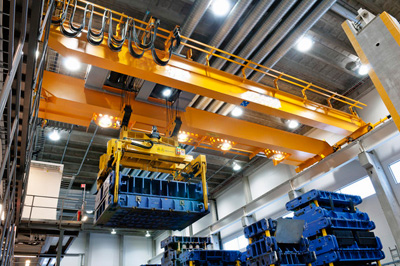
Overhead Crane Hoist

Hoist crane design

Overhead crane design – hoist crane design: It is understood that each client is different and so are their needs; custom cranes are designed and built to meet the individual requirements of your application.

You may want to buy a full chain hoist crane or upgrade your existing crane with an electric chain hoist. You can choose a single or double bridge beam crane for your work area.

A simple bridge beam crane can be a bridge type profile or drawer. A suspended crane can be installed if your building does not allow the construction of a column.

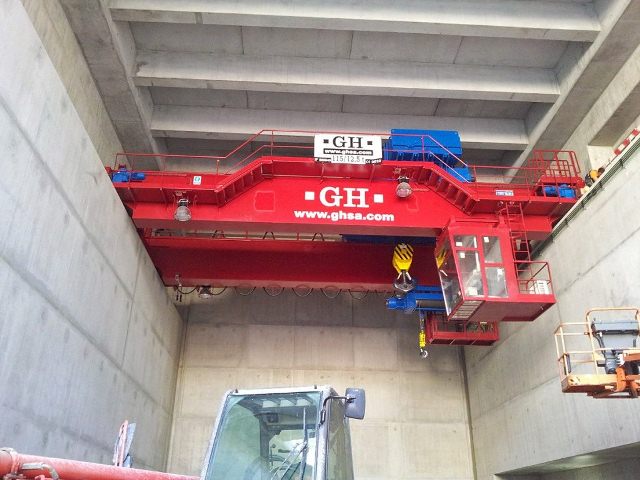
Overhead Crane Hoist

Overhead crane safety

The steel structure is strong and durable and the design has been optimized to reduce the stresses it exerts on your building.

Its operators can exert an optimal control over the load thanks to the control with an inverter of continuous speed along with the rolling.

An electric limit switch keeps you and your hoist protected from electrical overloads.

Since it minimizes the free height and the approach of the hook, it has a maximum space to perform other types of operations under your chain hoist crane. You can also install shock detection devices on the crane and in the car to further improve your safety.

Overhead Crane Types

Types of Overhead Cranes: The type of crane you have determines what your hoist will do for you. Some of the most common overhead crane types include:

  • TOP RUNNING CRANE: The bridge moves atop a pair of rails mounted to the ceiling, allowing for heavy loads to be lifted and moved.
  • UNDER RUNNING CRANE: The bridge travels along the bottom flange of two beams. Certain buildings’ construction might require this type of crane for your project.
  • GANTRY CRANE: A single or double girder attaches to a pair of broad legs with wheels, enabling the crane to operate without being attached to the ceiling. These are popular cranes in shipbuilding.
  • MONORAIL CRANE: The hoist attaches to a trolley on a single rail that follows a path around the facility in an oval or snaking path. This is effective for moving around a complex space.

Types of Hoist

Hoists are defined by their lifting medium, power, and suspension.

LIFTING MEDIUM: The lifting medium is the flexible material that connects the load hook to the overhead body of the hoist. It can be either a rope, metal cable, welded link chain, or roller load chain. Welded link chain, like an anchor chain, is a series of identical metal loops attached together to form a string. Roller load chain, like a bike chain, is made from alternating roller links and pin links to form a line that easily engages with a toothed sprocket.

POWER: Hoists can be powered manually, electrically, or pneumatically. Manual hoists use a pulley to multiply the operator’s pulling force. You can also use electricity or air power to actuate a hoist motor. Choose what’s easiest to access. Factories with many air tools might find air power more convenient.

SUSPENSION: The suspension method for a hoist depends on how it will be used. A stationary hook-mounted hoist is a simple solution when you only need to move a load straight up, such as from a truck to a trailer. Meanwhile, a hoist bolted to a beam will handle heavier loads. A hoist can be mounted to a trolley running along a beam or a rail, giving you the ability to lift up then across the facility. Gantry cranes give you three-dimensional motion. You can lift up, move the hoist along the gantry rail, then move the crane itself wherever you need it.

Double hoist overhead crane

Double hoist crane is a single girder crane with two Electric hoists for efficient material handling. Double hoist cranes have various designs such as double hoist Overhead Crane, and double hoist Gantry Crane.

Which double hoist crane is ideal for your application?

Double hoist crane

Double hoist crane is usually for indoor use, such as in the workshop, warehouse for handling and lifting small and medium tonnage items.

Generally, when choose or use double hoist crane, we usually consider it with one electric hoist, while in some specific situation, which need two electric hoists hoisting together, then the double hoist crane should be equipped with two electric hoists.

Bridge crane hoist

Overhead hoist and crane – bridge crane hoist: When the double hoist crane needs to be equipped with two electric hoists, the following items should be considered.

Two electric hoists capacity does not exceed the design capacity of the double hoist crane. That is, if you want to hang two 1Ton electric hoists, the double hoist crane lifting capacity should be 2ton or more.

If the double hoist crane total lifting capacity is greater than or equal to 1Ton, it needs the enterprise which has relevant qualifications to carry out the reconstruction.

Overhead crane anti collision system

Anti-collision device: If the two electric hoists use distance is far, it can directly use travel switch or photoelectric switch for the anti-collision setting.

  • If the general use distance is near or sometimes use in the adjacent place two of the two electric hoists, you should pay attention to the closest position when installing during load and no load.
  • If it is two-speed, it is best to limit the fast speed first, and then stop it (two tap positions).
  • If the lifting item is long, it can be designed to operate with one switch, which can be operated simultaneously or individually.
  • The power supply cable direction: on both ends of the single beam, respectively power supply to the two hoists, or power supply directly by safety slide wire.

Double hoist crane is used for efficient material handling. Double hoist cranes have various designs such as double hoist overhead crane, and double hoist gantry crane.

What is a crane hoist?

Difference Between Hoist and Crane:

  • A crane incorporates the uses of other simple machines including the hoist to develop a more effective mechanical device that will make the moving of loads and objects easier and faster.
  • A hoist is a device used for lifting and lowering loads while a crane is a device used for moving loads in different directions.
  • A hoist is a simple device while a crane is a more complex device.
  • A hoist can only move loads vertically while a crane can move loads vertically and horizontally.

Overhead Crane Hoist

How do overhead cranes work?

What is a crane hoist? What is an industrial crane?

A crane is a machine designed to lift and distribute loads in space suspended from a hook and hoisted by a hoist. As a rule, they are equipment that has grooved pulleys, counterweights, simple mechanisms, etc. to create mechanical advantage and move large loads.

What is difference between Crane and hoist?

-A hoist is a device used for lifting and lowering loads while a crane is a device used for moving loads in different directions.
-A hoist is a simple device while a crane is a more complex device.
-A hoist can only move loads vertically while a crane can move loads vertically and horizontally.

What is a gantry crane used for?

A gantry crane is a type of overhead crane that is similar to a bridge crane, but instead of moving on suspended runways, the crane uses legs to support the bridge, trolley, and hoist. These legs travel on tires or on rails that are embedded in the floor or ground structure.

How do overhead cranes work?

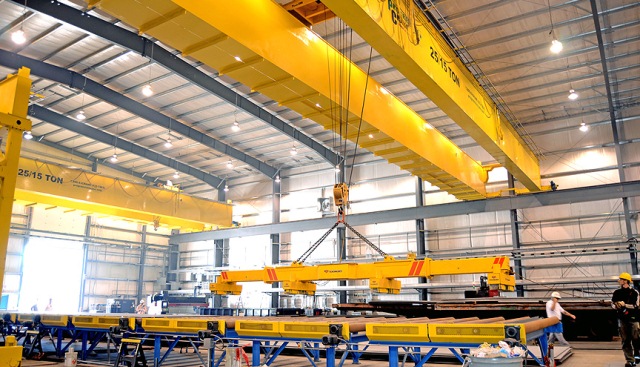
Overhead cranes cover a rectangular area, moving a load side to side and backward and forward.
They typically incorporate a top running trolley hoist which moves along the top of the two bridge beams on its own set of wheels for increased headroom under the crane; also called a top running crane.

What is an overhead gantry crane?

A gantry crane is a crane built atop a gantry, which is a structure used to straddle an object or workspace. They are also called portal cranes, the “portal” being the empty space straddled by the gantry.

The most read

More on this story

Overhead Cranes

  • What are the parts of an overhead crane?
  • What is the purpose of an overhead crane?
  • How much does an overhead crane cost?
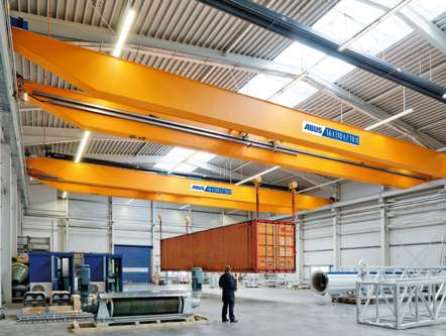
Overhead Crane Test Questions and Answers

  • Crane operator interview questions and answers
  • Rigging test questions and answers

Overhead crane manufacturers in the USA

Some have wondered if in the United States they fix, manufacture, elaborate parts, and components of overhead cranes.

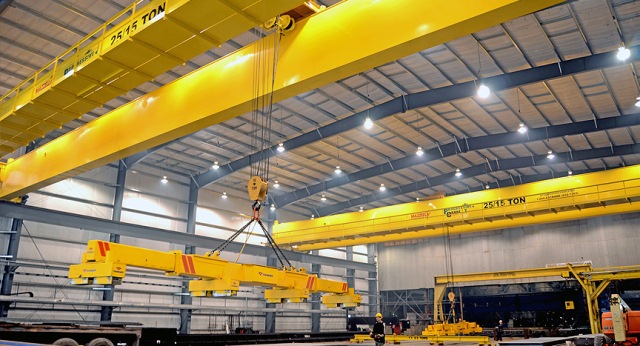
Overhead Gantry Crane

A crane is a machine that is capable of raising and lowering heavy objects and moving the objects from one place to other. An overhead crane usually consists of three separate motions:

  • The first motion is the hoist, which raises and lowers the material.
  • The second is the trolley (cross travel), which allows the hoist to be positioned directly above the material for placement.
  • The third is the gantry or bridge motion (long travel), which allows the entire crane to be moved along the working area.

Cranes are distinguished from hoists, which can lift objects but cannot move them sideways. The design of overhead cranes varies widely according to their major operational specifications such as type of motion of the crane structure, weight, and type of the load, location of the crane, geometric features, operating regimes, and environmental conditions.

Selecting the right type of overhead crane is critical to streamlining workflow and maximizing productivity. Many factors are taken into consideration which include:

Cross Travel crane

Overhead crane test questions and answers :

  • What bridge capacity is required?
  • How often is the crane to be used?
  • What span is required?
  • How long is the runway travel?
  • How high must the hoist lift?
  • Is the bridge going to be supported by the building, self-supported, or both?
  • Is the bridge going to be indoors or outdoors?
  • How is the crane powered? All motorized push-pull, hand geared, or a combination?
  • If motorized, how fast? Single or dual speeds? Variable frequency drives
  • What voltages are required?
  • What type of control? Pendant from the hoist, separate track, or remote control?
  • Any special features? Cabs, walkways, horns, lights?
  • What specifications, codes, or local regulations are applicable?
cross travel crane

Long Travel crane

Types of overhead travel crane

There are various types of overhead cranes with many being highly specialized, but the great majority of installations fall into one of four categories:

Single Girder Cranes

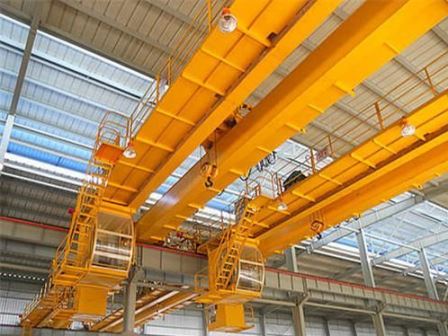
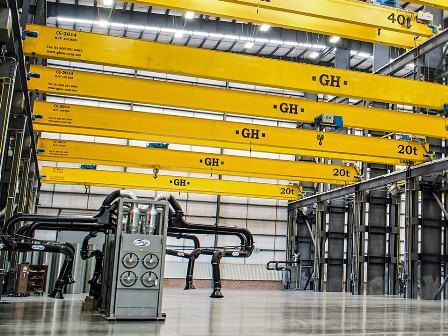
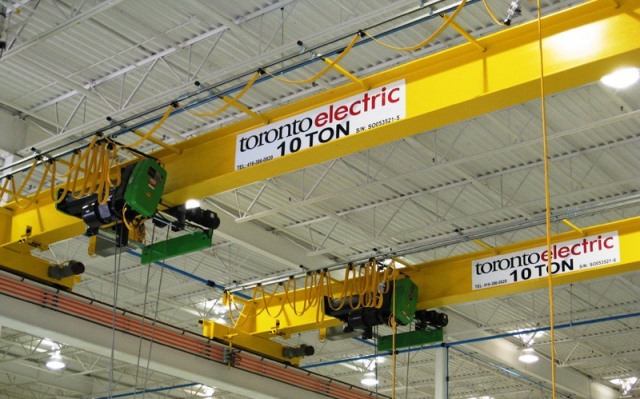
The crane consists of a single bridge girder supported on two end trucks. It has a trolley hoist mechanism that runs on the bottom flange of the bridge girder.

Double Girder Bridge Cranes

The crane consists of two bridge girders supported on two end trucks. The trolley runs on rails on the top of the bridge girders.

Gantry Cranes

These cranes are essentially the same as the regular overhead cranes except that the bridge for carrying the trolley or trolleys is rigidly supported on two or more legs running on fixed rails or other runways. These “legs” eliminate the supporting runway and column system and run on a rail either embedded in or laid on top of the floor.

Monorail

For some applications such as production assembly lines or service lines, only a trolley hoist is required. This type of crane is designed using I-beams like those found in ceiling structures of many factories. The trolleys run along the flat surface on the bottom horizontal bars of the beam. The hoisting mechanism is similar to a single girder crane with the difference that the crane doesn’t have a movable bridge and the hoisting trolley runs on a fixed girder.

Single vs double girder crane

Which Crane should you choose – single Girder or Double Girder

Based on the CMAA (Crane Manufacturers Association of America) specifications, both single and double girder cranes are equally rigid, strong, and durable. The principle difference between single and double girder cranes is hook height (how far above the floor your hoist will lift).

Double girder cranes typically allow 18-36 inches higher lift, because the hoist is placed between the cross girders rather than under them. Therefore, the depth of the cross girder is gained by switching to double girders.

Overhead crane cost

Cost Considerations; single girder cranes may cost less for several reasons:

  • Only one girder is required
  • The trolley is simpler
  • Fright expenses are reduced
  • Installation is faster
  • Runway beams are lighter

However, not all cranes should be designed with a single girder. Generally, if the crane has to handle more than 15 tons or the span is more than 80 feet, a double girder crane is a preferred option. Double girder cranes are also highly suitable where the crane needs to be fitted with walkways, cabs, magnet cable reels, or other special equipment.

The Crane Manufacturers Association of America (CMAA) is pretty much the head kahuna of the US crane industry. Every reputable crane builder conforms to CMAA Spec 70 (for double girder cranes) or CMAA Spec 74 (for single girder cranes).

Crane Configuration

  1. Under Running (U/R)
  2. Top Running (T/R)

Under running crane

Under running or underslung cranes are supported by using suspension-type support that is connected to the bottom of the frame.

The crane wheels are supported from the bottom of the flange of the crane beams which act as a crane rail and usually only span a portion of the column-to-column span of the structure.

Under running, cranes are typically available in standard capacities up to 10 tons (special configurations up to 25 tons and over 90 ft spans). Underhung cranes offer excellent side approaches, and close headroom, and can be supported on runways hung from existing building members if adequate.

The under-running crane offers the following advantages:

  • Very small trolley approach dimensions meaning maximum utilization of the building’s width and height.
  • The possibility of using the existing ceiling girder for securing the crane track.

The following are some limitations to under-running cranes:

  • Hook Height: Due to the location of the runway beams, hook height is reduced
  • Roof Load: The load applied to the roof is greater than that of a top running crane.
  • Flange Loading: Lower flange loading of runway beams requires careful sizing; otherwise, you can “peel” the flanges off the beam
Under running overhead crane

Top Running Crane

The crane bridge travels on top of rails mounted on a runway beam supported by either the building columns or columns specifically engineered for the crane.

Top running cranes are the most common form of crane design where the crane loads are transmitted to the building columns or free-standing structures.

These cranes have the greatest variation in capacity, span and service class and usually span the full width of the framing supports. These are available in both single girder and double girder configurations.

Overhead crane components

  • The function of a crane is to move the lifted load horizontally and longitudinally in the building.
  • The lifted load is usually supported with a hook which is cabled to a hoist.
  • The hoist is supported by a trolley that moves horizontally along the crane bridge.
  • The crane bridge is connected to a number of crane trucks at each end depending on the capacity and span.
  • The crane trucks can have 2, 4, or 8 wheels based on the capacity of the crane. The wheels ride along a crane rail which is supported by runway beams.

Crane components

Bridge

The Bridge is the principal structural component of an overhead crane. It spans the width of the building and comprises one or more load-bearing beams or girders. These may be fabricated steel box girders or rolled-steel joists. The bridge carries the hoist trolley, which travels along the length of the girders during operation.

Runway

The track and support system on which the crane operates.
The runway girders are usually considered a part of the building structure and are designed accordingly.

Runway Rail

The rail is supported by the runway beams on which the crane travels.

End trucks

Located on either side of the bridge, the end trucks house the wheels on which the entire crane travels. It is an assembly consisting of structural members, wheels, bearings, axles, etc., which supports the bridge girder(s) or the trolley cross member(s).

Electric drive motors typically two-speed or variable-speed units power the wheels and move the crane into the required position.

Brakes are mounted on the drive motors and are essential to prevent uncontrolled loads from becoming dangerous, and are often electrically operated. Electrical limit switches cut power to the drive motors and prevent the crane from colliding with the building structure at the end of the travel range.

Overhead crane hoist

Hoist

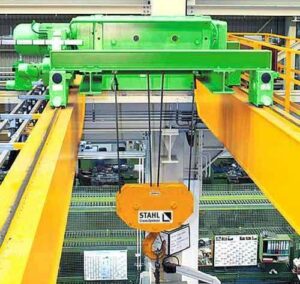
A hoist mechanism is a unit consisting of a motor drive, coupling, brakes, gearing, drum, ropes, and load block designed to raise, hold and lower the maximum rated load. The hoist mechanism is mounted to the trolley.

Trolley or Crab

The ‘crab’ is the ‘cross travel unit’ from which the hook is lowered and raised. A top-running trolley on a double girder crane runs on rails fitted to the top of the crane bridge. An underhung trolley on a single-girder crane runs on the bottom flange of the crane beam, with drive units connected directly to the trolley. The trolley carries the electric wire rope hoist that supports the load block and hooks through a system of pulleys. A variable-speed AC motor on the hoist drives the load up or down. Limit switches prevent the load block from colliding with the trolley.

Bumper

Bumper (Buffer): An energy absorbing device intended for reducing impact when a moving crane or trolley reaches the end of its permitted travel, or when two moving cranes or trolleys come into contact. This device may be attached to the bridge, trolley, or runway stop.

Controls

Controls for an EOT crane are usually mounted in an operator pendant or remote console and comprise various push buttons and switches that operate relays and contactors mounted on the crane.

Drive motors and the hoist motor draw substantial currents during operation and require appropriately rated contactors to switch them on and off. Variable frequency inverters provide speed control for motors where accurate positioning is essential. A master contactor is triggered by the main switch and cuts off all power to the crane if a dangerous situation occurs.

Other features on specialized cranes may include end stops, provision of a full-length platform on both girders, provision of under-bridge lighting, and provision of a closed, glazed, or air-conditioned cabin, specialized controls, etc.

How do overhead cranes work?

How do overhead cranes work?

Overhead cranes cover a rectangular area, moving a load side to side and backward and forward.
They typically incorporate a top running trolley hoist which moves along the top of the two bridge beams on its own set of wheels for increased headroom under the crane; also called a top running crane.

What is an overhead gantry crane?

A gantry crane is a crane built atop a gantry, which is a structure used to straddle an object or workspace. They are also called portal cranes, the “portal” being the empty space straddled by the gantry.

What is a gantry crane used for?

A gantry crane is a type of overhead crane that is similar to a bridge crane, but instead of moving on suspended runways, the crane uses legs to support the bridge, trolley, and hoist. These legs travel on tires or on rails that are embedded in the floor or ground structure.

The most read

Overhead Cranes

  • What are the parts of an overhead crane?
  • What is the purpose of an overhead crane?
  • How much does an overhead crane cost?

More on this story

Overhead crane specifications

The specifications depend on the essential terminology when using overhead cranes, each part, part layer, must be defined and specified.

Overhead Crane Test Questions and Answers

  • Crane operator interview questions and answers
  • Rigging test questions and answers

Overhead Crane Safe Work Procedure

What happens when there are structural defects in an overhead crane?

Single Girder Overhead Crane

The single girder travelling crane is our flexible crane for almost any application. Even in buildings with low ceilings effective material flow solutions can be achieved for loads of up to 16 t and spans of up to 39 m.

Normally safety clearances below ceilings are not required for single girder cranes within this load range. This allows the optimal use of existing space or can save additional building height costs.

The single girder traveling cranes adapt to different building applications due to their various main girder connection variants. Favorable crane dimensions help to reach optimal highest hook positions.

Overhead bridge crane

The main girder connection ‘version 3’ is the optimal solution for new factory buildings as this version offers the best side approach dimensions. If lifting height is the decisive factor then a single girder crane ELS with a side-running trolley is the right choice.

The single-girder traveling crane is also a good choice for special solutions: The accessories and components offer specialized additional equipment to satisfy your requirements.

Robust rolled section girders form the crane girder of the single girder traveling crane ELV whereas, traveling cranes ELK and ELS consist of torsion-resistant welded box girders.

Overhead crane design

Single Girder vs. Double Girder Design

A single girder or double girder design will be one of the largest contributors to the complexity and overall cost of a new overhead crane system.

A bridge crane is a type of overhead crane that includes two or more overhead runways built into the building’s support structure. Bridge cranes have different configurations and can be comprised of one or two beams—more often referred to as a single girder or double girder design. Girders can be made of rolled steel or can be fabricated by welding the beams into a steel box design for added strength and rigidity.

Overhead travelling crane design

The bridge is a load-bearing beam that runs the width of the crane bay and is the primary structural component that connects the runways and moves the hoist forward and backward using a trolley.

The trolley and hoist can be designed to be top running or under running depending on the design of the building structure and the requirements needed to make the lift.

A single girder or double girder design will be one of the largest contributors to the complexity and overall cost of a new overhead crane system. In this article, we’ll discuss the advantages, disadvantages, and differences between single girder and double girder bridge crane systems.

You’ll want to give careful consideration to the bridge design of your overhead crane system to make sure that you understand the requirements of the lifting task and the environment where the crane will be operating.

Single girder overhead travelling crane

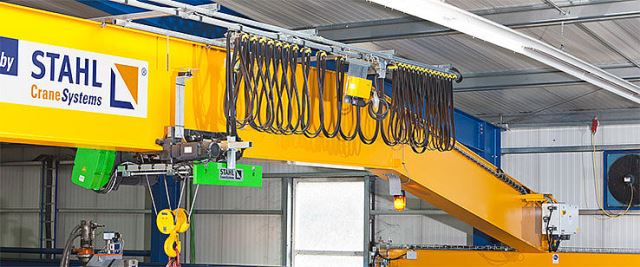
On a single girder crane, the bridge consists of one girder beam supported on each side by an end truck. The trolley and hoist are most commonly underhung—meaning they run on the bottom flange of the bridge. The bridge itself can either be top running or under running in design.

One of the most common misconceptions about single girder cranes is that they are not as durable or of the same high quality as double girder cranes. If properly designed, a single girder crane can be the perfect solution for a business that needs a light to medium duty crane, or for a facility where headroom and/or floor space is limited.

  • Single girder bridge cranes are often the most cost-effective lifting solution for various applications and industries.
  • Single girder cranes use less material and are more compact and lightweight than a double girder crane, which results in a significant cost-savings in material, freight, and installation.
  • Also, because they only require one bridge beam, these systems typically have less dead weight, meaning they can utilize lighter runway systems and tie into the existing building support structure.

The major disadvantage of a single girder crane system is that they do have a limit in terms of capacity, span, and hook height. A double girder crane may be the better solution for overhead cranes that require capacities over 15 tons and spans over 65 feet.

In addition, service walkways, enclosed or exposed operator cabs, magnet cable reels, or other specialized features can be difficult or expensive to incorporate into the crane’s design.

Single Girder Crane Design

Advantages of a Single Girder Design:

  • Less expensive due to a simpler trolley design, reduced freight costs, simplified and faster installation, and less material for the bridge and runway beams
  • A most economical option for light to medium-duty cranes
  • Lower loads on the building structure or foundations due to a reduced deadweight. In many cases, it can be supported by the existing roof structure without the use of additional support columns.
  • Better hook approach for both trolley travel and bridge travel
  • Easier to install, service, and maintain
  • Ideal for workshops, warehouses, material yards, and manufacturing and production facilities
  • Lighter load on runway rails or beams means less wear on the beams and end truck wheels over time
  • Great for facilities with low headroom

Disadvantages of a Single Girder Design:

  • The hoist is placed under the cross girder and cannot provide as much hook height as a double girder crane
  • On a standard rolled steel bridge beam, the under running hoist trolley may cause premature wear to the bottom flange of the beam
  • Special features like service walks, lights, and heavy service components can be expensive or difficult to incorporate
  • Lower capacity rating

Double girder overhead crane

On a double girder crane, there are two girder beams that make up the bridge and they’re supported by an end truck on each side. In most instances, the trolley and hoist run on a rail installed on top of the bridge girders. With a double girder design, you gain the depth of the cross girder if the hoist is placed between or on top of the cross girders—providing an extra 18”-36” of hook height in most cases.

Double girder cranes can be either top running or under running in design. A top running double girder bridge crane will provide the most overhead room, as well as the greatest hook height.

Double girder overhead crane specification

Double girder cranes are recommended for heavy-duty applications where the crane has to handle heavier capacities and longer spans. Because of this, the components of the crane system, including the hoist and trolley, are more complex in design—making double girder cranes more expensive than a single girder crane.

They also require more material for the bridge beams and the runway system, so extra consideration should be given to the building’s support structure. Additional tie-backs or support columns may need to be added to handle the additional deadweight on the supports or building foundation.

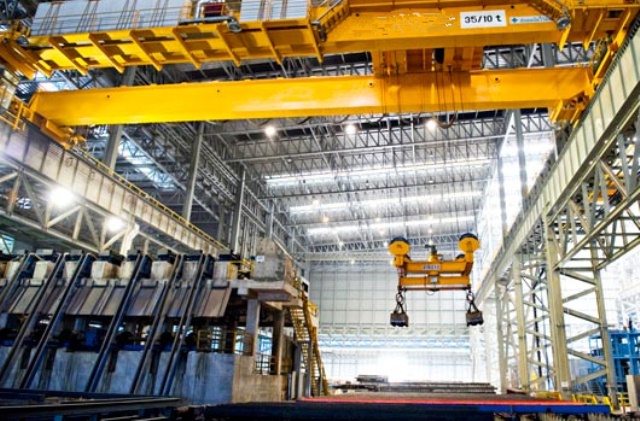
Double girder bridge cranes are ideal for lifting heavy loads and can be used in more frequent operation than a single girder crane. They can also be used both indoors and outdoors, in a bridge or gantry set up, and are frequently used in mining, iron and steel production, railyards, and shipping ports.

Double girder overhead crane design

Advantages of a Double Girder Design:

  • Greater hook height – how far above the floor the hoist will lift (typically 18-36” more than single girder)
  • No limits to maximum span or capacity
  • Ideal for production and transportation of heavy equipment
  • Ideal for the frequent lifting of heavy loads
  • Added features like walkways and maintenance platforms, cabs, magnetic reels, and lights can be added and supported by a double girder design
  • Can be used in indoor and outdoor applications, including mining, iron and steel, railyards, and ports

Disadvantages of a Double Girder Design:

  • More expensive because of added material costs, additional structural support, and more complex crane components
  • Additional costs related to freight and the installation of the crane versus a single girder crane
  • Hook approach is lessened for both trolley travel and bridge travel especially on double girder top running cranes

Overhead crane components

Bridge crane

The main traveling structure of the crane which spans the width of the bay. The bridge consists of two end trucks and one or two bridge girders depending on the equipment type.

End trucks

Located on either side of the span, the end trucks house the wheels on which the entire crane travels. These wheels ride on the runway beam allowing access to the entire length of the bay.

Bridge Girder

The principal horizontal beam of the crane bridge which supports the trolley and is supported by the end trucks.

Trolley Hoist

The unit consisting of both the hoist and the trolley frame. In situations where more than one hoist is required on one crane, both hoists can be supplied on a single trolley or on separate trolleys.

Trolley

The trolley carries the hoist across the bay along the bridge girder(s) traversing the span.

Hoist

The hoist is mounted to the trolley and performs the actual lifting function via a hook or lifting attachment. There are two basic types of hoist. The Munck brand is a Wire Rope Hoist which is very durable and will provide long term, reliable usage. The other type of hoist is Chain Hoist.

Why buy an overhead crane?

Why buy an overhead crane?

When you purchase an overhead crane, you also benefit from our complete project management experience. This not only covers design and manufacture, but also delivery, installation, load testing, and final commissioning.

What is the difference between a gantry crane and overhead crane?

A gantry crane is slightly different from a bridge crane. The general premise is the same, but the operation is different. Some gantry cranes ride along a track installed on the floor or use a V-groove caster to keep moving in a straight line. Gantry cranes are usually less expensive than an overhead bridge crane.

How much do overhead crane operators make?

The average pay for an Overhead Crane Operator is $59,000 a year and $28 an hour in the United States. The average salary range for an Overhead Crane Operator is between $42,500 and $72,250.

How much do gantry crane operators make?

The Bureau of Labor Statistics reports that the average annual income of crane and tower crane operators was $50,000 on May 2012. This annual income figure is based on an average wage of $24.00 an hour and 2,050 hours of work per year.

Is crane operator a dangerous job?

While workers face many dangers on construction sites, crane operators are often at risk for catastrophic injuries. While crane accidents aren’t always caused by negligence, more often than not, they are preventable.

The most read

More on this story

Overhead Cranes

  • What are the parts of an overhead crane?
  • What is the purpose of an overhead crane?
  • How much does an overhead crane cost?

Overhead Crane Test Questions and Answers

  • Crane operator interview questions and answers
  • Rigging test questions and answers

Overhead crane manufacturers in the USA

Some have wondered if in the United States they fix, manufacture, elaborate parts, and components of overhead cranes.

Overhead Crane Cable

Overhead Crane Cable: Imagine the following situation: An inspector has examined the hoist rope and he has found 10,000 wire breaks. He insists that the rope is still in good working condition. Could this be true?

Before wire ropes were invented in 1834, chains were the most common lifting means. They have, however, one inherent disadvantage: Chains are linear arrangements of load-bearing elements. If only one chain link fails, the whole system will fail.

Overhead Crane Cable

Crane wire rope specification

Steel wire ropes, Overhead Crane Cable, on the other hand, are parallel arrangements of load-bearing elements. If one rope element fails, the breaking strength of the wire rope is reduced only locally, and usually by less than 1%.

Wire ropes are multiple redundant systems of load-bearing elements. In a redundant system, every element which is necessary for the proper functioning of the system exists at least twice. For example, some of the parts of our human body are redundant: If we lose sight in one eye, we can still see. And if we lose the hearing in one ear, we can still hear. If in a wire rope one wire fails, there are still about 250 other wires to carry the load.

But what will happen if during the service life of the rope more and more of these wires fail? If we have lost the sight in both eyes, we can no longer see. And if we have lost the hearing in both ears, we can no longer hear. Therefore, should not also the wire rope fail if every single one of its 250 wires is broken?

No. It sounds incredible, but a wire rope can still be in good condition even if every single one of its wires is broken 200 times!

Overhead Crane Cable

Wire rope hoist crane

The figure shows a schematic arrangement of the 250 wires making up a wire rope (for space reasons, only 30 wires are displayed). Along the rope length, every single one of the 250 wires is broken once. Each wire break, however, merely represents a local reduction of the rope’s breaking strength. A few millimeters away from the location of the break the broken wire will again bear its full share of the load.

Overhead Crane Cable:

If we have a very uniform distribution of the wire breaks along the rope length so that in every short piece of rope only one wire break can be found, the breaking strength of every single one of these sections is weakened by less than one percent only. In a pull test, this wire rope might achieve its full catalog breaking strength even though every single one of its elements is broken! Still, there must be rules about how many broken wires per rope unit length that can be tolerated.

The discard number of wire breaks is defined in the applicable national or international standards and in the rules of the classification societies as a permissible number of wire breaks per multiple of the wire rope diameter, e.g. per 6 x rope diameter (one rope lay length) or per 30 x rope diameter (5 rope lay lengths). Our inspector has found 10,000 wire breaks, but the discard number was not reached in any single rope section of a length of 6 x d or 30 x d. So he was perfectly right in his decision to keep the rope in service. This example shows that under normal conditions a wire rope is a very safe and reliable machine element.

Overhead Crane Cable

Installing wire rope on crane

Choosing a crane wire rope: Overhead Crane Cable

Items to be taken into account when choosing a wire rope:

Breaking strength

The workload that the wire rope is to be subjected to is the first item to be taken into account when choosing a wire rope. Depending on the workload and the safety factor we wish to apply, we will have the wire rope breaking strength.

Corrosion resistance

If the wire rope is to be used in corrosive environments, a wire rope with galvanized wires should be used. If there is any risk of moisture entering the wire rope, a plastic-coated core wire rope can be an option.

Twisting torque and rotation

We have to take into account that when a wire rope is bearing a load, it causes the following effects:

  • When the two ends of a wire rope are fixed, the force applied causes twisting at the fixed points.
  • When one of the ends of the wire rope is free and a load is attached, the wire rope tends to rotate.

The wire rope’s tendency to rotate increases with the load that it is bearing and the height. The degree to which the wire rope generates twisting torque depends on its construction. Non-rotation wire ropes have each layer of strands in a differing direction of lay to the previous one, which means that the twisting torque of each layer is compensated by the twisting torque of the next layer. For this reason, we call wire ropes with three layers of strands Non-Rotation, whereas we call wire ropes with two layers of strands ROTATION RESISTANT.

Fatigue resistance

Wire ropes deteriorate due to the bending fatigue they are subjected to when bearing a load and flexing on the sheaves and drums. The level of deterioration is determined by the number of sheaves, sheave´s diameters, drum diameter and the diameter of the strands in the wire rope. If there is high bending fatigue, a wire rope with small diameter outer strands or a compacted finish should be chosen.

Abrasion resistance

Abrasion takes place between the wire rope and the sheaves and drums. To prevent it, a wire rope with a high outer strand diameter should be used.

Crushing strength

In multi-layer winding applications, the wire rope should be installed with a tension of between 2% and 10% of the breaking strength in order to avoid crushing between layers and deterioration of the wire rope. Compacted wire ropes are recommended for multilayer winding. Always use wire ropes with a metal core and high filling factor.

Swivels

Swivel use is only recommended when using non-rotation wire ropes and the load might rotate in high lifting operations.

Hoist cable trolley

What is the requirements to overhead crane cable?

The use of suspension overhead crane (or crane cable guide), should prevent the crane cable in the movement was worn and over bending.

For crane cable diameter greater than 8mm, the crane cable hanging curved plate diameter should be at least the crane cable diameter For the outer diameter of more than 8mm of the crane cable, at least 8 times the outer diameter; for the diameter of more than 12.5mm crane cable, at least 10 times the outer diameter; for flat crane cable, the crane cable thickness is equivalent to the diameter of the round crane cable.

Overhead Crane cable arrangement should ensure that the crane cable length is equal, the pressure plate crimps firmly, the same layer of crane cable diameter as close as possible to avoid a root or a few crane cables too much force. Suspension crane cable trolley should be set between each other to pull the wire rope, the operation, when the adjacent two hanging crane cable trolley spacing between the crane cable so that the angle between the 120 °, the traction wire rope should be completely straightened force.

Overhead Crane Cable

Crane pendant wire rope

The use of crane cable reel power supply should be prevented during the movement of the crane cable was worn, the diameter of not more than 21.5mm crane cable, crane cable drum diameter should be at least 10 times the crane cable diameter; for the diameter of more than 21.5mm crane cable, The crane cable drum diameter should be at least 12.5 times the crane cable diameter.

The crane cable reel shall be capable of automatically winding the crane cable.

The drive torque of the crane cable reel shall be not less than the maximum winding torque required for the winding crane cable. In the process of crane cable laying, the traction force acting on the crane cable conductor should be as small as possible. For crane cables with no reinforcement core, the maximum allowable tension on the copper conductor cross-section is 20N / mm2. For crane cable winding speed or crane cable weight Heavier, should be added to withstand the required traction to strengthen the wire rope for the core.

Overhead Crane Cable

what type of wire rope is used on cranes?

What are crane cables made of?

Steel wires for wire ropes are normally made of non-alloy carbon steel with a carbon content of 0.4 to 0.95%. The very high strength of the rope wires enables wire ropes to support large tensile forces and to run over sheaves with relatively small diameters.

What is Strand in wire rope?

Cable construction is the combination and arrangement of wires in a rope. Many individual steel wires are helically-laid together to form a wire rope. A strand is when two or more wires are wound concentrically in a helix. These strands are typically wound around a center wire and then around the core.

What is the difference between cable and wire rope?

The term cable is often used interchangeably with wire rope. However, in general, wire rope refers to diameters larger than 3/8 inch. Sizes smaller than this are designated as cable or cords. Two or more wires concentrically laid around a center wire is called a strand.

The most read

Overhead Cranes

  • What are the parts of an overhead crane?
  • What is the purpose of an overhead crane?
  • How much does an overhead crane cost?

More on this story

Overhead Crane Test Questions and Answers

  • Crane operator interview questions and answers
  • Rigging test questions and answers

Overhead crane manufacturers in the USA

Some have wondered if in the United States they fix, manufacture, elaborate parts, and components of overhead cranes.
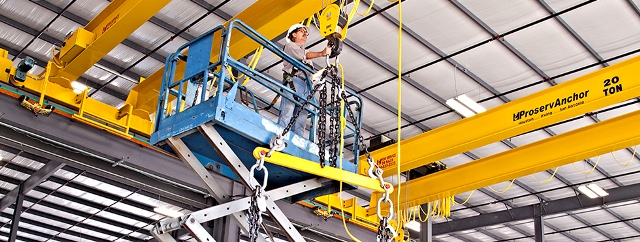
What is Overhead Crane?

First things first – overhead cranes can come in many shapes and sizes, so if you’re not certain of the terminology it’s best to start by asking: what exactly is an overhead crane?

What is overhead crane?

crane operator

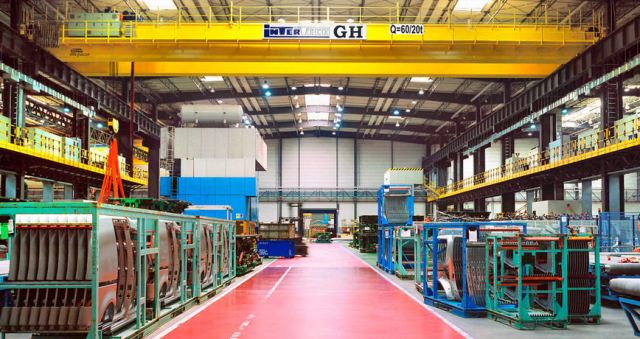
An overhead crane consists of two parallel runways which support a horizontal beam (often called the bridge or simply the crane) on which a hoist or hoist runs.

The supporting runways can be attached to the building walls or columns at a raised level, or be supported by a series of columns (often called ‘freestanding gantry steelwork’).

What is an overhead crane?

Overhead crane working principle

What is overhead crane?

Applications: Powered either by hydraulics, internal combustion, or electric batteries, they usually serve commercial and industrial crane applications. They are found in paper mills, automobile manufacturing facilities, refineries, and more.

Common applications: the initial construction and subsequent maintenance of paper machines and heavy press roles, raw material handle, hot metal storage, and steel refinement.

Overhead crane specifications

What is overhead crane?

No matter the overhead crane type, they basically function using a series of pulleys and cables. These pulleys and cables do their hoisting, lifting, lowering, carrying, and positioning from either a single or a pair of overhead steel beams, or girders, to which they are attached. From these girders, they also gain structural support.

Different overhead cranes work using different additional power lending mechanisms attached. Examples include:

  • counterweights,
  • hydraulic cylinders,
  • chain hoists,
  • levers and pivoting extended arms.
What is overhead crane?

Bridge crane

bridge crane vs.overhead crane. What is overhead crane?

The crane bridge will usually be able to move up and down the runways (what is known as long travel) and a single pair of runway beams can support multiple crane bridges if needed.

Overhead cranes, particularly when supported by gantry steelwork, are often confused, with gantry cranes (where the crane’s columns travel longitudinally and form a single structure with the bridge to straddle a gap).

Whether you’re looking for an overhead crane, track girders or gantry steelwork, you can find anything from a brand new overhead crane system to some replacement parts.

What is overhead crane?

Overhead crane types

Types of overhead cranes: We design overhead cranes to meet any and every lifting requirement. Here’s a breakdown of the different models we offer:

Single girder cranes

The basic overhead crane design features a single beam with a hoist running off it.

Single girder cranes are a type of overhead crane that is common in production, engineering, and many other workplaces as they cater to practically any lifting application.

Every one of our single girder cranes is made to order, meaning its size and capacity can be adapted to fit your requirements. As a rule of thumb, we tend to specify single girder crane designs for loads under 10 tonnes, anything over this will typically feature a double girder design.

Double girder cranes

Two beams running side by side, normally with a crab hoist unit running between them – specified for higher capacities.

A double girder overhead crane is a lifting solution designed to carry medium and heavy-duty loads. By using two adjacently positioned beams, double girder cranes offer improved support for the goods being handled, allowing the movement of larger capacities. Typically we will specify a double girder crane design for loads over approx. 10 tonnes.

The U.K. is the most versatile manufacturer of double girder cranes, providing a comprehensive range for lifting requirements of all kinds. All our double girder overhead cranes are made to order – meaning they can be built to any size and adapted to handle any load.

Process cranes

Designed specially to suit critical industrial processes across various sectors.

Process cranes combine automated technology with overhead cranes to let you handle heavy-duty loads and streamline your working procedures.

The UK is a market leader in providing bespoke process cranes that are tailored precisely around your industry and the application in hand. We have provided customized industrial overhead cranes for end users and trade clients for almost fifty years and have the knowledge and expertise to turn even the most complex lifting requirements into a workable solution for your business.

Top running cranes

Specified as standard in most cases this refers to when the crane beam sits on top of the runway beams.

As a leading lifting equipment manufacturer, have considerable experience when it comes to designing and supplying top-running cranes. We can produce a top-running crane tailored around your needs, to meet any requirement whether you’re the end-user of the system or a business working within the lifting industry.

Top running cranes, also referred to as top running bridge cranes and top running overhead cranes, get their name from their end carriages that support horizontal beams or beams which span the width of the system and sit on top of the gantry rail supports. This is as opposed to underslung crane designs, in which the end carriages run underneath the gantry framework.

Underslung cranes

The opposite of top running systems, the crane ‘hangs’ below the runway, usually specified to maximize headroom.

If you require a lifting system for an application where the available headroom is limited, an underslung crane could be the ideal solution. While the end carriages which support the horizontal beam or girder of most overhead cranes typically run on top of the gantry rails, they are located underneath underslung cranes.
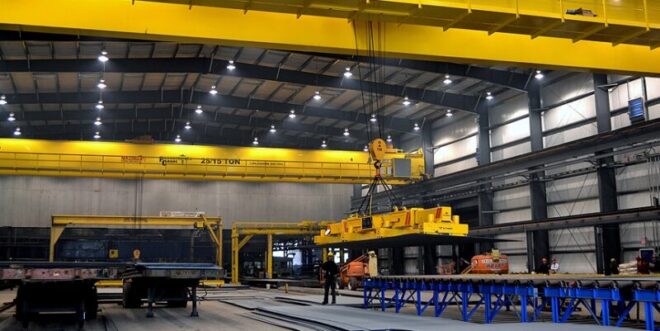
The opposite of this system is called top running cranes.

This is useful in workplaces where there is a low-level ceiling or where the distance between the floor and hoist needs to be maximized.

What is overhead crane?

Overhead crane design

Overhead crane design options: Every overhead crane is custom designed and built to suit the customer’s requirements.

  • Height of lift/max-height: Any
  • Span: Any
  • Capacity (safe working load): From a few kgs to over 100 tonnes
  • Gantry steelwork: Raised runway beams or freestanding gantry steelwork
  • Long travel operation: Manual, electric, pneumatic
  • Vertical hoisting operation: Manual, electric, pneumatic
  • Hoist cross travel operation: Manual, electric, pneumatic
  • Environments: Indoor, outdoor, marine, explosive
  • Delivery, installation, testing & servicing: Available
What is an overhead crane?

Why buy an overhead crane?

Overhead cranes can be designed with a series of optional extras, including pendant or remote controls, walkways for easy access, floodlights, laser sensors, and other anti-collision features. Whatever the application, can ensure you receive the perfect overhead crane lifting solution.
Kinematic Drive System

All of our overhead cranes benefit from the Kinematic Drive System, which uses advanced inverter technology to offer variable speed control on the crab as it moves along the beam for superior operating performance.

What is overhead crane?

Hoist vs crane

What is overhead crane? – What’s the Difference?

First things first:

  • a hoist helps to do one thing: move heavy loads up and down.
  • An elevator is probably the most well-known hoist. Elevators are the perfect machine for transporting loads vertically, but in no other direction (unlike a crane’s functionality).
  • On the other hand, a crane can move in two or three dimensions. Overhead cranes suspend from a beam or move along a rail.
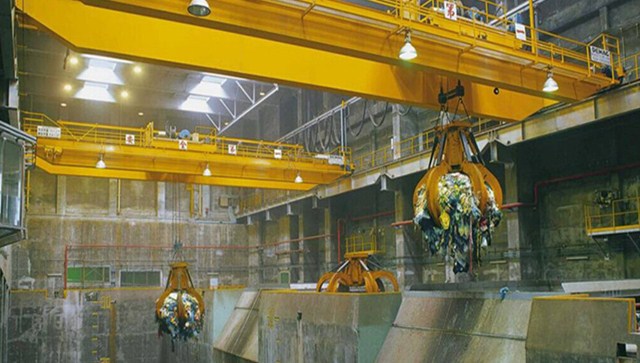
  • Just like cement is a component of concrete, a hoist is a central part of an overhead crane. Essentially, the crane moves the hoist around.

What is an overhead crane?

Why buy an overhead crane?

When you purchase an overhead crane, you also benefit from our complete project management experience. This not only covers design and manufacture, but also delivery, installation, load testing, and final commissioning.

How do overhead cranes work?

Overhead cranes cover a rectangular area, moving a load side to side and backward and forward. They typically incorporate a top running trolley hoist which moves along the top of the two bridge beams on its own set of wheels for increased headroom under the crane; also called a top running crane.

What is an overhead gantry crane?

A gantry crane is a crane built atop a gantry, which is a structure used to straddle an object or workspace. They are also called portal cranes, the “portal” being the empty space straddled by the gantry.

How does a gantry crane work?

The bridge can have a single-beam or double-girder structure. The Gantry crane moves on a rail crane rails on four undercarriages. The undercarriage is equipped with protective arcs that minimize the chance of damage to a minimum. The wheels for transportation trolleys wheels are reinforced to avoid accidents

What is the difference between a gantry crane and an overhead crane?

A gantry crane is slightly different from a bridge crane. The general premise is the same, but the operation is different. Some gantry cranes ride along a track installed on the floor or use a V-groove caster to keep moving in a straight line. Gantry cranes are usually less expensive than an overhead bridge crane.

The most read

Overhead Cranes

  • What are the parts of an overhead crane?
  • What is the purpose of an overhead crane?
  • How much does an overhead crane cost?

More on this story

Overhead Crane Test Questions and Answers

  • Crane operator interview questions and answers
  • Rigging test questions and answers

Overhead crane manufacturers in the USA

Some have wondered if in the United States they fix, manufacture, elaborate parts, and components of overhead cranes.