Professional Web Writer | Motor Enthusiast | Content Creator | Logan is a dedicated and skilled web writer, passionate about engines and machines and with a talent for creating engaging and informative content.
She specializes in writing about a diverse range of topics including construction, forklifts, heavy equipment, excavators, etc. SEO Optimization: Proficient in SEO best practices, ensuring high visibility and engagement for all published content.
A course has general information about the classes and divisions of forklifts commonly used in the workplace.
It also covers the principles necessary to understand safe loading, transferring loads, and unloading. Forklift operator training requirements and general best practices in operating, servicing, and maintaining forklifts are discussed.
The hazards associated with operating forklifts in enclosed areas and construction sites are also discussed.
A powered industrial truck is defined as a fork truck, tractor, platform lift truck, motorized hand truck, and other specialized industrial trucks powered by electric motors or internal combustion engines.
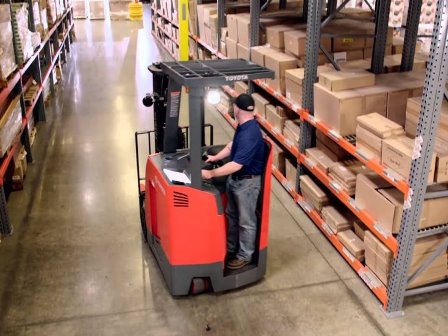
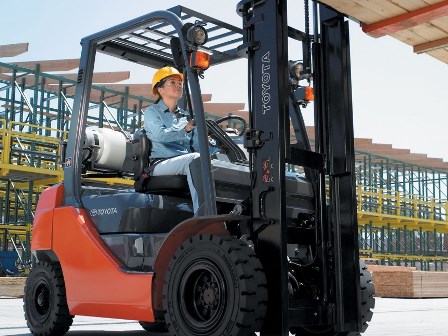
Powered industrial trucks, often called forklifts or lift trucks, can be ridden or controlled by a walking operator.
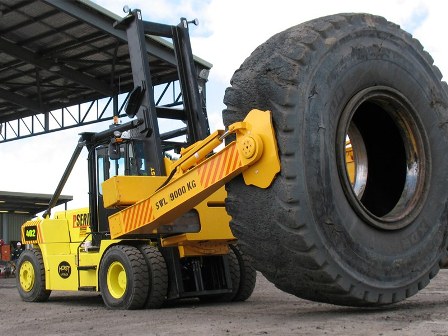
As you can see in the photo on the right, forklifts have been around a long time and they’ve gone through some significant design improvements.
A course contains general information about:
the kinds of forklifts commonly available
the principles of physics that allow a forklift to lift and move heavy loads safely
forklift operator training requirements
basic operator safety rules
hazardous locations where carbon monoxide is a problem or a special forklift is needed
safety while servicing a forklift
A course is not designed to be a substitute for OSHA-required hands-on forklift operator training in the operation of specific forklifts. The course does not include safety regarding compressed air or nonflammable compressed gas-operated industrial trucks, farm vehicles, vehicles intended primarily for earth moving, or over-the-road hauling.
Forklift safety course
The forklift safety course covers operations in the workplace. What you will learn includes the critical dimensions of your forklift.
The operating environment where travel and maneuvering are verified. Ramps and inclines. Pedestrian safety and closed areas.
Forklift dimensions operators need to know to determine if the forklift can safely perform tasks in the available space.
The critical measurements of a powered industrial forklift are overall lifted height, fork clearance height, and maximum height.
Understanding the critical dimensions of your forklift can create various hazards, such as hitting ceiling fixtures, low-hanging lights, heaters, racks, doors, or trailer roofs.
Safe practices include knowing the dynamic range of your vehicle to determine if your forklift can safely do the job in the available space you need to consider.
Known height when determining if your forklift can fit into a tight area, fork clearance is also considered when determining if your forklift can lift the load to the required height, considering overall height.
A driving safety course has general information on the forklift classes and divisions commonly used in the workplace.
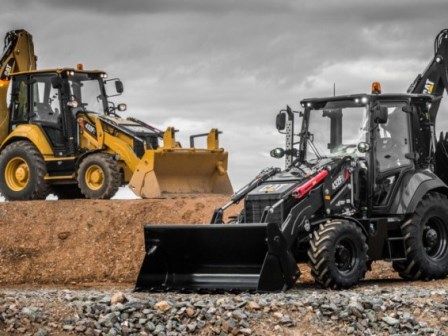
Backhoes are one of the most versatile pieces of earthmoving equipment, and are frequently used in a wide range of agricultural, industrial, and construction applications.
Most backhoes are compatible with everything from buckets to grapples to hammers. This functionality allows a single person to perform a variety of tasks through quick coupler accessories that facilitate productivity and maximize machine throughput.
In this article, we will compare the main brands focusing on the best-selling machinery:
Top 10 Backhoe Loader Companies
Caterpillar Backhoe Loader
John Deere Backhoe Loader
Terex Backhoe Loader
JCB Backhoe Loader
CASE Backhoe Loader
Komatsu Backhoe Loader
Kubota Backhoe Loader
Volvo Backhoe Loader
Massey Ferguson
Mahindra
Backhoe loader reviews
A used backhoe or on a new model, many machines tend to have similar production and overall performance. This makes manufacturer reliability and after-sales service even more important in making your final decision. Pay close attention to the strengths and weaknesses of a backhoe manufacturer, particularly frequent breakdowns or problems with accessories.
Best Sellers
This can often reveal a manufacturer’s research and development approach. If specialist features like eco-friendliness are important to you or design aspects like compact size are important to you, an award is definitely something that should tip the balance in favor of that model.
Best backhoe brand
This is one of the most critical aspects of buying any backhoe. When choosing between distributors, be sure to factor in downtime, as longer service support can lead to costly overages. Ideally, you should strive for a level of support that reflects your hours of operation.
Training and maintenance agreements: While experienced operators may be comfortable with a backhoe, newer drivers may need some instruction on the latest features. And a maintenance agreement is essential to prevent breakdowns and ensure the charger continues to perform at peak performance.
The most recognized brands of backhoe loaders such as Cat, Volvo, and JCB are essential machinery when it comes to construction. They are versatile and have a long list of accessories that make them an all-in-one machine.
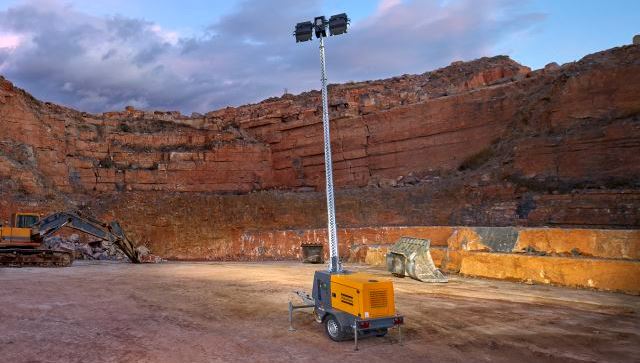
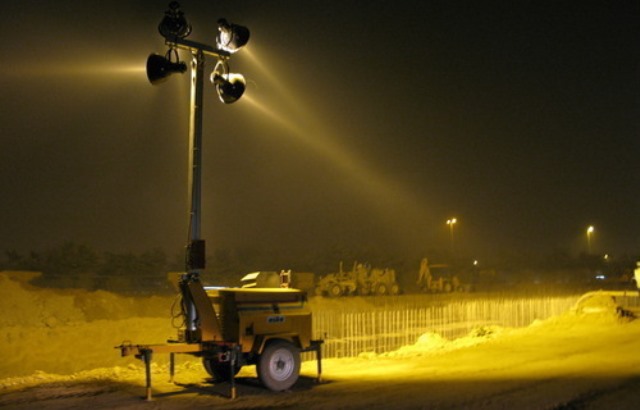
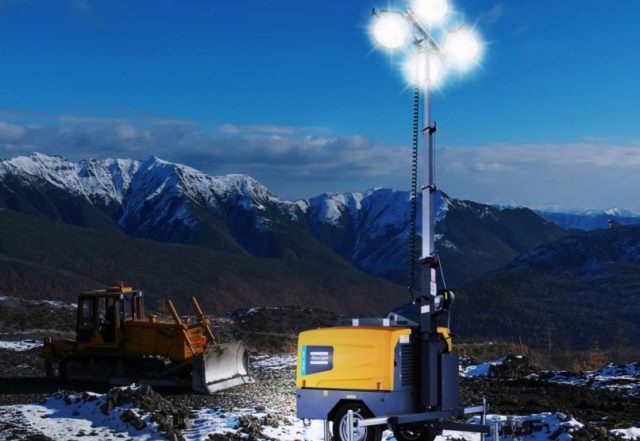
Light tower with generator is made with the components of generator sets, lights, masts, trailers, and canopy. It is designed for working outside in wind speeds up to designed specifications and is rainproof.
The trailer allows it to be drawn by different kinds of vehicles. Its flexibility and reliability make it ideal for the use of night construction, emergency handling, rescuing, special events, etc.
Combination light towers with generators represent a complete mobile outdoor lighting system providing the ability to produce high-power illumination in almost any setting.
Light tower with generator
Lighting Tower Generator
Combination light towers with generators represent a complete mobile outdoor lighting system providing the ability to produce high-power illumination in almost any setting.
Combination light towers with generators represent a complete mobile outdoor lighting system providing the ability to produce high-power illumination in almost any setting.
Light tower with generator – The selection of light tower and generator systems cover everything from:
compact portable tower
generator systems designed for smaller worksites
full-size mobile tower generators capable of illuminating over 10 acres.
The light towers are available with a variety of lamp configurations including the most popular metal halide and LED fixtures, and manual and hand-operated tower assemblies in a variety of heights as well.
Manufacturers can tailor light towers to customer requirements, as well as service the equipment they sell.
They also provide replacement, overhaul, and upgrade parts, as well as industrial-grade electrical accessories.
Manufacturers are craftsmen who can customize any lighting system or fixture to fit the unique demands of their operation.
Lighting Tower Generator with LED
Light tower inspection checklist
Make sure you are completely familiar with the safe operation of this equipment. This equipment may be connected to other machines that have rotating parts or parts controlled by this equipment. Improper use can cause serious injury or death.
Receiving & Inspection: when you receive your equipment, there are several things you should do immediately. Light tower with generator checklist:
Observe the condition of the equipment and report any damage immediately to the carrier that delivered your system.
Verify that the part number of the system you received is the same as the part number listed on your purchase order.
If the system is to be stored for several weeks before use, be sure that it is stored in a location that conforms to published storage temperature and humidity specifications.
Lifting the Equipment
When lift or hoist equipment is used to lift the equipment and move it to position, be careful not to contact overhead wires or other obstacles. Be sure lift or hoist equipment has appropriate tires for the terrain to avoid becoming stuck or tipping over. The lift slots are designed for use with a forklift. A spreader bar and chains can also be used.
Light Tower Installation
The light tower is delivered completely assembled, tested, and ready for use. No assembly is required.
However, before putting the light tower to use the system should be completely checked to ensure it is ready for operation.
The light tower has six major systems that will be checked individually before use, these are:
Trailer
Engine/Generator
Trailer Stabilization System
Light Mast
Light Fixtures
Electrical Systems
Light Tower Checks
Trailer Stabilization Checks Consists of 2 rear-mounted outrigger assemblies and the jack on the trailer tongue.
Verify that the jack rotates and locks into position.
Ensure that all bolts, nuts and other hardware are tight and not missing.
Verify that the rear outriggers extend and rotate into position.
Ensure that the lock mechanisms operate correctly.
Light Mast Checks
a 4-section 30-foot mast can be rotated 360 degrees.
Ensure that all bolts, nuts, and other hardware are tight and not missing.
Verify that the cables for Tilt and Lift winches are not frayed or damaged.
Verify that the Tilt and Lift winches are not damaged.
Verify that the Tilt Lock and Mast Lock hardware is present and not damaged.
Light Fixtures Checks
Ensure that all bolts, nuts, and other hardware are tight and not missing.
Verify that the electrical cables are not frayed or damaged.
Verify that the light bulbs, covers, and other hardware are not damaged.
Electrical Systems Checks: Verify that the wiring cables, switches, etc. are not damaged.
Generator Installation The generator is delivered completely assembled, tested, and ready for use. No assembly is required.
Light tower with generator
Generator safety checklist
Always disconnect all electrical loads before starting the equipment.
Installation and repair procedures require specialized skills with electrical generating equipment and liquid-cooled engine systems.
Any person that installs or repairs this equipment must have these specialized skills to ensure that this generating unit is safe to operate.
Seek expert advice for repairs or any questions you may have about safe installation and operation.
The precautionary statements are general guidelines for the safe use and operation of this equipment.
Light Tower with Generator specs
Therefore, if you use a procedure that is not recommended in the manual you must determine if it is safe for the operator and all personnel in the proximity to the equipment and connected loads.
If there is any question of the safety of a procedure please seek expert advice before starting or stopping the equipment.
This equipment contains high voltages. Electrical shock can cause serious or fatal injury.
Only qualified personnel should attempt the start−up procedure or troubleshoot this equipment.
This equipment may be connected to other machines that have rotating parts or parts that are driven by this equipment. Improper use can cause serious or fatal injury.
Only qualified personnel should attempt the start−up procedure or troubleshoot this equipment.
System documentation must be available to anyone that operates this equipment at all times.
Keep non-qualified personnel at a safe distance from this equipment.
Only qualified personnel familiar with the safe installation, operation, and maintenance of this device should attempt start-up or operating procedures.
Always stop the engine before making or removing any connections.
Always stop the engine and allow it to cool before refueling.
Light tower with generator
Mobile lighting tower
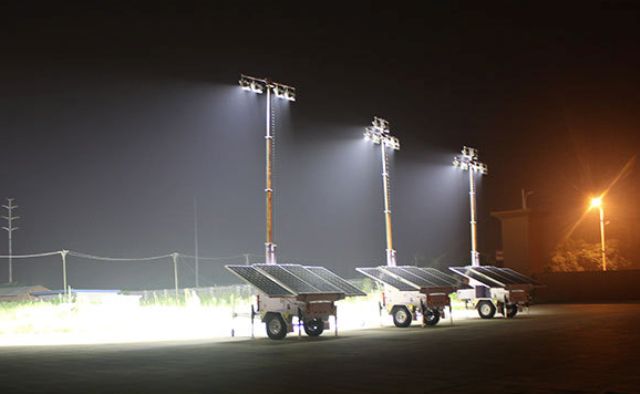
No matter what your lighting needs, mobile light towers offer the options and durability to deliver consistent, reliable light to your job site.
Built to light up the toughest job sites from construction and mining to oil field applications. The 30ft extended-height floodlight tower provides 4000W of light. The 360º tower rotation permits pinpoint positioning of the light. The -20ºC to 55ºC working temperature enables lighting under extreme weather conditions.
Every mobile light tower undergoes rigorous testing keeping in mind customer peace of mind and user-friendliness in operating control.
Choosing generator
How to calculate what size generator I need?
Choosing a generator or light tower can be a critical decision, especially if you power multiple tools from the generator set.
The right light tower is key for night work in the workplace, as well as for safety needs. A few calculations and a few spec comparisons before choosing will save you headaches in the long run.
Whether you need a 1,000-watt or 10,000-watt generator, a basic knowledge of the average power requirements for your tools helps you determine the power rating you will need from the unit.
However, remember that the wattage required to start a tool can be several times the wattage required to run the tool.
Fans, pumps, and compressors can require up to five times more energy to start than to run continuously.
“Starting power requirements should be factored into your sizing measurements”
“Check equipment nameplates to determine power requirements.”
When choosing a light tower, know approximately the size of the area you want to light and choose a unit with features to suit your application.
Light tower Troubleshooting
The lightweight masts that are easy to extend can be raised and retracted by one person, and the hot-dip galvanized sections prevent binding, rubbing, or rusting.
Look carefully at the lamps themselves. “Metal halide lamps mounted on an elliptical fixture provide improved coverage”
Metal halide lamps are more popular than high-pressure sodium lamps.
“They are basically the industry standard”
“Metal halide lamps provide a bright white work light, ideal for the workplace. High-pressure sodium emits a rosier light, similar to street lamps. They are also a bit more expensive. “
The lamps are great for the workplace, the bright intensity of metal halide lamps can cause visibility problems for oncoming traffic, please note that high-power metal halide lamps take up to five minutes to turn on and up to 20 minutes to restart.
Light towers also come standard with outriggers for stability in high winds – most towers are rated to withstand between 50 and 60 mph winds.
Also, consider maneuverability on the Jobsite and fuel tank capacity and compare them with your requirements.
Light tower generator rental
Once you’ve decided what you’re looking for in a generator set or light tower, decide whether you should rent the units or buy them.
Generator rental costs vary widely, depending on the size of the unit you need.
Generator rental costs can range from:
$ 1,000 per month for a 30 kW unit
$ 8,000 per month for 400 kW, and upto
$ 32,000 per month for a 2-megawatt generator
However, if you come to a long-term rental location, you may want to consider purchasing one.
The general rule of thumb is that if the rental period rate is more than a third of the purchase price, then it is time to consider purchasing a generator.
Light tower problems
Maintenance is also a factor when making a purchase decision. If you don’t have the capacity or manpower to perform maintenance, keep the rental option.
Generator maintenance is an important consideration, in addition to engine service, it includes electrical tests to verify proper operation plus full load bank capacity to prevent wet stacking (fuel overload caused by running diesel engines with light loads for long periods of time)
Typically, the rental-store can provide better maintenance in these cases.
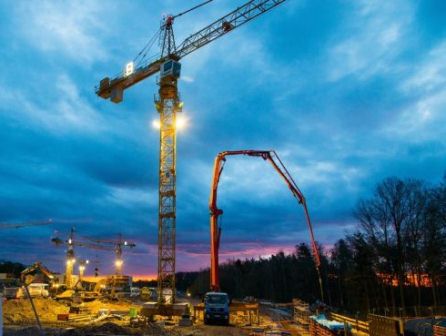
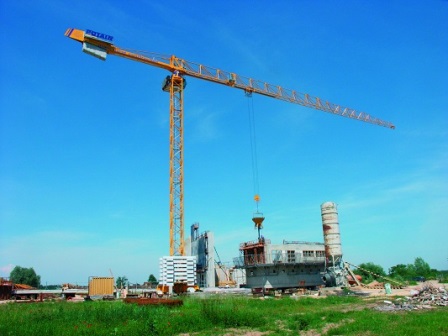
A tower crane is a construction machine designed to load and unload different materials. This load is distributed through the use of a hook that remains suspended thanks to the use of a cable.
The study of the tower crane will include knowing the structures that make it up, as well as knowing the elements that are part of this and that will allow the crane to perform the tasks for which it has been designed.
If something like this has ever happened to you: When the hoisted load is lowered, the bottom block drifts when you let go of the button on the pushbutton control. what could be the cause?
Crane Operator test questions and answers
Crane operator interview questions and answers
Rigging test questions and answers
Overhead Crane Test Questions and Answers
Overhead crane operator test questions and answers
The following practice questions are representative of a level-1 mobile crane theory exam. These will give you a good idea of how the questions are worded and structured.
What does the hand signal indicate in the figure below?
Boom up (*)
Hoist up
Load up
Hold the swing
What is the radio protocol between a mobile piece of equipment and a tower crane sharing the same workplace?
Mobile operator uses the site channel
A separate radio with a mobile to tower crane frequency (*)
Mobile rigger maintains radio contact with tower crane rigger
Mobile operator switches to tower crane frequency once on site
What is the equivalent of 10,030 pounds in kilograms?
3,057 kg
3,238 kg
4,554 kg (*)
7,650 kg
Crane operator test questions and answers pdf
These sample questions are intended to convey something of the style and content of the National Operator Certification Program examination developed and administered by the National Commission for the Certification of Crane Operators.
They are not actual test questions, nor do they attempt to address all of the areas of knowledge tested on the CCO certification examination. Response to these questions is not necessarily an indication of performance on the CCO examinations.
What action does a signal person intend the operator to perform if he extends his arm at shoulder height, makes a fist with his hand, and sticks his thumb up?
Boom down
Swing
Boom up
Telescope out
The load line of the crane you’re operating comes into contact with an energized power line. There’s no sign of any other danger, such as fire. In such a situation, you should:
Climb down carefully from the crane cab
Jump down, feet together
Stay in the cab until the lines are de-energized
Get as far away from the crane as possible
Unless the manufacturer states otherwise, the net capacity of a crane on main boom is the capacity listed in the load chart:
minus the weight of the rigging and all attachments
plus the weight of the rigging and all attachments
minus the weight of the rigging and all attachments not in use
minus the weight of the rigging alone
Unless the operator takes account of boom deflection, when lifted off the ground, a properly rigged load may:
swing out away from the crane
swing in towards the crane
raise absolutely vertically
shift in its rigging
NCCCO test questions and answers
While there are other companies seeking to certify crane operators, only one organization, the National Commission for the Certification of Crane Operators (NCCCO), provides CCO certification.
Tips for Passing the NCCCO Exams
Take a preparatory class. Training is the key to passing. You may think you know everything about cranes, but how well do you know OSHA and ANSI/ASME rules, regulations and industry best practices? A preparatory class builds confidence so you won’t be intimidated by the test.
Read the Candidate Handbook. The manuals tell you everything you need to know about the NCCCO exams, from start to finish. Focus on the outline of the written exams, the outline is like the “blueprint” for the exams.
Forget how you do it daily. You may be doing it safely, but are you following the rules, manufacturer recommendations, and industry best practices? Come to class with an open mind. In fact, you may learn something you didn’t know before.
Exams require experience. The Candidate Handbook states: “CCO certification exams are designed for operators who are trained and currently working in crane operations.” If you are inexperienced, you will need extensive training to get to that level. You can’t get lucky on this test.
Study the load tables. One of the most important parts of this test is being able to solve a load graph problem. If you take a CCO Prep training class, you will be provided with a sample problems and loading diagrams.
Crane operator practice test
NCCCO test questions and answers:
This mobile crane preparation certification study manual is all you need to prepare to take the certification exams for all types of mobile cranes without wasting your time.
It includes selected information to help make sure you learn exactly what you need and avoid all the clutter. Includes 5 valuable prep tests (with answer keys) for you:
General knowledge test (100 questions)
Technical knowledge test (66 questions)
Site-Specific Test (42 Questions)
Crane Load Chart Test (49 questions) and
Practical evaluation test form for your practical operational use.
A free mobile crane inspection checklist is also provided for your use.
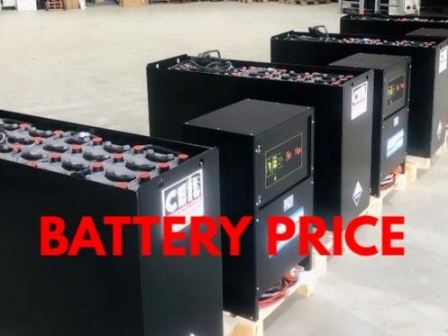
How to buy the right forklift battery? Before you spend hundreds of dollars on a battery, take a moment to learn how to choose the right battery for your forklift.
First, gather information about your forklift to ensure you get a battery that fits in the battery compartment and provides the correct amount of power.
A forklift dealer can also help you find a battery with the correct specifications.
Many people mistakenly believe that the purchase price of a battery is the highest cost they will incur for the purchase. In reality, the total cost of the battery is much more than that. Different types of forklift batteries vary in price.
In general, the purchase price of a lead-acid battery is much lower than the price of a comparable lithium-ion battery.
The cheapest battery option may initially seem like the most cost-effective option. But informed warehouse managers understand that they need to look at the big picture in more detail to understand the real costs.
Sale of new batteries for forklifts
A forklift battery can last up to five years and could last even longer when properly cared for and serviced.
But sometimes, it lasts less than expected. When that happens, it would be wise to replace them immediately so the workload is not affected.
Usually, the most common sign that the battery needs replacement is that it degrades after only a few hours of operational use.
This is also a safety issue because the operator may have difficulty driving the equipment, so the forklift simply shuts off.
Now that your forklift is causing downtime on the job, it may be the right time to purchase a battery to get your forklift up and running again.
Fortunately, finding forklift batteries for sale is easy because you can find hundreds of suppliers by searching the Internet.
Before you call these vendors to make an inquiry, it would be helpful for you to know the information that we have prepared before making your final purchase decision.
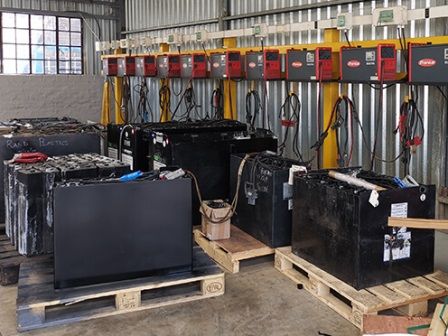
Used Forklift Batteries for Sale
When considering used batteries for your forklift, there are a few things to keep in mind to ensure you’re finding the best solutions for your budget.
Why consider buying used batteries?
Choosing used or leased forklift batteries over new ones can result in multiple benefits for your business. Used forklift batteries are generally less expensive than new equipment and can be especially beneficial when rented for seasonal use.
Depending on your warehouse, used batteries can provide benefits ranging from helping reduce operating costs to keeping a tight budget to renting them to reduce the amount of idle equipment taking up space in your warehouse.
The decision to purchase used equipment or join a forklift battery rental program is based on factors related to your specific needs.
Forklift battery replacement
There are several situations where leased or used forklift batteries would be beneficial to warehouses. If any of these scenarios sound familiar to your warehouse or business, then refurbished batteries may be the best option for you over-investing in a fleet of new batteries.
seasonal demand
warehouse expansion
tight budget
If renting or buying used forklift batteries sounds like the best option for your warehouse, then it’s important to consider these three things before making a purchase.
Are your needs seasonal or long-term goals?
What is the useful life of the equipment?
Does the equipment have a guarantee?
Forklift batteries for sale
Ready to take the next step in finding the best forklift battery rental or sales program?
A new battery can help your industrial warehouse meet your expectations and reduce storage costs. Only the highest quality batteries in a rental or sale program, and an excellent personalized customer service team guarantee your investment.
Many people think that the purchase price of a forklift battery is all they need to consider. But this is not true. There are many other “hidden” costs associated with batteries that are often overlooked.
Time (i.e. efficiencies)
Workforce
Safety
ROI
Forklift battery specifications
Before buying forklift batteries for sale, it is best to check the specifications and other factors to buy the right ones. Here are the things to consider before you buy:
Check the width, height and length of the compartment
Check the size and dimension of the compartment where the battery will be placed on your forklift. When you make an inquiry, the first thing the supplier will ask you is the size of the compartment.
battery voltage
Determine the battery voltage required for your forklift
To determine the voltage, count the number of cells in your battery. If your battery has 24 cells then it requires 48 volts.
To accurately determine the required voltage, consult the owner’s manual or your engineer. Any mistake could cause severe damage to your forklift, if you are not sure, it would be better to consult a professional, an engineer or the forklift manufacturer for this purpose.
battery amp hours
Check amp-hour (AH) rating
The AH rating simply means the amperage discharge in relation to the time of use. The lower the amperage discharged during use, the more efficient the battery.
You can check the AH rating of what you have in your old battery or you can ask the supplier for the best recommendation for your truck.
Check battery weight
Each forklift model has a manufacturer’s recommended battery weight requirement. Installing a lighter battery than recommended by the manufacturer is a safety concern that must be considered when choosing the correct battery.
The weight must have due diligence when buying a battery. The weight requirement can be seen on the forklift’s data plate or can be found in the forklift’s owner’s manual.
Forklift battery charger
Check the specifications of your battery charger
Please check the specifications of the battery you are currently using at your store if it specifically matches the battery you are purchasing.
You can send these specifications, along with the make and model of the forklift, to the supplier so they can recommend what they have in stock.
They are experts in their field, if you are not sure which battery to buy, just by telling them the specification of the charger and the make and model of the forklift, they can give you expert advice on what to buy.
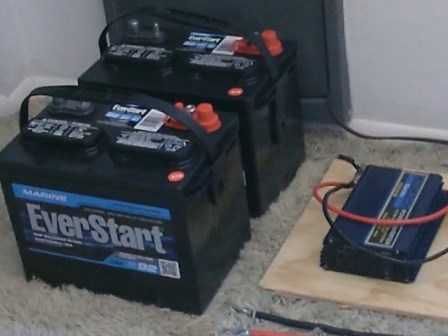
If you’ve decided to power your off-grid homestead with solar power, you may be considering using rechargeable forklift batteries to store the power from the sun.
An untrained operator of a forklift can be as dangerous as an unlicensed operator of a motor vehicle.
Regulations require that the employer ensure that a forklift operator is competent to operate the forklift he or she is assigned to use.
The employer must document operator training and an evaluation of the operator’s performance while using the forklift.
Standard Operating Procedure for Forklift Operation
Forklift Training
Training has three parts:
Formal instruction such as a lecture, discussion, interactive computer learning, videotape, and or written material (can be taken anywhere).
Practical training which includes hands-on demonstrations by the trainer and exercises by the trainee (on the model of forklift the worker will use); and
An evaluation of the effectiveness of the training by observing the operator’s performance while doing actual work using the forklift. This evaluation must be repeated at least once every three years (must be at the workplace).
Refresher training must be given if the operator has been involved in an accident, near miss or unsafe operations.
Also, if an operator is assigned to a new type of forklift or if workplace conditions change that could affect safety, then refresher training is required.
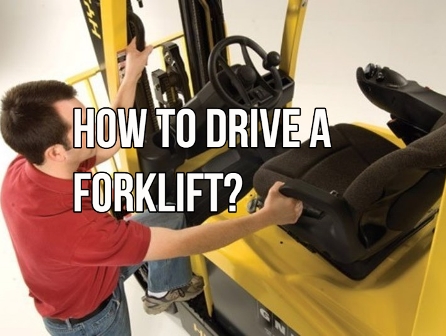
Forklift driving training
Driving a forklift is different than driving a car – Standard Operating Procedure for Forklift Operation
In a car or truck the front wheels steer the vehicle. A forklift has the steering wheels in the rear. The rear end of the forklift swings in a circle around the front wheels that support most of the load.
The operator must check that there is room for the rear end to swing when making turns. This clearance can be maintained in your workplace by permanently marking aisles with painted lines or arranging storage racks in a way that creates obvious aisles for travel.
However, these marked aisles will only be effective if you keep them clear of stored materials, which can gradually encroach as space is needed.
A forklift is not as responsive as a car when turning the steering wheel.
Rear steering makes it difficult to stop a forklift quickly or swerve and still maintain control. It is important, then not to drive a forklift fast or round corners quickly.
Driving with the load downhill can result in loss of the load and control of the forklift.
If you drive a forklift on an incline, you must keep the load on the uphill side. Otherwise, you may have no weight on the wheels that steer and can lose control! The load could also fall off or cause the forklift to tip.
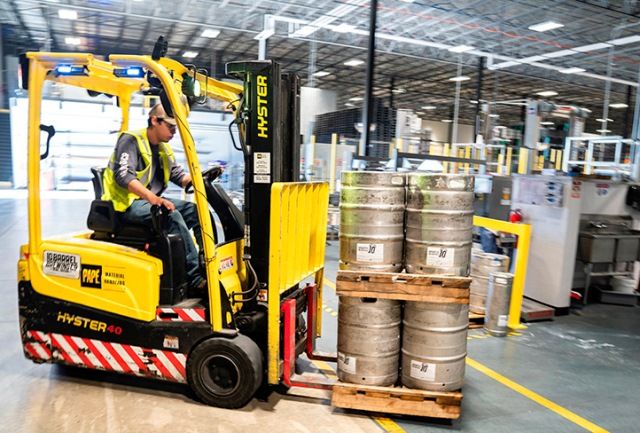
Forklifts are extremely useful workplace vehicles, as long as they are used safely and appropriately by operators who are appropriately trained and competent to use them.