All posts by Loganx

Professional Web Writer | Motor Enthusiast | Content Creator | Logan is a dedicated and skilled web writer, passionate about engines and machines and with a talent for creating engaging and informative content. She specializes in writing about a diverse range of topics including construction, forklifts, heavy equipment, excavators, etc. SEO Optimization: Proficient in SEO best practices, ensuring high visibility and engagement for all published content.

Magnetic Forklift Attachment

Forklift magnetic sweeper are the perfect solution for cleaning up large areas of nails, screws and other metal debris that can cause costly tire repairs or pose a safety risk to employees and customers alike.

Electromagnetic sweeper

Every magnetic sweeper carries a lifetime guarantee on Strength Utilizing state-of-the-art technology and the most advanced materials available, magnetic sweepers are innovative, functional, and effective. The entire line of sweepers carries a lifetime guarantee on strength and a full product performance guarantee. All the industrial magnets originate in the USA.

Heavy duty Magnetic Sweeper Specs

These are just a few of the benefits you will get from a magnetic forklift sweeper:

Simplify cleanup

If it’s metal, the magnetic forklift will pick it up. That includes tiny pieces, like metal shavings or grinding dust. This makes it much more useful than a broom, which can lose bits of metal in its bristles and requires more labor. The magnetic sweeper is especially useful for cleaning in poorly lit or hard-to-see areas because its magnetic field reduces the need for precise sweeping.

Reduce costs

It’s easy to lose those tools and supplies that were accidentally dropped, especially in places like active construction sites or parking lots. A quick sweep with the magnet will pull loose materials out of the ground, ready to use.

Avoid early maintenance

For example, replacing forklift tires is expensive, and not just because of the cost of the tire. There is also the price of labor and of taking the vehicle out of rotation. But a cluttered space covered in loose metal debris can quickly lead to many flat tires.

Regularly running a magnetic sweeper over an area prolongs the life of your tires, keeping vehicles running.

Of course, these sweepers will protect other valuable equipment as well. Some users will even place the magnetic sweepers directly in front of their forklifts and trucks so that they are constantly picking up harmful debris.

Prevent injuries

Loose metal presents the potential for trips, cuts or punctures, injuries that can lead to costly medical bills or even lawsuits.

A magnetic sweeper will catch debris before it can do damage, keeping workers safe.

Collect a wide variety of objects

Nails, scrap iron, solder scraps, wires, staples, tacks, metal shavings, screws, nuts – these are all quickly picked up and removed from the floor simply by passing the magnet over objects.

Versatility

Because the design is so simple, a typical sweeper is hung from a bumper, towed behind a vehicle or supported on the sides by wheels, they work in all weather, temperature and terrain. So whether you use the sweeper in rain or light snow, heat or cold, grass or gravel, its powerful magnetic field will continue to work.

Are you interested in a magnetic sweeper for your facility?

Industrial Magnetic sweeper

Magnetic Forklift Sweeper Product Description:

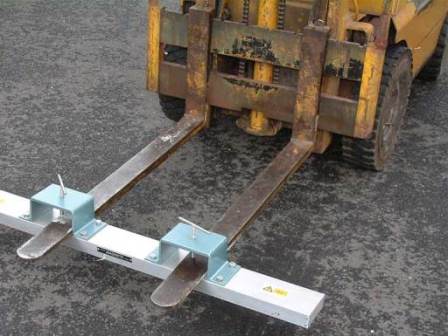
This industrial magnetic sweeper is a hanging model that is supplied with handles that allow the attachment of a vehicle or forklift.

These models have a length of 60 inches. It has a retractable handle that allows all metal shavings and debris to be easily disposed of in a bin or bin without having to touch or scrape debris from the base of the sweeper.

Magnetic Forklift Applications

Metal fragments in the workplace can present long-lasting health and safety hazards for staff and customers and puncture hazards for pneumatic wheeled vehicles. Automobiles, trucks, bicycles and pallets of goods usually express metallic objects of all kinds.

This magnetic sweeper attached to a forklift or small tractor via hitch lugs or brackets hovers over large areas such as factory parking lots and floors and loading docks and driveways, waste transfer compounds and shipyards to attract, capture and secure only metal scraps.

Magnetic pulling force does not apply to organic matter like dead birds, plastics like shopping bags or straws, or paper products like pizza boxes. Magnetic attraction allows for uncontaminated collection and clean storage of the only type of waste that can be exchanged for cash, scrap metal.

Metal is a durable substance. Heavy, uncollected rains can carry metal fragments into gutters and roads, parks and trails, storm drains, and eventually beaches and waterways where they continue to pose hazards to people and other creatures.

Regular sweeping of these nuisance materials with magnetic sweepers is an act of due diligence at the source of the problem.

Simple collection and release protocols allow metal shards to be quickly and cleanly collected and stored, removed from where they can cause harm, and exchanged for some cash where they are actually needed. The metal recycling depot.

More on this story

Forklift Magnet

The hanging forklift magnetic sweeper will allow you to suspend the magnetic sweeper by bar or chain and can be attached at the front or the back of the forklift. Tools releasable hanging forklift magnetic sweeper is similar and has a unique lever load release, secured by releasable magnets.

Forklift Fork Dimensions

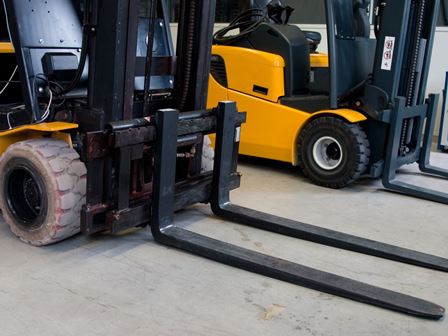
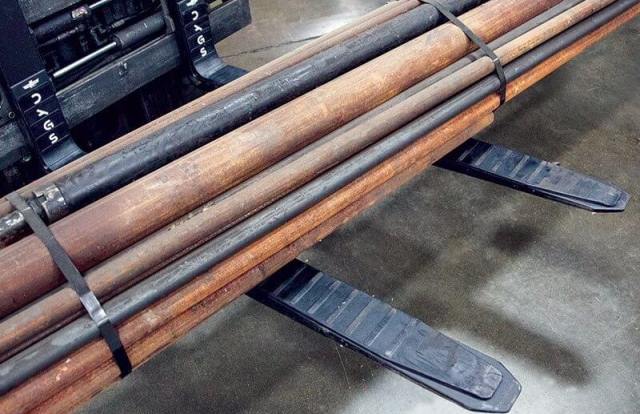
Forklift forks, also known as tines or blades, are used to lift and carry loads. They are an integral part of the forklift and ensuring you are using the correct ones and that they are in good condition is essential to both the safety of personnel, but also the forklift and the load.

Forklift Fork Extensions

  • What are the rules for forklift fork extensions?
  • What size are forklift fork extensions?
  • What are fork extensions?
Forklift Fork dimensions

Forklift fork dimensions and specifications

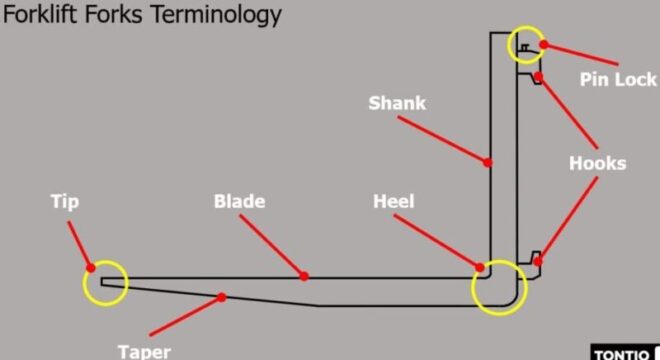
  • Forklift blades: Horizontal part of the fork which lifts and supports the load
  • Tip: The end of the blade that is inserted into the load
  • Shank: The vertical part of the fork
  • Heel: Part of the fork where the shank and blade meet
  • Hook: The hooks are the elements on the shank that support the forks on the forklift.
  • Pin lock (or locking pin, latch pin). Positioned on the top hook and used to position the forks on the forklift carriage. The forklift fork pin can be a latch or button (mushroom) type.
  • Taper: The difference in thickness between the tip and the heel. Tapers can begin at the heel or anywhere along the blade.

Production standards for all forks are based on common key- features:
Innovative and highly automated production process.

  • Prime quality steel offers good welding characteristics and strong resistance to wear.
  • Automated welding of upper and lower hooks with a robotic system, granting better quality of welding, quality repeatability, and higher process speed.
  • Complete heat treatment with hardening and tempering on the entire fork, providing the best quality and reliability characteristics.
Forklift Fork dimensions

Standard Forklift Fork measurements

-Standard forklift fork sizes
-Standard forklift fork length
-Standard Forklift Fork dimensions:

  • General: Fork-correct dimensioning and conditions are essential for safe, cost-effective, and damage-free pallet handling operations. Therefore, a regular fork inspection system should be put in place to ensure perfect operating conditions. Inspections, repairs, or replacements shall be carried out as a pair.
  • Height difference in fork tips: Check a pair of forks mounted on the fork carrier to detect a difference in tip heights. If the difference in tip heights exceeds 3% of the blade length, the pair of forks shall be withdrawn from service.
  • Wear: Forks must be checked regularly to ensure the heel thickness is not less than 10% of the original thickness as per ISO 5057. If the fork thickness is less than 10%, the fork must be replaced or related.
Forklift Fork dimensions

Forklift fork inspection

Forks in use shall be inspected at intervals of 12 months or less depending on the possible severe application, multi-shift operation, and fork conditions.

Regular inspections should be carried out by trained personnel. In case of detected damage, failures, deformations, etc. forks shall be withdrawn from service and not be returned to service unless satisfactorily repaired or related.

  • Cracks: Check visually the inner heel and top and bottom hook areas to detect possible cracks. Apply non-destructive crack detection tests if necessary. If surface cracks are detected, forks should be withdrawn from service.
  • Straightness: Check the straightness of the upper face of the blade and the front face of the shank. If the deviation exceeds 0,5% of blade length or shank height, the fork shall be withdrawn from service.
  • Angle: Check the fork’s upper face of the blade to load the face of the shank. If the fork has a deviation greater than 3 degrees from the original specifications, the fork shall be withdrawn from service
  • Locking devices: Check the fork positioning locking to ensure their normal operation and wear conditions. If any fault is found, the fork shall be withdrawn from service.
  • Marking: Forks shall be marked with the nominal capacity and load center according to ISO 2330. If the marking is not clearly legible, the fork shall be withdrawn from service.
  • Hooks: Check the fork hooks for possible wear, damage, and cracks. If the clearance between the fork and fork carrier is visually excessive, forks shall be withdrawn from service.
Forklift Fork dimensions

Replacement forklift forks

Repairs and tests: Repairs should be decided or carried out by authorized, expert personnel only, in accordance with the recommendations of the fork manufacturers. Do not repair surface cracks or wear them by welding. In case of repairs requiring fork re-setting, forks should be subjected to an appropriate heat treatment.

Forks subjected to repairs different from repairs or replacements of the positioning lock and/or marking can only return to service after having passed a yield test as described in ISO 2330.

Forklift Fork dimensions

Forklift pre-shift inspection

The best way to inspect forks is to use a fork caliper.

  • Determine the nominal thickness of “N” of the fork. Measurement has to be done on the fork shank using the caliper ruler.
  • Position the caliper at the end of the heel internal radius with the opening corresponding to the nominal dimension “N” (eg. for N 45 use 45 mm thickness), where the wear is higher.
  • If the fork enters the opening, it is mandatory to replace it. DANGER OF BREAKING. Furthermore, a 10% reduction in fork blade thickness results in a 20% reduction in operating capacity

Types of forklift forks

Following is a list of some of the special types of forklift forks, used for specific applications.

  • Pin Type & Bar Type: the forks have a guide and are attached to a shaft. Found on larger lift trucks and construction machines such as some telehandlers. Pin-Types can come with a lower hook
  • Drum handling forks: these forks have a section cut out of the side of the forks to enable a drum to be lifted
  • Coil handling forks: the inside edge of the forks is “chamfered” to provide a surface for the coil to sit on.
  • Explosion-proof: if the forklift is to be used in explosive environments then the forks are clad in stainless steel to prevent sparking. The stainless steel coating is typically 2mm thick
  • Forks for the food production industry: forklifts that are used in the food industry are typically clad in stainless steel as they are regularly washed down to maintain cleanliness.
  • Lumber forks: have a thin and wide blade for ease when inserting into loads

Lifting equipment

The lifting equipment on forklift truck machines is characterized by robust and high-quality design and numerous options combined with excellent visibility. Forklift trucks can offer many different types of masts all of the clear view designs. In combination with forks and/or attachments, it can provide the handling solution to meet your needs.

For even better handling, there are also a number of intelligent functions for forklift machines:

  • Pre-selected lifting height – the operator can simply find the right lifting height by means of 15 pre-selected lifting heights.
  • No chain slack – the chains are kept tensioned at all times, eliminating undesired movements of the forks or the attachment.
  • Vertical hold– the automatic tilt device ensures that the load is taken up and put down vertically to the loading surface.

Forklift Masts Types:

  • Single-stage mast forklift
  • 2-stage mast forklift
  • 3 Stage Mast Forklift
  • Quad mast forklift

What type of steel is used for forklift forks?

What type of steel is used for forklift forks?

They are made of different types of steel. Sometimes HSLA A572-50 (high strength low alloyed) steel, 1045-1060 heat-treated material, T1 heat-treated steel, and others.

What are the forklift forks used for?

The forks on a forklift are used to make direct contact with a load for transport. They are attached to the forklift carriage and are designed to carry a load from the bottom. Forklift forks come in all shapes and sizes. There is a wide variety of fork types available for various applications.

What is a quad mast forklift?

4-Stage – A quad or four-stage mast is designed for very high stacking. Quad masts allow for a shorter collapsed height when compared to a three-stage with equivalent MFH (maximum fork height).

What are the Forklift dimensions?
What size forklift should I get for my warehouse?

It is often a question asked by business owners and operation managers. Forklift Dimensions can be tricky and unique to every application. Virtually every forklift dimension could potentially impact an operation, and create a safety hazard if not specified correctly and carefully.

The most read

Forklift Fork Size Chart

Forks are often overlooked on a forklift due to their simple way of operating.

More on this story

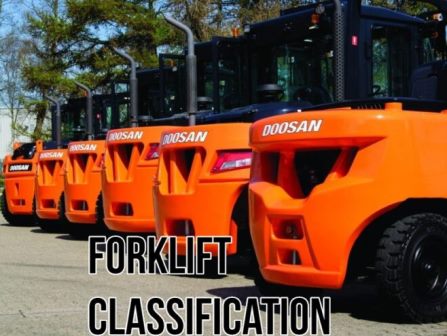
Forklift Classification Chart

Since there is a wide selection of models, it can be difficult to select a forklift.

How wide are forklift forks?

Knowing the different sizes of forklifts
What should I know for my warehouse or workshop?

Forklift Fork Thickness

Inspection of the forklift fork thickness and condition of the forklift should absolutely be part of every daily checklist.

Automated Guided Vehicle Price

As companies seek new production efficiencies and competitive advantages, the popularity of Automated Guided Vehicles has skyrocketed in recent years. what are the prices?

But when it comes to the prevalence of Automated Guided Vehicles, they have come even further in affordability.

In the early 2000s, even the most basic AGVs could cost up to $360,000. These were significant investments reserved only for the world’s well-funded early adopters.

However, today’s AGVs can be had for much less despite being much more capable. For example, the Heavy Duty AGV costs only $35,000 to purchase. Its medium-duty counterpart costs just $20,000.

Automated Guided Vehicle Price

How much does an automated guided vehicle cost?

But getting started with any of the robots, and many others on the market, doesn’t require even that level of investment.

As impossible as it sounds, you can now get started with a new AGV for less than the cost of a new smartphone. And all thanks to a relatively new business model.

Cloud software providers popularized the as-a-service business model with SaaS (software as a service) products.

These services are so prevalent because they make the tools, resources, and entertainment we need incredibly accessible, and at a dramatically reduced price.

Automated guided vehicle cost

Just as automation has evolved over the past decade, so has its accessibility. And that evolution is now being driven not just by affordable AGVs. It’s being powered by affordable AGVs that the RaaS model has made even cheaper.

RaaS drives business growth in a way that an initial purchase couldn’t have years ago, primarily because it removes any perceived investment risk.

For this reason and others mentioned above, the RaaS market is erupting. From 2022, analysts expect it to grow almost 20%.

And that makes sense: RaaS almost completely removes financial barriers to entry. Meanwhile, AGVs remove technological barriers to entry.

A RaaS rental program is a powerful combination that enables almost any business to get started with automation. After placing your order, you could be up and running, and experiencing profound growth in productivity, in a matter of hours. And all at a cost of $1,000 to start.

RaaS may be an evolution. But in its wake, it is leaving behind something much more powerful that companies of all sizes will benefit from, the start of a new industrial revolution.

The market is ultra competitive these days. Many new competitors are lowering prices and increasing capacity.

AGV vs AGC

According to the Automated Guided Vehicle Systems Group, an AGV consists of one or more computer-controlled wheel-based load carriers.

Battery-powered devices work without a controller and come in a wide variety of sizes, shapes, and styles.

Engineers can choose between tugs that pull a chain of cars or trailers on a train; unit load conveyors that move subassemblies and work in process from one assembly station to another; forked pallet trucks that interface with pick-up and drop-off points on the plant floor; and Automated Guided Cars (AGCs) that are smaller, cheaper, and easier to install than traditional AGVs.

AGCs are popular for applications where lighter loads and flexibility are required.

AGVs and AGCs have defined routes or areas within or over which they can navigate. Navigation is achieved by various means, such as following a path defined by surface-mounted magnetic tape or optical strips. Laser guidance, GPS, and vision systems are also popular.

More on this story

Automated Forklift Cost

Each is versatile and can offer as much flexibility as its intended design allows for moving a load from point A to point B.

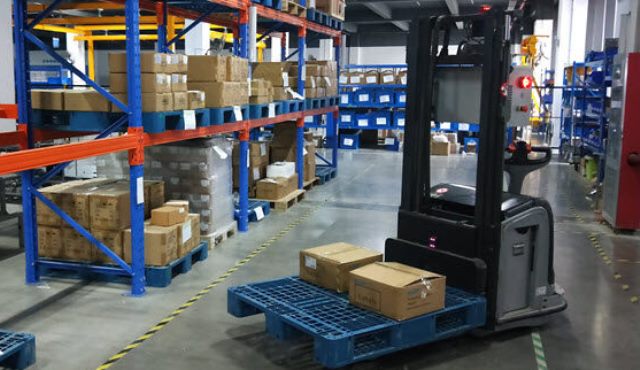
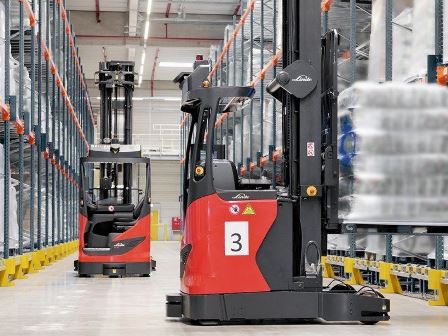
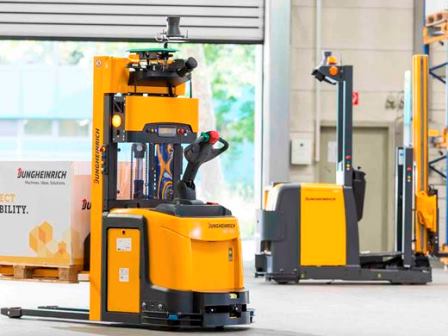
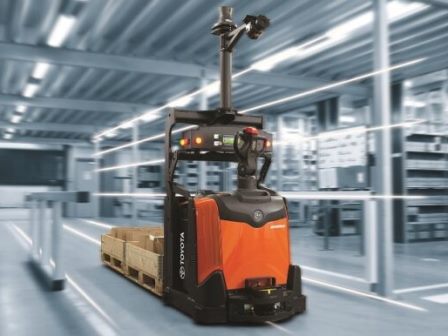
Robotic Forklift

Robotic forklifts are increasingly becoming a mainstay in manufacturing facilities and distribution center operations

Autonomous Forklift

When using transport robots you increase the productivity of your company significantly.

Boat Forklift for Sale

If you want to buy a marine forklift for your facilities, here are some recommendations before you buy it:

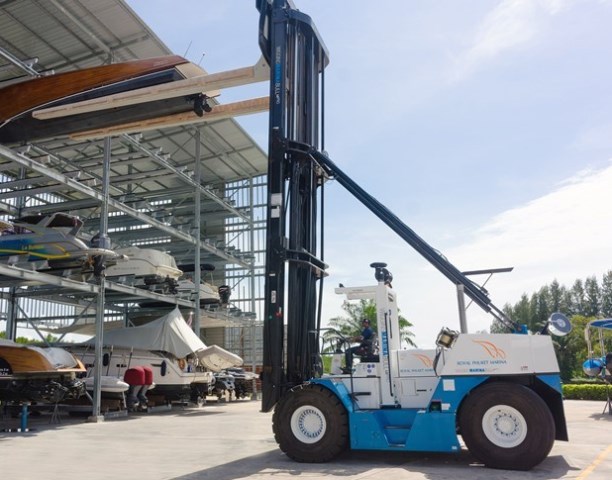
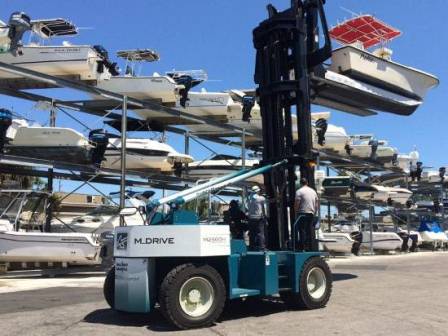
There is a wide selection of new and used marina forklifts for you to choose from. Forklifts sold to lift boats are designed for maximum performance, speed, durability, and safety.

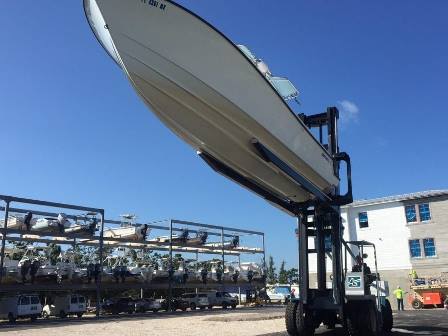
Forklifts are designed to lift large ships into the air and easily place them in or out of the water and safely in your dry storage facility.

Whether you have a large or small facility, you can be sure that there is a marina forklift to suit your needs.

  • Those with forklifts can handle capacities from 5,000 pounds to 65,000 pounds.
  • There are also forklifts that can stack jet skis and boats from 10 ‘long to 50’ long.
  • The fork height can reach a maximum of 6 or 7 boats tall and over 60 ′ tall.
Boat Forklift for Sale

Negative lift forklift

The term negative lift sounds counterintuitive, but it actually refers to the ability of the mast and cart to lower a load below ground level of the forklift.

Used primarily in the marine industry, negative lift allows marina owners to quickly and easily lower boats into the water, as well as dip the forks into the water to retrieve them.

Marine forklifts are ideal for your marina and boat handling needs.

These features include galvanization and a three-step painting process for maximum corrosion protection; advanced rubber fork cover system intuitive electronic joystick controls; deluxe air suspension seat; compliant Cummins diesel engine; algae filtering system; and remote vehicle management system.

Boat Forklift Weight

Moving boats in a marina can be a tricky business. You have to lift boats in and out of the water, move the boats overland, and carry the boats up to the storage areas.

These specialty forklifts are like no other forklift out there. Not only can they lift loads, they can also lower loads under the mast.

Because marinas are such a special application, there are three characteristics to consider when considering purchasing a boat lift truck:

  • Negative lift forklift: positive and negative elevation
  • Custom forklift: ability to customize forklift
  • Technology to be used for transport maneuvers

Each of these requires you to consider your specific lifting environment.

Custom forklift

Boats come in different shapes and sizes, as do marina forklifts.

When considering which forklift is best suited for your port or warehouse, consider customizing the forklift to meet all of your needs.

  • Make sure the forklift can be configured to handle the largest ship in the marina. That means lifting it in and out of the water, as well as lifting it in and out of storage.
    • Lifting capacity
    • lifting height
    • negative elevation and
    • the load center

They influence your needs for the marina or boat warehouse.

Also explore your options for masts and fork lengths, as your marina lift can be built to your specifications.

In fact, with every purchase of a high-capacity forklift, your dealer will conduct a site inspection to make sure the forklift precisely matches the lifting needs of your boat.

Specialty forklift attachments

Forklifts are useful equipment, but sometimes they need a little extra help.

Make your forklift safer and more versatile with various forklift accessories and extensions to get the most out of your forklift.

A forklift is designed to make your lifting work more efficient, which will increase productivity.

Use your forklift to its full capacity with the right accessories!

You will also find that the return on your investment in forklift accessories will be quick, as most forklift parts pay for themselves in just a few uses.

Brows especialty forklift attachments below: Touchscreens, cameras, and wireless remote control are just a few of the technologies that you can and should take advantage of when considering a new marina forklift.

Boat forklifts are huge. You must use a backup camera when you are operating. Or when lifting boats in and out of the water, it should have a wireless remote control function that allows you to get out of the forklift to get a better point of view.

Both are available on a high-capacity forklift. And if additional cameras are needed for increased visibility, engineers can work to make sure you have them. These are all characteristics that you should consider when purchasing a marina forklift.

More on this story

Marine Forklift Specs

Hoist lift truck is compact and extremely maneuverable to operate around any facility, yet strong and durable enough to lift/lower boats of various sizes and weights.

Marine Forklift for sale

Large marina forklift picking up boat

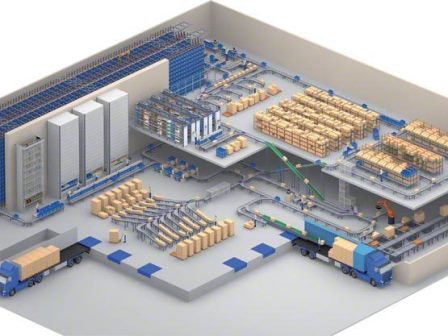
Warehouse operation process

The warehouse process, as one of many logistics processes, currently holds an irreplaceable position in logistics systems in companies and in the supply chain. The proper function of warehouse operations depends on, among other things, the type of the used technology and its utilization.

This article is focused on the design of a warehouse system. The selection of a suitable warehouse system is a current research topic as the warehouse system has an impact on warehouse capacity and utilization and on the speed of storage activities.

The post presents a warehouse system design methodology that was designed applying the logistics principle-systematic (system) approach.

Warehouse operation process

Simple warehouse design

The starting point for designing a warehouse system represents the process of designing logistics systems.

The design process consists of several phases: project identification, design process paradigm selection, system analysis, synthesis, and project evaluation.

This article’s contribution is the proposed methodology and design of the warehouse system for the specified conditions.

The methodology was implemented for the design of a warehouse system in a cold box, which is a part of a distribution warehouse.

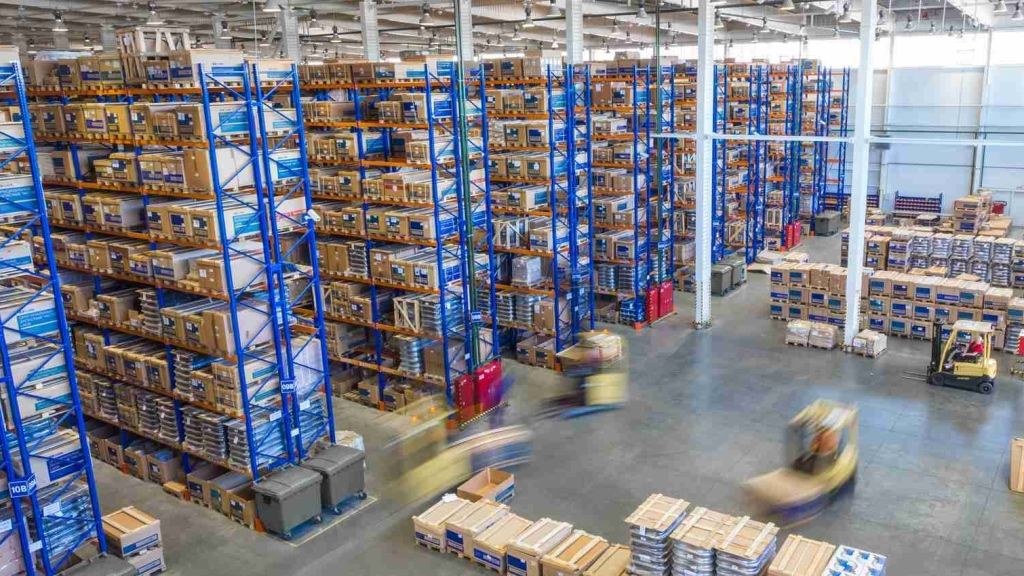
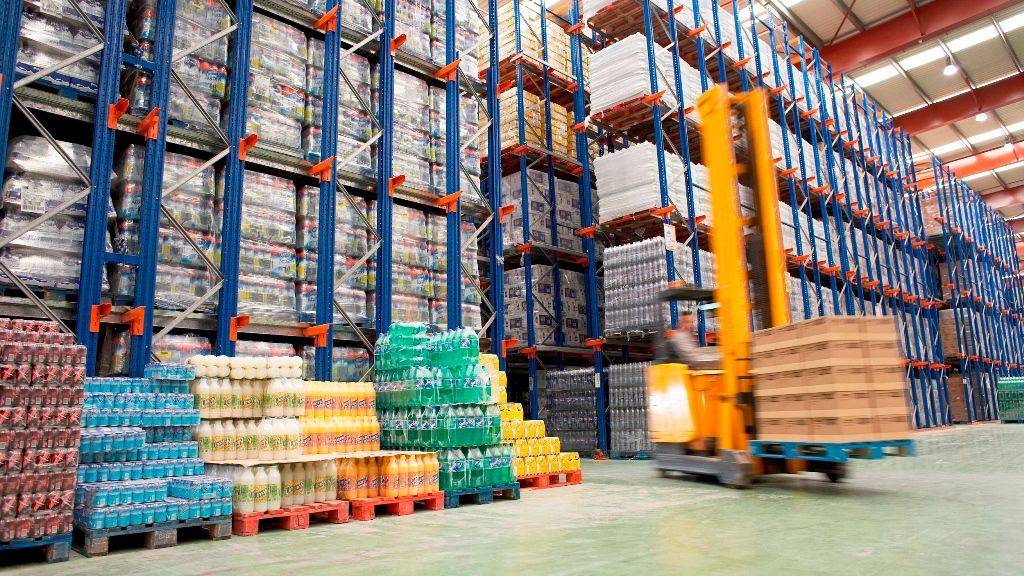
The technology of pallet racking was chosen in the warehouse to store pallets. Pallets will be stored and removed by forklifts.
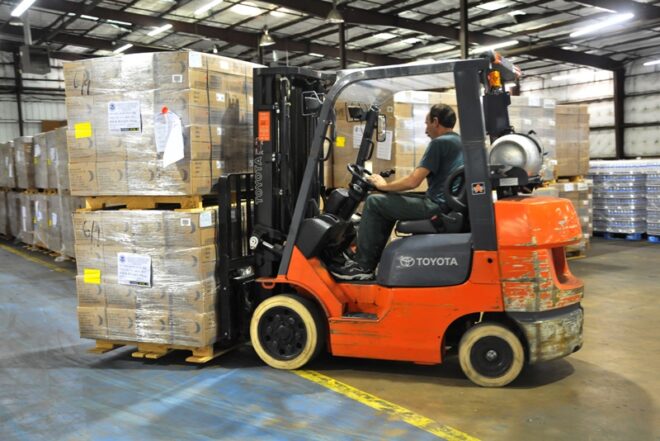
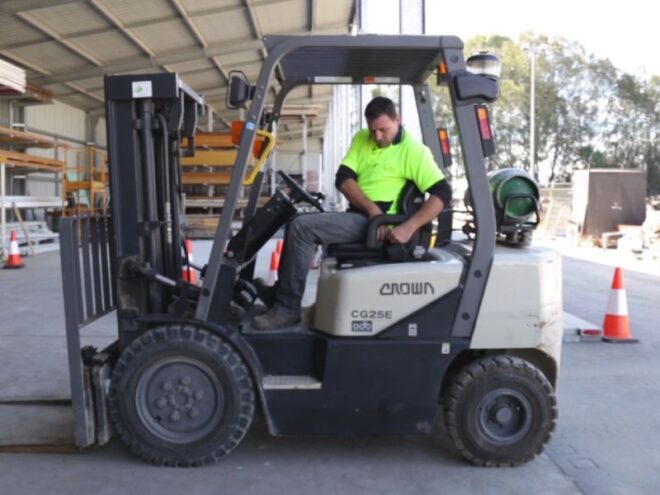
For the specified conditions, the warehouse system was designed for two alternatives of racking assemblies, which are served by forklifts.
  • Alternative 1: Standard pallet rack with wide aisles and
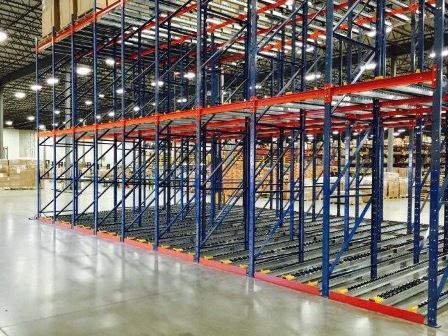
  • Alternative 2: Pallet dynamic flow rack.

Warehouse design systems

The proposed systems were compared on the basis of selected indicators:

  • Capacity: the number of pallet places in the system
  • Percentage ratio of storage area from the box area
  • Percentage ratio of handling aisles from the box area
  • Access to individual pallets by forklift

Warehouse operation process

Nowadays, thousands of tons of goods are transported from manufacturers to vendors and customers every day.

After freight is delivered to a vendor, it can be stored for a particular time in warehouses, where it waits for pick up. A warehouse is a place where multiple activities are carried out, depending on the warehouse function and position within a company’s logistics system or in its supply system.

Types of warehouse operations

Warehouses can be divided into two large types: distribution warehouses and production warehouses.

A production warehouse is used for the storage of raw materials, semi-finished products, and finished products in the production plant.

A distribution warehouse is a warehouse where products from different suppliers are collected (and sometimes assembled) for delivery to a number of customers.

Warehouse design requirements

Warehouse designing requirements result from their place and role in a logistics network. Warehouses are buffering (regulating) elements of supply chains, directing and transforming material flows. Apart from that, warehouses fulfill tasks, which add value to the products and increase their availability.

Warehouses also have a functional and technical side. The functional side is represented by the warehouse’s activities (the receiving of goods, control, storage, order-picking, accumulation and sorting, and shipping). The technical side consists of technical means ensuring material and information flow (racks, forklifts, hardware, software, etc.).

Warehouse design standards

The aim of this paper is to present one possibility of designing a warehouse system, where one of the principles of logistics is used: the system approach because the proposed warehouse system should be approached logically and systematically.

The systematic approach means that the processes and objects are visible and can be managed as a system.

The approach has been developed based on the experiences of a range of companies in a range of different business sectors.

Within the systematic approach, the warehouse system may be characterized as a part of the warehouse process.

Warehouse operation process

Warehouse system

The term warehouse system (WS) in this article means a system of two or more devices and means (storage and service equipment), forming a whole for the storage area, including their management.

The warehouse system’s composition depends on the chosen warehouse technology, and it consists of two basic parts: the racking assembly and the service equipment.

Choosing the right storage system is a topical research topic as it affects storage capacity and utilization, the speed of storage activities such as warehousing and removal, and operational safety.

The proposed methodology is a suitable tool for decision-making (e.g., for managers) in this area.

More on this story

Warehouse Racking Design

The efficient, safe design and use of pallet racking storage systems, pallets, and materials handling equipment depend on a number of factors

Pallet Racking Types

Pallet racking is a material handling storage rack system designed to store products and materials on pallets in horizontal rows and on multiple levels.

Pallet Racking system

Selecting warehouse storage rack systems involves careful planning and appropriate system choices to ensure you get the most from your capital expenditures, reduce overhead, and respond quickly to distribution needs.

Warehouse Layout Design

With the continued growth and domination of e-commerce in the retail market, the demands on warehouses and distribution centers across the globe are also rising.

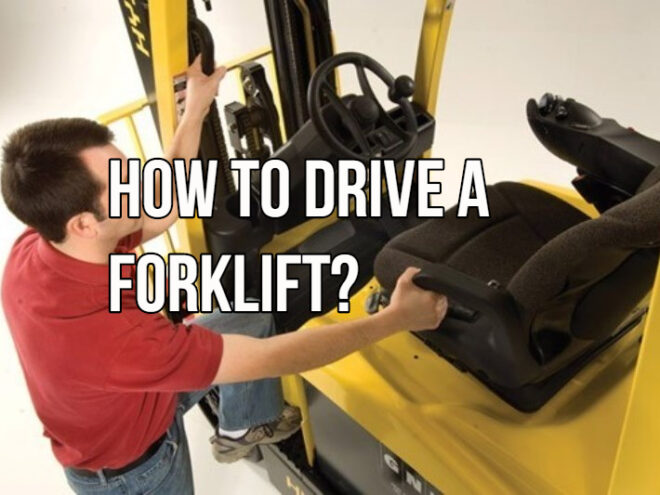
How to drive a Forklift?

  • How to drive forklift for beginners?
  • How to drive a Forklift?
  • How to become a forklift driver? is what most people who want to learn to operate a forklift wonder about every day, how difficult is it and what are safety measures.

Forklift safety is of the utmost importance, and driving a forklift improperly presents various risks to both yourself and others, as well as your surroundings and the things you’re lifting.

These risks can be minimized with the proper training, checks and good practice on the part of operators and employers.

How to drive a Forklift?

How to become a forklift driver?

How to drive a Forklift? – The main thing you need to be responsible for as an operator or employer is the condition of your forklift trucks and their appropriateness for the work they need to do.

Knowing how to operate the particular kind of forklift truck you’ll be driving, and ensuring it’s right for the job, is the first part of your due diligence.

On top of this, you’ll need to maintain your forklift and make sure you use it properly to keep it in a safe and workable condition.

How to drive a Forklift

How to drive forklift for beginners

How to drive a Forklift? – While you might think it’s enough to know how a forklift works before you use one, you should never underestimate the value of proper hands-on training and experience.

People are injured and even killed while using forklift trucks without the proper skills and knowledge, or because they haven’t taken the proper precautions and care that all forklift operators should do as a matter of course.

If you’re ever unsure about any aspect of using your forklift, stop and ask for help rather than trying to figure it out for yourself. It’s part of your employer’s responsibility to make sure you have someone to ask for advice, so never feel daunted by the prospect of seeking out a manager or supervisor if you need to.

How to drive a Forklift

Learn how to drive a forklift

Learning to operate a forklift is like any other complex task. If you break the task into small, manageable pieces and do not try to learn too many things at once, it is much easier. You will:

  • Develop the knowledge and skill needed to operate forklifts.
  • Be showed how to drive and control forklifts safely
  • Practice and correct your driving techniques in an increasingly complex set of conditions, so that you are capable of successfully undertaking your license test.

The length of each stage of learning depends on the amount of practice you have had. Be sure you are confident and competent before moving on to the next stage. Your Instructor will advise you when you are ready to move on.

How fast and how much you learn will depend on you. You should learn by:

  • Attempting all the questions and activities in the handbook
  • Observing the operations being performed by your Instructor and on your worksite
  • Asking questions
  • Practicing the new skills included in this handbook
  • Undertaking the assessment tasks on completion of the training.
How to drive a Forklift

How to drive a Forklift?

Forklift daily inspection checklist book – How to drive a Forklift?

Part of your responsibility as a forklift operator is to make sure your forklift is always in a good and safe condition, posing no unnecessary risk to you or anyone else.

Before you use it every single day, there are some basic examinations you need to go through that cover every safety aspect of the truck.

Among the things you need to check are the forks, mast, carriage, hoist chain and – if relevant – reach channel of your truck. What you need to look for are any signs of damage such as cracks or distortions, as well as anything stuck in the mechanisms, and any dirt that could affect the operation of the truck. (- How to drive a Forklift? -)

Just as you would with a car, you need to observe the truck’s tires for pressure, wear and tear, making sure they can give you the vital level of control you need to operate the truck safely.

Check the truck over in general for anything that shouldn’t be there that is, or anything that isn’t there but should be. Your seat belt should fasten and unfasten with ease, and the seat should be secure and undamaged.

How to drive a Forklift

how do you drive a forklift?

Your forklift’s engine should have enough coolant and oil levels and should be topped up if needed. Should you notice that your oil levels are decreasing faster than they should be, you should always turn your engine off immediately and report the problem in case there’s a potentially dangerous leak.

All the truck’s levers, controls, and pedals should be in full working order, so test each of them slowly as part of your checks. Make sure your lights are working properly, including your indicators. If you spot anything you think is not quite right, always report it to your supervisor right away. Sometimes the type of faults that might seem minor and harmless can lead to accidents you’re not able to foresee, so play safe and report anything that’s not as it should be.

How to drive a Forklift

Learn to drive a forklift

Can I Train Myself?

OSHA requires that training be done under the direct supervision of persons who have the knowledge, training, and experience to train operators and evaluate their competence. Thus, you will need to be trained by an “expert” at your site who has experience with forklifts.

How to operate a forklift?

is it easy to drive a forklift?

A driving forklift is not as complicated as it seems. Just like an ordinary sedan car, a forklift can be fairly easy to operate. It only takes a short time and little practice for you to get a grasp of it. But make no mistake, just because it is easy to operate, does it mean you will put your guard down.

is driving a forklift like driving a car?

Don’t expect a forklift to handle like a car or truck. Because of the counterweight over its rear wheels, a forklift is much heavier than a car. As a result, it can’t stop or turn quickly. Forklift steering is also different from automobile steering.

driving a forklift in reverse?

Why do you drive a forklift backward? Large loads on the forks can sometimes obscure operator vision, making it necessary to drive backward for maximum visibility. When driving down a hill with a load, operators must often drive in reverse to keep loads from slipping off the forks and to maintain stability.

The most read

More on this story

Forklift Pedals Explained

How many pedals do a forklift have? What are the 3 pedals on a forklift for?

Forklift Test Questions and Answers

Extensive training is needed to become a certified forklift operator, and each qualified operator has undergone training before seeking employment.

How to get Forklift Certified?

Forklift certification sometimes referred to as forklift licensing, is a requirement of any operator of forklifts in a given workplace.

How to operate a stand-up forklift?

Two main ways of operating a forklift exist. Operating while sitting down, and operating while standing up.