Professional Web Writer | Motor Enthusiast | Content Creator | Logan is a dedicated and skilled web writer, passionate about engines and machines and with a talent for creating engaging and informative content.
She specializes in writing about a diverse range of topics including construction, forklifts, heavy equipment, excavators, etc. SEO Optimization: Proficient in SEO best practices, ensuring high visibility and engagement for all published content.
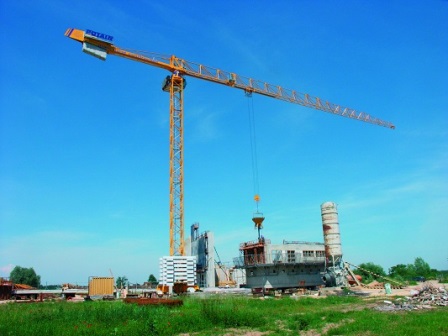
It is a metal lattice structure with a normally square section, whose main mission is to provide the tower crane with sufficient height.
It is normally made up of lattice modules that facilitate the transport of the crane. For mounting, these modules will be attached using screws, all of which will be attached at the projected height. Its shape and dimension vary according to the necessary characteristics of weight and height.
In the upper part of the mast is the rotation zone that gives the crane a horizontal movement of 360º. Also depending on the model, a cabin may be available for operation by an operator.
Mast section of tower crane
One variant is piled base cast in fixing angle type with top-slewing tower crane which needs mast anchorage tie to ascertain stability beyond working manufacturer specified freestanding mast height.
The major challenge arises at the time of fixing ties with the existing building or structure as shape, location, distance, load-bearing capacity of the structure may differ from project to project.
Consulting manufacturer service department may not be possible all the time. An attempt is made to find an approximate value of the forces to be encountered by the ties in-service condition and designing the ties.
Tower crane mast dimensions
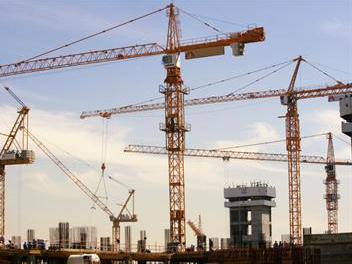
Among different types of lifting gear tower cranes are most popular and most effective for high-rise buildings, chimneys, towers, power plants, etc.
Space requirement is less. Loads can be lifted at a greater height with a wide coverage area. The selection of tower crane type depends on site conditions and requirements.
Depending on the model type, size, counterweights, and configuration of the crane, these cranes have maximum rated load capacities determined by the manufacturer. Typically the longer the boom length and greater the radius, the rated capacity is lowered or reduced.
Tower cranes can be erected on construction sites to be free-standing, self-climbers or interior climbers.
Components and main functions of a crane such as: the mast, the counterweight, the arrow, the cabin, the controls, lights or the anti-collision system.
The study of the tower crane will include knowing the structures that make it up, as well as knowing the elements that are part of this and that will allow the crane to perform the tasks for which it has been designed.
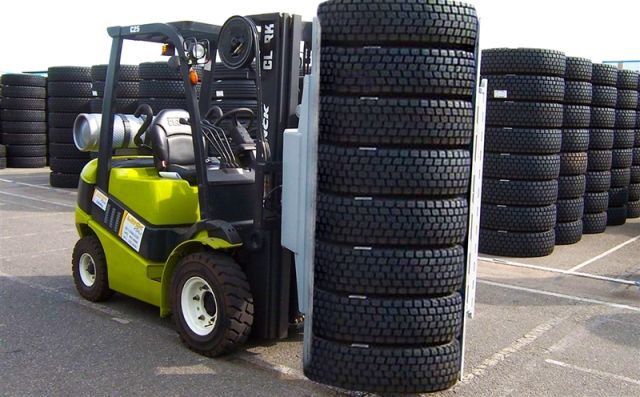
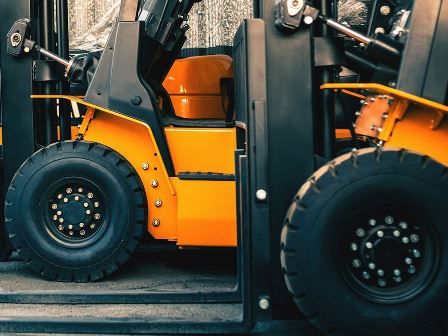
Forklift Tires for sale are one of the decisions that affect the budget of a company, so you have to find out and compare what models exist in distributors.
Forklift owners and operators put a lot of strain on their tires, they need to transmit the power of a machine, provide stability when moving a load at height, operate on a variety of terrains, and withstand continuous use.
Consequently, equipping a forklift with the right tire will have a huge effect on its performance, improving everything from productivity and safety to profits.
But, what kind of forklift tire to choose?
What tires are for sale?
Forklift Tires for Sale
Types of forklift tires for sale
There are many types of forklift tire each with its own set of pros and cons:
Pneumatic tires for sale
Solid tires for sale
Foam-filled tires for sale
Solid forklift tyres for sale
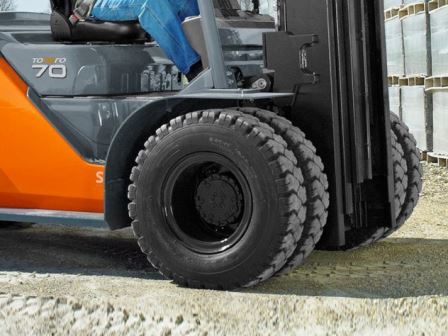
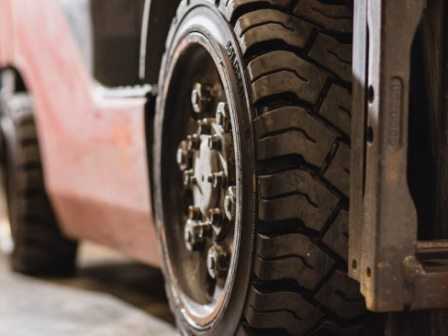
A solid tire or an airless tire. It is not filled with air, but instead is made with layers of rubber that are built around a metal frame or a wheel structure that can be mounted on a specific vehicle. They can also be made to fit rims made to support tires.
Selling these solid tires is common to forklift dealers. Solids forklift tires for sale have the highest initial cost and are the most durable of the different types of forklift tires.
However, the comparatively high initial investment does not tell the whole story of solid tires. Solid tires are puncture proof, eliminating costly tire downtime and will last three to four times longer than pneumatic tires, often resulting in the lowest total cost of ownership.
Advantages of Buying Solid Tires: The solid rubber construction of these tires means that they are resistant to cuts and punctures, and there is a lot of rubber that wears out, making them very durable.
Another benefit of solid construction is that the tires require very little maintenance; for example, it is not necessary to control the air pressure. Because the tires are solid rubber, they are heavy, creating an extremely stable platform for the machine to operate.
Pneumatic forklift for sale
Forklift tires for sale are similar to car or truck tires and offer high performance and versatility, ideal for forklift trucks in locations such as a warehouse. Pneumatic tires provide strong grip on uneven surfaces and rough terrain and are popular on construction sites, in log yards, and indoor or outdoor warehouses.
Because pneumatic tires are filled with air and do not use expensive foam or the large amount of rubber found in other types of tires, they are generally the most affordable forklift tire option.
There are two types of Forklift Tires for sale: radial and bias, and while radials are gaining popularity for forklift use in some markets like Europe, most machines in North America are equipped with bias tires.
Advantages of buying pneumatic forklift tires: In addition to their typically lower cost, pneumatic tires offer better traction on soft surfaces and uneven terrain, and due to their comparatively low weight, they provide superior flotation.
Foam filled tires for sale
Las llantas rellenas de espuma son llantas neumáticas llenas de un tipo de líquido que se endurece dentro de las llantas de aire y las convierte en llantas sólidas. Esta tecnología existe desde antes de la invención de los neumáticos macizos. Durante un tiempo, fue la forma principal de conseguir un neumático “a prueba de pinchazos”.
These forklift tires for sale generally cost somewhere between a pneumatic tire and a solid tire; their cost and useful life are generally greater than those of tires, but less than those of solids. Bias tires are generally chosen for foam padding.
Advantages of buying foam filled tires: The weight of the foam makes these tires heavier than their pneumatic counterparts and, at the same time, allows the tire to leave a favorable footprint on the ground; All of this adds up to stability when lifting loads on uneven terrain.
Another advantage of foam-filled tires is their higher resistance to punctures compared to traditional air-filled tires.
Cushion Tires
Cushion tires are made of smooth solid rubber and are fitted around a metal band. They are cheaper to manufacture and easier to maintain, but cushion tires do not get the same level of traction as a pneumatic tire, particularly outdoors.
If most of your production takes place indoors or with outdoor light use on asphalt, then shock absorbing tires are your choice.
Cushioned forklift tires are made of smooth solid rubber, have a smaller chassis, and sit much lower off the ground than forklift tires. These tires are best used in smooth surface applications due to their excellent traction and long life.
Cushion tires are best for smooth surface applications, primarily indoors or on loading docks. They also help with handling in smaller spaces, as they facilitate a smaller turning radius.
We recommend using these tires to drive on dirt, rough terrain or grass, due to their little ground clearance. It’s best to keep them on smooth grounds, loading docks, and in areas in which you need to make a small turning radius.
Forklift tires price
Before buying tires for your forklift, you have to compare the prices on the dealers’ websites and check the condition of your tire.
As a general rule of thumb, when there is less than an inch from the tire lettering to the top of the tires, it is time to change the tires.
Did you know: After a tire is 40% worn, the forklift and driver will absorb more than 84% of the impact if it passes over an uneven surface.
The transmission has to work much harder to get the tires to turn the same amount of rotation, which can lead to a breakdown.
Changing tires is an inexpensive way to keep your forklift and operator in good condition!
Cushion, pneumatic air, and solid pneumatic. Since each type of forklift tire is designed for specific usages and applications, there is a direct correlation between tire type and the overall design and dimensions of a forklift.
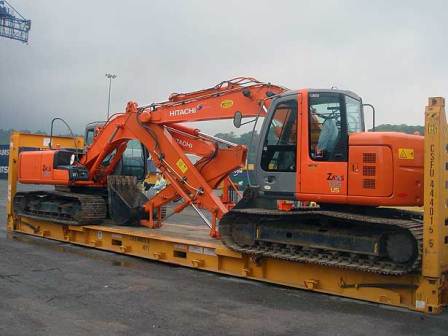
Heavy equipment transportation services require a carrier with a lot of experience in heavy transportation.
Unlike standard freight shipping, transporting heavy equipment requires special handling, oversized freight permits, and special freight carriers.
Additionally, shipping heavy equipment requires certain specialized trailers to transport certain items of equipment.
These tractors, forklifts, and backhoes are major purchases and you want to make sure they arrive safely.
There are things you can do to make sure your heavy equipment shipment is delivered smoothly and efficiently.
Heavy equipment transportation services
Find the right heavy transport specialist, make sure you have the right heavy equipment transport insurance, and choose the best transport options to transport your equipment.
Most equipment will need to be shipped on a flatbed or standard trailer, although in some cases it may be towed.
For larger or non-moving equipment, you will likely need a specialized trailer, such as a stepped deck or double drop deck.
For international shipments, you can use a roll-on / roll-off service or a flat rack container.
Heavy machinery transport cost
What are heavy equipment transportation costs?
If you are curious about the cost of shipping heavy equipment, then you have come to the right place.
There are several factors that influence the cost of heavy equipment shipping prices.
These factors can include the weight and dimensions of your equipment.
The bigger, wider or larger your equipment is, the more expensive it will be to transport.
The heavier a piece of machinery, the heavier a truck will weigh and this can cause fuel to burn more quickly.
Inexpensive fuel prices are another factor that affects the cost of transportation equipment. If gas prices are higher, transportation prices are usually higher to compensate for that.
Equipment shipping cost estimate
There are also other factors when it comes to transportation costs for heavy equipment.
The route taken to deliver your machinery may have tolls. The cost of tolls is included in the final shipping price of the heavy equipment.
Each part of the transportation is priced based on origin, destination, mileage, tolls, weight, and more.
Another factor may be the need for permits, cargo assistance, and pilot vehicles. If your equipment requires cranes to assist in loading, this is included in the final cost.
Because there are so many variables, the best thing you can do is contact one of our transportation specialists today.
They will be able to take it all into account and may find ways to reduce the cost of shipping heavy equipment.
Unlike shipping standard freight, heavy equipment transport requires special handling, oversize load permits, and special freight carriers. Additionally, heavy equipment shipping needs certain specialized trailers in order to haul certain equipment items.
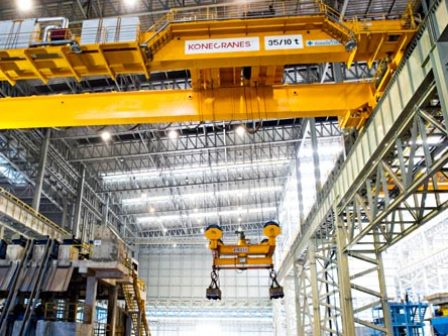
Cranes lift and lower loads with a hoist that is attached to a trolley. The trolley moves back and forth along a bridge. The bridge moves along a runway.
Some cranes, such as a jib crane, don’t have a bridge but still have a hoist attached to a trolley and can move a load in a horizontal direction.
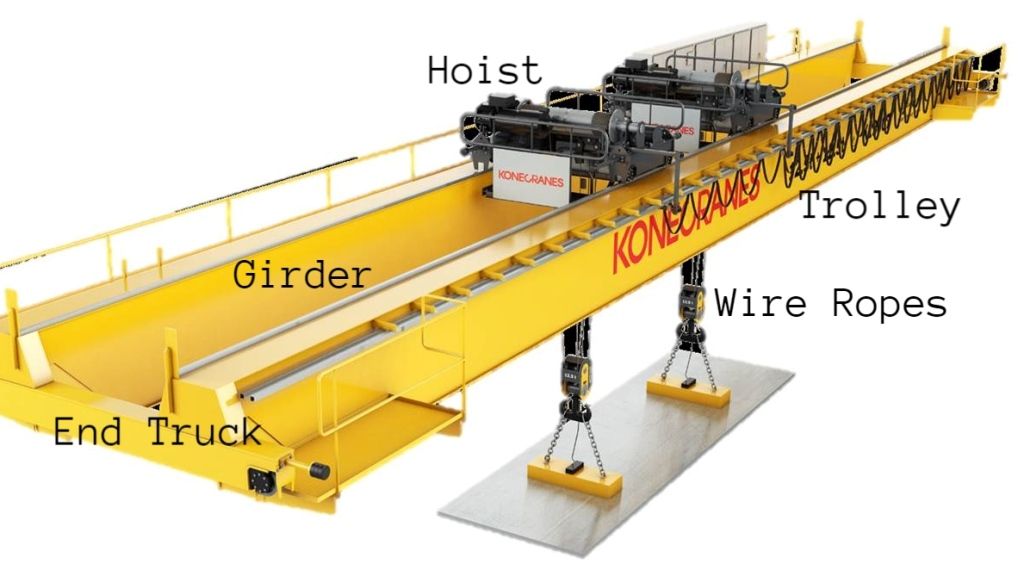
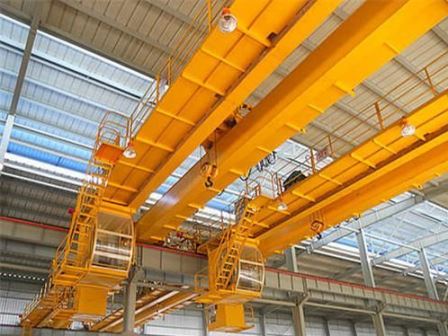
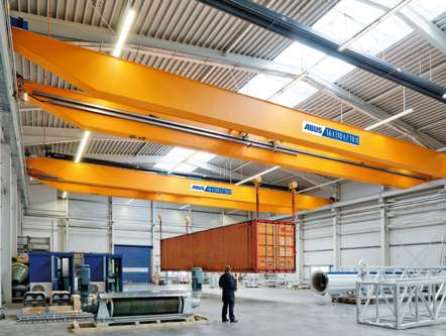
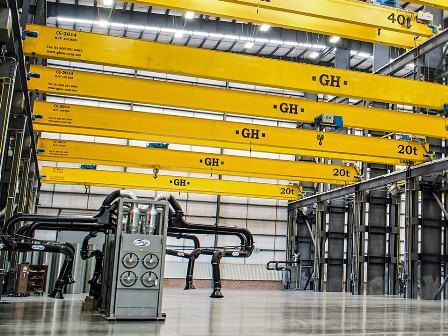
A bridge crane is defined as a crane, fixed or able to move along a track(s) having at least one primarily horizontal girder and equipped with at least one hoisting mechanism. There are four main types of overhead cranes: top running, under running, single girder, and double girder.
Overhead Crane Components
Hoist crane components
A variety of OEM parts and components are available for overhead cranes and hoists.
Brands of wire rope hoists, electric hoists, manual chain hoists, gantry cranes, jib cranes, work station cranes and bridge crane equipment; they have the same accessories and components.
Thousands of parts are available, including replacement hangers, motors, brake pads, hoist chain, replacement hooks, latch kits, and capacitors. Visit the specialized web pages to review hoist parts and for more information on the parts that are available.
Bridge crane components
Components can be individually designed to suit different requirements. All products and components are designed, developed and manufactured in compliance with design standards and regulations.
Overhead crane components follow the latest innovations in the field of crane construction using years of experience and knowledge from partners around the world.
Overhead crane parts and functions
The Bridge
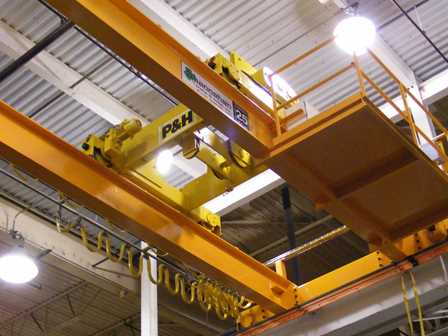
End Trucks
Girders
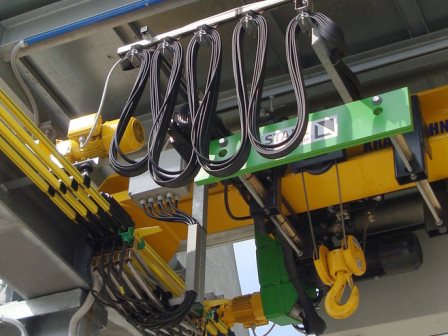
Trolley Hoist
Trolley
Hoist
The Bridge: The bridge is made up of a single girder or a double girder with a set of carriages at both ends. The bridge spans the width of your facility and this mobile section is the main support structure of your bridge crane.
End Trucks: Bridge crane heads are positioned on both sides, where the bridge wheel assemblies are housed. This allows the entire crane to travel along the entire structure. The wheel assemblies of the bridge end run along rails that are mounted on the beams.
Girders: The crane beams are connected to the end trucks and are the structure on which the truck is supported. The girders are the horizontal beams and are considered a main element of the overhead crane system.
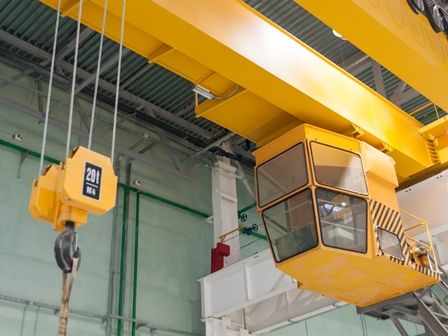
Trolley Hoist: This component is a combination of the hoist and the trolley frame. In double hoist applications, two hoists can be mounted on a single frame or two frames can be built, each with separate hoists.
Trolley: The bridge crane trolley rides across the span of the bridge along the girder or girders and carries the hoist.
Hoist: The hoist is designed to lift and lower the desired load and is attached to the trolley frame by a custom lifting hook to support the load. You have a choice of two chain or wire rope hoist models.
Wire rope hoists are safe, reliable, durable and designed for years of long-term use. Chain hoists, on the other hand, are designed for smaller capacity operations and are ideal for light duty requirements or new projects where price is an important factor when selecting lifting equipment.
To keep your overhead cranes, hoists, and trolleys in service, the availability of interchangeable replacement crane parts is paramount; but first, having a solid understanding of these components and their various functions is crucial to limiting production downtime and preventing emergency situations.
Stocking a variety of OEM bridge cranes and hoist parts is a good sales strategy.
Most brands of air hoists, wire rope hoists, electric hoists, manual chain hoists, hoists, gantry cranes, jib cranes, work station cranes and overhead crane equipment are known to the parts department.
The parts department maintains an extensive library of historical original equipment product manuals that allow quick reference to find a replacement for your bridge crane.
Offering genuine replacement parts and having a team of technicians can help you locate hard-to-find parts from manufacturers that are no longer producing equipment.
Parts dealers stock thousands of parts like replacement pendants, motors, brake pads, lift chains, replacement hooks, latch kits and capacitors, for same day shipping.
Visit Crane Parts Specialist Hoist Service webpages for more information on what parts they have available for fast shipping.
Overhead cranes are powerful equipment that allows heavy loads to be lifted. Overhead cranes are also potential hazards, as both the cranes themselves and the loads they carry can cause damage if safety tips are not followed.
Train employees who work around overhead cranes on all workplace safety precautions. To ensure a safe work environment, follow these guidelines when operating an overhead crane.
Overhead crane operating instructions
Here are some important safety features to incorporate into your crane: Warning lights and indicator lights can be incorporated into the design of an overhead crane to provide personnel on the ground with the ability to recognize that the crane bridge is over the head and where the hook will be.
During maneuvers, the following guidelines must be followed:
In the event of a power failure, the operator must place all controllers in the “off” position.
When an operator leaves a crane unattended, they must unload any attached loads, turn the controllers to the “off” position, and open the main breaker.
Before closing the main breaker, the operator must ensure that all controllers are in the “off” position.
It is not necessary to open the main switch on a pendant control crane if the crane is left unattended for short periods.
An operator should only respond to signals from the employee directing the elevator. Except for an emergency stop signal, which must be obeyed when given by any employee.
Overhead crane safety devices
Basic safety tips for the operation of overhead cranes
Before use, make sure that the crane is suitable for the planned lifting task. Confirm you have the proper travel, lift, and capacity.
Visually and physically inspect the crane before using it. Check for damage, wear, and correct operation of all functions.
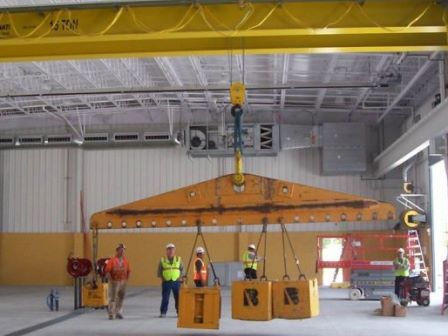
Confirm the weight of the cargo. Check the capacity of all equipment, including hardware, rope, and slings. Do not exceed these capacities.
Select the proper sling for each lift. Inspect slings and other rigging accessories before use for wear.
When communicating with a crane operator, use clear and agreed signals.
Warn everyone in the load-lifting area before starting the lift.
Slide the sling completely over the lifting hook and make sure the safety latch is closed.
Secure unused sling legs. Do not drag slings or leave loose materials on top of a lifting load.
Move load and controls smoothly. Minimize load swing.
Walk ahead of cargo during travel and warn people to keep clear.
Deposit loads on blocks, never directly on a sling. Do not pull or push loads from under the hoist.
Do not leave the load (or crane) unattended while the load is suspended.
The purpose of this guide is to raise awareness of the hazards in lifting operations and provide basic knowledge in the safe operation of overhead cranes.