All posts by Loganx

Professional Web Writer | Motor Enthusiast | Content Creator | Logan is a dedicated and skilled web writer, passionate about engines and machines and with a talent for creating engaging and informative content. She specializes in writing about a diverse range of topics including construction, forklifts, heavy equipment, excavators, etc. SEO Optimization: Proficient in SEO best practices, ensuring high visibility and engagement for all published content.

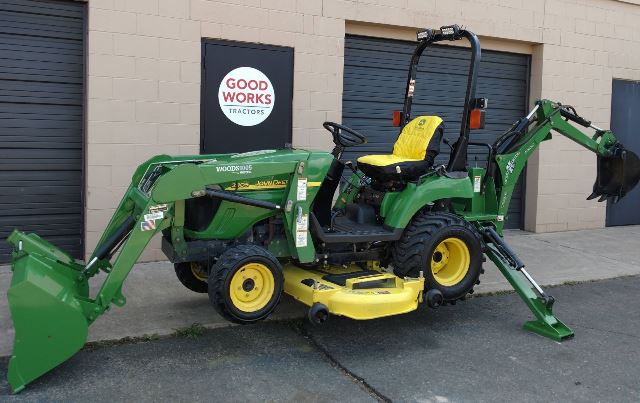
Riding Lawn Mower with Backhoe Attachment

Whether you work in the construction or landscaping business or own a home with an acreage, purchasing versatile equipment will increase productivity.

Riding lawn mowers with backhoe loaders can be used on a variety of projects, making them a great tool for anyone looking to do more for less.

Riding mowers offer fewer capabilities, while larger tractors cost more and can deliver more of what you need. Although compact utility tractors are smaller in size, there are a wide variety of attachments that allow you to do almost any task without the need for another machine.

You might be wondering what exactly you can do with a ride-on mower with a backhoe and a variety of attachments. Here are many accessories and uses for your machinery.

Riding Lawn Mower with Backhoe Attachment

Riding Lawn mower Attachments

A riding lawn mower is a unit with a mowing deck attached to a unit that is self-propelled and can be ridden. In most cases, the mowing deck can be detached, although some mowing decks are part of the chassis and cannot be removed.

A riding lawn mower is generally best for areas larger than a small urban yard, but under the size of one acre, with mowing decks that are usually slightly wider than a push mower, but still only have a single blade.

The chassis, axles, and other parts are generally made only for light duty, and while not fragile, can only withstand light work.

Riding lawn mower with backhoe attachment:

Brush cutter mower

Gone are the days of having multiple machines. A compact tractor can quickly become a mower with a cutting attachment. This attachment on most tractors features a walkable deck that is easy to attach, or you can choose to pull behind the mower deck.

For people with larger properties that tend to pastures or rocky terrain, rotary cutters are a great option to help maintain and prepare your garden.

These mount behind your tractor and are great for trimming long, thick landscapes while being tough enough to handle rocks or gravel that can damage other mowers.

Lawn mower excavator

The backhoe attachment is perfect for digging shafts, trenches or trenches. This option is useful when you need to dig fence post holes, plant trees, or prepare an area for a foundation.

Backhoe bucket attachments

Road maintenance: Gravel or dirt roads require maintenance, especially after heavy storms. Blade attachments and box scrapers allow you to push and level roads or paths. With a rear-mounted blade, you can level, level, or spread gravel in a driveway, move snow, or spread mulch.

Backhoe bucket for landscaping

As in the mowing application, compact mowers are ideal for other landscaping needs. Hydraulic cultivator, box scraper, cultivator blades and attachments are great options.

If you frequently need to till, seed, or control weeds, rear-mounted attachments will help you get more done.

When you need to haul heavy materials or move dirt, that’s where the loader attachment comes in. This is one of the most popular accessories and is commonly sold with the tractor as part of the package.

There are many other multipurpose gardening tools like utility carts and sprinklers that you can buy for your mower.

Lawn mower with backhoe rental

Your friends or neighbors may need similar work done. With your versatile backhoe loader, you can make some extra money to spend on your new attachments.

If you are using a backhoe mower for business purposes, the variety of accessories will save you time and money, eliminating the need for multiple machines to complete your jobs.

Lawn mower with backhoe for landscaping

Caring for your lawn for landscaping. There are a few different tips and tricks for preparing your lawn for landscaping, such as fertilizing the soil and mowing your lawn regularly.

  • High mow to stimulate growth: Mow to the highest setting when summer begins and cut back as summer progresses.
  • Fertilize: Fertilize warm-season grasses in the spring so they will grow evenly in the summer.
  • Mow regularly: Depending on how tall you want your lawn, as well as how much growth you want, mowing your lawn can vary between 1 and 2 times a week.
  • Water your lawn: Water your lawn so the roots get a little wet. This helps in times of drought and also helps prevent disease in your lawn.

More on this story

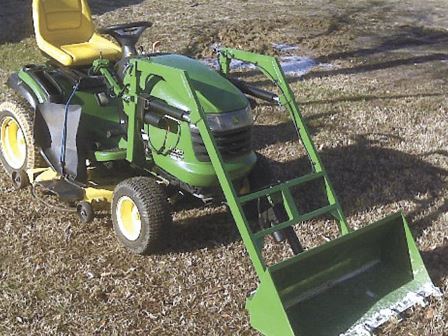
Lawn Mower Front end Loader Kit

Whether you call it a bucket, a scoop, or a front loader, the solution for handling materials with a lawnmower is through a kit, which you must install in your equipment.
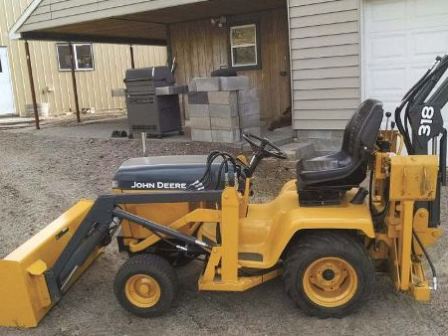
Garden Tractor Backhoe

The loaders and backhoes illustrated here are the perfect tools for the care and maintenance of your property and landscaping.

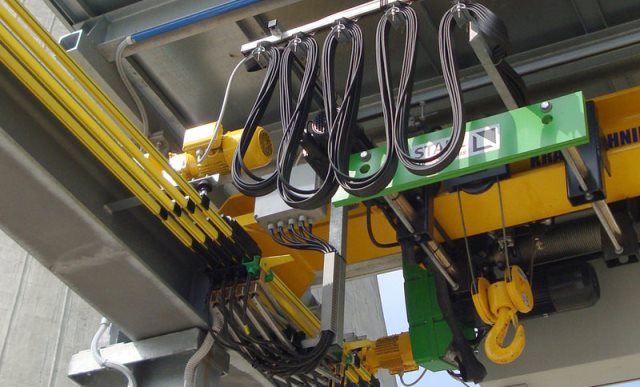
Overhead Crane Electrical Components

Rewiring the electrical parts within a crane or hoist presents an opportunity to modernize your equipment to improve performance on a budget.

Overhauling your drive, interrupt, and switch systems can power your equipment at a fraction of the cost of buying new machinery.

Traveling cranes require circuit breakers, transformers, variable frequency drives, and surge suppressors, among many other components.

All electrical components for cranes meet industry standards set by the Crane Manufacturers Association of America (CMAA), formerly known as the Electric Overhead Crane Institute (EOCI).

Overhead Crane Electrical Components

Overhead crane power supply

Reliable and dynamic cable management is one of the greatest challenges in modern crane technology. While the components must be modular, they should also be consistently easy to install, low maintenance, and cost-effective.

Engineers often turn to two power supply variants to try and meet these demands: festoons and energy chains. ­

Which solution is best for your crane application? Read this tech talk and get a full understanding of the differences between the two technologies.

This section regulates voltage, cabling, design, and construction of pendant controls to protect lifting equipment operators and other personnel from electrical shock.

These specifications support OSHA, which lays out employers’ responsibilities to provide employees a workplace that minimizes the risk of arc-flash and other electrical hazards

Electrical Equipment

  • Wiring and equipment shall comply with subpart S of this part.
  • The control circuit voltage shall not exceed 600 volts for a.c. or d.c. current.
  • The voltage at pendant push buttons shall not exceed 150 volts for a.c. and 300 volts for d.c.
  • Where multiple conductor cable is used with a suspended pushbutton station, the station must be supported in some satisfactory manner that will protect the electrical conductors against strain.
  • Pendant control boxes shall be constructed to prevent electrical shock and shall be clearly marked for identification of functions.

More on this story

Overhead Cranes

  • What are the parts of an overhead crane?
  • What is the purpose of an overhead crane?
  • How much does an overhead crane cost?

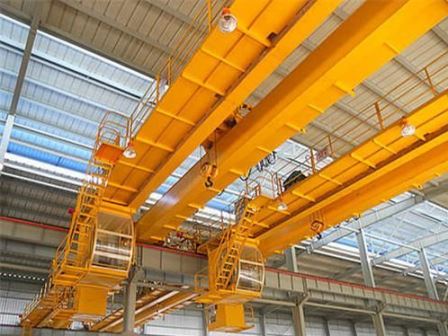
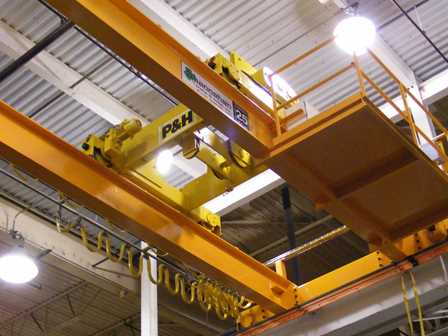
Overhead Crane Components

A variety of OEM parts and components are available for overhead cranes and hoists.

Overhead crane manufacturers in the USA

Some have wondered if in the United States they fix, manufacture, elaborate parts, and components of overhead cranes.

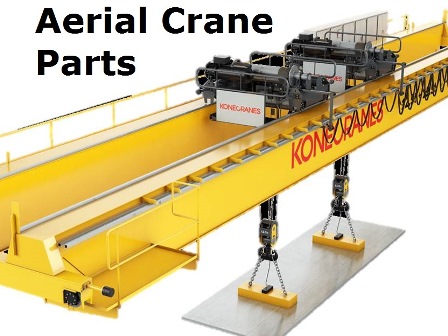
Overhead Crane Parts

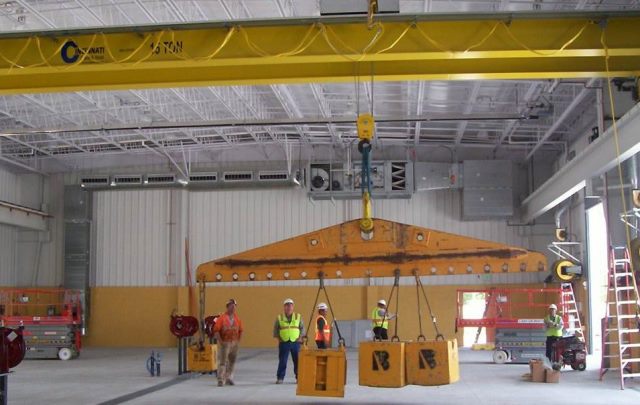
Overhead crane equipment parts can be broken down into four main categories:

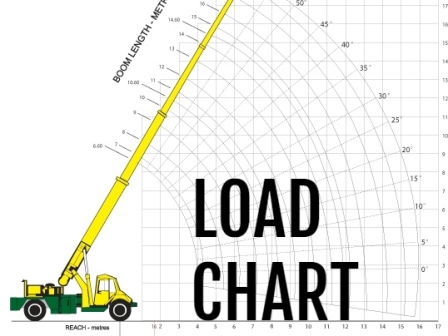
Mobile crane lifting capacity

The nominal loads shown in the lift chart are for each machine as originally manufactured and equipment. Modifications to the machine or the use of optional equipment other than specified may result in a reduced capacity.

Construction equipment can be hazardous if improperly operated or maintained. Operation and maintenance of this machine shall be in compliance with the information in the Operator’s and safety handbook, service manual, and parts

The operator and other personnel associated with the machine shall fully acquaint themselves with the latest American National Standards Institute (ANSI) Safety Standards for cranes.

Load Chart and sizes

SETUP:

  1. The machine shall be leveled on a firm supporting surface. Depending on the nature of the supporting surface, it may be necessary to have structural supports under the outrigger floats or tires to spread the load to a larger bearing surface.
  2. For outrigger operation, outriggers shall be properly extended with tires raised free of crane weight before operating the boom or lifting loads.
  3. If the machine is equipped with a front jack cylinder, the front jack cylinder shall be set in accordance with written procedure.
  4. When equipped with an extendable counterweight, the counterweight shall be fully extended before operation.
  5. Tires shall be inflated to the recommended pressure before lifting on rubber.
  6. With the certain boom and hoist tackle combinations, maximum capacities may not be obtainable with standard cable lengths.
  7. Do not travel with crane boom extension or jib erected.

Lifting operations risk assessment example

OPERATION:

  • Rated loads at rated radius shall not be exceeded. Do not tip the machine to determine allowable loads. For clamshell or concrete bucket operation, the weight of bucket and load must not exceed 80% of rated lifting capacities.
  • All rated loads have been tested to and meet minimum requirements, and do not exceed 85% of the tipping load on outriggers fully and 50% extended, and 75% of the tipping load on outriggers 0% extended (fully retracted) as determined by Crane Stability Test Code.
  • Rated loads include the weight of hook block, slings, and auxiliary lifting devices and their weights shall be subtracted from the listed rating to obtain the net load to be lifted. When more than the minimum required hoist reeving is used, the additional rope weight shall be considered part of the load to be handled.

Load chart ratings will differ when

  • Load ratings are based on freely suspended loads. No attempt shall be made to move a load horizontally on the ground in any direction.
  • Rated loads do not account for wind on lifted load or boom. It is recommended when wind velocity is above 20 m.p.h (32km/h), rated loads and boom lengths shall be appropriately reduced.
  • Rated loads are for lift crane service only.
  • Do not operate at a radius or boom length where capacities are not listed. At these positions, the machine may overturn without any load on the hook.
  • The maximum load which can be telescoped is not definable because of variations in loadings and crane maintenance, but it is safe to attempt retraction and extension within the limits of the capacity chart.
  • When either boom length or radius or both are between values listed, the smallest load shown at either the next larger radius or next longer or shorter boom length shall be used.

Crane load chart safety factor

  • For safe operation, the user shall make due allowances for his particular job conditions, such as soft or uneven ground, out of level conditions, high winds, side loads, pendulum action, jerking or sudden stopping of loads, hazardous conditions, the experience of personnel, two machine lifts, traveling with loads, electric wires, etc. Side pull-on boom or jib is extremely dangerous.
  • If the machine is equipped with individually controlled powered boom sections, the boom sections must be extended equally at all times.
  • Never handle personnel with this machine without written approval.
  • Keep load-handling devices a minimum of 18 inches (45.7 cm) below the boom head at all times.

Boom angle of crane

  • The boom angle before loading should be greater than the loaded boom angle to account for deflection.
  • Capacities appearing above the bold line are based on structural strength and tipping should not be relied upon as a capacity limitation.
  • Capacities for the 35 ft. (10.6 m.) boom length shall be lifted with the boom fully retracted. If the boom is not fully retracted, capacities shall not exceed those shown for the 40 ft. (12.2m) boom length.
  • When lifting over the front of the machine, radii less than 35 ft (12m.) not recommended.
  • When operating the machine in the “On Outriggers 50% Extended” mode, the outrigger beam pins must be engaged. When operating the machine in the “On Outriggers 0% Extended” mode, the outrigger beams must be fully retracted. Failure to follow these precautions could result in structural damage or loss of stability of the machine.

More on this story

Mobile Crane Load Chart

Simply put, the only way to know if the load you are lifting with a mobile crane is within the limitations of the crane is to relate the lift to the manufacturer’s load chart and notes.

Overhead Crane Safe Work Procedure

Safety operating procedure overhead crane: What overhead crane operators always need to keep in mind is that they are responsible for the safety of other people. This is why they must be trained and authorized before they start using the crane.

Part of their training includes knowing what the crane’s characteristics are. What is the overhead crane capable of doing and what are its limitations?

So you will need to know how much weight you can lift and anything over that is dangerous. You should also familiarize yourself with the area in which you will be operating the overhead crane.

Another thing you need to familiarize yourself with is the proper terminology. There are no complicated terms to memorize here. But you should know what all the parts are called and what their function is so when it comes to maintenance and repairs; you know what you are doing.

Overhead crane operation safety rules

What are the hazards in crane lifting?

The three most common hazards involving overhead cranes include electrical hazards, overloading, and materials falling or slipping from overhead hoists.

How often do overhead cranes need to be inspected?

All active cranes must be inspected once a year at the minimum.

However, depending on the crane’s usage, additional inspections will be required. Crane inspections fall under two general categories based on the intervals between inspections.

Overhead crane safety tips

For the safety and productivity of your employees and the workplace, it is vitally important to know that the lifting equipment is in good working order before putting it into service.

  • Before use, make sure that the lift is suitable for the planned lifting task.
  • Confirm that you have the proper travel, elevation, and capacity.
  • Visually and physically inspect the lift before use.
  • Check for damage, wear, and proper operation of all functions.
  • Confirm the weight of the load.
  • Check the capacity of all equipment, including accessories, rope, and slings.
  • Do not exceed these capacities.
  • Select the proper sling for each lift.
  • Inspect slings and other rigging accessories before use to see if they are worn or stretched.
  • Do not use damaged or defective slings.
  • Use softeners on sharp corners.
  • Do not splice broken slings.

Overhead crane operation safety

When communicating with a crane operator, use clear and agreed signals. Except for the stop signal, the crane operator must follow the instructions of only one person: a designated flagger.

When using a wired or remote control, the operator must familiarize himself with all its functions before lifting the load.

  • Warn everyone in the load lifting area before starting the lift.
  • Make sure the path of the load is clear of people and obstructions.
  • Do not lift loads on anyone.
  • Center the crane hoist over the load before lifting to prevent the load from swinging.
  • Slide the sling fully onto the lifting hook.
  • Make sure the safety latch is closed.
  • Do not load the hook tip or hammer a sling into place.
  • Secure unused slings. Do not drag slings or leave loose materials on a lifting load.
  • Avoid trapping fingers when slack is removed from a crane hook or cable.
  • Get away before the lift begins.
  • Move the load and controls smoothly.
  • Minimize load swing.

Overhead crane operating procedures

These protocols are a standard part of maintenance and crane operation programs.

Walk-in front of the load while traveling and warn people to stay away. Use a slogan to prevent rotation or other uncontrolled movements. Raise the load only enough to clear objects. Do not ride on the hook or load.

  • Place loads on the lock, never directly on a sling.
  • Do not pull or push loads from under the hoist.
  • Do not leave the load or crane unattended while the load is suspended.
  • When crane operation must be restricted by other personnel, use lockout and tagout procedures.
  • Store floor slings in a clean, dry place on hooks or racks.
  • Do not leave slings, accessories, or locks lying on the ground.

Crane Load Test Procedure

Test loads should not be more than 125 percent of the rated load unless the manufacturer recommends otherwise. Hooks, hoist chains, and wire ropes must be checked daily, but heavy or severe load tests should be inspected semi-annually or quarterly.

These test reports will be filed where they are available to designated personnel.

When it comes to safety at your facility, you can’t afford to bypass any part of the equipment inspection and maintenance process, and that includes testing the equipment before you start using it in your operations.

What is a Crane Load Test?

During load tests, we will intentionally overload the overhead cranes to evaluate their condition. You should be able to safely lift and move the load through regular motions.

How do you use an overhead crane safely?

Center the crane directly over the load before hoisting to avoid swinging the load.

what standard is used for load testing cranes?

All new overhead and gantry cranes constructed and installed on or after 1971, shall meet the design specifications of the American National Standard Safety Code for Overhead and Gantry Cranes, ANSI B30.

More on this story

Overhead Crane Parts

Overhead Crane Parts: components, parts, technical specifications, maintenance of traveling industrial cranes, aircraft, hoists, winches, etc.

Overhead Crane Safety

In your company or workshop, for your efficiency, convenience, and safety, overhead cranes are extremely important to perform the lifting task.

Overhead crane manufacturers in the USA

Some have wondered if in the United States they fix, manufacture, elaborate parts, and components of overhead cranes.

Overhead Crane Test Questions and Answers

  • Crane operator interview questions and answers
  • Rigging test questions and answers

Tower Crane Dimensions

This manual has been provided as a reference source. The materials it contains provide technical information, specifications, load charts, and general information about tower cranes.

The information obtained here is not specific to a single manufacturer. Furthermore, none of the information should be used for the erection, dismantling, climbing, operation or maintenance of any tower crane.

This information should be obtained from the manufacturer’s operation manual specific to the type of crane involved.

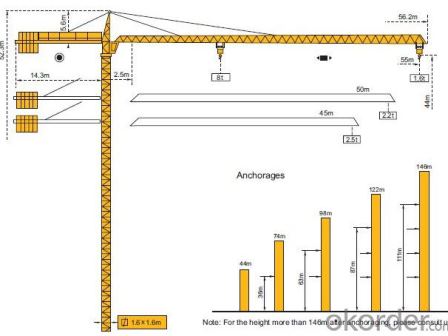
Typical tower crane dimensions

Tower crane base dimensions

The base support is the part of the tower crane that attaches the tower to the surrounding ground or structure. When a crane is fixed to the ground, it is usually done with reinforced concrete, as well as with piles to extend the support to the bedrock. It is important to hire an engineer to design this tower component.

Tower crane mast dimensions

It is a metal lattice structure with a normally square section, whose main mission is to provide the tower crane with sufficient height. Normally it is formed by lattice modules that facilitate the transport of the crane, the dimension of the main section is determined by the maximum height.

Tower crane section dimensions

The dimensions of the tower crane section vary according to the type of tower crane (Hammerhead, Self-erecting, Flat-top), these are important because it determines the load and lifting capacity of a tower crane, the main sections are the base, which It depends on the working height and the boom that determines the maximum reach.

Tower crane boom dimensions

Typical capacities and dimensions for most tower cranes are:

  • Boom length: 60mMaximum
  • lifting capacity: 10TFree
  • height: 50m, can add up to 200m

More on this story

Tower Crane Load chart

The lifting capacity of the crane depends on several factors. The limitation for lifting weight begins at the base of the tower crane. Each and every component of the crane affects the lifting capacity of the load.

Fine for Driving Forklift without License

Many forklift-related accidents are attributed to operator carelessness or being unfamiliar with the equipment or licensed to operate a forklift and lead to tickets for driving forklifts without a license.

Studies show that companies that implement proper forklift training programs for their operators and conduct daily pre-shift inspections are more likely to reduce forklift accidents as well as help reduce their downtime and costs.

Likewise, pre-shift inspections can help identify maintenance issues to further increase forklift life, develop operator skills and potentially reduce equipment downtime.

Fine for driving a Forklift without a License

Fines for unlicensed forklift drivers

What is the penalty for operating a forklift without proper certification?

What would happen is entirely up to the inspector who comes to your workplace. What could happen is actually quite serious.

The laws change in each country, in Canada, for example, you can be personally fined up to a maximum of $25,000.00 and sentenced to up to 1 year in prison.

Your supervisor could face the same penalties. Neither can they be paid by the company, they must be paid by the fined person.

The company you work for could be fined up to $500,000 and personal fines can be imposed on any supervisor, manager, even the CEO.

All this is unlikely in a whirlwind inspection. Most likely, the company will receive a small fine ($100.00 to $500.00) and a stop work order will be issued, effectively closing the business until it has renewed its certification.

However, if there was a critical injury at his workplace, whether or not he was involved, there is a good chance that the much more severe penalties described above will apply.

Inspectors will look at the entire business and set fines for each violation found, regardless of the violation’s involvement in the incident.

Related Topics

More on this story

Penalty for Driving Forklift without License

As an employer, you should be aware that the fines for unlicensed forklift drivers are substantial.

How to drive a Forklift?

Forklift safety is of the utmost importance, and driving a forklift improperly presents several risks.

How to get Forklift Certified?

How to become forklift certified?