Professional Web Writer | Motor Enthusiast | Content Creator | Logan is a dedicated and skilled web writer, passionate about engines and machines and with a talent for creating engaging and informative content.
She specializes in writing about a diverse range of topics including construction, forklifts, heavy equipment, excavators, etc. SEO Optimization: Proficient in SEO best practices, ensuring high visibility and engagement for all published content.
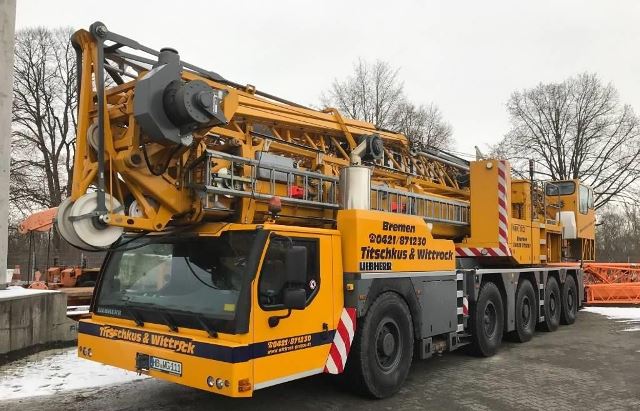
It is the combination of a self-propelled tower crane and a mobile crane, you can also add some sections. The use of these types of cranes in the construction of small heights and open spaces has already become very popular.
Small capacity models have generally been used. Today, however, there is a wide range that includes cranes with up to 130 tons of load capacity.
These cranes are easily portable as they can be shipped as compact units on a trailer, with their counterweights, even large capacity ones.
This type of crane has incorporated the possibility of climbing to achieve greater heights of use, so that to the advantages of a rapid movement from one place to another, the possibility of using them in higher constructions is added.
The development trends of these cranes have been aimed at achieving greater installation and assembly possibilities that can be summarized as follows:
Easily clear obstacles such as antennas, chimneys and adjacent buildings, using the crane by raising the boom at a 45º angle.
Reduce the radius of rotation of the base by modifying the design of the base and counterweights.
Allow the assembly of the booms to be carried out in increasingly reduced spaces by means of joints and folding of the same.
Reach higher heights through simple and fast ascent processes.
Mobile tower crane rental
Basic rental tower crane consists of the following specifications:
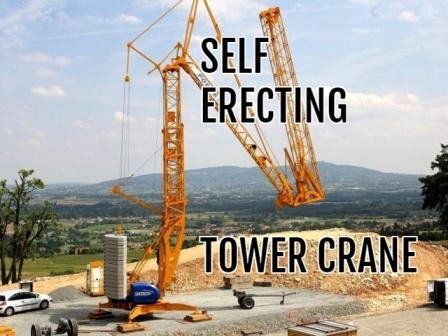
A self-erecting crane is compact, easy to erect and operate, and have several transport options. Wireless remote controls, quiet and efficient electric motors.
On a busy day launching boat, efficient and safe forklift operations can make or break a business, especially for a seasonal facility.
Operators need a machine that keeps them comfortable and alert, and marinas and boatyards need one designed to handle the toughest challenges without fail.
The High-Capacity Marina Forklift has industry-proven components and technology to meet those needs and solve problems before they start.
What different boat lifts are used for?
Let’s take a look at the different types of lifts, and what they are generally used for.
Cantilever: This type of lift is supported solely by the frame, and has very few moving parts. The lift is typically made out of aluminum which is resistant to corrosion. This lift is the cheapest version available and is the easiest to move around.
Vertical: This type of lift is lightweight and usually powered by electricity. It is easy to control and be moved easily if needed. It can hold between 1000 and 10000 pounds.
Hydraulic: This type of lift is made of marine-grade aluminum and is strong enough to hold weights up to 10000 pounds. Medium to large boats are usually lifted with this version of lift.
Elevator: This type of lift is adhered to the side of a seawall or dock. It can be made with steel or aluminum and can lift up to 16000 pounds.
If you’re a boater, who has to get a lift into the water, the weight of your boat lift matters. Lighter lifts are easier to install, after all. Most vertical lifts will be between 400 and 600 pounds, with another 40 to 50 added on top for the winch or motor. Bigger hydraulic boat lifts are closer to 900 and 1,200 pounds.
Boat forklifts are made from aluminum, making them as durable as they are lightweight, low-maintenance, and easy to install and own. Dime-welded construction means fewer pieces that need to be assembled on the shore beforehand, and accessories can be added to truly customize your experience.
What is a Boat Forklift?
A boat forklift is a type of equipment designed specifically for handling and transporting boats. It’s also known as a boat hoist or boat lift. This specialized forklift is commonly used in marinas, boatyards, and waterfront areas where boats need to be lifted and moved for various reasons, such as maintenance, repairs, storage, or launching.
Boat forklifts typically have a design that allows them to gently lift boats out of the water without causing damage to the hull. They often use adjustable straps, slings, or cradles to securely support the boat during the lifting process. These forklifts come in various sizes and capacities to accommodate different types and sizes of boats, from small dinghies to larger yachts.
The primary function of a boat forklift is to simplify the process of moving boats in and out of the water, making it more efficient and reducing the risk of damage to the vessel. They are an essential piece of equipment for marinas and boatyards where boats need to be regularly lifted for maintenance, inspection, or storage.
There is a wide selection of new and used marina forklifts for you to choose from. Forklifts sold to lift boats are designed for maximum performance, speed, durability, and safety.
Looking to purchase your first bridge crane system and need to know where to start?
Or maybe you are looking to add another crane?
Do you know how to replace an existing crane in order to expand your production capabilities?
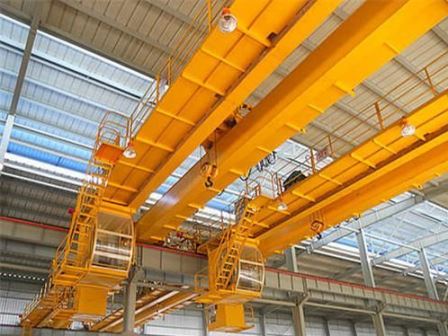
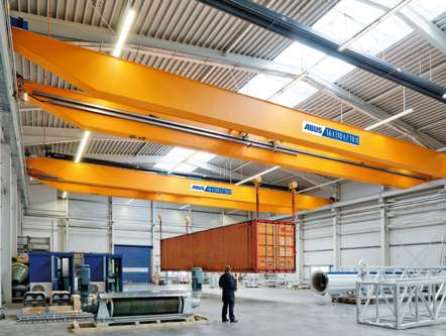
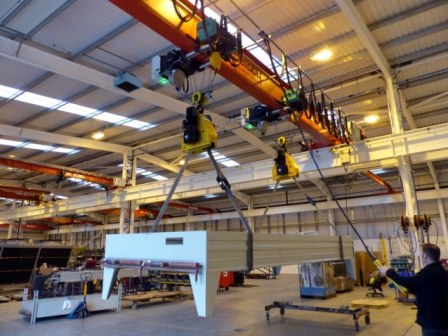
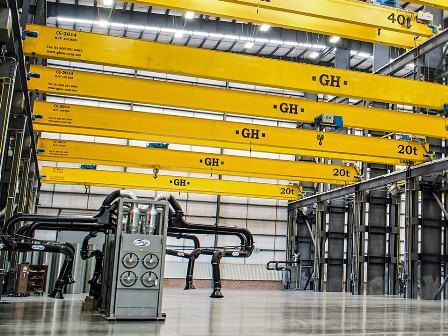
Partnering with an overhead crane manufacturer is an important decision that should not be taken lightly. The design, size, equipment, manufacture, and installation of an overhead crane is a large project and can be a substantial investment, but a necessary one if you want to improve the efficiency and workflows of your company.
Overhead crane companies
The largest hoist and bridge crane distribution, manufacturing and service companies in the United States have fully equipped warehouses, service centers and sales offices throughout the United States. Associates number over 200 and have a strong determination to serve our clients with loyalty and knowledge.
New parts and units
They specialize in the distribution of electric chain hoists, wire rope hoists, manual chain hoists, trolleys, crane components, small parts and accessories. They stock complete inventories of these products in regional warehouses. Distribution is characterized by same day shipping at the most competitive prices.
Engineering Products
The Manufacturing Industry also sells overhead cranes, gantry cranes, jib cranes and track systems or our own design and manufacture. A highly qualified and experienced engineering staff with specialists in structural, mechanical and electrical engineering ensures that our systems and bridge cranes will meet all the expectations of our customers. The actual manufacturing is done by a team of trained associates who pride themselves on building the highest quality crane available anywhere.
Services
The service department is among the largest, most qualified and best equipped material handling equipment repair departments to be found anywhere. They have fully equipped heavy duty trucks. To ensure customers receive the best service value, they provide mobile hydraulic lifts when needed at no additional charge.
Slings and rigging
Lifting and rigging equipment is manufactured through its operating divisions. Lifting ropes, rigging, and products. They produce the highest quality household tackle materials in the industry.
The Rigging Division offers a full line of chain, wire rope, slings, and hardware products with customizable and “in stock” service.
Design Overhead Crane
The design of overhead cranes varies widely according to their major operational specifications such as type of motion of the crane structure, weight, and type of the load, location of the crane, geometric features, operating regimes, and environmental conditions. Selecting the right type of overhead crane is critical to streamline workflow and maximize productivity. Many factors are taken into consideration which includes:
What bridge capacity is required?
How often is the crane to be used?
What span is required?
How long is the runway travel?
How high must the hoist lift?
Is the bridge going to be supported by the building, self-supported, or both?
Is the bridge going to be indoors or outdoors?
How is the crane powered? All motorized push-pull, hand geared, or a combination?
If motorized, how fast? Single or dual speeds? Variable frequency drives?
What voltages are required?
What type of control? Pendant from the hoist, separate track, or remote control?
Any special features? Cabs, walkways, horns, lights?
What specifications, codes, or local regulations are applicable?
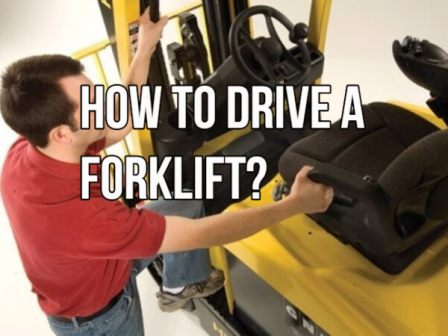
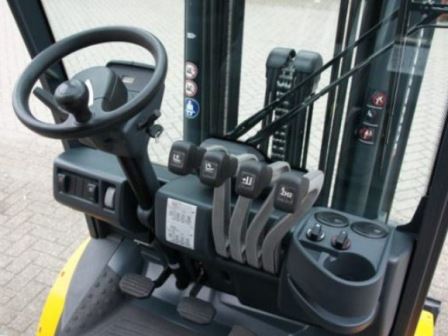
It is important to learn how to start a forklift and know the basic controls. It is simple. Starting a forklift is basically the same as starting a car.
Place the key in the ignition on the right side of the steering column and turn it forward to start the forklift engine.
Find the gear stick under the left side of the steering wheel. Make sure the lever is in the center position so you are neutral. Locate the emergency brake lever on the left side of the machine and make sure it is down and engaged.
There may be some situations where the forklift will not start. This problem is common on older, poorly maintained trucks. To troubleshoot a forklift that won’t start, try to eliminate probable causes such as:
Is the truck getting power? If your forklift is electric, were the batteries fully charged? Try to turn on the auxiliary functions of the truck (brake, horn, lights, and other non-engine parts), are they working? If not, the truck’s batteries are dead.
Forklift safety rules
Forklifts are more likely to tip over and harder to drive than cars, making them harder to drive safely.
After practicing driving and learning how to operate the forklift, you will be able to lift and carry heavy loads with ease. Just be sure to check with your country’s health and safety department to see if you need operator certification before driving a forklift.
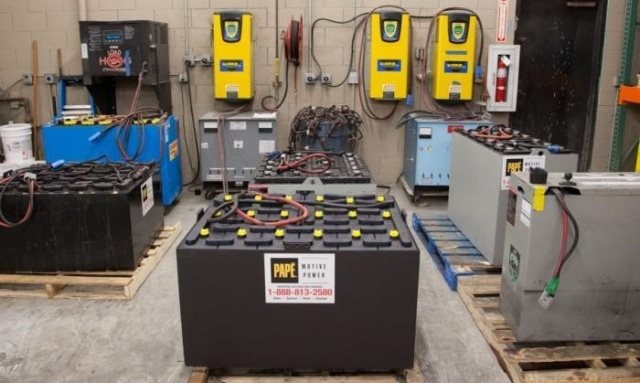
Maintaining your battery is critical to prolonging the performance and life of your forklift. When you implement a service program, you can help keep your battery running at proper levels, allowing your operations to run smoothly. When a battery is dead, forklift productivity is affected as well.
Follow our forklift battery maintenance tips to take the right steps in cell care, whether you rely on it for daily performance or monthly forklift jobs.
Forklift Battery Service and Maintenance
Battery maintenance procedure
What steps are performed during battery maintenance?
When it comes to maintaining your forklift battery, maintenance ranges from charging and cleaning to recharging fluids and equalizing. Knowing how to care for your forklift battery includes fundamental steps.
Charge the Battery
There is a correct way to charge when it comes to forklift batteries. You cannot charge them when convenient because it can affect the longevity of the battery. Instead, you need to charge it at certain times to a specific grade. For example, when the battery charge drops below 20%, you can start charging, making sure it reaches its full capacity. If you overcharge or fail to charge a forklift battery or interrupt the process, it can exhaust its life cycle.
Discharge the battery
Other charging tips include keeping the battery door and forklift compartment open while charging and using the correct current and voltage output.
You also don’t want to discharge a battery more than the assigned threshold. because it can result in permanent damage. Consult your manual to see the discharge level of your battery.
Never let a discharged battery sit for a long time because sulfation will begin to form, which will affect the operating time of the cell.
Battery water level
The lifespan of a forklift battery is based on optimal water levels to work at its maximum capacity.
The electrolyte in a battery is a combination of water and sulfuric acid.
If water levels drop, the battery plates are exposed to air, leading to oxidation and a reduction in battery capacity.
Evaporation reduces water levels and affects the charging process. If a battery begins to lose more water than normal, it may be a sign that the unit is working harder than necessary.
Check the battery fluid levels after multiple charges. Open the battery and observe two or three cells for proper water levels.
Is there enough liquid to cover the plastic element?
If not, fill the water levels below the protector. The additional space above the fluid allows for expansion when the battery is in use. Make sure you don’t overfill the cell.
Battery water level indicator
Another fluid maintenance tip you can follow is to increase the water level when the battery is fully charged.
If you do this before it reaches a full load, there is a greater chance of overwatering.
You will also want to use distilled water because tap water has additives and contaminants that can form a residue on the battery.
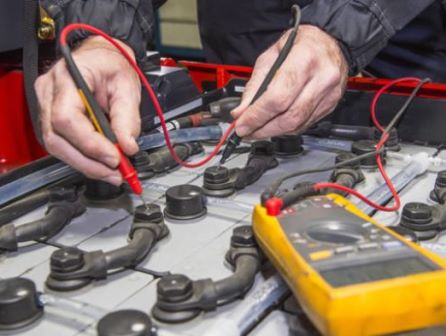
After each month, you can also check the battery’s gravity reading using a hydrometer after a full charge.
Consult your owner’s manual to determine the correct gravity number for your forklift.
Battery equalization charge
Some batteries require equalization and if so, they will often have an equalization setting on their charger.
How often should you equalize a forklift battery?
What is equalizing a battery?
In essence, matching a battery means that you are overcharging it to remove sulfate crystals that have built up on the plates.
Sulfation, as mentioned in the charging section of this article, can shorten battery life. Equalizing a battery also reverses acid stratification, which occurs when the acid concentration at the bottom of the battery is higher than at the top.
Not all forklift batteries require equalization, so check your battery’s specifications before adding them to your forklift battery maintenance routine.
In the case of wet cell batteries, they should be compensated about once a week. Do not equalize more than the recommended frequency per operating procedures.
Forklift battery replacement cost
When to repair or replace your forklift battery?
When your forklift battery doesn’t have the charge it used to, it’s a sign that it may need to be replaced soon. That said, if the battery is only a few years old / has less than 1,000 charge cycles, you may be able to repair it rather than replace it.
If you think you have a bad battery, the first step is to call an experienced professional. You don’t want a weak or unstable battery to cause costly damage to your forklift’s internal systems.
Forklift battery repair experts can help you safely determine what is wrong with your forklift battery and make an informed decision about whether to repair or replace it.
Essential rules when operating, driving, and maneuvering forklifts
Observe all traffic regulations, including authorized plant speed limits. Maintain a safe distance, approximately three truck lengths from the truck ahead, and keep the truck under control at all times.
Always look in all directions before continuing.
Always look in the direction of travel. If cargo blocks your view, travel in reverse. Keep a clear view.
Powered industrial truck safety tips
This safety tip looks at the rules and regulations concerning forklift safety and provides tips for eliminating powered industrial trucks hazards.
Yield to ambulances, fire trucks, or other vehicles in emergency situations.
Do not pass other trucks traveling in the same direction at intersections, blind spots, or other dangerous places.
Cross train tracks diagonally whenever possible. Do not park within 8 feet of the center of the railroad tracks.
Operate at a speed that allows the truck to stop safely in all travel conditions.
Don’t participate in stunts or rough play.
Slow down for wet and slippery floors.
Drive on them carefully and slowly and never exceed their indicated capacity.
Approach the elevators slowly and enter directly after the elevator car is properly leveled. Once in the elevator, neutralize the controls, turn off the power, and set the brakes.
Separate forklift and pedestrian traffic as much as possible. Use established walkways with guardrails and strictly enforce their use.
Never carry passengers.
Keep arms or legs within the confines of your vehicle.
Be aware of surface obstructions; even a small bump can cause a load to fall off the raised forks.
Never go near anyone who is in front of a bench or any other fixed object.
Do not travel to a position where if the forklift jumped forward, the brakes failed, or the wrong lever was pressed, a co-worker could be caught between the forklift and another object.
When operating a powered industrial truck it is essential that you …
Powered industrial trucks must be inspected
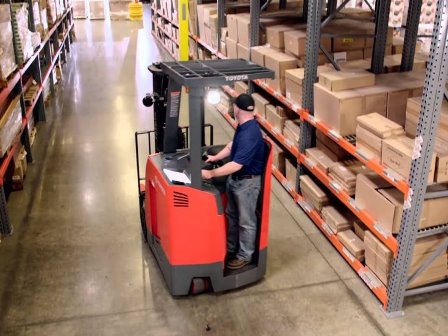
Powered industrial trucks are used in many industries to move materials.
The hazards commonly associated with powered industrial trucks vary depending on the type of vehicle and the workplace where the truck is used.
Each type of truck presents different operational hazards.
For example, a counterbalanced sit-down truck is more likely to be involved in a cargo accident than a motorized hand truck, because the sit-on truck can lift a much higher load than a hand truck.
Workplace conditions also present different hazards. For example, retail establishments often face greater challenges than other workplaces in maintaining pedestrian safety.
The best way to protect employees from injury also depends on the type of truck operated and the workplace where it is used.
According to OSHA a powered industrial truck is unattended
According to OSHA a powered industrial truck is unattended?
A powered industrial truck is unattended when the operator is 25 ft. or more away from the vehicle which remains in his view, or whenever the operator leaves the vehicle and it is not in his view.
Who can operate a powered industrial truck?
Labor laws on hazardous occupations prohibit employees under the age of 18 from operating forklifts, employers must ensure that workers under the age of 18 are not authorized to operate forklifts under any circumstances.
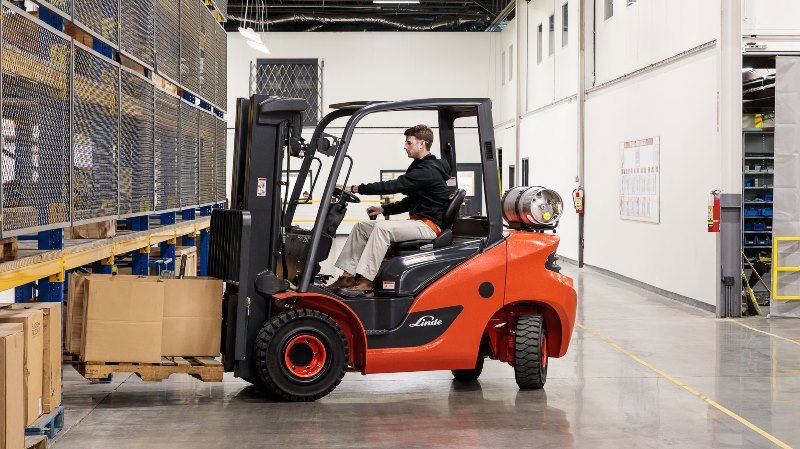
Forklifts are extremely useful workplace vehicles, as long as they are used safely and appropriately by operators who are appropriately trained and competent to use them.