Category Archives: tower crane

Flat Top Tower Crane

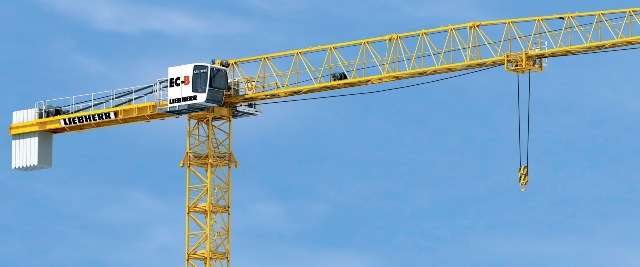
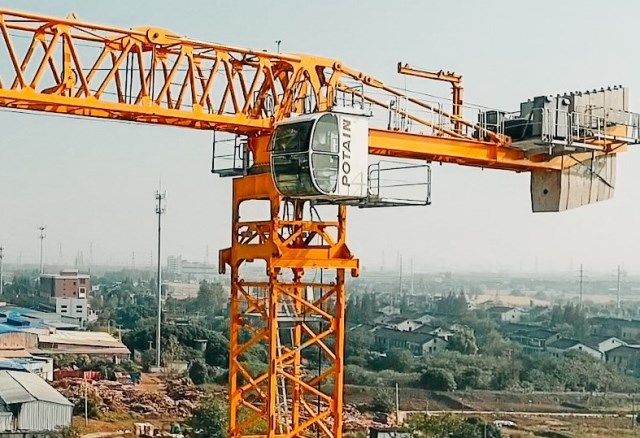
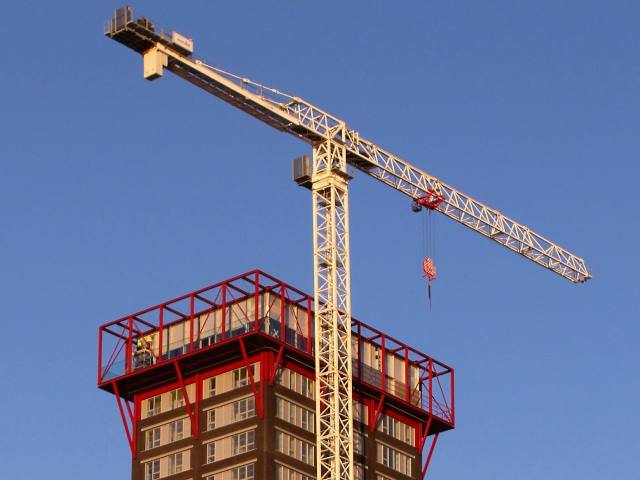
The flat-top tower crane is characterized by its quick, easy assembly. The compact head is mounted by an auto crane in a single lift. All drive pedestals and rails are designed to last. All drives are easy and safe to reach for maintenance work straight from the compact head.

The newly designed comfort cab is attached and removed by means of quick-release fastenings and is identical for all small and medium-sized cranes. This cuts crane fleet costs.

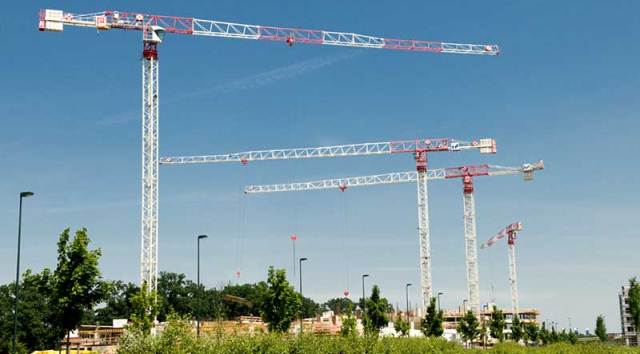
Flat top tower crane advantages

The most important advantage is related to the useful life of the crane. It is a well-known fact that alternating stresses cause bigger fatigue in structures than unidirectional forces.

Flat top cranes, due to the design, have practically no alternative stresses in the jib or counter-jib structure. Regardless of where the trolley and load are situated, the upper part of the jib is always working in tension and the lower part of the jib is always working in compression.

In the same way, the lattice tubes and welds on the jib are always working in tension or compression only.

This means that there is no fatigue in the structure because the efforts are transmitted always in the same way. There are no alternative efforts.

Tower Crane

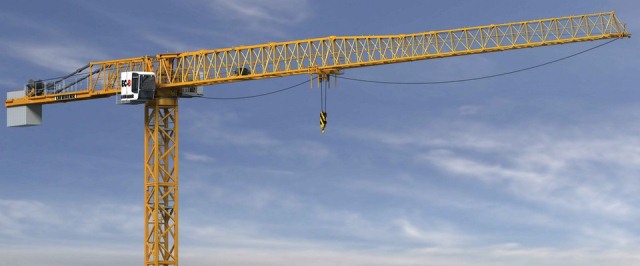
In the pendant lines tower cranes, the jib is transmitting the forces through the structure to the pendant line and then to the head, but the structure of the jib is not as strong of the one in the flat-top cranes.

So the jib of the crane is moving continuously up and down, transmitting the movements of the load to the pendant line, creating great fatigue in the structure due to the efforts are transmitted not always in the same way.

Construction crane

The most typical is very clear: if there is a project in which there will be several cranes working at the same time, and some of them are going to work over between them, working with flat top cranes could give the project manager some definitive advantages by reducing the height between the cranes.

There is no need to add extra height just to get over the pendant lines of the neighboring crane, which means not only extra mast sections but sometimes even wall-ties if the additional height exceeds the free-standing height of the crane. Law requires a minimum height between the highest part of one crane and the lowest part of the other crane (where cranes are going to overlap).

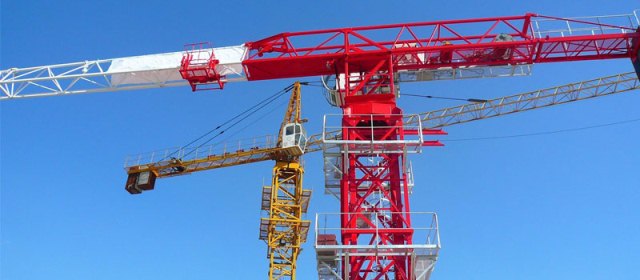
Flat top crane

Flat top cranes allow getting maximum hook height, with minimum overall height. The last result is that the final cost of the crane is smaller by reducing mast sections and time to erect them.

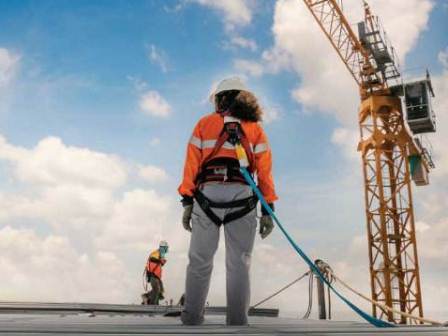
Flat top tower cranes mean fewer complications and more safety for the erector.

When sire conditions and access are bad, the jib can be erected in several jib sections one after the other, direct from the truck instead of being placed on the ground, preassembled and then lifted and placed in one piece, which makes the erection fast, simple and economic.

With pendant lines, at least the part, up to the pendant line is connected, must be assembled in one part and then the rest of jib could be done by piece.

Flat top tower cranes, a smaller mobile crane is required due to the lower weight of the single jib sections, as opposed to a complete jib. Furthermore, the erection of the jib sections is very simple, because the upper part of the union between two jib sections is normally pinned together without even needing a hammer. The lower rails automatically locate together just by lowering the jib section and final fixing of the side rails is by one simple longitudinal bolt on each side of the jib.

Also during the erection work of the jib the erectors are always in a safe position because they never have to leave the jib structure to erect tie ropes as on conventional pendant lines cranes.

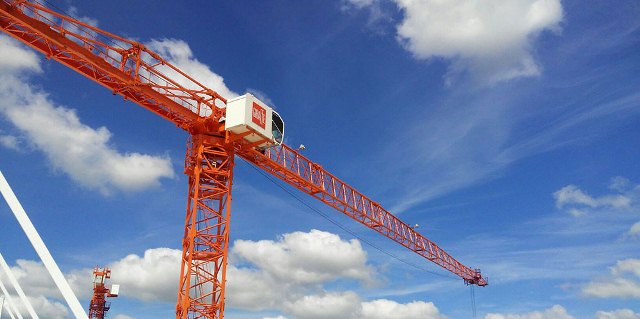
Tower crane maintenance

The design of the Flat top tower cranes allows reducing time and therefore costs in the maintenance works done by the technical people.

The slewing motor (s), the hoisting motor (depends on the model) and the electrical cabinets are installed in the slewing part of the crane.

All the most important parts to do the minimum maintenance are installed much close to others, so erectors don´t need to move from one side to the other of the crane.

Tower crane specifications

The Flat tower crane is designed according to their production line and trying to reduce storage costs in the final customers and in the rental fleets.

Because of this, all the cranes in every series have the same structural parts and components.

So having different cranes from the same series (and from other series), the number of parts needed to have in their yard is reduced up to a minimum. The interchangeability between cranes from the same family is total.

Also, having the most important components in the slewing part assemble together, the possibility of having a loss during the storage time is reducing a lot.

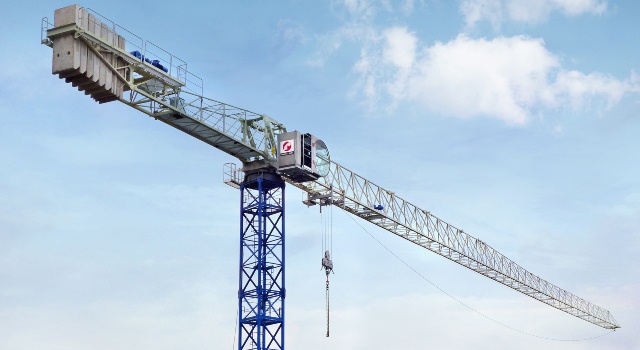
Tower crane design

Flat top tower cranes are designed to save money, not only during the erection works but during transportation.

The structure of the crane is ready to be combined between them in a truck and in containers to adjust up to the maximum space and the final load and save money by using fewer trucks and containers than the competitors.

One important feature of the Flat top tower cranes is that the mast sections are designed by panels.

Each mast section comprises 4 identical panels. All are joined together by double shear bolts.

This prevents the joints from coming loose and flaring, as they may in single shear systems, and also aligns stresses with the joints to the uprights.

The main stress (compression) is transmitted by contact between uprights, with the joint (bolts & lugs) working only under traction.

These panels sections are designed as a modular system so that different sections can be combined for better height performance.

The manufacturing systems used assured full interchangeability of components in sections, so that any panel can be replaced by another of the same type, and guarantees the structural function for stress transmission as per the design.

This is guaranteed via:

  • The precision in length of the main uprights, achieved by machining them.
  • The precision with which joints between section and diagonals are carried out, with multiple drills designed especially for this purpose.
  • The use of universal materials for panels.

Tower crane jib

There are 2 points to be considered at the time of designing a flat top tower crane:

Tower crane jib length

Flexion of the jib

Tower cranes are designed following some calculations referring to the flexion of all the structure, not only the jib but also when the crane is working with load, minimum and maximum and working without load.

Both systems, conventional pendant lines tower crane and flat top tower cranes, are going to have a deformation of the structure due to the forces. The difference between these two concepts is how many meters the deformation is and what would be the way of absorbing it by the structure.

In every crane, the deformation of the structure depends on the load, the height, etc, so there are as many deformations as loads, etc you can have in your crane. The most important is designing the crane under calculations following security standards.

In the Flat Top cranes, the whole jib is having a deformation from the beginning of the jib, so this movement is not affecting to the stress of the steel structure because this movement is a natural movement.

In a conventional pendant lines tower crane, the jib is bending the complete jib, but there is a point under a big concentration of stress: where the pendant line is joined to the jib.

In the conventional pendant, lines tower crane, the last part of the jib, from the pendant line is joined up to the end, is bending more than in the flat top tower crane because there is nothing holding it and the structure is not as strong as in the flat top tower crane.

Tower crane safety

Problems in case of load fall

A load fall is not easy to happen, because there are many systems to control these difficult situations.

But in case of the load falls, the structure of the jib in the flat top cranes will move like if there was just a unique piece. The complete jib will absorb this movement.

By the design of the structure, the jib is ready to work in tension and compression at any time so this impact will have less effect in a flat top tower crane than in a pendant line, and the movement of the crane will decrease faster than in a conventional pendant lines tower crane.

In a conventional pedant lines tower crane, because the jib is not designed to absorb such a big force, this movement will be transmitted from the first part of the jib to the pendant line. It is ready for being worked just in tension, but not in compression so the upward movement of the structure will be bigger and larger than in the flat top tower cranes. And this movement will be uncontrolled

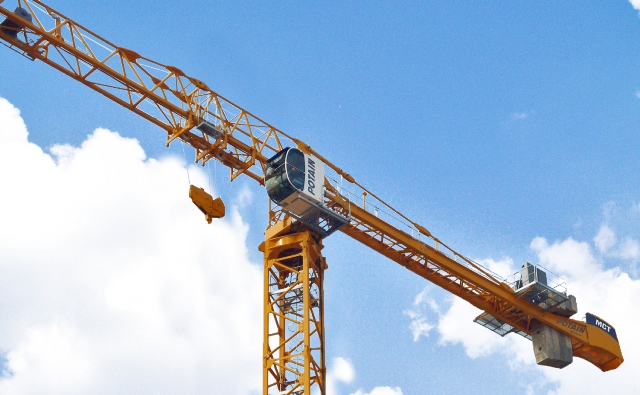
What is a tower crane?

What is a tower crane?

Tower cranes are a common fixture at any major construction site. … The construction crew uses the tower crane to lift steel, concrete, large tools like acetylene torches and generators, and a wide variety of other building materials.

How does a tower crane not fall over?

The base of the crane is bolted into the ground and weighed down by giant blocks of concrete. The stiffness of the supporting structure also helps counteract bending caused by unbalanced loads. Incorrect ballast will cause a crane to fall over.

Why do cranes have Counterweights?

A counterweight is a weight that, by exerting an opposite force, provides balance and stability of a mechanical system. Its purpose is to make lifting the load more efficient, which saves energy and is less taxing on the lifting machine.
In these applications, the expected load multiplied by the distance that load will be spaced from the central support (called the “tipping point”) must be equal to the counterweight’s mass times its distance from the tipping point in order to prevent over-balancing either side. This distance times mass is called the load moment.

The most read

More on this story

Tower Crane safety

Tower Crane Safety: Construction safety meeting topics, tower crane safety training, crane operator training, construction tower crane lighting requirements.

Hammerhead Tower Crane

A hammerhead tower crane is one of the most common types of cranes used around the world. They are especially reliable for precise, accurate handling of a wide variety of heavy materials.

Tower Crane Load Chart

All around the world, cranes have played a dominant role in helping with the task of lifting and transporting heavy payloads. They are used in many different places such as shipyards, construction sites, and industrial workplaces.

Today, many different crane types exist, each type is specifically designed for the environment in which it is being used. One of the more common crane types is the tower crane.

The tower crane is mainly used on construction sites and has proven its usefulness in the construction of very tall buildings. This type of crane has a small footprint but is still able to cover a very wide working area.

Crane Operator Logbook: Daily Lift Record & Safety Checklist Log.

This logbook helps document essential information including lift operations, equipment condition, site location, inspection results, operator details, weather conditions, and more.

Tower crane lifting

The lifting capacity of Tower crane depends on various factors.

The limitation for lifting weight starts from the base of the tower crane. Each and every component of the tower crane affects the load lifting capacity of the tower crane.

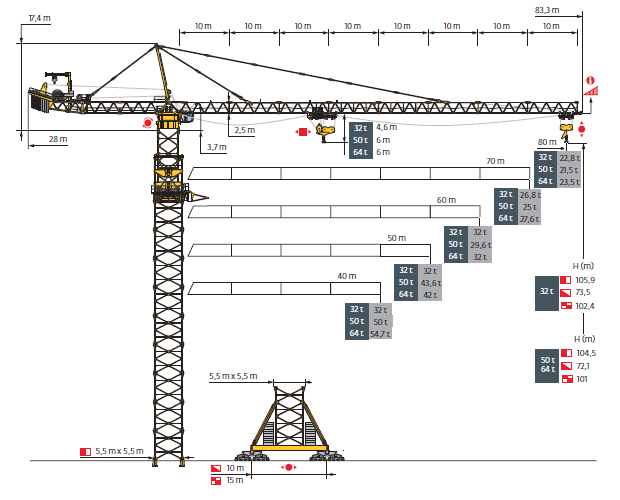
For a typical tower crane Maximum unsupported height – 80 meters (265 feet) Maximum Reach – 70 meters (230 feet), Maximum Lifting Power – 19.8 tons (18 Metric Tons), 300 tonne-meters. Counterweights – 20 tons (16.3 Metric Tons).

If the crane height is more than 265 feet, then some means of sturdy support is required. It may be some steel wires fixed from the crane mast to the different parts of the building. The maximum weight that the tower crane can lift is 18 Metric Tons. However the quantity of weight to be lifted keeps on decreasing as the distance from crane center increases. So it is always better to lift loads keeping them as close as possible to the crane’s center.

The factor 300 tonne-meter is instrumental in understanding the load limitation. It is the moment of the load lifted about the crane’s center. So moment = load * distance.

A 300 tonne-meter limit can be inferred as a load of 10 tons being lifted at a distance of 30 meters from the center of the crane. So moment about the crane’s center is 10 tons * 30 meters = 300 tonne-meter.

Tower crane load capacity

Basic precautions for a Tower Crane with respect to a load being lifted:

  • Maximum load limit switch: This switch along with its accessories monitors the pull (strain) on the cable and thus does not allow the maximum load limit to cross 18 tons, after which it trips the motor and gives audible and visual alarms.
  • Load moment limit switch: This limit switch along with its accessories ensures the load-moment (tonne-meter) rating does not exceed beyond the given limit, after which the hoist motor and traversing motors are tripped with audible and visual alarms.
  • These towers are held at the base by concrete structures/pads, with the help of anchor bolts. These concrete slabs are made ready several weeks before the arrival of the tower cranes. These concrete pads weigh about 2 tons.

Tower crane capacity

Each crane has a load chart that, in short, specifies the crane’s capabilities detailing its features and how its lift capacity varies when considering distance and angle. Just like the old saying ‘if you fail to plan, you plan to fail,’ failing to consult a crane load chart before renting or employing a crane for a specific job could leave you with too much or too little capacity for your job.

Before a crane is rented, transported, employed or purchased, the crane chart must be consulted. Everyone, from the crane operator to the job supervisors, to even the sales guys have to know how to read a crane chart. Here’s how.

To illustrate how to read a crane chart, we’ve chosen the chart for the Terex RT345XL, a rough terrain crane with a maximum lift capacity of 45 tons.

Tower crane lifting capacity

To illustrate how to read a crane chart, we’ve chosen the chart for the Terex RT345XL, a rough terrain crane with a maximum lift capacity of 45 tons.

Tower crane weight

The chart shows the crane dimensions. It includes data for operation with the outriggers extended, transport weight, and steering dimensions. Knowledge of this information is especially critical if the crane will be working in a confined space, as the lifting capacity varies depending on whether the outriggers are extended.

The transport weight (below) determines the trailer to be used, how to load the crane on the trailer, the route to take, and what permits are required to get it to the job site. Along the top axis, the first number is the gross vehicle weight. In the other two columns, the arrows indicate the weight load for each axle depending on what additional accessories are loaded.

Crane lifting capacity

This is where the magic happens. In the legend at the top of the chart, you can see these ratings apply when using 6.5 tons of counterweight, with the outriggers extended to 22 x 22.3 feet. Here, you’d graph out the specific lift the crane is needed for. The ‘ft.’ indicator on the left axis represents the radius, the distance from the center pin to the center of the load.

EXAMPLE: You need to lift a load of 15 tons (30,000 pounds) a distance of 25 feet. The distance is measured from the center pin of the crane to the center of the load. Once you determine the distance, look on that line for the largest capacity; that will indicate how many feet of boom must be extended. In this case, it is 45 feet.

It’s important to note that the maximum capacity is always measured by the shortest lift, usually over the rear of the crane, and with the outriggers fully extended. While the Terex RT345 has a maximum capacity of 45 tons, lifts at any distance or height drop the maximum capacity dramatically.

Tower crane boom length

Lift range: Just as important as lift capacity is lift range. For that, a range diagram is usually included in every chart which illustrates how much boom length is needed to pick up and lift a load both at a distance and at height.

EXAMPLE: You need to pick up a load at 25 feet and lift it to the top of a five-story, 65-foot building. Consulting the range diagram, 69 feet of boom is required to make the lift.

Tower crane lifting plan

Lift angle: This chart illustrates the maximum lift if a luffing or fixed jib is used. Lifts with jib lengths of 32 and 49 feet (in addition to boom extension of 105 feet) are illustrated. With higher angles of lift, the maximum load capacity decreases. With a luffing jib, the angle can be automatically adjusted from the operator’s cab. With a fixed jib, of course, the angle is fixed.

Slewing motor tower crane

Tower crane in motion: This illustrates the lift capacity for a pick and carry. Here, the chart illustrates the total weight able to be picked up at a 360-degree angle while stationary on wheels, the total weight being able to be supported both while slowly rolling with the load at a zero degree angle (creep), and the total weight able to be supported while moving at 2.5 miles per hour. The column to the left again indicates the radius of the lift, the one to the far right, the maximum boom length each weight can be carried at.

How to calculate crane load capacity?

How to use load charts:

  • Crane Institute of America:
    • Using load charts correctly is considered the single most important aspect of safe crane operation.
    • Step by step, this guide explains how to determine the lifting capacity of a crane.
    • Areas of operation, load radius, gross and net capacity, parts of the line, and other common technical terms are also defined and illustrated.

Safety load capacity

Companion item to “Professional Crane Operator Instructor Guide” and Professional Crane Operator Participants Guide”

How does a tower crane balance?

How does a tower crane balance?

Basically, a tower crane has a large load on the other side of the crane. It keeps it balanced like a scale. On other tower cranes, they use cables that relay the force of the lifting to other parts of the crane near the ground, again, providing a counterforce for the weight of the load it is lifting.

How does a tower crane not fall over?

Incorrect ballast will cause a crane to fall over. The base of the crane is bolted into the ground and weighed down by giant blocks of concrete. The stiffness of the supporting structure also helps counteract bending caused by unbalanced loads.

How much can a tower crane lift?

The maximum load that the crane can lift is 18 metric tons (39,690 pounds), but the crane cannot lift that much weight if the load is positioned at the end of the jib. The closer the load is positioned to the mast, the more weight the crane can lift safely. The 300 tonne-meter rating tells you the relationship.

What is tower crane safety?

Tower cranes are widely used for lifting operations in the construction industry. Statistics show that tower cranes contribute to quite a number of serious accidents. Property damage and bodily injuries can be avoided if they are properly used.

What are the hazards in tower crane lifting?

The three most common hazards involving tower cranes include electrical hazards, overloading, and materials falling/slipping from overhead hoists.

The most read

Tower Crane Boom Length

The boom length of each tower crane determines its maximum capacity.

More on this story

What is the Tip Load of Tower Crane

This value is crucial for crane operators and site planners as it directly influences the crane lifting capacity and the safety of operations.

Tower Crane Hand Signals

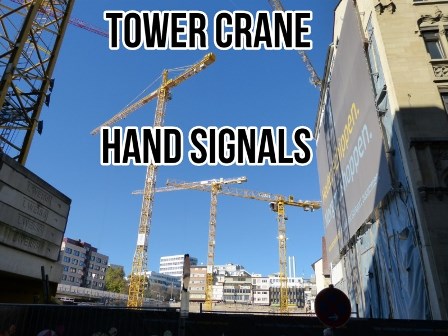
Tower Crane Hand Signals: Cranes have been in operation for more than 2,000 years, having been invented by the ancient Greeks. Today, there are a wide variety of cranes found at construction sites, such as truck-mounted cranes, rough terrain cranes and crawler cranes equipped with tracks.

The basic components of mobile cranes include a movable boom attached to a platform. The boom can be raised or lowered, as well as rotated to move a load horizontally. There are also cranes with telescoping booms. A spool with steel cables extends to the end of the boom and attaches to the load. A powerful motor provides the force to move the boom and raise or lower the load.

Most cranes also have heavy counterweights to help offset the weight of the load. Many cranes have outriggers to increase stability and help ensure that they remain level during operation.

Tower Crane Hand Signals

Crane operator hand signals

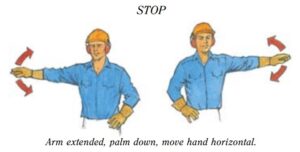
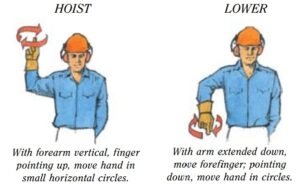
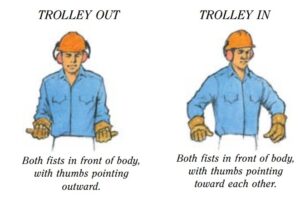
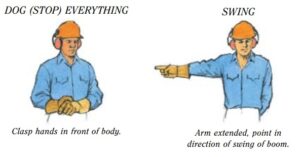
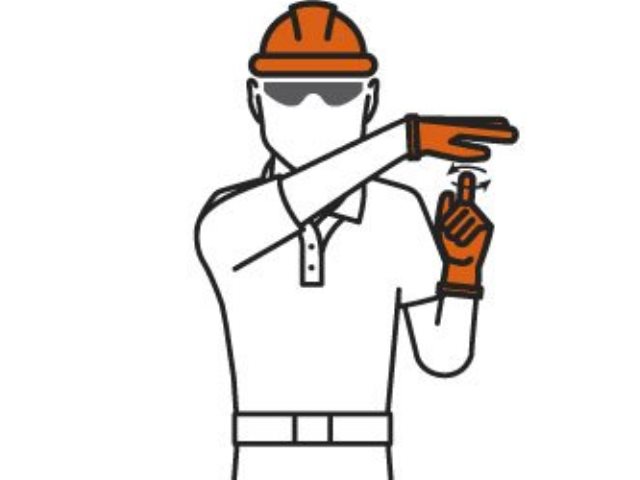
Using standard hand signals is the most widely used manner of signaling a crane operator. A hand signal chart can usually be found on the side of the crane or it should be conspicuously posted in the vicinity of where hoisting operations are being conducted.

Under the current OSHA crane standard there are only select instances when a signalperson is not required and for all those other times; having a top-flight signalperson should be a priority.

Every successful lifting operation is the result of planning and teamwork. The definition of teamwork is “a united effort by all to achieve the ultimate goal”. All lifting operations must be undertaken by a trained and competent team using a safe system of work established prior to the start of any lifting operation.

You as the tower crane operator play a vital role in the team and the aim of this guide is to give you essential practical advice to help you carry out this role successfully.

Should you have any doubts or questions regarding the information you must take this up with your employer before proceeding with lifting operations.

Tower Crane Hand Signals

Hand signals in crane operation

Hand signals for tower crane:

Tower cranes are also widely used. The jibs on most tower cranes are secured in a horizontal position and rotate on their pedestal.

The load can be raised or lowered, and travel horizontally along the length of the jibs.

Tower Crane Limitations:

It is important to be aware of crane limitations, such as their load limits. The further the load is moved from the center of the crane, the less weight the crane can lift. For example, extending a telescopic boom reduces its lifting capacity. Also, lowering the boom decreases the crane’s load limit, because the load moves further away from the crane.

When a crane picks a load, the boom often deflects downwards. This is called boom deflection. This can present two hazards. It lowers the cranes lifting capacity by causing the load to be further from the crane. It can also cause the load to swing as it lifts off.

Tower Crane Hand Signals

Tower crane signals

Crane Hand Signals:

Standardized hand signals are commonly used by the crane signal person. The signal person is the only one who should give signals to the operator. The only exception is if other personnel see a hazard, they can use the emergency stop signal. When the signal person gives directions to the operator, they must be from the operator’s perspective.

Tower crane voice signals

As with hand signals, voice communication between the signal person and the operator should be continuously maintained during crane movements. Directions should be given from the direct perspective of the operator.

Each voice signal must contain the following three elements, given in the following order: function (such as hoist, boom, etc.), direction; distance and/or speed; function, stop command. The operator, signal person and lift director (if there is one), must be able to effectively communicate in the language used.

Tower Crane Hand Signals

Tower crane radio signals

Voice Signal Communication

In situations where hand signals are not appropriate, voice signals are an option. Portable radios are often used. They should be tested before crane operations begin and they should use a dedicated channel. The crane operator must use a hands-free device. Verbal signals should be short and clear. They should include three key elements, spoken in this order:

  • The function and direction
  • The distance and/or speed
  • Function stop

The function names should be the same as the hand signals described earlier. Here are some examples of proper voice signals:

  • Boom up. Slowly. Slowly. Boom stop.
  • Lower load. 10 feet. 5 feet. 2 feet. Lower stop.

The function, such as Boom, Lower, Swing and Travel are spoken first, followed by the direction or speed. The signal to stop always has the function first, followed by a stop.

Tower Crane Hand Signals

Construction hand signals

Construction site hand signals –

Non-standard and New Signals:

A situation may arise where standard signals don’t communicate all the information the operator needs lift. In that case, a new, non-standard signal may be used, as long as it is clearly understood by the operator, signal person and lift director.

General Safety Considerations:

An overview of basic safety precautions is described.

  • Typical PPE will likely include hard hats, safety glasses, gloves, high visibility vests, and work boots.
  • Before the lift begins, check that the load hook is centered over the load and that the rigging gear is properly set. Also, check that the load stays centered during the lift.
  • Watch for power lines to be sure the boom or load doesn’t get too close.
  • Watch the boom deflection closely to make sure it doesn’t exceed the load radius.
  • Make sure other personnel stay out of the crane operating area and always keep yourself and others from under a suspended load.
  • The rotation of the cab and counterweights presents a hazard. Stay well away from its rotation zone.
  • Avoid using your hands to control a load. Use a tag line so you can stay a safe distance from the load.
  • When an operator is moving a load horizontally, it may swing if the boom stops suddenly. Stay well away from swinging loads.
  • Also, pay close attention to weather conditions.
  • Lightning and strong side winds can produce serious hazards.
  • The steel boom can act as a lightning rod and the wind pushing on the load and boom can make cranes unstable.

Hand signal for crane operation and their meaning

High Wind Conditions and Taking the Tower Crane Out of Service:

It is important that you monitor the wind speed constantly using the anemometer display in the cab. This will give you early warning of rising wind speeds and enable you to take action to take the tower crane out of service and descend the tower whilst it is still safe to do so. If the wind is gusting around the limiting wind speed it may be appropriate, following consultation with your supervisor, to remain in the cab whilst establishing if the wind speed is rising or falling.

Crane safety hand signals

Crane safety hand signals: You should report the wind speed to your supervisor on-site on a regular basis. Where the wind speed is rising this will allow the site plenty of opportunities to plan concrete deliveries etc, before the crane has to be taken out of service.

The anemometer or other windspeed indicators must be included in the daily pre-use checks.

Putting the crane in the out-of-service condition generally includes ensuring that the jib is free to “weather vane” when out of service so that the minimum wind area is presented to the prevailing wind.

On luffing jib tower cranes it is also important that the jib is left at the correct out of service radius (specified by the crane manufacturer, which is not always the minimum radius. This will ensure that there is sufficient wind area to enable the crane to “weather vane”.

When taking the crane out of service on multi crane sites you must ensure that the crane in free slew will not enter the area of other cranes that are still operating.

Tower cranes must not be left out of service with a load on the hook and the hook must always be fully raised.

Tower Crane Hand Signals

Where can crane operator hand signals be found?

A hand signal chart can usually be found on the side of the crane or it should be conspicuously posted in the vicinity of where hoisting operations are being conducted.

Who can give signals to the crane operator?

During crane operation, only one person can give signals, unless it’s for an emergency stop – then anyone on the job site can give the signal. Once the qualified signal person is identified, the signal person and the crane operator must identify each other prior to giving any signals.

Who can give an emergency stop signal to a crane operator?

Anyone who becomes aware of a safety problem must alert the operator or signal person by giving the stop or emergency stop signal.

The most read

Crane Hand Signal Chart

What are the proper hand signals for cranes?

More on this story

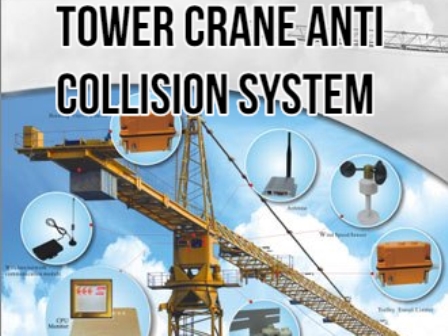
Tower Crane anti-collision System

In the worksite, multiple tower cranes are now working within one building or one construction site. The collision between the tower cranes, sometimes stalling the project..

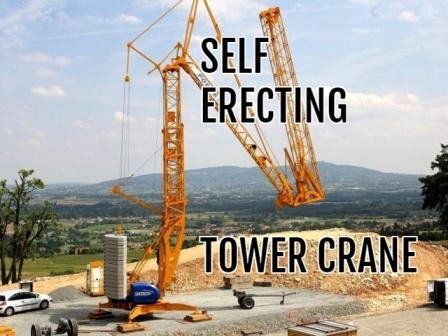
Self Erecting Tower Crane

A self-erecting tower crane is compact, easy to erect and operate, and have several transport options. Wireless remote controls, quiet and efficient electric motors, state-of-the-art variable frequency motor drives and overload protection systems are standard.

Tower Crane anti collision System

Tower crane anti-collision system: In worksite, multiple tower cranes are now working within one building or one construction site. The collision between the tower cranes, nearby structures, trees, or other towers often happens, which in turn damages the crane/other structures, resulting in heavy losses, sometimes stalling the project.

Tower Crane anti-collision System

Anti collision system for cranes

After a year-long market study, it has been seen that most of the tower cranes do not have anti-collision systems. Even the Safe Load Indicator (SLI) is not installed. Some tower cranes have safe load indicators but are unable to link with the anti-collision systems.

Multiple monitors/displays in the operator’s cabin also confuse the operator and lead to accidents. Frequent power failure at construction sites adds problems like improper shutdown, data corruption, non-detection of radio signals, restart, etc.

Tower Crane anti collision System

Anti collision device for cranes

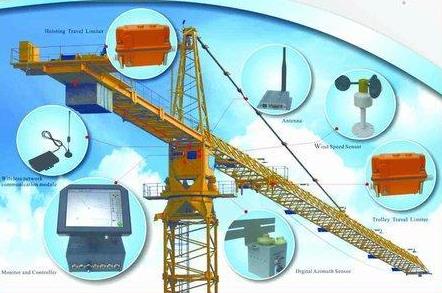
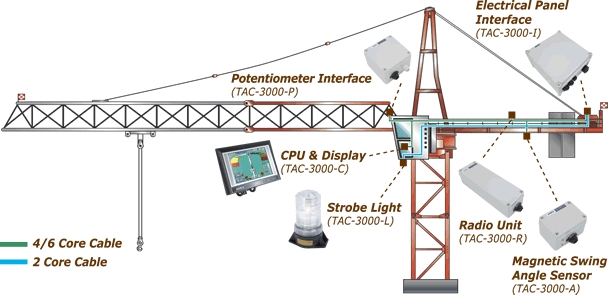
After studying all these problems, an anti-collision system has been developed with built-in SLI and wind velocity control that gives tremendous safety for any make/model tower cranes.

These anti-collision devices (ACD) come with a ground monitoring system through which one can monitor the functions of all tower cranes as well as upload data changes (like height increasing, protect some zones, etc) without stopping the cranes.

A single display shows the anti-collision functions, as well as the SLI, functions like load, radius, hook height, slewing angle and wind velocity to the operator without any confusion. This system integrates with the tower crane panels and will take care of the cut-off, alarm and display automatically without changing any OEM set-up.

This system is developed with a microprocessor, with battery backup so any power failure at the site does not affect the functioning. The communications are made through radio controls with non-licensed frequencies.

Tower Crane anti collision System

Working principle of anti-collision device

The Anti Crane Collision Switch is designed to avoid the collision of two adjacent cranes in the same bay running on the same rails. This system, when installed on the two adjacent cranes, will avoid the collision of two cranes. The system works on the principle of retro-reflective infrared waves. It consists of an emitter and sensor module and a special reflector.

The emitter emits the infrared waves in the direction of the reflector. The reflector reflects these infrared waves back to the sensor. The sensor senses the presence of these reflected infrared waves and activates an alarm signal and stops/reduces the speed of the crane. Thus if the two cranes are away from each other then the reflected waves will not reach the sensor and the crane operate normally.

The distance between the reflector and the sensor to detect the presence of infrared waves can be adjusted with the help of the potentiometer provided on the system. The maximum distances between the two crane to generate the alarm signal can be a maximum of 10 meters. The anti-collision system is specially designed for the Crane application and is suitable for continuous duty.

Tower Crane anti collision System

Anti collision sensor for cranes

Anti Collision and zone protection device can be easily installed with any make or model tower crane. The same device can also be used as a safe load indicator.

This system provides a clear visual position to the crane operator about all the installed cranes, structures, towers, and even trees as programmed around it by which the collision/accidents will be avoided.

The system includes a high-performance microprocessor, Software, wireless radio communication system and sensors to deliver accurate communication, data analysis, control, braking and data storage features. Touch Screen Monitor makes the installation and site setup simple.

Tower Crane anti collision System

Tower crane anti-collision system

It should come as no surprise to anyone in this industry that the second most common type of serious tower-crane incident reported in the last decade relates to contact with overhead power lines.

Unwanted contacts – between two cranes or between tower cranes and power lines.

While none of these reported incidents resulted in injury or death, several caused temporary power outages for thousands of nearby businesses and homes, many resulted in lost time or materials and damage to costly machinery, and all had the potential for serious injury, death, or catastrophic equipment failure.

As per the regulatory requirement, tower cranes and ancillary equipment involved in the incidents all had to be inspected, repaired if necessary and re-certified for use.

This statistic has helped guide the crane inspection team in developing its three-year Tower Crane Strategy, one element of which is a focus on raising awareness of the value of digital zoning and anti-collision devices.

Slew-limiting technologies have advanced steadily over the last 20 years. Sensors, interfaces and the software used to analyze the data have become very reliable, making the benefits for safe and efficient operation indisputable.

what causes collision?

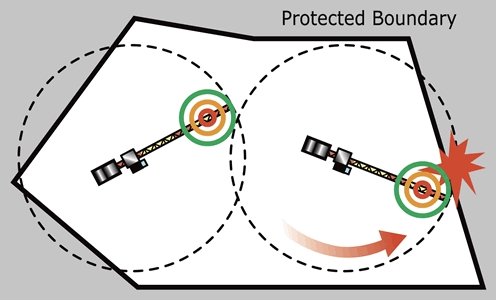
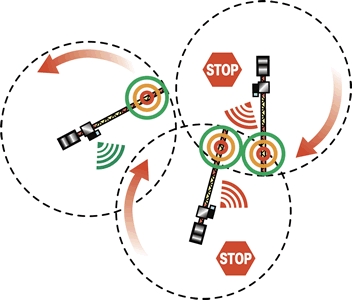
The collision of tower cranes may occur when two or more cranes over-sail with each other, any crane over-sail to the site’s boundary or to a prohibited zone. An example of a collision is the crane’s hoisting hook block & cable collides with the main jib.

How does Anti Crane Collision Switch work?

This system, when installed on the two adjacent cranes, will avoid the collision of two cranes. The system works on the principle of retro-reflective infrared waves. It consists of an emitter and sensor module and a special reflector.

The most read

Crane Hand Signal Chart

What are the proper hand signals for cranes?

More on this story

Tower Crane Controls

Due to the nonlinear nature of the rotating crane motion, controlling these oscillations is a complex task. Additionally, the lack of sensors on many cranes that are in use today requires extra effort to design effective control strategies.

Tower Crane Hand Signals

Every successful lifting operation is the result of planning and teamwork. The definition of teamwork is “a united effort by all to achieve the ultimate goal”.

Tower Crane operator salary

Tower Crane operator salary: Crane and tower operators work with cranes and other machinery that lifts and moves materials. This occupation is dangerous as it deals with heavy lifting and heavy-duty machine operation. To become a crane or tower operator, education at a technical school is usually required. Before beginning official work, one to two years of formal training may be required.

Tower Crane operator salary

How much do tower crane operators make?

A Crane operator or Tower Operator will usually earn a wage of around 40000 and 60000 based on education and experience. Crane and Tower Operators usually receive an average pay level of Fifty Thousand One Hundred dollars on a yearly basis.

Crane and Tower Operators obtain the highest pay in Nevada, where they get job pay of close to $74250. People in this category of job can obtain the highest compensation in Professional, Scientific, and Technical Services, which has average pay levels of $56750.

Tower Crane operator salary

Tower crane operator jobs

The skyline of any city will likely include at least a few tower cranes, which are among the largest pieces of equipment used in building projects. Construction companies use tower cranes to lift heavy materials such as steel and concrete.

Just as cranes tower over building sites, the salaries of the people who run them tower over those of other construction workers.

Some high-rise crane operators and related trades in New York City make upwards of $500,000 a year in pay, overtime, and benefits, according to the Real Estate Board of New York, which represents the construction industry.

But the real reason New York crane operators and other operating engineers earn such big salaries is overtime and benefits.

A relief crane operator working 56 hours of overtime per week for 52 weeks will earn $335,000 in overtime and $160,000 in overtime benefits at the World Trade Center. As worker’s salaries go up, so do the amounts employers must kick in for annuities and pensions.

Work rules in New York at the World Trade Center require that every crane operator be accompanied by a relief crane operator and an oiler a person that starts up the crane for the entire time a crane is operating.

Tower Crane operator salary

Crane driver salary

High rise crane operator wages:

Tower crane operators are specialists in the construction industry who operate a specific piece of heavy machinery that lifts, transports, and moves construction equipment and materials all over their construction site.

These materials are needed to build concrete foundations, floors, walls, decks, roofs, and other parts of high-rise buildings and other multistory structures.

Tower crane operators must adhere to established load limits for their crane, control crane movement as instructed by their supervisors or signalers, and understand specific hand signals and/or instructions given to them via radio.

They must also be able to operate cranes using remote controls or remote consoles, as well as ensure their cranes are regularly inspected to promote safe use.

Tower crane operator pay

Other tasks performed by tower crane operators include ensuring that their cranes meet industry standards, are thoroughly inspected on a regular basis, and have load capacities that are properly rated by the equipment manufacturers or qualified engineers.

Tower crane engineers must be familiar with rated load capacities that are marked on each side of the crane; for cranes that have more than one hoist, they must follow individual load ratings.

Because their job involves heavy equipment, tower crane operators must follow all safety standards closely and pay close attention to detail. Their work hours vary depending on the weather, but they generally work during daylight hours and based on deadlines.

Tower crane operator course

Most employers require that tower crane operators have completed relevant trade school training and possess commensurate work experience. Many employers require that their operators possess the National Commission for the Certification of Crane Operators (NCCCO) tower crane certification.

Possessing an Occupational Safety and Health Administration (OSHA) 10-hour training program may be beneficial. Tower crane operators must be able to complete the physical requirements of their position, which include stooping, crouching, bending, and using manual dexterity to operate controls.
Tower crane certification requirements

Construction, freight handling, and other types of industry require the use of cranes for heavy lifting. Tower cranes, used on heavy construction sites and for freight at major ports, are among the most challenging to operate. Many states require licensing or certification for tower operators, and their salaries are among the highest in the trade.

The Bureau of Labor Statistics estimates that demand for crane and tower operators will increase by 16 percent between 2010 and 2020, roughly equal to the rate for all occupations.

However, demand will be much higher in some sectors. As the economy continues to recover from the 2008 downturn, demand for operators in construction should increase by 31 percent, while freight handling in ports will create job growth at a rate of 26 percent.
According to California’s Labor Market Information site, only about 10 percent of crane operators are licensed for towers, but employment prospects should be good given that both high-growth niches rely heavily on towers operators.

Average crane operator salary

What Is the Average Crane Operator Salary by State?

Tower Crane operator salary

How much do crane operators make?

In 2017, the Bureau of Labor Statistics indicated that the average, annual crane operator salary was $55,500. Experienced crane operators that are working on large-scale projects may make as much as $84,500

How much does a crane operator make a year?

A Crane or Tower Operator will usually earn a wage of around 40000 and 60000 based on education and experience. Crane and Tower Operators usually receive an average pay level of Fifty Thousand One Hundred dollars on a yearly basis.

How much does a crane operator earn?

In California, crane operators’ wages begin at Group 5, or a base of $40.00 per hour. Tower operators’ wages begin at Group 10, a base of $42.00 per hour, and go up to Group 13, where the base wage is $44.50 per hour. All of these groups receive an additional $17.00 per hour in various benefits and are eligible for premiums on some work sites.

The most read

Crane Operator Salary

A Crane or Tower Operator will usually earn a wage of around 40000 and 60000 based on education and experience.

More on this story

How much do Tower Crane Operators make?

How much do tower crane operators make per hour in the US?

How much do Tower Crane Operators make?

The salary of tower crane operators can vary widely based on factors such as location, experience, industry, and employer. Here is a general overview:

  1. United States:
  • Average Salary: The average annual salary for a tower crane operator in the U.S. is typically between $50,000 and $80,000.
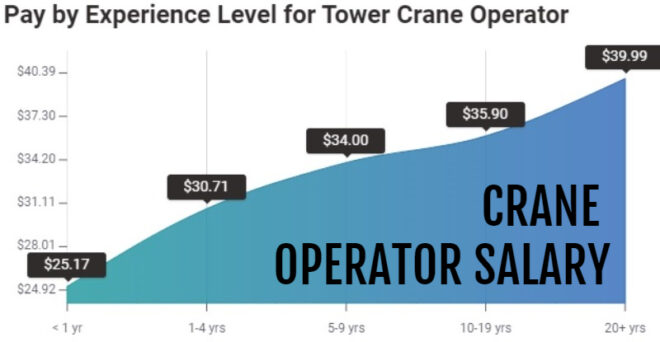
  • Hourly Wage: On an hourly basis, this translates to roughly $25 to $40 per hour.
  • Top Earners: Experienced operators in high-demand areas or working on large-scale projects can earn upwards of $100,000 per year.
  1. United Kingdom:
  • Average Salary: In the UK, tower crane operators usually earn between £30,000 and £50,000 per year.
  • Hourly Wage: This equates to about £15 to £25 per hour.
  • Top Earners: In some cases, experienced operators can earn over £60,000 annually, particularly in London or other high-demand areas.
  1. Canada:
  • Average Salary: The average salary for tower crane operators in Canada ranges from CAD 50,000 to CAD 80,000 per year.
  • Hourly Wage: This is approximately CAD 25 to CAD 40 per hour.
  • Top Earners: Experienced operators in major cities or on significant projects can earn over CAD 100,000 per year.
  1. Australia:
  • Average Salary: In Australia, tower crane operators typically make between AUD 60,000 and AUD 100,000 annually.
  • Hourly Wage: This corresponds to about AUD 30 to AUD 50 per hour.
  • Top Earners: In high-demand areas, especially in major cities, experienced operators can earn significantly more.

These figures can fluctuate based on the demand for construction in a given region, the complexity of the projects, and the economic conditions affecting the construction industry. Unionized workers may also have different wage scales and benefits compared to non-unionized workers.

How much do tower crane operators make per hour in the US?

In the intricate world of construction, tower crane operators hold a pivotal role, maneuvering massive structures and materials high above the ground with precision and skill.

As urban landscapes expand and skyscrapers reach new heights, the demand for proficient tower crane operators continues to rise. But how much do these critical workers earn for their expertise and risk-taking?

Average Hourly Wage

In the United States, the hourly wage for tower crane operators generally ranges from $25 to $40 per hour. This average reflects the significant responsibility these operators bear, as well as the specialized training and certification required to safely and efficiently manage crane operations on bustling construction sites.

Entry-Level Operators

For those just starting in the field, the pay can be lower, typically around $20 to $25 per hour. Entry-level operators are usually in the process of honing their skills and gaining the necessary experience to handle more complex tasks and larger cranes. Training programs and apprenticeships are common pathways into the profession, with wages increasing as proficiency and safety records improve.

Experienced Operators

Operators with several years of experience and a proven track record can expect to earn between $30 and $40 per hour. These seasoned professionals are often entrusted with the most challenging projects, where their expertise can ensure both safety and efficiency. Their deep understanding of crane mechanics, load dynamics, and site logistics make them invaluable on any construction site.

Top Earners

At the upper end of the spectrum, highly experienced tower crane operators, particularly those working on high-profile projects in major metropolitan areas, can earn upwards of $50 per hour.

These top earners are typically involved in large-scale developments, such as skyscrapers, major commercial complexes, and significant infrastructure projects. Their role requires not only advanced operational skills but also the ability to coordinate with multiple teams, navigate complex building codes, and adapt to rapidly changing site conditions.

Factors Influencing Wages

Several factors influence the hourly wages of tower crane operators:

  • Geographical Location: Wages can vary significantly based on the location of the job. Operators in cities with high construction activity and cost of living, such as New York, San Francisco, or Chicago, often command higher wages.
  • Union Membership: Unionized operators tend to have better wage scales, benefits, and job security compared to their non-unionized counterparts. Unions such as the International Union of Operating Engineers (IUOE) negotiate wages and working conditions on behalf of their members.
  • Type of Projects: The complexity and scale of the project also play a crucial role. Operators working on high-rise buildings, major bridges, or other intricate structures are often paid more due to the higher risks and skills involved.
  • Experience and Certifications: Advanced certifications and a strong track record of safety and efficiency can significantly boost an operator’s earning potential.

High rise crane operator salary

Tower crane operators are essential to the construction industry, playing a key role in the assembly of our urban landscapes. Their wages reflect the critical nature of their work, the expertise required, and the risks they manage daily.

As the construction industry continues to evolve, the demand for skilled tower crane operators is likely to remain robust, ensuring competitive wages for those willing to take on this challenging yet rewarding profession.

More on this story

Crane operator salary

How long does it take to become a high-rise crane operator? Who is the highest-paid crane operator?

Tower Cranes

Types of Tower Cranes and specifications