All posts by Loganx

Professional Web Writer | Motor Enthusiast | Content Creator | Logan is a dedicated and skilled web writer, passionate about engines and machines and with a talent for creating engaging and informative content. She specializes in writing about a diverse range of topics including construction, forklifts, heavy equipment, excavators, etc. SEO Optimization: Proficient in SEO best practices, ensuring high visibility and engagement for all published content.

Knuckle Boom Crane

Knuckle Boom Crane: The articulated hydraulic crane is one of the most versatile products when a crane is required. Cargo cranes help to load and unload trucks and other vehicles.

Truck-mounted cranes impress thanks to their easy handling and their high level of cost-efficiency.

Several pieces of equipment (winch, rotor, clamp, pallet) extend the range of application of the loading crane.

The most important industries are construction, transport logistics, emergency services, local authorities, waste management, mining and inspection, maintenance, cleaning of structures, buildings, and large machines, as well as leasing and business rent.

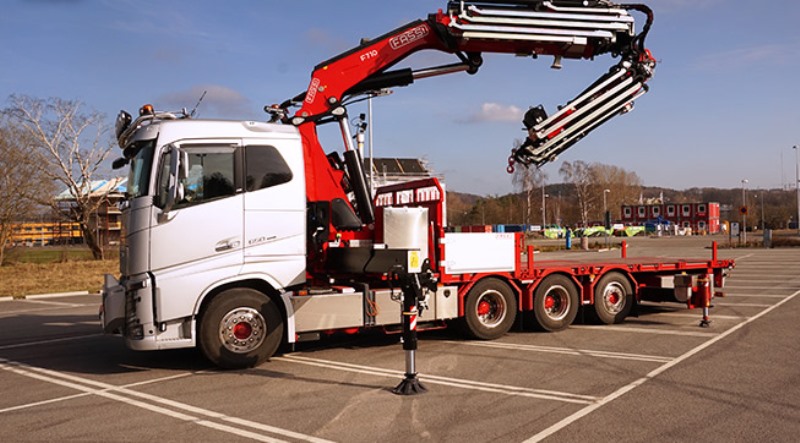
Knuckle Boom Crane

Hydraulic articulating cranes

Knuckle boom cranes are an amazing piece of engineering technology. Also called a loader crane, articulating crane, and a picker crane, the knuckle boom crane has changed the way people load and offload in a variety of industries.

It looks similar to the traditional straight boom crane, but the knuckle boom crane has two booms; the main boom and an outer boom. These two booms have a knuckle between them, which allows more options for the loader crane operator.

Articulating crane

Characteristics of the articulated crane: Steps to determine if an articulated crane is suitable for its application.

  • Not all lifting jobs are the same, so articulated cranes, some of the most versatile cranes available, are an increasingly useful option for customers who need lifting applications.
  • Often companies overlook these cranes in favor of telescopic cranes and other material handling solutions that are inefficient, inconvenient, or simply downright dangerous.
  • A leading manufacturer of truck cranes, truck service, hydraulic cranes, manipulators tires, and air compressors, provides the following guidance for articulated cranes.
  • With the wide variety of models available and applications between industries, the articulated crane can be the right tool to meet almost any customer’s lifting needs.

Knuckle boom crane truck

Thanks to its crane’s skills and efficiency, the joint handling of unique materials is often used in the construction, mining, railways, tires, energy, waste, and utility industries.

With operations above and below ground, both indoors and outdoors, the needs of the utility industry better epitomize the benefits of an articulated crane.

Hydraulic crane uses

First, it depends on where it will be used. For example, in the construction and transport industry, it is fitted onto a truck; for marine use, this crane is mounted onto a boat.

It can also be mounted on a dock or railcar, and its ability to fold up for storage during transport makes it a more versatile option compared to the traditional stiff boom crane.

The addition of these two knuckles on the crane allows for many more different uses compared to a straight boom crane. These knuckles also make it easier to fold into a smaller size, but at the same time, they can extend further to reach loads at a distance. This kind of “fold and extend” ability is missing in the traditional stiff boom cranes.

Uses and applications:

electric companies

They have to transport and place heavy transformers, and cranes joint can serve both functions.

natural gas companies

they use articulated cranes to collect and place pipes and tanks while facilitating navigation around obstacles and avoiding obstructions in residential neighborhoods.

Water and sewage

The water departments use articulated cranes to place vaults in the ground or steel plates on roads during the repair of water lines while avoiding obstacles such as traffic lights and power lines.

Mining

The mining market in Latin America has also experienced significant growth in the use of articulated cranes thanks to their ability to handle materials and lift heavy loads in tight spaces.

In these areas with height limitations, it is necessary to take into account that an articulated crane is more efficient since it can raise its maximum rating in a horizontal position.

Industry

Regardless of the industry, however, it is worth considering an articulated crane for any lifting work that requires a range of fewer than 80 feet that would benefit from added agility and payload delivery.

Advantages of hydraulic crane

Comparison with telescopic cranes:

Apart from the obvious difference between the straight arm of the telescopic crane and the segmented articulated boom of an articulated crane, the two differ in the load-carrying capacity and the lifting capacity range.

  • The telescopic cranes are designed to be stored on the bed of the truck, while the articulated cranes mounted on trucks can be folded firmly in one position, leaving plenty of space for the payload bed.
  • A vehicle equipped with an articulated crane therefore also transports the payload from point A to point B.
  • This eliminates the cost associated with a second transport vehicle that is often required when using other lifting solutions.
  • For operators familiar with telescopic cranes, the lack of a winch and the upper seat may seem inconvenient, but in reality, these attributes have their advantages.
  • The boom of an articulated crane is able to navigate directly to the payload without a winch, a capacity that eliminates the need for a winch while offering greater versatility.
  • However, if an application requires or would benefit from a winch – such as an accuracy of placing a load of 10 feet or more underground – an articulated crane may be equipped with one of these.
  • In the same way, most articulated cranes are now equipped and operated using a radio remote control, which provides the operator with greater visibility and ensures greater safety for the operator.
  • And while the articulation of the cranes of the past did not have a comparable reach to their telescopic relatives, the current IMT models have a maximum horizontal reach of 79 feet.

Hydraulic crane specifications

Technical specifications:

  • Many IMT articulated cranes have a power system plus a dual-arm link (DL), which is very suitable for long stretches and lifting in high positions with equipment (such as fly-jib and capstan) demanding.
  • In addition, the DL system provides precise and regular movements throughout the work area while offering the best lifting capabilities under almost any working condition.
  • Another common feature is “overdoing,” which means that the working area between the main arm and the second arm is not less than 195 degrees.
  • Overdoing offers greater flexibility when working through narrow passages and under raised obstacles, the ability to lift maximum loads in all boom positions, and a lower overall height when the crane is stored in the truck body.
  • A key safety feature available on all models of IMT articulated cranes is the rated capacity of the limiter (RCL).
  • The mid-range and larger cranes are available with the new generation RCL 5300.
  • The RCL system monitors the moment of loading, operation, and operation of the crane.

Mobile lift crane

Overload and safety:

In an overload situation, the system notifies the operator and interrupts the distribution of oil functions of the crane, while allowing functions that reduce the load moment to remain operational.

The system not only monitors the safety during the operation of the crane but also the position of the crane during transport (stabilizers and boom position).

Additional features include a remote-controlled articulated crane equipped with an information center that controls the stabilizing and voting functions of the loader operating conditions, an internal hose routing system, continuous rotation, optional stabilizer solutions for each side, and an innovative design of flexible stowage support that secures the boom for transport but does not allow damage to the support.

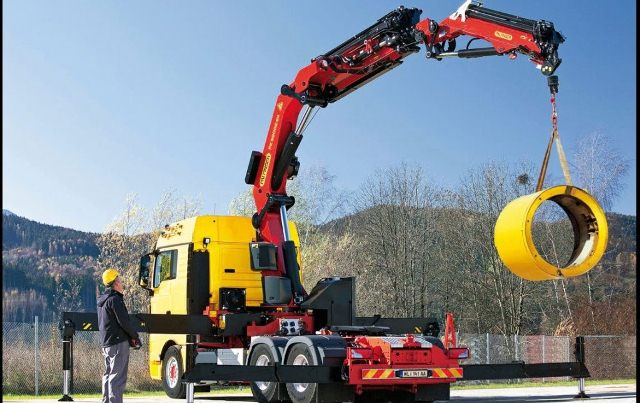
Knuckle Boom Crane

Lifting and crane

Cranes capacity table. How to choose an articulated crane:

Choosing the right articulated crane for the job starts with the answer to two questions:

How much are they usually lifted? And how far will the crane have to get to place it?

  • The alignment of IMT’s cranes has a maximum range ranging from 15 feet to 71 feet and offers capacities ranging from 1,740 pounds (790 kg) to 38,185 pounds (17,320 kg) with a maximum range of 14 feet, 5 inches.
  • After deciding on a model, buyers must decide where to mount the crane on the truck.
  • For maximum load capacity, a uniform distribution of weight and full use of the crane, most operators choose to mount yours in the back of the truck’s box.
  • The advantages of an articulated crane are many and articulated crane experts are available to consult on the unique lifting needs of customers.

Crane load chart

Excels in Tight Spaces:

For the loading and unloading of heavy cargo and machinery in restricted spaces, the knuckle boom loader crane has no equal. This kind of crane has proven to be very useful in Europe, where truck size restrictions are stricter, and roads are narrower than North America. However, it is also gaining more popularity in other parts of the world.

These types of cranes have been particularly utilized in the transport, construction, forestry, mining, marine, and petroleum industries. They may be small and easier to use in constricted spaces, but that does not make them any less effective because they can be used to lift cargo of up to and exceeding 60 tons. The knuckle boom can even be outfitted with a winch for additional lifting options.

Crane lifting capacity

What is the lift capacity of an articulating crane?

This depends on the buyer because different buyers have different needs. For example, there are small truck cranes that can be used to lift loads of as little as one ton while there are huge truck cranes that have a 60-ton lift capacity.

When you are searching for an articulating crane, let us know your lifting requirements and we will find a suitable crane for you.

knuckle boom cranes manufacturers

What are the most popular loader crane brands?

There are many different brands of loader cranes. The most requested brands are:

  • Hiab
  • Fassi
  • Palfinger
  • PM.
  • Atlas
  • Amco Veba
  • Bonfiglioli
  • Copma
  • Cormach
  • Effer
  • Ferrari
  • Heila
  • HMF
  • IMT
  • MKG
  • Pesci.

Hydraulic knuckle boom crane

Advantages of the hydraulic Knuckle Boom Crane

Payload Capacity

Greater Payload Capacity

Considering all the different applications that it can be used for; this is a light piece of equipment – light enough for the truck to carry its regular cargo and carry the weight of the mounted crane as well.

Cranes and lifting equipment

Horizontal Lifting

The articulating crane is excellent at lifting cargo horizontally, meaning that it can even be used in low clearance, tight spaces without causing any damage. Minimal space is needed to operate this crane. With the addition of a jib, the possibilities of the lorry loader are even greater.

Crane Attachments

The loader crane can be equipped with several different attachments at the end of the boom. Examples of these include buckets, pallet forks, brick/block grabs, log grabs, and more!

Crane boom configurations

Multiple Install Configurations

It could be on a truck, on a boat, dock, or railcar. Again, it really doesn’t matter where you choose to install it because it is versatile enough to accommodate your needs. For example, on most trucks, the crane is mounted right behind the cab. In others, it is mounted on the rear of the truck to ensure that weight is distributed evenly on the axles.

No Travel Limitations

It can be installed on your truck; and that means that wherever your truck can fit, your truck crane will also fit because it is really part of the truck.

Easier to Load & Unload

The articulating loader crane allows the operator to load or unload the cargo with much less vertical clearance required compared to a straight boom crane. The option to rear mount the crane gives the operator the ability to load/unload a trailer towed behind the truck.

Knuckle boom cranes producers

Hydraulic articulating knuckle boom cranes producers:

  • PALFINGER cranes: Palfinger loader cranes are available from 1 to 150-meter tonnes. With more than 100 models the company is the world market leader in this segment. The most important industries include construction, transport logistics, emergency services, local authorities, waste management, mining, and the inspection/maintenance/cleaning of structures, buildings, and large machines as well as leasing and rental business.
  • JOMAC cranes: JOMAC builds knuckle boom cranes unmatched in quality, longevity, and durability. JOMAC knuckle boom cranes are designed and manufactured at Ohio headquarters using 100% American-made parts and labor.

What is a Knuckle Boom Crane?

What is the outreach of a good knuckle boom?

Again, this depends on what you want. For example, some have an outreach of only a few meters, yet others can reach over 30 meters. These are just two examples; there are varying outreach distances for different cranes.

How do I control the knuckle boom crane?

There are many options for the operator, including the remote control/wireless control, top seat control, stand-up control, and ground control. With more technology integrated into the operation of knuckle boom cranes today, you can even use a joystick to operate the crane.

More on this story

Knuckle Boom Truck

The boom of the knuckle crane is a device designed to lift and distribute loads suspended from a hook. They are equipped with a means of propulsion able to produce the necessary movement to enable their movement on public roads and land.

The most read

Mobile Crane Parts

The parts of an industrial or construction telescopic mobile crane have the following main components:

Biggest Crane

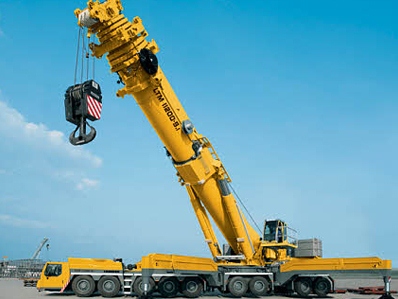
Giant Crane: Worldwide record of telescopic cranes, lifting of electric turbines, bridges, metal structures, LIEBHERR 11200

Container Reach Stacker

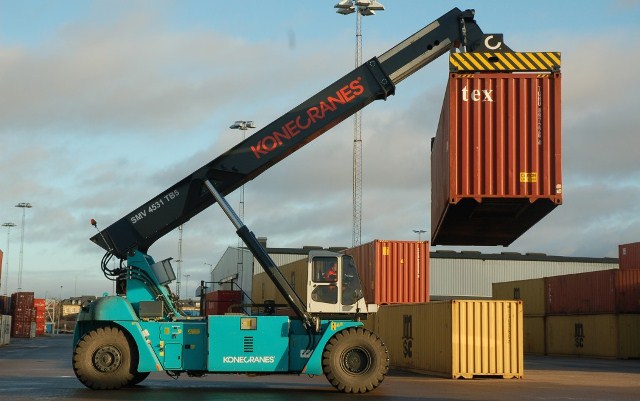
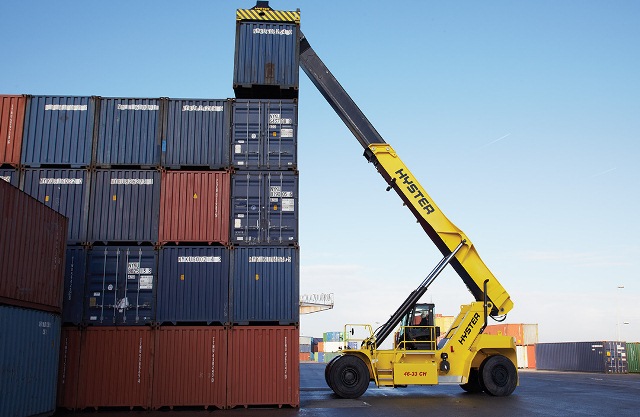
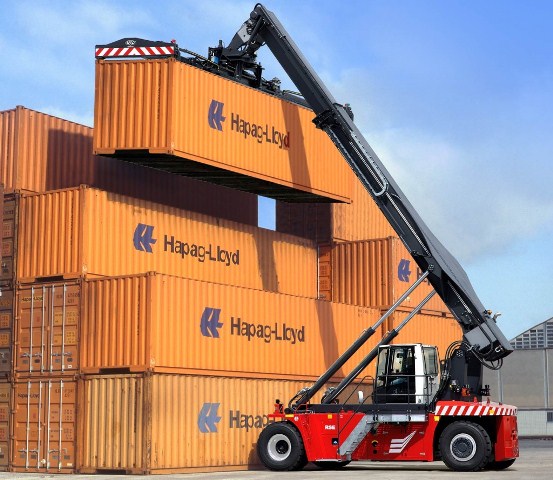
Container handling with a reach stacker is one of the most flexible handling solutions whether to operate a smaller one unit terminal or a medium-sized port.

A reach stacker can handle loaded containers quickly and efficiently in narrow spaces, while still ensuring the driver has optimum visibility.

The extensive freedom allowed by the lifting equipment, boom and attachment, and its rotation possibilities, give that the driver can improve the work efficiency of the unit, by not needing to approach the container from a 90 degrees position.

Forklift Operator Training: U.S.A. Edition

This curriculum is intended to be used during Forklift Operator Training. Employers can assign an existing trained operator as their in-house trainer. This publication includes a copy of the exam, operational test, certificate & wallet card templates.

Container Reach Stacker

Port Cranes

There is a long history of working with container ports and intermodal terminals that are expert buyers and operators of reach stackers. Container handling customers demand a lot.

Larger reach stackers are needed for railroad stacking. To load and unload on more than one track you need a flexible reach stacker with a large lifting capacity and an extended set of functions. You will find a reach stacker in our range that will meet the specific requirements of your terminal.

Container Reach Stacker

Industrial crane

Many industrial companies need customized reach stackers for their specific industry. Reach stackers are remarkably adaptable to industrial cargo handling.

The reach stackers special spreaders incorporating steel grabs, lifting magnets, vacuum grippers and coil C-hooks among other attachments.

What kind of material do you need to lift and move?

Applications

  • Container ports and terminals
  • Railroads and intermodal
  • Trimodal river handling
  • Transport, shipping, and logistics
  • Steel and aluminum
  • Automotive
  • Oil and gas
  • Wind power
  • Nuclear power
  • Waste-to-energy

Reach stacker safety

Security measures related to container transport:

  • Operating the reach stacker without proper training.
  • Operating the machine without understanding that rated capacity is dependent on boom position.
  • Braking too hard or too quickly with a load; accelerating too quickly.
  • Turning too sharply or too quickly; turn the steering wheel slowly.
  • Raising the load when wind velocity is excessive.
  • Operating the machine on uneven surfaces or in unstable yard conditions.
  • Extending or lowering the boom with a load, not over a stack, or railcar.
  • Traveling with the load raised too high or extended too far.
  • Traveling without the seat belt fastened.
  • Jumping from a moving or tipping machine.
  • Handling an off-center load improperly.
  • Traveling on an incline with the load downhill
  • Backing away from a load in a rack or stack without completely releasing the load
  • Operating the machine in areas with an inadequate overhead clearance
Container Reach Stacker

Safety rules in the workplace

Some of the security measures to take into account during operations are:

  • Operating the reach stacker before checking for proper operation of all functions and safety devices.
  • Moving or lowering the cab before checking the area around and below the cab and around the cab stairs.
  • Allowing personnel under the attachment or load.
  • Operating the reach stacker when it needs maintenance when safety devices are not functioning properly or are missing when ground personnel is working in an unsafe manner, when the wind is too high, when the grade is too steep, or if any other unsafe condition exists.
  • Operating or parking the reach stacker in an area where the slope is too steep or has insufficient strength to support the weight of the machine.
  • For reach stackers with moveable cabs, traveling the reach stacker when the cab is not properly positioned.
  • For reach stackers with stationary cabs, traveling the reach stacker when the cab is not properly secured.
  • Lifting a load that exceeds the rated capacity of the reach stacker.
  • Raising the load so it is directly over the reach stacker cab.
  • Lifting a container without all four twist locks fully locked.
  • Leaving the reach stacker with a load suspended.
  • Backing away from the load in a rack or stack without the complete release of the load.
  • Starting the engine if a “Do Not Operate” tag is on the operator’s controls, ignition switch, battery disconnect switch, or engine control panel.
  • Parking the reach stacker in an unsafe area (in areas not designed to reach stacker travel, or on grades that are too steep).
  • Operating the reach stacker while the personnel is on any part of the machine.
  • Operating a reach stacker in areas without proper overhead clearance.
  • Operating a reach stacker in areas where power lines are present.

For your safety you must:

  • know the reach stacker’s size
  • know the reach stacker’s operating capacity at various boom positions
  • know how to operate the reach stacker
  • know what safety features are available
  • know the safe operating procedures at your worksite
  • check the reach stacker daily for proper operation
  • use every safety feature
  • follow safe operating procedures
  • be alert and use common sense
  • know the reach stacker’s two basic modes of operation
Container Reach Stacker

Reach stacker safety procedures

Safety measures for pedestrians are listed below:

  • Operating the reach stacker in an environment that is not ergonomically designed.
  • Traveling forward with a load that blocks visibility.
  • Walking or standing between a machine and/or a load, a rack, stack, or other objects.
  • Operating a machine with riders on the truck.
  • Groundsmen or other personnel in “blind spots.”
  • Moving a machine without clearing all blind spots.
  • Relying on a back-up alarm or flashing light and not looking in the direction of travel.
  • Failure to properly instruct and safeguard transients.
  • Relying on mirrors.
  • Relying on cameras.
  • Not ensuring the path of the machine’s tail swing is clear.

Pedestrian vehicle safety rules

Three things to keep in mind in the workplace:

1

The operator must fail to “look in the direction of and keep a clear view of the path of travel.” Assuming the reach stacker/pedestrian contact was not intentional, the operator may have relied on mirrors thus not having a completely clear view of the path of travel, may have used an improper carry position thus blocking his view of the path of travel, or simply may not have looked, instead relying on motion alarms, strobe lights, or engine noise to alert pedestrians to the machine’s presence.

The operator must lean side to side and forward and back to clear all blind spots before putting the reach stacker in motion.

2

The pedestrian must be located within an area in which reach stackers travel and fail to keep a proper lookout. While the operator plays a large part in safe reach stacker operation, safety can not be solely the operator’s responsibility.

Pedestrians who work in and around reach stackers have a responsibility to watch out for reach stacker travel and stay clear of the reach stacker. Pedestrians should wear high visibility vests, maintain eye contact with reach stacker operator at all times, and stay out of marked reach stacker travel lanes, or stay within marked pedestrian lanes. Pedestrians must never assume that the operator sees them, and must keep a proper lookout.

3

The employer must fail to either establish reach stacker/pedestrian lanes or to enforce the restrictions. Employers govern the activities of each and every person on the work premises. Employers can not assume that operators nor pedestrians know the dangers of the workplace.

The employer must, therefore, educate operators and pedestrians and take affirmative steps to separate reach stacker travel from pedestrian travel. The employer, ultimately, has the means at its disposal to prevent reach stacker/pedestrian accidents. Accidents do not just happen, they are caused by someone. Likewise, safety does not just happen, it is caused by someone.

Ergonomic design

Pedestrian crossing incidents are among the occupational hazards. The only reliable way to prevent this is to ergonomically design the environment so that pedestrians and stackers cannot cross and so that operators always follow OSHA rules to:

  • always look in the direction of and keep a clear view of the path of travel;
  • slow down and sound the horn at cross aisles and other locations where vision is obstructed;
  • travel with the load in defined travel position for optimum visibility;
  • Travel with the load trailing if forward visibility is obstructed.

and follow the Operator’s Guide to:

  • Do Not operate the vehicle until both forward and reverse travel paths are clear;
  • Be sure tail swing paths are clear;
  • Do Not operate the vehicle when bystanders are present;
  • Ensure all travel alarms and strobes are functioning and the video cameras are working properly

What is the reach stacker?

What is the reach stacker?

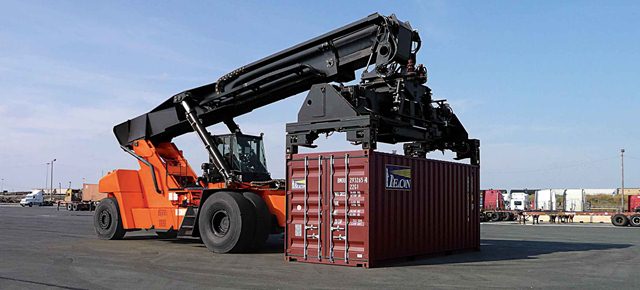
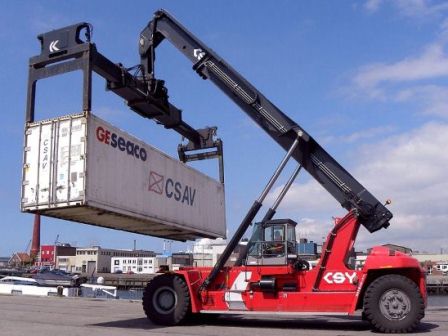
A reach stacker is a vehicle used for handling intermodal cargo containers in small terminals or medium-sized ports. Reach stackers are able to transport a container short distances very quickly and pile them in various rows depending on its access.

How do shipping container cranes work?

The crane is operated by a specially trained crane operator from within the cabin located on the top end of the crane and suspended from the trolley. It is the operator who lifts the container from the ship or dock for unloading or loading of cargo.

How do shipping ports work?

Typically, containers arrive via specialized ships at designated ports that have the particular equipment for unloading and loading the cargo as well as loading it onto trucks that can bring the goods to their destinations. For exporters, who move containers from truck to ship, this process operates in reverse.

Why are ports so important?

Ports constitute an important economic activity in coastal areas. Ports are also important for the support of economic activities in the hinterland since they act as a crucial connection between sea and land transport. As a supplier of jobs, ports do not only serve an economic but also a social function.

The most read

Reach Stacker Crane

Container reach stacker, reachstackers, kalmar reachstacker, Container Handler, What is a reach stacker?

More on this story

RTG Crane

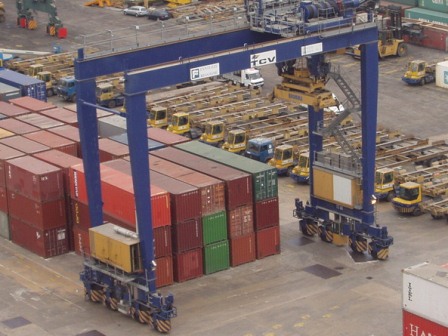
Rubber Tyred Gantry Crane, Container Terminal, what is an rtg crane? RTG crane parts name, RTG crane manufacturers, specification.

Crane Simulator PC: Benefits and Advantages of Crane simulators

The fundamental objective in training is that its users learn to use real machines by minimizing the number of hours of practice in the real machinery, reducing labor costs and risks and that learning is done using a pedagogical plan for training.

The use of this technology is reflected in the results obtained, providing the following advantages:

Crane Operator Training Simulator

Crane simulator

Computer simulation

Advantages of the Simulators: The simulation provides a practical alternative. With a computer simulation, you can study the impact of adding a new workstation to a production line without having to physically organize the workstation.

  • Low cost of training
  • I do not use diesel
  • No machine wear – Brakes, Clutch Wheels, etc.
  • Reduction of maintenance costs
  • Zero occupational risk index
  • Null indexes of damage to machinery
  • Availability of equipment for 7 × 24 training
  • Personalized individual training
  • Substantial increase in productivity.
  • Focus on specific areas of training, with the possibility of performing exercises repetitively.
  • Less time of use of the machinery outside of its productivity tasks.
  • Evaluation of operators, according to skills and learning curve.
Crane Operator Training Simulator

Crane training simulators

Training for experienced operators: The simulation allows you to analyze large complex problems for which analytical results are not available. In fact, most real-world problems fit into this category.

  • It helps to improve incorrect attitudes acquired with the daily routine.
  • Learning new maneuvers or new equipment.
  • Productivity increase.
  • Tool for certification.
  • Safety training:
    • Dangerous situations physically and mentally can be simulated
    • Undoubtedly, this experience will greatly contribute to the operator’s safety awareness.
    • Significant risk reduction.
Crane Operator Training Simulator

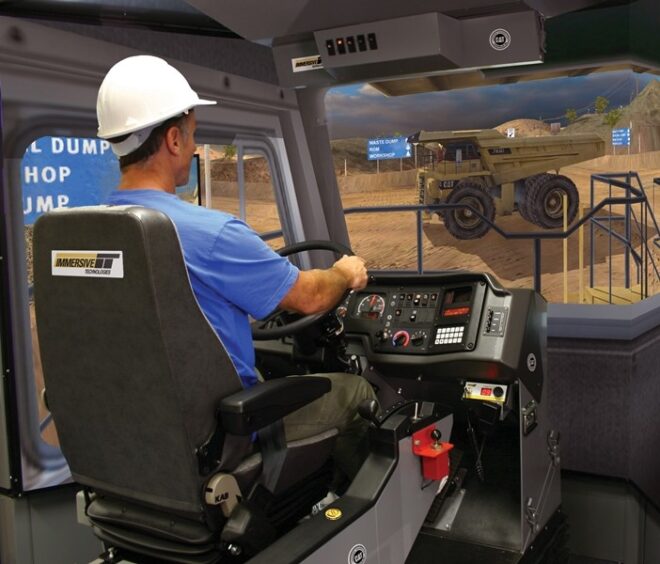
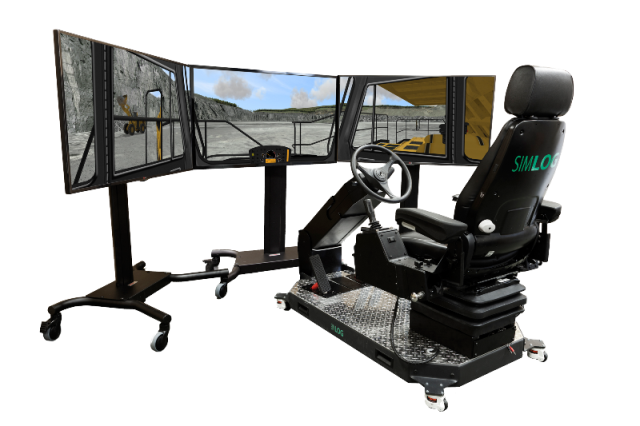
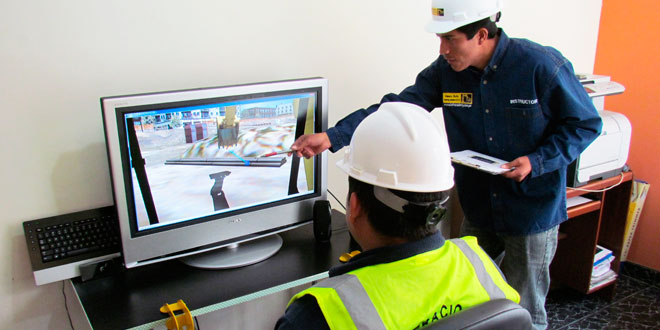
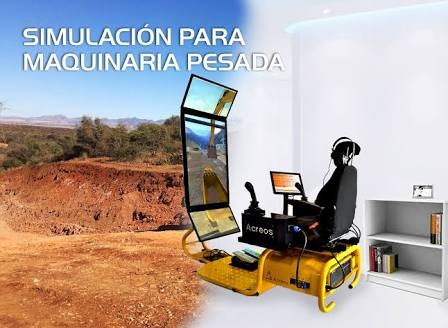
Heavy machinery training

Instructor Station: The heavy machinery simulator course has a station for the instructor, from which the behavior of the student can be evaluated, identifying strengths and weaknesses. At the end of the practice, a report of the practice performed is generated. The instructor can create users to identify and store each of the reports of each operator. You can also organize users in different courses to have a greater organization of information.

Prevention of occupational hazards

Simulation As a Training Tool for the prevention of occupational risks. The training is, without a doubt, one of the prevention techniques of greater profitability in the prevention of occupational risks.

From the preventive point of view, training must be comprehensive, directed not only to achieve a change in attitude towards the prevention measures that must be adopted but also to achieve the desired change of aptitude to develop a certain job and carry it out safely.

The use of simulators in the training of workers is presented as a very useful tool when it comes to acquiring safe habits in the handling of the different equipment, at the same time as it supposes a reduction of costs in such training to enable the realization simultaneous internship by several workers and a greater time availability when performing them.

Crane Operator Training Simulator

Construction crane simulator

  • Heavy machinery courses
  • Construction crane simulator:

Always consider the possibility of accidents in the port maneuvers of loading and unloading merchandise, but a well-trained user can avoid accidents that can be fatal.

Wheel Loader simulator

The Wheel Loader Simulator puts the students in charge of a wheel loader with a nominal capacity of 21.8 metric tons, operating together with a construction truck in a virtual quarry.

A total of eight simulation modules created under a pedagogical table of incremental difficulty are available, starting from the familiarization of controls to the truck loading with signage. For each simulation, key “performance indicators” are measured, which allow you to determine the productivity and quality of the simulated work.

Backhoe simulator

The Hydraulic Excavator Simulator puts students in control of a modern hydraulic excavator on a typical construction site. You can select either the SAE control configuration or the backhoe loader control configuration. A total of twelve simulation modules created under a pedagogical table of incremental difficulty are available, starting from how to position the bucket, to the practice of opening trenches and loading a truck.

For each simulation, key “performance indicators” are measured, which allow you to determine the productivity and quality of the simulated work.

Tower crane simulator

The tower crane simulator puts students in charge of a self-sustained tower crane. A total of six simulation modules created under a pedagogical table of incremental difficulty are available, starting from the roll control due to the turn, until the development of elevations in the presence of obstacles respecting the limits of the load tables.

For each simulation, key “performance indicators” are measured, which allow you to determine the productivity and quality of the simulated work.

Mobile Crane simulator

The Mobile Crane Simulator puts students in control of a typical hydraulic crane equipped with a telescopic boom, down, and a variety of hooks.

A total of six simulation modules created under a pedagogical table of incremental difficulty are available, starting from the roll control due to the turn, until the development of elevations in the presence of obstacles respecting the limits of the load tables.

For each simulation, key “performance indicators” are measured, which allow you to determine the productivity and quality of the simulated work.

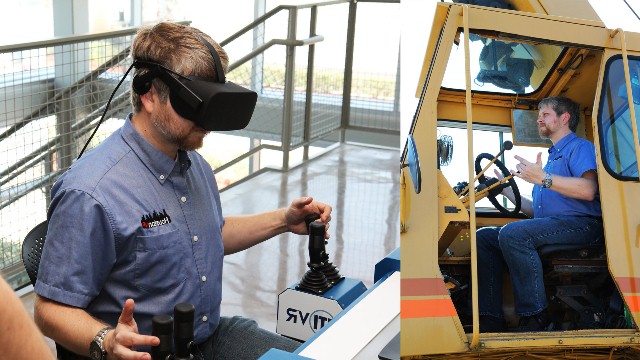
Virtual reality

Virtual reality is generally used for young people’s bones, that is, in games. They are also applied in high complexity training, for example, training of pilots, paratroopers, etc.

Virtual reality leads us to create environments of any kind in a virtual way, which serves to investigate, observe and speculate on some issues, also creates test environments for example in the case of pilots of aircraft, machinery in situations of risk, etc.

Crane Operator Training Simulator

Crane operator training

Crane Simulators for Operator Training: crane simulators are ideal for organizations looking for a way to objectively assess crane operators and keep skills sharp.

Scalable to every training need and budget, crane training simulators provide the most thorough and realistic simulation-based training and assessment available today.

  • Practice exercises for accreditation testing are built into every crane simulator training pack.
  • practice testing allows trainees to go through the course and practice as much as they want without getting on a real crane.
  • This results in cost savings for organizations that have to pay every time one of their trainees takes the practical exam.

Heavy equipment simulator

Now is the perfect time to learn heavy equipment operations. Rising workforce shortages are creating strong demand for skilled heavy equipment operators. More and more students will be trained using the innovative technology of simulation!

Virtual reality is at the forefront of affordable PC-based simulation that takes students from the classroom to the virtual work-site as they develop real skills and valuable safety-conscious habits. There are many simulators for forestry, construction, mining, and material handling.

PC-based equipment simulators are a trusted and cost-effective way of improving traditional operator training programs in the mining, construction and forestry industries. They provide vital hands-on experience to trainees in a safe, instructional designed environment.

These simulators leverage the power of today’s PCs and laptops to help train new operators on common machine tasks. They have been proven to reduce training costs, increase operator productivity, and help minimize the safety risks associated with operator inexperience.

Crane simulator training

Adapting the training to the tech-savvy youth of today is an important key in recruiting the next generation of craft professionals. One tool that is becoming widely utilized in the construction industry is the use of simulators.

Simulators allow trainees to react to and learn from test conditions that are likely to occur in real-life, with the added benefits of increased safety while training and decreasing wear on equipment.

Crane Operator Training Simulator

Vortex crane simulator

The Vortex Advantage is an immersive training simulator with a plug-and-play training platform that is scalable to training needs and customizable to the crane fleet. CIS recently added a new portable crane training simulator to their toolkit. The Vortex Edge Plus, produced by CM Labs Simulations, is designed for simple transport and set-up.

“With a simulator, one person can be trained much faster and more economically than in the cab of a crane.” In fact, the simulator-based training reduces the man-hours to train to a 4:1 ratio and does not require job site supervisors or rigging crews for the training exercise or valuable equipment time.

“The desktop-style simulator is portable, making it easier for training organizations to bring simulator training to their clients’ locations,”

“It is equipped to run any CM Labs training module, which includes mobile cranes, tower cranes, forklifts and earthmoving equipment.”

The instructor handles the technical side of the machine and can simultaneously coach the trainees. The self-guided programs are progressive in nature and capture operator metrics, for valuable feedback.

Construction simulator

A crane operator would pick up skills more quickly with a simulator. “There are more things he can be aware of, and different skills that can be taught, in that situation,” he says, noting he’s spent 20 years in crane operations in the field and has worked around cranes of all types. “Your initial fears of being in a crane and the risks involved in operating heavy machinery — you take that risk factor out when you practice using a simulator, and you avoid the chance of damaging the equipment.”

Illustrating that point exactly, a customer utilized the cab-style simulator to prepare for a rough-terrain crane practical exam for crane operator certification. The operator had several months of job-related experience before starting the training. After spending about 40 hours on the Vortex simulator and 10 hours on an actual crane in the yard, the operator was able to pass the practical exam on the first try.

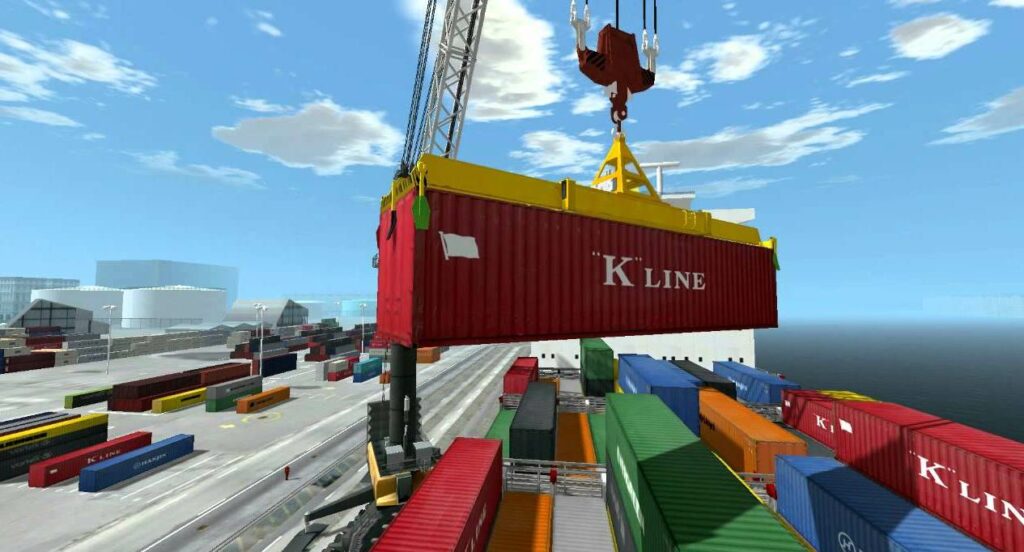
Port crane simulator

Training simulator offers a fast track to efficient and safe crane operations. It enables training of operators for both remote and cabin based crane operation in an authentic environment – as close to real crane operation and realistic conditions as it is possible with simulation.

Simulator based training has proven to be an efficient way of training personnel for various tasks.

With crane simulator, the port crane operators learn to operate container handling cranes efficiently, in a safe environment with no risk for accidents and damage to equipment or goods.

Using port crane simulator simplifies planning and scheduling of the training. For instance, in case of new cranes, the training of operators can be conducted already before the cranes at the site are commissioned, or even arrive at the terminal. The majority of the training can be done with the simulator, which significantly reduces the training needed with real cranes before the operator starts working in production. Thus the real cranes remain available for production while the operators perform their training.

In addition to training, the simulator provides efficient means for pre-assessment of operator candidates when recruiting new operators.

Crane Operator Training Simulator

Crane Operator Training Simulator

What is a crane simulator PC?

The Crane Simulator Training Course is a comprehensive training tool. It covers the entire process from lifting cargo to familiarizing yourself with complex controls and maneuvers, such as lifting steel structures, working on buildings, and working around power lines.

What is the use of simulator?

Simulator: Computer program (such as a game or animated flowchart) or a dedicated device that models (simulates) some aspects of a real life situation (such as flying an aircraft) and can be manipulated to observe the outcomes of different assumptions or actions, without exposing the experimenter to any danger or risk.

How Much Does Enrolling in a Crane Operator School Cost?

Well, there is no accurate answer to this question as the market is constantly changing. The tuition also varies depending on the comprehensiveness of the training course.
But to give you a rough estimate of crane training prices, many schools offer complete courses for the cost ranging from $1,500 to $2500, depending on the type of crane you want to get certified in. The school you’ve chosen may offer an additional cost for practical training with their instructor on standby at an hourly rate of $80 to $120.

Should I become a crane operator?

If you are considering getting a job as a crane operator and you don’t have prior education, where do you think the best way to take to get into this profession?
You might be thinking of going into enrollment with a crane operator school. And you’re absolutely correct and you’re taking the right path.
We strongly recommend everyone to get professional training from a school that is NCCCO-accredited.
Formal training is not required by NCCCO. But for you to have an edge passing the NCCCO certification, it is highly recommended to have such training by enrolling in a course offered by the school.

The most read

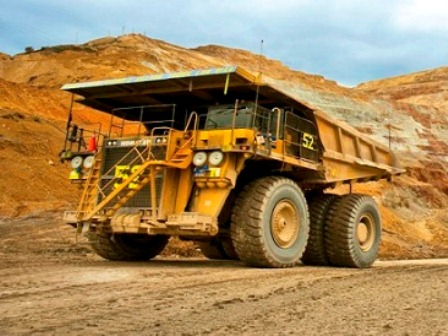
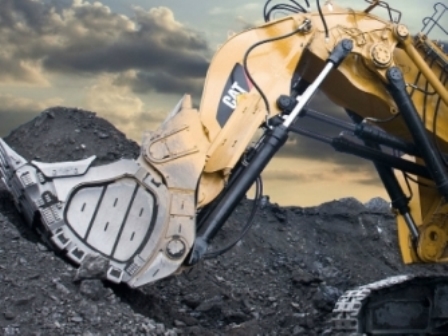
Mining equipment

Mining is the extraction of valuable minerals or other geological materials from the land of a deposit. For this extraction to be done efficiently, we need machinery specialized in mining.

More on this story

Mining equipment manufacturers

Construction and mining equipment cover a variety of machinery such as hydraulic excavators, wheel loaders, backhoe loaders, etc.

Ancient Cranes (Machines for Lifting in Antiquity)

  • How were ancient cranes built and operated?
  • Who invented the first crane?
  • What materials were ancient cranes made of?
  • How did cranes change construction in ancient Greece and Rome?

The ancient cranes have been evolving from the load prop to perform various tasks. There are ancient documents where the use of machines similar to cranes by the Sumerians and Chaldeans is evidenced, transmitting this knowledge to the Egyptians.

medieval crane

Who invented the crane?

For centuries, archaeologists and historians have been baffled by how Stonehenge was built. The largest of the Sarsen stones transported to Stonehenge weighs 50 tons — which means that transportation by boat would have been impossible. Legend holds that ancient druids levitated the stones into place with their eldritch rituals.

The truth may be a bit less exciting, but just as interesting. The prevailing theory is that the stones were literally dragged using an intricate series of sledges, ropes, ramps, and levers.

The stones of the Pyramids of Giza were likely hoisted into place in a similar fashion. The “regular” slabs that tourists see on the outside surface of the pyramids are 3 tons each, but the biggest supporting slabs weigh up to 70 tons. Think that’s impressive? The Colossi of Memnon each weighed 700 tons each. By comparison, most common tower cranes today have a lifting capacity of only 12 to 20 tons, and most construction cranes go up to 300 tons.

History of cranes

For thousands of years, people have used innovative ways of lifting really heavy objects and bringing them where they’re needed. As demonstrated at Stonehenge, the Pyramids of Giza, and countless ancient sites around the world, the history of the crane is closely aligned with the history of the limits of man’s strength.

The birth of the crane is inextricably tied with the birth of the pulley — first devised by ancient Mesopotamians as early as 1500 BC for hoisting water. The first compound pulleys were created by Archimedes of Syracuse around 287 – 212 BC, which he used to lift an entire warship, along with its crew.

Ancient Egypt

Most of the stones that make up the almost 140 Egyptian pyramids discovered have a weight of “only” 2 to 3 tons each, but all these structures (built between 2750 and 1500 BC) also have stone blocks that weigh 50 tons, a more times.

The temple of Amon-Ra in Karnak contains a labyrinth of 134 columns, of a height of 23 meters high and transversal beams that weigh 60 to 70 tons each.

The question is answered by a group of scientists from the University of Amsterdam and the Foundation for Fundamental Research on Matter (FOM), who discovered the techniques that allowed to build these monumental buildings at a time when there were no cranes.

In this painting the ingenious technique is observed. Water would have been the key element. According to the study, the ancient Egyptians moistened the sand where the wooden sleds on which the stone blocks were transported moved. The key would have been to spill the precise amount of water.

Ancient Greek inventions

Cranes in ancient Greece: The first vestiges of the use of cranes appear in Ancient Greece around s. VI a.C. These are iron tongs marks on the stone blocks of the temples.

It is evidenced in these marks (distinctive cuts c. 515 BC) its purpose for the elevation since they are made in the center of gravity or in equidistant pairs of a point on the center of gravity of the blocks. The introduction of the winch and the pulley soon leads to an extensive replacement of ramps as the main means of vertical movement.

Greek buildings

For the next two hundred years, the Greek buildings contemplate handling of lighter weights, because the new lifting technique allowed the loading of many smaller stones to be more practical, than a few larger stones.

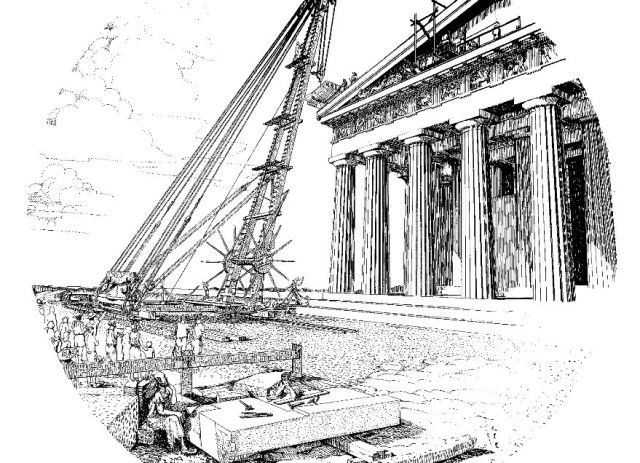
In contrast to the archaic period and its tendency to increasing block sizes, Greek temples of the classical age such as the Parthenon offered an invariable amount of stone blocks that could be used to load no less than 15-20 tons.

Also, the practice of erecting large monolithic columns was abandoned practically to then use several wheels that make up the column.

Although the exact circumstances of the change of ramp to crane technology remain unclear, it has been argued that Greece’s volatile social and political conditions made it more convenient to employ small teams for construction professionals than for instruments. Great for the work of inexperienced, making the crane preferable to the Greek polis than the ramp that required a lot of work, this had been the norm in the autocratic societies of Egypt and Assyria.

The first unambiguous literary evidence to support the existence of the system composed of pulleys appears in the mechanical exercises (Mech.18, 853a32-853b13) attributed to Aristotle (384-322), but perhaps drawn up at a slightly later date.

Around the same century, the block sizes in the Greek temples began to resemble their archaic predecessors again, indicating that the most sophisticated compound pulley in the later Greek works must have been found.

Ancient Rome

The height of the crane in ancient times came before the Roman Empire when the construction work was increased in buildings that reached enormous dimensions. The Romans adopted the Greek crane and developed it.

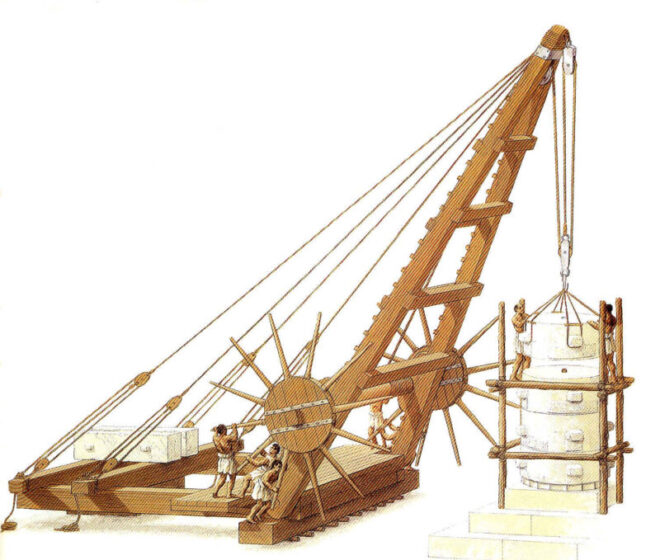
Trispastos

The simplest Roman crane, the Trispastos, consisted of a single beam, a winch, a rope, and a block containing three pulleys.

Having thus a mechanical advantage of 3: 1, it has been calculated that a single man who worked with the winch could lift 150 kilograms (3 pulleys × 50 kg = 150 kg), assuming that 50 kilograms represent the maximum effort a man You can exercise over a longer period.

Pulley system

Pentapastos: Heavier types of crane offered five pulleys (Pentaspastos) or, in the larger case, a system of three by five pulleys (Polyspastos) with two, three or four masts, depending on the maximum load.

Polyspastos, the cranes of Rome

The Polyspastos, when operated by four men on both sides of the winch, could lift up to 3000 kg (3 ropes × 5 pulleys × 4 men × 50 kg = 3000 kg). In case the winch was replaced by a coupling, the maximum load even doubled to 6000 kg with only half the equipment, since the coupling possesses a much larger mechanical advantage due to its larger diameter.

This meant that, with respect to the construction of the Egyptian pyramids, where about 50 men were needed to move a block of stone of 2.5 tons above the ramp (50 kg per person), the lifting capacity of the Polyspastos Roman proved to be 60 times higher (3000 kg per person).

Roman Architecture

However, Roman buildings offer numerous blocks of stone much heavier than those.

Led by the Polyspastos indicate that the total lifting capacity of the Romans went much further than that of any single crane.

In the temple of Jupiter in Baalbek, the blocks weigh up to 60 t each, and the cornices of the corner block even over 100 t, all raised to a height of 19 m above the ground.

In Rome, the capital block of the Trajana column weighs 53.3 tons and rises to a height of 34 meters.

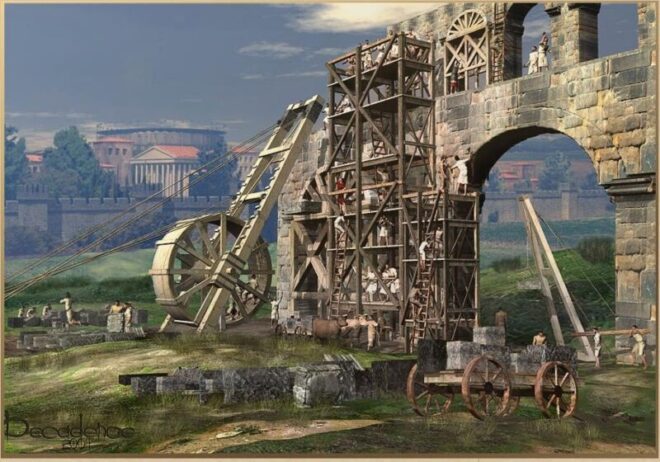
It is assumed that the Roman engineers achieved the elevation of these extraordinary weights by two means:

  • First, as suggested by Heron, a lift tower was installed, four masts were arranged in the form of a quadrilateral with parallel sides, not unlike a tower, but with the column in the middle of the structure.
  • Second, a multiplicity of winches was placed on the ground around the tower, for, although it has a ratio of lower leverage than the couplings, the winches could be installed in higher numbers and performance by more men (and by animals).

This use of multiple winches was also described by Ammianus Marcellinus (17.4.15) with respect to the elevation of the Lateranense obelisk in the Maximus circus. The maximum lifting capacity of a single winch can be established by the number of iron holes in the monolith.

In the case of the Baalbek architrave blocks, which weigh between 55 and 60t, eight holes suggest a weight of 7.5 t for the iron of the packings, which is by the winch.

The elevation of such heavyweights in a concerted action required a large amount of coordination among the working groups that applied force to the winches.

Medieval crane

The coupling crane was reintroduced on a large scale after the technology had fallen into disuse in Western Europe after the fall of the Western Roman Empire.

The closest reference to a link reappears in the literature archived in France around 1225, followed by a painting illuminated in a manuscript probably also of French origin dated 1240.

Marine crane

In navigation, the closest applications of the port cranes are documented for Utrecht in 1244, Antwerp in 1263, Bruges in 1288 and Hamburg in 1291, while in England the link is not recorded before 1331.

Generally, vertical transport was safer and cheaper made by cranes than by other methods common to the time.

The areas of ports, mines, and, particularly, the building where the crane of couplings played an important role in the construction of the tall Gothic cathedrals.

However, the archived and illustrated sources of the time suggest that the machines were reintroduced as couplings or trolleys so that they did not totally substitute the most labor-intensive methods such as ladders, troughs, and stretchers.

Something that is important to mention is that the old and new machinery continued to coexist in the sites of the medieval works and in the ports.

Crane Wheel

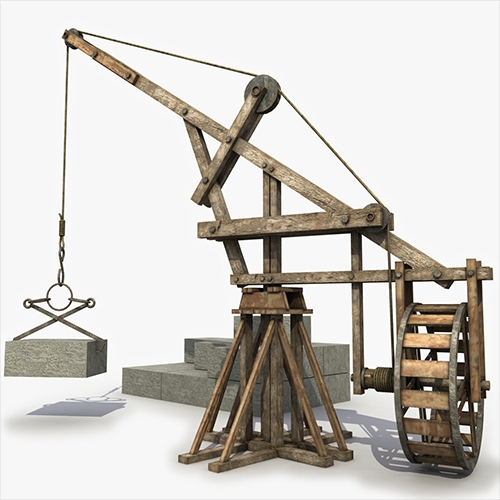
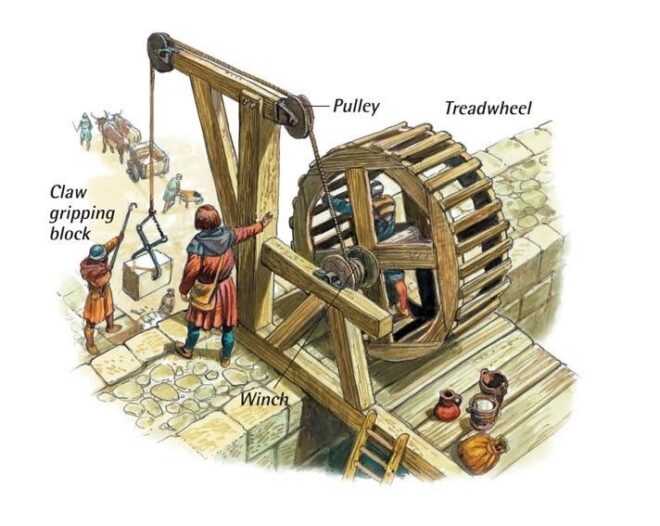
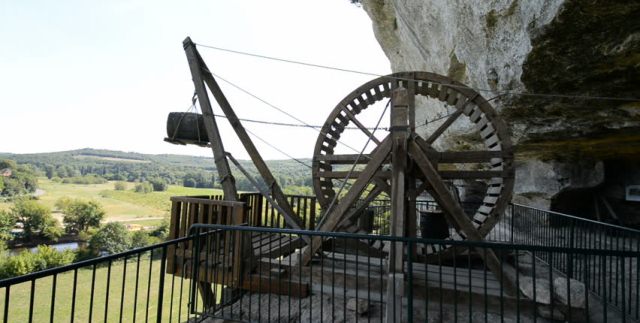
A wheel crane (Latin: Magna rota) is a wooden, human-powered crane. It was used mainly during the time of the Romans and the Middle Ages in the construction of castles and cathedrals.

The often heavy loads were elevated while an individual walked inside a cage-like wooden wheel. The rope connected to a pulley is wound on a spindle by the rotation of the wheel, thus allowing the device to lower or lower the platform with the load to be moved.

Old wooden crane

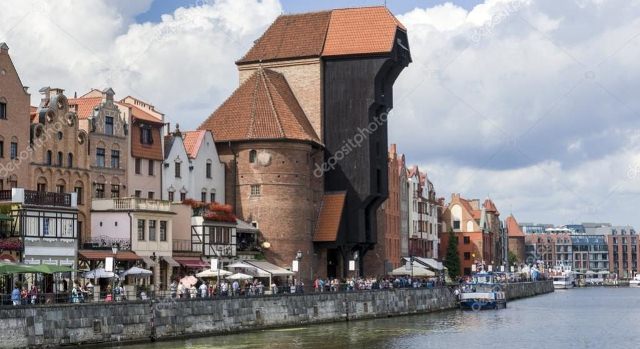
The Crane of Gdansk (Poland), a symbol of the city, was the largest crane in Europe in medieval times. The first mention of a wooden crane in this place is 1367.

In 1442 it was burned and from 1442 to 1444 the crane that is currently known was built in the Puerta del Espíritu Santo.

The door was one of the entrances to the citadel, and its brick towers were used to load and unload the merchandise of the ships.

In the middle of the two towers was placed the elevator with its wooden mechanism. The first crane lifted the goods up to 11 meters.

In the seventeenth century, the upper crane was built that lifted the goods up to 27 meters. In the nineteenth century, it ceased to be the freight crane of the port and was used to fix the masts of the ships.

Later it would be used to extract the stern of the motorboats and repair the rudders. In 1858 the last master who controlled the crane died and a shoe factory, a hairdressing salon, and other local companies were installed there.

During World War II, the wooden area burned as well as 60% of the towers.

From 1955 to 1962 it was rebuilt following the original plans and became dependent on the Central Maritime Museum along with the ship Soldek, the first ship built in Poland in the Gdansk shipyard in 1948.

Medieval crane Gdansk

Medieval crane of Poland: It has been used to celebrate the Red Bull Cliff Diving competition. The mechanism that allowed to unload merchandise, especially wheat and beer, works through the motive power of the feet of the workers.

It consists of two drums of two meters in diameter where the operators were introduced. These workers walked on some boards or steps that made the drum rotate.

The rotating drum raised or lowered the pulley. Thanks to this mechanism, four workers could lift two tons. At present, you can visit the inside of the “crane”, as they call it in Gdansk.

On this visit, you can see the interior of the mechanism as well as the reconstruction of a house of accounts of a merchant, the tax office of the port taxes and the house of a bourgeois. It also explains the life of stevedores, transporters, merchants, employers, candle makers, rope makers, etc …

Treadwheel crane

Styled like colossal human hamster wheels, these cranes allowed huge loads to be hoisted with ease.

The treadwheel crane was a wooden, human-powered lifting and lowering device invented in Ancient Rome. It was used in construction and industry for lifting all manner of materials and produce.

Its creation was a revelation at the time, granting a single person the ability to lift roughly 3,000 kilograms (6,600 pounds) of weight, rather than a completely manual 50 kilograms (110 pounds). As such, while it could take 50 workers to haul a 2.5-ton block of stone during the construction of Egypt’s pyramids, by using a treadwheel crane, the equivalent load could be lifted in Roman construction projects by just three.

Key to this was the huge mechanical advantage granted by the large-diameter treadwheel; it acted as a force amplifier, with the low force input of the treadwheel workers increased dramatically at the output end.

A typical system placed two peddlers side by side in a large, tracked wooden wheel, itself turning around a central shaft. As the wheel was set in motion by the pacing of the workers, it would rotate the central shaft, which in turn would draw in or let out a connected pulley.

The pulley extended out along the crane’s lifting bar and then down to the floor, where objects could be either loaded or unloaded.

Despite its fairly crude design, the treadwheel crane remained in widespread use right up to the end of the 18th century.

Hydraulic crane

When was the first hydraulic crane invented?

Ancient irrigation systems, like the aqueducts developed by the Romans, relied on simple hydraulic technology, like siphoning and hushing in hydraulic mining.
But it was not until the 15th century that Blaise Pascal studied fluid hydrodynamics and hydrostatics, ushering in a new understanding of hydraulic principles like fluid density, pressure, and incompressibility.

What is a mechanical crane?

A crane is a mechanical lifting device equipped with a winder, wire ropes and sheaves that can be used both to lift and lower materials and to move them horizontally. It uses one or more simple machines to create mechanical advantage and thus move loads beyond the normal capability of a human.

Who invented the crane?

The crane for lifting heavy loads was invented by the Ancient Greeks in the late 6th century BC. The archaeological record shows that no later than c. 515 BC distinctive cuttings for both lifting tongs and lewis irons begin to appear on stone blocks of Greek temples.

What is the world’s biggest crane?

Liebherr Mobile Crane
Category: Mobile
Lifting Capacity: 1,200 metric tons
-The Liebherr LTM 11200-9.1, built by the German company Liebherr Group, is the most powerful mobile crane ever built.
-It also has the longest telescopic boom in the world, which extends fully to 100 meters.
-It’s set on a double cab truck and can lift 1200 metric tons – that’s nearly 700 automobiles.
-That’s real pound-for-pound power for its category, but ultimately not the strongest crane in the world when compared to stationary cranes.

The most read

What is a crane?

Who invented the crane? What are cranes used for? How does a crane work?

More on this story

Crane Manufacturers

Crane Manufacturers: Cranes brands, the recognized brands in the world of Liebherr, Caterpillar, Hiab, Palfinger, Terex, Komatsu construction cranes

Tower Crane Equipment

A tower crane is a construction machine designed to load and unload different materials. This load is distributed through the use of a hook that remains suspended thanks to the use of a cable.

Excavator Lifting Points

Excavator lifting points are useful for balancing the load and decreasing the movement and rotation of the load

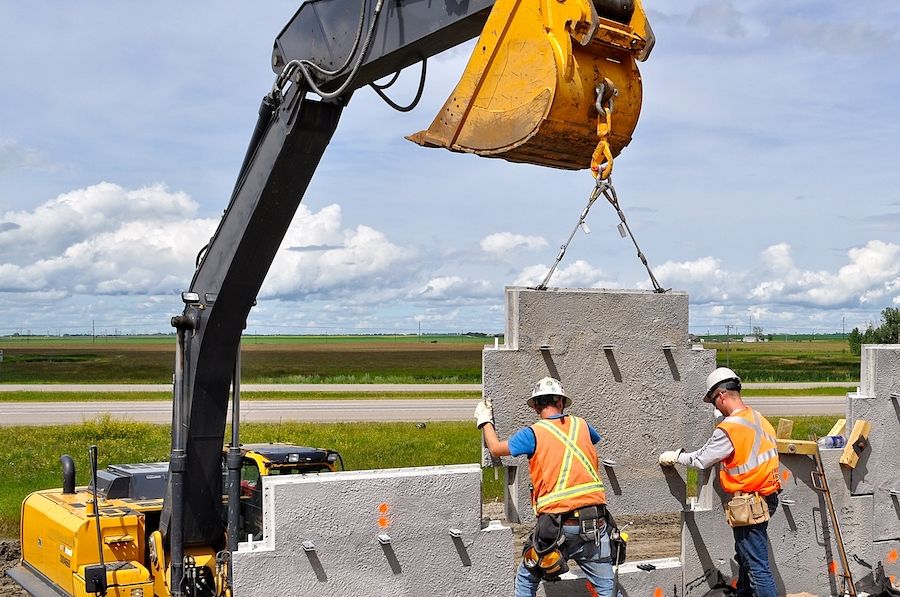
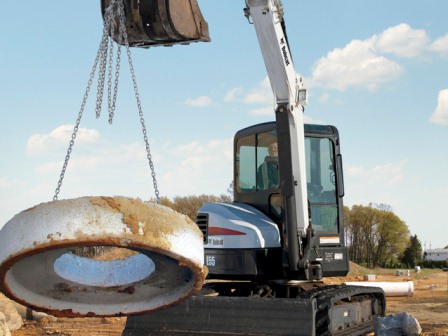
The use of excavators for lifting operations, particularly on construction sites, has become more common over the last few years.

Excavators and backhoes are designed for rapid earth moving and are not designed for lifting operations as their principal function.

When planning a lifting operation, you should first consider whether an excavator is the most appropriate machine, taking into account the type of lift and the duration of the task.

The purpose of this post is to set out precautions and procedures that should be taken into account when planning and carrying out lifting operations with excavators and other types of earthmoving equipment (backhoe and loaders) to enable the work to be done safely and in accordance with your legal duties.

Heavy-duty equipment is those that allow performing different works in the field of land adaptation, buildings, and bridges

Using an excavator to lift loads

Particular Hazards Associated with Lifting with Excavators

The use of an excavator or backhoe for lifting creates additional hazards for personnel in the vicinity. Under normal circumstances, personnel is kept away from the working area around the bucket of an excavator, as this is considered to be a hazardous area.

Where the excavator is used for object handling, however, the slinger has to be in the danger area in order to hook the load onto the hooking device. This puts the slinger at risk of being struck by the load, bucket, or excavator arm if the excavator moves without warning.

One common incident of this type is where the excavator slews rapidly, for example when the operator catches the cuff of his coat on the left-hand joystick, and the ground worker is struck by the bucket or dipper arm or crushed between the dipper arm and a fixed object.

How to operate an excavator?

Excavator operators and slingers should be made aware of these dangers and effective communications must always be maintained between slinger and operator. The excavator operator should always make use of the safety lever (safety armrest) whenever the slinger is in the danger area.

Traveling with a suspended load is particularly hazardous. The pre-lifting risk assessment should ensure that the hazards associated with this operation are fully considered, particularly the presence of personnel adjacent to the machine’s travel path.

Lifting with excavator

Lifting of Persons with Excavators

Excavators should not be used under any circumstances for the lifting of persons as they are primarily designed for excavating with a bucket and consequently are capable
of operating speeds and movements which make them totally unsuitable for the lifting of persons.

Access to height on construction sites should be by machines designed for the purpose of lifting persons such as MEWPs, mast climbing work platforms, suspended access platforms or passenger/goods hoists, or by the use of scaffolds.

In exceptional circumstances and where it is not reasonably practicable to achieve access by less hazardous means, a suitable crane with a man-riding basket may be used in accordance with the Code of practice for the safe use of cranes.

Guidance on lifting operations in Construction When using excavator

Planning of Lifting Operations with Excavators

The regulation requires lifting operations to be properly planned, appropriately supervised and carried out in a safe manner, and this includes lifting by earth-moving machinery.

The competent person should first carry out a risk assessment, which will include ensuring that the earth-moving machinery is suitable for the task, that adequate lifting accessories are available and the ground conditions are suitable.

The lifting accessories, including quick hitches, should be suitable for the load and marked with their safe working load.

The risk assessment will also address the need to segregate the lifting operation from other persons on site. Based on this risk assessment, a written method statement setting out the safe operating procedure to be followed should be prepared and communicated to all personnel involved in the lifting operation.

Special attachments for lifting

Special attachments for lifting (or other uses) should be compatible with the machine and coupling means (quick-itch) to which they are being attached.

A competent person should verify that the combination is designed to take the load in this manner.

Lifting Operations

Before lifting operations begin it is essential that all personnel involved are fully briefed on the significant findings of the risk assessment, the method statement, and their individual roles in carrying out the task.

The supervisor should ensure that persons are kept well away from the lifting area, and in particular that there is no one working below the lift, for example in a trench. Personnel should wear hi-visibility clothing and other appropriate PPE.

Excavator operators must never move the machine or load until they have satisfied themselves that the slinger/signaler and any other persons associated with the lift have all moved away from the danger area, to a position of safety.

Excavator Lifting Points

The slinger or operator should check the lifting accessories, including the lifting points, before use to ensure they are not damaged or worn.

Any defective lifting accessories should be removed from service immediately. Chain slings should not have any distorted links or components, hooks should not be bent and the safety clip should be in working condition.

slings for excavator

Fiber slings should be rejected when damaged, and in any case when the outer covering is worn to the extent that the inner cores are visible.

Where the hooking device (the point on the machine designed for connection of the load) is not part of the bucket, the bucket should (where possible, and unless the operator instructions specify otherwise) be removed in order to improve visibility and reduce the weight being lifted.

If the bucket is retained, then the weight of both the bucket and quick-hitch has to be added to the load when determining whether the load is within the rated capacity.

When attaching lifting slings to the hooking device or excavator lifting points care should be taken to ensure that the slings and their attachments are able to hang free at all times.

Attachment for excavator

Attachment using a shackle may limit rotation if, for example, a pipe suspended from the slings is to be turned end for end.

Similarly, if the quick hitch is tilted backward and/or the dipper arm is raised, the master link of the sling and any attachments may be put into bending or twisting, possibly leading to damage or failure.

These issues may reduce the height to which a load may be lifted to less than that indicated in the machine’s rated object handling capacity table.

The excavator operator should ensure that the acoustic/visual warning device indicating the load moment, is switched on prior to any lifting operation.

Excavator Requirements when Used for Lifting

Any earth-moving machine designed for object handling should have a rated object handling capacity table available inside the cab. If a rated object handling capacity table is not available then the machine should not be used for object handling.

Handling attachments that do not require the assistance of a person for hooking or guiding are considered normal earthmoving operations and do not require warning devices and a rated capacity table.

An earth-moving machine used for lifting operations must be fitted with a load hooking device. This may be mounted on the dipper, the quick hitch, or the bucket. If the load hooking device is a hook then this should have a clip or other device which prevents a sling from slipping off the hook. Many quick hitches provide a load hooking device in the design of the hitch.

More on this story

Excavator Sizes Chart

The use of excavators for lifting operations, particularly on construction sites, has become more common over the last few years.

Backhoe Bucket Sizes

Buckets for backhoe loaders match the machine to the job. Whether quarry, construction site, or landscaping job, they focus the full power and performance of the machine on the task at hand. Rugged Buckets for backhoe loaders include standard duty, heavy-duty, heavy-duty rock, soil, high capacity, coral, and ditch cleaning buckets.

Excavator bucket dimensions specifications

Performance and Versatility

Buckets are designed to provide superior productivity, high reliability, and long life in a variety of materials and conditions. An enhanced bucket shape allows the material to flow more easily, and the tapered bucket sidewalls allow for easy dumping of sticky material. Wear strips and routers extend the bucket wear life and increase durability.

Backhoe ground engaging tools are machine-matched and designed to enhance the productivity of the buckets in a variety of applications.

The diagonal retention system features a 40-degree pin retention angle, allowing for close spacing of the teeth and easy installation and removal of tips.

Serviceability

The fork is easily replaceable to extend bucket life, simplify servicing and reduce downtime.

The system offers different tips for different applications, including sharp, chisel, long, soil digging, penetration, twin sharp, and wide tips.

Customer Support

Whether it is matching the right work tool to the right job, adding more work tools to your lineup, or obtaining responsive and knowledgeable support, dealers are ready to assist you.

Quick Coupler

When frequent tool changes are required, an optional manual pin grabber quick coupler or pin lock style of the coupler is available, allowing the use of a wide range of compatible work tools.

Loader Buckets

There are many types of backhoe buckets for backhoes. While they share many common features, each is designed to perform certain specific tasks.

All buckets are pin-on unless a pin-lock option is available.

Backhoe bucket forks

Features:

Standard Duty Buckets: Available in five widths, all with standard Diagonal Retention System adapters and teeth. They are designed for general light-duty excavation in soft soil or clay.

Heavy Duty Buckets: Available in six widths (pin-on and pin lock), all with standard diagonal retention system adapters and teeth. They are especially well suited for semi-rocky soil or where hard bank material must be broken out and removed.

Heavy Duty Rock Buckets: Available in five widths, all with standard Diagonal Retention System adapters and teeth. They are specifically designed to work in the harsh rocky conditions found in various regions of the world.

High Capacity Buckets: Available in four pin-on widths and six pin-lock widths and are especially well suited for work in lower density soils and light materials. They have the same durable characteristics as heavy-duty buckets but are capable of moving greater volumes.

Soil Excavation Buckets: Available in four widths, they have heavy-duty characteristics with higher capacity, for use in a variety of conditions including heavy impact. The more aggressive adapter nose angle combined with the new tip design provides enhanced productivity in all soils, plus longer wear and sharpness in rocky areas.

Coral Buckets: Specifically designed to work in rocky coral conditions such as those found on the southeastern coast of the United States. Four widths are available.

Ditch Cleaning Buckets: Available in three widths designed to provide optimum trenching, slope-cutting, grading, and finishing work.

More on this story

Excavator Sizes Chart

The use of excavators for lifting operations, particularly on construction sites, has become more common over the last few years.