All posts by Loganx

Professional Web Writer | Motor Enthusiast | Content Creator | Logan is a dedicated and skilled web writer, passionate about engines and machines and with a talent for creating engaging and informative content. She specializes in writing about a diverse range of topics including construction, forklifts, heavy equipment, excavators, etc. SEO Optimization: Proficient in SEO best practices, ensuring high visibility and engagement for all published content.

Forklift Parts name

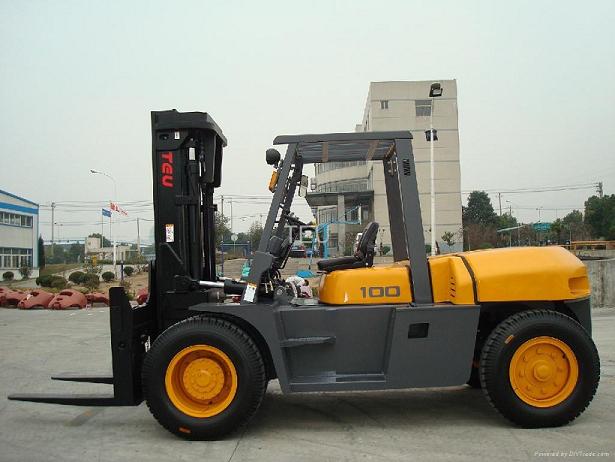
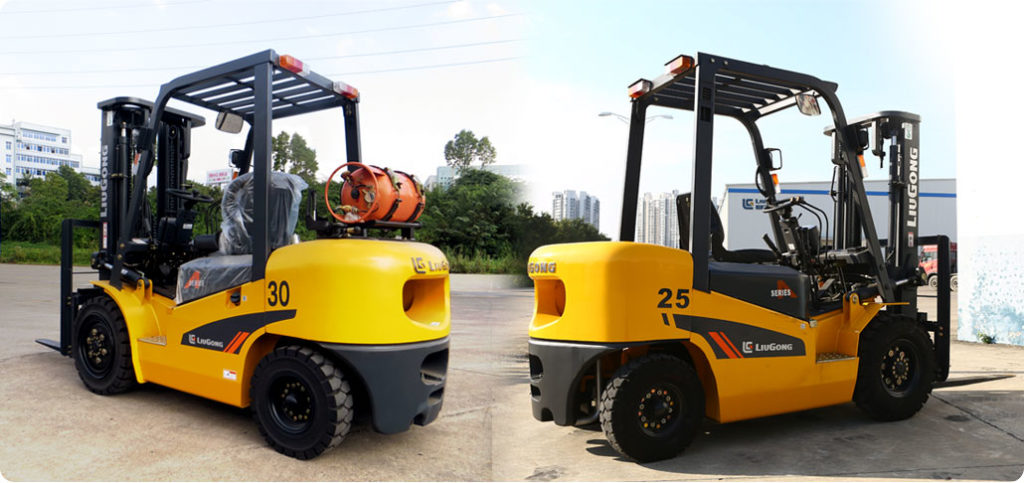
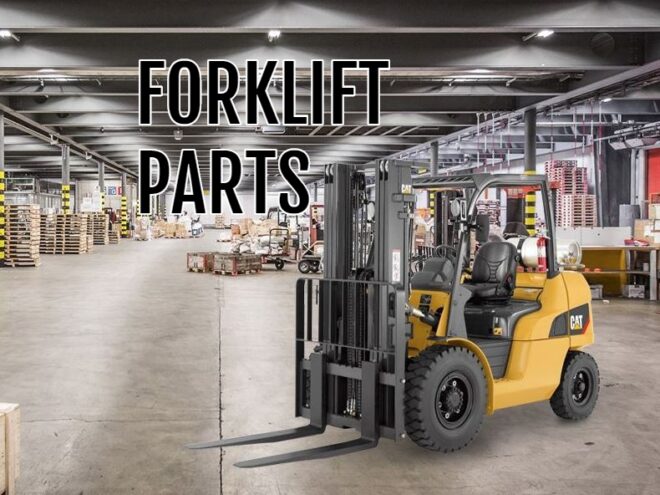
Forklift Parts name: Forklifts are designed to last, but like any other machinery, forklift parts are susceptible to wear and tear. To keep your lift trucks running and your employees safe, high-quality forklift parts and accessories are essential.

Forklift Parts name

Parts of a forklift mast

We are very sure that you have ever seen a forklift or forklift, it is small machinery that serves to move and/or lift heavy loads (from about 1000 to 2500kg) with great ease and most importantly: with great versatility. Next, we are going to review the main pieces and how a forklift works.

This guide explains the different forklift components, including the purpose of each and how they operate.

Forklift forks

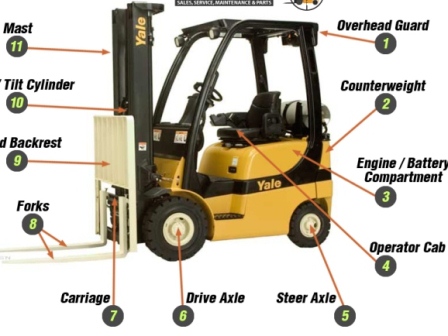
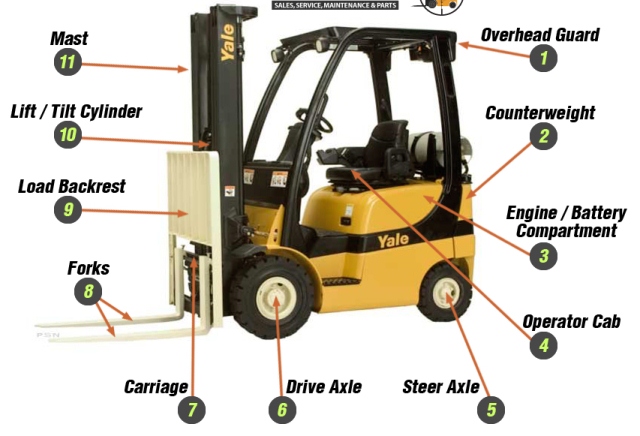
FORKS: There are two and they are located longitudinally, horizontally and parallel to each other. They will allow us to take the load underneath, generally from the side holes of the pallets.

Forklift carrier

FORKS CARRIER: It is the one that gives the disposition and rigidity to the nails. It has a vertical movement in case you need to define a position to take (or leave) the load somewhere. The carriage is an important part of the mast that is used to lift and stabilize the load. The forks and load backrest are generally considered parts of the carriage:

  • Forks: The forks are the protruding pieces of metal at the bottom of the carriage that is used to lift the load from the bottom. They come in a range of widths, lengths, and sizes to suit different purposes.
  • Load backrest: This is the flat surface along the back of the carriage that helps to support the load. Operators can rest the load against the backrest, and the backrest also prevents the load from sliding back into the operator.

Forklift tires

Forklift parts name:

FORKLIFT TIRES: For greater versatility, the steering rests on the rear wheels; they facilitate the driving and the process of collecting the pallets. Generally, forklift tires are one of the following two types:

  • Cushion tires: These tires are used indoors on smooth, flat surfaces because they have low traction. They are ideal for working environments that require a small turning radius and they are easy to maintain and relatively inexpensive.
  • Pneumatic Tires: These tires are better suited for outdoor environments because they have the traction to handle rough and uneven surfaces. There are pneumatic tires that inflate with air, and pneumatic tires made from solid rubber.

Forklift counterweight

Forklift parts name:

COUNTERWEIGHT: Located in the lower rear part of the unit, we will mark the load limits since trying to load something greater than this weight would result in a frontal rollover of the entire forklift.

Forklift mast

MAST: It is the continuation of the trolley. It has a vertical orientation and is to continue raising or lowering the load.

Forklift cab enclosure

Forklift all parts name:

CAB ENCLOSURE: Space where the operator has all the controls of both the motor (to move) and the lifting part. The steering system within a forklift typically uses a hydraulic steering cylinder and turns the rear axel while pivoting on the front tires. The levers that are found in operator cabs typically include:

  • Tilt lever: used to adjust the angle of the forks.
  • Lift lever: used to lift the forks up and down.
  • Side shift lever: used to move the carriage horizontally.
Forklift Parts name

Forklift motor

Forklifts have two main power sources: an internal combustion engine or in the case of electric forklifts, an electric motor powered by a battery or fuel cells.

Internal combustion forklift

Forklifts with internal combustion engines can run on gasoline, LP gas, CNG, or diesel fuel. These engines are similar to combustion engines in cars, injecting liquid fuel and air into a cylinder with a piston that is powered by a crankshaft.

A spark plug initiates the explosion that pushes the piston down in the cylinder, and the downward energy is converted into mechanical energy to power the forklift. Forklift combustion engines are made up of many internal components, including chains, gears, and bearings that keep it functioning properly.

Electric forklift motor

Whereas internal combustion forklifts are similar to automobiles, electric forklifts are more akin to an incredibly powerful golf cart. These types of forklifts are best suited for indoor use.

  • Pros:
    • Powered by electricity, these forklifts are clean, quiet, and easy to maintain, making them perfect for smaller operations with smaller weight-moving demands.
    • As well, there more compact design allows for a tighter turning radius and is ideal for narrow aisle applications.
  • Cons:
    • Electric engines put out less torque than internal combustion engines, limiting their effectiveness at moving significant amounts of weight.
    • This means they aren’t well suited to industrial environments with greater weight-moving demands.
    • Further, you also must have a designated battery charging area that is dry, ventilated and temperature controlled.
    • The initial costs of having to purchase a battery and charger are also higher.
Forklift Parts name

Forklift accessories

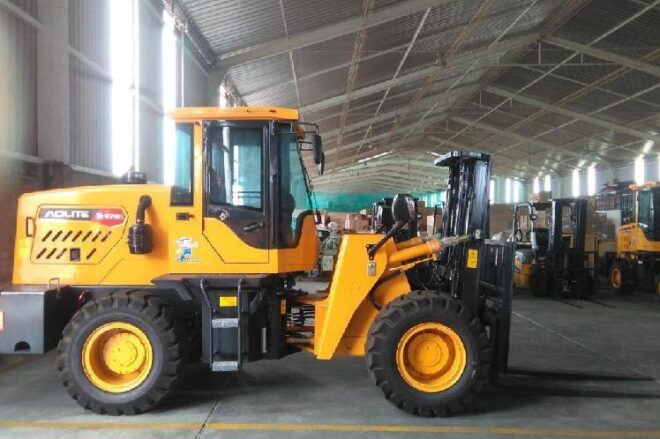
Forklift attachments are additional attachments that can be installed permanently or temporarily to the carriage. Many of these attachments allow for extra capability or support for large, heavy, or unconventional loads. There are many different types of forklift attachments available including dimensioning devices, side shifters, fork positioners, rotators, pole attachments, clamp attachments, scales, snowplows, drum handlers attachments, and telescopic forks.

Each of the main forklift components described above is important for the function and operation of a forklift fleet. If your forklifts aren’t supplied with quality components and parts, there is a much higher probability of equipment failure. ( Forklift parts name )

Forklift Parts name

Forklift spare parts

Keeping your forklifts running long-term requires a few things: careful operation, proper maintenance and access to high-quality parts and accessories.

Worldwide suppliers offer parts and accessories for forklifts of all brands, quality spare parts for all brands and models, including hard-to-find ones. The most sought after forklift parts include: Linde – Toyota – Jungheinrich – Hyster – Still – Mitsubishi – Nissan – BT – Caterpillar – Komatsu – Kalmar – Clark – TCM – Manitou – Yale – Doosan – Fiat – Steinbock – Crown – Atlet – Heli – Hangcha – Baoli – Tailift.

Forklift makes and models

  • Hyundai forklift parts
  • Manitou forklift parts
  • Helmar forklift parts
  • Ingersoll rand forklift parts

What are the three major parts of a forklift?

What are the three major parts of a forklift?

Here is a list of three parts of your forklift which must be maintained properly at all times to bolster safety, efficiency, and productivity:
1. Fluid Levels: Checking the antifreeze prior to use is essential. The same can be said for the gas and hydraulic fluids.
2. Moving Parts: Properly maintaining any forklift begins with optimizing its backbone. Most moving joints, or parts, of the forklift, are greased and lubricated to allow safe and fluid operation.
3. Gauges and Dashboard Panel: Warning indicators are absolutely important and must be utilized to their full capability. The various gauges and lights located on the instrument panel of the forklift give an indication when a part or component is malfunctioning.

What are the parts of a forklift?

Forklift parts and components:
Forklift Truck Frame
Counterweight
Operator Cab
Power Source
Forklift Mast
Forklift Tires
Forklift Attachments

Forklift Parts

The most read

More on this story

Forklift Spare Parts Name

Looking for a replacement part for your forklift parts or reach truck?
Forklift Parts and Functions

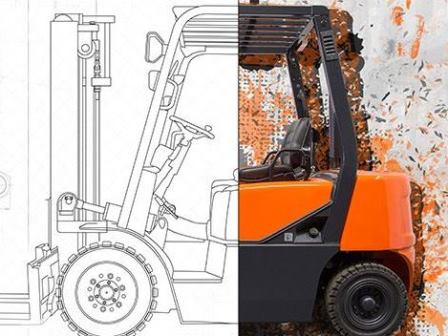
Forklifts serve the needs of various industries including warehouses and other large storage facilities.
Forklift Mast Types

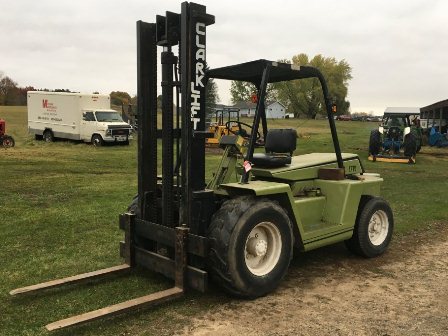
Also referred to as an ‘Upright’, the mast is the vertical assembly on the front of the forklift that does the work of raising, lowering, and tilting the load.

Types of forklift tires

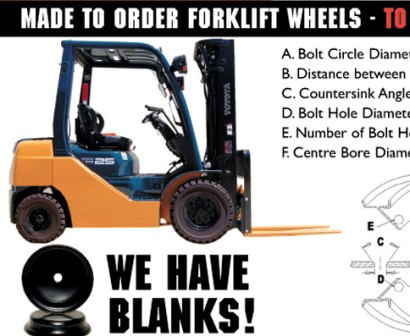
Overall, there are three basic types of forklift tires: cushion, pneumatic air, and solid pneumatic.

Forklift Magnet

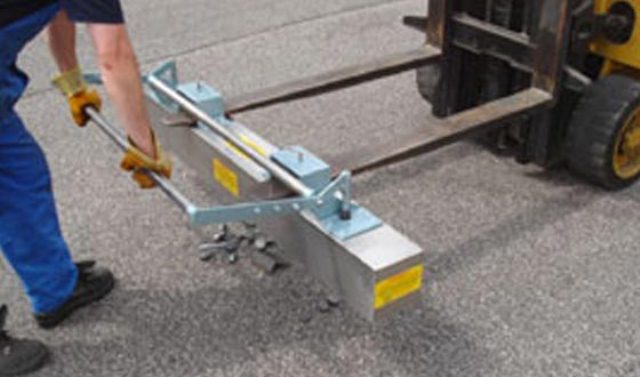
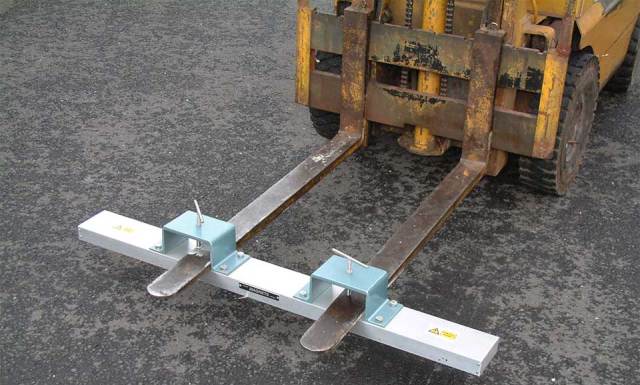
Forklift Magnet: Whether you need to clean up inside the warehouse, or outside at the job site, forklift magnetic sweepers, with releasable magnets will make picking up metal debris a breeze.

A forklift magnetic sweeper picks up metal debris while you work.

The hanging forklift magnetic sweeper will allow you to suspend the magnetic sweeper by bar or chain and can be attached at the front or the back of the forklift. Tools releasable hanging forklift magnetic sweeper is similar and has a unique lever load release, secured by releasable magnets.

forklift magnet attachment

How to work a forklift magnet?

Simply hang from your forklift truck and “sweep” all contaminated areas. To unload, push the sweeper to the desired dumping area and pull the release handle. As the magnet rises, collected material is released from the collector plate.

The hang-type magnetic sweepers with quick-release greatly reduce the possibility of costly and dangerous flat tires and injuries caused by nails, scrap iron particles, welding remnants, wire, staples, tacks, and metal shavings

Although the magnetic sweeper will lift a 3″ long 16 penny nail from 5″ off the ground, the recommended sweeping height is from 2 to 4 inches. Permanent magnetism guaranteed.

Fork mounted magnet

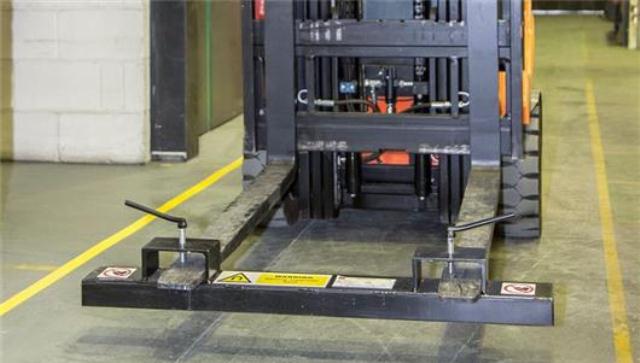
Fork mount magnets are a good option when flat tires present a hazard and you are using a forklift on fairly level ground.

These magnetic sweepers pick up debris before you run over it with your forklift which is always a good thing. And because you can attach up to a 10-foot wide magnet they are ideal for keeping large outdoor gravel or dirt yards free of dangerous metal debris.

Fork mount magnetic sweepers attach easily and quickly, are available in different sweeping widths and can be purchased with an optional Quick Clean Off Sleeve accessory to make clean off quick and effortless.

Fork Mounted magnets are also great because the forklift allows you to lift the position of the magnet over a scrap bin for cleaning the magnet off.

forklift magnet attachment

Forklift magnetic sweeper

Do you need a forklift magnetic sweeper?

There are over two billion pallets in the USA alone. Broken pallets lose the nails that hold them together and leave behind nails and wrapper staples that cause flat tires but can easily be cleaned up with a forklift fitted with a forklift magnet.

Forklifts also move things around, and in the process of moving things around, pieces of metal fall off trucks, pallets and the material being moved.

Forklifts are mobile in the same area and therefore capable of sweeping up the debris while carrying out normal operations at no additional labor cost

Forklift magnets pay for themselves quickly by preventing flat tires and downtime of equipment, and repair costs.

Forklift magnet attachment

Whether it be an airport, a spacious parking lot or any business where unwanted tramp metal may appear, it’s likely that you clean debris from the ground each and every day. When the debris is a sharp item such as a nail or scrap metal, the debris could cause flat tires or even worse, could put your employees, customers or visitors at a safety risk.

As such, it’s vital that businesses (especially industrial businesses) remove sharp iron objects from the ground each day with hanging magnetic sweepers. Rather than waste manpower and have multiple people work on removing sharp debris, you should instead consider a magnetic sweeper.

forklift magnet attachment

Magnetic lifter

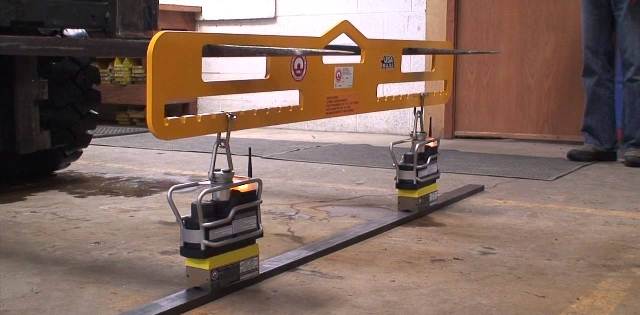
lifting magnets: for a wide range of applications using permanent, electro-permanent, battery-powered, and electromagnetic technologies.

Self-Contained Lifting Magnets are versatile, compact, easy to operate and can be used on flat and round material ranging from 0 to 11,000lbs.

Larger lifting magnets are designed for applications such as handling billets, bundles, bar stock, slabs, plates, structurals, long bar stock, rail, hot material, coils, pipe rebar, radioactive material, slag, and more. These magnets are commonly used in steel mills, scrap yards, loading docks, warehouses, foundries, shipyards, coil and pipe distributors, and other users of applicable steel products.

forklift magnet attachment

Permanent lifting magnets

Permanent lifting magnets are composed of magnet materials and steel parts which build a path through which the magnetic flux goes from the magnet materials to ferromagnetic load to be lifted.

NL-B series permanent lifting magnets are assembled with high-grade Neodymium magnets and mild steel in order to get high magnetic power and compact sizes.

An NL-B permanent lifting magnet has two magnetic sources, one is in the main body and another is in the rotor. When the two magnetic sources are at the same magnetic direction the lifting magnet project magnetic flux to a ferromagnetic load underneath its poles. In contrast, when the two magnetic sources are at the opposite magnetic direction they absorb each other’s energy and no magnetic flux can go out from the lifting magnet. Meanwhile, the lifting magnet has no attraction to the load.

By turning the handle of the lifting magnet you change the magnetic direction of the magnetic source in the rotor and therefore to attract and release the load.

  • Permanent lifting magnets have some advantages as follows.
  • Permanent lifting magnets use magnet materials as the magnetic sources and don’t need any external power supply. So that they can be used in any place.
  • Permanent lifting magnets are composed of magnet materials and steel parts only, they are durable with little maintenance.
  • Permanent lifting magnets can be simply operated by hand. The operation of permanent lifting magnets is very easy.
  • The costs of the permanent lifting magnets are lowest among all types of lifting magnets.
  • But, permanent lifting magnets have some disadvantages.

What is a lifting magnet?

What is a lifting magnet?

A lifting magnet does exactly what it says: it’s an electromagnet that can pick up or lift metal objects. A lifting magnet has magnetic properties in its electrified coil and is normally attached to a crane.

Will the magnetic sweeper be mounted to the forklift permanently or will it be temporary?

If you can mount a magnet permanently on your forklift it’s going to working for you all the time at no extra labor cost, and it will also save you the time of temporary mounting and de-mounting. Fork mounted sweepers have the drawback that they don’t allow you to keep the magnet permanently mounted because you need to use the forklift. Therefore if you can make it work, rear or mid-mount forklift magnet is always better.

Will the maneuverability of our forklift be affected by the magnetic sweeper?

You need to consider the effect of any permanently mounted forklift magnet on overall forklift maneuverability at your location. Rear mount forklift magnets extend the overall length of the forklift to some degree, some are straight, some wrap around the back of the forklift better, but each can affect at least to some degree your forklift maneuverability. If you don’t have a lot of space to move your forklift around, then a mid-mount forklift magnet is going to rank higher for you. If you’ve all kinds of space, maneuverability isn’t a concern.

How well does the magnetic sweeper fit your particular forklift?

You need to consider what magnets will fit your forklift. Not every magnet fits every forklift. Some forklifts are low and can only accept some mid-mount magnets. Rear mount magnets have specific fit guidelines that need to be checked to ensure they will fit your specific forklift.

What terrain and in what conditions will you be working in?

The rougher, dirtier terrain your forklift operates in the stronger the magnet your likely going to want because the magnet will have to be set higher to avoid constantly hitting the ground. The magnet will also need to pick up debris through some dirt, therefore, you need a stronger magnet. The rougher the terrain that exists because of things like bumps and potholes, more you will want or favor a magnet that has some protection built in to the design to either deal with the abuse of hitting the ground or being able to move out of the way when it does hit the ground in order to prevent damage.

The most read

More on this story

Magnetic Forklift Attachment

Forklift magnetic sweepers are the perfect solution for cleaning up large areas of nails, screws, and other metal debris

Telehandler Forklifts

A telehandler handler is a vehicle with a telescopically extensible boom, which can extend forwards and upwards from the vehicle.

Warehouse Lifting Equipment

Warehouse Lifting Equipment: description, what is a forklift? classes, types, how they work, parts, manual, electric, models, brands, industrial, electric.
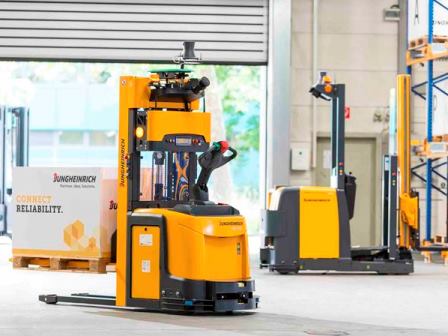
As you know, before buying or renting the forklift that best suits the warehouse where you work, you have to take into account several factors such as: the place of employment, the application to which it will be used, the type of product that will be charged, the intensity of its use, etc. Here we will guide you with the types of forklifts that you can acquire:
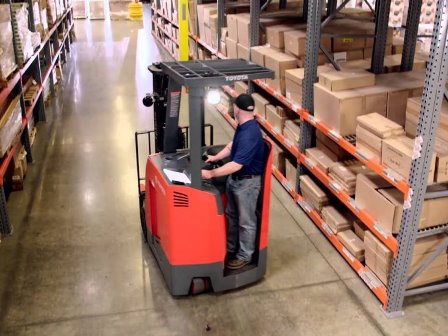
Warehouse Lifting Equipment

Warehouse lift equipment

Warehouse Lifting Equipment: Types of lifting equipment:

A fork crane or forklift is lifting equipment used to load and transport materials of great weight and size.

It does it through two nails of different lengths (depending on its use).

Due to the different types of hoists and applications, it can be used in any type of activity, industry or commerce, that involves the handling of loads.

Lifting equipment for warehouse

Why choose one? Warehouse Lifting Equipment

The forklifts or forklifts are perfect for loading and transporting heavy materials and allow the optimization of storage spaces.

They work with great precision and dynamize tasks in a great way, reducing the times and the number of people affected by this task.

In fact, the weight of a forklift is one of the factors that determine how many kilos they can carry.

The demand for forklifts is increasing and for each particular need, there is a certain type of forklift with different characteristics.

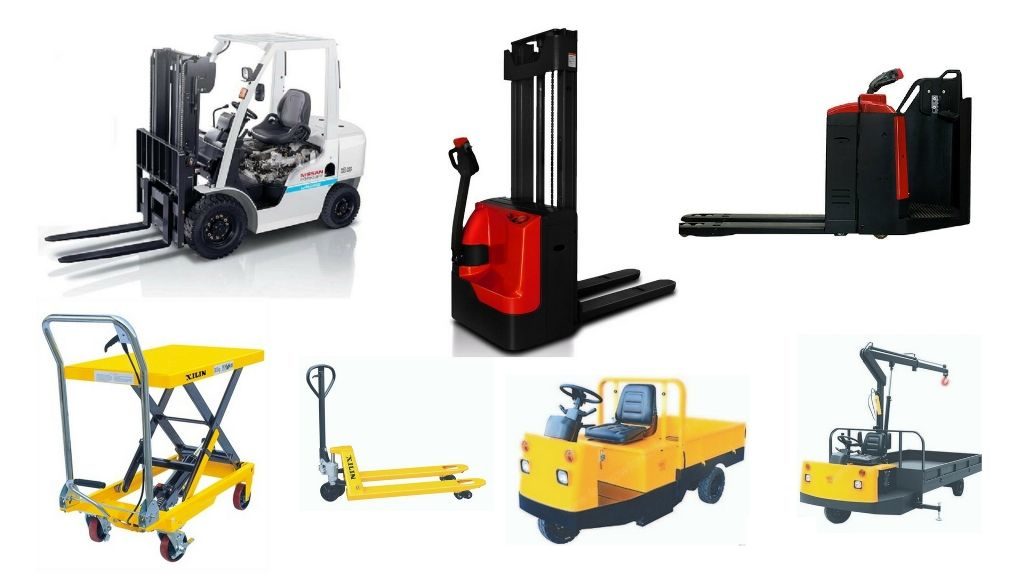
  • Industrial Side Loader Forklifts.
  • Industrial Reach Forklift Trucks
  • Industrial Counterbalance Forklift
  • Rough Terrain Forklifts
  • Telescopic Handler Forklifts.
  • Electric forklift

Types of warehouse equipment

Warehouse Lifting Equipment:

Motorized industrial vehicles are divided into 7 classes. Below we detail each one of them with its characteristics:

  • Electric forklift
  • Electric stacker
  • Stand up forklift operator
  • Telescopic handler forklift
  • Manual forklift
  • Counterbalance Forklift truck
  • All terrain forklift

Electric fork lift

CLASS I: The own weight of these vehicles usually acts as counterweight or counterbalance for the load that is transported in the nails, the front axle being the point of support or lever. This type of forklift has a battery and is very suitable for use in indoor or unventilated spaces as it does not emit pollutant gases, taking care of the environment and avoiding noise pollution.

Electric stacker

CLASS II: These are electric motor equipment and small size for small spaces, such as aisles of a warehouse. In addition, they have solid wheels and different characteristics according to the model.

Within this classification, we find several types of stackers:

Stand up forklift operator

CLASS II: In general they are the smallest stackers, they allow the handling of loads up to 1600 Kg and heights of up to 5.50 meters. Their wheels are polyurethane, so they need a relatively flat floor with few imperfections. Some models have a retractable platform so that the driver can mount and move without walking on long trips.

Telescopic handler forklift

CLASS II: In general they are used for storage at maximum height, reaching a level of elevation of up to 12.50 m. Given the height they reach, they usually have electronic assistance (micro cameras, monitor and positioning level presetting system). The driver is seated or standing, depending on the model, inside a cabin, with protection. (Reach Trucks)

Manual forklift

CLASS III:   They are operated manually, with handles in the back (although there are certain models that include it in the center). Generally, they do not lift very high loads from the floor, like wheelbarrows.

In some cases, these vehicles transport the operator, while in others it must walk sideways.

Counterbalance Forklift truck

CLASS IV YV:  Internal combustion forklifts, with counterweight and an internal seat for the operator.

  • Class IV has solid tires to prevent punctures
  • Class V uses inflatable and reinforced tires. They are the most used to perform the tasks of loading and unloading, storage and movement of materials.

All terrain forklift

CLASS VI: Within the types of large forklifts, they have been specially designed for difficult terrains, so their most common use is in agricultural sectors, farms, construction sites, among others. It includes tractors or trailers that are designed to transport large objects

Industrial Forklift

Class VII: Specially designed for difficult terrain, so its most common use is in agricultural sectors, farms, construction sites, among others. includes vehicles for rugged terrain, with greater stability and extensive reach.

Warehouse material handling equipment

What Forklift Type are Best for My Business?

Depending on your business type or project demands, different forklift types will work better for you. Rent or buy the following forklift types:

  • Electric Forklifts
  • Electric Walkies
  • IC Forklifts
  • Narrow-Aisle Lift Trucks
  • Rough Terrain Forklifts
  • Manual Pallet Jacks

Based on the training your team has, the floor plan of your business and the kinds of materials you’re handling, you will need a different forklift type.

Warehouse Lifting Equipment

Electric vs gas forklift

Electric forklift Vs. Internal Combustion Forklift

The major distinction between forklift types is whether the forklift is electric or an internal combustion forklift. Each type has its own advantages, but may not work for every business.

In general, electric forklifts have lower emissions and longer economic value. Companies often find fewer maintenance issues with electric forklifts, but they usually come at a higher initial cost. If your team is not ready to make a big investment upfront, consider an internal combustion forklift.

IC forklifts are easy to refuel, so they are good for multi-shift operations. To ensure your team’s safety, however, never use an IC forklift in an area with poor ventilation. The higher emissions can cause health risks. Maintenance and extra fuel costs are higher with these forklift types, but the initial cost is generally lower.

Warehouse forklift operator

Forklift operators drive around forklifts (shocker, we know), moving materials around warehouses, storage yards, factories, construction sites, and other work sites The machine itself has a hydraulic lifting mechanism, and forks for moving heavy and large objects.

Working a job like this might seem easy, but the work can be very repetitive. Driving a forklift isn’t all cake, roses, and gas pedals. It’s going to be hard work. Not everything can be lifted with a forklift, so you may have to carry heavy objects and stoop, kneel, crouch, or crawl in awkward positions.

Warehouse Forklift Types

Warehouse Lifting Equipment

What is the most common type of forklift?

Counterbalance forklifts are best used for material handling.
Three-wheel counterbalance forklifts are perfect for narrow aisles.
Reach truck forklifts for high rise storage pallet racking.
Side loader forklifts for narrow isles.

How much does a forklift driver make?

The average hourly pay for all forklift drivers is around $15 per hour but will vary by experience and location. Skill level is the biggest differentiator in pay. The longer you’ve been on the job, the closer you’ll get to that $20 per hour mark.

How much fuel does a forklift use?

About 90% of forklifts use an eight gallon (33 pounds) tank of liquid propane. If your LPG forklift has a four-cylinder engine, the tank should last about eight hours. Bigger engines reduce fuel efficiency, just like cars.

What are the best forklifts?

Forklift Manufacturers by Revenue:
-Toyota Industries Corp. $8.78 billion.
-The KION Group.
-The Jungheinrich Group.
-Mitsubishi Logisnext Co., Ltd. $3.7 billion
-Crown Equipment Corp. $2.9 billion
-Hyster-Yale Materials Handling Inc. $2.9 billion
-Anhui Heli Co., Ltd. $1.28 billion.

Forklift pictures

More on this story

Industrial Forklift Truck

The industrial forklift, also called a large capacity forklift, combines the functionalities of a warehouse forklift with that of a telehandler.

The most read

Forklift Lifting Capacity

FORKLIFT LIFTING CAPACITY: high capacity forklift loader truck, forklift attachments, side loader forklift, used forklifts for sale, battery.

Industrial Forklift accessories

Forklift accessories: A forklift is a motorized industrial truck that is used to lift and move materials over short distances. Forklifts are classified for loads with a specified maximum weight and a specific center of gravity. This information is found on an identification plate provided by the manufacturer, and the loads must not exceed these specifications.

In many jurisdictions, it is illegal to alter or remove the nameplate without the permission of the forklift manufacturer. An important aspect of the operation of the forklift is that it must have steering on the rear wheels.

While this increases maneuverability in tight cornering situations, it differs from the traditional driver experience with other wheeled vehicles.

While heading, since there is no action of the launcher, it is not necessary to apply the steering force to maintain a constant turning speed.

Forklift accessories

Forklift features

Another critical feature of the forklift is its instability. The forklift and the load must be considered a unit with a center of gravity that varies continuously with each movement of the load.

A forklift should never negotiate a turn at speed with a high load, where centrifugal and gravitational forces can combine to cause a disastrous rollover accident.

The forklift is designed with a load limit for the forks that decreases with a fork lift and load undercutting (ie, when a load does not come into contact with fork “L”). A load plate for the load reference is usually found on the forklift.

Forklift accessories

Forklift safety accessories

Forklifts are small vehicles with fork accessories that allow extremely heavy items to be loaded, unloaded, and transported throughout a facility by trained operators. Forklift attachments, such as heavy-duty forklift rams and booms allow users to move coils, carpet, and pipes. Forklift extensions provide added length during use. Platforms let personnel perform work at elevated heights.

Forklift safety regulations

Safety equipment: A forklift should not be used as a personnel lift without the installation of specific safety equipment, such as a “cherry picker” or “cage.”

Forklifts are a critical element of warehouses and distribution centers.

It is imperative that these structures are designed to accommodate their efficient and safe movement.

In the case of Drive-In / Drive-Thru Racking units, a forklift must travel within a storage compartment that has several depth pallet positions to place or retrieve a pallet.

Often, forklift drivers are guided into the bay through the guide rails on the floor and the platform is placed on arms or cantilevered rails.

These maneuvers require well-trained operators. Since each pallet requires the truck to enter the storage structure, the damage is more common than with other types of storage.

When designing an entry system, the dimensions of the forklift, including the overall width and the width of the mast, must be carefully considered.

Forklift accessories

Forklift capacity

The hydraulic system of the forklift is controlled by levers that directly manipulate the hydraulic valves or by electrically controlled actuators, using smaller “finger” levers for control.

The latter allows forklift designers more freedom in ergonomic design.

Load capacity

Forklifts are available in many variations and load capacities.

In a typical warehouse, most forklifts have a load capacity of between one and five tons.

The larger machines, with a lifting capacity of up to 50 tons, are used to lift heavier loads, including loaded shipping containers.

In addition to a control to raise and lower the forks (also known as blades or teeth), the operator can tilt the mast to compensate for the tendency of a load to tilt the blades towards the ground and risk slipping out of the forks.

The tilt also provides a limited capacity to operate on uneven terrain.

Skilled forklift operators compete annually on obstacles and timed challenges at regional forklift rodeos.

Forklift truck accessories

Forklift parts – A typical counterbalanced forklift contains the following components:

Truck frame: is the base of the machine to which the mast, axles, wheels, counterweight, top protection, and power supply are attached. The frame can have fuel and hydraulic fluid tanks built as part of the frame assembly.

Counterweight: it is a mass attached to the back of the forklift chassis. The purpose of the counterweight is to counteract the load that is being lifted. In an electric forklift, the large battery can serve as part of the counterweight.

Cabin: is the area that contains a seat for the operator along with the control pedals, the steering wheel, the levers, the switches and a dashboard that contains the operator’s readings. The area of ​​the cabin can be outdoors or closed, but it is covered by the upper cage type protection set. When closed, the cab can also be equipped with a cabin heater for cold weather countries, along with a fan or air conditioner for warm climates.

Mast: it is the vertical assembly that does the job of raising and lowering the load. It is composed of interlocking rails that also provide lateral stability. The interlocking rails may have rollers or bushings as guides. The mast is hydraulically operated and is operated by one or more hydraulic cylinders directly or using cylinder chains. It can be mounted on the front axle or on the forklift frame. A variation of the ‘container mast’ allows the forks to rise a few meters without increasing the overall height of the forklift. This is useful when loading double load in a container or under a mezzanine.

Forklift accessories

Forklift driver accessories

Carriage: is the component on which the forks or other accessories are mounted. Mounts and moves up and down the rails of the mast by means of chains or by joining directly to the hydraulic cylinder. Like the mast, the car may have rollers or bushings to guide it in the mast rails intertwined.

Tires: solids for indoor use or tires for outdoor use

Accessories: can consist of a mechanism that is attached to the car, either permanently or temporarily, to assist in the proper coupling of the load. A variety of material handling accessories are available. Some accessories include side scrollers, sliding blade accessories, cardboard clamps, multi-purpose clamps, rotators, fork positioners, carpet poles, pole handlers, container handlers, and roller clamps.

Total source parts and accessories forklift

Superior protection: a metal roof supported by poles at each corner of the cab that helps protect the operator from any falling objects. On some forklifts, the top guard is an integrated part of the frame assembly.

Source of energy: it can consist of an internal combustion engine that can work with LP gas, CNG, gasoline or diesel fuel. Electric forklifts work with a battery or with fuel cells that provide power to electric motors. For warehouses and other indoor applications, electric forklifts have the advantage of not producing carbon monoxide.

Tilt cylinders: hydraulic cylinders that are mounted on the frame of the truck and on the mast. Tilt cylinders rotate the mast backward or forwards to help hook a load.

Load backrest: is an extension similar to a frame that is bolted or welded to the trolley to prevent the load from moving backward when the trolley is raised to the maximum height.

Forklift accessories

Push-pull forklift

Below is a list of the common forklift truck accessories:

The sliding-blade attachment (push-pull): is a hydraulic attachment that extends forward, attaches to a sliding blade and draws the sliding blade to the wide and thin metal forks for transport. The accessory will push the sliding blade and load the forks for placement.

Sizing devices: the sizing systems mounted on forklifts provide dimensions for the load to facilitate the use of the space of the truck trailer and to support the systems of warehouse automation. NTEP certified sizing devices are available to support commercial activities that are billed according to volume.

Side lifts

Side shifter: it is a hydraulic accessory that allows the operator to move the teeth (forks) and the backrest laterally. This allows for easier loading of a load without having to reposition the truck.

Rotator: to facilitate the handling of skids that may have been tilted excessively and other needs for handling special materials, some forklifts are equipped with an accessory that allows rotating the teeth. This type of accessory can also be used to unload containers for a quick download.

Forklift lifting accessories

Fork Positioner: is a hydraulic accessory that moves the tines (forks) together or separately. This eliminates the need for the operator to manually adjust the teeth for loads of different sizes.

Coupling of roller clamp and barrel: a mechanical or hydraulic attachment used to tighten the object to be moved. It is used to handle barrels, barrels or rolls of paper. This type of accessory can also have a rotation function. The rotation function would help an operator to insert a paper stored vertically into the horizontal entrance of a printing press, for example.

Pole accessories: In some places, such as carpet stores, a long metal pole is used instead of forks to lift carpet rolls. Similar devices, although much larger, are used to collect metal coils.

Forklift attachments

Cardboard and accessories of multi-purpose clamp: they are hydraulic accessories that allow the operator to open and close a load, pressing it to lift it. Products such as cartons, boxes, and bales can be moved with this type of accessory. With these accessories in use, the forklift is sometimes referred to as a clamping truck.

Attachment for handling the drum: it is a mechanical accessory that slides on the teeth (forks). Generally, it has a jaw with spring that holds the upper edge of the edge of a drum for transport. Another type is gripped around the drum in a similar way to the accessories of the roll or barrel.

Simple double forks: they are forks that, in the closed position, allow the movement of a single platform or platform, but when they separate, they become a set of double forks that allow two platforms to be transported from side to side. The fork control may have to replace the side shift lever on some forklifts.

Basket for men: a lifting platform that slides over the tines (forks) and is designed to hoist workers. The man’s basket has handrails to prevent the person from falling and supports to hold a safety harness. In addition, a strap or chain is used to attach the man’s basket to the forklift truck.

Telescopic forks: these are hydraulic accessories that allow the operator to operate the warehouse design for “double-depth stacking”, which means that two pallet shelves are placed one behind the other without any aisles between them.

Forklift accessories

Scales: Truck-mounted scales allow operators to efficiently weigh the pallets they handle without interrupting their workflow when traveling to a platform. There are scales available that provide legal weightings for trade for operations involving billing by weight. They can be easily adapted to the truck hanging from the truck in the same way that the forks hang from the truck.

Snowplow: it is a mechanical accessory that allows the forklift operator to move snow easily and quickly. The snow plow can often also be used at other times of the year as an accessory to clean work places.

Jumps: is a mechanical accessory that is simply mounted on your forklift truck to allow safe and quick disposal of waste to the appropriate waste or waste compactor. There are two types of breaks: the type of advance and the lower type.

Any accessory on a forklift will reduce its rated load capacity, which is calculated with a standard fork and fork. The actual load capacity can be significantly lower.

Why do forklifts have 2 brake pedals?

One is an inching pedal on the far left to disengage the transmission in order to rev the engine and quickly lift your load as well as apply the brakes so you don’t move. The actual brake pedal is in the middle and works only as a brake. Some have one pedal which when pressed allows both inching and braking at the same time accomplishing the same results as two pedals.

The most read

Robotic Forklift

Automated Guided Vehicles and robotic forklifts are increasingly becoming a mainstay in manufacturing facilities and distribution center operations.

More on this story

Stand-up Forklift

Stand-up forklifts are designed for applications where the operator must get on and off the lift truck frequently.

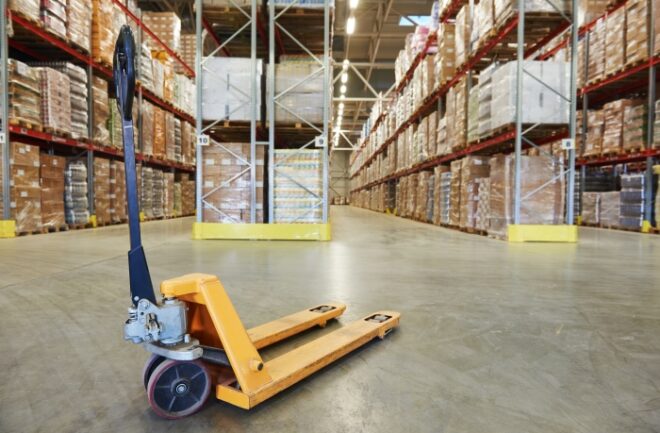
Hand Pallet Jack

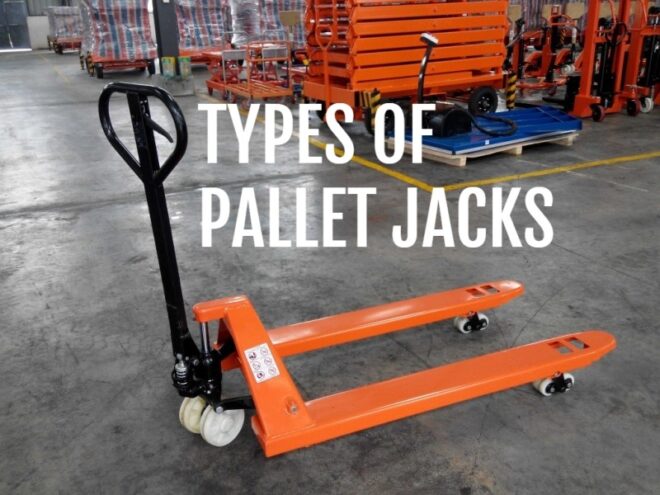
Hand Pallet jack: manual and electric; parts of a skid steer, use, and maintenance manual; stainless steel, low skate; parts and types.

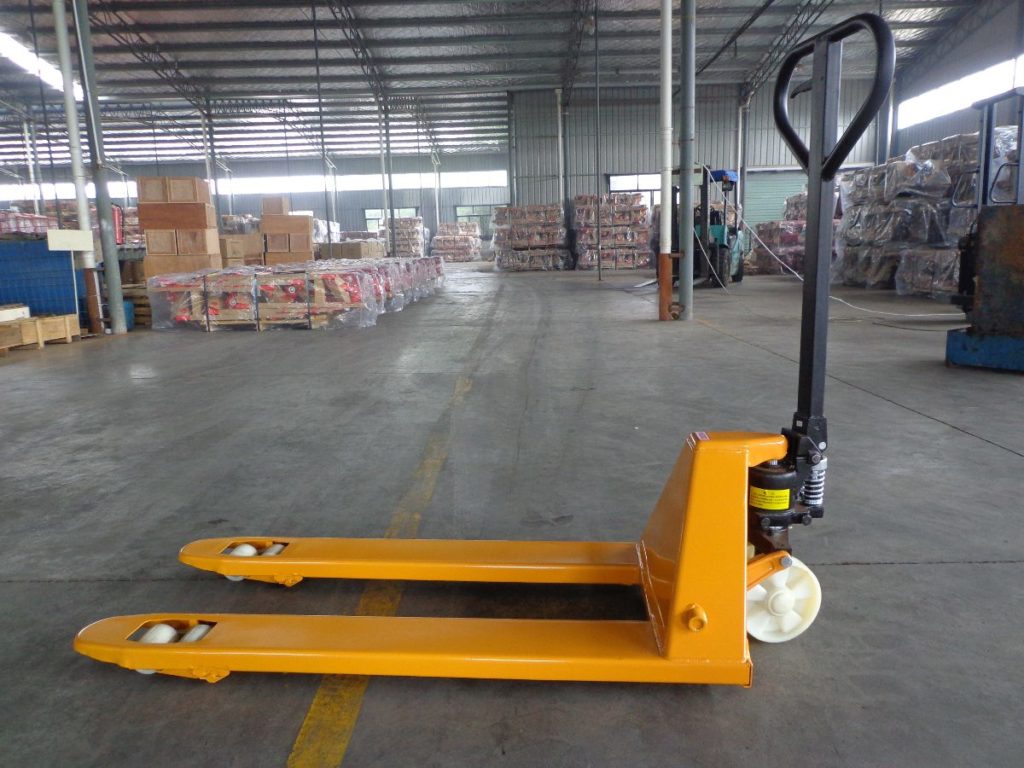
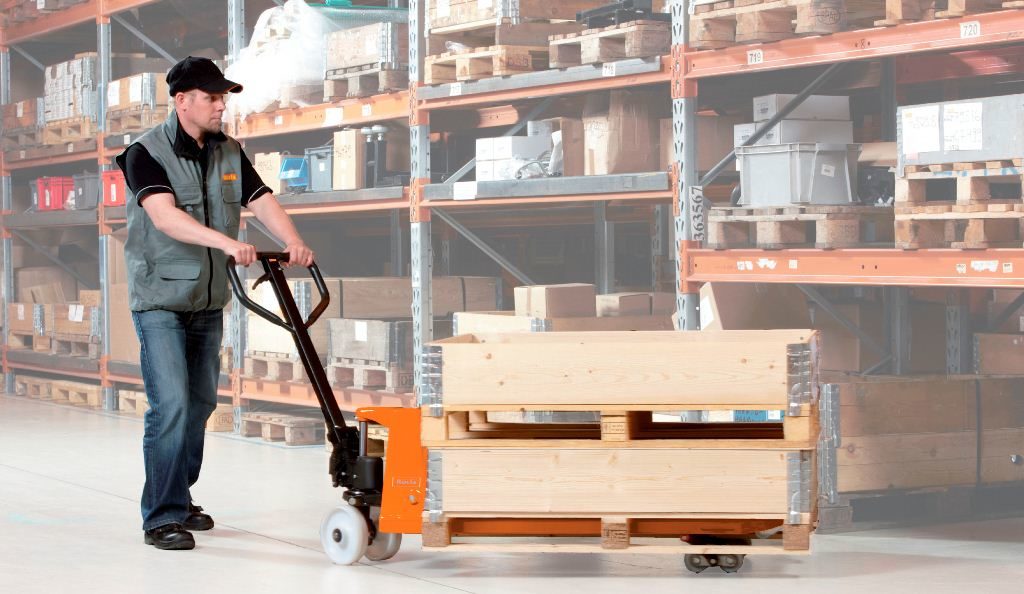
It is a mechanism that is used to easily move platforms with objects. They are manufactured in different sizes and materials, for example, nylon, polyurethane or neoprene.

They bear loads from 1 to 5 tons. These mechanisms, save you time and money, with its three wheels and its lever, helps the movement of objects is fast and efficient.

Hand pallet jack

What is a pallet jack?

Hydraulic skids, loading skids, hand pallet jacks or also called hydraulic trucks are used to perform various tasks related to the handling of merchandise in warehouses, such as loading, unloading and moving from one area to another and “picking” operations. of orders).

Use of hand pallet jack

Why use cargo skids?

The hydraulic skids or load skids are essential in cargo handling due to their simplicity and efficiency in their operation. They save considerable time when moving large volumes of goods in a few movements, thus protecting the worker, making the load slide with little effort.

Hand pallet jack

How does pallet jack work?

Why choose hydraulic skids?

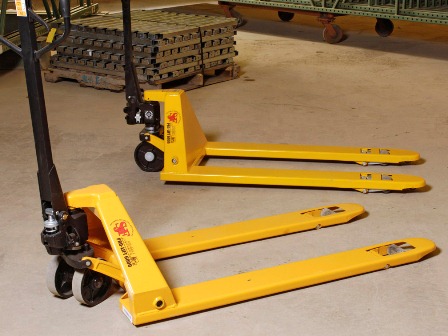
The hydraulic skids have forks of robust construction with channels of treated steel type “C”, reinforcements along these, and a reinforced push bar, making the equipment is a hydraulic truck construction ideal for heavy-duty work.

Its three-position handle allows you to operate them quickly and easily.

They have a leak-proof galvanized hydraulic pump that maximizes its efficiency.

Lubrication fittings at key points allow smooth handling at all times.

In the theme of the tires, the skates can have polyurethane wheels, for smooth and/or epoxy floors, or nylamid, for battered or cracked surfaces.

The configuration of the load wheels can be simple (a single wheel), or tandem (two wheels), which allows the skate does not to get stuck.

Hand pallet jack

Other names

In the various Spanish-speaking countries it is called in many different ways:

  • Pallet Jack: United States
  • Manual forklift: Spain
  • Traspaleta: Spain
  • Pallet truck: Spain, Chile
  • Platform skate: Mexico

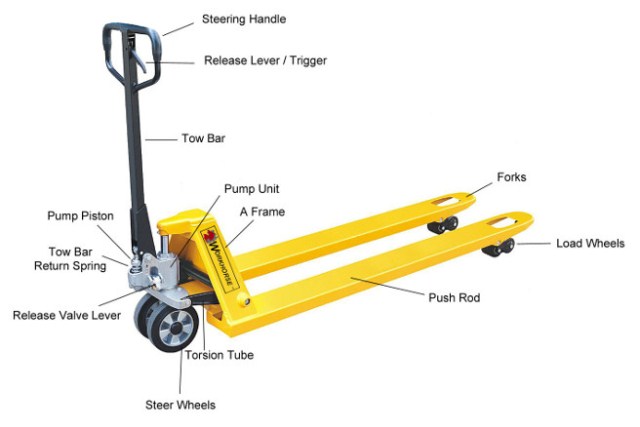
Pallet jack parts

  • Parts of a hydraulic skate
    1. Brake
    2. Levitation mechanism
    3. pallet jack Wheels
    4. Forks
    5. Turning mechanism
  • Parts of an electric skate
    1. Electronic controllers
    2. Electric motor
    3. Drive wheels
    4. Batteries and connections
Hand pallet jack parts

Types of pallet jacks

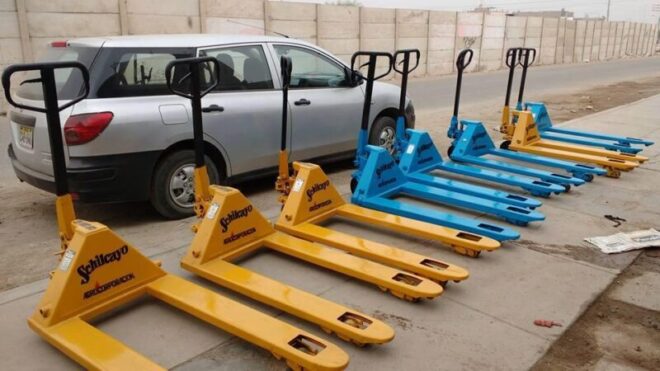
The range of hydraulic skids is wide to meet each of the needs of different sectors of the industry, from skids

  • STANDARD: Hydraulic 3 ton skid; which is used to easily move platforms with objects.
  • ANGOSTOS SKATES: of 3 tons; They have the ideal width to transport narrow European-type pallets, commonly used in the publishing, paper and grocery industries.
  • MINI: Hydraulic 3-tonne skid; can be used in small places in your company, the ideal to maneuver inside a truck or container box, and commonly used in printing pallets.
  • WITH BRAKE: Of 3 tons; Its brake system applied to the steering wheels allows the equipment to be used on surfaces with a slope or inclined ramp and can be handled with greater safety.
  • STAINLESS STEEL: Hydraulic 2-tonne skid; Its stainless steel structure allows it to be used in the handling of meats, marine products, wines, beverages, chemical products, etc. This skate can work in very low temperatures, such as cooling chambers.
  • LOW PROFILE: 1.5 tons, designed to be used with low bed platforms.
  • GALVANIZED: Of 3 tons; recommended for applications with extreme conditions to humidity, chemicals, low temperatures, etc.
  • PROFILE UNDER SUPER WIDTH : 3 tons; the best skate designed to handle platforms with four entrances and with a minimum height of 50 mm.
  • EXTRA LONG: Of 3 tons; Without a doubt, the best option to handle two pallets at the same time.
  • OF SCISSORS: Used in work stations when elevating materials to the desired height and using it as a work table.
  • WITH SCALE: Of 2 tons; used to move and weigh the load at the same time.
  • MULTIDIRECTIONAL: 2.5-tonne hydraulic deck; designed to move goods in very narrow and confined places in which to turn with an impossible conventional skate.
  • SEMI ELÉCTRICOS: Scissor skate that thanks to its electrical system can be used as a work table protecting operators from back injuries.
  • ELECTRICAL: Feel the comfort of handling your loads without any effort, improve the performance of your operators, especially when handling goods over long distances.
Hand pallet jack types

Forklifts and pallet jack

Forklifts, also known as motorized industrial trucks, are an important part of material handling in many industries. Forklifts are also a source of serious accidents in the workplace.

Injuries and/or fatalities indicate that many workers and employees are not using or are not aware of the correct safety procedures for handling forklifts and skids.

The purpose of this guide is to help instructors in the workplace with safety training programs in the use of forklifts and hydraulic skids.

This guide is not intended to cover all safety risks or situations involved with forklifts and should be used as a supplement to the forklift operation manual supplied by the manufacturer.

forklift and Hand pallet jack

Hand pallet jack safety

hand pallet jack safety – Occupational hazard:

  • Overexertion, for using manual pallet trucks, for handling loads that are too heavy, or for locking the wheels.
  • Strikes and entrapments, when maneuvering in reverse near walls, columns, shelves, etc.
  • Running over the feet of the operator of the pallet jack when using the machine walking in front of it.
  • Strikes and collisions of feet, of other operators next to the machine, when descending the load or when traveling with the pallet truck near them.
  • Operator slips due to loss of balance due to oils and other types of soil dirt.
  • Drops of the operator of self-propelled pallet trucks, (in a standing position on the platform), by blows or when performing abrupt maneuvers.
  • Load drop due to lack of centering of the pallet on the fork.
  • Collapse of the load by sudden starts and/or brakes, too fast turns, irregularities or deterioration of the pavement.
  • A drop of the pallet truck and the load on the operator, by staying in front of it, on the descent down a ramp.
  • Strikes and entrapments in the hands due to improper handling of the rudder/traction bar or hitting fixed objects. Falls, trips, blows, etc., when hitting the badly parked machine.
Hand pallet jack

Health and safety in the workplace

  • When using a hydraulic skate it is necessary to check that the load is tied and balanced to the mechanism.
  • The hydraulic skate has to be in excellent condition to avoid accidents with the load.
  • Do not put more load than the skate supports.
  • Always avoid lifting the load with one hand.
  • To lower the load, the lever must be pulled up to prevent the skate from moving.

Pallet jack risk assessment

Security measures – Of a general nature:

  • The use of self-propelled pallet trucks is only allowed to personnel authorized by the company.
  • All the protections and devices of the pallet trucks will be respected and used. In no case will the maximum load established by the manufacturer be exceeded.
  • In the case of observing anomalies or poor functioning, it will be communicated immediately, and if applicable, the breakdown and prohibition of the use of the pallet truck will be signaled.
  • The pallet trucks will be used only and exclusively for the functions and work of their condition and structure.
  • In cargo or empty, do not transport or hoist people. Do not handle the pallet truck with wet hands or shoes or with grease.
  • Respect the routes and rules of circulation of the company, use the established itineraries.
  • Do not access gateways, elevators, elevators, etc. without having ascertained that they support the weight and volume of the pallet truck and/or its load.

Pallet jack hazards

Prevention of occupational hazards – Before starting to use them:

  • Check the machine at the beginning of the work checking:
    • The raising and lowering of the fork.
    • The pouring of liquids.
    • The operation of braking systems.
    • The state of the battery (self-propelled pallet trucks).
    • The uniform speed.
  • In the manual pallet trucks, the correct sliding of the wheels; and in the automotive companies check the proper functioning of the traction system.
  • In the automotive pallet trucks, the correct operation of the brake, with the rudder in a vertical and horizontal position, the horn and the counter-switch.

Pallet jack safety OSHA

Pallet jack safety OSHA – Industrial Security:

  • Check that the weight of the load is adequate for the capacity of the pallet truck.
  • The pallet or support to be transported is in good condition and use.
  • The loads must be perfectly balanced, shod or tied to their supports.
  • Take the load by placing the forks centered on the pallet.
  • Insert the forks through the narrowest part of the pallet, until reaching the bottom below the load.
  • If it is necessary to use load entry limiters, it must be borne in mind that if the ends of the forks protrude from the pallet or transported support, when removing or depositing the load the materials stored next to it can be damaged.
  • Avoid lifting the load with only one arm of the fork.
  • When lowering the load check that on the ground nothing can damage or destabilize it, check that nobody has his foot near the pallet truck.

Pallet jack operator

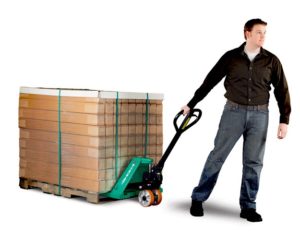
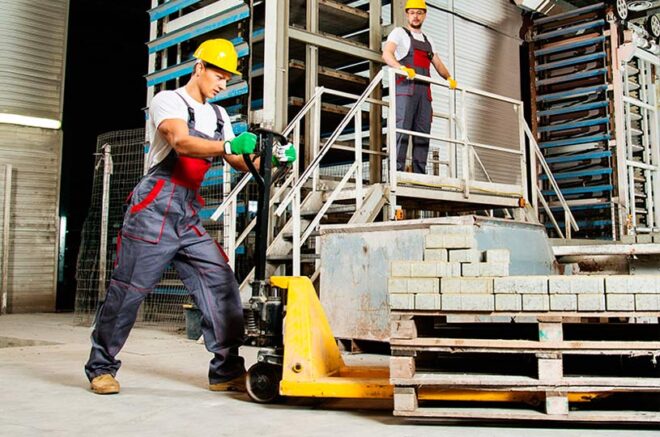
  • When moving manual pallet trucks, keep to the side of the pallet truck by pulling it so that the arm is in a straight line with the drawbar.
  • Look in the direction of the march and maintain good visibility of the route.
  • Avoid sudden starts and brakes, as well as fast turns that favor the fall of the load.
  • Pay utmost attention to crossings, corners, doors, etc., as these are points with minimum visibility and maximum accident risk.
  • When maneuvering backward near a wall, column, shelving, pay attention you can be injured by being caught by the rudder. On self-propelled pallet trucks, reduce speed and use the horn.
  • When climbing a ramp, it must always be placed in front of the pallet truck.
  • When going down a ramp, it must always be placed behind the pallet truck.
  • If the pavement is wet or defective, increase the precautions.
  • Check that the record covers, drain racks, etc., are properly positioned and adjusted.
  • Park the pallet truck out of aisles and passageways, remove the ignition key (if automotive), and check that the rudder is held in an upright position.

Loading docks for trucks: Check that the vehicle is correctly attached to the dock and immobilized, to use self-propelled pallet trucks, it is advisable to use chocks for the vehicles to be unloaded.

Personal protection equipment:

  • Security shoes.
  • Protective gloves against mechanical risks.
  • Mittens against the cold; according to the activity, etc.

Pallet jack specifications

how do you select the one that is right for your needs?

This will outline five key considerations when looking to purchase a quality pallet jack that meets your needs.

Pallet jack fork dimensions

Before purchase ensure that the pallet jack forks are the correct length. Having excess or short forklift length impacts the loads the pallet jack may carry. Excessively long forks may also affect the maneuverability of the pallet jack due to its wider turning circle requiring a larger clear space for turning.

Forks that are too short will may not be able to fully support a pallet when picked up and may become a safety hazard due to the unstable nature of the load and the possibility it could fall.

Pallet jack load capacity

Load capacity is probably the most important question to ask before purchase. If the pallet jack is not certified to carry the weight limit you require then do not consider purchasing. An overloaded pallet jack is easily damaged or broken and presents a significant safety risk to operators.

Pallet jack weight limit

Overall unit weight is an essential consideration especially when the pallet jack is to be used inside of containers or for vehicle loading. The pallet jack will be of a significant weight before any load is added. It is essential that this weight is taken into consideration when operating on certain surfaces, such as container floors or vehicle trays as they may not be reinforced to support the heavier combined weight of the pallet jack and its load.

How to maneuver a pallet jack?

Lower/Raise Height Ability

If you are required to raise pallets, ensure the jack is able to comfortably reach your desired height. Another essential consideration is that the jack can reach your desired height whilst safely lifting a load. The rated capacity of the jack may vary depending on how high it is raised. An overloaded jack that has been raised is a potential safety hazard as there is a greater risk it could tip over.

Pallet jack wheels

Wheel selection is important to not only correctly support the pallet jacks load but also to provide smooth and easy maneuvering. High-quality wheels will also protect flooring when the pallet jack is operational.

Hand Pallet Jacks

how does a pallet jack work

The pallet jack is steered by a ’tiller’ like a lever that also acts as the pump handle for raising the pallet jack. A small handle on the tiller releases the hydraulic fluid, causing the forks to lower.

What are pallet jacks used for?

A pallet jack, also known as a pallet truck, pallet pump, pump truck, dog, or jigger is a tool used to lift and move pallets. Pallet jacks are the most basic form of a forklift and are intended to move pallets within a warehouse.

What is the difference between a pallet jack and a forklift?

A pallet jack is the most basic type of forklift. They perform best when used to transport long distances either full or partial pallet loads. The difference between a pallet jack and a pallet truck is quite simple: a pallet jack is driven manually, while a rechargeable battery powers a pallet truck.

Do you push or pull a pallet jack?

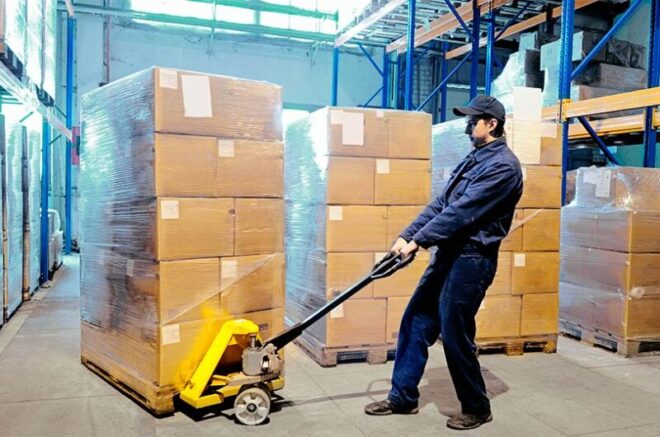
Pulling is more effective. You must know that the friction experienced by a body is directly proportional to the normal force acting on it. We can see that when pulling, the force applied reduces the normal and hence the friction and pushing increases it. Hence pulling is better.

Is a pallet jack a forklift?

A pallet jack, also known as a pallet truck, pallet pump, pump truck, dog, or jigger is a tool used to lift and move pallets. Pallet jacks are the most basic form of a forklift and are intended to move pallets within a warehouse.

Do you need to be certified to use an electric pallet jack?

Certification for the use of electric pallet jacks is provided by the company you work for. OSHA doesn’t require or have a standard certification, but instead asks all companies using pallet jacks to have a certification program for its workers.

The most read

Types of Pallet jack

Pallet jacks are the most basic form of forklift trucks and are designed to move heavy or light pallets inside a warehouse.

More on this story

Forklift Battery

Its main function is based on storing enough energy to start the forklift engine. Its secondary function is to store the remaining energy for later use in equipment for extended periods.

Types of Pallet Jacks

Different Types of Pallet Jacks: Tips for buying a hand pallet truck and our comments on the 10 best pallet pallets

If you come across this page, it is likely that you are not maintenance staff, but a professional who is looking for real plans to buy your Jack pallet. You are in the right place.

If you already know which pallet jack to choose but you want to find a supplier in your area, we recommend that you browse this site that classifies the suppliers with some criteria that include the geographical area of the country.

If you are looking for more general considerations, you will find some articles that will inform you below as our reviews of the ten best pallet jacks you can buy.

Types of Pallet Jacks

Different types of pallet jacks

What is a palette used for?

A paddle jack, also known as a pallet truck, a pallet pump, a pump, a dog or a rig is a tool used to lift and move paddles.

Pallet jacks are the most basic form of forklift trucks and are designed to move heavy or light pallets inside a warehouse.

What are the different types of pallet jack? It can be distinguished:

Hydraulic pallet jack

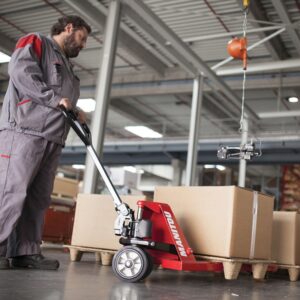
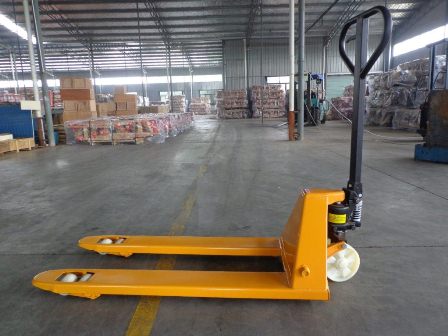
The pallet truck is made up of a cold-bent, welded and mechanized metal chassis. Visually it looks like a skateboard. The hydraulic manual pallet trucks are handling equipment that allows transporting the palletized goods using a double fork, three wheels, and a handle. This allows to guide the machine and slow down its progress. The lifting of the pallet is done manually by activating the grip connected to a hydraulic system.

Generally, manual hydraulic pallet trucks support a maximum load of 3500 kg (although this depends on the models). They are ideal for transporting pallets throughout the length and width of the warehouse, but they do not allow the load to be raised at high altitudes, even though there are special ones such as the scissor pallet trucks (its reach is 800 mm).

Types of Pallet Jacks

Manual pallet jack

Manual pallet cat and most commonly seen in personal storage and retail operations. It can carry a load of up to 5,500 pounds (2500 kg). This type of vane pump is a low lift classification used to move palletized loads over small distances.

The first types lifted the forks and were loaded only by mechanical joints. A more modern type uses a hydraulic pump pumped by hand to lift. The first appeared in 1918 as shown in the image below.

Types of Pallet Jacks

Electric pallet jack

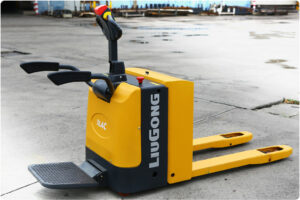
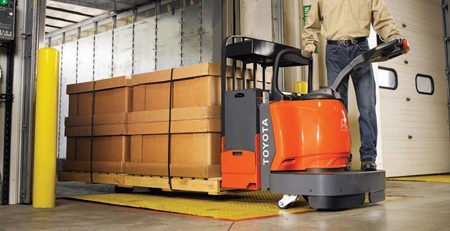
Electric pallet trucks, also known as electric pallet trucks, walkies, single or double pallet jacks, or power jack, are motorized to allow the lifting and movement of heavier and stacked pallets. Some contain a platform for the user to stand while moving pallets.

This type of vane pump is ideal for warehouses where heavy loads of pallets weighing more than 5,000 pounds are handled. The electric jack for pallets has a load capacity of up to 6,000 pounds.

They are best for use in loading docks and preparation areas. Some of them can even lift much more.

Types of Pallet Jacks

Ride on Pallet Jack

The rider pallet jack is the big brother to the electric walk behind pallet jack. It is about as close to a full-size forklift as pallet jacks get. Instead of walking behind the pallet jack, the operator is afforded a platform which he or she can step on to and ride along with the pallet jack as it drives. This is a great option for large warehouse operations where a lot of area needs to be covered quickly.

Types of Pallet Jacks

Pallet jack Price

How much does a pallet jack cost?

The standard pallet jack is the “5500 lbs (2.5 tons)”: see the image above. The first prices start at $ 250 on Amazon, while it seems that there are low-cost prices of $ 119 on Alibaba.

Pallet jack dimensions

How wide is a standard palette cat?

The North American industry seems to have “standardized” pallet taps in several ways: Width of each of the two forks: Fork width of 7 “, that is, the dimension between the outer edges of the forks: available as 20¼” ( 51.4 cm) and 27 “(68.6 cm).

How to use a pallet jack?

To raise the forks, push the drive lever down and pump the handle up and down until the platform has reached the desired height.

A one-inch space between the floor and the pallet is usually enough to move the load. To move a load, place the drive lever in a neutral or middle position.

Pallet jack for sale

What are the best manual pallet jack available in the market?

Now that you know almost everything about pallet jacks, you may be looking for a pallet jack for your business, there are many options to choose from and you are asking yourself “Which of them is better for my money?”

Let’s review some of the best palette shots available, and you can check our reviews below.

Standard pallet jack

Features to consider before buying a pallet jack:

It would be difficult to list all the advertising features of the different pallet jack manufacturers. Consequently, we have listed the key characteristics that we see as remarkable and appropriate for comparison.

For example, greasable bushings: these are the small metal sleeves inside the pivot point and the axles that support the platform jack wheels. The bushings can be made of brass or steel. When the platform jack is raised or lowered, these bushings will experience wear. With greaseable hubs, the company offers you the possibility of increasing the useful life of your pallet truck, which is a sign of durability.

Pallet jack Weight

We review the platform jack weight because the major forklift manufacturers make claims about the quality and durability of their equipment based on weight.

For example, Crown Lift compares the weight of its electric pallet trucks with other manufacturers to claim quality and durability. We know that steel is heavy and expensive and that more steel in a pallet truck can indicate a cause for a higher price.

On the contrary, we could expect a lighter palette cat to cost less.

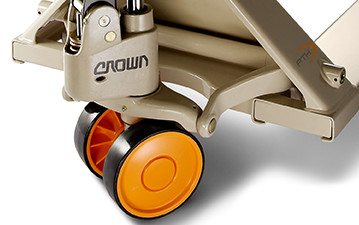
Pallet jack wheels

Pallet paddle wheels are usually made of polyurethane and should be easy to change as they wear out. This ease of operation is an important feature and will extend the lifespan of your platform jack.

Pallet jack warranty

We assume that the guarantee offered by a company reflects the confidence they have in their products. But, it also adds cost and value.

It is expected that a paddle jack with a higher warranty will have a higher price than a paddle jack with a smaller warranty.

This is something that must be taken into account when looking for the best pallet cat that exists!

Pallet jack short forks

Pallet jack lowering height: The lowering height of the pallet fork is an important point to consider. The reason is simple; If the pallet forks of the platform can descend to a low profile, it would enter the platform more easily.

And with the various sizes of pallets available in the market, we often find cheap pallets with a smaller opening, which makes it difficult for pallet forks to enter the forks’ pockets.

Which pallet jack is better?

We will not declare a winner in this review since the purpose is mainly to help you find the one that best suits your needs.

But the general considerations are:

  • A heavy pallet truck
  • A low height pallet truck
  • A good capacity
  • With greasable bushings (brass)
  • Long warranty

The pallet shots we choose for our reviews comply with these considerations and, in our opinion, are the best.

Types of Pallet Jacks

Pallet jack manufacturers: Review of the ten best pallet trucks available.

Review of the ten best pallet trucks available:

Vergopallet jack

This pallet truck – the S5500L – is one of the best pallet trucks with a load capacity of 5,500 pounds, protective polyurethane wheels and 27 x 48 inches L-forks.

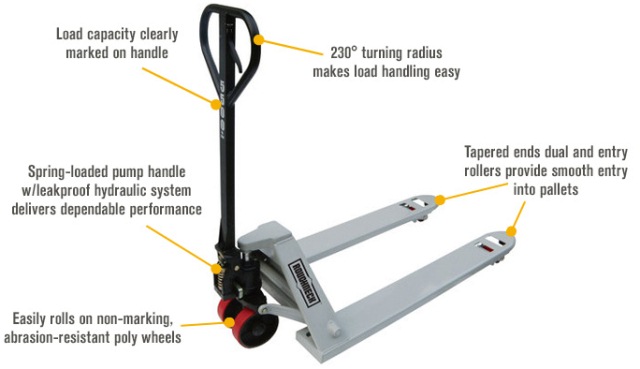
It measures 48 inches tall, weighs 160 pounds and measures 65 inches in length. The conical design of its input rollers, the integrated pump without welding, the overload valve in the pump and the control of the descent speed make it more efficient in its class.

We also like that you have a 210-degree directional arc for easy handling, durable steel construction with a powder coating finish so you can use it for a long time.

This pallet truck has a reasonable price and is made of high-quality construction.

Crown pallet jack

Manual pallet for heavy-duty. This manually operated hydraulic skid that supports the 5,000-pound weight has industry-leading quality, support, and durability.

It is the best option for the transport of pallets since it will recover from its own weight every day for many years.

It has an ergonomic handle and a three-position lever with lifting, lowering and neutral positions, and also has a steering angle of 200 degrees.

You’ll love it that comes with a factory warranty and, if you need a new part, Crown Heavy will make sure the parts you need are available and easy to replace.

The construction is fantastic, and currently, you would not find this type of construction in any other similar product available in the market.

Sandusky

Heavy-duty manual pallet truck -TT5027- This heavy-duty hydraulic pallet from Sandusky has two forks, a handle, nylon wheels and rollers that are used to transport and lift pallets.

It is made of steel, can transport up to 5,500 pounds, resists corrosion, rusts and wears out.

The shape of the handle facilitates the transport of your loads since it has a trigger that frees and lowers the forks.

You will also love that the wheels are made of nylon and that they do not scratch your floors. Its weight is 198 pounds, making it easy to move and transport while loading large loads.

JET

The model -PTW2748- In addition to being able to move the load up to 6,000 pounds, this paddle jack can rotate 200 degrees so that it can move in tight spaces.

It is made of solid steel and, for this reason, its push rods will never have to be adjusted, which is a great advantage.

Poly-aluminum steel wheels are possible for this pallet truck to move through uneven floors.

It has knobs and handles with padded grip for easy handling. It is possible to use this pallet truck with one hand. It also has a two-year warranty.

Roughneck

The -4,400- model is one of the best manual pallet jacks with a load capacity of 5,500 pounds. It allows you to raise the load from 3 “to 7 1/2” with the control of the finger lever. The touch of a switch allows you to lower it and keep it in a neutral position.

Goplus

Heavy-duty, this Goplus hydraulic jack for vanes is made of high tensile strength steel, so it will easily resist wear and corrosion.

Its load capacity is 5,500 pounds. Lift and transport the pallets easily and without problems. Ensure there are no leaks with your integrated pump without welding.

The company offers a 100% satisfaction guarantee to make it safe for its customers, which is a great advantage.

Roughneck – 2,200 lb

If you are looking for a pallet truck to move small pallets, then this Roughneck pallet truck is for you.

He is the little brother of Roughneck 4,400 lbs. You can use it to move safes of weapons and seeds or food.

It can also be used in garages, stores, convenience stores, retail stores, etc … It can transport up to 2,200 pounds, and small forks and width facilitate the transport of small loads.

Eoslift

The model -E20V- of capacity of 4400 lb. The opening of this pallet truck is specially designed according to the standards of the American pallets.

Its design facilitates the insertion and removal of the forks of the pallets.

It can withstand up to 4,400 pounds of load due to its sturdy steel construction.

Vestil pallet jack

Model EPT-2748-33, 3300 lb capacity, 48 “long x 27” wide. This electric jack for pallets makes moving pallets a game.

It is easy and convenient because it has buttons to go up and down with the tips of your fingers, a safety back button and an accelerator to advance and reverse the direction that is easy to use. The horn will alert people that you are approaching. It comes with a standard battery charger (24 volts) and can operate for eight hours with a charge. This yellow and black pallet weighs 671 pounds.

Prime Scales

The model PS-5000PJ is one of the best pallets available. It has a built-in scale to calibrate its performance and has been made by manufacturers with more than 30 years of experience in pallet trucks.

They ensure the maximum performance for each part of their products, either in relation to the handling of materials or their weighing. With its low profile, it fits most of the different sizes of pallets.

What are pallet jacks used for?

What are pallet jacks used for?

A pallet jack, also known as a pallet truck, pallet pump, pump truck, dog, or jigger is a tool used to lift and move pallets. Pallet jacks are the most basic form of a forklift and are intended to move pallets within a warehouse.

What pallet jack should I buy?

the pallet you get for your business will depend on what you need, small or large loads, low profile, scale … there are pallet sockets for every need. You will not be mistaken with any of the pallet trucks reviewed in this article. I hope you find the most suitable for your business and do not forget to compare its features and prices to buy the best one within your budget.

Do you push or pull a pallet jack?

A person can push almost four times the weight they can pull. That’s why when the choice to push or pull a pallet jack arises, it’s generally safer to push it. Using both arms to pull a pallet jack behind you is a recipe for being run into by the pallet if you have to stop suddenly.

What is the difference between a pallet jack and a forklift?

A pallet jack is the most basic type of forklift. They perform best when used to transport long distances either full or partial pallet loads. The difference between a pallet jack and a pallet truck is quite simple: a pallet jack is driven manually, while a rechargeable battery powers a pallet truck.

The most read

Hand Pallet Jacket

It is a mechanism that is used to easily move platforms with objects. They are manufactured in different sizes and materials, for example, nylon, polyurethane or neoprene.

More on this story

Forklift Battery

Its main function is based on storing enough energy to start the forklift engine. Its secondary function is to store the remaining energy for later use in equipment for extended periods.