Category Archives: forklift

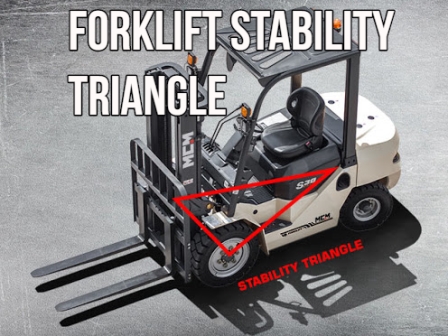
Forklift Stability Triangle

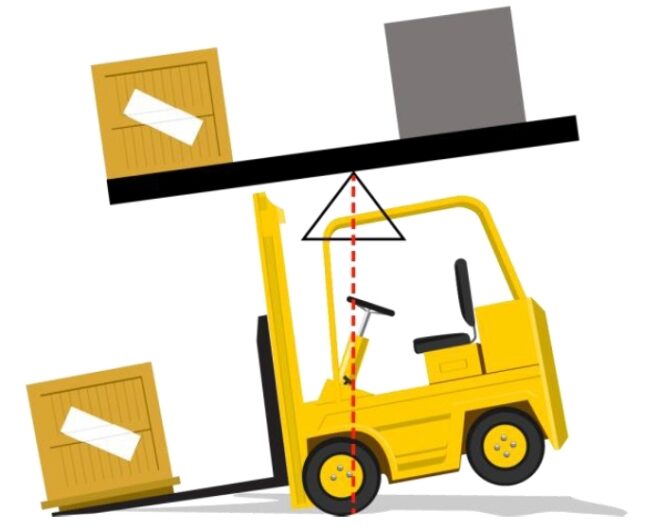
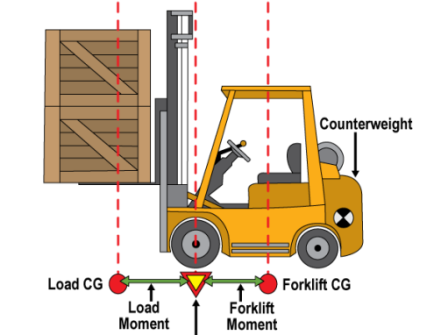
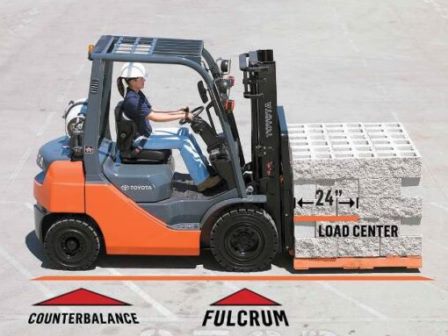
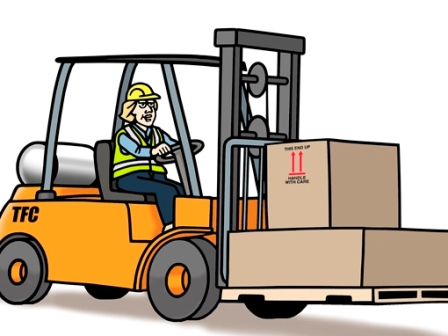
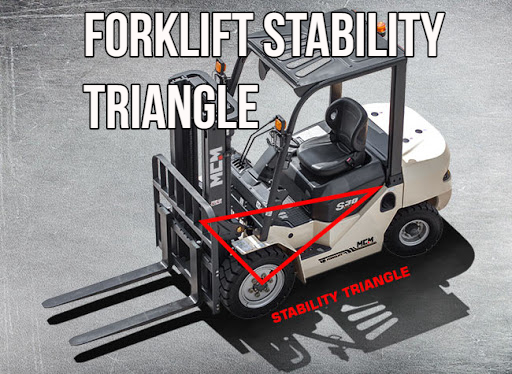
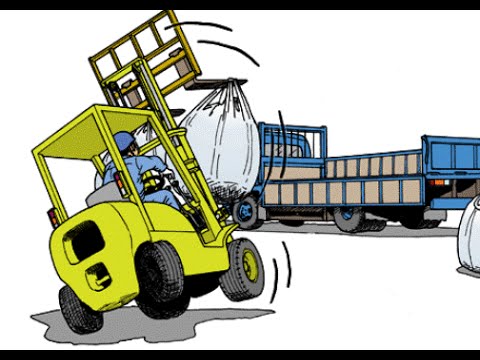
Forklift Stability Triangle: Making sure your forklift remains stable is one of the most important things you need to do while it’s in use. Unstable forklifts are the cause of many injuries and deaths each year when they fall on operators.

Forklift Stability Triangle

Forklift triangle of stability

Generally speaking, your forklift truck will stay stable as long as it’s properly loaded and is operated carefully by a professional driver. This is why it’s important that forklifts are not operated by anyone who doesn’t know what they’re doing and doesn’t understand what the truck can and can’t do.

Trucks themselves are very safe and secure when loaded and operated properly, and there’s no need to worry as long as you follow the appropriate rules and instructions. As a general rule, your truck’s stability will depend on its weight, height, speed, and distance. (Forklift Stability Triangle)

Forklift Stability Triangle

Average weight of a forklift

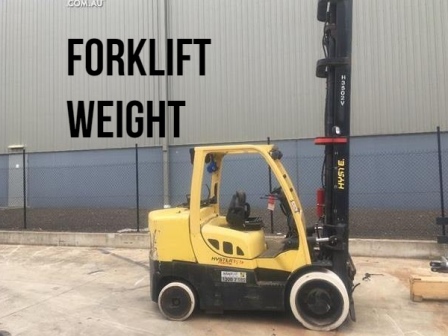
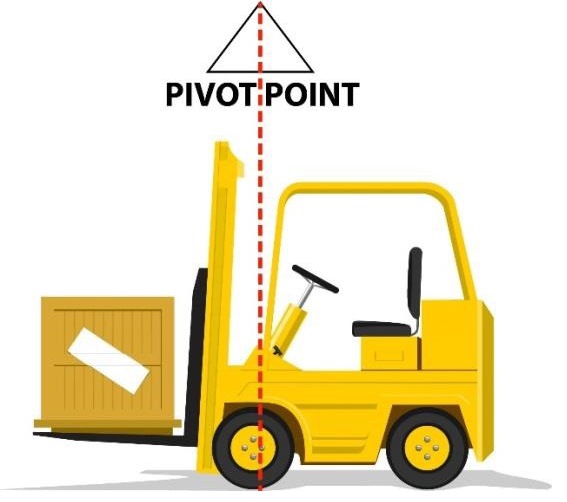
The weight of your truck is one of the main factors in determining its stability – Forklift Stability Triangle:

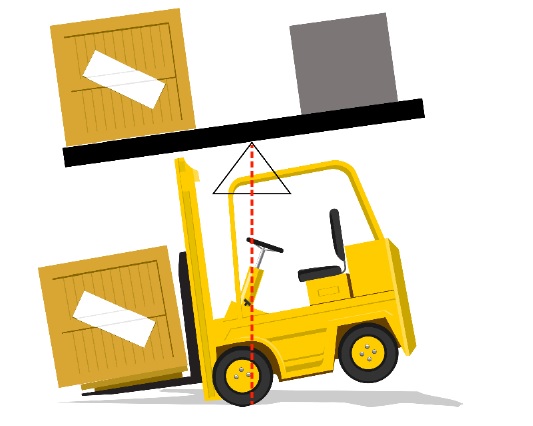
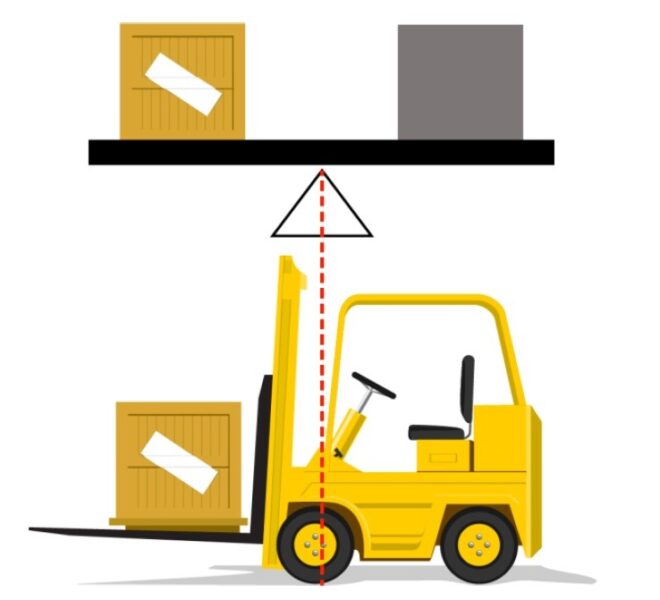
If you think of it as a seesaw, you will be able to understand that the back end of the truck must always be heavier than the load it carries. If the load should be the same weight or heavier than the truck itself, the truth is in danger of tipping over.

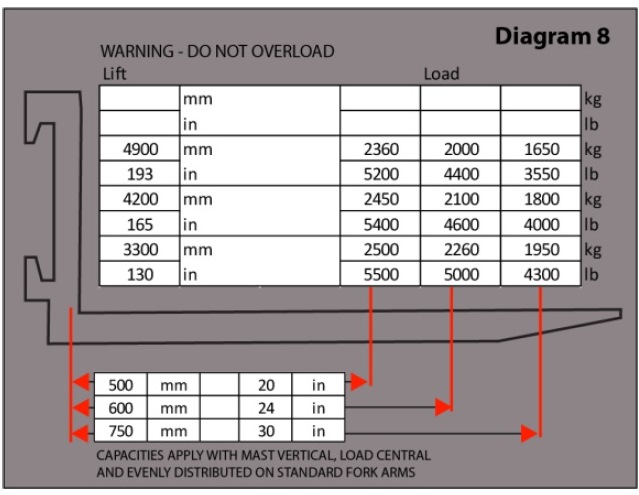
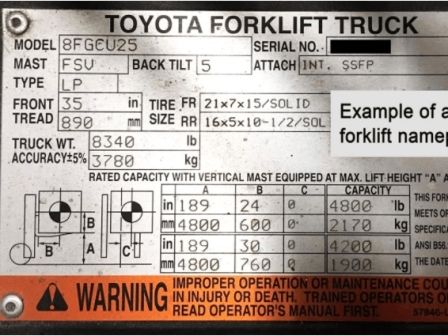
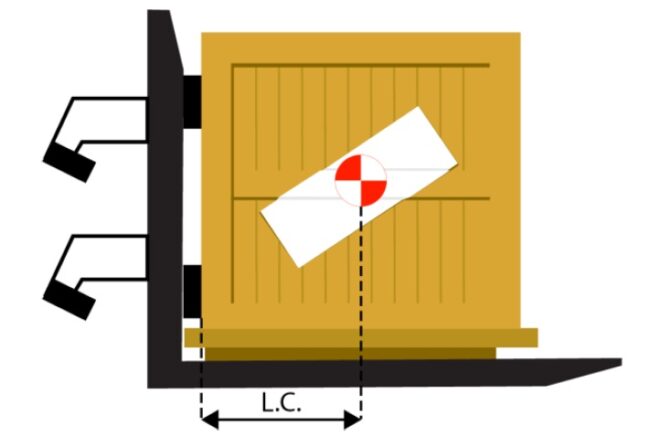
You can avoid this by always paying attention to the lifting capacity of the truck and ensuring you never exceed it. You can see the load center on the data plate which is fixed to your truck, and you can also see any differing load centers showing what you can lift and how.

Forklift lifting height

The height at which your load is raised affects the center of gravity and therefore the stability of your forklift.

Simply put, when you need to lift your load, you should move very carefully and aim to move only when you have to – mainly when loading or unloading, and not raising the load while driving.

Failure to observe this rule could lead to injury, broken goods, and other serious damage.

Forklift speed limit

No unnecessary speed should be used when operating your truck. While you need to drive efficiently, you should not be moving around at speeds which could cause your forklift to become unstable.

Speed affects the weight of your load, increasing it the faster you go. If you’re already carrying a heavy load, making it heavier will cause it to become unstable in exactly the same way as if you had overloaded it.

This can cause the truck to tip over, a danger which must be avoided.

Lateral instability forklift

Causes of truck instability –
Lateral instability forklift –
Forklift Stability Triangle:

Longitudinal (forward)

  • Overloading
  • Undercutting (not picking upload to the heel of forks)
  • Tilting forward with the load raised
  • Listing or raising the load while going downhill
  • Braking too hard
  • Traveling at fast or erratic speeds

Lateral (sideways)

  • Turning too sharply
  • Turning on slopes
  • Turning sideways while lifting the load
  • Driving over obstacles
  • Driving over potholes
  • Picking up a load while off-center
  • Not using the side shift correctly
  • Turning while the load is raised

Load centre distance forklift

Distance (Load center) – Forklift Stability Triangle:

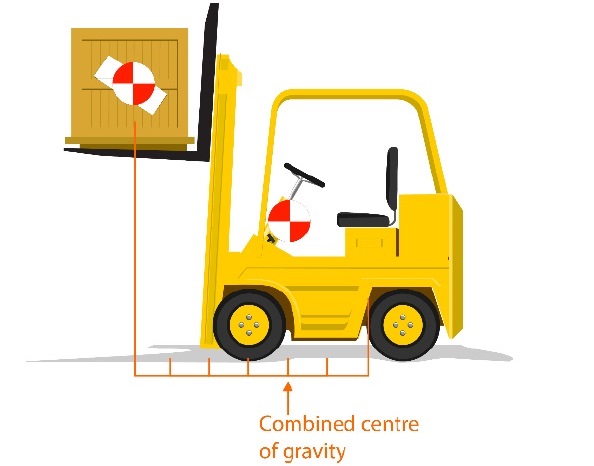
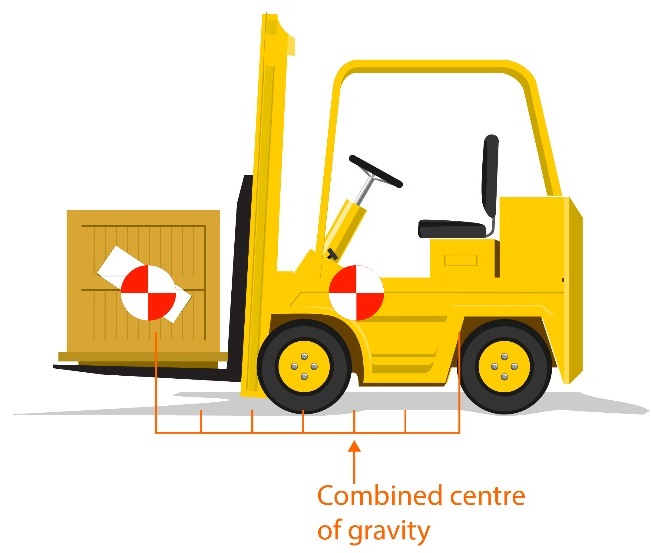
Distance is yet a further factor that could cause your forklift to tip over if safety rules are not properly observed.

If you bear in mind the seesaw analogy as previously mentioned, and the tipping effect it can have on your truck.

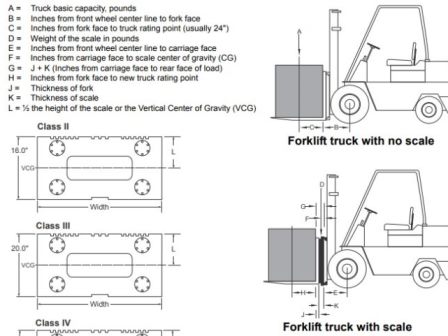
Taking a look at what happens when a load is moved away from the truck’s fulcrum (see diagram 6) you’ll see that it’s not been set by the carriage or the backrest of the truck.

You could then find the truck tipping over forwards, causing breakages and expensive damage, so always pay attention to the distance.

Forklift Stability Triangle – If your truck tips:

Should your truck tip at all, you must follow the right safety procedures. This means staying in the truck, holding on tight, bracing your feet and leaning away from the point of impact. Trying to jump out of the truck could cause you to be put in even greater danger.

Forklift data plate explained

Load center – Forklift Stability Triangle:

Always check your data plate for the information about the distance from the heel to the back of the forks outwards to the center of gravity.

You can also see on some forklifts how much you can lift and at what load centers.

Remember that the weight of the load indicated on the truck’s capacity plate is MAXIMUM. It must NEVER be exceeded and in some applications the actual load handled should be considerably less.

Forklift on road requirements

The following are some general rules you should always follow in order to safely operate a forklift.

  • Only operate vehicles you are trained and authorized to operate
  • Read the manufacturer’s instructions thoroughly before you attempt to operate any vehicle
  • Carry out thorough and proper safety checks every time you use the vehicle
  • If you feel tired or unwell, or you have been drinking or taking medication, do not drive any vehicle
  • If you need glasses to drive, make sure you don’t operate a vehicle without them
  • Wear hard hats and any other appropriate safety equipment you need
  • Always wear a seat belt
  • Familiarise yourself with the signs and road markings wherever you’re working
  • Note any height restrictions for your vehicle in the place you’re working
  • Give clear and timely signals to other people working in your area
  • Observe other people’s signals too
  • Check your way is clear before you move off

Forklift rules and regulations

  • Drive on the left wherever you can, unless it’s safer to drive in the middle for better visibility
  • Slow down at junctions or crossings and sound your horn several times
  • Take care to avoid pedestrians no matter who has right of way
  • Drive at an appropriate speed and with due caution
  • Make sure nobody is underneath your forks at any time
  • Do not allow anyone to mount your forks at any time
  • Take care to look out for any objects in your way
  • Keep a safe distance from any other vehicles
  • In case of a tall load blocking your view, drive backward while looking where you’re going
  • If a load is in danger of collapsing, leave and tell a supervisor before trying to de-stack it
  • Always keep your head and limbs inside the truck when driving
  • Drive at a safe speed ensuring you have time for emergency stops if needed
  • Observe ground surfaces to check whether they may be unsuitable for your truck
  • Drive with loads as close to the ground as possible
  • If you’re not carrying a load, raise your forks clear of the ground while driving

Forklift operator key responsibilities

  • If driving outside without a load, always tilt your forks back
  • Tilt your forks back when carrying a load
  • If you can’t see properly when going up a slope, ask for assistance
  • When going downhill without a load, the forks should face down
  • Carry the load facing upwards if you need to go up a slope. When no load is carried, the forks should be downhill.
  • Tilt the forks backward and raise them above the ground when on a slope
  • Stick to a safe speed when on a slope
  • Never turn when on a slope
  • Drive at a 45-degree angle across bumps, railway lines, sleeping policemen, etc.
  • Never stack while on a slope
  • Never leave a forklift unattended on a slope
  • If you need to leave a forklift on a slope in an emergency, the wheels should be wedged securely
  • Always check the load weight, weight limit, and load center before picking up a load
  • If you’re in danger of exceeding any limits, reduce the weight or get a forklift with a larger weight capacity
  • Enter the load from the wide side wherever possible
  • Insert and space the forks properly for the particular load width and type
  • Take extra care if the tips of the forks
Which side of the forklift is supporting more of the red boxes weight?

The load size, position, and weight distribution critically affect the forklift’s capacity and the stability of the truck. Consider the following factors before engaging a load:
-Weight, Size, and Position
-Safe Load Capacity
-Maximum Load Moment
-Balance
-Stability.

The most read

Forklift Brands

FORKLIFT BRANDS: Which forklift brand is best? top: Caterpillar, Toyota, Volvo, Hyundai, forklift brands and models, top 10 forklift brands, list
More on this story

Stand-up Forklift

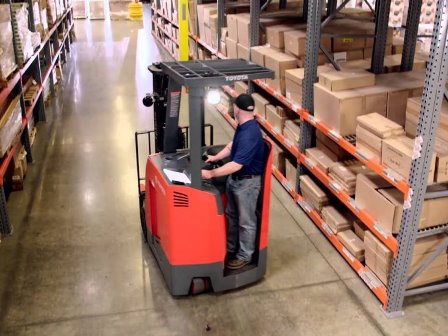
Stand-up forklifts (also known as stand-on and electric riders) are designed for applications where the operator must get on and off the lift truck frequently. They are more maneuverable and need less space to operate than sit-down forklifts.

Forklift Battery Charger

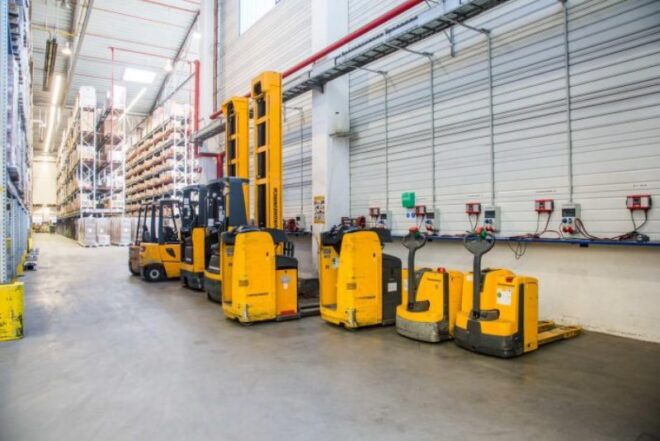
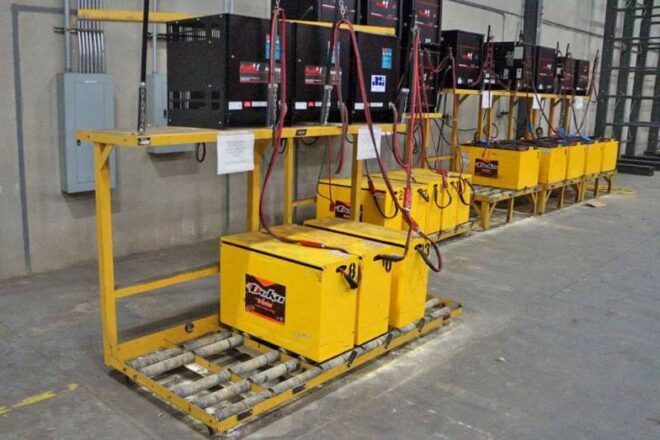
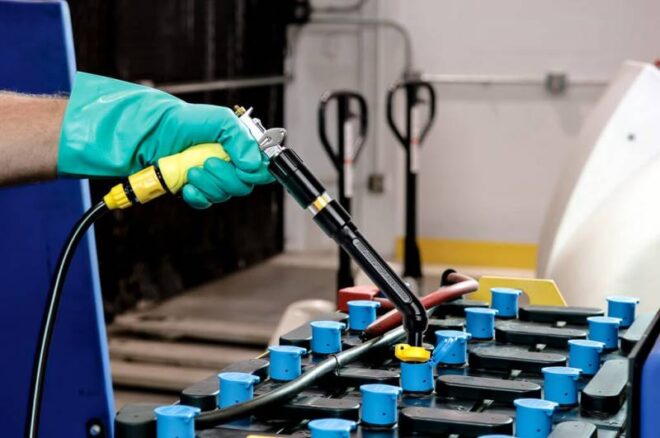
Forklift Battery Charger: Your forklift truck will run on its own battery if it’s an electric vehicle. The battery is a vital piece of equipment and must be cared for and kept charged in order for your truck to work properly.

While an engineer is responsible for the care and replacing of the battery itself, as the operator it’s your duty to take the battery into account when doing your daily checks and any general maintenance.

Caring for the battery extends its life, meaning they don’t need to be replaced as often. Because replacement batteries are very expensive, your employer will appreciate you treating it properly.

In addition, without a battery, you can’t use your forklift truck at all, which means your workplace is less productive and again costs your employer money in lost time.

Forklift Battery Charger

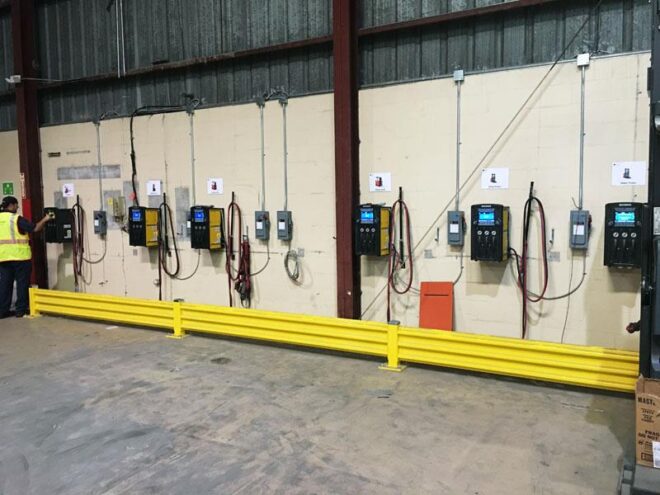
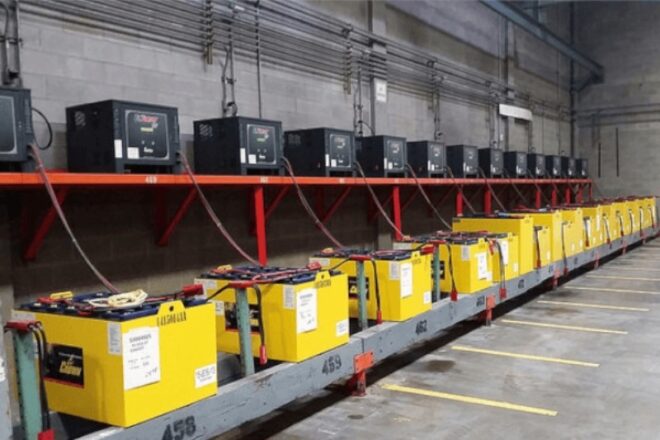
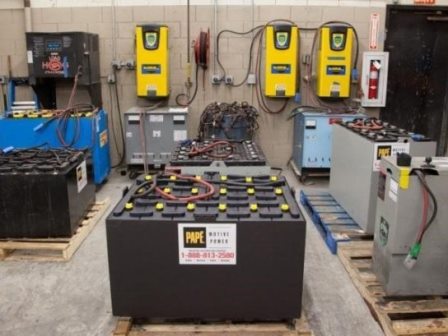
Forklift charging station

Forklift Battery Charger – There are some basic safety rules to observe when dealing with batteries.

The first is to ensure you never ever smoke close to the area where you charge your battery. And don’t use your lighter, or any other naked flame, to check the battery level. Batteries are highly flammable and if in doubt you should keep any and all forms of fire away from them.

Batteries also contain acid, which is highly corrosive if it comes into contact with your skin. For this reason, there should always be a supply of clean water close by wherever you’re using the forklift. If anyone should come into contact with the acid from a battery, they should rinse themselves thoroughly and seek a first aider immediately.

Forklift Battery Charger

Forklift battery charging instructions

exide forklift battery charger manual:

If you ever need to check or handle the battery, it is highly recommended that you should wear protective clothing including safety glasses and gloves while doing so. You should also disconnect the battery from the truck or the charger before you inspect or handle it.

To make sure you’re not at risk of injury including electric shocks, you should make sure any loose metallic objects are kept away from the battery completely. This means tucking in or removing dangling jewelry or watches, and making sure any metal objects or tools are removed from your top pockets.

A general rule to observe is that the manufacturer’s instructions should be followed throughout both maintenance and care of your battery.

Forklift Battery Charger

Forklift battery charging station

Charging Procedure:

Your forklift truck, if used as much as they tend to be in a busy warehouse or other business, will need to be recharged daily or even more often.

As the operator of the forklift, this job will usually fall to you to take care of.

To recharge the battery, you should first disconnect it from the truck and then remove the battery cover. Any gas coming from the battery will this way be released into the air instead of building up and causing a hazard while charging.

Forklift Battery Charger

How to put water in a forklift battery?

Forklift Battery Charger: Your battery should indicate what the electrolyte levels are in each cell, and you will need to check the levels to see if they need to be charged any further.

To charge the battery, add distilled water until it only just covers the plates but without overfilling. You should clean up any excess water right away and add the cell tops back on again.

There are some basic checks you need to do before you begin the charging process itself. You should make sure the charger is switched off and then look closely at the cables and plugs to see if there is any damage. If you don’t see any problems, you can then connect the charger to the battery.

Please bear in mind that while the majority of batteries are charged this way, every battery is slightly different, and you should follow the manufacturer’s instructions very closely at every step of the charging process.

When the battery has been fully charged, you should always turn the charger off before you disconnect it from the battery. This means there’s a minimal chance of accidental electric shocks.

The battery tops should be completely dry and securely fasted to the battery. Reconnect the battery to the truck and do any further securing or locking in place required by your particular forklift and battery.

Forklift Battery Charger

Forklift battery charging safety

Extra precautions – Forklift charging safety:

When charging your battery, you should only ever use water that has been distilled, or has been formulated especially for the purpose of charging your battery.

Containers should be made of glass or non-metallic material and should be kept clean and dry. If you notice your container is corroded, it should be neutralized using diluted ammonia or a sodium bicarbonate solution.

You can prevent corrosion from happening by training and drying the container, and then covering the battery terminals with petroleum jelly followed by acid proof paint where appropriate.

The vent holes should always be clear, and the cell tops tightly fitted, and the battery should be stored in a cool, dry place when not in use.

Forklift Battery Charger

Electric forklift vs diesel forklift

Diesel and LPG Engines

Any trucks that aren’t powered by electric batteries have their own safety and maintenance procedures which must be followed at all times.

These general rules will help you to stay safe and keep your vehicle in good condition during refueling of diesel or LPG engines.

  • Make sure the building or room you’re in is well ventilated if you’re indoors
  • Always make sure you use your vehicle in a big enough space – no confined spaces
  • When it comes to refueling, only ever do this outdoors
  • Ensure no smoking signs are placed in areas where these vehicles will be used or refuelled
  • Switch off the engine when you’re refuelling the vehicle
  • Change any LPG cylinders outside or in well-ventilated areas only
  • Disconnect LPG cylinders only when the valve is firmly shut
  • Mount LPG cylinders with the downward arrow pointing down

Forklift charger

Can you charge a forklift overnight?

Usually yes, most electric forklifts can be put on charge whenever not in use regardless of battery charge level – e.g. in most warehouses, the electric forklifts may be put on the charge on lunch breaks and overnight at the end of the shift.

How to charge a dead forklift battery?

A forklift battery can wear down for any number of reasons. The vehicle could have been used too long before being recharged. The truck may have been left parked with its lights on. Even extremely cold weather can sap the charge from a battery.
Forklift batteries are too heavy to remove and replace with a fresh one. So if your forklift loses its charge, rather than towing it back to the garage, another option is so simply jump start it.

How much power does a forklift charger use?

The energy needed to power a battery-powered lift-truck is substantial: according to one estimate, the typical charger consumes approximately 15,000 kWh per year, resulting in a total utility cost of $1,500 annually.

The most read

Reconditioned Forklift Battery

In some instances, a loss of battery capacity can be caused by battery sulfation.

More on this story

Forklift Battery for Solar

If you’ve decided to power your off-grid homestead with solar power, you may be considering using rechargeable forklift batteries to store the power from the sun.

The job description of Forklift Operator

The job description of forklift operator: A forklift operator is a manufacturing professional who uses forklifts to transport heavy materials around warehouses, factories, storage sites, or construction sites. They load cargo onto large pallets that are designed with spaces for the forklift’s prongs to insert and remain in place while lifting and moving.

The job description of Forklift Operator

Warehouse forklift operator

Warehouse Forklift operators are responsible for operating and managing industrial trucks to load and unload materials and deliveries and move them to and from storage areas, machines, and loading docks, into railroad cars or trucks or storage facilities.

They also have to follow all health and safety regulations. Some of the job titles that a forklift operator could grow into are operations manager and warehouse manager.

Duties of forklift operator

A forklift operator is responsible for navigating a warehouse or construction area to move goods around. They are responsible for ensuring that the forklift is in good condition. A few of the main duties of a forklift operator are performing routine maintenance on the forklift, moving goods from one place to another, creating reports of lost or broken goods, and inspecting the forklift.

  • Unload and upload material
  • Identify damages
  • Report shortages
  • Report quality deficiencies
  • Transport raw materials to production workstations
  • Inspect machinery
  • Determine the need for repairs
  • Keep updated records of inventory
  • Produce activity logs
  • Comply with company policies and guidelines
  • Assist in keeping a safe environment

More on this story

Duties of a Forklift Operator

Despite the varied environments, there are a few basic responsibilities that tend to remain constant regardless of the employer.

Forklift Capacity Calculator

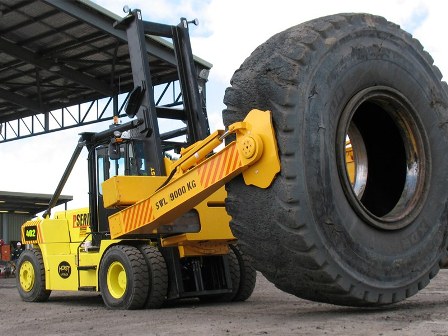
The capacity factor is important in your selection regardless of whether you are buying the truck with the attachment or are adding the attachment to a truck yourself.

Forklift Dock Ramp

Loading docks perform a critical function in the logistics system infrastructure. They form the link between manufacturing and transportation, and between transportation and storage functions.

Forklift Lifting Capacity

High capacity forklift loader truck, forklift attachments, side loader forklift, used forklifts for sale, battery.

Forklift rules and regulations

Forklift loader rules, guidelines, and regulations, forklift rules and regulations, fork truck safety, and forklift training license.

Forklift Operator Responsibilities

There are many different ways to handle a forklift and a diverse array of different vehicles.

Forklift Safety Procedures

Forklifts are extremely useful workplace vehicles, as long as they are used safely and appropriately by operators who are appropriately trained and competent to use them.

Forklift Stability Triangle

Making sure your forklift remains stable is one of the most important things you need to do while it’s in use. Unstable forklifts are the cause of many injuries and deaths each year when they fall on operators.

Forklift Weight capacity

How much does your forklift weigh? It’s important to know the weight of your forklift when transporting it, driving it on trailers, moving it in an elevator, or using it in multi-story buildings.

Forklift Yard Ramp

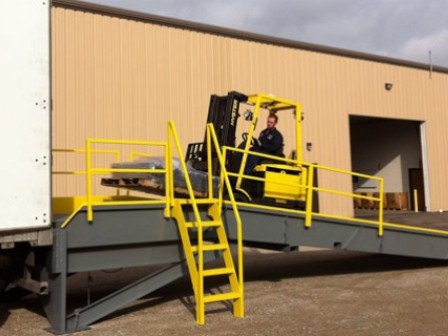
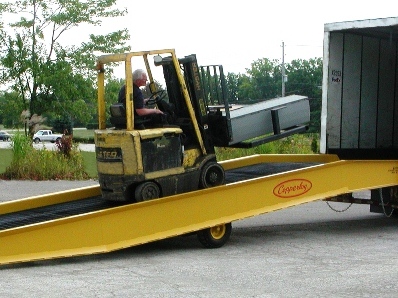
A yard ramp is a portable loading dock. It is a ramp that can be moved anywhere in the shipping and receiving yard to give forklift access to a shipping container or semi-trailer at a loading dock level.

Forklift Dock Ramp

Loading docks perform a critical function in the logistics system infrastructure. They form the link between manufacturing and transportation, and between transportation and storage functions.

Material Handler Forklift Operator job description

A Material Handler is in charge of storing, moving, and managing hazardous or non-hazardous materials.

Warehouse Forklift Driver

Warehouse forklift driver, license, training, certification, course, operator jobs, forklift safety rules, and forklift safety guidelines.

Forklift questions

So now that you have decided that you want to be a forklift driver, you may be wondering what comes next.

It takes extensive training to become a certified forklift operator, and every skilled operator has gone through training before jumping into the field.

Taking a forklift operator training course is crucial to becoming a competent and safe forklift operator, the course includes a test with questions about industrial forklifts.
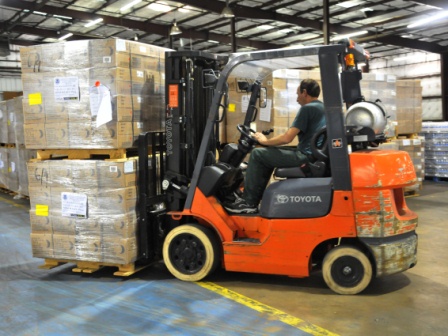
The course consists of a variety of different topics including knowing the industry safety standards and what the job consists of. It also covers the different controls and maneuvers of forklifts, and how to operate one forklift safely while on the job.

Forklift questions

Forklift quiz questions and answers

First, What is a Forklift?

One of the first things that they will go over is the basics of what a forklift truck is, sounds simple but you could be surprised by how complicated they can be.

First off a forklift is defined as a mechanized piece of moving equipment that is designed to pick up pallets or large boxes with ease.

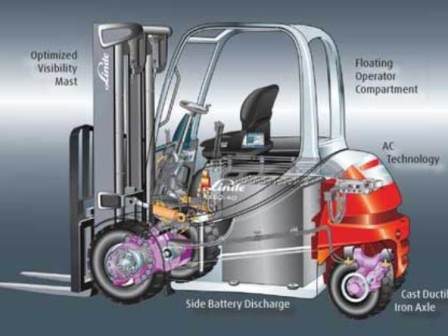
The cab is the part you sit in, the mast is the part that lifts the load, the forks are the arms that pick up and support the load and the counterbalance at the back of the forklift keeps the machine stable when lifting.

Although these are the main parts, there are many other parts that you can familiarize yourself with on OSHA‘s website. There are several different types of forklifts although the most popular is the industrial counterbalance forklift.

The majority of these forklifts are used in a warehouse setting, but can also be used outside in smooth paved areas. If you are doing heavy-duty outdoor moving with uneven surfaces, such as a construction site or port you will most likely be using a rough terrain forklift.

Forklift questions

Top Stories

Forklift Test Questions

Extensive training is needed to become a certified forklift operator, and each qualified operator has undergone training before seeking employment.

More on this story

As the load center on the forklift increases the weight capacity?

One of the frequently asked questions is: as the load center on the forklift increases the weight capacity does what?

How Long does it Take to get Forklift Certified?

It is hard to tell how long it takes for a forklift course to complete as there are many other factors involved.

How to drive a Forklift?

Forklift safety is of the utmost importance, and driving a forklift improperly presents various risks to both yourself and others.

How to operate a stand-up forklift?

Two main ways of operating a forklift exist. Operating while sitting down, and operating while standing up.

How to get Forklift Certified?

Forklift certification sometimes referred to as forklift licensing, is a requirement of any operator of forklifts in a given workplace.

How to read Forklift Load Capacity Chart?

Every forklift has a data plate that is designed to give the employer and the operator the information necessary to prevent accidents.

Looking for the Formula to rate the capacity on Forklifts

The capacity rating plate on the forklift truck must be corrected when attachments are installed. This is called derating the lifting capacity.

When Traveling with a Load the Load Should be Lifted?

To handle a load safely, a forklift operator must consider dangers ranging from improper load weights to blind spots and hazards on the ground.

How to become forklift certified? How to get Forklift Certified?

How to get Forklift Certified: Forklift certification sometimes referred to as forklift licensing, is a requirement of any operator of forklifts in a given workplace.

While it’s an employer’s responsibility to provide training, in-class we’ve found that operators are the ones that have the most at stake in forklift training programs.

They are often the associates who ask the best questions when it comes to making sure they’re in compliance with OSHA forklift training standards. That’s why I wanted to take the time to provide short reminders to operators and employers alike about training requirements.

How to get Forklift Certified

How to become forklift certified

You may have already asked the question: Where can I get forklift certified?

If you want to be a driver qualified, operating industrial truck such as a forklift, the first thing to do is to have the certification.

Now, …how to become forklift certified? This is one of the common questions we heard from an individual who is seeking such a qualification.

The certification involves undergoing a training process and it is easy as you think. It only covers classroom lectures and hands-on evaluations.

Forklift training how long does it take?

OSHA regulations require two phases of training to become forklift certified: classroom-style training and a hands-on evaluation.

And the forklift operator certification doesn’t take that long; the training usually takes a few days at the most, and operators can print their operator cards once they’re done!

How Long Does it Take to Get Forklift Certified?

Two Ways to Take the Forklift Training: Forklift safety training is a vital part of doing business or getting employed. If you are an individual or company in need of such training, there are two ways you can choose to receive it:

  • forklift online certification
  • in person forklift training

forklift online certification

Online certification, it is another alternative to take the forklift training. This type of method simulates the classroom lecture, formal education, and evaluation of the course. However, this does not provide the students with the hands-on demonstration or actual operation of the forklift.

Online training is the most convenient way of getting trained. If you don’t want to send your workers to school, you can have them take the online certification course instead. There are a number of schools that provide such training, find one by asking your colleagues.

From any internet-connected device, your employees simply take the forklift training program followed by a short test – each online. They WILL pass because they can correct any wrong answers during the test. This portion takes about one hour.

in person forklift training

The most effective mean of training delivery is through attending it in person. You can get forklift training at a school or private company near you. An individual or employer can register for a schedule, complete the classroom lecture, perform the practice test, and get evaluated by the instructor. This method usually lasts for a day or 2 and depending on the type and extent of the course.

After the test, there’s a printable operator checklist and evaluation form to conduct the evaluation.

According to OSHA, “Hands-on evaluation by an employer may be conducted by any individual with the experience, training, and knowledge to train and evaluate forklift operators and assess their competence.”

In other words, no special certification is required to conduct the evaluation. Any qualified employee can do it.

With the Online Forklift Training and Certification Program, your operators can easily and affordably get certified in an afternoon.

How to get Forklift Certified

Fines for unlicensed forklift drivers

Penalty for driving forklift without a license

OSHA’s purpose is to keep employees safe and provide comprehensive forklift operator certification. To carry out that purpose, OSHA keeps a close eye on employers to be sure they follow its safety regulations. Violations can vary from $3,000 to $30,000 per unlicensed forklift operator.

Forklift certification is all about safety – and there’s nothing more important than the safety and well-being of your workers!

Take the training courses you need to keep your employees safe, and also avoid crippling OSHA fines and penalties.

Stay safe, prevent injuries, and lawsuits. Forklift certification is a tiny investment that protects your employees and your company. The training ensures your employees know how to safely operate their equipment, which results in several benefits:

  • Keeps employees safer from injury or death
  • Prevents accidents that can destroy inventory
  • Prevents costly OSHA fines
  • Reduces the risk of lawsuits

Penalty for driving forklift without a license

As an employer, you need to be aware that fines for unlicensed forklift drivers are substantial. According to OSHA, any employer who knowingly or repeatedly violates the forklift training requirements may be fined $13,250 for each day the violation continues beyond the “cure by” date up to a maximum of $132,500.

Furthermore, any person who makes a false statement, representation, or claim of certification in any form may be fined up to $13,250, imprisoned for up to six months, or both.

Ignoring OSHA regulations, including not complying with their requirement for forklift operators to be properly trained and licensed before they’re permitted to operate the equipment can have severe consequences on employers.

The most read

More on this story

Penalty for Driving Forklift without License

As an employer, you should be aware that the fines for unlicensed forklift drivers are substantial.

How to operate a stand-up forklift?

Two main ways of operating a forklift exist. Operating while sitting down, and operating while standing up.

How to drive a Forklift?

Forklift safety is of the utmost importance, and driving a forklift improperly presents various risks to both yourself and others, as well as your surroundings and the things you’re lifting.

Forklift Controls Levers

Walk into any warehouse, and one piece of equipment you are sure to see is a forklift. A forklift is a vehicle with a pronged device that is capable of lifting and hauling heavy objects.

Forklifts are capable of maneuvering in small spaces and lifting objects into high-up, hard-to-reach places.

Although forklifts are capable of doing many jobs, they are also dangerous and must be safely operated. Because of their design, forklifts can tip over easily, and they can crush or gouge people or objects if the controls are not handled properly.

The Guide to Forklift Training

This book is an essential resource for anyone who operates or manages a forklift. This book covers everything from the basics of forklift operation to advanced safety techniques, providing readers with the knowledge and skills they need to operate forklifts safely and efficiently.

With practical tips and real-world examples, this book is an invaluable resource for anyone who works with forklifts.

The Guide to Forklift Training

Forklift joystick

Handles forklift controls vary depending on the type of truck. A certain type of forklift can have different operational controls from others.

This is why before operating a forklift, it is important to familiarize yourself with the owner’s manual where you can read the location of the handles controls and understand how each control works.

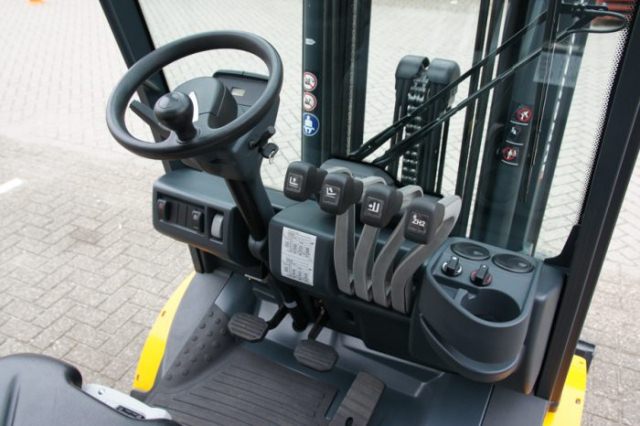
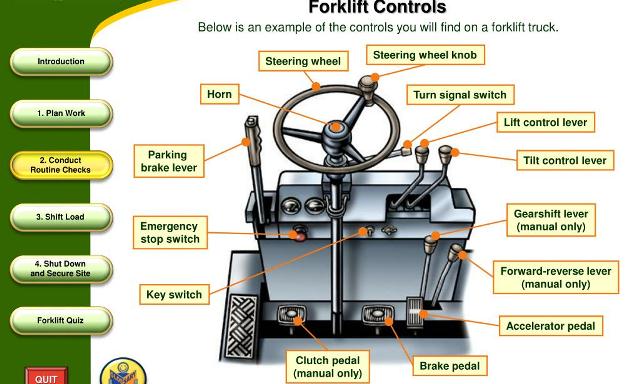
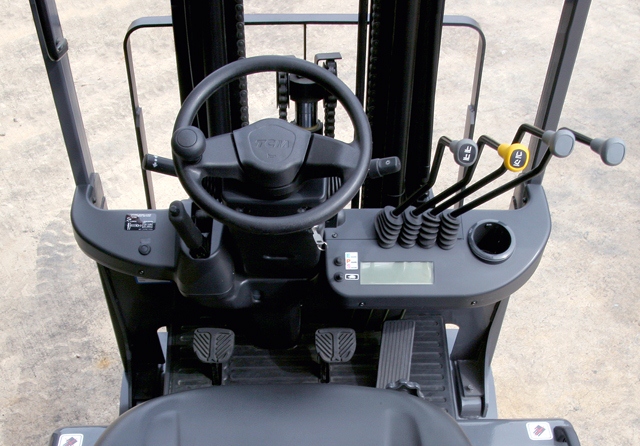
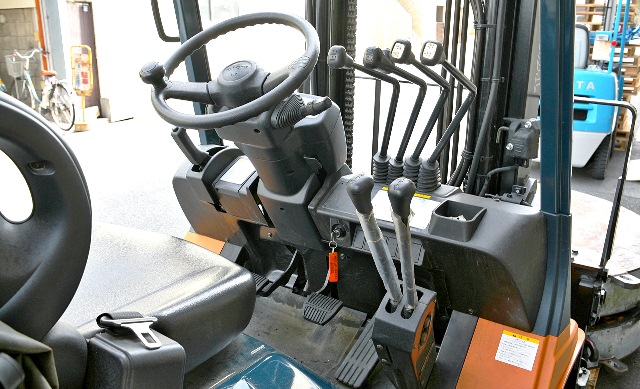
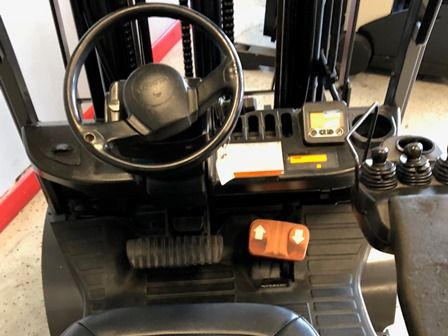
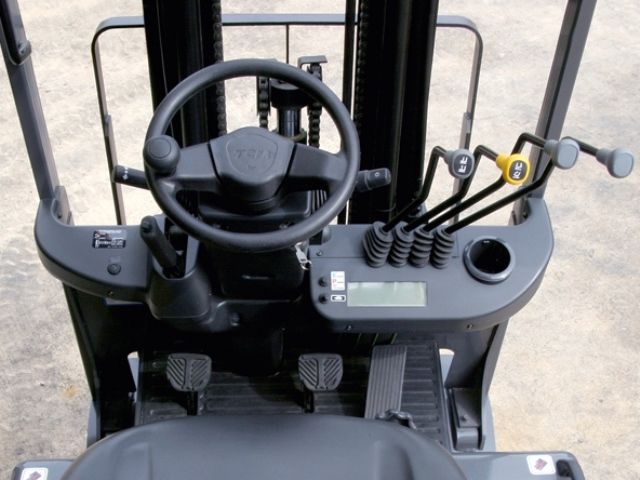
Hydraulic Lift Knobs: The forklift has three basic control knobs. One that lifts the forks up or down, the second one tilts the forks/blades down or up to secure the load, and the third to move the load side to side.

Some types of forklifts have a knob that controls the width of the fork.

Forklift Directional Controls: This basically works just like the transmission of a car. If you want to park the car, you put it in “P” or park, if you want to drive the car, you put it in “D” or drive, and if you want to reverse, you switch the transmission lever to “R.”

But forklift directional control has only three positions, forward, neutral, and reverse. Forklift directional controls can be steering column-mounted or foot-operated.

Forklift truck controls

Familiarize yourself with the controls by first reading the owner’s manual. Note the location of each control and its specific function.

Most forklifts have two levers to control the forks. The first lever controls the height of the forks. You pull back on the lever to make the forks go up, and you push forward to make the forks go down.

The second lever controls the tilt of the forks, allowing for better weight distribution, keeping objects from falling off while driving, and helping items slide off when unloading.

You tilt the forks forward by pushing the lever forward, and you tilt the forks back by pulling the lever back. Some forklift models have a third lever that controls the width of the forks. Each of the levers is located just to the right of the operator’s seat.

Sit in the forklift and go over the controls with a trained coworker while the forklift is off and not operational. Ask questions if you are unsure of something.

Forklift controls

Observe a coworker as he demonstrates the function of each of the controls. Pay close attention to the individual controls and functions. Watching is often the best way to learn a new skill. Notice that on hydrostatic forklifts to make the machine go, you push on the gas; to make it stop, you release the gas pedal.

There is no brake. Some hydrostatic models have battery-powered engines that shut off when the gas pedal is released and start up again when the gas pedal is pushed again. Hydrostatic forklifts have two gas pedals as well, one for going forward and one for going in reverse. No need to shift into gears; just alternate the gas pedals.

Practice using the controls in an open area without any cargo on the lifts. Before beginning the task of lifting real objects, get a feel for the controls and how they operate by practicing in an area that is free of objects and people.

Understand that the back wheels are what steer the forklift, which can make it feel like you are driving backward and will take some getting used to.

Forklift pedals

Here are the other controls you must familiarize with:

  • Accelerator Pedal: This gives a boost in speed and acceleration. It is self-explanatory.
  • Brake Pedal: Again, it is self-explanatory.
  • Clutch Pedal: Some types of forklifts are equipped with a clutch pedal that gives the operator more driving acceleration by shifting from gear to gear. Such forklifts equipped with clutch are those used outdoors and with an internal combustion engine.
  • Inching Pedal: The inching pedal is usually operated by the left foot. Its purpose is to make a very slow and little movement for maneuver with full engine power for lifting. The inching pedal is used commonly to maneuver forklifts in tight spaces or corridors.
  • Parking Brake: The forklift is equipped with such a brake and it works similarly to your car. It holds the forklift firmly when not in use. When parking on an inclined floor surface, engage the parking brake and block the wheel to make it more secure.

Hydrostatic forklift

In another type of truck, such as the hydrostatic forklift, acceleration is done by pushing the pedal down and the more the pedal is depressed, the faster the forklift moves; to put the machine to a halt/stop, the operator releases the accelerator pedal. There is no brake control in a hydrostatic truck.

In other types of hydrostatic forklifts, there are two accelerator pedals that act like directional controls. The first pedal when pushed moves the forklift forwards, and the other one moves the truck in reverse. The operator shifts his foot from pedal to pedal to drive the forklift in the desired direction.

Forklift operation safety

Tips on How to Drive a Forklift Safety

Having knowledge of driving a forklift safely can prevent accidents in the workplace. Below are some of the important tips you can employ, you may have heard or known these but still they’re not obsolete.

forklift cert

First and foremost, the operator must be trained and certified first before operating this machine – The forklift training course should be specific to the type of forklift the operator is intending to operate. Taking the course and getting certified only takes a small amount of time to complete and a little investment to spend. Being certified has a lot of advantages.

PPE requirements for forklift operator

Appropriate clothing must be worn – PPEs such as a hard hat, luminous safety vest, steel-toed shoes, and eye protection are important especially when the environment is hazardous. Any loose clothing is not allowed as it can snag with the moving mechanism of the forklift.

Forklift daily inspection

Pre-operational inspection must be performed: a daily inspection checklist must be updated to make sure that the forklift is in good running condition.

The inspection involves checking brakes and hydraulic fluids, seeing if the warning devices and lights are functioning, and ensuring the tires are not worn out. The inspection checklist has the details of all things to check. Any fault should be reported to the superior for immediate corrective action.

Forklift battery charger

The forklift should be fully charged (if it’s electric) or has enough fuel (if it’s gas or LPG-powered) – If the truck has not had enough charge or fuel during operation, it could stop at any time or the truck’s lifting capacity could considerably decrease. What if the operator is lifting a 1-ton load when the truck suddenly stops because of insufficient fuel? This is when a serious accident could happen.

Forklift weight capacity

Never lift a load that is beyond the lifting capacity – know the capacity of the forklift on the data plate, it is usually attached to the machine. It indicates all relevant information such as the model, year, manufacturer, capacity, fuel type, etc. Please do remember that lifting a load that is well beyond the capacity could cause a tip-over.

Overloading is one of the common unsafe practices forklift operators do we’ve observed over the years in this business.

Forklift lifting capacity

When lifting, make sure the loads are evenly balanced and distributed – proper weight distribution is the key to making the load secure during transport. When loading the goods, the heaviest ones should be as close to the truck’s mast.

One important piece of advice when loading large rectangular boxes is that the boxes should be arranged widthwise and not the other way around, the idea is to prevent the load center from shifting forward which could cause the forklift to tip over.

Forklift refueling procedures

Refueling or recharging must be performed in a well-ventilated location – Many of us may perceive refueling/recharging as a simple task to do but make no mistake.

It is one of the hazardous things you do with a forklift. To avoid an accident during this activity, make sure the forklift is NOT running as it has the probability to cause ignition, and that any naked lights and smoking are strictly prohibited in the refueling location.

When recharging an electric forklift, please do remember that recharging should be done only when the charge capacity reaches below 30%.

Avoid over and undercharging the forklift battery as it shortens its lifespan. The charging facility must be equipped with first-aid devices and a wash station in case the battery acid comes in contact with the eyes or skin.

Forklift parking area

Park the forklift in a designated area – when the work shift ends, park the forklift in a designated location, the company usually assigned a place for this. When shutting down the truck, lower the forks touching the ground so that the parking brake is pressed before leaving. Do not leave the key in the ignition.

Don’t park the equipment near the emergency door or exit or in the fire lane as it can block the moving vehicle in and out of the premise.

Forklift safety ebook

  • Did you know that there is a guide on how to drive a forklift?
    • How to improve forklift safety?
    • Forklift safety tips workplace
    • Forklift safety tips for pedestrians

With practical tips and real-world examples, this book is an invaluable resource for anyone who works with forklifts.
Forklift driver training

OSHA Compliant Forklift Operator
COMPLETE Training Kit

  • Certificates Of Completion,
  • Operator Cards,
  • Student Hand Outs,
  • Hands-On Evaluation Checklist, & More!
  • The new release’s limited-time special promotion pricing ends soon!
  • Buy once & get free templates for life to train all your employees!
  • English and Spanish versions are both included!
  • Get your employees forklift certified in 1 hour!
  • Available on a flash drive for ease of use and re-use.
  • We have helped thousands stay OSHA compliant
  • The best part is that you can complete the training from anywhere at any time!
  • It comes with a 100% 30-day money-back guarantee so you can try it out completely risk-free!

FAQs about forklifts

How to operate a forklift controls

Forklift controls vary depending on the type of truck. A certain type of forklift can have different operational controls from others.
This is why before operating a forklift, it is important to familiarize yourself with the owner’s manual where you can read the location of the controls and understand how each control works.

What is plugging on a forklift?

Plugging, also called regenerative braking, regen, or switch-back occurs when an operator traveling in one direction uses the directional selector to switch to the opposite direction.

Is it illegal to drive a forklift on the road?

While it is not illegal to drive a forklift truck on a public highway, depending on the distance it is likely to travel, there are specific legal requirements. For a vehicle to be used on the public road, it must comply with insurance, licensing (tax) and registration requirements.
When leaving a forklift unattended How should the forks be?

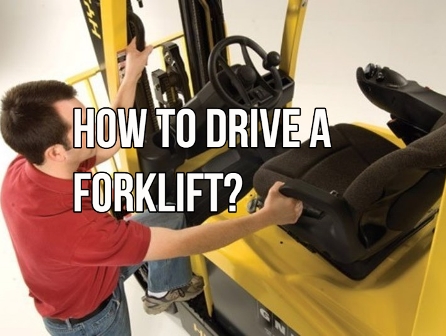
Lower the forks to the floor when parking the forklift. Make sure that the forks touch the ground when you are leaving. Apply the parking brake when it is idle position. All operational controls of the truck must be in the neutral position before the driver alight the forklift compartment.
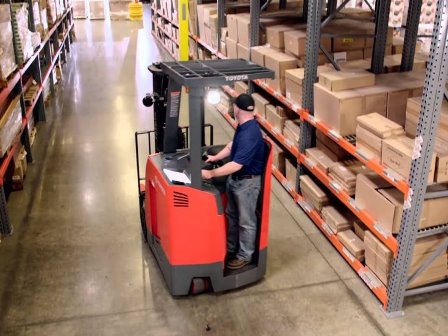
What is the load center of a forklift?

The load center is the distance from the face of the forks to the load’s center of gravity. Many forklifts are rated using a 24-inch load center, which means that the load’s center of gravity must be 24 inches or less from the face of the forks.

The most read

Forklift Pedals Explained

How many pedals do a forklift have? What are the 3 pedals on a forklift for?

What are the 4 Levers on a Forklift?

What do the levers on a forklift do?

More on this story

How to drive a Forklift?

How to drive a forklift for beginners? How to become a forklift driver?

Forklift Safety Procedures

Forklifts are extremely useful workplace vehicles, learn about the rules for driving forklifts.