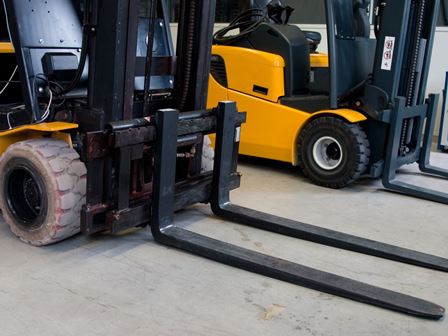
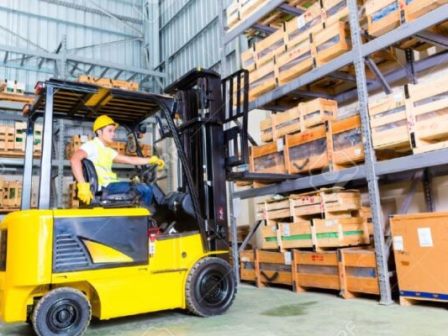
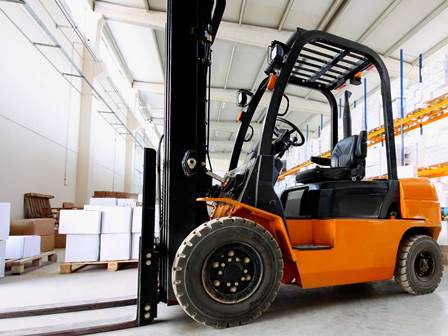
The fork is one of the most important components of the forklift, and it is critical that all forklift operators keep their forks in good working order.
A damaged fork can have unnecessary cost consequences, from destroying valuable cargo to endangering your safety or that of those around you.
Inspection of the thickness and condition of the forklift should absolutely be part of every daily checklist, as you need to make sure its thickness is adequate for lifting loads throughout the day.
Here is a basic overview of what to look for when inspecting the thickness of your forklift fork.
Fork thickness inspection – At least one formal inspection should be performed every 12 months.
However, in addition to your basic daily inspection, you should perform a professional inspection more often than once a year.
The exact frequency depends on the working conditions you are operating in, as well as the condition of the forklift.
The forklift should be inspected by a trained person or technician or a specialized forklift repair service company.
What should you look for when inspecting your fork?
Whether you are conducting your daily review or a more substantial review, there are a number of specifications to look for. These include:
cracks on the fork surface
whether the fork is straight or not
the thickness of the fork and
the amount of visible wear.
In some cases, like there are cracks on the surface, you probably won’t need to solder. However, more significant wear and tear will require repair.
Some forks are made from specialized materials. For example, stainless steel forks are often used when handling food or chemicals to provide additional protection against cross contamination.
They are an integral part of the forklift and ensuring you are using the correct ones and that they are in good condition is essential to both the safety of personnel, but also the forklift and the load.
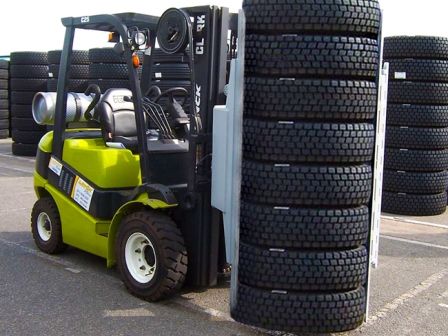
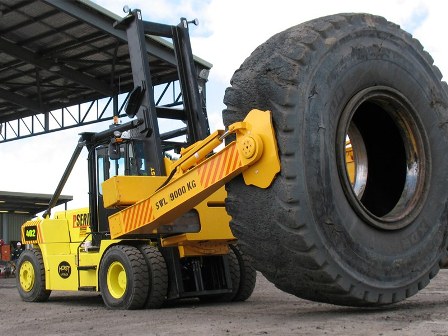
Preferred for outdoor operations, pneumatic forklift for sale are perfect for a wide range of applications, from a warehouse, lumberyard to the loading dock.
They are a solution for standard warehouse aisles and outdoor applications.
Pneumatic forklift tires for sale
Can you put pneumatic tires on a forklift? Forklift tire types and uses
These are just some of the possible benefits of using pneumatic forklifts in your workplace:
Superior Traction
Pneumatic tire forklifts provide excellent traction on rough terrain and challenging surfaces and are generally the equipment of choice for outdoor jobs, including warehouses and construction sites.
Increased Headroom
Forklifts built for outdoor use with pneumatic tires generally have a larger chassis and more headroom than indoor shock-absorbing tire models, which means they provide superior maneuverability and greater clearance on road surfaces. gravel and other rough terrain.
More efficient refueling
Since most pneumatic forklifts are powered by an internal combustion engine, refueling is as simple as pumping in some diesel or changing a propane tank; This is an advantage over battery powered lifts that require significant downtime to recharge.
Smoother Ride
Forklifts with damping tires can be operated outdoors in certain conditions. However, since forklifts are not equipped with a suspension system, those that travel with air tires offer more comfort to the operator.
Forklift tire replacement cost
Forklift tires are a large part of operating costs – 20% to 30% of a forklift’s total lifetime operating expense goes to tires.
Worn tires reduce productivity and take up to 10% longer to cover the same distance.
Operator comfort, and therefore productivity, is also closely related to the condition of the tires.
Tires are the only shock absorber on a forklift. Comfortable operators do more work.
When you want to replace your forklift tires look for these signs that you need new tires:
Chunking (missing sections of tread from a tire as though sliced or torn off)
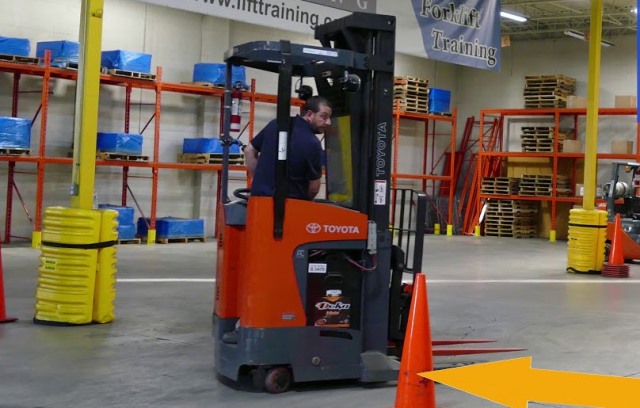
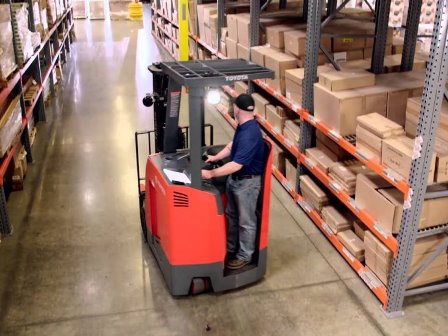
Stand up Forklift Operators must be trained Stand up Forklift Training:
An untrained operator of a stand-up forklift can be as dangerous as an unlicensed operator of a motor vehicle.
OSHA regulations require that the employer ensure that a forklift operator is competent to operate the forklift he or she is assigned to use.
The employer must document operator training and an evaluation of the operator’s performance while using the forklift.
Stand up Forklift Training
Stand-up forklift operator training
Training has three parts:
Formal instruction such as a lecture, discussion, interactive computer learning, videotape, and or written material (can be taken anywhere)
Practical training which includes hands-on demonstrations by the trainer and exercises by the trainee (on the model of forklift the worker will use); and
An evaluation of the effectiveness of the training by observing the operator’s performance while doing actual work using the forklift. This evaluation must be repeated at least once every three years (must be at a workplace).
Refresher training must be given if the operator has been involved in an accident, near miss, or unsafe operations.
Also, if an operator is assigned to a new type of stand-up forklift or if workplace conditions change that could affect safety, then refresher training is required.
Stand up forklift training class
The topics listed in the table below must be covered when training a forklift operator. If a specific topic does not apply to the forklift in the employer’s workplace, covering it is optional.
Stand up forklift safety Topics
Topics related to industrial stand-up forklift training:
Operating instructions
Warnings and precautions for the types of PIT the operator will be authorized to operate
Differences between the PIT and the automobile
PIT controls and instrumentation: Where they are located, what they do, and how they work
Engine or motor operation
Steering and maneuvering
Visibility (including restrictions due to loading)
Fork and attachment adaptation, operation, and use limitations
PIT capacity
PIT stability
Any PIT inspection and maintenance that the operator will be required to perform
Refueling
Charging and recharging of batteries
Operating limitations
Any other operating instructions, warnings, or precautions listed in the operator’s manual for the types of PIT that the employee is being trained to operate
Stand up forklift safety Topics in workplace
Topics related to your workplace
Surface conditions where the PIT will be operated
Composition of loads to be carried and load stability
Load manipulation, stacking, and un-stacking
Pedestrian traffic in areas where the PIT will be operated
Narrow aisles and other restricted places where the PIT will be operated
Use of door opening and closing devices
Hazardous (classified) locations where the PIT will be operated
Ramps and other sloped surfaces that could affect the PITs stability
Closed environments and other areas where insufficient ventilation or poor PIT maintenance could cause a buildup of carbon monoxide or diesel exhaust
Other unique or potentially hazardous environmental conditions in the workplace that could affect safe operation
Qualified Trainers
The employer or any other person the employer chooses who has the knowledge, training, and experience to train and evaluate forklift operators can do this training and evaluation. The trainee can only operate the forklift when directly supervised by such a person and when this would not endanger anyone.
Documenting Training
If the operator had previous forklift training, the employer must document that the training covered the required topics described above. The operator must have been evaluated in the current work within the last three years.
Training and Evaluation Records
The employer must keep a record that shows that each stand-up forklift operator has been trained. The record includes the name of the operator, date of training, date of an evaluation, and the name of the person(s) giving the training and evaluation.
Stand up forklift how to operate?
Is driving a forklift hard? Driving a stand-up forklift is different than driving a car
In a car or truck, the front wheels steer the vehicle. A forklift has steering wheels in the rear.
The rear end of the forklift swings in a circle around the front wheels that support most of the load. The operator must check that there is room for the rear end to swing when making turns. This clearance can be maintained in your workplace by permanently marking aisles with painted lines or arranging storage racks in a way that creates obvious aisles for travel.
However, these marked aisles will only be effective if you keep them clear of stored materials, which can gradually encroach as space is needed.
A stand-up forklift is not as responsive as a car when turning the steering wheel. Rear steering makes it difficult to stop a forklift quickly or swerve and still maintain control. It is important, then not to drive a forklift fast or round corners quickly.
Forklift incline limits
Driving forklift with load: Driving with the load downhill can result in loss of the load and control of the forklift.
If you drive a forklift on an incline, you must keep the load on the uphill side. Otherwise, you may have no weight on the wheels that steer and can lose control! The load could also fall off or cause the forklift to tip.
Often a large forklift load obstructs the driver’s view in one direction. It may be necessary to travel long distances with the load to the rear (in reverse for most forklifts). Use extra caution when traveling in reverse.
Stand up Forklift safety features
An overhead guard prevents an object on the forks or on a high rack from falling onto the operator while picking or placing a load at elevation.
The guard is not designed to withstand the impact of a full load. It can be effective in deflecting small packages. It is required on all stand-up forklifts that can lift a load above the operator unless conditions such as clearances would not allow the forklift to be used.
Operator restraints will hold you in the seat if you strike an object or if the forklift overturns. Forklift manufacturers have been required to equip new forklifts with operator restraints such as seat belts. Many forklift manufacturers offer restraint systems that can be retrofitted on older forklifts.
If your forklift begins to overturn, you are safest when you stay in the seat, hold on firmly, and lean in the opposite direction of the fall rather than trying to jump.
Many fatal accidents happened when the operator tried to jump. As the forklift begins to tip, it will move slowly – tricking the operator into believing there is time to jump. Once the center of gravity is past the wheel line, the forklift will rapidly fall. The forklift’s overhead guard will quickly pin or crush an operator who jumps
If your forklift has a restraint such as a seat belt or a lap bar, you must use it.
Stand up Forklift load center chart
How to stand up forklifts safely carry and lift heavy loads?
A stand-up forklift works on the principle of a cantilever. A load on a beam (the forks) supported by a fulcrum (the front wheels) is counterbalanced by a weight o the other end of the beam (the forklift body and counterweight built into it).
Whether a forklift will safely carry a load or will tip forward can be determined by comparing the “moment” of each.
Moment equals the distance from the fulcrum to the center of gravity (the point where all the weight is concentrated) times the weight.
As the load is raised, it becomes possible for the stand-up forklift to fall to the side as well as tip forward. The operator must consider the center of gravity of the stan up forklift and load together. This combined center of gravity moves as the load is moved and as the forklift travels over surfaces that are rough or inclined.
Forklifts have a “stability triangle”. The sides of the triangle as shown in the illustration are formed by the center of each front wheel and the center of the rear wheel or at the center of the axle if there are two rear wheels.
A vertical line extending from the center of gravity of the vehicle-load combination must be inside of the stability triangle to prevent the forklift from tipping forward, falling sideways, or dropping its load.
Stand-up forklifts (also known as stand-on and electric riders) are designed for applications where the operator must get on and off the lift truck frequently.
Forklifts are extremely useful workplace vehicles, as long as they are used safely and appropriately by operators who are appropriately trained and competent to use them.
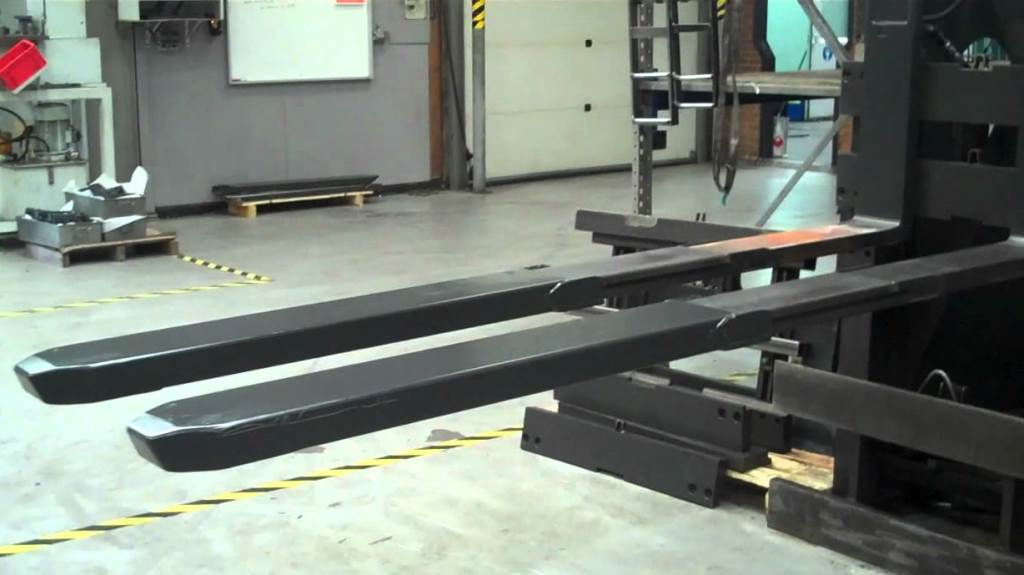
Forks are often overlooked on a forklift due to their simple way of operating. However, when you need a different size or the forks are no longer at their best. It can be difficult to know what you need to replace them. Here is a basic guide to getting you on your way.
when do you need to replace the forks?
You should check your forks for excessive wear with a wear gauge on a regular basis to ensure they are still capable of carrying their rated load.
Forks are considered worn beyond their load capacity once they reach 90% of their original thickness.
Each forklift is rated to handle a particular weight capacity.
And it’s important to make sure your forks are rated for at least what your forklift can handle.
For example, if your forklift is rated to lift 5,000 pounds, your forks must be rated to handle at least 5,000 pounds.
You can find the weight capacity rating of your truck on the data plate.
Next, use a forklift fork size chart to compare weight capacity to required fork dimensions (thickness and width).
What size fork extensions do I need?
If you are wondering “How long can my hairpin extensions last?” the answer is that they cannot have more than 150% of the length of their forks installed.
For example, if you use 48-inch forks, your fork extensions should be a maximum of 72 inches.
And just like with regular forks, fork extensions should reach at least 2/3 of the length of the load, but not all the way.
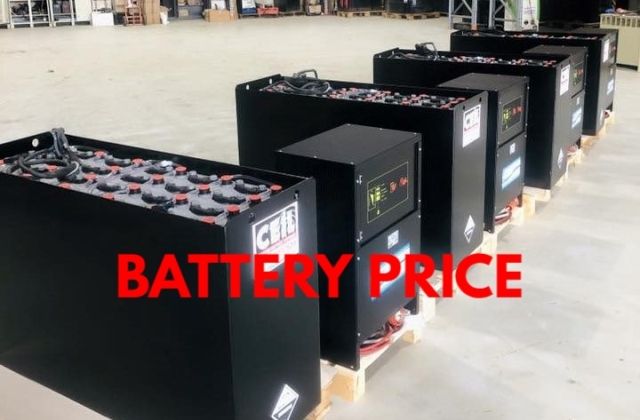
Forklift Battery Price: When it comes to buying a battery for your forklift, the true cost of a forklift battery involves much more than just the initial price.
Often times, what appears to be the cheapest option can end up being the most expensive option in the long run.
Someone who oversees operations in a warehouse or other facility that uses forklifts on a regular basis knows why that is not good for their business bottom line.
How do you know what the true cost of a forklift battery is?
Here’s what you need to know when calculating the true cost of a forklift battery to determine the best option for your fleet.
Forklift Battery Price
Forklift battery types
Electric commercial forklifts generally run on one of two types of batteries:
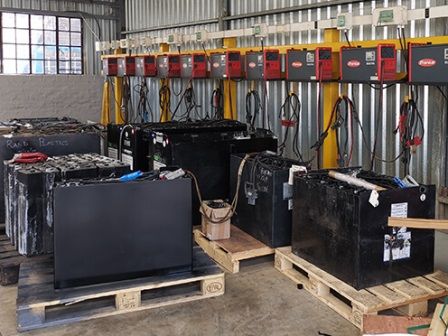
Forklift lead-acid battery
Forklift lithium-ion battery
Forklift lead-acid battery
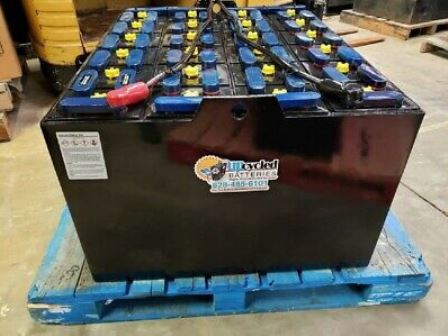
Lead-acid batteries are considered the traditional method of powering forklifts. With a removable top, lead-acid batteries generate electricity through a chemical reaction between lead plates and sulfuric acid. In order to work, workers must periodically refill the units with water, allowing the chemical process to begin.
Forklift lithium-ion battery
Lithium ion batteries are a newer technology that is catching the attention of more and more warehouse managers. Lithium-ion batteries are more energy-dense than lead-acid batteries and include several safety and convenience features. For example, lithium ion batteries do not require water maintenance because the cells are sealed.
Average price of a forklift battery
Initially, for a single battery, the lithium-ion is the more expensive option of the two. Prices vary, but when you simply compare the starting price of a single battery, a lithium-ion battery can cost about twice as much as a lead-acid battery.
If you have a warehouse, multi-shift or manufacturing, or if your business operates on low profit margins, this article is a must-read.
If you’ve never considered lithium-ion batteries due to cost, we’re going to share two statistics that might make you change your mind.
In the United States, an equipment manufacturer saves more than $ 1 million a year by switching to lithium-ion batteries. After looking at the numbers, the company found that it was spending $ 4,800 per day:
Pay employees to change batteries, twice per shift.
15 minutes of inactivity with each exchange (90 minutes per day)
Spending money on electricity (lithium-ion batteries are 40 percent more energy efficient)
Lithium ion forklift battery maintenance
Increase Productivity – Lead-acid batteries cause your forklift to lose power when discharged, but lithium forklift batteries don’t have this problem. In addition, the lithium-ion batteries do not require maintenance, watering or replacement.
Try this simple experiment: Ask your operators to keep track of how much time they spend changing, charging, and maintaining forklift batteries each week.
You can find out how the company is spending a good chunk of the profits on those “cheaper” forklift batteries.
lead acid vs. lithium-ion battery comparison
How To Choose The Right Forklift Battery?
When buying forklift batteries the decision depends on an economic factor, lead batteries are economical at first, but over time lithium batteries exceed the initial cost of the purchase with energy savings and maintenance
Two of the most common chemical types of batteries are lithium-ion and lead-acid. With these differences in chemistry come differences in performance and cost. While lithium-ion and lead-acid battery options can be effective storage solutions, here’s how they stack up in key categories:
FORKLIFT BATTERY
LEAD ACID
LITHIUM-ION
Battery Cost
x
Battery capacity
x
Battery efficiency over time
x
Battery lifespan
x
Battery depth of discharge
x
lead acid vs. lithium-ion battery comparison
Forklift battery specifications
These are averages and may vary based on how well the batteries are maintained. A lithium-ion forklift battery needs to be replaced less frequently, which is a major driver for business owners to prefer them to conventional lead-acid batteries, which need to be swapped out for new ones more often.
FORKLIFT BATTERY
LEAD ACID
LITHIUM-ION
Battery equalization
Every 5 to 10 charges
Automatically
Battery temperature
Time-controlled
Much higher temperature limit
Battery water level
Every 10 cycles
Never needs water
Battery lifespan
1000 and 1500 cycles
2,000 and 3,000 cycles
Forklift battery specifications
Forklift Battery Price
How much does a forklift battery cost?
Forklift batteries cost between $2,000 and $6,000 depending on specs and size.
How much does a forklift battery charger cost?
Forklift battery chargers range in cost from $ 500 for a portable charger that plugs into a standard 120-volt AC outlet, to $ 3,000 for a charger that must be plugged into the building’s electrical system by a licensed electrician. The price varies depending on the charger specifications.
Total cost of a forklift battery:
Lead-acid batteries are the lowest-cost alternative when it comes to purchase price, although there are significant drawbacks such as maintenance requirements, safety, inefficiency, and the need for a charging room.
Lithium-ion batteries are priced higher (perhaps two to four times higher than lead-acid). However, these batteries are more energy efficient, store more energy in a smaller unit, fast charge, are safer and last longer.
You may need to install charging stations. And if you want to replace lead-acid to Li-ion batteries, you will need a specialist to adapt the equipment. Take into account the difficulty of recycling.
Forklift battery voltage
For both lithium-ion and lead-acid batteries, it is important to match the size of the battery voltage to the charger voltage.
This will maintain the life of the charger and ensure proper charging and subsequent operation of your electric forklift.
If the battery doesn’t charge properly, or if it doesn’t have enough charge at the beginning of a shift to be productive until the end of the shift, it won’t be able to meet the demands of your production schedule.
To avoid headaches in the future, you should buy the forklift battery and its charger from the same manufacturer.
Your technical support will be much easier if the battery and charger are from the same manufacturer.
How to buy the right forklift battery? Before you spend hundreds of dollars on a battery, take a moment to learn how to choose the battery for your forklift.
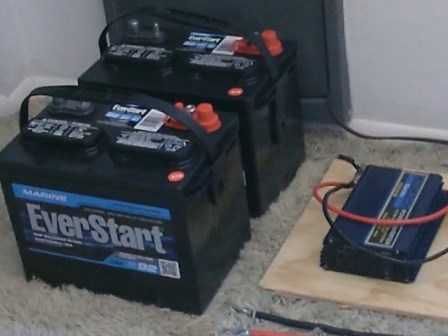
If you’ve decided to power your off-grid homestead with solar power, you may be considering using rechargeable forklift batteries to store the power from the sun.
Forklift brands: ranking of manufacturers, world production, makes and models, Toyota, Mitsui, Yale, Caterpillar, Honda, Heli, Kion, Mitsubishi, Clark.
As we know, forklifts are machines that consist of a platform, which is where the loads are placed to move them and stack them on shelves and store shelves, so the quality of these machines depends on how much weight they can lift and how much high can stack it.
The use of forklift machines has been very popular in the environment of factories and warehouses, as it helps workers to have their goods ordered, thus allowing a stricter order in terms of the materials available to a company.
As in all products, also in the forklifts, we have brands that work better than others depending on the size of the load as well as the size and conditions of the place where they will work. Today we will talk a little about the best models of forklifts.
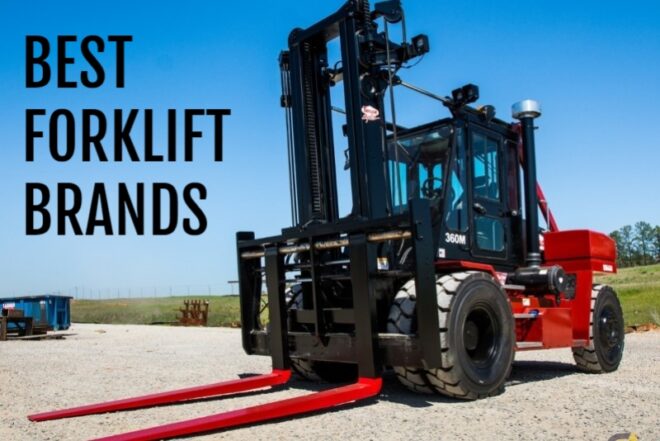
Best forklift brands
Forklift brands and models
The forklifts are a crucial element in any warehouse operation. These tools allow your team to move heavy loads quickly (and carefully) to and from the loading dock with relative ease.
However, one question that many store managers and supply chains have is the following:
Which forklift is the best for my warehouse?
Warehouse equipment can be expensive. Therefore, it is important to obtain a good and reliable forklift truck because defective or unreliable products can lead to delays in your distribution center or, what is worse, injuries.
But how can you identify a reliable manufacturer of forklifts?
One way is to observe how well a manufacturer is performing: reliable manufacturers tend to see many repeat business and growth.
Another is to see how they are qualified by the users of their products: manufacturers that manufacture poor quality products tend to receive many complaints online, while reliable ones tend to be highly qualified.
Another common question related to this is:
In which forklift manufacturers can I trust?
Best forklift brands
Forklift types
According to the categorization of forklifts, there are 6 different types, which denominated by numbers, range from the simplest forklift; that has a small counterweight and a cabin for a passenger to the all-terrain forklift, which has a closed cabin with capacity for two passengers, with pneumatic tires and with a large forks mast.
Best forklift brand
Special thanks to Material Handling & Logistics for its 10 main brands of forklift truck manufacturers from the list of 2018.
All of the following manufacturers appear in the list, from the most income in 2017 to the least:
TOYOTA
Toyota Industries Corp. $ 8.78 billion. Leader for many years in the industry with numerous options for different transmissions and load capacities.
Best forklift brands
KION GROUP
The KION Group. $ 5.924 million. It has a variety of material handling solutions and forklifts under its umbrella (including Linde Material Handling, STILL and Fenwick).
JUNGHEINRICH
The Jungheinrich Group. $ 4.25 billion. It offers numerous electric forklifts for a variety of needs.
MITSUBISHI
Mitsubishi Logisnext Co., Ltd. $ 3.7 billion. It carries a variety of forklifts from its Mitsubishi, Unicarriers, and Nichiyu product lines.
CROW
Crown Equipment Corp. $ 2.9 billion (tied for fifth place). It offers different options for new, used, and rental forklifts.
HYSTER
Hyster-Yale Materials Handling Inc. $ 2.9 billion (tied for fifth place). It has an estimated 830,000 Hyster® and Yale® forklifts operating worldwide, according to its website.
HELI
Anhui Heli Co., Ltd. $ 1.28 billion. It offers a range of forklifts and other solutions for heavy work.
KOMATSU
Komatsu. $ 1.21 billion. It has a range of 36V and 48V electric forklifts.
HANGCHA
Hangcha Group. $ 1.07 billion. It has numerous electric forklifts in three and four-wheel varieties.
CLARK
Material handling Clark. $ 781 million (tied for 10th place). The notable forklifts include their forklifts of the S and GEX series.
DOOSAN
Doosan Industrial Vehicle Co. $ 781 million (tied for the tenth place). Notable products include their forklifts of the Pro-5 series.
Of the companies on the list, Clark Material Handling was a late addition, as it was discovered that it had the same reported income as Doosan to tie for the tenth place after taking into account the exchange rate between the two companies.
If these are the largest forklift manufacturers on the market, which are the most popular among your customers?
CATERPILLAR
As we know, forklifts are machines that consist of a platform, which is where the loads are placed to move them and stack them on shelves and store shelves, so the quality of these machines depends on how much weight they can lift and how much high can stack it.
We have all heard about the Caterpillar brand; a brand that has always been next to the people who work heavy, for this reason, a Caterpillar forklift could not be missing from the list of the best forklift models.
These forklifts are characterized by having great power and good load capacity, since depending on the type of forklifts, they can reach up to 5 tons. This brand is one of the best and most prestigious worldwide thanks to the quality of work they offer us and above all to their lifespan.
CLARK
Another brand that is very popular among companies and warehouses with large loads to accommodate is the Clark forklifts.
These forklifts may be less popular than Caterpillars, but they also offer great cargo quality and accommodation in all style stores, whether large spaces in industrial warehouses or small stores in supermarkets or grocery stores.
Both brands have different capacities, although it is true, as we mentioned earlier, that there are different types of forklifts that are used depending on the needs of the company or warehouse, it is also true that each of the categories has a different scope.
Forklift companies in China
There is a great prejudice installed on Chinese hoists, some claim that all “Chinese” (forklifts) are bad; It is true that historically many Chinese machines have disappointed, however, the Chinese industry has made great advances in this last decade and today it would be more accurate to say: “many Chinese are bad, but not all are equal”.
HC Hangcha: The No. 1 brand of Chinese forklifts in the world, has been consolidating not only as a leader in its sector (Chinese forklifts) but also in the global forklift market. In this way, HC Hangcha becomes the Chinese forklift with the highest demand in the world market.
LiuGong: It has a history of 57 years, today the company has more than 14,000 employees, including more than 1,000 engineers in three world-class research and development plants. The company supports its product lines through a global distribution network of sustained growth of more than 380 distributors in six continents and in more than 115 countries. The LiuGong dealer network offers 2,650 points of sale worldwide.
What is the best forklift brand?
Ranker surveyed more than 1,000 voters to rank the best forklift brands in the market.
According to the results of your survey (registered on July 16, 2018), the 10 most beloved forklift brands are:
Toyota
Linde Material Handling (part of the KION group)
Caterpillar (partnered with Mitsubishi to form Mitsubishi Caterpillar Forklift America)
Hyster-Yale Materials Handling Inc. (Yale also appears in number 10 separately)
Bobcat Company (Highly valued, but its products are designed for outdoor work)
CASE (forklifts for difficult terrain)
Material handling Clark
Nissan Motor Manufacturing UK
Komatsu
AB Volvo
It is important to keep in mind that many of the companies on this list are:
The same companies as in the list of the 10 largest companies; or
Subsidiaries of these companies.
These ratings help demonstrate the reliability of the final products and services offered by each of these manufacturers.
This allows you to get a rough idea of the overall quality you can expect when working with a particular manufacturer.
So, Who are the best qualified manufacturers?
Best forklift brands
Best forklift brand
By combining the two lists, it is possible to create a list of the largest and best-qualified forklift manufacturers to use for your distribution center/warehouse operations:
Toyota
KION group
Jungheinrich
Mitsubishi
Hyster-Yale
Komatsu
Clark
Of course, if you are looking for a high-quality forklift to use in your distribution center or warehouse, it never hurts to ask for the opinions or recommendations of others.
For example, the managers of distribution centers in your area will probably have extensive personal experience
Best forklift brands
Best Forklift Brands
What is the best forklift brand?
Top forklift manufacturers 2019
Top forklift manufacturers 2018
Forklift brands and models
Forklift companies
Best Forklift driver training
OSHA Compliant Forklift Operator COMPLETE Training Kit
Certificates Of Completion,
Operator Cards,
Student Hand Outs,
Hands-On Evaluation Checklist, & More!
New release limited-time special promotion pricing ends soon!
Buy once & get free templates for life to train all your employees!
English and Spanish versions both included!
Get your employees forklift certified in 1 hour!
Available on a flash drive for ease of use and re-use.
We have helped thousands stay OSHA compliant
The best part is that you can complete the training from anywhere at any time!
It comes with a 100% 30-day money-back guarantee so you can try it out completely risk-free!
What is the life expectancy of a forklift?
Forklift “age” is measured in hours. For a single-shift operation with an 8-hour workday, the average forklift runs 2,000 hours/ year. The average lifespan of a forklift is 10,000 hours, but this depends on the manufacturer. Above-average machines, such as Toyota forklifts, commonly last more than 20,000 hours.
What is the most common forklift accident?
In the U.S. the three most common types of injuries occur when: A forklift overturns; workers are struck, crushed, or pinned by a forklift; and workers fall from a forklift. According to OSHA, 70 percent of workplace accidents can be avoided with proper training and safety procedures.
The most common types of forklifts and what they are used for? -Counterbalance forklifts are best used for material handling. -Three-wheel counterbalance forklifts are perfect for narrow aisles. -Reach truck forklifts for high rise storage pallet racking. -Side loader forklifts for narrow isles.
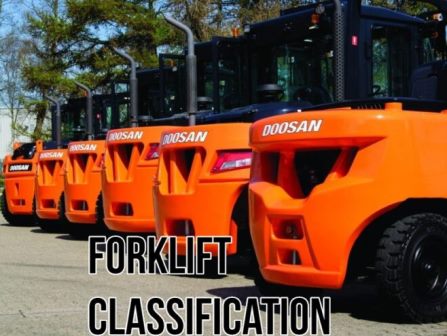
What are the different classes of forklifts?
Forklift Classifications and Types -Class I: Electric Motor Rider Trucks. -Class II: Electric Motor Narrow Aisle Trucks. -Class III: Electric Motor Hand Trucks or Hand/Rider Trucks. -Class IV: Internal Combustion Engine (ICE) Trucks with Cushion Tires. -Class V: Internal Combustion Engine Trucks with Pneumatic Tires.