Safety operating procedure overhead crane: What overhead crane operators always need to keep in mind is that they are responsible for the safety of other people. This is why they must be trained and authorized before they start using the crane.
Part of their training includes knowing what the crane’s characteristics are. What is the overhead crane capable of doing and what are its limitations?
So you will need to know how much weight you can lift and anything over that is dangerous. You should also familiarize yourself with the area in which you will be operating the overhead crane.
Another thing you need to familiarize yourself with is the proper terminology. There are no complicated terms to memorize here. But you should know what all the parts are called and what their function is so when it comes to maintenance and repairs; you know what you are doing.
Overhead crane operation safety rules
What are the hazards in crane lifting?
The three most common hazards involving overhead cranes include electrical hazards, overloading, and materials falling or slipping from overhead hoists.
How often do overhead cranes need to be inspected?
All active cranes must be inspected once a year at the minimum.
However, depending on the crane’s usage, additional inspections will be required. Crane inspections fall under two general categories based on the intervals between inspections.
Overhead crane safety tips
For the safety and productivity of your employees and the workplace, it is vitally important to know that the lifting equipment is in good working order before putting it into service.
Before use, make sure that the lift is suitable for the planned lifting task.
Confirm that you have the proper travel, elevation, and capacity.
Visually and physically inspect the lift before use.
Check for damage, wear, and proper operation of all functions.
Confirm the weight of the load.
Check the capacity of all equipment, including accessories, rope, and slings.
Do not exceed these capacities.
Select the proper sling for each lift.
Inspect slings and other rigging accessories before use to see if they are worn or stretched.
Do not use damaged or defective slings.
Use softeners on sharp corners.
Do not splice broken slings.
Overhead crane operation safety
When communicating with a crane operator, use clear and agreed signals. Except for the stop signal, the crane operator must follow the instructions of only one person: a designated flagger.
When using a wired or remote control, the operator must familiarize himself with all its functions before lifting the load.
Warn everyone in the load lifting area before starting the lift.
Make sure the path of the load is clear of people and obstructions.
Do not lift loads on anyone.
Center the crane hoist over the load before lifting to prevent the load from swinging.
Slide the sling fully onto the lifting hook.
Make sure the safety latch is closed.
Do not load the hook tip or hammer a sling into place.
Secure unused slings. Do not drag slings or leave loose materials on a lifting load.
Avoid trapping fingers when slack is removed from a crane hook or cable.
Get away before the lift begins.
Move the load and controls smoothly.
Minimize load swing.
Overhead crane operating procedures
These protocols are a standard part of maintenance and crane operation programs.
Walk-in front of the load while traveling and warn people to stay away. Use a slogan to prevent rotation or other uncontrolled movements. Raise the load only enough to clear objects. Do not ride on the hook or load.
Place loads on the lock, never directly on a sling.
Do not pull or push loads from under the hoist.
Do not leave the load or crane unattended while the load is suspended.
When crane operation must be restricted by other personnel, use lockout and tagout procedures.
Store floor slings in a clean, dry place on hooks or racks.
Do not leave slings, accessories, or locks lying on the ground.
Crane Load Test Procedure
Test loads should not be more than 125 percent of the rated load unless the manufacturer recommends otherwise. Hooks, hoist chains, and wire ropes must be checked daily, but heavy or severe load tests should be inspected semi-annually or quarterly.
These test reports will be filed where they are available to designated personnel.
When it comes to safety at your facility, you can’t afford to bypass any part of the equipment inspection and maintenance process, and that includes testing the equipment before you start using it in your operations.
What is a Crane Load Test?
During load tests, we will intentionally overload the overhead cranes to evaluate their condition. You should be able to safely lift and move the load through regular motions.
How do you use an overhead crane safely?
Center the crane directly over the load before hoisting to avoid swinging the load.
what standard is used for load testing cranes?
All new overhead and gantry cranes constructed and installed on or after 1971, shall meet the design specifications of the American National Standard Safety Code for Overhead and Gantry Cranes, ANSI B30.
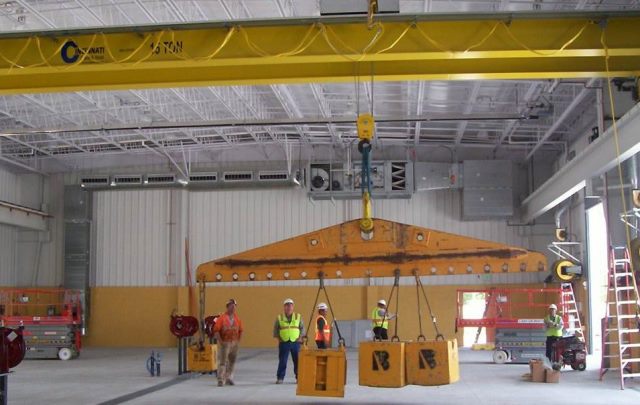
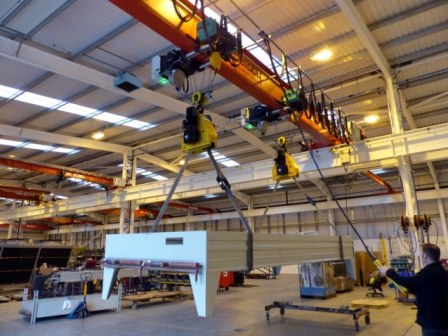
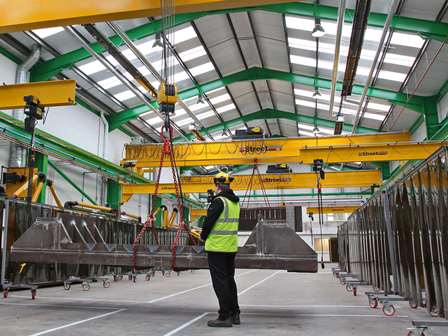
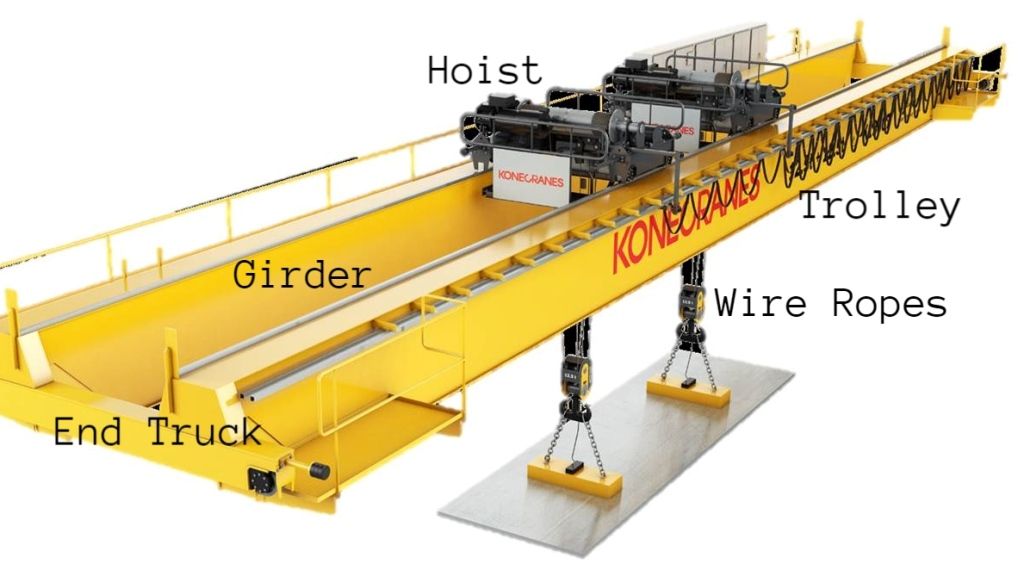
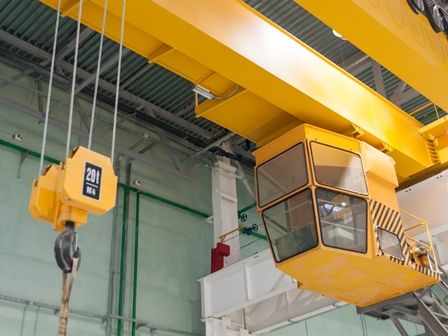
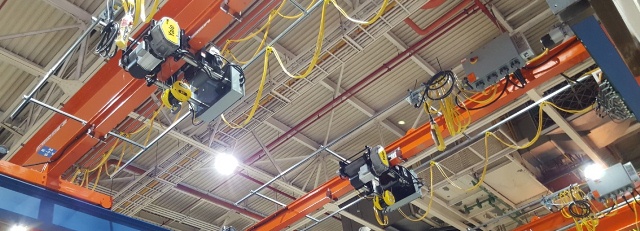
Cranes lift and lower loads with a hoist that is attached to a trolley. The trolley moves back and forth along a bridge. The bridge moves along a runway.
Some cranes, such as a jib crane, don’t have a bridge but still have a hoist attached to a trolley and can move a load in a horizontal direction.
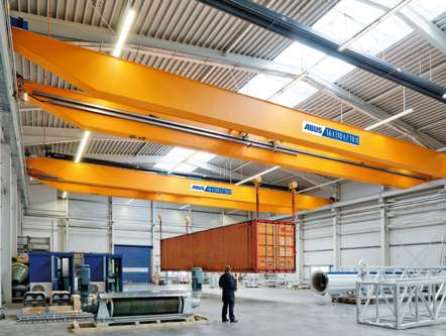
A bridge crane is defined as a crane, fixed or able to move along a track(s) having at least one primarily horizontal girder and equipped with at least one hoisting mechanism. There are four main types of overhead cranes: top running, under running, single girder, and double girder.
Overhead Crane Components
Hoist crane components
A variety of OEM parts and components are available for overhead cranes and hoists.
Brands of wire rope hoists, electric hoists, manual chain hoists, gantry cranes, jib cranes, work station cranes and bridge crane equipment; they have the same accessories and components.
Thousands of parts are available, including replacement hangers, motors, brake pads, hoist chain, replacement hooks, latch kits, and capacitors. Visit the specialized web pages to review hoist parts and for more information on the parts that are available.
Bridge crane components
Components can be individually designed to suit different requirements. All products and components are designed, developed and manufactured in compliance with design standards and regulations.
Overhead crane components follow the latest innovations in the field of crane construction using years of experience and knowledge from partners around the world.
Overhead crane parts and functions
The Bridge
End Trucks
Girders
Trolley Hoist
Trolley
Hoist
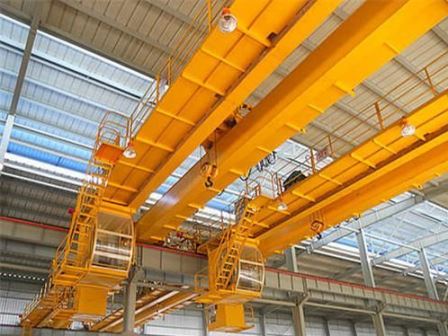
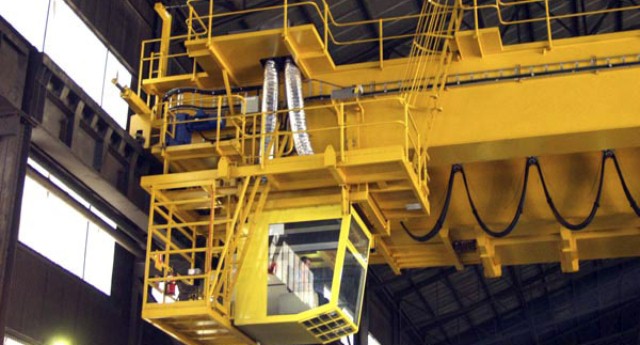
The Bridge: The bridge is made up of a single girder or a double girder with a set of carriages at both ends. The bridge spans the width of your facility and this mobile section is the main support structure of your bridge crane.
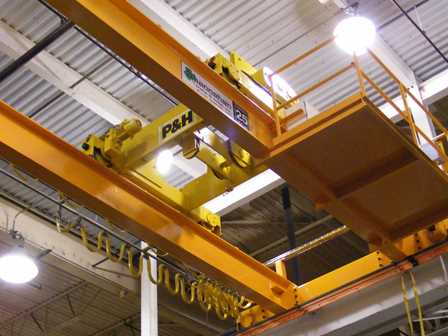
End Trucks: Bridge crane heads are positioned on both sides, where the bridge wheel assemblies are housed. This allows the entire crane to travel along the entire structure. The wheel assemblies of the bridge end run along rails that are mounted on the beams.
Girders: The crane beams are connected to the end trucks and are the structure on which the truck is supported. The girders are the horizontal beams and are considered a main element of the overhead crane system.
Trolley Hoist: This component is a combination of the hoist and the trolley frame. In double hoist applications, two hoists can be mounted on a single frame or two frames can be built, each with separate hoists.
Trolley: The bridge crane trolley rides across the span of the bridge along the girder or girders and carries the hoist.
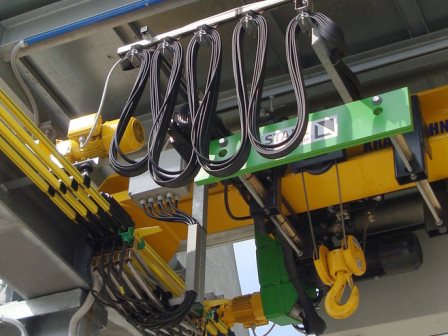
Hoist: The hoist is designed to lift and lower the desired load and is attached to the trolley frame by a custom lifting hook to support the load. You have a choice of two chain or wire rope hoist models.
Wire rope hoists are safe, reliable, durable and designed for years of long-term use. Chain hoists, on the other hand, are designed for smaller capacity operations and are ideal for light duty requirements or new projects where price is an important factor when selecting lifting equipment.
To keep your overhead cranes, hoists, and trolleys in service, the availability of interchangeable replacement crane parts is paramount; but first, having a solid understanding of these components and their various functions is crucial to limiting production downtime and preventing emergency situations.
Stocking a variety of OEM bridge cranes and hoist parts is a good sales strategy.
Most brands of air hoists, wire rope hoists, electric hoists, manual chain hoists, hoists, gantry cranes, jib cranes, work station cranes and overhead crane equipment are known to the parts department.
The parts department maintains an extensive library of historical original equipment product manuals that allow quick reference to find a replacement for your bridge crane.
Offering genuine replacement parts and having a team of technicians can help you locate hard-to-find parts from manufacturers that are no longer producing equipment.
Parts dealers stock thousands of parts like replacement pendants, motors, brake pads, lift chains, replacement hooks, latch kits and capacitors, for same day shipping.
Visit Crane Parts Specialist Hoist Service webpages for more information on what parts they have available for fast shipping.
Overhead cranes are powerful equipment that allows heavy loads to be lifted. Overhead cranes are also potential hazards, as both the cranes themselves and the loads they carry can cause damage if safety tips are not followed.
Train employees who work around overhead cranes on all workplace safety precautions. To ensure a safe work environment, follow these guidelines when operating an overhead crane.
Overhead crane operating instructions
Here are some important safety features to incorporate into your crane: Warning lights and indicator lights can be incorporated into the design of an overhead crane to provide personnel on the ground with the ability to recognize that the crane bridge is over the head and where the hook will be.
During maneuvers, the following guidelines must be followed:
In the event of a power failure, the operator must place all controllers in the “off” position.
When an operator leaves a crane unattended, they must unload any attached loads, turn the controllers to the “off” position, and open the main breaker.
Before closing the main breaker, the operator must ensure that all controllers are in the “off” position.
It is not necessary to open the main switch on a pendant control crane if the crane is left unattended for short periods.
An operator should only respond to signals from the employee directing the elevator. Except for an emergency stop signal, which must be obeyed when given by any employee.
Overhead crane safety devices
Basic safety tips for the operation of overhead cranes
Before use, make sure that the crane is suitable for the planned lifting task. Confirm you have the proper travel, lift, and capacity.
Visually and physically inspect the crane before using it. Check for damage, wear, and correct operation of all functions.
Confirm the weight of the cargo. Check the capacity of all equipment, including hardware, rope, and slings. Do not exceed these capacities.
Select the proper sling for each lift. Inspect slings and other rigging accessories before use for wear.
When communicating with a crane operator, use clear and agreed signals.
Warn everyone in the load-lifting area before starting the lift.
Slide the sling completely over the lifting hook and make sure the safety latch is closed.
Secure unused sling legs. Do not drag slings or leave loose materials on top of a lifting load.
Move load and controls smoothly. Minimize load swing.
Walk ahead of cargo during travel and warn people to keep clear.
Deposit loads on blocks, never directly on a sling. Do not pull or push loads from under the hoist.
Do not leave the load (or crane) unattended while the load is suspended.
The purpose of this guide is to raise awareness of the hazards in lifting operations and provide basic knowledge in the safe operation of overhead cranes.
Safe operation of such cranes requires operators to have the knowledge and competence to avoid an accident, in addition to the overhead crane safe work procedure.
The purpose of this guide is to raise awareness of the hazards in lifting operations and to provide basic knowledge in the safe operation of overhead traveling cranes, gantry cranes, jib cranes, and hoists.
This guide is intended to be used by crane operators and supervisors to promote safe lifting operations in the handling of Overhead Travelling Cranes, Gantry Cranes, Jib Cranes, and Hoists.
OSHA overhead crane
A person conducting a business or undertaking has the primary duty to ensure, so far as is reasonably practicable, workers and other people are not exposed to health and safety risks arising from the business or undertaking.
This duty requires the person to manage risks by eliminating health and safety risks so far as is reasonably practicable, and if it is not reasonably practicable to eliminate the risks, by minimizing those risks so far as is reasonably practicable. It also includes ensuring so far as is reasonably practicable the:
provision and maintenance of safe plants including cranes, and
safe use, handling, storage, and transport of the plant.
The Work Health and Safety (WHS) Regulations include specific duties for a person conducting a business or undertaking with management or control of the plant, powered mobile plant, and plant that lifts or suspends loads.
If you own a crane you are the person with management or control of that plant.
If you hire or lease a crane, you have management or control of that plant for the period you have hired it. Both you and the person you have hired or leased it from will have duties to eliminate or minimize the risks associated with the plant, so far as is reasonably practicable.
Crane Training – Course Summary
Overhead crane risk assessment
risk assessment checklist
Find out what could cause harm. The following can help you identify potential hazards:
Observe the workplace to identify areas where cranes operate and how they interact with other vehicles, pedestrians, and fixed structures like overhead electric lines.
Ask the crane operator, crane crew, and others about problems they encounter at the workplace including operation, inspection, maintenance, repair, transport, and storage requirements.
Review your inspection, test, and maintenance records e.g. logbooks, and incident and injury records including near misses.
Hazard assessment checklist
Assess the risk: In many cases, the risks and related control measures will be well known. In other cases, you may need to carry out a risk assessment to identify the likelihood of somebody being harmed by the hazard and how serious the harm could be. People who work with or near cranes are most at risk. Some of the risks when using a crane include:
structural failure, overturning, or collapse of the crane
contact or collision of the crane or its load with people or other plants and structures, and
falling objects.
A risk assessment can help you determine what action you should take to control the risk and how urgently the action needs to be taken.
Pier and bridge crane
Risk management checklist
Take action to control the risk. The WHS laws require a business or undertaking do everything reasonably practicable to eliminate or minimize risks.
The ways of controlling risks are ranked from the highest level of protection and reliability to the lowest.
This ranking is known as the hierarchy of risk control. You must work through this hierarchy to manage risks.
You need to consider possible control measures and make a decision about which are reasonably practicable for your workplace.
Deciding what is reasonably practicable includes the availability and suitability of control measures, with a preference for using substitution, isolation, or engineering controls to minimize risks before using administrative controls or personal protective equipment (PPE).
Cost may also be relevant, but you can only consider this after an effective review of all reasonably practicable control measures.
The first thing to consider is whether crane-related hazards can be completely removed from the workplace. For example, designing items of size, shape, and weight so they can be delivered, handled, or assembled at the location where they will be used without the need for a crane.
Event risk management checklist
If it is not reasonably practicable to completely eliminate the risk then consider the following options in the order they appear below to minimize risks, so far as is reasonably practicable:
substitute the hazard for something safer e.g. replace a crane operating cabin with a restricted field of vision with one that has a clear field of vision or use a remote control, for example, a pendant control.
isolate the hazard from people e.g. use concrete barriers to create an exclusion zone to separate crane operations from workers and powered mobile plant, and
use engineering controls e.g. enclosing the operator with a falling objects protective structure (FOPS) to minimize the risk of the operator being hit by a falling object.
If after implementing the above control measures a risk still remains, consider the following controls in the order below to minimize the remaining risk, so far as is reasonably practicable:
use administrative controls e.g. schedule crane operations to avoid or reduce the need for pedestrians and vehicles to interact with the crane in the area of operation, and
use PPE e.g. gloves, hard hats, high visibility vests, earplugs/muffs, and eye protection.
Check your control measures. Control measures need to be regularly reviewed to make sure they remain effective, taking into consideration changes, the nature, and duration of work, and that the system is working as planned.
Occupational health and safety procedures
Who is involved?
You must consult your workers and their health and safety representatives if any when deciding how to manage the risks of using a crane in the workplace.
If there is more than one business or undertaking involved at your workplace you must consult them to find out who is doing what and work together so risks are eliminated or minimized so far as is reasonably practicable.
This may involve discussing site-specific requirements including the type of crane to use, operator training, and traffic management.
Further information on consultation requirements is in the Code of Practice: Work health and safety consultation, co-operation and co-ordination.
Overhead crane safety checklist
Before using a crane
The person with management or control of the plant at a workplace must ensure, so far as is reasonably practicable, the plant used is specifically designed to lift or suspend the load. A crane is one type of plant generally designed to especially lift and suspend loads.
The type of work you will be doing, how it will be done, and who will be involved should be planned and discussed between the people involved in the work before deciding what type of crane will be used.
This includes people directly, for example, crane operators and other workers, and indirectly, for example, suppliers, designers, and crane hirers involved with the work.
Choosing a crane
Before you choose a crane you should discuss your workplace needs with suppliers and identify the cranes most suited to the workplace and the work for which they will be used.
Take into consideration the complete life cycle of the crane, how long you are likely to keep the crane, how often the crane is likely to be used, the conditions under which it will be used and the maximum loads the crane is likely to bear.
A second-hand crane is more likely to have outdated or missing safety features. Suppliers of second-hand cranes must do what is reasonably practicable to supply equipment that is safe to use at work and where practicable, fits safety features.
Some of the things to look for when choosing a crane are:
safe access points e.g. ladders, footholds, steps, and grabs rails
seat design e.g. comfort and back support
visibility e.g. mirror, window, and windscreen design, and
environmental controls e.g. temperature control units to avoid worker heat stress
Hiring a crane
Anyone hiring or leasing a crane to others has duties as both a supplier of the crane and as a person with management or control of the crane at the workplace. They must check the crane is safe to use and properly maintained and provide specific information with the crane including instructions on how to operate it safely.
Before you hire a crane you should check it is suitable for its intended use. You should also consider whether you need to hire a crane only or a crane with a trained and licensed crane crew.
If you do not have the knowledge or expertise about crane specifications, limitations, and operational requirements, you should talk to the crane supplier and provide relevant information about the work to be done, the workplace and the type of lifts to be completed so the supplier can provide a suitable crane.
Registering a crane
Some cranes must be registered before they can be used in the workplace. Cranes that are registrable plants must be designed and registered before they are supplied and used. Further information on registration requirements can be provided by the regulator.
More information on registrable plants including cranes is in the Code of Practice: Managing the risks of plant in the workplace.
Overhead crane inspection checklist
Inspection and pre-use safety checks. Inspecting and testing for cranes must include the:
major inspection required for registrable mobile and tower cranes
regular inspection and testing are required for plant, and
inspection and testing for plant item re-registration.
Further information on crane inspection and maintenance is in the Guide to inspecting and maintaining cranes.
Before a crane is used, tests, inspections, and specific adjustments must be undertaken to ensure the crane can be used safely. This includes:
workplace factors including ground load-bearing capacity, and wet or windy conditions are taken into account
to confirm the crane will not adversely affect or be affected by other plants and structures in the area
installation and commissioning activities are supervised by a competent person
the components are assembled in the correct sequence using the right tools and equipment
limit switches and load indication devices are functioning and correctly calibrated
the crane has been installed and commissioned to the designer’s or manufacturer’s instructions and specified technical standards
the crane is stable, and
safe entry to and exit from the crane—including in an emergency
Emergency plan
An emergency plan must be prepared for each workplace where the crane will operate. The plan must be tested in the workplace and include emergency procedures like effective response and evacuation, notifying emergency services and medical treatment. Emergency procedure training must be provided to workers.
Contact numbers for emergency services should be easily seen or found. Workers should know what system is in place to contact emergency services and how to use it.
Rescue equipment should be available and easily accessible so an injured worker including the crane operator can be removed quickly.
Signs displaying evacuation locations should be placed where they are easily seen by workers and others at the workplace.
The emergency plan should also include how these procedures will apply to people who are near the crane as well as those people who are operating the crane (e.g. procedures for evacuating the workplace).
Crane setup procedure
Setting up and operating a crane: Documentation and markings.
Crane capacity chart
Load charts
A crane of variable radius, for example, a tower or mobile crane, will have a crane-specific load chart (also known as a ‘rated capacity chart’) setting out how the crane lifting capacity varies depending on how the crane is set up i.e. how far the boom is extended and the angle of the boom. Using the load chart correctly is critical to ensure the crane is used safely.
Where the crane has one main load chart it should be fixed in the operator’s cabin in a place that is easy to see and read. Where the crane has more than one load chart, for example for different boom and fly jib configurations, the charts should be easily accessible for the operator to verify the crane will not be overloaded. The charts may be kept electronically or in hard copy.
The lifting capacity of a crane is generally limited by:
structural strength when the working radius is small
stability when the working radius is greater.
Structural limits
However, there are structural limits at both the minimum and maximum working radius. If a crane is overloaded, a structural or mechanical component of the crane may fail or the crane may overturn.
The lifting capacities specified on a load chart should not be exceeded except during testing of the crane by a competent person under controlled conditions. Each load chart should include enough information to identify the crane configuration it applies to. For example:
the safe working zone
the counterweight mass
whether a fly jib is fitted, in use, in place or stowed
outrigger extension or pick-and-carry mode
maximum speed for mobilizing a load
rope and reeving details, including the number of falls of rope in the hook block
main or auxiliary hoist in use, and
whether the hook block is included or excluded.
crane load chart
Some important factors which are often overlooked when reading load charts are:
Subtracting the mass of the hook block and lifting slings from the capacity of the crane at the particular radius. This should be noted on the load chart. For example, if the load chart states the crane can lift 20 tonnes at a given radius but the hook and lifting gear have a combined mass of 1 tonne, the load to be lifted cannot be more than 19 tonnes. This issue is critical for heavier hook blocks and lifting gear, for example, spreader beams.
Subtracting the mass of the fly jib (adjustment mass) from the capacity of the main hook when lifting from the main hook on the main boom with a fly jib attached to the boom head. This adjustment mass should be noted on the load chart—there may be two different masses for some cranes with a swing around fly jibs—one for the fly jib in place and another for the stowed position. Capacities of the main boom are generally based on the fly jib being removed. If this issue is ignored, the crane is likely to overturn.
The increased maximum working radius that may result when using a fly jib
Overhead crane operator
Limiting and indicating devices.
Limiting and indicating devices, for example, rated capacity limiters, the motion limiting devices, load indicators and radius indicators are intended to prevent a crane moving beyond its safe operating limits or to aid crane operators. The devices should not be relied on in place of using the crane’s load chart and operating instructions. Sole reliance on these devices, especially indicating devices, in place of safe operating practices may cause an incident.
Where limiting and indicating devices are to be installed on a crane the safety circuits of these devices should generally meet either:
a reliability level of Category 4 under AS 4024.1-2006: Safety of machinery
a safety integrity level (SIL) of 3 under AS 61508-2011: Functional safety of electrical/electronic/programmable electronic safety-related systems.
These categories of reliability level and SIL are related to the concept of ‘fail-safe’.
OSHA lockout Tagout
Freefall lock-out: When a crane is fitted with a free fall facility this function should be able to be positively locked out and not able to be unintentionally activated.
Is overhead crane training required OSHA?
Is overhead crane training required OSHA?
While OSHA standards do not spell out overhead crane training requirements, the American Society of Mechanical Engineers does get much more specific in the ASME B30.2 standard. It further states that a company’s management is responsible to “provide training to persons who will operate a crane”
What is a crane?
A crane is an item of a plant intended for raising or lowering a load and moving it horizontally including the supporting structure of the crane and its foundations. There is a range of ‘fixed’ (tower, bridge, gantry, portal boom, vessel-mounted) and ‘mobile’ (slewing, non-slewing, vehicle loading) cranes. A range of multi-purpose powered mobile plant including multi-purpose tool carriers and telescopic handlers may be classed as cranes in some operating configurations.
What are the hazards in crane lifting?
The three most common hazards involving overhead cranes include electrical hazards, overloading, and materials falling/slipping from overhead hoists.
Do you need a Licence to operate an overhead crane?
Under the act, all employers have a duty of care to their employees which includes: To eliminate risks to health and safety so far as is reasonably practicable; and if it is not reasonably practicable to eliminate risks to health and safety, to reduce those risks so far as is reasonably practicable.
This requires an employer to so far as is reasonably practicable, provide and maintain for employees of the employer a working environment that is safe and without risks to health. This includes the provision of such information, instruction, training or supervision to employees of the employer as is necessary to enable those persons to perform their work in a way that is safe and without risks to health. The act also requires that a person must not carry out work, or an activity if the regulations require the work or activity to be carried out by a person who is registered or licensed.
Overhead crane manufacturers, designers, industrial crane manufacturers, suppliers, and importers:
Designers, manufacturers, suppliers, and importers of a plant must ensure, so far as is reasonably practicable, the plant they design, manufacture, import, or supply is without risks to health and safety.
This duty includes carrying out analysis, testing, or an examination and providing specific information about the plant. The information must, so far as is reasonably practicable, be passed on from the designer through to the manufacturer and supplier to the end-user.
Suppliers must provide a purchaser with a crane that requires plant design registration with the design registration number.
Officers, such as company directors, have a duty to exercise due diligence to ensure the business or undertaking complies with the WHS Act and Regulations. This includes taking reasonable steps to ensure the business or undertaking has and uses appropriate resources and processes to eliminate or minimize risks from a plant.
Workers and other people at the workplace must take reasonable care for their own health and safety, cooperate with reasonable policies, procedures and instructions and not adversely affect other people’s health and safety.