All posts by Loganx

Professional Web Writer | Motor Enthusiast | Content Creator | Logan is a dedicated and skilled web writer, passionate about engines and machines and with a talent for creating engaging and informative content. She specializes in writing about a diverse range of topics including construction, forklifts, heavy equipment, excavators, etc. SEO Optimization: Proficient in SEO best practices, ensuring high visibility and engagement for all published content.

Forklift Rules and Regulations

Forklift rules and regulations: rollover of forklifts, safety regulations, accidents in storage, maneuvers, collisions with shelves in warehouses.

Personal safety measures are also essential for working with machinery in different types of warehouses.

Whether handling staves, various stackers or powerful forklifts, it is recommended that operators and workers have gloves and helmets at all times to reduce risks in their work. In addition, all protection accessories must be in perfect condition.

Forklift Operation Safety

Forklift safety rules

Forklift Operation Safety: What are the risks when working with forklifts?

Forklifts are one of the main sources of accidents worldwide in warehouses or industrial warehouses. When using forklifts, certain precautions must be taken to prevent accidents.

Forklift Operation Safety: Different forklifts = different precautions

There are two different types of forklifts, those driven electrically by batteries and those of engines, powered by liquefied gas, diesel or natural gas tanks.

Regardless of which of these models of forklifts count, both types have different particular conditions of operation, which must be respected and checked daily.

Electrical equipment can present risks if the operator does not know how to handle batteries when they are at the limit of exhaustion.

On the other hand, gas equipment has tanks that must be refilled and changed. The oil and the condition of the covers must be controlled in any of the two cases of forklifts.

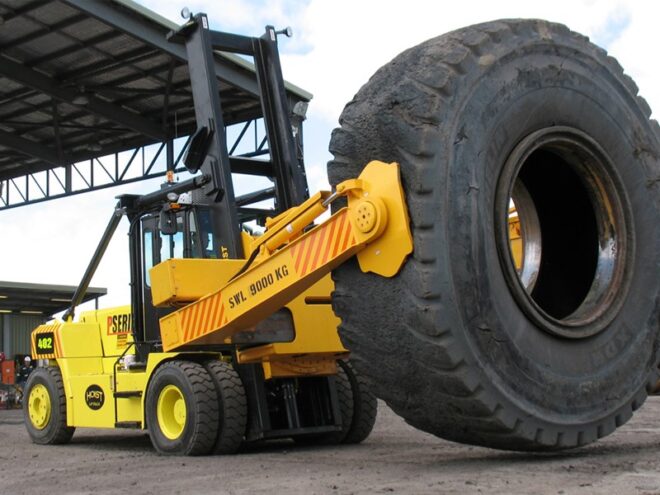
Forklift safety training

Forklift Operation Safety: Risks when working with forklifts. Forklift Operation Safety: Dangers when operating a forklift.

Below, the most common accidents with forklifts are detailed, so that appropriate measures can be taken to prevent them.

  • A maximum speed of a forklift
  • Distance between forklifts and pedestrian
  • Blind spots of a forklift
  • Forklift overturning
  • Forklift accidents in warehouses

Warehouse forklift safety

Among the most common risks for this type of accident are excess speed and poor traction in curves, being the forklifts prone to tilting and tipping.

In order to avoid this type of accident, a warehouse or warehouse must be well signposted and all personnel including operators instructed on the primary safety standards.

Forklift pedestrian safety

Forklift Operation Safety: Distance between forklifts and pedestrians:

Passers-by in transit areas: Moving inside a warehouse in the same spaces where forklifts are driven is not the most appropriate.

The pedestrian corridors must be defined rigorously, as well as be signposted.

This will prevent forklift operators from having to be aware of whether someone can walk by.

These types of accidents can end with a person injured by the nail of the vehicle or another part, for example.

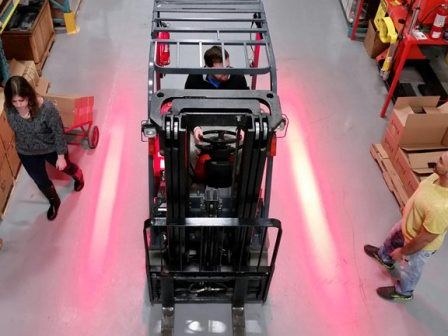
The personnel that transits in the corridors where they also circulate forklifts must wear vests of fluorescent colors, helmet, and safety boots.

In this way, it will be visible at long distances by the drivers.

Forklift Operation Safety

Warehouse Forklift

Accidents in warehouses; These accidents are due to a lack of control of the daily state of the forklift by the personnel in charge of the deposit.

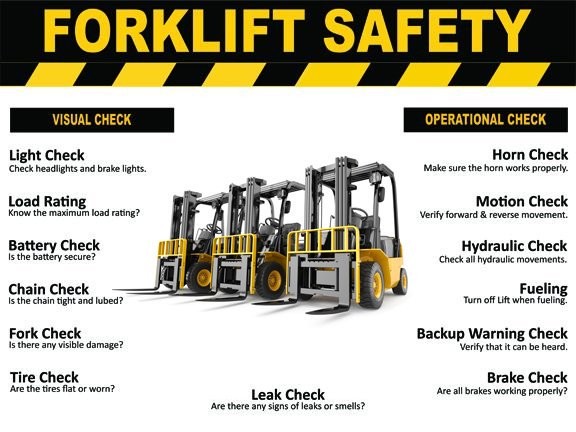
A daily review of the condition of the forklifts should be made and, in this way, ensure the proper functioning of the equipment.

The forklift inspection should be done at the beginning and end of the shift, to ensure that the equipment is working properly and can be operated safely by the following personnel. The forklift cannot be used until a supervisor reviews it in case of finding anomalies.

Forklift accident

Causes of overturning of forklifts:

  • Unawareness of the maximum load capacity
  • It is necessary for each driver to know the capacity of his vehicle and its accessories, and not exceed it.
  • An overload causes rear tire lift and excessive tilt, plus further damage to the vehicle or personnel.
  • The maximum load capacity of any forklift must be identified, being clear of the maximum weight that can be loaded with it.
  • This can be checked in the technical specifications of the manufacturers.

In case of not have the technical sheet at hand, you can search the equipment with the technical data and the maximum capacity.

Once this information is known, the personnel in charge of operating the equipment should be informed.

This small training helps us to avoid using excessive load when driving the forklift, which can end up causing an accident.

Uses of forklifts

Forklift Operation Safety:

  • The nails should be used only for their purpose, lifting loads.
  • The tip of the nails should not be used as a lever, just as it is not correct to push a load with the tips of the nails.
  • The hoists, in addition, must be used depending on whether they are for exteriors or interiors.

For example, using a vehicle for outdoor interiors with excessively stony or muddy roads can cause permanent damage to the chassis or forklift covers.

The load should be made only in special places. Another important fact is to switch off the forklift engine before refilling it with fuel or charging its battery.

Forklift operator training

Forklift Operation Safety: What are the risk factors of a forklift operator?

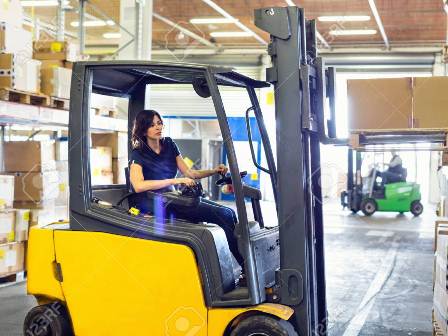
The forklift or forklift is used for transporting loads only. The operator must not allow his companions to climb unless another seat is insured.

If a person must be elevated to perform product review tasks such as cyclic counts or maintenance tasks, it is necessary to use an adequate security platform.

Thus, verify that it is correctly secured to the forklift with chains or padlocks. In addition, a harness should be used as a safety measure in case of incidents.

Do not authorize anyone to stand or walk under a load transported by the forklift.

Forklift operator

Forklift Operation Safety: Driving forklift, When a forklift is performing loading or unloading drive, there should be no personnel near the place.

It is the responsibility of the operators to avoid this type of unsafe maneuver, but also the nearby personnel must remember not to approach.

In addition, it is important to make sure that the drivers’ clothes are not loose to prevent them from getting stuck in the machinery.

They should also avoid operating the controls with their hands stained with grease because they can cause bad handling and a subsequent accident.

If you take into account the causes that can determine these types of accidents, and make appropriate use of the forklift it will have an excellent useful life and there will be no accidents during your operation.

Forklift safety tips

Forklift Operation Safety: Safety rules for operating forklifts.

If all these precautions are taken into account, the chances of accidents at work and waste of materials will be minimized.

  • Never carry a load that requires another employee to physically stabilize the load while moving the forklift.
  • Never carry a load that exceeds the maximum capacity of the forklift.
  • One sign of a heavy load is that the rear wheels rise when the load begins to rise.
  • In these cases, lower the load immediately and change the lifting equipment or reduce the weight of the load.
  • To maximize stability, the load must be hooked and centered on the forklift nails.
  • The load should be supported against the back or vertical part of the nails.
  • In addition, the length of the nails should always be of the length of the load, or greater.
  • To prevent the load from tilting forward, the forklift mast must be tilted backward.
  • If necessary, separate the nails before lifting the load.
  • As a general rule, the wider, the better.
Forklift Operation Safety

Forklift rules and regulations

Forklifts Operation Safety: Floor marking systems.

Implement a Floor Marking System to Keep Workers Safe: OSHA maintains basic rules and regulations for effective floor marking. Part of the agency’s standard for walking and working surfaces, states: “Permanent aisles and passageways shall be appropriately marked.” The broader standard sets no guideline for floor marking colors unless floor marking is used for preventing physical injuries.

That said, the agency’s standard for outlining safety color codes—mentions that red and yellow are designated safety color codes for marking physical hazards.

  • Red is for fire-related hazards (including the identification of fire protection equipment and containers of flammable liquids), as well as emergency switches, bars, and buttons on hazardous machines.
  • Yellow designates caution and is used to mark physical hazards (including stumbling, falling, and “caught in-between”).

Visual communication systems

Develop a Visual Communication System: Here are a few tips for successful visual communication, which can alert operators and pedestrians to hazards caused by forklifts:

  • Use “Stop” signs, speed limit signs, and other traffic control devices
  • Implement wayfinding to improve the flow of traffic, keep pedestrians away from forklift paths, and direct forklifts along safe routes
  • Point out loading docks, shelves for inventory, and other important places within a warehouse
  • Post signs at junctions to warn pedestrians and forklift operators to stop and look for hazards
  • Display checklists and inspection requirements where forklifts are stored

Safety communication

Implement Solutions for Forklift Safety: Many of the hazards posed by forklifts can be mitigated with custom signage and clear visual communication. DuraLabel industrial printers by Graphic Products help you create custom signs on demand, including speed limit signs, printed floor marking tape, maintenance labels, safety reminders, and more.

Worker safety

Keep An Eye Out Around Your Facility: Even if you’re not operating a forklift, you can take steps to keep workers safe. Here are a few tips to keep in mind:

  • Post forklift safety signs, aisle markers, and forklift procedure labels—using premade signs, custom labels, or a combination of the two
  • Implement a floor marking system in your facility
  • Ensure safety signs are at all intersections where pedestrians and vehicles intersect
  • Use steering wheel covers and padlocks when necessary
  • Use proper lockout/Tagout equipment to prevent forklifts from inadvertently starting up.
Forklift Operation Safety

Workplace safety

Stay Safe While Using A Forklift: Workers should do the following while behind the wheel to protect themselves and their coworkers:

  • Make sure the load is balanced and fully secure to prevent a forklift from tipping over
  • Ensure both forks are as far under the load as possible before lifting
  • Drive with the load as low as safely possible
  • Pay attention to posted speed limits and warning signs
  • Always look in the direction you’re traveling; if a load blocks the view ahead, travel in reverse
  • Steer clear of areas where forklifts are prohibited or restricted
  • Keep an eye out for signs, floor markings, and other warnings for pedestrians and forklifts
  • Use the horn at intersections and in areas where pedestrians may be present

Forklift classes

Know the Forklift Classes: These are classifications of six commonly-used types of forklifts, as recognized by OSHA, along with different types of trucks unique to each class.

  • Electric Motor Rider Trucks
  • Rough Terrain Forklift Trucks
  • Electric Motor Narrow Aisle Trucks
  • Electric Motor Hand Trucks or Hand/Rider Trucks
  • Internal Combustion Engine Trucks with Solid/Cushion Tires
  • Internal Combustion Engine Trucks with Pneumatic Tires
  • Electrical and Internal Combustion Engine Tractors
  • Rough Terrain Forklift

Health and safety hazards

Know the Common Hazards: Here’s a quick look at a few common hazards associated with forklifts.

  • Unsecured loads may fall, crushing pedestrians or drivers.
  • Forklifts may tip over, due to excessive speed or imbalanced loads
  • Workers may fall if they stand on the forks
  • Drivers may not see pedestrians, leading to collisions and fatal accidents
  • Improper or missing floor marking may lead to accidents between forklifts and pedestrians

Forklift Operation Safety

What is the number one cause of forklift accidents?

According to OSHA, 70 percent of workplace accidents can be avoided with proper training and safety procedures.
NIOSH states that the three most common types of injuries occur when: A forklift overturns; workers are struck, crushed, or pinned by a forklift; and workers fall from a forklift.

How much does a forklift driver make a year?

The average hourly pay for all forklift drivers is around $15 per hour but will vary by experience and location. Skill level is the biggest differentiator in pay. The longer you’ve been on the job, the closer you’ll get to that $20 per hour mark.

Is it illegal to drive a forklift without a license?

The short answer is “yes” – it is necessary to hold a license to operate a forklift. However, if you are “in training” you are permitted to operate a forklift without a license until such time as you are competent enough to be assessed. You must be within sight and sound of a licensed operator at all times.

How can a forklift tip over?

The Top Causes of Forklift Tip-Overs. During a forklift tip-over, the lift truck will usually tip over forward or to the side. Tip-overs in both directions usually happen for different reasons. The lateral tip-over (sideways) often occurs when the driver is crossing from a paved surface to an even surface.

What are the hazards of a forklift?

There are many other possible hazards of a particular work environment that might cause a forklift accident. These include pits or openings in the floor, congested or narrow workspaces, and the presence of flammable and combustible material.

What is the risk of refueling a forklift with the engine is running?

Never refuel while the engine is running (the engine has the potential to ignite the fuel) Ensure you are following safe parking procedures. Open flame, smoke and any potential source of ignition are prohibited within 10 meters of any truck being refueled or recharged.

The most read

More on this story

Forklift Safety Procedures

Forklifts can be dangerous, they account for 25% of injuries at work.
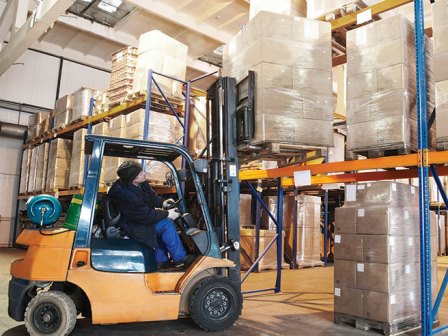
Forklift Operator Responsibilities

There are many different ways to operate a forklift.
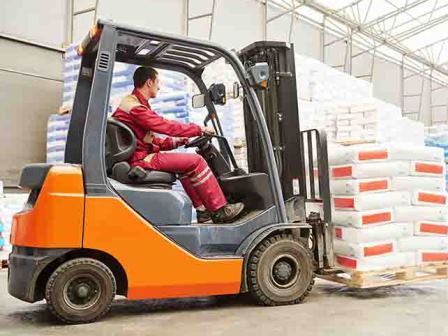
How to drive a Forklift?

How to drive a forklift for beginners?

Forklift Parts and Functions

Forklift Components – Parts of a Forklift: A forklift is a small industrial vehicle, having a power-operated forked platform attached at the front that can be raised and lowered for insertion under a cargo to lift or move it. Forklifts serve the needs of various industries including warehouses and other large storage facilities.

Locating the common parts of a forklift is vital to make certain that your operators are reliably using equipment as intended in a safe manner. The following list of forklift terminology will help to ensure all associates are prepared to use the equipment effectively and identify the forklift parts that require the attention of a maintenance technician.

Parts of a Forklift

Forklift parts name

Forklifts are powered by electric batteries or combustion engines. Some Forklifts allow the operators to sit while driving and operating the machine while others require the operator to stand. It is being extensively used throughout the industry for transporting materials and goods.

If you could list the most essential forklift components, what would they be? Every part of a forklift is “important” in some way, but which ones really stand out? Certain forklift parts and functions are designed to maintain the safety of the equipment and to help prevent malfunctions that can lead to severe accidents.

  • tires
  • frame
  • counterweight
  • cab
  • fuel
  • main lift cylinder
  • mast
  • carriage
  • load backrest
  • attachments
Parts of a Forklift

Forklift parts and functions

Forklift tires

Tires: There are many types of tires available, both for indoor and outdoor use*, but not all tires are made the same. It is important to consult with a tire expert who can make sure that the correct rubber compound and traction pattern are used. Then you must check to make sure you are not being sold recycled tires or cheaper versions made overseas.

Forklift frame

Truck Frame: is the base of the machine to which the mast, axles, wheels, counterweight, overhead guard, and power source are attached. The frame may have fuel and hydraulic fluid tanks constructed as part of the frame assembly.

Counterweight forklift

Counterweight – is a mass attached to the rear of the forklift truck frame. The purpose of the counterweight is to counterbalance the load being lifted. In an electric forklift, the large lead-acid battery itself may serve as part of the counterweight.

Forklift overhead guard

Overhead Guard: this is a metal roof supported by posts at each corner of the cab that helps protect the operator from any falling objects. On some forklifts, the overhead guard is an integrated part of the frame assembly.

Forklift main lift cylinder

Tilt cylinders are hydraulic cylinders that are mounted to the truck frame and the mast. The tilt cylinders pivot the mast backward or forward to assist in engaging a load.

Cab forklift

Cab: is the area that contains a seat for the operator along with the control pedals, steering wheel, levers, switches, and a dashboard containing operator readouts. The cab area may be open-air or enclosed but it is covered by the cage-like overhead guard assembly. When enclosed, the cab may also be equipped with a cab heater for cold climate countries along with a fan or air conditioning for hot weather.

Forklift mast

Mast: is the vertical assembly that does the work of raising and lowering the load. It is made up of interlocking rails that also provide lateral stability. The interlocking rails may either have rollers or bushings as guides.

The mast is driven hydraulically, and operated by one or more hydraulic cylinders directly or using chains from the cylinder/s. It may be mounted to the front axle or the frame of the forklift. A ‘container mast’ variation allows the forks to raise a few meters without increasing the total height of the forklift. This is useful when double-loading pallets into a container or under a mezzanine floor.

Forklift components

Each part and component on a counterbalanced forklift is designed to perform a specific job and the safe operation of a forklift includes the operator understanding its moving parts, capabilities, and limitations.

Forklift carriage

Carriage: is the component to which the forks or other attachments mount. It is mounted into and moves up and down the mast rails by means of chains or by being directly attached to the hydraulic cylinder. Like the mast, the carriage may have either rollers or bushings to guide it in the interlocking mast rails.

Forklift load backrest

Load Back Rest: is a rack-like extension that is either bolted or welded to the carriage in order to prevent the load from shifting backward when the carriage is lifted to full height.

Attachments forklift

Attachments: may consists of a mechanism that is attached to the carriage, either permanently or temporarily, to help in the proper engagement of the load. A variety of material handling attachments are available. Some attachments include side shifters, slip sheet attachments, carton clamps, multipurpose clamps, rotators, fork positioners, carpet poles, pole handlers, container handlers, and roll clamps.

Forklift forks

The forks are long extensions (like arms) that are attached to the carriage. They are used to support the load from the bottom. They come in a variety of widths and adjust from right to left on the carriage.

Forklift Power Source

Power Source: may consist of an internal combustion engine that can be powered by LP gas, CNG gas, gasoline or diesel fuel. Electric forklifts are powered by either a battery or fuel cells that provide power to the electric motors. The electric motors used on a forklift may be either DC or AC types.

Components and parts of forklift

What are the three major parts of a forklift?

The three major parts of a lift truck are the body (truck), overhead guard, and hydraulic lift.

What are the prongs on a forklift called?

Forks, Also known as the tynes, the forks on a forklift are used to make direct contact with a load for transport. They are attached to the forklift carriage and are designed to carry a load from the bottom.

What are forklifts made of?

The technological advances in the forklift have made the forklift truck one of the most vital components of today’s speedy material handling industry. The welding robots used to assemble these forklift trucks are top-notch and produce an incredibly sound structure. First, the body is constructed from steel and painted.

What is the mast on a forklift?

Also referred to as an ‘Upright’, the mast is the vertical assembly on the front of the forklift that does the work of raising, lowering, and tilting the load. Most masts are ‘three stages’ meaning there are three channels on each side.

How heavy is a forklift?

The average automobile weighs approximately 3,000 lbs and the average forklift weighs close to 9,000 lbs. Also, forklifts are heavier in the rear to counter the weight of items being carried in the forks.

The most read

Forklift Parts name

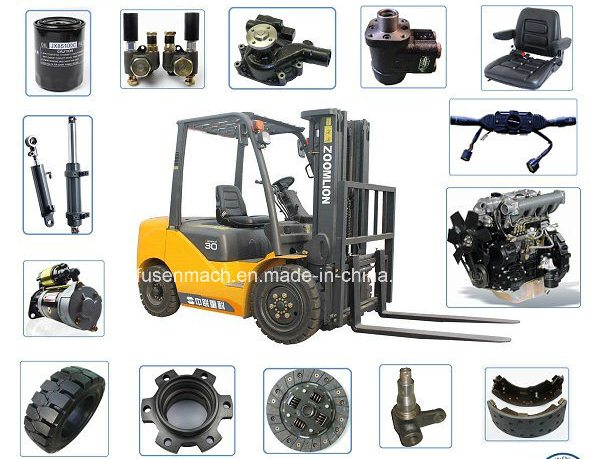
Forklifts are designed to last, but like any other machinery, forklift parts are susceptible to wear and tear.

Forklift Spare Parts Name

Looking for a replacement part for your forklift parts or reach truck?

Forklift Brands

Forklift Brands and models: Which forklift brand is best? Caterpillar, Toyota, Volvo, Hyundai, forklift brands and models, top 10 forklift brands.

Forklift Safety Procedures

Forklifts are extremely useful workplace vehicles, learn about the rules for driving forklifts.

Confined Space Entry Procedures

“Entry” means the action by which a person passes through an opening into a permit-required confined space. The entry includes subsequent work activities in that space and is considered to have occurred as soon as any part of the entrant’s body breaks the plane of an opening in the space.

“Entry permit” means the written or printed document provided by the employer to allow and control entry to a permit space.

Confined Space Entry Procedures

Confined space procedure

There’s no way to avoid it. Complying with the Occupational Safety and Health Administration (OSHA) confined space standard is a demanding task. From record-keeping requirements, training, permits, and a written program, the standard requires a lot of effort on the part of the security professional.

But that’s no excuse for overlooking the dangers.

Sometimes oversights happen because workers don’t know the rules. Other times are when they choose shortcuts. In any event, a control services team has determined that serious accidents can often be attributed to one or more key function failures, and offer the following tips for confined space safety.

Enclosed space entry procedure

The purpose of these procedures is to ensure that entry into any confined space is planned and documented as required in order to identify and control hazards.

They cover the entry method selection, planning, and documentation of entry into confined spaces of both classifications: non-permit-required confined space (NPRCS) and permit-required confined space (PRCS).

They apply to workers (as entrants and attendants), confined space entry supervisors, confined space owners, area and building managers, line management, field construction and service managers, and the confined space program manager.

  • Obtain a copy of the entry permit and hazard assessment and review the hazards associated with the space
  • Ensure that the appropriate PPE, Rescue Retrieval Equipment and Communications. Equipment is available and in good working condition
  • Lockout or Tagout any hazardous energy that the entrant could be exposed to
  • Conduct continuous air monitoring utilizing a multi-gas air monitor
  • The space must be labeled with a confined space “DANGER” sign
  • Review the confined space “DANGER” sign and make sure the information corresponds with the information on the hazard assessment
  • Notify the Operations Center and wait for authorization to begin the entry.

Rescue plan for confined space

When working in confined spaces, an important question for safety professionals to consider is what to do if someone is injured, incapacitated, or trapped in a space and must be rescued.

The steps below will help guide safety professionals through preparing for and executing a confined space rescue in a timely manner.

One of the best ways to prepare is to practice. There are many theories about best practices for confined space rescue, and rescue drills allow professionals to put those theories to the test.

Rescue drills give personnel the experience of working in different scenarios to become familiar with situations they might encounter in confined spaces.

There are time-sensitive and non-time-sensitive rescues. Urgent or “emergency” rescues typically involve oxygen-deficient atmospheres where there is a small window of time, usually six minutes, to extricate someone.

An example of a non-time-sensitive rescue would be a situation where someone falls and breaks an ankle while entering a confined space.

In these types of circumstances, there are sufficient O2 levels and therefore the rescue is not as time sensitive and can be performed without the use of supplemental oxygen.

Understanding both types of rescue helps security professionals develop strategies to implement and execute an appropriate response. (PDF)

More on this story

Forklift Safety Procedures

Forklifts are extremely useful workplace vehicles, as long as they are used safely and appropriately by operators who are appropriately trained and competent to use them.

Standard Operating Procedure for Driving a Forklift

Safe Forklift Operation according to OSHA

Heavy Equipment Safety Topics

Any person who operates, leases, rents, or borrowed heavy equipment must take many hours of safety training for each type of equipment before they operate the equipment.

Deep Cycle Forklift Batteries

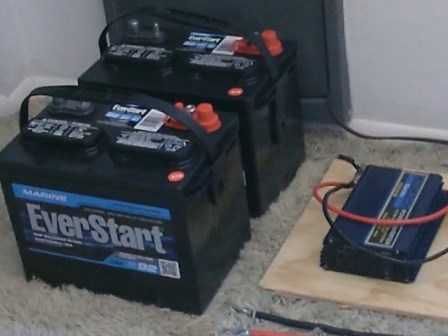
Forklift batteries are deep cycle batteries and for this reason, they can be discharged to lower levels without causing damage.

Forklift batteries are much like the lead acid batteries you see in cars, although forklift batteries are much heavier, larger, and more difficult to repair or recondition.

Deep Cycle Forklift Batteries

Are forklift batteries deep cycle?

Forklift batteries are much like the lead acid batteries you see in cars, although forklift batteries are much heavier, larger, and more difficult to repair or recondition.

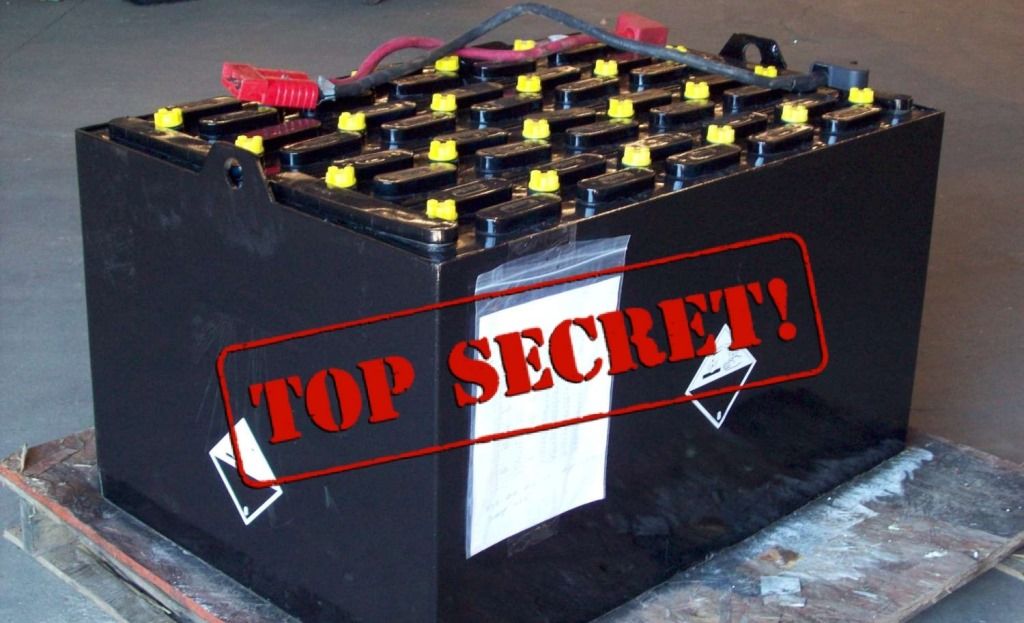
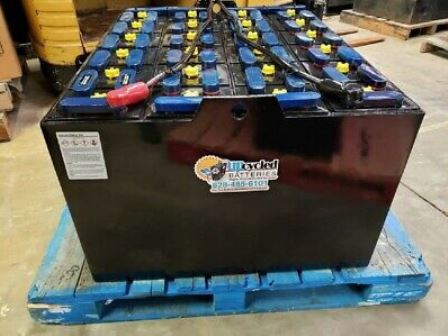
The humble forklift or industrial battery used in electric forklifts or pallet jacks. It’s simply an incredibly durable, incredibly large, and amazingly cost-effective deep-cycle lead-acid battery.

Forklift batteries come in a variety of voltages (12, 24, 36, or 48) and sizes (from 1,000 pounds to several thousand pounds). They are available from local industrial battery suppliers or from the manufacturer.

The lead plates in a forklift battery are much thicker and should last much longer than any battery.

The battery is made up of 2-volt cells, all packed in a sturdy metal case and joined with metal bars in the proper configuration to add up to the voltage indicated on the label.

When used with a forklift every day, these batteries typically last no more than seven or eight years, but the expected lifespan is up to 15 or more than 20 years when used with a renewable energy system, with proper maintenance. and without deep discharges.

More on this story

Forklift Batteries for Sale

How to buy the right forklift battery? Before you spend hundreds of dollars on a battery, take a moment to learn how to choose the battery for your forklift.

Forklift Battery for Solar

If you’ve decided to power your off-grid homestead with solar power, you may be considering using rechargeable forklift batteries to store the power from the sun.

Forklift Battery Price

When it comes to buying a battery for your forklift, the true cost of a forklift battery involves much more than just the initial price.

Forklift Pedals: How many pedals do a forklift have?

  • Why does a forklift have two brake pedals?
  • How to use a 3 pedal forklift?
  • What is a 4 pedal car called?
  • What is the 3 foot rule for forklifts?
  • What is the middle pedal on a forklift for?
  • What are dual-sided pedals?
  • How many types of brakes are on a forklift?

OSHA Forklift Trainingh Handbook

The purpose of this book is to help companies comply with the Powered Industrial Trucks Standard. Powered industrial trucks make the top ten cited violations from OSHA every year.

In other types of hydrostatic forklifts, there are two accelerator pedals that act like directional controls. The first pedal when pushed moves the forklift forwards, and the other one moves the truck in reverse. The operator shifts his foot from pedal to pedal to drive the forklift in the desired direction.

Additionally, what is the inching pedal used for?

The purpose of the inching pedal is to disengage the transmission without having to shift the gear lever into neutral every time a lift is performed. This pedal allows you to bring the forklift to a stop or to slow it down.

Forklift Pedals

what are the 3 pedals on a forklift for?

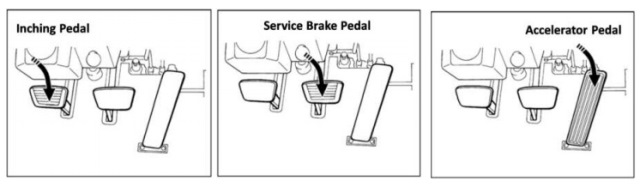
To begin with, every forklift comes equipped with an accelerator and a brake pedal. That third pedal is called an Inching Brake. Its function is twofold. It initially acts as a brake and secondly disengages the transmission, allowing the engine speed to increase or decrease without affecting the drive of the forklift.

Forklift pedals explained

Inching pedal

The purpose of the inching pedal is to disengage the transmission without having to shift the gear lever into neutral every time a lift is performed.

To inch (creep) in either direction.

  • Slowly push down on the inching pedal. This will gradually disengage drive through the transmission in preparation for a load to be lifted.
  • Vary the position of the inching pedal and the accelerator pedal to control the travel speed.
  • Pushing down further on the inching pedal will disengage the transmission completely and apply the service brakes fully to stop and hold the lift truck while allowing full engine power for a fast hydraulic lift.
    Note: It is strongly recommended NOT to use the inching pedal when creeping into racking with raised loads.

Service Brake pedal

This pedal allows you to bring the forklift to a stop or to slow it down. Additionally, a “hill start” should be performed using the service brake pedal and not the inching pedal.

To stop the lift truck when traveling in either direction.

  • Release the accelerator pedal.
  • Push down on the service brake pedal and bring the truck to a smooth stop.
  • If the need arises to stop on a ramp or slope, the handbrake must be engaged. To drive out of this situation, the service brake pedal should be fully depressed & the transmission engaged, then gently accelerate as the handbrake is released.

Accelerator pedal

This pedal allows you to adjust the rotational speed of the engine. The engine speed changes according to the degree to which the accelerator pedal is depressed.

To increase or decrease travel speed in either direction.

  • Push down on the accelerator pedal to obtain the desired travel speed.
  • Release the accelerator pedal and push down on the service brake pedal to decrease travel speed.

Forklift pedals warning

Before operating a forklift, read and study the operator’s manual discussion on controls. Locate each control and understand how to use each one.

Inching pedal

Instead, use the brake pedal only to keep the transmission fully in gear and minimize the risk of jerky operation.

A forklift must be stationary when lifting a load.

  • DO NOT leave your foot on the inching pedal when driving the forklift.
  • DO NOT “ride” the inching pedal.

It will cause the transmission to slip and generate a large amount of heat which may cause the transmission to overheat, wear down in a short time or seize up in the worst case.

Do not release the inching pedal suddenly when engine revs are high as this can cause drive wheel slippage and premature tire wear. Additionally, it can cause loads to shift and become unbalanced and dangerous.

Service Brake pedal

  • Do not brake the forklift too hard. Doing so may cause the forklift to become unbalanced or cause loss of load and could result in a serious accident.
  • Adjust the braking effort according to the load weight and surrounding conditions.
  • Do not leave your foot on the brake pedal while driving. Doing so may cause the brakes to fail because of overheating. Also, it increases brake wear

Accelerator pedal

Do not depress the accelerator pedal quickly. Depress it slowly to prevent a sudden or rapid start, which could make the load unstable or fall.

More on this story

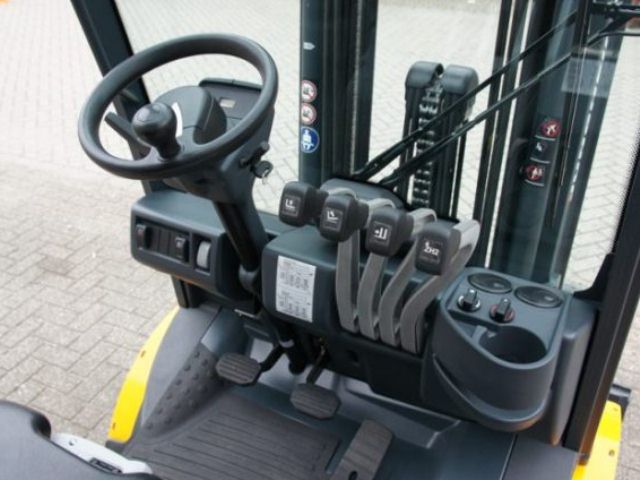
Forklift Controls levers

Although forklifts are capable of doing many jobs, they are also dangerous and must be safely operated.

How to drive a Forklift?

Forklift safety is of the utmost importance, and driving a forklift improperly presents various risks to both yourself and others, as well as your surroundings and the things you’re lifting.

How to operate a stand-up forklift?

Two main ways of operating a forklift exist. Operating while sitting down, and operating while standing up.

Hydropower Advantages

Hydropower or hydroelectric power is the process of producing electricity utilizing the power of water. Water can move fast or slow, there can be a lot of it or a small amount.

Utilizing waterpower to create a maximum amount of electricity differs depending on your system. In terms of a hydroelectric generator, this means, figuring out a location for a generator and seeing how the water in that location could best generate energy.

To determine these types of things in a system it is often efficient to make use of the terms flow or flow rate and head.

Hydropower Advantages

How does hydropower work?

Flow is how much water passes through a location given a period of time (volume over a given time). With greater amounts of water, like in rivers and oceans, the movement of the water over time is much greater since there is so much more water in general.

Streams and creeks often have much less water traveling through them and while it can be moving at high or low speeds, the general amount of water (given a specific location and over a time period) is less. The other important factor in a water source is called head.

Head race in hydro-power plant

Head essentially is the water levels over a certain distance or the height that the water travels. In a river, the heads are generally very low, as the water level doesn’t drop much over a distance.

Places with high heads are waterfalls or dams, where water is falling a significant distance over a short amount of time. High heads correspond to high distances, just as large amounts of fast-moving water correspond to high flow rates.

Types of water turbines

These two factors influence the different types of water turbines that are made to produce electricity and they are two ideas I needed to understand in order to make the decision about what turbine I should use for my generator.

I began looking into hydro turbines to discover what might be the best system to implement in my situation.

That also meant that I had to come to the conclusion of what my situation was, or in other words where was I going to place my hydroelectric generator.

Hydro-Turbines

A hydro or water turbine is a rotary device that takes the potential and kinetic energies of running water and converts it into mechanical work. There are two main types of hydro turbines, impulse, and reaction.

An impulse turbine is a system that channels water and directs it into a blade, bucket, or runner, moving the runner by a collision with the water.

Impulse turbines are made for high-head situations, where water travels far distances and gains potential energy. It then is channeled into a nozzle which converts the potential energy into kinetic.

How do hydro turbines work?

The nozzle sprays the water at a blade, runner, or bucket on the turbine.

The collision between the runner and the water transfers the kinetic energy of the water to the blades causing the mechanism to spin and generate energy in the form of mechanical work.

Depending upon the setup of a generator the spinning of the turbine will drive the rotation of magnets around coils which will create electricity as a result of the water. On the other hand, a reaction turbine is a system that relies on a combination of pressure and moving water.

Here, the turbine is placed directly in the body of water so that instead of hitting each runner individually, the water flows over all the runners at once.

The differences in water pressure between the front and the back of the runners allow them to move and convert kinetic energy into mechanical work.

More on this story

Surge Tank in Hydroelectric Power Plant

A surge tank is a water storage device that is used in a hydroelectric power plant, to cushion the variation of excess pressure.

Surge Tank in Hydro Power Plant

Surge tanks can provide a fundamental feature for the hydraulic design of hydropower projects

What is the use of Surge Tank?

Surge tanks are applied in hydropower plants to reduce the pressure forces during acceleration of the water, and to enable speed governing of the turbines.

Topographic Survey Cost

As a home or property owner, you may need to inspect your land. What is the cost of the topographic survey?

Underwater Topography Maps

Detailed depth contours provide the size, shape, and distribution of underwater features. The map serves as a tool for performing scientific, engineering, marine geophysical, and environmental studies.