All posts by Loganx

Professional Web Writer | Motor Enthusiast | Content Creator | Logan is a dedicated and skilled web writer, passionate about engines and machines and with a talent for creating engaging and informative content. She specializes in writing about a diverse range of topics including construction, forklifts, heavy equipment, excavators, etc. SEO Optimization: Proficient in SEO best practices, ensuring high visibility and engagement for all published content.

Excavator Sizes Chart

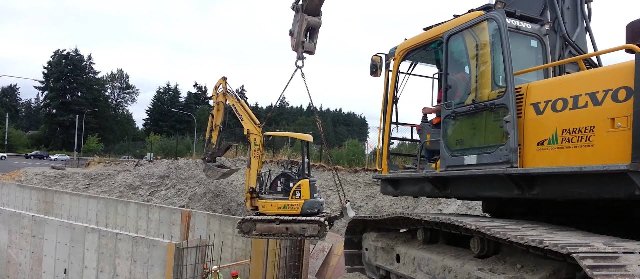
The use of excavators for lifting operations, particularly on construction sites, has become more common over the last few years.

Excavators and backhoes are designed for rapid earth moving and are not designed for lifting operations as their principal function.

When planning a lifting operation, you should first consider whether an excavator is the most appropriate machine, taking into account the type of lift and the duration of the task.

The purpose of this document is to set out precautions and procedures that should be taken into account when planning and carrying out lifting operations with excavators and other types of earthmoving equipment (backhoe and loaders) to enable the work to be done safely and in accordance with your legal duties.

Excavator Operator Training Manual (Safety & Operation Series)

Excavator lifting capacity chart – excavator sizes chart

Excavator lifting plan

Excavator lifting capacity chart – excavator sizes chart: Particular Hazards Associated with Lifting with Excavators

The use of an excavator or backhoe for lifting creates additional hazards for personnel in the vicinity. Under normal circumstances, personnel are kept away from the working area around the bucket of an excavator, as this is considered to be a hazardous area.

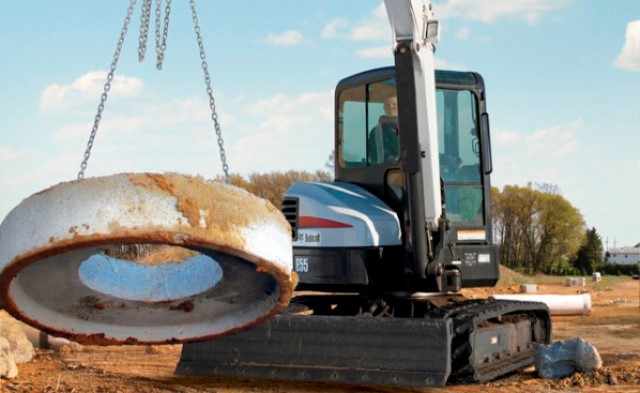
Where the excavator is used for object handling however, the slinger has to be in the danger area in order to hook the load on to the hooking device. This puts the slinger at risk of being struck by the load, bucket or excavator arm if the excavator moves without warning.

One common incident of this type is where the excavator slews rapidly, for example when the operator catches the cuff of his coat on the left-hand joystick, and the ground worker is struck by the bucket or dipper arm or crushed between the dipper arm and a fixed object. Injuries are usually severe in these cases.

Excavator lifting capacity chart – excavator sizes chart

Excavator operator

Excavator lifting capacity chart: Excavator operators and slingers should be made aware of these dangers and effective communications must always be maintained between slinger and operator. The excavator operator should always make use of the safety lever (safety armrest) whenever the slinger is in the danger area.

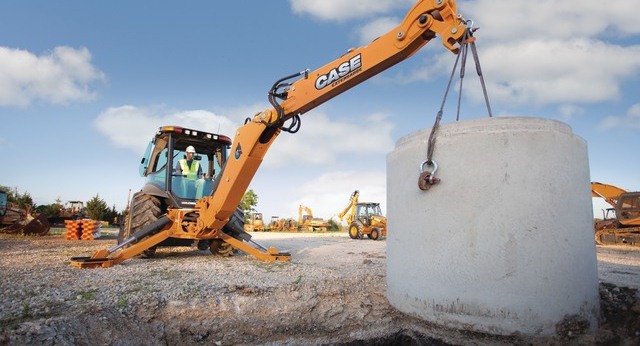
Traveling with a suspended load is particularly hazardous. The pre-lifting risk assessment should ensure that the hazards associated with this operation are fully considered, particularly the presence of personnel adjacent to the machine’s travel path.

Excavator lifting capacity chart – excavator sizes chart

Using excavators for lifting

Excavator lifting capacity chart – excavator sizes chart: Lifting of Persons with Excavators

Excavators should not be used under any circumstances for the lifting of persons as they are primarily designed for excavating with a bucket and consequently are capable of operating speeds and movements which make them totally unsuitable for the lifting of persons.

Access to height on construction sites should be by machines designed for the purpose of lifting persons such as MEWPs, mast climbing work platforms, suspended access platforms or passenger/goods hoists, or by the use of scaffolds.

In exceptional circumstances and where it is not reasonably practicable to achieve access by less hazardous means, a suitable crane with a man-riding basket may be used.

Excavator lifting attachments

Excavator lifting capacity chart: Planning of Lifting Operations with Excavators. Excavator sizes chart

The regulation requires lifting operations to be properly planned, appropriately supervised and carried out in a safe manner, and this includes lifting by earthmoving machinery.

The competent person should first carry out a risk assessment, which will include ensuring that the earthmoving machinery is suitable for the task, that adequate lifting accessories are available and the ground conditions are suitable.

The lifting accessories, including quick hitches, should be suitable for the load and marked with their safe working load. The risk assessment will also address the need to segregate the lifting operation from other persons on site. Based on this risk assessment, a written method statement setting out the safe operating procedure to be followed should be prepared and communicated to all personnel involved in the lifting operation.

NOTE: For employers with 5 or more employees, the significant findings of the risk assessment must be recorded. The significant findings should include who is at risk, why they are at risk and how that risk is controlled. A comprehensive method statement could include this information.

Special attachments for lifting (or other uses) should be compatible with the machine and coupling means (quick-hitch) to which they are being attached. A competent person should verify that the combination is designed to take the load in this manner.

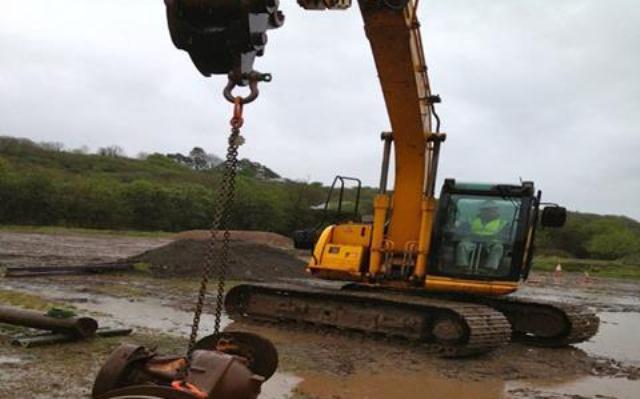
Excavator lifting capacity chart – excavator sizes chart

Lifting operation

Excavator sizes chart: Lifting Operations

Before lifting operations begin it is essential that all personnel involved are fully briefed on the significant findings of the risk assessment, the method statement and their individual roles in carrying out the task.

The supervisor should ensure that persons are kept well away from the lifting area, and in particular that there is no one working below the lift, for example in a trench. Personnel should wear hi-visibility clothing and other appropriate PPE. Excavator operators must never move the machine or load until they have satisfied themselves that the slinger/signaler and any other persons associated with the lift have all moved away from the danger area, to a position of safety.


Excavator lifting capacity chart

Lifting accessories

Excavator lifting capacity chart: The slinger or operator should check the lifting accessories, including the lifting point, before use to ensure they are not damaged or worn. Any defective lifting accessories should be removed from service immediately.

Chain slings should not have any distorted links or components, hooks should not be bent and the safety clip should be in working condition. Fibre slings should be rejected when damaged, and in any case when the outer covering is worn to the extent that the inner cores are visible.

Where the hooking device (the point on the machine designed for connection of the load) is not part of the bucket, the bucket should (where possible, and unless the operator instructions specify otherwise) be removed in order to improve visibility and reduce the weight being lifted. If the bucket is retained, then the weight of both the bucket and quick hitch has to be added to the load when determining whether the load is within the rated capacity.

Lifting slings

When attaching lifting slings to the hooking device or lifting point care should be taken to ensure that the slings and their attachments are able to hang free at all times. Attachment using a shackle may limit rotation if, for example, a pipe suspended from the slings is to be turned end for end.

Fig. 2 shows the addition of a swivel to overcome this problem. Similarly, if the quick hitch is tilted backward and/or the dipper arm is raised, the master link of the sling and any attachments may be put into bending or twisting – possibly leading to damage or failure. These issues may reduce the height to which a load may be lifted to less than that indicated in the machine’s rated object handling capacity table.

The excavator operator should ensure that the acoustic/visual warning device indicating the load moment, is switched on prior to any lifting operation. (Excavator lifting capacity chart).

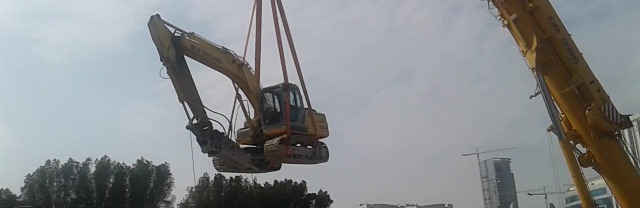
Excavator lifting capacity chart

Excavator Requirements when Used for Lifting

Excavator lifting capacity chart:

The design of earthmoving machinery for lifting (object handling) is covered by the European standard.

Any earth-moving machine designed for object handling should have a rated object handling capacity table available inside the cab. If a rated object handling capacity table is not available then the machine should not be used for object handling.

NOTE: Handling attachments (e.g. grab) that do not require the assistance of a person for hooking or guiding are considered as normal earthmoving operations and do not require warning devices and a rated capacity table.

An earth-moving machine used for lifting operations must be fitted with a load hooking device. This may be mounted on the dipper, the quick hitch or the bucket. If the load hooking device is a hook then this should have a clip or other device which prevents a sling slipping off the hook. Many quick-hitches provide a load hooking device in the design of the hitch

Excavator lifting capacity

Excavator lifting capacity chart:

If the rated lifting capacity for an excavator or the backhoe portion of a backhoe-loader is greater than 1 tonne (or the overturning moment is greater than 40000Nm) then the machine must be fitted with:

  • a boom lowering control device on the raising (main) boom cylinder(s) and which meets the requirements of ISO 8643:1997 and
  • an acoustic or visual warning device which indicates to the operator when the object handling capacity or corresponding load moment is reached

NOTE: Loaders and the loader portion of a backhoe/loader do not require a boom lowering control device or acoustic/ visual warning devices.

NOTE: Where a risk assessment shows that there is a significant risk of overloading and/or overturning on machines with a rated capacity of 1 tonne or less, a Rated Capacity Indicator may be required.

Suitable slings must be available to attach the load to the excavator. Slings and other lifting accessories should be CE marked and marked with the safe working load.


Excavator lifting capacity chart

Excavator operator training

Excavator lifting capacity chart: Training and Competency Assessment

Excavator drivers and slingers should be adequately trained and assessed to undertake their roles in lifting operations. This training is added to the training required for operating the machine as an excavator.

  • Prior to 2008, the CPCS category for excavator operation does not cover lifting operations.
  • The current CPCS category has been amended to include lifting objects and will apply to all those taking the practical and theory tests from 1st August 2008.
  • For existing CPCS excavator card holders, an additional module of approximately half a day’s duration, on lifting with excavators is in preparation.

Excavator maintenance

Excavator lifting capacity chart: Pre-use Checks, Inspections and Maintenance

All excavators, backhoes and front end loaders require pre-use checks, inspections, and maintenance to ensure that they do not deteriorate to an extent where the operator or other persons are put at significant risk.

Pre-use (Daily) Checks

Pre-use checks are normally carried out by the operator who should have been trained and assessed to carry out this task.
Pre-use checks should be recorded as having been carried out (for example on a timesheet) and a defect reporting system should be in place to ensure that any defects are rectified promptly.

Weekly Inspections

Weekly inspections may be carried out by the operator if they have been assessed as trained and competent. A record that the inspection has been carried out, together with a note of any deficiencies should be made. A management system for eliminating deficiencies should be in place.

Maintenance planner

Maintenance should be carried out at least at the intervals required by the manufacturer’s manual. The frequency of maintenance may be increased by factors such as usage and environment. Personnel undertaking maintenance should have been trained and assessed to carry out this task. All maintenance activities should be formally recorded.


Excavator lifting capacity chart

Excavator thorough examination

Excavator lifting capacity chart: Thorough Examination and Test

An excavator used for object handling is regarded as lifting equipment and requires thorough examination by a competent person at least every 12 months.

An excavator that is never used for object handling (for example, because it is not equipped with a load hooking device) does not require thorough examination but still requires regular inspection under PUWER which will be to a similar standard.

Front end loaders, not modified or adapted for lifting operations, do not require thorough examination under LOLER, but still, require regular inspection under PUWER. If the loader is used for object handling it will require thorough examination under LOLER at least every 12 months.

A report of a thorough examination of lifting equipment is not required where the employer has an EC Declaration of Conformity dated within the last 12 months.

Where a quick hitch is permanently mounted on an excavator then the thorough examination for the excavator will also cover the quick hitch. If the quick hitch is moved from one machine to another it is classed as an accessory and should be thoroughly examined every 6 months.

Slings, loose hooks, chain slings, polyester slings, shackles, etc. are classed as lifting accessories and must be thoroughly examined every 6 months.

Buckets with integrated hooks/lifting eyes are also classed as lifting accessories and should be thoroughly examined every 6 months

Maximum lifting capacity of excavator

Training your operators to use hydraulic excavators to lift loads or materials properly requires a return to fundamentals.

The versatility of hydraulic excavators is virtually unmatched in the world of construction equipment. Whether you’re talking about compact, mid-range or large hydraulic excavators, these machines are ideal for lifting, moving and placing a wide range of materials. As a result, it is important that hydraulic excavator operators are trained to properly lift loads or materials.

The rated lifting capacity of any hydraulic excavator is determined by two factors: hydraulic lift capacity and the tipping load. Hydraulic lift capacity is the point at which the excavator is limited by its hydraulic power to lift a load. Tipping load is the point at which the excavator begins to tip or lift off the ground when lifting a load.

It’s important to know how to read and understand an excavator lift chart. He cautions operators to factor in any lifting considerations that result from additional accessories or attachment variations, as these alternative items can reduce a machine’s effective lifting capacity. For instance, the weight of slings, any auxiliary lifting device and the weight difference of any attachment heavier than the standard configuration must be subtracted from the rated lift capacity to determine the correct net lift capacity.

Excavator Operator Training Manual

Safety & Operation Series

Training and reference for heavy equipment operators. Easy to understand format including photographs and illustrations for better comprehension.

Intended for beginner and experienced individuals. Great for self-study or to augment in-house training programs.

Excavator sizes chart

What is a safe lifting operation?

Lifting operation is an operation concerned with the lifting and lowering of a load. A load is the item or items being lifted which could include a person or people. A lifting operation may be performed manually or using lifting equipment.

What effect can a swinging load have on an excavator?

If swinging with a load can It can cause an increase in radius and create instability causing the machine to tip over. The most dangerous or hazard area when lifting with an excavator is within the working radius of the boom/dipper.

Can the excavator be used for lifting?

Excavators that have a lifting eye and are used for lifting operations are subject to a thorough examination. If the only job they do is conventional ‘earth moving’ then the requirements of the Provision of Work Equipment Regulations (PUWER) apply.

What is considered a critical lift?

A “critical lift” is defined as any non-routine crane lift requiring detailed planning and additional or unusual safety precautions.
Critical lifts include lifts made where the load weight is greater than 75% of the rated capacity of the crane; lifts which require the load to be lifted, swung or placed out of the operator’s view; lifts made with more than one crane; lifts involving non-routine/technically difficult rigging arrangement; hoisting personnel with a crane or derrick; or any lift which the crane operator believes should be critical.

The most read

Excavator Lifting Points

Excavators and backhoes are designed for rapid earth moving and are not designed for lifting operations as their principal function.

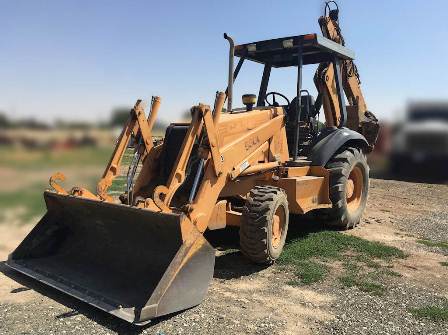
More on this story

Backhoe Loader Specifications

A backhoe is a type of excavating equipment, or digger, consisting of a digging bucket on the end of a two-part articulated arm.


Mobile Crane Load Chart

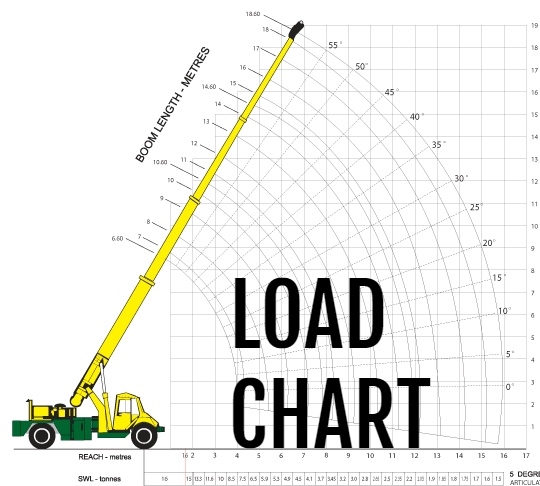
Mobile crane load chart: Simply put, the only way to know if the load you are lifting with a mobile crane is within the limitations of the crane is to relate the lift to the manufacturer’s load chart and notes.

Persons who are not crane-operators regularly have questions regarding lifting safety. The purpose of this Tech Tip is to help those less familiar with crane load charts better understand the questions to ask and the information that must be followed.

Mobile Crane Load Chart

Mobile crane specification

An experienced crane operator enters the cab of an unfamiliar crane expecting to find certain information on the load chart. Just as you may expect to find certain information when you enter an unfamiliar automobile. You locate the speedometer and fuel gauge, then locate windshield wiper, outside mirror, and seat adjustment controls.

You do this because you know these controls must exist to operate safely. Similarly, certain information will always be located within a crane’s load rating chart and notes. You just have to know what you’re looking for.

Mobile Crane Load Chart

Crane load chart

The crane load chart in the mobile crane industry is long past the days of a single page load chart. Load charts have become increasingly complex. There is specific information you must obtain prior to attempting to lift a load.

  • How is the crane configured? Are the outriggers fully extended and set, partially extended and set, or will the lift be made on rubber tires?
  • How much counterweight is installed on the crane?
  • What are the boom and jib/extension configurations? If the lift will be made with an extension or jib you must locate the load chart that provides ratings for these accessory devices.

Mobile crane lifting capacity

Over what operating areas will the load be handled? Working Area charts define specific areas of the crane that relate to loading ratings.

Areas such as Over the Side, Over the Rear, Over the Front, and 360-degree Rotation lead you to specific load charts. Make certain you know the area where the load will be lifted from, the area the load will pass through, and the area the load will be placed.

Base lifting capacities on the area with the least load rating according to the working area chart. The combined information to this point will lead you to one or more pages within a load chart.

How to calculate crane load capacity?

Does the crane have sufficient load hoist reeving? Reeving charts indicate the type of wire rope and the number of parts of wire rope required to lift loads. A reeving chart which indicates 28,000 lbs. capacity for a two-part reeving will require more reeving prior to making a lift that exceeds 28,000 lbs.

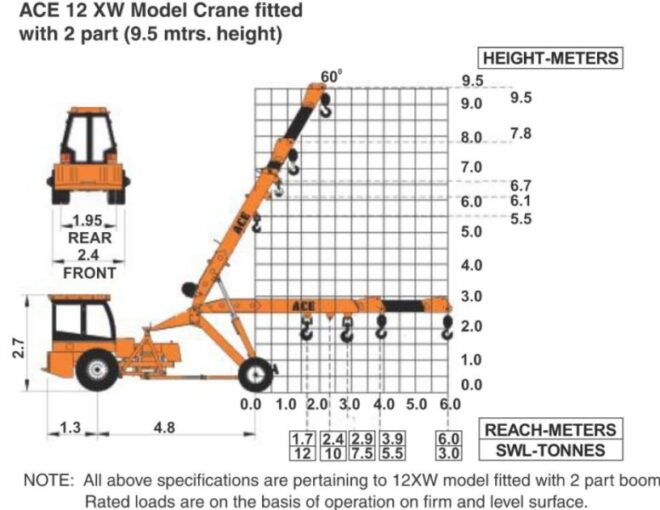
To determine how much load the crane can safely handle you must also know the length of the boom (hydraulic cranes show boom lengths in a row at the top of the load chart), and the load radius of the suspended load (hydraulic cranes show radius in a column on the left side of the load chart).

When boom length and/or radius is between the values printed on the load chart you must select the boom length and/or radii with the least load rating.

Keep in mind that a shorter boom length may have a lesser rating. You cannot assume that taking load values from the next longer boom length is safe.

Mobile Crane Load Chart

Crane capacity chart

Equally important to the load ratings shown on the chart are the load chart notes. Load chart notes provide critical information relating to the operation, set up, configuration, and restrictions.

Finally, you must account for all accessory weights. Items such as load blocks, extensions, jibs, and rigging must be added to the weight of the load to determine the total load imposed on the crane.

Don’t hesitate to ask a crane operator for clarification. And, don’t think twice about challenging what you are told. Load charts may have become more complex, but the key information provided has not changed significantly.

Knowing what to look for is a good start to a safer job site. Safety is a team effort that requires both the operator and management working with the same safety objectives. Don’t compromise your job site safety.

Mobile crane load chart calculations

Mobile crane stability:

We’ve looked at how gravity, balance, and leverage work together to keep a crane stable, how the crane is made, what the tipping point is, and what the standards and OSHA say. Now let’s apply what we’ve learned.

We cannot stress the importance enough of taking the time and making the effort to ensure proper setup, knowing your load weight, and having an educated operator–it just might save you a costly mistake.

Mobile crane lifting

Lifting on Rubber: Crane manufacturers that allow “on rubber” lifts will provide a load rating chart specifically for this configuration.

Mobile crane outriggers

Over the Side: Not only are fully set outriggers recommended for the full capacity of the load chart, lifting over the side is the least stable location for most cranes. For this reason, try to position the crane to make the initial lift in the least stable location (such as over the side), and then swing to a more stable location (such as over the end). This may help prevent an accidental overload of the crane during the lift. In other words, any miscalculation of the load weight can be noticed right away.

Mobile crane boom extension

Over the Front: When the boom is positioned over the front of a crane on outriggers, the tipping axis is the forward set of outriggers. Crane manufacturer’s that allow “over the front” lifts will provide a load rating chart specifically for this configuration.

Crane boom angle

Over the Rear: When the boom is positioned over the rear of a crane, the tipping axis is the rear set of outriggers. While this is usually where the most capacity is provided, you must still follow the load chart and know your load weight for your lift to ensure the crane will remain stable and upright.

Crane boom length

Boom Length: Just because a crane has a long reach, doesn’t mean you need to use all of it. Many times tipping is a result of the boom being extended beyond the necessary length.

Mobile Crane Load Chart

Mobile crane safety tips

Hopefully, by now, we can all agree that the loss of stability resulting in a tipping incident or accident shouldn’t be a common occurrence. They are costly and can be avoided. Remember the following key points:

  • Make sure the operator is a qualified mobile crane operator with the education, knowledge, and experience to operate the machine and make the lift.
  • There are many crane designs, read the crane manufacturer’s operation manual to make certain the operator fully understands the operating quadrants, superstructure positions and operating characteristics of the crane.
  • Make sure the operator fully understands the load capacity chart for the crane they are operating.
  • Make sure the operator fully understands how to use the crane’s load weighing device (LMI, RCI, RCL, etc.).
  • NEVER lift loads where the load chart does not provide ratings.
  • NEVER lift more weight than what’s posted in the load chart.
  • Outriggers are to be fully extended and set at all times when practical.
  • Never allow the operator to “lift by the seat of their pants” if they can start to feel the crane tipping, then it is already too late, the crane has been overloaded.

How to read crane load chart?

The book, “Mobile Crane Support Handbook” is a comprehensive reference that is focused exclusively on the design and engineering of supports for mobile crane installations.

Written by one of the leading lifting specialist engineers, this book addresses the full range of subjects needed for the engineering of mobile crane support in construction job site situations.

Topics covered include support reactions from crawler and outrigger-supported cranes, soil bearing capacity, analysis of subsurface structures, the strength of crane mats, practical design methods, and industry standards and regulations.

Mobile Crane Load Chart
How to read a mobile crane load chart?

Each crane has a load chart that, in short, specifies the crane’s capabilities—detailing its features and how its lift capacity varies when considering distance and angle. Just like the old saying ‘if you fail to plan, you plan to fail,’ failing to consult a crane load chart before renting or employing a crane for a specific job could leave you with too much or too little capacity for your job.

How to select crane capacity?

Virtually all construction projects require the lifting, hauling or transportation of heavy materials ‘ which is why cranes play a gigantic role in the development of your project.
Deciding which crane is right for your objectives can be an overwhelming task, as the range of options available is limitless! There is an enormous variety of cranes ‘ each designed for a specific function or use.

More on this story

The most read

Crane lifting capacity calculation

The operations planning team uses load charts and manual calculations to determine if the operation can be executed.

Mobile crane lifting capacity

The nominal loads shown in the lift chart are for each machine as originally manufactured and equipment.

Material Handler Forklift Operator job description

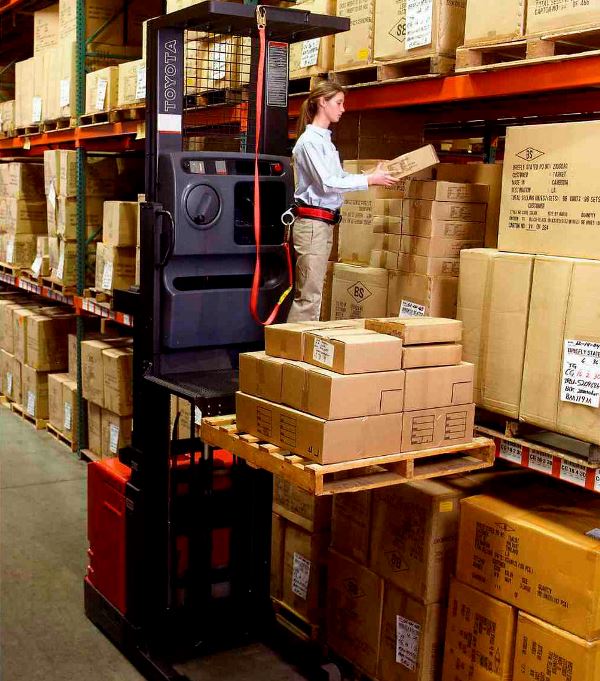
Material Handler Forklift Operator job description: A Material Handler is in charge of storing, moving, and managing hazardous or non-hazardous materials. Also referred to as the warehouse forklift driver, their work includes moving stock, documenting deliveries, and monitoring supplies.

This group includes workers who handle, move, load and unload material manually or using various material handling equipment. They work for transport and storage companies, moving companies, as well as a wide range of manufacturing and treatment plants, or retail and wholesale warehouses.

Material Handler Forklift Operator job description

Forklift Operator material handler

Job duties include organizing supplies, delivering necessary supplies to the production line, pulling orders for shipping and arranging finished products.

Material Handler Forklift Operator job description
Where do material handlers work?

Given the universal skillset that a material handler brings to the table, this position can be seen in many different industries. Forklift operator material handlers will typically work in warehouse, factory or construction-site industries.

There are many other industries that can utilize a material handler’s skill. An automotive garage may need a material handler who understands how to move, store and maintain flammable liquids like oil and gas.

A grocery store may need a material handler who understands how to manage and store food with expiration dates. One thing to keep in mind with these other industries is they may not label the job as a “material handler.”

A grocery store may call the position “Inventory Manager” and the automotive garage may call the job “Hazardous Materials Specialist.” While the job title may vary, the overall duties remain the same.

Material Handler Forklift Operator job description
What is the difference between a forklift driver and forklift operator?

Forklift driving is a subcategory of material handling, forklift driver uses a motorized machine to transport product from one location to another.
A material handler uses hand truck, electric fork jacks as well at forklifts to move product. Just depends on your knowledge of different ways to move product.

What is a material handler?

Material handlers work in warehouses and production facilities to move products. This might mean finding materials on the shelves and wrapping them and putting them on a delivery truck, or pulling materials off the truck and putting them in the proper shelf spot.

What is Industrial Material Handling Equipment?

Industrial material handling equipment encompasses a diverse range of tools, vehicles, storage units, appliances and accessories involved in transporting, storing, controlling, enumerating and protecting products at any stage of manufacturing, distribution consumption or disposal.

The most read

How to drive a Forklift?

Forklift safety is of the utmost importance, and driving a forklift improperly presents various risks to both yourself and others, as well as your surroundings and the things you’re lifting.

More on this story

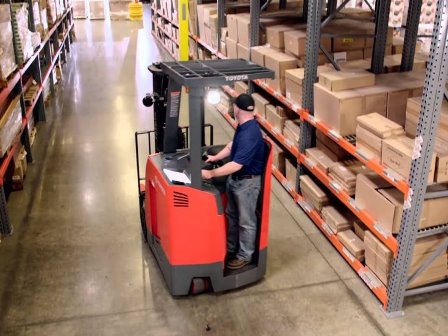
How to operate a stand-up forklift?

Two main ways of operating a forklift exist. Operating while sitting down, and operating while standing up.

Tropical Storm Risk

Tropical storm risk – Tropical depression in the Gulf: Tropical cyclone intensity change remains a forecasting challenge with important implications for such vulnerable areas as the U.S. coast along the Gulf of Mexico.

Analysis of 1979–2008 Gulf tropical cyclones during their final two days before U.S. landfall identifies patterns of behavior that are of interest to operational forecasters and researchers. Tropical storms and depressions strengthened on average by about 7 kt for every 12 h over the Gulf, except for little change during their final 12 h before landfall. Hurricanes underwent a different systematic evolution. In the net, category 1–2 hurricanes strengthened, while category 3–5 hurricanes weakened such that tropical cyclones approach the threshold of major hurricane status by U.S. landfall.

This behavior can be partially explained by consideration of the maximum potential intensity modified by the environmental vertical wind shear and hurricane-induced sea surface temperature reduction near the storm center associated with relatively low oceanic heat content levels. Linear least-squares regression equations based on initial intensity and time to landfall explain at least half the variance of the hurricane intensity change.

Applied retrospectively, these simple equations yield relatively small forecast errors and biases for hurricanes.

Characteristics of most of the significant outliers are explained and found to be identified a priori for hurricanes, suggesting that forecasters can adjust their forecast procedures accordingly.

Tropical Storm Risk

Tropical storm update in the gulf of mexico

Tropical cyclones1 can devastate the U.S. Gulf coast (e.g., Rappaport and Fernandez-Partagas 1995; Blake et al. 2007). The infamous Galveston hurricane of 1900 took at least 8000 lives and ranks as the deadliest single-day disaster in United States history. The loss of life (Beven et al. 2008) and the way of life suffered in 2005 from Hurricane Katrina show that the region remains at great risk.

About three tropical cyclones, including one hurricane, make landfall along the U.S. part of the Gulf Coast each year on average (e.g., McAdie et al. 2009). Over the past 30 yr, the Gulf coast accounted for almost two-thirds (34 of 54) of the hurricane landfalls in the contiguous United States.

A ‘‘major’’ hurricane (MH), category 3 or higher on the Saffir–Simpson hurricane wind scale (SSHWS; Schott et al. 2010; Simpson 1974), strikes the northern Gulf coast almost every other year on average. While major hurricanes constitute only one-quarter of U.S. landfalling hurricanes, they cause around 85% of the damage (Pielke et al. 2008) and most of the fatalities (Blake et al. 2007).

Mitigating hurricane risk requires a more informed public, both well before and upon the final approach of a storm. Accurate operational tropical cyclone forecasts are essential. They are the responsibility of the U.S. National Hurricane Center (NHC) (e.g., Rappaport et al. 2009), a part of the National Weather Service (NWS). NHC’s track prediction errors have been cut roughly in half over the past 15 yr, mirroring gains in operational computer model guidance (e.g., Franklin 2009).
Tropical storm hurricane forecast

Significant improvements in storm intensity forecasts, on the other hand, remain an unmet goal spanning decades (e.g., Hebert 1978, p. 831). The inability to make consistently accurate intensity forecasts has led NHC to list intensity forecasting as its top priority for the research community (JHT 2009) and NOAA has made it a focus of their recently established Hurricane Forecast Improvement Project (HFIP 2009).

NHC’s intensity forecast errors in the Atlantic basin currently average about 10 kt2 for 24-h forecasts and 15 kt for 48-h forecasts (Franklin 2009), a range corresponding to roughly a one category interval on the SSHWS. ‘‘Rapid intensification,’’ or RI, when systems intensify by at least 30 kt (about two SSHWS categories) in 24 h, occurs about 6% of the time (Kaplan et al. 2010) and rarely, if ever, is forecast accurately by the NHC.

Kaplan et al. (2010) discuss three influences on tropical cyclone intensity change identified by Marks et al. (1998): inner-core, large-scale atmosphere, and ocean processes.

Their Statistical Hurricane Intensity Prediction System (SHIPS) developed for the Atlantic hurricane basin is among the best-performing intensity forecast guidance schemes available to operational forecasters (Franklin 2009).

Tropical Storm Risk

Long range hurricane forecast

It is in this era of limited intensity forecast capability that a spate of tropical cyclones occurred recently over the Gulf of Mexico. From 2003–05, for example, 15 tropical cyclones–including eight hurricanes, made landfall on the U.S. Gulf Coast.

The behavior of these storms reinforced a perception held by NHC hurricane specialists (forecasters) and others (e.g., Vickery and Wadhera 2008) that strong hurricanes, like Katrina and Rita in 2005, often weaken in their final hours prior to landfall along the northern Gulf coast. Both of those hurricanes reached Category 5 intensity over the central Gulf before coming ashore at category 3 strength.

Tropical Storm Risk

Tropical storm tropical depression

This study looks more closely at the intensity change characteristics of the Gulf of Mexico tropical cyclones before their U.S. landfall. It begins by examining a basic potential relationship between a storm’s ‘‘initial’’ intensity at periods of up to 2 days prior to landfall and its landfall intensity.

That focus is prompted by a combination of the forecasters’ perceptions, the reality that empirical intensity forecast methods remain competitive with more sophisticated approaches, and the observation that initial intensity information [sometimes expressed as a deficit from the maximum potential intensity (MPI), e.g., Emanuel (1988); Holland (1997)] contributes positively on average within the basin-wide framework to SHIPS. We seek to identify such relationships in the Gulf of Mexico region and the underlying causes for these systematic patterns of behavior.

The goal of this study is to provide hurricane forecasters with improved objective intensity forecast guidance that can assist them in this important and challenging science and service area.

Tropical Storm Risk

Hurricane tropical storm forecast path

Tropical cyclones undergo systematic patterns of behavior when approaching the U.S. Gulf coast. Intensity change of tropical storms and tropical depressions is a strong function of time to landfall, but not of initial intensity.

On average, they strengthen by about 7 kt per 12 h, except for slight change during their final 12 h over water. Hurricane intensity change prior to landfall correlates strongly with initial intensity at all lead times (forecast periods) through at least 48 h. The variance explained by a linear fit to the initial intensity increases from 50% at 12 h before landfall to 92% at 48 h for hurricanes.

On average, category 1–2 hurricanes strengthen and category 3–5 hurricanes weaken by landfall, such that they approach the threshold intensity for major hurricanes.

This pattern of behavior can be partially explained by consideration of the maximum potential intensity modified by the environmental vertical wind shear and hurricane-induced sea surface temperature

reduction near the storm center as storms approach the northern Gulf coast. The high OHC regions in the central Gulf are very deep mixed layers, which prevent the SST reduction. The OHC in the northern Gulf is much lower, however; so, the SST reduction lowers the average shear-modified MPI to the category 2–3 threshold.

Simple predictive linear regression equations applied to the dependent database for hurricanes yield relatively small forecast (‘‘hindcast’’) errors compared to the model guidance and official forecasts. They could provide useful guidance during future hurricanes, and even more so when systems can be identified and excluded at forecast time as belonging to one of the following outlier groups:

  • hurricanes with a Gulf roughening period PrG (extent of 34-kt winds in the direction of motion divided by the forward speed) # ; 6 h;
  • hurricanes with a PrG of more than about 20 h, for example, by stalling, moving slowly (,;5 kt), or looping; and
  • hurricanes with an inner-core convective structure significantly disrupted by a previous passage over land.
Tropical Storm Risk

Tropical storm risk

In the first exception, a hurricane stronger than predicted by the equations, with possible RI, should be anticipated. For the latter two cases, the system can be expected to be weaker than projected by the equations.

For real-time and training considerations, applying operationally the concepts and equations presented here could require some forecaster and end-user recalibration, especially for MHs.

The findings in this study suggest a follow-on line of work. The importance of Gulf tropical cyclones and their intriguing behaviors imply that a regional version of the SHIPS program (perhaps limited to hurricanes) could be useful for forecasters. For example, the impacts of OHC in this study appear to be more important than in the basin-wide version of SHIPS, which could be due to the larger gradients of OHC in the Gulf compared to the Atlantic basin as a whole.

A Gulf-region version of SHIPS, potentially using a higher-resolution OHC climatology (e.g., Shay and Brewster 2010), could provide a step toward meeting the HFIP goal of a 50% improvement in intensity forecast guidance, at least for this important subset of tropical cyclones that accounts for most U.S. hurricane landfalls.

Hurricane names

  • List of 2019 Atlantic Hurricane Names:
    • Andrea.
    • Barry.
    • Chantal.
    • Dorian.
    • Erin.
    • Fernand.
    • Gabrielle.
    • Humberto.

Tropical Storm Risk

How far out can hurricanes be predicted?

Once a hurricane has formed, it can be tracked. Scientists can usually predict its path for 3-5 days in advance. They can only say that there is a five percent chance of a major hurricane hitting the coast from April to November.

Will 2019 be a bad hurricane season?

The 2019 Atlantic hurricane season starts on June 1 and will run until Nov. 30. However, Subtropical Storm Andrea has already formed, making 2019 the fifth consecutive year to have a named storm outside of the Atlantic hurricane season.

Has a hurricane ever formed in the Gulf of Mexico?

Tropical systems usually form in the Gulf of Mexico or off the east coast of the United States. Since 1851, a total of 81 tropical storms and hurricanes formed in the month of June.

How many hurricanes are in the Gulf?

On average, 10 named storms occur each season, with an average of 6 becoming hurricanes and 2 becoming major hurricanes (Category 3 or greater).

Will Florida be hit by a hurricane in 2019?

Researchers at Colorado State University are maintaining their prediction of a near-average 2019 hurricane season. Updated projections released on Tuesday predict 13 additional named storms will form in 2019, with six becoming hurricanes and two classified as major hurricanes.

The most read

More on this story

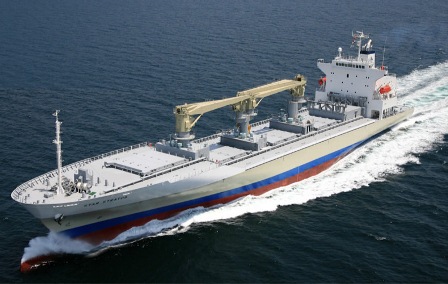
Types of Cargo Ship

CRANES FOR CONTAINERS: mobiles, installed in a fixed way on a foundation column cranes on rails, gantry, telescopic. Container handling equipment

Ship to Shore Crane

The gantry crane for containers: panamax, post panamax, operator, uses, characteristics, ports, docks, transport, maneuvers, parts, container

Forklift operator meaning – Duties of a Forklift Operator

Forklift operator job description
Duties of a forklift operator
Machine operator jobs
Forklift operator meaning:

Duties of a Forklift Operator: Since forklifts are used today in a wide variety of indoor and outdoor environments, you can expect there to be a significant number of differences in the job description from one employer to the next. Despite the varied environments, there are a few basic responsibilities that tend to remain constant regardless of the employer.

Duties of a Forklift Operator

Forklift operator job duties

All operators of lift trucks must be trained and receive a certificate or license to indicate the employee’s knowledge, skill, and ability to safely operate a powered lift truck. The certification must include the name of the trainee, the date of the training, and the signature of the person performing the training and evaluation.

Refresher training of the operator’s performance must be conducted at least every 3 years by completing the practical training.

Duties of a Forklift Operator

Forklift daily inspection

Safety Inspection
• The safety inspection is performed once per day or shift
• All defects are to be logged daily

Forklift operators must make judgment calls from the beginning to the end of each job.

Some things which must be considered include the weight of the load and the forklift capacity, the stability of the load, the height at which a load must be lifted, obstacles both in the path and overhead where the forklift operator is operating, and blind-spots or individuals who might be sharing the workspace with the forklift operator and vertical incline.

Duties of a Forklift Operator

Forklift job duties

Forklift job description:

Before using the forklift, always check to see that the charge is at least ½ full for normal loads and ¾ full for heavy loads. If the load to be lifted is rated at 90% or more of capacity, the charge should be full.

Safety inspections are important because using damaged equipment has the potential for serious accident scenarios.

Operating a forklift that is not fully charged is a recipe for disaster when lifting a heavy load.

Forklift operator responsibility

  • Pre-op safety inspection
  • Driving to pick-up load
  • Load pick-up
  • Driving load
  • Setting down a load

Each forklift operator has many responsibilities whenever he or she is engaged in picking up and moving a load. It is easy to become complacent from routine operations. This is why training is an important part of any safety program. Training should include initial hands-on experience, encompassing each element of forklift operation.
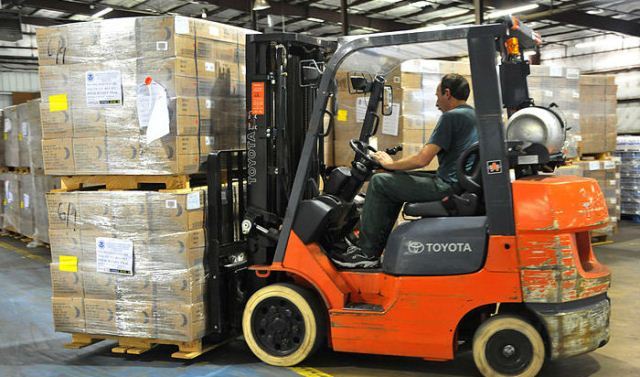
Retraining is also necessary to diffuse bad habits and to reiterate important situations, which might have been forgotten by the casual forklift operator. Training always reduces risks.

Duties of a Forklift Operator

Forklift pre start checklist

Pre-start checklist safety inspections are fundamental to safe operations of the forklift. In addition to knowing the load capacity, operators must be knowledgeable regarding the use of all forklift levers. Always test proper operation and electrical charge of a forklift prior to beginning any lift.

Operators should be cautious of driving forklifts up or down inclines, whether or not they are carrying a load. Drivers should engage forks completely when picking up a load. Loads should only be lifted to a height to clear stacks and then lowered to a position that gives both maximal stability and clearance of obstacles.

Operators should always be aware that they may have to share their space with pedestrians. Therefore, they should always use spotters when driving around blind corners or other areas where visibility is impaired. When approaching a stack to set down a load, the operator must ensure that the area of approach is clear of personnel.

Forklift battery charging

Electric Forks – electric forklift:

  • Make sure the forklift is charged before using
  • Minimum charge should be ½ of capacity (3/4 for heavy loads)
  • Heavy loads drain the battery more quickly

Electrical forklifts have many advantages and disadvantages. There is no exhaust, and therefore they are the vehicle of choice for closed indoor work. Fumes from diesel or gas-powered vehicles will rapidly degrade indoor air quality. However, electrical forklifts must be routinely recharged.

An operator should never begin to use an electric forklift that does not have at least a ¾ charge on the battery. Further, operators must be aware that heavy loads [greater than 90% of load capacity] will significantly and rapidly deplete the load charge on the battery. This is because more work is being done on a heavy load than on a light load.

Topping off batteries must only be done when the battery is disconnected and in an area where there is adequate room for the task. Only qualified [trained] personnel should be permitted to oversee the task of recharging electrical forklifts.

  • Having been certified as a forklift operator does not automatically confer the ability to recharge the forklift.
  • Inform your supervisor or facility manager if you feel your electrical forklift requires recharging.

Forklift speed control

Checking Controls

  • Check that the horn functions
  • Check the steering mechanism with the engine running
  • Check the breaks (not more than ½ inch travel)
  • Check the seat brake
  • Check that the clutch disengages the transmission
  • Check the hydraulic controls-lift and tilt levers

All forklift work begins by going through a mental checklist. After checking tires, make sure that the horn and warning backup lights perform as specified when the forklift is put in reverse.

Check that the forklift steers properly both in the forward and reverse directions. Always check the foot brake to ensure it engages when pressed. The travel on a foot brake should be no more than ½ inch.

forklift seats:

Seat brakes are provided on a forklift as a safety device. When someone is seated on the seat, it is possible to operate the forklift. By lifting yourself out of the seat, you should no longer be able to move the forklift either in the forward or backward direction.

Some forklifts are equipped with a clutch. This should always be checked to see whether it will disengage the transmission before making a lift.

Forklift speed limiter

Operators should test all hydraulic controls before attempting to pick up a load.

This includes lift, tilt and horizontal [used for centering a load] hydraulic levers. At the same time, the operator can ensure that all chains move smoothly. All of these actions are required before attempting to lift a load. It does the operator no good to be stuck with an elevated load, which will not move because he or she neglected to test the controls before lifting the load.

It is the responsibility of the forklift operator to ensure that the forklift is in proper working order before attempting to lift or move a load. Operators who have time limits should not bypass these important checklist items in an effort to save time. They should reschedule or pass on their responsibility.

Duties of a Forklift Operator

Forklift inspection and load testing requirements

Checking Loads

  • Check that the pallet is undamaged.
  • Check that load is banded.
  • Check that the area is clear of people and debris.

One of the most important aspects of forklift operation is checking the load to be lifted. Most forklift loads are moved on pallets. Alternately loads may be lifted via sling onto a sling a single or both forks.

When using sling care should be taken to ensure that the sling is fitted towards the back of the fork (I.e closest to the forklift frame) to prevent or reduce the risk of sling slippage.

  • All pallets should be inspected for integrity.
  • Broken or pallets of insufficient mechanical strength should be replaced.
  • Small materials on pallets should be shrink wrapped in place before attempting to move any pallet.
  • Pallet height should also be kept to a minimum in order to increase driver visibility and overall stability.
  • If vision is impaired by the load height, the driver may elect to drive the load backward.

Also, check to make sure the forklift travel path has been cleared of all obstacles and personnel. Remember pedestrians always have the right of way.

Duties of a Forklift Operator

What are some warehouse forklift driver skills?

Warehouse driver skills that should be included on a resume include organization, planning, time management, inventory control, equipment maintenance, teamwork, documentation, and data entry, and attributes listed should include dependability.

How do you get forklift experience?

It is possible to get a forklift operator job with no experience, but the employee must then go through training and pass all certification requirements. There are stringent regulations that forklift operators and their employers must follow. An individual who is not trained and does not have a proper certification cannot operate a forklift. A forklift operator must have certification or training that follows all local and state laws.

What is the definition of forklift operator?

Forklift operator meaning: A forklift operator is someone who is responsible for operating a forklift to move, locate, relocate, stack, and count merchandise around warehouses, storage yards, factories, construction sites, and other work sites.

The most read

Forklift Safety Procedures

Forklifts are extremely useful workplace vehicles, as long as they are used safely and appropriately by operators who are appropriately trained and competent to use them. Learn about the rules for driving forklifts.

More on this story

Forklift Brands

Forklift Brands and models: Which forklift brand is best? Top brands in the world: Caterpillar, Toyota, Volvo, Hyundai, forklift brands and models, top 10 forklift brands.

Telescoping Gantry Crane

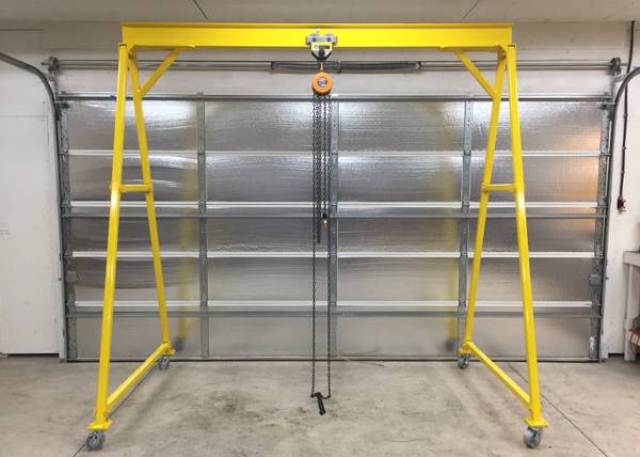
The Telescoping Gantry Crane can be positioned anywhere you need to lift and position materials. Standard adjustable height 8 ft to 12 ft.

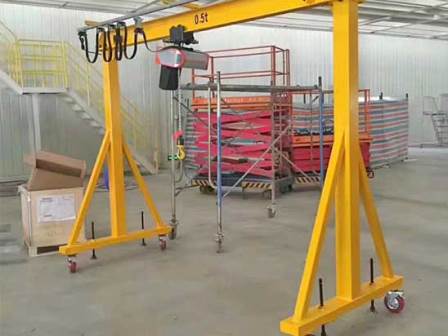
  • Portable Gantries: Reach all corners of your plant. Lift and move materials, or use for pulling motors, equipment, and other heavy machinery. Quick disassembly for transport by a service truck.
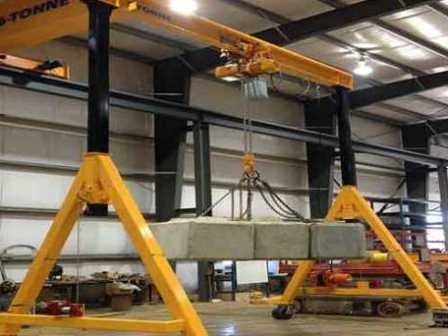
  • Adjustable Gantries: Adjust height, span, and tread for use on uneven floors, through doorways, aisles, and under mezzanines or other overhead obstacles. Excellent gantries for warehouses and welding shops.
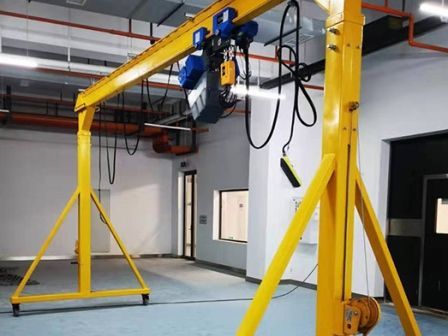
  • Relocatable Gantries: Virtually all Spanco Gantries are relocatable, making them ideal for rented facilities or future workflow changes
  • Track-Mounted Gantries: Manual or motorized travel over a fixed route make our track-mounted gantries a great choice.
Telescoping Gantry Crane

Types of Gantry crane

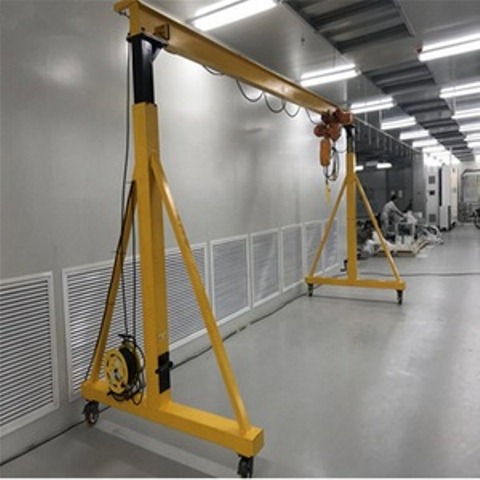
Adjustable and Portable gantry crane: A portable crane that you can position anywhere you need to lift and position materials.

Adjustable gantry crane

The Telescoping Gantry Crane is an adjustable height gantry crane. Adjustable ranges include 8′ – 12′ and 12′ – 16′. This gantry crane is a great option for when you need a portable crane that can have the height adjusted. With ranges from 1 Ton to 5 Ton, this gantry crane is suitable for a wide range of lifting jobs. Compatible with most hoists and trolleys.

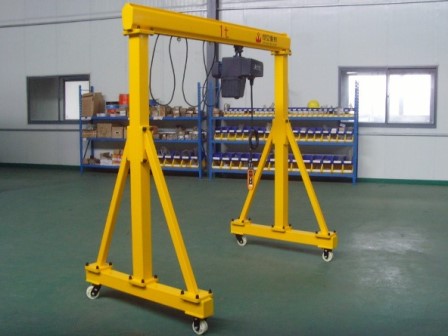
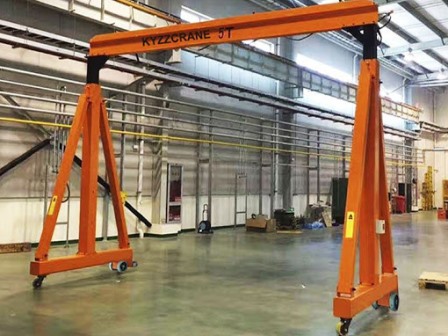
Portable gantry crane

You can move this gantry crane anywhere in your work area with its easy to roll swivel steel casters. The wheels have brakes so your gantry crane will be able to lift safely. Simply release the brakes when you want to move your gantry crane elsewhere.

Telescoping Gantry Crane

Titan telescoping gantry crane

  • The Telescoping Gantry Crane by Titan Attachments is what your shop needs for all lifting and loading tasks.
  • The adjustable boom raises and lowers to accommodate varying heights.
  • The 4 locking casters make moving and transporting easy and provide a sturdy base when lifting.
  • The 1/2 ton capacity covers a large range of items and equipment that can be lifted.
  • Trolley or hoist not included.

1 ton capacity telescoping gantry crane

Gantry crane Specifications:

  • Load Capacity: 2000 lb. (1000kg)
  • Item: Adjustable Gantry Crane
  • Min. I Beam Height: 114″
  • Includes: (4) Position Locking Swivel Casters with Roller Bearings
  • Max. I Beam Height: 144″
  • Gantry Crane Span: 8 ft.
  • Color: Gray
  • Wheel Diameter: 8″
  • Wheel width: 2″
  • Adjustable Increments: 6″
  • Caster Material: Glass/Nylon
  • Caster Type: (4) Swivel
  • I Beam Flange Width: 7.12″
  • Gantry Crane Clear Span: 6 ft.
  • Height Adjustment: Adjustable Height
  • Material: Aluminum
  • I Beam Height: 6.00″

Titan adjustable telescoping gantry crane

Titan Attachments helps you lift extremely heavy objects in your shop with this 2-ton gantry crane. For the best performance in your shop or on-site, this is just what you need to maximize your efficiency and save space. It can lift very heavy loads of up to 4,000 lb with ease, saving you and your back! Pulleys and other hooks (not included) are easily attached to the top beam.

If you’ve ever had to keep more than one gantry crane in your shop, this adjustable crane will be perfect for moving from smaller areas with lower headroom to larger ones for your lifting convenience. Each caster has its own brake to keep it safely locked in place while you work. When you’re finished, simply lower the height for easy storage out of the way. (Telescoping Gantry Crane).

Titan gantry crane specifications:

  • Compatibility: Attach most pulleys and other gantry attachments; Includes and fits most mobile push trolleys
  • Quality Design: Heavy-duty steel is strong yet easy to move around; Supremely large lifting power of 2 tons
  • Convenient: Cost-effective for areas with infrequent lifts; Easily collapsible; Adjustable height
  • Dimensions: Max and min-height: 8 ft. – 12 ft.; 102″ long; Weight: 370 lb; See Specifications section for complete dimensions
  • Usage: Wheel over heavy objects and lower hook from crane to lift; Objects can be slid across the track as needed

Telescoping gantry crane plans

Telescoping gantry crane: Engineering Considerations:

Crane capacity is a function of the height, width, and beam options. Plans include several graphs showing the effects of the beam type, length and under beam clearance with instructions for choosing. Since these plans cover a wide range of options, prepare for some figuring. You’ll need to know the required load, span width, and how tall (and short) the crane must be.

Load capacity for the crane is a static vertical load and is highly dependent on materials used, construction techniques, assembly methods and load distribution. Capacity numbers quoted are extremes.

Several beam choices are available, including aluminum. Higher (taller) cranes and wider (span) cranes have lower capacity. Load capacity does not compensate for capacities for trolley, cables, chains or other hoist equipment used. Do not exceed manufacturers’ limits. Always use Extreme Caution when lifting. Here is some more good Crane Safety advice.

Telescoping Gantry Crane: Mobile Gantry Crane Plans

Plans include instructions with lots of illustrations, a List of Materials, and Construction Hints for building the crane.

Telescoping Gantry Crane

What is telescoping gantry crane?

The telescoping gantry cranes are lightweight, versatile, and a low-cost lifting alternative to fixed Overhead Crane Systems. The telescoping gantry cranes contain height adjusting steel locking pins, adjust in six-inch increments and automatically engage when height positioning holes are reached.

What is an adjustable gantry crane?

Adjustable Height Steel Gantry Cranes provide an economical way to lift materials anywhere within a facility. The casters enable you to move the gantry around your work area. This is a more cost-effective lifting solution for areas of infrequent lifts than a more expensive permanent structure.

What is A-frame crane?

With a selection of fixed or portable designs, gantry cranes with frame A are a very popular lifting product for light and medium loads. There are A-frame gantry cranes of various sizes, heights, and lights, which can raise a variety of capacities.

How does a gantry crane work?

Gantry cranes lift the load using a hoist that is connected to the horizontal beam or girder. The beam is supported by pillars at both sides and the hoist can carry objects from one end of the beam to another. The cranes are powered with wheels or rails that can help move it to different locations.

The most read

Small Gantry Crane for Sale

Small gantry cranes are the perfect solution when heavy-duty lifting equipment that is versatile and easy to set up and use is required.

More on this story

Adjustable Gantry Crane

Adjustable Height Steel Gantry Cranes provide an economical way to lift materials anywhere within a facility. The casters enable you to move the gantry around your work area.

Gantry Crane Price

When buying one of this equipment, use and load considerations are necessary, whether they are for work at home or for a workshop.

Harbor Freight Gantry Crane

A gantry crane is a serious purchase. Not only are they expensive, but they are relied upon to lift seriously heavy objects.

Mobile Gantry Crane for Sale

Mobile Gantry Cranes in freestanding, portable, fixed height, or adjustable height configurations that are ideal for your warehouse or workshop.