All posts by Loganx

Professional Web Writer | Motor Enthusiast | Content Creator | Logan is a dedicated and skilled web writer, passionate about engines and machines and with a talent for creating engaging and informative content. She specializes in writing about a diverse range of topics including construction, forklifts, heavy equipment, excavators, etc. SEO Optimization: Proficient in SEO best practices, ensuring high visibility and engagement for all published content.

Overhead Crane Lights

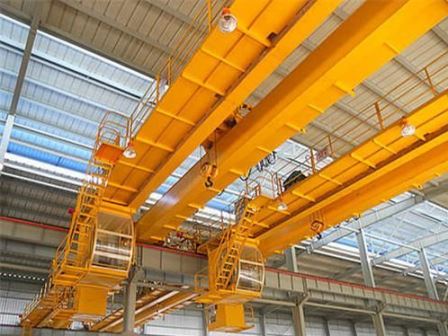
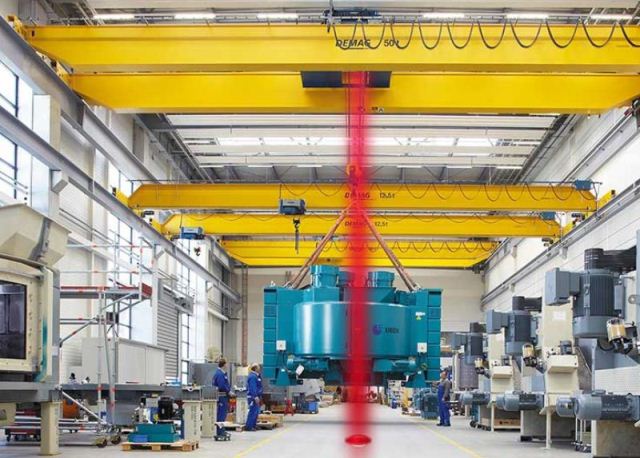
Overhead Crane Lights: The crane spotlights are for companies that have fixed overhead cranes. It is the only light of its kind in the industry. Cranes operate in close proximity to people and in-plant vehicles and can pose a real danger to them if they get too close or if they are unaware of the crane’s presence.

Overhead Crane Lights:

Have you ever walked through a facility when suddenly a maintenance cart approached from behind without you being aware of it? Have you ever stepped around a blind corner and been startled by a piece of mobile equipment moving toward you?

Overhead Crane Lights

Crane warning light

Everyone is busy these days, often multi-tasking and being in a hurry, which can distract an employee from serious hazards such as mobile equipment traffic.

Audible alarms are great but often serve as a general warning of equipment in the area.

If you also consider how loud a steel mill can be, along with the continuous use of mobile equipment or overhead crane sirens throughout a workday, you can understand how workers may become immune to these audible alarms.

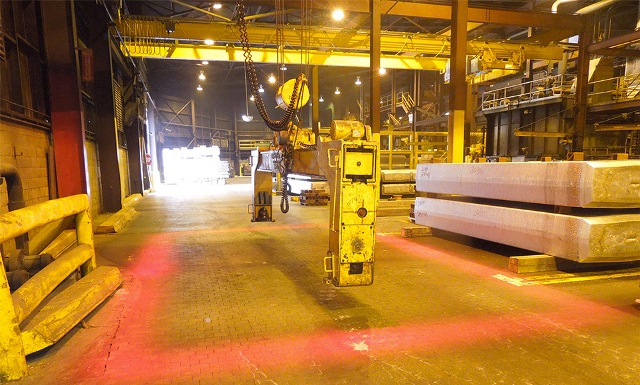
To increase pedestrians’ awareness of mobile equipment movement, warning spotlights are being manufactured that will broadcast a spot on the floor 15 to 20 feet from the equipment to forewarn pedestrians of their approach.

In these years, began installing blue spotlights on an overhead crane and other mobile equipment operating within the mill to increase pedestrian awareness.

The lights do not take the place of audible alarms, but they provide an additional visual warning that is very direct with respect to the proximity of the hazard.

Overhead Crane Lights

Overhead crane warning lights

Overhead Crane Lights: The front light is continuously on when the overhead crane is running, and the rear light is wired to activate when the equipment is placed in reverse. Recognizing the increased safety awareness and potential market, manufacturers are now creating various lights that can project a line on the floor to warn pedestrians of the dangerous area surrounding mobile equipment (i.e., forklifts, rotating equipment).

The positive employee feedback regarding the awareness of mobile equipment via the blue lights recently installed made us wonder if such a concept could be implemented on all overhead cranes.

Overhead crane audible alarm

Although a well-known rule of looking up and locating cranes while walking through a steel mill exists, an employee focused on a task or deep in thought may not be aware of the overhead crane siren.

The audible alarm serves more as a general caution to employees in the area but requires employees to identify the hazard and assess if its proximity is in their immediate danger zone or not.

The movement of light from an overhead crane will provide an actual and definitive warning to affected employees, those in the immediate area.

Also, unlike audible warning sirens, which are dependent on the crane operator to activate, the spotlights are automatically on when the equipment is energized, thus reducing human error.

Overhead Crane Lights

Overhead crane safety warning light

Unlike the blue lights on forklifts where the beam is projected 15 feet, producing a consistent and visible blue spot on the ground, It should be recognized that the variable heights of overhead cranes may be more difficult to find the right LED light to produce a large, bright spot on the floor.

The options for overhead crane warning lights were investigated and it was discovered that this concept is still quite new, but manufacturers are designing and developing LED lights to be used in overhead cranes to warn pedestrians about the movement of the crane.

Overhead Crane Lights

LED overhead crane lights

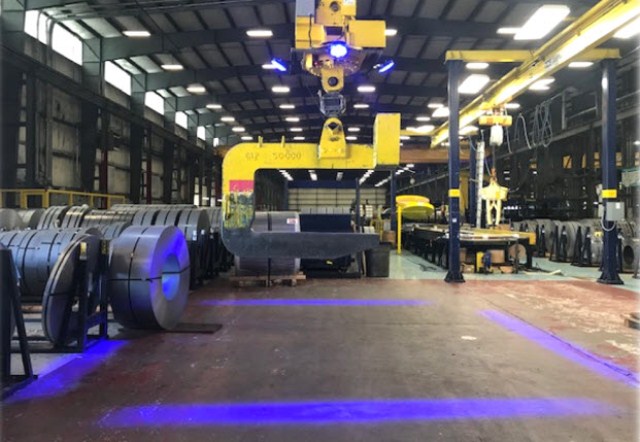
Overhead Crane Lights: The first LED lights trialed on overhead cranes were those used on mobile equipment — the 4 LED blue spotlight. The blue spotlight was installed on the bridge of an overhead crane at 65 feet and it created a 6-foot x 6-foot blue spot on the floor.

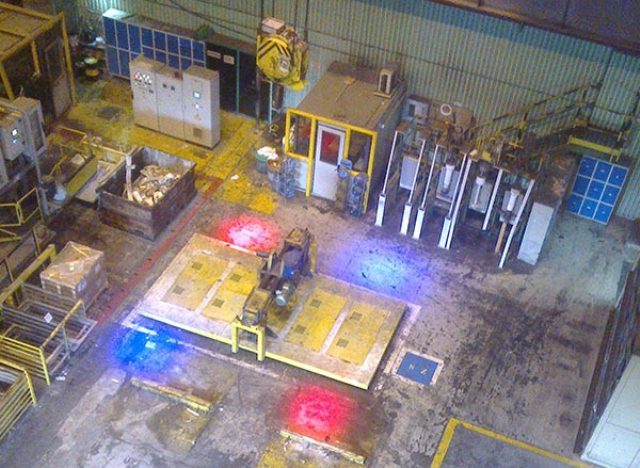
After installing the blue light on the crane we realized it would be best for the lights on overhead cranes to be different than the color of the lights used on the mobile equipment so that workers could distinguish between the two.

The only other color available in a focused beam spotlight was red. We purchased a red 4 LED spotlight from the same manufacturer as the mobile equipment light we already found success with and installed it on the same overhead crane at 65 feet.

Overhead Crane Lights

Overhead crane safety lights

The crane’s area of operation was well-lit, with halogen lights and natural sunlight coming from overhead doors. However, this particular red light produced a soft red color spot, which was more difficult to see on the floor and tended to fade when exposed to full natural sunlight.

To overcome the height of our taller cranes (100 feet plus) and produce a stronger spotlight on the ground, we purchased red and blue 24 LED lights designed to be used on overhead cranes as warning lights.

These lights performed well from 100 feet, producing a bright 7-foot x 7-foot spot on the ground, but again, there was some fading of both the blue and red colors in areas illuminated by natural sunlight. ( Overhead Crane Lights )

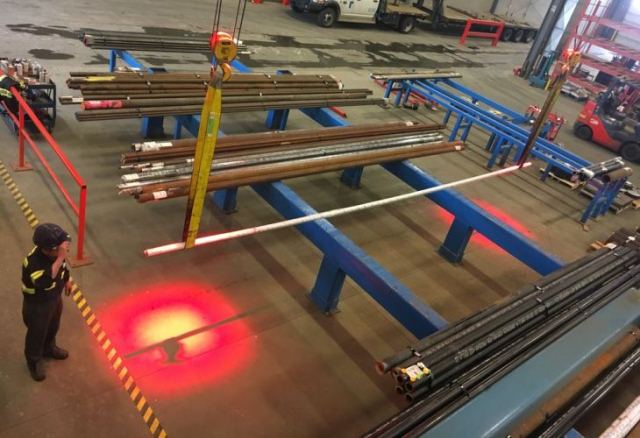
Overhead Crane Lights

Light duty overhead crane

After trialing a green light on a crane, we received quick feedback from our employees that they felt visibility was greater with the red light versus the green light. Considering the performance of the different colored lights and our employees’ feedback, It has been decided that the red light is better for the needs of industrial facilities.

Each installation interested in this technology, has to experiment with different types of colored lights in its facilities, to determine which light is best for your needs.

The overhead crane lights have been a positive complement to the audible warning siren. Should employees become distracted or complacent to the audible warnings of overhead cranes, a moving light on the floor will grab their attention and prevent them from unknowingly walking under a suspended load.

The lights will be angled out from the bridge of a crane to warn workers of an approaching crane, with adjustable distances selected based on the area.

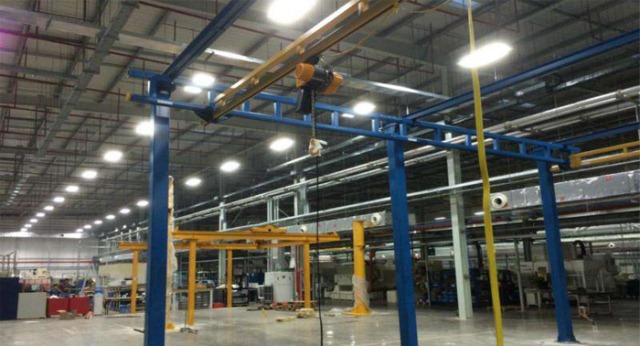
Overhead Crane Lights

Overhead crane warning systems

Another option we may consider is installing lights on the trolley projecting straight down from the four corners of the trolley, thus creating a danger zone around a suspended load.

Installing the lights on the trolley can also be beneficial to crane operators while they are picking up or setting a load down, as they do not have to take their eyes off the crane block or load to know the trolley is centered over the load.

Your effort to provide more awareness about the movement of the overhead crane will result in fewer opportunities for employees to be in the wrong place at the wrong time, minimizing the potential of an avoidable accident. ( Overhead Crane Lights )

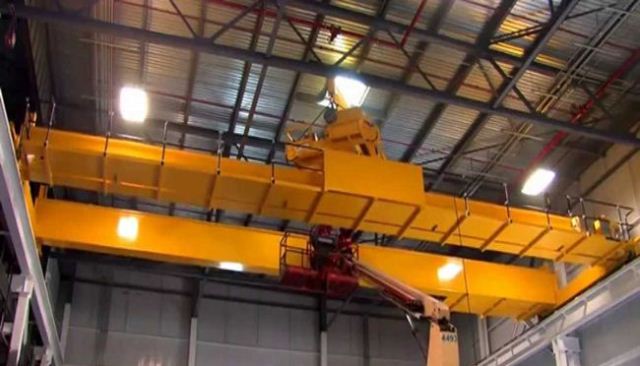
Overhead Crane Lights

How do security lights work in cranes?

Overhead warning lights also make positioning the crane hook and moving objects easier for crane operators, who can use the light as a point of reference for their hook position. Install the lens cover to switch the light beam from a dot to a line. Mounting brackets are adjustable so placement of the warning light is simple and easy. This single overhead warning light projects one dot or line.

Overhead Crane Lights

How do the overhead crane lights work?

Lights ensure the safety of pedestrians by projecting safety lines on the floor. Those lines (displayed in a chosen color) inform all employees nearby about the moving load. When used by the crane operator they help the operator position the crane precisely.

How are the overhead crane lights installed?

The installation process of all lamps is equally straightforward. All you need to do is mount the lamp directly on the crane. The included adjustable mounting bracket up and down, makes it easy to position the lamp precisely where you want it.

Why You Should Use Safety Lights?

Discover their main benefits:
-Versatility: the lamp is available in two colors (red, and blue) and can be used both indoors and outdoor. Thanks to that it’s easy to adjust it to your company’s requirements.
-Convenience: the use of lamps makes the work of crane operators much easier and safer and provides them higher control over the load.
-Efficiency: the lamp is an ideal solution especially for crowded areas in any workplace, increasing the safety of your employees around cranes and loading areas.

How does the warning light work on an overhead crane?

Project lines or points of light from an elevator on the floor to help prevent injuries to workers caused by crane hooks and suspended loads. Each light has 24 LEDs that emit a light beam on the floor to warn that there is an aerial crane hook in the area.

The most read

More on this story

Overhead Cranes

What are the parts of an overhead crane? What is the purpose of an overhead crane? How much does an overhead crane cost?
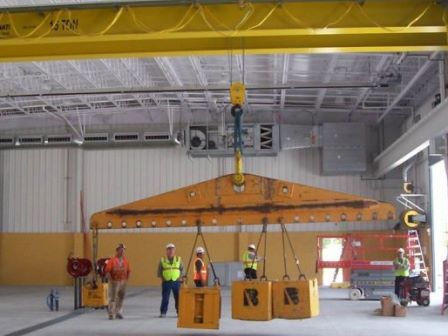
Overhead Crane Risk Assessment

What happens when there are structural defects in an overhead crane?
Overhead Crane Safety Program

Safety for the Good Operation of the Overhead Crane.

What is a crane?

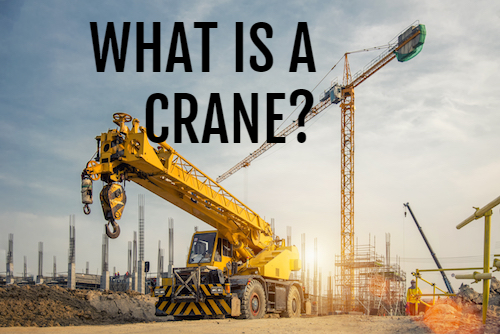
What is a crane? The crane is a mechanism that uses a series of simple machines to both raise and lower objects, and they also move horizontally.

They are always equipped with at least one coil, cables, ropes or chains, and pulleys.

What is a crane

Crane Driver

Crane operator job description:

Lifting loads: Cranes can use a combination of simple machines to gain a mechanical advantage and lift objects.

  • The first is the lever, which is used in the balance style crane. The beam of the crane is in balance at the point of support, which allows it to lift heavier objects with a lesser amount of force.
  • The second is a style arm crane, which uses pulleys to achieve a mechanical advantage (but note that all cranes use pulleys, in this case, the pulleys are the main source of mechanical advantage).
  • The third form of a crane can lift objects by using a hydraulic cylinder, either directly or in the feed of a balance or antenna.

Horizontal movement: The horizontal movement of a crane can be achieved in one of two ways.

  • The first is to mount the entire device on a rotating pivot, and simply rotate the load-bearing boom or beam around. This is very common in mobile cranes and fixed cranes also used in construction.
  • The second method is to roll the load back and forth on the tracks along the bar itself. This is very common in fixed cranes in ports and railway stations.

Balance: A final consideration in the way of working is the stability of the cranes. A crane is stable when the sum of all the movements on the base is equal to zero.

As a practical matter, this means that the nominal load size of the crane must be smaller than what would be necessary to tilt the crane.

In the United States, a mobile crane can only lift 85 percent of what it would take to tilt the crane. That margin is to realize the potential instability so the mobile crane happens to turn around.
How does a crane work?

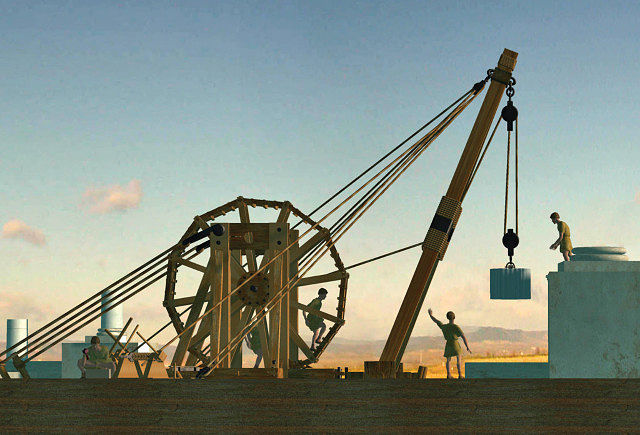
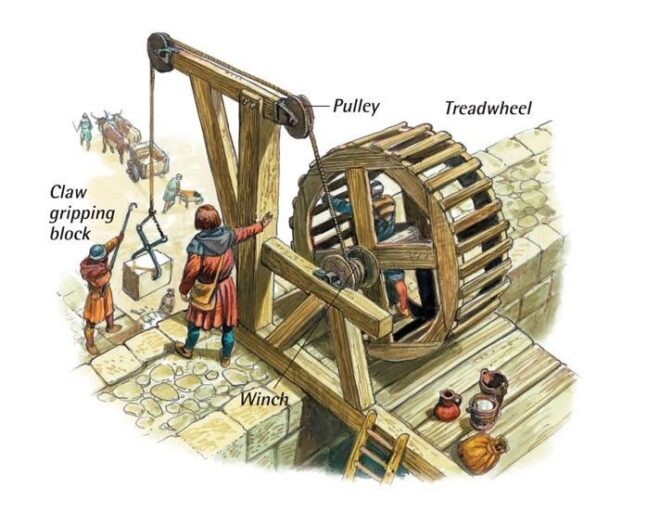
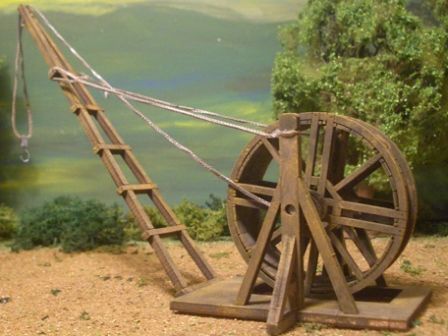
Cranes have been part of the construction process since its invention in Greece.

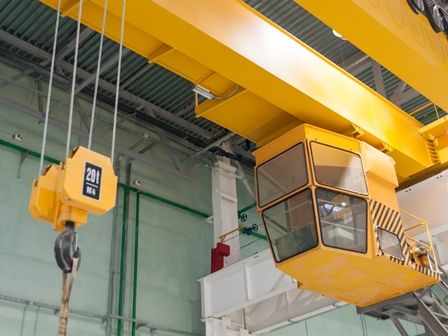
The cranes are essentially for heavy construction work (although there are also workshop cranes that are smaller in scale) and for all types of lifting tasks.
Equipped with cables and pulleys and based on the application of fundamental mechanical principles, a crane can lift and lower loads that no human working capacity could.

Crane design has evolved to meet the demands of a wide variety of industrial needs, and modern cranes often coordinate simple systems to accomplish complex lifting jobs – sometimes in environments that would be dangerous for human workers.

What is a crane?

History of cranes

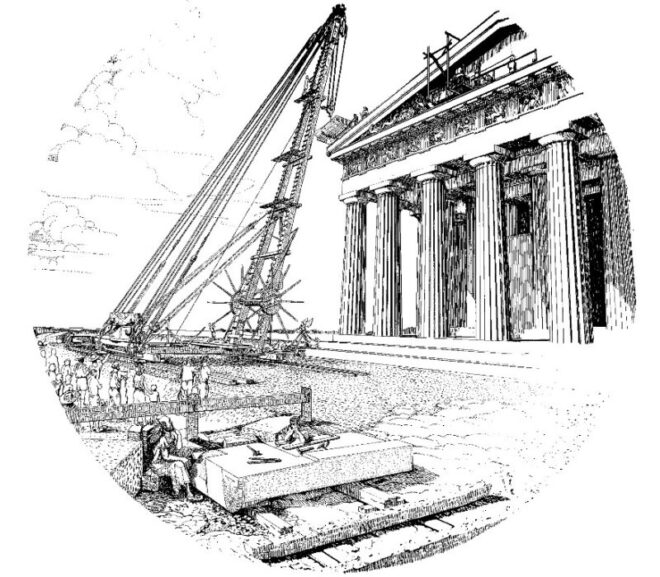
The crane is the “evolution” of the load prop that, since antiquity, has been used to perform various tasks.

There are ancient documents where the use of machines similar to cranes by the Sumerians and Chaldeans is evidenced, transmitting this knowledge to the Egyptians.

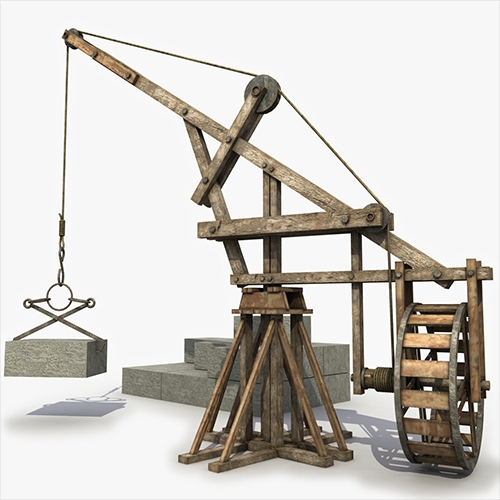
Ancient Greece: The first cranes were invented in ancient Greece, driven by men or animals. These cranes were used mainly for the construction of tall buildings. Subsequently, larger cranes were developed using pulleys to allow higher weight lifting.

Middle Ages: In the High Middle Ages it is used in ports and shipyards for the stowage and construction of ships. Some of them were built anchored to stone towers to give additional stability.

The first cranes were built of wood, but since the arrival of the industrial revolution, the most commonly used materials are cast iron and steel.

Mechanical crane

How does a crane work?

To operate efficiently and maintain its vital stability, all cranes must obey the laws of physics. The two most important considerations in this regard are that the crane must not move weights that exceed its capacity, and that any sudden movement that occurs above the supporter of the machine should be eliminated as it may be.

How does it work? A crane is capable of lifting objects because the load is compensated by the counterweight and results in the stabilization of the crane, which allows it to lift and move its load.

Motor crane

The cranes are generally powered by electric motors, hydraulic power or internal combustion engines, but the rapid technological development will allow us to see another type of food in the future.

Types of crane

Today’s construction is an important part of industrial culture, a manifestation of its diversity and complexity, and a measure of its mastery of natural forces, which can produce a wide variety of environments built to meet the diverse needs of society. Cranes are some of the most important equipment in the construction industry.

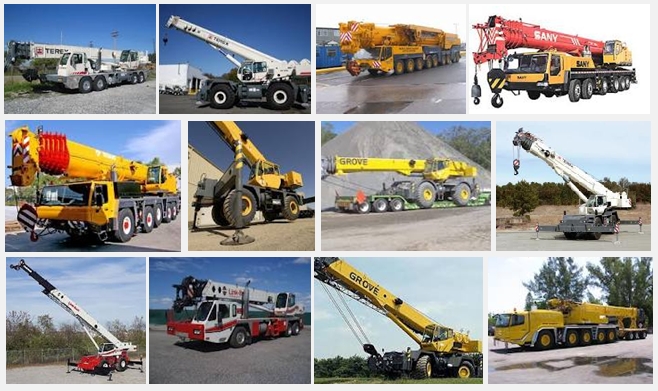
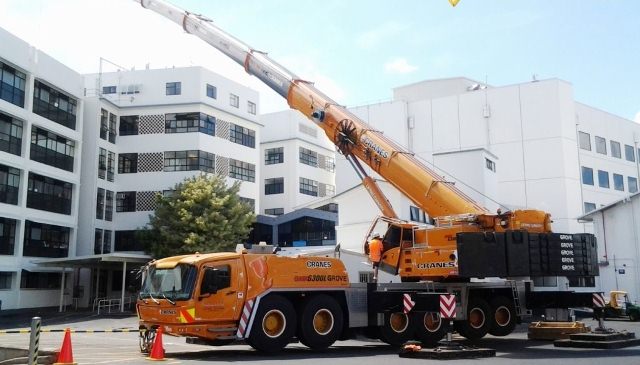
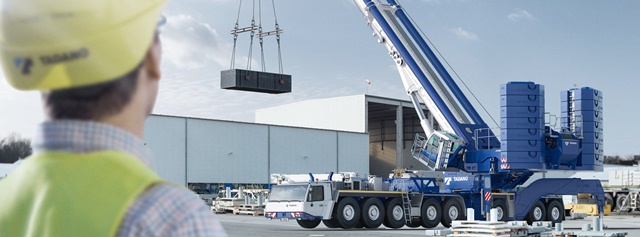
Modern construction machines include fixed tower cranes, huge shipyard gantry cranes, truck-mounted cranes, and more. The different types of cranes work in very different ways, so each construction crane adapts perfectly to the job for which it is designed.

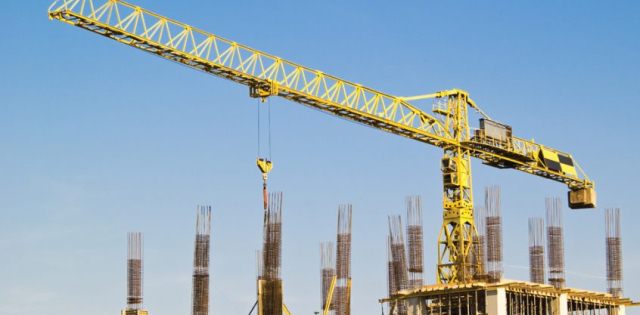
Tower crane

This type of crane is normally used in urban construction sites. This machine is anchored to the floor and provides an optimal mix of height and lift capacity which is commonly deployed in building construction.

Two horizontal arms emerge from a central tower, in which one is used to suspending the heavy loads that will be lifted and the other serves as a counterweight. A tower crane is controlled by a person who may be sitting on the top of the crane, or use a remote control system to operate the machine from the ground.

Mobile Crane

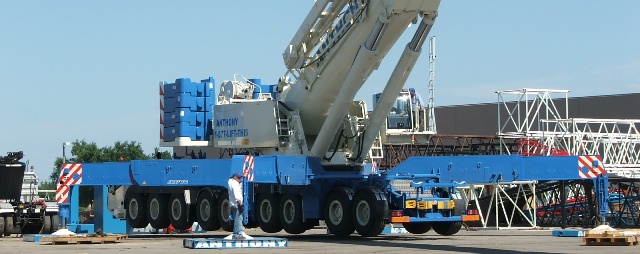
Mobile cranes are commonly found on vehicles, but cranes used for railroad work are adapted to move on rails, and several cranes can be attached to barges when used for construction work on waterway bridges.

The lifting arm is normally articulated to allow lifting and reduction as required. Normally this is achieved through a system of cables or hydraulic mechanisms, and the entire mobile structure can be coupled to a support to provide more stability during its operation.

Workshop crane

These types of cranes are used in daily activities and delicate tasks. Being extremely cost-effective, workshop cranes have a wide range of use in the manufacturing areas.

They are excellent for vehicle maintenance work, machinery loading and various types of tool change

Telescopic crane

Driven by a hydraulic mechanism, a telescopic crane features a set of concentric tubular arms that can be extended and retracted easily to alter the height of the crane.

It is usually mobile, these adaptable cranes are compact units that perform efficiently in tight spaces.

Static crane

The word “static” refers to the characteristic that the crane is installed in a certain place, instead of being transported. This is the most marked difference between this type of cranes and mobile cranes. In this category are several types of cranes such as the tower crane.

Bridge crane

This crane employs a strong gantry to maneuver and lift extremely heavy industrial loads. This type of crane is used in factories and shipyards where its robust characteristics make them essential elements.

Crawler crane

It is a special type of mobile crane that is coupled in caterpillar vehicles, this type of crane can be used in types of floors where common vehicles can not be moved. This crane is usually very stable due to its wide base that serves very well as a counterweight. They are very useful in buildings during the initial phase of buildings where their ability to move heavy loads in difficult soils is a challenge.

Aerial cranes

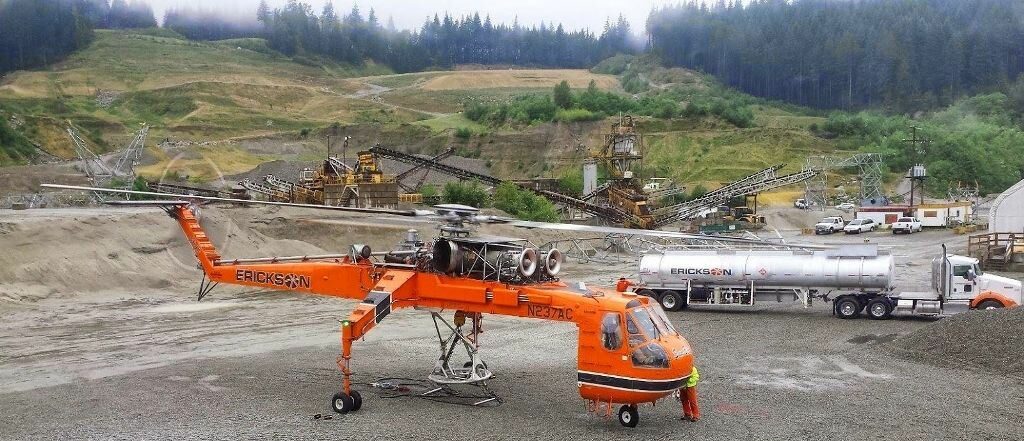
These types of cranes probably offer a higher range than any crane, since they are part of an aircraft. The cranes are attached to a helicopter with the lifting mechanism that is normally used to lift containers, pre-fabricated or temporary buildings, and wooden planks. These helicopters can operate in a wide range of scenarios, including areas where no other type of crane can be used “in-situ” and in areas that lack roads.

Hydraulic crane

Hydraulic cranes may be simple in design but can perform difficult tasks that would otherwise seem impossible.

In a matter of minutes, these machines are capable of assembling beams on the roads, lifting heavy equipment in factories and even building houses.

How does a hydraulic crane work?

A simple hydraulic system works when a piston pushes down on the oil, the oil transmits all the original force to a piston, which is driven upwards.

That is, when one piston is pushed down, another piston is pushed up.

A hydraulic pump creates the pressure that moves the pistons and the pressure in the hydraulic system is created by one of two types of hydraulic pumps:

  • Variable displacement pump
  • Gear pump.

Most cranes use gear pumps that have a pair of gears to press the hydraulic oil.

When the pressure must increase, the operator pushes the accelerator pedal to operate the pump faster.

In a gear pump, the only way to get high pressure is to run the engine at full power.

These pistons can be extended or reduced, and when these pistons are connected to a system of levers, the pistons can be used to lift surprisingly heavyweights, as do hydraulic cranes.

What Does It Do? Crane

Tall cranes tower above construction sites and line the edges of shipping ports. Readers will find out how different types of cranes are used to help build skyscrapers, load cargo ships, and much more.

In this hour long, thrill-packed adventure you’ll not only see more than 40 pieces of construction equipment on the job, but how they work together on actual construction sites.

These monster machines even talk! Bulldozers, cranes, dump trucks, asphalt pavers and drillers, bucket trucks, steam rollers, backhoes, concrete pumpers, forklifts, Mine drillers, blasting with dynamite and so much more.

Why do cranes not topple over?

Why do cranes not topple over?

The base of the crane is bolted into the ground and weighted down by giant blocks of concrete. The stiffness of the supporting structure also helps counteract bending caused by unbalanced loads.

How do tower cranes stay balanced?

Basically, a tower crane has a large load on the other side of the crane. It keeps it balanced like a scale. On other tower cranes, they use cables that relay the force of the lifting to other parts of the crane near the ground, again, providing a counterforce for the weight of the load it is lifting.

Why do cranes fall over?

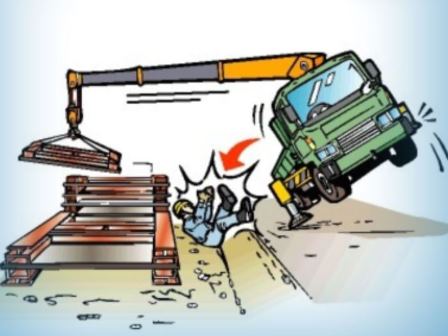
Because of oversize loads or mishaps during assembly. In general, mobile cranes tend to fall over because of overly heavy loads, while tower cranes usually collapse in the course of being assembled, taken apart, or extended.

Are tower cranes dangerous?

Towering cranes used on construction sites to lift and transport hefty loads can be extremely dangerous and often lethal when they fall over, or when parts or the entire crane collapse due to some structural failure. They’re usually local news unless you lose an entire crane.

Where are cranes used?

A crane is a piece of heavy machinery that is a tower or platform that is equipped with cables and pulleys. They are used to lift and lower materials. The most common use of cranes is in the construction industry and heavy equipment manufacturing.

Crane images

The most read

Who invented the crane?

The ancient cranes have been evolving from the load prop to perform various tasks.

More on this story

Heavy Duty equipment

The construction machines are those that allow performing different works in the field of land adaptation.

Risk Assessment for Lifting by Crane

A manual provides practical guidance for the safe operation of the crane, provided the crane is used in accordance with the manufacturer’s recommendations.

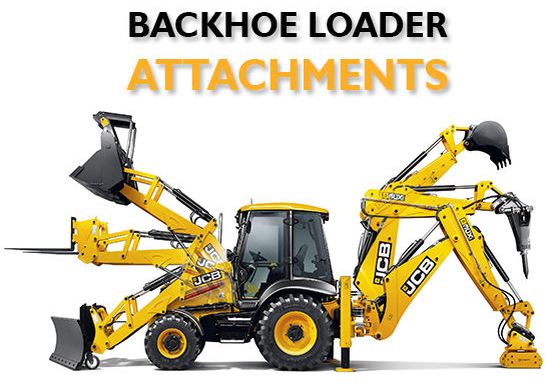
Backhoe Loader Attachments

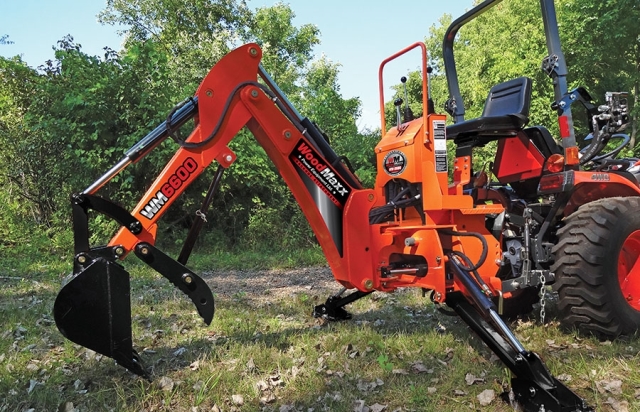
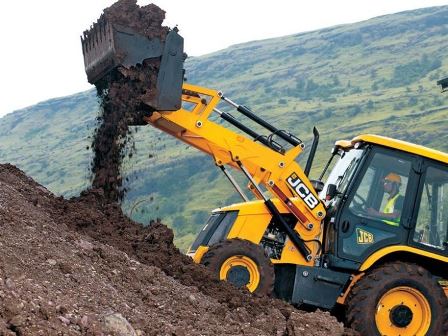
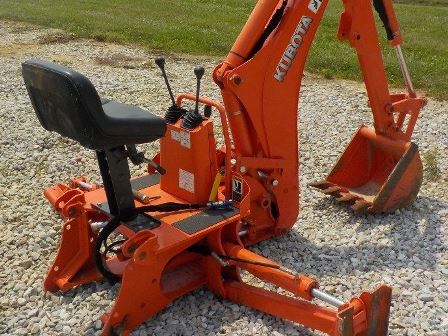
The backhoe is the main tool of the backhoe loader. It’s used to dig up hard, compact material, usually earth, or to lift heavy loads, such as a sewer box. It can lift this material and drop it in a pile to the side of the hole. Basically, the backhoe is a big, extremely powerful version of your arm or finger. It has three segments:

  • The boom
  • The stick
  • The bucket

Backhoe loaders are fantastic general-purpose tools, and nothing increases their utility like backhoe attachments and accessories.

For one thing, they have a reputation for being among the best designed and engineered in the industry, which is a real boon to construction, industry, and agriculture entities who want superior equipment but also to keep a lid on costs.

  • Backhoe compaction wheel
  • Hydraulic hammer for backhoe
  • Backhoe bucket forks
  • Backhoe bucket log splitter
  • Hydraulic thumb for backhoe
  • Backhoe bucket cutting edge
  • Backhoe grapple bucket
Backhoe Bucket Attachments

Backhoe attachments

If you were to buy a separate piece of backhoe for each task, you’d be in debt. Fortunately, a good backhoe is incredibly versatile, with dozens of accessories available to handle virtually any project need.

One of the most popular is an attachment that costs only a fraction of the price of a mini excavator.

A backhoe attachment turns your equipment into a mini excavator capable of a variety of tasks, depending on the capabilities of both your loader and the attachment you choose.

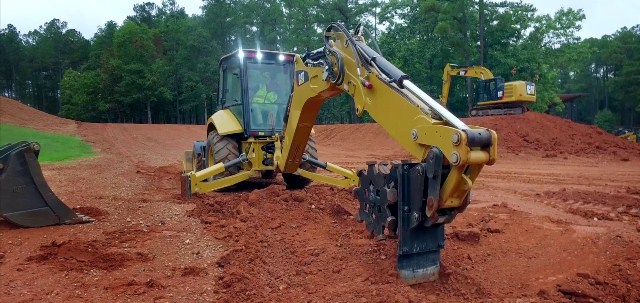
Dig basements, drainage ditches, footings, pipe trenches, and more, using nothing but your track loader and a backhoe attachment. You can even add more oomph to your rig with a hydraulically powered attachment, further increasing your digging capabilities.

Backhoe compaction wheel

One of the useful backhoe bucket accessories: Compaction while backfilling trenches; compaction wheels are designed to compact the soil when backfilling trenches. They come in a variety of widths and feature tapered roller bearings.

A tampered-foot design with static pad rollers provides smooth operation and a high degree of compaction. The open rim allows the wheel to penetrate the trench fill and compact the soil from the bottom up. The compaction wheels are available for all Cat backhoe loaders, as well as all Cat compact excavators.

Backhoe Bucket Attachments

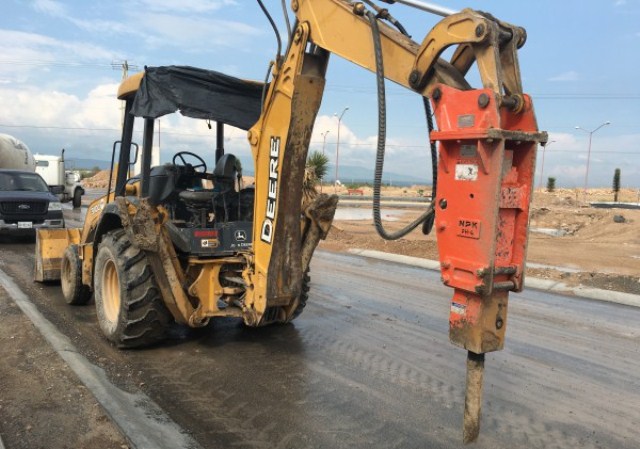
Hydraulic hammer for backhoe

Construction Equipment’s hydraulic hammers have only two moving parts and isolate every blow from the operator and carrier.

The hammers are pre-assembled and made for backhoes, excavators, compact tractor loaders, and skid steers. The blows are isolated in the cushion chamber, and recoil energy is recycled and used for the next blow.

The long-stoke piston facilitates energy transfer and recoil reduction. Hydraulic hammers come with a gas recharge kit and a three-year warranty.

Backhoe Bucket Attachments

Backhoe bucket forks

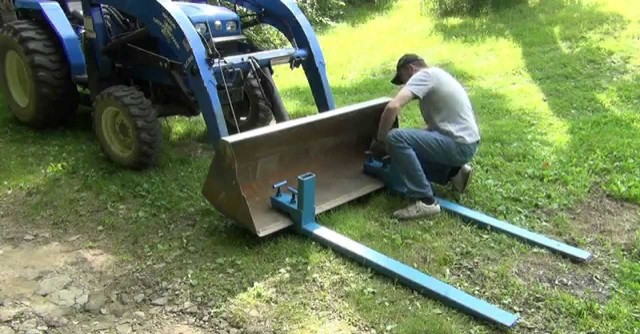
Bucket forks allow bucket-mounted loaders to quickly provide the lifting capabilities of a forklift or pallet forks without the need to switch machines or attachments.

All forks are made of a premium steel blend and subjected to a full heat-treatment process. This extends the life of the fork by reducing damage from impact and stress, especially in cooler climates.

Features:

  • Attaches in seconds without tools
  • Adjustable fork spacing for different load sizes
  • Extra mounting brackets available for additional machines
  • Made from a high strength boron-carbon steel
  • Fully heat-treated to better absorb impact
  • Kit includes forks, shaft bar, and mounting hooks
  • Custom modifications available upon request
Backhoe Bucket Attachments

Backhoe bucket log splitter

A log splitting attachment tool adapted for use in combination with a material moving machine having a boom and dipper stick for lifting and moving as well as splitting logs which tool can alternatively be secured directly to a dipper stick and hydraulic bucket cylinder or to a quick connect mechanism secured thereto.

What is the ‘psi’ of the wood splitter?

The answer may surprise you: The SideTool Wood Splitter is not a hydraulic attachment –it is mechanical. It relies on the existing hydraulics of the excavator.

A more accurate gauge to estimate the force and efficiency is not “psi” but rather gallons/minute of hydraulic flow or “GPM” of the machine (excavator or backhoe).

The larger your excavator, the higher the GPM (in most cases), and hence – the greater efficiency and force in splitting wood.

Backhoe Bucket Attachments

Hydraulic thumb for backhoe

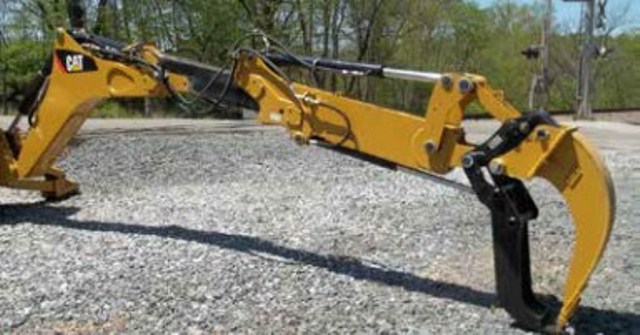
The easiest and fastest way to get more capability from your excavator is to install a Hydraulic Thumb. With a Hydraulic Thumb, your excavator goes from digging to complete material handling.

A Hydraulic Thumb makes it easier to pick, hold and move awkward material such as rocks, concrete, branches, and debris that does not fit into the bucket.

hydraulic thumbs are specifically designed to match your bucket tip radius and tooth spacing – accommodating your exact picking and sorting needs for almost any job. Available in hydraulic or stiff link models, pin mounted or under stick mounted.

Backhoe Bucket Attachments

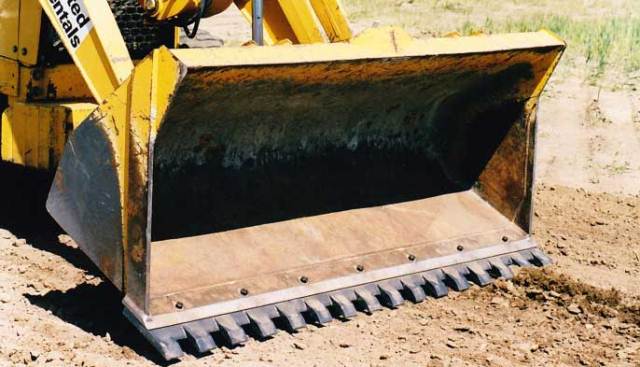
Backhoe bucket cutting edge

Excavator buckets can fail due to corrosion or due to heavy usage that literally wears away the steel or breaks the welds. Weld-on edges make installation of bolt-on cutting edges easy. Weld-on cutting edges come with pre-punched bolt holes for easy installation.

Bolt-on edges are reversible for prolonged use and are very easy to install, edges are available as a bolt-on or weld-on style. Bolt-on edge systems let you quickly change edges on the fly and also extend the life of the bucket base edge and corners. Bolt-on edges can be reversed for extended wear life.

Edges for excavators and backhoes are designed specifically for the demands of heavy equipment use and abuse. They are available in various lengths and thicknesses.

Backhoe Bucket Attachments

Backhoe grapple bucket

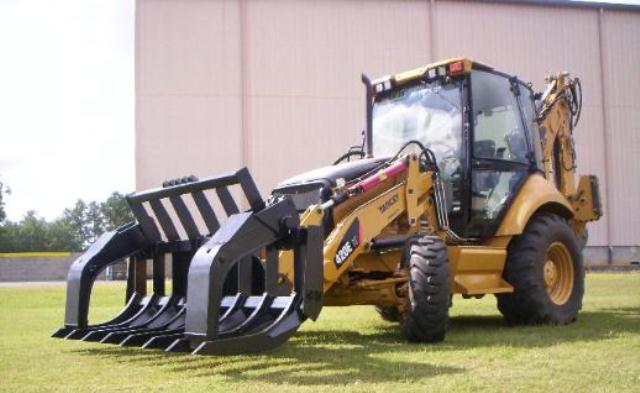
The industrial-grade grapple rake is designed for extreme duty applications. Featuring completely enclosed grapple assemblies, heavy-duty welded end cylinders. Aggressive design with long curved teeth for getting under and lifting debris.

Protected supply hoses with nylon kevlar wrap, heavy-duty construction for years of abuse.

Also available with a shear bar attached to the teeth for use in storm debris clean up. All of the products are made from high-grade alloy steel, making them very durable. This style grapple rake is available for most any type of industrial equipment front end loaders, loader backhoes, Etc.

Backhoe Bucket Attachments

Aftermarket backhoe attachments

Whether you’re looking to dig, drill, or lift heavy loads, choosing the right work tool comes down to knowing which one will get the most benefits for the different tasks you’ve scheduled.

Several things to consider are the type of job site, the size of the attachment, the toughest ground conditions you are operating in, and the make of your backhoe. You should check with your supplier which accessories you will get after-sales.

Backhoe bucket attachment manufacturers:

  • Case backhoe attachments
  • John Deere backhoe attachments
  • CAT backhoe attachments
  • JCB backhoe attachments
  • Kubota backhoe attachments

Bucket attachment for backhoe

Enhance the performance of Backhoes with buckets designed specifically to meet needs in the construction market. Backhoe Front Buckets match specific job requirements for capacity and functionality.

General-purpose buckets for backhoe loaders are the all-around choice for loading, carrying, dumping, and performing general clean-up work; including side dump buckets that can tip forward or to the left side and provide the versatility required in tight work areas and congested environments.

what is the best attachments for a backhoe?

Starting off, you should look at your project scope and understand what functionality you want the backhoe and its attachment to have. With over 30 types of attachments, knowing which type is best for your backhoe hire job is crucial to making your project both time and cost-efficient.

How deep will a backhoe dig?

One of the most significant variables in backhoe performance is to dig depth. This is simply a rating of how deep the backhoe arm can dig. Typically, dig depth is somewhere between 12 and 16 feet (3 to 5 m). Many backhoes have an extendible stick that lets them increase this dig depth a few feet when needed.

How much does it cost to rent a backhoe for a day?

Renting a backhoe for do-it-yourself use typically costs $100-$200 for half-day or full-day rental of a small or mini-backhoe; larger models typically rent for $200-$350 or more a day or $500-$1,500 or more for a week.

How much is a used backhoe worth?

A 10-year-old John Deere in average condition with 2,000 to 3,000 hours of use might sell for $25,000 to $35,000.

Do I need a license to rent a backhoe?

While backhoe operators don’t need certification, they need to obtain a commercial driver’s license (CDL) in order to drive their backhoes from site to site. Each state has its own requirement for granting licensure.

What is the hourly rate for a backhoe operator?

The average hourly rate for Heavy Equipment operators ranges from $25 to $34 with an average hourly pay of $30. The total hourly cash compensation, which includes a base and short-term incentives, can vary anywhere from $26 to $36 with the average total hourly cash compensation of $32.

The most read

Backhoe Loader Specifications

A backhoe is a type of excavating equipment, or digger, consisting of a digging bucket on the end of a two-part articulated arm

Garden Tractor Backhoe

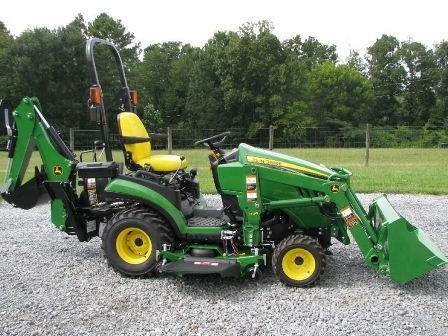
The loaders and backhoes illustrated here are the perfect tools for the care and maintenance of your property and landscaping.

More on this story

General purpose Bucket attachment for backhoe

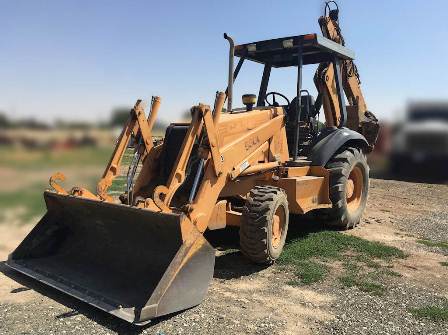
This machine consists of four main parts: the cab, the tractor, the backhoe, and the front loader or general-purpose bucket.

Aftermarket Backhoe Attachments

Aftermarket parts for backhoe loaders are also referred to as non-original equipment manufacturer parts, generic parts, or competitive replacement parts.

Mcdonalds Halloween Boo Buckets

McDonald’s Halloween Boo Buckets are popular for several reasons: Nostalgia, Dual purpose, Collectibility, Limited availability, Affordable Halloween decor, Kid appeal, Marketing success, Social media buzz, Family tradition.

  1. Nostalgia: They were first introduced in 1986 and have become a nostalgic item for many who grew up with them.
  2. Dual purpose: They serve as both a container for the Happy Meal and a trick-or-treat bucket for Halloween.
  3. Collectibility: Different designs are often released each year, making them collectible items.
  4. Limited availability: Their seasonal nature creates a sense of urgency and exclusivity.
  5. Affordable Halloween decor: They’re an inexpensive way to add Halloween spirit to homes.
  6. Kid appeal: The fun designs are attractive to children.
  7. Reusability: They can be used for storage or play after Halloween.
  8. Marketing success: McDonald’s effectively ties them to the Halloween season, creating annual anticipation.
  9. Social media buzz: They often generate discussions and shares on social platforms, increasing their popularity.
  10. Family tradition: For some families, getting these buckets has become a yearly Halloween tradition.

The combination of nostalgia, practicality, and clever marketing has made these Boo Buckets a beloved Halloween staple for many McDonald’s customers.

How to get a boo bucket at McDonald’s?

To get a Boo Bucket at McDonald’s:

  1. Check if they’re available: Boo Buckets are typically a seasonal Halloween item, usually offered in October.
  2. Visit a participating McDonald’s location: Not all locations may offer them, so you might want to call ahead.
  3. Order a Happy Meal: Boo Buckets usually come as the toy/container with a Happy Meal purchase.
  4. Choose your design: In past years, there have been different bucket designs like ghosts, pumpkins, or other Halloween themes.
  5. Be aware of limited availability: These are popular items and may sell out quickly at some locations.

Keep in mind that availability, designs, and the exact process might vary by year and location. If you’re interested in getting one, it’s best to check with your local McDonald’s for the most up-to-date information on their Halloween promotions.

How long are McDonald’s Boo buckets available?

McDonald’s Boo Buckets are typically available for a limited time during the Halloween season. Here are some key points about their availability:

  1. Seasonal offering: They are usually available in October, leading up to Halloween.
  2. Limited duration: The promotion often lasts for about 2-3 weeks, but this can vary.
  3. While supplies last: Even within the promotional period, they’re only available while supplies last. Popular locations may run out quickly.
  4. Yearly variations: The exact dates and duration can change from year to year.
  5. Location differences: Availability might vary by region or individual restaurant.
  6. No fixed end date: McDonald’s often doesn’t announce a specific end date, instead using the “while supplies last” approach.

To get the most accurate information for the current year, it’s best to check with your local McDonald’s or keep an eye on McDonald’s official announcements and social media channels. They usually promote these seasonal items when they become available.

More on this story

How can I win Mega Millions?

It’s important to note that the odds of winning are extremely low – about 1 in 300 million for the jackpot. However, if you do choose to play, here are some general tips:

  1. Buy a ticket: You can’t win if you don’t play.
  2. Choose your numbers: You can select your own numbers or use Quick Pick for random numbers.
  3. Consider number patterns: Some people analyze past winning numbers, though this doesn’t increase your odds.
  4. Play consistently: Regular players sometimes form pools to buy more tickets.
  5. Check your tickets: Always verify your numbers after each drawing.
  6. Be responsible: Only spend what you can afford to lose.

Remember, lottery games are based on chance. There’s no guaranteed way to win. The most important thing is to play responsibly and within your means. If you’re concerned about gambling habits, consider seeking help from a professional.

Strategies people use when choosing numbers

While it’s crucial to remember that lottery numbers are drawn randomly and no strategy can increase your odds of winning, some players do use various approaches when selecting their numbers. Here are some common strategies people use:

  1. Hot and Cold Numbers: Some players believe in balancing hot and cold numbers.
    • Hot numbers: Those that have been drawn frequently in recent drawings
    • Cold numbers: Those that haven’t been drawn for a while
  2. Birthday Numbers:
    Many people use birthdates of family members or friends. However, this limits your number choices to 1-31, potentially reducing the chance of a unique winning combination.
  3. Quick Pick:
    Letting the computer randomly generate numbers. This ensures truly random selection without personal bias.
  4. Numerical Patterns:
    Some players choose numbers that form patterns on the play slip, like diagonals or boxes.
  5. Lucky Numbers:
    Using numbers considered personally or culturally lucky.
  6. Avoiding Common Numbers:
    Some avoid highly popular numbers (like 7) to reduce the chance of sharing a jackpot if they win.
  7. Number Spreading:
    Choosing numbers across the entire range rather than clustering in one section.
  8. Previous Winning Numbers:
    Some players analyze past winning numbers, believing in patterns (though statistically, each draw is independent).
  9. Numerology:
    Using numerological principles to select numbers.
  10. Systematic Wheel:
    Using a wheeling system to cover many number combinations, often in a pool with others due to cost.

It’s important to stress that these strategies are based on personal preference or superstition, not mathematical probability. Each number has an equal chance of being drawn in each game. The only way to increase your odds is to buy more tickets, but this can quickly become expensive and is not recommended as a financial strategy.

9 ways to win Mega Millions

Mega Millions offers multiple ways to win prizes, not just the jackpot. Here are the 9 ways to win in Mega Millions:

  1. Match 5 numbers + Mega Ball (Jackpot)
  2. Match 5 numbers (no Mega Ball)
  3. Match 4 numbers + Mega Ball
  4. Match 4 numbers (no Mega Ball)
  5. Match 3 numbers + Mega Ball
  6. Match 3 numbers (no Mega Ball)
  7. Match 2 numbers + Mega Ball
  8. Match 1 number + Mega Ball
  9. Match Mega Ball only

Each of these combinations corresponds to a different prize tier. The exact prize amounts can vary depending on the number of winners and ticket sales, except for the fixed prizes in the lower tiers.

Here’s a brief breakdown of the odds for each tier: (Rounding a number)

  1. Jackpot: 1 in 300,000,000
  2. $1 million: 1 in 12,500,000
  3. $10,000: 1 in 1,000,000
  4. $500: 1 in 40,000
  5. $200: 1 in 15,000
  6. $10: 1 in 600 – 3 numbers (no Mega Ball)
  7. $10: 1 in 690 – 2 numbers + Mega Ball
  8. $4: 1 in 90
  9. $2: 1 in 37

Remember, these odds are for each individual play. Buying multiple tickets does not improve the odds for any single ticket, but it does give you more chances to win.

More on this story

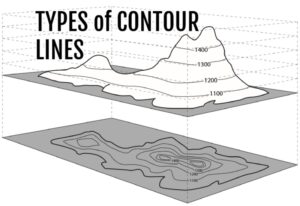
Types of contour lines

Types of contour lines: How to Read a Topographic Map? Common Topographic Map Symbols.

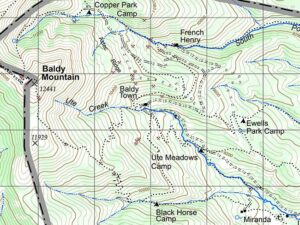
A topographic map is printed on a flat piece of paper yet it provides a picture of the terrain and manmade features through the use of contour lines, colors, and symbols. Contour lines represent the shape and elevation of the land, such as ridges, valleys, and hills. Colors and symbols are used to represent other features on the land, such as water, vegetation, roads, boundaries, urban areas, and structures.

This chapter starts with tips on how to read the margins of a topographic map. Then it describes how to interpret contour lines. Finally, it covers how to estimate slope, aspect, acreage, distances, and percent contained using a topographic map

Types of contour lines

What is a topographic map?

Common Topographic Map Symbols:

A topographic map is a detailed and accurate illustration of man-made and natural features on the ground such as roads, railways, power transmission lines, contours, elevations, rivers, lakes and geographical names.

The topographic map is a two-dimensional representation of the Earth’s three-dimensional landscape. The most frequently used topographic map is at a scale of 1:50 000.

Types of contour lines

Reading a topographic map worksheet

Different maps serve different purposes. If you’re trying to drive from Point A to Point B, a regular road map is a way to go. But if you’ve strayed from the road, perhaps on a backpacking trek, you need to see the terrain and the contours of the land. And that means you need to be able to read a topographic map.

Common Topographic Map Symbols: What’s the difference between a topographic map and a regular map?

In a nutshell, topographic maps allow you to see a three-dimensional landscape on a two-dimensional surface. These maps show the land’s contours, elevations, mountains, valleys, bodies of water, vegetation and more. This contour and elevation inf­ormation distinguishes them from other maps.

Types of contour lines

The ability to fuse these major factors is the most critical skill one can learn when using a topographic map. The primary purpose of a topographic map is to accurately represent the shape of the Earth’s surface, but the utility doesn’t stop there. Topographic maps also represent streets and trails, vegetation, streams, and every type of feature that may positively or negatively impact your ability to navigate through the terrain.

Contour lines on a map

Common Topographic Map Symbols: Contour lines are imaginary

They are map artifacts used to represent paths or segments of Earth at an equal elevation. These paths and segments are presented as elevations (vertical distance above or below sea level) and reliefs (the shape of terrain features on the Earth’s surface).

Not all contour lines are created equal. Heavier contour lines are known as indexed contour lines and are normally numbered showing elevation. Typically every fifth contour line is an index.

Lighter contour lines, that fall between indexed lines, are known as intermediate contour lines. These lines do not have their elevation given and are found in sets of four between indexed contour lines.

Finally, when the terrain is expansively flat, cartographers will often include supplementary contour lines, which are dashed lines indicating an elevation that is half of the elevation between the contour lines surrounding it. They are typically found where there is little change in elevation.

How to read contour lines

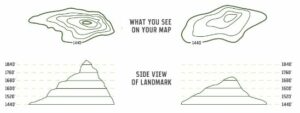
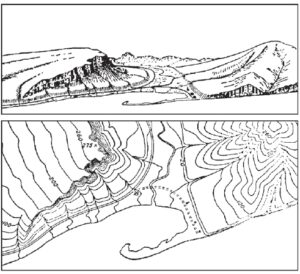
Contour lines indicate the steepness of the terrain. Contour lines connect points that share the same elevation: Where they’re close together (they never intersect), the elevation is changing rapidly in short distance and the terrain is steep. Where contour lines are wide apart, the elevation is changing slowly, indicating a gentle slope.

Contour lines also indicate the shape of the terrain. Roughly concentric circles are probably showing you a peek, and areas between peaks are passes. Studying a topo map of a familiar area is a great way to learn how to match terrain features with the contour lines on a map.

Common Topographic Map Symbols

Interpreting Contour Lines

Contour lines on a map show topography or changes in elevation. They reveal the location of slopes, depressions, ridges, cliffs, the height of mountains and hills, and other topographical features. A contour line is a brown line on a map that connects all points of the same elevation. They tend to parallel each other, each approximately the shape of the one above it and the one below it. Compare the topographic map with the landscape perspective.

Common Topographic Map Symbols

Topographic map colors

Common Topographic Map Symbols: It’s important to know what kind of terrain and environment you’re traveling into and what the map of that area is telling you.

The color brown is used to denote most contour lines on a map, which are relief features and elevations. Topographic maps use green to denote vegetation such as woods, while blue is used to denote water features like lakes, swamps, rivers, and drainage.

At higher elevations, mountains may be snow-capped year around, or the terrain may actually be a glacier. In each of these cases, contour lines are also drawn in blue. It is, therefore, possible to quickly discern that a particular route from A to B might be more treacherous than operating at a high altitude—the trek might require crampons, an ice axe, and other materials that might not be readily available once in the backcountry.

Finally, black is used to represent man-made objects, including trails. Red is used for man-made features, like main roads or political boundaries, and purple for new changes or updates on the map that weren’t previously represented. Newer maps no longer use purple, but since so many older maps exist, it’s worth mentioning.

Map scales

The map’s scale tells you how detailed your map is. A 1:24000 scale, for example, means one inch equals 24,000 inches in reality. A larger scale, like 1:65,000, means that a map covers a larger area, but that it will have less detail.

Maps also have a representative scale to help you visualize real-world distances. You can use this scale and a string or the edge of your compass to get a rough estimate about hiking distances on your map. (Common Topographic Map Symbols)

Topographic map shading

The color similarity between features does not mean that the features are equivalent. Due north of Lake Raven is the Prairie Branch, another name for a stream. Other names that equate to a stream include kill, run, fork, and brook. What’s interesting about Prairie Branch is that it has led to the formation of a wooded marsh or swamp.

Navigating across Prairie Branch could be difficult. Since this is Texas, expect to run into water moccasins, copperheads, and perhaps the occasional alligator, among all of the other friendly animals that call Sam Houston National Forest home.

Remembering map colors is a fairly trivial task, but remembering the shadings is far more difficult given the sheer number of variations. For this reason, keeping the USGS Topographic Map Symbols–a mere two sheets of paper–behind your map can be a lifesaver. A quick reference to page four of the booklet confirms that Prairie Branch is indeed a submerged wooded marsh or swamp. (Common Topographic Map Symbols)

Latitude and longitude map

Latitude and Longitude (edges of map): Common Topographic Map Symbols

Latitude and longitude lines are indicated with fine black tick marks along the edges of the map. Topographic maps do not show the latitude/longitude lines – just the tick marks.

The numbers next to the tick marks indicate degrees (°), minutes (‘) and seconds (“).

On 1:24,000 scale maps, latitude, and longitude tick marks are indicated every 2.5 minutes.

  • Longitude tick marks are on the top and bottom edges of the map and latitude tick marks are on the right and left edges. Note that the degrees may be left off (as an abbreviation) and you may only see the minute and/or second designations.
  • Reference coordinates for latitude and longitude (degrees, minutes, and seconds) are black and located on the four corners of the map.
  • The intersection of latitude and longitude lines are noted by cross-marks.

When reading latitude/longitude, pay close attention to the units (degrees, minutes, seconds) because it is easy to misread them. Refer to Chapters 3 and 6 for additional information on latitude and longitude.

What is a contour interval?

Contours maps (such as topographic maps) compress the information of a function over a two-dimensional area into a discrete set of closed lines that connect points of equal value (isolines), striking a fine balance between expressiveness and cognitive simplicity.

They allow humans to perform many common-sense reasoning tasks about the underlying function (e.g. elevation).

The contour interval is the difference in elevation between two adjacent contour lines. On USGS maps, contour intervals are usually 1, 5, 10, 20, 40, and 80 feet. If the contour interval is not printed on the map, it can be calculated.

Common Topographic Map Symbols

What do the contour lines represent?

In cartography, a contour line (often just called a “contour”) joins points of equal elevation (height) above a given level, such as mean sea level. A contour map is a map illustrated with contour lines, for example, a topographic map, which thus shows valleys and hills, and the steepness or gentleness of slopes.

How do you read contour lines on a topographic map?

Topographic maps also have a vertical scale to allow the determination of a point in three-dimensional space. Contour Lines: Contour lines are used to determine elevations and are lines on a map that are produced from connecting points of equal elevation (elevation refers to height in feet, or meters, above sea level).

What do the numbers mean on a topographic map?

The numbers represent the elevation, the higher the number the higher you are. Usually, it’s in something like meters or feet above sea level, check the key/legend (UK/US!) which should tell you exactly what. The closer together the lines, the steeper the terrain, the further they are apart, the shallower.

How do you read a topographic map scale?

For example, if your U.S. Geological Survey (USGS) map has a scale of 1:24,000, it means that one inch on the map is equal to 24,000 inches (2000 feet or 609.6 meters) in the real world. Your map’s scale legend will always be at the bottom. For USGS topographic maps, 1:24,000 is the scale most often used.

More on this story

C-Map Contour

C-MAP, a leader in digital marine charting and cloud-based mapping, announced the next generation of C-MAP Contour charts, preloaded on sounders and plotters.

Types of Topographical Survey

While most people think of land surveys in the most basic sense—that is, the drawing of the boundaries of property—there are actually many different ways of surveying that service many different industries.

Topographic Map definition

Topographic maps offer detailed information on a particular area and are used for several types of activities such as emergency preparedness, urban planning, resource development, and surveying to camping, canoeing, adventure racing, hunting, and fishing.