All posts by Loganx

Professional Web Writer | Motor Enthusiast | Content Creator | Logan is a dedicated and skilled web writer, passionate about engines and machines and with a talent for creating engaging and informative content. She specializes in writing about a diverse range of topics including construction, forklifts, heavy equipment, excavators, etc. SEO Optimization: Proficient in SEO best practices, ensuring high visibility and engagement for all published content.

Biggest Crane

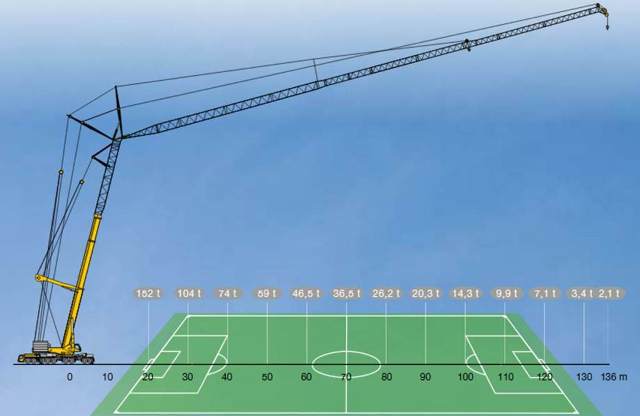
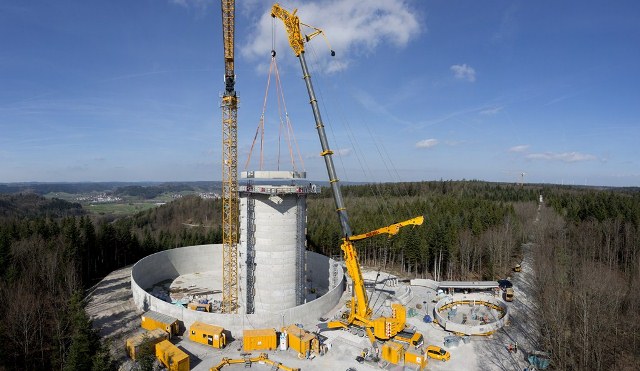
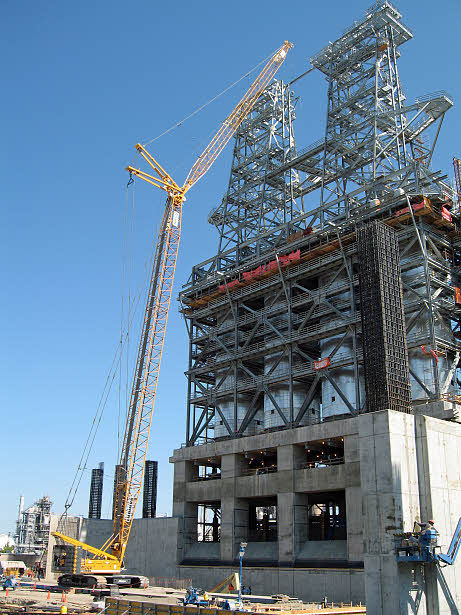
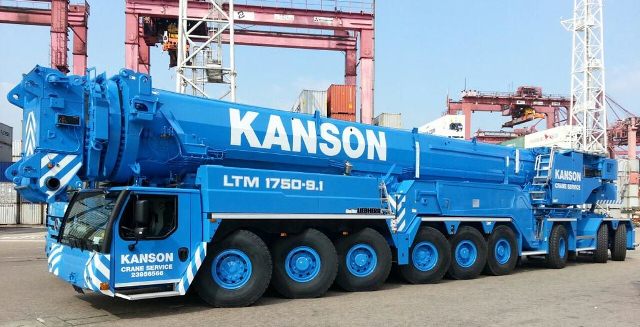
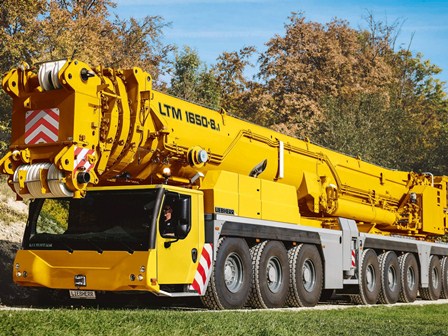
Biggest crane in the world: The LTM 11200 is the largest mobile crane in the world, manufactured by the German giant of heavy machinery, Liebherr Group.

This type of cranes is used in construction, general civil works of great magnitudes, such as the construction of a viaduct, although they can also act in private works such as the repair of a skyscraper.

Habitually, a quite common use is the maintenance and repair of large wind towers.

Biggest Crane

Biggest crane in the world

Biggest Liebherr crane:

The Liebherr LTM 11200-9.1, built by the German company Liebherr Group, is the most powerful mobile crane ever built. It also has the longest telescopic boom in the world, which extends fully to 100 meters. It’s set on a double cab truck and can lift 1200 metric tons – that’s nearly 700 automobiles. That’s real pound-for-pound power for its category, but ultimately not the strongest crane in the world when compared to stationary cranes.

Crane data sheet

  • The maximum load capacity is 1200 tons at a distance of 2.5 meters from the axis of rotation and 202 tons of ballast.
  • The load capacity of 65t in braced telescopic boom 100 m long
  • The crane is equipped with four telescopic hydraulic supports that are supported on the ground to ensure stability.
  • The mobile crane weighs 108 tons, is 3 meters wide, 20 feet long closed.
  • Officially, this crane was presented in April 2007 at Bauma, the world trade fair for construction machinery.
  • The axles have a system in which all the wheels rotate and the crane can easily become a tight place.
  • The chassis has 9 axles with a newly developed rear axle.
  • Telescopic boom 100 m in length and extensions of 22 m telescopic boom (10 m + 6 m + 6 m)
  • Folding nib 126 m long
  • Fixed nib 60.5 m long, optionally hydraulically adjustable
  • Quick and comfortable assembly in small spaces
  • Optimal for assemblies in the industry, in wind energy and for infrastructure works
  • Rear direction active as a function of speed, all axes addressable
  • Economic transport

Now you know a little more about this powerful construction machinery.

Biggest Crane

Crane specification

The chassis moves with the superstructure, lifting cylinder and four support beams folding on the road.

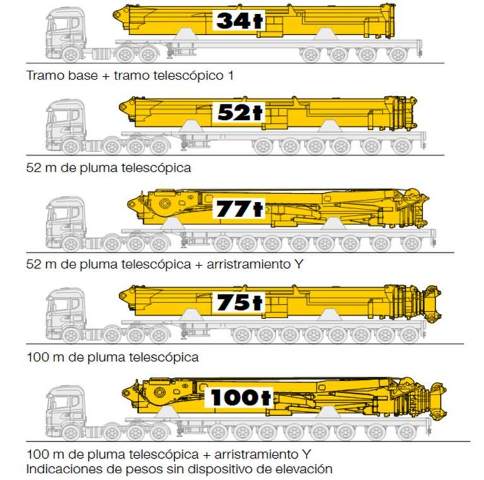
The weight of the vehicle and the axle weights can be reduced by disassembling the equipment. The pen is transported separately in a gondola. For this, there are different possibilities.

Biggest Crane

Biggest mobile crane in the world

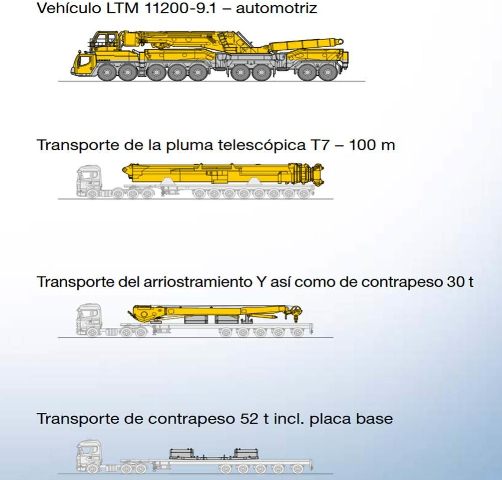
A multitude of works of cranes of great capacities can be realized with few vehicles of transport.

For the assembly of a wind turbine with a rotor center height of 80 m and individual weights of up to 80 t, only 4 transport units are required:

Biggest Crane

Crane counterweight

The concept of counterweights of the LTM 11200-9.1 developed by Liebherr offers multiple advantages for the crane.

  • Dimensions and weights of the counterweight plates are optimally adjusted to the gondola
  • Complete assembly of counterweights without an auxiliary crane
  • High profitability thanks to the compatibility of the counterweights with those of other large capacity Liebherr cranes
  • Comfortable and safe counterweight assembly with the control unit and BTT function console
  1. Motherboard 22 t
  2. 16 identical plates of 10t each 160 t
  3. 4 identical plates of 5t each 20 t
  4. Total weight 202T

Thanks to the low working height due to the extensive distribution of the counterweights in two piles on each side, greater safety and ergonomic working conditions are obtained.

Crane system

Transfer system:

  • Hydropneumatic suspension
    • Maintenance-free suspension cylinders
    • Large dimensions to support high axle weights
    • Suspension travel + 175 / -125 mm
    • High stability in curves
    • Choice of the translation program through fixed selection programs
  • Disc brakes
    • High breaking capacity, better dosage
    • Improved stability in the braking line
    • No loss in brake efficiency through higher temperatures (fading)
    • Long useful life
    • Change of pads fast and easy
    • Brake pads with wear indicator
  • electric brake
    • No wear, system requiring little maintenance
    • More security thanks to the quick activation in thousands of seconds
    • Reduction of operating costs
    • High comfort thanks to absolutely jerk-free brakes
    • Ecological brake system, free of emissions and particles
  • Chassis engine
    • Powerful 8-cylinder turbodiesel engine with 500 kW / 680 PS, max. 3.000 Nm
    • 12-speed automatic gearbox system ZF-TC-TRONIC with converter, next to the gearbox offers high profitability and the best comfort.
    • Axes 1, 2, 4 and 5 are addressable axes

Motor crane

  • Liebherr 6-cylinder turbodiesel engine, 270 kW / 367 PS, max. 1,720 Nm
  • Optimal fuel consumption through electronic engine management

Crane cabin

Comfort and functionality:

  • Both the modern driver’s cab and the mobile operator’s cab have a comfortable and functional arrangement of the elements.
  • The control and command elements are located according to ergonomic criteria.
  • In this way a safe and fatigue free place is guaranteed.

Driver’s cabin

  • Resistant to corrosion
  • Panoramic safety glazing
  • Tinted windows
  • External mirrors heated and electrically regulated
  • Driver’s seat with air suspension with lumbar and vertebral support
  • Additional heating independent of the motor, Air Conditioning

Crane cab

  • Optimized heating and ventilation system, automatic temperature regulator, additional independent motor heating, air conditioning
  • Wide visual field thanks to large moons
  • Driver’s seat with lumbar and vertebral support, adjustable with multiple options
  • Folding 20º backward
  • The cab can be lowered hydraulically for more comfortable access
Biggest Crane

world’s largest mobile crane

Load moment indicator

Safe Load Indicating Systems for mobile cranes have been in existence for over 50 years. Over the past 20 years, as technology has progressed, devices capable of measuring load moment have become very widely used on many types of cranes on a worldwide basis. Despite this prevalence, there exists a number of misconceptions about what load moment is and its importance for monitoring the capacity of cranes.

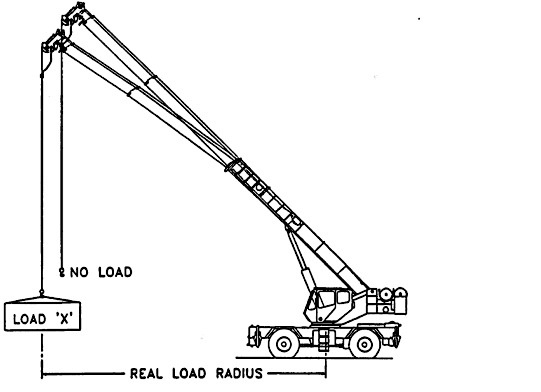
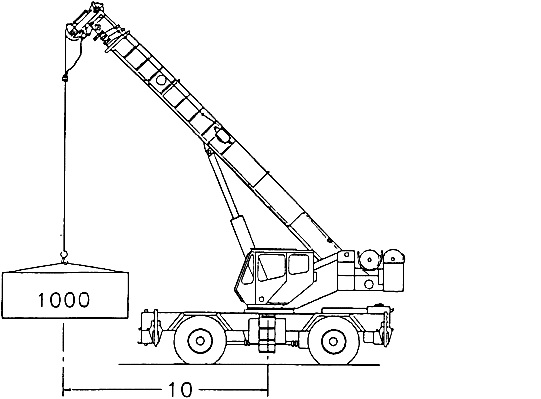
The term load moment is an engineering term which refers to the product of a force and its moment arm. The moment arm is defined as a perpendicular distance between the force vector and a reference point as shown below. In the case of cranes, the force acts vertically through the center of gravity of the load and the moment arm becomes the horizontal distance from this center of gravity of the load and the center of rotation of the crane.

Therefore, with a one thousand unit force acting at a ten unit radius, the load moment is the product of these two factors or ten thousand units as shown below.

Biggest Crane

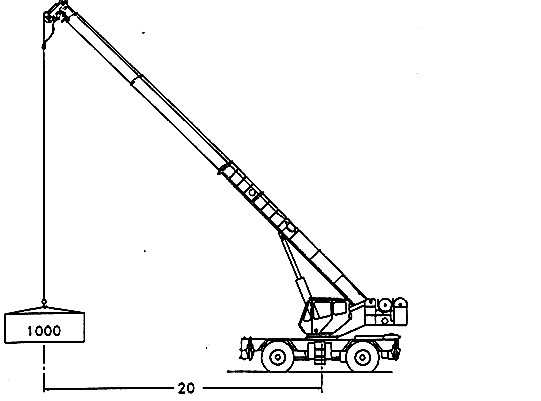
If we increase the radius such that this load acts upon a twenty unit radius, the load moment has increased to twenty thousand units

Biggest Crane

Load moment indicator crane

In this example, the load on the load line has remained the same but the load on the crane, the load moment, has actually increased by a factor of two. Because load moment is used to determine the capacity of a crane, crane load charts require the operator to determine not only the magnitude of the load but the radius that the load is acting upon. Since load, the moment is a product of these two each value becomes equally important

In the past crane operators often relied on “feel” to determine when the crane was reaching capacity. By working from “the seat of his pants” the operator felt the load on the outriggers lighten and knew he was reaching the stability limits of his machine.

He was in effect using the stability of the machine to indicate load moment. In the past, the cranes were very heavily constructed with the consequence that the structural capacity far exceeded the stability limits of the machine.

Load moment indicator for mobile crane

Now the emphasis is on reach and readability and the manufacturers have utilized higher yield steels to create the stronger and lighter cranes. This has had two effects.

  • The structurally limited portion of the load charts has increased. This is the first portion of the load chart where a structural failure can occur before the stability limits are reached. In some cases, this can encompass the entire chart for the main boom. A failure in this area can be sudden and with little or no warning.
  • The second effect is that by utilizing lighter booms with more elastic steels boom deflection has increased dramatically. This is extremely important because as the boom deflects under an actual load it increases the load radius.
Biggest Crane

This increases the load moment proportionately. An increase in the radius of 15% has increased the load on the crane by 15%. It is extremely important that the operator be aware of these dynamic changes affecting the crane.

In a job site situation, the operator may not know the true magnitude of the load. It may have been frozen to the ground or may have taken on water. Once determined this is only half the equation. Just as importantly, he does know the final load radius. It is impractical to physically measure this new load radius because the true load radius is not achieved until the pick is already made.

What is the load moment?

Therefore, it is imperative that the operator not only be aware of the load on the hook but also of his true load radius, dynamically, as he increases the load on the boom. This is the distinct advantage of a load moment system.

A load moment system, by monitoring load moment and by compensating for the true deflection under load can give an operator an indication of exactly where he is on the load chart of the machine. If only the hook block load is monitored the true load on the boom and its effects on radius are not considered.

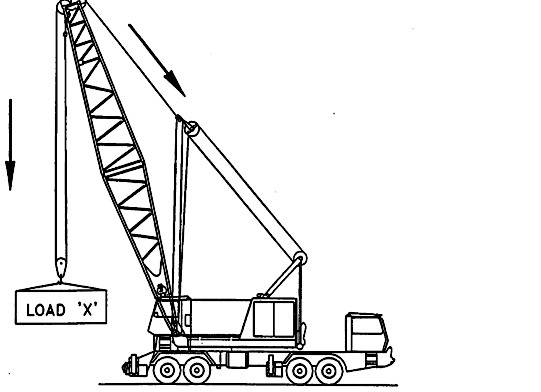
Conventional Lattice Boom Cranes work under a different principle which results in reducing the impact of deflection.
Biggest Crane

Crane load indicator system

As shown above, the pendant ropes supporting the boom tip create an offsetting force with the resulting load aligned in the plans of the boom. The boom in a conventional cane, therefore, is in compression behaving more as a column.

Generally, total deflection has much less impact upon radius than it does with telescopic cranes. There are still, however, great advantages to a load moment system on a conventional crane. By monitoring the forces in the boom hoist structure, the system can monitor the load on hook, the boom weight, and any dynamic forces on the boom. In the case of large conventional machines additional forces such as icing, wind, load dynamics, etc. can have a significant impact on capacity.

Load moment systems, as with most crane indicating systems, are considered operators aids. The intent is always to provide the operator with as much relevant information as possible to enable hirn/her to perform their duties in the safest and efficient manner possible. Ultimately, however, it is the operator that makes the difference. A well trained and experienced operator utilizing well-maintained equipment with state of the art operator aids is the best assurance that the lift operations will be conducted safely and efficiently.

Who owns the biggest crane in the world?

Who owns the biggest crane in the world?

The Liebherr LTM 11200-9.1, built by the German company Liebherr Group, is the most powerful mobile crane ever built. It also has the longest telescopic boom in the world, which extends fully to 100 meters. It’s set on a double cab truck and can lift 1200 metric tons – that’s nearly 700 automobiles.

How large is Liebherr?

Liebherr is the 20th-largest Swiss company by revenue (8 270 million Swiss francs). The top 10 Swiss companies by revenue are Glencore, Nestlé, Novartis, Roche, ABB, Adecco, Migros, Holcim, Cargill International SA, Coop.

How much can a modern crane lift?

The maximum load that the crane can lift is 18 metric tons, but the crane cannot lift that much weight if the load is positioned at the end of the jib. The closer the load is positioned to the mast, the more weight the crane can lift safely.

What is the largest mobile crane in the UK?

Costain has used the UK’s largest mobile crane to install the main deck girders for the Clydach River Bridge. The bridge, located in Saleyard, is part of the Heads of the Valleys project to create a dual carriageway on the A465

How much can a hydraulic crane lift?

Hydraulic truck cranes vary in lifting power. It’s easy to tell how much a particular hydraulic truck crane can lift just by the name of it: A 40-ton crane can lift 40 short tons (80,000 pounds or 36,287 kilograms).

What is boom angle indicators?

Boom angle indicators are normally mounted on the boom butt, visually readable by the operator. On most models in the NCF, the boom angle indicator is a metal plate with degree numbers (0 to 90 degrees) and a freely swinging arm that reacts as the boom angle changes.

More on this story

The most read

Telehandler Forklifts

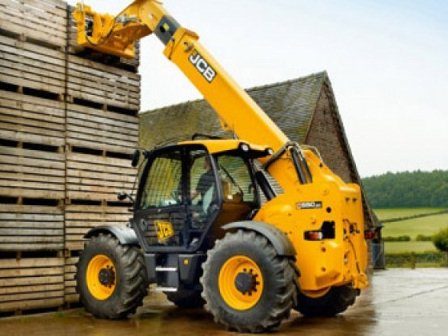
A telehandler handler, also known as a telescopic handler, telehandler, teleporter or rough terrain forklift, is a vehicle with a telescopically extensible boom, which can extend forwards and upwards from the vehicle, so it can be fitted with various lifting.
Telescoping Boom Lift

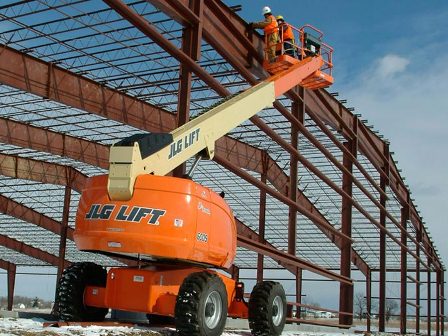
Traditionally, the telescoping system consisted of as many extension cylinders as the displaceable sections had the boom of the telescopic crane. This gave the crane great flexibility of movements with the counterpart of excessively increasing the weight of the pen itself.

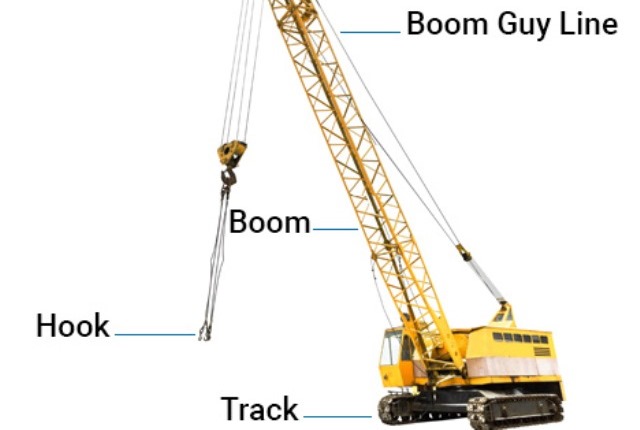
Mobile Crane Parts

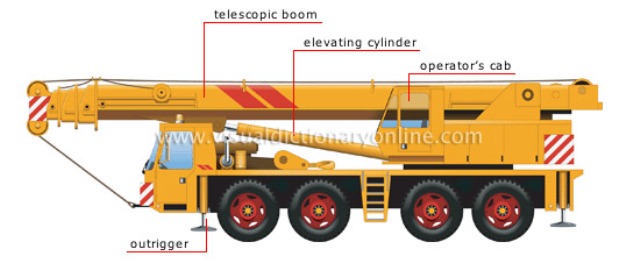
The parts of an industrial or construction telescopic mobile crane have the following main components:

  • Chassis camion
  • superstructure
  • turn system
  • winch
  • counterweight
  • stabilizers
Mobile Crane Parts

Telescopic mobile crane

In the case of the self-propelled telescopic crane, the assemblies can be divided into two distinct parts: supporting chassis and superstructure.

The chassis is a metallic structure on which, in addition to the propulsion and steering systems, the remaining components are fixed.

The superstructure is constituted by a base platform on an orientation crown that joins the chassis and allows 360º rotation, which supports the telescopic boom, lifting equipment, control cabin, and counterweight if necessary.

Crane chassis

Crane carrier

crane manufacturers also manufacture the frame, box-shaped, with the optimum weight, torsion-proof. The motor supplies the necessary energy for its displacement, as well as for all the handling maneuvers of the crane’s own loads.

Transmission, shaft, and reducers

They are the generally axially symmetrical elements responsible for supporting the rotating parts.

Chassis – structure

It is the metallic framework responsible for supporting the machinery.

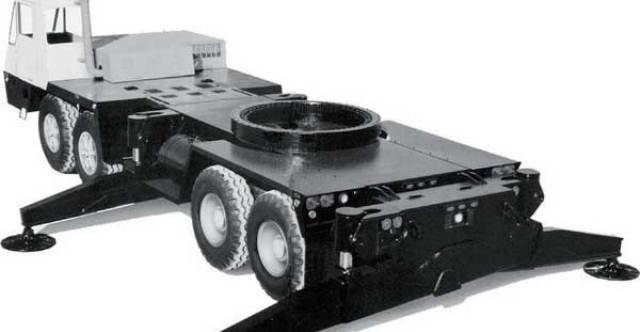
Crane stabilizer

Support elements, which transmit the efforts to the ground. They also allow to increase the surface of the lift polygon and improve the distribution of loads on the ground.

Engine crane

It is the mechanical system that allows equipping the chassis – structure assembly with enough movement to move.

Crane shaft

They are the generally axially symmetrical elements responsible for supporting the rotating parts.

Crane Suspension

Set of elements that cushion the irregularities of the road.

Crane Brake

It is the device used to stop or slow down the movement of the crane. Study of telescopic boom for self-propelled crane –

Crane Superstructure

Base platform

It is responsible for supporting the telescopic boom, lifting equipment, control cabin, and counterweights.

Orientation crown

Allows the superstructure to perform a 360º turn.

Lifting equipment

Motor crane: Mechanical system that allows operating the necessary elements to carry out the lifting of the load.

Winch: It is the mechanical device designed to lift and move the loads.

Cab Cranes

It is a small structure designed for the operator to perform the necessary actions with greater safety and comfort; It has all the necessary controls to perform the operations.

Telescopic boom

The telescopic boom formed by several sections that allow varying the length through a telescopic procedure.

Security devices

Integrated systems in the crane so that you can perform an action as controlled as possible and try to avoid possible contingencies.

mobile crane Counterweight

They are weights arranged in such a way that they allow to balance the forces or torque produced.

Crane rotating mechanism

Crane rotation system

It is the system that allows giving the telescopic boom a turning movement to allow to choose the desired orientation of the pen.

This will allow the crane to rotate 360º with a number of unlimited turns. It consists of two parts: the bearing, necessary to withstand axial, radial and overturning forces, in addition to allowing smooth rotation of the crane and the motor that allows providing the necessary torque to allow rotation.

Bearing for cranes

The rotation of the crane is carried out by means of a large ROTHE ERDE bearing. This bearing is a machine element that forms a complete unit, provided for the simultaneous transmission of axial and radial forces and the resulting tipping torques, thus performing a double function.

On the one hand, it has to allow a smooth turn of the superstructure to conveniently position the load and on the other hand, it has to support all the weight coming from the elements that make up the superstructure.

The bearing has an outer crown that meshes with the pinion of attack located in the rotating part. Fixed by screws, the outer toothed ring sits on the fixed part of the crane and is secured by 60 M24 screws.

Once the ring gear has been assembled, a plate fixed by screws to the turning bearing will be placed to weld the rotation structure in this way, allowing the transmission of the movement to the moving part.

Crane motor

For the choice of the motor type, a three-phase asynchronous motor has been chosen. This choice is due to the fact that this type of motor is the most used in the industry, due to its robustness and simplicity of operation.

It is responsible for transmitting the necessary effort, first to accelerate the system by overcoming the inertia of the elements and then to keep it moving by overcoming the frictional force to which the bearing type is subjected.

It is anchored to the movable structure, with the flange that incorporates, in such a way that the pinion of attack is below this structure meshing with the toothed crown.

Winch crane

It is a mechanical system that will allow handling and lifting of loads. It will be driven by a drum where a cable with a certain length will be wound, which will circulate through a system of pulleys to reduce the tension, reaching a hook, which will manipulate the load.

Drum for crane

This element is located in the back of the crane, in the structure of rotation. Its function is to store and pull the cable to produce the lifting movement of the load in addition to loose cable in cases where more length is needed.

Crane Cable

The component that will transmit the force of the drum to the hook, causing its movement. In its dimensioning, the FEM standard has been used where it marks a series of recommendations for the correct selection of the cable that guarantees a correct operation.

It should be noted that for design reasons it has been chosen to use two cables during the useful life of the crane studied in the present project.

Crane Pulley

The purpose of a pulley is to change the direction of the cable and decrease the tension of the cable.

The diameter of the pulley depends on the minimum diameter that the cable must have, as well as on the type of group in which the lifting mechanism is classified and also according to the assembly it has.

In the case of the present project, the pulley is incorporated with the appropriate bearings. The present crane studied has 4 cable pulleys that together with the pulleys that contain the chosen hook can form a hoist (A hoist is a combination of fixed and mobile pulleys which are covered by a single cable that has one of its ends anchored at a fixed point, this system allows to obtain a mechanical gain), depending on the cable re-routing, so as to reduce the effort to be made by the drum.

Hook Crane

The hook assembly is constituted, first, by the hook itself and by the set of pulleys that require the type of hook.

The hook rises and descends by means of the cable of elevation that happens through the pulleys, depending on the type of load more or fewer cable reenvíos will be needed creating a hoist.

The hook can be balanced to facilitate loading and unloading operations. In addition, the lower support is mounted on an axial ball bearing that allows the hook to turn on the vertical axis. These elements are assembled in a structure formed by plates and tubes that allow rigidity to the whole.

Crane Counterweight

The function of the counterweight is simply to reduce the tipping torque of the crane. The counterweight will not be calculated or manufactured in this project but will be taken into account to perform the stability calculations.

Mobile crane stability

The stabilizers will be used to ensure stability in the crane and prevent it from tipping over, therefore the installation of stabilizers will be necessary.

It must be taken into account that different situations will have to be calculated depending on the direction of the telescopic boom since it does not have the same impact on stability if the load is in the front, rear or side of the crane.

The calculation has been made for the critical position whose angle of inclination is 80º, length 20m and a maximum load of 452kN. 

What is a mobile crane used for?

What is a mobile crane used for?

A crane is a type of machine, generally equipped with a hoist rope, wire ropes or chains, and sheaves, that can be used both to lift and lower materials and to move them horizontally. It is mainly used for lifting heavy things and transporting them to other places.

How does the hydraulic crane work?

Hydraulic cranes work on the concept of transmitting forces from one point to another through a fluid and only due to this they are able to lift the heavy loads. In essence, a hydraulic crane works on optimizing the strength that is produced by the liquid under pressure.

How does a mobile crane work?

Through a combination of simple machines, mobile cranes are able to gain mechanical advantage to lift heavy objects. The mast (the tall vertical part of a crane) is supported by a large, heavy base, which helps offset the weight the crane holds at higher heights.

How much can a mobile crane lift?

The maximum load that the crane can lift is 18 metric tons, but the crane cannot lift that much weight if the load is positioned at the end of the jib. The closer the load is positioned to the mast, the more weight the crane can lift safely. The 300 tonne-meter rating tells you the relationship.

What is the biggest mobile crane in the world?

The Liebherr LTM 11200-9.1, built by the German company Liebherr Group, is the most powerful mobile crane ever built. It also has the longest telescopic boom in the world, which extends fully to 100 meters. It’s set on a double cab truck and can lift 1200 metric tons – that’s nearly 700 automobiles.

What is the largest mobile crane in the UK?

Costain has used the UK’s largest mobile crane to install the main deck girders for the Clydach River Bridge. The bridge, located in Saleyard, is part of the Heads of the Valleys project to create a dual carriageway on the A465.

More on this story

The most read

Telescoping Boom Lift

Traditionally, the telescoping system consisted of as many extension cylinders as the displaceable sections had the boom of the telescopic crane. This gave the crane great flexibility of movements with the counterpart of excessively increasing the weight of the pen itself.

Telescopic Mobile Crane

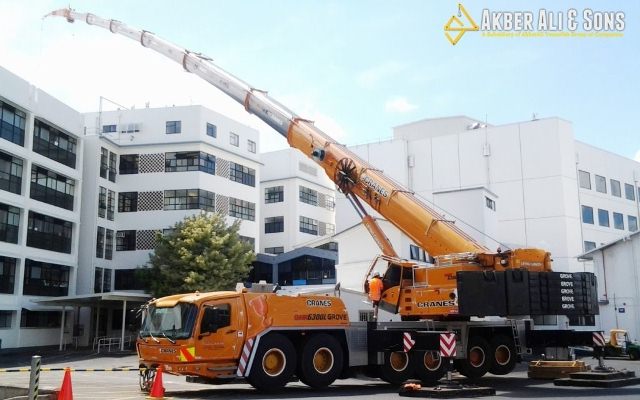
Heavy cranes, such as telescopic cranes, can be mounted on top of a truck and then driven to those places where goods and loads need to be moved.

CAT 416 Backhoe Specs

CAT backhoes – CAT 416 Backhoe Specs: ingenious, productive, original, durable

For excavation, trenching, filling and material handling capacity, the Caterpillar line of backhoe loaders is certainly strong in those aspects.

CAT backhoe

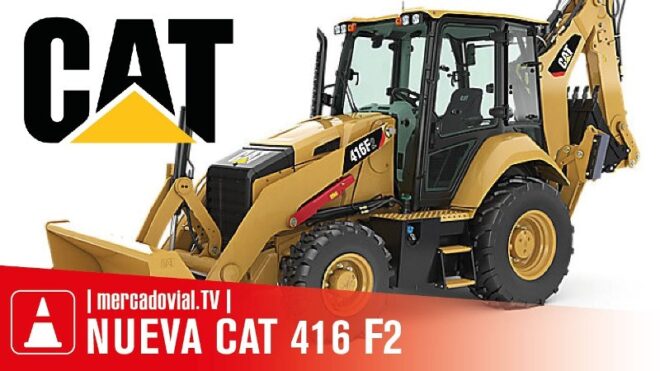
To illustrate this, the series of Cat F2 backhoes are very ingenious and spacious. The five models of the line join the other Cat backhoe loaders available, the 416E and the 450F of 127 hp, with an excavation depth of 17 feet.

With two engine offers and a range of power levels, the F2 Cat features a powerful hydraulic system and lifting performance.

You can also add a hydromechanical tool with auxiliary lines of combined function or a hydraulic thumb to increase the functionality of the machine.

CAT 416 Backhoe Specs

Caterpillar backhoe models

Each model of the F2 series (415F2, 415F2 IL, 414F2, 416F2, 420F2 and 430F2) has a completely redesigned cab that offers better visibility, better cooling, larger seating area, and ample storage space.

In addition, the seal against the elements and an improved safety keyboard immobilizer have been improved on board.

Operators receive both the space to move and a clear field of vision while they work. The coupler of the double-locking backhoe in the F2 is another key benefit.

With this advanced machine, the operator does not need to leave the cab to install a locking bar or pins when connecting the buckets to the hydraulic coupler.

In addition, the secondary locking system is automatically activated when a tool is attached.

The secure grip of the coupler in each working tool helps reduce the costs of ownership and operation.

Retro Caterpillar

  • The hydraulic load sensing system in the Cat backhoe line maintains maximum power and precision operation in its Standard and Economy modes.
  • The improved hydraulic system provides more power faster, along with a faster hydraulic output, even at low engine speeds.
  • The line runs at the right speed for the given application.
  • The variable flow system deftly adapts the pressure and flow of the pump to the demands of each job, unlike the fixed displacement pump systems in some backhoes that pump oil constantly, wasting large amounts of fuel.
CAT 416 Backhoe Specs

Caterpillar products

Will backhoes still be popular?

Many contractors have started using more specialized machines such as mini excavators and skid steer loaders for jobs that used to belong to backhoes.

Although it is still a general-purpose tool, the important question seems to be:

Will backhoes continue to play an important role in most construction projects?

Construction contractors firmly believe that they will. “There are two things that a backhoe really has in its favor”,

  • “First, the ability to drive to the workplace eliminates the need for a truck or trailer to transport it, which makes it perfect for owner-operators who provide services in the local community.”
  • “Second, the versatility that backhoe offers is still hard to match.”

“You can achieve almost everything required by most work sites. An excavator can dig a trench a little faster than a backhoe, but the loader bucket will dig in the basement much faster and load the trucks in the process.

As they are also compact, they can lead to small worksites that can be difficult for other vehicles.

Then, the forks of the backhoe can handle palletized loads in a few minutes. “

Heavy machinery caterpillar

  • Cat equipment sets the standard for our industry.
  • The Cat product line of more than 300 machines reflects an increased focus on customer success.
  • is the leader in helping its clients, to satisfy their needs with durable and reliable equipment.
  • Caterpillar has the best distribution and product support system in any capital goods industry.

Expansion in developing markets

Caterpillar built its first Russian facility in the town of Tosno, located near St. Petersburg, Russia. It was completed in 16 months, occupied in November 1999, and began fabricating machine components in 2000. It had the first electrical substation built in the Leningrad Oblast since the Communist government was dissolved on December 26, 1991. The facility was built under harsh winter conditions, where the temperature was below −13 °F (−25 °C). The facility construction was managed by the Lemminkäinen Group located in Helsinki, Finland.

The $125M Caterpillar Suzhou, People’s Republic of China facility, manufactures medium wheel loaders and motor graders, primarily for the Asian market. The first machine was scheduled for production in March 2009. URS Ausino, in San Francisco, California, manages facility construction.

Caterpillar has manufactured in Brazil since 1960. In 2010 the company announced plans to further expand production of a backhoe and small wheel loaders with a new factory.

What is a backhoe?

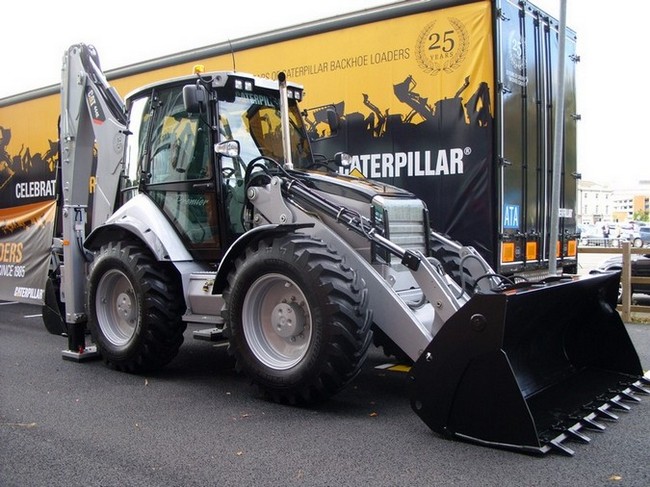
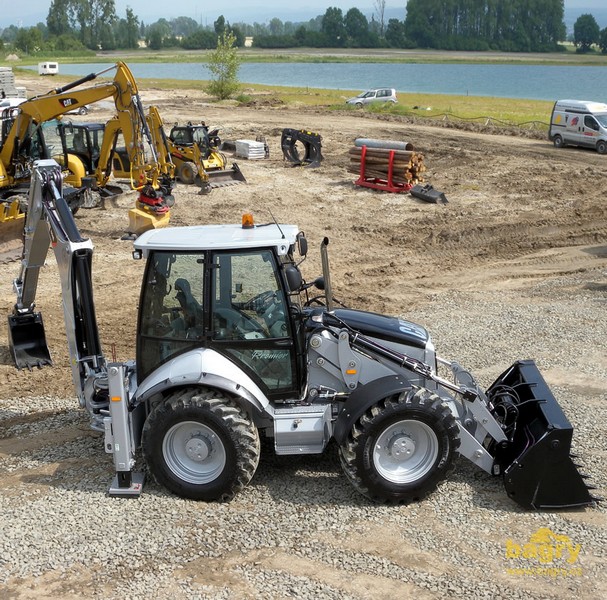
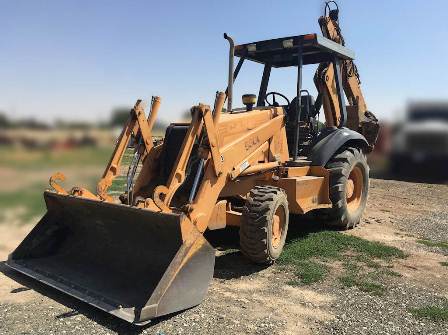
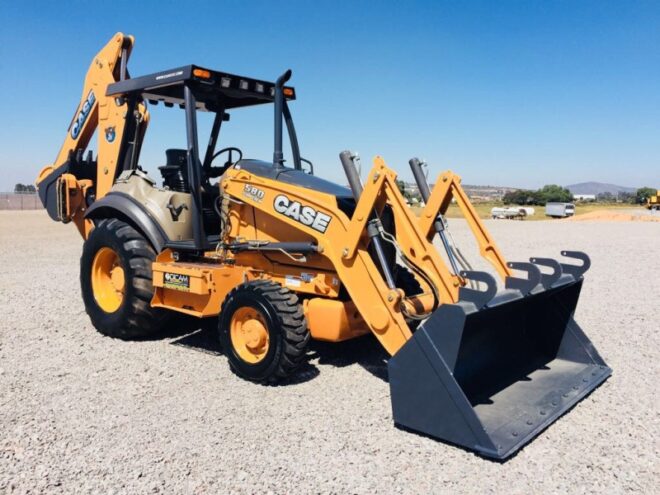
If you were to ask a large group of people what they could tell you about backhoe loaders, a lot of them wou­lddon’t know what you were talking about. We’ve all seen backhoe loaders, commonly called backhoes.

They are used for a number of different jobs and are often the only piece of heavy equipment at a construction site. We pass them on the side of the road all the time. But even somebody who has passed by dozens of backhoes may not know that much about them.

What exactly do they do?
Why are they used for so many different sorts of construction projects?
How can they dig such big holes in such a short amount of time?
How strong are they?

Each piece of equipment is suited to a particular sort of work. On a typical construction site, the backhoe operator usually uses all three components to get the job done.

Backhoe parts

The Tractor

The core structure of a backhoe loader is the tractor. Just like the tractors that farmers use in their fields, the backhoe tractor is designed to move easily over all kinds of rough terrain.

It has a powerful, turbocharged diesel engine, large, rugged tires and a cab with basic steering controls (a steering wheel, brakes, etc.). Backhoe cabs are either completely enclosed or have an open canopy structure to give the operator protection.

The Loader

The loader is attached in the front and the backhoe is attached in the back. These two components serve very different functions. The loader can do several different things. In many applications, you use it like a big, powerful dustpan or coffee scoop.

You usually don’t dig with it; you mostly use it to pick up and carry large amounts of loose material. It’s also used to smooth things over like a butter knife, or to push dirt like a plow. The operator controls the loader while driving the tractor.

The Backhoe

The backhoe is the main tool of the backhoe loader. It’s used to dig up hard, compact material, usually earth, or to lift heavy loads, such as a sewer box. It can lift this material and drop it in a pile to the side of the hole.

Basically, the backhoe is a big, extremely powerful version of your arm or finger. It has three segments:

  • The boom
  • The stick
  • The bucket

The backhoe segments are connected by three joints, comparable to your wrist, elbow, and shoulder. The backhoe moves in pretty much the same way as your arm. In a Caterpillar® backhoe, the boom is bent upward to make it easier to dig with obstacles in the way. This design also provides extra space for the bucket when the operator curls it in with a full load.

The backhoe can dig all sorts of holes but is especially suited for digging ditches. To use the backhoe, the operator has to park the tractor and turn the seat around.

Backhoe attachment

What do the tractor, loader, and backhoe have to do with each other? The tractor component is for moving the other two components from place to place, and the operator also maneuvers it when using the loader.

The loader and backhoe components are a natural combination for all sorts of jobs. When you dig up a lot of dirt to make a ditch or any other sort of hole, you generally need a loader to either move the dirt out of the area or to fill the dirt back in once you’ve got the pipes, power lines, etc. in position.

The most common application for a backhoe loader is this basic job: digging a trench with the backhoe and then back-filling it with the loader.

What makes Caterpillar?

What makes Caterpillar?

Caterpillar is the world’s leading manufacturer of construction and mining equipment, diesel and natural gas engines, industrial gas turbines, and diesel-electric locomotives.

Where does Caterpillar manufacture its products?

While most Caterpillar machines are manufactured in the Midwest in the USA, some of the company’s other leading manufacturing plants are located in Russia, China, and Brazil. Caterpillar moved its headquarters closer from Chicago to Deerfield, Illinois, a few miles north of the city.

What is considered heavy machinery?

Heavy equipment refers to heavy-duty vehicles, specially designed for executing construction tasks, most frequently ones involving earthwork operations. They are also known as heavy machines, heavy trucks, construction equipment, engineering equipment, heavy vehicles, or heavy hydraulics.

Why is construction equipment yellow?

The primary reason is yellow is considered to be cautious. Usually yellow and the red color represents the alertness and dangerous. since the equipment used in construction sites are heavy and dangerous so they use this color for equipment. Many accidents in constructions took place due to these heavy moving vehicles.

Used Wheel Loaders for sale

The most read

Backhoe Loader Specifications

A backhoe is a type of excavating equipment, or digger, consisting of a digging bucket on the end of a two-part articulated arm.

More on this story

Backhoe Bucket Attachment

The backhoe is the main tool of the backhoe loader. It’s used to dig up hard, compact material, usually earth, or to lift heavy loads, such as a sewer box.

Garden Tractor Backhoe

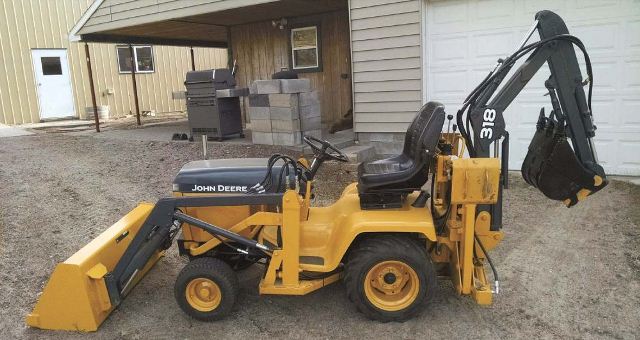
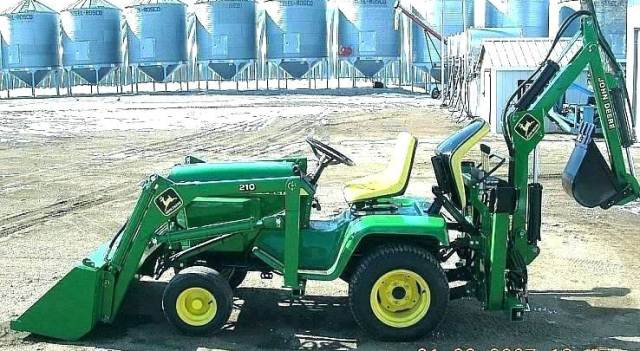
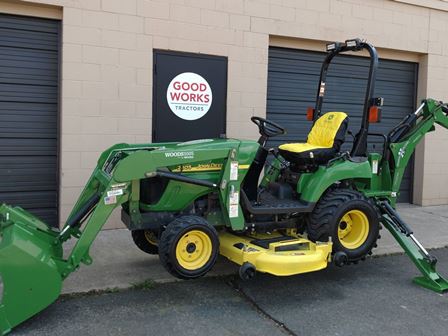
Lawn tractor backhoe – Garden Tractor Backhoe: The loaders and backhoes illustrated here are the perfect tools for the care and maintenance of your property and landscaping. Light and powerful, they are great for those hard to get at locations where a larger machine won’t fit and are able to travel over the lawn and landscaped areas with minimum ground compaction and surface damage.

Lawn tractor backhoe

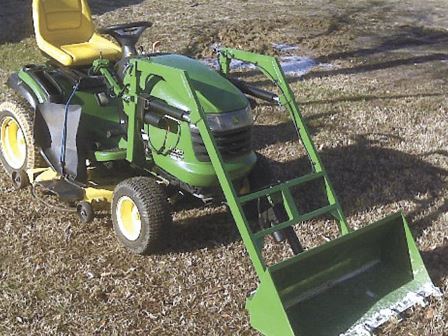
Garden tractor front end loader

My favorite implement for a garden tractor is the front end loader. To those not familiar with garden tractors, a front end loader may seem more like a toy rather than a tool. The truth is garden tractors are fantastic platforms for small front end loaders.

This combination makes for a very capable, compact and inexpensive machine to help you manage your property chores. With a properly set up front end loader, your garden tractor can dig, lift, and carry materials up to 800 pounds in weight and up to 6 feet high. This makes it the perfect tool for the rural property owner, orchard business, equine and livestock farms.

Use a fleet of Garden Tractor Loaders to manage horse manure, compost, dirt, snow, mulch, and more. Their small size makes it so I can navigate small gated areas and aisles in between outbuildings and other obstacles. The lightweight of my machines (Under 2,000 pounds) allows me to drive my loader tractor anywhere on the property without fear of damaging lawns or pathways.

lawn tractor backhoe

Garden tractor front end loader kits

Front End Loader: Buy or Build

There were many manufacturers in the United States that made front end loaders for Garden Tractors from the 1950s through the 1990s. Some popular manufacturers were Johnson, Kwik Way, Danco, Ark among others.

You can still occasionally find these loaders on internet classifieds such as Craigslist and Facebook Marketplace.

The two most likely scenarios you will find are Loaders already attached to tractors, or loaders for a different garden tractor than you own. The options in these cases are to fabricate a custom way to attach the loader to your tractor. This process is not difficult but will require creativity and some fabrication skills.

garden tractor backhoe

Farm equipment repair

All garden tractors are capable of handling a front-end loader. All true garden tractors have engines, front axles, transmissions, and frames that are capable of withstanding the workload from a front-end loader. However, there are some characteristics that make some tractors better than others.

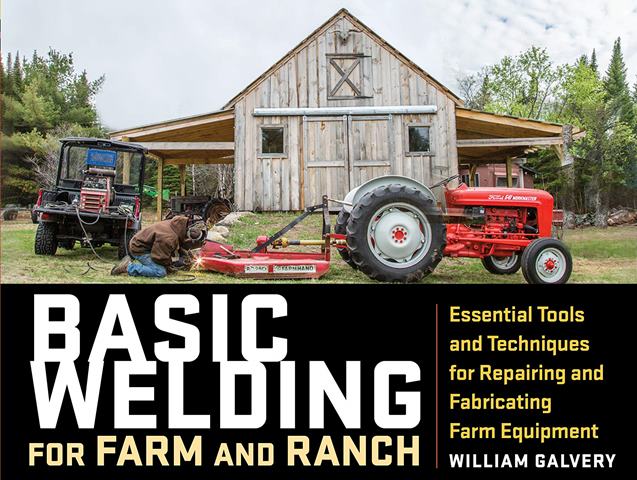
Farmers, ranchers, and homesteaders who know how to weld can repair and even fabricate some equipment on their own, saving both time and money.

Basic Welding for Farm and Ranch introduces this crucial skill and covers the most popular techniques used by the home hobbyist and DIY devotee, with chapters and detailed illustrations dedicated to oxyacetylene welding (or gas welding), stick welding, MIG, and arc welding, as well as brazing and soldering.

Repair and maintenance of farm machinery

Basic Welding for Farm and Ranch: Essential Tools and Techniques for Repairing and Fabricating Farm Equipment

Basic Farm and Ranch Welding Book

Farm equipment repair

Garden tractor attachments

Wheel Spindle

All garden tractors will have at least a ¾” spindle with a wheel supported by 2 ball bearings. This is adequate for a front end loader, but if you want to utilize the full power of your loader you will want to upgrade to a stronger 1” wheel spindle with tapered bearings. You can make your own by using a trailer spindle, hub and bearings.

Garden tractor frame

While all of the frames of garden tractors are strong enough to hold a front end loader, some designs are easier to work with than others.

John Deere and Cub Cadet both provide a lot of flat, square surface area that you can weld and drill into to create many mounting positions and options for you. Tractors such as Wheel Horse use angle iron frames and are close together. This can make it more difficult to mount components to.

The Ford LGT and Bolens tractors have tube frames, which can make it slightly more challenging to find mounting locations for the front end loader subframe.

Garden tractor transmission

First, let’s classify garden tractor transmissions into 3 interface types.

  • Foot Controlled Hydrostatic
  • Hand Controlled Hydrostatic
  • Mechanical Gear

Foot-controlled hydrostatic transmissions can be found on Bolens Large Frame and Ford LGT tractors. These allow you to have both of your hands available to manipulate the loader control valve and the steering wheel while driving. This is particularly useful when doing a lot of back and forth driving like when turning manure piles or moving piles of material from one location to another.

Hydrostatic transmission

Hand controlled hydrostatic transmissions can be found in most garden tractors. This is useful so if you are using the loader and steering, you can slow down and stop your tractor without using your hands.

Other tractors do not have return to neutral pedals. To stop these tractors you have to use one of your hands to return to neutral.

Mechanical gear transmissions are found in Wheel Horse, John Deere, Simplicity, Allis Chalmers, Cub Cadets, Sears, and many others.

In order to change directions with these transmissions, you must depress a clutch with your foot and then manually shift to a gear. When you release the clutch your tractor will move. With these transmissions, you can shift the transmission, and then use both your hands to operate the loader and drive while your foot works the clutch.

Operator Station

I would recommend using a “Full Size” garden tractor from the 1970s or later. With these machines, you can mount the Front End Loader and have plenty of room to climb on and off the machine, and be able to sit comfortably even with large work boots and big coats on. The larger “Super Garden Tractors” provide even more space for the operator.

To get the most out of your garden tractor front end loader you will need to consider the following:

  • Wheel Ballast
  • Rear Counter Ballast
  • Hydraulic Relief
  • Tire Tread
  • Steering Technique
  • Loader Technique
garden tractor backhoe

Tractor ballast

Tractor wheel ballast

Garden tractors are powerful machines. After you have mounted a front end loader you have a powerful and versatile tool at your disposal. In order to utilize the most power, you need to increase your tractor’s traction. The best way to do this is to add weight directly to the rear tires. You can do this by adding external wheel weights, filling the tires with a liquid ballast, or both.

External wheel weights have been available in Cast Iron, as well as Concrete filled plastic wheel weights. They come in 50# and 75# versions. You can also fabricate a special mount to use Olympic gym free weights.

Liquid ballast for tractor tires

Liquid ballast can be added to the inside of your tires using a small electric pump, 5 Gallon Bucket and a special valve stem tool that connects a water hose to your valve stem. Common liquids to act as ballast are: water, calcium chloride, RV antifreeze, and specialty fluids such as rim guard.

Water is the easiest and most readily available liquid. However, it freezes in cold climates.

Calcium chloride tractor tire ballast

Calcium Chloride is the densest liquid ballast and therefore can add the most weight. A drawback to using this is if air contacts the inside of the wheel through a leak in the tire, rust will form and over time will destroy your wheel.

RV Antifreeze is what I prefer to use. It adds the same weight as water, will not freeze, and will not damage your wheels. Specialty Fluids such as Rim Guard are available through tractor dealers. These fluids don’t freeze and are dense enough to add significant weight to your wheel. The drawback to using this is the cost and availability.

Rear ballast weight for tractor

To get the most lift out of your front end loader, you need to balance the weight of the tractor. You should put additional weight behind your rear axle and it should be equal to at least half of your load in the front end loader.

However, the more weight the better while remaining below your rear axle capacity. You can also extend the weight further from the axle to apply a mechanical advantage to the weight. This weight will help reduce the load on the front end of your tractor and make steering and maneuvering more manageable with a loaded bucket. I personally have 330 pounds on the rear of my primary tractor loader.

Hydraulic Relief Valve

The control valve on your front end loader has an adjustable pressure relief. This relief will dictate the maximum amount of weight you can lift with your front end loader. You should adjust your relief so you are never able to lift more than your tractor can handle. With that said, a properly equipped garden tractor can handle a substantial amount of weight in the front bucket. The maximum weight depends on many factors including any upgrades you make to your tractor. My machines are set up so I can comfortably load 500 pounds of material and still drive around.
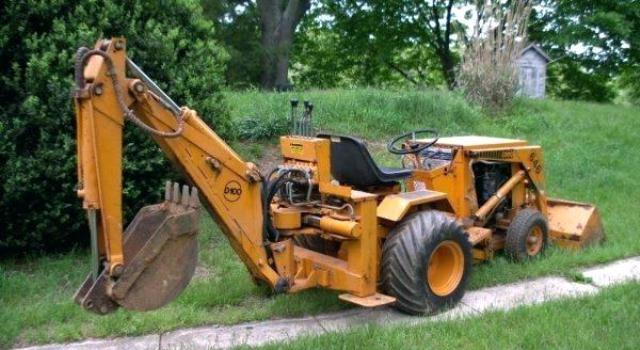
Tractor tire tread patterns

Your garden tractor loader can drive into piles of material, dig into the ground, push out small stumps and much more. Tire tread and wheel slippage come into play when performing these tasks. Agricultural lug tires are a common choice for front end loaders but may not always be the best choice. Ag tires can provide great traction in many conditions but in some conditions, they can dig your tractor into a hole very quickly and get you stuck. Less aggressive tires with a wide tread like turf tires or multi-terrain tires can provide lots of traction however when the wheels spin they won’t dig you deep into a hole.

Steering Techniques

Regardless of your tractor has power or mechanical steering, you should always try to turn while you’re in motion and let the front tire tread aid in steering. For tractors with power steering, it will help prevent damage to your tie rods, and for mechanical steering, it may be the only way you can steer the tractor. Some tire treads such as tri-rib tires in the front can also help with steering.

Loader operating techniques

Remember to use your garden tractor loader with caution. Most garden tractors do not come equipped with rollover protection structures so good sense and an acute awareness of your surroundings are important. When transporting material in your bucket, carry the loader bucket low to the ground and avoid uneven terrain and drive slowly.

When getting material from a pile, it is best to approach the pile and lift your loader up and scrape down loose material, then bring your bucket back down to take a scoop.

When back-dragging an area, only curl your bucket forward enough to let your cutting edge contact the ground so most of the hydraulic ram is still inside the cylinder. This prevents bending and damaging the hydraulic rams.

Compact tractor attachments

Compact Tractors make easy work of big tasks, but did you know there are more than 600 implements and attachments available to make your tractor even more helpful around the house? The available and versatility of attachments make your Compact Tractor the ideal workhorse, but it can be tough to know how to prioritize amidst the choices available.

Here are the top 10 implements we recommend every property owner consider for their Compact Tractor:

  • Loader.
  • Rotary Cutter.
  • Grooming/Belly Mower.
  • Rear Blade.
  • Box Blade.
  • Post Hole Digger.
  • Land Plane.
  • Snowblower.
  • Broadcast Spreader.

How much does it cost to build garden backhoe?

how much does it cost to build one of these backhoes?

figure around $1800 complete for steel and all hydraulics, a little less if you can use your tractor’s onboard hydraulic system to power the unit. buying local steel should cost you close to $350 and the remaining cost would be in hydraulics and for having parts shipped in.

how much hydraulic flow (GPM) and PSI is required to run this backhoe?

The Micro backhoe can be run with as little as 3 Gallons Per Minute hydraulic flow and with as low as 750 – 1000 PSI in easy soils. for simultaneous cylinder movements like on the larger hoes using joystick valves, I suggest 4 to 6 Gallons Per Minute . for more difficult digging environments you can increase system pressure from 1000 to 1500 PSI at the relief valve(s).

do I need any special tools to build the Micro backhoe?

not really, I was able to build my prototype backhoe (above) with what I consider basic tools. for cutting steel, a Makita 10″ chop saw with a composite metal cutting blade and a Sawzall. drilling was done with a small benchtop drill press and bi-metal hole saws, a welder is a Lincoln SP-100T, 100 amp wire feed mig using .035″ flux core wire, running on a dedicated 20 amp household circuit. I would suggest having a bench grinder, disk grinder, assorted clamps, bench vise, etc. just the basic stuff for garage steel fabrication projects.

how many breaks out force does this backhoe have?

this depends on the bore diameter of your hydraulic cylinders and what you are running for system pressure, with the 2″ bore cylinders we spec running at 1000 PSI, you should be able to get 3000 lbs or better break out force, however to put this into “real world” digging terms you must take into consideration the weight of your tractor as a whole.

how long does it take to build one of these backhoes?

this would depend on your steel fabrication skills, however, an average mechanically inclined person with basic tools should be able to construct one of these backhoes in 4 to 6 weeks of spare time evenings and weekends. I’ve noticed that when you have one of these projects on the bench, you seem to suddenly find the more spare time than you thought you had! I have had some customers take less than a month to build the hoe, and some quite a bit more. my original Micro backhoe took me 5 months of spare time, but that was designing, searching for suppliers, working out conflicts, building, testing, etc, etc.

will this backhoe fit my tractor? how does it attach to my tractor?

the Micro backhoe can be mounted on any tractor (or other vehicles) capable of carrying an extra 350 lbs. our plans provide an example of a solid mount subframe cage that attaches to the rear of your tractor at 6 points, two upper mounts, two lower mounts and two arms that go under the rear axle and attach to forward points on the tractor frame. the backhoe then attaches to this subframe at 4 points with quick pins, two uppers and two lower.

The most read

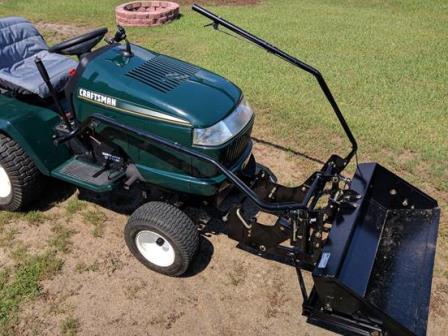
Lawn Mower Front end Loader Kit

Whether you call it a bucket, a scoop, or a front loader, the solution for handling materials with a lawnmower is through a kit, which you must install in your equipment.

Front end Loader for Sale

Buying a front loader can be a big investment, so if you don’t need a front loader repeatedly for different types of jobs, renting may be the best way to go.

More on this story

Electric front end loader for garden tractor

Whether you call it a bucket, a scoop, or a front loader, the solution for handling materials with a lawnmower is through a kit, which you must install in your equipment.

Riding Lawn Mower with Backhoe Attachment

Whether you work in the construction or landscaping business or own a home with acreage, purchasing versatile equipment will increase productivity.

Garden Tractor Loader Kits for Sale

For those unfamiliar with garden tractors, a front loader doesn’t seem like a useful tool. The truth is that garden tractors can be fitted with a front loader kit.

Backhoe Loader Specifications

The engineers of each of the manufacturers of backhoes design their vehicles to minimize operator fatigue and allow greater productivity. View and compare Backhoe loader specifications from top manufacturers. Compare size, weight and detailed specifications of Backhoes loader.

The spacious and comfortable cabins are the norm in the backhoe excavator market and the ergonomically designed controls are designed to be easily accessible to an operator.

Backhoe operator

Manufacturers have experienced strong sales of their various models of construction equipment, including a line of backhoes.

An emphasis on operator’s ease of use

Its engineers have also worked to optimize the comfort and ease of a backhoe operator. “We always try to keep a low bonnet line and clean site lines for work attachments for the best possible visibility.”

“Camera options are becoming more popular, whether they are used to do reverse work, to help detect the hazard, or forward-facing to help the fork work with pallets.”

Backhoe Cab

The ergonomics inside the cab is designed to ensure that the operator of the backhoe has everything he needs within arm’s reach, and can perform all tasks with minimal effort.

The auto-controls of excavators in the machines have grown in popularity throughout the years since they reduce the stress in the operator. “Other developments are the inclusion of forwarding, neutral and reverse switches on the charger lever to make the charging cycle faster and easier.”

“The steering column is adjustable for both reach and rake to ensure the operator can achieve their perfect driving position for maximum comfort while at work.”

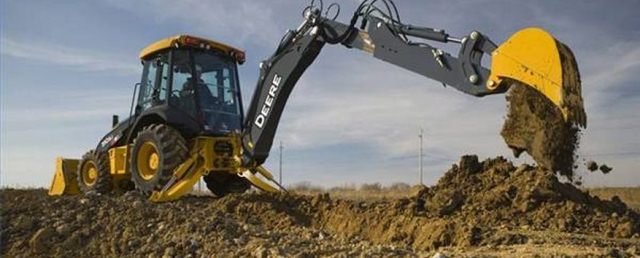
Deere Backhoe loader specifications

In recent years, backhoes, like other large and small excavators, have evolved to the point where the controls on their excavator joystick are soft, easy to use and provide an excellent feeling to the hydraulic system.

“Starting with our 310SL HL” from John Deere”. We introduced the control handle of the loader with the palm on top so that additional features could be handled with a single control while maintaining the operators’ line in front of them.

It has a 4-in-1 bucket with a thumb roller control, which means it has an easy-to-operate front loader cover until it opens or closes. ” It also proudly points out John Deere’s momentary four-wheel drive control, which allows the operator to use a button to effortlessly push the backhoe in and out of a four-wheel drive or mechanical front-wheel drive in control. of the front wheel.

In addition, the 410SL HL is equipped with a clutch disconnect that can pause the transmission momentarily, a useful feature in truck loading or storage applications or in storage.

Backhoe design

“We’ve always tried to get a deep understanding of what customers need and what their various applications are.”

“We take that information and use it to develop new ways to provide our backhoe customers with greater versatility, productivity and, above all, reliability. We realize that time is critical for our construction clients at a job site, regardless of the project. “

CASE Backhoe loader specifications

To update their machines and handle a wide variety of applications and special uses, backhoes are always changing their machines to improve their productivity.

Special machines for special uses

“Recently, we have introduced several improvements to our line of N-series backhoes, improvements to the cab and powertrain, as well as electrical and hydraulic systems, which make these already versatile machines even more robust and productive”, He explained in a recent press release.

Several features that were previously additional have become standard on Case machines, such as their fuel savings package. It includes ECO mode switches for the loader and backhoe functions, allowing for greater fuel savings, optimal power, and increased performance.

Backhoe models

The N series backhoe loaders now have a completely new hydraulic system for optimum precision and smoothness, giving the operator more control in applications where accuracy is critical.

Backhoes can be configured in many ways to adapt to specialized applications.

Options such as sirens / public address systems, high visibility paint, strobe lights, LED light bars, remote spotlights, and advanced lighting packages improve visibility and efficiency in most situations. He also says that many railway contractors use specially equipped backhoes in their operations.

Access to work areas is a major challenge in the industry and it is critical to have a tool carrier that serves as a platform for numerous applications.

Backhoe in construction

In addition, they are used to help place, move and change railroad tracks. “In rail applications, backhoes are often equipped with a bucket to move ballast, dirt and other materials, and a set of long forks to move packages of railroad ties and other supplies.”

“Some backhoes can be equipped with universal couplers that allow the machine to handle accessories from other original equipment manufacturers.”

Construction machines

The new extendable option of Case in the N series of backhoes allows them to move further away from the base of the machine, allowing more work to be done without moving the vehicle.

In addition, it improves access at sites where the base of the backhoe can not get too close to the tracks.

The Case 580 Super N, for example, achieves more than 3 feet of additional range with the function. Contractors and operators always want to see more scope from their backhoes or bulldozers, whatever the use, but that often causes other problems.

The engineers of each manufacturer have been busy over the years in the search for solutions to these problems, which has greatly improved the capacity of the backhoe.

“The challenge of improving the reach is that it could reach a compromise for stability.”

“To improve the stability of the machine, would require a mass increase, either a larger excavator or the addition of counterweights, could result in a machine that exceeds 10 tons.”

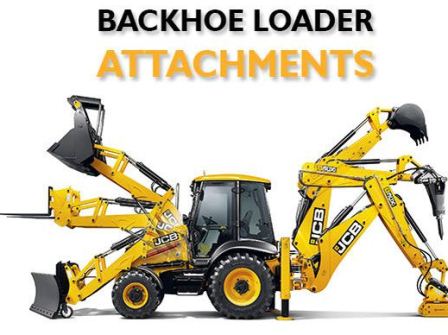
Backhoe loader attachments

Hydraulic breakers, thumb kits, compaction wheels, and quick couplers are among the attachments designed to extend the uses of your backhoe. Here are some recent product releases geared toward backhoes for breaking, grabbing, backfilling and quickly changing attachments:

Extendahoe backhoe thumb

Thumb kit made for Extendahoe

They are available for backhoes with or without a quick coupler. Customers can choose between manual or hydraulic versions. They are made of T1 and AR400 steel has a new main long pin for mounting and see-through plating between the tines. They come with the jump hoses needed for the stick’s hydraulic fittings. They are designed to clear the boom and stick at all points and mesh with the teeth on a stock Cat 24-inch bucket.

Backhoe breaker

Converting recoil to reusable energy

Epiroc designed its RX hydraulic breakers to convert recoil energy to reusable energy to deliver more power with the same amount of hydraulic input. The breakers’ box guiding system also minimizes recoil forces to put less strain on the carrier, operator and breaker. They are compatible not only with backhoes but with skid steers and excavators and can be used for demolition, landscaping, building renovation, road construction, rock excavation, and quarrying.

Backhoe compaction wheel

Compaction while backfilling trenches

Compaction Wheels are designed to compact the soil when backfilling trenches. They come in a variety of widths and feature tapered roller bearings. A tampered-foot design with static pad rollers provides smooth operation and a high degree of compaction. The open rim allows the wheel to penetrate the trench fill and compact the soil from the bottom up. The compaction wheels are available for all backhoe loaders.

Backhoe bucket

Quickly switch buckets

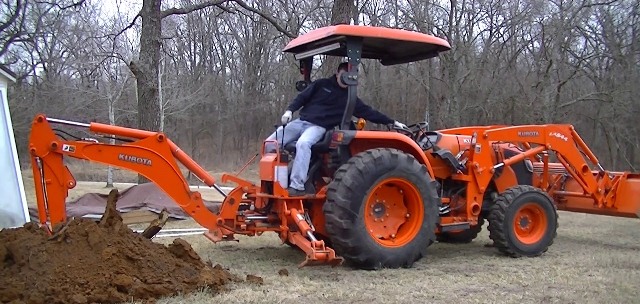
Kubota’s Quick Coupler is designed for fast bucket changes for the company’s tractor-loader-backhoe. The coupler is also compatible with select Kubota compact excavator buckets, tilt buckets, grading buckets, trenching buckets, grading blades, cemetery buckets, frost rippers and excavating rakes.

Backhoe hammer

Low recoil, few moving parts

Case Construction Equipment’s hydraulic hammers have only two moving parts and isolate every blow from the operator and carrier. The hammers are pre-assembled and made for Case backhoes, excavators, compact tractor loaders and skid steers.

The blows are isolated in the cushion chamber, and recoil energy is recycled and used for the next blow. The long-stoke piston facilitates energy transfer and recoil reduction. Case hydraulic hammers come with a gas recharge kit and a three-year warranty.

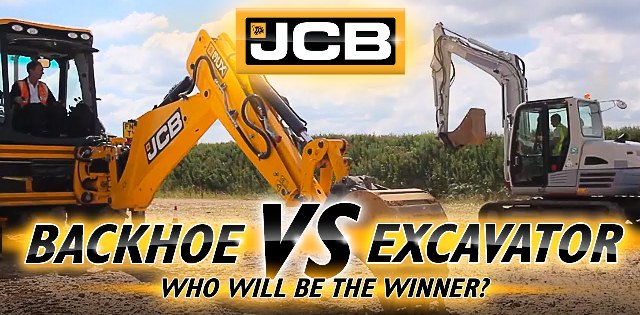
Backhoe vs Excavator

Which Machine Is Best for Your Project?

Though it’s sometimes difficult to tell a backhoe and an excavator apart, they differ in three main ways: size, versatility, and rotation. These factors make each machine suited for different jobs, so it’s important to choose the right one for your project.

Backhoe Sizes

The main difference between the two machines is size — excavators are larger and heavier, while backhoes are slightly smaller. The excavator is typically a better fit for demolition projects, mining, driving piles, drilling shafts for rock blasting, and overall large-scale industrial projects. The backhoe, as the smaller and more adaptable of the two, is better for farming, snow removal, loading jobs, and medium-scale construction and excavation projects.

Multi purpose machine

The backhoe and excavator are also very different in terms of versatility. Though both machines offer a number of attachment options, the backhoe has a much greater selection and is therefore capable of a wider variety of tasks. Backhoes can also be driven on roads, which makes them the better choice for projects with spread out worksites.

Difference between backhoe and excavator controls

Finally, backhoes and excavators have different rotation ranges which make them very different machines from an operator’s standpoint. An excavator operator can rotate the entire machine’s chassis and arm together in a complete circle, while a backhoe’s arm only pivots across a range of about 200 degrees.

Backhoe bucket attachments

Several factors can help excavator operators improve their productivity during everyday construction tasks, but the single biggest contributing factor typically circles back to choosing the proper excavator bucket for the application.

There can be a tendency for some excavator operators to gravitate toward using a standard bucket in all applications. However, this approach may negatively impact the operator’s productivity. For example, using a standard bucket rather than a trenching bucket in trenching or deep digging applications may result in decreased efficiency.

Prior to selecting a bucket, it is important for operators to consider the application the bucket will be used in, the density of the heaviest material, the accessories that can be used and the coupling systems for easy attachment changes. Operators should also check that the bucket chosen does not exceed the machine’s operating capacity.

Backhoe bucket Sizes

Choose a bucket type with soil conditions in mind

There are two primary bucket types for contractors to choose from heavy-duty buckets and severe-duty buckets.

Heavy-duty buckets are the most common excavator bucket type because they work well in a variety of soil conditions, such as clay, gravel, sand, silt, and shale. The buckets are manufactured with high-quality, abrasion-resistant material, durable side cutters for extra strength and protection and bottom wear pads.

Severe-duty buckets are best suited for excavator operators who are handling abrasive materials in heavy or severe digging and truck-loading applications.

The buckets are manufactured with abrasion-resistant material for added protection and strength when digging in loose rock or pit and quarry operations. The buckets’ side cutters, shell bottoms, side wear plates, and weld-on wear shrouds all consist of abrasion-resistant material. In addition, reinforced gussets help strengthen the machine-fitting joints on the buckets to promote uptime.

How much is a used backhoe?

How much is a used backhoe?

The price of used backhoe loaders is also influenced by the age and condition of the machine, the brand, and the hours of use. A five-year-old Case 580m with less than 1,000 hours, 14 feet or more of dig depth and 60 to 90 horsepower might run $60,000 to $70,000.

How much does a new farm tractor cost?

New Tractor Average Costs: A bare-bones compact tractor might sell for less than $10,000, while the largest and most powerful farming models could go for as much as several hundred thousand dollars. Most tractors fall somewhere in between. Mid-size tractors with 30 to 75 hp usually cost anywhere from $25,000 to $50,000.

What is the difference between backhoe and excavator?

The backhoes are much smaller than the excavators and are a standard tractor that supports an arm that consists of two segments, the bucket and the boom. The boom supports even more the bucket, which holds the bucket. Knowing the differences between an excavator and a backhoe will allow you to choose the right equipment for your project.

What is a backhoe excavator?

A backhoe (also called rear actor or back actor) is a type of excavating equipment, or digger, consisting of a digging bucket on the end of a two-part articulated arm.

What is the purpose of a backhoe?

Backhoe loaders are very common and can be used for a wide variety of tasks: construction, small demolitions, light transportation of building materials, powering building equipment, digging holes/excavation, landscaping, breaking asphalt, and paving roads.

How many hours will a backhoe last?

Construction Equipment’s 2005 Lifecycle Study found, for example, that 20 percent of engines in 14- to 15-foot backhoe-loaders required major repair or replacement before 6,000 hours. The lower end of the typical range for engine life in 30- to 40-ton articulated dump trucks was 9,000 hours.

Which is the best backhoe loader?

Our list of the best backhoe loaders:
-JCB 1CXT backhoe loader.
-Caterpillar 434E backhoe loader.
-JCB 3CX 70th Anniversary backhoe loader.
-New Holland LB90B backhoe loader.
-JCB 4CN backhoe loader.

The most read

Excavator Bucket Sizes

Excavators and backhoes are designed for rapid earth moving and are not designed for lifting operations as their principal function.

More on this story

Backhoe Bucket Sizes

Buckets for backhoe loaders match the machine to the job. Whether quarry, construction site, or landscaping job, they focus the full power and performance of the machine on the task at hand.

Hammerhead Tower Crane

A hammerhead tower crane is one of the most common types of cranes used around the world. They are especially reliable for the precise, accurate handling of a wide variety of heavy materials.

The way they can be adapted to work well for any job site and any type or volume of material being transported is what makes a hammerhead tower crane such a versatile workhorse.

hammerhead tower crane

Construction crane

Designed for easy maintenance and reliable performance for excellent uptime, the hammerhead tower crane provides excellent maneuverability and load moment precision.

A hammerhead crane also allows you to “rack” the crane. This is moving the trolley in and out along the job with its load suspended but not altering the level of the load. The precise horizontal movement of the load is a significant benefit of using a hammerhead tower crane

Hammerhead tower crane specifications

Modular​ Designs: These modular designs promote safer, quicker, and more efficient erection, disassembly, and transportation of the crane. It also allows the hammerhead crane to be built in sections.

Ergonomic Operator Cab: Smart, ergonomic, and climate-controlled operator cabs with easy-to-read display panels, plus step-less motor operation of the trolley and hoist for more control when creeping the load.

High-Quality: High-quality, long-lasting parts sourced from original, premium-quality manufacturers that are strong, built to last, and weather resistant. These parts contribute to a long working life for your hammerhead crane.

Easy Maintenance Access & Built-In Safety Features: ​Impressive ease of maintenance design and built-in safety features including optional anti-collision and zoning systems and CCTV camera installation

Frequency Converter Motors: Economical frequency converter motors that reduce power requirements while operating the crane and give it a longer working life.

hammerhead tower crane

Tower crane specifications

Basic hammerhead tower specifications mean height, arm length, and the maximum lifting weight of the arm end. In addition to special conditions, maximum lifting weight won’t be taken into consideration.

According to the dimensions of length, width, and height of the construction building, you can make a preliminary determination of tower crane arm length. Arm length should be long enough to cover all projects and a slight margin is appropriate. The height of the hammerhead tower crane needs to be 10 to 15m above the maximum height of the building. Arm end lifting weight can be decided by the staff according to the weight of the object to be lifted.

Hammerhead tower crane is a kind of hoisting equipment, which is used for building construction. According to the national standard, the model of the tower crane is QT, Q means crane, T means tower. This type of tower crane is very general in our life, we can see it everywhere.

Hammerhead type tower crane

Rotary hydraulic jacking hammerhead type tower crane is currently the latest hoisting and conveying machinery, which adopts all kinds of technologies like group technology, combinatorial design technique, and finite element analysis technique.

This is an upper rotary hydraulic jacking crane with a horizontal boom and trolley mechanism. The maximum effective amplitude is 47m, and it is with the biggest amplitude of the same type in the country. The maximum lifting moment is 43.8t.m. When using the tower crane independently, the free-standing height is 29 meters and the attached lifting height is 120m.

The speed indicator of this tower crane is up to or surpasses the national standard. It is with features of advanced parameters, reliable performance, attractive appearance, high quality, and simple structure, what’s more, it is equipped with an advanced safety device, which is easy to maintain and safe to use. It is indeed an ideal choice for small and medium-sized construction enterprises.

It includes metal structure, mechanical transmission, hydraulic hoist, electric control, and safety protection device when the lifting height is lower than 29m, we adopt free-standing type, if higher than 29m, adopt the attached type.

hammerhead tower crane

Tower crane design

Advantages of hammerhead tower cranes

  • Reasonable design of the structure and beautiful appearance. We adopt a cone forward tilting hammerhead, rigid rod, and the driver’s cab is independent.
  • Advanced parameters and stable performance, fixed lifting capacity, maximum lifting moment and maximum working range can better conform real operation conditions.
  • The entity joint of jib cranes adopts mechanical processing after forging, it can achieve high matching accuracy; last quarter of the jib crane and force structure of the box body adopts high strength molding square pipe; support arm and main stress member adopt to strengthen the design.
  • The design of the jib crane achieves varies work ranges and base forms.

Hammerhead crane cost

The different engines can achieve different performance, and quality machine deserves a good price, which means if you want to get the best machine, you need to choose a brand machine or choose a machine with brand parts, and the price must be a little higher than other machines.

But, don’t you think that a perfect project is the truth? Just as an old saying goes, you get what you pay off. If the hammerhead tower crane will cost you much, you need to check whether your machine is equipped with brand parts and whether the hammerhead tower crane manufacturers adopt patent technology to ensure the quality of your machine.

Tower crane manufacturers

When you choose a manufacturer, what you need to note first is its comprehensive strength, there are several steps for you to choose a reliable manufacturer.

  • Search suppliers on the internet, enumerate top manufacturers.
  • Filter them from these aspects:
    • workshop scale
    • staff professionalism
    • technical skills
    • number of old customers
    • exporting country
    • the number of orders per year
  • Take service into serious consideration: pre-sale service, on-purchase service, and after-sales service.

According to the above tips, you must find professional tower crane suppliers.

hammerhead tower crane

Tower crane safety checklist

  • Safety checklist:
    • The weld of a metal structure shall not crack and shall not be plastic deformation;
    • Connect bolts and pin quality should be up to standard;
    • Ensure good lubrication of steel wire rope;
    • Keep the reducer, transmission system and oil tank from leakage;
    • Ensure the brake braking and limit insurance are sensitive and reliable;
    • The rope connector should neet the standard;
    • Keep the hydraulic system normal.
  • Change spare parts
    • Stop the hammerhead tower crane and change the spare parts;
    • If it is necessary to change important parts, should dismantle the tower crane.

Uses of hammerhead tower crane

Heavy load-lifting plays a vital role in any transporting operation. The mechanism should be fast and efficient and also should provide safety during operations.

Hammerhead Tower Crane is used to lift effortlessly heavy loads. To operate a machine a qualified person is required who has much knowledge in operating .since many accidents happens around crane lifting because of improper action.

There are two types of crane categories: stationary and portable, there are types of cranes of different sizes and shapes.

The most common crane used is a portable crane. A portable crane truck hires a mounted crane and it is also called a portable pickup truck crane. This crane truck hire has standard crane features that can carry loads ranging from 15 tons to even 1000 tons. This crane truck hire can transport cargo from one allocation to another by itself on the road. But this crane truck hire has a great improvement over the stationary cranes.

What is a hammerhead tower crane?

What is a hammerhead tower crane?

A hammerhead tower crane is one of the most common types of cranes used around the world. They are especially reliable for precise, accurate handling of a wide variety of heavy materials. The way they can be adapted to work well for any job site and any type or volume of material being transported is what makes a hammerhead tower crane such a versatile workhorse.

How does a tower crane balance?

The pull rod on the hammerhead connects the jib boom with a balance arm and form triangle support, which ensure the overall balance of the horizontal direction of the hammerhead tower crane for sale. The hammerhead connects the tower body and slewing bearing, which keep the balance of all the tower body. Therefore, when the machine turns, there will not be an excessive distortion of the mast section.

What is tower crane safety?

Tower cranes are widely used for lifting operations in the construction industry. Statistics show that tower cranes contribute to quite a number of serious accidents. Property damage and bodily injuries can be avoided if they are properly used.

How do tower cranes stay balanced?

A counterweight is added to the opposite end of the articulated jib to counteract the weight that the crane will be lifting. In such Cranes, the armrests on a thrust bearing over tower structure which takes up all the load. The arm is initially balanced by using the counterweights at the other end of the arm.

What is the maximum wind speed to operate a crane?

The maximum wind speed for safe compact crane use is 22 miles per hour/ 36 kilometers per hour / 10 meters per second

What wind speed Do cranes stop working?

The maximum value for this is generally 20 m/s (45 mph), but this amount can vary. A review of in-service wind speeds by the Tower Crane Interest Group concluded that the maximum recommended wind speed for towers in the UK should be 18.5 m/s

The most read

More on this story

Luffing Tower Crane

Luffing Tower cranes are especially demanded tall buildings on congested sites. They have a very short counter jib and a variable working radius, which permit high productivity in extremely narrow spaces.

Tower Crane safety

Construction safety meeting topics, tower crane safety training, crane operator training, construction tower crane lighting requirements.

Crane operator salary

A Crane operator or Tower Operator will usually earn a wage of around 40000 and 60000 based on education and experience.