All posts by Loganx

Professional Web Writer | Motor Enthusiast | Content Creator | Logan is a dedicated and skilled web writer, passionate about engines and machines and with a talent for creating engaging and informative content. She specializes in writing about a diverse range of topics including construction, forklifts, heavy equipment, excavators, etc. SEO Optimization: Proficient in SEO best practices, ensuring high visibility and engagement for all published content.

Tower Crane Foundation

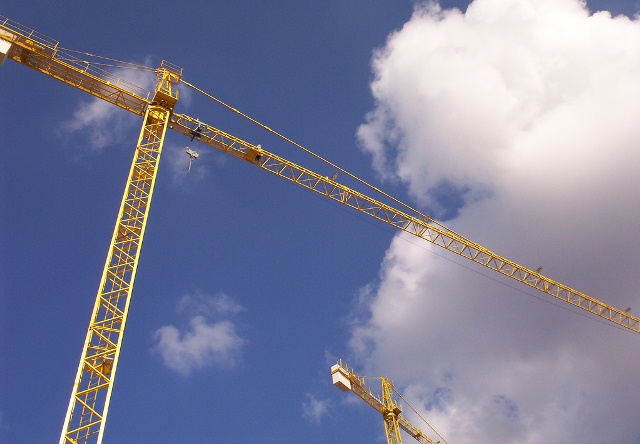
The tower cranes belong to essential building machines that are widely used for transport of the construction products from a storage area or vehicle to their final positions in the process of building-up of the constructions.

This article is concerned with the analysis of possibilities of the tower crane placing in the site, with risk identification for every single variant and recommendations on the design of tower crane positioning in case of several situations.

It also analysis the problem of mounting and dismounting of tower cranes and risks related to the design of a higher number of cranes. At the close, it defines a procedure on how to determine the optimum distance of the tower crane with folding jib and the building.

Tower Crane Foundation

Tower crane foundation engineering

Crane positioning outside the construction project floor plan

In terms of construction progress, it is better to place a tower crane outside the floor plan of the constructed structure. Such crane does not pose an obstacle to construction work progress and, if necessary, the date of its removal may be shifted with no negative impact on the construction process.

It also enables early crane installation prior to the first work on foundation structures. Crane positioning outside the floor plan of the constructed structure provides for simple crane supply with construction material and good view from the crane operator’s cabin on the transport means during material collection, which speeds up crane work and improves work safety.

However, in this type of crane positioning, complications may be caused by existing underground infrastructure services in front of the structure and their protection zones (high-pressure gas pipelines, sewage collectors, etc.), outlying the underground part of the structure or construction pit for basement complex of the structure.

Then, the tower crane needs to be moved away from the structure, to a distance posing no threat to underground infrastructure services or construction pit wall stability, possibly, special foundations have to be prepared for the crane, e.g. micro pilots, to avoid load on the construction pit wall.

A crane positioned outside the constructed structure may also call for the need to occupy larger sites and use more powerful and expensive installation mechanisms with a longer reach. Especially the limited special conditions within a site and the desire to minimize crane costs often require crane placement within the constructed structure.


Tower Crane Foundation

Tower crane foundation design

Crane positioning within the construction project floor plans

Should the crane be positioned within the constructed structure floor plan, it is often installed on the structure’s based structure, which is modified adequately. Part of the base structure, where the crane is to be anchored, may be constructed in advance, which speeds up the construction process.

Placement within the structure minimizes requirements for the horizontal reach of the crane. Therefore, its beam may be shorter, compared to crane installed outside the floor plan of the structure.

However, crane positioning within the structure complicates construction progress. In most cases, it requires the leaving of assembly holes in ceiling structures for the crane tower. The position of assembly holes is assessed statically.

The size of an assembly hole is designed 1.0 to 1.6 m larger than the size of the crane tower, which avoids tower collision with the ceiling slab due to the work-related swing. Assembly hole size also has to enable safe crane disassembly.


Tower Crane Foundation

Tower crane assembly

Assembly holes may be avoided by placing cranes e.g. into elevator shafts, which however need to be spacious enough not only for the crane tower and its assembly and disassembly but also formwork of the shaft walls. Therefore, elevator shafts are only rarely fit for the placement of cranes.

Inside the floor plan of a constructed structure, tower crane may also be positioned directly onto terrain and shifted to give way to further construction following the completion of a certain structure part.

This construction method is suitable in projects divided into various sections – usually in low-rise buildings. In this case, too, the crane may be installed prior to the first work on foundation structure and a shorter beam crane is sufficient.


Tower Crane Foundation

Tower crane footing

On the other hand, crane relocation is only possible following the installation of all heavy parts of the construction structure, which may slow down construction progress. There may also be a problem in the case of an underground water presence.

The said crane installation hinders the completion base structure and construction of the watertight basin. In the case of underground water presence, its level needs to be lowered by pumping for a relatively long period of time. (Tower crane footing)


Tower Crane Foundation

Skyscraper crane assembly

In the case of high-rises, adapted cranes may be used. Initially, these cranes are installed onto foundations. Later, however, they detach and climb up along with the building using its structure, to which they are attached.

They are positioned within the structure floor plan, usually inside elevator shafts. Disassembly is done from a helicopter, or via a light columnar support crane. These cranes are little used in the European Union.

They are especially known from abroad, e.g. the U.S.A, Dubai. According to informative calculations, they would be feasible for buildings above cca 250 m.

Cramped site conditions, as well as construction progress, may establish a situation, in which tower crane needs to be installed onto a completed ceiling structure. This solution is used, e.g. for the installation of support cranes speeding up construction, possibly to relocate tower crane at a later stage. Ceiling structure is assessed by a structural designer and reinforced or supported by struts if necessary.

Struts transfer crane to load onto several ceiling slabs under each other, possibly into the base structure. Crane may be installed onto the ceiling structure after the bearing structures reach the necessary strength, which impacts construction progress. Smaller and lighter tower cranes tend to be installed onto ceiling structures.

However, with sufficient support, even large and heavy cranes may be installed this way.

Tower Crane Foundation

Tower Crane installation

When drafting a tower cranes plan, crane installation and removal requirements may pose limiting conditions. Many tower cranes are composed of several parts assembled directly on-site using other assembly means, usually mobile crane.

It has to reach above the center of gravity of the beam, counter beam and above the tower of the assembled crane and sufficient bearing capacity in these places. Weight of the heaviest crane parts depends on the crane type and may reach from 3 to 12 t.

Crane assembly is not coupled with any problems since the site offers plenty of space in the initial phases and there is good access to the assembly site.

When removing a tower crane, the constructed structure establishes a new obstacle. This is a problem especially in the removal of cranes situated within the floor plan of a structure when the car mounted crane needs to reach the crane to be removed over the edge of the finished structure. Mobile cranes dispose of high carrying capacity. However, this carrying capacity drops significantly with the beam disengagement.

However, this carrying capacity drops by 94% with a horizontal overhang of 25 m. Therefore, tower crane may only be installed in a certain distance from the structure’s edge that is accessible for removal, where the mobile crane will have reach with the required carrying capacity


Tower Crane Foundation

Tower crane specifications

Tower Crane Height

In larger projects, also with respect to the relatively short construction period, a larger number of tower cranes is usually planned. The plan of their arrangement needs to establish conditions for safe work to avoid their mutual collision (Hulinova, 2005). Therefore, respective cranes are planned with differing levels of beams.

Thereby, the distance between any structure of two neighboring cranes needs to represent a minimum of 1m, 2m is better. It is also necessary to consider, that to avoid crane tipping in a strong wind, the crane needs to be able to position its beam downwind, meaning, that it needs to be able to rotate freely 360°.

Therefore, when planning for several tower cranes, their height depends not only on building height but also on the height of the neighboring cranes. When using several cranes with partially overlapping reach, some of the cranes may need to be designed in big height.

Construction Tower Crane foundation design calculation example

How are tower cranes anchored?

The triangulated cross-members structure gives the mast the strength to remain upright. So these cranes are essentially bolted/anchored to the ground to ensure their stability. Tower cranes arrive at the construction site on 10 to 12 tractor-trailer rigs.

Are tower cranes safe?

Despite their seeming precariousness – and the catastrophic nature of the occasional accident – tower cranes are extremely stable and have good safety records overall. Nevertheless, the people who operate them are skittish about saying even that on the record. Tower cranes are very safe.

Why do tower cranes collapse?

Improper crane assembly. If the weight limits are exceeded, the crane can tip over or the boom could collapse. A major reason booms collapse is an improper assembly of the crane.

How does a tower crane stay balanced?

When a tower crane is erected the crane erectors then load test it with known weights to set the load limits so it cannot lift too much weight or trolley out too far with a heavy weight that might cause over-turning.

The most read

Tower Crane Foundation Design calculation example

What kind of footing do you need for a tower crane?

Tower Crane Cab

Cab features include improved seat position and access, a USB port and optional Bluetooth. A user-friendly multifunction touch screen emits warning lights and sounds, as well as controls the interior temperature, interior, and exterior lighting and other features.


More on this story

Remote Control Tower Crane

Radio remote controls are now standard equipment on most self-erecting tower cranes and are even becoming common in some parts of Europe for a flat-top tower crane.

Adjustable Gantry Crane

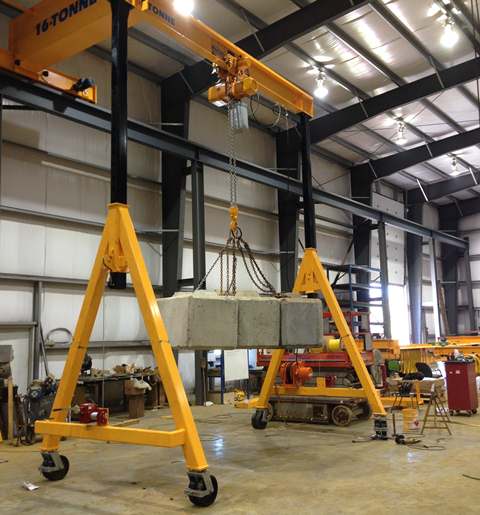
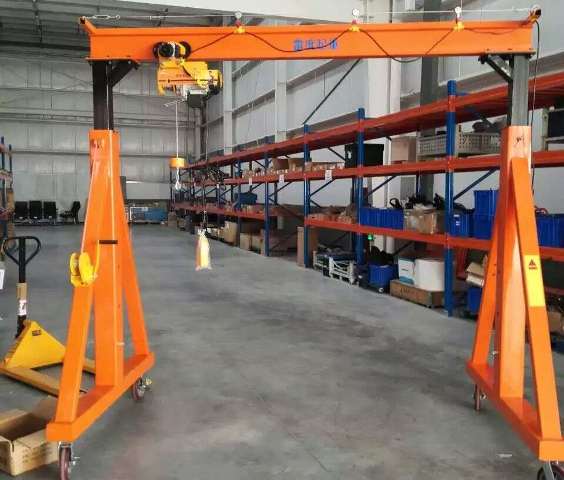
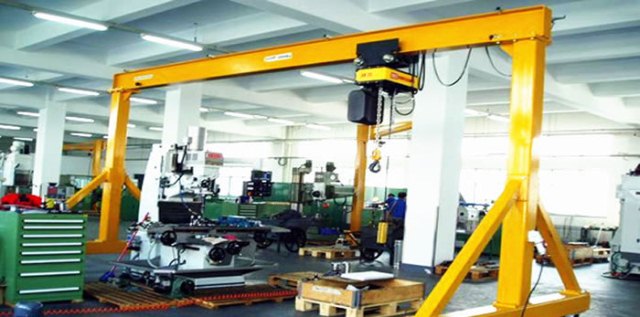
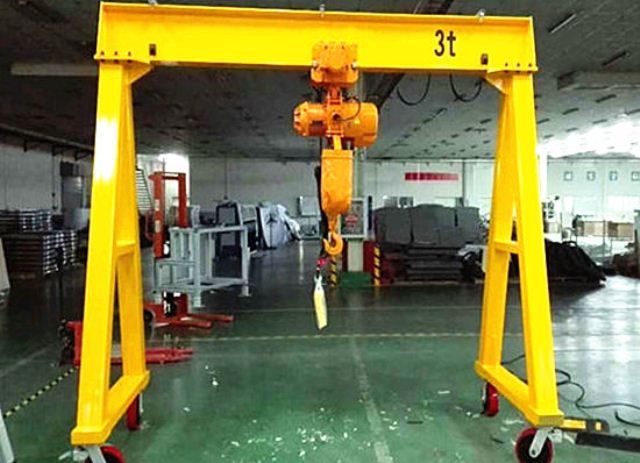
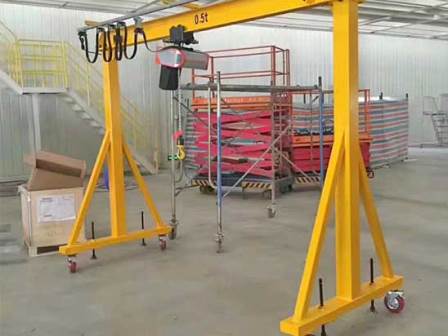
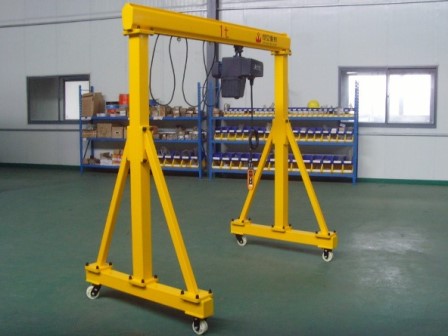
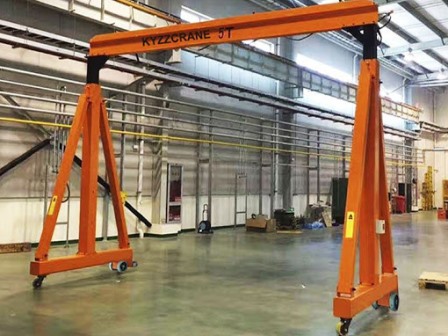
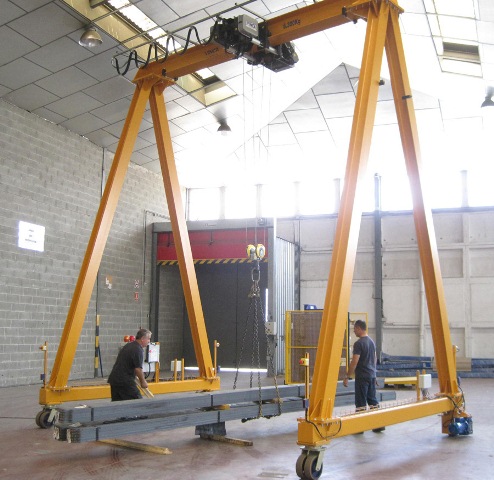
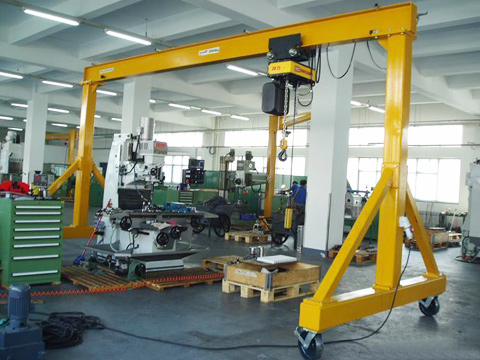
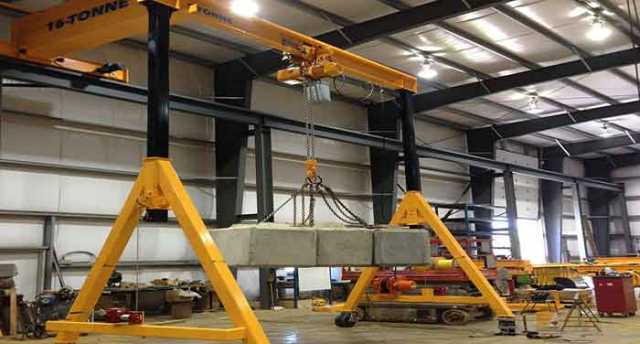
Adjustable Gantry Crane or A-Frame crane: The production of gantry cranes includes capacity and structures with different dimensions according to the requests and needs of the customer.

Adjustable Height Steel Gantry Cranes provide an economical way to lift materials anywhere within a facility. The casters enable you to move the gantry around your work area.

This is a more cost-effective lifting solution for areas of infrequent lifts than a more expensive permanent structure.

heavy duty end frame design with square tubing uprights, knee braces, and channel base provides stable lifting and movement.

ADJUSTABLE GANTRY CRANE: small gantry crane

A-Frame Gantry Crane Design

The gantry cranes are designed and manufactured in different types of structures, in order to ensure customers get the most use out of the place.

Therefore are realized gantry cranes lateral leaps in structures and crane type Half-crane, which have the particularity to move for a part sliding on the floor and the other on the upper part of the building by means of a special head fitted with wheel boxes motorized

The translation is made through a group formed by wheel boxes and longhorns. The wheel boxes are equipped with steel wheels mounted on bearings with direct coupling to a reducer coupled to an electric motor self-braking.

The wheel boxes are equipped with a system that allows adjustment of the axis of translation of the machine, thus allowing to adapt the movement of the crane to the rails and ensuring ease of maintenance.

ADJUSTABLE GANTRY CRANE: small gantry crane

Types of gantry crane

Adjustable Gantry Crane

  • Capacities from 1 ton – 5-ton
  • Spans from 8ft. – 30ft.
  • HUB heights range from 7 ft. (Min.) to 20 ft. (max)
  • Adjustable in 6″ increments to provide different lifting heights
  • Easily moved to any location in a facility
  • Cost-effective for areas with infrequent lifts

Folding Aluminum Gantry Crane

  • Capacities from 1000 lbs. – 4000 lbs.
  • Standard spans up to 20′.
  • Height Under Boom 6-12′
  • Adjustable in 6” increments to provide different lifting heights
  • Collapsible for easy storage
  • Cost-effective for areas with infrequent lifts

Fixed Gantry Crane

  • Capacities from 1 ton – 5-ton
  • Spans from 8ft. – 30ft.
  • Heights from 10ft. – 20ft.
  • Easily moved to any location in a facility
  • Cost-effective for areas with infrequent lifts

Gantry Crane Specification

Moving and lifting heavy materials doesn’t have to involve installing expensive equipment or permanently changing your facility. Gantries are a versatile, portable, economical, and a viable solution to expensive overhead crane

Gantry cranes are assembled and disassembled quickly and easily, making them ideal for use in a rented facility or in multiple work areas.

  • Gantry Cranes are easy to install and relocate.
  • If needed, V-tracks and guide angles simply lag bolt to the existing floor.
  • Gantry Cranes are unsurpassed in design, strength, durability, and quality construction:
  • Precision tolerances and welding ensure component alignment and operational stability.
  • Use standardized quality American I-beams and wide flange beams.
  • All nuts, bolts, and pins are plated for corrosion resistance, and all gantries are painted Yellow Industrial Enamel.
  • Outdoor use options are available, including exterior coatings and stainless steel motors.
  • V-Groove Track Drives: Two motors drive rigid steel V-groove wheels along a fixed path.

Guide Angle Drives: Ideal for installations where the gantry runs along a wall, two motors on one side of the gantry drive trackless polyurethane wheels that are led by a small guide angle; the guide angle simply lags into the floor, at the base of the wall.

Crane Rail Drives: Two motors drive double flange steel wheels along a fixed path. Truly Trackless (Aligning) Drives: These drives are ideal for when you need to keep your shop floor clear of all tracks or angle guides; a selector switch in the control pendant selectively turns each motor on and off to guide the gantry along

ADJUSTABLE GANTRY CRANE: small gantry crane

Aluminum Portable Gantry Cranes

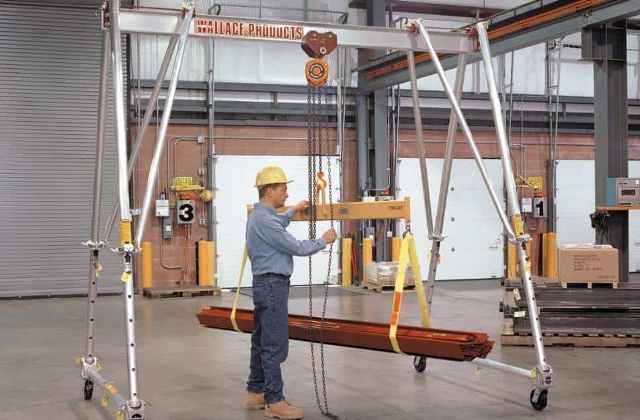
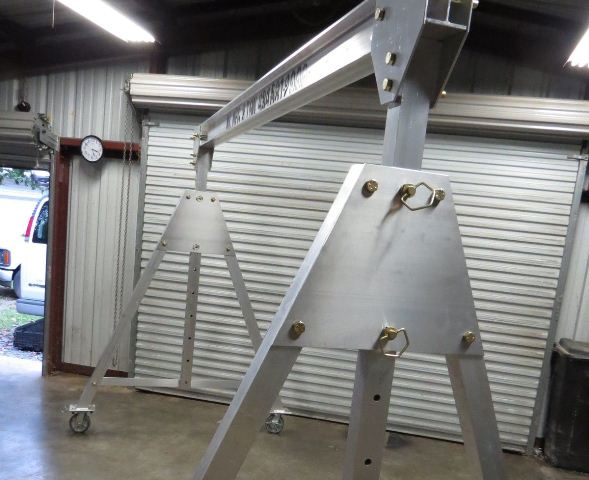
The Adjustable Height Aluminum Gantry Cranes combine lightweight and rigid construction into one unit. The all-aluminum construction of this gantry crane makes it corrosion-resistant and perfect for outdoor use.

  • Adjustable I-beam spans allow for inboard or outboard bracing.
  • Adjustable legs permit crane height adjustments at 6″ increments allowing you to go over equipment and material or under low ceilings and doorways.
  • Legs can be set at different heights where the floor or terrain is uneven – ideal for loading from truck dock to floor or from ground level to mezzanine.
  • Adjustable caster treads make it easy to roll through narrow aisles or doorways and avoid costly disassembly/reassembly.
  • The main legs are equipped with spring-loaded bolts permitting crane height adjustment.
  • Stress-proof steel pins with locking rings provide quick assembly and disassembly.
  • Cranes are durable and made with high-quality heavy gauge steel and aluminum.
  • The optional “Kart Kit” transforms your disassembled crane into a cart which allows for easy transportation and storage.
ADJUSTABLE GANTRY CRANE: small gantry crane

Gantry crane definition

Gantry cranes are typically used in applications that require a mobile crane for multiple functions.

Because of their versatility, gantry cranes are frequently used in many industries. In the maintenance and repair operations industries, this versatility is crucial because the lifting often occurs in multiple places throughout the facility or even at different locations.

  • Gantry cranes are usually manufactured using three main components: an I-beam or wide-flange beam and two support legs in a basic A-frame shape.
  • A gantry crane design differs from a standard jib crane because jib cranes are generally manufactured with one support point at the base of the mast.
  • Unlike gantry cranes that use both gantry legs to support the load. Another important aspect of the gantry design is the mobility provided by attaching caster assemblies to the end of the gantry legs, which allow the gantry to be easily rolled from one location to another.
  • In fact, when using the correct caster assemblies for your specific application, one or two workers can easily push the crane manually.
  • Because gantry cranes can support the load without being permanently mounted to building supports or foundations, gantry cranes are an ideal option for maintenance and repair operations both inside and outside of the facility.

Gantry crane maintenance

  • Although maintenance and repair applications vary for each specific operation, the environment where the crane will be used determines which gantry crane is best for your application.
  • Gantry cranes that will only be used indoors are easy to move virtually anywhere within your facility for quick maintenance and repair.
  • Depending on the capacity and which casters are used, one or two workers can easily push the gantry crane and lift components wherever needed.
  • Indoor gantry cranes typically use polyurethane caster assemblies, but they can also be track mounted for manual or motorized travel over a fixed path and even equipped with Nylacron casters.
  • which are typically used as a cost-effective alternative to motorized travel.
  • However, because most maintenance and repair applications do not use the same exact fixed path, portable or relocatable gantry cranes are often the more ergonomic option.
  • Depending on the needs of the specific application, there are several gantry cranes to choose from for both indoor and outdoor use.
ADJUSTABLE GANTRY CRANE: small gantry crane

Small Gantry crane

Below are two popular applications and the best gantry crane for each operation:

Engine or Electrical Maintenance and Repair

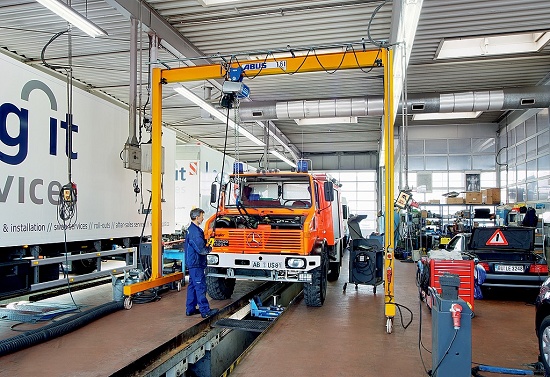
For facilities that perform equipment maintenance and repairs on vehicles and machinery, an adjustable steel gantry crane is a perfect solution.
In these facilities, workers often need to remove heavy components, like an engine or transmission, from inside a vehicle.

Regardless of whether the vehicle is an automobile, rail car, or transit vehicle, lifting components from larger vehicles is extremely difficult without using a material handling solution.

Adjustability and mobility are key for the engine or electrical maintenance and repair industries. Adjustable gantry cranes are often adjustable in three areas: height, span, and tread width.

For example, a transit company that needs to lift heavy components from rail cars can use a three-way adjustable gantry crane because it can be easily maneuvered around the rail car and adjusted to lift from virtually any position.

With their stable design, gantries allow the I-beam to self-center over the load. In fact, depending on the gantry type, the I-beam can even be cantilevered up to four feet past the end of the I-beam.

This cantilever allows the gantry crane to reach into machinery and lift whatever is required. The A-frame leg design also improves stability by minimizing swaying.

ADJUSTABLE GANTRY CRANE: small gantry crane

Adjustable gantry crane for sale

From amazom.com

What is A-frame crane?

What is an A-frame crane?

With a selection of fixed or portable designs, gantry cranes with frame A are a very popular lifting product for light and medium loads. There are A-frame gantry cranes of various sizes, heights, and lights, which can raise a variety of capacities.

What is meant by a gantry crane?

A gantry crane is a crane built atop a gantry, which is a structure used to straddle an object or workspace. The terms gantry crane and overhead crane (or bridge crane) are often used interchangeably, as both types of crane straddle their workload.

What are the hazards of crane lifting?

The three most common hazards involving overhead cranes include electrical hazards, overloading, and materials falling/slipping from overhead hoists.

What are a bridge and gantry crane?

A bridge crane: consists of a bridge beam or beams that are mounted to end carriages at each end. and have one or more hoisting mechanisms arranged to traverse across the bridge.

What is a gantry hoist used for?

Gantry hoists are floor-standing frames that can be used with a mains-powered hoist unit or a battery-powered portable hoist unit.

The most read

Small Gantry Crane for Sale

Small gantry cranes are the perfect solution when heavy-duty lifting equipment that is versatile and easy to set up and use is required.

Portable Aluminum Gantry Crane

Made from lightweight extruded materials, the components of the adjustable height aluminum gantry crane are easily lifted by one person.

More on this story

Harbor Freight Gantry Crane

A gantry crane is a serious purchase. Not only are they expensive, but they are relied upon to lift seriously heavy objects. It is not worth it to try and save a few bucks on a crane of inferior quality.

Mobile Gantry Crane for Sale

Mobile Gantry Cranes in freestanding, portable, fixed height, or adjustable height configurations that are ideal for your warehouse or workshop.

Gantry Crane Price

When buying one of this equipment, use and load considerations are necessary, whether they are for work at home or for a workshop.

Portable Gantry Crane

Portable Gantry Crane – Mobile Gantry Crane: The gantry crane is the best tool to work with loads due to its versatility and lightness

Thanks to the characteristics available, the gantry crane is versatile and can be used in many places and sectors:

  • aeronautical
  • feeding
  • automotive
  • building
  • pharmacist
  • railway
  • industrial
  • engineering
  • logistic
  • chemical
  • services

Crane Lift

It is often necessary to have this type of elevator that help to facilitate the work and lift the load to the operators since on many occasions the tasks are complicated to perform without the help of a machine.

The gantry crane is the best tool to have when working on:

  • repair
  • raise loads
  • they unload vehicles

Thanks to it, it is possible to reduce the weight with which the operator’s load (often it is impossible to lift the load without the help of a machine); In addition, as it is a tool with a very simple assembly, it can be used anywhere.

Gantry crane specification

To adapt to different needs, the company develops different types of gantry cranes: the mini, the standard and the maxi, whose load capacity will always be the same (up to) 1500 kilograms.

Both the height and width are adjustable. That is, with the same load capacity you can choose different crane sizes depending on where you are going to be.

Also, it is possible to extend the weight they support thanks to the duo kit. With this, the load capacity increases up to 3000 kg.

On the other hand, the gantry crane is very easy to transport thanks to its reduced weight: the mini model weighs 115 kg; the standard 130 kg and the maxi 146 kg.

In addition, the transport of this is very simple since all its components can be disassembled and folded easily.

In this way, you can move in any vehicle and anywhere. The gantry crane is approved and CE certified, so it can be used anywhere.

In the same way, thanks to this certificate, it has been verified that the certified load capacity offered by the crane is 1500 kg.

You can include wheels to move the gantry crane without load.

On the other hand, one of the legs can be moved through the horizontal beam, which allows varying the length of said beam, while the leg always remains fixed.

Crane parts

One of the most interesting advantages of gantry crane is the accessories that can be implemented to suit each client.

The duo kit. The connection system of cranes that allows us to join two fixed gantry cranes (of the mini, standard or maxi models) and thus double the load capacity of the tool up to 3,000 kilos. The trolley moves on the two beams.

  • Wall attachment, which makes it possible to anchor one of the ends of the beam to a wall. This allows us to use the crane through a window or a door and thus increase the possibilities of the system.
  • Wheels. The system of wheels allows moving the crane mounted and without load. It also includes a suspension of springs so that the weight is distributed in an equivalent way.
  • Transport trucks, which allows moving a complete gantry crane, quickly and comfortably. It is especially useful for transporting the crane to places where it can not be accessed with a vehicle.

Gantry crane design

The company has also developed a mobile gantry crane. It is a versatile solution for handling needs on large surfaces, as it can be used at different points without the need for assembly/disassembly.

The main advantage is that you can move with or without cargo. As in the fixed gantry crane, one of the legs of the mobile gantry crane can be moved through the horizontal beam, allowing the length of said beam to be varied.

The other leg remains always fixed. Its load capacity is up to 1000 kg and is also available in three sizes: mini, standard and maxi.

Industrial crane

The world of cranes is huge; While many cranes are used in different types of large construction projects, many other cranes are used every day in a variety of industries. With so many different applications, there are also many different types of cranes that are designed for specific tasks and functions.

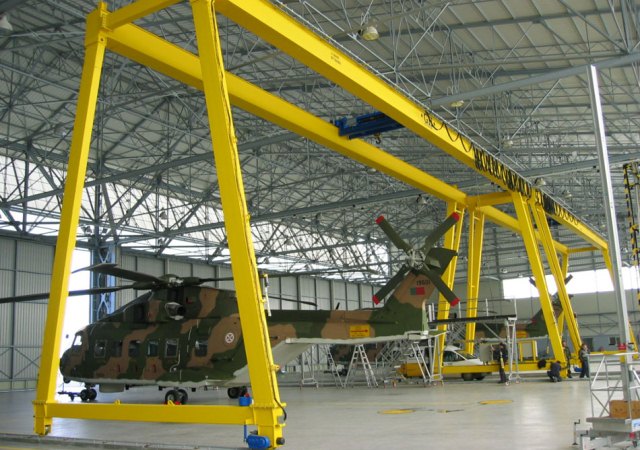
A special type is the gantry crane that lifts the load by means of a forklift installed on a beam. Gantry cranes are commonly found in shipyards or in places like steel mills, where space at height can be a problem.

A gantry crane is similar to a traveling crane, but instead of moving on suspended tracks, the crane uses legs to support the bridge, the car, and the hoist. These legs travel on rails that are embedded in, or on the structure of the floor or ground. A gantry crane is ideal when you need a light and fast discharge crane for applications that require portability and resistance to corrosion.

Hydraulic gantry crane

Gantry crane for car:

The gantry crane or car cranes are flexible and light equipment. The rotating wheels are vital parts for the movement of the equipment. It can also be named as a mobile gantry crane and light gantry crane.
In addition, the gantry crane can be disassembled into several segments to be transported to several places. It is sure that every two parts are connected by means of high strength bolts to guarantee a stable structure.

How to install the truck crane?

  • Put the supports and beams on the ground, and connect them by means of bolts.
  • Use 16 special specification screws to connect the wheels and support columns.
  • Install loading gantry with lifting machine.
  • Adjust the scaffold to the proper location, install the hoist of the crane.

Safety And Protection For Cranes

To obtain benefits, some small crane manufacturers forget to establish protection lanes or security shields that are necessary. Or the steel cable is not in correspondence with the pulleys. These can cause danger during the use of cranes.

Cranes manufacturers have taken many measures to ensure safety and protect operators.

  • All products manufactured to meet safety requirements.
  • Industrial producers strictly obey the standards and specifications.
  • The companies insist on the inspection and daily maintenance of the equipment in order to ensure safe operation.
  • Resolutely eliminate illegal use and unprofessional operation.

Hoist gantry crane

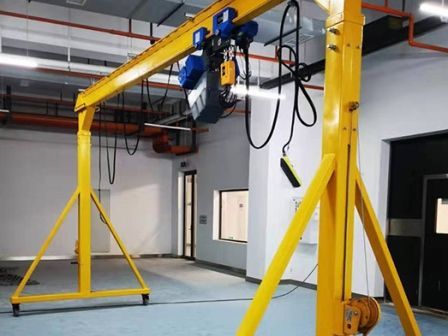
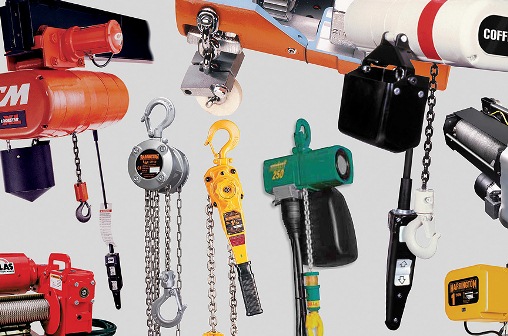
The cranes are accompanied by mechanical or electrical hoists and can be designed to use a chain or cable, and use an electric motor to rotate the gears located inside the hoist that raises or lowers the load.

Electric hoist:

  • Electric hoists are controlled by a push-button or by radio controls.
  • They are usually wired to the electrification system of the crane and use 220v / 440v or 230v / 460v.
  • The lightweight electric hoists can use 110v and plug directly into a standard outlet.
  • Electric hoists can be used in a variety of applications and come in numerous types and configurations, but are limited by the duty cycle and cannot operate continuously.

The electric motor in the hoist requires a period of cooling between uses to ensure that the motor does not overheat.

Mechanical hoist:

  • Ideal for construction, maintenance, automotive and industrial applications.
  • Typical capacities can vary from 1/4 tons to 50 tons
  • Can be attached to a beam or cart and use a vertical pull to produce a vertical lift
  • Spark-resistant design can be achieved with stainless steel or bronze hooks, wheels and chains.

Portable aluminum gantry crane

The Fixed Height Aluminum Gantry Cranes are ideal for a variety of industries including maintenance and production. The aluminum design is easily manageable and can be simply assembled for immediate use.

Fixed height is perfect for working in a permanent or semi-permanent environment where the surrounding seldom changes. Casters provide a smooth way to transfer units when unloaded and if changing locations is needed.

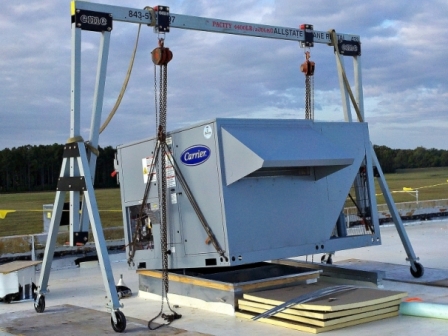
These All-Aluminum Gantries quickly assemble and disassemble, making them popular with contractors who need highly mobile lift equipment that they can take in their service trucks.

Just one or two workers can typically move a disassembled crane up stairways, onto roofs, or in other challenging locations. When on location, the gantry cranes are rapidly assembled, ready to lift, and able to position heavy objects precisely, such as bulky HVAC units.

Adjustable gantry crane

Fixed and Adjustable Height Steel Gantry Cranes provide an economical way to lift materials anywhere in a facility. The wheels enable you to move the gantry around your facility. This is a more cost-effective lifting solution for areas of infrequent lifts than a more expensive permanent structure.

Heavy duty end frame design with square tubing uprights, knee braces, and channel base provide stable lifting and movement.

Why Choose an Adjustable Gantry crane?

  • Ease of Movement
    • The non-marking, durable phenolic casters provide low rolling resistance for easy movement.
    • The phenolic wheels roll smoothly, even over rough floor surfaces, and can withstand water, oil and most other chemicals.
  • Safety
    • The bolted beam to upright connection ensures that the beam does not dislodge.
    • Pre-engineered for use with powered hoists. A factor of 15% of the crane capacity is allowed for the hoist and trolley weight with an additional 25% of the capacity allowed for impact, thus giving maximum capacity use of the crane. Therefore, if it’s rated for 1000#, it can safely lift 1000# without having to worry about hoist weight or impact.
Reasons to Choose adjustable gantry Cranes

The Flexible Solution Adjustable Steel Gantry Crane provides the most flexible lifting solution of any style crane. The adjustable gantry can be moved to almost any location and can be easily adjusted to provide different lifting heights.

  • Ease of Installation: All components are built and assembled with jigs and fixtures which ensure easy installation.
  • Ease of Operation: adjustable gantry cranes were engineered to be easy to position and easy to operate. This helps reduce injuries and increase productivity.
  • Versatility: make a complete line of crane systems to meet your individual needs.
  • Safety: All cranes are pre-engineered for powered hoist operation—with a factor of 15% of the gantry capacity for the combined weight of the hoist and trolley and an additional factor of 25% of the crane capacity for the impact of powered hoists.

Titan gantry crane

This crane has everything that we like to see in a product – Durability, functionality, and affordability.

The Titan is loaded with features that make purchasing it worthwhile. It has four locking casters that give you the option of mobility, while still being able to lock in place when you need to. Another nice feature of this crane is the telescoping boom, which allows you to raise and lower the crane height to give more versatility in lifting options. The last bonus to the Titan is the locking pins, which make adjusting the boom height of the crane a breeze.

One of the attributes we like to see in a product that we review is durability.

It doesn’t make any sense to spend money on a product that is going to need to be replaced shortly. We have a “buy it for life” mentality.

The Titan surely fits that bill, as it is made with all-steel construction. Using high-quality materials is what gives certain Titan models the ability to lift up to two tons. Make sure you check the weight rating of each model, as some are only rated for a half-ton.

When it comes to price, the Titan is one of the most affordable cranes on the market for its quality. The one downside of the crane is that it does not come with any hoisting gear. Although, at this price, you can purchase the crane, and all the necessary gear, and still spend less than you would on an equally capable crane.

What is meant by gantry crane?

What is meant by gantry crane?

A gantry crane is a crane built atop a gantry, which is a structure used to straddle an object or workspace. The terms gantry crane and overhead crane (or bridge crane) are often used interchangeably, as both types of crane straddle their workload.

How much does it cost to put a lift in a garage?

A standard installation should be around or under $500 for a two-post car lifting solution and under $1,000 for a four-post auto lift. As previously noted, in-ground car lifts and installations are by far the most expensive auto lifting option available, sometimes costing as much as $10,000.

How do gantry cranes work?

The bridge can have a single-beam or double-girder structure. Gantry crane moves on a rail crane rails on four undercarriages. The undercarriage is equipped with protective arcs that minimize the chance of damaging to a minimum. The wheels for transportation trolley wheels are reinforced to avoid accidents.

What is an A-frame crane?

With a choice of fixed or portable designs, our A-frame gantry cranes are a very popular lifting product for light and medium-sized loads. A-frame gantry cranes to various sizes, heights, and spans, that can lift a range of capacities.

What is an overhead gantry crane?

A gantry crane is a type of overhead crane with a single or double girder configuration supported by freestanding legs that move on wheels or along a track or rail system. These are typically used for an outdoor application or below an existing overhead bridge crane system.

The most read

Aluminum Gantry Crane

Made from lightweight extruded materials, the components of the adjustable height aluminum gantry crane are easily lifted by one person.

More on this story

Harbor Freight Gantry Crane

A gantry crane is a serious purchase. Not only are they expensive, but they are relied upon to lift seriously heavy objects. It is not worth it to try and save a few bucks on a crane of inferior quality.

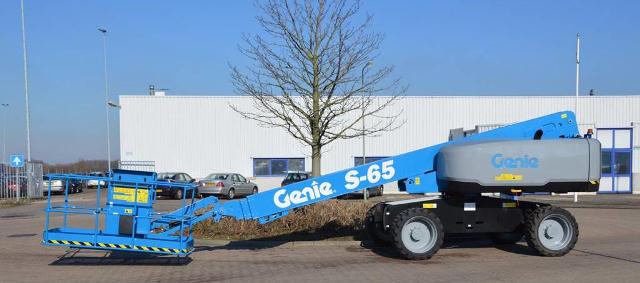
Telescoping Boom Lift

The telescoping system will allow varying the extension of the boom of a crane as required by the work to be done, by linear displacement of the inner sections with respect to the fixed section.

Telescopic system

Traditionally, the telescoping system consisted of as many extension cylinders as the displaceable sections had the boom of the telescopic crane. This gave the crane great flexibility of movements with the counterpart of excessively increasing the weight of the pen itself.

The need for weight reduction gave way to the tendency to design a telescoping system with a single hydraulic cylinder.

This system is based on an “inverted” hydraulic cylinder, which is embedded in the piston rod face to the fixed section of the boom, allowing to vary the length of the boom thanks to auxiliary elements such as bolts and springs, in subsequent sections, it will be accurately detailed the operation of this system.

The variation of the length of the crane treated in this project ranges from an extension of 11 meters, with the boom collected, to its extended position, whose maximum boom length is 38 meters.

This system offers the advantage of allowing a wide variety of configurations in terms of boom extension.

What is an articulated boom lift?

Advantage:

The actuating element, the hydraulic cylinder, only works to extend or pick up the boom. At the moment the crane manipulates any type of load, the hydraulic cylinder is picked up. This produces a greater lightness inside the structure and therefore a lower risk of breakage of internal parts which causes great expenses in their repairs.

  • Saving of material, such as pulleys, cables, and drums necessary for cable telescoping.
  • Free work of elements inside the pen, this is one of the most important factors of the telescoping system.

Straight boom lift

What Is a Straight Telescopic Boom Lift?

Straight telescopic boom lifts, or stick booms, feature a single arm. They’re a common alternative to articulated booms, which can be more difficult to use because of their multiple sections. Stick booms, in comparison, are easier to control because their boom only moves in one direction.

Stick booms have the greatest horizontal reach of all aerial platforms. Because of their high reach, straight telescopic booms have a wider base than other lifts. Base widths are between eight to 10 feet, depending on the model of your straight telescopic boom rental.

Telescopic boom lift rentals are available with various tire options to meet the needs of different job sites. Tire options include rough-terrain tires, which allow your equipment to travel across gravel and shale. Other accessories for our straight telescopic boom rentals include:

  • Light kit
  • Welder ready package
  • Tool tray
  • Tow kit

Straight boom lift rental

Why Rent a Straight Telescopic Boom Lift?

Renting a telescopic boom lift is becoming a more common choice for companies and contractors because of their many versatile uses. Uses for telescopic boom rentals include:

  • Building construction, maintenance or cleaning
  • Electrical, lighting or sign repairs
  • Inspecting bridges
  • Maintaining buildings

Reasons for renting one of these lifts instead of buying include:

  • Temporary projects that require reaching extreme heights
  • A limited number of jobs that require working in tight spaces
  • Seasonal tasks where a telescopic boom lift is needed

Some small and large businesses also choose to rent because they can lower their maintenance and storage costs. Renting is a smart decision when you rarely use a straight telescopic boom lift — for example, if you only need it seasonally or for a single project.

Articulated boom lift

Parts of the telescopic system:

Telescoping cylinder

It treats of a hydraulic cylinder of a double effect of 11 meters of length and 10 meters of career.

The protruding end of the rod is welded to the boom at the rear of section 1 and it is the cylinder liner that produces the necessary displacement to be able to extend or pick up the boom.

It consists of a piston attached to the other end of the rod, which together with the sealing elements, make it possible to guarantee the pressure difference as well as providing a contact surface through which to produce enough force to move the system.

The feeding of the cylinder will be done through ducts located inside the stem so that one duct is in the part between the end of the piston and the jacket and the other duct is between the beginning of the piston and the body of telescoping.

The justification for this type of system feeding lies in the ease of having fixed ducts.

If the feeding was done through ducts connected to the jacket on the outside, there would be a need to provide the system with an element that allows the length of the ducts to be varied, since the sleeve is in continuous movement.

Sealing elements

Piston guides: It is an element used to avoid the contact between metals produced between the piston and the inner part of the cylinder liner. In addition, this element is responsible for absorbing the stress produced by radial loads.

Piston joints: They are responsible for ensuring the pressure difference.

Scrapers: They are responsible for excluding dirt, foreign particles and dust from the system. They avoid scratching as well as prolonging the life of the joints.

Telescoping body

The telescoped body is an element welded to the hydraulic cylinder liner, whose function is to hold the clamps and hydraulic cylinders of short stroke.

It is made of F-114 steel and has dimensions of 360 millimeters in height, 350 millimeters in width and 200 millimeters in thickness.

It contains a hole through which the stem will pass, which serves as a guide to travel. The housing of the cylinders is given by two vertical holes in the top and one horizontal on the side of the piece.

These holes have two different diameters forming a step. This will allow connecting the short stroke hydraulic cylinders to the telescoping body using M7 screws.

This piece has some friction sheets that will allow it to easily slide between the sections.

Unlocking clamps

Elements that will be fixed to the hydraulic cylinders of vertical displacement so that they will move in solidarity with them, in order to be able to hook the lower part of the anchor bolt to later, make the opposite route to move the bolt and thus leave the section free that you want to telescope.

Short stroke hydraulic cylinders

There will be four double-effect cylinders placed inside the telescoping body.

Two of them will be located at the top of this and will perform a vertical displacement, allowing the movement of the dive pliers.

The effort that must be able to overcome in the return movement must be greater than the resistant force that the spring of the anchor bolt performs due to the fact of being compressed.

The other two cylinders will be located on the sides of the telescoping body and will perform a horizontal displacement. They will be attached to the drag bolts, which will move in solidarity with the movement of these cylinders.

Bolts

Two types of bolts will be distinguished:

Drag pins: They will make a horizontal movement to enter inside some cavities arranged in the rear covers of the sections and will be responsible for dragging them. In this way, the desired displacement will be achieved.

Anchor bolts: These bolts allow anchoring between two consecutive sections, preventing any movement between them. They will be housed in the holes made in the back cover of each section.

These elements are made up of two parts:

The upper body, whose design allows to hold, on the one hand, the spring that will produce the necessary force to fix it in its position and, on the other, the necessary diameter to produce the effort of supporting both sections. This part has a thread on its lower end that will allow the assembly with the lower body.

The lower body is designed so that there is a rod finished in a larger diameter from where the clips can be fitted to produce the displacement. It will have another projection that will act as a stop to prevent the bolt from leaving its position. At its upper end, it consists of a threaded projection where it can be assembled with the upper body.

Springs

These elements perform a vital function in the operation of the crane since they are responsible for keeping the bolts fixed in their position thus ensuring a perfect interlocking operation.

They are compression springs so that their operation is based on making the effort in the opposite direction from where the load is received.

Therefore, its function is based on producing an effort in the opposite direction to the weight of the bolt and of the divestment pliers. In this way, when the clamps release the bolt, the spring will fix it in position.

It is located between the inner part of the rear cover and the shoulder that has the upper body of the bolt. In this way, when the tweezers pull the bolt to unlock it, the shoulder produces a compression force to the spring, which rests on the bottom of the back cover.

Hydraulic boom lift

What is the most versatile machine for construction?

Then you’re in need of a piece of equipment with a hydraulic boom and a platform at the end to raise and lower people. Engine-powered boom lifts, give you the reach and power necessary for the best outdoor performance.

Boom lift specifications vary widely, so it’s important to understand the needs of a particular job before spacing out your equipment.

Both articulating boom lifts and telescopic boom lifts can tackle tough jobs. A telescopic boom lets you reach farther with more capacity, putting you right where you need to be as simple and efficient as possible. But, if the job requires you to get up and over objects, you need an articulating boom lift.

Articulating boom platform

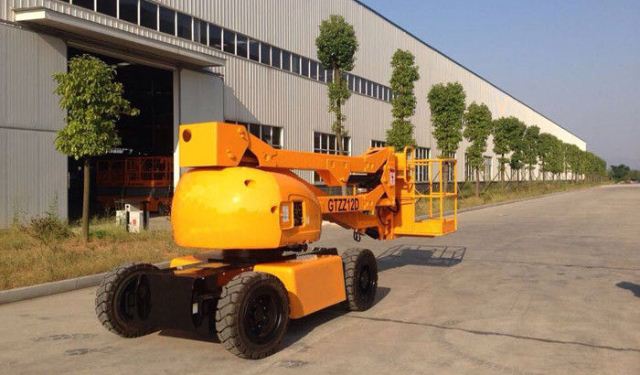
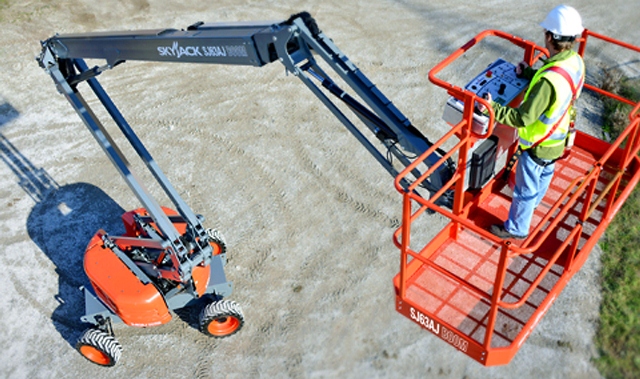
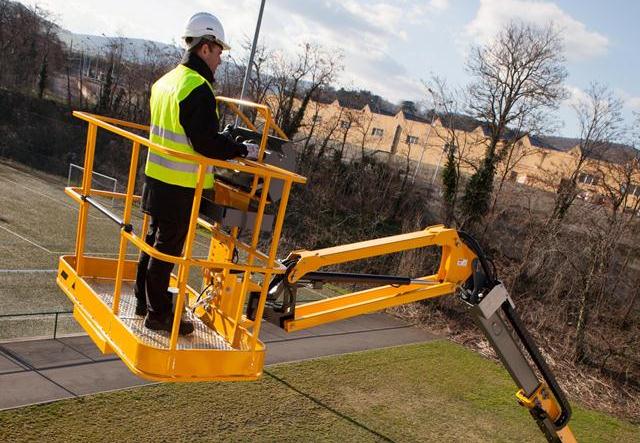
Articulating booms are aerial work platforms with multiple boom sections that hinge — or “articulate” — allowing the operator to gain access to work areas over obstacles and barriers. These versatile machines are perfect for tight access and hard-to-reach areas.

Articulating Boom Lift Details:

  • Great for confined work areas.
  • Very maneuverable – good for moving over obstacles.
  • Good for working indoors.
  • Two functioning joints add working length to this vehicle.
  • Can be positioned in a variety of ways.

Platform boom lift

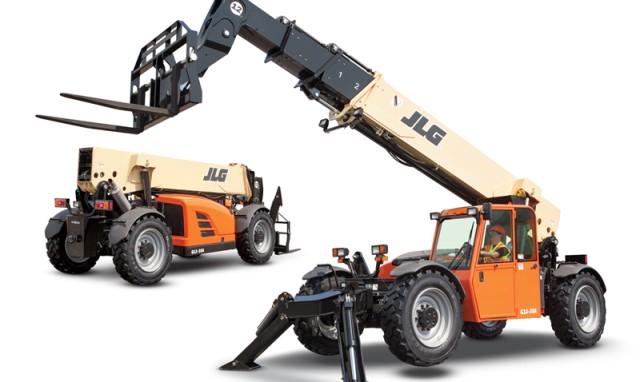
A platform boom is a forklift with superpowers. If you cross-bred a small crane, with a forklift, you would get a telescopic boom. These machines look a lot like a forklift, but they have booms attached to them that can extend out and up. Platform booms are useful to have if you are in an industry where you work on roofs, or need materials to be lifted to high positions like when you are stacking items.

Platform Boom Details:

  • Capable of performing many jobs.
  • Good for smaller job sites.
  • Ideal for working from a distance.
  • Great for increasing your speed and rate of production.
  • Good for working on rough terrain.

What is a boom lift?

What is a boom lift?

A boom lift is essentially a type of aerial work platform used by personnel to reach high places. A basic boom lift consists of a platform, or bucket, with a long, jointed crane run by a hydraulic lift system and attached to a grounded base.

What is an articulated boom lift?

Articulating booms are aerial work platforms with multiple boom sections that hinge — or “articulate” — allowing the operator to gain access to work areas over obstacles and barriers. These versatile machines are perfect for tight access and hard-to-reach areas.
Through a combination of simple machines, mobile cranes are able to gain mechanical advantage to lift heavy objects.

How much does it cost to rent a boom lift for a day?

A 30-foot articulating electric boom lift rents for about $250 per day, $1,000 per week and more than $2,000 for four weeks. A 45-foot telescopic 4-wheel drive model costs about $300 per day, $1,100 per week and $2,500 for four weeks.

Is a boom lift an aerial lift?

a scissor lift is a mobile scaffold for which the platform only moves vertically. An aerial lift is any vehicle-mounted work platform that can move vertically and/or horizontally.

Are boom lifts safe?

In rare cases, boom lifts can tip over, much like scissor lifts, but with a greater reach, the boom lift could cause catastrophic damage. To be safe, make sure the area is completely clear.

What is the difference between a scissor lift and a boom lift?

There are two distinct types of access platforms, usually called scissor lifts and boom lifts (or sometimes cherry pickers). The difference between the two being that a scissor lift can usually only move vertically, whereas a boom lift has an outreach, to work above areas not accessible from directly below.

Can you use a boom lift in the rain?

The electric scissor lift platform is not allowed to use in open area in rainy day. If it was raining when using a mobile scissor lift platform outdoor, you should do the protection of pumping stations and electrical lines in advance. Negligence of detail will cause damage to the hydraulic platform lift.

More on this story

The most read

Mobile Crane Parts

Mobile Crane Parts: How does it work? types of industrial cranes, mobile, mobile, fixed, hoist, pulleys, hook. Chassis camion, Crane rotating mechanism

Biggest Crane

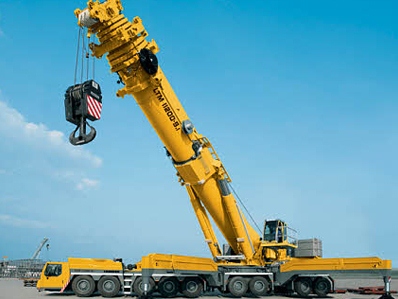
Giant Crane: Worldwide record of telescopic cranes, lifting of electric turbines, bridges, metal structures, LIEBHERR 11200

Telescopic Crane Boom

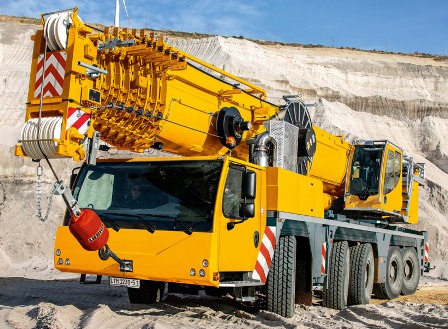
Telescopic Crane Boom: Heavy cranes, such as telescopic cranes, can be mounted on top of a truck and then driven to those places where goods and loads need to be moved.

Telescopic Crane Boom

Telescopic crane parts

The main difference between a telescopic crane and other conventional cranes is that the former has a hollow boom that contains several tubes mounted on one side and another.

A hydraulic mechanism allows the movement of elongation and refraction of the beam.

Supporting chassis

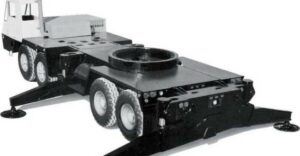
Truck in charge of transporting the crane depends on each model. Support of the crane, the cabin, the pen; transports all the weight, in the van placed the stabilizers and the superstructure, thus relieving the efforts.

Orientation crown

To maneuver the load, the boom must be able to move to the right and to the left, as well as up and down.

Beneath the operator’s cab is a Rotex gear on a rotating platform bearing that rotates at 2 revolutions per minute (rpm).

It is powered by a bidirectional hydraulic motor mounted in the cab and housed in a metal cover to prevent injury.

The rotation is controlled by a pedal hydraulic in the cabin.

Telescopic Boom

The most recognizable part of any crane is the boom. This is the steel arm of the crane that holds the load.

Rising just behind the operator’s cab, the boom is the essential piece of a crane, allowing the machine to lift loads to several dozen feet. Most hydraulic truck cranes have a boom that has several telescopic sections

Some arms are equipped with a feather, which is the lattice structure attached to the end of the arm. As the load is lifted, the sections extend to the desired height.

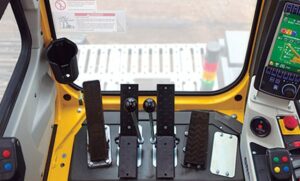
Control cabin

All this equipment is controlled by the operator inside the cabin, which is located at the top of the deck.

Crane operators use various control mechanisms to raise and lower the boom, turn the boom and boom, wind and roll the winch and control other peripheral equipment.

The hydraulic crane has two basic types of controls to maneuver a load:

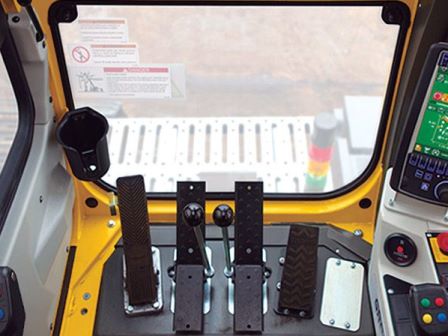
Joysticks: There are two joysticks in the cabin. One controls the movement from left to right of the arm and the other controls the movement back and forth.

Pedals: These pedals are responsible for retracting and extending the telescopic sections of the boom. They also control the amount of pressure generated by the pump.

Lifting equipment

The joysticks and pedals are connected to hydraulic hoses that connect several hydraulic cylinders to the spool valves.

The spool valve is connected to the hydraulic pump through a third hose that is placed between the two hoses that go from the spool valve to the hydraulic piston.

When a joystick is pushed in one direction, the valve closes one of the hydraulic hoses that lead to the ram and opens the other.

The way the joystick is pushed determines whether the piston in the hydraulic ram slides in or out.

The reel valve system allows the crane operator to control the hydraulic pistons.

Crane stabilizer

Hydraulic truck cranes are used to lift heavy loads at high altitudes, and it is important that the truck is completely stable during the lifting operation.

The tires do not offer the necessary stability, so the truck uses stabilizers that act as scales to prevent the crane from leaning too far to one side or the other.

The stabilizers use the hydraulic system to lift the entire truck, the tires and everything from the ground.

The stabilizers are formed by the beam, which is the leg of the stabilizer, and the pad, which is the foot.

Sometimes, “floats” are placed under the platform to dissipate the strength of the crane and the load on the concrete or pavement. Floats are usually wooden boards that line up to create a base that is larger than the pad.

It consists of four extensible feet with its respective hydraulic system. The stabilizers are only one mechanism used to balance the crane during lifting operations.

Crane Counterweight

There are also removable counterweights that can be placed on the back of the crane at the bottom of the cab.

These counterweights prevent the crane from tilting forward during the operation.

The amount of counterweight needed for a particular lift is determined by the weight of the load, the radius of the boom and the angle of the boom during the operation.

Counterweights are only used during lifts; They have to be removed before the truck can be driven.

Steel cable lines

Reinforced steel cable lines run from a winch just behind the operator’s cab, extending up and over the boom and arm.

The lines go up the pen and adhere to a goalball; It keeps the lines taut when there is no load on the hook.

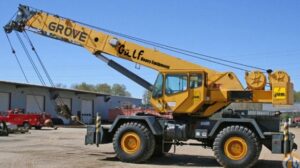
Who makes Grove cranes?

Grove was founded in 1947 and is one of the world’s leading producers of mobile hydraulic cranes with manufacturing facilities in Shady Grove, Pennsylvania, and Wilhelmshaven, Germany.

How do mobile cranes work?

Through a combination of simple machines, mobile cranes are able to gain mechanical advantage to lift heavy objects. The mast (the tall vertical part of a crane) is supported by a large, heavy base, which helps offset the weight the crane holds at higher heights.

At the top of the mast, there is a slewing unit, consisting of gear and motor, which allows the crane to rotate. The slewing unit also contains the jib (a long horizontal working arm) that uses a trolley to help carry the load, as well as a shorter machinery arm that contains the crane’s motor, along with large concrete counterweights to help balance the load. In addition to these simple machines, mobile cranes also utilize a pulley system, which helps the crane lift heavier loads with minimal force.

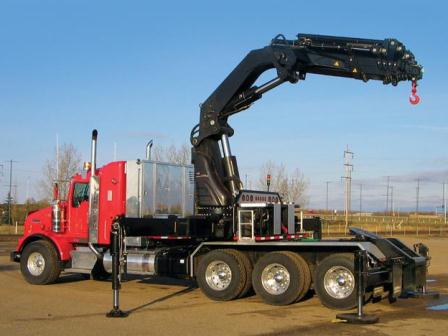
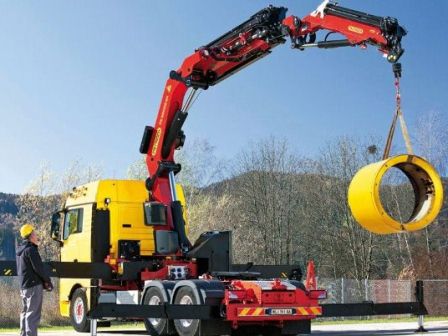
What is a Knuckle Boom Crane?

Knuckle boom cranes are an amazing piece of engineering technology. Also called a loader crane, articulating crane, and a picker crane, the knuckle boom crane has changed the way people load and offload in a variety of industries. 
It looks similar to the traditional straight boom crane, but the knuckle boom crane has two booms; the main boom and an outer boom. These two booms have a knuckle between them, which allows more options for the loader crane operator.

More on this story

The most read

Mobile Crane Parts

Mobile Crane Parts: How does it work? types of industrial cranes, mobile, mobile, fixed, hoist, pulleys, hook. Chassis camion, Crane rotating mechanism

Knuckle Boom Truck

The boom of the knuckle crane is a device designed to lift and distribute loads suspended from a hook. They are equipped with a means of propulsion able to produce the necessary movement to enable their movement on public roads and land.

Warehouse Layout Strategy

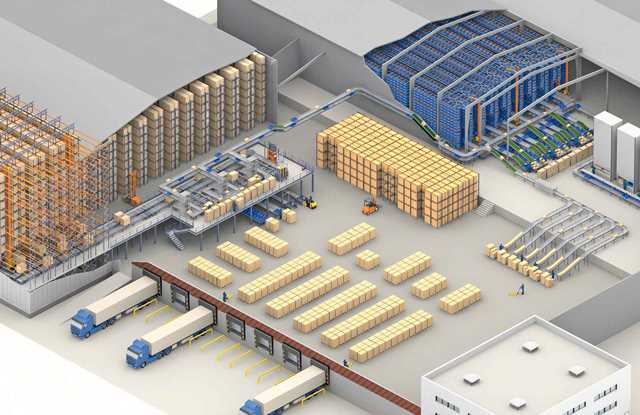
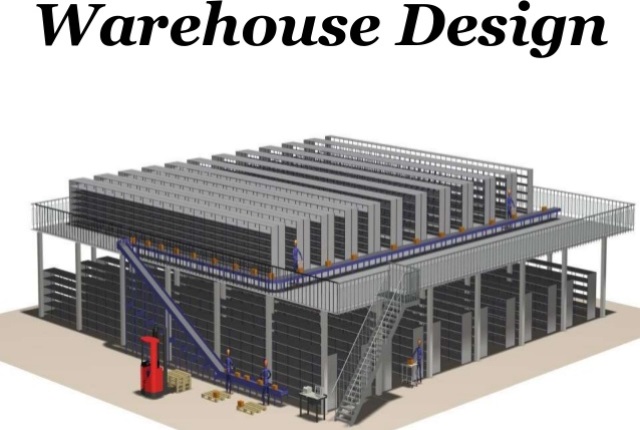
Warehouse layouts strategy, due to their influence on total warehousing costs, are of interest to the theory and practice of warehouse design.

While the layout problem of the unit-load storage area of conventional warehouses has quite a long history, the layout of conventional systems with manual order-picking from multiple aisles has been the topic of a number of research papers only in the previous decade.

The research has resulted, among other things, in various strategies for optimal layout design. Moreover, some new innovative layouts for storage areas have been proposed recently.

These layouts result in a reduced travel distance needed to store or retrieve a single pallet, thus improving the efficiency in the storage area.

Warehouse Layout Strategy

Warehouse layout optimization

However, the question of whether these layouts could perform better than traditional layouts in manual order-picking operations has remained unanswered.

This provides a short overview of optimal traditional layouts of the storage and order-picking area as well as new innovative storage area layouts, followed by results of the analysis of order-picking in these new innovative layouts and relevant conclusions.

The importance of the warehouse in the supply chain network is increasing. The competitiveness of a company is directly influenced by its ability to achieve efficiency in terms of a high rate of on-time deliveries without defects in its supply chain network.

Warehouse layout best practices

Supply chain efficiency and best practices are to a large extent determined in its nodes. In today’s business climate there is a trend towards more product variety and shorter response times.

This puts increasing pressure on warehouse performance in terms of storing articles and the ability to assemble customer orders. The warehouse performance is largely determined during the design phase of the warehouse layout.

It is acknowledged that warehouse layout design is a highly complex task primarily because the warehouse performance affects, and is affected by, other functions within a company’s ability to operate adequately as well as ensure the company’s competitiveness.

Warehouse Layout Strategy

Warehousing and storage services

For this reason, warehouse services have many stakeholders. Additionally, it may be the only view that end customers have of the company’s operational capabilities. Many aspects need to be considered when designing a warehouse both within the warehouse operations and the company’s supply chain network as a whole.

These aspects consider both the nature of the business in terms of customer requirements and demand patterns such as seasonality as well as the characteristics and requirements of the product.

The degree of complexity of warehouse design is largely determined by the number of activities and parallel processes that are performed in the warehouse.

Warehouse layout design example

Warehouse design is fixed in nature as it is often expensive to change after implementation.

Both due to high investment costs in new facilities, racks and equipment, and due to opportunity costs for downtime in operations.

A warehouse normally operates on an everyday basis. A redesign that requires shut down of departments in the warehouse is not an option for many companies.

High costs derived from lost sales, use of a third-party logistics provider or lost production rate can cost more than the warehouse investment itself.

For this reason, it is important for companies that are acting in volatile or fast-moving industries or for some other reason are expecting considerable changes in demand to consider flexibility in their design process.

Factors to consider in warehouse layout

This is to ensure a successful warehouse design solution that is aligned with the company strategy for the life span of the investment.

The requirements and expectations for the warehouses’ abilities are changing.

Is it old-fashioned to see storage as a non-value-adding activity?

Trends in supply chain management such as supply chain integration and supply chain postponement have led to that more value-adding activities are performed within warehouses.

Besides storing and distribution other activities such as repacking and final assembly of products have been introduced to the warehousing service portfolio.

Warehouse design considerations

To support the design process of warehouses, researchers have formed frameworks. Most frameworks reviewed are based on literature reviews and are yet to be tested in practice while others are developed with the help of experienced practitioners and relate loosely to academia.

The availability of frameworks covering the whole design process, from purpose identification to evaluation, is limited in current research and there is a need for further research that connects practice with theory.

However, problems related to warehouse layout design are seldom well-defined and cannot be reduced to multiple isolated sub-problems.

This means that warehouse designers need a mixture of creativity and analytical skills to handle the complex interactions between warehouse activities, future demand, and space requirements.

Questions to ask about warehouse operations

Designing a warehouse is an intricate process with many trade-off decisions to be made between conflicting objectives. The complexity of the process is further increased by the high number of feasible design solutions.

Warehouse design is fixed in nature as the investment cost for the redesign is considerable.

To ensure satisfying warehousing performance during the life span of the warehouse it is important to take the corporate strategy and growth expectations into consideration during the design phase.

The purpose of the study is to develop an aligned warehouse design solution for current and future operations considering a company’s growth expectations. The literature review made it evident that a method to generate a layout design that incorporates future operations in an adequate way is needed.

The following research questions are investigated and answered in the thesis:

What aspects should be considered when designing a warehouse layout to ensure that it is aligned with the company’s growth expectations?

How can a warehouse layout design be generated that ensures flexibility and ability to handle future warehouse operations?

More on this story

Types of Racks in Warehouse

Racking is much more than just steel. Racking is the key to optimum throughput efficiency because the efficiency of the entire material flow is optimized only through the requirement-specific design of a racking system.

Storage Pallet Racking

Every company faces unique situations when considering its warehouse storage and design options.