All posts by Loganx

Professional Web Writer | Motor Enthusiast | Content Creator | Logan is a dedicated and skilled web writer, passionate about engines and machines and with a talent for creating engaging and informative content. She specializes in writing about a diverse range of topics including construction, forklifts, heavy equipment, excavators, etc. SEO Optimization: Proficient in SEO best practices, ensuring high visibility and engagement for all published content.

Crane Lifting Hazards and Control measures – Mobile crane hazards

Mobile crane safety: This article focuses on hazards, including where they might be found in different workplaces. We also provide you with a range of further resources to make your risk assessment process as smooth as possible.

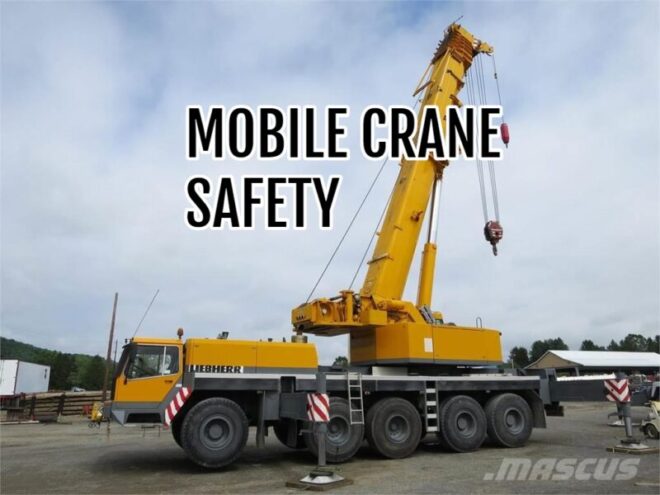
Mobile Crane Safety

Crane Lifting hazards and control measures

Mobile crane safety checklist, Types of Hazards in the Workplace:

What Are the Most Common Hazards in the Workplace? The words ‘risk’ and ‘hazard’ are often used interchangeably. However, if you are responsible for managing health and safety in your workplace, it’s important that you understand the difference between them.

Mobile crane safety hazards

Mobile cranes are incredible pieces of heavy machinery but they have a limit to the amount of damage they take from mother nature. Cranes have a maximum design wind speed for safe operation; once the wind exceeds that limit the crane must be taken out of service. It is important to remember that wind speed increases with height.

Hoisting and lifting operations in windy conditions can cause load swinging and rotating that may not only pose a danger to the riggers but also cause the crane to overload and crash. It is important to assess the load size and shape to determine whether lifting it in windy conditions can pose any danger.

Mobile crane hazards and control

Operational potential hazards & risk controls – mobile crane hazards and control:

  • Hazards – starting the engine
    • Risk controls & general precautions
  • A1. Carbon monoxide poisoning from the exhaust fumes when the engine is running indoors.
    • If the engine must be started indoors, open all doors and windows to ensure good ventilation. If necessary connect an additional pipe to the exhaust pipe and expel the exhaust gases to the outside.
  • A2. Fire from spills.
    • Keep the engine and surroundings clean. Do not leave tools, rags, or anything else in the engine compartment. After inspection and maintenance wipe off any spilled oil or fuel. Check that flammable material is not scattered about or piled up near the engine.
  • A3. Accidental movement of the crane.
    • Only start the engine when seated in the operator’s seat.
  • A4. Operating the crane when it is being serviced or repaired.
    • Always attach warning tags on the control levers of the machine when it is being serviced or repaired. Isolate the machine where possible.
  • A5. Collisions with people and objects
    • Check for people and objects near the crane before you start the engine. Concentrate on the job and always be aware of people and equipment approaching the crane. Erect temporary barriers around the crane if necessary.
  • A6. Unintended movement of the crane on startup.
    • Before starting the engine check that all levers, pedals, and switches are in their neutral or OFF positions.
Mobile crane lifting hazards and control measures

Mobile crane lifting hazards and control measures

  • Hazards when operating the crane
    • Risk controls & general precautions
  • B1. Structural failure or tip-over of the crane during operation.
    • Do not exceed the lifting capacity of the crane.
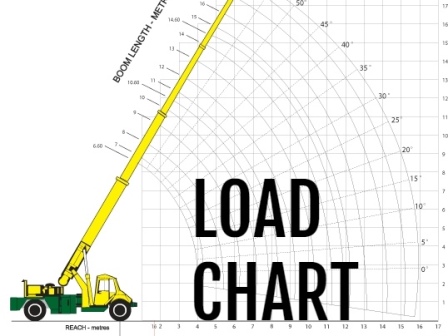
    • If unsure of the lifting capacity, always check the rated lifting capacity chart. Lifting capacity varies with the boom length and working radius.
    • Always check that all safety devices and warning systems are functioning properly.
    • Do not operate a crane if any of the safety devices or warning systems are faulty.
  • B2. Collision from swinging load or reduced stability of the crane.
    • Avoid sudden movement or violent operation of the crane.
    • Operate the levers and pedals smoothly. Start, accelerate, decelerate, articulate, and stop the crane smoothly and securely.
    • When lifting long loads tie a guide rope to each end of the load. This will prevent the load from swinging whilst it is being lifted.
    • Compound operations, such as combining winch hoisting or lowering, articulating, luffing, and telescoping will be slower than individual operations.
    • When switching from compound to single operation, work the controls slowly and smoothly with no sudden change in speed or direction.
  • B3. Crane damage and tip over from using counterweights that are not specified.
    • Only use counterweights supplied by the manufacturer.
    • Incorrect counterweights may subject the crane to unreasonable strain and damage it, or decrease the stability of the crane.
    • For machines with variable counterweight, ensure the selection on the crane computer is correct before commencing lifting operations. Always refer to the correct load chart.
    • Follow any warning provided in this manual or by the crane computer.

Mobile crane safety tips

  • Hazards – starting the engine
    • Risk controls & general precautions
  • B4. Collision if the operator is not concentrating on the job.
    • Do not operate the crane if you are tired or cannot concentrate on the job.
    • Always be alert and watch that the boom or the suspended load does not collide with people or buildings and the load does not collide with the boom.
  • B5. Operating the crane by reaching in through the door or window. (The operator is not in full control of the crane and could cause the crane to collide with people, buildings, and other objects).
    • B5. Only operate the crane while seated in the operator’s seat.
  • B6. Dropping off the load from an unattended crane.
    • B6. Never leave a suspended load on an unattended crane.
    • When leaving the crane, always lower the load to the ground, switch off the engine, lock the crane and take the keys with you.

Mobile crane load chart

  • B7. Dropping of load, damage, or tip-over of the crane due to overloading or unstable load.
    • Carry out the following checks before lifting a load:
      • a. Check that the total weight of the load (including the weight of slings, hook, and attachments) is below the rated capacity of the crane.
      • b. Check that the number of parts of the line on the winch rope is a standard number according to the rated lifting capacity.
      • c. Check that the slings are properly positioned to lift the load above its center of gravity.
      • d. Check that the winch rope is hanging vertically.
  • When the load just leaves the ground pause until it stops swinging. Confirm that the load is stable before continuing to hoist.
Mobile Crane Safety

Crane lifting safety procedure

Safe work procedure for lifting operation using mobile crane:

  • Hazards – reduced stability
    • Risk controls & general precautions
  • B8. Dropping off the load from insecure slings or hooks.
    • To prevent the load from falling off or slipping out of the slings, pay attention to the following points when arranging the sling:
      • The slings or chains should be of the right capacity and in good condition.
      • Arrange the slings so that they do not get tangled with each other.
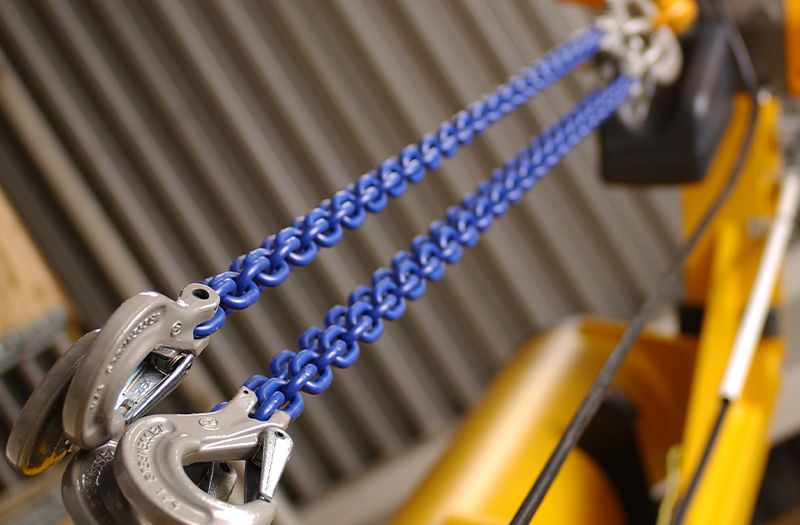
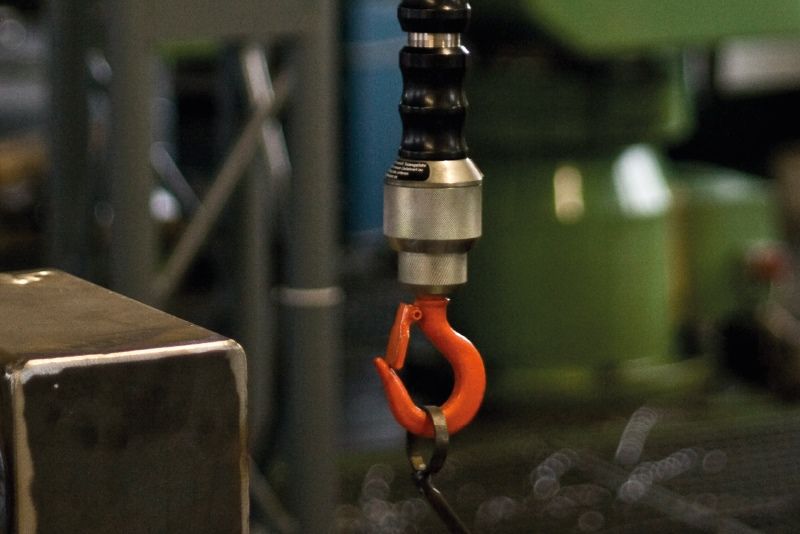
      • The hook is fitted with a retainer to prevent the slings from slipping out. Check that the hook is in good condition and the retainer is operating correctly.
      • Place a protector (some soft material) to prevent the rope from damage where it comes into contact with the corner of the load, and elsewhere where the sling is prone to damage.
Mobile crane lifting hazards and control measures

Crane safety devices

Mobile crane safety devices comprise load moment limiter, turntable lock pin, boom backstop, hoist limit switch, anemometer, level gauge, hydraulic overflow valve, counterbalance valve, two-way hydraulic lock, stewing warning lamp and travel warning lamp, etc.

  • B9. Damage to the crane or reduced stability when working with a heavy load and long boom.
    • When lifting a load the boom flexes and increases the working radius.
    • This is more noticeable with a very heavy load or long boom.
    • Allow an extra margin below the rated lifting capacity to compensate for the increased working radius.
  • B10. Overload due to the increased flexure of the boom when the load is lifted suddenly.
    • Lift the load off the ground carefully.
    • Hoist the load vertically and pause briefly when the load is just off the ground to confirm the sling and that there is no overload.
    • Then resume hoisting.
  • B11 Damage to the crane or reduced stability if the load is lifted off the ground by luffing or extending the boom.
    • Never lift the load off the ground by luffing or extending the boom.
    • Wait until the load is just off the ground before luffing or extending the boom.
  • B12 Damage or injury caused by personnel under the load when articulating.
    • Before moving the load sideways check that it is safe to do so.
    • The path of the load or crane should be clear of people or obstructions.
  • B13 Collision or dropping of load on people.
    • Do not move the suspended load above people’s heads.
Mobile Crane Safety

Mobile crane stability

  • B14 Damage or injury caused by loss of stability due to operation on sloping ground
    • Read and understand the Operators manual regarding the operation on sloping ground. The rated capacity of the machine should be reduced when lifting on or traversing sloping/uneven / out of level terrain.
      • Do not operate the machine on the sloping ground outside the limits described in this manual and the machine load chart.
      • Plan lifts carefully when operating on uneven terrain.
      • Operators must be able to perform a manual calculation to reduce the safe working load of the machine if a lift plan is unavailable.
      • Some Pick & Carry cranes may be fitted with crane computers that can perform a reduction in a rated capacity. Refer to the operator’s manual to check if this function is available on the machine in use
  • B15 Collision with obstacles from the entanglement of wire rope during hoisting or articulating.
    • If the wire rope becomes entangled with an obstacle, carefully disentangle it without further hoisting or slewing. Place the load back on the ground and check that the wire rope is not damaged before resuming.

Crane overload protection

  • B16 Overload and tip-over of the crane by sudden raising or lowering of the boom.
    • Lower the load to the ground using the winch. Avoid sudden raising and lowering of the boom as it makes the crane prone to tipping over.
  • B17 People falling from a height.
    • Only lift people using a Terex-approved man basket. A safety harness must be worn. Different states and countries have different safety regulations and laws. Always observe the laws of the state or country you are in.
  • B18 Damage to the boom or tip-over of the crane if the load is not lifted from a position above its center of gravity.
    • Never drag a load sideways, hoist it diagonally or drag it towards the crane. Luffing or hoisting to drag the load sideways or lift it diagonally subjects the crane to forces it was not designed for. These additional forces will damage the boom or cause the crane to tip over. Follow the signaler and lift the load vertically.

Crane operation safety rules

  • B19 Impact of falling objects during an earthquake.
    • If there is an earthquake when the crane is operating, the vibrations feel greater and more alarming from the elevated position of the operator’s seat. Stop work immediately and respond to ground deformation or falling objects as follows:
    • a. Lower the load to a safe place.
    • b. Articulate away from the danger of falling or toppling objects and then lower the boom.
    • c. Stop the engine.
    • d. To avoid being thrown out of the cab (by the vibrations caused by the earthquake) fix yourself in position with your hands and feet until the earthquake stops. If the door is open close it and secures it.
    • To resume work after the earthquake has ceased and there is no likelihood of further tremors, thoroughly check the ground conditions. Look for damage to any part of the crane, check the operation of the crane computer, and check hooks and slings for any abnormalities. Inspect the load for signs of movement or damage.
  • B20 Cabin noise when operating the crane. (An operator subjected to high noise levels over a prolonged period of time can become temporarily or permanently deaf)
    • Refer to the decibels ratings on the noise certificate in the Operator’s Manual, and Occupational Health and Safety guidelines (for noise levels and the time an operator can be safely subjected to these noise levels without adversely affecting his or her health) in your state or country.
    • If the noise levels and period of exposure are high, use appropriate hearing protection.

What are the most common types of crane accidents?

What are the most common types of crane accidents?

With employees working from heights, using heavy machinery, and being exposed to toxic materials, it should be no surprise that construction work is dangerous. One of the biggest dangers construction workers face is being injured in a crane accident. Workers can suffer long-term injuries that can take a huge financial toll on their lives from lost wages and expensive medical treatments. Fortunately, they could be entitled to benefits under workers’ compensation.

what are health and safety procedures?

Health and safety procedures in the workplace are the core of any management system. The procedures provide systematic steps for complying and performing tasks in compliance with company policies, management systems, and the Work Health and Safety Act.

More on this story

Books on Amazon

Crane Safety Hazards and Control Measures: Lifting & Crane Safety – Hazards & Precautions

The most read
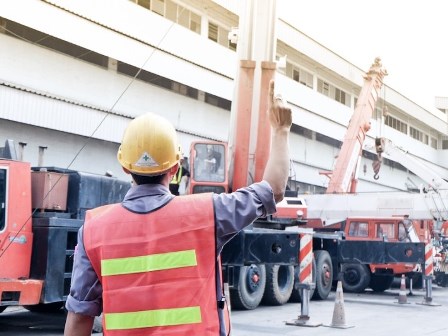
Mobile Crane Hand Signals

All mobile crane operators must have experience and education on all aspects of material handling and mobile crane procedures, including all common manual signals for mobile crane operators.

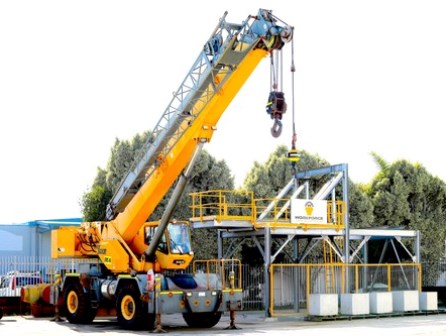
Slewing Mobile Crane

Slewing mobile cranes incorporate a boom or jib that can be rotated. It excludes front-end loader, back-hoe, excavator or other earth moving equipment when configured for crane operation.
How to Operate Equipment for Mining?

Learning to operate mining equipment requires a combination of theoretical knowledge and practical skills. Remember, learning how to operate mining equipment is an ongoing process and gaining experience in the field is crucial. Always prioritize safety and follow proper procedures when operating heavy machinery in a mining environment.

Mining truck into open pit mine

Like all driving jobs, dump trucks can be great for some people. Dump truck driving is an option for commercial drivers. If you are a trucker with a current commercial driver’s license, this could be an alternative to driving on the highway or inside a gravel pit or open-pit mine.

Open-pit mining refers to a method of extracting rocks or minerals from the earth by extracting them from an open pit. Open-pit mines are used when commercially useful mineral deposits or rocks are found close to the surface.

Open-pit mines that produce building materials and dimensional stones are commonly called quarries.

Open-pit mines are generally expanded until the mineral resource is depleted or an increasing ratio of overburden to ore makes further extraction unprofitable.

When this happens, depleted mines sometimes become landfills.

Giant Excavator in Coal Mining

The first thing to know about the machine is that it never stops moving.
It works constantly, every day, every night, on Sundays, even at Christmas.
Incessant and haunting high-pitched screeches echo throughout the open-pit mine’s hills.

They are from an excavator. It is one of the largest machines on the planet and is used to dig open-pit mines. His technical name is shovel excavator, “a monster.”
The mine keeps growing and the hills keep disappearing. They are open-pit coal mines, where lignite coal is extracted.

Working in the mining industry can be a dangerous place if you don’t know what you are doing. Regular training is essential and understanding the machines you are working or operating near plays an important role in all aspects of the industry.

Each type of mining equipment comes with its own set of mining activities.
The most common types of mining equipment vary depending on whether the work is carried out on the surface or underground or in the extraction of gold, metals, coal, or crude oil.

From drills to excavators, crushing, and crushing equipment, the mining industry comes complete with all the right tools.

New to the job and want to know what this all means? Here are some of the most common types of equipment in the industry and why they are important to the job.

Drive a dump truck

If you are looking for dump truck jobs for the first time, you may be concerned about how stressful this line of work can be.

Even if you have had other truck-driving jobs, driving a dump truck is unique. Not only do you need to deliver loads, but you also need to have the skill to operate your truck.

Is it difficult to drive a dump truck?

Not to mention, you are also subject to weather, traffic, ungovernable workplaces, and the demands of your employers. To add to that, if you are a freelance dump truck driver, you also need to think about where your next job will come from.

Most truck drivers will tell you that driving a truck is a lifestyle, whether you are working as a highway trucker, cargo driver, or dump truck driver. It is not for everyone, but those who pursue it with passion may find it satisfying and profitable.

These are just a few of the pros and cons of being a dump truck driver:

  • Solid Salary: Dump truck drivers’ pay rate is stronger than positions in other industries. Some contractors can earn more depending on the company that hires them, the job involved, and the hours they put in.
  • Less travel: Also, unlike other types of truck driving, you won’t have to travel that far from home. Most of your jobs will be local, which means you will be closer to your family.
  • Great Demand: Finally, there is a great demand for dump truck drivers. The United States has a massive shortage of truck drivers in general. By 2025, the country will have fewer than 175,000 drivers if trends continue.
  • As demand continues to increase, employers will continue to increase their offerings. Truck drivers of all types are essential, which is why most companies will be willing to compete for them.

Is driving a truck stressful?

You may be an alone eagle on the road, but you’re not the only one facing the hardships that dump truck driving brings. Fortunately, there are many ways to overcome stress without wasting a lot of time out of your day.

How wide are forklift forks?

Knowing the different sizes of forklifts
What should I know for my warehouse or workshop?

Forklifts are one of the great innovations in the material handling industry.

It can lift, move and carry heavy loads more efficiently. Due to its capacity, it has become indispensable in any type of job or warehouse.

Forklift size guide

Forklifts vary in size depending on their use. Although it can perform different tasks that manual handling cannot, you need to understand the proper size for your intended application.

Dimensions such as overall height, maximum fork height, folded height, overall length and fork length must also be taken into account.

If the application is primarily outdoors, the rough terrain forklift is the ideal type of forklift for the job, its length is greater than 10 feet and it can lift a much heavier load.

Rough terrain forklifts are great for the type of handling job, such as docks, harbors, logging, and construction sites.

If the application is pallet racking, narrow aisle machine types such as standing stackers and side loaders are perfect for fitting between aisles and can be only 5 feet long.

Another aspect to take into account for this type of application is the lifting height that the forks can reach.

The standard lift height is between 10 and 15 feet.

Knowing the maximum height of the frame is important in determining the lift height that the forklift should have.

Buying a forklift with too short a lift height will make you buy another. Choosing a forklift with the proper lift height to suit your application can definitely save you the hassle.

Forklift capacity chart

If the forklift is intended for the warehouse configuration, it is crucial to know the aisle width to determine what size forklift is ideal for the current configuration.

If you intend to purchase a standard counterbalanced forklift, the aisle width must be at least 12 feet in order to safely and efficiently maneuver the truck and move pallets.

When choosing a forklift, you need to know how the forklift will be used. Forklifts differ in many ways, such as the fuel they run on, lift capacity, fork height, wheel size, pallet dimensions, etc.

When buying a forklift, it is very important to consider these factors as well, which will affect the monthly maintenance and fuel budget.

More on this story

Forklift Fork Dimensions

They are an integral part of the forklift and ensuring you are using the correct ones and that they are in good condition is essential to both the safety of personnel, but also the forklift and the load.

What is a critical failure of a Hoist or crane lift?

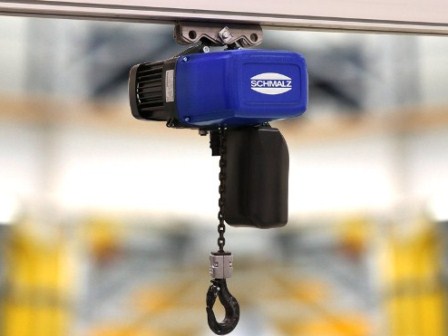
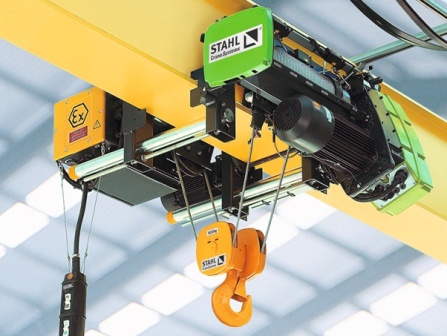
Hoists are the component that makes it possible for overhead cranes, monorails, or work station cranes to lift heavy or bulky, freely suspended loads and are a critical part of lift cranes.

Its proper functioning is essential to guarantee the safety and efficiency of an operation. Whether manually, air or electrically powered, all hoists should be inspected routinely at a variety of intervals, including prior to use at the start of a shift, frequently, or periodically (annually for normal duty; semi-annually). for heavy duty; or quarterly for severe duty application).

Sometimes an inspection will reveal damage that can be repaired. In this case, the hoist must be removed from service and not used until the repair is complete. However, if the repair is not sufficient, the hoist will need to be replaced with a new one.

Crane hoist replacement period

To help hoist owners make that determination, here are four key signs that a hoist should be replaced:

Hoist problems

If a hoist perpetually fails to function as expected, for example, if it responds slowly or inconsistently to manual operation or to remote or hardwired controls, or if it requires multiple replacements of the same parts at frequent intervals, your Improper operation is causing costly problems, unplanned downtime and increasing the potential for an accident. Therefore, it must be replaced.

Hoist Parts accessories

Spare parts not available. Some hoists are so well maintained and have performed so well over a long period of operation that they are beyond the manufacturer’s ability to support them and replacement parts are no longer available.

Alternatively, a brand of hoist may have been purchased by another supplier who no longer supports that model. Or the brand may simply have been discontinued.

When service parts can no longer be reliably obtained, causing extended periods of downtime, the hoist must be replaced.

Spare parts prices for hoists

When a problem is identified, but the cost of repair (parts, service, or a combination of both) exceeds 50% to 60% of the cost of a replacement hoist, the operation should seriously consider replacing the hoist and invest in a new one.

A newer model will be supported by the manufacturer, have replacement parts more readily available, and will likely be backed by a warranty for a period of time, allowing it to offer a better value than the broken hoist.

Hoist Inspection Checklist

In addition to pre-shift inspections performed by the operator, in-house maintenance technicians, manufacturers’ service representatives, or an independent hoist inspection professional should perform more detailed frequent or periodic inspections.

These hoist evaluations can reveal a problem that is not visible to an operator.

The inspector will look for excessive component wear, cracks, distortion, warping, or other internal damage, or any other parts that show signs of possible failure. Based on that evaluation, the hoist may be deemed beyond reasonable repair and replacement is recommended.

Critical lifting examples

What is a critical failure of a Hoist or crane lift?

In the crane and rigging industry, a critical lift is a rigging activity where a comprehensive plan is needed to minimize the risk of crane failure or catastrophic loss.

As for the term “critical lift”, while there is no single universally accepted definition or industry standard used for categorization, there are a number of elements that are common to various rigging industry agencies and associations.

OSHA characterizes the definition as follows: a critical lift is one that

  1. exceeds 75% of the rated capacity of the crane or derrick, or
  2. requires the use of more than one crane or derrick.

The following are some of the items that appear most often in a critical survey, keeping in mind that specific projects have unique conditions that must be considered:

  • Any lift that requires more than one crane
  • Loads that exceed 75% of the rated capacity of a crane
  • personnel lifting
  • Cargo suspension above rigging personnel
  • Loads that are not in sight of the crane operator
  • Lots of exceptional value
  • Cargoes that have the potential to become unstable during rigging

More on this story

Types of hoists

A hoist is basically construction and material handling equipment that is used to move the materials from the building’s ground to the top floor.

Electric Hoist Trolley

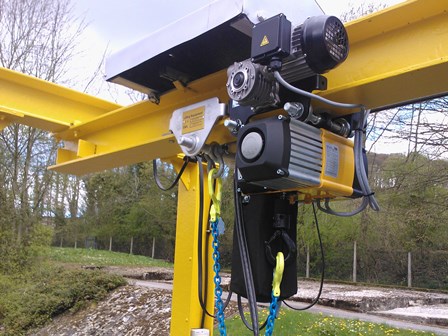
Electric Hoist trolley provides the ability for a simple hoist to become a laterally traversing versatile piece of equipment. Powered trolley hoists come in different types, including air and electric and capacities.

I Beam Trolley Hoist

An I-beam trolley is a wheel mechanism from which a hoist is suspended to provide horizontal movement of the hoist along a beam or bridge rail.

Forklift Fork Thickness

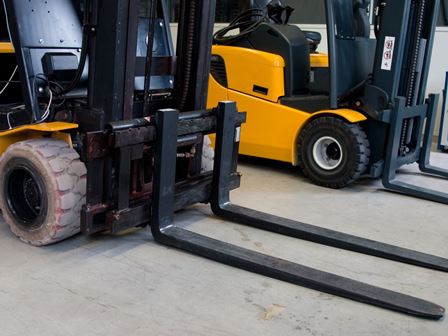
The fork is one of the most important components of the forklift, and it is critical that all forklift operators keep their forks in good working order.

A damaged fork can have unnecessary cost consequences, from destroying valuable cargo to endangering your safety or that of those around you.

Inspection of the thickness and condition of the forklift should absolutely be part of every daily checklist, as you need to make sure its thickness is adequate for lifting loads throughout the day.

Here is a basic overview of what to look for when inspecting the thickness of your forklift fork.

Fork thickness inspection – At least one formal inspection should be performed every 12 months.

However, in addition to your basic daily inspection, you should perform a professional inspection more often than once a year.

The exact frequency depends on the working conditions you are operating in, as well as the condition of the forklift.

The forklift should be inspected by a trained person or technician or a specialized forklift repair service company.

What should you look for when inspecting your fork?

Whether you are conducting your daily review or a more substantial review, there are a number of specifications to look for. These include:

  • cracks on the fork surface
  • whether the fork is straight or not
  • the thickness of the fork and
  • the amount of visible wear.

In some cases, like there are cracks on the surface, you probably won’t need to solder. However, more significant wear and tear will require repair.

Some forks are made from specialized materials. For example, stainless steel forks are often used when handling food or chemicals to provide additional protection against cross contamination.

More on this story

Forklift Fork Dimensions

They are an integral part of the forklift and ensuring you are using the correct ones and that they are in good condition is essential to both the safety of personnel, but also the forklift and the load.

How to become a Crane Operator?

Becoming a crane operator typically involves a combination of education, training, and on-the-job experience. How do I become a crane operator with no experience? These are the general steps you can take to become a crane operator:

Educational Requirements: High School Diploma or Equivalent: Most employers require a high school diploma or its equivalent.

Math and Science Courses: Taking courses in math and science can be beneficial, as crane operation involves understanding weight, balance, and spatial relationships.

Age and Physical Requirements: Crane operators often need to be at least 18 years old. Good physical condition is essential, as the job may involve long periods of standing, climbing, and working outdoors.

Crane operator skills

Many trade schools offer a mobile crane operator certification, which covers the basics of crane operation for those new to the field. Depending on the job you want, you can also take specialized training courses that prepare you to operate other types of cranes and heavy equipment.

Choose a Specialization: Decide on the type of crane you want to operate. Cranes come in various types, such as mobile cranes, tower cranes, and overhead cranes. The specific type of crane you operate will determine the training requirements.

Training Programs: Enroll in a crane operator training program. These programs are offered by vocational schools, community colleges, and trade unions. Look for programs accredited by relevant industry organizations.

Crane operator certification

NCCCO Certification: Consider obtaining certification from the National Commission for the Certification of Crane Operators (NCCCO). While not always mandatory, NCCCO certification is widely recognized in the industry and can enhance job prospects.

On-the-Job Training: Gain practical experience by working as an apprentice or trainee under the supervision of an experienced crane operator. Many employers prefer candidates with hands-on experience.

Obtain a Commercial Driver’s License (CDL): Depending on the type of crane you operate, you may need a CDL to transport the crane to and from job sites.

Crane operator jobs

Stay Informed about Regulations: Familiarize yourself with local, state, and federal regulations governing crane operation. Compliance with safety regulations is crucial in this field.

Networking: Join industry associations, attend conferences, and network with professionals in the field. This can help you stay informed about industry trends, job opportunities, and best practices.

Update Skills: As technology evolves and new safety standards emerge, continue your education and training to stay current in the field.

Job Search: Look for job opportunities with construction companies, crane rental companies, or other organizations that require crane operators.

How long does it take to become a crane operator?

The time it takes to become a crane operator can vary depending on several factors, including the type of crane, the training program, and the individual’s prior experience and education.

In summary, the entire process of becoming a certified crane operator can take anywhere from several months to a few years. Keep in mind that gaining practical experience through on-the-job training is a crucial aspect of becoming a proficient crane operator. Additionally, the time it takes to find employment as a crane operator after completing training can vary based on the job market and individual circumstances.

More on this story

Mobile crane test questions and answers

Practice questions representative of a mobile crane theoretical exam.