All posts by Loganx

Professional Web Writer | Motor Enthusiast | Content Creator | Logan is a dedicated and skilled web writer, passionate about engines and machines and with a talent for creating engaging and informative content. She specializes in writing about a diverse range of topics including construction, forklifts, heavy equipment, excavators, etc. SEO Optimization: Proficient in SEO best practices, ensuring high visibility and engagement for all published content.

Chain Pulley Hoist

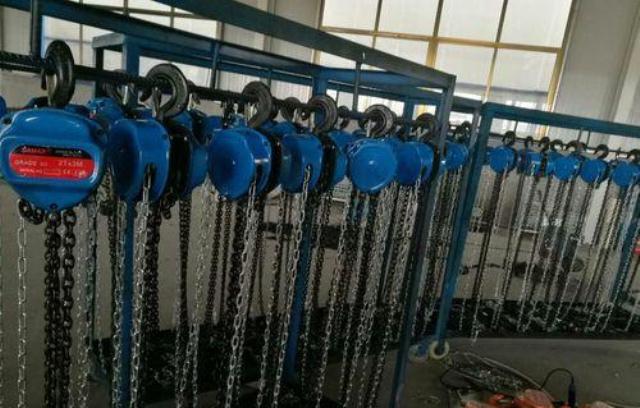
Chain Pulley Hoist: Whether you have to lift, pull, position, tension, or rig a load, you must have the right manual hoist for the job.

Chain pulley hoist is excellent for general purpose lifting and pulling applications. Popular with the homeowner and outdoorsman, they are also preferred by professionals who work in tough applications such as construction and mining.

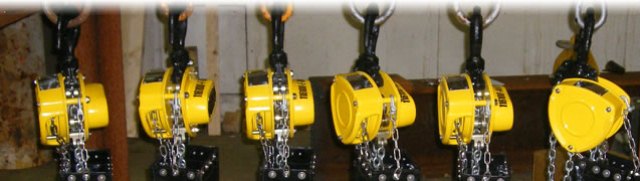
Manual and lever chain pulley hoist come in a variety of model families, each with a set of features that allow you to choose the right hoist for the job, and at the right price. Each hoist is designed to meet ASME/ANSI specifications and is enhanced to make them as user-friendly as possible.

For example, the ergonomic design of the handgrips on lever hoists and the overload protection on manual hoists add comfort and safety for operators.

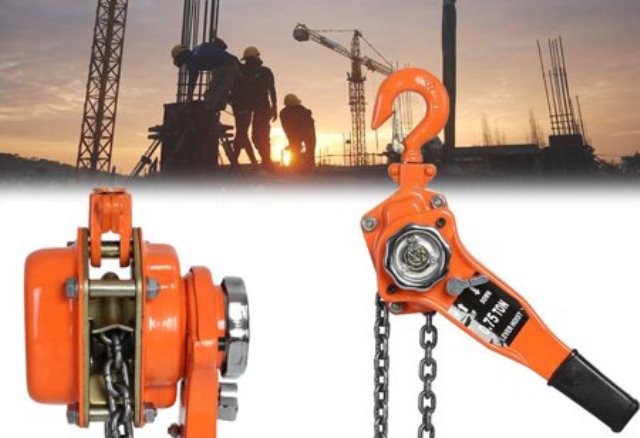
Chain Pulley Hoist

Chain Pulley Hoist

Warnings & Precautions

Hoist operators should read and fully comprehend this entire manual and all warnings on the hoist before beginning hoist operation. If this manual is not read and followed completely injuries may occur.

Operator Requirements:

  • Must be trained in proper hoist operation and dealing with potential malfunctions.
  • Should not operate hoist while under the influence of alcohol, medications, or drugs.
  • Should not operate the hoist while tired or distracted.
  • Read and fully comprehend this entire manual before hoist operation.
  • Should not operate hoist if they have a history of seizures or other medical issues that may interfere with hoist operation.
  • Should have proper coordination and vision.

Prior to Operation be sure:

  • The hoist is clean and properly lubricated.
  • A hoist is in proper working condition and maintenance records are up to date.
  • Brake is functioning properly.

During Hoist Operation:

  • Maintain a secure footing to prevent slipping and injury while operating.
  • Confirm that the hoist unit is attached securely to support before the operation.
  • Verify hook latches are not supporting any of the load.
  • Do not hold the chain pulley hoist during hoist operation.
  • Slowly take up the load, verifying it is well supported and balanced before proceeding.
Chain Hoist

Hand Chain Hoist Operation

Attaching the Load

  • If there are no twists in the chain proceed on to attach the lower hook to the load.
  • Do not use the chain pulley hoist to wrap around the load.
  • The load should be seated in the bowl of the hook and should not bear against the tip of the hook or latch.
  • The hook latch should be tightly closed against the hook tip
  • Assure that the upper and lower hooks form a straight line and frame is able to swivel.

Lifting the Load

  • Pull chain clockwise.

Lowering the Load

  • Pull chain counterclockwise

Chain pulley block with trolley

Push and geared trolleys help you maneuver easily on your most demanding lifting operations. They feature specially designed contoured wheels that ensure reliable tracking, and their sealed ball bearings avoid maintenance hassles and provide smooth operation.

Many Benefits From More Features:

  • Get sure trolley tracking with specially designed contoured wheels that fit both tapered and flat-flange beams.
  • Maintenance-free, sealed precision ball bearings are lubed-for-life and offer smooth movement, with low friction and long life.
  • Get strength and rigidity from a lightweight, compact design.
  • Easily adjust trolley to fit a wide variety of beam flange widths.
  • Load equalizing suspension distributes the load to all wheels.
  • Wide Standard flange ranges reduce the need for optionally extended shaft kits.
  • Match the needs of the job with a variety of trolley hoist suspenders.

Capabilities To Count On:

  • Use the economical PT for applications involving longer traversing distances.
  • Use the GT for precise load control and shorter traversing distances.
  • 1/2 through 3 Ton are supplied with Suspender C, which is suitable for most applications. Alternate suspenders may be required for your application.
  • Geared trolleys of larger capacities are available. Please consult factory for details.

Low Headroom Trolley Hoist

Low Headroom Trolley Hoist

  • 1, 2, 3, and 5 Ton capacity
  • Low headroom trolley hoist combines economical, trouble-free CD hoist performance with the space savings of an integral trolley. The hoist is ideal for applications requiring a low headroom hoist and trolley combination. Both push and geared trolley versions are available to best suit your application.

More Features:

  • Lift the load in tight quarters thanks to low headroom profile.
  • Get the features, benefits, and capabilities of Harrington’s CD hand chain pulley hoist.
  • The trolley moves smoothly on cast-iron flanged wheels equipped with sealed, lubed-for-life ball bearings.
  • Easily adjust trolley to fit a wide variety of beam flange widths.

Capabilities to Count On:

  • 10-foot lift is standard; nonstandard lifts and hand chain drops are also available.
  • Trolley available in plain or geared models.
  • Trolley wheels accommodate tapered or flat-flanged beams.
  • Grade 100 heat-treated manganese alloy load chain resists abrasion and wears while minimizing chain weight.
  • Forged and heat-treated alloy steel hooks are designed to open slowly and not fracture under excessive loads.
  • Test certificate verifies that every hoist has been factory load tested to 125% of rated capacity.
Chain Pulley Hoist

Chain hoist how it works

A hoist is a device that is used to lift or lower the load attached to it by the means of a lift wheel or drum. The lifting of the load is done by the rope or wire that is looped around the wheel or the drum. The wheel or the drum may use electricity for its operation or in some cases it may also be manually operated. Along with the drum and the wire, another integral part of the hoist is the lifting medium that is used.

  • The different lifting mediums that are used are a chain, fiber orwire rope.
  • A hook is also available where the load is attached.
  • One of the most commonly used types of hoist worldwide is Chain Hoist.
  • The type that is commonly used is electrically operated.
  • In this type of hoist, the chain pulley hoist is used as the lifting medium.
  • Here there is a closed chain that forms a loop which ultimately lifts the load.
  • A pulley is also attached to the hoist to lift the load.
  • Numerous small and large pulleys are found in the chain pulley hoist.
  • For raising the load, the chain has to be pulled.

When pulled, the large pulley draws in more chain than what is required by the smaller side facilitating the beginning of the lifting procedure.

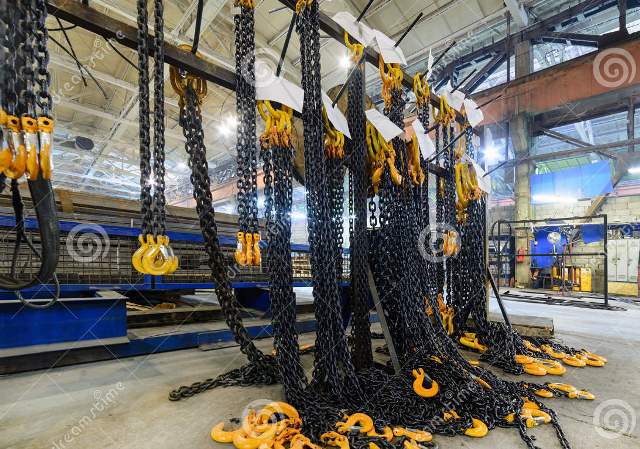
Chain Pulley Hoist

Areas of application of chain hoist

The different areas of application of chain hoist comprise of industries mostly manufacturing ones and construction sites.

The working of the chain pulley hoist can be understood from the following points:

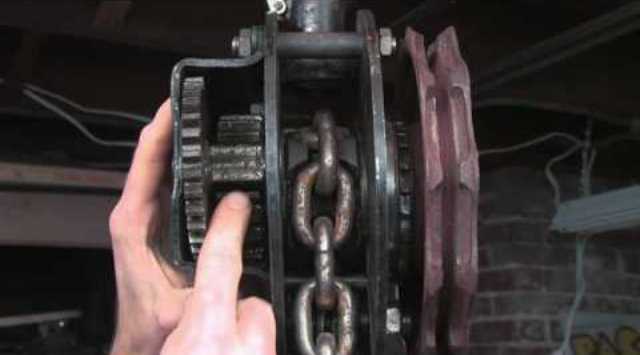
  • It uses gears to multiply the force.
  • A chain pulley hoist, when operated by hand, requires an operator to pull the light loop chain on the side.
  • This turns a gear mechanism inside to turn the chain pulley.
  • When this pulley turns, it raises the heavy chain which usually has a hook on the end.
  • By pulling the light chain loop, the manual hoist is actually able to increase the force that is being applied by the heavy chain.
  • This is caused by the gear ratios inside the manual chain pulley hoist.
  • The mechanical work done by the operator is the same as the work done by the heavy lifting chain

The procedure specified can also be automated by using the electrically operated Chain pulley Hoist. Thus it simplifies a lot of load-lifting work.

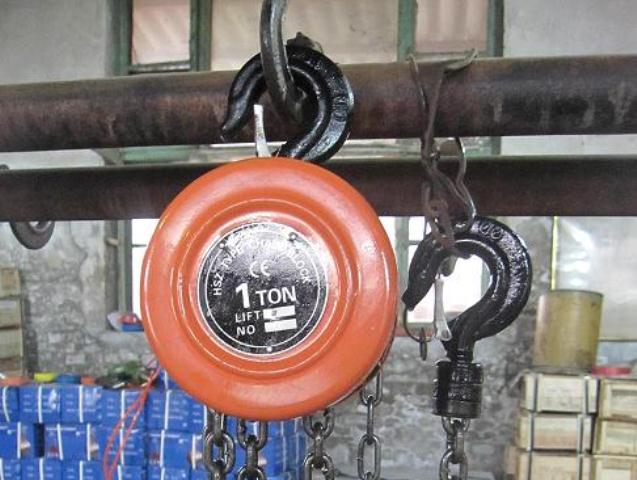
Pulley Hoist

How chain pulley block works?

What is a Chain Block?

A Chain Block (also known as a hand chain pulley hoist) is a mechanism used to lift and lower heavy loads using a chain. Chain blocks contain two wheels in which the chain is wound around. When the chain is pulled, it winds around the wheels and begins to lift the item that is attached to the rope or chain via a hook. Chain Blocks can also be attached to lifting slings or chain bags to lift the load more evenly.

How Does a Chain Block Work?

A Chain Block contains a lifting chain, a hand chain, and a grabbing hook. Most chain blocks are operated using electricity, but manual chain blocks can be used too. First, the chain block needs to be connected to the load via the grabbing hook. Then when the hand chain is pulled, the chain tightens its grip on the wheel and forms a loop inside the mechanism causing a tension that lifts the load from the ground.

What is a Chain Block used for?

Due to its lifting capabilities, Chain Blocks are commonly used in garages where they are able to remove engines from cars easily. Because they can be operated by one person, Chain Blocks are a wonderfully efficient way to complete jobs that may have taken more than two workers to do.

Where does a Chain Block use?

Chain Blocks are also used on construction sites where they can lift loads from the higher levels, in assembly-line factories to lift items to and from the belt and sometimes even to winch cars from treacherous terrain.

What is the capacity of a chain pulley hoist?

Chain Blocks come in a variety of different capacities making them suitable for a wide range of operations of up to 20 tonnes.

The most read

Types of Hoisting Equipment in Construction

The hoisting is the lifting of the material against gravity and maybe done with a wide range of equipment from the small hand-operated simple screw.

More on this story

Electric Hoist Manufacturers

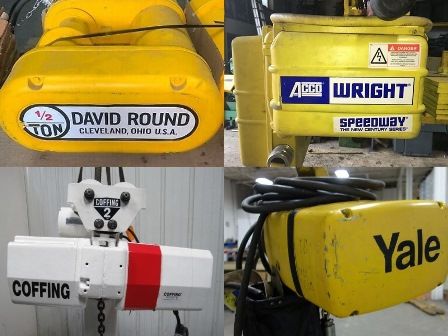
You’ll hear opinions about leading chain hoists brand names like Yale, Gorbel, Budget, Coffing, and Harrington.

Workstation Crane

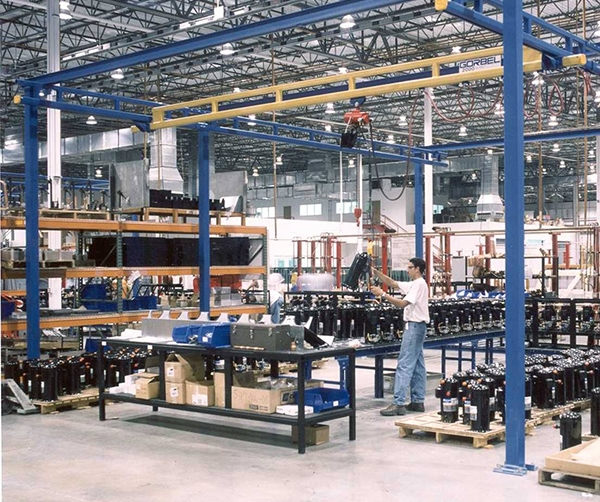
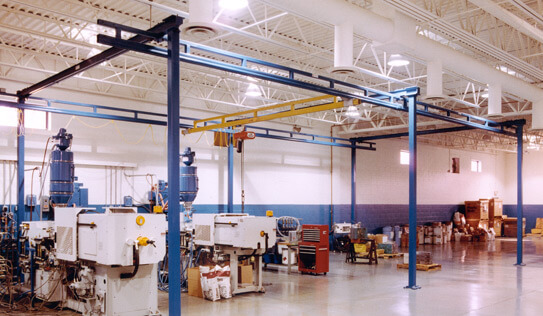
Workstation Cranes are a proven way to improve productivity, increase quality, and provide a safer work environment. Both the aluminum and steel Gorbel Workstation Crane Systems utilize the enclosed track that is high in strength and low in weight. With the ability to span up to 30 ft.

Workstation Crane

Workstation bridge crane

What are Workstation Bridge Cranes and Monorails?

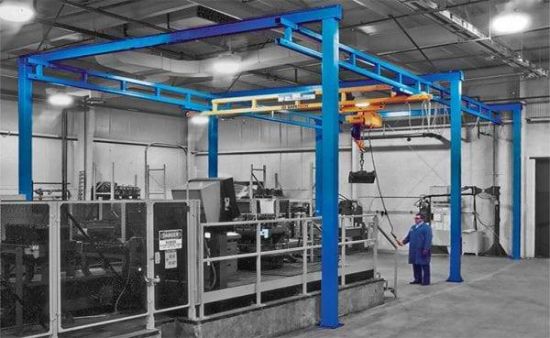
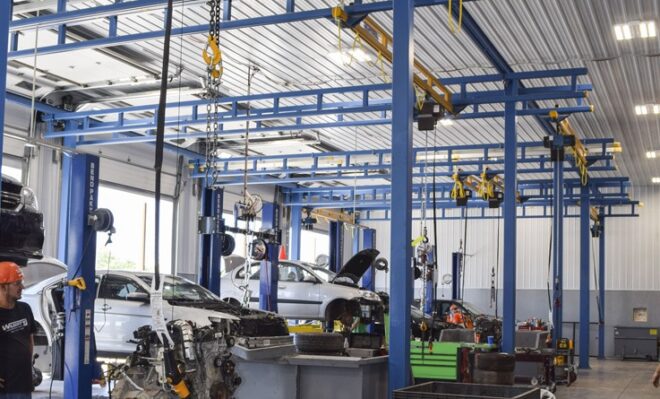
Bridge cranes cover rectangular work areas, while monorail systems can be used to move loads along a linear path, cover various work area shapes, or to link work areas together. Work station bridge cranes and monorails can be used individually or can be readily adapted for more sophisticated applications by the addition of extra monorail tracks, curves, and transfers that can be easily configured into a total system.

Work station Crane

Workstation jib crane

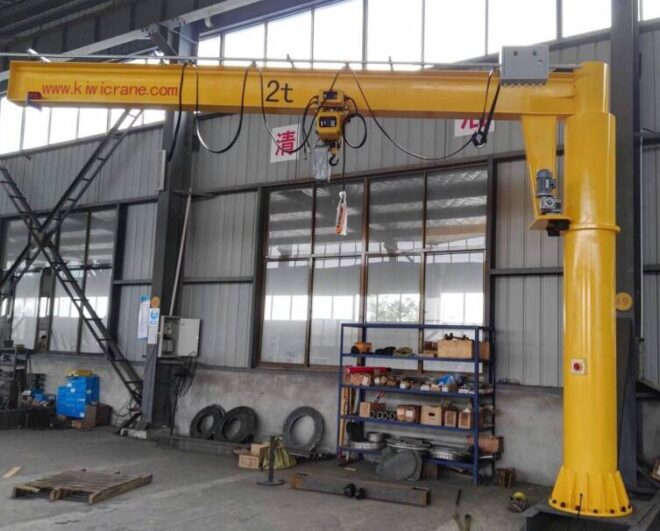
Workstation Jib Cranes offers easy, ergonomic lifting and transfer of repetitive loads. These small, nimble cranes are faster than motorized jibs and are very affordable. The workstation jibs can be permanently foundation-mounted, portable with counterweight bases, wall-mounted, or foundationless to best suit your needs:

  • Freestanding Workstation Jib Cranes
    • 360-degree rotation
    • Standard crane heights to 12 feet (floor to bottom of the boom); taller designs available
    • Mounting plates attach with anchor bolts to a standard 6-inch reinforced concrete floor, or to new foundations for special load conditions
    • Smaller capacity cranes use square mounting plates with welded gussets connected to the mast; each plate uses four anchor bolts
    • Larger capacity cranes use hexagonal mounting plates with welded gussets connected to the mast; each plate uses 6 anchor bolts
Work station Crane

What is a jib crane?

A type of crane, which has a horizontal member (known as a jib or boom) that supports a moveable hoist fixed to a wall or to a floor-mounted pillar is known as a jib crane.

Used mostly in industrial premises and on military vehicles, the jib may swing through an arc, giving additional lateral movement. It can be also fixed. The jib cranes can be also fitted on top floors of warehouse buildings to help lift goods to all floors from the ground to the top. The jib is an operating arm that extends horizontally from the crane.

The jib on a jib crane is a tilted strut that supports a fixed pulley block. Cables wrapped multiple times round the fixed block and round another block are attached to the load.

The free end of the cable is pulled (manually or using a winding machine), and the pulley system delivers a force to the load equal to the applied force multiplied by the number of lengths of cable passing between the two blocks. This number is known as the mechanical advantage.

Workstation crane systems

Why Work station Cranes?

Work Station Cranes are a proven way to improve productivity, increase quality, and provide a safer work environment. Both the aluminum and steel Gorbel Workstation Crane Systems utilize the enclosed track that is high in strength and low in weight.

With the ability to span up to 30 ft. and lift capacities between 150 and 4000 lbs., line of ergonomic crane products guarantees increased productivity.

Depending on your needs, has the workstation cranes that are sure to handle any project. Have a need for some type of customized material handling solution?

Work station Crane

Free Standing Jib crane

The workstation crane system improves productivity, increases quality, and provides a safer work environment. The workstation crane systems include a workstation bridge crane system and freestanding workstation crane, etc. A custom workstation crane system is available for you now. With a workstation Crane, material handling problems of your workstation can be handled easily.

What is a workstation crane system?

Workstation cranes are used to help workers perform tasks with higher efficiency and less risk of injury. Workstation cranes enable workers to move objects or loads by pushing the load with the assistance of the vertical lifting device, such as a hoist, or other attachment.

Primarily, workstation cranes can be classified into workstation Jib Crane, bridge cranes, Gantry Crane, etc.

The workstation crane system is very useful in improving productivity, increasing quality and provide a safer work environment. A lot of people use the workstation crane system to effectively solve the problem of handling their material and improving the performance of their business.

Work station Crane

Workstation crane and tradition crane

Comparison of workstation crane and traditional crane:

Workstation cranes can help workers to be more productive than traditional cranes. A study conducted conveys that workstation crane increases productivity up to 28 percent compared to traditional cranes. The workstation crane increases in productivity are possible because the workstation crane requires less effort to move than the traditional cranes

Features of the workstation crane system:

  • The workstation offers long spans for our workstation cranes. The enclosed track extends far, allowing us to offer the full coverage necessary for production and assembly lines.
  • The workstation cranes with standard profile sizes and bolt-on connections can be installed quickly
  • If your business depends on workers making repetitive movements or lifting heavy loads, and a workstation crane system can be a fast and easy way to improve productivity.
  • steel workstation crane system is available for hazardous environments.
Work station Crane

Work station crane

What type of crane to choose for your application?

According to the features of each type of crane, select the most appropriate one for your application:

  • The workstation bridge crane covers a rectangular area while the coverage area of the jib crane is circular.
  • The workstation bridge cranes can be floor supported or hung from the ceiling. Jib cranes can be wall or pillar mounted.
  • An enclosed track workstation bridge crane provides consistent ease of operation over the full range of movement.
  • Jib cranes can move more easily at the very end of the boom and have more difficult to move as the load approaches the pivot point.

What is workstation cranes?

What is workstation cranes?

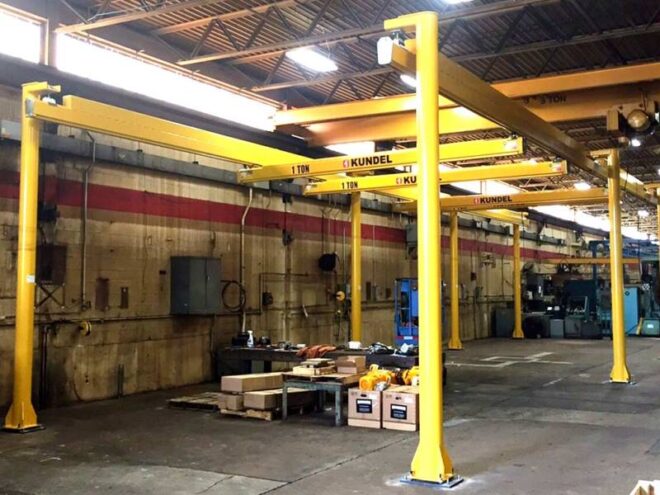
Workstation cranes can be freestanding or ceiling-hung and can be designed as top running or under running. Workstation cranes are appealing because they’re versatile, able to be customized, and can be expanded via modular design.
They’re designed for repetitive lifting of loads and increase worker productivity and ease workflow.
Workstation cranes are a type of overhead crane that provides ergonomic means of moving or lifting loads within a smaller-sized work area. Workstation cranes are typically lighter-duty systems lifting materials from 150 lbs. up to 2 tons in capacity.

what is a workstation jib crane?

Workstation Jib Cranes Are Designed For Use In Repetitive Motion Tasks. Workstation jib features a trolley with lifetime lubricated and sealed wheel bearings that accept most hoists, balancers, and manipulators. The trolley runs along a low-friction enclosed track for dependable service.

The most read

Overhead Cranes

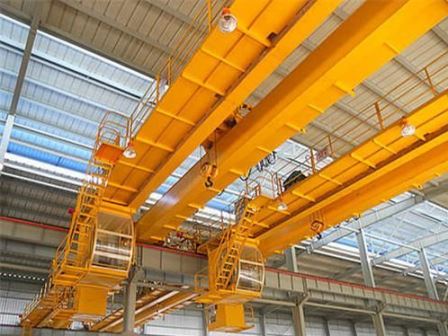
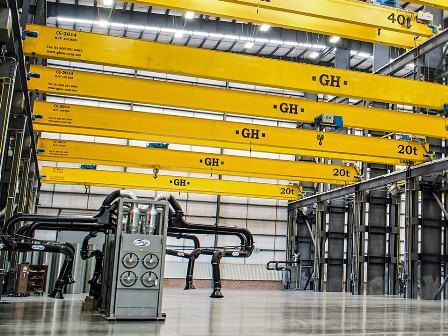
What are the parts of an overhead crane? What is the purpose of an overhead crane? How much does an overhead crane cost?

More on this story

Overhead crane manufacturers in the USA

Some have wondered if in the United States they fix, manufacture, elaborate parts, and components of overhead cranes.

Overhead Crane Test Questions and Answers

  • Crane operator interview questions and answers
  • Rigging test questions and answers

Reconditioned Forklift Battery

Reconditioned Forklift Battery: In some instances, a loss of battery capacity can be caused by battery sulfation. Sulfation is a crystallization which forms a hard shell surrounding the lead plates within the battery cell, this shell prevents efficient charging and discharging of the battery.

This crystallized shell can be dissolved using a special charge and discharge procedure, giving your battery a new lease of life. This type of repair is not always possible and is not a magic cure for a failing battery.

The process of the ways to restore forklift batteries is more complex as compared to a car’s lead-acid battery. But you can do it by yourself as well just like in regular batteries. However, if you feel that you need help, you can always call the professionals to do it for you.

Refurbished forklift batteries

What Are Used Forklift Batteries?

These batteries have usually become available after being removed from scrapped Forklift trucks or they may have been previously rented out.

Servicing a forklift battery is almost identical to servicing a regular 12-volt automotive battery. These tests should be performed monthly if you want to get the longest possible life from your very expensive electric forklift batteries.

  • You still have to be very careful not to short-circuit any tool, or your body to metal when working on these batteries as the stored voltage is very high and can cause death or severe burns and injuries.
  • Do not wear any metal rings, bracelets or any other metal objects while working on High voltage direct current batteries.
  • If you should ever ground the positive terminal to any part of the metal forklift then you will be severely injured.
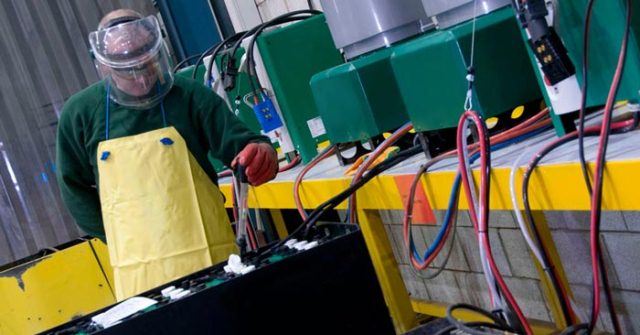
  • Always wear eye and face protection and proper clothing to protect yourself from acid spills or splatter.

Forklift battery replacement

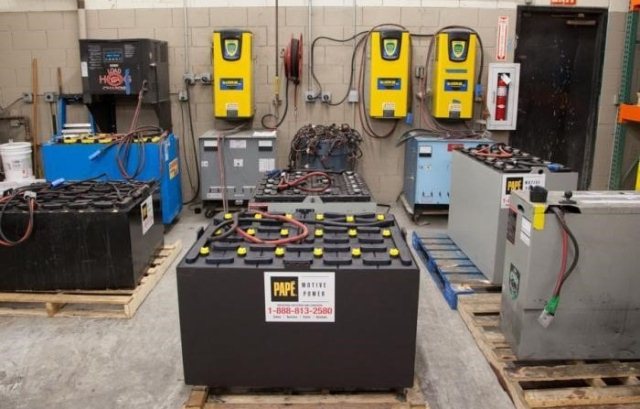
Forklift Battery Servicing & Reconditioning Manual

Never smoke or make flames or sparks near batteries and always work in a well-ventilated area with a fan blowing if possible to prevent the accumulation of explosive or toxic gases.

Place the forklift in a clear area where there is plenty of room to work and good ventilation.

Be sure the power key is off so the forklift will not move if anyone accidentally presses the accelerator.

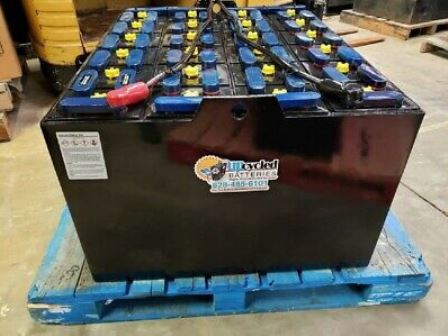
Once you expose the battery for service the first thing you do is determining the operating voltage of the battery by counting the cell water filler caps and multiplying the number of filler caps by 2 volts.

  • 12 caps = 24 volts
  • 18 caps = 36 volts
  • 24 caps = 48 volts

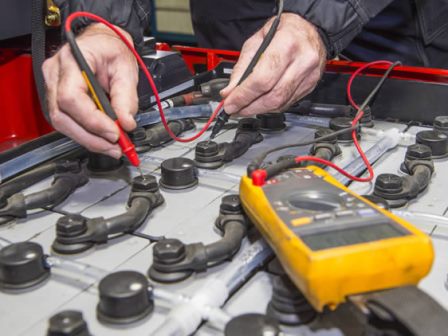
The next thing to do is to take your DC voltmeter, set it for the proper voltage to match the battery voltage and measure from the + terminal to the – terminal and record this voltage.

How Does the Process Work?

The first step regardless of the forklift is to check out the overall voltage of the battery. You are hoping the volt amount reaches the amount it is listed at, although with some models you might be okay at 80%. On an older battery, it is fully possible that you will need to replace one or more batteries.

The next step involves removing the battery caps and testing each cell. This can be a little bit of work depending on the number of batteries, their age, and the particular setup of whichever forklift you are using. You also need to have the right tools and an understanding of how to use them.

Truth be told, it isn’t hard to check the condition of each cell of a forklift battery. With a DC voltmeter and a pair of metal probes, you can test each one and know what needs to be replaced and what can be reconditioned to be nearly as good as new.

Forklift battery maintenance

Covering Basic & Advanced Fixes

Sometimes it only takes some really basic fixes to really get new results from a seemingly dying battery.

Water levels often have a major part to play in this. Maybe you have too much or too little – and a little bit of a clean and a fix-up can make all the difference.

There are obviously more steps to this, and when you’re ready to actually start restoring these batteries, I recommend you learn exactly how to do this in a step by step plan, which my friend Tom has laid out here.

The benefits of learning how forklift battery reconditioning works are many. Not only are you saving money and being more efficient with your business, but you’re also being green by throwing away fewer batteries.

Forklift battery brands

industrial forklift batteries for the most popular models:

  • Barrett
  • Blue Giant
  • CAT
  • Clark
  • Crown
  • Daewoo
  • Dockstocker
  • Drexel
  • Elwell-Parker
  • Hoist
  • Hyster
  • Jungheinrich
  • Komatsu
  • Linde
  • Mitsubishi
  • Nissan
  • Raymond
  • Schaeff
  • Schreck
  • TCM
  • Toyota
  • Yale.

Reconditioned forklift batteries for sale

How To Recondition A Forklift Battery

The battery of a forklift is almost the same as that of a lead-acid battery of a car. However, forklift batteries are much bigger, heavier, and they are a lot harder to try to recondition. Nonetheless, it is not impossible to do so.

Forklift batteries are deep cycle batteries. This means that they can be discharged at a very low level and you won’t have any issues with them getting damaged.

There are several steps that you can do so that you can restore your forklift batteries. However, if the battery is really beaten up and you feel that you won’t be able to do it, it is best to let the experts handle the reconditioning process for you.

Industrial battery maintenance

Prepare The Battery To Be Revived: A single battery of a forklift is very heavy. It can get as heavy as a few thousand pounds. For you to remove the battery, you are going to need a forklift to help you out. To be sure, read the user’s manual of your forklift so you can see the specific instructions on how to remove as well as maintain the battery of your forklift.

When you have successfully removed the battery from the forklift, put it somewhere where there is good ventilation. Prepare the voltmeter so you can check the voltage of the battery. Compare that with the voltage on the battery’s label. When you have taken note of those number, discharge the forklift battery to 80% of the voltage that you see on the label.

forklift battery acid clean up

Once you have discharged the forklift battery to the right level, you can proceed to clean the terminals of the battery. To do this, put some baking soda onto the terminals as well as on top of the forklift battery. After that wet the surface with water and then brush it with a soft-bristle brush.

While the baking soda can neutralize any acid that is on the surface of the battery, you should still use protective clothing, gloves, and goggles. The acid of the battery is corrosive so you should be careful not to touch it with your bare skin. If you observe that the baking soda didn’t remove all of the dirt completely, you can put some dishwashing detergent on the battery so you can remove any grime and dirt left.

Distilled water for battery

Measuring the battery water acidity: To be able to access the water inside the battery, you need to take off the cell caps. Ideally, the battery water should have 30% sulfuric acid and then 70% distilled water.

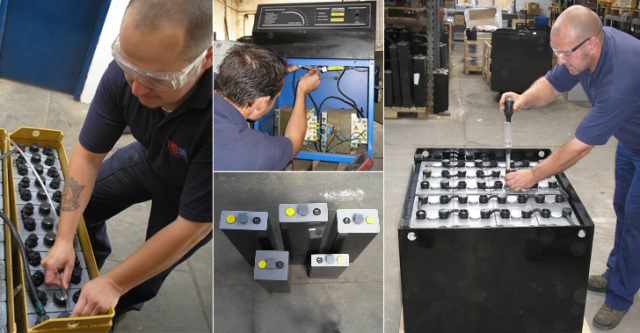
Here, you need to use a hydrometer so you can measure the acidity of each of the battery’s cells. By measuring the acidity, you will know the amount of acid or water that you are going to have to add to the cells.

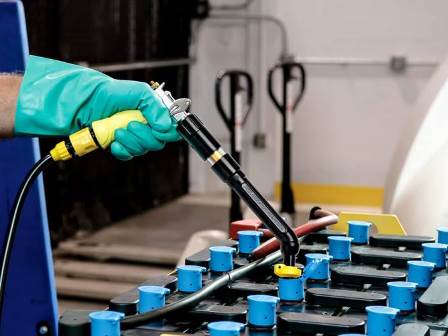
To restore the needed acid-to-water ratio for each of the cells, you should add water or acid to the individual cells of the battery. Remember not to use tap water because it has contaminants and minerals that can lead to your battery getting damaged.

During this particular process, it is important for you to check the concentration of the acid so that you will know the amount of acid or water that you are going to add. Each cell may need a different ratio, so you need to check them individually.

After that, put the cell caps back, and then you can connect the battery charger to the battery. Charge it for about eight hours or until it is charged completely. Check to see if the forklift battery was able to reach the required voltage. Recheck the acid-to-water ratio of each of the cells and then make the necessary adjustments. You can then try to charge it again

Forklift battery charger

You have to take note that you should discharge the forklift battery before you try to recharge it for a new cycle. This is to avoid any overcharge as it can damage the forklift battery permanently.

You may have to do this process a few times. If you have checked that the ratio of acid to water is correct, then there must be an issue with the cells themselves. Using a voltmeter, check the voltage of each cell so that you will know which of them is faulty or damaged.

To do this, put one probe of the voltmeter into the terminal and then immerse the other in the liquid. If you find any faulty cells, you may have to have them replaced or reconditioned by professionals.

CREATOR: gd-jpeg v1.0 (using IJG JPEG v62), quality = 90

Battery sulfation removal

Remove The Sulfation: One of the leading causes of why lead-acid batteries fail is because of sulfation. When you do not use the battery, the sulfate crystals begin to form. These crystals can then deposit on the negative plates of the battery.

How long do forklift batteries last?

How long do forklift batteries last?

Most modern forklift batteries are designed to last a minimum of 1,500 charge cycles. If a battery is under heavy use and requires daily charging, the 1,500 charge cycles would represent approximately five years of service.

Does Forklift Battery Reconditioning Actually Work?

Replacing the battery for a forklift is one of those expenses that no one wants to deal with, but it is going to come up at some point. This is true whether you have one forklift you need to keep working or an entire fleet of them. If you have the latter, then you know how expensive it can get to replace an entire group of batteries!
Reconditioning forklift batteries definitely works, however, I recommend you follow a step by step guide to do this properly.

Can Reconditioning Really Work on Forklift Batteries?

This is a question that actually comes up relatively frequently and the good news is that, yes, forklift batteries can absolutely be reconditioned and end up providing months or even years of good charge after that process. This is a common practice that not only is more efficient, but it saves a lot of money by putting off replacements and getting more out of each battery.

How often do you water forklift batteries?

Forklift batteries typically need watering about once a week when used every day. Batteries that have been in use for an extended period of time, or are reconditioned, should be checked after every five charges. If properly maintained, new batteries can be checked every ten charges for the first few years of use.

Can you overcharge a forklift battery?

It is important to note that both undercharging and overcharging a forklift battery can considerably lessen its life span. The best way to charge is to have a fixed charge cycle and not interrupt the cycle.

The most read

More on this story

Forklift Batteries for Sale

How to buy the right forklift battery? Before you spend hundreds of dollars on a battery, take a moment to learn how to choose the battery for your forklift.

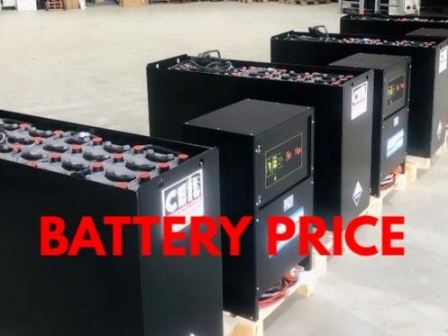
Forklift Battery Price

When it comes to buying a battery for your forklift, the true cost of a forklift battery involves much more than just the initial price.

Forklift Battery Charger

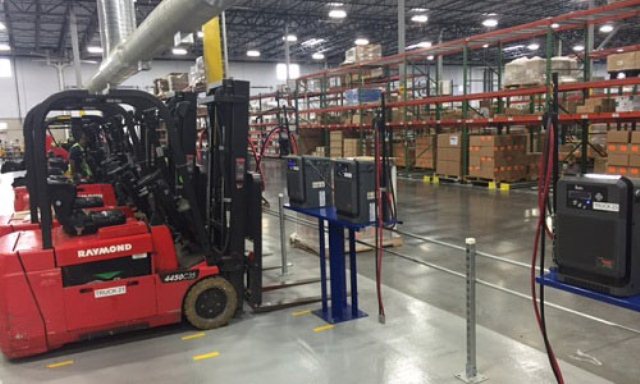
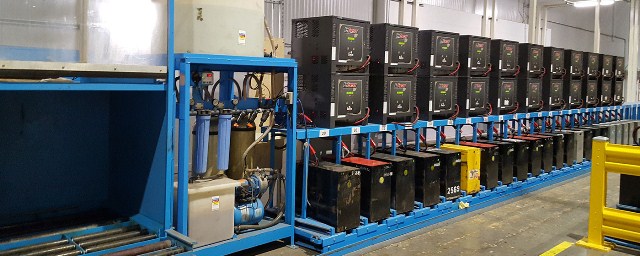
Your forklift truck will run on its own battery if it’s an electric vehicle. The battery is a vital piece of equipment and must be cared for and kept charged in order for your truck to work properly.

Forklift Battery for Solar

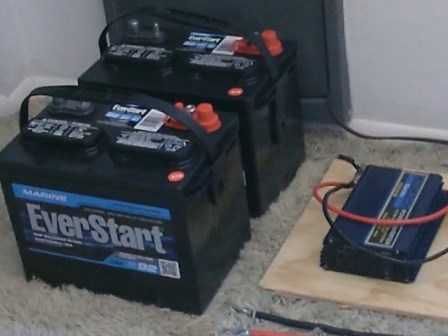
If you’ve decided to power your off-grid homestead with solar power, you may be considering using rechargeable forklift batteries to store the power from the sun.

Forklift Battery Repair

If you’ve decided to power your off-grid homestead with solar power, you may be considering using rechargeable forklift batteries to store the power from the sun.

Forklift Manufacturers

Forklift Manufacturers: It was another “up” year for the North American forklift industry, as all five truck classes(electric rider trucks, motorized hand trucks, and internal combustion-powered trucks) saw growth in 2019. That marks the fourth year in a row that sales have reached an all-time high, with the 260,000 total units sold in 2019 topping the previous benchmark of 250,000 units set in 2018.

“The forklift market contributes more than $25 billion annually to the U.S. GDP,”
“and for every direct job in the industry, an additional 2.5 jobs are supported elsewhere in the economy.”

Forklift Manufacturers

Top forklift manufacturers 2020

If you’re considering adding new products to your fleet of forklifts, you may feel overwhelmed by the decisions you have to make.

Because there are so many forklifts on the market —which vary in size, power, price, capacity, energy efficiency, and much more— one of the best ways to start narrowing down your options is to consider the top forklift manufacturers and suppliers.

These companies are on the leading edge of innovation, creating high-quality and high-capacity products at a range of price points in order to meet the varying needs of warehouse workers, construction companies, and many others.

Here are a few of the top forklift manufacturers and suppliers of 2020 to give you a jumping-off point for building out your forklift equipment:

Forklift manufacturers list

  • Toyota Forklifts
  • Crown forklifts
  • Yale Forklift
  • Clark Forklifts
  • Komatsu Forklifts
  • Caterpillar Forklift

Top forklift manufacturers in USA

This article will present information on the top suppliers and manufacturers of forklifts both globally and in the U.S. Additional information concerning forklifts will also be summarized.

Toyota Forklifts

From pallet jacks to scissor lifts to reach trucks, Toyota’s forklift equipment is consistently ranked at the top of the list for quality, durability, reliability, and value. The company has manufactured more than half a million forklifts in the United States and topped standard forklift rating lists for more than 15 years.

Its state-of-the-art three-wheel forklift has become an industry breakthrough, while just this year it introduced an on-site appliance that relies on water and electricity to produce pure cell-grade hydrogen for refueling.

Crown forklifts

Crown Equipment Corporation has been designing, manufacturing, distributing, and servicing material-handling machinery, including forklifts, since 1956. Especially significant are Crown’s innovative forklift designs and varied product catalog, as well as the company’s vertically integrated approach to business.

According to industry figures, Crown produces some 85 percent of its forklifts’ components, including their electronic modules, motors, and drive units.

Beyond this, Crown’s primary focus is providing its customers the safest, most efficient, and most comfortable forklifts anywhere. Among the many types of machines the company manufactures are hand trucks, turret trucks, and forklifts, as well as other kinds of lifting trucks.

Yale Forklift

Yale Materials Handling Corporations specializes in manufacturing forklifts and has, consequently, become an industry leader in top-of-the-line, high-performing forklift production.

Among its offerings are forklifts powered by diesel, liquid propane, gasoline, and electricity, and it also offers equipment-use training, financing, and maintenance services, as well as part services.

Furthermore, Yale is well-known for its customer service, often bending over backward to help its customers secure everything they need to finance and manage their lift-truck fleets.

Clark Forklifts

Clark is the first forklift manufacturer across the globe to be certified in compliance with ISO 9001, a quality-management certification that ensures its products and services meet both customer expectations and regulatory standards.

Many of its products are also equipped with green-friendly technologies.

Clark as a top forklift manufacturer is connected to its broad and innovative product line, which features five distinct lines and leading safety features that rely on modern technological advancements.

Komatsu Forklifts

Consistently high rated by customers, Komatsu forklifts are a global leader in the forklift manufacturing industry.

With 25 plants across the world and a record of nearly 100 years in operation, Komatsu aims to provide durable and dependent equipment that stand up under a range of conditions and deliver low-cost operation.

Its products are uniquely designed to navigate narrow spaces as well as to transport pallet loads, with a product list that includes several types of electric forklifts, as well as diesel machinery, including its 10-ton option and another with a hydrostatic transmission.

Caterpillar Forklift

Caterpillar offers a wide range of materials handling equipment, including ride-on pallet trucks, walkie trucks, order pickers, and reach trucks. Their forklift trucks feature capacities from 2,500 to 100,000-plus pounds, and they are available in either electric, liquid propane, diesel, or gasoline-powered type machinery.

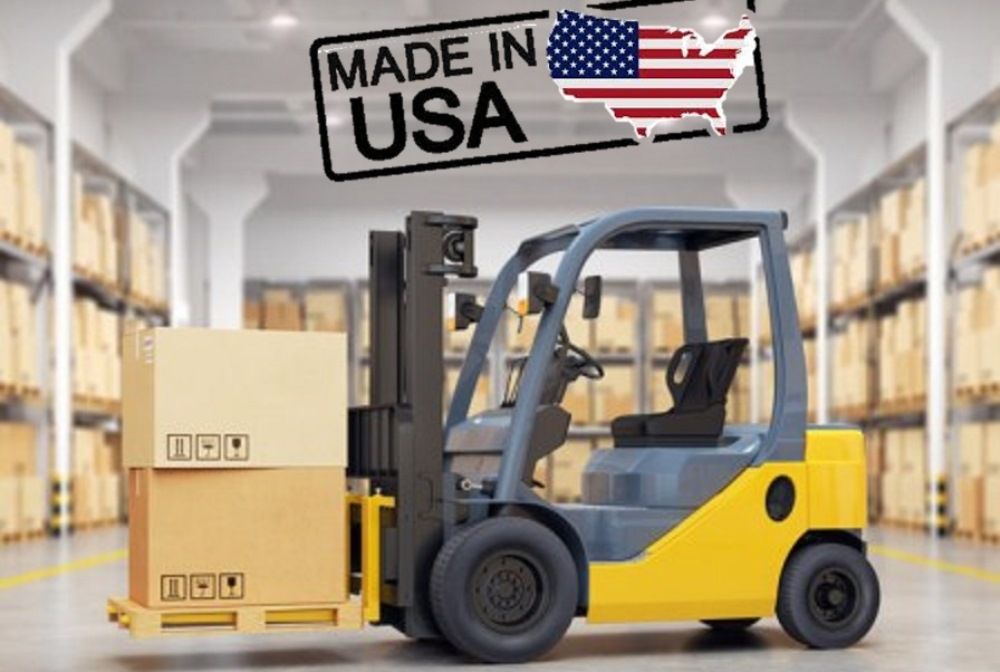
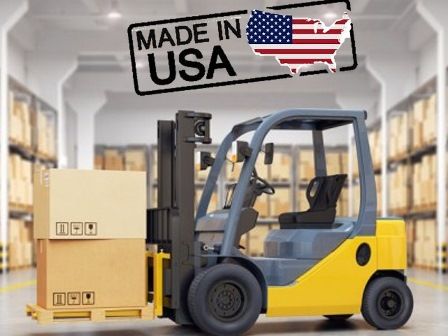
American made forklifts

“Made in America” used to mean the highest quality product. You knew you had the best because it was made right here.

Does this still hold true today?

We think so. Many of our products do come from overseas manufacturing (and we wouldn’t carry them if they weren’t high quality), but much of the forklift inventory is made right here in the U.S.

Due to anticipated depreciation in the value of the US dollar, exports are expected to rise during the outlook period, while imports are expected to comprise a smaller share of domestic demand compared with the previous five-year period.

Construction markets will continue to generate demand for forklift purchases and rentals, for use in loading and transporting construction materials within and between work sites.

American forklift companies

Forklift Market size exceeded USD 50 billion in 2019 and is set to grow at around 10.5% between 2020 and 2025. The global industry shipments are projected to exceed 3 million units by 2025. The market growth is due to the increasing deployment of this equipment for enhancing the safety and security of workers while performing tasks of lifting and transporting heavy loads.

The shifting dynamics supporting this growth make it critical for businesses in this space to keep abreast of the changing pulse of the market. Poised to reach over US$13 Billion by the year 2025.

Who is the largest forklift manufacturer in the world?

Toyota has been the leading forklift manufacturer for many years. Known for its quality and reliability, Toyota offers electric trucks in a variety of models.

Who is the best forklift manufacturer?

Today’s leaders, especially Toyota, Caterpillar, Hyster, etc. They continue to expand their reach beyond industrial trucks and into the broader supply chain services market.

What are top forklift manufacturers in 2020?

-Toyota Forkift
-Yale Forkift
-Komatsu Forkift
-Clark Forkift
-Crow Forkift
-Komatsu Forkift

The most read

Side Loader Forklift Manufacturers

Rankings are based on worldwide revenue from powered industrial trucks during each company’s most recent fiscal year.

More on this story

Rough Terrain Forklift Manufacturers

Buying a rough terrain forklift is a cost-efficient alternative to rough terrain forklift rental.

Electric Hoist Trolley

Electric Hoist Trolley: Learn about the different types of hoists and their uses. Explore the catalog and pick the one that suits your needs best.

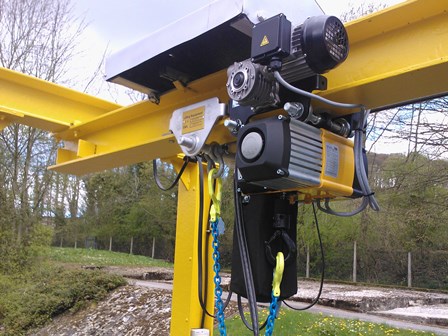
Electric Hoist trolley provides the ability for a simple hoist to become a laterally traversing versatile piece of equipment. Powered trolley hoists come in different types, including air and electric and capacities.

Applications for quick hanging for suspending hand chain hoists up through motor-driven electric hoist trolleys both top and underrunning.

Electric Hoist Trolley

Hoist Trolley Features

Trolley Wheels are forged heat-treated steel with contoured tread for use on American Standard tapered or wide flang flat flange beams. Electric hoist Trolley capacities include 1 ton and under, 2 tons, 3 tons, and 5 tons

Chain hoist trolley

Hoists come with two choices of load chain; roller and link. Roller chain provides smoother, quieter operation for light to medium duty applications. The Roller chain models are available only in hook suspension.

Link chain hoists are ideal for heavier service applications requiring repeated lifting cycles. All link chain models are available in either hook or lug suspension.

Electric Hoist Trolley

All-electric hoists are equipped with heavy-duty, positive acting, short-stroke DC rectified disc motor brake. The brake is rated at 150% torque to stop and hold the load. In addition, all hoists are provided with a mechanical load brake for load lowering control and as a backup to the hoist motor brake. An overload device is also standard on all Electric Chain Hoists. The overload device protects the hoist, operator and supporting structure by preventing dangerous overloads.

Electric Hoist Trolley

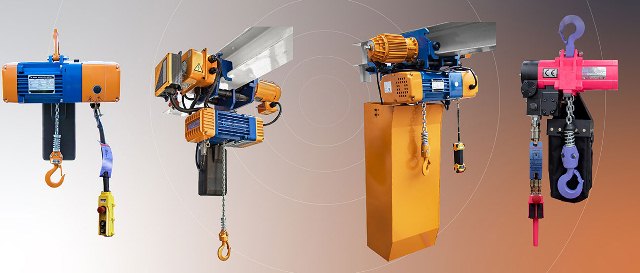
Different types of hoists

A wide variety of electric hoist trolley is provided for both hook and lug-suspended hoists. Trolleys are available in push, hand-geared and motor-driven versions. Hook-on trolleys are available in either push or hand-geared versions. Rigid Mount trolleys are available in push, hand-geared and motor-driven versions.

In addition to the different hoists and their uses mentioned, there are also double rail type hoists for double girder cranes and fixed suspension hoists, which are both variations of the same.

When you decide to buy a hoist, make sure to keep in mind the tasks you need it for and the environment you will be using it in, as well as the type of crane you are attaching it to.

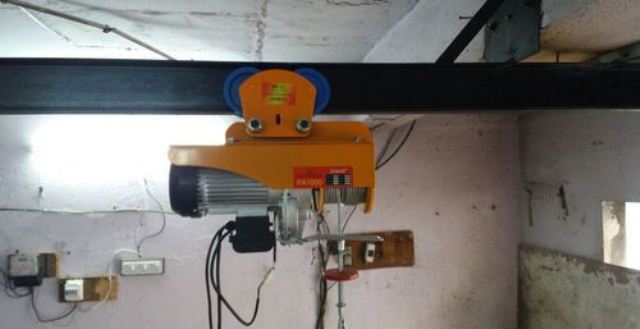
Manual hoist trolley

Push-Pull Trolley Hoist: A hand-operated hoist with a trolley attached at the end. The trolley comes equipped with wheels for easier lateral motion. This is a hoist specifically geared towards load shifting rather than cross-motion. Usually, they have a load-bearing capacity of up to 3 tonnes. This type of hoist is perfect for warehouses and storage facilities.

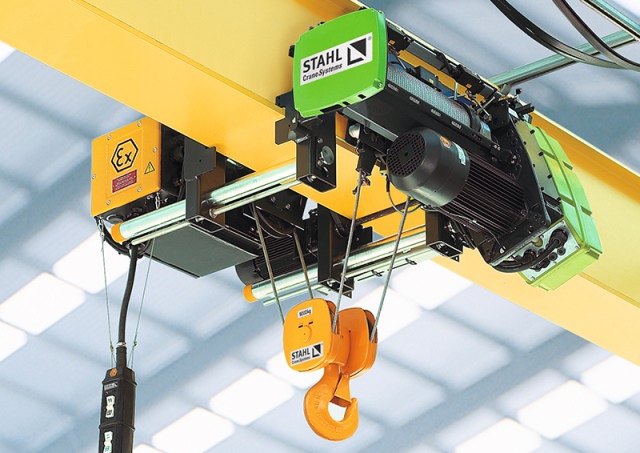
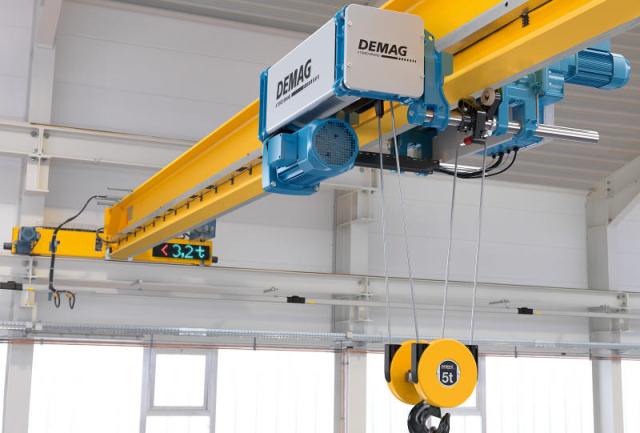
Electric wire rope hoist

Wire rope hoist : a electric hoist trolley

Power Travel Wire Hoist: A heavy-duty electric hoist ideal for rough environments. It is one of the fastest moving hoists. Using an electric motor and dual rails, it can carry up to 20 tons but is not limited to that. Specific power travel wire hoists can be designed for a heavier load-bearing capacity. Not just a flashy moniker, this hoist truly delivers the power and efficiency required in chemical plants, foundries, and steel mills.

Electric Hoist Trolley

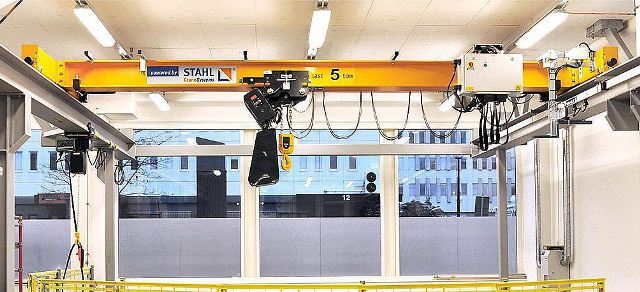
Electric hoist with girder trolley

Electric Hoist Trolley

Double Rail Hoist: While considering the different types of hoists and their uses, this particular variety is designed solely for double girder cranes. It is sometimes also referred to as the crab hoist. It is excellent for heavier loads. Double girder cranes are used for larger spans and need a specialized hoist, which is where the crab crawls

Overhead rail trolley

Flexible Trolley Hoist: It is designed for environments that require a lot of cross-movement. One of the most versatile hoists, providing ample maneuverability. It can navigate through twists and turns and easily changes direction as needed. It is perfect for use in huge warehouses and manufacturing plants.

Electric chain hoist

Electric beam trolley

Push Trolley: Hook suspension trolley (For use only with hook-type hoists)

Push trolleys are an economical alternative for low duty cycle, lighter capacity applications with lifts under 20 feet. Push trolleys are available in capacities from 1/4 to 3 tons. 1/4 thru 2-ton capacity are metric rated.

Hand-geared trolleys are designed for applications requiring close control of the horizontal movement of the hoist and its load. They are also ideal for those applications where an operator shouldn’t be near or touch the load to move or position it. The electric hoist trolley is available in capacities from 1 thru 3 tons. The 1 and 2-ton trolleys are metric rated.

Hook suspension trolleys are available in the push and hand-geared versions to run on either American Standard Section I-Beams or wide flange beams.

The trolley sides are of all-steel construction for maximum strength.

The wheels are steel with hardened treads and roller bearings for easy traversing and long life. Self-aligning frames keep the load equally distributed and are adjustable to fit several sizes of beams.

Electric Hoist Trolley

Motorized trolley hoist

The high-performance Electric Hoist & Motorized Trolley Kit is engineered for heavy-duty industrial service and is available in two-ton and three-ton capacities. This kit includes the 3-ton electric chain hoist with motorized trolley, chain container, and six-button pendant.

An operator pendant with a standard 6-foot drop is included with the kit. Three-axis, six-button pendants are set for use with Powered Gantry Cranes equipped with floor-drive control.

Trolleys are equipped with wrap-around side plates that act as bumpers to protect trolley wheels. Trolley wheels are machined and heat-treated with sealed, lifetime-lubricated ball bearings for extended product life.

The Electric Hoist & Motorized Trolley Kit is designed to last in harsh conditions, like battery rooms and other industrial settings. Lifting heavy loads is simple, ergonomic, and reliable with this durable equipment.

Safety and ergonomics are a key focus of the Electric Hoist & Motorized Trolley Kit. A mechanical load brake, motor brake, and overload clutch come standard to make this kit as safe as possible.

Ther engineers set the hoist and trolley speeds for minimal load swing as required for overhead removal and installation of industrial batteries.

This kit is required for the 3 Ton Power Drive Gantry Crane models.

Electric Hoist Trolley

How does a hand hoist work?

How does a hand hoist work?

A Chain Block is a mechanism used to lift and lower heavy loads using a chain. Chain blocks contain two wheels in which the chain is wound around. When the chain is pulled, it winds around the wheels and begins to lift the item that is attached to the rope or chain via a hook.

What is a trolley hoist?

A trolley is a wheeled mechanism from which a hoist is suspended to provide horizontal motion of the hoist along a beam/bridge rail.

What is a hoist beam?

a hoist is simply a machine that is used for the lifting and lowering of heavy loads. A hook or lug can be used to permanently mount a hoist in one location, or affix it to a trolley. A trolley is a vehicle that travels on an overhead rail or beam, normally used to move the hoist and it’s load from place to place.

What’s the difference between the chain block and the lever hoist?

A chain block is suitable for the production of the factory, miners, agriculture, electric power, building, goods lifting, vehicle loading, and unloading, etc., especially for open and no power area, more important function. Except can be separately used, can be together with hand monorail car to be hand lifting transportation vehicles, can realize the function of lift heavy things through walking around.

What’s the biggest difference between the chain block and the lever hoist?

Compared with the same lifting volume chain block, lever hoist is much smaller than the chain block, whereas, it is more efficient and widely applied.

When to use the lever hoist?

The lever hoist is driven, not use hand chain, but with a handle, the palm gourd has a neutral position. When you turn the braking of the lever hoist to braking to neutral gear and use hand to pull, the lifting chain will be very easy to pull down, or to pull back to convenient adjustment the lever hoist and traction distance, convenient to rapid traction or lifting.

How does a chain hoist work?

Chain hoist has got two chain loops – hand chain and lifting chain. The hand chain sits on a wheel located in the lifting mechanism, it needs to be pulled by hand in order to lift a load. The lifting mechanism consists of a cog, axle, driveshaft, gears, and sprockets.

The most read

I Beam Trolley Hoist

An I-beam trolley is a wheel mechanism from which a hoist is suspended to provide horizontal movement of the hoist along a beam or bridge rail.

More on this story

Electric Hoist Manufacturers

You’ll hear opinions about leading chain hoists brand names like Yale, Gorbel, Budget, Coffing, and Harrington. These hoist manufacturers have been in business for decades.

Hoist Mechanism

The mechanism used to raise and lower heavy loads to the desired height with comparatively little effort is called a lifting mechanism.

Telehandler Forklift

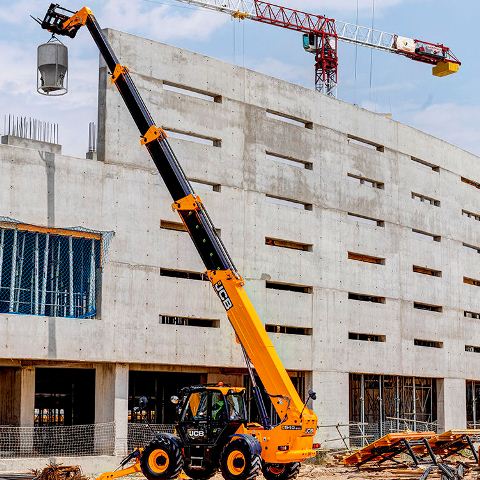
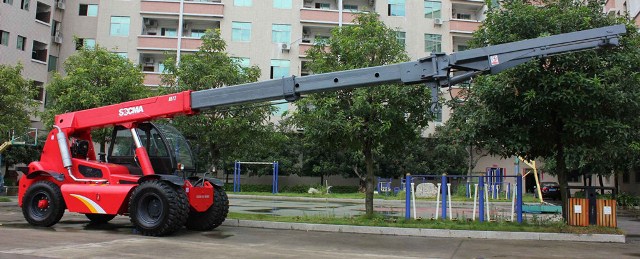
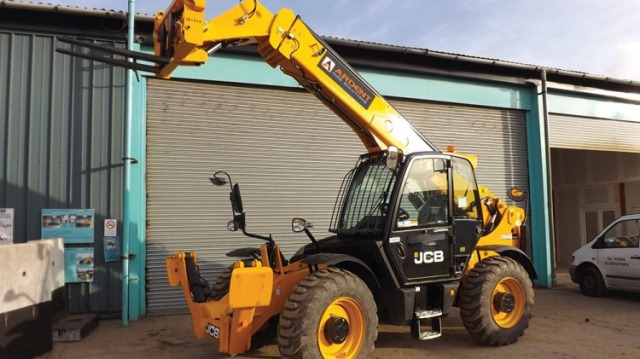
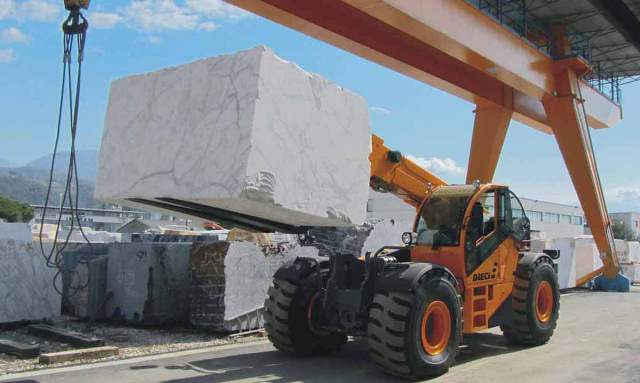
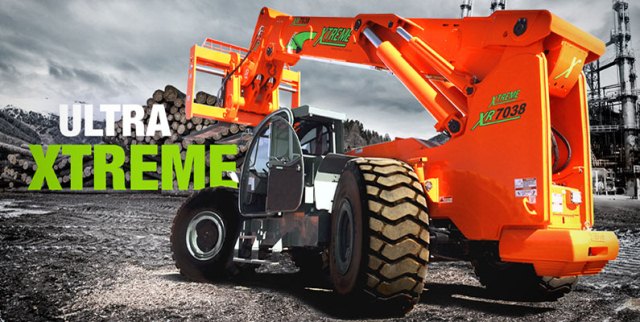
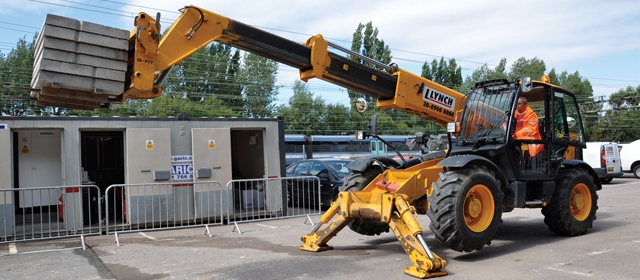
A Telehandler Forklift also known as a telehandler handler, telescopic handler, teleporter, or rough terrain forklift, is a vehicle with an extendable boom, which can be extended forward and upward from the vehicle, so it can be equipped with various lifting equipment.

Telehandlers have several attachments, such as a winch, pallet forks, muck grab, or bucket, and can be used for material handling, and personnel elevation. A telehandler can be rented by the day, week, or month.
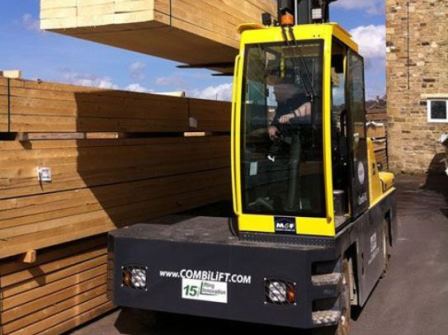
Telehandlers are widely used in construction, agriculture, industry, mines and quarries, environment, logistics, and other markets. When you want to rent, buy or sell you can find it with these names on the web pages:

  • Extended forklift
  • Telescopic lift
  • Teleporter forklift
  • Telescopic loader
  • Telescopic forklift
Telehandler Forklift

What is a telehandler forklift?

Telescopic forklift:

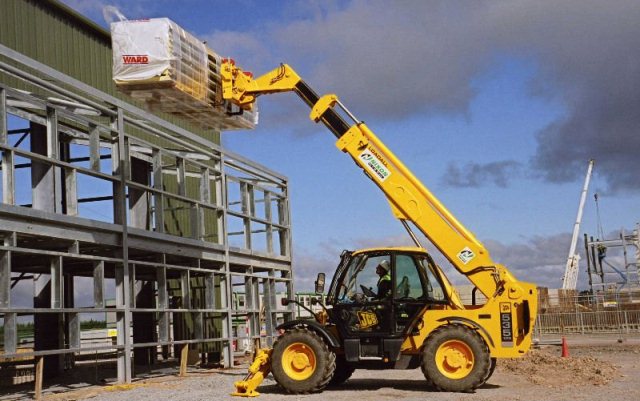
Telehandlers (also known as Rough Terrain Telescopic Handlers or Variable Reach Trucks) make a valuable contribution to the construction process by enabling materials to be unloaded from delivery vehicles, transported around construction sites, and placed at height (reach).

They are versatile machines that can be fitted with a wide range of attachments such as buckets, skips, work platforms, and crane jibs.

Telehandler Forklift

Forklift telehandler for Rent

Whether used for agricultural applications or on a construction site, a telehandler forklift is one of the most common industrial pieces of equipment. Despite its frequent use, however, many people confuse these vehicles with forklifts or cranes.

A telescopic handler provides some of the benefits of each of these pieces of equipment, making it suitable for a variety of tasks.

With this guide, you’ll learn more about telehandlers, including how they’re used, popular telehandler models, how much does the rent cost? and safety tips for using them.

But first, take a closer look at some of the basics of telehandlers.

To find a line of telehandlers available, although availability will vary based on your location, the following are some examples of the types of telehandler models you can find for rent:

Rotating Telehandler

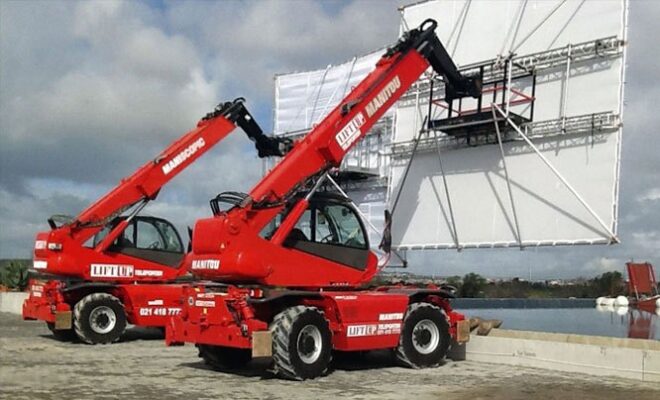
Rotating telehandlers have all of the features of the non-rotating type with the addition of a rotating or slewing superstructure on which the boom and operator’s cab is mounted.

These machines also have outriggers fitted at either end of the chassis which enable the entire chassis to be lifted clear of the ground for maximum stability.

The main advantages of these machines over the non-rotating type are compact chassis size, enhanced lifting height, increased stability, and ease of placing loads without moving the chassis.
All telehandlers can be fitted with a wide range of attachments such as buckets, skips, work platforms, and crane jibs.

Telehandler Forklift

Heavy lift telehandler

Non-rotating telehandler

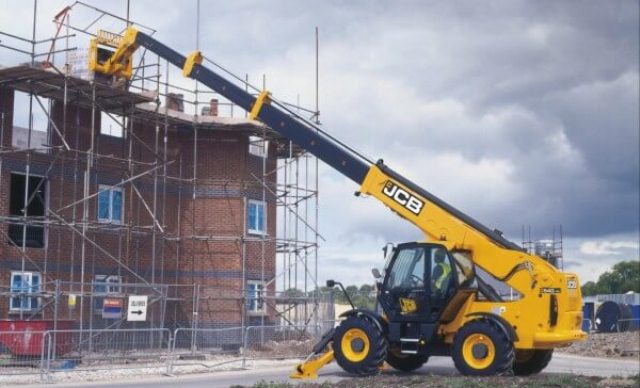
These machines comprise a powered wheeled chassis onto which is mounted a telescopic boom, pivoted on the chassis, which can be elevated from below the horizontal to an angle approaching the vertical. The outer end of the boom is fitted with a fork carriage and forks for handling unit loads. Leveling of the forks in the longitudinal plane, as the boom elevation changes, is carried out automatically.

These machines are able to transport loads from one part of a site to another and place the load at height. On construction sites, the wheels are generally fitted with lug grip tires to enable the chassis to negotiate unpaved ground. Many telehandlers are fitted with stabilizers which are deployed when the machine is stationary to provide additional stability and enhance the machine’s lifting capacity.

Telehandler Forklift

Construction forklift telehandler

It is essential that in managing the use of telehandlers, adequate attention is paid to all aspects of the process – selection of the correct equipment for the application, planning its use by competent people, monitoring the activity and rectification of issues; if anyone aspect is ignored the probability of an incident will increase significantly, putting both the machine operator and people in the vicinity at risk.

Telehandler Forklift

Forklift extensions

An effective and safe telehandler is one that is well matched to the type and size of load to be carried and lifted, together with the environment in which it is to be used. Attachments for use with telehandlers should be chosen with care to ensure that the combination of telehandlers and attachments is both safe and productive.

It is essential that all attachments are compatible with the telehandler with which they are to be used. Where necessary and appropriate, the telehandler manufacturer should be consulted when third-party attachments are to be used. The selection of the telehandler and any attachments should be part of the planning process.

The Provision and Use of Work Equipment Regulations require that employers ensure that work equipment provided for their employees is the most suitable for the purpose for which it is being used and reduces or eliminates risks to the user and other people.

Telehandler Forklift

Telehandler safety

Unfortunately, there have been a significant number of accidents involving the use of telehandlers, which have tragically included a number of fatalities. *

Safe Use of Telehandlers

Two of the most significant hazards associated with telehandler operation are lateral stability and visibility.

Lateral stability

As a load on the forks of a telehandler is lifted, the center of gravity of the whole machine rises.

This does not matter if the machine is level: if however, the machine is on a cross slope, the center of gravity will move towards the tipping line as the load is raised with a risk of overturning. This effect is exacerbated when the telehandler is driven with a raised load. Lateral stability is also an issue when lifting and traveling with suspended loads as the load may swing, adding to potential instability.

Visibility

Restricted visibility when the boom is raised or when large loads are carried, plus poor segregation has been identified as a major cause of accidents involving pedestrians and telehandlers.

Telehandlers are often fitted with aids to improve visibility and the operator’s awareness of people in the vicinity of the telehandler.

These aids should be in good working order and properly adjusted. It is the operator’s responsibility to check the condition of all secondary aids to visibility and NOT TO USE THE MACHINE if they are not present or not working correctly. It is the Supervisor’s responsibility to fully support the operator in this action.
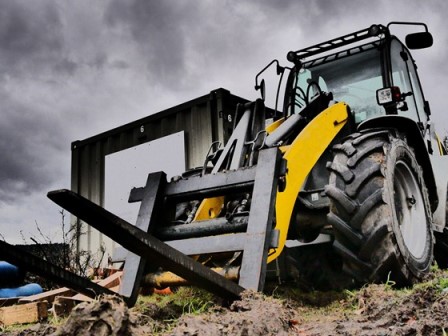
Whilst the Principal Contractor has the primary responsibility to ensure adequate segregation and the Supervisor must ensure that it is enforced, it remains the operators’ responsibility to look around and check for the absence of pedestrians before moving and whilst maneuvering and traveling.

  • If the operator cannot see clearly, they should seek assistance or leave the cab to look around to confirm it is safe to continue the procedure.
  • Wherever possible pedestrians should be segregated from moving vehicles, including telehandlers.
  • Visibility aids and operator vigilance are valuable control measures, but segregation should always take priority.
  • Thought should also be given to the operator’s ability to keep the load in view at all times, particularly with high reach telehandlers where the operator may have difficulty in judging distance at height
Telehandler Forklift

Forklift maintenance procedure

Maintenance and Inspection

The effective maintenance of a telescopic forklift is an essential part of safe operation. As with all machines, a telehandler will wear, deteriorate, and can suffer damage over time.

The maintenance process, including checks and inspections, monitors, prevents, and rectifies this deterioration. It is important that the person asked to carry out these tasks has the necessary machine-specific training, experience, and competence in both periodic and breakdown maintenance.

Telehandlers require the manufacturer’s preventative maintenance instructions to be strictly complied with if safety is to be maintained in use. Checks and inspections should be carried out taking into account the frequency of use of the telehandler and the environmental conditions in which it works.

Both the user and owner of the telehandler and any attachments used with it, have a responsibility to ensure that they are maintained in a safe working condition. In practice, the maintenance, other than pre-use checks, is normally undertaken by the telehandler owner on behalf of the user.

Teleporter forklift Design

Design Principles:

The scope of this Standard very clearly states that it applies only when the telehandler is stationary and lifting on substantially flat, level, and compacted ground or traveling with a load. It also applies only to use with forks. Consequently, if a telehandler is used in other circumstances such as traveling or lifting on slopes or with attachments other than forks, the additional risks need to be reassessed.

As part of the test process to ensure conformance with the Standard, telehandlers are placed on a platform, which must be tilted to preset angles to assess stability. Across the slope, and with a rated maximum load at full lift height*, this angle is only 7°. Most telehandler operators and supervisors, when asked, estimate that it is in the region of 25°- 30°, which is a significant overestimate.

*The procedure is somewhat more complicated than this in reality

Telehandler Forklift

Telehandler lift

With the rated load in the traveling position, the minimum tilt platform angle required is somewhat greater at 26 degrees. However, it is clear that raising the mass of the boom and/or load greatly decreases stability.

Because telehandlers normally have freely oscillating rear axles, the tipping lines form a triangle, rather than the rectangle of machines supported on outriggers such as rotating boom telehandlers and mobile cranes. This has the effect of reducing lateral stability, particularly with the boom raised.

All the stability tests carried out on telehandlers during their design and development are performed with a standard load which consists of a cube with 1-meter sides. Using a load with physically larger dimensions, or which is not homogeneous, presents extra risks that must be assessed.

To maintain stability a telehandler:

  • Should only be used on firm ground that resists sinking of the wheels or stabilizers (if fitted);
  • Should lift vertically, either being on level ground or using a frame leveling feature;
  • Maybe less stable with a different shaped load;
  • Should be stationary with the brake applied, for all “normal” lifts;
  • Should only be used by a trained, certificated and competent operator.
Telehandler Forklift

Telehandler Tyres

The Effect of Tyres on Stability: Tyres play a vital part in the stability of telehandlers. Stability and load-carrying capacity can be adversely affected by issues such as:

  • Incorrect tyre pressure
  • Differences in the diameter of tyres on the same axle due to differential wear
  • Incorrect ply rating
  • Use of tyres which are not of the required performance specification
  • Tyres with identical nominal sizes being of different physical size
  • Poor tyre repairs.

Load moment indicator

From the first designs in the mid-1970s, telehandlers have been fitted with a device that monitors the tendency of the telehandler to tip over in the forward direction. The correct name is a Longitudinal Load Moment Indicator – LLMI.

It’s vital to understand the functioning and, particularly, the limitations of this device. First, and most important, it is not a Safe Load Indicator!

The LLMI works by sensing the load upon the back axle. As the load on the forks is increased, or the boom extended, the load moment (load x distance) increases and the rear axle becomes ‘lighter’. At a preset value, the LLMI sounds and shows a warning. However, the LLMI only senses forward stability, not rearward or lateral stability and it is essential that operators understand this limitation.

Some manufacturers have linked this with a control device, which blocks further destabilizing motion when the stability limit is approached. In this case, the device is called a Longitudinal Load Moment Control or LLMC. These are fitted on a new telehandler manufactured after September 2010, however, there is no requirement to retrofit on older machines.

Telehandlers for sale

Previous models for rent, for sale, new or used have to be reviewed in more detail by exploring the equipment. You’ll find all kinds of written and video reviews from renters, landlords, and industry experts for various models of telehandlers when you search online.

Telescopic forklift training

Driving with the Boom Raised

Telehandlers should always be driven with the boom lowered to ensure that the center of gravity of the machine and the load are as low as possible. Driving with the boom raised should never be considered as “normal” practice, for all of the above reasons. It introduces an extra risk that must be assessed.

If the site is so restricted that maneuvering is impossible without raising the boom, site management should re-assess the use of a telehandler at all or, at least, consider the reselection of the machine chosen. In the past, operators have raised the boom in order to see under it.

The modern design of telehandlers makes this unnecessary and regular driving of a telehandler with the boom raised should ALWAYS be challenged by supervisors.

Suspended load safety

Lifting suspended loads

Telehandlers are often used to place suspended loads into position. The standard rating of a telehandler is for lifting unit loads on the forks; consequently, the standard load chart will not be valid for lifting suspended loads due to different load centers and the effect of any side slope.

From 2010 newly manufactured machines should be fitted with a longitudinal load moment control (refer to operator’s manual), and indication will be provided to the operator regarding longitudinal stability when stationary and the operator will be prevented from operating the machine outside of the limits determined by the manufacturer. Such machines may provide additional safety when lifting suspended loads.

Telehandler forklift driver

Travelling with suspended loads

Traveling with a suspended load involves traveling with the boom raised from the normal transport position, with additional dynamic forces due to the swinging of the suspended load.

If the information for traveling with a suspended load is provided by the manufacturer and the activity is permitted by the site, the following points should be adhered to:

  • The boom and load should be kept as low to the ground as practicable (load 300-500mm above the ground). To facilitate this the correct length of chains, slings, etc. should be selected.
  • If necessary the boom should be extended from the fully retracted position by the minimum amount required to ensure that the load does not interfere with the front of the telehandler chassis. It is essential that the load radius remains within that allowed by the load chart for the magnitude of the load being lifted.
  • Visibility may well be reduced and planning should identify appropriate control measures, such as a marshaller to guide the operator.
  • Any load swing must be minimized by the delicate use of controls and slow travel speeds.
  • Operators should take care when braking and/or turning as this creates dynamic forces transmitted to the boom, thereby reducing stability.
  • Slinger/signallers and other personnel should never walk in front of the telehandler to steady a swinging load as it is very easy to trip, fall and be crushed by the telehandler wheels.

Telehandler operator

  • The machine should travel extremely slowly and never above walking pace.
  • The operator should follow the manufacturer’s instructions for traveling on slopes and inclines. It is essential that they do not attempt to climb, descend, or cross inclines in excess of manufacturer’s limiting values, as this significantly increases the likelihood of overturning.
  • Lightweight but bulky items like roof trusses pose a special risk. Although relatively light, they are physically large, leading to large dynamic forces and are significantly affected by the wind. Physical restrictions on-site may require the boom to be elevated in order to clear fixed obstructions. Any carrying and placing of such items with a telehandler carries a significant extra risk that must be addressed by the site risk assessment.
  • Care should be taken to avoid overhead obstructions including overhead power lines.

How much does it cost to rent a telehandler?

How much does it cost to rent a telehandler?

Prices are quoted per day, week or month. It depends on the capacity of the forklift which ranges from 5,000 to 20,000 pounds and the average rental price is 200 to 400 dollars per day, 600 to 1,200 dollars per week, and 1,500 to 3,200 dollars per month.

What is a telehandler used for?

In the industrial sector, the most common telehandler attachment is pallet forks. The telehandler is used to move loads to and from places unreachable for a conventional forklift. For example, they can remove palletized cargo from inside a trailer and place those loads on rooftops and other high places.

what is a telescopic handler?

A telescopic handler, also called a telehandler, teleporter, reach forklift or boom lift is a machine widely used in agriculture and industry.

The most read

Forklift Manufacturers

Because there are so many forklifts on the market, one of the best ways to start narrowing down your options is to consider the top forklift manufacturers and suppliers.

More on this story

Marine Forklift for sale

Large marina forklift picking up a boat