All posts by Loganx

Professional Web Writer | Motor Enthusiast | Content Creator | Logan is a dedicated and skilled web writer, passionate about engines and machines and with a talent for creating engaging and informative content. She specializes in writing about a diverse range of topics including construction, forklifts, heavy equipment, excavators, etc. SEO Optimization: Proficient in SEO best practices, ensuring high visibility and engagement for all published content.

Tower Crane Hand Signals

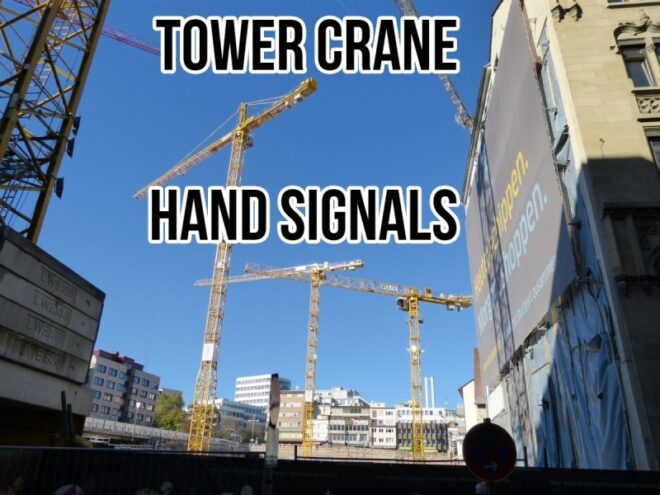
Tower Crane Hand Signals: Cranes have been in operation for more than 2,000 years, having been invented by the ancient Greeks. Today, there are a wide variety of cranes found at construction sites, such as truck-mounted cranes, rough terrain cranes and crawler cranes equipped with tracks.

The basic components of mobile cranes include a movable boom attached to a platform. The boom can be raised or lowered, as well as rotated to move a load horizontally. There are also cranes with telescoping booms. A spool with steel cables extends to the end of the boom and attaches to the load. A powerful motor provides the force to move the boom and raise or lower the load.

Most cranes also have heavy counterweights to help offset the weight of the load. Many cranes have outriggers to increase stability and help ensure that they remain level during operation.

Tower Crane Hand Signals

Crane operator hand signals

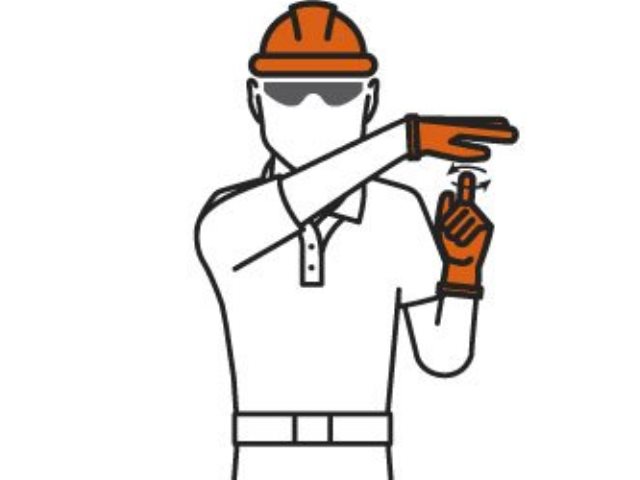
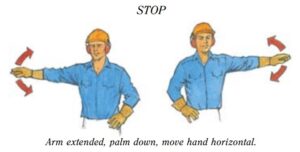
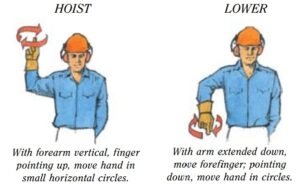
Using standard hand signals is the most widely used manner of signaling a crane operator. A hand signal chart can usually be found on the side of the crane or it should be conspicuously posted in the vicinity of where hoisting operations are being conducted.

Under the current OSHA crane standard there are only select instances when a signalperson is not required and for all those other times; having a top-flight signalperson should be a priority.

Every successful lifting operation is the result of planning and teamwork. The definition of teamwork is “a united effort by all to achieve the ultimate goal”. All lifting operations must be undertaken by a trained and competent team using a safe system of work established prior to the start of any lifting operation.

You as the tower crane operator play a vital role in the team and the aim of this guide is to give you essential practical advice to help you carry out this role successfully.

Should you have any doubts or questions regarding the information you must take this up with your employer before proceeding with lifting operations.

Tower Crane Hand Signals

Hand signals in crane operation

Hand signals for tower crane:

Tower cranes are also widely used. The jibs on most tower cranes are secured in a horizontal position and rotate on their pedestal.

The load can be raised or lowered, and travel horizontally along the length of the jibs.

Tower Crane Limitations:

It is important to be aware of crane limitations, such as their load limits. The further the load is moved from the center of the crane, the less weight the crane can lift. For example, extending a telescopic boom reduces its lifting capacity. Also, lowering the boom decreases the crane’s load limit, because the load moves further away from the crane.

When a crane picks a load, the boom often deflects downwards. This is called boom deflection. This can present two hazards. It lowers the cranes lifting capacity by causing the load to be further from the crane. It can also cause the load to swing as it lifts off.

Tower Crane Hand Signals

Tower crane signals

Crane Hand Signals:

Standardized hand signals are commonly used by the crane signal person. The signal person is the only one who should give signals to the operator. The only exception is if other personnel see a hazard, they can use the emergency stop signal. When the signal person gives directions to the operator, they must be from the operator’s perspective.

Tower crane voice signals

As with hand signals, voice communication between the signal person and the operator should be continuously maintained during crane movements. Directions should be given from the direct perspective of the operator.

Each voice signal must contain the following three elements, given in the following order: function (such as hoist, boom, etc.), direction; distance and/or speed; function, stop command. The operator, signal person and lift director (if there is one), must be able to effectively communicate in the language used.

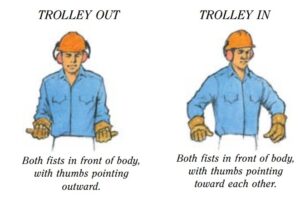
Tower Crane Hand Signals

Tower crane radio signals

Voice Signal Communication

In situations where hand signals are not appropriate, voice signals are an option. Portable radios are often used. They should be tested before crane operations begin and they should use a dedicated channel. The crane operator must use a hands-free device. Verbal signals should be short and clear. They should include three key elements, spoken in this order:

  • The function and direction
  • The distance and/or speed
  • Function stop

The function names should be the same as the hand signals described earlier. Here are some examples of proper voice signals:

  • Boom up. Slowly. Slowly. Boom stop.
  • Lower load. 10 feet. 5 feet. 2 feet. Lower stop.

The function, such as Boom, Lower, Swing and Travel are spoken first, followed by the direction or speed. The signal to stop always has the function first, followed by a stop.

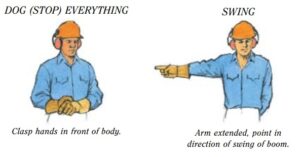
Tower Crane Hand Signals

Construction hand signals

Construction site hand signals –

Non-standard and New Signals:

A situation may arise where standard signals don’t communicate all the information the operator needs lift. In that case, a new, non-standard signal may be used, as long as it is clearly understood by the operator, signal person and lift director.

General Safety Considerations:

An overview of basic safety precautions is described.

  • Typical PPE will likely include hard hats, safety glasses, gloves, high visibility vests, and work boots.
  • Before the lift begins, check that the load hook is centered over the load and that the rigging gear is properly set. Also, check that the load stays centered during the lift.
  • Watch for power lines to be sure the boom or load doesn’t get too close.
  • Watch the boom deflection closely to make sure it doesn’t exceed the load radius.
  • Make sure other personnel stay out of the crane operating area and always keep yourself and others from under a suspended load.
  • The rotation of the cab and counterweights presents a hazard. Stay well away from its rotation zone.
  • Avoid using your hands to control a load. Use a tag line so you can stay a safe distance from the load.
  • When an operator is moving a load horizontally, it may swing if the boom stops suddenly. Stay well away from swinging loads.
  • Also, pay close attention to weather conditions.
  • Lightning and strong side winds can produce serious hazards.
  • The steel boom can act as a lightning rod and the wind pushing on the load and boom can make cranes unstable.

Hand signal for crane operation and their meaning

High Wind Conditions and Taking the Tower Crane Out of Service:

It is important that you monitor the wind speed constantly using the anemometer display in the cab. This will give you early warning of rising wind speeds and enable you to take action to take the tower crane out of service and descend the tower whilst it is still safe to do so. If the wind is gusting around the limiting wind speed it may be appropriate, following consultation with your supervisor, to remain in the cab whilst establishing if the wind speed is rising or falling.

Crane safety hand signals

Crane safety hand signals: You should report the wind speed to your supervisor on-site on a regular basis. Where the wind speed is rising this will allow the site plenty of opportunities to plan concrete deliveries etc, before the crane has to be taken out of service.

The anemometer or other windspeed indicators must be included in the daily pre-use checks.

Putting the crane in the out-of-service condition generally includes ensuring that the jib is free to “weather vane” when out of service so that the minimum wind area is presented to the prevailing wind.

On luffing jib tower cranes it is also important that the jib is left at the correct out of service radius (specified by the crane manufacturer, which is not always the minimum radius. This will ensure that there is sufficient wind area to enable the crane to “weather vane”.

When taking the crane out of service on multi crane sites you must ensure that the crane in free slew will not enter the area of other cranes that are still operating.

Tower cranes must not be left out of service with a load on the hook and the hook must always be fully raised.

Tower Crane Hand Signals

Where can crane operator hand signals be found?

A hand signal chart can usually be found on the side of the crane or it should be conspicuously posted in the vicinity of where hoisting operations are being conducted.

Who can give signals to the crane operator?

During crane operation, only one person can give signals, unless it’s for an emergency stop – then anyone on the job site can give the signal. Once the qualified signal person is identified, the signal person and the crane operator must identify each other prior to giving any signals.

Who can give an emergency stop signal to a crane operator?

Anyone who becomes aware of a safety problem must alert the operator or signal person by giving the stop or emergency stop signal.

The most read

Crane Hand Signal Chart

What are the proper hand signals for cranes?

More on this story

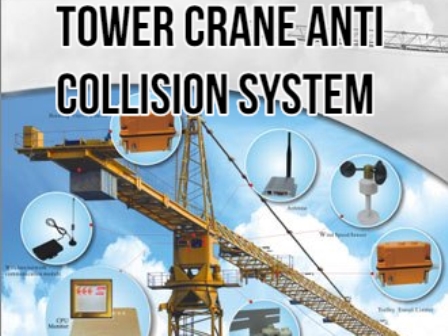
Tower Crane anti-collision System

In the worksite, multiple tower cranes are now working within one building or one construction site. The collision between the tower cranes, sometimes stalling the project..
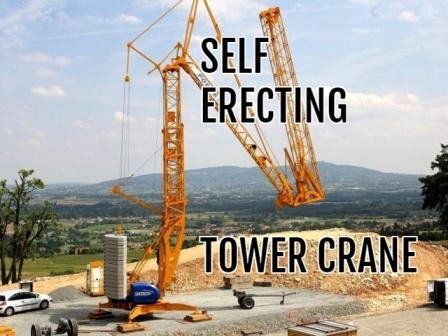
Self Erecting Tower Crane

A self-erecting tower crane is compact, easy to erect and operate, and have several transport options. Wireless remote controls, quiet and efficient electric motors, state-of-the-art variable frequency motor drives and overload protection systems are standard.

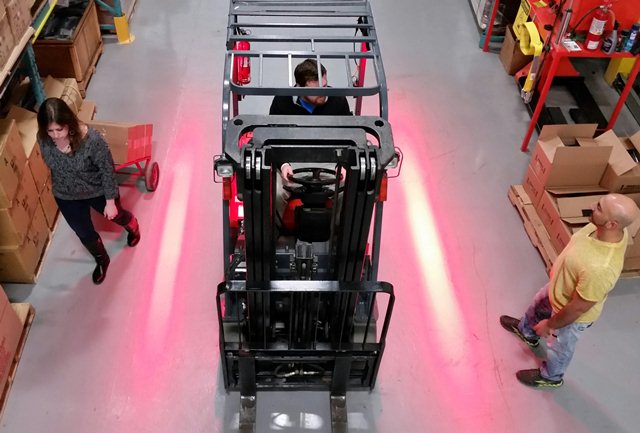
Blue led Forklift Pedestrian Safety Warning Spotlight

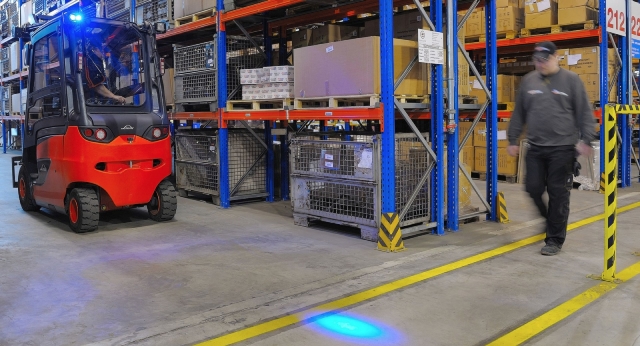
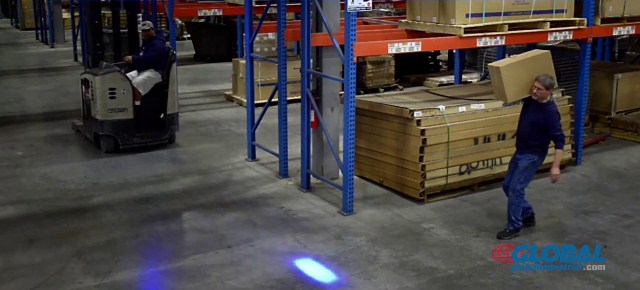
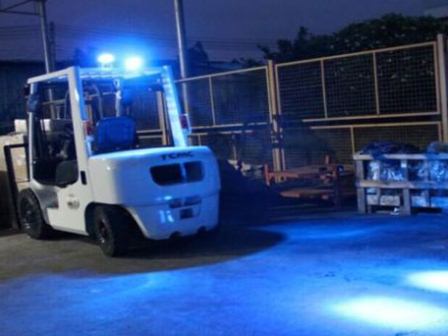
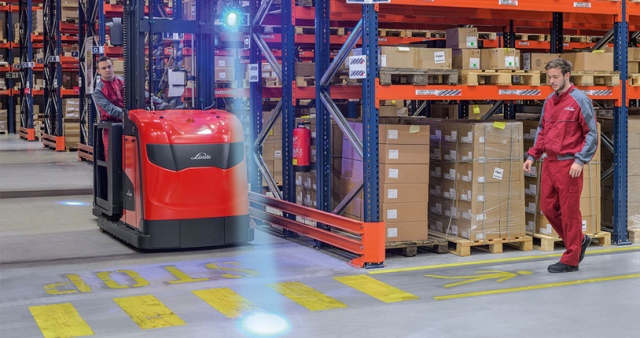
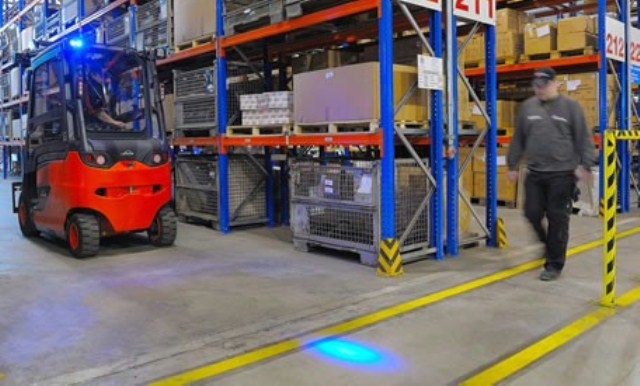
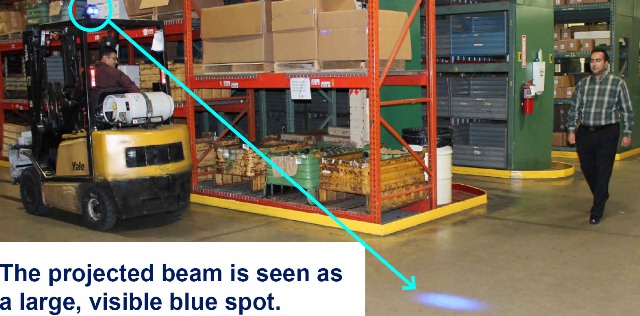
While traditional audio back-up alarms can warn workers of your location, it often gets tuned out and blended into the ambient noise of the building. The Safety Warning Spotlight projects a clearly visible blue spot beam onto the floor that alerts pedestrians and other vehicles of the nearby presence of the forklift. (Blue led Forklift Pedestrian Safety Warning Spotlight)

Blue led Forklift Pedestrian Safety Warning Spotlight

Blue forklift led warning spotlight

Blue led Forklift Pedestrian Safety Warning Spotlight:

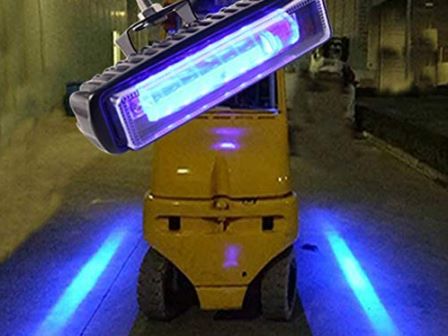
This Safety Warning Spotlight can be easily mounted to the front or the rear of any forklift. It’s constructed using a twin 5 watt solid-state, shock-resistant, Cree LED lights, yielding 600 lumens, and enclosed in an IP68 rated housing with a UV-resistant PMMA polycarbonate lens.

The LED Safety light operates using the forklifts vehicle electrical power and configured for a 10 volt to 80 volt DC input range with reverse voltage protection.

That is where the vehicle approach warning light helps prevent dangerous collisions. As the forklift or other vehicle travels, a bright blue light glides across the floor about 15 feet ahead of or behind it (depending on the mounting location), letting pedestrians know that a fork truck is approaching.

Blue led Forklift Pedestrian Safety Warning Spotlight

Forklift pedestrian safety

Forklift Pedestrian Safety Tips: Operator and Pedestrian Training

  • Operators should yield the right of way to pedestrians: This is an OSHA recommendation that all forklift drivers should be aware of. Because of the size and power of the forklift, operators should stop and wait for pedestrians to clear the area before proceeding along their route with caution.
  • Pedestrians should never assume that a forklift operator sees them: While pedestrians have the right of way in forklift operating areas, that doesn’t mean an operator will always see them. A pedestrian should keep his or her eyes on a moving forklift whenever in its vicinity.
Blue led Forklift Pedestrian Safety Warning Spotlight

Forklift safety tips for pedestrians

warehouse pedestrian safety: Blue led Forklift Pedestrian Safety Warning Spotlight

  • Operators and pedestrians should have a clear system of hand signals for communication.
  • Developing a system of hand signals, such as a pedestrian always pointing in the direction they intend to walk in a facility or an operator using their hand to signal the direction of a turn, helps to increase communication and awareness.
  • It’s important to make sure that this system of communication is known to all associates and visitors in order to avoid confusion.
  • Operators should obey OSHA guidelines when operating a forklift.
  • It’s not just the responsibility of the pedestrian to reduce the risk of accidents, operators need to be trained to handle various situations as well.
  • Be sure to stop, honk the horn, and proceed cautiously at intersections to warn pedestrians of the forklift’s presence.
  • All travel and braking should be performed smoothly and in a controlled manner.
  • When vision is impaired, be sure to use a spotter and travel in reverse if a load is blocking forward visibility.
  • Your operator’s manual has tips for safe operation pertaining to your specific forklift.
  • Be sure to read and understand these guidelines prior to operating your forklift.

Types of forklift lights

Blue led Forklift Pedestrian Safety Warning Spotlight:

  • sealed beam forklift lamps
  • halogen forklift lamps
  • led forklift lights

Sealed beam forklift lamps

The most basic type of light, sealed beams are commonly used in front-facing lights in applications such as headlamps. While simple and affordable, sealed beam lights are fairly fragile, have a lower lifespan than other options, and have a lower lumen output when compared to more high-end lights. More often than not these should mainly be used indoors, where forklift visibility is already fairly good.

Halogen forklift lamps

A step up from sealed beam lights are halogen lamps. Halogen lamps are fairly recognizable, as they’ve been the standard for car headlights for several years. As such, they’re able to project a much stronger beam of light when compared to sealed beams. They’re also incredibly easy to install and simply snap into place to a connector.

Since they’re so small, they can be a bit fragile (though with slow forklift speeds, this usually isn’t an issue), and need to be handled with care during installation.

LED forklift lights

The highest quality forklift lights are far and away LED lights. They last an incredibly long time (close to 30 times the lifespan of a sealed beam light), can put out more than 1,000 lumens of light and are extremely durable when compared to other forklift lights.

With that high quality can also come a little higher price tag. However, if your forklifts are doing work that requires powerful lights, LED forklift lights are absolutely worth the investment.

Blue led Forklift Pedestrian Safety Warning Spotlight

Blue led Forklift Pedestrian Safety Warning Spotlight

What kind of warning lights for forklifts do I need?

Like with any complex machine, each part of your forklift needs to function properly to ensure proper and safe operation. Even those forklift parts that may not seem completely essential to the operation, such as the forklift lights, are important to maintaining an efficient and safe workplace.

Why are the warning lights on the forklift important?

Just like with any motor vehicle, the lights on your forklift are essential for visibility and safety. Some people may think that since forklifts rarely go faster than 6-7 mph, forklift lights are unnecessary. However, anyone who’s spent time in a factory or warehouse knows that isn’t true. Oftentimes workers wear earplugs, listen to headphones, are concentrated on their work, are surrounded by loud machinery, or otherwise have one or more of their senses distracted.

What are the types of forklift lights?

There are a few different types of forklift lights, each offering varying strengths, and lifespans. The most common are sealed beams, halogen lamps, and LEDs.

The most read

Forklift Blue lights

36% of serious forklift-related injuries involve someone other than the driver. That is where the vehicle approach warning light helps prevent dangerous collisions.

More on this story

Forklift Safety Procedures

Forklifts are extremely useful workplace vehicles, as long as they are used safely and appropriately by operators who are appropriately trained and competent to use them.

Forklift Blue Light – Forklift approach warning light

Forklift Blue Light: Making fork trucks and other vehicles in your facility more noticeable and keeping workers warned of approaching traffic is critical to reducing the potential for catastrophic, sometimes lethal injury. 36% of serious forklift-related injuries involve someone other than the driver. That is where the vehicle approach warning light helps prevent dangerous collisions.

Forklift Blue Light

Forklift blue safety lights

Forklift blue spotlight – Forklift blue safety lights – Forklift Blue Light:

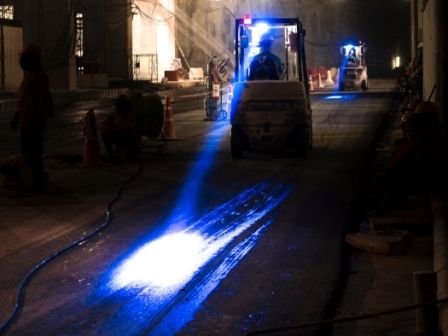
As the forklift or other vehicle travels, a bright blue light glides across the floor about 15 feet ahead of or behind it (depending on the mounting location), letting pedestrians know that a fork truck is approaching. When workers are alerted by the bright light moving across the floor, they know a vehicle is on the way.

Since the light moves only when the vehicle does, pedestrians can understand when the vehicle is stationary or on the move.

  • An easy install system virtually any maintenance department can execute.
  • Magnetic mounting option removes the need to drill your roll bar when installing the light
  • Mounts to front, back, or both ends of a vehicle (we recommend both for most forklifts)
  • 2 LED lights with powerful beam per unit are long-lasting. Multi-voltage is capable of 12V – 110V. Uses vehicle power to operate. The light runs anytime forklift is turned on – no one has to remember to activate it
Forklift Blue Light

Forklift safety light

Forklift Blue Light:

A range of visual warning devices suitable for any type of material handling equipment has been developed.

The range of safety lighting has been developed to improve site safety and increase pedestrian awareness of the presence of moving hazards.

The range includes multiple solutions that offer various visual warning styles from points, arrows, danger zones and safety repeaters, all designed to increase the security of the site by using the light as a visual warning device.

Forklift blue spotlight

Forklift Blue Light: Safety Spot Light

The safety spotlight consists of two energy-efficient, long-life LED lights attached to materials handling equipment to project a large spotlight onto the floor a few meters ahead of the direction of the truck’s travel (forwards or backward). This acts as a warning to approaching pedestrians and can be lit constantly or in some cases when the direction of travel is engaged. This product is available in multiple voltages and is available in either Blue or Red.

Forklift headlights

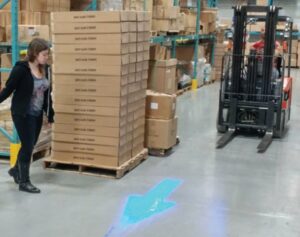
Forklift Blue Light: Safety Arrow Light

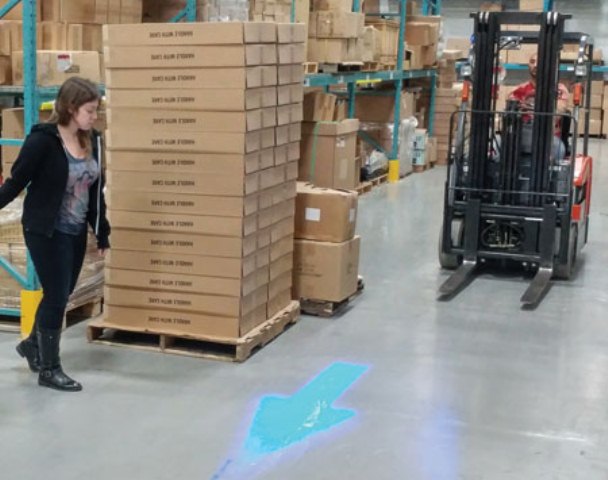
The safety spotlight consists of two energy-efficient, long-life LED lights attached to materials handling equipment to project a large arrow light onto the floor a few meters ahead of the direction of the truck’s travel (forwards or backward). This acts as a warning to approaching pedestrians and can be lit constantly or in some cases when the direction of travel is engaged. This product is available in multiple voltages and is available in either Blue or Red.

Forklift Blue Light

Danger zone light

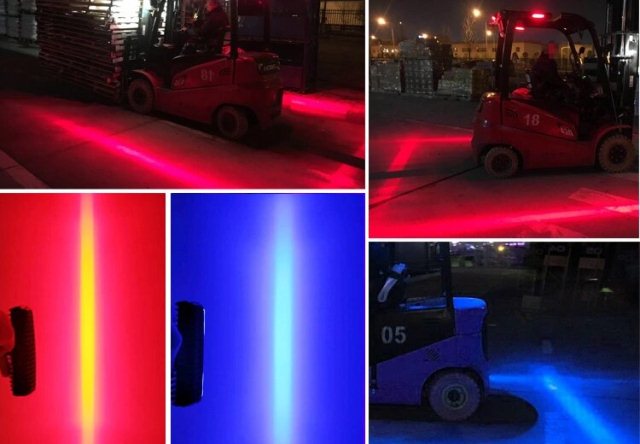
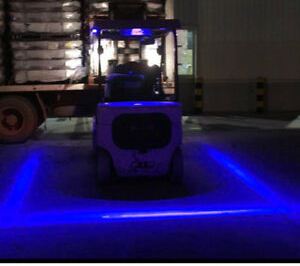
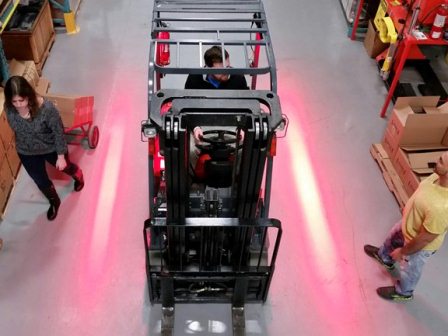
The purpose of the danger zone light is to ensure pedestrians stay a safe distance away from the forklift. The danger zone light projects a bright red or blue line on the floor to keep pedestrians away.

This zone can be adjusted to the distance of your choice. This helps prevent foot injuries and collisions from rear end swing, as well as, showing a NO GO ZONE around any piece of materials handling the equipment.

This product is available in multiple voltages and is available in either Blue or Red.

Repeater light

Forklift Blue Light: Safety Repeater Light

The safety repeater light is a high-intensity mini light bar capable of projecting different flash patterns designed to highlight the presence of materials handling equipment in the area. The purpose of such a light is to draw pedestrian attention to potentially dangerous materials handling the equipment. This product is available in multiple voltages and is available in either Blue or Red

Forklift Blue Light: Benefits of repetitive light

  • Cost Effective Warning Device
  • Can be fitted/retrofitted to any MHE
  • Robust & durable
  • Increase Site Safety
  • Long-life LED lights

Forklift safety lights red

Forklift Blue Light: Red Zone Danger Area Warning Light

40% of all forklift accidents involve a pedestrian. Ensure pedestrians stay a safe distance away from the forklift with the Red Zone Danger Area Warning Light.

  • The Red Zone puts a bright red line on the floor to keep pedestrians away. This zone can also be called the HALO ZONE and can be adjusted to the distance of your choice.
  • This helps prevent foot injuries and collisions from rear end swing, as well as, showing the NO GO AREA around any piece of mobile equipment.
  • The Red Zone is mounted on the sides of the forklift and can also be mounted on the rear and/or front to create a complete zone.
  • Each side of the forklift you want to protect will require one Red Zone light.
  • The Red Zone can also be combined with our advanced warning Forklift Blue Spot Lights, to create a complete pedestrian safety system for your facility.

Blue lights for forklift trucks

Blue forklift safety light – Forklift Blue Light – Blue Forklift Warning Light: A bright blue circle of light on the floor warns workers of an approaching vehicle.

Forklifts warning lights

Forklift Blue Light: Forklifts & pedestrians don’t mix

Forklifts cause 20,000 serious accidents a year—and a fatality every three days. They’re usually the most dangerous machine in any operation that uses them.

Pedestrians may not see or hear industrial traffic around a corner, emerging from a rack aisle, around a corner, out of a trailer, or backing up while loading or unloading.

These lights project a beam of light onto the floor ahead of or behind a moving vehicle (depending on light placement) to help warn people up to 15 feet in advance.

Forklift approach warning light

Strobe lights for trucks – Bright and highly noticeable – Forklift approach warning light – Forklift Blue Light: Warning devices such as strobes are most effective when a pedestrian is able to see the forklift coming. If the pedestrian isn’t paying attention, or if the lift truck is emerging from a rack aisle or blind corner, strobes may not be helpful. But the warning light precedes the truck, signaling its approach.

Forklift Blue Light

Forklift warning lights

Forklift warning lights are essential and there are many different types of forklift safety lights depending on the types of use or operation you enter.

Due to all the light combinations that can end up on a forklift, it can be confusing to understand what each one does. Let’s explore if you need a forklift light, the meaning of what a forklift light communicates when it is on, and how forklift lights can be part of a safe work environment.

The most common lights on a forklift are the headlights and taillights, or brake lights. When configured on a forklift, the headlights are located at the front of the forklift and the taillights are located at the rear or rear of the forklift.

Three other common forklift lighting accessories useful in a wide variety of operations are strobe lights, blue pedestrian lights, and red pedestrian sidelights.

When included on a forklift, these lights are generally located on the rear, front, and sides in order to increase safety in forklift operation.

Do you need any of these forklift lights? The short answer is: it depends. The optional lights that you put on your forklifts depend on your specific operation.

Forklift Blue Lights

What Are Forklift Safety Lights?

Forklift safety lights can greatly decrease the number of forklift-related deaths and injuries. Contact to have forklift safety lights installed on all of your lift trucks today!

How do Forklift Safety Lights work?

Forklift safety lights project an intense blue or red beam of light onto the floor in front, behind, or to the side of your forklift’s path. This spot of light will effectively warn any pedestrians of your approaching forklift and which direction it is coming from. When a pedestrian sees the light, they can safely stop before the forklift hits them.

Why Forklift Safety Lights Are Important for Protecting Your Employees?

Forklift safety lights can effectively warn pedestrians of approaching forklifts. Lights can be more effective than warning sounds, especially if you are wearing protective headphones. As well, lights can more accurately indicate the precise location and direction of the oncoming forklift than a warning alarm, as sounds can be misleading as to where they are coming from.

How to Get Your Forklift Safety Lights?

Amazon is your online dealer for forklift safety lights. Amazon sells safety lights for all of your lifting devices. Blue forklift safety light is manufactured from die-cast aluminum and delivers multi-voltage functionality. These highly durable lights are manufactured with LED lights for the utmost in light projection.

The most read

More on this story

Forklift Blue Light Installation

People’s lives depend on the correct and safe installation of emergency lights.

Forklift Safety Procedures

Forklifts are useful in the workplace, as long as they are used safely and properly by competent operators.

Forklift Pedestrian Safety Warning Spotlight

The warning spotlight projects a clearly visible blue beam of light onto the floor, alerting pedestrians and other vehicles to the nearby presence of the forklift.

Blue Back up Lights Forklift

The Safety Warning Spotlight projects a clearly visible blue spot beam onto the floor that alerts pedestrians and other vehicles of the nearby presence of the forklift.

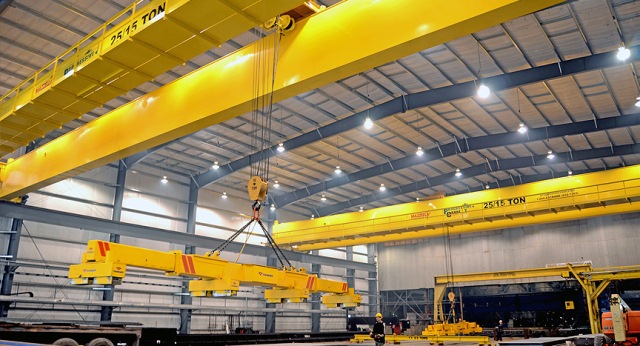
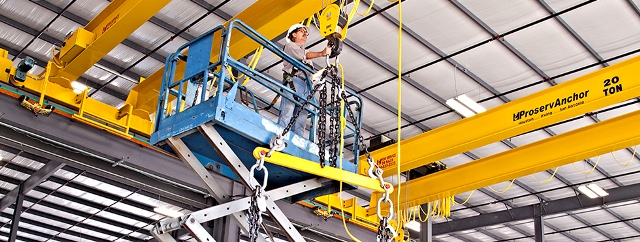
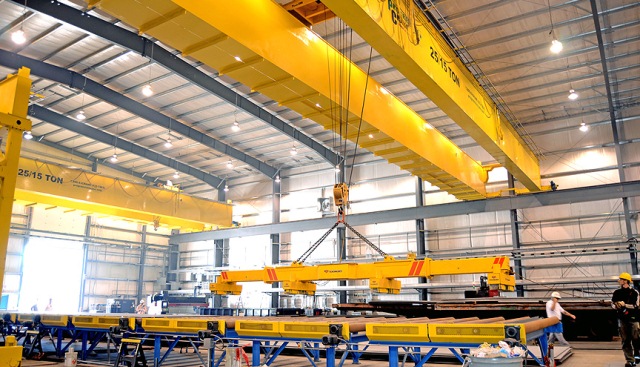
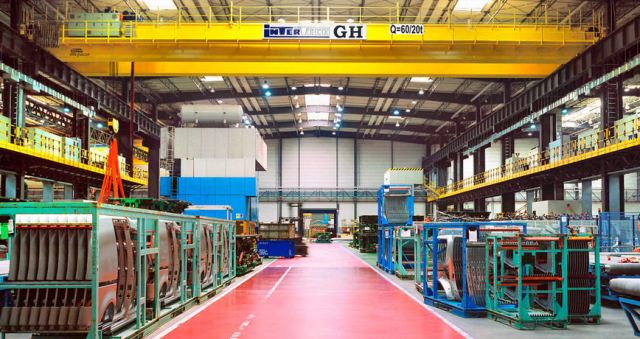
Overhead Gantry Crane

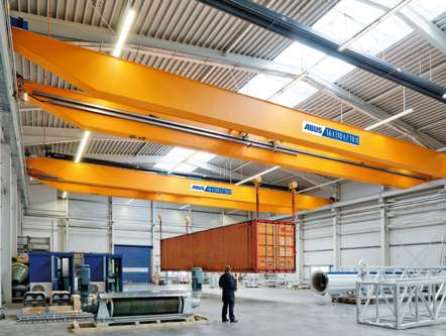
A crane is a machine that is capable of raising and lowering heavy objects and moving the objects from one place to other. An overhead crane usually consists of three separate motions:

  • The first motion is the hoist, which raises and lowers the material.
  • The second is the trolley (cross travel), which allows the hoist to be positioned directly above the material for placement.
  • The third is the gantry or bridge motion (long travel), which allows the entire crane to be moved along the working area.

Cranes are distinguished from hoists, which can lift objects but cannot move them sideways. The design of overhead cranes varies widely according to their major operational specifications such as type of motion of the crane structure, weight, and type of the load, location of the crane, geometric features, operating regimes, and environmental conditions.

Selecting the right type of overhead crane is critical to streamlining workflow and maximizing productivity. Many factors are taken into consideration which include:

Cross Travel crane

Overhead crane test questions and answers :

  • What bridge capacity is required?
  • How often is the crane to be used?
  • What span is required?
  • How long is the runway travel?
  • How high must the hoist lift?
  • Is the bridge going to be supported by the building, self-supported, or both?
  • Is the bridge going to be indoors or outdoors?
  • How is the crane powered? All motorized push-pull, hand geared, or a combination?
  • If motorized, how fast? Single or dual speeds? Variable frequency drives
  • What voltages are required?
  • What type of control? Pendant from the hoist, separate track, or remote control?
  • Any special features? Cabs, walkways, horns, lights?
  • What specifications, codes, or local regulations are applicable?
cross travel crane

Long Travel crane

Types of overhead travel crane

There are various types of overhead cranes with many being highly specialized, but the great majority of installations fall into one of four categories:

Single Girder Cranes

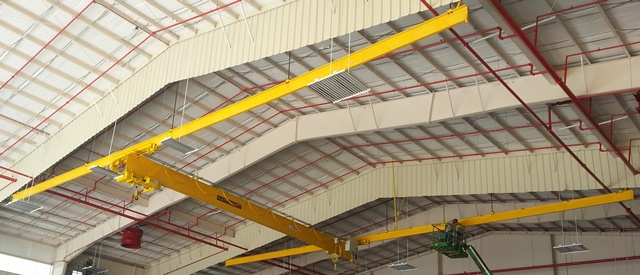
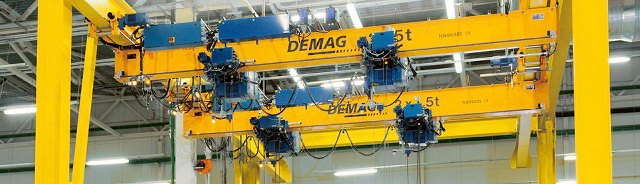
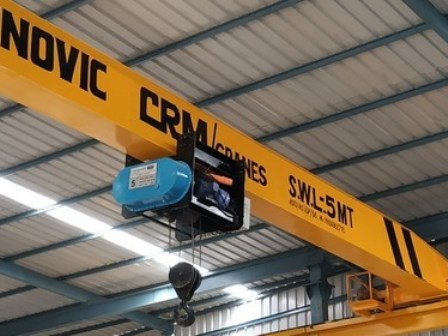
The crane consists of a single bridge girder supported on two end trucks. It has a trolley hoist mechanism that runs on the bottom flange of the bridge girder.

Double Girder Bridge Cranes

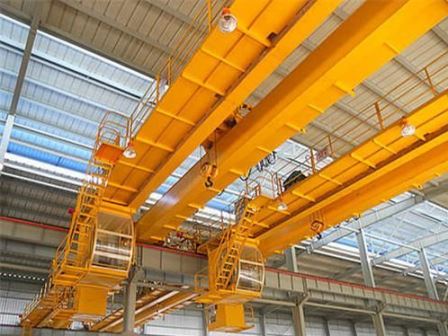
The crane consists of two bridge girders supported on two end trucks. The trolley runs on rails on the top of the bridge girders.

Gantry Cranes

These cranes are essentially the same as the regular overhead cranes except that the bridge for carrying the trolley or trolleys is rigidly supported on two or more legs running on fixed rails or other runways. These “legs” eliminate the supporting runway and column system and run on a rail either embedded in or laid on top of the floor.

Monorail

For some applications such as production assembly lines or service lines, only a trolley hoist is required. This type of crane is designed using I-beams like those found in ceiling structures of many factories. The trolleys run along the flat surface on the bottom horizontal bars of the beam. The hoisting mechanism is similar to a single girder crane with the difference that the crane doesn’t have a movable bridge and the hoisting trolley runs on a fixed girder.

Single vs double girder crane

Which Crane should you choose – single Girder or Double Girder

Based on the CMAA (Crane Manufacturers Association of America) specifications, both single and double girder cranes are equally rigid, strong, and durable. The principle difference between single and double girder cranes is hook height (how far above the floor your hoist will lift).

Double girder cranes typically allow 18-36 inches higher lift, because the hoist is placed between the cross girders rather than under them. Therefore, the depth of the cross girder is gained by switching to double girders.

Overhead crane cost

Cost Considerations; single girder cranes may cost less for several reasons:

  • Only one girder is required
  • The trolley is simpler
  • Fright expenses are reduced
  • Installation is faster
  • Runway beams are lighter

However, not all cranes should be designed with a single girder. Generally, if the crane has to handle more than 15 tons or the span is more than 80 feet, a double girder crane is a preferred option. Double girder cranes are also highly suitable where the crane needs to be fitted with walkways, cabs, magnet cable reels, or other special equipment.

The Crane Manufacturers Association of America (CMAA) is pretty much the head kahuna of the US crane industry. Every reputable crane builder conforms to CMAA Spec 70 (for double girder cranes) or CMAA Spec 74 (for single girder cranes).

Crane Configuration

  1. Under Running (U/R)
  2. Top Running (T/R)

Under running crane

Under running or underslung cranes are supported by using suspension-type support that is connected to the bottom of the frame.

The crane wheels are supported from the bottom of the flange of the crane beams which act as a crane rail and usually only span a portion of the column-to-column span of the structure.

Under running, cranes are typically available in standard capacities up to 10 tons (special configurations up to 25 tons and over 90 ft spans). Underhung cranes offer excellent side approaches, and close headroom, and can be supported on runways hung from existing building members if adequate.

The under-running crane offers the following advantages:

  • Very small trolley approach dimensions meaning maximum utilization of the building’s width and height.
  • The possibility of using the existing ceiling girder for securing the crane track.

The following are some limitations to under-running cranes:

  • Hook Height: Due to the location of the runway beams, hook height is reduced
  • Roof Load: The load applied to the roof is greater than that of a top running crane.
  • Flange Loading: Lower flange loading of runway beams requires careful sizing; otherwise, you can “peel” the flanges off the beam
Under running overhead crane

Top Running Crane

The crane bridge travels on top of rails mounted on a runway beam supported by either the building columns or columns specifically engineered for the crane.

Top running cranes are the most common form of crane design where the crane loads are transmitted to the building columns or free-standing structures.

These cranes have the greatest variation in capacity, span and service class and usually span the full width of the framing supports. These are available in both single girder and double girder configurations.

Overhead crane components

  • The function of a crane is to move the lifted load horizontally and longitudinally in the building.
  • The lifted load is usually supported with a hook which is cabled to a hoist.
  • The hoist is supported by a trolley that moves horizontally along the crane bridge.
  • The crane bridge is connected to a number of crane trucks at each end depending on the capacity and span.
  • The crane trucks can have 2, 4, or 8 wheels based on the capacity of the crane. The wheels ride along a crane rail which is supported by runway beams.

Crane components

Bridge

The Bridge is the principal structural component of an overhead crane. It spans the width of the building and comprises one or more load-bearing beams or girders. These may be fabricated steel box girders or rolled-steel joists. The bridge carries the hoist trolley, which travels along the length of the girders during operation.

Runway

The track and support system on which the crane operates.
The runway girders are usually considered a part of the building structure and are designed accordingly.

Runway Rail

The rail is supported by the runway beams on which the crane travels.

End trucks

Located on either side of the bridge, the end trucks house the wheels on which the entire crane travels. It is an assembly consisting of structural members, wheels, bearings, axles, etc., which supports the bridge girder(s) or the trolley cross member(s).

Electric drive motors typically two-speed or variable-speed units power the wheels and move the crane into the required position.

Brakes are mounted on the drive motors and are essential to prevent uncontrolled loads from becoming dangerous, and are often electrically operated. Electrical limit switches cut power to the drive motors and prevent the crane from colliding with the building structure at the end of the travel range.

Overhead crane hoist

Hoist

A hoist mechanism is a unit consisting of a motor drive, coupling, brakes, gearing, drum, ropes, and load block designed to raise, hold and lower the maximum rated load. The hoist mechanism is mounted to the trolley.

Trolley or Crab

The ‘crab’ is the ‘cross travel unit’ from which the hook is lowered and raised. A top-running trolley on a double girder crane runs on rails fitted to the top of the crane bridge. An underhung trolley on a single-girder crane runs on the bottom flange of the crane beam, with drive units connected directly to the trolley. The trolley carries the electric wire rope hoist that supports the load block and hooks through a system of pulleys. A variable-speed AC motor on the hoist drives the load up or down. Limit switches prevent the load block from colliding with the trolley.

Bumper

Bumper (Buffer): An energy absorbing device intended for reducing impact when a moving crane or trolley reaches the end of its permitted travel, or when two moving cranes or trolleys come into contact. This device may be attached to the bridge, trolley, or runway stop.

Controls

Controls for an EOT crane are usually mounted in an operator pendant or remote console and comprise various push buttons and switches that operate relays and contactors mounted on the crane.

Drive motors and the hoist motor draw substantial currents during operation and require appropriately rated contactors to switch them on and off. Variable frequency inverters provide speed control for motors where accurate positioning is essential. A master contactor is triggered by the main switch and cuts off all power to the crane if a dangerous situation occurs.

Other features on specialized cranes may include end stops, provision of a full-length platform on both girders, provision of under-bridge lighting, and provision of a closed, glazed, or air-conditioned cabin, specialized controls, etc.

How do overhead cranes work?

How do overhead cranes work?

Overhead cranes cover a rectangular area, moving a load side to side and backward and forward.
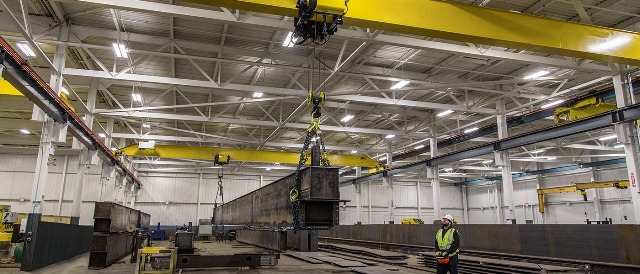
They typically incorporate a top running trolley hoist which moves along the top of the two bridge beams on its own set of wheels for increased headroom under the crane; also called a top running crane.

What is an overhead gantry crane?

A gantry crane is a crane built atop a gantry, which is a structure used to straddle an object or workspace. They are also called portal cranes, the “portal” being the empty space straddled by the gantry.

What is a gantry crane used for?

A gantry crane is a type of overhead crane that is similar to a bridge crane, but instead of moving on suspended runways, the crane uses legs to support the bridge, trolley, and hoist. These legs travel on tires or on rails that are embedded in the floor or ground structure.

The most read

Overhead Cranes

  • What are the parts of an overhead crane?
  • What is the purpose of an overhead crane?
  • How much does an overhead crane cost?

More on this story

Overhead crane specifications

The specifications depend on the essential terminology when using overhead cranes, each part, part layer, must be defined and specified.

Overhead Crane Test Questions and Answers

  • Crane operator interview questions and answers
  • Rigging test questions and answers

Overhead Crane Safe Work Procedure

What happens when there are structural defects in an overhead crane?

Straight Mast Forklift

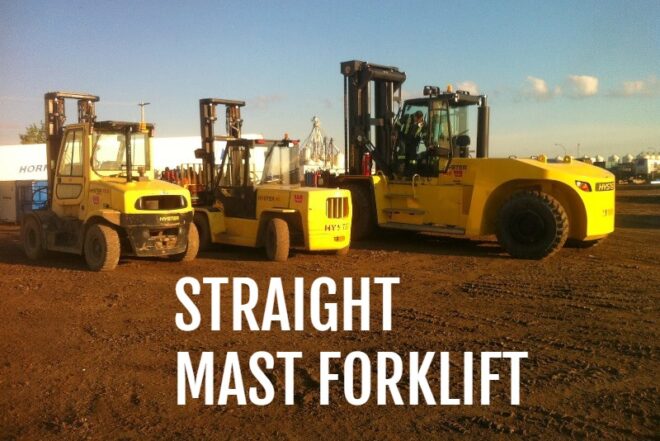
Straight Mast Forklift: Don’t see the specific model you need? Straight mast forklifts are the upright vertical assembly on the front of the machine, raising and lowering the load. All forklifts of this nature work through hydraulic displacement for lifting, and gravity for lowering, but there are different mast types with various benefits.

Straight Mast Forklift

Straight mast forklift

Rough terrain straight mast forklift:

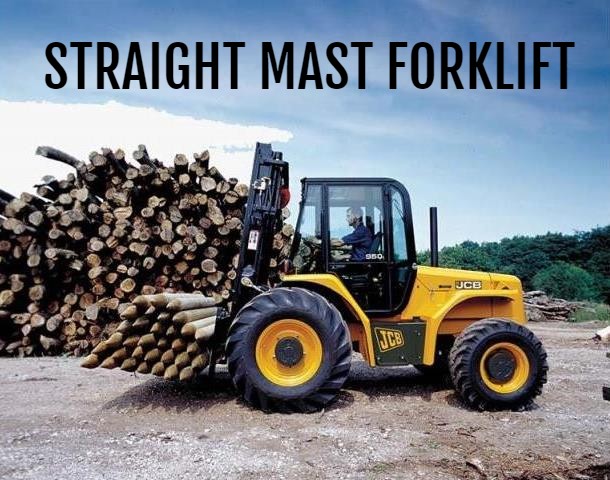
A rough terrain forklift is considered a Class 7 forklift according to OSHA classifications. These rugged machines are designed to be driven over uneven and rocky surfaces, while still transporting a heavy load. Due to size, tires, and weight capacity, a rough terrain lift is primarily used outdoors.

Rough terrain forklifts (RTFLs) are a reliable, versatile and easy-to-use solution. Perfect for virtually any rehandling environment from docks to yards, special events, timber forestry, construction sites, farms, and builders’ merchants, the RTFLs is designed for high mobility and superb productivity in rough terrain areas.

The Rough terrain forklifts have a range of operating weights, lift capacities and dimensions to suit, and they’re all powered by a world-renowned efficient engine.

Straight Mast Forklift

Swing mast forklift

Maximize storage space with articulated or swing mast forklifts. The innovative design allows these lift trucks to do the work of a standard reach truck in aisles up to 40 inches smaller. These specialty forklifts are ideal for any application, both indoors or outdoors, where space to maneuver is limited.

Articulated & swing mast forklifts can help you get the most out of your warehouse storage space, but there are other ways to optimize your warehouse design to ensure optimal efficiency. Analyze your warehouse layout to help you optimize pick processes, reduces manpower costs, and increase profits.

Swing mast forklift

Low mast forklift

With a wide range of mast models available, how do you make the right choice? Before choosing a mast it’s best to take height restrictions into consideration:

How do you calculate the load capacity of a forklift?

How high do you need to lift? Locate and measure your highest shelf to understand lift requirements and then add another 150-200 mm to your measurement. The extra space allows a truck operator additional clearance to lift above the rack and avoid dragging the product as it’s loaded or unloaded.

How to read forklift load capacity chart?

Each load plate is going to differ a little depending on the forklift.
Basic Information: Brand, Model, Serial Number, Forklift Type
Parts & Components Information: Mast Type, Front Tire Tread, Tire Sizes, Tire Type
Weight & Load Information: Truck Weight, Battery Weight, Attachments Included In Weight Calculation, Back Tilt, Forward Tilt, Load capacity, Maximum Lift height, Load center distances, Down rating of lift capacity (if the mast is fitted), Down rating for attachments (as specified on the capacity plate)

How low must your lowered mast be?

Some applications call for entering and exiting doorways. Perform a walk-through of your building and measure doorway heights to learn your lowered height requirement. If your application also requires operation on lorries, you need to take the lorry measurements into consideration too.

If you load product onto lorries, do you double-stack?

When working in a confined space the feature called free lift should be considered. The free lift function enables the forks to be lifted to a certain height with the mast at collapsed height.

Short mast forklift

Short mast forklift or warehouse forklift: Some of the most popular warehouse forklift models include the Hyster 36-38T, Komatsu 20 BX50 Hyster, and the Toyota 3-Wheel Electric Forklift. Most industrial forklifts can lift 5,000 lbs of weight, but some heavy-duty models are capable of elevating up to 25,000 lbs.

Straight mast forklift types

Straight Mast Forklifts are ideal for lifting, carrying and placing palletized materials and bulk items on any type of terrain. One of the many ways to keep productivity high in your operation is having the right truck suited to your specific application and environment. The type of mast for your truck can already make a difference. Here are all models you can choose from:

Standard forklift

Single Stage – A single-stage mast has only one channel, and therefore a limited lifting height. Single-stage masts have zero free lift and are best for outdoor applications or environments where overhead clearance is not an issue.

2 stage mast forklift

2-Stage – A two-stage mast, also known as a duplex, has two sections. The outer stage does not move and gives the option for a free lift. The inner mast section raises up to elevate the carriage and forks. A two-stage mast offers great visibility and is ideal for moving loads in trailers.

3 stage mast forklift

3-Stage – A three-stage mast, or triplex, is the most versatile forklift mast and also the most popular. The outer rails allow for free lift, and the two inner sections can lift loads higher than a two-stage. This mast type is a good choice for general warehouse applications.

4 stage mast forklift

4-Stage – A quad or four-stage mast is designed for very high stacking. Quad masts allow for a shorter collapsed height when compared to a three-stage with equivalent MFH (maximum fork height).

Straight Mast Forklift

Container mast forklift

What does container spec mean? Container spec refers to a truck’s ability to operate in standard shipping containers. What it typically means is that the mast for the truck is, when lowered, beneath the height of the overhead guard and that the truck operates a full-free-lift mast, meaning a load can be picked up when in the container without the height-restriction of the container roof being an issue. Typically, container spec trucks have a triplex, 4,300mm mast fitted.

The most read

Rough Terrain Forklift

Rough Terrain Forklifts are among the largest of the forklift family. This equipment was designed to be driven over uneven and rocky surfaces, while still transporting a heavy load. Due to size, tires, and weight capacity, these forklifts are primarily used outdoors.

More on this story

Forklift rules and regulations

FORKLIFT SAFETY: forklift loader rules, guidelines and regulations, forklift rules and regulations, fork truck safety, forklift training license.

Heavy Equipment Safety Topics

Heavy Equipment Safety Topics: Any person who operates, leased, rented, or borrowed heavy equipment (regardless of job series) must take many hours of safety training for each type of equipment before they operate the equipment. This training includes 3 hours of pre-class study, 4 hours of classroom instruction, and at minimum, 1 hour of equipment operation to demonstrate their ability to apply the safe heavy equipment operating procedures for the terrain and conditions in their area.

Heavy Equipment Safety Topics

Heavy equipment safety training

After completing the training, the operator must demonstrate through written exams and a pass/fail instructor evaluation the following knowledge and skills:

  • The Operator’s Manual
  • Proper methods of fueling, maintenance, and lubrication as required by the manufacturer
  • Pre-start procedures, which include proper safety checks
  • Starting and warming up the machine
  • Proper operational procedures, which include the use of all controls
  • Demonstration of travel maneuvers necessary for the types of terrain they will encounter
  • Proper hook-up of equipment and attachments that may be used with the machine
  • Operation of the equipment with various attachments
  • Proper shut-down procedures
  • Proper transportation and load securement procedures
  • Proper personal protective equipment
  • Service policy as it pertains to heavy equipment

Currently, there are 11 types of equipment for which has developed a safety training program. They are:

  • Motor grader,
  • Self-propelled scraper pan,
  • Skid steer,
  • Agricultural tractor,
  • Crawler dozer,
  • Crawler loader,
  • Wheeled loader,
  • Powered industrial trucks (forklift) Classes 1-7,
  • Excavator,
  • Backhoe/loader, and
  • Specialty tracked equipment.
Heavy Equipment Safety Topics

Heavy equipment operator

A heavy equipment operator is An employee or volunteer who operates heavy-duty equipment and whose operator duties are specifically mentioned in his or her position description or An individual identified in a Service written agreement (e.g., Memorandum of Understanding) who operates Service heavy equipment.

Heavy Equipment Safety Topics : Is refresher training required?

Beginning in 2012, operators must take refresher training for each type of equipment they operate every 3 years. The Regional Heavy Equipment Coordinator coordinates the web-based refresher training program.

This program requires an additional component of supervised equipment operation for those employees who have not operated that type of equipment within the past 3 years and for those employees who have exhibited a deficiency in their competency to operate the equipment. The operator’s supervisor and the Regional Heavy Equipment Coordinator determine if the operator needs to successfully complete an operational requirement.

Heavy Equipment Safety Topics

Mechanical hazard

Machinery and equipment have moving parts. The action of moving parts may have sufficient force in motion to cause injury to people. When assessing machinery and equipment for possible mechanical hazards, consider:

  • machinery and equipment with moving parts that can be reached by people
  • machinery and equipment that can eject objects (parts, components, products or waste items) that may strike a person with sufficient force to cause harm
  • machinery and equipment with moving parts that can reach people, such as booms or mechanical appendages (arms)
  • mobile machinery and equipment, such as forklifts, pallet jacks, earthmoving equipment, operated in areas where people may gain access.

Types of heavy equipment

The use of heavy equipment is an important part of residential, commercial, and roadway construction and maintenance operations. A variety of heavy equipment is used in construction and maintenance.

Heavy equipment can be classified into the following categories based on the type of operation:

  • excavating equipment
  • lifting equipment
  • loading and hauling equipment
  • compaction equipment
  • grading and finishing equipment
  • paving and surface treatment equipment

Depending upon their versatility, heavy equipment may be used for multiple purposes. For example, backhoes are normally used for excavating but they can also load the excavated materials into trucks.

Heavy Equipment Safety Topics

Safety tips for working around heavy equipment

Heavy equipment or earth moving machines have been recently reported due to multiple accidents and fatalities. It is a must that all operators have identifiable and verifiable training on the equipment before operating. Accidents can happen to both newly trained and seasoned veterans.

Mounting and dismounting heavy equipment

Falls and stepping on and off are some of the biggest causes of injury recorded by OSHA and other safety departments. This includes entering and exiting the cab of a machine. A good rule of thumb is to always maintain a 3 point contact when getting on or off of your equipment and never jump.

The three Point Rule requires three of four points of contact to be maintained with the vehicle at all times – two hands and one foot, or both feet and one hand. If handholds or steps are damaged, replace them, it could prevent major injury over time.

Heavy equipment seat belts

Wearing your seatbelt in heavy equipment is just as important as in a moving motor vehicle. There is no excuse but laziness for not wearing it at all times. Not only will it save your life in the case of a rollover, but it also keeps you firmly in your seat when operating on rough terrain, saving energy and reducing close calls by the end of a long day.

Workplace safety topics for meetings

Communication: Always be in constant communication with the people working around you. A two-way radio is the best form of communication if that option is not available then use hand signals from a spotter who has been properly trained. Communication with operators should be touched upon at every safety meeting and reinforced by the foreman on site.

Heavy Equipment Safety

Heavy equipment blind spots

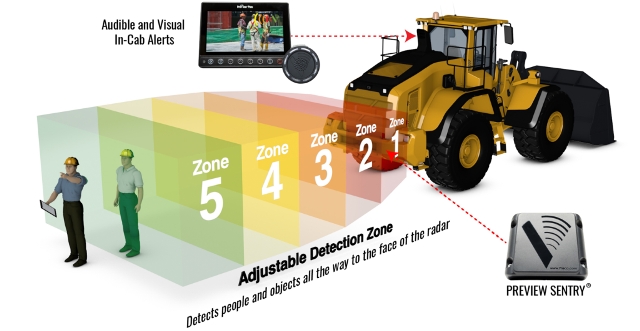
Heavy equipment operators have to be 100% sure that no one is behind them or in their blind spots when moving, even if this involves getting out of the machine and checking.

If vision is limited, have a spotter stand in a safe, visible position to guide and direct you. Inform those working around you for the day of your blind spots and require them to make eye contact with you before coming into the equipment’s vicinity. High visibility vests are mandatory on all sites.

Heavy Equipment Safety

Heavy equipment inspection checklist

Equipment should be inspected at least once daily before operating. This involves walking around with a pre-developed checklist of components to check for good working order.

Hydraulic hoses, undercarriage, oil levels, stress points, etc. are all areas that need to be inspected and reported to the maintenance/safety department before machine start-up. Using a cloud-based mobile device to complete a task such as this can greatly improve communication and response time between operator and mechanic.

Heavy equipment load securement

Load Limits: Be aware of the load limits of varying equipment when operating different machines throughout the day. Depending on the equipment set-up and size the load limits can change drastically.

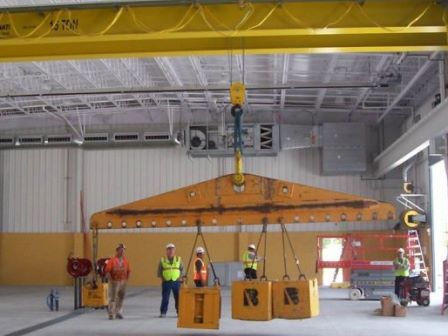
When lifting objects with a machine make sure loads are secure with the proper rigging attachments, and always inspect to ensure they are in good working condition. As with most equipment operations, confirm all workers are at a safe distance when lifting and moving loads.

Heavy equipment hazards

Overhead and Underground Hazards: Before work starts on any jobsite, all over-head obstructions such as power lines and low clearance should be identified and flagged. Underground utilities such as water, sewer, gas, and electrical need to be located by the appropriate department and marked with color-coded paint. Play it safe when getting close to the underground utility and hand dig to uncover. When leaving dugout holes that workers or the public can fall in to, be sure to set up barriers and snow fencing.

Heavy-duty truck ramps

Loading/Unloading Equipment: Always be sure to be on level ground when loading or unloading your equipment. It greatly reduces the risk of rollovers or sliding off the low-bed ramps. If you are unloading on a busy jobsite or high traffic area, make sure people are clear of the unloading area and use a spotter to guide you.

Heavy Equipment Safety

Job hazard analysis heavy equipment operator

Heavy Equipment Hazards: The use of heavy equipment on a Jobsite is vital and necessary to the overall success of the construction project. However, unauthorized or unwise use of heavy equipment can result in personal injury, loss of life, or severe loss to materials needed to complete the project. Today we will discuss some key points to keep in mind when working around heavy equipment.

  • Poor Repair or Service: Poor repair or service of the equipment is a common hazard. Poor repair may include repairing by an unauthorized person. Such repairs or servicing of equipment may jeopardize the safety of operators and others due to the mechanical failure of heavy equipment.
  • Obstructed View While Backing: Due to the size of heavy equipment, equipment operators have obstructed the view and blind spots while backing. Dirty or broken windows may also block an operator’s view of people or objects posing potential hazards.
  • Striking People and Collision with Other Equipment: Heavy equipment usually operates in close proximity to other heavy equipment and on-foot workers. The path of the equipment within the workspace constantly changes. The interactions between the heavy equipment and on-foot workers are not always coordinated.
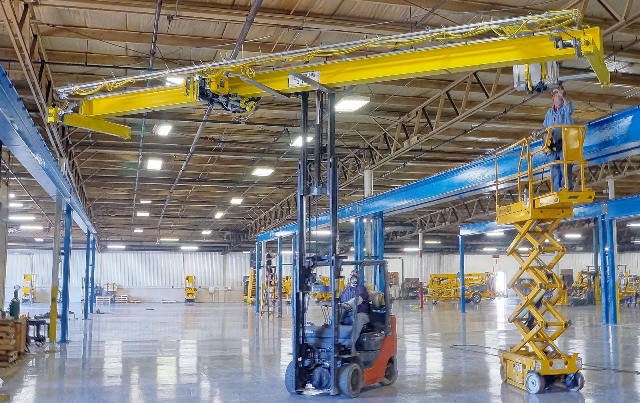
  • Caught Between Equipment and Objects: Many incidents have occurred in work areas where on-foot workers are caught between heavy equipment and other fixed objects or crushed between the equipment. This happens more often when the turning radius for the equipment or trucks is not wide enough at the entry and exit points of the workspace within the work zone.
Heavy Equipment Safety

Heavy equipment driver

  • Riders Falling Off Equipment or Buckets: Although not permitted, the casual riding of the equipment by workers (other than the operators) has been the cause of many construction workplace accidents.
  • Overturning of Equipment: Overturning of equipment can occur when the load on the equipment is more than the capacity of the equipment. Overturning also occurs when one side of the equipment is on unstable or loose ground or in a depressed area.
  • Driving at Excessive Speeds: Heavy equipment is not designed for excessive speeds. However, if they are not loaded, the operators may have a tendency to drive at higher than normal speeds causing hazards to on foot workers and others on site.
  • Unexpected Electrical Shock: Heavy equipment can come in contact with overhead and underground power lines that cause electrical shock or electrocution.
  • Failure of Lifting Mechanisms/Operational Failures: Such failures can occur in lifting equipment either due to the mechanical failure or lack of proper knowledge of the lifting mechanism.
  • Injuries to Operators Due to Ingress/Egress Difficulties: Poor ergonomic design and improper ingress and egress practices (e.g. jumping out of the cab instead of coming down slowly) can cause injuries to equipment operators.
  • Runaway Machines: Runaway occurs when the wheels are not blocked upon parking or when operators are not able to control the equipment. Parking along a steep surface without proper blocks on the downgrade side of wheels will most likely cause such a hazard.
  • Overhead Obstructions: Being struck by limbs of trees or other overhead obstructions, and moving equipment can occur when the operators are unaware of the limbs of trees or other fixed overhead objects. Another cause of such hazard can be due to the poor judgment of operators on the horizontal and vertical clearances.
Heavy Equipment Safety

Heavy Equipment Safety topics

What are the hazards when working around heavy equipment?

Whether it’s a tractor, bulldozer, forklift, excavator, paver, milling machine, etc., working around heavy equipment adds a new level of danger to workers. Statistics show that approximately 75% of all “struck by” and “run over” fatalities in the construction industry involve the use of heavy equipment.

How far away should you remain from Mobile powered equipment at all times?

This is the most important rule: Work at a safe distance from all power lines. The Occupational Safety and Health Administration (OSHA) requires that equipment be kept at least 10 feet away from power lines from 0-50 kV.

What is equipment safety?

Safety Equipment, as implied by its name, includes the gadgets that are used (worn, used, suspended, etc.) for the protection of life and to avoid injuries or casualties.

What is Toolbox talk in safety?

A Toolbox Talk is an informal safety meeting that focuses on safety topics related to the specific job, such as workplace hazards and safe work practices. Meetings are normally short in duration and are generally conducted at the job site prior to the commencement of a job or work shift.

The most read

Job safety analysis for loading and unloading

The risk of damage is an inherent part of most industries and initiatives. We can not get rid of danger completely however we can reduce the risk and control it utilizing normal procedures and good work practices.

More on this story

Heavy Equipment Transport

Unlike shipping standard freight, heavy equipment transport requires special handling, oversize load permits, and special freight carriers.