All posts by Loganx

Professional Web Writer | Motor Enthusiast | Content Creator | Logan is a dedicated and skilled web writer, passionate about engines and machines and with a talent for creating engaging and informative content. She specializes in writing about a diverse range of topics including construction, forklifts, heavy equipment, excavators, etc. SEO Optimization: Proficient in SEO best practices, ensuring high visibility and engagement for all published content.

What is Overhead Crane?

First things first – overhead cranes can come in many shapes and sizes, so if you’re not certain of the terminology it’s best to start by asking: what exactly is an overhead crane?

What is overhead crane?

crane operator

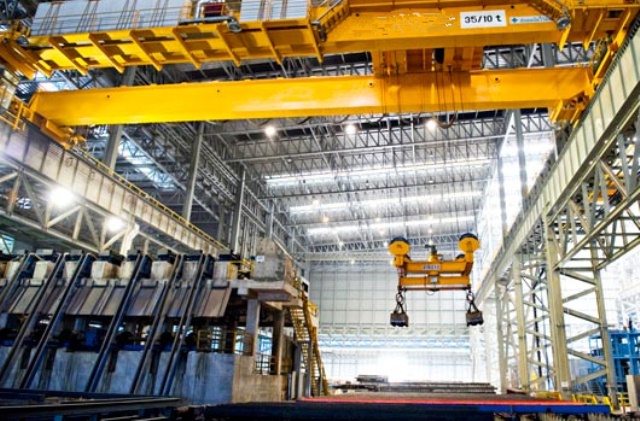
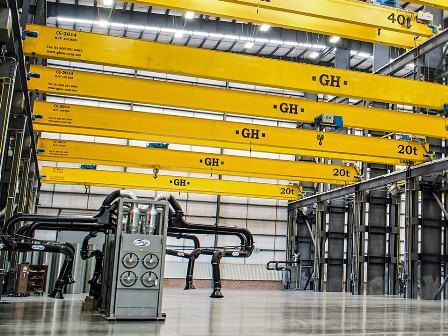
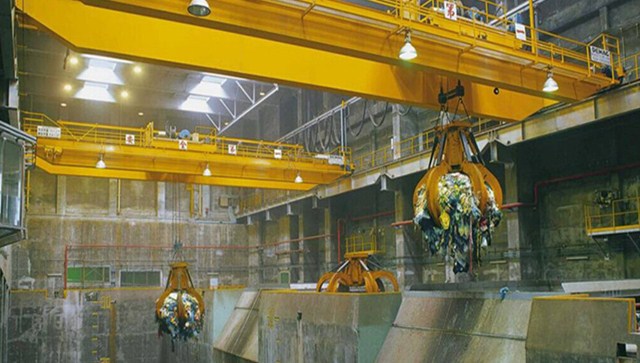
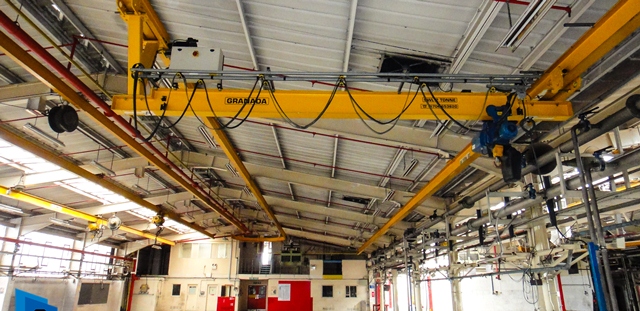
An overhead crane consists of two parallel runways which support a horizontal beam (often called the bridge or simply the crane) on which a hoist or hoist runs.

The supporting runways can be attached to the building walls or columns at a raised level, or be supported by a series of columns (often called ‘freestanding gantry steelwork’).

What is an overhead crane?

Overhead crane working principle

What is overhead crane?

Applications: Powered either by hydraulics, internal combustion, or electric batteries, they usually serve commercial and industrial crane applications. They are found in paper mills, automobile manufacturing facilities, refineries, and more.

Common applications: the initial construction and subsequent maintenance of paper machines and heavy press roles, raw material handle, hot metal storage, and steel refinement.

Overhead crane specifications

What is overhead crane?

No matter the overhead crane type, they basically function using a series of pulleys and cables. These pulleys and cables do their hoisting, lifting, lowering, carrying, and positioning from either a single or a pair of overhead steel beams, or girders, to which they are attached. From these girders, they also gain structural support.

Different overhead cranes work using different additional power lending mechanisms attached. Examples include:

  • counterweights,
  • hydraulic cylinders,
  • chain hoists,
  • levers and pivoting extended arms.
What is overhead crane?

Bridge crane

bridge crane vs.overhead crane. What is overhead crane?

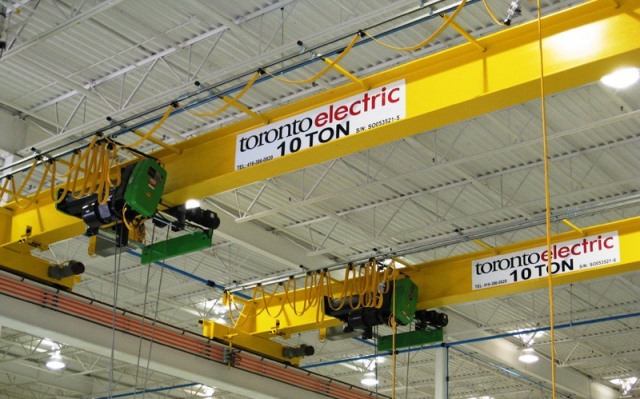
The crane bridge will usually be able to move up and down the runways (what is known as long travel) and a single pair of runway beams can support multiple crane bridges if needed.

Overhead cranes, particularly when supported by gantry steelwork, are often confused, with gantry cranes (where the crane’s columns travel longitudinally and form a single structure with the bridge to straddle a gap).

Whether you’re looking for an overhead crane, track girders or gantry steelwork, you can find anything from a brand new overhead crane system to some replacement parts.

What is overhead crane?

Overhead crane types

Types of overhead cranes: We design overhead cranes to meet any and every lifting requirement. Here’s a breakdown of the different models we offer:

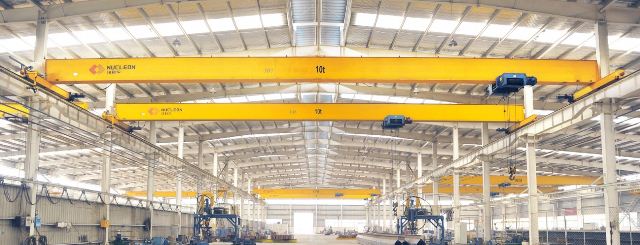
Single girder cranes

The basic overhead crane design features a single beam with a hoist running off it.

Single girder cranes are a type of overhead crane that is common in production, engineering, and many other workplaces as they cater to practically any lifting application.

Every one of our single girder cranes is made to order, meaning its size and capacity can be adapted to fit your requirements. As a rule of thumb, we tend to specify single girder crane designs for loads under 10 tonnes, anything over this will typically feature a double girder design.

Double girder cranes

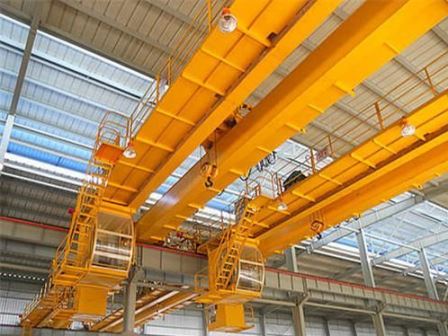
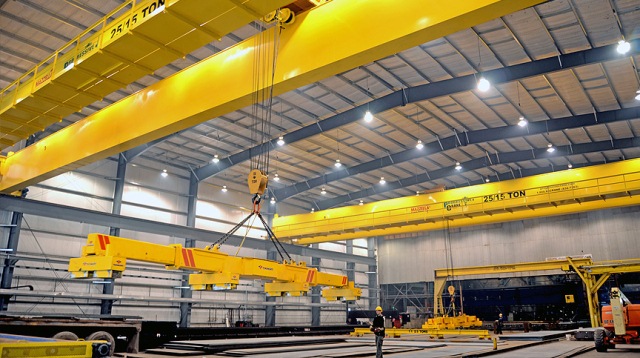
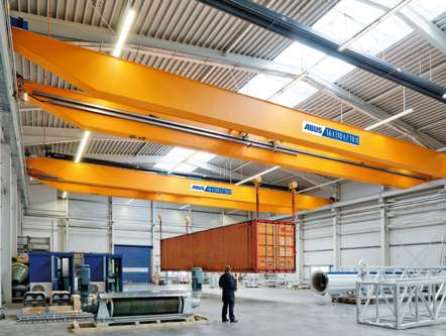
Two beams running side by side, normally with a crab hoist unit running between them – specified for higher capacities.

A double girder overhead crane is a lifting solution designed to carry medium and heavy-duty loads. By using two adjacently positioned beams, double girder cranes offer improved support for the goods being handled, allowing the movement of larger capacities. Typically we will specify a double girder crane design for loads over approx. 10 tonnes.

The U.K. is the most versatile manufacturer of double girder cranes, providing a comprehensive range for lifting requirements of all kinds. All our double girder overhead cranes are made to order – meaning they can be built to any size and adapted to handle any load.

Process cranes

Designed specially to suit critical industrial processes across various sectors.

Process cranes combine automated technology with overhead cranes to let you handle heavy-duty loads and streamline your working procedures.

The UK is a market leader in providing bespoke process cranes that are tailored precisely around your industry and the application in hand. We have provided customized industrial overhead cranes for end users and trade clients for almost fifty years and have the knowledge and expertise to turn even the most complex lifting requirements into a workable solution for your business.

Top running cranes

Specified as standard in most cases this refers to when the crane beam sits on top of the runway beams.

As a leading lifting equipment manufacturer, have considerable experience when it comes to designing and supplying top-running cranes. We can produce a top-running crane tailored around your needs, to meet any requirement whether you’re the end-user of the system or a business working within the lifting industry.

Top running cranes, also referred to as top running bridge cranes and top running overhead cranes, get their name from their end carriages that support horizontal beams or beams which span the width of the system and sit on top of the gantry rail supports. This is as opposed to underslung crane designs, in which the end carriages run underneath the gantry framework.

Underslung cranes

The opposite of top running systems, the crane ‘hangs’ below the runway, usually specified to maximize headroom.

If you require a lifting system for an application where the available headroom is limited, an underslung crane could be the ideal solution. While the end carriages which support the horizontal beam or girder of most overhead cranes typically run on top of the gantry rails, they are located underneath underslung cranes.

The opposite of this system is called top running cranes.

This is useful in workplaces where there is a low-level ceiling or where the distance between the floor and hoist needs to be maximized.

What is overhead crane?

Overhead crane design

Overhead crane design options: Every overhead crane is custom designed and built to suit the customer’s requirements.

  • Height of lift/max-height: Any
  • Span: Any
  • Capacity (safe working load): From a few kgs to over 100 tonnes
  • Gantry steelwork: Raised runway beams or freestanding gantry steelwork
  • Long travel operation: Manual, electric, pneumatic
  • Vertical hoisting operation: Manual, electric, pneumatic
  • Hoist cross travel operation: Manual, electric, pneumatic
  • Environments: Indoor, outdoor, marine, explosive
  • Delivery, installation, testing & servicing: Available
What is an overhead crane?

Why buy an overhead crane?

Overhead cranes can be designed with a series of optional extras, including pendant or remote controls, walkways for easy access, floodlights, laser sensors, and other anti-collision features. Whatever the application, can ensure you receive the perfect overhead crane lifting solution.

Kinematic Drive System

All of our overhead cranes benefit from the Kinematic Drive System, which uses advanced inverter technology to offer variable speed control on the crab as it moves along the beam for superior operating performance.

What is overhead crane?

Hoist vs crane

What is overhead crane? – What’s the Difference?

First things first:

  • a hoist helps to do one thing: move heavy loads up and down.
  • An elevator is probably the most well-known hoist. Elevators are the perfect machine for transporting loads vertically, but in no other direction (unlike a crane’s functionality).
  • On the other hand, a crane can move in two or three dimensions. Overhead cranes suspend from a beam or move along a rail.
  • Just like cement is a component of concrete, a hoist is a central part of an overhead crane. Essentially, the crane moves the hoist around.

What is an overhead crane?

Why buy an overhead crane?

When you purchase an overhead crane, you also benefit from our complete project management experience. This not only covers design and manufacture, but also delivery, installation, load testing, and final commissioning.

How do overhead cranes work?

Overhead cranes cover a rectangular area, moving a load side to side and backward and forward. They typically incorporate a top running trolley hoist which moves along the top of the two bridge beams on its own set of wheels for increased headroom under the crane; also called a top running crane.

What is an overhead gantry crane?

A gantry crane is a crane built atop a gantry, which is a structure used to straddle an object or workspace. They are also called portal cranes, the “portal” being the empty space straddled by the gantry.

How does a gantry crane work?

The bridge can have a single-beam or double-girder structure. The Gantry crane moves on a rail crane rails on four undercarriages. The undercarriage is equipped with protective arcs that minimize the chance of damage to a minimum. The wheels for transportation trolleys wheels are reinforced to avoid accidents

What is the difference between a gantry crane and an overhead crane?

A gantry crane is slightly different from a bridge crane. The general premise is the same, but the operation is different. Some gantry cranes ride along a track installed on the floor or use a V-groove caster to keep moving in a straight line. Gantry cranes are usually less expensive than an overhead bridge crane.

The most read

Overhead Cranes

  • What are the parts of an overhead crane?
  • What is the purpose of an overhead crane?
  • How much does an overhead crane cost?
More on this story

Overhead Crane Test Questions and Answers

  • Crane operator interview questions and answers
  • Rigging test questions and answers

Overhead crane manufacturers in the USA

Some have wondered if in the United States they fix, manufacture, elaborate parts, and components of overhead cranes.

Tower Crane anti collision System

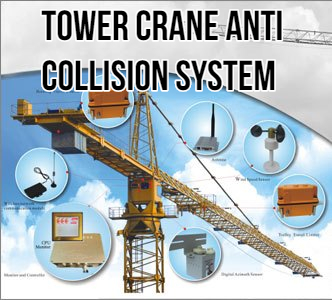
Tower crane anti-collision system: In worksite, multiple tower cranes are now working within one building or one construction site. The collision between the tower cranes, nearby structures, trees, or other towers often happens, which in turn damages the crane/other structures, resulting in heavy losses, sometimes stalling the project.

Tower Crane anti-collision System

Anti collision system for cranes

After a year-long market study, it has been seen that most of the tower cranes do not have anti-collision systems. Even the Safe Load Indicator (SLI) is not installed. Some tower cranes have safe load indicators but are unable to link with the anti-collision systems.

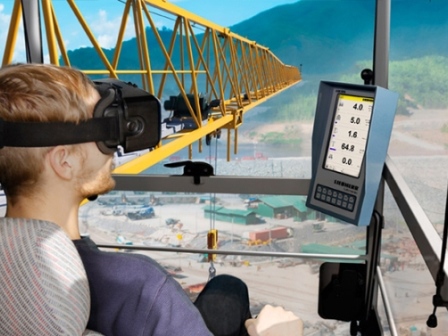
Multiple monitors/displays in the operator’s cabin also confuse the operator and lead to accidents. Frequent power failure at construction sites adds problems like improper shutdown, data corruption, non-detection of radio signals, restart, etc.

Tower Crane anti collision System

Anti collision device for cranes

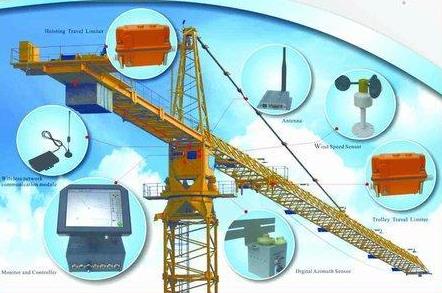
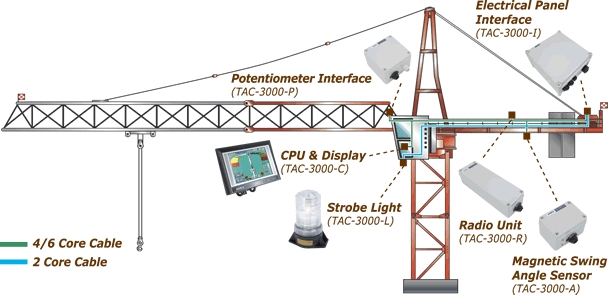
After studying all these problems, an anti-collision system has been developed with built-in SLI and wind velocity control that gives tremendous safety for any make/model tower cranes.

These anti-collision devices (ACD) come with a ground monitoring system through which one can monitor the functions of all tower cranes as well as upload data changes (like height increasing, protect some zones, etc) without stopping the cranes.

A single display shows the anti-collision functions, as well as the SLI, functions like load, radius, hook height, slewing angle and wind velocity to the operator without any confusion. This system integrates with the tower crane panels and will take care of the cut-off, alarm and display automatically without changing any OEM set-up.

This system is developed with a microprocessor, with battery backup so any power failure at the site does not affect the functioning. The communications are made through radio controls with non-licensed frequencies.

Tower Crane anti collision System

Working principle of anti-collision device

The Anti Crane Collision Switch is designed to avoid the collision of two adjacent cranes in the same bay running on the same rails. This system, when installed on the two adjacent cranes, will avoid the collision of two cranes. The system works on the principle of retro-reflective infrared waves. It consists of an emitter and sensor module and a special reflector.
The emitter emits the infrared waves in the direction of the reflector. The reflector reflects these infrared waves back to the sensor. The sensor senses the presence of these reflected infrared waves and activates an alarm signal and stops/reduces the speed of the crane. Thus if the two cranes are away from each other then the reflected waves will not reach the sensor and the crane operate normally.

The distance between the reflector and the sensor to detect the presence of infrared waves can be adjusted with the help of the potentiometer provided on the system. The maximum distances between the two crane to generate the alarm signal can be a maximum of 10 meters. The anti-collision system is specially designed for the Crane application and is suitable for continuous duty.

Tower Crane anti collision System

Anti collision sensor for cranes

Anti Collision and zone protection device can be easily installed with any make or model tower crane. The same device can also be used as a safe load indicator.

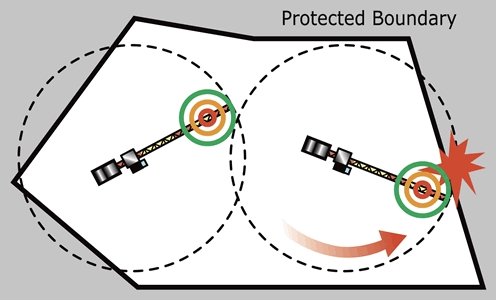
This system provides a clear visual position to the crane operator about all the installed cranes, structures, towers, and even trees as programmed around it by which the collision/accidents will be avoided.

The system includes a high-performance microprocessor, Software, wireless radio communication system and sensors to deliver accurate communication, data analysis, control, braking and data storage features. Touch Screen Monitor makes the installation and site setup simple.

Tower Crane anti collision System

Tower crane anti-collision system

It should come as no surprise to anyone in this industry that the second most common type of serious tower-crane incident reported in the last decade relates to contact with overhead power lines.

Unwanted contacts – between two cranes or between tower cranes and power lines.

While none of these reported incidents resulted in injury or death, several caused temporary power outages for thousands of nearby businesses and homes, many resulted in lost time or materials and damage to costly machinery, and all had the potential for serious injury, death, or catastrophic equipment failure.

As per the regulatory requirement, tower cranes and ancillary equipment involved in the incidents all had to be inspected, repaired if necessary and re-certified for use.

This statistic has helped guide the crane inspection team in developing its three-year Tower Crane Strategy, one element of which is a focus on raising awareness of the value of digital zoning and anti-collision devices.

Slew-limiting technologies have advanced steadily over the last 20 years. Sensors, interfaces and the software used to analyze the data have become very reliable, making the benefits for safe and efficient operation indisputable.

what causes collision?

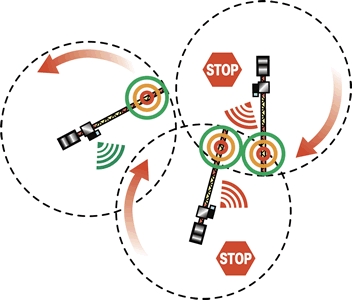
The collision of tower cranes may occur when two or more cranes over-sail with each other, any crane over-sail to the site’s boundary or to a prohibited zone. An example of a collision is the crane’s hoisting hook block & cable collides with the main jib.

How does Anti Crane Collision Switch work?

This system, when installed on the two adjacent cranes, will avoid the collision of two cranes. The system works on the principle of retro-reflective infrared waves. It consists of an emitter and sensor module and a special reflector.

The most read

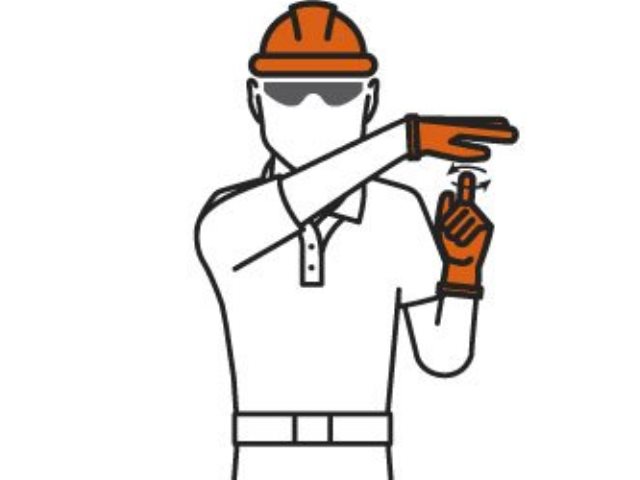
Crane Hand Signal Chart

What are the proper hand signals for cranes?

More on this story

Tower Crane Controls

Due to the nonlinear nature of the rotating crane motion, controlling these oscillations is a complex task. Additionally, the lack of sensors on many cranes that are in use today requires extra effort to design effective control strategies.

Tower Crane Hand Signals

Every successful lifting operation is the result of planning and teamwork. The definition of teamwork is “a united effort by all to achieve the ultimate goal”.

Heavy Equipment Transport

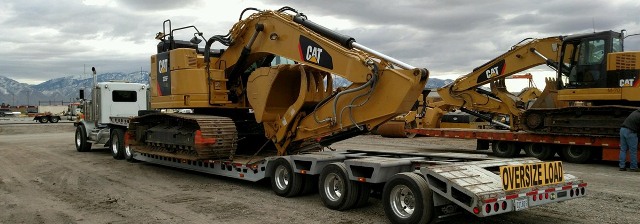
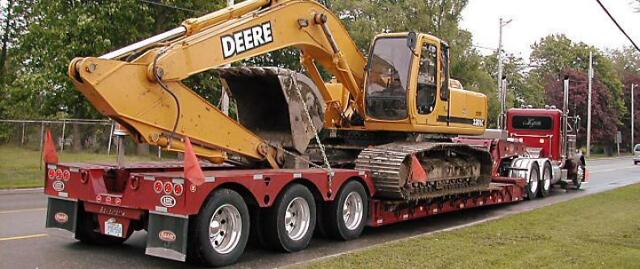
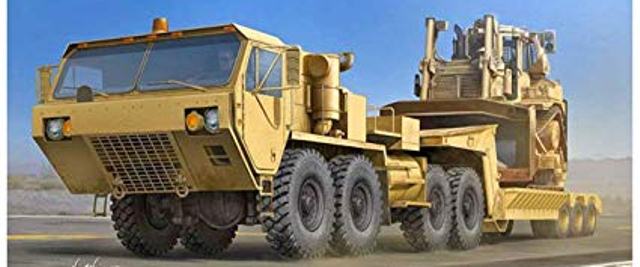
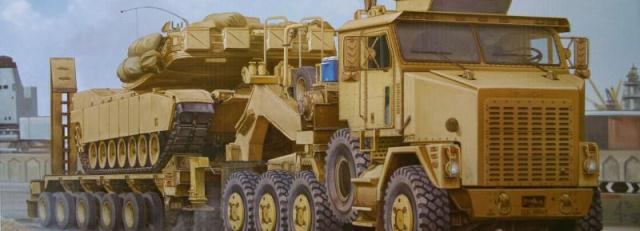
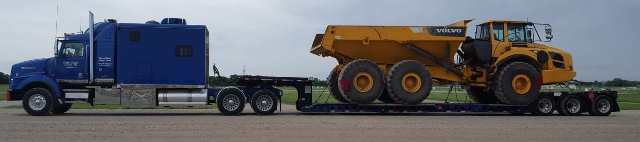
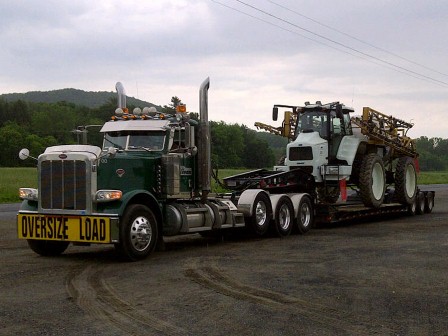
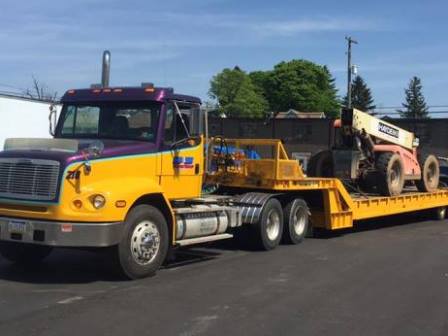
Heavy Equipment Transport: Unlike shipping standard freight, heavy equipment transport requires special handling, oversize load permits, and special freight carriers. Additionally, heavy equipment shipping needs certain specialized trailers in order to haul certain equipment items.

Road transport is a tool for reviving growth through the enhancement of competitiveness and the creation of jobs.

There is no single market without integrated transport networks. Today, road transport is the victim of its own success and faces considerable challenges.

The transport authority defined them: ensure mobility on ever more congested road networks, significantly further reduce road fatalities, lower CO2 and other emissions of pollutants from road transport to preserve the environment and lessen the impact of climate change on future generations, and decrease fossil fuel.

Heavy Equipment Transport

Transporting heavy machinery

In general, oversize and heavy cargo transportation assumes freight transfer by vehicles (combinations of vehicles) dimensions or weights and related parameters of which (eg. axle load) exceed the authorized levels.

This study analyzed only transportation of heavy indivisible units, i.e. goods which in technical terms are impossible or unreasonable to be carried by individual parts. The carrying capacity and dimensions of individual transport modes vary and are significantly different.

Port parameters allow for handling of any oversize or heavy loads to cater to every practical need of clients.

Of course, such commodities require special handling technology or use of special stevedoring machinery and equipment that is not employed in the port’s daily activities, therefore, it may have to be ordered additionally.

Further forwarding options from the port to destination are:

  • road transport
  • railway transport
  • inland water transport
  • a combination of these options

The routing is made for road transport, because:

  • road transport use the minimum allowable size and weight compared to other modes of transport
  • road transport is most flexible; a variety of routes can be used to install temporary culverts or roundabouts which in other modes is almost impossible
  • road transport can deliver goods to the destination (mounting) point; even inland waterways and rail transport have to use road transport in certain parts of the route.

Road vehicle is laden or without load is considered oversized and /or heavy if exceed the maximum authorized dimensions, permissible axle(s) load, the total weight allowed, as stipulated by the transport authority.

Heavy Equipment Transport

Heavy equipment transport services

Heavy equipment transport services require a transporter with a lot of experience in heavy haul.

These tractors, forklifts, and backhoes are big purchases, and you want to be sure they safely arrive. There are things you can do to make sure your heavy equipment shipment is smoothly and efficiently delivered. Find the right heavy haul specialist, make sure you have the right heavy equipment freight insurance, and choose the best trucking options for transporting your equipment.

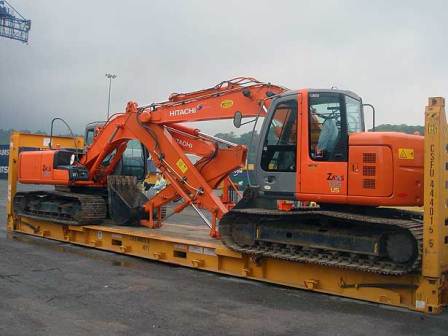
Most equipment will need to be shipped on a flatbed or standard trailer, though in some cases it may be able to be towed. For larger or non-moving equipment, you will likely require a specialized trailer such as a step-deck or a double drop deck. For international shipments, you can use a roll-on/roll-off service or a flat-rack container.

Heavy Equipment Transport

Types of heavy equipment

  • Military Equipment
  • Commercial Equipment
  • Industrial Equipment
  • Aggregate Equipment
  • Batch Equipment
  • Construction Equipment
  • Mining Equipment
  • Oilfield Equipment
Heavy Equipment Transport

Construction equipment shipping

To be ready at pick up, speak to your transporter beforehand and make sure they have all the necessary permits for transport. Also, ask them how you can help prepare your equipment for transport. They will give you tips based on their experience and your specified shipment. For example, your transporter may advise you to bubble wrap fragile levers within the cab of a tractor or secure the doors of a crane shut with zip-ties. Talk with your provider ahead of time to work out any necessary permits.

Things to Consider For Construction Equipment Shipping

There are some things that you need to check to make sure so that construction equipment shipping is done smoothly and efficiently.

  • Finding the right construction hauling specialist should be the first step.
  • Also, make sure you have the right insurance policy.
  • Choose the best heavy transport service.
  • Select the right heavy machinery transport that offers the best heavy equipment hauling rates.
Heavy Equipment Transport

Heavy equipment shipping overseas

There are a few steps you can take to prepare your equipment for shipping:

  • Check the Manual: The manufacturer’s manual is the first step to getting your machinery ready. You may have the manual yourself, or you can look it up on the manufacturer’s website. This manual may advise you to take certain measures, such as disconnecting batteries, emptying engine fluids, or securing loose parts.
  • Obtain the Necessary Permits: The FMCSA has specific guidelines for securing and transporting heavy equipment. Oversized and overweight loads will require special permits to be transported on the road. Remember that large equipment loaded on a trailer may be too tall to go under power lines and bridges, or travel certain roads. You should work with the transporter before the pickup date to secure these permits, preventing delays or legal complications.
  • Cover Vulnerable Parts: Remember that your equipment will be probably hauled in the open air, and will, therefore, be exposed to the elements. Cover any parts that will be vulnerable to rain and wind. In the winter months, prepare against damage to the tanks and lines due to cold and freezing temperatures. You may also need to protect equipment against heat. Referencing the owner’s manual should provide guidance on protection.
  • Be Prepared for Pickup and Drop-off: You will need an open area at the pickup and drop-off points to load and unload your equipment. There may also be added equipment necessary for loading and unloading, such as loading docks, ramps, or cranes.
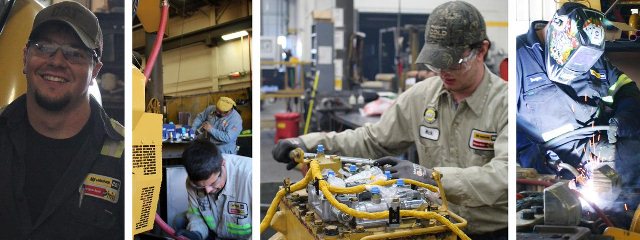
Heavy Equipment Transport

Heavy lift shipping companies

How to ship heavy equipment

There are certain measures you can take to make sure your heavy equipment shipment can go smoothly and efficiently. You will need to choose the right heavy equipment transporter, make sure you have the suitable freight insurance, and choose among the appropriate options for transporting your heavy equipment.

Most equipment will need to be shipped on a flatbed or standard trailer, though in some cases it may be able to be towed. For larger or non-moving equipment, you will likely require a specialized trailer such as a Step deck or a Double Drop deck.

For international shipments, you can use a Roll-On/Roll-off service or a flat-rack container on an overseas transport vessel. Learn more about the options below.

overseas shipping

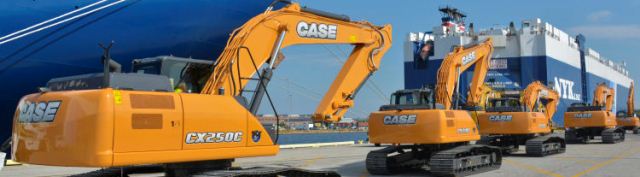
When shipping your heavy equipment overseas you have a few options. The most common method for shipping vehicles is Roll-on/Roll-off (RO-RO). Your equipment is driven on and off the transport vessel via ramps. Another option is a flat rack container.

A flat rack is similar to a flatbed truck. Your heavy equipment is placed on the flat rack and then loaded onto the transport vessel.

These racks can hold equipment up to 88,000 pounds. For some international shipments, it may be necessary to disassemble your equipment prior to shipping and then reassemble upon arrival. When shipping your equipment overseas, you will need to arrange transport to the warehouse or port where your equipment will leave from.

Flatbed trailer

Flatbed hauling is probably the most common method of shipping heavy equipment and will be more widely available with carriers. For the majority of heavy equipment shipping needs, a simple flatbed should be sufficient.

Flatbeds are available in a variety of sizes and capacities, allow for easy loading and unloading and can carry up to 48,000 pounds. When choosing a flatbed hauler, confirm that that the truck will be able to handle the weight of your equipment and that you have the tools necessary to load and unload it.

Special trailers

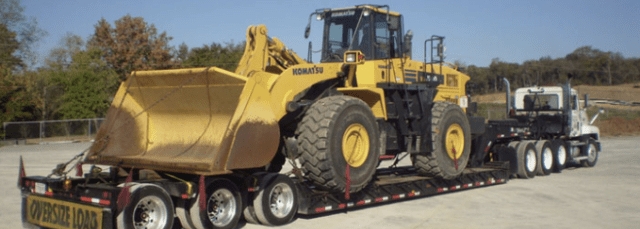
You may require a special trailer for over-sized or very heavy equipment. Step-deck and double drop trailers can allow for taller or heavier equipment to be loaded and transported. If your equipment warrants a specialty trailer, there is a high likelihood that it will also require special permits. Consult with your transport provider so that necessary permits and special considerations are taken care of.

Towing service

For short-distance moves, your equipment may be able to be towed. Make sure that you know which preparations need to be made to safely tow your machinery, such as preparing the gearbox and tires for towing conditions. Specialty towing companies will have a variety of tow trucks to handle many types and sizes of equipment.

Heavy Equipment Transport

Heavy Equipment Transport

What is heavy haul trucking?

In the U.S. a superload is a truck tractor with an attached trailer that has an over-dimensional or overweight object (the load) on it that exceeds the ordinary permit limits commonly associated with oversize or overweight loads.

What is hauling in construction?

Hauling heavy, large loads requires the use of hauling in construction. There are several different types of hauling equipment that can be used for building and construction. Some of the most typical types include cranes, bulldozers, forklifts, dump trucks, and excavators, as well as many others.

What is considered heavy haul?

Heavy haul freight, also known as oversized freight, is a load that exceeds a state’s legal limit for a specified portion of the road. Usually, a load is considered oversized if it is wider, taller, longer, or heavier than what could be hauled on a standard or specialized trailer.

How much does a heavy equipment hauler make?

Heavy haulers pay can average $80,000 or more in 2018. They earn their pay in extra responsibility and work. You usually can’t go into hauling heavy equipment right out of trucking school.

The most read

What is heavy equipment?

If you are new to construction and drilling, it’s important to understand the types of equipment that will be used on the job.

More on this story

Heavy Equipment Hauling

Consider carefully all your options for hauling your construction equipment. Use too much trailer, and you’re wasting money. Skimp on your trailer choice, and you risk a big headache.

Heavy equipment transport cost

Safety is the most important element in transporting construction equipment. To make sure the equipment and the driver are safe, you want to be sure you use the best trailer for the job.

What do you need to become a heavy-duty mechanic? Heavy-duty equipment repair

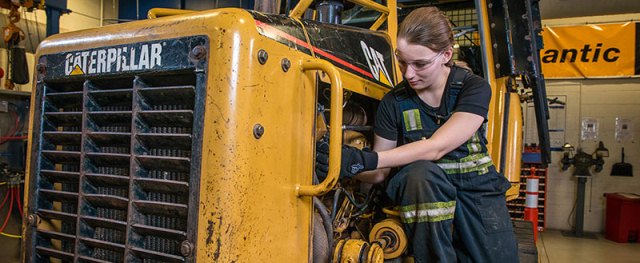
How to become a heavy equipment mechanic? Heavy-duty equipment mechanics repair, troubleshoot, adjust, overhaul and maintain mobile heavy-duty construction equipment. Some mechanics in this occupation specialize in hydraulic-operated transmissions and attachments, drive trains, tracked vehicle suspensions, and steering.

Ask yourself…

  • Can you lead teams of people?
  • Are you a good listener who can give clear instructions and manage conflict?
  • Are you strong and physically fit?
  • Do you like precise work?
  • Do you hold a construction trade ticket or have college or technical training in construction?
  • If the answer to these questions is yes, then a career as a Heavy-Duty Equipment Mechanic could be right for you.

Heavy-duty equipment mechanics are employed by heavy equipment dealers, service companies and companies that own and operate heavy equipment.

Industrial Maintenance and Troubleshooting – 4th Edition

Industrial Maintenance and Troubleshooting has long been a trusted textbook for maintenance technicians.

Real-world maintenance problems and solutions are depicted throughout the textbook, along with equipment operation principles, maintenance management procedures, and troubleshooting scenarios for common systems.

Heavy Duty Mechanic – how to become a heavy equipment mechanic?

How to become a heavy-duty mechanic?

The Heavy Equipment Mechanic performs a variety of activities designed to service, repair and maintain pieces of Company-owned heavy equipment. The Heavy Equipment Mechanic maintains heavy equipment operation by completing inspections and preventive maintenance requirements, such as correcting vehicle deficiencies, making adjustments and alignments, and keeping records.

Knowledge & Qualifications

  • Heavy Duty Mechanic Certification, an asset (inter-provincial seal preferred);
  • Experience troubleshooting hydraulic and electronic systems;
  • Possession of a valid Driver’s License required;
  • Thorough knowledge of the construction, design, assembly, and maintenance of a wide variety of special-purpose heavy equipment;
  • Considerable knowledge of tools and equipment needed for the overhaul, repair, and maintenance of heavy automotive equipment;
  • Considerable knowledge and a high degree of skill in diagnosis of trouble reported on the various pieces of equipment;
  • Ability to keep records of repairs, time and parts used for the servicing of heavy, special purpose automotive equipment, and to make related reports;
  • Skill in the use of instruments and tools employed in the checking and repair of motors and special equipment;
  • Excellent mechanical aptitude, coordination, and dexterity.
Heavy Duty Mechanic – how to become a heavy equipment mechanic?

Heavy equipment mechanic apprentice

As a Heavy-Duty Equipment Mechanic, your duties may include the following responsibilities:

  • Determines vehicle condition by conducting inspections and diagnostic tests; identifying worn and damaged parts;
  • Service, repair and maintenance of a variety of automotive equipment such as container truck lifts, reach stackers, front end loaders, cranes and other special-purpose types of equipment;
  • Maintain records of equipment repaired along with time spent on such equipment;
  • Check bulldozers, cranes, and other heavy equipment for proper performance;
  • Inspect equipment to detect faults and malfunctions and diagnose to determine the extent of repair required;
  • Adjust equipment and repair or replace defective parts, components or systems, using appropriate tools;
  • Test repaired equipment for proper performance and to ensure that work meets manufacturers’ specifications;
  • Clean, lubricate and perform other routine maintenance work on equipment;
  • Maintain a schedule for preventative maintenance on all equipment providing for lubrication, replacement of tires and tune-ups;
  • Provides instruction and training in the proper methods and processes necessary to perform equipment repair, inspection, and preventive maintenance;
  • Assists other mechanics with the more difficult assignments;
  • Performs layout work for the fabrication of parts and equipment;
  • Performs other related work as required.
Heavy Duty Mechanic

Heavy equipment mechanic certification

Apprenticeship: Apprenticeship involves both classroom studies and on-the-job training under the supervision of a certified Heavy-Duty Equipment Mechanic, called a journeyperson.

As an apprentice, you earn while you learn and are paid by the hour while working on the job site. Wages start at about 60 percent of a journeyperson’s hourly rate and increase during your apprenticeship until you reach the full rate.

Entering an apprenticeship program: Requirements for heavy-duty equipment mechanic apprenticeship programs vary across Canada. In most provinces and territories, you must have a Grade 12 education or equivalent to enter a heavy-duty equipment mechanic apprenticeship program.

Some provinces and territories offer secondary school apprenticeship programs that allow high school students to work towards a career as a Heavy-Duty Equipment Mechanic.

Heavy Duty Mechanic

Heavy equipment mechanic job description

As a lead mechanic, you will be responsible for driving to the job site, inspecting engines and equipment, carrying out services, conducting repairs, and providing routine maintenance to the construction fleet.

To ensure success as a Heavy Equipment Mechanic, you should have proven experience working with heavy machinery, be physically fit, and be able to troubleshoot issues on the job site. Ultimately, a top-notch Heavy Equipment Mechanic can repair and service even the biggest machinery with expert care.

Heavy Duty Mechanic

Heavy duty mechanic salary

Heavy equipment technicians need mechanical and troubleshooting skills, manual dexterity, and physical strength. The U.S. Bureau of Labor Statistics reported that heavy vehicle and mobile equipment service technicians earned a median annual salary of $47,120 as of May 2015. Let’s trace the steps to become a heavy equipment technician.

The specific duties include diagnosing malfunctions, replacing parts, and testing components. This work can be physically challenging, with heavy lifting and working in awkward positions, and it often takes place in noisy shop areas. Heavy equipment technicians might work outdoors in all different kinds of weather conditions. Depending on the geographical area, some technicians’ work is seasonal.

Heavy Duty Mechanic

What is a heavy-duty mechanic?

Heavy Duty Mechanics, also known as Heavy Equipment Technicians, are responsible for the repair, maintenance, and testing of mobile heavy equipment. On-road equipment includes such as highway trucks, cranes, trailers. No matter what the industry, safety is the number one priority.

How much does a heavy-duty mechanic make in a year?

Entry-level positions start at $40,000 per year while most experienced workers make up to $87,500 per year.

How much does a heavy-duty diesel mechanic make?

National Averages: Diesel mechanics nationwide earned a mean of $20.50 per hour or $42,500 per year as of May 2015, according to the Bureau of Labor Statistics. A diesel mechanic could earn $61,500 a year or more in the top 10 percent of earners. The median salary was $41,500 a year.

What type of mechanic gets paid the most?

The most common type is the automobile mechanic, who earned an average of $39,000 per year in 2014, according to reports issued by the Bureau of Labor Statistics. However, different types of mechanics tend to earn higher pay.

What do you need for a heavy-duty mechanic?

To be certified as a Heavy-Duty Equipment Mechanic, you usually need to complete a three- to the five-year apprenticeship program. Once you successfully complete the required on-the-job training, technical training, and exams, you are awarded a journeyperson certificate.

The most read

Modern Construction Equipment

Modern Construction equipment plays a vital role in the construction industry where business objectives are strictly time and margin-driven.

Heavy Equipment Transport

Unlike shipping standard freight, heavy equipment transport requires special handling, oversize load permits, and special freight carriers.

More on this story

Is a dump truck considered heavy equipment?

What does heavy equipment mean to you? Is there a clear definition?

Is a Forklift considered Heavy Equipment?

A forklift is a primarily industrial vehicle that uses a two-prong forked front attachment to lift materials.

Modern Construction Equipments

Explore the latest advancements in modern construction equipment, featuring cutting-edge machinery designed for efficiency and safety.

Modern Construction equipment plays a vital role in the construction industry where business objectives are strictly time and margin-driven.

The modern construction equipment is very swift and reliable with high-quality control measures embedded into them as they have evolved over the years.

Modern Construction Equipments

Proper utilization of these equipment helps in the economy, quality, safety, speed and timely completion of the project.

It optimizes the usage of material, manpower, finance, and the shortage of skilled and efficient labor and at the same time keeps a direct check over the quality measures that are being used.

This guide to modern construction technology presents the applications and management of construction equipment.

Modern equipments used in construction

The following machinery list helps any construction industry:

  • Hydraulic Mobile Stone Crusher
  • Self Loading Concrete Mixer
  • Mini Dumper
  • Concrete pipe truck
  • Excavators
  • Backhoe Loaders
  • Bulldozers
  • Skid-Steer Loaders
  • Motor Graders
  • Crawler Loaders
  • Trenchers
  • Scrapers
  • Common Dump Trucks

Depending on their application, construction machines are typically classified into one of four categories:

Earthmoving Equipment

Construction methods there are many different types of earthmoving equipment, including excavators, loaders, motor graders, trenchers, bulldozers, and backhoes. These machines are used to shift large amounts of dirt, dig foundations, and landscape areas.
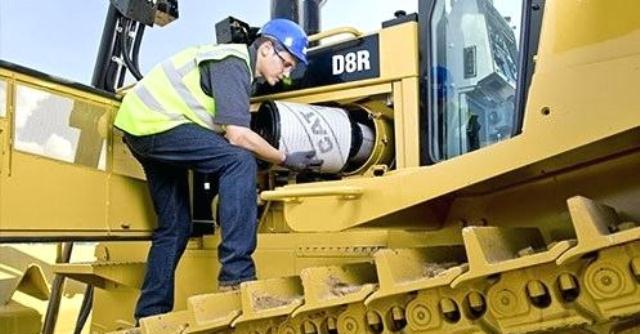
Excavators, for example, are commonly used to dig trenches, cut brush in forests, demolish buildings, and dredge rivers. Backhoe loaders are typically combined with a tractor and have a front bucket or shovel with a small backhoe in the rear.

Modern Construction Equipments

Material handling equipment

Some of the most common types of material handling equipment include cranes, forklifts, hoists, and conveyors.

You’ll often see cranes at construction sites lifting and lowering heavy materials and transporting them to other areas.

Cranes are operated by a series of cables and are frequently used in engineering projects that require temporary structures. Forklifts can be used everywhere from retail stores to warehouses and construction sites. Larger forklifts are able to lift about 50 tons.

Construction equipment

Construction equipment is a broad term to describe machines like concrete mixers, pavers, heavy-duty pumps, stone crushers, road rollers, and tunneling equipment. Tunnel boring machines, also known as moles, are used to excavate underground spaces and are able to bore through sand, dirt, and rock. Road rollers or roller-compactors are engineering vehicles used to make concrete, soil, or asphalt more compact. These are often used at construction sites, agricultural fields, and waste landfills.

Modern Construction Equipments

Engineering vehicles

The most common vehicles used at modern construction sites are tankers, trailers, tippers, and dumpers. They’re specifically designed for civil engineering tasks and often involve earth moving. Dumpers differ from dump trucks because their load is in front of the driver instead of behind the cab. Tip trucks are frequently used for mining and quarrying operations because they are durable and maneuverable.

As you can see, construction equipment ranges from large and heavy to light and portable. Some jobs require lots of heavy machines, while others only need a few pieces of equipment. To learn more about specific pieces of equipment, check out Hamdija Velaic’s informative slideshow about the various types and uses of construction equipment. As technology continues to advance in the industry, we expect to see some exciting future changes in civil engineering machines of all shapes and sizes.

Modern construction tools

The way customers do business has changed. Today, the research equipment and dealership services online using multiple devices – laptops, smartphones, and tablets – while referencing what hundreds of others have said about their sales and service experience with you. Heavy Equipment and Truck clients have always expected a high level of personalization, and those high expectations are only increasing.

A “one size fits all” customer model no longer works for the modern Heavy Equipment and Truck dealerships dedicated to delivering the optimal customer experience.

Silo departments unable to share customer information leave clients disappointed. Yesterday’s technology, never designed for today’s heavy demands, is unable to keep pace.

Excavator construction equipment

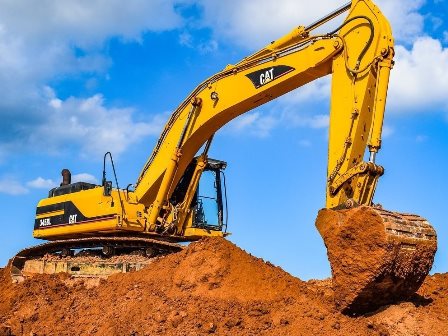
Excavator is large machinery that can be driven on wheels or tracks, but tracks are more standard for such large machinery. An excavator has a long arm attached to a pivoting cab that can rotate 360 degrees. The long arm is operated off the cab with a high vision facility.

The most common uses for an excavator include:

  • Material Handling
  • Excavating trenches, dugouts, and foundations
  • Brush cutting with hydraulic attachments
  • Destruction
  • Rough grading
  • Heavy lifting and pipe installation
  • Mining
Modern Construction Equipments

Backhoe loader

Backhoe loaders have a body that is similar to a farm tractor an adjustable shovel is attached to the back for digging. This machine is in a medium-sized construction facility. It is capable of working in a limited space, and it can perform various operations like moving dirt, backfill excavations, digging holes and trenches, and placing pipes and other materials. The bucket in the back can be changed to dig trenches of different widths.

Bulldozer

A bulldozer is a powerful, extremely heavy machine employed to move dirt. The bulldozer is considered the strongest and most solid heavy machinery in the construction industry. Bulldozers have a wide, flat blade in front of the cabin and are operated using two hydraulic pistons to move the blade in a limited range of angles and depths. A bulldozer’s heavyweight can crush the solid stones in the way of its operations.

Modern Construction Equipments

What is earthmoving equipment?

Earthmoving equipment is heavy equipment, typically heavy-duty vehicles designed for construction operations that involve earthworks. They are used to move large amounts of earth, dig foundations for landscaping and so on.

What is heavy-duty equipment?

Heavy equipment or heavy machinery refers to heavy-duty vehicles, specially designed for executing construction tasks, most frequently ones involving earthwork operations or other large construction tasks. Some equipment uses hydraulic drives as a primary source of motion.

What is the construction plant and equipment?

The term ‘plant’ refers to machinery, equipment, and apparatus used for industrial activity. Typically, in construction, ‘plant’ refers to heavy machinery and equipment used during construction works.

What is the excavation equipment?

Excavating machine is any machine, usually self-powered, that is used in digging or earth-moving operations of some kind; the power shovel, bulldozer, and grader are examples.

What is considered heavy equipment?

Generally, Heavy Machinery disposes of restricted mobility and provides functions related to one or several specific working areas. Examples: Excavators, Loaders, Dozers (bulldozers), Backhoe Loader, Cranes, Forklifts, etc.
In counterpart, Heavy Vehicles are more mobile and can reach longer distances. These vehicles are often related to the transport field.

The most read

Modern Construction Tools

What do a pickup truck, a nail gun, a drill, a portable circular saw, a cement mixer truck, and a modern hydraulic excavator all have in common?

More on this story

Heavy equipment

Construction and mining equipment cover a variety of machinery such as hydraulic excavators, wheel loaders, backhoe loaders, etc.

Construction Equipment

Construction equipment, brands and models, cranes, transport, cargo, industrial, port, machines, and their components.

Tower Crane operator salary

Tower Crane operator salary: Crane and tower operators work with cranes and other machinery that lifts and moves materials. This occupation is dangerous as it deals with heavy lifting and heavy-duty machine operation. To become a crane or tower operator, education at a technical school is usually required. Before beginning official work, one to two years of formal training may be required.

Tower Crane operator salary

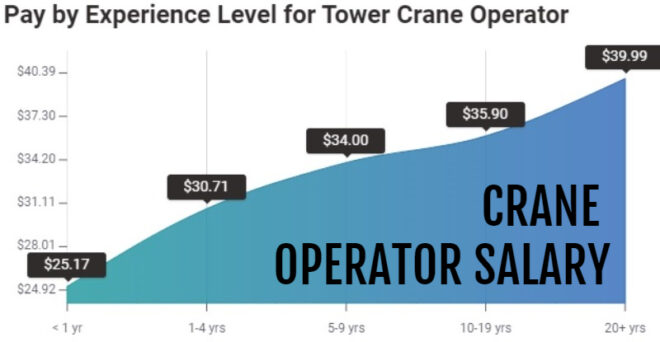
How much do tower crane operators make?

A Crane operator or Tower Operator will usually earn a wage of around 40000 and 60000 based on education and experience. Crane and Tower Operators usually receive an average pay level of Fifty Thousand One Hundred dollars on a yearly basis.

Crane and Tower Operators obtain the highest pay in Nevada, where they get job pay of close to $74250. People in this category of job can obtain the highest compensation in Professional, Scientific, and Technical Services, which has average pay levels of $56750.

Tower Crane operator salary

Tower crane operator jobs

The skyline of any city will likely include at least a few tower cranes, which are among the largest pieces of equipment used in building projects. Construction companies use tower cranes to lift heavy materials such as steel and concrete.

Just as cranes tower over building sites, the salaries of the people who run them tower over those of other construction workers.

Some high-rise crane operators and related trades in New York City make upwards of $500,000 a year in pay, overtime, and benefits, according to the Real Estate Board of New York, which represents the construction industry.

But the real reason New York crane operators and other operating engineers earn such big salaries is overtime and benefits.

A relief crane operator working 56 hours of overtime per week for 52 weeks will earn $335,000 in overtime and $160,000 in overtime benefits at the World Trade Center. As worker’s salaries go up, so do the amounts employers must kick in for annuities and pensions.

Work rules in New York at the World Trade Center require that every crane operator be accompanied by a relief crane operator and an oiler a person that starts up the crane for the entire time a crane is operating.

Tower Crane operator salary

Crane driver salary

High rise crane operator wages:

Tower crane operators are specialists in the construction industry who operate a specific piece of heavy machinery that lifts, transports, and moves construction equipment and materials all over their construction site.

These materials are needed to build concrete foundations, floors, walls, decks, roofs, and other parts of high-rise buildings and other multistory structures.

Tower crane operators must adhere to established load limits for their crane, control crane movement as instructed by their supervisors or signalers, and understand specific hand signals and/or instructions given to them via radio.

They must also be able to operate cranes using remote controls or remote consoles, as well as ensure their cranes are regularly inspected to promote safe use.

Tower crane operator pay

Other tasks performed by tower crane operators include ensuring that their cranes meet industry standards, are thoroughly inspected on a regular basis, and have load capacities that are properly rated by the equipment manufacturers or qualified engineers.

Tower crane engineers must be familiar with rated load capacities that are marked on each side of the crane; for cranes that have more than one hoist, they must follow individual load ratings.

Because their job involves heavy equipment, tower crane operators must follow all safety standards closely and pay close attention to detail. Their work hours vary depending on the weather, but they generally work during daylight hours and based on deadlines.

Tower crane operator course

Most employers require that tower crane operators have completed relevant trade school training and possess commensurate work experience. Many employers require that their operators possess the National Commission for the Certification of Crane Operators (NCCCO) tower crane certification.

Possessing an Occupational Safety and Health Administration (OSHA) 10-hour training program may be beneficial. Tower crane operators must be able to complete the physical requirements of their position, which include stooping, crouching, bending, and using manual dexterity to operate controls.

Tower crane certification requirements

Construction, freight handling, and other types of industry require the use of cranes for heavy lifting. Tower cranes, used on heavy construction sites and for freight at major ports, are among the most challenging to operate. Many states require licensing or certification for tower operators, and their salaries are among the highest in the trade.

The Bureau of Labor Statistics estimates that demand for crane and tower operators will increase by 16 percent between 2010 and 2020, roughly equal to the rate for all occupations.

However, demand will be much higher in some sectors. As the economy continues to recover from the 2008 downturn, demand for operators in construction should increase by 31 percent, while freight handling in ports will create job growth at a rate of 26 percent.

According to California’s Labor Market Information site, only about 10 percent of crane operators are licensed for towers, but employment prospects should be good given that both high-growth niches rely heavily on towers operators.

Average crane operator salary

What Is the Average Crane Operator Salary by State?

Tower Crane operator salary

How much do crane operators make?

In 2017, the Bureau of Labor Statistics indicated that the average, annual crane operator salary was $55,500. Experienced crane operators that are working on large-scale projects may make as much as $84,500

How much does a crane operator make a year?

A Crane or Tower Operator will usually earn a wage of around 40000 and 60000 based on education and experience. Crane and Tower Operators usually receive an average pay level of Fifty Thousand One Hundred dollars on a yearly basis.

How much does a crane operator earn?

In California, crane operators’ wages begin at Group 5, or a base of $40.00 per hour. Tower operators’ wages begin at Group 10, a base of $42.00 per hour, and go up to Group 13, where the base wage is $44.50 per hour. All of these groups receive an additional $17.00 per hour in various benefits and are eligible for premiums on some work sites.

The most read

Crane Operator Salary

A Crane or Tower Operator will usually earn a wage of around 40000 and 60000 based on education and experience.

More on this story

How much do Tower Crane Operators make?

How much do tower crane operators make per hour in the US?