All posts by Loganx

Professional Web Writer | Motor Enthusiast | Content Creator | Logan is a dedicated and skilled web writer, passionate about engines and machines and with a talent for creating engaging and informative content. She specializes in writing about a diverse range of topics including construction, forklifts, heavy equipment, excavators, etc. SEO Optimization: Proficient in SEO best practices, ensuring high visibility and engagement for all published content.

Top EPC Companies

The EPC (Engineering, Procurement & Construction) set-up provides developers and owners with a single point of contact throughout the project execution phase and reduces financial risks. EPC projects are multidisciplinary in nature, and efficient construction management coupled with a continual focus on HSEQ are key success factors.


Largest EPC companies

World’s largest Engineering and Construction Companies:

EPC companies provide complete engineer-procure-construct (EPC) services through strategic alliances with leading engineering, materials management, and construction companies, and offers all aspects of turnkey construction including project management, engineering, materials procurement, construction, right-of-way acquisition, landowner management, permitting and environmental services.

Check out this list of the top 10 largest and best EPC companies around the world in 2019.

  • Petrofac – London
  • Saipem – Nigerian
  • Hyundai Heavy Industries – South Korea
  • SAMSUNG Engineering – South Korea
  • Technip – France
  • WorleyParsons – Australia
  • CB&I – Chicago, Illinois, USA
  • SK Engineering & Construction – South Korea
  • NPCC – Abu Dhabi (UAE)
  • TATA Projects LTD – Ahmedabad, Gujarat

List of EPC companies in power sector

The oil and gas sector has seen some drastic changes in the past year, and so have engineering, procurement and construction (EPC) contractors followed suit to cater to an ever-changing industry. As the region’s national oil companies have moved to integrate vertically and boost their downstream portfolios, so, too have EPC contractors.

EPC contractors are shifting to adapt to an environment that requires they be more ambitious, and more versatile while maintaining the financial discipline to suit the changing needs of the region’s oil and gas companies.

Some of the region’s major deals this year have been in the downstream segment, but upstream has seen an incredible amount of traction as well, with giants like Saudi Aramco looking to invest billions of dollars into redeveloping aging assets. Its Long-Term Agreement program has kept some EPC companies busy and their project pipelines full.

There are some surprise movers among the list, but the top tier has kept many familiar faces among its ranks, all of whom will be recognizable from headlines announcing their major wins in the past year. Those that rose up to have generally seen more activity or investment in the region.

  • Larsen & Toubro Hydrocarbon Engineering
  • Petrofac
  • McDermott
  • Wood
  • SNC-Lavalin
  • National Petroleum Construction Company
  • Saipem
  • WorleyParsons
  • Technip FMC
  • Galfar Engineering & Contracting

Top EPC companies in oil and gas sector

For the last few years, the competition among the major engineering, procurement, and construction (EPC) companies related to the refining and petrochemicals manufacturing sector in the Middle East is at the top level since there are only a limited number of large-scale projects in the region and all the major global players are there from around the world.

As a result of the rebalanced low oil prices, the downstream EPC companies in the region are facing project complexity, escalating costs and enhanced risk. The real challenge for these EPC companies operating in the region is the cost competition among themselves. Operators are cutting down capital spending budgets and there are fewer contracts in the pipeline.

We have enlisted and ranked the 2019 list of Top 30 EPC Contractors primarily based on the value and volume of the projects that EPC companies have won in the Middle East region from the downstream industry.

In many cases, the project costs are undisclosed in the region. In those cases, we have considered the impact of the project on the region’s industry, people and economy. We have also considered other factors like 2017 and 2018 revenues, projects completed earlier, CSR initiatives, compliance with ethical business practices, etc. The rankings in this year’s list have changed considerably, compared to the last year.

  • Samsung engineering – South Korea
  • Technip – France
  • Petrofac – UK
  • Técnicas Reunidas
  • SNC Lavalin
  • SK Engineering & construction co
  • Saipem
  • Daewoo engineering & construction
  • Daelim industrial co
  • Maire Tecnimont

What is EPC company

EPC indicates a contractor is responsible for the Engineering, procurement, and construction of a particular facility/work awarded to him

Example: A hotel project awarded on a turnkey basis means the contractor is responsible to complete all activities leading to the final operation level (handing over to the operation team). You can’t divide this project into separate activities like Civil, MEP, etc. and award on a turnkey basis to different contractors. Whereas, on an EPC, you can award only MEP works on EPC or a Sewage Treatment Plant (STP) work on EPC.


EPC company means

An EPC Contract the Client / Employer has no responsibility to track the work of other Sub-contractors under the main Contractor; however, in Turnkey Contract the Contract is made in such a way that the Client / Employer makes provisions in the Contract with its main Contractor that in the event of non -performance of duties by the Main Contractor the Client / Employer can terminate the main Contractor’s Contract and give it to the Sub-contractor on the rates as applicable between the Contractor and Sub-contractor and these happen to any degree of level.

In other words, the rights of the Client / Employer in Turnkey are more than in EPC.

Turnkey Construction contract

A Turnkey Contract is one under which the contractor is responsible for both the design and construction of a facility. The basic concept is that in a Turnkey Contract the contractor shall provide the works ready for use at the agreed price and by a fixed date.

The reality is that the employer wants to be and should be actively involved in the project at all stages. The term is used more or less synonymously with expressions as “package contract”, “design and build” or “design constructor”.

Turnkey contracts often seek to regulate in great detail all issues which possibly might arise between the parties. The main clauses of a turnkey contract are the design of the project, the construction site, time for completion, price and payments, performance guarantees and the law governing the contract.

EPC Construction

The EPC industry is one that is multifaceted and so positively complex that it often keeps executives on their toes. For instance, when building, designing or financing a construction project, it is vital to maintain oversight and have cash flow audits throughout the process.

The acquisition of invoices at the correct time is an essential part of this process as it eases one’s need to meet pressing demands at a time when dealing with a multitude of issues simultaneously. EPC companies have since employed an array of project management techniques, but this is yet to prove valuable with regards to the way they run their business operations.


Engineering procurement construction

Effective Project management can be a make it or break it success factor for Engineering and Construction firms.

EPC companies are often running multi-disciplinary engineering issues such as hosting multiple employees, hundreds of different firms and a number of subcontractors simultaneously.

As such, EPC firms are dexterous entities that require proper time and budgetary allocations throughout the supply chain to seal all possible money-leaking loopholes.


EPC provider

Failure to keep such projects money tight would lead to dismal performances. Some of the ways such money-tightness can be achieved are through the tracking of staff certifications, complying with bank requirements, observing worker safety protocols, and keeping tabs on government regulations such as those governing Public-Private Partnerships.

Construction management books

International Construction Contract Law will be invaluable to those operating in the international construction market and undoubtedly will become a practitioner’s go-to guide on the subject.

“Dr Klee’s book should have broad appeal in the construction industry … The description of key concepts is thorough and the snapshots of relevant common law principles clearly articulated. Dr Klee cleverly connects the legal and the practical there by bringing the performance and administration of construction contracts out of the theoretical realm into the real world. … Dr Klee’s discussion, observations and inquiry into what the future holds for international construction contracts is thought provoking and, pleasingly, interesting and enjoyable reading”

“Given the increasing globalization of commerce it is essential that persons setting up the transactions understand the legal means at their disposal. … This work makes an important and original contribution to the knowledge of those dealing with these transactions. … It will be of immense use to consulting engineers, lawyers, clients, developers, contractors and construction managers worldwide and is highly recommended”

International Construction Contracts Law

International Construction Contracts

Delay Clauses in International Construction Contracts : Many large construction projects, such as those in the Middle East or Asia Pacific, are international in scope with a range of contractors and subcontractors signing contracts for delivery of specified work or services.

The contractual situation in these instances may be complex and potentially includes a range of standard and bespoke contractual arrangements. In addition, the parties to these contracts may be based in different parts of the world, and are often working to different legal systems and understandings. This can lead to confusion in the understanding, interpretation, and execution of a given contract.

International Construction Contracts provides concise and practical guidance to those involved in the negotiation and management of international construction and engineering contracts. It sets out in clear, straightforward language the main features of construction contracts and international dispute resolution procedures. It ensures the reader is aware of the issues that might arise on the contractual side of their project so that they may better protect their party’s interests.

Understanding and Negotiating EPC Contracts

In Understanding and Negotiating EPC Contracts, Volume 1, Howard M. Steinberg presents a practical and comprehensive guide to understanding virtually every aspect of engineering, procurement and construction (EPC) contracts for infrastructure projects.

The 25 chapters in Volume 1 are supplemented with real-life examples and court decisions and offer tactical advice for anyone who must negotiate or understand EPC contracts in connection with the implementation, financing or operation of infrastructure projects.

Emphasizing current market practices and strategic options for risk sharing, the book contains a narrative explanation of the underpinning of all of the issues involved in EPC contracting.

Exhaustive in scope, it clarifies the fundamental commercial principles and pitfalls of “turnkey” contracting for all types of capital investments ranging from electrical and thermal power generation (including combined heat and power, nuclear, wind, solar, natural gas and coal) to refining, to chemical processing to LNG liquefaction and re-gasification to high-speed rail, bridging, tunneling and road building. Providing clear and thorough analyses of the issues and challenges, this volume will be of great value to all those involved in complex construction projects.

What do you mean by EPC companies?

What do you mean by EPC companies?

EPC stands for Engineering, Procurement, Construction and is a prominent form of contracting agreement in the construction industry. Normally the EPC Contractor has to execute and deliver the project within an agreed time and budget, commonly known as a Lump Sum Turn Key (LSTK) Contract.

What is the difference between EPC and turnkey?

Essentially an EPC project is the same as a turnkey project. An EPC contract encompasses the E (Engineering/Design), P (Procurement) and the C (Construction) which is the entire project from concept to commissioning (turnkey). However, EPC is a very broad and sometimes wrongly used term.

What is the difference between EPC and EPCM?

The fundamental difference is the role of the EPC or EPCM contractor. In an EPC contract, the EPC contractor develops the project from commencement to final completion. This is why EPC contracts are often referred to as “turnkey” projects. For this reason, an EPC contract is often a fixed price contract or an all-encompassing lump sum contract. Any shortfall of costs is a risk that rests with the EPC contractor, making cost control their number one priority.
In contrast to the EPC model, the EPCM contractor is not directly involved in the building and construction of the project, but is rather responsible for the detailed design and overall management of the project, on behalf of the owner or principal.

What is EPC in oil and gas?

EPC stands for Engineering, Procurement, and Construction. These companies are hired by Oil & Gas companies for long-term projects that need to be completed by skilled individuals.

The most read

EPC Construction Company

EPC COMPANY: what is EPC company? EPC services company, EPC construction company, EPC company means, EPCM Contract, Top EPC Companies in USA

More on this story

Mining equipment manufacturers

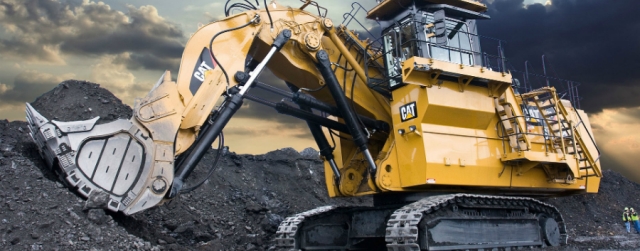
Construction and mining equipment cover a variety of machinery such as hydraulic excavators, wheel loaders, backhoe loaders, etc.


EPC Contract meaning

Large international construction projects often have a range of major contractors, subcontractors, and consultants based in different parts of the world and working to different legal theories and understandings. This can lead to confusion in the understanding, interpretation, and execution of the construction contract, which can result in significant disruption to the construction project.

EPC Contract meaning

EPC Company

In an EPC contract, the EPC contractor develops the project from commencement to final completion. The owner or principal of the EPC project provides the EPC contractor with a detailed design including technical and functional specifications, in order for the EPC contractor to build and deliver the project to the “turn of the key”, within a specified time period. This is why EPC contracts are often referred to as “turnkey” projects.

The scope of work should be clearly defined in the contract documents; therefore, amendments to the scope of work should not be a common feature in EPC contracts. For this reason, an EPC contract is often a fixed price contract or an all-encompassing lump sum contract. Any shortfall of costs is a risk that rests with the EPC contractor, making cost control their number one priority.

International Construction Law

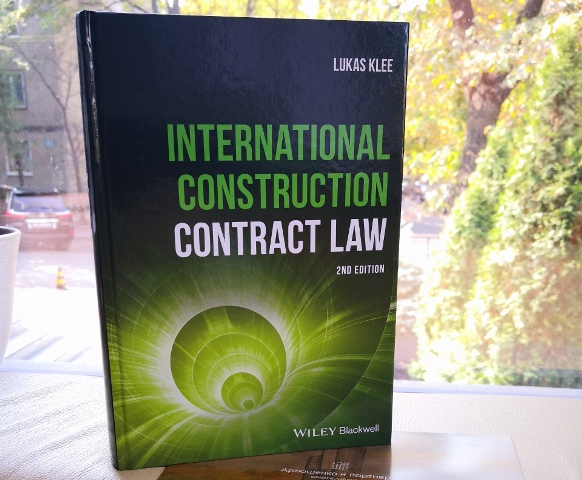
International Construction Contract Law is written for anyone who needs to understand the legal and managerial aspects of large international construction projects, including consulting engineers, lawyers, clients, developers, contractors and construction managers worldwide.

The revised second edition of International Construction Contract Law is a comprehensive book that offers an understanding of the legal and managerial aspects of large international construction projects.

This practical resource presents an introduction to the global construction industry, reviews the basics of construction projects and examines the common risks inherent in construction projects. The author — an expert in international construction contracts — puts the focus on FIDIC standard forms and describes their use within various legal systems.

EPC Contract meaning

Construction project management

This important text contains also a comparison of other common standard forms such as NEC, AIA, and VOB, and explains how they are used in a global context.

The revised edition of International Construction Contract Law offers additional vignettes on current subjects written by an international panel of numerous contributors.

Designed to be an accessible resource, the book includes a basic dictionary of construction contract terminology, many sample letters for Claim Management and a wealth of examples and case studies that offer helpful aids for construction practitioners.

International Construction Contracts

Lukas Klauss: EPC Contract meaning

Lukas Klee s International Construction Contract Law is a useful contribution to the doctrine of international construction law. The book is well written and contains a wealth of practically useful information, which will help in-house lawyers, external lawyers, engineers, project managers, and other professionals who are involved in the negotiation and/or management of major international construction contracts.

International Construction Contract Law will be invaluable to those operating in the international construction market and undoubtedly will become a practitioner s go-to guide on the subject.

The description of key concepts is thorough and the snapshots of relevant common law principles clearly articulated. Dr. Klee cleverly connects the legal and the practical thereby bringing the performance and administration of construction contracts out of the theoretical realm into the real world.

Given the increasing globalization of commerce, it is essential that persons setting up the transactions understand the legal means at their disposal.

The book investigates the possibilities of a future more coherent, standardized method of contracting construction projects, by comparing the pros and cons of various contract forms and legislations applied worldwide.

EPC Contract meaning

Engineering procurement construction

Many large construction projects, such as those in the Middle East or the Asia Pacific, are international in scope with a range of contractors and subcontractors signing contracts for the delivery of specified work or services.

The contractual situation in these instances may be complex and potentially includes a range of standard and bespoke contractual arrangements. In addition, the parties to these contracts may be based in different parts of the world, and are often working to different legal systems and understandings. This can lead to confusion in the understanding, interpretation, and execution of a given contract.

EPC Contract meaning

EPC Construction

International Construction Contracts provides concise and practical guidance to those involved in the negotiation and management of international construction and engineering contracts.

It sets out in clear, straightforward language the main features of construction contracts and international dispute resolution procedures. It ensures the reader is aware of the issues that might arise on the contractual side of their project so that they may better protect their party’s interests.

Large construction projects, especially those involving several countries, require massive human and material resources, complicated by the diverse mix of participants from differing cultural, linguistic and legal backgrounds. Construction lawyers in fact emerge as the key players in these massive endeavors.

EPC Contract meaning

Construction contract management

For anyone working in the oil and gas industry today, finding your way through the maze of contract management seems more cutthroat and challenging than ever before. In Construction Contracts, dispels the myth that “there has to be a winner and a loser in contractual management and dispute control”.

A construction contract provides a legal binding agreement, for both the owner and the builder, that the executed job will receive the specific amount of compensation or how the compensation will be distributed. There are several types of construction contracts used in the industry, but there are certain types of construction contracts preferred by construction professionals.

EPC company means

EPC Contract meaning: Types of construction contracts

Construction contract types are usually defined by the way, the disbursement is going to be made and details other specific terms, like duration, quality, specifications, and several other items. These major contract types can have many variations and can be customized to meet the specific needs of the product or the project.

Lump Sum Payment

Lump Sum or Fixed Price Contract Type: EPC Contract meaning

This type of contract involves a total fixed priced for all construction-related activities. Lump-sum contracts can include incentives or benefits for early termination, or can also have penalties, called liquidated damages, for a late termination. Lump-Sum contracts are preferred when a clear scope and a defined schedule has been reviewed and agreed upon.

This contract shall be used when the risk needs to be transferred to the builder and the owner wants to avoid change orders for unspecified work. However, a contractor must also include some percentage cost associated with carrying that risk. These costs will be hidden in the fixed price. On a lump sum contract, it is harder to get credit back for work not completed, so consider that when analyzing your options.

Cost Plus Contract

This type of contract involves payment of the actual costs, purchases or other expenses generated directly from the construction activity. Cost Plus contracts must contain specific information about a certain pre-negotiated amount (some percentage of the material and labor cost) covering contractor’s overhead and profit. Costs must be detailed and should be classified as direct or indirect costs. There are multiple variations of Cost Plus contracts and the most common are:

  • Cost Plus Fixed Percentage
  • Cost Plus Fixed Fee
  • Cost Plus with Guaranteed Maximum Price Contract
  • Cost Plus with Guaranteed Maximum Price and Bonus Contract

Cost-plus contracts are used when the scope has not been clearly defined and it is the owner responsibility to establish some limits on how much the contractor will be billed. When some of the aforementioned options are used, those incentives will serve to protect the owner’s interest and avoid being charged for unnecessary changes. Be aware that cost-plus contracts are difficult or harder to track and more supervision will be needed, normally do not put a lot of risk in the contractor.

Time and Materials Contract

Time and Material Contracts When Scope is Not Clear

Time and material contracts are usually preferred if the project scope is not clear, or has not been defined. The owner and the contractor must establish agreed hourly or daily rate, including additional expenses that could arise in the construction process.

The costs must be classified as direct, indirect, markup, and overhead and should be included in the contract. Sometimes the owner might want to establish a cap or specific project duration to the contractor that must be met, in order to have the owner’s risk minimized. These contracts are useful for small scopes or when you can make a realistic guess on how long it will take to complete the scope.

Construction Unit Price

Unit pricing contracts is probably another type of contract commonly used by builders and in federal agencies. Unit prices can also be set during the bidding process as the owner requests specific quantities and pricing for a pre-determined amount of unitized items.

By providing unit prices, the owner can easily verify that he’s being charged with un-inflated prices for goods or services being acquired. Unit price can easily be adjusted up and/or down during scope changes, making it easier for the owner and the builder to reach into agreements during change orders.

Construction management books

From amazon.com

What are the EPC contractors?

What are the EPC contractors?

Engineering, Procurement and Construction (EPC) is a particular form of contracting arrangement used in some industries where the EPC contractor is made responsible for all the activities from design, procurement, construction, commissioning and handover of the project to the end-user or owner.

What is the difference between EPC and EPCM?

The fundamental difference is the role of the EPC or EPCM contractor. In an EPC contract, the EPC contractor develops the project from commencement to final completion. This is why EPC contracts are often referred to as “turnkey” projects. For this reason, an EPC contract is often a fixed price contract or an all-encompassing lump sum contract. Any shortfall of costs is a risk that rests with the EPC contractor, making cost control their number one priority.
In contrast to the EPC model, the EPCM contractor is not directly involved in the building and construction of the project, but is rather responsible for the detailed design and overall management of the project, on behalf of the owner or principal.

What is EPC in the oil and gas industry?

EPC stands for Engineering, Procurement, and Construction. These companies are hired by Oil & Gas companies for long-term projects that need to be completed by skilled individuals.

What does Engineering Procurement Construction mean?

Engineering, Procurement and Construction (EPC) is a particular form of contracting arrangement used in some industries where the EPC contractor is made responsible for all the activities from design, procurement, construction, commissioning and handover of the project to the end-user or owner.

How does an EPC contract work?

Normally the EPC Contractor has to execute and deliver the project within an agreed time and budget, commonly known as a Lump Sum Turn Key (LSTK) Contract. An agreed LSTK scope of works and price will be negotiated and agreed between EPC Contractor and Project Owner during the execution of EPC activities.

The most read

Top EPC Companies

EPC services company, EPC oil & gas multinational company, EPC company means, what is EPC company.

More on this story

EPCM Companies

What is an EPCM company? EPC and EPCM services, EPCM contract template, the difference between EPC and EPCM, resource management solutions.

EPC Construction Company

What is EPC company? EPC services company, EPC construction company, EPC company means, EPCM Contract, Top EPC Companies in the USA

List of Construction Companies in Singapore

List of construction companies in Singapore: The accelerated change in nearly every aspect of the economy driven by technological developments in the manufacturing and service industries has fuelled several paradigm shifts in business management. However, construction is singled out as one that is still dominated by attitudes, technologies, processes, and more importantly, a culture that is at least half a century old.

This paper investigates the challenges and opportunities for Singapore’s construction industry as it strives to be a world-class quality provider. It has been recognized that if high quality is to provide a sustained competitive advantage, world-class organizations must go beyond the skilled application of tools and techniques to include a whole shift in culture, values, beliefs, and assumptions guiding the organizational activities.

list of construction companies in singapore

Building and construction authority Singapore

  • The Building and Construction Authority (BCA) projects the total construction demand (i.e. the value of construction contracts to be awarded) in 2019 to range between S$27 billion and S$32 billion, comparable to the S$30.5 billion (preliminary estimate) awarded in 2018.
  • The projected outlook is due to sustained public sector construction demand, which is expected to reach between S$16.5 billion and S$19.5 billion in 2019, contributing to about 60% of the projected demand for this year. Public construction demand is expected to be boosted by major infrastructure projects and a pipeline of major industrial building projects.
  • The private sector’s construction demand is expected to remain steady at between S$10.5 billion and S$12.5 billion in 2019, supported by projects including the redevelopment of past en-bloc sales sites concluded prior to the second half of 2018 and new industrial developments.
  • Last year’s total construction demand was within forecast due to strong demand from institutional building and civil engineering projects, continued positive growth in the manufacturing sector and more private residential redevelopment projects from en-bloc sales in 2017 and the first half of 2018. Total preliminary construction demand last year for the public and private sector was S$18.4 billion and S$12.1 billion respectively.
  • BCA expects a steady improvement in construction demand over the medium term. Demand is projected to reach between S$27 billion and S$34 billion per year for 2020 and 2021 and could increase to between S$28 billion and S$35 billion per year for 2022 and 2023.
  • The public sector is expected to contribute S$16 billion to S$20 billion per year from 2020 to 2023 with similar proportions of demand coming from building projects and civil engineering works. Besides public residential developments, public sector construction demand over the medium term will continue to be supported by big infrastructure projects such as the Cross Island Line, developments at Jurong Lake District and Changi Airport Terminal 5.

Construction business in Singapore

  • BCA also expects private sector construction demand to gradually increase in the medium term, boosted by further growth in the other economic sectors.
  • Based on the contracts awarded in the past few years and the construction demand forecast for 2019, total nominal construction output in 2019 is projected to increase to between S$28 billion and S$30 billion, compared to the estimated S$27 billion in 2018. This is supported by the improved construction demand in 2018 following the 2015-2017 slowdown.

Construction companies in Singapore

  • As we continue to push for the adoption of advanced construction methods in both public and private sector projects to improve productivity and enhance infrastructure sustainability and maintainability, firms are encouraged to invest in technology and innovation which will enable them to seize future opportunities.
  • To help firms do so, BCA will expand the Building Innovation Panel (BIP) – an inter-agency platform that accelerates the regulatory clearance of technologies that improve construction productivity to cover any type of innovation that can improve Singapore’s built environment. Such innovations can include advanced and sustainable building materials, technologies for green buildings and automation for construction.
  • The enhanced BIP will be implemented in February 2019 and benefit Singapore’s built environment by supporting the innovation efforts of our firms.

Construction firms in Singapore

In Singapore, the difference between the performance of the construction industry and the rest of the economy in terms of quality, productivity and safety performance, among other criteria, has been highlighted in many reports and speeches. The most recent study is the government-appointed investigation into the state of Singapore’s construction industry undertaken by the Construction 21 Steering Committee comprising eminent practitioners representing all sections of the industry.

Its report, titled “Re-inventing Construction”, best known as “Construction 21 (C21)” was published in October 1999. The performance of the construction industry in Singapore is seen to lag behind those in countries such as Hong Kong, Australia, Japan, and the US. The C21 blueprint is underpinned by the strategic vision of Singapore’ industry, which is “to be a world-class builder in the knowledge age”. Under this vision, several recommendations were offered, under six strategic thrusts, to enhance performance on construction projects in Singapore.

Offshore construction Singapore

The C21 report is seen as a key milestone in the development of Singapore’s construction industry. The report highlighted the main weaknesses and strengths of the industry and its recent historical development. More importantly, the report examines the main initiatives that have been established to drive the industry to further improve its performance and image. The report provides key recommendations and targets for policies, legislation and key changes to the procedures and practices of the local construction industry and its main stakeholders should aim to achieve in order to realize set levels of improvements.

This study builds on the works and conclusions of the C21 report. The main research question for this study was why the construction industry in Singapore is in such a state and how it can change and improve itself. The study also draws on the experience of two similar reviews that have been conducted in the United Kingdom and Australia. The aim is to learn from their experience in attempting to solve and address similar problems.

List of construction companies in Singapore

The top construction companies in Singapore are the core of the construction industry in Singapore and they feature on the list of top construction companies in Singapore. The construction industry in Singapore was valued at around $27 billion in 2018 and is forecasted to grow at a CAGR of over 4% for the next five years.

The growth of the top 10 construction companies in Singapore is driven by the increased rate of constructional development and rebuilding happening in the region. The list of construction companies in Singapore is thriving as there is a lack of space on the island of Singapore and to accommodate the increasing population, taller buildings are being developed in place of the existing smaller buildings in the country.

The comprehensive list of building construction companies in Singapore include global players who are renowned all over the world for their premium quality of infrastructure.

Paramount eco hub Pte Ltd

Paramount Eco Hub Pte Ltd is one of the top 10 construction companies in Singapore on this list of top construction companies in Singapore. Paramount Eco Hub Pte Ltd is headquartered at Dunearn Road, Singapore and is featured highly on the list of building construction companies in Singapore. This top construction company in Singapore specializes in reconstruction activities, landscaping, and waterproofing services.

KTC Group

KTC Group is one of the best construction companies in Singapore in the list of building construction companies in Singapore. KTC Group was founded in 1988 by Chua Lai-Sang and is headquartered at Pandan Crescent, Singapore. This 10 top construction company in Singapore has an annual revenue of around $100 million and has more than 700 professionals working for this top of the list of construction companies in Singapore.

Lum chang building contractors Pte ltd

Lum Chang Building Contractors Pte Ltd is one of the top 10 construction companies in Singapore and is headquartered at Kung Chong Road, Singapore in the Lum Chang building. This best construction company in Singapore on the list of building construction companies in Singapore was founded by Lum Chang in the 1940’s and has an annual revenue of more than $150 million.

Mcconnell Dowell south east Asia Pte ltd

McConnell Dowell South East Asia Pte Ltd is another top 10 construction company in Singapore with the headquarters located at Chai Chee Road, Singapore. This one of the best construction companies in Singapore on the list of top construction companies in Singapore was founded in 1961 and has more than 3,500 employees on its payrolls. McConnell Dowell South East Asia Pte Ltd has an annual revenue of more than $200 million and is considered a pioneer in the Singapore construction industry.

Hwa Seng builder Pte ltd

Hwa Seng Builder Pte Ltd (HSB) is a leading construction company in Singapore on the list of building construction companies in Singapore for 2018. HSB is one of the top 10 construction companies in Singapore and the head office of this best construction company in Singapore is at Joo Koon Circle. This leading company on the list of construction companies in Singapore was founded in 1992 and has an annual revenue of almost $150 million with around 150 employees.

Best construction management books

One of the keys to being successful in any career is to research as much as you can. This research includes everything from the basics to what it takes to make it in that field.

You can look almost anywhere for the information you’re looking for, but for most fields of study, books are still your best resource. This is true for construction management, and there is plenty of useful construction management material out there to choose from.

Contract Administration and Procurement in the Singapore Construction Industry

Written to educate and equip aspirant professionals, industry practitioners, and students in the knowledge and practice of contract administration and procurement in the Singapore Construction Industry, this book discusses the roles and relationship of the different parties (e.g. Owner, Architect, Quantity Surveyor), tendering procedures, project delivery methods, payments, variations, final account, and other aspects for the administration of construction contracts in Singapore.

Building a Successful Construction Company

How you can make your construction company more profitable. A ‘must-read’ before you price your next project. Many construction companies fail despite the hard work and knowledge of their managers and owners. Some companies even start well, earning good profits, building successful projects, and the company grows – only for it all to come crashing down, often leaving a mountain of debts behind.

So why do construction companies fail? Is it due to bad luck?This book explores important aspects of managing a construction company that impact its success and profitability.

Paul Netscher

Construction Management: From Project Concept to Completion

Essential reading for project owners and project managers. The author of several well-regarded construction management books once again shares useful practical construction management information. Filled with invaluable tips, insights, examples, and advice, this easy to read book takes you from project inception, where the project scope, size, and location are decided.

To planning, budgeting, appointing the project team, investigations, the design process, selecting the right contractor, dealing with project risks, preliminary work, dealing with project stakeholders, managing the construction process, and finally, commissioning and project completion.

How large is the Singapore economy?

How large is the Singapore economy?

Singapore is the 38th-largest economy in the world by GDP (346,621 million US$). The top 10 countries by GDP (nominal) are World, United States, China, Japan, Germany, United Kingdom, France, India, Italy, Brazil, Canada.

Is Singapore a rich country?

Singapore’s economy has been ranked as the most open in the world, 3rd least corrupt, most pro-business, with low tax rates (14.2% of Gross Domestic Product, GDP) and has the third-highest per-capita GDP in the world in terms of Purchasing Power Parity (PPP). APEC is headquartered in Singapore.

Is Singapore expensive to visit?

The Worldwide Holiday Costs Barometer by Post Office suggests that Singapore is the most expensive holiday destination worldwide, while in Asia, Tokyo is the cheapest. Something sounds wrong. According to them, this bundle of items totals up to £153.72 in Singapore’s district of Chinatown.

What does BCA Singapore do?

The Building and Construction Authority (BCA) is an agency under the Ministry of National Development, championing the development of an excellent built environment for Singapore.

The most read

Mining equipment manufacturers

Construction and mining equipment cover a variety of machinery such as hydraulic excavators, wheel loaders, backhoe loaders, etc.

More on this story

Top EPC Companies

EPC services company, EPC oil & gas multinational company, EPC company means, what is EPC company.

Magnetic Drum Separator

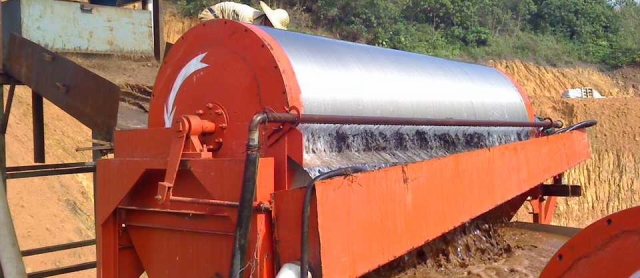
Magnetic Drum Separator: Dry drum separators have been developed mainly for dry separation of ferromagnetic ores with particle sizes finer than 20 mm. In addition to this conventional application, the dry drum separator has found a wide range of other applications such as:

  • Iron and steel slag treatment
  • Reduced pyrite ash separation
  • Calcined ilmenite production
  • Metal powder production
  • Supergrade magnetic concentrate production
  • Removal of ferromagnetic particles prior to high-intensity magnetic separation
  • Control of iron contamination in glass sand production.
Magnetic Drum Separator

Drum separator

Magnetic Drum Separator: Principle of operation

As material reaches the drum, the magnetic field attracts and holds ferrous particles to the drum shell. As the drum revolves, it carries the material through the stationary magnetic field.

The nonmagnetic material falls freely from the shell, while the magnetic particles are held firmly until they are carried out of the magnetic field.

Magnetic Drum Separator: Standard drum separator

For many years, Permanent Magnetic Drums have used ceramic or alnico magnet materials as their power source.

When built with designed circuits, these separators provide good magnetic fields for a nominal cost and effectively remove both tramp and fine iron contaminants in most applications.

They continue to be the magnets most frequently used to improve the product purity of dry bulk materials.

Magnetic Drum Separator

Drum type magnetic separator

Magnetic Drum Separator: Design magnetic Drum Separator

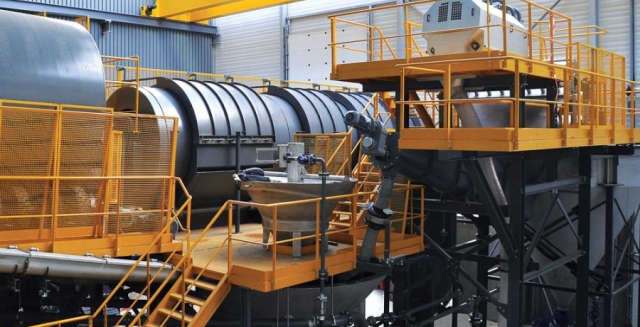
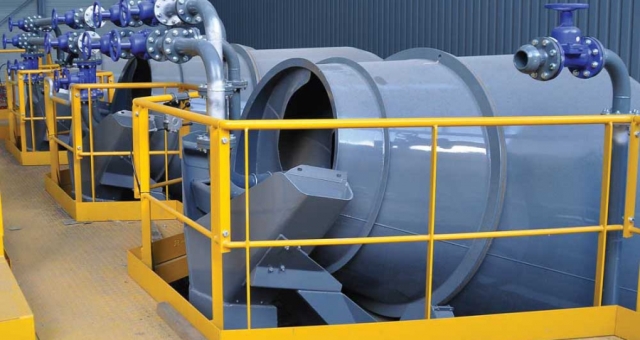
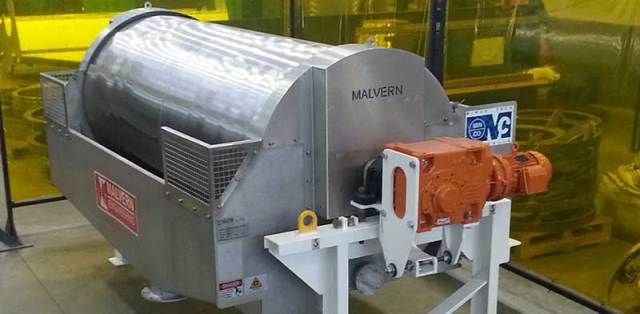
The dry drum separator consists of a stationary magnetic yoke with a number of permanent magnets placed inside a rotating drum of non-magnetic material.

The magnets have alternating polarity and are normally of strontium-ferrite. The revolving drum is made in two versions:

  • for low speed, stainless steel with a replaceable wear cover of rubber, polyurethane or stainless steel and,
  • for high speed, reinforced plastic with rubber or polyurethane wear protection.

The magnetic drum assembly is contained in a dustproof housing with an opening at the bottom for the discharge of both magnetic and non-magnetic products. These products are separated by means of a splitter placed under the drum inside of the housing. The whole unit can be dust vented by connecting the plant exhaust system to the outlet provided on the housing.

Parts of the housing exposed to wear are normally protected by replaceable rubber or steel wear plates. Inspection of the drum and housing is made through inspection hatches. The housing is easily dismantled for erection and maintenance.

The feed arrangement is dependant upon local conditions. For run-of-mine fines, a belt feeder is recommended. For other materials, a vibrating feeder, (or in the case of dusty material, completely covered drum feeders) can be used. The housing is equipped with a standard replaceable feed chute.

To meet the various requirements the separators are manufactured with two different drum diameters; i.e. 916 and 1200 mm and drum lengths from 300 mm to 3000 mm in. The separator design allows for an easy combination of drums into double- or triple- drum units.

Magnetic Drum Separator

Magnetic drum separator

Magnetic Drum Separator Application

Magnetic drum separators have a wide range of applications. They are used in free-fall chutes or after a vibratory chute for powders (even fine powders), granulates, fibers and coarser product streams (non-sticky). They continuously and fully automatically separate ferromagnetic (Fe) particles, such as iron and steel.

If the material is supplied via a vibratory chute, it is possible to separate weakly magnetic particles, such as particles from machined stainless steel, and even paramagnetic particles. Due to the continuous cleaning, the drum magnet is very suitable for product flows with heavy magnetic particle contamination.

Applications:

  • prevention of ferromagnetic or paramagnetic contamination in your finished product;
  • prevention of avoidable damage to machines (injection-molding machines, extruders, mixers, grinders, and other equipment).
Magnetic Drum Separator

Types of Magnetic drum separator

  • The standard magnetic drum separator is suitable for coarser raw materials in the plastics and ceramics industries.
  • The food/pharma drum magnets have been specifically developed for the food and pharma industries. They have a small capacity yet filter smaller Fe (and even weak magnetic) particles out of a product stream.
  • The LenaStar even filters out paramagnetic particles such as stones, mud, insect excrement, etc. from your dried raw materials (e.g. tea, spices).

Advantages of Magnetic Drum Separator

  • multiple designs, tailor-made to the application
  • high magnetic forces
  • high availability
  • low maintenance cost
  • various applications in recycling and scrap industry

Magnetic separator machine

Magnetic Drum Separator:Classification Schemes of Magnetic Separators

Various classification schemes exist by which magnetic separators can be subdivided into categories. The most illustrative classification is according to the magnitude of the magnetic field and its gradient.

  • Low-intensity magnetic separators (LIMS). They are used primarily for the manipulation of ferromagnetic materials or paramagnetic of high magnetic susceptibility and/or of large particle size. These separators can operate either in dry or wet modes. Suspended magnets, magnetic pulleys, and magnetic drums are examples of these separators.
  • High-intensity magnetic separators. They are used for the treatment of weakly magnetic materials, coarse or fine, in wet or dry modes. Induced magnetic rolls (IMR), permanent magnet rolls and drums, magnetic filters, open-gradient (OGMS) and wet high-intensity magnetic separators (WHIMS) are examples of this class of separators.
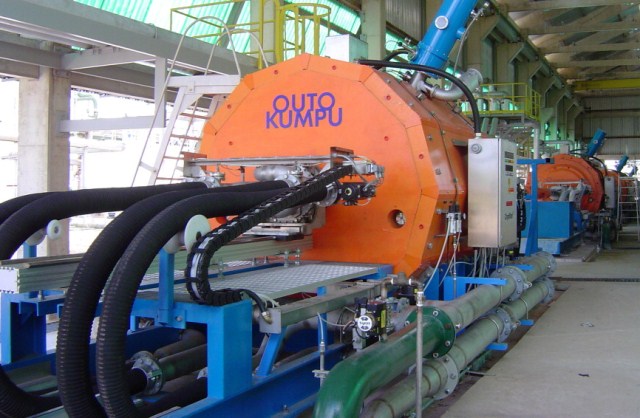
  • High-gradient magnetic separators (HGMS). These separators are used to treat very fine, feebly magnetic materials. A superconducting HGMS machine is shown in the next Figure:
Magnetic Drum Separator

Magnetic separation equipment

Magnetic Drum Separator: Magnets are also used in numerous special applications of material handling:

  • Separators with magnetic fluids, in which materials are separated mainly on the basis of their density.
  • Eddy-current separators for separation of nonferrous metals
  • Dense-medium separators, in which a magnet is used to control magnetic heavy medium.
  • Demagnetizing coils and magnetic flocculators.

Magnetic Drum Separator: Selection of Magnetic Separation Technique

As has been shown above, there are numerous types of magnetic separators, each one being suitable for only a limited range of applications. The choice is influenced by a variety of factors, and the successful operation of a separator depends, to a great extent, on practical experience. The particle size and magnetic properties of the material to be treated are the most important variables that determine the selection of the magnetic separation technique and the general guidelines of the process selection based on these properties are shown in Figure.

What is a magnetic drum separator?

What is a magnetic drum separator?

Magnetic drum separators have a wide range of applications. They are used in free-fall chutes or after a vibratory chute for powders (even fine powders), granulates, fibers and coarser product streams (non-sticky). They continuously and fully automatically separate ferromagnetic (Fe) particles, such as iron and steel.

What is the magnetic separation process?

Magnetic separation is a process in which magnetically susceptible material is extracted from a mixture using a magnetic force. This separation technique can be useful in mining iron as it is attracted to a magnet.

What is a magnetic filtration?

Magnetic filtration is the most effective means of removing problem ferrous particles from industrial fluids such as coolants, lubricants and wash solutions. All the benefits of Magnetic filters are based on their ability to remove 100% of ferrous particles including sub-micron particles from the process.

What is magnetic separation method for concentration of ore?

This method of separation is used when either the ore particles or the gangue associated with it possess magnetic properties. For example, chromite Fe(CrO2)2 being magnetic can be separated from the non-magnetic silicious gangue by magnetic separation.

The most read

More on this story

Forklift Magnet

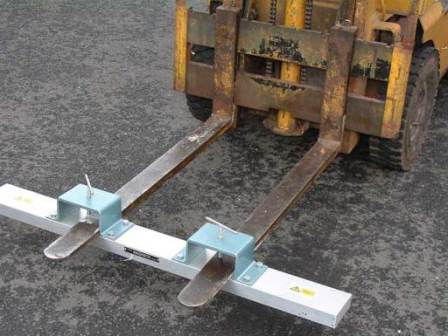
Forklift magnetic sweepers, with releasable magnets, will make picking up metal debris a breeze.

Backhoe Bucket Attachment

The backhoe is the main tool of the backhoe loader. It’s used to dig up hard, compact material, usually earth, or to lift heavy loads, such as a sewer box.

Mining Equipment Manufacturers

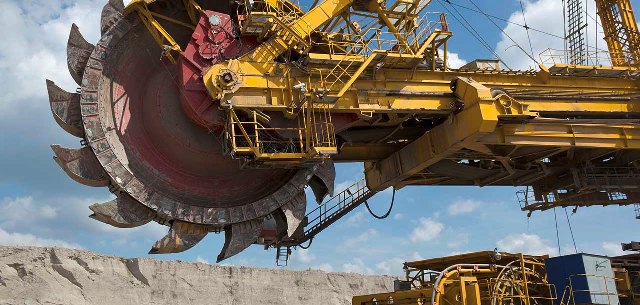
Mining Equipment Manufacturers: Construction and mining equipment cover a variety of machinery such as hydraulic excavators, wheel loaders, backhoe loaders, bulldozers, dump trucks, tippers, graders, pavers, asphalt drum / wet mix plants, breakers, vibratory compactors, cranes, forklifts, dozers, off-highway dumpers (20T to 170T), drills, scrapers, motor graders, rope shovels etc.

They perform a variety of functions like preparation of the ground, excavation, haulage of material, dumping/laying in a specified manner, material handling, road construction, etc. These equipment are required for both construction and mining activity.

Mining Equipment Manufacturers

Mining equipment suppliers

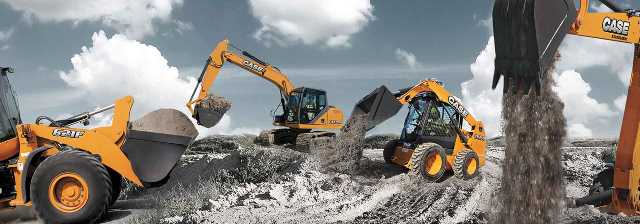
The technology leaders in the construction equipment sector are Komatsu, Caterpillar, Hitachi, Terex, Volvo, Case, Ingersoll-Rand, HAMM, Bomag, John Deere, JCB, Poclain, Bitelli, Kobelco, Hyundai, and Daewoo.

In the mining sector, the leaders are: Wrigten, Atlas Copco, Liebherr, Joy Mining Machinery, Hitachi, Komatsu, Terex, Ranson & Rappier, Bucyrus Erie and DBT.

As a whole, the total revenue of 50 largest world manufacturers of construction equipment continues to decline, which compared to last year amounted to 2.6%. Thus, in monetary terms, total revenue was $159 billion.

Mining Equipment Manufacturers

Top 10 mining equipment manufacturers

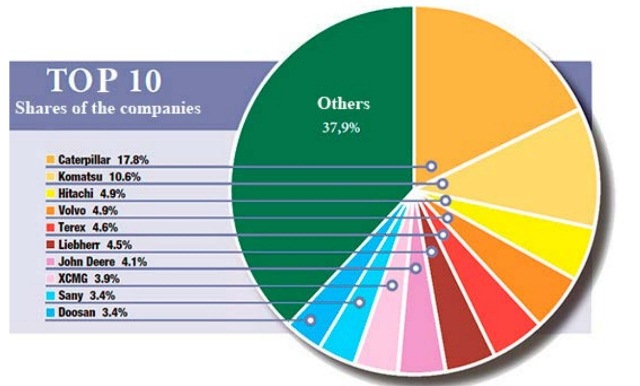
Caterpillar and Komatsu corporations, being the undisputed leaders of this ranking throughout the entire period of its existence, retained the first and the second position respectively. And the differences in sales volumes of these companies and their closest pursuers still remain at an unattainable level. However, due to the reduction of its activity in the mining industry, the sales volume of Caterpillar fell by almost $3 billion, which in turn led to 1.2% decrease of the share of the company in total sales volume.

Top companies
Caterpillar17.8 %
Komatsu10.6 %
Hitachi4.9 %
Volvo4.9 %
Terex4.6 %
Liebherr4.5 %
John Deere4.1 %
XCMG3.9 %
Sany3.4 %
Doosan 3.4 %
Others37.9 %

Mining machine manufacturers

The industry is quite mature in terms of marketing abilities as compared to the other sectors of the capital goods industry. Majority of the companies have strategic planning programmes in place and have well chalked out business strategies at all levels.

In order to enhance their market share, companies need to improve quality and service followed by a reduction in costs, increase in product range and finally adopt more aggressive marketing strategies. The competitive edge lies in satisfying customers by delivering higher quality products at lower prices.

Strategic alliances are already in place among 60% of the companies surveyed.

These are primarily focused on developing and combining competencies with the help of other organizations in terms of marketing, after-sales service, etc. Only 45% of the companies are interested in growth through mergers and acquisitions.

The level of quality consciousness is on an average higher than the other sectors probably because the companies are larger and many of them are associated with international companies either for manufacturing or marketing their products.

Another reason for higher quality consciousness is that more companies in this sector are well versed with the soft technologies being used worldwide for enhancing competitiveness and quality.

Approximately 90% of the companies covered under the study have either implemented or are implementing soft technologies like six sigma, lean manufacturing, etc. 100% of the companies manufacturing are ISO certified.

Mining Equipment Manufacturers

Mining equipment manufacturing companies

Inspite of the sharp hike in steel prices, profitability has been better in the last two years due to increased sales, better sales price, strengthening of the dolar and continued efforts to reduce production costs. The cost of production needs to be further reduced and hence companies need to work upon human resources management to improve employee productivity.

This can be tackled by proper training of manpower, proper utilization of the right talent in the right place which is presently lacking in the manufacturing industry.

Caterpillar equipment

Caterpillar Inc. is an American Fortune 100 corporation which manufactures machinery, engines, financial products, and insurance to customers via a worldwide dealer network. They are also the largest construction and mining equipment manufacturer in the world. Its sells its wide array of products under the brand name CAT, CAT Financial, CAT Reman, Anchor, Asiatrak, FG Wilson, Perkins, Hypac, Mak, and Yellow mark. The company was ranked 194 on the Fortune 500 global list in the year 2016.

Komatsu mining corp

Komatsu is a Japanese multinational corporation involved in the manufacturing of construction, mining, and military equipment. The company also manufactures industrial equipment like press machines, lasers, and thermoelectric generators. Their construction and mining equipment consists of machines including electric rope shovels, continuous miners, hydraulic excavators, wheel loaders, motor graders, dump trucks, and mini excavators. In April 2017, the American subsidiary of Komatsu acquired Joy Global, a world leader in high-productivity mining solutions.

Hitachi Construction Machinery

Hitachi is a Japanese construction equipment manufacturer that deals with the development, manufacturing, marketing, and sales of construction equipment. Their mining equipment consists of excavators, loaders, recycle machines, compaction equipment, crawler cranes, dump trucks, and bulldozers. In March 2017, Hitachi Construction Machinery entered into a partnership with Trimble to enhance its fleet management capabilities.

Atlas Copco

Atlas Copco, founded in 1873, is a Swedish company which manufactures industrial tools and equipment. They boast a wide variety of product range which includes air compressors and industrial gases, vacuum solutions, mobile tools, industrial tools and solutions, mining and rock excavation equipment. Atlas Copco is seeking to acquire assets of Renegade Drilling Supplies Proprietary, a South African manufacturer of drilling consumables for mining exploration. The company reported revenues of $11 billion for the year 2016 with sales in over 180 countries.

Sandvik Mining and rock technology

Sandvik is a global high-technology engineering group specializing in tools and tooling systems for metal cutting, tools, and services for the mining and construction industries. Their key services include machining solutions, mining and rock technology, and materials technology. The mining equipment manufacturer has employed 43,000 employees over 150 countries to generate revenues of $9 billion in the year 2016. It was one of the first company to commercially exploit the Bessemer steel process. They have categorized their products into metal cutting tools, mining and excavation tools, stainless steel, furnace products, and hard and super-hard materials.

Mining equipment rental

The equipment rental market is not yet fully developed but there are a number of companies who are now entering into the business encouraged by the low-interest regime. This will further give a boost to the demand for small and medium-sized equipment. The lowering of customs duties and removal of age restrictions have encouraged imports of second-hand machinery used by the rental companies. This has also found favor with contractors. It helps them to focus on their core competencies of construction and project management while having access to equipment without significant investments.

Future prospects of this industry are directly linked to the world economy and it is expected that the economy will do well in the future.

In recent years, the core sector of the economy, particularly the mineral and mining industry, has made significant progress.

The abundant mineral resources available in the world have led to the growth of the mining industry. This industry is basically labor-intensive and can provide job opportunities for many. Mechanized mining operations have become popular in recent years. Today, more and more companies engaged in open-cast mining resort to high mechanization in order to maximize the output of coal and other minerals. As a result, there is a marked trend in the introduction of large capacity and higher sized mining machines.

Mining Equipment Manufacturers

Mining Equipment Manufacturers

What is the mining equipment?

Underground specialized mining equipment such as trucks, loaders, diggers, etc. are used to excavate the material and are normally hauled to the surface with skips or lifts for further processing. Drilling is normally required to place explosive charges to liberate the minerals from the overburden material.

What is the most common type of mining?

The three most common types of surface mining are open-pit mining, strip mining, and quarrying.

How is underground mining done?

The entry from the surface to an underground mine may be through a horizontal or vertical tunnel, known as an adit, shaft or decline. Underground mining is practical when: The ore body is too deep to mine profitably by open pit.

What type of industry is mining?

The mining industry contains five main industry segments, which are defined by the resources they produce: oil and gas extraction, coal mining, metal ore mining, nonmetallic mineral mining and quarrying, and support activities for mining.

The most read

Construction and Mining equipment

Mining is the extraction of valuable minerals or other geological materials from the land of a deposit. For this extraction to be done efficiently, we need machinery specialized in mining.

More on this story

Heavy Equipment Maintenance

The management of construction machinery and equipment is a difficult task. Those responsible for the mechanical equipment must make complex technical and economic decisions about the destination of the machines they are responsible for.

Objectives of Construction Management

Objectives of Construction Management: If one is going to practice management within an industry, it is a good idea to define the arena in which the management techniques will be applied. We really need to know just what business we are in to evaluate our present goals, find out where we have been, and where we hope to go from here.

A construction manager is someone who plans, coordinates, budgets, and supervises construction projects from early development to completion.

The theme of this article is the practice of management across all facets of construction project execution. Therefore, construction technology will be introduced only as it, bears on total construction project management. It is a given that you must master the basic technology applicable to your specialized field of construction before you can effectively take on the total management of a construction project.

objectives of construction management

Career objective for construction project manager

Construction Management – career objective for construction manager:

Construction management is a professional service that provides a project’s owner(s) with effective management of the project’s schedule, cost, quality, safety, scope, and function. Construction management is compatible with all project delivery methods. No matter the setting, a Construction Manager’s (CMs) responsibility is to the owner and to a successful project.

At its core, a capital project is made up of three parties (excluding the CM):

  • The owner, who commissions the project and either fund the project directly or finances it through a variety of methods.
  • The architect/engineer, who designs the project.
  • The general contractor, who oversees day-to-day operations and manages subcontractors.
objectives of construction management

Career objective for construction manager

Construction project management – career objective for construction project manager:

Construction Management (CM) represents the owner’s interest and provides oversight over the entire project directly for the owner. His/her mandate is to work with all parties to deliver the project on time, at or under budget, and to the owner’s expected standard of quality, scope, and function.

CMs are uniquely qualified through combined education and experience to work with the owner, architect, general contractor, and other stakeholders to determine the best possible sequence of construction operations and develop a detailed schedule and budget, while also establishing plans for project safety and security and helping the owner manage risk. This requires using project management information systems (PMISs) and complex planning techniques, like critical path method, as well as knowledge of construction methods.

A study supported by the CMAA Foundation showed that using professional CMs saved money, avoided or mitigated problems, and produced higher quality results for owners.

objectives of construction management

Objectives of Construction Management

Construction managers, also called general contractors or project managers, typically do the following:

Professional CMs use industry-standard practices to manage projects successfully. The CM Body of Knowledge and Standards of Practice address all six areas of construction management services: schedule, cost, safety, quality, function, and scope.

  • Prepare and negotiate cost estimates, budgets, and work timetables
  • Select appropriate construction methods and strategies
  • Interpret and explain contracts and technical information to workers and other professionals
  • Report on work progress and budget matters to clients
  • Collaborate with architects, engineers, and other construction and building specialists
  • Instruct and supervise construction personnel and activities onsite
  • Respond to work delays and other problems and emergencies
  • Select, hire, and instruct laborers and subcontractors
  • Comply with legal requirements, building and safety codes, and other regulations
objectives of construction management

What are the objectives of construction management?

Construction engineering and management – The objectives of construction management:

Construction managers coordinate and supervise a wide variety of projects, including the building of all types of residential, commercial, and industrial structures, roads, bridges, power plants, schools, and hospitals. They oversee specialized contractors and other personnel.

They schedule and coordinate all design and construction processes to ensure a productive and safe work environment. They also make sure jobs are completed on time and on budget with the right amount of tools, equipment, and materials. Many managers also are responsible for obtaining necessary permits and licenses. They are often responsible for multiple projects at a time.

objectives of construction management

Construction managers

Career goals for managers:

Construction managers work closely with other building specialists, such as architects, engineers, and a variety of trade workers, such as stonemasons, electricians, and carpenters. Projects may require specialists in everything from structural metalworking and painting, to landscaping, building roads, installing carpets, and excavating sites.

Depending on the project, construction managers may interact with lawyers and local government officials. For example, when working on city-owned property or municipal buildings, managers sometimes confer with city council members to ensure that all regulations are met.

For projects too large to be managed by one person, such as office buildings and industrial complexes, a construction manager would only be in charge of one part of the project. Each construction manager would oversee a specific construction phase and choose subcontractors to complete it.

How large is the construction industry?

The construction industry has long been a major component of the economies of the world’s industrialized nations. Statistical analysis of the industry, even in the U.S., is very difficult. The U.S. Department of Labor keeps statistics, as well as private groups such as Engineering News Record (ENR) and various contractor associations.

The ENR-generated figures are generally given more credence in the industry. The actual numbers are not that critical as long as one uses them simply to evaluate industry trends. Here, we are only trying to evaluate the relative size of the construction industry and its annual performance trends.

Construction management services

The objectives of construction management: Construction managers address budget matters and coordinate and supervise workers. Choosing competent staff and employees, as well as establishing good working relationships with them, is critical.

Managers also must delegate tasks to workers, subcontractors, and other lower level managers effectively. Managers must give clear orders, explain complex information to workers and clients, and discuss technical details with other building specialists. Self-employed construction managers must get their own projects, so the need to sell their services to potential clients is critical.

Managers must know construction methods and technologies, and be able to interpret contracts and technical drawings. Construction managers must meet deadlines.

They ensure that construction phases are completed on time so that the next phase can begin. For instance, constructing a building foundation cannot begin until the land excavation is completed. They must write proposals, plans, and budgets clearly for clients and others involved in the building process.

Career objective for project Manager resume

To be successful, your project manager’s resume can include a clear, confident, and well-written factual statement that grabs the attention of employers.

An effective objective should focus on the job description and what the employer expects of you as a project manager, detailing why you should be considered for the position.

Highlight your skills, talents, and experience and let the employer know that you are the best fit for the job.

An example of how to describe it would be: Contribute to the success and long-term growth of the company by capitalizing on project management knowledge and applying experience in the various business areas to ensure timely compliance with all identified goals and schedules.

Best book for construction planning and management

The Construction MBA: Practical Approaches to Construction Contracting

Written by a successful management researcher, advisor, and educator to construction contractors.

The Construction MBA reveals effective operating practices for managing the multiple processes that must work simultaneously to make a construction firm consistently profitable.

The methods in the book apply to both general and specialty contracting firms and describe how to grow both the top line and bottom line.

Construction Equipment Management

This revised and updated edition of Construction Equipment Management fills a gap on this subject by integrating both conceptual and hands-on quantitative knowledge on construction equipment into a process that facilitates student learning.

Organized around the major categories of construction equipment, including both commercial and heavy civil examples, case studies, and exercises, this textbook will help students develop independence in applying concepts to hands-on scenarios.

What does a construction manager do?

What Does a Construction Manager Do?

Construction managers oversee and lead a range of building projects from beginning to end. They are responsible for setting and keeping schedules, monitoring finances, and making certain that everybody is doing what they should, every day.

How do you become a construction manager?

Construction managers typically must have a bachelor’s degree and learn management techniques through on-the-job training. Large construction firms increasingly prefer candidates with both construction experience and a bachelor’s degree in a construction-related field.

What are the objectives of Construction Management?

The functions of construction management typically include the following: Specifying project objectives and plans including delineation of scope, budgeting, scheduling, setting performance requirements, and selecting project participants.

Can a construction manager become a Project Manager?

More and more construction project managers have bachelor’s degrees when they enter the field. The common degree for a project manager in construction is a degree in construction engineering, building science, or construction science. This will better prepare you for work as a project manager.

More on this story

Top EPC Companies

EPC services company, EPC oil & gas multinational company, EPC company means, what is EPC company.

Mining equipment manufacturers

Construction and mining equipment cover a variety of machinery such as hydraulic excavators, wheel loaders, backhoe loaders, etc.