All posts by Loganx

Professional Web Writer | Motor Enthusiast | Content Creator | Logan is a dedicated and skilled web writer, passionate about engines and machines and with a talent for creating engaging and informative content. She specializes in writing about a diverse range of topics including construction, forklifts, heavy equipment, excavators, etc. SEO Optimization: Proficient in SEO best practices, ensuring high visibility and engagement for all published content.

Construction Safety Topics

Construction Safety Topics and health: Anyone working in construction has been ingrained with the concept of construction safety for as long as he or she can remember, but construction is still ranked among the highest accident-risk industries in the world.

There are a number of reasons that these high numbers are endemic to the construction industry that are not found in most other businesses.

First, the industry is highly splintered into a formidable number of very diverse operating entities. There are a plethora of individual owners, contractors, subcontractors, A&E firms, and the like directly involved in the business of building facilities.

This diverse group is underlain by an impressive lineup of government agencies, trade unions, trade associations, equipment manufacturers, insurers, and universities, all playing a supporting role to the main players.

Explore essential construction safety topics critical for protecting workers and preventing accidents on job sites.

From fall protection and hazard communication to equipment safety and emergency preparedness, delve into the key principles and best practices that promote a culture of safety in the construction industry.

Discover how addressing these topics can mitigate risks, enhance compliance with regulations, and ensure the well-being of construction workers.


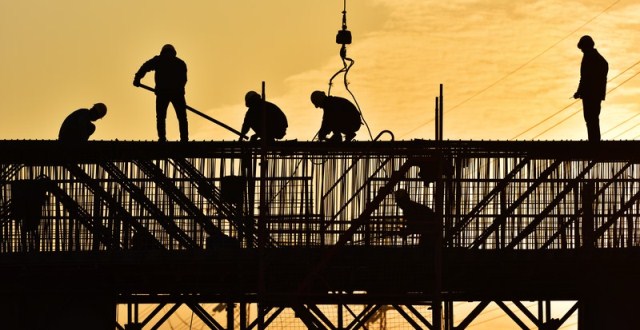
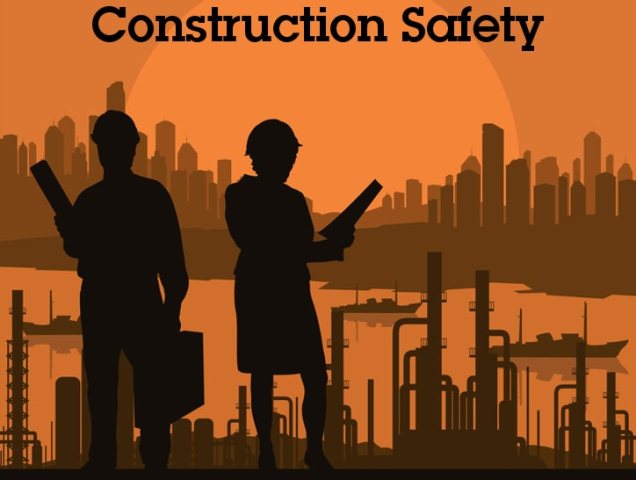
Construction Safety and Health

General safety rules in the workplace

Collectively, these organizations have some sort of responsibility or are contributing to the construction safety picture, but not necessarily with the same safety goals in mind.

The high rate of employee turnover endemic to the construction industry is another problem area when it comes to executing an effective safety program.

A high percentage of construction firms serving a widely distributed market rarely see the same craftspeople on successive projects. This makes it difficult to properly train the craft labor in the firm’s safety programs and standards.

Turnover also leads to unknowingly hiring a percentage of accident-prone workers who have to be retrained or weeded out. Small local contractors with long-term supervisory and craft-labor employees don’t have the same problems.

On the negative side, smaller contractors inherently place less emphasis on safety standards and on programs that tend to adversely affect their accident statistics.

However, we will be looking at how construction managers can overcome the fractured nature of the industry by bringing a sharper focus on effective safety programs for their individual projects.

As with any key management function on the project, the safety program doesn’t just happen, it must be planned, organized, and controlled. As the leader of the field activities, the Construction Manager’s (CMs) must bring every available resource to bear in executing a superior project safety performance every time. CMs play a vital role in their firm’s overall safety performance chain.

Construction Safety and Health

Construction safety topics

How Did Construction Safety Evolve?

Going back again 4000 years to the Egyptians and their monument building, we can evaluate some of the accident and health problems they must have encountered. They, after all, represent the first organized heavy construction activity in our recorded history.

Because the Egyptian nobility was so obsessed with the afterlife and how to get there, they apparently made no written record of their construction safety problems and how they coped with them. We do know they didn’t have what we today consider basic safety equipment such as hard hats, safety shoes, eye protection, respirators, and the like.

As described in the This Old Pyramid show,l we know that they quarried and moved stones weighing up to 15 to 20 tons to build the pyramids.

Their quarrying, tunneling, and chamber excavations in solid limestone were done by manually chipping 18-inch-wide channels around three sides to a depth equal to the stone’s height. They then split out the resulting stone piece along the base by driving in bronze wedges.

The resulting stones were taken out and finished by stone cutters using pointed copper or bronze adzes and chisels. All this stone quarrying and excavation produced tons of rubble, flying chips, and clouds of limestone dust. It was a perfect setting for stone cutters to contract silicosis and all sorts of respiratory diseases as we know them today.

Assuming that the Pharaohs couldn’t afford to eradicate their farmers, who worked on the tombs during the off-season, the workers must have developed some primitive methods to cope with the safety and health problems.

Construction Safety and Health

Health and safety practices in the workplace

In the absence of modern safety programs as we know them today, the safety measures had to be simple self-preservation methods developed by the laborers themselves. Unfortunately, that self-preservation attitude seems not to have been passed down to many of our present-day construction craftspeople.

Considering worldwide construction activities for the next 4000 years, not much happened on the safety front even with the onset of the industrial revolution. In fact, the factory industries spawned in the industrial revolution had an even worse safety record than the construction industry.

Finally, with the organization of trade unions, labor legislation, and workers’ compensation, which arrived in the early 1900s, owners were convinced that having good employee on-the-job safety and welfare programs was a sound business practice after all.

The heavy-industry portion of the industrial business then developed safety programs and basic safety equipment such as hard hats, safety shoes, protective clothing, and the like.

Contractors working in those industries were then forced to adapt those heavy-industry safety rules and equipment to apply to their own employees. In response to their client’s wishes and the new legislation, contractors soon started to take a proactive stance toward on-the-job safety.

Considering the longevity of the construction industry, we can see that modern safety practices have developed only over the past five or six decades, so they are still relatively new. There is still plenty of room for improvement in the construction safety field, given the parallel improvements in technology, training, and management practices.

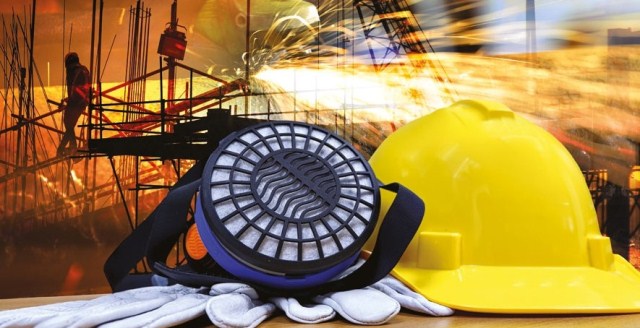
Construction Safety and Health

Safety hazards on a construction site

How Effective Is Construction Safety Today?

Despite titanic efforts on the part of government agencies, the insurance industry, trade associations, universities, owners, unions, and contractors, the overall accident and severity rate seems to stay about the same. The Bureau of Labor Statistics (BLS) has been keeping and reporting accident data for all industries for many years. Despite wide swings in the economy, U.S. construction accounts for about 7 percent of the workforce and has contributed to about 25 percent of job-related fatalities.

It would seem that the present construction safety programs have brought the accident statistics down to an irreducible minimum that must be accepted as part of an inherently risky business. However, some notable exceptions to the general safety performance figures have shown up recently to prove otherwise.

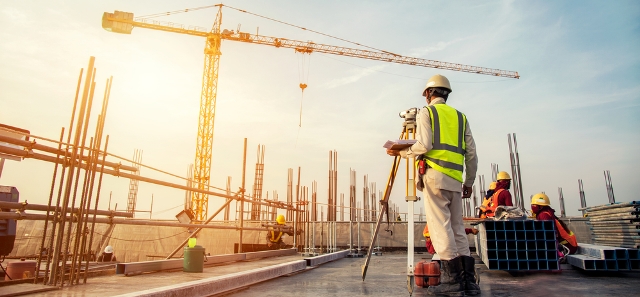
Construction Safety and Health

Construction safety programs

Why Are Construction Safety Programs Important?

There are many mitigating factors supporting the need for effective construction safety programs today. Generally, they fall into humanitarian and economic categories. The hard-nosed economic factors of safety have forced even the most in humanitarian management into taking a more humanitarian stance on construction safety.

I say this because of the construction industry’s widespread macho image, which tends to play down present-day management’s general trend toward a humanistic approach toward employees.

Present-day construction safety programs must also stress accountability for safety throughout the organization. Owners’ and contractors’ management must initiate the need for safety, and the resulting system must be clear as to who is accountable for carrying out the program.

Because Construction Manager’s (CMs)  have sole responsibility for delivering the project goals, they are held accountable for the success or failure of the site-safety performance.

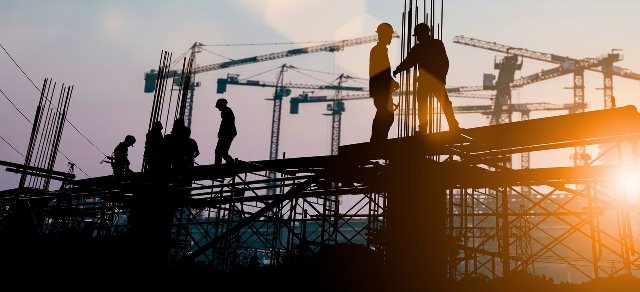
Construction Safety and Health

Health and safety management in construction

Humanitarian factors in safety

The humanitarian factors in safety are quite straightforward. No one connected with the industry wants to see coworkers killed or injured on the job. Everyone working on the job must make a personal commitment to perform in a manner that doesn’t endanger the lives and property of others.

This is especially true for the various management groups involved in the construction project because they are responsible for managing a safe environment.

Construction Managers (CMs) are especially sensitive to safety’s humanitarian side because they are customarily responsible for delivering the sad news of an accident to the next of kin. As leaders of their field organizations, most CMs feel a personal responsibility for an accident that happened on their watch.

Although the accident rate among CMs is relatively low, I have had a CM experience a serious lost-time accident on one of my projects.

Considering a Construction Manager’s (CMs)  overall project-performance rating, having a personal lost-time accident on one’s record is probably the worst thing that can happen. No one on the project is outside the safety program’s umbrella or immune from accidents.

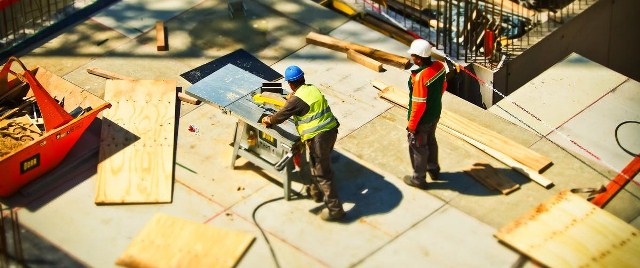
Construction Safety and Health

Construction site safety topics

Economic factors in safety: Construction accident costs have been estimated in a variety of ways.

It’s been estimated by several sources that accidents cost the industry 6.5 percent of the $300 billion spent on construction or about $20 billion per year in the 1980s. There is no indication that it will be much lower in the present decade.

Those numbers give ample proof that construction safety and accident reduction offer one of the best cost-reduction routes available to meet the construction industry’s vital goal of reducing overall costs.

In the final analysis, the above economic factors forced owners and contractors into taking a more pragmatic approach to construction safety. It’s always easier to sell a humanitarian approach if one can offer an economic advantage as well. When one considers the direct and indirect costs of accidents, an effective safety program wins hands-down on the factory floor and the construction site.

The direct costs of a high accident rate are fairly obvious and easy to evaluate. Some of the key direct costs attributable to high accident rates are:

  • Higher workers’ compensation insurance rates
  • Higher liability insurance rates
  • Losses not covered by insurance policies
  • Government agency fines
  • Depressed craft-labor productivity rates
  • Cost of investigation and filing accident reports

Indirect costs are a bit harder to evaluate but typically add up to more than direct costs. Some of the more obvious indirect costs are:

  • Increased employee turnover
  • Lost time of injured workers
  • Training cost of replacement workers
  • Time lost on schedule (possible liquidated damages)
  • Lowered worker morale
  • Loss of worker efficiency
  • Lowered morale and efficiency of supervisors
  • Damage to the owner’s property
  • Damage to tools and equipment
  • Litigation support costs not covered by insurance
  • Loss of new business and damage to corporate image
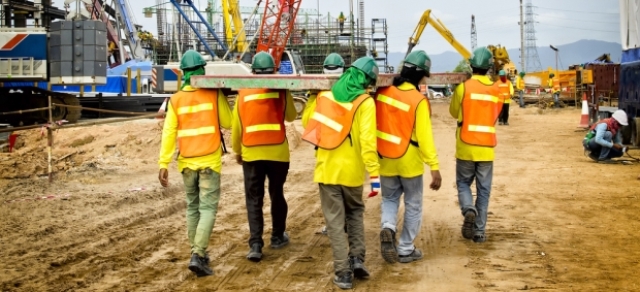
Construction Safety and Health

Construction safety training

Another construction safety topic that is often taken too lightly is safety training. Too often, safety training is seen as a time-consuming chore that gets in the way of “real problems”.

Importance of Construction Safety Training:

As such it is critical you spend a few safety meetings discussing the benefits of safety training, and why it is necessary. Some of your team may roll their eyes at first, but the more time you spend discussing its importance, the more they’ll start to understand.

Without recurring safety training, it’s easy to start taking safety for granted. It’s no surprise that complacency is one of the most common causes of workplace incidents. So be sure to remind workers that proper training is important for keeping them alert.

Construction Safety and Health

What is health and safety in construction?

It helps the reader to identify hazards and control risks and explains how to plan, organize, control, monitor and review health and safety throughout the life of a project. It is aimed at everybody involved in construction work, including clients, designers, contractors, and individual workers.

Why is construction safety important?

Health and safety in construction are particularly important because the industry is prone to hazardous situations and can be dangerous at times.

What is the definition of safety in construction?

Construction safety aims to ensure that a construction site or the industry as a whole is not the cause of immediate danger to the public around a construction site, or the workers at a construction site, as well as making sure that the finished product of construction meets required safety standards.

How do you implement safety in construction?

Implement zoning to block off areas where certain tasks will take place, install nets and catch platforms, and apply any other safety measures. Stage and stock each work area with the necessary tools, PPE, and equipment before the workday begins. This will make it easier and safer for workers to access what they need.

The most read

Equipment Preventive Maintenance

Equipment Maintenance Management: predictive and preventive, management in the mining, industrial and construction industry for road machines.
More on this story

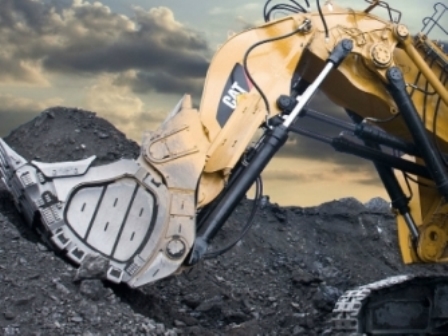
Mining equipment manufacturers

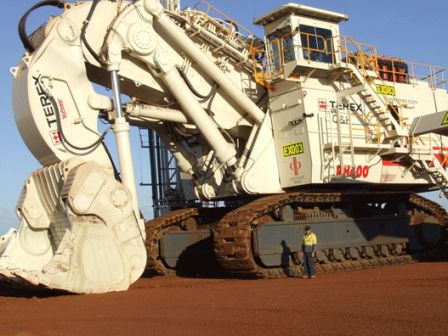
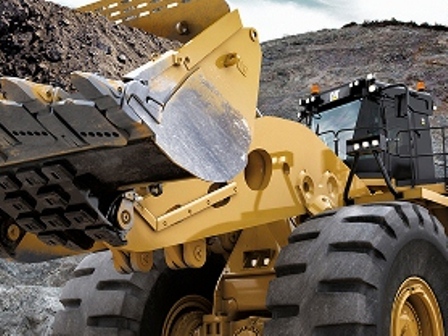
Construction and mining equipment cover a variety of machinery such as hydraulic excavators, wheel loaders, backhoe loaders, etc.

Types of Construction Equipments

Proper tools and equipment are essential for the effective operation of any civil works site. Equipping the construction site with the correct tools and equipment plays an essential role in achieving timely and good quality results.

For every construction activity, there is an optimal combination of tools, equipment, and labor. Depending on the nature and content of the work, the technical staff needs to know which tools to use and how to effectively combine them with manual labor.

Discover the diverse array of construction equipment types essential for building projects of all sizes and complexities.

From excavators and bulldozers to cranes and concrete mixers, explore the functionalities and applications of various machinery used in excavation, earthmoving, material handling, and more.

Learn how selecting the right equipment can optimize efficiency, productivity, and safety on construction sites.

Types of Construction Equipments

Classification of construction equipment

Once on-site, different types of construction equipment require trained operators and supervisory staff who are proficient in its operation and maintenance.

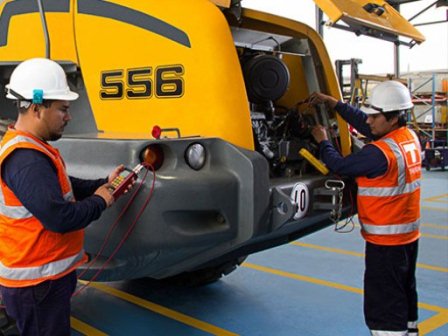
Faulty equipment is a common reason for delays on construction sites. A major responsibility of the project management is to ensure that tools and equipment are maintained in good condition and are readily available when required for the various work activities.

When applying labor-based work methods, the use of hand tools supported with selected items of light equipment can produce results comparable with those achieved when using only heavy equipment.

In order to utilize the equipment and labor in the most effective way, the use of equipment needs to be carefully coordinated with the output of the work gangs.

For certain construction activities, particularly hauling of materials and compaction, high labor productivity and good quality of work may be difficult to achieve using only manual

Types of Construction Equipments

Categories of construction equipment used in construction

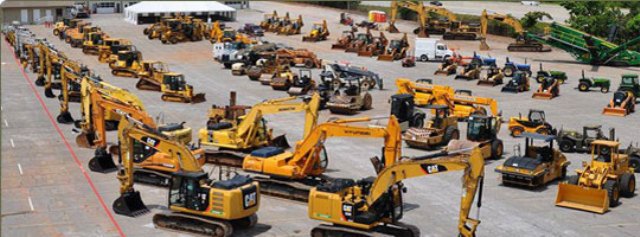
There are several types of construction equipment that is been used in the Industry. These are used for both large and small-scale purposes.

Various types of Equipment are been used for Building & structural Construction, Road construction, underwater, and other marine construction work Power projects, etc.

There are various operations that are involved in construction projects, whether it’s a large scale or a small scale; Excavation and digging of large quantities of earth, Placement of construction materials (eg:-Bricks, concrete) Compacting and leveling, Dozing, Grading, Hauling, etc.

Construction equipment can be categorized into 4 main sections based on purpose and use, They are:

  • Earth Moving equipment
  • Construction vehicle
  • Material Handling Equipment
  • Construction Equipment

Earth Moving equipment

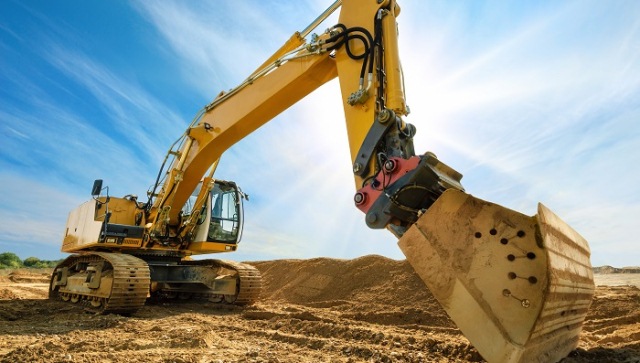
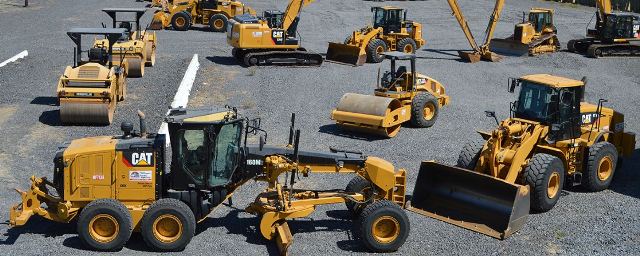
Heavy equipment is essential for construction jobs of almost any size, from home building to large-scale commercial and civil projects. Earth-moving equipment covers a broad range of machines that can excavate and grade soil and rock, along with other jobs.

Earthmovers and other heavy equipment help to speed not only earthwork but also materials handling, demolition, and construction. Many types of heavy construction equipment are designed for multiple functions, making them indispensable on job sites.

  • Excavators
  • Graders
  • Loaders
  • Skid loader
  • Crawler loaders
  • Backhoe
  • Bulldozers
  • Trenchers
  • Scrapers
  • Wheeled loading shovels
Types of Construction Equipments

Construction vehicles

In general, construction companies are faced with challenges due to the fact that opportunities in the construction sector are growing.

Straight proportionally to that construction companies and employees are faced with project complexity.

Yet, in order to beat project complexity, construction companies have uncovered which are the most popular types of construction vehicles that they are using in order to achieve great performance. Still one must not forget that great performance leads to success.

  • Tippers
  • Dumpers
  • Trailers
  • Tankers
Types of Construction Equipment

Material handling equipment

The term “material handling equipment” is a pretty broad one. There are plenty of situations where it’s critical to move large and often heavy materials in a production environment. Any piece of equipment that helps with this process could be labeled ‘material handling equipment.

Plenty of items falls under this definition, from tools and storage units to vehicles and major appliances. Anything that deals with the transportation, storage, and control at any stage of the processing of materials can be classified as material handling equipment.

  • Crane
  • Conveyors
  • Hoists
  • ForkLifts

Types of equipment

Construction equipment refers to heavy-duty vehicles, specially designed for executing construction tasks, most frequently ones involving earthwork operations.

They are also known as heavy machines, heavy trucks, construction equipment, engineering equipment, heavy vehicles, or heavy hydraulics.

They usually comprise five equipment systems: implement, traction, structure, power train, control, and information. Heavy equipment functions through the mechanical advantage of a simple machine, the ratio between the input force applied and force exerted is multiplied. Some equipment uses hydraulic drives as a primary source of motion.

  • Concrete Mixture
  • Compactors
  • Pavers
  • Road Rollers
Types of Construction Equipments

Types of Construction Equipments

what is material handling equipment?

The term ‘material handling equipment is a pretty broad one. There are plenty of situations where it’s critical to move large and often heavy materials in a production environment. Any piece of equipment that helps with this process could be labeled material handling equipment.

what is construction equipment?

Construction equipment refers to heavy-duty vehicles, specially designed for executing construction tasks, most frequently ones involving earthwork operations. They are also known as heavy machines, heavy trucks, construction equipment, engineering equipment, heavy vehicles, or heavy hydraulics.

what is earthmoving equipment?

Earthmovers and other heavy equipment are essential for construction jobs of almost any size, from home building to large-scale commercial and civil projects. Earth-moving equipment covers a broad range of machines that can excavate and grade soil and rock, along with other jobs.

What is heavy-duty equipment?

Heavy equipment or heavy machinery refers to heavy-duty vehicles, specially designed for executing construction tasks, most frequently ones involving earthwork operations or other large construction tasks. Some equipment uses hydraulic drives as a primary source of motion.

What is heavy civil construction?

Building construction is usually further divided into residential and non-residential (commercial/institutional). Infrastructure is often called heavy civil or heavy engineering that includes large public works, dams, bridges, highways, railways, water or wastewater, and utility distribution.

The most read

Modern Construction Equipments

What is considered modern construction equipment? plays a vital role in the construction industry.

Types of Heavy Equipment

Construction equipment is among these tools that have to be carefully chosen.

More on this story

Modern Construction Tools

What do a pickup truck, a nail gun, a drill, a portable circular saw, a cement mixer truck, and a modern hydraulic excavator all have in common?

Mining equipment manufacturers

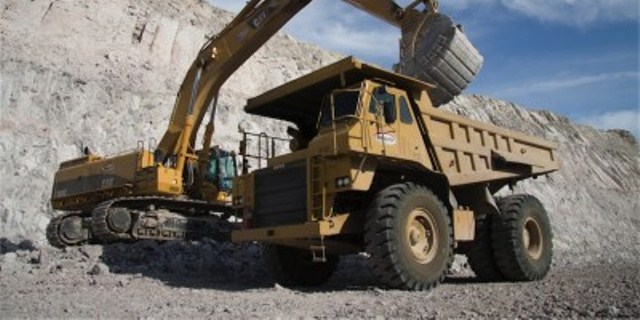
Construction and mining equipment cover a variety of machinery such as hydraulic excavators, wheel loaders, backhoe loaders, etc.

Crane Manufacturers

Crane Manufacturers: Cranes are very important machines not only for the construction industry but also for many other sectors of the industry. For that reason, there are many different types of crane brands available that can be used for different applications. In general, cranes consist of cables and pulleys that create a mechanical force that lifts and moves heavy loads.

Crane Manufacturers

Construction crane manufacturers

Like all crane manufacturers, they are always looking for lighter and more resistant materials. Weight is one of the main factors when designing new models, especially for end users, since the cranes are installed on trucks. They are forced, to develop continuously, cranes increasingly light and resistant to compete in the market of cranes.

The development of products focused on the customer encourages innovation.

Steel is used because it is the only type of material that is able to withstand the stress suffered by its cranes and at the same time it is lightweight and can be easily folded and welded.

Cranes manufacturers constantly face the need to design new items to take advantage of the properties of new products; an area that can be very helpful.

Crane manufacturers are among the few companies in the world able to provide the information we need for the development of new sections and to use the new materials effectively.

Crane Manufacturers

Industrial crane

Cranes are very important machines not only for the construction industry but also for many other sectors of the industry. For that reason, there are many different types of cranes available that can be used for different applications.

In general, cranes consist of cables and pulleys that create a mechanical force that lifts and moves heavy loads.

Some modern cranes use hydraulic systems and electric motors that provide higher power and lift capacities. The cranes can be fixed to the ground or they can be portable and mounted on a specific vehicle.

They are controlled by the operator in the cabin inside the crane or by radio controls. The use of cranes in the construction industry is important and very useful because these machines are capable of lifting and moving heavy loads vertically and horizontally.

Lifting with your hands requires more effort and time, and the whole process of lifting and moving heavy loads is not efficient at all.

Crane Manufacturers

Construction cranes

This means that cranes play a vital role in the construction industry.

But do you know which brands of cranes are the most popular in the world? If not, read on to find out:

Liebherr

Liebherr is a privately owned German company, famous all over the world for its high quality and durable cranes. Its range of products is very diverse, but its best segment is undoubtedly the production of cranes. As proof, Liebherr has won the “Crane of the Year” award four times and the last one was for his Liebherr MPT Crane. The first Liebherr product was the TK10, a 9m tower crane. Today, Liebherr produces a range of mobile cranes, marine cranes, tower cranes, crawler cranes and other models of cranes for sale.

Hitachi construction machinery

Hitachi Heavy Industries – HSC

The construction crane company Hitachi Heavy Industries, or little known as HSC, was established in 2002. HSC is one of the most popular crane’s brands in the world offering cranes on wheels and crawlers. Crawler cranes offer better results because they offer exceptional mobility and can be used for many applications. Since 2005, when HSC launched the UCX300, the all-terrain wheeled crane, the company recorded a significant increase in sales.

Manitowoc Machine

Manitowoc is another popular brand of cranes with a global presence in the market. It meets the requirements of all customers by producing four categories of cranes: mobile or telescopic cranes, boom truck cranes, tower cranes, and crawler cranes. Manitowoc offers an advanced and innovative range of cranes available all over the world. As one of the most popular crane brands in the world, Manitowoc also offers full customer service at all of its global headquarters.

Hiab crane

Hiab is a Swedish manufacturer known worldwide for many types of cranes. Owned by Cargotec Corporation, Hiab offers several lifting and handling solutions for transportation, distribution, forestry, and many other applications. Hiab cranes are used throughout the world and have the ability to significantly improve efficiency and productivity.

Top Crane Manufacturers

Construction equipment continues to be demanded around the world as the new infrastructure continues to shape many cities and urban areas in developed and developing countries.

These equipment are designed to withstand difficult working conditions and, in general, are equipped with parts of the highest manufacturing standards.

The best brands of cranes used in the construction industry are:

  1. Komatsu
  2. Caterpillar
  3. Hitachi
  4. Liebherr
  5. Sany
  6. Zommlion
  7. Terex
  8. John Deere
  9. Doosan
  10. JCB

Komatsu Ltd

This company based in Japan operates in several countries and supplies equipment used for mining, construction, and military applications. Apart from heavy machinery, they also manufacture machines used for industrial processes, such as generators. The company was established in 1921 and is currently ranked as the second-largest company in the manufacture of construction equipment.

Caterpillar

is an American company that specializes in the design, development, manufacture, and sale of machines and other engineering equipment. They are a leading manufacturer of equipment used in various construction and mining sites in the United States and throughout the world.

Hitachi Ltd.

Hitachi is another company based in Japan that manufactures first-class equipment used for a wide range of tasks, including the construction industry. Its range of machines is capable of handling light and heavy tasks, such as digging, loading, shredding and cutting. Its range of clients includes small-scale contractors, equipment rental companies and large mining companies.

Liebherr

The headquarters of this company is located in Switzerland. Liebherr is a German company composed of several divisions: mobile cranes, tower cranes, mining, transport systems, consumer appliances, and machines. Currently, Liebherr holds the record for the highest and most powerful crane in the world. Its range of equipment also includes excavators of various sizes, dump trucks, tractors, and loaders.

Sany Heavy Industry

Sany is currently ranked as the sixth manufacturer of heavy machinery in the world. It also operates nationally but is headquartered in China.

Zoomlion Crane

Zoomlion is another Chinese company on this list, and they produce sanitation equipment in addition to the standard machinery used in construction. They are the main manufacturers of construction equipment in China. A decade ago, they acquired CIFA, a European heavy equipment company that improved its reputation in the field of construction equipment manufacturing.

Terex Equipment

This US company also manufactures and supplies a variety of solutions for various industrial applications, such as construction, mining, transportation, energy, and energy production. Its main products are cranes, machines for the handling and transport of materials, construction platforms and materials processing machines.

John Deere

The last American company on this list is John Deere. They manufacture a wide range of agricultural machines, as well as machines used to cut and process wood. They specialize in equipment used for construction, as well as in small-scale items, such as lawnmowers.

Doosan Machine

This is the only South Korean company included in the list of the main manufacturers of cranes and other construction equipment. They are a promising company that is currently making a mark in manufacturing with a range of high-quality construction machines and equipment. They can compete with other recognized companies with decades of experience in the field by providing a diverse selection of multifunction machines suitable even for the harshest working conditions.

JCB Crane

Although JCB is proud to still be a family business based in Staffordshire (United Kingdom), its cranes are used on 6 continents and are manufactured in 22 locations in the United Kingdom, Brazil, Germany, China, North America, and India.
Therefore, it is not surprising that they are world leaders in the manufacture of construction equipment, such as backhoes and telescopic handlers

Crane manufacturers in USA

Overhead crane is a machine used to lift heavy loads that are equipped with parallel runways with a traveling bridge and a hoist and is operated manually. It is majorly used to carry out loading and unloading activities in various manufacturing and storage industries. Overhead crane is a machine used to lift, displace, and move heavy & bulky loads in the industrial environment. It is equipped with parallel runways with a traveling bridge and a hoist. The lifting component of a crane mounted on a beam moves in multiple directions.

The key factor that drives the growth of the global overhead cranes market is an increase in government investment for infrastructure development. Moreover, minimized labor cost and reduced product damage have boosted the demand for overhead cranes in various industrial applications. Furthermore, various industries are investing in the domestic manufacturing sector, which is anticipated to provide lucrative growth opportunities to small players in the market. In addition, overhead crane reduces the operational time and automated system used in overhead crane increases the precision of work, thereby increasing the demand for overhead cranes. However, the lack of skilled operators and high lead time in the supply chain are expected to hinder market growth.

Gorbel

Gorbel®, Inc. is one of the top industrial crane’s manufacturers in the industry. Our manufacturing experience allows us to continue developing new riveting technology. It’s impossible to compare others with Gorbel’s patented technology and driving force in the industry with GForce® & Easy Arm™ Intelligent Assist Devices, PIVOT PRO™, and Tarca® Systems.

Konecranes

The superior ruggedness, dependability & know-how Konecranes puts into their custom overhead cranes, rebuilds & mods means customers get highly engineered machines that outperform & outlast in even the toughest conditions. Built for your application, we offer single & double girder cranes, hoists, runway systems, crane components & installation. The lowest owning/operating cost of any overhead crane!

Engineered Material Handling 

We are a crane manufacturer you can trust. Engineered Material Handling has a long history of successful crane manufacturing and our teams can create solutions for a number of industries including shipbuilding, concrete processing, heavy equipment repair, metal service centers, galvanizing plants, power plants, plastic injection mold manufacturers, wastewater treatment services, automobile manufacturing, and much more.

Tri-State Overhead Crane

Tri-State Crane and Hoist is a leader in the design and manufacture of overhead bridge cranes. We have been providing bridge cranes for sale for over 50 years to the Midwest and beyond. We have shipped equipment to all 50 states and around the world. We design and manufacture our systems in the house at our 40,000 square feet facility located in Bridgeton, MO.

Biggest Crane in the World

Why did Caterpillar move to Chicago?

Caterpillar did not receive any incentives from the village of Deerfield or the state. The mining and construction equipment-maker announced in January that it would relocate its headquarters to the Chicago area, saying the move would make it easier to meet with its global customer base.

What products does John Deere make?

John Deere is the brand name of Deere & Company, an American corporation that manufactures agricultural, construction, and forestry machinery, diesel engines, drivetrains (axles, transmissions, gearboxes) used in heavy equipment, and lawn care equipment.

What is SANY Heavy Industry?

Today, it is the largest manufacturer of construction machinery in China and No. 5 in the world. SANY has 20 industrial parks in China and 5 industrial parks outside of China, respectively in the US, Germany, India, Brazil, Indonesia.

Who owns the biggest crane in the world?

To find the cranes that really stand out, we should also consider the nature of the work the crane is built to do. Let’s take a look at 4 contenders for most powerful crane in various categories. Four of the Baddest of Them All:

1. Liebherr Mobile Crane
Category: Mobile
Lifting Capacity: 1,200 metric tons
2. SSCV Thiaf
Category: Crane vessel
Lifting Capacity: 14,200 metric tonnes
3. Taisun Gantry Crane
Category: Gantry
Lifting capacity: 20,000 metric tons
4. Kockums “Tears of Malmö” Crane
Category: Gantry
Lifting Capacity: ???… unknown

What is the largest crane in the United States?

The Liebherr LTM 11200-9.1, built by the German company Liebherr Group, is the most powerful mobile crane ever built. It also has the longest telescopic boom in the world, which extends fully to 100 meters. It’s set on a double cab truck and can lift 1200 metric tons – that’s nearly 700 automobiles.

What are the different types of cranes?

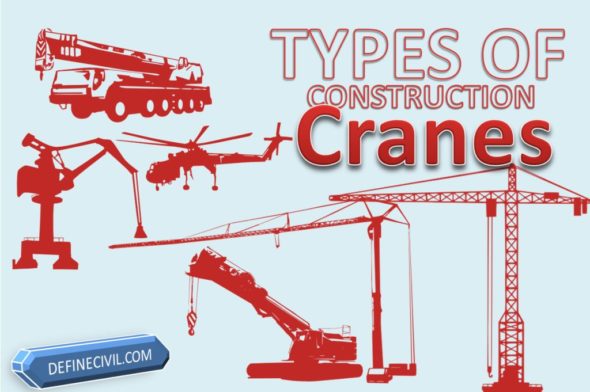
The Different Types Of Cranes Used In Construction:
– Mobile Cranes.
– Telescopic Crane.
– Tower Crane.
– Truck Mounted Crane.
– Rough Terrain Crane.
– Loader Crane.
– Overhead Crane.

The most read

What is a crane?

How Cranes Work: What is a crane? history, types of cranes, hydraulic crane, telescopic, hydraulic system, titan truck, hoists. Crane Driver.

More on this story

What is a backhoe?

What is a backhoe loader? brands and models: caterpillar tractor, attachment, machine excavator, Tractor with loader and backhoe, Cat, Deere.

CAD Designer Job Description

Structural CAD Designer – Advanced Structural Design – CAD designer job description: Learn about the work responsibilities of a structural CAD technician. Find out what education and skills are needed in addition to job outlook and salary to decide if this is the right career for you.

Structural designers benefit from the highest salary, while electrical, Industrial and electronics drafters can expect the most positive career outlook in the coming decade.

Career Definition for a Structural CAD Technician

Structural CAD technicians produce drawings for projects, such as public works systems, residential and commercial buildings, and concrete and steel bridges.

CAD designer job description

Structural drafting

Advanced Structural Design: What is Structural Drafting?

Structural drafting is a plan or blueprint for how buildings or other structures are to be built. Instead of focusing on detailed drawings of floor plans, structural drafters focus on the building’s overall support system, which includes things like columns, beams, foundations, etc. Drafters used to create these drawings by hand, but with more advanced technology, CAD programs now complete these plans much quicker.

Software development engineer

Using computer-aided drafting and design (CADD) techniques and software, they create complex drawings and 2D and 3D renderings of structural components, including framework, foundations, roofs, and retaining walls.

They often assist engineers in outlining designs, gathering data, performing graphic imaging, drawing sketches of existing structures, and interpreting structural markups.

They may also perform administrative duties, produce documentation and progress reports, participate in meetings, and perform computations.

Project planning software

Structural CAD technicians are sometimes known as AutoCAD drafters and may work in offices, visit construction sites, or submit work from home via the Internet.

The U.S. Bureau of Labor Statistics (BLS) reports that 49% of all drafters work in the architectural and engineering sectors.

Advanced Structural Design

Drafting services

Educational Requirements

Structural CAD technicians generally have an Associate in Applied Science degree in industrial technology, engineering design, or a related field; however, some employers may prefer a B.S. in drafting technology.

Coursework should include instruction in CAD software, such as AutoCAD and MicroStation, 2D and 3D modeling, mechanical drawing, math, and science.

The American Drafting and Design Association (ADDA) website offers information about accredited drafting and design programs throughout the country, as well as voluntary certification, which may benefit job seekers.

Structural cad technician

Structural CAD technicians must have a solid understanding of drafting fundamentals, with the ability to use the latest drafting software as well as sketch freehand.

  • They must be analytical and have strong math aptitude combined with artistic ability and creativity.
  • Technicians should be familiar with CADD techniques, software, and principles specific to the industries in which they specialize, such as highway and city design, water and drainage systems, transportation infrastructure, construction, agriculture, or mining.
  • They must have good communication skills, with the ability to work independently and as part of a team.
  • In addition to expertise with drafting software, they must also be familiar with commonly used word processing and spreadsheet programs.
Advanced Structural Design

Structural cad technician jobs

Economic Forecast and Career Outlook: Advanced Structural Design

The BLS expects job increases for architectural and civil drafters to be about 8% for the 2016-2026 period, varying slightly depending on various areas of specialty.

  • As CAD software becomes more user-friendly, a wider variety of basic drafting functions can be performed by untrained personnel, tempering job growth somewhat.
  • Job prospects should be best for structural CAD technicians with the strongest technical skills.

In May 2018, median annual earnings for architectural and civil drafters ranged from less than $35,020 for the lowest-paid ten percent to more than $80,880 for the highest-paid ten percent. (Advanced Structural Design)

Structural cad designer jobs

Structural CAD Designer Jobs Description

A structural CAD designer is responsible for preparing the preliminary design, checking of designs and drawings, preparing specifications, conducting contract administration, structural inspection and preparing proposal and report.

The functions of a structural CAD designer include prefabrication, Shop Drawing, and Architectural Drawings.

  • A structural CAD designer should be very well conversant with AutoCAD, Microstation V8, J and Plan software, AutoCAD computer-aided design in 2D, versions of AutoCAD-12, 13, 14, 2000 and 2006.
  • A structural CAD designer should be very skilled at preparing all types of drawings in AutoCAD and Microstation. A structural CAD designer also performs scanning, conversion of Raster Images to Vector, MS-PowerPoint presentation with Microstation & AutoCAD Drawings.
  • A structural CAD designer creates PDF and images files with a scanner and also performs CAD troubleshooting.
  • A structural CAD designer should possess a bachelor’s degree in Civil or Structural Engineering and a diploma in AutoCAD for Designing and Architecture.
  • A structural CAD designer should be proficient with AutoCAD-R12 to 2006, Microstation J, V8, Photoshop, Corel Draw and Photo-Paint, MS office, Material Integrated Production System and PDMS Drafting.
Advanced Structural Design

Civil Engineering Technician

For those wanting to delve further into the actual creation of structural designs, becoming a civil engineering technician could be the right option: Structural CAD Designer.

  • These technicians examine drawings from drafters to verify measurement accuracy.
  • They also make site visits to determine if the design is being properly executed in addition to analyzing building materials and soil, developing cost estimations, and compiling project information into written reports.
  • Although a degree is not required to enter the profession, an associate degree in civil engineering technology may be appealing to some employers. (Advanced Structural Design)

According to BLS projections, civil engineering technicians are expected to experience 9% employment growth during the 2016-2026 decade. In 2018, these professionals earned a median wage of $52,580.

Architect or architectural designer

If utilizing CAD software to create building designs for government and private clients sounds intriguing, consider a career in architecture. (Structural CAD Designer)

  • Architects meet with clients to determine what the design vision should be and use their artistic skills to draw sketches and blueprints.
  • They also choose construction materials, create cost estimates and schedules, prepare construction contracts, oversee construction work pertaining to the design, and make sure clients are satisfied.

Aspiring architects must complete three stages before working in the field; earning a 5-year bachelor’s or master’s degree in architecture, working as an intern for at least 3 years, and receiving a passing score on the Architect Registration Exam.

Upon completion, an architect can obtain a required state license.

The BLS predicts that job opportunities will increase 4% for architects from 2016-2026, with about 5,500 new positions opening up during that time. As reported by the BLS in May of 2018, architects received a median yearly compensation of $79,380.

Advanced Structural Design

Autocad designer job description

AutoCAD designers require little formal education. Learn about the training options, job duties, and available certifications to see if this is the right career for you.

As an AutoCAD designer, you have myriad possibilities upon which you can direct your professional focus. Options include industrial designer, electrical drafter, civil drafter, and mechanical drafter, each with unique salary and outlook prospects.

Essential Information: Advanced Structural Design

As competition heats up, companies must ramp up productivity in design and manufacturing technologies. AutoCAD designers are widely used in the engineering, architecture and construction fields.

Advanced Structural Design

Autocad designer responsibilities

  • AutoCAD is a computer-aided design software program used in many industries, including architecture, engineering, construction, and interior design.
  • AutoCAD allows the user to create 2D and 3D drawings using visualization and technical documentation.
  • This software program increases productivity in manufacturing and design, replacing the need for manual drawings and designs.

Occupational Outlook: Advanced Structural Design

The U.S. Bureau of Labor Statistics (BLS) reported that employment of industrial designers was expected to grow 2% between 2014 and 2024, while drafters, in general, would actually see a three percent decrease, although that number varies by type of drafter.

The best opportunities should arise for drafters with experience and formal training using CAD (computer-aided design) technology.

In 2015, industrial and commercial designers earned an annual mean wage of $69,820. Electrical and electronics drafters earned an average salary of $62,890, while architectural and civil drafters earned an average salary of $53,470 the same year. Mechanical drafters took in an average annual salary of $56,610, stated the BLS.

Autocad price

When choosing to invest in CAD software, there are a number of factors to consider. One of the most important of these, of course, is cost. For this reason, demystifying the often complex pricing structures of CAD licenses is incredibly helpful. How much, for example, will an AutoCAD license really cost you?

It’s a simple question, surely? Well, not quite. Software manufacturers have shifted from offering perpetual licenses to subscriptions over the years, with the CAD industry proving no exception. As such, Autodesk stopped selling perpetual licenses for AutoCAD (alongside most of its other products) on August 1st, 2016.

The result of this shift is that, instead of paying a one-off fee to be able to use AutoCAD forever, users now pay for a rolling subscription to maintain access to AutoCAD. You can see the cost of an AutoCAD subscription direct from Autodesk in the table below.

Subscription length Price
Monthly $195.00
1 year $1,575.00
2 years  $2,992.50

Advanced Structural Design

Is CAD Drafting a Good Career?

CAD drafters specialize in the use of computer-aided design software to create schemes and technical drawings. Drafters are a key component required in both the manufacturing and building industries, but can also be found in electrical design where they map out electrical wiring diagrams.

What degree do you need to be a drafter?

Drafters generally need to complete postsecondary education in drafting. This is typically done through a 2-year associate’s degree from a technical institute or community college. Most 4-year colleges do not offer training in drafting, but they do offer classes in engineering, architecture, and mathematics

What’s drafting and design?

Inside Computer-Aided Drafting and Design Technology. CAD operators use computer programs to create drawings that are used in building or manufacturing. Drafters may be employed in the architectural and engineering fields, creating drawings that provide the technical specifications of buildings.

What is the difference between drawing drafting and design?

Drafting is used as a part of the design and fabrication processes. Drafting can be done by hand or using specially designed computer programs and mechanical drawings. It is a detailed technical drawing that can cover one segment of the mechanical device or structure or all of it.

What are the different types of technical drawings?

Parallel projections are subdivided into the following three categories: orthographic, oblique, and axonometric projections.

Orthographic projections are drawn as multi-view drawings that show the flat representations of principle views of the subject.
Oblique projections actually show the full size of one view and are of two varieties:
-cabinet projection (½ scale)
-cavalier projection (full scale)
Axonometric projections are three-dimensional drawings and are of three different varieties:
-isometric.
-dimetric.
-trimetric.

What is the difference between drafting and architecture?

Draftsmen, like architects, prepare CADD drawings. However, drafting can be applied to many other areas besides construction and architecture. Drafting can be used to create drawings of circuitry or mechanical designs. For example, architectural drafters produce drawings for new construction projects.

More on this story

Top EPC Companies

TOP EPC COMPANIES: EPC services company, EPC oil & gas multinational company, EPC company means, what is EPC company.

EPCM Companies

EPCM COMPANIES: What is an EPCM company? EPC and EPCM services, EPCM contract template, the difference between EPC and EPCM, resource management solutions, EPCM contractor

Lifting Operations Risk Assessment

Risk Assessment for Lifting by Crane – Lifting operations risk assessment:

While the information in hazard identification, risk assessment, and risk control measures are not exhaustive, the manual provides practical guidance for the safe operation of the crane, provided that the crane is used in accordance with the designers/manufacturer’s recommendation for which the crane is designed and manufactured.

risk Assessment for Lifting by Crane – lifting operations risk assessment

Lifting operations risk assessment

Risk Assessment for Lifting by Crane:

This report identifies all the pre-operational, operational and post-operational hazards and associated risk controls for all cranes in commercial service at the time of writing. In addition, hazards associated with attachments are also included together with the recommended risk controls.

This section lists the potential hazards and risks control precautions that should be observed when operating or maintaining cranes.

The points raised here must be fully understood and observed to work safely. Read and understand the operation and maintenance manuals.

Further precautions may be necessary due to the attachments in use or the site conditions. The user should continually re-evaluate the site conditions as the working environment has a major influence on the risk associated with the use of Pick & Carry cranes.

Risk Assessment for Lifting by Crane

Risk Assessment for Lifting by Crane

  • GENERAL HAZARDS
    • RISK CONTROLS & GENERAL PRECAUTIONS
  1. Unintended movement of the crane due to clothing getting caught or tangled in control levers and mechanical parts.
    • When driving or operating the machine, do not wear clothing with dangling parts, which might catch on control levers or mechanical parts. Wear appropriate personal protective equipment as necessary.
  2. Unintended movement of the crane from operating wrong controls or errors in judgment.
    • Do not operate the crane when you are excessively fatigued or unwell.
    • Read the Operators Manual & Risk Assessment (“this manual”) thoroughly, familiarizing yourself with all controls before you start operating the crane.
    • Follow instructions and warnings in this manual and on plates and stickers mounted on the machine.
    • If there is something you do not understand, have it explained to you. If the manual is lost, or a warning label is illegible, replace it.
  3. Fire and emergency response.
    • Carry a fire extinguisher and first aid kit in the crane.
    • Learn how to use the fire extinguisher before an actual emergency situation arises.
  4. Fire from handling chemicals.
    • Do not smoke or use fire near fuel, oil, antifreeze, batteries or other chemicals, which could ignite.
    • Extinguish all fires and potential sources of ignition when handling these flammable materials.
    • Before refueling the crane, switch off the engine and check that there are no fires or potential sources of ignition nearby.
    • After refueling securely fasten all fuel and oil caps and wipe off any spillage.
    • Refuel and change the oil in a well-ventilated work area.
Risk Assessment for Lifting by Crane

Risk assessment crane lifting operation

Risk Assessment for Lifting by Crane:

  • GENERAL HAZARDS WORKING PROCEDURES
    • RISK CONTROLS & GENERAL PRECAUTIONS
  1. Unfamiliarity with site conditions or scope of work
    • Plan for the crane operations as early as possible. Planning should involve inspection of the site, consultation with all persons involved in the work such as the principal contractor, crane hirer, energy suppliers, employer, dogman, spotter, site foreman and crane operator.
  2. Not observing instructions on warning labels could cause operation beyond the limitation of the crane.
    • Observe all instructions on the warning labels. Ensure that all warning labels are clean and legible. If the warning labels are damaged or illegible replace them.
  3. Collision with people or objects in the work area.
    • Before starting work, check the work area for the presence of roads, overhead powerlines, nearby structures, other cranes, aerial hazards and other obstructions.
    • Isolate the work area by using witches’ hats, temporary barriers or fencing.
    • People, vehicles, etc. should be prohibited from entering the isolated area.
    • Consult the principal contractor, site supervisor, the other crane operators and everyone involved with the work and prepare a safety plan for the job.
    • Always be aware of your surroundings and the hazards while you work.
Risk Assessment for Lifting by Crane

Mobile crane risk assessment example

  1. Collision with other cranes and structures.
    • When operating a crane, consider hazards such as overhead powerlines, nearby structures, other cranes, high obstructions and other mobile equipment within the crane working area.
  2. During articulating or reversing
    • When you need to articulate or reverse in areas of restricted visibility, place a guide or use a spotter and follow their instructions.
  3. From dirty windows and mirrors
    • Keep the cab windows, mirrors, wipers and working lamps clean.
  4. From poor lighting.
    • When working in areas with poor lighting switch on the lights. If required use additional illumination (mobile lighting can be hired from equipment hire places).
  5. From adverse weather conditions.
    • When visibility is bad due to fog, snow, rain, or other adverse weather conditions stop work and do not start again until conditions have improved.
Risk Assessment for Lifting by Crane

Safe work procedure for lifting operation using mobile crane

  • Collision with people or other vehicles when working on public roads
    • When working on public roads, position a guide and erect fences, witches hats, etc. Observe all the traffic rules and safety regulations and laws of the Country or State where the crane is being used.
  • Collision with objects and people working in the work area.
    • Discuss your requirements with the site supervisor. If you consider that the people and equipment in the area have to be removed before you operate the crane, discuss it with the site supervisor so the necessary arrangements can be made.
  • Electrocution from live overhead conductors. If you are working close to power cables you can also receive a shock even if the crane does not physically contact the cables.
    • Take the following precautions when working near power cables.
    • Contact the managing company in advance and arrange for electricity to be switched off (if possible), or arrange for cables to be fitted with protective devices.
    • Keep a safe distance between the machine and the power cables. Consult the electricity authorities on the location and voltage of cables on the site and the minimum isolation distance.
    • Use a spotter and follow their instructions.

Mobile crane lifting hazards in the workplace

  • Inadvertent operation of the cranes due to poor housekeeping.
    • Keep the area of the operator’s cabin and seat clean and tidy. Do not leave parts, tools or other objects in the area of the operator’s seat. These can cause unexpected accidents while you are working.
  • Stress and tiredness from poor sitting position and posture.
    • Adjust the operator’s seat so that you can sit comfortably with good posture, and all control levers are within easy reach without having to lean or strain your body. Check that you can reach the foot pedals comfortably with your back resting against the back of the seat.
  • Accidental operation of the cranes if operated by more than one operator. Passengers may collide with obstructions or be thrown off the machine, or they may cause a hazard by obstructing the operator’s field of view
    • Before and during work, nobody other than the operator should sit in the operator’s seat or climb onto the crane

Types of hazards in the workplace

  • Slips, trips, and falls when getting on or off the plant.
    • Take the following precautions when you get in and off the crane:
    • Check that all guards and covers on the machine are fastened correctly. Tighten any loose bolts or repair any damage.
    • Wipe off any mud, oil or snow on the steps before you start work.
    • Do not jump onto or off the machine.
    • Do not hold onto the seat, control box, control levers or anything other than the hand grips provided when you get on or off the machine.
    • Do not get on and off the machine while it is moving.
  • Dropping of load
    • Check safety devices. Pick & Carry cranes are fitted with various safety devices which should be checked before starting work.
  • Crane overload or tip over in adverse working configuration.
    • Check the operation of the crane computer / Load Moment Indicator (“LMI”) according to the pre-operational check procedure described in the Operators Manual (this manual should be kept in the crane cabin).
  • Failure of controls and/or mechanical parts of the crane.
    • Before operating the crane check the machine according to the pre-operational checking procedure detailed in this manual. Check the operation of the control levers while the crane is not carrying any load. Allow the crane to warm up before carrying a full load
  • Falling objects (during erecting and dismantling activities) could damage property and present a risk of injury to workers and members of the public.
    • Erect and maintain effective barricades around the mobile crane. Only allow persons who are directly involved Pick & Carry crane operations inside the area. Schedule the erecting and dismantling of the crane to occur when the movement of other persons and mobile plant at the workplace is at a minimum

PDF and ebooks for lifting operations risk assessment

The book provides readers with a toolbox of techniques that can be used to aid them in analyzing conceptual designs, completed designs, procedures, and operational risk.

It leads readers through a risk assessment and shows them the proper tools to be used at various steps in the process.

It is an important book for professionals that make risk-based decisions for their companies in various industries, including the insurance industry, loss control, forensics, all domains of safety, engineering and technical fields, management science, and decision analysis.

It is also an excellent standalone textbook for a risk assessment or a risk management course.

Risk Assessment: Tools, Techniques, and Their Applications 2nd Edition

What are the hazards in crane lifting?

What are the hazards in crane lifting?

The three most common hazards involving overhead cranes include electrical hazards, overloading, and materials falling/slipping from overhead hoists.

What is crane checklist?

The crane safety checklist covers: Verify visible damage, including cables, crane hooks, stabilizers. etc. Verification of the state of the machine, such as control, brakes, warning signs and more.

What is the operating radius of a crane?

The distance is measured from the center pin of the crane to the center of the load. Example: You need to lift a load of 15 tons (30,000 pounds) a distance of 25 feet.

Why is lifting equipment safety important?

Poor or no maintenance or machines may be used improperly through inexperience or lack of training. Parts of the equipment may fail and loads may drop. Before you start using any equipment you need to think about what risks may occur and how these can be managed.

The most read

Crane Risk Assessment

This General Guide provides information on how to manage the risks of cranes at a workplace.

Heavy Duty equipment

The construction machines are those that allow performing different works in the field of land adaptation.

More on this story

Heavy Equipment Safety Topics

Any person who operates, leases, rented, or borrowed heavy equipment must take many hours of safety training for each type of equipment.

Job safety analysis for loading and unloading

We can not get rid of danger completely however we can reduce the risk and control it by utilizing normal procedures and good work practices.

Robotic Crane Manufacturers

If there is something characteristic of places under construction, it is the gigantic cranes that dominate the place.

Often visible from afar, they dominate the stage of the works as orchestra conductors. They are in charge of supervising and participating in a good part of the movements of materials and equipment. They are the “control tower” that from a privileged point of view allows you to see everything that happens around you.

Now crane manufacturers are looking to give cranes more capacity for work by making them more “smart” and autonomous. This type of technology, which is already used in intelligent vehicles such as cars, trucks, and in many specialized robots, seeks to make jobs faster, more effective, and safer.

To achieve this, the crane manufacturers use technologies such as computer vision, machine learning, and deep learning.

Robotic crane in the world

More Efficiency and Safety

Part of the problem we are trying to solve is that current cranes are somewhat inefficient, due to their old age and due to the way in which operators work with them.

This causes cranes to cause most of the delays on many sites, especially ‘mega-projects’.

In addition to this, there is the risk that their movements with large and heavy objects cause accidents.

The new system uses cameras to analyze images from above and intelligently distinguish between building elements and people who are working in the same area.

The idea is that the combination of hardware and software that they have developed is integrated with the existing equipment. In other words: you don’t have to reinvent the crane but improve it.

To do this, new devices must be added that are simply plugged in, calibrated, and programmed before starting work.

Using the autonomous mode the crane can be used to move materials and building elements from one place to another in an optimal way.

In this way, time is saved and delays are avoided with optimization of 30%, as they have calculated.

Robotic Crane Manufacturers

Crane manufacturers

In the future, crane manufacturers, they explain, the works will be places where different vehicles and objects “talk to each other” using wireless communications.

Meanwhile, the crane can visually detect those objects, learn how to move them, and distinguish an excavator from a cement bucket. For now, behind the machines, there will always be a human operator for safety and as a supervisory element.

The autonomous mode will plan the optimal movements and you will be able to perform operations with greater precision. In any case, the person may interrupt you if they consider it necessary or something is wrong.

Similarly, if there is a person operating the crane, the artificial vision system can alert with an audible signal if it observes that any worker may be in danger due to the operations to be carried out.

Robotic Crane Manufacturers

Autonomous crane

An Autonomous Future

Crane manufacturers are developing a similar system, although in this case on a smaller scale. It is a system to detect and follow a humanoid robot with a crane as it walks through the laboratory.

The interesting thing is that the artificial vision algorithms used in these tasks can then be studied and adapted for other projects, such as for autonomous cranes.

In China, it has also started using autonomous cranes for container transport.

These cranes move the gigantic metal blocks from ships to trucks – also autonomous – in the port of Yangshan.

They have the advantage of moving in a much more controlled and less “difficult” environment than a construction site, but the improvements they achieve in terms of efficiency are also notable.

Now, the companies that develop these autonomous cranes are seeking alliances with crane manufacturers to integrate their technology and renew all these equipment. The goal: build faster and safer.

More on this story

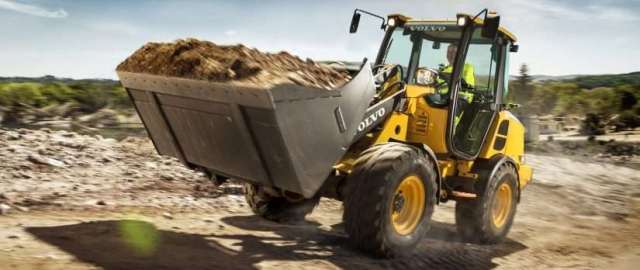
Mining equipment manufacturers

Construction and mining equipment cover a variety of machinery such as hydraulic excavators, wheel loaders, backhoe loaders, etc.
Crane Manufacturers

Crane Manufacturers: Cranes brands, the recognized brands in the world of Liebherr, Caterpillar, Hiab, Palfinger, Terex, Komatsu construction cranes