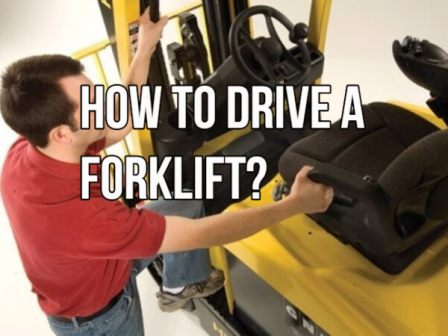
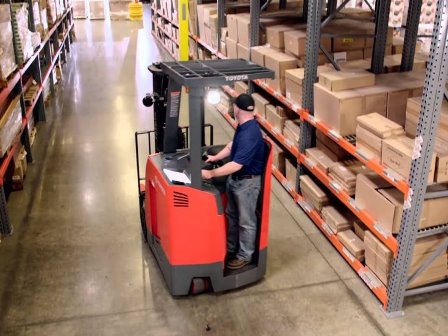
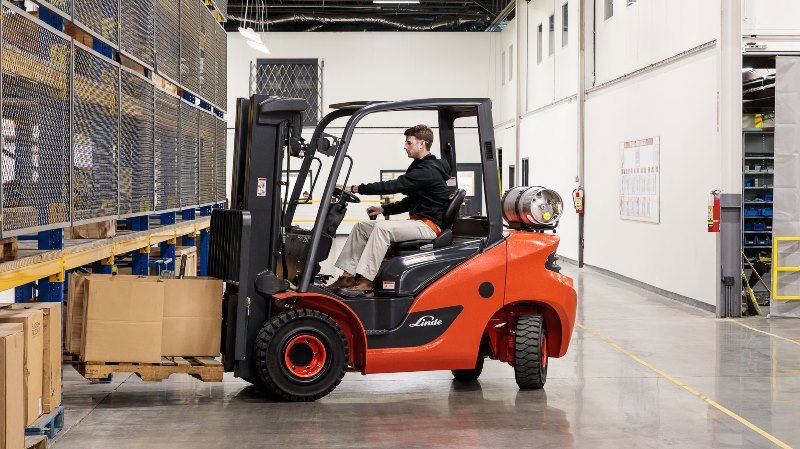
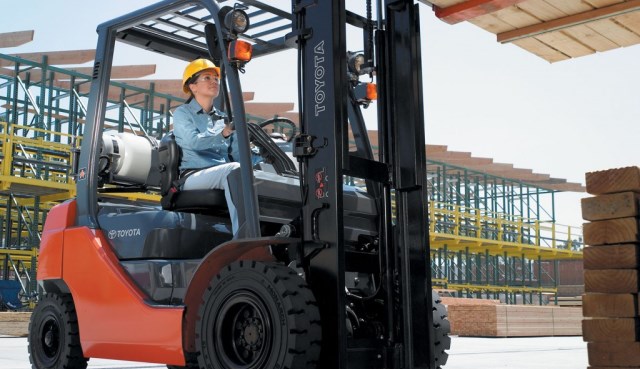
It is important to learn how to start a forklift and know the basic controls. It is simple. Starting a forklift is basically the same as starting a car.
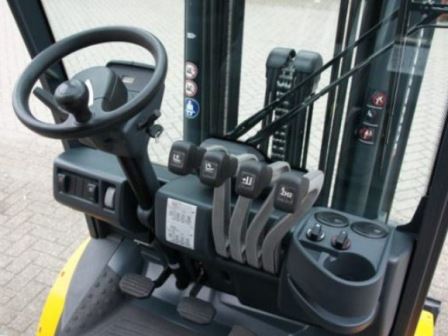
Place the key in the ignition on the right side of the steering column and turn it forward to start the forklift engine.
Find the gear stick under the left side of the steering wheel. Make sure the lever is in the center position so you are neutral. Locate the emergency brake lever on the left side of the machine and make sure it is down and engaged.
There may be some situations where the forklift will not start. This problem is common on older, poorly maintained trucks. To troubleshoot a forklift that won’t start, try to eliminate probable causes such as:
Is the truck getting power? If your forklift is electric, were the batteries fully charged? Try to turn on the auxiliary functions of the truck (brake, horn, lights, and other non-engine parts), are they working? If not, the truck’s batteries are dead.
Forklift safety rules
Forklifts are more likely to tip over and harder to drive than cars, making them harder to drive safely.
After practicing driving and learning how to operate the forklift, you will be able to lift and carry heavy loads with ease. Just be sure to check with your country’s health and safety department to see if you need operator certification before driving a forklift.
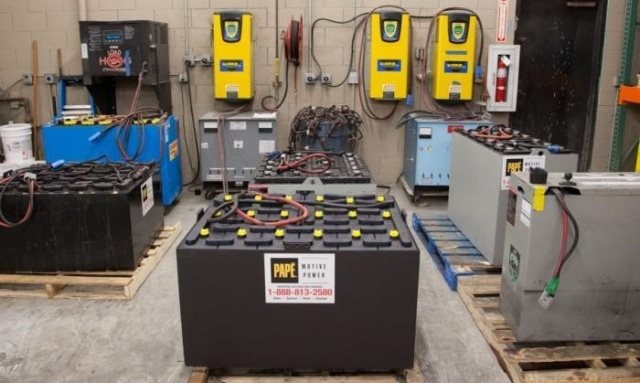
Maintaining your battery is critical to prolonging the performance and life of your forklift. When you implement a service program, you can help keep your battery running at proper levels, allowing your operations to run smoothly. When a battery is dead, forklift productivity is affected as well.
Follow our forklift battery maintenance tips to take the right steps in cell care, whether you rely on it for daily performance or monthly forklift jobs.
Forklift Battery Service and Maintenance
Battery maintenance procedure
What steps are performed during battery maintenance?
When it comes to maintaining your forklift battery, maintenance ranges from charging and cleaning to recharging fluids and equalizing. Knowing how to care for your forklift battery includes fundamental steps.
Charge the Battery
There is a correct way to charge when it comes to forklift batteries. You cannot charge them when convenient because it can affect the longevity of the battery. Instead, you need to charge it at certain times to a specific grade. For example, when the battery charge drops below 20%, you can start charging, making sure it reaches its full capacity. If you overcharge or fail to charge a forklift battery or interrupt the process, it can exhaust its life cycle.
Discharge the battery
Other charging tips include keeping the battery door and forklift compartment open while charging and using the correct current and voltage output.
You also don’t want to discharge a battery more than the assigned threshold. because it can result in permanent damage. Consult your manual to see the discharge level of your battery.
Never let a discharged battery sit for a long time because sulfation will begin to form, which will affect the operating time of the cell.
Battery water level
The lifespan of a forklift battery is based on optimal water levels to work at its maximum capacity.
The electrolyte in a battery is a combination of water and sulfuric acid.
If water levels drop, the battery plates are exposed to air, leading to oxidation and a reduction in battery capacity.
Evaporation reduces water levels and affects the charging process. If a battery begins to lose more water than normal, it may be a sign that the unit is working harder than necessary.
Check the battery fluid levels after multiple charges. Open the battery and observe two or three cells for proper water levels.
Is there enough liquid to cover the plastic element?
If not, fill the water levels below the protector. The additional space above the fluid allows for expansion when the battery is in use. Make sure you don’t overfill the cell.
Battery water level indicator
Another fluid maintenance tip you can follow is to increase the water level when the battery is fully charged.
If you do this before it reaches a full load, there is a greater chance of overwatering.
You will also want to use distilled water because tap water has additives and contaminants that can form a residue on the battery.
After each month, you can also check the battery’s gravity reading using a hydrometer after a full charge.
Consult your owner’s manual to determine the correct gravity number for your forklift.
Battery equalization charge
Some batteries require equalization and if so, they will often have an equalization setting on their charger.
How often should you equalize a forklift battery?
What is equalizing a battery?
In essence, matching a battery means that you are overcharging it to remove sulfate crystals that have built up on the plates.
Sulfation, as mentioned in the charging section of this article, can shorten battery life. Equalizing a battery also reverses acid stratification, which occurs when the acid concentration at the bottom of the battery is higher than at the top.
Not all forklift batteries require equalization, so check your battery’s specifications before adding them to your forklift battery maintenance routine.
In the case of wet cell batteries, they should be compensated about once a week. Do not equalize more than the recommended frequency per operating procedures.
Forklift battery replacement cost
When to repair or replace your forklift battery?
When your forklift battery doesn’t have the charge it used to, it’s a sign that it may need to be replaced soon. That said, if the battery is only a few years old / has less than 1,000 charge cycles, you may be able to repair it rather than replace it.
If you think you have a bad battery, the first step is to call an experienced professional. You don’t want a weak or unstable battery to cause costly damage to your forklift’s internal systems.
Forklift battery repair experts can help you safely determine what is wrong with your forklift battery and make an informed decision about whether to repair or replace it.
Essential rules when operating, driving, and maneuvering forklifts
Observe all traffic regulations, including authorized plant speed limits. Maintain a safe distance, approximately three truck lengths from the truck ahead, and keep the truck under control at all times.
Always look in all directions before continuing.
Always look in the direction of travel. If cargo blocks your view, travel in reverse. Keep a clear view.
Powered industrial truck safety tips
This safety tip looks at the rules and regulations concerning forklift safety and provides tips for eliminating powered industrial trucks hazards.
Yield to ambulances, fire trucks, or other vehicles in emergency situations.
Do not pass other trucks traveling in the same direction at intersections, blind spots, or other dangerous places.
Cross train tracks diagonally whenever possible. Do not park within 8 feet of the center of the railroad tracks.
Operate at a speed that allows the truck to stop safely in all travel conditions.
Don’t participate in stunts or rough play.
Slow down for wet and slippery floors.
Drive on them carefully and slowly and never exceed their indicated capacity.
Approach the elevators slowly and enter directly after the elevator car is properly leveled. Once in the elevator, neutralize the controls, turn off the power, and set the brakes.
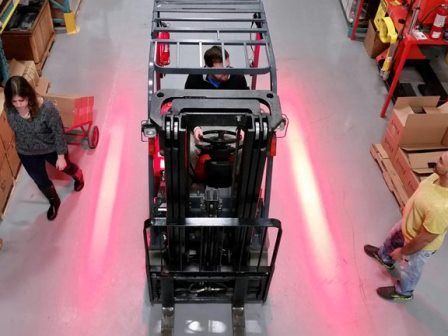
Separate forklift and pedestrian traffic as much as possible. Use established walkways with guardrails and strictly enforce their use.
Never carry passengers.
Keep arms or legs within the confines of your vehicle.
Be aware of surface obstructions; even a small bump can cause a load to fall off the raised forks.
Never go near anyone who is in front of a bench or any other fixed object.
Do not travel to a position where if the forklift jumped forward, the brakes failed, or the wrong lever was pressed, a co-worker could be caught between the forklift and another object.
When operating a powered industrial truck it is essential that you …
Powered industrial trucks must be inspected
Powered industrial trucks are used in many industries to move materials.
The hazards commonly associated with powered industrial trucks vary depending on the type of vehicle and the workplace where the truck is used.
Each type of truck presents different operational hazards.
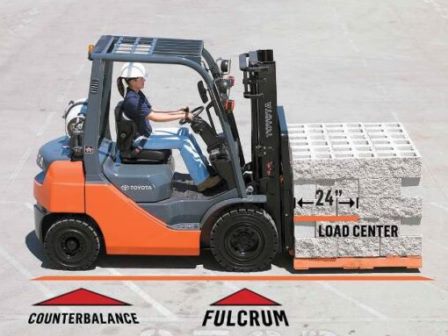
For example, a counterbalanced sit-down truck is more likely to be involved in a cargo accident than a motorized hand truck, because the sit-on truck can lift a much higher load than a hand truck.
Workplace conditions also present different hazards. For example, retail establishments often face greater challenges than other workplaces in maintaining pedestrian safety.
The best way to protect employees from injury also depends on the type of truck operated and the workplace where it is used.
According to OSHA a powered industrial truck is unattended
According to OSHA a powered industrial truck is unattended?
A powered industrial truck is unattended when the operator is 25 ft. or more away from the vehicle which remains in his view, or whenever the operator leaves the vehicle and it is not in his view.
Who can operate a powered industrial truck?
Labor laws on hazardous occupations prohibit employees under the age of 18 from operating forklifts, employers must ensure that workers under the age of 18 are not authorized to operate forklifts under any circumstances.
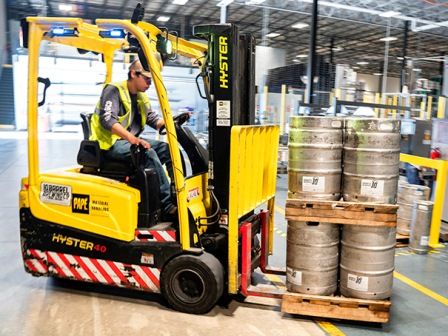
Forklifts are extremely useful workplace vehicles, as long as they are used safely and appropriately by operators who are appropriately trained and competent to use them.
Corrosion can cause battery cells to rupture and leak.
Metal boxes can corrode
Electrolytes can damage operator clothing and irritate skin.
Voltage leaks to ground can create electrical faults.
In addition to routine maintenance, forklift batteries may, at some point in their useful life, require more extensive care.
This care should be given as soon as it has been determined that a problem exists or could be developing.
As a result, this section deals with ways to identify existing or impending problems and offers possible solutions.
If the suggested operational remedies are ineffective, it can be assumed that there is an internal problem and the cell (s) will need to be disassembled to thoroughly inspect the elements and sediment.
If the cause of the problem can only be corrected by completely rebuilding the forklift cells or battery, the designated authorized personnel should be reported.
Forklift Battery Repair
Forklift Battery Maintenance Guide
Most lead-acid forklift batteries provide around 2,000 charge cycles, which usually translates into about five years of service life. But even this lifespan can only be reached with proper maintenance.
Establish regular maintenance intervals for all industrial batteries to realize the full value of your investment. With the right care, many batteries can last well beyond the length of their warranties, powering forklifts for years past the typical battery lifespan.
There are three essential maintenance tasks that provide reliable service for forklift batteries: watering the cells, washing the battery case, and conducting regular equalization charges. A detailed explanation of each task follows, along with tips to perform each job safely.
Forklift Battery Watering
The battery electrolyte is a mixture of sulfuric acid and water. When water levels get low, the battery’s plates can be exposed to open air. This causes oxidization, which permanently reduces capacity and shortens overall battery life.
In addition to water losses from simple evaporation, the charging process breaks water down into its composite molecules. As hydrogen and oxygen float out of battery vents, the water level within the cells will deplete.
Excessive water loss might be a sign that the battery is gassing more than it should. If you notice a battery losing more water than usual during a charge, have a technician inspect the battery and the charger.
Equalization Charges
Over time, different cells within forklifts may develop slightly different power capacities.
When this happens, users can’t charge batteries to full power; one cell may be fully charged while another only holds a half-charge.
Equalization charges prevent this inefficiency. Essentially, the equalization charge is a purposeful overcharge.
The typical charge cycle lasts about eight hours, while an equalization charge tacks on an additional three hours or so. Chargers continue to provide a low stream of power for those final hours.
Washing Forklift Batteries
There are a few ways that forklift battery electrolyte can escape to accumulate on battery cases:
As batteries release gas during charges, a fine acidic vapor may drift to the tops of battery cases.
Agitated electrolytes can spill out of battery vents during the charging process, an occurrence typically known as “boil-over.” Over-watering cells increase the risk of boil-over.
Batteries may leak electrolytes. If they are stored in tiered racks, and drip pans are not installed or changed regularly, the batteries on the upper levels might drip electrolyte onto those below.
The acidic residue built up on forklift battery cases can cause all sorts of problems. First off, it may create a conductive circuit between lead posts and the steel case. This causes a low-level but constant self-discharge, burning through charge cycles and limiting the lifespan of the battery.
Secondly, acid accumulation can corrode terminals. Damaged terminals may cause electrical problems in lift trucks, as well as limited battery capacity. They might even render a battery unfit for use.
How to reverse battery sulfation?
Undercharging a forklift battery, even to a small degree, if continued, leads to excessive “sulfation.”
The same is true of forklift batteries which have been left standing in an uncharged state for an extended period. High temperatures rapidly accelerate sulfation when forklift batteries are left standing in a partially charged condition.
The cells of a sulfated battery will give low specific gravity and voltage readings. The forklift battery will not become fully charged after a single normal charging when sulfation has taken place over a prolonged period.
If the sulfation has not progressed too far, it may be possible to restore the forklift battery to a serviceable condition by using the following special procedures:
Thoroughly clean the forklift battery
Bring the electrolyte level up to a point that is just visible over the separator protector by adding approved water.
Put the forklift battery on charge at the prescribed finishing rate until the rated ampere-hour capacity has been returned to the forklift battery.
Place the forklift battery into service and discharge it to a fully discharged condition.
Charge the forklift battery again until the specific gravity shows no change during a 3 hour period.
Repeat the cycling process until the specific gravity rises to within 30 points of a normal fully charged forklift battery, then place the forklift battery back in routine service.
How To Repair Electric Forklift Batteries?
A forklift battery can weigh hundreds of pounds and a person may need a forklift to remove it.
Users should check the faulty forklift’s user manual for specific instructions on battery removal and maintenance.
Upon removal, the user should place the battery in a well-ventilated concrete wash.
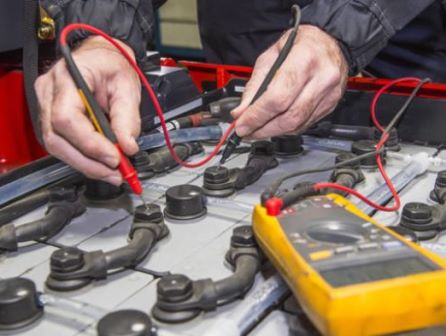
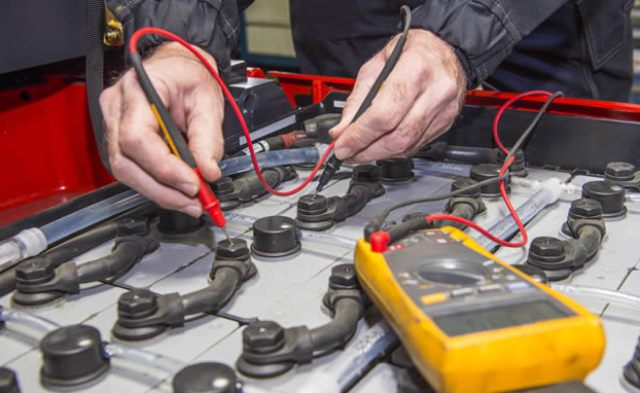
Record the voltage readings, using a voltmeter.
Check the battery label for an indication of the battery’s voltage.
Discharge the battery to 80 percent of its labeled voltage.
Battery acid tester
Measuring The Acidity Of The Battery Water:
The user needs to remove the cell caps to access the battery water. Battery water should contain 30 percent sulfuric acid and 70 percent water. Use a hydrometer to measure and record the acidity for each cell. This information indicates how much water or acid the user should add to each cell.
Battery sulfation removal
Sulfation is one of the most common causes of lead-acid battery failure.
While using a battery, small crystals of sulfate form. These are generally not harmful, but when a battery is not charged properly or fully, this lead sulfate turns into a crystalline form that deposits on the battery’s negative plates, forming large crystals.
These reduce the active material in the battery responsible for the low resistance and high capacity and reduce charge acceptance. Charging takes longer due to higher internal resistance.
Users can reverse some types of sulfation. An anti-sulfation or desulfation device applies pulses to the battery terminals to prevent and reverse the process.
These devices tend to reduce sulfation in healthy batteries, but may not be able to completely reverse the condition in damaged batteries. As a preventive measure, use a special desulphation charger to reduce the likelihood of new or good batteries being damaged.
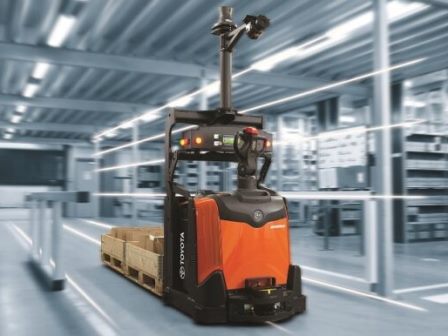
AGVs (Automated Guided Vehicles) and AGCs (Automated Guided Carts) are automated material handling equipment using similar operating components and navigation methods.
Each is versatile and can offer as much flexibility as its intended design allows for moving a load from point A to point B.
In short, an AGC is a type of AGV but it is designed for lighter loads by virtue of its small chassis and low profile.
Automated Forklift Cost
Automated guided vehicle cost
It depends! There are unlimited unique situations.
AGV system costs depend on a number of variables that can greatly affect the overall cost.
What kind of AGV robots are we talking about?
How many AGVs are involved?
How complex is the installation?
The cost of a driverless robot depends on the type of vehicle:
starting at $ 15,000 for an AGC,
about $ 30,000 for a towing tractor,
$ 60,000 for an automatic pallet jack,
about $ 80,000 for an AGV forklift and
$ 150,000 for an automated VNA.
Automated Guided Vehicles
An Automated Guided Vehicles (AGV), is a mobile robot that can use one or more different navigation methods and uses computer controls to move loads and materials.
They are most often used in industrial applications to move materials through a manufacturing facility or warehouse. There are many different types of AGVs, including AMR, tugboat, forklift, loader, AGC, and more.
AGVs are designed to suit a multitude of applications, industries, environments, and load capacities, sometimes exceeding an impressive 250,000 pounds.
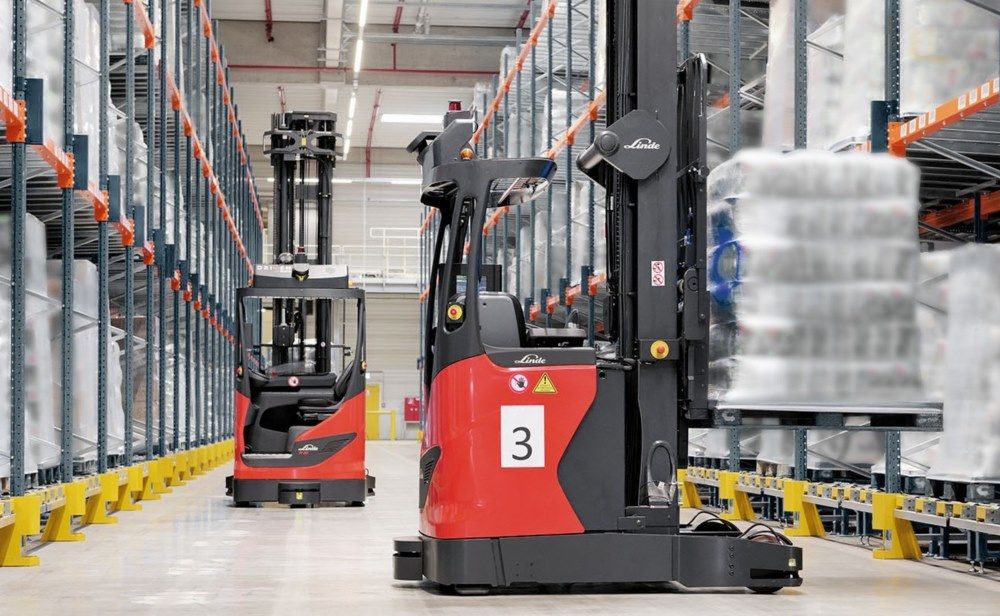
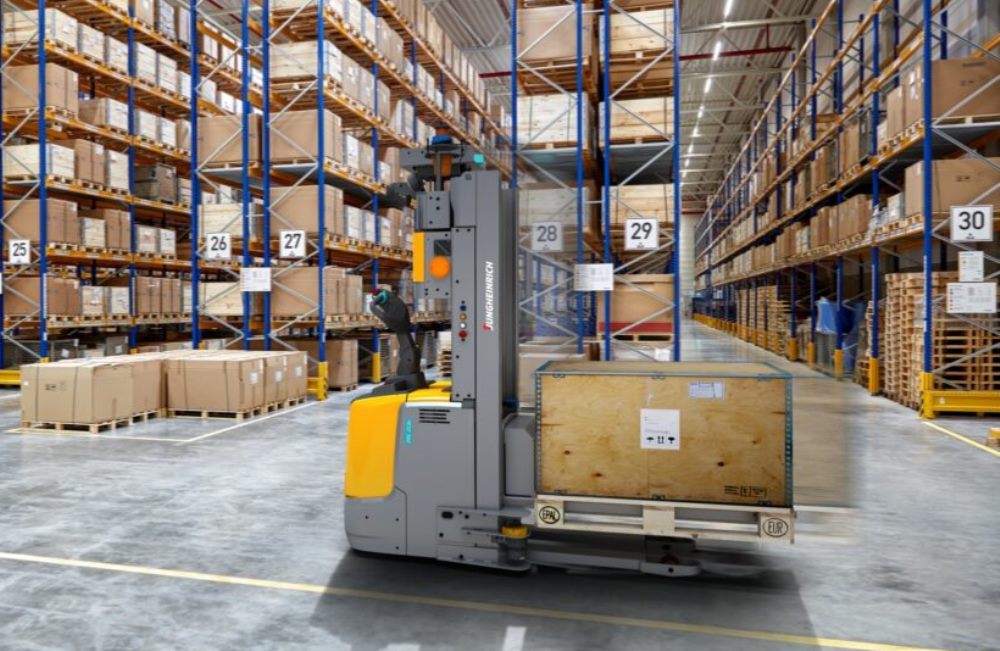
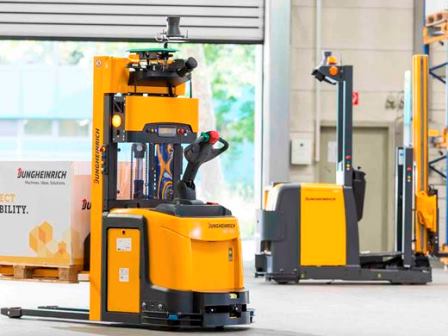
Automated forklift system
Autonomous forklifts have been a natural addition to the growing suite of remote operations solutions.
Now more than ever, the logistics industry is focused on workforce health and safety, operational resiliency, and vehicle uptime.
An unmanned forklift solution enables customers to optimize for these goals.
Real-time wireless communication software and unique remote human-in-the-loop approach enable logistics operators to deploy unmanned forklifts today with the highest levels of fleet uptime and workforce health and safety.
Trained human operators, who may be seated in a centralized control center or even in their own homes, can use software to remotely monitor, remotely assist, and remotely drive any forklift from up to thousands of miles away.
The interoperable platform also enables customers to add the same remote operation capabilities across multiple fleet including yard trucks, tuggers, warehouse robots, and other unmanned vehicles.
Automated Forklift Cost
How automated guided vehicles work?
How automated guided vehicles work?
Its movement is guided by a combination of software and sensor-based guidance systems. Because they move in a predictable route with precisely controlled acceleration and deceleration and include automatic obstacle sensing bumpers, AGVs provide safe movement of loads.
What is the difference between AGV and AGC?
AGVs (Automated Guided Vehicles) and AGCs (Automated Guided Carts) are both automated material handling equipment, utilizing similar operational components and navigation methods. In short, an AGC is a type of AGV but is intended for lighter loads by virtue of its small chassis and low profile.
The term Powered Industrial forklift Truck refers to a motorized, power-driven vehicle used to carry, push, pull, lift, stack, or tier material.
This definition generally includes vehicles that are commonly referred to as high lift trucks, counterbalanced trucks, cantilever trucks, rider trucks, forklift trucks, high lift platform trucks; low lift trucks, low lift platform trucks; motorized hand trucks; narrow aisle rider trucks; high lift order picker rider trucks; and counterbalanced front/side loader lift trucks.
The formal instruction component is achieved when a trainee completes the Powered Industrial Truck Web based training module.
Other options include equivalent training provided by equipment distributors, community colleges, or similar training providers.
Departments can use their own training materials, so long as the training materials meet or exceed OSHA’s requirements.
Practical training consists of instruction regarding workplace-specific factors and conditions, PIT specific considerations (e.g., location of controls, nameplate information, warnings, manufacturer’s operating instructions, etc.), as well as hands on exercises of typical vehicle inspections, operations, and maneuvers that will be conducted at the specific worksite by the operator.
Forklift SOP
SOP forklift operation
Generally, the trainer will demonstrate proper operation and techniques, followed by the trainee repeating those operations and techniques.
This should be with the same or similar equipment that the trainee will be using and in the same or similar location where the employee will be operating the PIT.
This is a reiterative process that allows the trainee to achieve competency in the safe operation of the PIT. Topics for practical training include:
Specific pre-operational checklist for the equipment used.
Specific operating instructions, warnings, and precautions as listed in the operator’s manual for the specific type of truck the trainee will operate.
Surface conditions where the PIT will be operated.
Composition and stability of loads to be carried.
Load manipulation, stacking, and unstacking.
Pedestrian traffic in areas where the PIT will be operated.
Narrow aisles and other restricted places where the vehicle will be operated.
Hazardous (classified) locations where the vehicle will be operated.
Ramps and other sloped surfaces could affect the vehicle’s stability.
Closed environments and other areas where insufficient ventilation or poor vehicle maintenance could cause a buildup of carbon monoxide or diesel exhaust.
Other unique or potentially hazardous environmental conditions in the workplace could affect safe operation.
Forklift SOP
This Standard Operating Procedure (SOP) was written to incorporate all comprehensive training activities into one system to ensure that all personnel acquires the skills, knowledge, and qualifications needed to effectively carry out their duties and tasks.
What is standard operating procedure?
A standard operating procedure (SOP) is a set of step-by-step instructions compiled by an organization to help workers carry out routine operations. SOPs aim to achieve efficiency, quality output, and uniformity of performance while reducing miscommunication and failure to comply with industry regulations.
Forklifts are extremely useful workplace vehicles, as long as they are used safely and appropriately by operators who are appropriately trained and competent to use them.