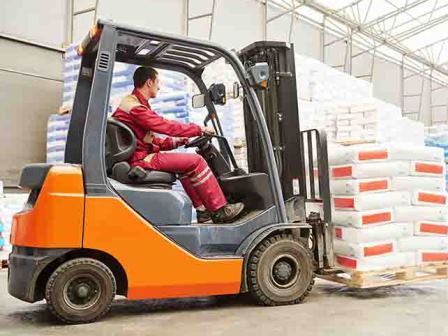
People’s lives depend on the correct and safe installation of emergency lights. It is important to read, understand and follow all instructions shipped with products and accessories. Also listed are some other important safety instructions and precautions that you should follow:
To properly install a light kit, you must have a good understanding of forklift electrical systems and procedures, as well as the installation and use of safety warning equipment.
To be an effective warning device, these types of products produce a bright light that can be dangerous to your eyes when viewed up close. Do not look directly at this lighting product at close range or you may experience permanent damage to your eyes.
Your lighting system should be inspected frequently to ensure it is working properly and securely attached to your truck.
Forklift Blue Light Installation
Forklift pedestrian safety toolbox talk
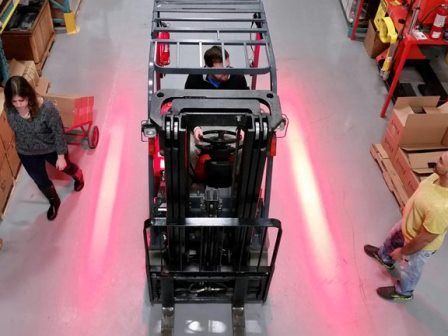
People who are not paying attention are at greater risk, particularly those who walk near and around forklifts. People don’t pay attention because they are busy. Or they are engrossed in their smartphone or in a conversation with someone.
The reasons vary, but when it comes to forklifts, the results can be accidents.
Most experts agree that the key is training for both pedestrians and forklift drivers, and that’s true, but it shouldn’t be the end of the story.
You should enhance the training with various facility and equipment upgrades.
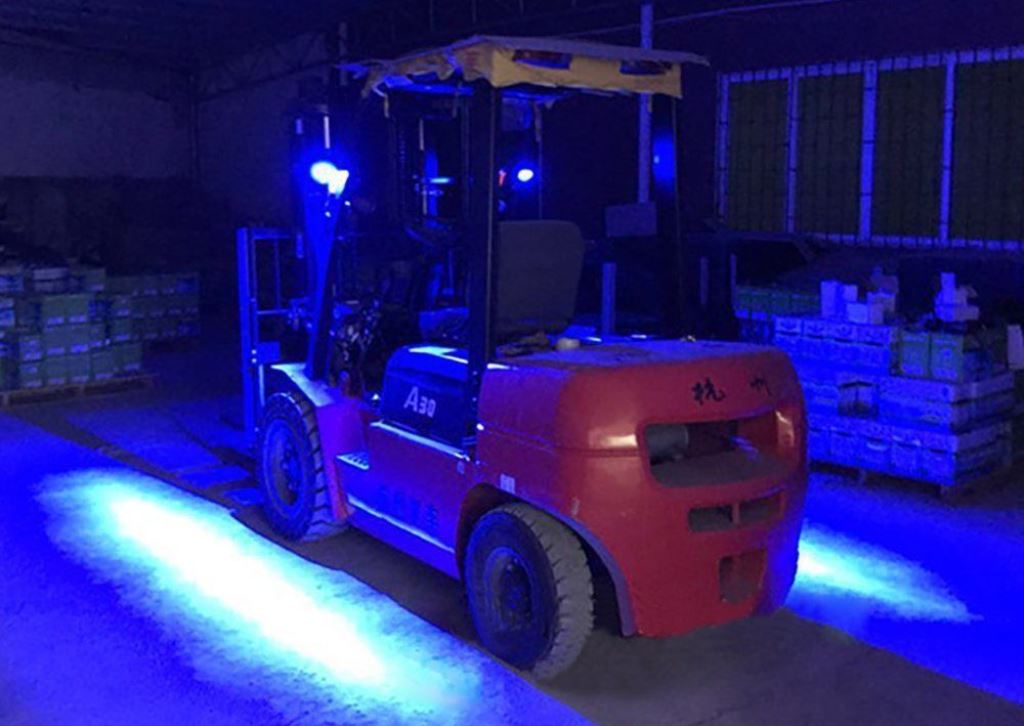
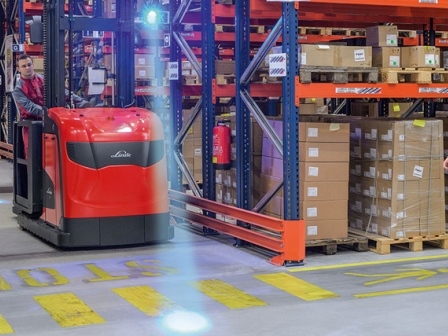
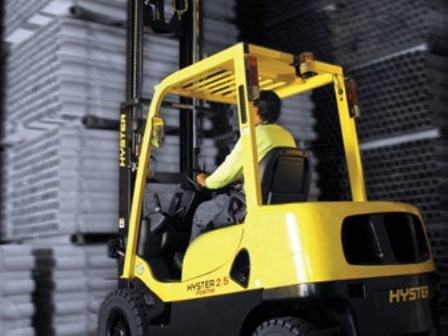
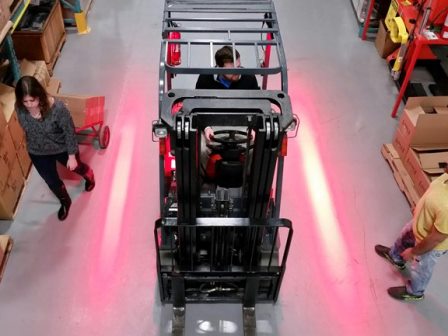
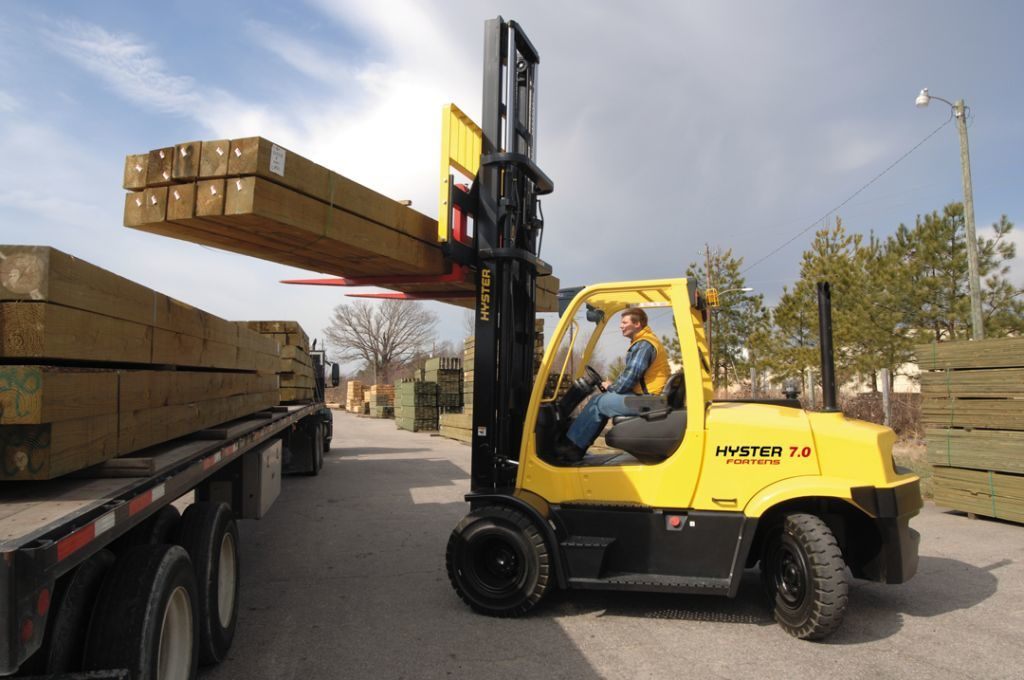
That’s why many companies have installed forklift warning lights, often called “blue lights,” which project a disk of light that precedes the forklift as it moves.
Since the forklift is often the most dangerous piece of equipment in any facility that uses it, these types of low-cost upgrades are sensible and easy.
Blue lights are very effective in part because they are “eye-catching.” Unlike tape or paint lines for traffic management or static signage.
Since these lights are installed on so many forklifts, it is important to understand exactly how they should be mounted for maximum effectiveness.
The warning spotlight projects a clearly visible blue beam of light onto the floor, alerting pedestrians and other vehicles to the nearby presence of the forklift.
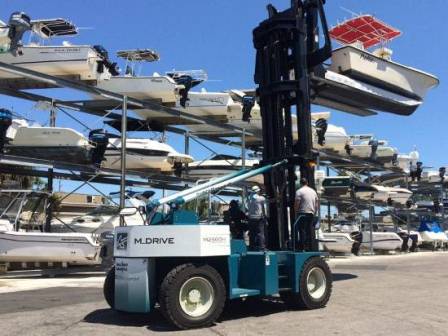
The technical specifications of a boat forklift are of a proven design and rock solid construction, so mast lubrication provides easy access during maintenance, reducing service downtime.
Remote grease lines, pilot-operated hydraulic controls provide smooth, precise and more efficient operation, feature built-in negative and positive lift that reduces overall turning radius and load moment.
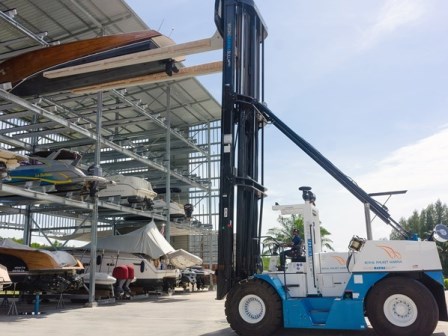
Heavy duty 2- or 4-stage masts offer stepped entry and exit for easy operator access from both sides of the machine.
Once in the cab, the operator enjoys front and side visibility, from the cab at the top.
Forklift for boat storage
The Boat Forklift Series offers premium features ideal for your marina and boat handling needs.
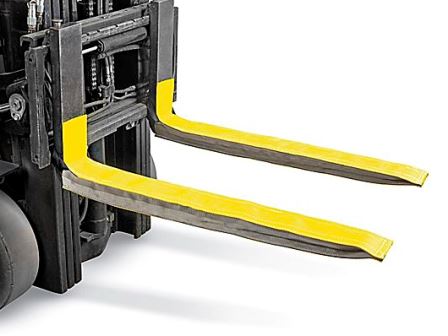
These standard features include galvanization, powder coating, and a three-step painting process for maximum corrosion protection; advanced rubber fork cover system, intuitive electronic joystick controls, deluxe air suspension seat, level compliant Cummins diesel engine, algae filtering system and remote technology vehicle management system.
Not only is the boat forklift series extremely attractive to the eye, it has been designed, refined and tested to meet and exceed current global regulations for stability, sound levels and safety.
Engineering personnel use the latest 3D solid modeling technology to develop the highest quality forklift in terms of performance, durability, operator safety, comfort, visibility and serviceability.
American made forklift use all of the same North American components throughout their product line to maintain a standard of service and make parts readily available 24 hours a day.
Boat forklift operator
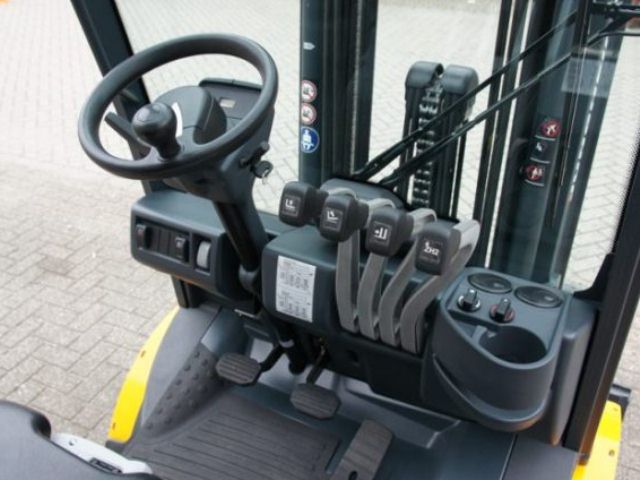
To obtain maximum performance, an operator must have all the essential tools at their fingertips. Boat Forklifts are designed with advanced ergonomics for maximum comfort and productivity.
Standard features:
Complies with OSHA operator protection
Release control pedal
Intuitive electronic controls provide effortless operation; mimics the movement of the forks and carriage
Gauges and auxiliary controls located next to the operator’s seat. The display shows the hour meter, all engine functions, filter restrictions, low battery and remote technology functions.
Hydraulic controls are adjustable via the display and customization by the operator is possible, password protected.
forklift for lifting boats
Tilting steering column. Easy entry and exit
Directional and gear shift lever on steering column
Deluxe air suspension seat with retractable seat belts
Low, non-slip steps and handrails provide 3-point contact
Roof guard with top panel
Splash guard in front of operator platform
Optional wireless remote control available to operate boats off the operator platform.
Spring-loaded, hydraulically released parking brake
Enclosed cab (optional). Features available with enclosed cab include: heater and air conditioning unit, windshield wipers, front, rear, top wipers, tinted windows, and key lock doors
Rear crash sensor notifies operator with visual and audible warning of people or objects within a predetermined distance around the rear of the vehicle
Forklift dimensions and weight
Visibility
Boat forklifts are designed with a fully open mast and a unique low-profile counterweight to provide the operator with unobstructed views in all directions.
The two-stage wide-view mast is constructed with mast channels, lift cylinders, chains, and hoses positioned as far out as possible to provide the operator with the largest possible window of visibility.
forklift for moving boats
Superior tilt cylinders provide excellent stability and visibility.
Main rollers are lubricated and sealed with grease spots on each side of the mast. All mast lubrication can be done at ground level.
Main and side push rollers reduce friction; impact resistant.
Mast pivots constructed with wear resistant bronze bushings and hardened steel pins. The mast pivots can also be greased.
The accumulator in the lift circuit reduces shocks to the mast and the load.
Safety valves built into the base of the lift cylinders provide controlled lowering in the event of hose failure.
The marina forklift in the industry is used to dry-stack boats in storage racks, and lower/raise boats in/out of the water. Hoist’s lift truck is compact and extremely maneuverable to operate around any facility, yet strong and durable enough to lift/lower boats of various sizes and weights.
Forklifts handling small objects or units without bands are generally required to have a vertical load backrest of sufficient height, width, and strength to prevent the load or any part of it from falling towards the operator.
There are several solutions:
Collect less material.
Add extensions to the load backrest.
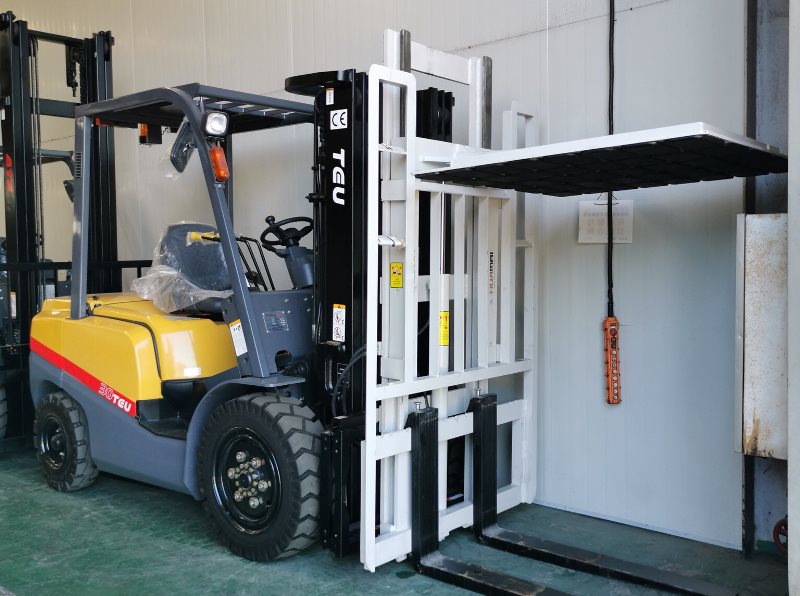
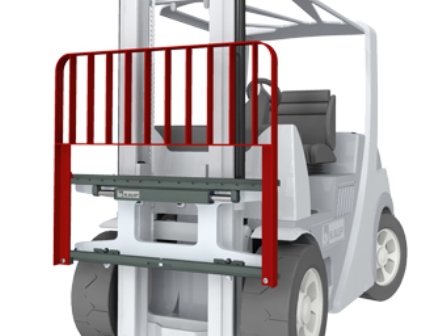
The forklift load back extension is part of the equipment that ensures that the materials do not fall on the driver, as it supports and supports the load against a flat steel frame that makes the loading and unloading operation safe, reducing the possibility of accidents and product damage.
Load Backrest Extension Forklift
Forklift load backrest Guards
Federal law allows extensions to be added to minimize the possibility of the load or part of it falling backwards. However, note that the customer or user should not make modifications that affect the capacity and safe operation of the forklift without the prior written approval of the manufacturer. Such a change may also require a new capacity plate.
A good practice is to contact the manufacturer and discuss the options with him. They may be able to provide you with extensions or a different load backrest that meets your needs.
Load backrest is subject to many debates whether the forklift needs it or not. One of those discussions I hear frequently is whether the forklift is originally equipped with a backrest.
Forklift load backrest for sale
While adding extensions can solve the problem of supporting your load, it has the potential to create another problem. The extra height of the extensions can increase the risk of striking high objects in the work environment, such as beams, steam pipes, ventilation pipes, etc.
Be careful whenever you are considering modifying any equipment and consider the possible benefits and consequences of the modification.
Forklift backrest for sale
Steel load backrests are designed to prevent cargo from falling onto the equipment driver. This allows the product to rest against a square, flat surface making loading and unloading safely.
These regulation-required backrests feature a steel grating area above the forks. The strong steel frame ensures fastening to the sides of the forklift truck.
All load backrests are bolt-on or slide-on style. Special backrests, such as notched center and power pallet truck backrests, are available upon request.
Load backrests are made to order based on certain specifications.
To view the spec sheet for forklift load backrests, review the tech specs for each forklift.
Forklifts are extremely useful workplace vehicles, as long as they are used safely and appropriately by operators who are appropriately trained and competent to use them.
Forklift safety procedures: Forklifts are extremely useful workplace vehicles, as long as they are used safely and appropriately by operators who are appropriately trained and competent to use them. Forklifts can be dangerous: they account for 25% of injuries at work.
Many workplace accidents involve people being hit or run over by forklift trucks (typically when the forklift is reversing)because the driver did not see them. Owing to their size and weight, injuries resulting from forklifts are generally very serious. Accidents involving them are often caused by poor supervision and a lack of training.
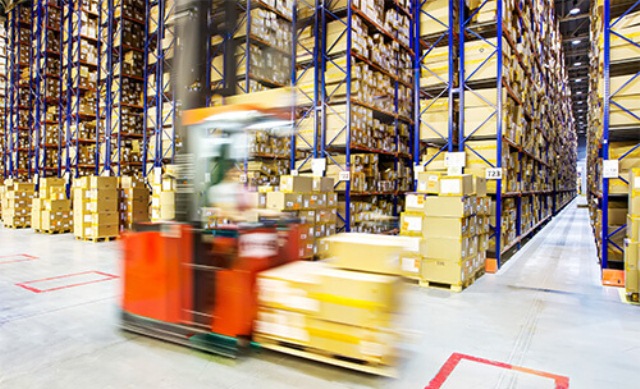
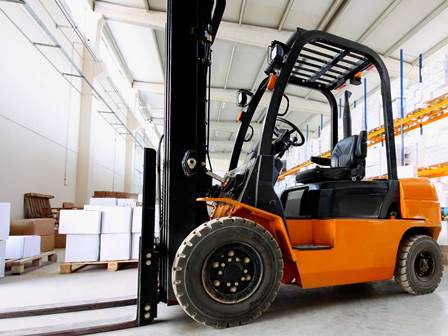
Forklift safety procedures: The forklift in the big warehouse.
Forklift Operating Procedures
The following forklift safety procedures tips will help you and those you work with stay safe around forklifts.
What the law requires you to own, lease, hire or borrow a vehicle for work purposes, you must make sure that it is safe for use and fit for the purpose for which it is intended.
Under health and safety legislation, a vehicle is a place of work. The law requires that workplaces are maintained in a condition that is safe and without risk to safety and health.
Vehicles must be kept safe and fit for purpose and the driver must be able to get in and out of the vehicle safely. Forklifts also are classed as work equipment.
Employers must make sure that drivers are familiar with the vehicle they are driving and that they have been given appropriate instruction, information, and training to carry out required pre-checks and to use the vehicle in the correct and safe manner, as per the manufacturer’s instructions.
Employers must also make sure that they have a defect reporting system in place so that when defects are found that they are rectified.
Employees should never be required to operate under conditions that are unsafe or that do not comply with the law. Employers must make sure that forklifts are provided in a safe condition for use at work.
This can be achieved by having a preventative maintenance system that includes scheduled checks as per the manufacturer’s instructions. Employees have legal duties to use work equipment in a safe manner in line with procedures developed by their employers.
Forklift safety procedures
Forklift operation safety
Safe Operation – Always:
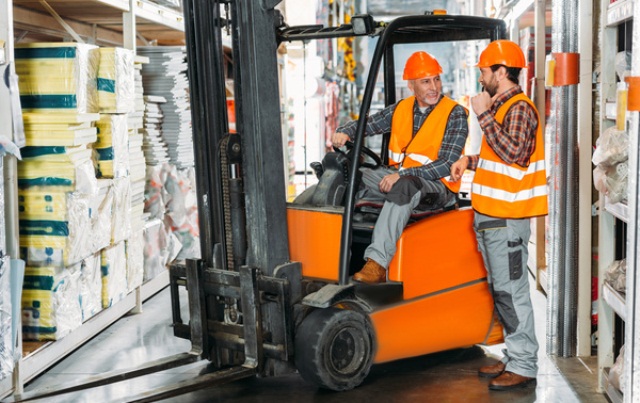
Wear appropriate personal protective clothing as provided by the employer. Hard hats, protective footwear, and high-visibility clothing are recommended as a minimum when working around forklifts. Other equipment may be needed depending on the working environment
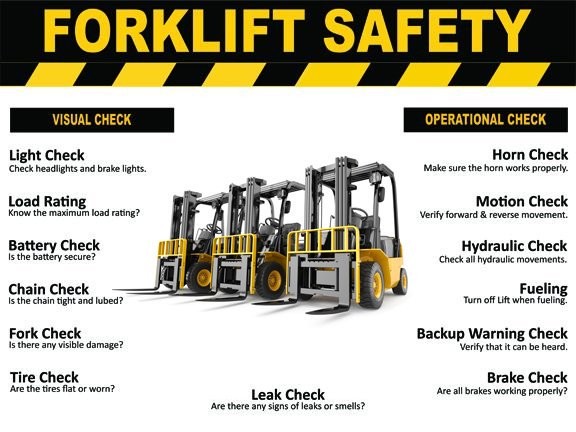
✓ Carry out a pre-shift check of the forklift
✓ Report defects immediately to the supervisor
✓ Make sure the work path is free of obstructions
✓ Wear operator restraints, where fitted
✓ Look all around before moving off
✓ Look in the direction of travel
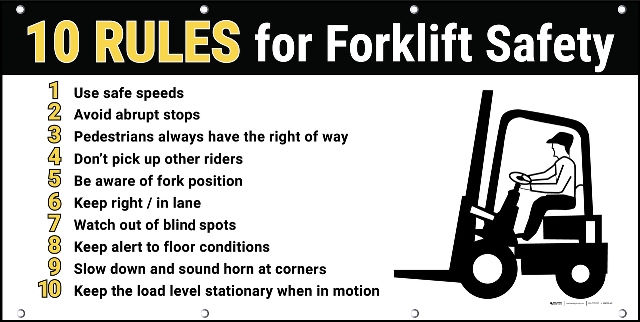
✓ Travel at a speed suitable for the location and the load carried
✓ Travel with the forks lowered, but clear of the ground
✓ Watch out for pedestrians
✓ Avoid sudden stops and violent braking
✓ Take care when driving on wet, icy, slippery, or loose surfaces
✓ Slow down at corners, doorways, and at danger spots
✓ Sound the horn several times when approaching blind corners, exits, and entrances
✓ Switch off and remove the key before leaving the forklift. Place the key in a safe location when the driving task is completed
✓ Apply the parking brake before leaving the forklift
✓ Face the forklift and use the steps and handholds when getting in or out of the vehicle. Use three points of contact.
✓ Report any accidents or near misses to a supervisor
Forklift safety signs
Forklift safety procedures: Never:
Operate a forklift unless you are trained, competent and authorized to do so
Use a forklift or equipment you know is not working properly
Operate controls from outside the cab, unless it is designed so you can do this
Stand on or near the controls to reach the load or anything outside the cab
Start or stop suddenly
Make abrupt or quick turns
Travel on uneven ground unless the forklift is suitable for this
Run over unprotected cables or flexible pipes
Try to carry out repairs – leave this to a qualified maintenance engineer
Operate a forklift when under the influence of alcohol or drugs [prescribed or illegal]
Use mobile phones or other hand-held devices while operating the forklift
Use uncertified attachments
Use an attachment unless a competent person, an authorized dealer, or a manufacturer has derated the forklift [reduced actual capacity]
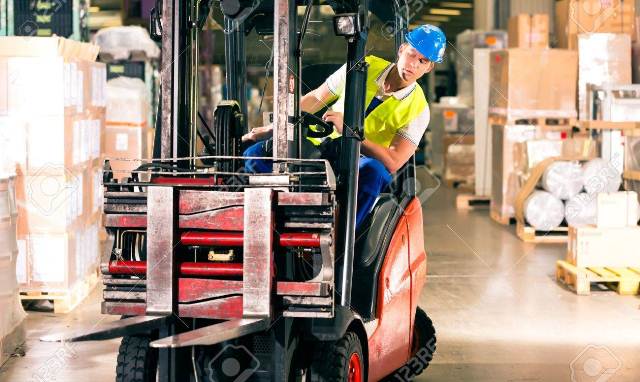
Forklift safety procedures: workers using forklift machine in storehouse
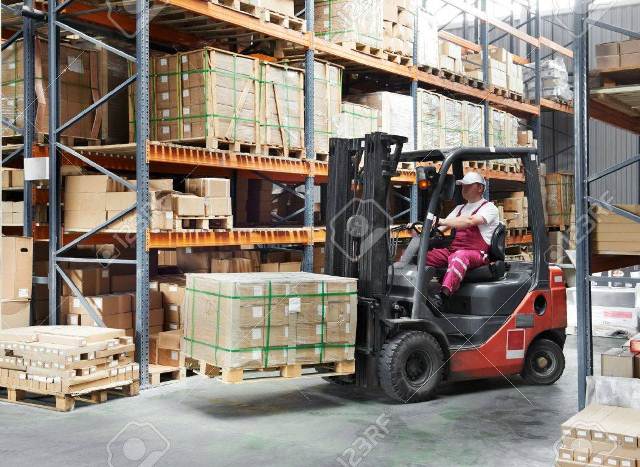
Forklift carrying loads
Forklift safety procedures: Always:
Assess the load before lifting. Check weight, size, load center, and security
Make sure that pallets are in good condition
Observe floor loading limits
Find out the weight of the laden forklift
Check the safe working load (SWL) of racking before placing loads onto it
Make sure the load does not obstruct the view. If it does, drive in reverse, looking in direction of travel
Make sure there is adequate clearance for the forklift and load, including overhead
Make sure the load does not exceed the capacity of the forklift
Make sure the load is stable and can be safely lifted
Carry the load as close to the ground as possible
Use controls smoothly
Position forks properly and as widely as possible
Make sure the fork arms are fully inserted when traveling with a load
Make sure the forklift is stopped before raising the load
Use suitable attachments for lifting unusual or wide loads
Lower loads at a safe speed
Make sure you are properly trained, certified and authorized to operate the forklift with an attachment
Forklift safety procedures
Forklift safety procedures: Never.
Lift loads greater than the capacity of the forklift
Move a load that appears unsuitable or unstable (including on a damaged pallet)
Lift load with attachments, unless trained, certified, and authorized to do so
Travel with a bulky load that blocks your view
Travel with a raised load, unless the forklift is designed specifically for this
Leave the vehicle with the load raised.
Forklift ramp angle
Operating on Slopes
Travel slowly when going down slopes
Ensure the forks face uphill when traveling up or down slopes with a load
Ensure the forks face downhill when traveling up or down slopes without a load
Adjust the tilt (where fitted) to suit the gradient and raise the forks to clear the ground
Forklift safety procedures: Never.
Turn the vehicle around on or travel across a ramp or a slope
Leave a forklift on a slope, except in an emergency. In case of an emergency always chock the wheels
Using a forklift to lift a person OSHA
Carrying People:
Use a safe work method when using working platforms, i.e integrated platforms. Use of nonintegrated platforms should only be permissible in exceptional circumstances under-documented controls
Remain in control of the forklift while workers are on the platform
Watch out for pedestrians
Use spotters when operating in congested areas
Forklift safety procedures: Never
Lift a person on the forks or on a pallet, or similar, balanced on the forks
Move travel or turn with a person lifted at a height
Carry passengers, unless the forklift is designed for this and has a designated seat and seat belt
Allow people to walk under raised forks or loads
Leave a truck unattended when people are using a non-integrated platform
Pick up a load if someone is standing close to it
Forklift safety tips workplace
When you have finished working
Below are some simple tips to follow to ensure the safe operation of forklifts. Although these tips are simple and quite basic they are a good starting point to support workplace health and safety guidelines.
Always:
Park the forklift in a safe place, on level ground; never on a slope
Leave the forklift with the mast tilted forwards and the forks fully lowered, with the tips on the floor
Apply the parking brake, select neutral, switch off the engine and remove the key
Return keys or other activating devices to their place of safe-keeping
Report any malfunctions or defects immediately to a supervisor
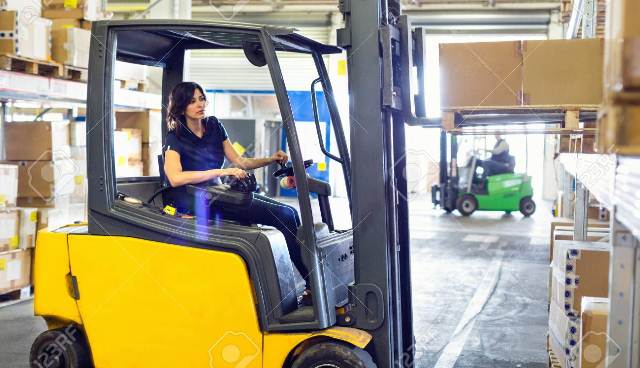
Forklift safety procedures: Female forklift truck driver working in a distribution warehouse
Forklift safety checklist
Forklift safety procedures: Visual Checks
General Condition.
Forks.
Carriage Plate.
Mast.
Back Rest Extension / Load Guard.
Lift Chains.
Tires.
Wheels.
Overhead Guard / Roll Over Protection Frame.
Energy Source.
Hydraulics.
Identification / Rating Plate.
Operator’s Compartment.
Access.
Lights, Windscreen, and Mirrors (if fitted).
Fire Extinguisher (if fitted).
Forklift safety procedures: Working Environment
No evidence of leaks.
No obstructions (overhead or in the working area).
Correct forklift type for the working environment.
Forklift safety procedures: If used on the Public Road
The forklift truck was registered and the number plate (front and rear) displayed, was clean and legible.
Valid tax and insurance disc displayed.
Road lights (side, head, rear, stop, and number plate lights) are in place, clean, correct color, and working correctly.
Note: Head, stop, and direction indicator lights are not required if the truck cannot exceed 12 miles per hour (19 Kilometres per hour) provided that the driver is clearly visible on all sides, can give hand signals to other traffic, and the vehicle is not used during lighting-up hours except in an adequately lit public place.
Thorough Examination: Thorough examination is carried out every 12 months (every 6 months if used to lift persons) by a competent person and a test certificate is available.
Forklift safety procedures
Forklift truck safety procedure
What is Forklift safety?
The pre-operation of forklifts involves a pre-start inspection that checks the condition of the vehicle, fluid levels, tires, fork condition, forklift safety devices, finger guards, load backrest extension, and more with the power off. The most important safety device on your lift truck is a properly trained operator.
What are the hazards of a forklift?
Sprains, strains, and other soft tissue injuries to the neck, back, and arms can cause long-term health problems. Common hazards that injure forklift drivers include: continuously and/or repeatedly looking up during high stacking.
Why is forklift safety important?
A forklift is a powerful tool that allows the movement and storage of products and materials efficiently and safely, provided that the employer provides the correct equipment and properly trains its operators.
Why are forklifts dangerous?
There are many factors that explain why forklifts are dangerous: A load of a forklift is carried in the front of the vehicle, blocking the line of sight of the operator. Forklifts are frequently required to lift heavy loads to high places. Mistakes made during lifting can lead to serious injuries from falling loads.
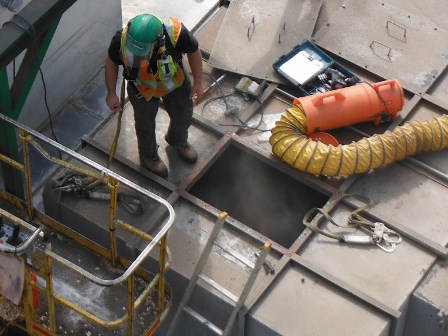
The purpose of these procedures is to ensure that entry into any confined space is planned and documented as required in order to identify and control hazards.
The importance of the efficient supply of forklift parts and accessories is vital for every company that has more than one forklift at its service.
The availability of forklift parts and accessories not only minimizes inefficiencies and downtime but also maximizes workplace safety.
For most companies, it is necessary to buy accessories and components for gas, diesel, gasoline, and electric forklifts in a wide range of brands, for spare parts and repairs.
Looking for a replacement part for your forklift or reach truck parts?
To keep your forklifts running and your employees safe, high-quality forklift parts and accessories are essential.
Forklift dealers carry an extensive inventory of genuine forklift parts, as well as a complete inventory of quality parts for other forklift brands.
Providers have the widest selection of forklift parts and accessories from the best manufacturers in the business.
Their online catalog includes electric forklift parts, walk-behind stacker parts, sit-down pallet truck parts, scissor lift parts, sit-on, and stand-up stacker and counterbalance truck parts, and in-line pallet truck wheels.
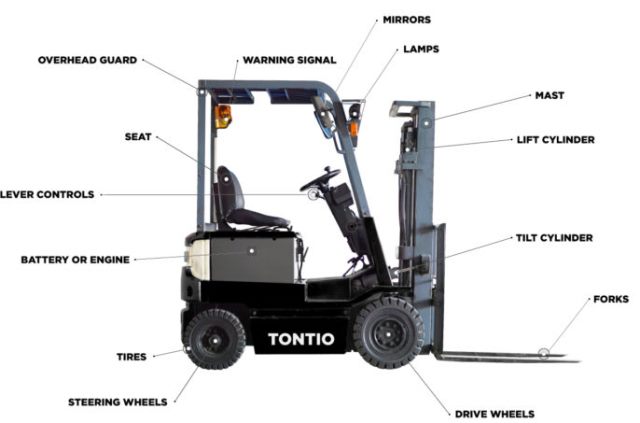
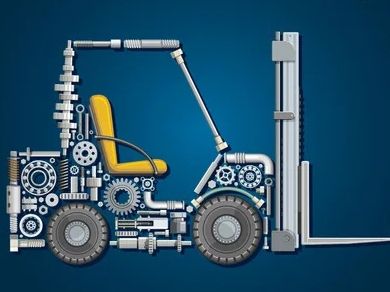
Forklift Truck Parts and Functions
Riding forklift dealer
“Forklift” is a broad term that covers almost two dozen different designs.
Buying a forklift can be a significant business expense with prices ranging from $12,000 to $120,000.
Such a wide range of costs is due to factors such as size, lifting capacity, indoor and outdoor application, accessories, and other considerations.
With so many parts and replacements on forklifts, keeping them in good working order is critical to any business.
And because of the type of work they do and the environments they operate in, owners and maintenance personnel need to understand the construction and parts of a forklift to keep them in service.
For this guide, we are focusing on forklift parts.
Toyota forklift parts
Hyster forklift parts
Clark forklift parts
Yale forklift parts
Mitsubishi forklift parts
Komatsu forklift parts
Caterpillar forklift parts
Reach truck spare parts
Forklift parts are what make up the machine you depend on for safe, reliable productivity. Get to know basic forklift parts terminology.
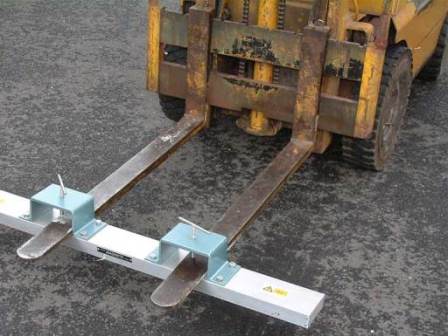
The hanging forklift magnetic sweeper will allow you to suspend the magnetic sweeper by bar or chain and can be attached to the front or the back of the forklift.
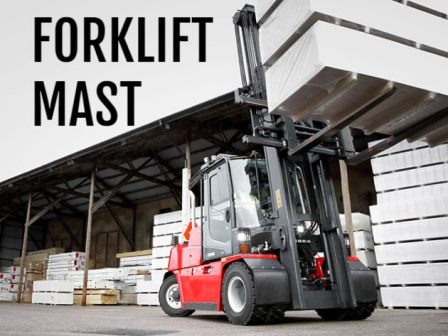
Also referred to as an ‘Upright’, the mast is the vertical assembly on the front of the forklift that does the work of raising, lowering, and tilting the load.
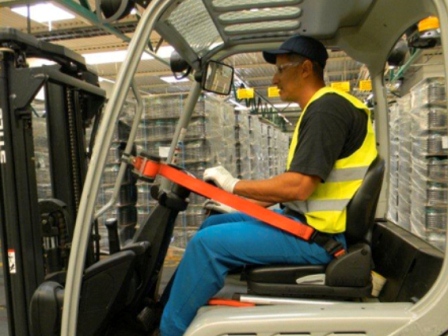
Unlike cars, forklift seat belts are not meant to protect drivers from high-speed collisions. Instead, forklift seat belts are intended to protect drivers from being crushed.
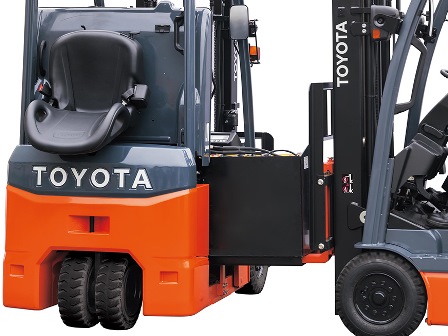
After determining which size forklift battery for sale is compatible with your vehicle, the next consideration to make is which type of electric forklift battery technology to use: lithium vs lead-acid forklift batteries.
The Safety Warning Spotlight projects a clearly visible spot beam onto the floor that alerts pedestrians and other vehicles of the nearby presence of the forklift.
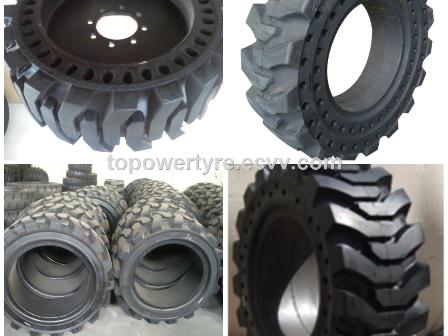
Before you make your initial forklift purchase, decide whether a pneumatic or cushion tire forklift is best for you. Start by determining how the forklift will be used. Consider your capacity and any multi-use functions.
Forklift rules and regulations: rollover of forklifts, safety regulations, accidents in storage, maneuvers, collisions with shelves in warehouses.
Personal safety measures are also essential for working with machinery in different types of warehouses.
Whether handling staves, various stackers or powerful forklifts, it is recommended that operators and workers have gloves and helmets at all times to reduce risks in their work. In addition, all protection accessories must be in perfect condition.
Forklift Operation Safety
Forklift safety rules
Forklift Operation Safety: What are the risks when working with forklifts?
Forklifts are one of the main sources of accidents worldwide in warehouses or industrial warehouses. When using forklifts, certain precautions must be taken to prevent accidents.
Forklift Operation Safety: Different forklifts = different precautions
There are two different types of forklifts, those driven electrically by batteries and those of engines, powered by liquefied gas, diesel or natural gas tanks.
Regardless of which of these models of forklifts count, both types have different particular conditions of operation, which must be respected and checked daily.
Electrical equipment can present risks if the operator does not know how to handle batteries when they are at the limit of exhaustion.
On the other hand, gas equipment has tanks that must be refilled and changed. The oil and the condition of the covers must be controlled in any of the two cases of forklifts.
Forklift safety training
Forklift Operation Safety: Risks when working with forklifts. Forklift Operation Safety: Dangers when operating a forklift.
Below, the most common accidents with forklifts are detailed, so that appropriate measures can be taken to prevent them.
A maximum speed of a forklift
Distance between forklifts and pedestrian
Blind spots of a forklift
Forklift overturning
Forklift accidents in warehouses
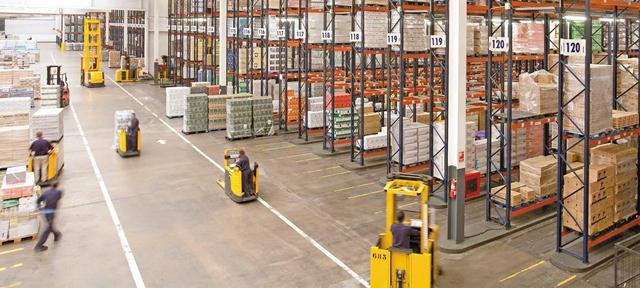
Warehouse forklift safety
Among the most common risks for this type of accident are excess speed and poor traction in curves, being the forklifts prone to tilting and tipping.
In order to avoid this type of accident, a warehouse or warehouse must be well signposted and all personnel including operators instructed on the primary safety standards.
Forklift pedestrian safety
Forklift Operation Safety: Distance between forklifts and pedestrians:
Passers-by in transit areas: Moving inside a warehouse in the same spaces where forklifts are driven is not the most appropriate.
The pedestrian corridors must be defined rigorously, as well as be signposted.
This will prevent forklift operators from having to be aware of whether someone can walk by.
These types of accidents can end with a person injured by the nail of the vehicle or another part, for example.
The personnel that transits in the corridors where they also circulate forklifts must wear vests of fluorescent colors, helmet, and safety boots.
In this way, it will be visible at long distances by the drivers.
Forklift Operation Safety
Warehouse Forklift
Accidents in warehouses; These accidents are due to a lack of control of the daily state of the forklift by the personnel in charge of the deposit.
A daily review of the condition of the forklifts should be made and, in this way, ensure the proper functioning of the equipment.
The forklift inspection should be done at the beginning and end of the shift, to ensure that the equipment is working properly and can be operated safely by the following personnel. The forklift cannot be used until a supervisor reviews it in case of finding anomalies.
Forklift accident
Causes of overturning of forklifts:
Unawareness of the maximum load capacity
It is necessary for each driver to know the capacity of his vehicle and its accessories, and not exceed it.
An overload causes rear tire lift and excessive tilt, plus further damage to the vehicle or personnel.
The maximum load capacity of any forklift must be identified, being clear of the maximum weight that can be loaded with it.
This can be checked in the technical specifications of the manufacturers.
In case of not have the technical sheet at hand, you can search the equipment with the technical data and the maximum capacity.
Once this information is known, the personnel in charge of operating the equipment should be informed.
This small training helps us to avoid using excessive load when driving the forklift, which can end up causing an accident.
Uses of forklifts
Forklift Operation Safety:
The nails should be used only for their purpose, lifting loads.
The tip of the nails should not be used as a lever, just as it is not correct to push a load with the tips of the nails.
The hoists, in addition, must be used depending on whether they are for exteriors or interiors.
For example, using a vehicle for outdoor interiors with excessively stony or muddy roads can cause permanent damage to the chassis or forklift covers.
The load should be made only in special places. Another important fact is to switch off the forklift engine before refilling it with fuel or charging its battery.
Forklift operator training
Forklift Operation Safety: What are the risk factors of a forklift operator?
The forklift or forklift is used for transporting loads only. The operator must not allow his companions to climb unless another seat is insured.
If a person must be elevated to perform product review tasks such as cyclic counts or maintenance tasks, it is necessary to use an adequate security platform.
Thus, verify that it is correctly secured to the forklift with chains or padlocks. In addition, a harness should be used as a safety measure in case of incidents.
Do not authorize anyone to stand or walk under a load transported by the forklift.
Forklift operator
Forklift Operation Safety: Driving forklift, When a forklift is performing loading or unloading drive, there should be no personnel near the place.
It is the responsibility of the operators to avoid this type of unsafe maneuver, but also the nearby personnel must remember not to approach.
In addition, it is important to make sure that the drivers’ clothes are not loose to prevent them from getting stuck in the machinery.
They should also avoid operating the controls with their hands stained with grease because they can cause bad handling and a subsequent accident.
If you take into account the causes that can determine these types of accidents, and make appropriate use of the forklift it will have an excellent useful life and there will be no accidents during your operation.
Forklift safety tips
Forklift Operation Safety: Safety rules for operating forklifts.
If all these precautions are taken into account, the chances of accidents at work and waste of materials will be minimized.
Never carry a load that requires another employee to physically stabilize the load while moving the forklift.
Never carry a load that exceeds the maximum capacity of the forklift.
One sign of a heavy load is that the rear wheels rise when the load begins to rise.
In these cases, lower the load immediately and change the lifting equipment or reduce the weight of the load.
To maximize stability, the load must be hooked and centered on the forklift nails.
The load should be supported against the back or vertical part of the nails.
In addition, the length of the nails should always be of the length of the load, or greater.
To prevent the load from tilting forward, the forklift mast must be tilted backward.
If necessary, separate the nails before lifting the load.
Implement a Floor Marking System to Keep Workers Safe: OSHA maintains basic rules and regulations for effective floor marking. Part of the agency’s standard for walking and working surfaces, states: “Permanent aisles and passageways shall be appropriately marked.” The broader standard sets no guideline for floor marking colors unless floor marking is used for preventing physical injuries.
That said, the agency’s standard for outlining safety color codes—mentions that red and yellow are designated safety color codes for marking physical hazards.
Red is for fire-related hazards (including the identification of fire protection equipment and containers of flammable liquids), as well as emergency switches, bars, and buttons on hazardous machines.
Yellow designates caution and is used to mark physical hazards (including stumbling, falling, and “caught in-between”).
Visual communication systems
Develop a Visual Communication System: Here are a few tips for successful visual communication, which can alert operators and pedestrians to hazards caused by forklifts:
Use “Stop” signs, speed limit signs, and other traffic control devices
Implement wayfinding to improve the flow of traffic, keep pedestrians away from forklift paths, and direct forklifts along safe routes
Point out loading docks, shelves for inventory, and other important places within a warehouse
Post signs at junctions to warn pedestrians and forklift operators to stop and look for hazards
Display checklists and inspection requirements where forklifts are stored
Safety communication
Implement Solutions for Forklift Safety: Many of the hazards posed by forklifts can be mitigated with custom signage and clear visual communication. DuraLabel industrial printers by Graphic Products help you create custom signs on demand, including speed limit signs, printed floor marking tape, maintenance labels, safety reminders, and more.
Worker safety
Keep An Eye Out Around Your Facility: Even if you’re not operating a forklift, you can take steps to keep workers safe. Here are a few tips to keep in mind:
Post forklift safety signs, aisle markers, and forklift procedure labels—using premade signs, custom labels, or a combination of the two
Implement a floor marking system in your facility
Ensure safety signs are at all intersections where pedestrians and vehicles intersect
Use steering wheel covers and padlocks when necessary
Use proper lockout/Tagout equipment to prevent forklifts from inadvertently starting up.
Forklift Operation Safety
Workplace safety
Stay Safe While Using A Forklift: Workers should do the following while behind the wheel to protect themselves and their coworkers:
Make sure the load is balanced and fully secure to prevent a forklift from tipping over
Ensure both forks are as far under the load as possible before lifting
Drive with the load as low as safely possible
Pay attention to posted speed limits and warning signs
Always look in the direction you’re traveling; if a load blocks the view ahead, travel in reverse
Steer clear of areas where forklifts are prohibited or restricted
Keep an eye out for signs, floor markings, and other warnings for pedestrians and forklifts
Use the horn at intersections and in areas where pedestrians may be present
Forklift classes
Know the Forklift Classes: These are classifications of six commonly-used types of forklifts, as recognized by OSHA, along with different types of trucks unique to each class.
Electric Motor Rider Trucks
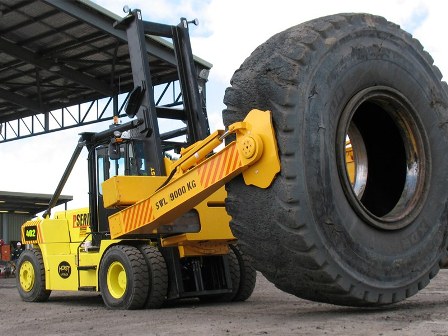
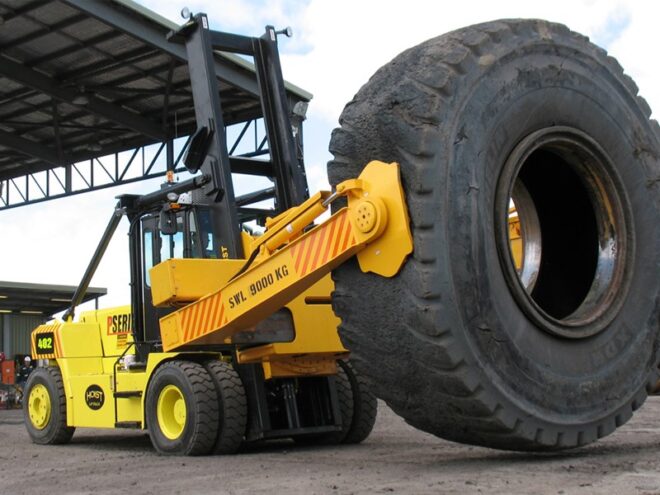
Rough Terrain Forklift Trucks
Electric Motor Narrow Aisle Trucks
Electric Motor Hand Trucks or Hand/Rider Trucks
Internal Combustion Engine Trucks with Solid/Cushion Tires
Internal Combustion Engine Trucks with Pneumatic Tires
Electrical and Internal Combustion Engine Tractors
Rough Terrain Forklift
Health and safety hazards
Know the Common Hazards: Here’s a quick look at a few common hazards associated with forklifts.
Unsecured loads may fall, crushing pedestrians or drivers.
Forklifts may tip over, due to excessive speed or imbalanced loads
Workers may fall if they stand on the forks
Drivers may not see pedestrians, leading to collisions and fatal accidents
Improper or missing floor marking may lead to accidents between forklifts and pedestrians
Forklift Operation Safety
What is the number one cause of forklift accidents?
According to OSHA, 70 percent of workplace accidents can be avoided with proper training and safety procedures. NIOSH states that the three most common types of injuries occur when: A forklift overturns; workers are struck, crushed, or pinned by a forklift; and workers fall from a forklift.
How much does a forklift driver make a year?
The average hourly pay for all forklift drivers is around $15 per hour but will vary by experience and location. Skill level is the biggest differentiator in pay. The longer you’ve been on the job, the closer you’ll get to that $20 per hour mark.
Is it illegal to drive a forklift without a license?
The short answer is “yes” – it is necessary to hold a license to operate a forklift. However, if you are “in training” you are permitted to operate a forklift without a license until such time as you are competent enough to be assessed. You must be within sight and sound of a licensed operator at all times.
How can a forklift tip over?
The Top Causes of Forklift Tip-Overs. During a forklift tip-over, the lift truck will usually tip over forward or to the side. Tip-overs in both directions usually happen for different reasons. The lateral tip-over (sideways) often occurs when the driver is crossing from a paved surface to an even surface.
What are the hazards of a forklift?
There are many other possible hazards of a particular work environment that might cause a forklift accident. These include pits or openings in the floor, congested or narrow workspaces, and the presence of flammable and combustible material.
What is the risk of refueling a forklift with the engine is running?
Never refuel while the engine is running (the engine has the potential to ignite the fuel) Ensure you are following safe parking procedures. Open flame, smoke and any potential source of ignition are prohibited within 10 meters of any truck being refueled or recharged.