All posts by Loganx

Professional Web Writer | Motor Enthusiast | Content Creator | Logan is a dedicated and skilled web writer, passionate about engines and machines and with a talent for creating engaging and informative content. She specializes in writing about a diverse range of topics including construction, forklifts, heavy equipment, excavators, etc. SEO Optimization: Proficient in SEO best practices, ensuring high visibility and engagement for all published content.

Ship to Shore Crane

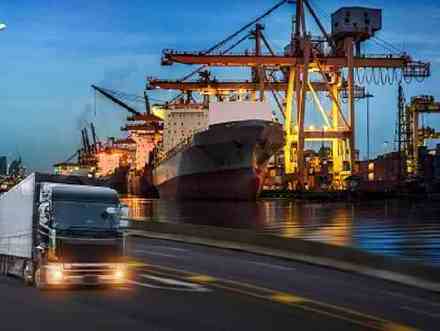
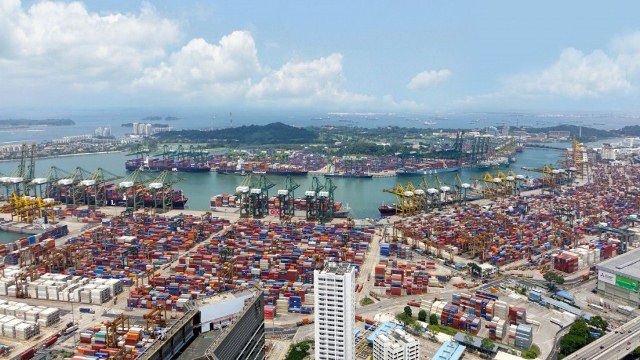
The ports are one of the pillars within the international commercial dynamics, formed by an infrastructure and logistics that establish the first contact for the arrival of merchandise and people to later follow their routes to other destinations.

Ship to Shore Gantry Crane:

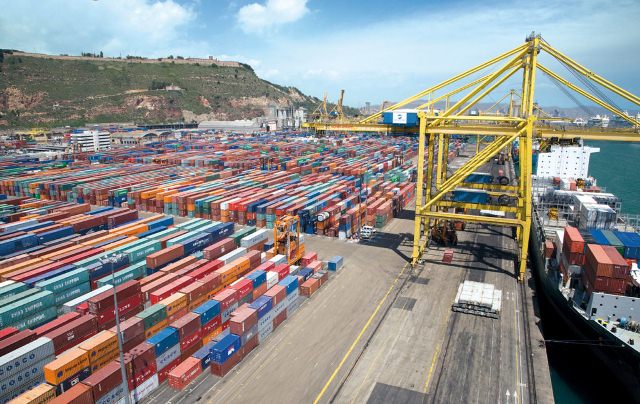
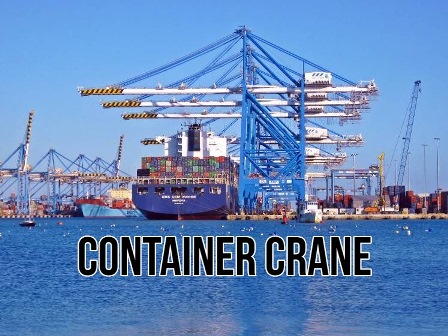
What is a gantry crane? The gantry crane or container crane is a typical heavy-duty crane, widely used in ports and docks for loading and unloading shipping containers and moving the container stack in container terminals.

The gantry crane is a lifting device consisting of two or four poles that raise a bridge structure through which the lifting mechanism circulates.

Ship to-shore crane specification

Maritime trade:

The ports are one of the pillars within the international commercial dynamics, formed by an infrastructure and logistics that establish the first contact for the arrival of merchandise and people to later follow their routes to other destinations.

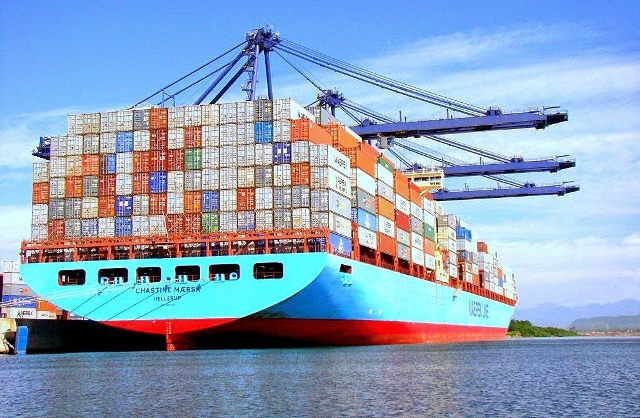
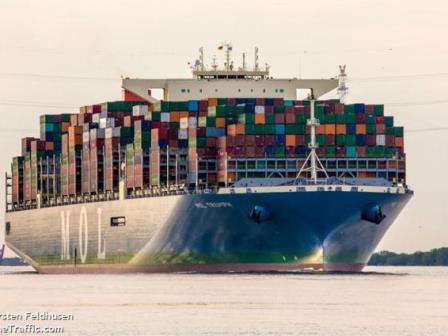
The worldwide trend is the movement of mass cargo, even more so with new vessels such as the container ship of 18,270 TEUs; (unit of measure of capacity for containers). Considered the largest container ship in the world belonging to the Maersk Triple E Class.

The Post Panamax, Ultra Containers, and Super Oil tankers are arriving at various ports that require ports with a large draft, wide measures of length, and beam, which are a challenge for many countries given their large investment structure.

But the big question arises:

How can you respond to the huge volumes of cargo that generate a limited period of time in the activity of loading and unloading in ports?

What automatic and modern processes are on par with the speed necessary for the operations of a port to the demands of today?

Ship to Shore Crane

Container crane specifications

Characteristics of the Portico Crane:

This gantry container crane generally has a high operating speed and work level. It is designed to perform its service in harsh working conditions, for outdoor service, and for long periods of uninterrupted use.

  • The gantry crane is a special type of crane that elevates the load by means of a forklift installed on a beam, which in turn is rigidly supported by two or more legs.
  • These legs can usually be moved on horizontal rails at ground level. In some factories and ships, the so-called bridge crane is used, which has the same operation as the gantry crane, with the difference that the beam rests directly on the rails.
  • The type of gantry crane for containers depends to a large extent on ships and environmental conditions.

There are several different types of container cranes, including gantry cranes mounted on rails, commonly abbreviated as cranes RMG (gantry crane container mounted on rails), rubber leg cranes, usually called RTG cranes for short and ship cranes to earth, and the port crane STS (Ship to Shore)

  • Absolute precision control in the handling of goods at speed.
  • Speed to load and unload.
  • Simplicity in the management of containers
Ship to Shore Crane

STS Ship to shore

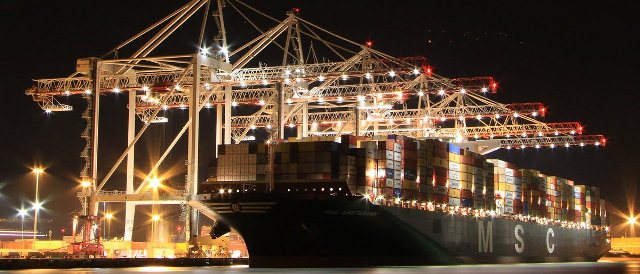
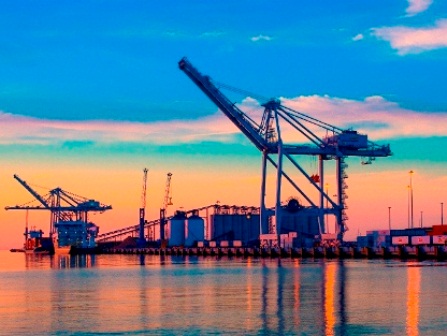
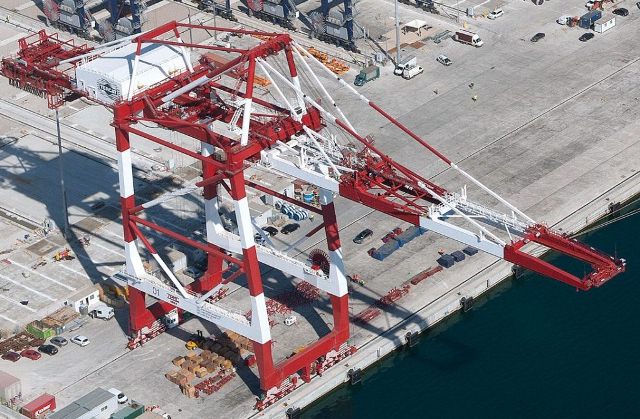
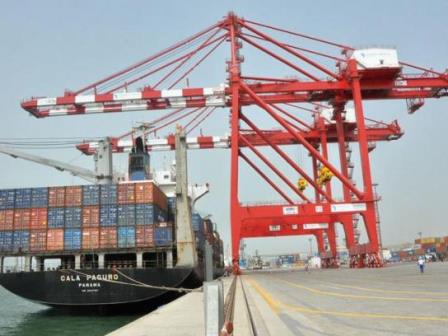
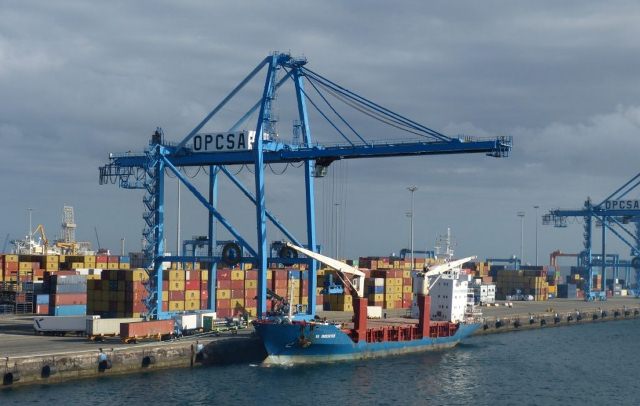
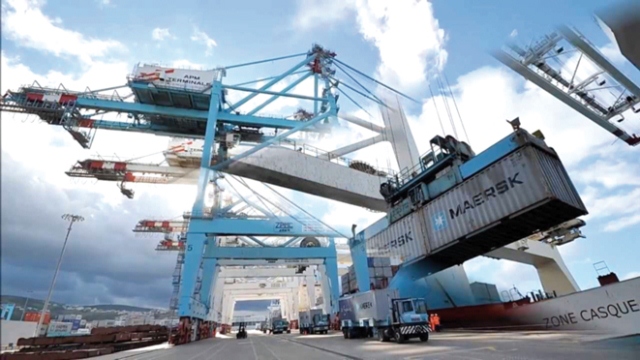
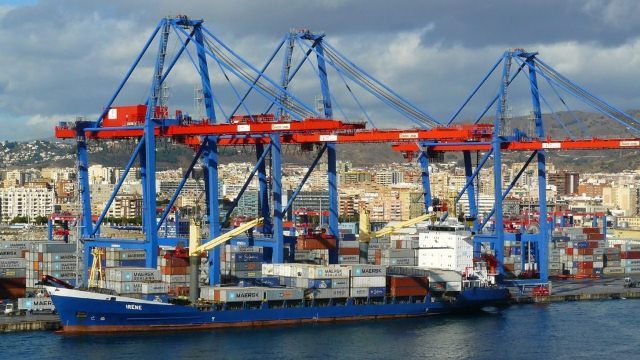
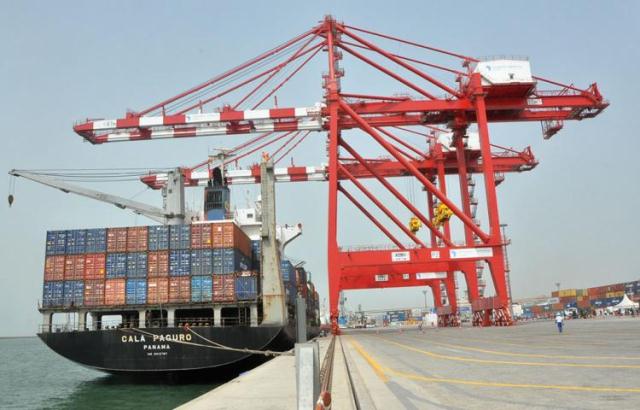
The ship-to-shore gantry crane is widely used in port terminals, docks, and containers to load and unload containers from ships. Generally abbreviated as gantry cranes STS (Ship to Shore), ship to land. This dock container gantry crane is usually installed on the edges of port terminals and extends along two rails.

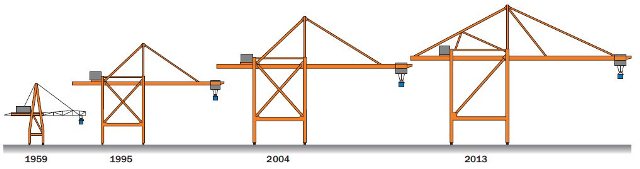
This ship-to-shore container gantry crane is born to keep up with the development of large-scale container ships, Panamax and post-Panamax have to develop and design a highly efficient container handling system to meet production requirements larger for large vessels
Container Crane Cost

Used as a heavy-duty crane, this gantry crane usually costs much more than other gantry cranes for common use.

Sometimes customers may not be sure which type best suits their needs, so the first and most important thing is to understand the differences between these types of gantry cranes. Then you must clear your needs for container gantry crane capacity, span, lifting height, etc.

Quote with the specialists that will design the crane specifically for the place where it will be implemented

Shipping container crane

As a highly efficient container handling equipment, the gantry crane significantly improves productivity. You can achieve fast and accurate positioning.

Due to the adoption of the anti-tipping device, there is no influence on the lifting carriage during the operation process of the crane.

The container gantry crane requires minimal maintenance and very low energy consumption. It is suitable for various workplaces, including port, dock, dock, and rail terminals.

The container crane can guarantee a highly safe operation and precise handling of the containers.
Shipping container crane operator

The gantry crane transfers the containers between the dock and the container ship. Allows loading jobs to be carried out quickly and efficiently.

The bridge must be handled manually and not automatically according to the law. The operator that handles the crane sits in a cabin suspended from the top of the gantry.

When the portico is at the height of the vessel, maneuver so that the crane with the spreader moves and descends to the container that you want to load or unload. Hooks the twist locks (corner of the containers) to block them, hoists the container, and deposits it in the dock.

When they are on land, the containers are placed on another means of transport (usually a container truck) or stacked.

For transportation within the cargo terminal, the aforementioned gantry, reach stackers or automatic transport systems are used. (automated guided vehicle or AGV, automated lift vehicle or ALV).

Ship to shore Crane design

There are several options for the design of container gantry cranes. The main components of the gantry crane, all are purchased from locally and overseas renowned suppliers to ensure the quality of the crane and long service life.

For example, you can choose hoists and electric motors from the manufacturer or ask for external suppliers. The modular design is adopted to maximize the adaptability and availability of the double beam lifting system.

The options of cranes for containers include, among others, the following characteristics: brake system and emergency transmission, anti-collision and anti-rollover systems, remote operation system, and positioning system.

The ship-to-shore crane for containers is designed for each individual use of the customers. The gantry crane for container loading is designed specifically for each client according to their specific requirements, with different costs and data characteristics in each case and with sizes ranging from the Panamax class to the largest Megamax cranes.

Container Ship

Gantry cranes for containers are classified according to the container loading and unloading capacity and the size of the ships that are capable of loading and unloading.

PANAMAX

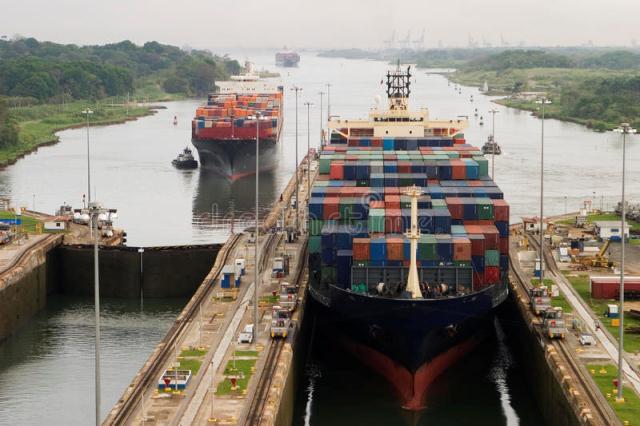
A Panamax crane can fully load and unload a Panamax class container ship; that is, able to pass through the Panama Canal (57.91 meters from 12 to 13 containers wide)

POST-PANAMAX

A “Post-Panamax” crane can load and unload completely from ships too wide to pass through the Panama Canal; generally with a width of 18 containers.

These cranes have an approximate weight of 800 to 900 tons.

SUPER POST-PANAMAX

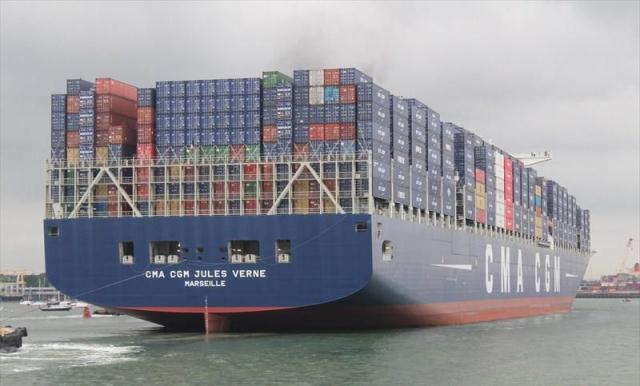
The largest gantry cranes for containers are classified as “Super-Post-Panamax”.

Used to unload the largest container ships (with 22 or more containers in width) and its weight varies between 1600 and 2000 tons.

FEEDER CRANES

The Feeder crane has a sleeve capacity to load and unload 10 containers.

Smaller gantry cranes are also used, such as the inside the cargo terminals.

In addition, smaller gantry cranes are usually used in rail loading and unloading facilities to transfer containers; from wagons, to trucks, as they allow vehicles to load and unload under their vain.

They can also be found in the width changes, where they transfer containers between trains of different widths.

Ship to shore crane manufacturers

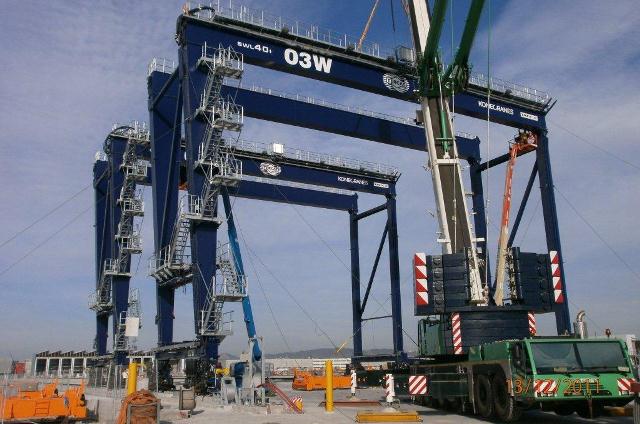
Konecranes

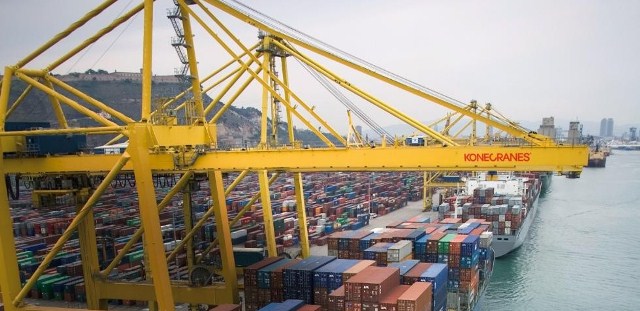
Konecranes has over 40 years of experience in the design, manufacture, and delivery of Ship-to-Shore (STS) container cranes.

We have delivered over 120 of them, in sizes ranging from Panamax to Super Post Panamax. Our STS cranes have an excellent reputation for design, manufacturing (in-house manufacturing of key components), and customer care.

  • We can erect our STS cranes on-site, or ship them fully erected depending on your location.
  • Konecranes Ship-to-Shore cranes are equipped with our Active Load Control technology.
  • Which improves the crane operator’s control over the positioning of the spreader and container on the truck chassis, in the cell or on the deck.
  • Dwell times decrease substantially. You can substantially boost the productivity of your quayside operations.

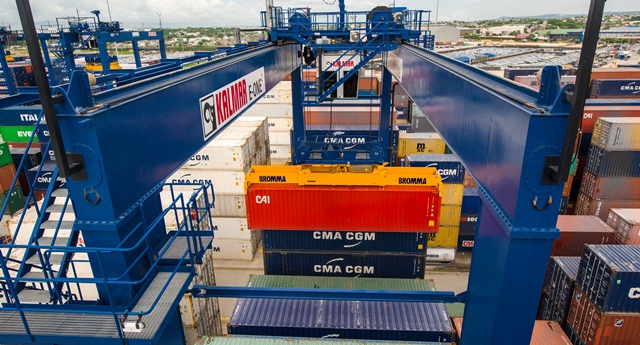
Kalmar container crane

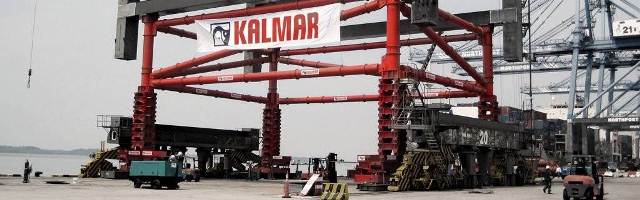
Kalmar ship-to-shore (STS) cranes deliver the reliability and efficiency your terminal needs to maintain productivity and gain a competitive edge.

Their simplified modular design is lightweight and durable, makes maintenance easier, and can be tailored to your exact specifications. Wherever you are in the world, we’re with you every step of the way, from planning and specification to delivery, service support, and upgrades.

Ship-to-shore (STS) cranes are the single most important piece of equipment in any container terminal, so having a knowledgeable and experienced partner to support you every step of the way really pays off.

In today’s fast-paced container port terminals, speeding up ship turnaround times can give your port a significant competitive advantage. With their fast operation and excellent availability, our STS solutions are designed to help you do just that.

With more than 40 years experience in engineering, building, and upgrading these critical pieces of equipment – plus a number of industry-first innovations – we can provide expert support for everything from planning and specification to maintenance and spare parts delivery, as well as upgrades and retrofits.

Liebherr container cranes

In the modern port environment, reliability and productivity are the key parameters. Ship-to-shore container cranes (STS) from Liebherr achieve up to 99.6% availability during actual vessel operation.

Ship-to-shore container cranes are custom-designed with a range of outreaches and specification detail according to individual customer requirements from Panamax size through to the largest megamax cranes. Safe working loads from 40 to 120 metric tonnes are available in single, twin, and tandem lift configurations.

Advantages and Benefits:

  • Designed and built by Liebherr in Ireland for over 45 years
  • Industry-leading availability
  • High-performance cranes with a lower self-weight and center of gravity
  • Liebherr drive systems
  • Increased productivity compared with alternative designs
  • High reliability and low downtime
  • Rigid and stable structure
  • Improved performance where high in-service winds prevail
  • Accurate spreader positioning
  • Anti-sway reeving
  • Optimum driver comfort due to ergonomic cabin and unique Liebherr hinge point design
  • Precision simultaneous drive motion in three axis
  • Low lifecycle costs

How tall are container cranes?

How tall are container cranes?

The Port said the new cranes would be able to load and unload the world’s largest container ships. Megaships can be up to 1,300 feet long and carry nearly 23,000 cargo containers. Containers are stacked up to 12-high above deck on the largest vessels. Taller cranes are required to reach the top of the stacks

How do shipping container cranes work?

The crane is operated by a specially trained crane operator from within the cabin located on the top end of the crane and suspended from the trolley. It is the operator who lifts the container from the ship or dock for unloading or loading of cargo. The modern built spreader can lift up to 4 containers together.

How are containers lifted?

The container is lifted by all four top corner fittings with forces applied other than vertically. The bottom lift sling method can be used for empty and loaded containers lifting. The container is lifted from the side of the four bottom corner fittings attached by slings to a spreader beam hang above.

What is mobile Harbour Crane?

Unique technology such as the optimized undercarriage concept or the in-house-developed crane control system makes mobile harbor cranes among the most powerful material handling equipment in the world.

Konecranes now is a world leader in the handling equipment?

Early January 2018, Konecranes of Finland announced that the announced acquisition of Terex Material Handling & Port Solutions (MHPS) was complete; the deal involved $595 million and €200 million in cash and 19.6 million newly issued class B shares representing 25% in Konecranes.
The combined entity has a global presence with 18,000 employees in 50 countries. Konecranes now has three business areas: Service, Industrial Equipment and Port Solutions. The expanded product portfolio now includes Konecranes Gottwald Mobile Harbor Cranes, Konecranes Noell STS and RTG cranes, horizontal transport for container terminals, and Konecranes Liftace Lift Trucks.

The most read

Container Crane

What are container cranes called? How much does a container crane cost?
More on this story

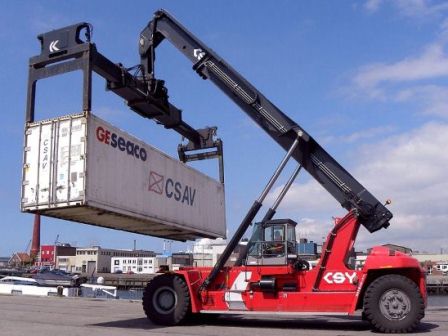
Reach Stacker Crane

Container reach stacker, reachstackers, kalmar reachstacker, Container Handler, What is a reach stacker?
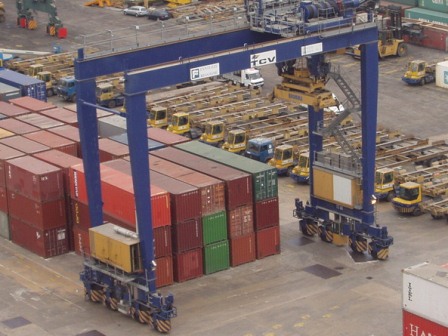
RTG Crane

What does RTG stand for in cranes? How much does an RTG crane cost? How does an RTG crane work?

As the load center on the forklift increases the weight capacity, does what?

One of the frequently asked questions is: as the load center on the forklift increases the weight capacity does what?

Any discussion of the basics of forklift trucks would be incomplete without a discussion of the center of gravity and the stability triangle.

One of the hardest things for lift truck operators to learn during training is how to maintain their center of gravity within their stability triangle.

as the load center on the forklift increases the weight capacity does what

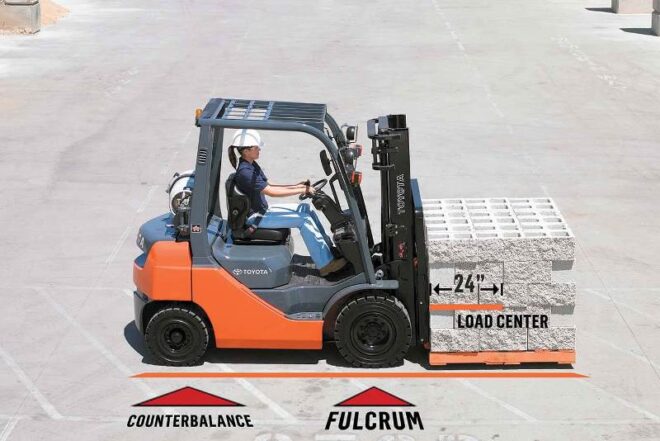
Forklift load center

A forklift has a three-point suspension system. The points are found over both of the two load (front) wheels and midway between the rear wheels. When imaginary lines are drawn to connect them, what’s known as the stability triangle is formed.

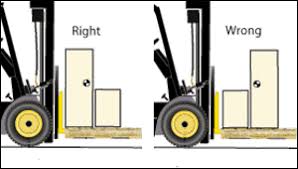
The operator must ensure that the center of gravity of the combined forklift and load remains within the stability triangle to guard against tipping over.

Rated capacity forklift

If the load is off-center, improperly distributed, or oversized, it may exceed capacity and unbalance the forklift.

The weight capacity of a forklift attachment is tied to what is known as the Maximum Load Moment, which is when the load center distance increases, changing the weight distribution, and as a result, the amount of weight a truck can carry under those conditions.

If your load center is farther out than the load center for maximum lift capacity for your forklift, then your maximum lifting capacity is reduced, potentially dramatically. The load center distance is measured from the load bracket to the center of the load.

as the load center on the forklift increases the weight capacity does what

Forklift load center chart

Check the weight of the load

The rated lifting capacity of the forklift is the maximum weight of the cargo allowed to lift in the distance from the center of gravity of the cargo to the front wall of the fork not greater than the center distance of the load, expressed in t (tons). industrial lift truck, the lifting capacity should be reduced by a safety factor of at least 20 percent to allow.

Forklift operating safety

When working, stability can be best maintained by keeping loads low to the ground and traveling with caution when turning, stopping, and starting. Also, be sure to wear your seatbelt.

One area of particular concern is on ramps, slopes, or otherwise uneven terrain. Never raise a load or turn on an uneven surface. In such cases, your center of gravity will quickly move outside of the stability triangle.

While traveling empty on a ramp, your forks should always point downhill. When carrying a load, your forks should always point toward the top of the ramp, so the load will not fall off.

What is the load center on a forklift?

The load center is the distance from the face of the forks to the load’s center of gravity. Many forklifts are rated using a 24-inch load center, which means that the load’s center of gravity must be 24 inches or less from the face of the forks.

How does increasing the load Centre affect the capacity of a forklift?

As you push the load center out, the effort, or capacity required to lift the weight increases. It is for this reason that sometimes a greater capacity truck is required to lift a specific item, due to its dimensions rather than weight.

The most read

When operating a powered industrial truck it is essential that you …

Essential rules when operating, driving, and maneuvering powered industrial trucks

More on this story

Powered Industrial Truck

  • What qualifies as a powered industrial truck?
  • What is a powered industrial truck?

Forklift Safety Procedures

Forklifts are extremely useful workplace vehicles, as long as they are used safely and appropriately by operators who are appropriately trained and competent to use them. Learn about the rules for driving forklifts.

Reach stacker

Container Stacker: Reachstacker is generally compared to forklifts, but they have many differences. Forklifts are used for the most frequent loading and unloading and do not offer the same capacity as reach stackers

Container Reachstacker

Container Handler

Container handlers are described as highly efficient material handling machines that are used in many sectors of the port industry.

Some of the most used machines for handling containers are the reach stacker and the container crane. Gantry cranes for containers are the largest and most powerful units for loading and unloading containers.

The reach stackers, on the other hand, are faster and more efficient machines for short distances. Although they are used for the same purpose, these two machines are different and work in a different way.

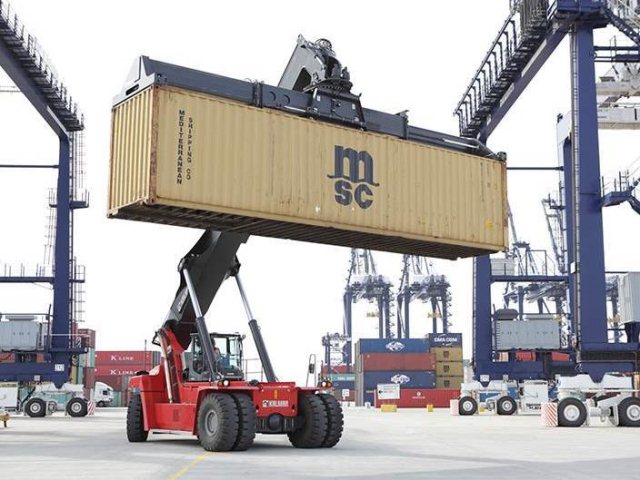
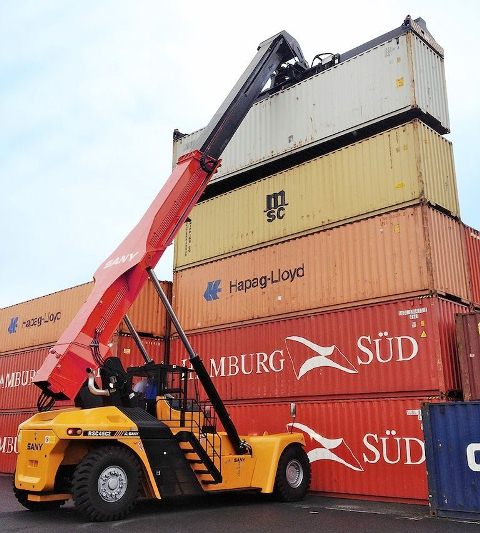
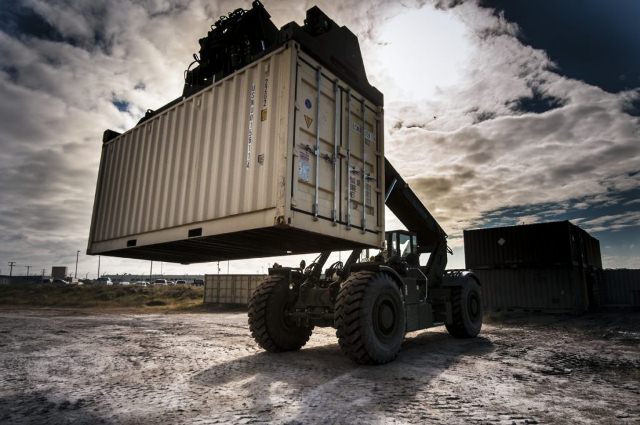
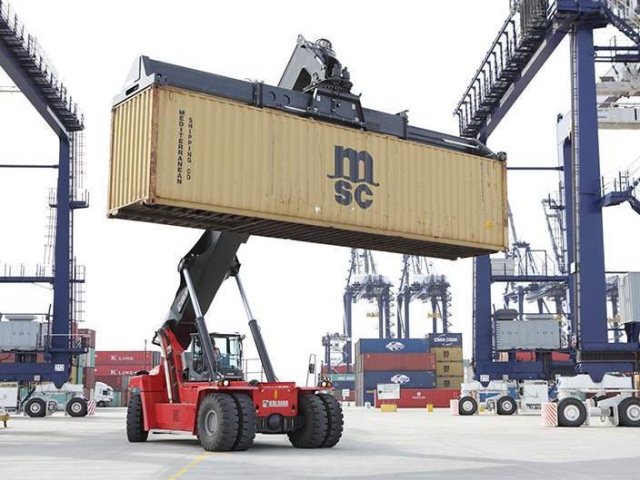
Reachstacker: the reach stacker can lift, load, move and lower containers in a fast, efficient and unique way.

Container Reach Stacker

Reach Stacker Crane

HOW DOES IT WORK:

With large storage capacity and a great capacity of stacking, the reach stacker is designed to work between rows easily and to store containers in blocks of 4 deep.

The newer reach stackers come with smart mechanisms to improve efficiency. For example, the hydraulic load sensing system ensures that the hydraulic lift system and the engine are available with sufficient power.

However, the reach stacker includes many other innovative systems with a single goal: to improve profitability by offering higher torque at lower rotation speeds and to provide a comfortable and safe environment for operators.

The reach stackers are generally compared to the forklifts, but they have many differences. Forklifts are used for the most frequent loading and unloading and do not offer the same capacity as reach stackers

Container Stacker

Reachstackers

TECHNICAL INFORMATION:

The container crane or is also very common the English term reach stacker due to its weight of approx. 37-85 tons cannot be used on public streets.

In general, the reach stacker container cranes are used for the handling of empty or full containers of 20′- 40’with a weight of 5 – 45 tons.

The main sites where reach stacker container cranes are used are port terminals, container depots and are also used in the intermodal sector.

Load Capacity

Reachstacker or container cranes at the end work as a crane with the accessory the spreader that has the dimensions to raise containers 20′ but can also be extended to 40′ to raise equally 40′ containers be empty or full.

There are also reach stacker cranes with an accessory called piggyback that are four arms mounted on the spreader with which you can also raise a trailer with the container and put it on a train.

For example, reach stacker machines can stack full containers in the first row with a weight of approx. 42-45 tons 5 containers high, in the second row they can stack even 25-30 tons and in the 3rd row, they can still go up 20 tons.

Container Stacker

Cargo Handling

APPLICATIONS:

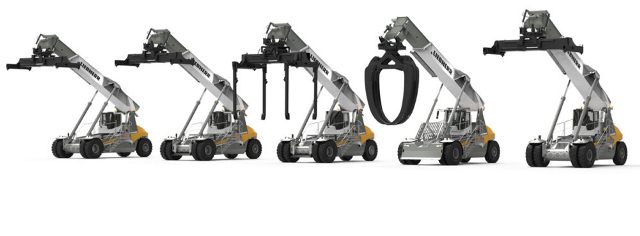
The machine offers different extensible rigs for each job. The wide range of products for reach stacker offers possibilities for different fields of handling besides containers.

In addition to container handling, the transport of bulk goods, handling of wood, loading of loose material with hooks and pulleys are also included.

Container Stacker

Reach stacker manufacturers

Manufacturing Companies

  • Kalmar
  • Fantuzzi
  • CVS Ferrari
  • Linde
  • Liebherr
  • Terex
  • Konecranes

The most well-known manufacturers are the Swedish companies Kalmar Industries, SMV Konecranes, the Italian brands Fantuzzi, CVS Ferrari, the German brands Linde, Liebherr producers of a single reach stacker where the mast has the shape of a banana, besides The Hyster brand, PPM Terex, is still on the market. For many small terminals that do not have the economic means to buy a portal crane, the reach stacker machines are a good alternative

Container Stacker

Konecranes reach stacker

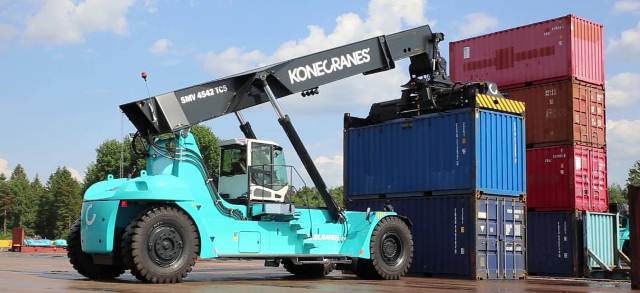
Konecranes Liftace Reach Stackers consist of the well-known TFC models and the R models launched in April 2015 under the Liftace name. Built on engineering tradition and expertise, these reach stackers are dependable workhorses, simple to maintain, robust and good value for money.

Thanks to a high degree of standardization, terminal operators benefit from short delivery lead times – making Konecranes Liftace Reach Stackers available, serviceable and durable.

Konecranes Liftace Reach Stackers are of a high standard and specially designed to work with modern control systems and drive technology. Engines comply with emission standards EU Stage IIIA (EPA Tier 3) and EU Stage IV (EPA Tier 4 final).

Versatile, reliable and powerful Whether for use in port, railway or intermodal terminals, in container stackyards or any other area of logistics, Konecranes Liftace Reach Stackers are known for good quality, robust design and reliability in operation when handling containers or heavy general cargo.

With the durable Konecranes Liftace Spreaders, 20’ to 40’ containers are stacked up to 1-over-6 high-cube containers high.

To handle general cargo, the machines can be fitted with dedicated lifting gear. Konecranes Liftace Reach Stackers meet the challenges of professional cargo handling with high loading capacities of 45 t and high working speeds while providing simple and safe operation.

Konecranes Liftace Reach Stackers at a glance

  • Productive – working speeds for efficient handling rates
  • Economical – low fuel consumption and predictable maintenance cost
  • Simple – operation and maintenance
  • Proven technology – agile, robust and reliable
  • Safe – reliable monitoring and excellent visibility
Container Stacker

Ferrari Reach Stacker

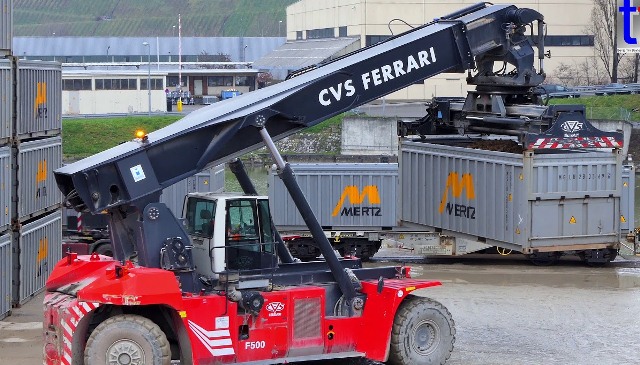
CVS FERRARI F500 Reach Stackers are true engineering masterpieces conceived to massively increase the value generation for the user by sensibly extending the equipment service life and drastically reduce operating cost, besides introducing an unprecedented control of the unit and its systems.

CVS FERRARI is proud to introduce its F500 Reach stacker series:

  • a new breed of machines that will forever change the standards of performance and return on investment of the industry.
  • Structures certified to withstand endless duty cycles, ultimate energy-saving solutions, state of the art onboard intelligence, maintenance costs killing, design and uncompromised quality of components.
  • Nothing else like these trucks ever existed before.
  • Discover the unmatched safety of these unique products and the many innovative driver and caretakers “job easing” solutions they contain.
  • Meet the strength of mechatronics and the power of integrated data processing applied to lift equipment.
Container Stacker

Liebherr reach stacker

Functional handling solution for any terminal

Liebherr reachstacker profit from many years of development experience in the maritime sector. A variety of highly efficient innovations, a comfortable and ergonomic design as well as impressive performance distinguish the Liebherr reachstacker. In this way, it is a versatile handling solution that can be deployed for any kind of terminal.

Hydrostatic drive: The tried-and-tested hydrostatic drive enables continuous acceleration for enhanced driving comfort. It also ensures energy recovery for increased efficiency.

Ergonomic cab: The comfortable cab with its ergonomic design eases the burden on the operator. An optimal view with the high proportion of glass in the cab increases safety in the terminal.

Wheel rims: The wheel rims ensure reduced maintenance costs and increased safety. The simple principle of these rims makes assembly quick and safe. This concept is unique in the market.

Liebherr LRS 645

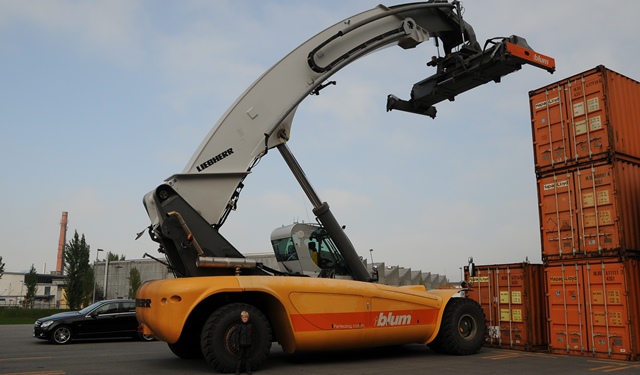
The “award” for the most distinctive feature of a Liebherr Reachstackers certainly goes to the uniquely curved, telescopic boom for unrivaled range and unbeatable stacking capabilities.

This makes a Liebherr reachstacker not only a suitable instrument for today’s handling requirements but also an investment in the future!

The new dimension of the Container handling With the departure from the straight boom concept, direct access to containers in the second and third row is possible without shifting in the foremost stack. Such an innovative handling concept increases the efficiency of container terminals all over the world in one fell swoop.

  • Inspired by nature, designed by Liebherr
  • Due to its unconventional design, the curved, telescopic boom has been given the name “banana boom” shortly after its launch.
  • The comparison fits: Like the banana, the Liebherr reach stacker offers a wealth of vitamins, meaning useful resources for its users.
  • For example, in barge handling, it is possible to load and unload containers below the floor – even without special equipment retrofitting.
Container Stacker

Reachstacker Kalmar

The Kalmar DRG100 is the only reach stacker for empty and semi-laden container handling on the market that allows you to rotate, lift at a 45° angle, drive forwards or reverse with a full-tilt stroke, reach 6 or 8 containers high, work in second or third row and even do a unique 1,000 mm side shift and rotate the container so the door is on the right side.

The Kalmar DRG100 offers full flexibility with full rotation, large side shift and tilt to allow you to both transport and perform services, maintenance, repairs and cleaning with maximum efficiency. Low and narrow workshop doors don’t present a problem. Just turn the container lengthwise and drive inside.

Add another dimension to empty and semi-laden container handling with a reachstacker containers that can be transported at full width, turned 45° or lengthwise at 90°, making it possible to deliver “end-on” into and through low and narrow workshop doors, port sheds and other tight openings.

Operators don’t have to pick up containers right-angled and can increase efficiency and handling speed during yard stacking, loading of road trucks or container repairs.

Eco cranes

Increasing fuel costs and tougher emissions standards means you need a solution that is leaner and greener, while still maintaining the highest levels of operational productivity. The Kalmar Eco Reachstacker provides you with an eco-efficient solution that is guaranteed to use significantly less fuel than others reach stackers.

Container handling

With Kalmar’s reach stackers for container handling, you benefit from superior usability, comfort, and safety combined with low operating and maintenance costs. Terminal operators around the world rely on Kalmar equipment for its precision, the low total cost of ownership and excellent environmental performance.

Intermodal handling

Kalmar reach stackers for intermodal handling give you the power, speed, and precision you need for efficient operations. Our flexible equipment solutions are easily adapted to a wide variety of handling tasks common in modern intermodal terminals.

Container Stacker

Forklift Reach Stacker

The debate on: is a reachstacker better suited to handling full containers in the yard than a forklift? The operator crane finds there are arguments for either solution.

The short answer is that both machines have their place but there are at least four inter-related factors to take into account when deciding:

  • running cost and return on investment (see box)
  • the scale and nature of the terminal operation
  • the very different handling characteristics of the two machines
  • the cultural factor, (traditional practices in certain parts of the world)

Weighing up these factors, separately and collectively, should lead to the right choice.

Reach stacker vs Forklift

What’s it for?

The scale and cargo profile of the terminal may decide the type of machine at the outset.

Operator crane says “Many smaller terminals around the world handle a mix of cargoes: containers, steel coils, stone and so on. So they need a machine that is flexible.

Reachstacking is more suitable where you have 20-25% container handling in intermodal situations.

But the reach stacker is only made for one purpose: to handle containers.

“So operator crane, for example, has at least 10 big forklifts for container handling but they also have a couple of reach stackers for intermodal handling of containers onto rail wagon and truck.

The port has done much analysis and concluded that for them it is better to drive with a masted forklift because it is quicker, safer and the load is a little closer to machine and driver. That is their decision.”

He adds that in cases where the machine is only driven for perhaps 1,000 to 1,500 hours a year, to handle a mix of cargoes, then its flexibility – with the options of fitting a container spreader or quick release forks – will favor the masted forklift.

“It is so easy to say we produce both forklift and reach stackers so what would you like to have?” says operator crane. Actually, it is very important to make an analysis with each customer, what is the intent or purpose of buying the machine.”

Reach stacker driver

How does it drive?

Then comes the question of whether the forklift’s arguably more agile handling characteristics make it a better choice.

Furthermore, the container is pretty well fixed to the dedicated attachment. For a driver, this makes the handling operation very straightforward and reliable.

Compare this with a reach stacker and you will notice that one of the most difficult movements is the straight vertical lift, where the driver must operate the controls such that boom tilt and extension move at a certain pace. When stacking containers at an angle the whole operation becomes even more complex.

“Nevertheless, ” he concludes, “the reach stacker is excellent for reaching into a stack. If this is carefully thought out and all terminal logistics play ball, a reach stacker (with sufficient capacity) can boost terminal storage capacity. Plus the reach stacker is a solution for low overhead situations and/or regular transport over the road.”

Reachstacker vs forklift
characteristics of the two machine types.

“Reachstackers have become popular, and in certain circumstances enable increased container storage. On the other hand, ” he argues, “increased storage density when using reach stackers brings an inherent change in ‘selectivity’ which could result in extra handling and reduced throughput of containers when compared to the use of lift trucks.

“Available space is a limiting factor in most locations and mobile handling equipment that enables the highest storage/density will be favored. Increasing storage can be achieved by stacking higher and/or deeper (i. e. in a 2nd row). Both methods do reduce the accessibility (‘selectivity’) of containers.”

The operator crane goes on to illustrate his arguments taking an average terminal and comparing reach stacker and lift truck performance. “As expected reach stackers achieve the higher storage, though perhaps disappointing at just 19 % over the lift trucks. The other side of the equation should not be overlooked either: namely that by adding a second row of containers the accessibility of containers, i. e. the ‘selectivity’ is significantly altered.

“On maneuverability lift trucks commonly work in 15 meter wide aisles, stacking a mix of 20ft and 40ft loaded containers. There is sufficient clearance for the lift truck and also lorries can pass in front, without a need for the incoming lorry to (partly) drive underneath a lifted container.”

Operator forklift

In conclusion, the challenge for a terminal operator is to establish what is the workable mix of the two key variables (storage and selectivity) and let this “total picture” determine the choice of mobile handling equipment.

“Investment in reach stackers can pay dividends by increasing terminals’ storage, while lift trucks may well be faster in the turnaround of containers and thus satisfy your, and your customer’s needs better.”

IT’S ABOUT CULTURE TOO Speaking of Kalmar’s own experience, product manager, whose portfolio includes heavy Forklifts, says: “It’s really only in North America and Australasia that they prefer forklifts to reach stackers.

North America has a rather conservative attitude towards change.

Also, their labor unions are opposed to putting in reach stackers in place of forklifts. Furthermore, over the years they have made huge investments and have built up huge fleets of top-picks as they call them.

They have arranged the layout of the yards to suit top-picks. All operator training is done on top-picks. And all this together makes it very hard to change unless you open a brand new site. So they are locked into a handling solution and it would be very costly for them to change. In Australiasia they also have a long tradition of using forklifts.”

“We don’t try to push the reach stacker onto these customers because we can see that they have very good schemes for operating with forklifts. The productivity is very high and they would not gain too much by changing over to reach stackers”.

Reach stacker specification

Reach stackers and ISO container handlers are material handling vehicles that transport intermodal containers. They provide short-distance transport for containers transferred to and from fleets, vessels, or railcars at ports, railyards, or other storage terminals.

Intermodal containers are manufactured according to the International Organization for Standardization (ISO) specifications and are also referred to as ISO containers. ISO containers meet size, strength, and durability requirements as well as dimensional standards that allow for increased storage capacity and logistics optimization. More information about ISO containers can be found in Engineering360’s ISO container specification guide.

The terms reach stackers and ISO container handlers generally differentiate two distinct but closely-related types of industrial trucks.

Reach stackers

Reach stackers have a telescoping boom that allows for an extended horizontal reach. These booms can be equipped with attachments that best interface with the ISO containers being transported. They are preferable to ISO container handlers when storage capacity needs to be maximized. Reach stackers offer the ability to stack containers multiple rows deep.

ISO container handlers

ISO container handlers have a forklift attachment that only extends vertically. They are more versatile than reach stackers since they can lift and transport a wider range of containers and cargo. Container handlers also offer quicker loading and greater selectivity. The vehicle’s lack of horizontal reach prevents it from stacking more than two rows deep. This limits the number of “dead picks” (i.e. containers with restricted access). Loaded container handlers may be further classified as empty container handlers or laden container handlers.

  • Laden container handlers are slightly larger with an increased lifting capacity suitable for lifting and transporting fully-loaded ISO containers.
  • Empty container handlers are smaller with a lower capacity rating and are only suitable for the transport of empty ISO containers.

Reach stacker design

Reach stackers are specified by their lifting capacity, wheelbase, reach, and turning radius.

  • Lifting capacity is the maximum force or load supported by the lift, cart, truck, or dolly.
  • The wheelbase is the distance between the front and rear axles of a vehicle.
  • Reach is the difference between the fully-retracted and fully-extended positions of the lift or boom.
  • Turning radius is the radius of the smallest circle the vehicle is capable of making.

What is a reach stacker?

what is a reach stacker?

A reach stacker is a vehicle used for handling intermodal cargo containers in small terminals or medium-sized ports. Reach stackers are able to transport a container short distances very quickly and pile them in various rows depending on its access.

What Licence do I need to drive a reach stacker?

To operate a reach stacker you need to have an RS high-risk work license (HRW). The reach stacker license covers powered reach stackers (with a capacity of three tonnes or more) that have an attachment for lifting, lowering, moving and traveling with a shipping container.

What is a container handler?

The Loaded Container Handler is the king of the port. Popular in ports, terminals and shipping yards, the Loaded Container Handler will provide fast lifting cycles, high stacking, and reduced freight costs.

How tall are container cranes?

Megaships can be up to 1,300 feet long and carry nearly 23,000 cargo containers. Containers are stacked up to 12-high above deck on the largest vessels. Taller cranes are required to reach the top of the stacks.

What is Port Equipment?

The fast and efficient transfer of cargo between ships and land-based modes of transport is the goal of ports throughout the world. The TTS range of port equipment offers a number of flexible options for access and for the management of traffic when loading or unloading ships.

How do container ports work?

A container port or container terminal is a facility where cargo containers are transshipped between different transport vehicles, for onward transportation. Inland container ports tend to be located in or near major cities, with good rail connections to maritime container ports.

The most read

More on this story

Ship to Shore Crane

The gantry crane for containers: panamax, post panamax, operator, uses, characteristics, ports, docks, transport, maneuvers, parts, container

RTG Crane

RTG CRANE: Rubber Tyred Gantry Crane, Container Terminal, what is an rtg crane? RTG crane parts name, RTG crane manufacturers, specification.

RTG Crane

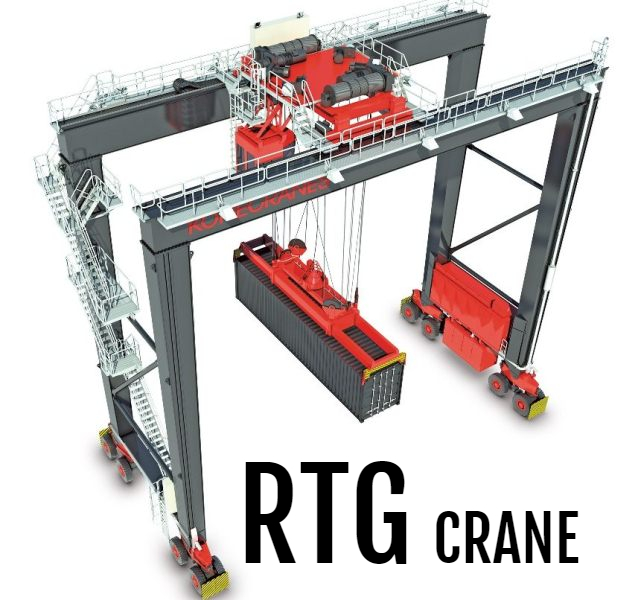
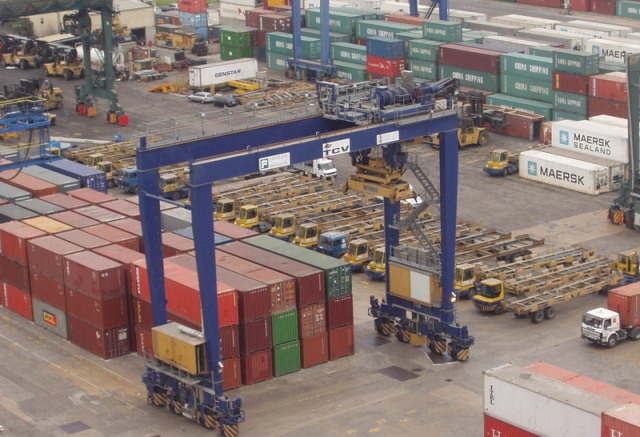
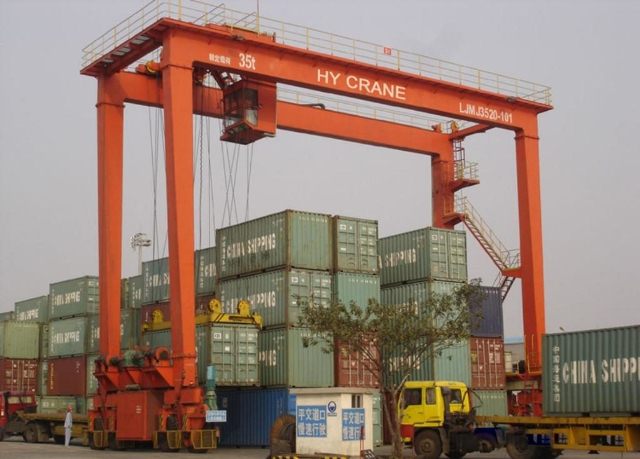
A rubber tyred gantry crane (RTG crane) is a mobile gantry crane used in intermodal operations to ground or stack containers.

Inbound containers are stored for future pickup by drayage trucks, and outbound are stored for future loading onto vessels.

RTGs typically straddle multiple lanes, with one lane reserved for container transfers.

Advantages: its mobility gives a rubber tyred gantry crane wide appliance

RTG crane

Rubber Tyred Gantry Crane

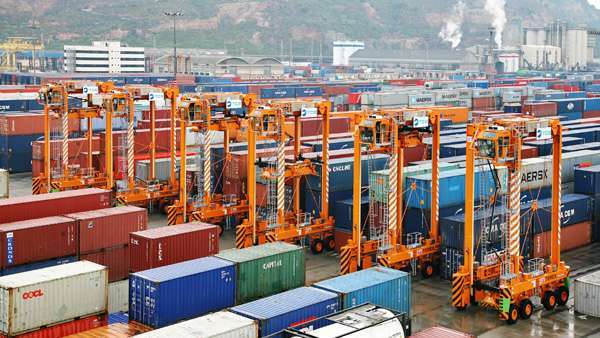
Tire container cranes (RTG) can be supplied with wingspan sizes of between five and eight containers (plus truck track width) and lift heights from “1 over 3” to “1 over 6” containers.

RTG cranes offer extraordinary productivity and reliability when stacking containers.

The RTG crane has a steel structure with high rigidity and stability that allows the containers to be handled in a very precise way and without shaking in their movement, even at high handling speeds.

This machine responds perfectly to the high level of quality demand. Its ease of maintenance results in a minimization of downtime, which in turn increases the performance of each RTG unit. It has a very precise control with the simultaneous movement of the different drives, so it is not necessary to mount a cable pulley crossbar or a lateral displacement system.

It can be supplied in an 8-wheel or 16-wheel configuration with numerous options to increase productivity, from DGPS and automatic steering to battery profiling and automation.

RTG crane

Container Terminal

Uses in Container terminal: To reduce the loading and unloading times of large container ships, the container storage area (container depot) needs to be handled in the best and most efficient way possible.

Depending on the degree of automation in modern container terminals, this can be done by means of two types of cranes for the handling of containers: gantry cranes on tires (RTG, for its acronym in English) or cranes gantry on rails (RMG).

RTG crane

RTG container crane

RTG equipment

Although the task of both types of cranes is very similar – handling the entrance and exit of containers and placing them in blocks or piles – the technical and functional requirements for these types of machines are considerably different.

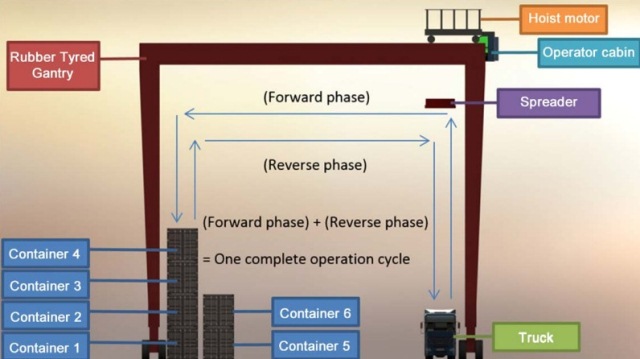
RTG cranes are operated by onboard drivers. The main function of these cranes is to unload containers from trucks or terminal tractors and load them in the container block or vice versa.

In general, RTGs have an extension equivalent to 5-8 containers wide and 3-5 tall. Standard RTG cranes are equipped with diesel engines to provide the power needed to move and lift loads.

RTG crane

The transmission of energy and data to the truck of the RTG crane is provided by festoon cable systems or electric cable chains.

The RMG cranes are fully electrified. The main power supply and data transmission are handled by highly dynamic and specialized motorized cable reels.

RMG cranes are generally wider and taller than RTG cranes. Due to the automation of functions and the additional control equipment on board, the requirements for data communication to an RMG crane are much greater.

The transmission of energy and data to the truck of the RMG crane is carried out by highly resistant electric cable drag chain systems. The fully automated RMG cranes are known as automatic stacking cranes, or ASC, for its acronym in English.

RTG crane parts name

Rubber tyre gantry crane overview:

  • steel frame
  • hoisting mechanism
  • minimum slewing mechanism and
  • spreader anti-shaking mechanism
  • crane travel mechanism
  • turning mechanism
  • trolley traverse mechanism
  • container spreader
  • diesel generating sets
  • electrical equipment and
  • other accessory equipment for safety.
  • Inverter, PLC and CMMS(fault monitor system)

RTG crane parts

  • High tensile structural steel: Reduced weight leading to savings in civil infrastructure costs.
  • Self-powered trolley: Ensures precise positioning.
  • Simultaneous motion: 1,2 & 3. Simultaneous motion of all drives for increased productivity
  • Performance and safety: Anti-collision, gantry align and optional DGPS for improved safety and productivity
  • Ergonomic driver’s cabin:
    • Designed with driver comfort and productivity in mind.
    • Reduced fatigue.
  • Modular drive systems: “Plug-in” modular construction of main drives assists fault finding and results in reduced maintenance costs.
  • Choice of power options: Depending on operational requirements, choose from electric, diesel-electric, dual or variable speed diesel, or hybrid.
  • Unique hoist system
    • No requirement for a head-block.
    • Reduced weight and energy consumption.
    • No additional motors or ropes for positioning of spreader leading to reduced maintenance costs.
    • Eight rope reeving ensures no sway or skew.
    • Precise spreader positioning for increased efficiency
RTG crane specification

RTG crane specification

Features and advantages of RTG crane

  • Advanced technology: Advanced design, manufacturing technology, and test detection system, etc.
  • Comfortable ride. Nice-round view, industrial moldings control panel, high-resolution electronic monitor, centralized operation handle, warm-cold air conditioner, sound-absorbing, and de-noising, etc.
  • Safe and efficient. RTG crane is equipped with overload protection, diesel engine over-speed protection, water higher temperature indicator, and lower oil pressure indicator devices, and wind speed indicator, typhoon anchor device, emergency stop button, and each mechanism limit switch and indicator, etc.
  • Energy-saving and environment protecting. On yard turning, the RTG crane is driven by low power engine generators, saving energy and meet the demand for environmental protection.

RTG crane manufacturers

  • Konecranes
  • Liebherr
  • Kalmar
  • Sany

RTG Konecranes

Konecranes Rubber Tired Gantry (RTG) cranes and Konecranes Noell RTGs that make container handling safer, more productive and more reliable.

The Konecranes RTG has an intelligent steel structure, Active Load Control (ALC) technology and a smarter cabin, making this RTG the most productive and reliable in the world

The Konecranes Automated RTG (ARTG) system is available for both greenfield and brownfield container terminals.

RTG crane

RTG Liebherr

Liebherr technology powering productivity. Liebherr cranes are engineered with efficiency in mind. Each component has been specifically designed for maximum productivity, reliability, and quality. The result is a crane delivering excellent productivity, with exceptional lifetime costs and industry-leading longevity.

RTG Kalmar

The Kalmar RTG cranes offer a highly efficient and flexible platform with four power source alternatives, industry-leading performance levels and state of the art features that can help you reduce RTG fuel consumption from 17% to 100% compared to most other RTGs.

The features include e.g. electro-mechanical anti-sway system, SmartProfile stack anti-collision system, SmartView camera system and a completely new intuitive graphical user interface (GUI) for the driver.

Each of the Kalmar RTGs can be designed to meet your business requirements. We can build your RTG to the height and width you specify, with an extensive choice of highly efficient power sources and cabin options. Kalmar RTGs are available up to 10+1 wide, giving you high stacking density and efficient land utilization.

RTG crane

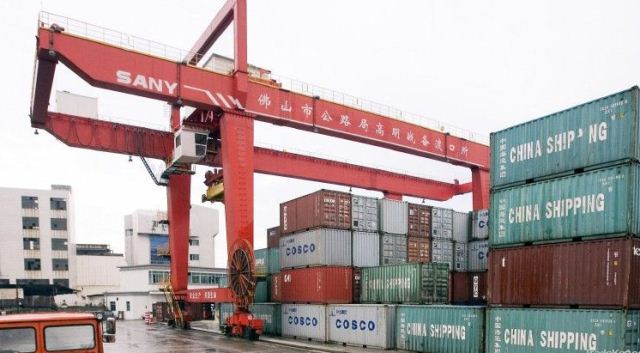
RTG Sany

SANY RTG is customized to meet your unique demand at ports and yards, available in the standard model and tailored models with multiple choices of hoisting height, spans, and specifications. Modular design, top manufacturing, leading technologies, and rigorous tests give you the best RTG crane in the shortest period.

RTG crane

Rubber Tyred Gantry

What is RTG crane?

A rubber tyred gantry crane is a mobile gantry crane used in intermodal operations to ground or stack containers. Inbound containers are stored for future pickup by drayage trucks, and outbound are stored for future loading onto vessels.

What is the load capacity of the RTG crane?

RTG crane is a mobile rubber tyred Gantry Crane, often powered by diesel generator systems or other power supply equipment, which is an excellent solution for medium-sized container handling. The lifting capacity of RTG crane is 20 to 45 ton and the working class is A6.

What is a gantry operator?

A gantry crane is a crane built atop a gantry, which is a structure used to straddle an object or workspace. The distinction most often drawn between the two is that with gantry cranes, the entire structure (including gantry) is usually wheeled (often on rails).

How much do gantry crane operators make?

The Bureau of Labor Statistics reports that the average annual income of crane and tower crane operators was $50,040 in May 2011. This annual income figure is based on an average wage of $24.06 an hour and 2,080 hours of work per year.

The most read

More on this story

Reach Stacker Crane

Container reach stacker, reachstackers, kalmar reachstacker, Container Handler, What is a reach stacker?

Ship to Shore Crane

The gantry crane for containers: panamax, post panamax, operator, uses, characteristics, ports, docks, transport, maneuvers, parts, container

Self Erecting Crane Rental

Self-Erecting Crane: Self-erecting tower cranes have long been commonplace in Europe. Their versatility and reliability have made them a mainstay on the European Jobsite. That same versatility and reliability are now practical for the Canadian market. Roblin Crane Services can provide you with self-erecting cranes for all your lifting needs.

Self Erecting Crane

Self erecting cranes

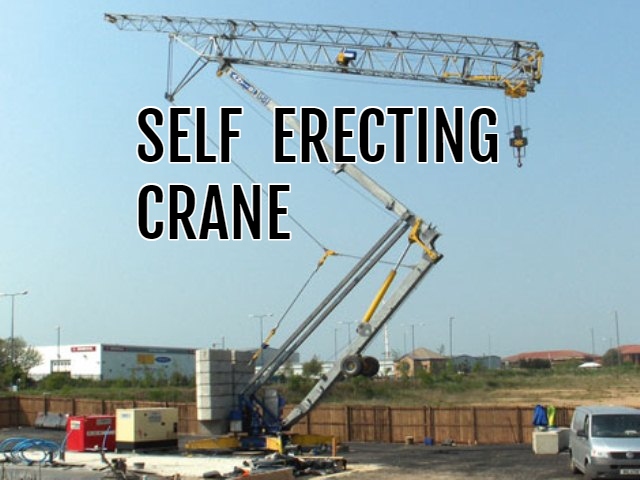
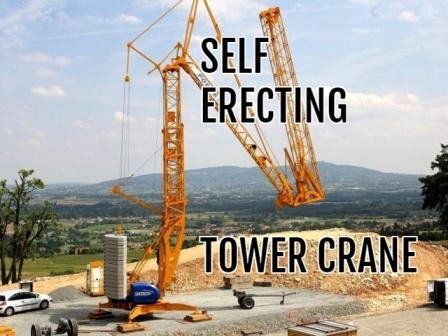
Self Erecting Crane: What Is a Self erecting Tower Crane?

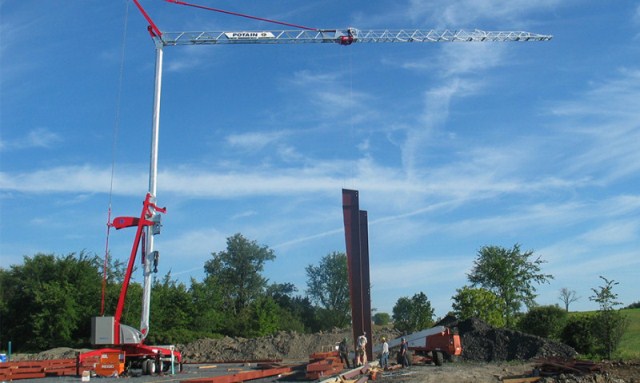
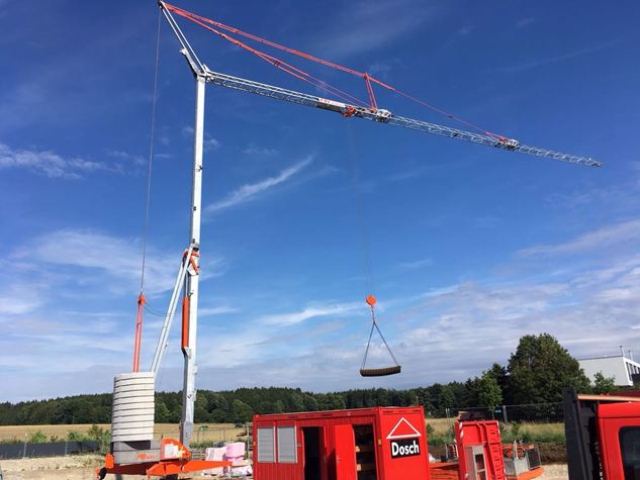
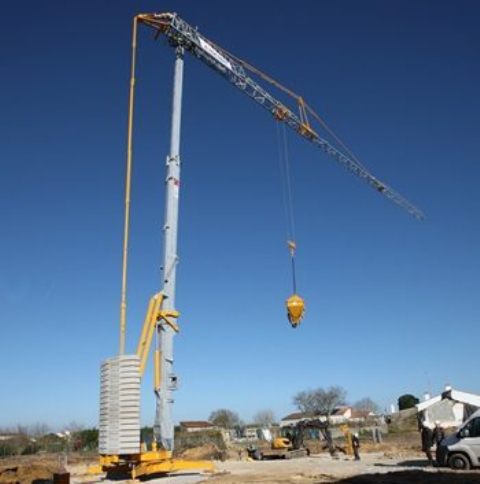
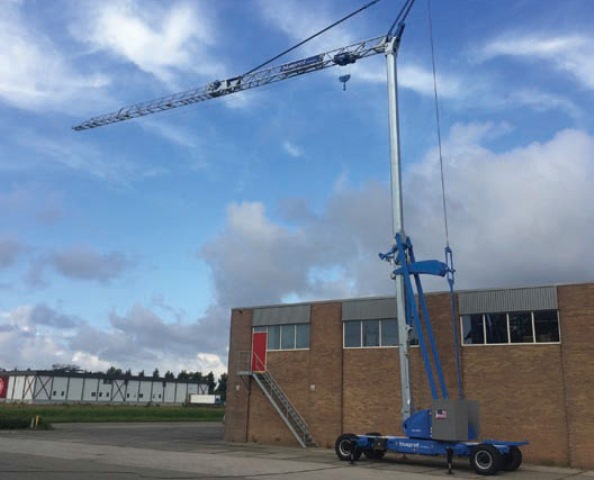
A self-erector is a tower crane that is designed to be easily and rapidly transported and erected without the assistance of a large hydraulic crane.

A range of models with varying capacities exist. In the hierarchy of cranes, their capacities are below those of larger “city” tower cranes and are viable for residential and commercial projects six stories and under.

A self erecting tower crane “folds up” upon itself — generally in four or more sections — when being readied for transport.

The tower typically folds into two sections and the jib, depending on its length, will fold into two or more sections. When folded up, the crane’s size is such that it is ready and legal for transport, either on its own mounted highway axles or via flatbed transport.

From the time crane erection begins until the crane is fully unfolded is typically between fifteen and thirty minutes.

Calibration and testing must be done once the crane is erected and prior to use, but the overall duration from the time erection begins until the crane can be in use is a matter of hours — typically two to three.

Smaller self-erectors hold and are transported with their full requirement of ballast, or counterweight permanently attached. Most, beyond the smallest, have additional ballast that is transported and set in place separately. Cranes that have their full requirement of ballast permanently attached are referred to as “self-contained”.

Self Erecting Crane

Self erecting crane specifications

Self erecting Crane Features

  • operable on tight-boundaries job sites and impassable job sites where other material handlers (like all-terrain forklifts or telehandlers) cannot perform
  • excellent reach (from 80 feet and up, depending on model)
  • minimal erection and set-up time
  • effective material lifting capacity (tip loads from 1,000 pounds and up, and maximum loads from 2,000 pounds and up, depending on crane model)
  • useful clearance (hook heights from 55 feet and up, depending on crane model)
  • minimal Jobsite “footprint” — between a 10-foot x 10-foot footprint and 14-foot x 14 foot, depending on crane model
  • quiet operation (they run on electricity)
  • operates on 480v three-phase electricity
  • stationary once erected
  • environmentally friendly
  • easy to operate, with a short learning curve
  • radio remote control
  • minimal maintenance
  • virtually no downtime
  • safe operating techniques
  • very affordable to rent, and operate
  • high-value retention and long useful life
Self Erecting Crane

Construction crane

Self erecting Crane Benefits:

The ultimate benefit of self erecting crane usage is, quite simply, value — savings (in construction costs resulting from using the crane) that outweigh the cost (to rent and operate the crane).

Crane users generally report a reduction in manual labor hours equivalent to four or more persons. They also report shortened job completion times — primarily during the framing cycle — of 15% or more, and reduced need for multiple pieces of material handling equipment. And these cranes are much less impactful to the environment as well.

The benefits that drive these results to follow, and are accomplished by the crane features and uses described previously.

Self Erecting Crane

Self erecting crane hire

Self Erecting Crane: Improved Efficiency and Productivity.

  • for crews that rely on their carpenters to perform the requisite manual labor to get their jobs done, a crane can remove much of the manual labor performed by carpenters freeing them up to focus on what you pay them to do — carpentry; the result is an improvement in productivity that also improves carpenters’ morale and leaves them much fresher at the end of a long day
  • use of dedicated staging areas results in a more efficient assembly of construction components (wall sections, roof sections, built-up beams, etc.); materials required in the staging area can be placed in the staging area when needed, and, since navigation of other material handling equipment (like telehandlers) is not necessary, the staging areas do not continually have to be moved or
    disturbed to allow passable access for that equipment
  • crane does not require a dedicated operator; rigging and operating can be done by a single person and, with the use of the remote control, the operator can move with the load, reducing the need for someone to “guide” the operator
  • the single-person operation for many tasks that otherwise would
    require multiple people (lifting and setting trusses, lifting and
    setting rafters, etc.)
  • the minimal footprint of crane leaves much more room on Jobsite for
    material storage, staging areas, etc.
  • materials do not need to be handled or moved multiple times to make way for mobile equipment; material can be initially delivered to a “receiving” location and then dispersed a single time to the location of need when needed — the right material, the right quantity, when needed, delivered once
Self Erecting Crane

Tower crane uses

Self erecting Crane Uses:

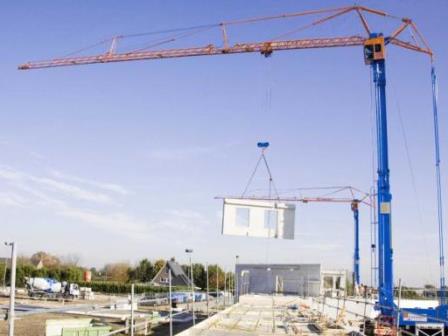
Self erecting crane has many users on the Jobsite. These cranes represent a new and different way to handle Jobsite material handling and hoisting tasks. Therefore, you will find new and different uses for these cranes beyond your customary techniques. In fact, our customers come up with new uses for these cranes on nearly a daily basis. Here is a sample of uses:

  • placing Jobsite material (lumber, engineered floor joists, trusses, masonry, etc.)
  • raising complete wall sections (first level, lower level, upper levels, interior, exterior, etc.)
  • hoisting, positioning, and setting trusses and/or roof rafters
  • after you assign dedicated staging/assembly areas, the crane can be used to place materials into those areas, and then remove and position assemblies in place; assemblies include exterior wall sections, interior wall sections, roof sections, gables, dormers, built-up wood, and microlaminated LVL beam sections, etc.
  • setting of steel beams, wood, and micro-laminated LVL beams, & interior structural and decorative timbers
  • picking up trash receptacles and dumping them directly into your Jobsite dumpster
  • placement of roof sheeting
  • placement of roofing shingle bundles
  • positioning workers, via a “man basket”, to set windows, install siding, install exterior trim, paint, install and/or clean gutters, clean windows, etc.
  • access hard-to-reach areas to place or work on assemblies like chimney tops, cupolas, high eaves, gutters, etc.
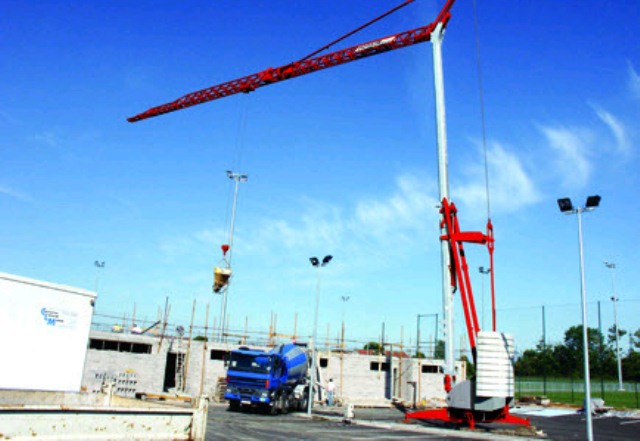
  • placement of concrete via a concrete skip

This is just a sampling of these cranes’ uses. You will continually innovate and find new uses that improve job site efficiency and safety.

Self Erecting Crane

Self erecting tower crane for sale

“Once erected, these machines take up a very small footprint, much less than a mobile crane”, “They cover a large area of a project from one location, and don’t require an expensive concrete foundation.”

But first, it’s important to break down the mechanics of a self-erecting tower crane.

“Self-erecting tower cranes swing from the bottom, hence they are bottom slewing tower cranes”. “They are also set up on outriggers, so instead of using a concrete foundation, they are set up much like a mobile crane does, and you can adjust the height of the outriggers to get the crane perfectly level.

Another big difference is that there is no counter jib. So with these cranes, the jibs are held up by the suspension going up the rear of the tower instead of a large counter jib sticking out the back.”

These cranes also typically use wireless remote controls, or wired remote controls, depending on the model. But one of the most impressive attributes of a self-erecting tower crane is it folds up into the size of a semi-trailer, making it easy to transport going down the road.

Self-erecting tower cranes are safer and more cost-effective when compared to other crane and material handling options.

Self erecting tower crane rental

Estimated that the machine population in the U.S. is sitting between 500 and 600, compared to 15,000 self-erecting tower cranes in Germany alone. But while self-erecting tower cranes are not as heavily utilized in North America as they are in Europe, the market is improving as more users see their advantages on the Jobsite. With significant cost savings to customers, a self-erecting tower crane provides a strong return on investment.

Ranging from smaller units (approximately 80-foot radius) to extra-large (around 160-foot radius), the versatility of self-erectors plays a huge role in their benefits. Small models often have self-contained counterweights, and axle sets are possible with the smaller range, making fast erection and onsite moves possible. Small self-erectors are ideal for two- to three-story apartments with multiple buildings.

Mini self erecting tower crane

Small self-erecting tower cranes are easy to train operators to erect and dismantle, and in most cases are cheaper and safer than a boom truck. Estimated that a two-month-long project costs around $55,000 with a boom truck, while an 85-foot self-erecting tower crane with a full-time operator costs only $25,000, with 75 percent of this cost going to the operator. The crane only ends up costing as little as $30 per hour over this period of time.

Counterweight jib crane

A medium-sized self-erecting tower crane comes with counterweights and the axle set, but it is not permanently attached to the axle set. Medium-sized units can be erected in just two hours with three men and two semi-trucks. They have a radius of up to about 130 feet. These machines are ideal for three- to six-story wood-framed structures. They can be moved on the Jobsite in three to four hours. For this size range, Hadland provided the example of a self-erecting tower crane in comparison to a forklift.

Tower crane cost

Self Erecting Crane : Decreased Equipment and Labour Costs

  • a single self erecting crane eliminates the need for multiple pieces of material handling equipment like mobile cranes, telehandlers or all-terrain forklifts, boom trucks, etc.
  • reduced fuel costs to operate material handling equipment
  • can be used on job sites with tight boundaries or impassable terrain where the only real material handling option typically is manual labor
  • a crane is a “model employee”:
    • it is on-time to work
    • it doesn’t talk back
    • it is reliable and dependable
    • it never gets tired
    • it won’t ever file a workers’ comp claim
  • for crews that employ dedicated laborers, the many cranes use (trash removal, material handling, and lifting, etc.) reduce much of the need for laborers
  • the ability to place materials and assemblies anywhere on the Jobsite, including inside the structure (and not just at the perimeter, a limitation of telehandlers for instance), reduces the need for manual labor to perform that task
  • quick, easy setup
  • jobsite safety is improved due to the decreased need for manual tasks, also drastically reducing workers’ comp claims
  • Environmental Benefits
    • operate on electricity from a generator
    • does not leave deep ruts or disturb surrounding terrain as a result of machinery navigating the job site.
Self Erecting Crane

Self erecting Crane manufacturers

Tower crane manufacturers – Self Erecting Crane manufacturers:

  • Liebherr self-erecting tower crane
  • Terex self-erecting tower cranes
  • Potain self-erecting crane
  • Manitowoc tower cranes
How much does it cost to hire a tower crane?

A typical monthly fee for a 150-foot-tall tower crane is approximately $15,000, with an additional charge to rent the climbing frame and extra mast sections.

How much does a self erecting crane operator make?

A Crane or Tower Operator will usually earn a wage of around 40000 and 60000 based on education and experience. Crane and Tower Operators usually receive an average pay level of Fifty Thousand One Hundred dollars on a yearly basis.

How does a tower crane work?
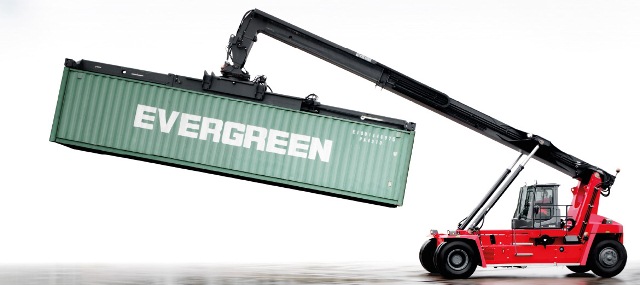
Concrete and steel beams are much too heavy for construction workers to carry upstairs. Instead, they load these objects onto a crane and carefully put them in place. The tall part of the crane that sticks up in the air is called the mast. It looks kind of like the mast on a ship!

Who invented the self erecting crane?

Hans Liebherr helped develop the mobile tower crane in the late 1940s with the help of a team of design engineers.

What is a crane Luffer?

A level-luffing crane is a crane mechanism where the hook remains at the same level whilst luffing; moving the jib up and down, so as to move the hook inwards and outwards relative to the base.

The most read

Self Erecting Tower Crane

A self-erecting tower crane is compact, easy to erect and operate, and have several transport options. Wireless remote controls, quiet and efficient electric motors, state-of-the-art variable frequency motor drives and overload protection systems are standard.

More on this story

Self erecting Crane Rental

The economic benefits obtained at the end of a certain project are directly related to the planning and programming of costs that are made from the beginning include the rental of cranes and construction machinery.

Ship Crane Types

One of the basic infrastructures for handling merchandise and ships in all types of ports is port loading and unloading cranes, especially in commercial ports where loading, unloading, loading, and unloading are key actions for the development and operation of these ports.

Port cranes loading and unloading

The cranes are used for loading between the port and the ship, in order to organize and stack it, but also for the stranding of ships, dry storage, ship repair, or auxiliary operations.

Ship loading cranes

Port Infrastructure

The latter, depending on the activities that must be developed and spaces available, can be installed in different structures (for example, on the upper part of a telescopic gangway of the column and/or tower type).

They are equipped with different accessories or ranges of scope. They can also count on a wide variety of accessories, such as

  • winches
  • hydraulic handling mechanism
  • remote controls
  • hoists
  • load limiter
  • counterweight valve

Types of cranes on ships

Next, we explain the main types of port cranes that exist for loading and unloading merchandise.

Crane Arm

Level-arm cranes or luffing cranes are fixed structures capable of moving the suspended load backward or forwards, while the suspension hook is held at a fixed height automatically.

They are the motorized cranes characteristic of most ports, with a wide variety of uses and where their imposing structures, up to 30 meters, can be seen from several kilometers away.

Rtg Crane

The gantry truck is a structure of gantry type of small dimensions mounted on rails of eight wheels and guided by a cabin mounted on the top intended for loading, unloading and grouped TEU containers in the port and its terminals.

Ship to Shore Crane

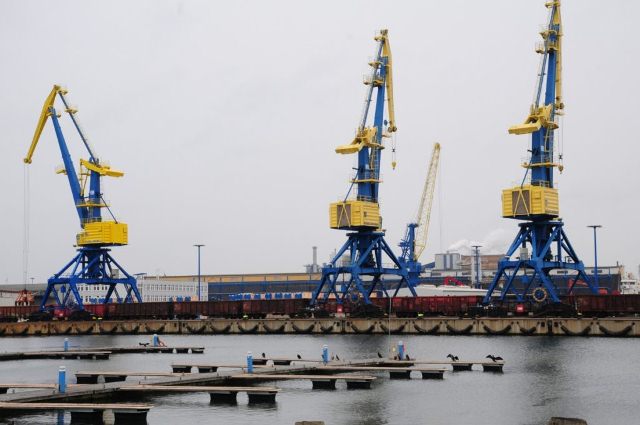
Container gantry cranes are also large structures that can reach up to 140 meters in height and more than 20,000 tons of cargo but move along the dock using rails or tires.

It is specialized machinery for loading, unloading, loading and unloading containers, which has four columns and a cantilever on its upper part, where a mobile crane installed in a cart is housed.

There are different measures depending on the cargo capacity and the size of the ships with which it operates, normally starting from the Panamax classification up to the largest ones, named for its cargo limitation for ships that cross the Panama Canal.

Stacking crane

After the large structures that tend to occupy the line of sight of ports around the world, we find the smallest formats, capable of working in even smaller spaces such as the crane reach stacker or container stacker.

The first of these cranes is the reach stacker crane, also known as a forklift.

It is a type of mobile equipment intended for intermodal loading, where a vehicle equipped with a mechanical arm of different reach and height is capable of transporting, loading, unloading and stacking containers in different terminals of the port.

The most common model is the one that includes the special clamp for the TEU containers, spreader in English, in its upper part, although there is also the model with the clamp on the side of this equipment.

Sidelifter

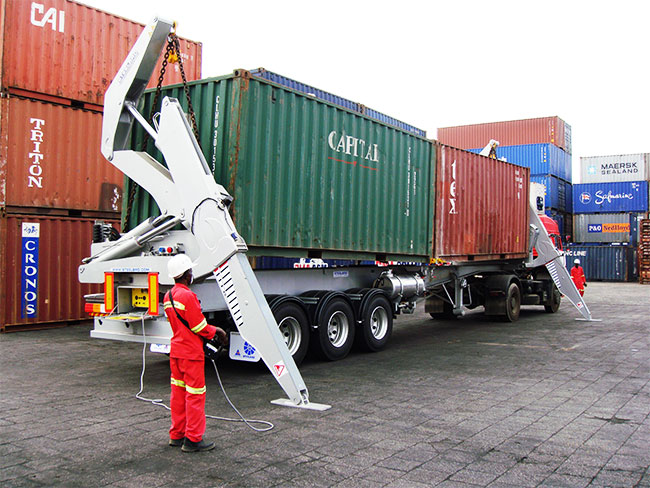
The sidelifter is a special type of crane for intermodal transport between terminal and trucks, or terminal and rail.

In this machinery, a side lift is incorporated in the semi-trailer or in one of the wagons with four supports for the remote handling of containers.

In this way, they are loaded and unloaded laterally in places where other cranes do not operate.

Telescopic crane

The telescopic cranes are fixed structures prepared for the marine environment and intended for auxiliary tasks for the loading, unloading, and stacking of all types of merchandise; They can also be used in maintenance tasks.

They can be mounted both in the terminal itself and in various structures (even taking advantage of the structure of the gangways), with a capacity of 360º rotation and different types and ranges, depending on the application of this machinery.

They are cranes that allow configurations with different equipment, such as the remote control for remote handling of the merchandise or indicators such as the safety load limit and overload on the winch, among others.

The provisioning, telescopic cranes for loading and unloading are prepared specifically to withstand the inclemencies of the marine environment.

Depending on the needs, this type of cranes are adapted to the different scopes, safety load limits and counterbalance valves, with radio control (optional), hydraulic drive, etc.

What is deck crane?

What is deck crane?

A carry deck crane is a small 4 wheel crane with a 360-degree rotating boom housed in the center of the machine. The area above the wheels is a flat deck, ideal for loading and moving materials around a job site.

What are floating cranes used for?

A crane vessel, crane ship or floating crane is a ship with a crane specialized in lifting heavy loads. The largest crane vessels are used for offshore construction. Conventional monohulls are used, but the largest crane vessels are often catamaran or semi-submersible types as they have increased stability.

What is a telescopic crane?

Telescopic cranes are another form of heavy cranes employed to transport and maneuver objects from one place to another. Telescopic cranes are mobile in the sense that they transport goods and items in a flexible manner.

What is a crane Luffer?

A level-luffing crane is a crane mechanism where the hook remains at the same level whilst luffing; moving the jib up and down, so as to move the hook inwards and outwards relative to the base.

The most read

More on this story

Ship to Shore Crane

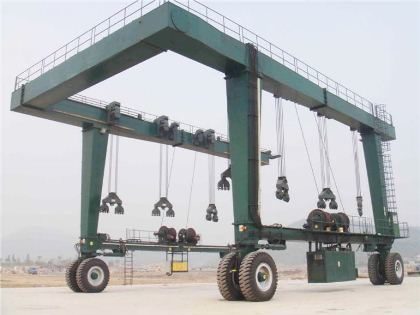
The gantry crane or container crane is a typical heavy-duty crane. How do ship-to-shore cranes work? What is a shore crane?
Types of Cargo Ship

The international transport of goods has evolved. In addition to the types of cargo ships, there are currently three types of ships. What are the types of cargo ships? What are the types of container ships?

Super Container Ship

What is the largest container ship in the world?

Types of Sea Ports

A container port or container terminal is a facility where cargo containers are transshipped between different transport vehicles, for onward transportation.