All posts by Loganx

Professional Web Writer | Motor Enthusiast | Content Creator | Logan is a dedicated and skilled web writer, passionate about engines and machines and with a talent for creating engaging and informative content. She specializes in writing about a diverse range of topics including construction, forklifts, heavy equipment, excavators, etc. SEO Optimization: Proficient in SEO best practices, ensuring high visibility and engagement for all published content.

Overhead Crane Parts

Overhead crane equipment parts can be broken down into four main categories:

  • Power systems and motors
  • Electrical parts
  • Mechanical parts
  • Controls

No matter the make or model of your material handling equipment can provide universal overhead crane parts from these four categories to support high-value equipment such as satellites, heavy equipment such as turbines, and difficult load-lifting configurations such as aircraft assemblies.

To keep your overhead cranes, hoists, and trolleys in service, the availability of interchangeable replacement crane parts is paramount; but first, having a solid understanding of these components and their various functions is crucial to limiting production downtime and preventing emergency situations.

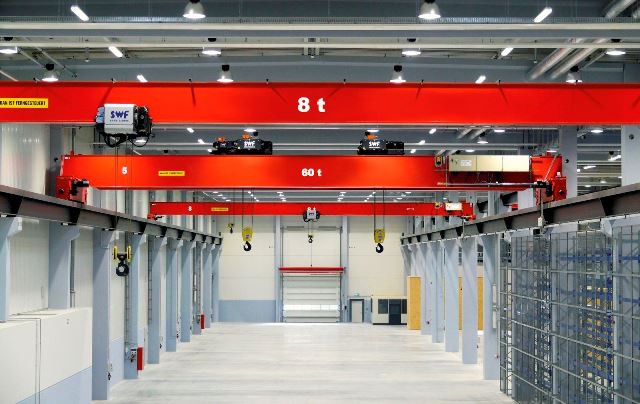
Overhead Crane Parts

Crane components

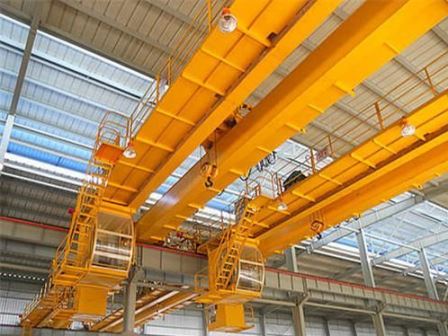
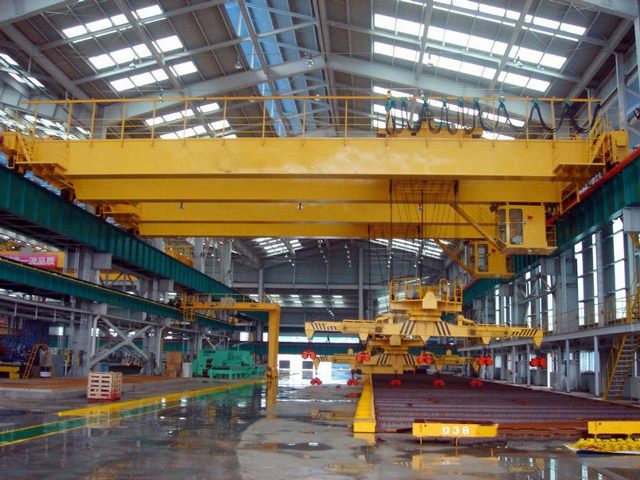
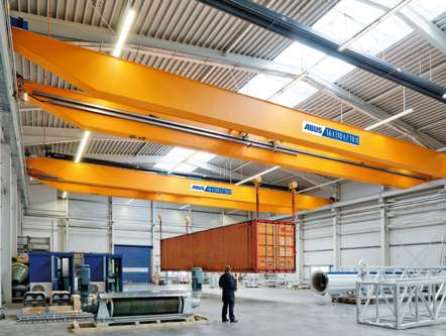
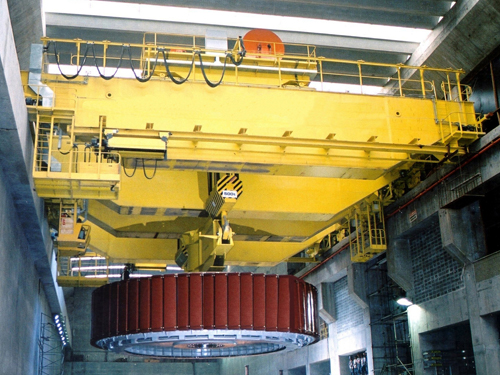
This type of overhead crane is used in those plants where the lifting and transport of heavy equipment and/or accessories through a work surface are required.

They are used in the steel industry to transport large products such as coils, in the automotive industry to assemble automobiles and in the paper industry, they are used to maintain heavy machinery. These overhead cranes consist of three main parts:

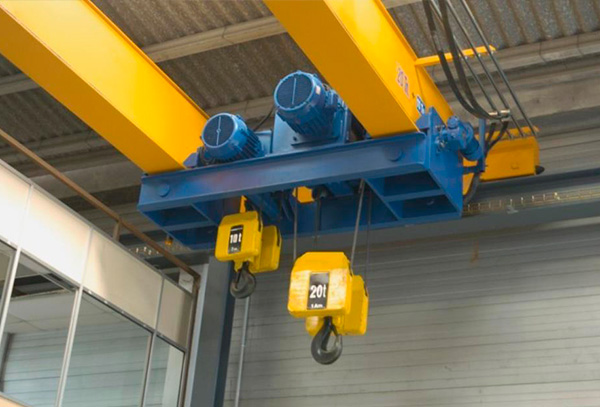
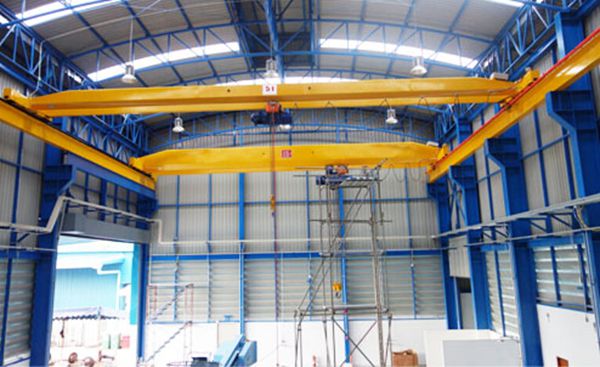
overhead crane with hoist

Bridge crane

Bridge girder: It is basically the whole mechanism that causes the translation movement.

It is the structural part of the crane formed by steel beams, A-36 steel is generally used (ASTM structural steel standard), made from plates, it is one of the biggest and heaviest elements in the crane. The bridge moves by means of rails along the nave in a direction perpendicular to the lanes.

Trolley frame

It is the mechanism that holds the lifting system has moved from the inside out and vice versa.

The structure that supports and houses the components that form the lifting system for cranes equipped with an open winch or to support the hoist for cranes equipped with this type of component.

It can be built as a unit or in sections depending basically on its weight and dimensions.

Its shape, dimensions, and weight are variable since they are designed and built according to the needs of each crane, which vary according to their load capacity and type of service.

Lifting equipment

Hook block: It is the part responsible for carrying out the movements of lifting and lowering of the load.

Runway rail

A structure whose function is to support the bridge beams of the crane, and by which the displacement and guidance of the same are affected.

Rail tracks can be designed by IPR profiles (structural beams), as dimensions are required.

End truck

Metallic structures whose function is to support and hold together the beams of the bridge of the crane, in addition to housing the driven and driven wheels of the bridge.

The construction of the heads can be formed by a single unit to support the number of beams that have the bridge or in small and independent for each beam of the bridge.

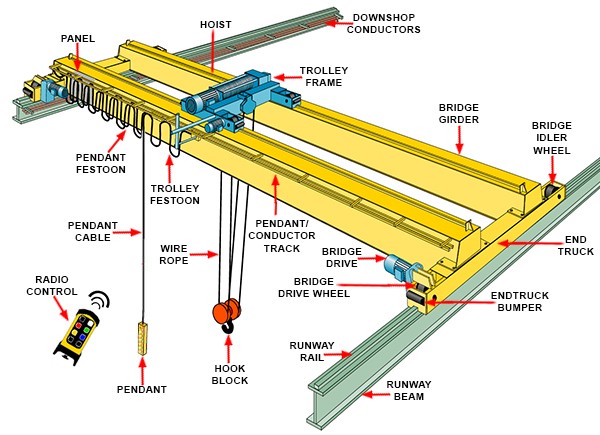
Overhead crane components

Electric Hoist

It is the lifting device of the crane, it moves along with the bridge on which it is located. The hoist, in turn, is housed on another rail that allows it to move to position itself between the two main rails.

Chain hoists and trolleys

Chain hoists are chain motors used to lift loads. The trolleys displace the hoist or hand hoists.

Hoists with steel cable

The hoists with steel cable are motors coupled to a drum where the steel cable is wound in a drum which has a hook that lifts the load of a crane.

Cabin crane

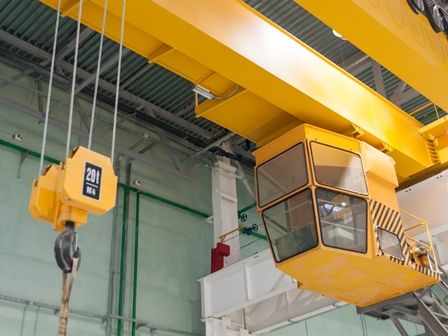
The cabins are used in overhead cranes so that the operator has greater visibility in the field of work and thus facilitate the maneuver of loading and unloading.

Heads or heads

The heads of the crane are the structure where the wheels of the cranes are placed with their gear motors for the transverse movement along with the ship.

Wheels and modules

The wheels are placed inside the heads that move the bridge or the truck of the crane.

Rubber stops

The rubber stops have the function of cushioning the blow of the structure of the bridge or the car.

Overhead crane types

Types of overhead cranes or bridge crane: These types of cranes are used to move tons from one place to another, usually, they are handled by two operators.

Gantry Crane

This type of cranes is similar to the overhead ones, the difference is that they are installed at a lower height.

Overhead Wall

This type of crane differs from the previous two, is attached by one end to the wall, its support capacity is very low.

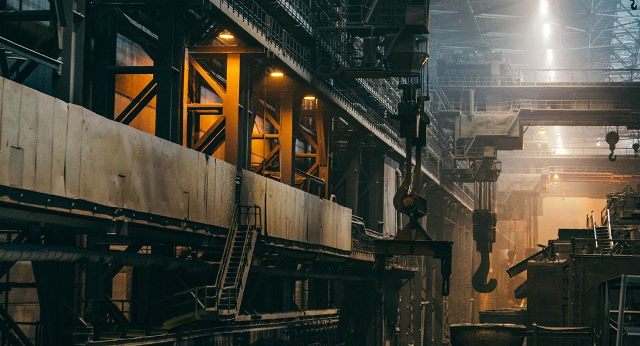
Industrial Overhead Crane

Overhead crane design

In addition to simplifying some of the processes described above, there are two main reasons why a company would want to install an overhead crane, or a series of overhead cranes, in their facility:

Efficiency: Overhead cranes are more efficient than using a group of workers or tow motors to lift and move material and can work up to 2-3 times faster. Think about how a manufacturer, mill, or warehouse can streamline their processes and procedures by introducing an overhead crane to automate the lifting, maneuvering, and unloading of materials at their facility.

Overhead Crane Safety: Another advantage of installing an overhead crane in manufacturing, assembly, or warehousing facility. Cranes can be used to lift and move materials in extreme environments and can handle corrosive or dangerous materials like hot metals, chemicals, and heavy loads. A workstation or jib crane can be put in place to help workers move heavy objects in a controlled manner and help cut down on repetitive motion injuries and muscle strains.

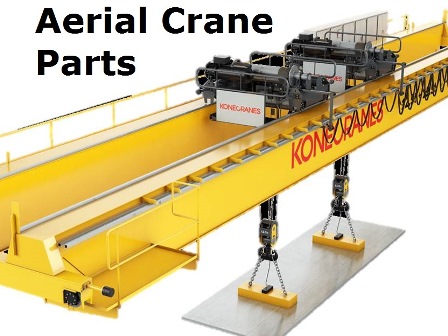
Bridge crane parts name

Cranes lift and lower loads with a hoist that is attached to a trolley. The trolley moves back and forth along a bridge. The bridge moves along a runway. Some cranes – such as a jib crane – don’t have a bridge but still have a hoist attached to a trolley and can move a load in a horizontal direction.

A bridge crane is defined as a crane, fixed or able to move along a track(s) having at least one primarily horizontal girder and equipped with at least one hoisting mechanism. There are four main types of overheads cranes – top running, under running, single girder and double girder.

  • Bridge crane
  • Bridge girder
  • End truck
  • End truck bumper
  • Runway rail
  • Bridge drive wheel
  • Bridge drive
  • Hook block
  • Wire rope
  • Trolley festoon
  • Trolley frame
  • Pendant cable
  • Pendant festoon
  • Radio control
  • Panel
  • Hoist
  • Downshop conductor

Crane components

overhead travelling crane books and accessories:

How does an overhead crane work?

What are the principal parts of an overhead traveling crane?

Overhead crane equipment parts can be broken down into four main categories:
-Power systems and motors
-Electrical parts
-Mechanical parts
-Controls
The principal parts of overhead traveling cranes are: bridge girders, end trucks, trolley with hoisting mechanism, an operator’s cab or pendant control. Careful repair and maintenance are essential to safe crane operations.

Do overhead crane operators need to be certified?

The rigger and signal person must be “qualified” for the position, but are not required to be certified. The OSHA requirement is simply for crane operators to be “qualified or certified to operate the equipment.”

How does an overhead crane work?

Overhead cranes cover a rectangular area, moving a load side to side and backward and forward. The lifting device, called a hoist is mounted on a trolley for horizontal movement across a bridge beam connected to one or more horizontal girders which are supported at either end by end trucks.

How does a gantry crane work?

The bridge can have a single-beam or double-girder structure. Gantry crane moves on a rail crane rails on four undercarriages. The undercarriage is equipped with protective arcs which minimize the chance of damaging to a minimum. The wheels for transportation trolley wheels are reinforced to avoid accidents.

Do I need a Licence for a gantry crane?

A license is not required for bridge or gantry crane operation, providing that: It is remotely controlled by way of pendant or radio, and the crane does not have any more than three powered operations.

What is the difference between a gantry crane and overhead crane?

  • A gantry crane is slightly different from a bridge crane. The general premise is the same, but the operation is different.
  • Some gantry cranes ride along a track installed on the floor or use a V-groove caster to keep moving in a straight line.
  • Gantry cranes are usually less expensive than an overhead bridge crane.

What is the difference between Crane and hoist?

  • A hoist is a device used for lifting and lowering loads while a crane is a device used for moving loads in different directions.
  • The hoist is a simple device while a crane is a more complex device.
  • A hoist can only move loads vertically while a crane can move loads vertically and horizontally.

The most read

More on this story

Overhead Cranes

  • What are the parts of an overhead crane?
  • What is the purpose of an overhead crane?
  • How much does an overhead crane cost?

Overhead Crane Components

A variety of OEM parts and components are available for overhead cranes and hoists.
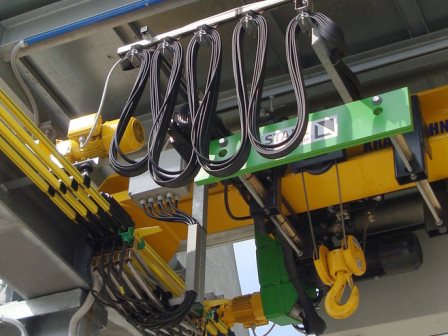
Overhead Crane Electrical Components

Traveling cranes require circuit breakers, transformers, variable frequency drives, and surge suppressors, among many other components.
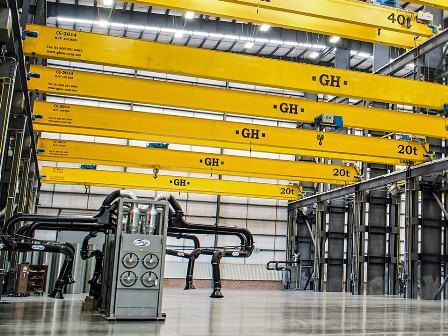
Overhead crane manufacturers in the USA

Some have wondered if in the United States they fix, manufacture, elaborate parts, and components of overhead cranes.

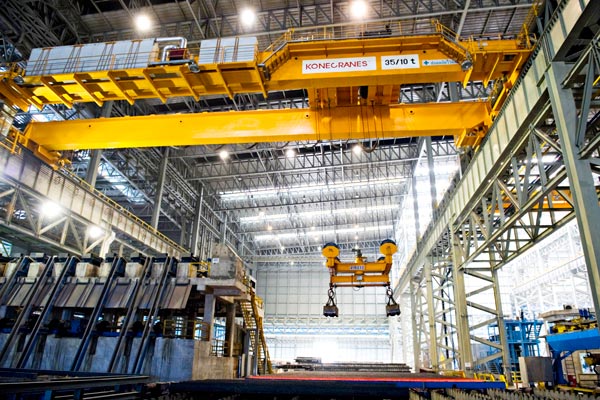
Overhead Monorail Crane

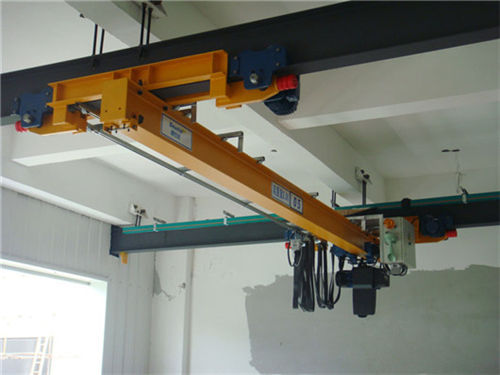
Overhead Monorail Crane: With an overhead crane warehouse monorail system, the hoist and trolley run on a single stationary beam. The monorail allows two axes of hook movement: up/down and forward/back along the monorail beam.

Because of their inherent speed and efficiency, monorail material handling systems are an effective method of moving and positioning loads to specific locations. They are available in various capacities.

Monorails are best used in applications where materials are to be transported from one fixed point to another fixed location, or through a process.

Overhead Monorail Crane

Monorail Crane

These overhead cranes or bridge crane of European Standard is designed and manufactured according to the advanced FEM / DIN standards.

To begin with, the Monorail overhead Cranes have a compact structure with little pressure on the tires, which generates efficiency in small spaces or warehouses with limited space, to reduce investment in structure.

Monorail Overhead cranes are frequently used in the branch of manufacturing, metallurgy, ports, work stations, warehouses, to provide more efficient logistics solutions, especially suitable for places that require precise movements.

Bridge Cranes or Single Girder Overhead Cranes or known as the Monorail Overhead Cranes are a type of crane that is designed according to the FEM, DIN, ISO standard, however, they are widely used in the field of materials processing, metallurgy, oil, electric power, etc.

Therefore these cranes are manufactured specially for a place of assembly that requires precision for the assembly of components and the precise positioning of materials.

Monorail overhead crane

Monorail conveyor – monorail overhead crane – monorail crane design – Mechanisms:

  • The Monorail is optimally designed, with box type design, the total length of the plate is cut and formed through the numerical control and its deviation is exact.
  • Low Trolley structure and reasonable size to the hook, allowing the reach of the wide crane application.
  • Bow or flat wheels, anti-friction, honey type shock absorbers, and anti-derailment devices.
  • 3-in-1 motor, speed control, force reducer, safe disk brake.
  • Good performance, this way it works smoothly with the speed control of the steep less
  • The shot-blasting machine reaches Sa2.5 after welding, thus relieving internal stresses to ensure the best performance of the main beam.
  • Painted with epoxy paint rich in zinc and the thickness of the oil film is 140 μm.

Monorail overhead crane systems

Monorail overhead crane systems, electrical systems, safety procedures:

Electrical system

  • In general, Food is through sliding lines.
  • Phase protection; it automatically disconnects from the power source when the phase occurs.
  • The Crane and the Hoist are mutually independent and can travel at the same time.
  • The sliding contact line meets the requirement for power supply and adapts to agitation or movement.
  • Corrosion-proof Control with IP54 grade protection
  • Rugged plug
  • The Electrical Components are equipped in a convenient position for optimal and convenient maintenance, in addition to having protection to avoid inadvertent contact.
  • It has an electric power system type Festoon.

Overhead Crane Safety

Protection System:

  • Reducer blocked to fall-proof.
  • Outdoor hoist with rain cover
  • Alarm indicator lights
  • Anti-collision infrared

Monorail crane design

Overhead monorail conveyor systems – Monorail Cranes: Opportunities & Considerations:

Overhead crane specifications

Opportunity: Monorail cranes are most effective in production applications where materials are repetitively moved from one point to another. The monorail hoist and trolley run on a single stationary beam—a cost-effective alternative to a bridge or gantry cranes for applications that require limited lifting capacity.

Examples include assembly operations, transport of materials to workstations and lines where parts are blasted, painted or coated.

Monorails also serve as a material handling alternative in places that cannot accommodate a bridge crane.

Monorail beam design

Overhead crane design – Considerations: Monorail cranes provide only two axes of hook movement: up/down via the hoist and forward/back via the monorail beam.

If your application requires lateral motion, you’ll need to consider other alternatives such as a bridge or gantry crane.

Aided by your engineering team, can help you create a monorail system that maximizes efficiency and productivity.

Aircraft crane and monorail systems

What is an overhead gantry crane? aircraft crane and monorail systems considerations:

What is the difference between a gantry crane and overhead crane?

A gantry crane is slightly different from a bridge crane. The general premise is the same, but the operation is different. Some gantry cranes ride along a track installed on the floor or use a V-groove caster to keep moving in a straight line. Gantry cranes are usually less expensive than an overhead bridge crane.

What is an overhead gantry crane?

A gantry crane is a crane built atop a gantry, which is a structure used to straddle an object or workspace. They are also called portal cranes, the “portal” being the empty space straddled by the gantry.

Do you need a Licence to operate an overhead crane?

The majority of a bridge or gantry cranes do not require a license to operate as they are both remote or pendant controlled and are limited to 3 or less powered motions (hoisting, traverse, and travel). The regulations do not define the extent of the powered operation.

Is overhead crane training required OSHA?

While OSHA standards do not spell out overhead crane training requirements, the American Society of Mechanical Engineers does get much more specific in the ASME B30.2 standard.
It further states that a company’s management is responsible to “provide training to persons who will operate a crane”

What is a monorail crane?

A monorail crane is a type of lifting device that acts as an option to conventional cranes or conveyors. Crane manufacturers commonly utilize these cranes to relocate materials or products within a restricted location, as opposed to throughout an entire building.

Which motor is used in an overhead crane?

Following two types of motors are widely used for crane duty applications:
-Squirrel Cage Crane Duty Motors.
-Slip ring and Wound Rotor Crane Duty Motors.

The crane motors are duty type rated for developing high starting torque with the low starting current. The motors are designed to withstand stresses due to frequent starts/stops and reversals. Also, rapid acceleration is achieved by high pull out torque/rotor inertia ratio.

The most read

More on this story

Overhead Cranes

  • What are the parts of an overhead crane?
  • What is the purpose of an overhead crane?
  • How much does an overhead crane cost?

Overhead Crane Test Questions and Answers

  • Crane operator interview questions and answers
  • Rigging test questions and answers

Overhead crane manufacturers in the USA

Some have wondered if in the United States they fix, manufacture, elaborate parts, and components of overhead cranes.

Overhead Crane Risk Assessment

Safety for the Good Operation of the Overhead Crane

In your company or workshop, for your efficiency, convenience, and safety. The cranes or overhead cranes are extremely important to perform the lifting task. They are very useful and popular in most industries; such as construction, metallurgy, mining, oil, chemical industry, production process, transport, rail, storage, logistics, etc.

Workplaces can be in factories, construction sites, warehouses, workshops, garages, iron smelting, port, etc.

Therefore, we want to offer you relevant information for your Crane and Hoist.

Safety rules:

  • For each crane, signs of nominal weight must be hung in visible places for all collaborators.
  • Check the overhead cranes and their components before starting to operate.
  • When the overhead Crane is working, no one should be allowed to be on the bridge
  • It is forbidden to use the hook to transport people, it is extremely dangerous.

Overhead crane hazards and control measures

Safe Working Load

For example, if your loads are always 1 ton, you should have a hoist that allows you to load up to 2 tons and not just have a 1-ton hoist, the risk is expensive and is considered an occupational risk.

  • The operator without operation ID or under the influence of alcohol can not handle the crane.
  • Adopt the necessary security measures according to your country.
  • Do not throw things from the crane cabin, it’s dangerous.
  • Check that limit switches and protection devices work normally.
  • The equipment must be kept clean and orderly.
  • Do not leave tools, explosive, flammable, or dangerous materials in the cabin
  • Do not come up with food for it.
  • Do not overload the crane, you should always consider a surplus before buying and installing the crane and the hoist.
  • For the repair and inspection lights, their voltage should be below 36 V.

Overhead crane inspection checklist

Restrictions. Equipment and Cranes must not work under the following conditions:

  • The load is not tied properly.
  • overloaded equipment.
  • The signal is not clear.
  • drag the goods obliquely.
  • explosive, flammable, and dangerous materials without protective measures (unless you have special equipment for this type of load)
  • There is great wear for the steel cable.
  • the lifting mechanism would be damaged.
  • You can not crash between overhead cranes. Do not use a crane to promote the movement of the other.

Functioning:

When the overhead crane is in operation, there should be no obstacle in the production line, and the height of the hook, spreader, and load must be at least 2 m above the ground. If you overcome the obstacles, the extra height must be more than 0.5 m.

Overhead crane inspection

  • If you need to perform the inspection or maintenance, you have to cut off the electric power and place a notice for the collaborators. When it is necessary to work with energy, it is necessary to take security measures.
  • It is necessary to make the technical safety checks constantly, in addition to planning corrective maintenance services for your hoists and overhead cranes.

Lifting maneuvers:

  • For the lifting of very heavy loads, liquid metal, explosives and dangerous materials, you must lift them slowly first up to the height of 100-200mm and test the reliability of the brakes.
  • It is not recommended to transport materials over people or machines.

Safety training

  • Before use, ensure the crane is suitable for the planned hoisting task. Confirm it has appropriate travel, lift, and capacity.
  • Visually and physically inspect the crane before use. Check for damage, wear, and proper operation of all functions.
  • Confirm the load weight. Check the capacity of all equipment including the hardware, rope, and slings. Do not exceed these capacities.
  • Select the right sling for each lift. Inspect slings and other rigging hardware before use for wear, stretch, or other damage. Do not use damaged or defective slings. Use softeners around sharp corners. Do not splice broken slings.
  • When communicating with a crane operator, use clear agreed-upon signals. Except for the stop signal, the crane operator should follow instructions from only one person – a designated signaler. Where a wired or remote controller is used, the operator should become familiar with all of its functions before lifting the load.
  • Warn all people in the load lift area before starting the lift. Ensure that the path of the load is clear of persons and obstructions. Do not lift loads over anyone. Center the crane hoist over the load before hoisting to prevent swinging of the load.

Operator training

  • Slide the sling fully onto the hoisting hook and ensure the safety latch is closed. Do not load the hook tip or hammer a sling into place.
  • Secure unused sling legs. Do not drag slings or leave loose materials on a load being hoisted.
  • Keep hands and fingers from being trapped when slack is taken out of a sling. Step away before the lift is started.
  • Move the load and controls smoothly. Minimize load swing.
  • Walk ahead of the load during travel and warn people to keep clear. Use a tagline to prevent rotation or other uncontrolled motion. Raise the load only as high as necessary to clear objects. Do not ride on the hook or load.
  • Set loads down on blocking, never directly on a sling. Do not pull or push loads out from under the hoist.
  • Do not leave the load (or the crane) unattended while the load is suspended.
  • Where crane operation by other personnel must be restricted, employ lockout and tagging procedures.
  • Store slings off the floor in a clean, dry location on hooks or racks. Do not leave slings, accessories, or blocking lying on the floor.

Overhead crane inspection

Overhead cranes can be an integral part of a facility’s productivity. If a shop crane is out of service for even just an hour it can have a domino effect throughout the whole facility. That’s where inspections on the overhead cranes can be a critical service to keep the crane (and shop) running smoothly.

Most facilities will call in a company that services overhead cranes or an overhead crane service company.

Overhead crane service

Overhead crane service companies are great at servicing the electrical and mechanical components but they may not have the expertise or experience in structural inspections. That’s where a crane inspection company should be involved.

They have the experience and the tools to do a proper structural inspection. Also, if there are defects discovered during the inspection, crane inspection companies have the experience and knowledge of how to do a proper repair.

Overhead crane maintenance

What happens when there are structural defects in an overhead crane?

It’s not uncommon to find structural defects on an overhead crane. If a defect is not found in a reasonable timeframe it could propagate into a structural failure. If a crane is taken out of service due to a structural defect it could be inoperable for a couple of days for repairs.

It’s best to catch these defects before they become a major issue. A small repair can be performed in an hour and a large repair could have the crane shut down for a couple of days.

Overhead crane inspection checklist

When a structural crane inspector checks an overhead crane they are looking for cracks in welds, deformed structural members, and other defects that could affect the structural integrity of the crane.

They will look at the columns that support the crane way to make sure they don’t have any defects. The most common defect on the columns are dents that occur when a forklift or other machinery accidentally hit the column.

Next is the crane way itself. Once again the inspector will check for any defects in the structural members and welds. It is important for the inspector to have access to the full length of the crane way for a thorough inspection.

The Bridge will be checked for defects including looking for any negative camber in the bridge beam. On the trolley, they will be looking for any structural defects and check the wire rope for any deficiencies.

OSHA overhead crane

A person conducting a business or undertaking has the primary duty to ensure, so far as is reasonably practicable, workers and other people are not exposed to health and safety risks arising from the business or undertaking.

This duty requires the person to manage risks by eliminating health and safety risks so far as is reasonably practicable, and if it is not reasonably practicable to eliminate the risks, by minimizing those risks so far as is reasonably practicable. It also includes ensuring so far as is reasonably practicable the:

  • provision and maintenance of safe plants including cranes, and
  • safe use, handling, storage, and transport of the plant.

The Work Health and Safety (WHS) Regulations include specific duties for a person conducting a business or undertaking with management or control of the plant, powered mobile plant, and plant that lifts or suspends loads.

If you own a crane you are the person with management or control of that plant.

If you hire or lease a crane, you have management or control of that plant for the period you have hired it. Both you and the person you have hired or leased it from will have duties to eliminate or minimize the risks associated with the plant, so far as is reasonably practicable.

Overhead crane risk assessment

risk assessment checklist

Find out what could cause harm. The following can help you identify potential hazards:

  1. Observe the workplace to identify areas where cranes operate and how they interact with other vehicles, pedestrians, and fixed structures like overhead electric lines.
  2. Ask the crane operator, crane crew, and others about problems they encounter at the workplace including operation, inspection, maintenance, repair, transport, and storage requirements.
  3. Review your inspection, test, and maintenance records e.g. logbooks, and incident and injury records including near misses.

Hazard assessment checklist

Assess the risk: In many cases, the risks and related control measures will be well known. In other cases, you may need to carry out a risk assessment to identify the likelihood of somebody being harmed by the hazard and how serious the harm could be. People who work with or near cranes are most at risk. Some of the risks when using a crane include:

  1. structural failure, overturning, or collapse of the crane
  2. contact or collision of the crane or its load with people or other plants and structures, and
  3. falling objects.

A risk assessment can help you determine what action you should take to control the risk and how urgently the action needs to be taken.

Risk management checklist

Take action to control the risk. The WHS laws require a business or undertaking do everything reasonably practicable to eliminate or minimize risks.

  1. The ways of controlling risks are ranked from the highest level of protection and reliability to the lowest.
  2. This ranking is known as the hierarchy of risk control. You must work through this hierarchy to manage risks.
  3. You need to consider possible control measures and make a decision about which are reasonably practicable for your workplace.
  4. Deciding what is reasonably practicable includes the availability and suitability of control measures, with a preference for using substitution, isolation or engineering controls to minimize risks before using administrative controls or personal protective equipment (PPE).
  5. Cost may also be relevant, but you can only consider this after an effective review of all reasonably practicable control measures.

The first thing to consider is whether crane-related hazards can be completely removed from the workplace. For example, designing items of size, shape, and weight so they can be delivered, handled or assembled at the location where they will be used without the need for a crane.

Event risk management checklist

If it is not reasonably practicable to completely eliminate the risk then consider the following options in the order they appear below to minimize risks, so far as is reasonably practicable:

  1. substitute the hazard for something safer e.g. replace a crane operating cabin with a restricted field of vision with one that has a clear field of vision or use a remote control, for example, a pendant control.
  2. isolate the hazard from people e.g. use concrete barriers to create an exclusion zone to separate crane operations from workers and powered mobile plant, and
  3. use engineering controls e.g. enclosing the operator with a falling objects protective structure (FOPS) to minimize the risk of the operator being hit by a falling object.

If after implementing the above control measures a risk still remains, consider the following controls in the order below to minimize the remaining risk, so far as is reasonably practicable:

  • use administrative controls e.g. schedule crane operations to avoid or reduce the need for pedestrians and vehicles to interact with the crane in the area of operation, and
  • use PPE e.g. gloves, hard hats, high visibility vests, earplugs/muffs, and eye protection.

Check your control measures. Control measures need to be regularly reviewed to make sure they remain effective, taking into consideration changes, the nature, and duration of work and that the system is working as planned.

Are cranes safe?

Are cranes safe?

Around 80% of all crane accidents are caused by overloading the safe working capacity of the equipment.
When a crane is overloaded, it is put under excessive stress that can cause damage to the equipment. This damage can result in the collapse of the crane.

How dangerous is crane operating?

Towering cranes used on construction sites to lift and transport hefty loads can be extremely dangerous and often lethal when they fall over, or when parts or the entire crane collapses due to some structural failure. They’re usually local news unless you lose an entire crane.

Why do cranes fall over?

Because of oversize loads or mishaps during assembly. In general, mobile cranes tend to fall over because of overly heavy loads, while tower cranes usually collapse in the course of being assembled, taken apart, or extended.

when should you include a structural inspection with your annual crane service?

If an overhead crane is a critical component to a shop’s productivity and/or commonly lifts loads higher than 50% of its capacity (eg. lifting more than 1 ton on a 2-ton crane), then would recommend an annual structural inspection.
Overhead crane servicing companies provide a needed maintenance and service package for your crane. This regular service should be coupled with a structural inspection from a crane inspection company to reduce downtime on your overhead crane.

How often are cranes inspected?

The frequency at which these inspections should take place is based upon the usage of your crane: A crane that operates under “normal service” should be inspected monthly; a crane in “heavy service” should be inspected weekly to monthly, and a crane in “severe service” should be inspected daily to weekly.

The most read

More on this story

Overhead Cranes

What are the parts of an overhead crane? How much does an overhead crane cost?

Overhead Crane Safety Program

Safety for the Good Operation of the Overhead Crane.

Warning lights for overhead cranes

The crane spotlights are for companies that have fixed overhead cranes. It is the only light of its kind in the industry.

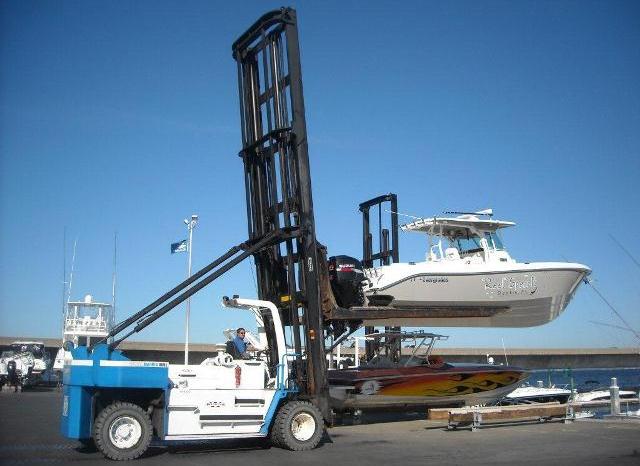
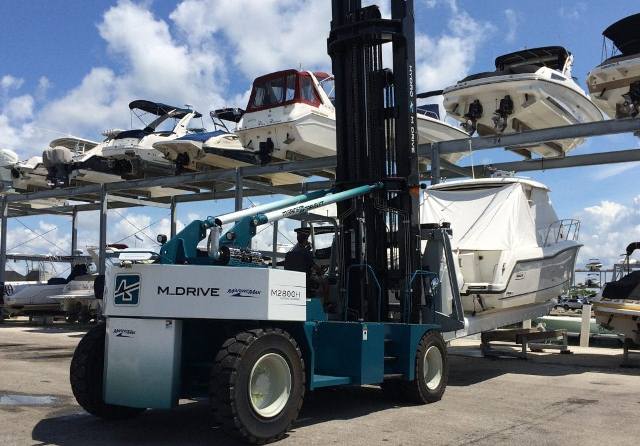
Marina Forklift

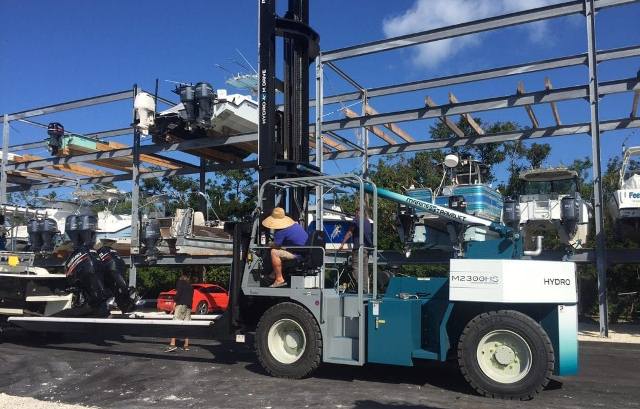
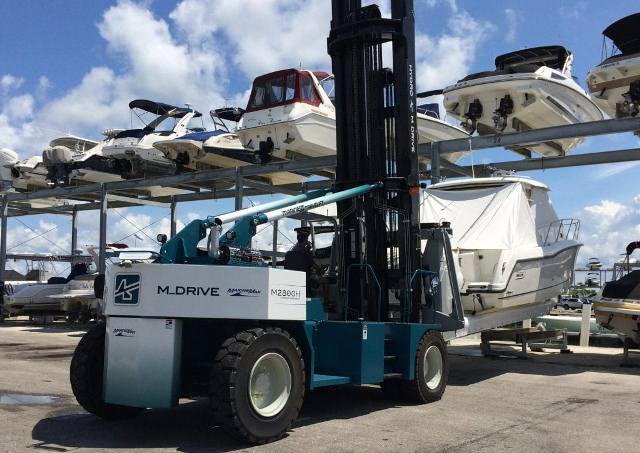
On a busy day launching boat, efficient and safe forklift operations can make or break a business, especially for a seasonal facility. Operators need a machine that keeps them comfortable and alert, and marinas and boatyards need one designed to handle the toughest challenges without fail. The High-Capacity Marina Forklift has the industry-proven components and technology to meet those needs and solve problems before they start.

Marine Forklift

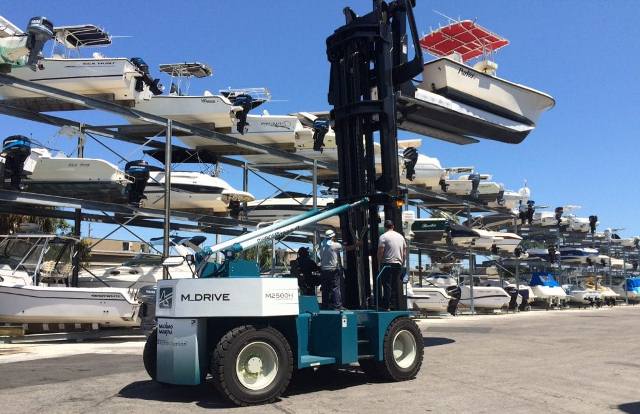
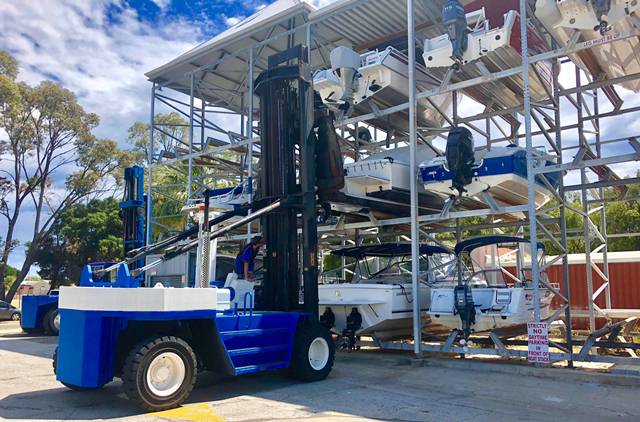
For any marina or boatyard, a successful business depends on the handling of boats efficiently. This is particularly true for a dry stack facility, where vessels are frequently moved in and out of the water. Downtime for equipment fixes, slow operations or the worst-case scenario — boat damage — will hamper productivity and negatively impact the bottom line.

A key component to every marina, and especially a dry stack one, is the forklift — the all-important mode of transport for getting boats from storage to the water and back again. The best forklift for the job will address marina-specific issues and help keep a facility running smoothly at a higher level of effectiveness and profitability.

The High-Capacity Marina Forklift has taken into account the issues marinas and dry storage facilities face, and its purpose-designed systems expand efficiency and, under the right circumstances, productivity. Whether the challenge is higher dry storage racks or lower slips, larger capacity loads or precise maneuvering, improved operator sightlines or long-term reliability, the forklift is expressly suited for the task.

Providing the Lift You Need With land at a premium anywhere along the shoreline, the biggest issue most marinas face is space and access to the water. As a result, facilities are building upward rather than outward and want higher and higher applications.

Boat forklift

Boat Forklift: Mast forklift

For a 96-inch load center, the High-Capacity Marina Forklift capacity ranges from 15,000 to 55,000 pounds. The forklift can lift smaller vessels up to 75 feet; as you go higher, the capacity decreases. Dry storage facilities traditionally stack larger boats on the bottom and use higher levels for lighter boats.

A specially designed mast provides a standard negative lift down to 20 feet, meaning operators are able to pull boats out of lower marina slips. Forklift capacity and height limits (upper and lower) can be customized to match the types of vessels a facility will transport

Boat Forklift

Forklift hydraulic system

To protect boats on the forklift, a “smart” hydraulics system calculates the weight of the vessel and a lift interrupter alerts the driver if it is too heavy. Without an automated system, operators may need to take precious time to ensure they can lift a boat. “A lot of times, if you were lifting a boat that was new to your facility, it wasn’t uncommon that you had to call the manufacturer and find out how much the boat weighed and figure out if you could lift it,” said Lunt.

Instead, the automated system will display how high the forklift can lift a vessel, and a safety interlock will kick in to stop a heavy load from being hoisted too high.

Top safety and economic concern when lifting a boat on a forklift is a hose break or something that would cause the vessel to fall. Utilizing a system that monitors for hydraulics issues, a safety mechanism will stop the truck from dropping in the event of a failure. Boats can then be lowered manually. “The hydraulic monitoring reduces the risk of boats falling.”

Hydraulically controlled swinging forks also help to protect boats. Each fork hinges open to approximately 60 degrees, so the operator can find the right cradle fit for each vessel. “Every boat hull is different, with a different design.

[The swinging forks] allow for an adjustment based on the hull size, so you get good, solid contact,”

The majority of the contact with the boat is at the base of the forks, and protection there further helps prevent damage. A dense, slip-resistant rubber provides padding on the forks and can be replaced in 4-foot sections as needed.

Forklift operator

The Operator and Technology Working Together

A marina or boatyard operation presents many opportunities for unsafe conditions, where personnel, property, vessels or customers are at risk. But quality, purpose-built equipment that is properly maintained — combined with good management and precise practices — can enhance a culture of safety.

Inside a dry storage building, space is also at a premium, and many facilities have narrow aisles to maximize storage space. Operators need to be especially mindful of large (and expensive) outboard motors that may stick out of the rack system and are prime for damage from forklifts.

Guidelines recommend that operators always look in the direct they are traveling. However, the unique challenges of lifting a boat in a marina dry storage application occasionally call for additional lines of sight. For operators in dry storage facilities, tight racks and narrow slips provide unique challenges that require expert precision. Advances in technology can help to facilitate success in unique dry stack marine applications.

These include control station that gives the operator real-time, on-board digital access to helpful tools such as an estimated rack height calculator and a backup camera. This feature is intended to allow the operator to observe the boat or vessel being lifted while also observing what is behind the forklift.

It can assist the operator in unique marine dry stack reverse travel situations where they need to be looking at the lifted boat while traveling in reverse. In addition, a border on the screen will flash a red proximity warning and an audible alert will sound to alert the operator of nearby obstacles.

Forklift operator job description

The display can also be programmed to travel and shift gears faster for enhanced efficiency or can limit the use of the forklift to designated operators. For situations where operating speed needs to be restricted, the forklift speed can be locked at a certain gear.

The system can also customize a pre-operational checklist, display manuals and diagrams to help diagnose technical issues faster and relay data on the screen in words, not codes. Every minute of downtime saved translates to more value and productivity for the facility.

While the open cab design provides good visibility in all directions, the forklift can also be operated remotely in narrow spaces or when pulling a boat off a dock at low tide. In these cases, the operators may not be able to see around corners or below their normal field of vision. Using the remote allows them to walk where they need in order to sight-check forklift positioning and note potential hazards before proceeding.

The wireless remote can operate functions such as drive, lift/lower, right fork, left fork and tilt. The parking brake will also automatically engage when the operator switches to the remote.

Forklift mast design

Designed for Smooth Operation

One relatively simple way to help keep a marina running smoothly is by using equipment designed for dependability and low maintenance, as well as for ergonomic operation and less stress on the user.

The High-Capacity Marina Forklift allows operators to sit on an air-ride seat, or the cab also permits stand-up operation. The electronic joystick controls make maneuvering intuitive and natural. The two-stage, wide-view mast provides maximum visibility, and the counterweight at the back of the unit is spread in a low profile to minimize obstruction.

Beyond external design, the components that make up-promote reliable operation. The forklift has force-cooled wet disc brakes for stopping power in heavy-duty applications. “The biggest enemy of brakes is heat, so cool hydraulic fluid is forced in and continually cycled.”

From its Axletech planetary drive axle, to its welded steel chassis and heavy-duty cross supports, to its high-impact composite trunions, the forklift is constructed for durability in high-capacity applications.

Forklift carriage

The forks and carriage are galvanized to prevent corrosion where they enter the water to lift boats. A two-part, rust-inhibiting polyurethane base coat and two-part polyurethane topcoat provide protection elsewhere. Fluorescent torque indicators on all the wheel lug nuts help operators identify when one gets loose because they look out of place, possibly preventing a problem before it occurs.

Trouble-free serviceability is critical for keeping a machine up and running, and the High-Capacity Marina Forklift addresses this with easy access to the drive train, filters, and lubrication points. The brakes are serviceable through the wheel ends, and O-ring face seal fittings prevent oil leaks.

What is marine forklift?

What is marine forklift?

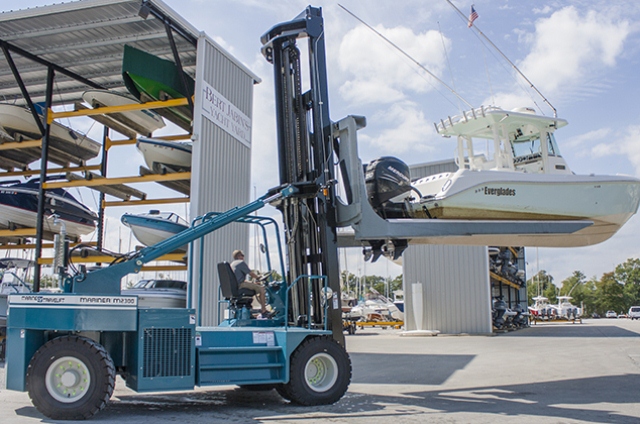
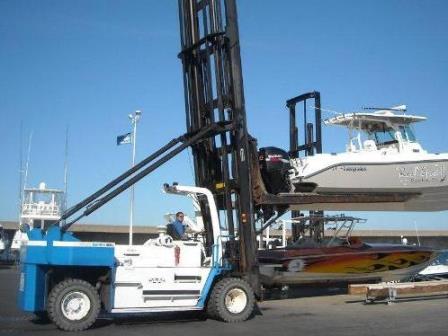
The marina forklift in the industry is used to dry-stack boats in storage racks, and lower/raise boats in/out of the water. Hoist’s lift truck is compact and extremely maneuverable to operate around any facility, yet strong and durable enough to lift/lower boats of various sizes and weights. Components and features that are optional on similar lift trucks are standard

What is a forklift used for?

A forklift (also called lift truck, jitney, fork truck, fork hoist, and forklift truck) is a powered industrial truck used to lift and move materials over short distances.

What is the difference between a reach truck and forklift?

Reach trucks are designed to work in narrow aisle warehousing spaces. They have two outer legs that distribute the load weight; with a wheel configuration of two or one wheels per leg. The wheelbase of a reach truck is the same length as a normal counter-balance forklift; however, the body is more compact.

What is a forklift truck used for?

One of the most common uses of a forklift is for indoor and outdoor materials movement. For indoor materials movement, forklifts are typically put to use in distribution centers or warehouses. These forklifts can pull or lift pallets of materials. They are also used for transporting drums, crates or stacked boxes.

The most read

Boat Forklift for Sale

If you want to buy a marine forklift for your facilities, here are some recommendations before you buy it: …

More on this story

Marine Forklift for sale

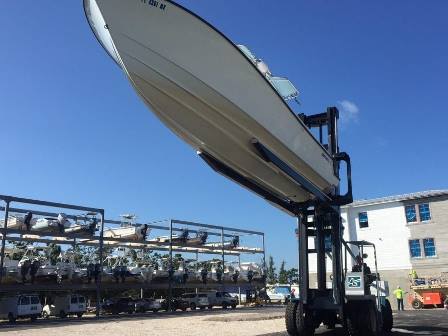
Large marina forklift picking up boat, a 100% welded steel chassis with steel cross supports is built to take on the toughest challenges at your boatyard or marina.

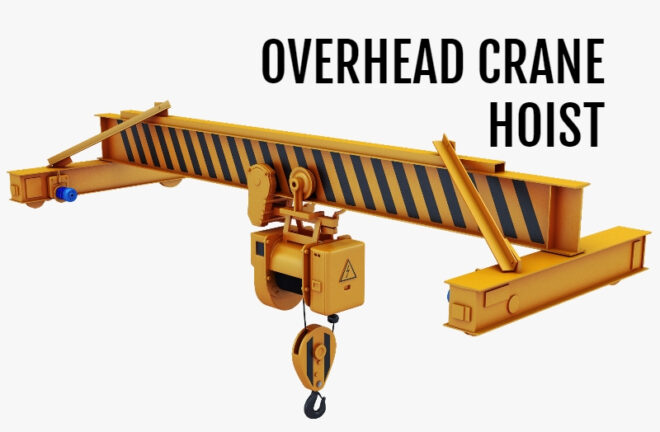
Overhead Crane Hoist

Overhead Crane Hoist – overhead hoist – double hoist overhead crane – hoist crane – bridge crane hoist – hoist crane design – hoist overhead crane – what is a crane hoist?

Crane vs. Hoist: What’s the Difference?

First things first – a hoist helps to do one thing: move heavy loads up and down. An elevator is probably the most well-known hoist. Elevators are the perfect machine for transporting loads vertically, but in no other direction (unlike a crane’s functionality).

On the other hand, a crane can move in two or three dimensions. Overhead cranes suspend from a beam or move along a rail. Just like cement is a component of concrete, a hoist is a central part of an overhead crane. Essentially, the crane moves the hoist around.

suspend from a beam or move along a rail. Just like cement is a component of concrete, a hoist is a central part of an overhead crane. Essentially, the crane moves the hoist around.

Overhead Crane Hoist

Overhead hoist

Chain hoist crane – overhead hoist: Hoists and cranes are both machines that help move and lift heavy loads on the job site, but they have many fundamental differences in design and usage.

Below, we set the record straight about what each of these devices does, and how they work together to assist in your next project.

Chain hoist cranes are suitable for a wide variety of industrial and specialized applications.

Whether you need a work station crane, an overhead traveling crane or a rotating crane, chain hoist cranes are always the ideal choice.

Overhead Crane Hoist

Hoist crane design

Overhead crane design – hoist crane design: It is understood that each client is different and so are their needs; custom cranes are designed and built to meet the individual requirements of your application.

You may want to buy a full chain hoist crane or upgrade your existing crane with an electric chain hoist. You can choose a single or double bridge beam crane for your work area.

A simple bridge beam crane can be a bridge type profile or drawer. A suspended crane can be installed if your building does not allow the construction of a column.

Overhead Crane Hoist

Overhead crane safety

The steel structure is strong and durable and the design has been optimized to reduce the stresses it exerts on your building.

Its operators can exert an optimal control over the load thanks to the control with an inverter of continuous speed along with the rolling.

An electric limit switch keeps you and your hoist protected from electrical overloads.

Since it minimizes the free height and the approach of the hook, it has a maximum space to perform other types of operations under your chain hoist crane. You can also install shock detection devices on the crane and in the car to further improve your safety.

Overhead Crane Types

Types of Overhead Cranes: The type of crane you have determines what your hoist will do for you. Some of the most common overhead crane types include:

  • TOP RUNNING CRANE: The bridge moves atop a pair of rails mounted to the ceiling, allowing for heavy loads to be lifted and moved.
  • UNDER RUNNING CRANE: The bridge travels along the bottom flange of two beams. Certain buildings’ construction might require this type of crane for your project.
  • GANTRY CRANE: A single or double girder attaches to a pair of broad legs with wheels, enabling the crane to operate without being attached to the ceiling. These are popular cranes in shipbuilding.
  • MONORAIL CRANE: The hoist attaches to a trolley on a single rail that follows a path around the facility in an oval or snaking path. This is effective for moving around a complex space.

Types of Hoist

Hoists are defined by their lifting medium, power, and suspension.

LIFTING MEDIUM: The lifting medium is the flexible material that connects the load hook to the overhead body of the hoist. It can be either a rope, metal cable, welded link chain, or roller load chain. Welded link chain, like an anchor chain, is a series of identical metal loops attached together to form a string. Roller load chain, like a bike chain, is made from alternating roller links and pin links to form a line that easily engages with a toothed sprocket.

POWER: Hoists can be powered manually, electrically, or pneumatically. Manual hoists use a pulley to multiply the operator’s pulling force. You can also use electricity or air power to actuate a hoist motor. Choose what’s easiest to access. Factories with many air tools might find air power more convenient.

SUSPENSION: The suspension method for a hoist depends on how it will be used. A stationary hook-mounted hoist is a simple solution when you only need to move a load straight up, such as from a truck to a trailer. Meanwhile, a hoist bolted to a beam will handle heavier loads. A hoist can be mounted to a trolley running along a beam or a rail, giving you the ability to lift up then across the facility. Gantry cranes give you three-dimensional motion. You can lift up, move the hoist along the gantry rail, then move the crane itself wherever you need it.

Double hoist overhead crane

Double hoist crane is a single girder crane with two Electric hoists for efficient material handling. Double hoist cranes have various designs such as double hoist Overhead Crane, and double hoist Gantry Crane.

Which double hoist crane is ideal for your application?

Double hoist crane

Double hoist crane is usually for indoor use, such as in the workshop, warehouse for handling and lifting small and medium tonnage items.

Generally, when choose or use double hoist crane, we usually consider it with one electric hoist, while in some specific situation, which need two electric hoists hoisting together, then the double hoist crane should be equipped with two electric hoists.

Bridge crane hoist

Overhead hoist and crane – bridge crane hoist: When the double hoist crane needs to be equipped with two electric hoists, the following items should be considered.

Two electric hoists capacity does not exceed the design capacity of the double hoist crane. That is, if you want to hang two 1Ton electric hoists, the double hoist crane lifting capacity should be 2ton or more.

If the double hoist crane total lifting capacity is greater than or equal to 1Ton, it needs the enterprise which has relevant qualifications to carry out the reconstruction.

Overhead crane anti collision system

Anti-collision device: If the two electric hoists use distance is far, it can directly use travel switch or photoelectric switch for the anti-collision setting.

  • If the general use distance is near or sometimes use in the adjacent place two of the two electric hoists, you should pay attention to the closest position when installing during load and no load.
  • If it is two-speed, it is best to limit the fast speed first, and then stop it (two tap positions).
  • If the lifting item is long, it can be designed to operate with one switch, which can be operated simultaneously or individually.
  • The power supply cable direction: on both ends of the single beam, respectively power supply to the two hoists, or power supply directly by safety slide wire.

Double hoist crane is used for efficient material handling. Double hoist cranes have various designs such as double hoist overhead crane, and double hoist gantry crane.

What is a crane hoist?

Difference Between Hoist and Crane:

  • A crane incorporates the uses of other simple machines including the hoist to develop a more effective mechanical device that will make the moving of loads and objects easier and faster.
  • A hoist is a device used for lifting and lowering loads while a crane is a device used for moving loads in different directions.
  • A hoist is a simple device while a crane is a more complex device.
  • A hoist can only move loads vertically while a crane can move loads vertically and horizontally.

Overhead Crane Hoist

How do overhead cranes work?

What is a crane hoist? What is an industrial crane?

A crane is a machine designed to lift and distribute loads in space suspended from a hook and hoisted by a hoist. As a rule, they are equipment that has grooved pulleys, counterweights, simple mechanisms, etc. to create mechanical advantage and move large loads.

What is difference between Crane and hoist?

-A hoist is a device used for lifting and lowering loads while a crane is a device used for moving loads in different directions.
-A hoist is a simple device while a crane is a more complex device.
-A hoist can only move loads vertically while a crane can move loads vertically and horizontally.

What is a gantry crane used for?

A gantry crane is a type of overhead crane that is similar to a bridge crane, but instead of moving on suspended runways, the crane uses legs to support the bridge, trolley, and hoist. These legs travel on tires or on rails that are embedded in the floor or ground structure.

How do overhead cranes work?

Overhead cranes cover a rectangular area, moving a load side to side and backward and forward.
They typically incorporate a top running trolley hoist which moves along the top of the two bridge beams on its own set of wheels for increased headroom under the crane; also called a top running crane.

What is an overhead gantry crane?

A gantry crane is a crane built atop a gantry, which is a structure used to straddle an object or workspace. They are also called portal cranes, the “portal” being the empty space straddled by the gantry.

The most read

More on this story

Overhead Cranes

  • What are the parts of an overhead crane?
  • What is the purpose of an overhead crane?
  • How much does an overhead crane cost?

Overhead Crane Test Questions and Answers

  • Crane operator interview questions and answers
  • Rigging test questions and answers

Overhead crane manufacturers in the USA

Some have wondered if in the United States they fix, manufacture, elaborate parts, and components of overhead cranes.
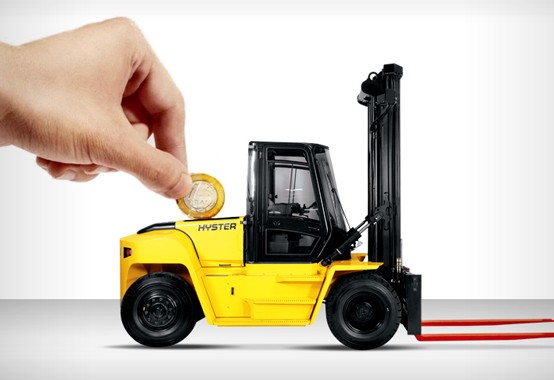
New Forklift Price

New Forklift Price: When you are purchasing a piece of equipment, you obtain competitive quotes, verify specifications and generate a purchase order. For that matter, just about anything we purchase goes through the same process.

However, there is much more to purchasing forklifts and other material handling equipment. We have found, over the years, that often there are variables that can greatly affect the total cost of ownership of anything, be it an automobile, forklift or a giant cargo container.

New Forklift Price

Brand new forklift price

New-forklift Price: – There are a few general rules to be aware of when assessing the price of a forklift. Forklifts are an important investment for any business. Therefore, it is integral to be aware of what you are paying for, from upfront costs to servicing and the overall cost of ownership.

The price you pay for your piece of equipment, by most accounts, reflects about 10% of the total ownership costs of that piece of equipment. This leaves 90% of your total costs up in the air.

As there is such a wide range of quality and extras that can come with particular forklifts, it is hard to determine the right price. This blog will provide you with key rules to help guide you in your decision.

The higher the operating capacity and lift height, the more expensive the forklift will be.

New Forklift Price

New forklift cost

Depending on many variables, you could pay much more for the equipment than you needed to, or much less. These variables include:

New-forklift Price:

Performance forklift

Performance and Reliability of Equipment: Comparing cost per hour to operate can give you a good idea of what competing pieces of equipment will cost you over their useful life. When comparing cost per hour to operate, you should be sure you’re comparing similar models under similar circumstances.

A lift truck operating 1500 hours a year for a lightweight product manufacturer will cost far less over its lifetime than the same lift truck operating at a recycling facility. This cost should reflect general maintenance requirements as well as fuel costs.
Forklift lifting capacity

The higher the operating capacity and lift height, the more expensive the forklift will be.

  • Operating capacity is how much weight a forklift can safely handle. The most common weight is 1.5, 2.5 and 4-tonne models, and these often fall in the $15,000 – $30,000 price range for a new model.
  • As you look toward higher capacities, prices increase sharply. It is important to note, that knowing the typical dimensions and weight of your loads will allow you to work with sellers to determine the exact capacity you need.

Forklift load capacity

If your load capacity varies, you may want to purchase a forklift with more capacity than you need currently to make sure it gets the job done now and in the future.

For this reason, it is important to do your homework and look for a forklift that has retained capacities. There are certain forklifts, which can perform the same functions as a larger unit but are a smaller capacity unit, this will save you on cost.

If you require your forklift to reach excessive heights, such as 20 feet or above, you will move into a more expensive pricing bracket. However, unlike load capacity, your height needs are unlikely to change over time (barring new construction or major renovations). Therefore, it is best to buy for the height you need now.

Forklift fuel consumption

While this is often a part of performance and cost per hour, knowing the fuel costs for each comparing brand and calculating total costs over the life of the equipment can sometimes be quite an eye-opener.

In addition, what are your fuel alternatives? Can you use electric models? Thinking outside the box may result in lower costs to power your forklift and other lift equipment.

Top forklift brands

Top-tier brands are more expensive than less well-known brands, but their technology advantages enable greater productivity and reliability.

New Forklift Price: Top-tier brands will have more upfront costs involved in their purchase.

However, that extra cost gives you a forklift that is more productive, and reliable. It will also provide better tolerance of harsh environments, boast a lower cost of ownership and will provide you with access to a more established dealer network for service, parts, and accessories.

These added benefits will save you time and money in the end. If the forklift is an integral part of your operation, it is worth investing in a reputable brand name machine.

Forklift fork dimensions and specifications

It is rare that two 5,000-lb-capacity forklifts from competing brands will have similar specifications. Knowing what your facility will accommodate and comparing that with each model will give you insight into how each model will perform, given your operating parameters.

Factors include aisle width vs. turn radius, drawbar pull, suspension and ergonomics compared to your floor condition, indoor/outdoor use and ceiling height/rack height vs. max lift height.

You will also want to compare features between brands to ensure that each lift truck model is equipped with the proper components to meet your operational requirements.

For example: Can it operate properly inside your ice cream freezer?

Electric vs propane forklift

Electric forklifts are generally more expensive upfront than internal combustion forklifts with identical specifications:

Electric forklifts are more expensive to purchase than their internal combustion (IC) counterparts. This is because there are more upfront costs involved, such as multiple battery packs per forklift, battery rechargers, battery swapping equipment, battery-charging space, and battery swapping personnel.

Electric forklifts do offer significant advantages for some situations. Unlike IC forklifts, electric forklifts do not emit odor. In addition, they are environmentally friendly, quieter and offer a lower cost of ownership in the long run.

New Forklift Price

Forklift useful life years

Finally, how many hours can you expect from each piece of equipment until the cost to operate becomes cost-prohibitive? This can vary widely depending upon brand and model.

But having some qualitative and quantitative information on hand, if possible, will help you make a better decision about the total cost of operating each unit/model.

There are many factors beyond the price tag or lease rate that can help you make good decisions about the equipment you purchase. Having a partner that listens, evaluates and fulfills your needs is essential in building a fleet that is most productive and less costly in the long run.

New Forklift Price

New Forklift Price

How much does it cost to lease a forklift?

The cost of leasing can depend on a number of variables, including the cost of the machine. For example, you can expect to pay about $600 per month to lease a forklift with a value of $25,000, or in the vicinity of $1,100 per month for a $50,000 machine.

How much does a standard forklift cost?

Generally, the more weight a forklift can handle (operating capacity), the more a forklift will cost. A standard capacity forklift will cost between $15,000 and $25,000. A 10,000 lb capacity forklift will cost between $30,000 and $45,000 while a 35,000 lb capacity forklift with cost up to $100,000.

The most read

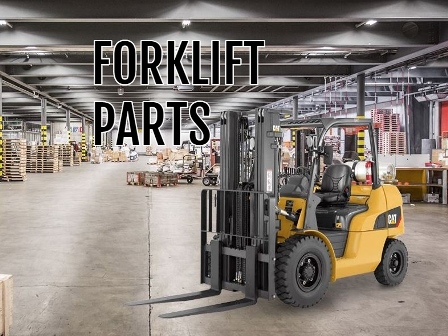
Forklift Parts name

Forklifts are designed to last, but like any other machinery, forklift parts are susceptible to wear and tear. To keep your lift trucks running and your employees safe, high-quality forklift parts and accessories are essential.

More on this story

Forklift Purchase

If you’re in the forklift market for the first time, have returned to the market after a long absence, or just need to go back to the basics, understanding where to start in buying a new forklift can seem like a complex process.