All posts by Loganx

Professional Web Writer | Motor Enthusiast | Content Creator | Logan is a dedicated and skilled web writer, passionate about engines and machines and with a talent for creating engaging and informative content. She specializes in writing about a diverse range of topics including construction, forklifts, heavy equipment, excavators, etc. SEO Optimization: Proficient in SEO best practices, ensuring high visibility and engagement for all published content.

Types of Sea Ports

Types of Sea Ports – Types of ports in shipping : Each year, seaports move a gigantic volume of merchandise throughout the world, occupying a priority role of international trade.

Types of Sea Ports
Types of ports in shipping
Types of port terminals

They are the set of works and facilities and services, built-in calm waters, necessary for the safe tearing of ships, while the loading and unloading of passengers and goods are carried out.

Of the two billion dollars in total goods traded worldwide, 90% was transported by sea, which is equivalent to approximately 5% of total world trade, doubling the value of maritime trade until 2020.

TYPES of SEA PORTS

Definition of seaport and maritime

What Are Different Types of Ports For Ships?

A port is a place to facilitate loading as well as unloading of vessels. Technically speaking it is a convergence point between freight circulation domains.

Ports are the inhibitors which begin the social and economic growth of a region by not only allowing trade but also by serving a hub for social activities.

These days, most of the ports (especially seaports) are well-equipped with specialized fixtures such as forklifts and gantry cranes to facilitate regular dealings of cargo.

Ports can of great significance to a nation, as it promotes the commercial welfare and the trade scenario. Ports can also be of military importance, as they are used to keep the warships before moving out to the battle scene.

Ports are also a major source of employment as a large number of workers are employed at the ports.

Container terminal

The ports terminal can be classified according to use: civil or military.

  • Interior ports
  • Seaports
  • Fishing port
  • Hot Water Ports (In frozen places such as Russia.)
  • Dry Port (Interior intermodal terminal connected via railway line or highway.)
  • Cruise Ports Ports of Load

Main ports of the world

Singapore: It has the seaport that handles the largest volume of annual cargo in the world, both in tonnage and in the number of containers, with 26 million TEU containers in 2009, of which 80% were forwarded to other ports.

In turn, it operated with 471 million tons of cargo and one million cruise passengers in 2009, from the 130 575 ships that arrived at the port.

This port has 204 dock cranes, capable of operating on the largest ships and stacking 22 containers per column.

Hong Kong: Hong Kong Port, which operated 25 million containers in 2008, is next in cargo volume.

Shanghai: The third largest is Sanghai, which exceeded 21 million containers in 2006.

Rotterdam: In Europe, the largest port is in Rotterdam, with 400 million tons per year.

This is because 30% of all ocean freight from and to the countries of the European Union passes through it. Around 30,000 ships a year leave the port and 130,000 have their destination there, from more than a thousand ports.

Port equipment

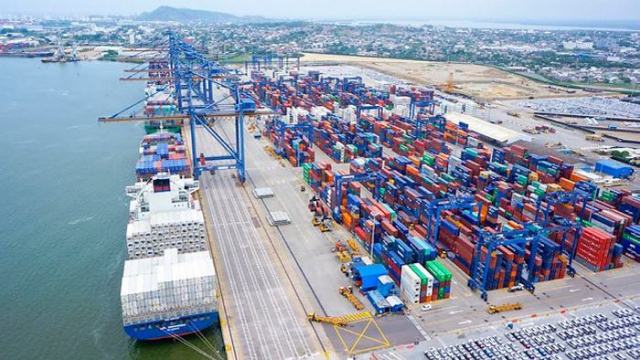
The ports are equipped with modern freight logistics technology. For this, it has the positioning system of the Delta terminal, in which all the vehicles and cranes that handle the containers are robotized, that is, they are controlled and supervised by means of a powerful computer.

This container traffic is possible thanks to a magnetic grid installed on the asphalt that allows vehicles to be guided thanks to a navigation system that regulates their position and speed.
Types of Sea Ports

Maritime trade

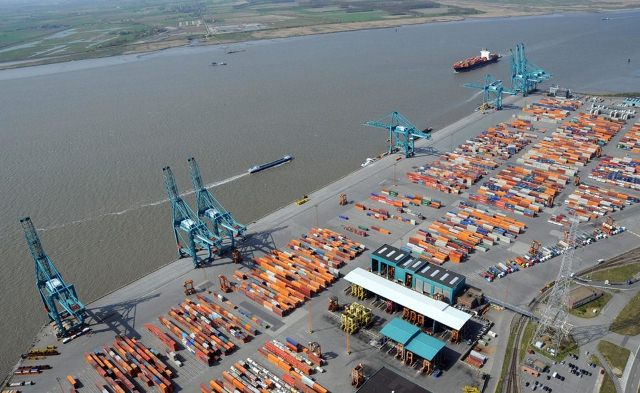
Maritime trade is usually calculated in tons/mile, that is, the transported tonnage multiplied by the distance traveled.

The choice of maritime trade as a means of transport is due to its low cost since it represents between 1 and 2% of the final price of the product.

In the last four decades, the total volume of goods transported by sea has quadrupled, going from less than six trillion tons/mile in 1965 to 25 trillion tons in 2003.

Types of Sea Ports

Maritime container

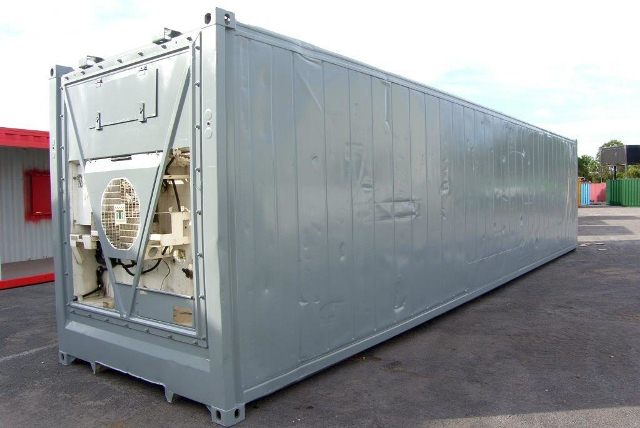
The emergence of the container (container) in 1956 also contributed to this impulse, thus normalizing the transport of goods, which meant the speeding up of transport, unloading, and storage of products.

The dimensions of the containers are identical, whatever the product they contain and are regulated by ISO 6346, it is the most common 6 meters long, 2.4 meters wide and 2.6 meters high.

They are usually made of steel or steel and 75% of the total merchandise is transported.

They have the twistlock, devices located in each of their corners to allow the container to be hooked by cranes and secured in the trucks for transport.

Largest ship in the world

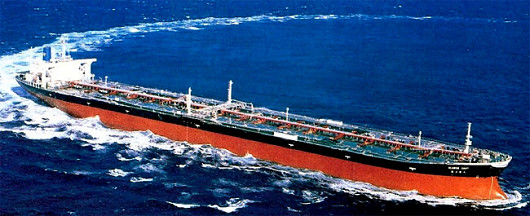
Among the ships that dock these ports is the largest ship in the world, the “Knock Nevis”, a Norwegian supertanker with 458 meters of length and 69 meters of beam.

It weighs 564,763 tons and can transport 83,192 tons with a cargo of 650,000 cubic meters (4.1 million barrels of oil). With maximum load, the hull sinks 24.6 meters below sea level.

The “Emma Maersk” is the largest container transport vessel in the world, capable of transporting between 13 500 and 14 500 TEUs.

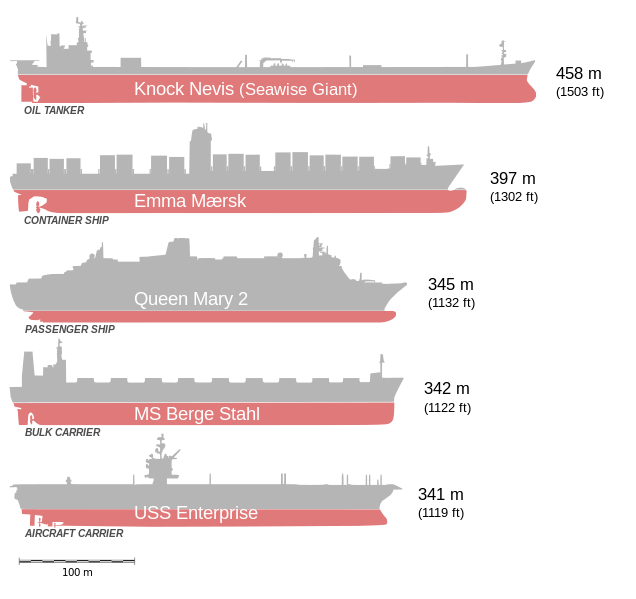
It has a length of 397 meters and a beam of 56 meters and is powered by the largest diesel engine in the world, with 2,300 tons and a capacity of 109,000 horsepower. Maritime transport accounts for 90% of the volume of goods transported worldwide.

Port logistics

Difference between ports and terminals:

  • The ports are strategic geographical places that are on the edge of the oceans, seas, rivers or lakes.
  • These locations are then developed to inculcate facilities for the loading and unloading of cargo ships.
  • The facilities provided for a port depend on the purpose for which the port is used.
  • While a terminal is known as the set of facilities in a port where loading and unloading of cargo/container take place.
  • The terminals are named according to the type of cargo they can handle.
  • Some of the most common types of terminals are container terminal, bulk cargo terminal, LNG terminal, etc.

Shipping container

Port Containers have a wide range of new and used general purpose and specialized containers suitable for shipping goods by rail, truck or ship, in both 20 foot and 40-foot sizes.

Built to ISO standards with solid Corten marine-grade weathering steel, they’re strong, secure, wind-proof, watertight, and incredibly durable.

You can choose from standard containers, high cube containers, side loading containers, open-top containers, flat rack containers, refrigerated containers, and insulated containers.

Storage containers

Though originally used for shipping goods by sea (hence their name), shipping containers have gained a new lease of life as super secure long and short term storage units.

The same features that make them so good for shipping (strength, security, and transportability) are excellent for storage as well.

The containers most commonly used for storage are the general-purpose, high cube, side loading, and insulated containers.

Portable storage containers

Whether you need long or short-term storage, a shipping container really is the perfect storage solution.

Why pack up the car or truck with all your boxes and drive to an expensive storage facility that’s hard to access, when you can store all your goods right there at home in a shipping container.

From furniture, household goods, DIY projects, craft goods, office files, radiators and air-conditioners, sports equipment, cars, bikes, jet skis, dune buggies and more. It can all be stored securely in a 20′ or 40′ container.

If you have a farm or ranch, and we’re thinking of getting another shed or enclosure building, consider a shipping container or two instead. They’re perfect for storing parts, machinery, tools, chemicals, and feed. And – unlike a shed – they are completely portable.

Conex container

Tips for Buying a Conex Box

Before you buy your shipping container (or Conex Box as they’re often called), make sure you know which Conex box is the most suitable for your needs. After all, if the box is too big, you’ve overpaid for the floor space required. And if the box is too small, then you’re plum out of luck. (A mistake folks tend to realize much too late in the game to do anything about it)

So how do you know which shipping container is right for you? Below is a list of tips to keep in mind before signing on the dotted line…

Which Size Conex Box Do You Need?

The most helpful piece of advice to have before you purchase a Conex Box is to work out how much space you’ll actually need to fit all your stuff in.

A standard Conex Box is 20 ft or 40 ft long. There are other sizes available, such as the 10 ft box. But 10 ft boxes are often cut down from larger containers and so tend to be a bit more pricey due to the labor involved in their construction.

Conex shipping container

Construction of Your Conex Box

The actual construction of your Conex Box is super important. Is the Conex Box you’re looking to buy or rent made from corrosion-resistant, Corten steel? If it isn’t, then walk away. Corten steel is made for outdoor conditions and is incredibly strong. And – due to its chemical composition – Corten steel exhibits increased resistance to atmospheric corrosion compared to other steels, due to the steel forming a protective layer on its surface when impacted by the weather. (Think of it as the shipping container equivalent of a force field!)

Siting Your Conex Box on Level Ground

When getting your container sited, try to make sure that your Conex Box is positioned on level ground. In an ideal world, try to site the box on concrete. But if the concrete isn’t available, then wooden or concrete blocks are recommended.

What are the marine ports?

What are the maritime ports?

The term port can be used in different areas. This is, in its broadest sense, the infrastructure that includes various services for the realization of a certain operation. The maritime ports direct their work to the loading and unloading of containers, of different types of merchandise, especially fishing; to the deposit of pleasure boats (marinas) or others.

How do container ports work?

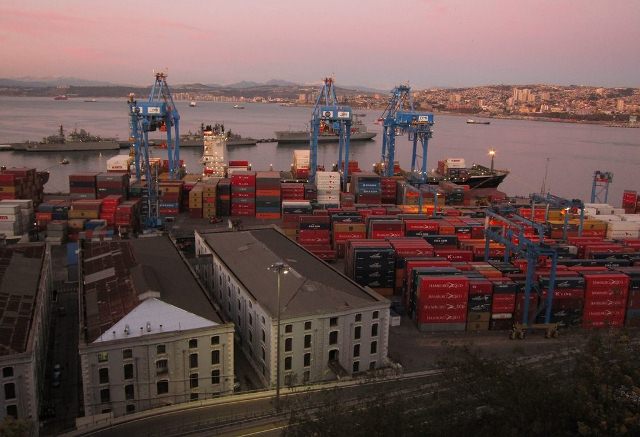
A container port or container terminal is a facility where cargo containers are transshipped between different transport vehicles, for onward transportation. Inland container ports tend to be located in or near major cities, with good rail connections to maritime container ports.

What are port operations?

Port operations can be defined as all policies, reforms, and regulations that influence the infrastructure and operations of port facilities including shipping services.

What is container terminal operations?

Container terminals are designated for the handling, storage, and possibly loading or unloading of cargo into or out of containers, and where containers can be picked up, dropped off, maintained, stored, or loaded or unloaded from one mode of transport to another (that is, vessel, truck, barge, or rail).

What is Port Handling?

An area designated for the handling, storage, and possibly loading or unloading of cargo into or out of containers, and where containers can be picked up, dropped off, maintained, stored, or loaded or unloaded from one mode of transport to another (that is, vessel, truck, barge, or rail).

How much is a Conex box?

The use of a Conex box for more than a couple of years can make purchasing a unit more cost-effective than renting. The purchase price ranges from $3,000-$5,000, depending on whether you buy new or used and how much the delivery fee will be.

The most read

More on this story

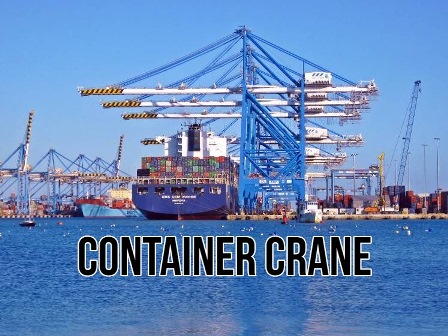
Container Crane

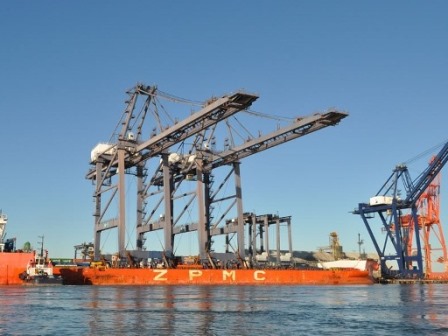
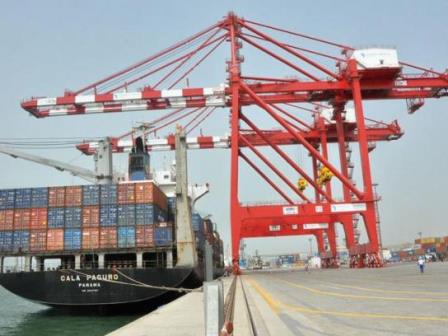
Container cranes consist of a supporting framework that can traverse the length of a quay or yard on a rail track. Instead of a hook, they are equipped with a specialized handling tool called a spreader.
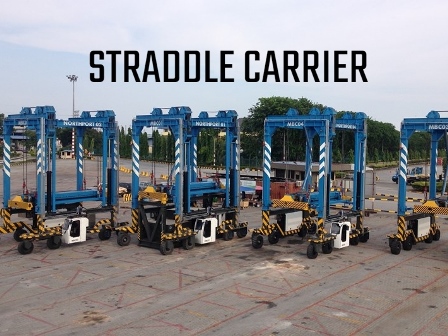
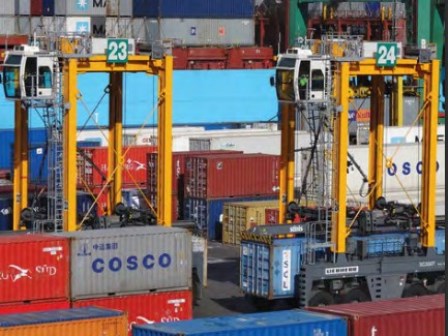
Straddle Carrier

Globalization combined with the success of containerization has brought about tremendous increases in the transportation of containers across the world.

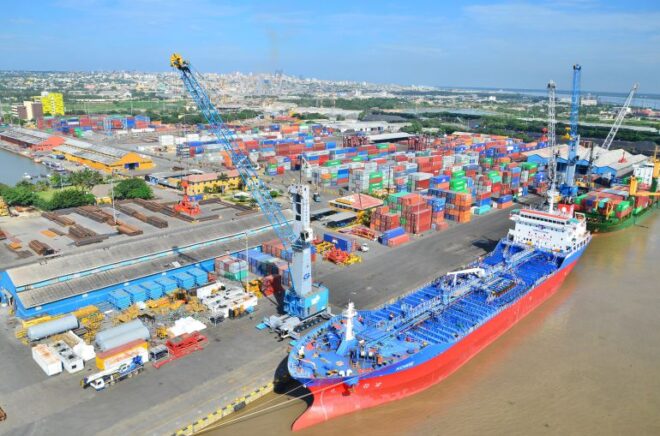
Types of Cranes Used in Ports

The transport of bulk cargo or materials with volume that exceed the capacity of a container needs to be handled by special cranes, with rigging and fastening mechanisms to move within warehouses, ports or work stations.

Port cranes types

Crawler Crane

The wide range of equipment and accessories available allows them to convert them quickly and without difficulty in machines suitable for handling bulk and other cargo.

These special cranes have another advantage: reduced operating costs. For use in port facilities, a package of accessories for special cranes is supplied in order to adapt the machine to the specific loading and unloading needs of the boats in the docks.

Said package includes:

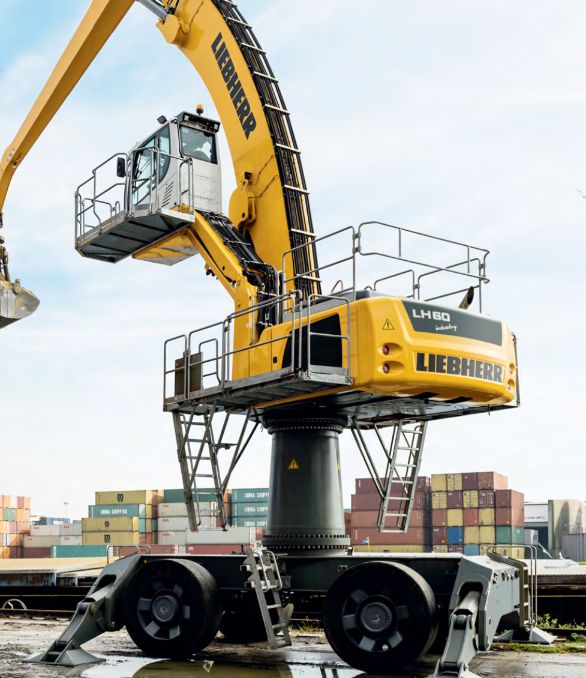
  • An elevated operator’s cabin to obtain a complete view of the warehouse.
  • An adapter between the lower chassis of the crane and the superstructure to raise the boom reference point. This allows a more efficient work close to the boat and guarantees that the crane can operate in a minimum range and therefore very close to its maximum load capacity.
  • Multiple safety features that include protections on the access stairs, wide service walkways throughout the superstructure, more mirrors for a clean and complete view and an acoustic warning sign of translation.
  • The modern Litronic® control system is included as a standard feature.
  • Accurate on-line calculation of the load moment to favor the maximum use of the available load capacities.

Load Manipulator

The main characteristics of these machines are a long reach, high lifting capacity, and extraordinary stability.

  • The variety of uses so different from each other requires a wide range of models. There are numerous variants of lower chassis, combinations of attached elements, work tools, and quick-change systems, as well as a large selection of equipment, which allows each machine to adapt to specific uses and requirements.
  • Low fuel consumption with intelligent machine control: with the energy efficiency system, the interaction of the drive components is optimized in terms of efficiency. Thus, the LPE allows the use of the machine in the range of lower fuel consumption specified while increasing efficiency and maintaining performance.
  • Power, speed, and precision: handling machines guarantee maximum productivity and performance. The excellent interaction between the engine, the hydraulic components, and the electronic ones leads to precision and precise control, all with fast and energetic movements.
  • Excellent panoramic vision: the large glazed surfaces, the different lift versions of the cab and the lateral and rear monitoring systems give the operator unbeatable visibility of the work area and the environment of the machine. This perfect view reinforces operator safety and maneuvers at all times

Chainloader

Other special cranes are the loaders of chains are used in the discharges of ships as compact universal devices to distribute the load, for example, corn or sugar, inside the hull of the ship.

  • Thanks to the drive on chains, the loaders of chains can fulfill his service even in the most extreme working conditions.
  • Its great maneuverability is an important advantage, especially in reduced workspaces such as the deck of a boat
  • The Z-arm kinematics of the lifting arm, together with the working hydraulics, enables high performance

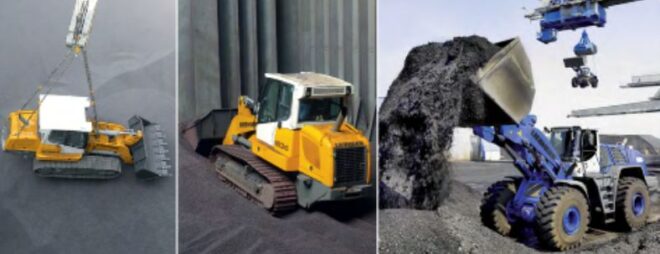
Wheel Loaders

In ports, the wheel loaders are used to transport loads, to unload ships and to load trucks and freight trains.

  • The loaders of the big range and those of the medium range are characterized by their profitability.
  • With the same working conditions, they consume up to 25% less fuel.
  • Even in extreme working conditions, the traction system is always hydraulically regulated.
  • The mechanical service brake only acts as a support, so it remains virtually wear-free
  • The traction force can be regulated gradually, which prevents the wheels from turning and, with it, the wear of them by up to 25%.
  • Stereo loaders are especially powerful and safe.
  • The unique steering system combines oscillating steering with the rear axle.
  • This not only increases the maneuverability of the machine by 20% but also provides extraordinary stability, since the oscillating angle is only 30 ° instead of the usual 40 ° in conventional oscillating directions.
  • At the same time, this makes it possible to transport large loads without having to increase the operating weight of the machine

A crane that is used for handling containers

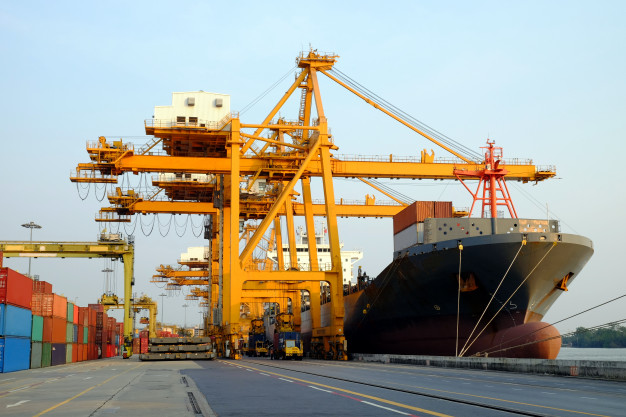
The cranes used to handle containers are specialized cranes located in a dock, port or warehouse and used to load and unload cargo containers on board or on land.

Container cranes on land are usually equipped with a telescopic spreader to handle containers of different sizes, and the cranes for unloading containers from ships are STS cranes.

Freight Transportation

To flexibly handle individual and bulk loads, we offer a complete range of equipment and special port cranes to handle loads, as well as multiple machines specially modified for such operations such as:

  • cranes on hydraulic chains
  • handling machines
  • hydraulic excavators
  • wheel loaders
  • loaders on chains

How do shipping container cranes work?

Where are cranes used?

A crane is a piece of heavy machinery that is a tower or platform that is equipped with cables and pulleys. They are used to lift and lower materials. The most common use of cranes is in the construction industry, ports and airports, and heavy equipment manufacturing.

What is meant by gantry crane?

A gantry crane is a crane built atop a gantry, which is a structure used to straddle an object or workspace. The terms gantry crane and overhead crane (or bridge crane) are often used interchangeably, as both types of crane straddle their workload.

How do cranes pick up containers?

At ports that use straddle carriers, the ship-to-shore gantry cranes place containers directly on the dock. The carrier then straddles the boxes, picks them up and takes them to the yard.

How do shipping container cranes work?

The crane is operated by a specially trained crane operator from within the cabin located on the top end of the crane and suspended from the trolley. It is the operator who lifts the container from the ship or dock for unloading or loading of cargo. The modern built spreader can lift up to 4 containers together.

The most read

More on this story

Container Crane

Container cranes consist of a supporting framework that can traverse the length of a quay or yard on a rail track. Instead of a hook, they are equipped with a specialized handling tool called a spreader.

Straddle Carrier

Globalization combined with the success of containerization has brought about tremendous increases in the transportation of containers across the world.

Container Crane

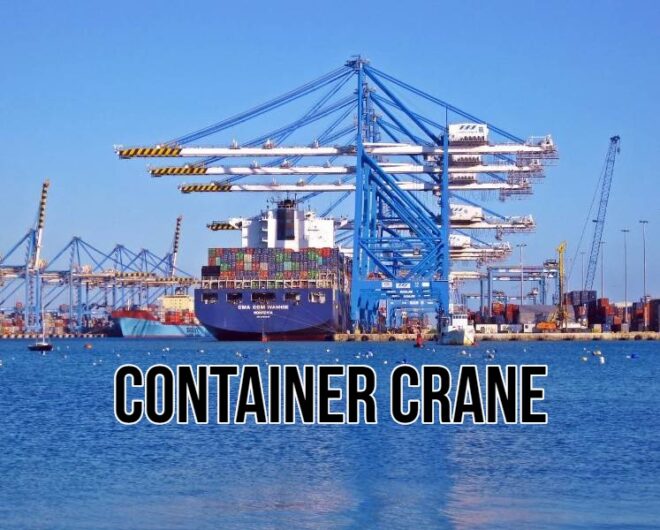
Container cranes consist of a supporting framework that can traverse the length of a quay or yard on a rail track. Instead of a hook, they are equipped with a specialized handling tool called a spreader. Cranes normally transport a single container at once, but some newer cranes have the capability to pick up two to four 20-foot containers at once

Container Crane

Container handling equipment

For the loading and unloading of boats on the docks, a wide range of port cranes is available:

  • cranes for containers
  • mobile port cranes
  • crane installed fixedly on a foundation column
  • cranes on rails.

Each one of them can be equipped with numerous optional and specific accessories for each job.

Likewise, customized and economically viable solutions are offered for all types of tasks, vessel sizes, and types of merchandise.

All cranes and their components are subjected to strict tests at the manufacturer’s plant in order to ensure the quality and long-term availability required by all products of the highest quality.

Container cranes

In modern port facilities, what counts is productivity and reliability.

Container cranes must be available 99% of the time in order to comply with the handling rates required by transport companies and port operators. And this is only possible by acquiring the correct equipment.

Container cranes are present on all five continents and their advanced technology satisfies the constant demands of customers.

They offer a wide range of gantry cranes for container loading, from Panamax sizes to the latest generation of Megamax cranes.

They have an extra reach of 70 m and are capable of working with the largest container ships in the world and with safe loads of up to 120 metric tons.

Mobile harbor crane

The port equipment covers a wide range of mobile cranes for ports, as well as cranes on a fixed pedestal and on the rail, each of which is available with numerous options planned for each type of operation, each ship size, and each type of freight.

Technical specifications

The result is a balanced program of 7 variations of the existing series with a range of performance from 42 tons to a maximum of 308 tons.

  • Its impressive range of applications includes a highly efficient container handling system with up to 45 movements/hour
  • bulk operations up to 2,300 tons/hour
  • the handling of scrap or general cargo and even heavy loads of up to 308 tons, simply with an easy change of the lifting equipment.

Mobile port cranes are based on an innovative concept that is the result of a development process that takes into account the modern requirements of material handling.

The modular concept applied to the basic machine offers solutions for a wide range of operational requirements.

The product range, with its excellent combination of well-established functions and unique features, is the perfect tool for simple and highly efficient load handling.

Whatever your objective is, mobile port cranes are a cost-effective, fast and practical solution.

Rotating crane

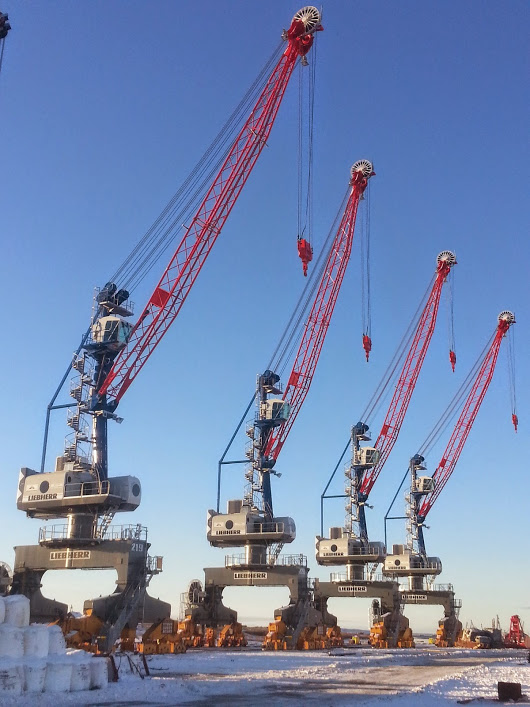
Fixed cranes and mobile cranes for cargo handling, rotating cranes for docks, harbors and shipyards can be fixedly installed on foundation columns (FCC) or mobile gantries on rails (TCC).

The FCC and TCC ranges are economical solutions for cargo handling on ships up to Capesize size.

This concept is perfect for ports and shipyards with limited space or spring resistance.

The rotating cranes are proven designs that reach yields of up to 1000t metric

  • Little initial investment and reduced operating and maintenance costs.
  • The FCC and TCC range from Liebherr include different types of cranes that adapt to all types of load, thus guaranteeing maximum handling efficiency: cranes with boom lifting mechanism by cable or by cylinders, cranes for heavy loads or cranes for containers/bulk or general cargo.
  • The wide range of accessories allows the crane to be configured for specific purposes (handling of containers or bulk), for multiple operations or for special applications.
  • The cranes come equipped with control systems such as the hydraulic load sensing control (CSC) or the Litronic ® high-speed control system.
  • The Crane offers a complete view of the work area and the load, which guarantees the precise handling of the goods.

Types of port infrastructure

As existing terminals, ports, and coastal infrastructure prepare for future mega-ships, improvements and expansions of port infrastructure require well-documented strategies and careful planning in order to be implemented successfully.

At a time when terrestrial, regulatory, environmental and safety requirements are becoming increasingly stringent, offering clear solutions to help customers navigate this complex world, it is necessary to have the necessary infrastructure.

Container crane operator

Profession container crane operator

Container crane operators operate electrically powered cranes equipped with cantilevers on which hoisting gear is supported to load or unload container cargo.

They move towers in position alongside the vessel and lower cantilevers over the deck or hold of a vessel. They lift and move the container along the cantilever and position the container on the dock, on the vessel deck, or in the hold.

Container crane operator training

Personality Type

  • Realistic / Conventional
  • Realistic / Enterprising

Crane Knowledge

  • Loading charts for transportation of goods
  • Understand the information displayed in loading charts showing the weight of shipments loaded in trailers.
  • Read loading charts for the transport of larger items, dangerous materials or shipments that need special care.

Machine operator skills

  • Stay alert
  • Stay focused and alert at all times
  • React quickly in the case of unexpected events.
  • Concentrate and do not get distracted performing a task over a long period of time.

Load cargo on to ships

  • Load and unload cargo onto ships.
  • Oversee cargo loading and discharging operations.

Assist in the movement of heavy loads

  • Provide assistance in the relocation of heavy loads
  • Set up and operate a rigging system of ropes and cables in order to move heavy cargo.

Inspect crane equipment

  • Inspect the suitability of cables, pulleys, and grappling devices that form parts of cranes.
  • Ensure the ongoing maintenance of this equipment.

Set up crane

  • Set up cranes taking all safety measures into account.
  • Organize weight of loads according to lifting equipment capacity
  • Organize the weight of loads to prevent overloading and imbalances in lifting equipment.

Operate cranes

  • Operate cranes to move, position, lift or place machinery, equipment, or other large objects at various locations.

Check the quality of products on the production line

  • Check products for quality on the production line and remove defective items before and after packaging.

Use rigging tools

  • Employ rigging tools such as cables, ropes, pulleys, and winches to safely secure high structures.

Conduct routine machinery checks

  • Check machinery and equipment to ensure reliable performance during use and operations in worksites.

Maintain crane equipment

  • Ensure appropriate maintenance of crane equipment
  • Identify and report damage and malfunctions.
  • Replace worn or damaged components if necessary.

Operate railway lever frames

  • Operate mechanical lever frames housed in signal boxes.
  • Understand different applications of levers such as interlocking or signal receiving
  • Read and comprehend the track diagram and signaling layout mounted above the lever frame.
  • Operate hand-powered interlockings, power frames, mechanical, pneumatic or electric levers.

Perform high-risk work

  • Perform high-risk tasks and work that requires close adherence to specific rules and procedures to ensure safe operations.

Container crane manufacturers

Konecranes

I have over 40 years of experience in the design, manufacture, and delivery of Ship-to-Shore (STS) cranes. have delivered over 120 of them. They’re keeping berthing windows open at container terminals around the world.

SHIP LOADING AND UNLOADING: Konecranes provides STS cranes in sizes ranging from Panamax to Super-Post-Panamax, with a long list of standard and optional features to choose from. Also, provide a set of driver assistance features. Our STS cranes have an excellent reputation for design, build quality and after-sales support. We can erect them on-site, or ship them fully erect depending on your location.

Liebherr Container Cranes

Shipping lines and port operators demand high productivity rates in modern container ports. Port equipment must, therefore, prove extremely efficient and economical in use. Liebherr Container Cranes Ltd. has over 50 years of experience in crane development and manufacture.

In 1958 Hans Liebherr founded the company in Ireland as the first manufacturing plant outside of Germany. At the Killarney plant in the Southwest of the country, the company produces ship-to-shore container cranes, rubber-tired and rail-mounted stacker cranes, and accessories. Liebherr container cranes are in use in over 100 ports and nearly 50 countries worldwide.

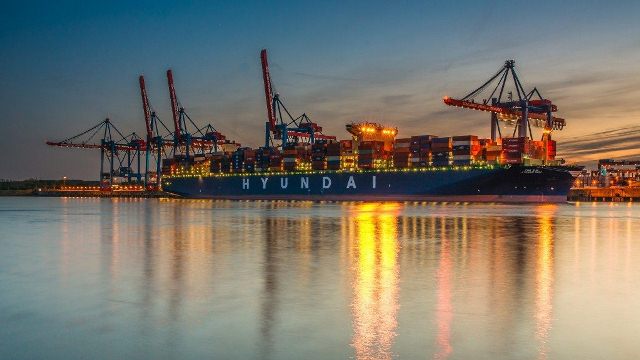
Hyundai container ship

Hyundai has established an effective total system in engineering, design, manufacturing, erection, transportation, site installation, test, and commissioning of high-quality Container Handling Cranes.

A choice of Hyundai Container Handling Crane will certainly increase the efficiency and productivity of a port and terminal operation.

Weihua crane

Weihua group mainly deals with researching, developing, and producing the lifting machinery, port machinery, construction-use tower crane, reducer, etc.

In the twelfth Five-Year Plan period, under the guidance of the scientific outlook on development, Weihua people will develop strategies; develop courageously, and continuous innovation, to achieve the magnificent goal of ‘To be one of the most famous brands in the world.

Container crane specifications

A container gantry crane is a specialized crane located on a wharf and used for loading and unloading shipborne cargo containers.

It usually is fitted with a telescopic spreader to handle containers of different sizes. Crane back-reach is the distance from the centerline of the landward crane rail to the centerline of the farthest landward position of the spreader. Crane out-reach is the distance from the centerline of the waterside position of the trolley spreader.

Applications

These cranes are specialized for loading and unloading shipborne cargo containers.

Technologies

Such a crane is usually a three-part, H-shaped steel structure. The main vertical element includes a counterweight and is mounted on rails to allow the crane to move along the wharf in order to transfer containers to or from any part of the vessel. It also includes a cabin for the operator and a container spreader that can move horizontally through the steel structure, perpendicular to the wharf edge.

How to choose

In choosing a container gantry crane, the out-reach and back-reach distances, lift height, and capacity must be taken into account.

Advantages

  • Efficiency
  • Speed

Disadvantages

  • Requires trained operators

How do cranes pick up containers?

How do cranes pick up containers?

At ports served by RTG yards, the containers are first loaded on truck trailers before the RTGs move them to the yard. At ports that use straddle carriers, the ship-to-shore gantry cranes place containers directly on the dock. The carrier then straddles the boxes, picks them up, and takes them to the yard

How do shipping container cranes work?

The crane is operated by a specially trained crane operator from within the cabin located on the top end of the crane and suspended from the trolley. It is the operator who lifts the container from the ship or dock for unloading or loading of cargo.

What are ports and terminals?

A port is defined as an area on both land and water, whether on the sea or river, that provides facilities for shipping vessels to load and unload their cargo. This area, contained within ‘port limits’, will have been established over years of increasing or declining trade patterns and therefore is defined as the ‘human set limits’.

How do container ports work?

A container port or container terminal is a facility where cargo containers are transshipped between different transport vehicles, for onward transportation. Inland container ports tend to be located in or near major cities, with good rail connections to maritime container ports.

What are the responsibilities of a container crane operator?

-Load cargo onto ships
-Assist in the movement of heavy loads
-Inspect crane equipment
-Set up crane
-Operate cranes
-Check the quality of products on the production line
-Use rigging tools
-Conduct routine machinery checks
-Maintain crane equipment
-Operate railway lever frames
-Perform high-risk work

The most read

Port cranes

At present, there are many different types of cranes, depending on where they work, the loads they have to hoist and the tons they support, as well as the mechanisms they use.

More on this story

Ship to Shore Crane

The gantry crane for containers: Panamax, post-Panamax, operator, uses, characteristics, ports, docks, transport, maneuvers, parts, container

Storage Logistics

Storage logistics: management, transport, and inventory in warehouses with drive-through shelves, forklifts, and stacker cranes. cold storage warehouse.

Types of Cargo Ship

The international transport of goods has evolved. In addition to the types of a cargo ships, there are currently three types of ships: passenger, fishing, and cargo.

In this article, cargo ships used in maritime transport will be addressed, explaining their main differences.

Next, we show the different types of ships that exist to transport all the variety of goods that move around the planet. From heavy cargo to liquid or gaseous cargo.

International Trade

Merchant ships are a fundamental part. Its proliferation responds to economic expansion. As early as 1939, the world merchant fleet moved 70 million tons.

The increasing demand and exchange of products between countries around the world boost the manufacture of cargo ships to transport goods.

Types of cargo vessels

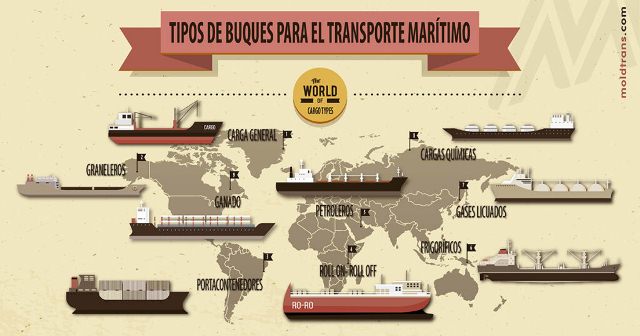
Characteristics of cargo ships. These ships have evolved, and continue to do so, to adapt to longer trips and larger and heavier loads. Vessels are categorized into four types:

  • load,
  • passage,
  • fishing and
  • war.

Of the first, we find different classes according to two criteria: transport and loading way. Depending on the cargo, the ship types are:

  • General cargo
  • Bulk carriers
  • container ship
  • Rolled cargo
  • Refrigerators
  • Loads of oil
  • Loading of liquefied gas
  • chemical charges
  • a load of live animals
  • Project loads
  • barges.

Cargo ships

This type of ship that transports diverse merchandise is also known as a “multipurpose ship”.

These vessels are the most basic within dry cargo ships; They are used to transport loose and irregular cargo, which is why they are not suitable for containers, Ro-Ro, heavy loads, special loads, or breakbulk loads.

Longshoremen to secure cargo on these vessels use specialized equipment often soldiers in the ship’s holds.

These ships have their own cranes arranged along with the same which allows them by their own means to carry out the loading and unloading operations of the merchandise they transport.

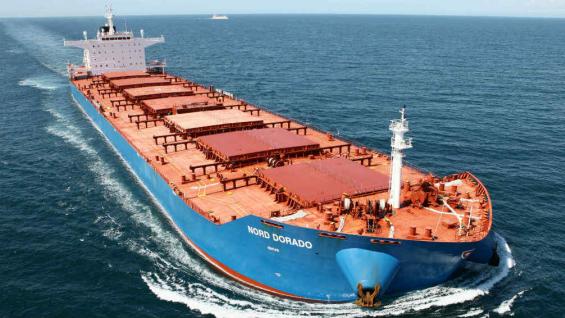
Bulk carrier

They are used for the transport of loose dry cargoes such as minerals, grains, and cement, loads whose cost is generally determined according to their weight, for which their maritime transport and other types of transport through ships are usually inefficient.

Bulk shipping

Bulk carriers are large vessels usually divided into different warehouses covered with hatches.

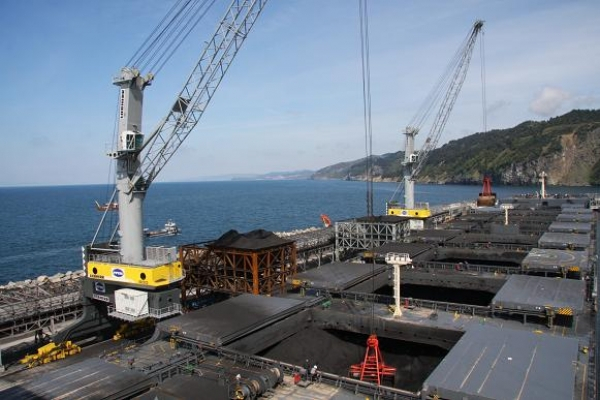
These bulk carriers are loaded with cargo tubes, and cranes equipped with containers or spoons, some ships are equipped with their own cranes that allow loading and unloading without the need to use the Port equipment.

Bulk ships are usually unloaded with cranes or buckets although some loads can be unloaded using specialized equipment in order to speed up the process.

The bulk cargo is normally loaded from the ship to hoppers that are then transferred on conveyor belts to large warehouses and/or warehouses.

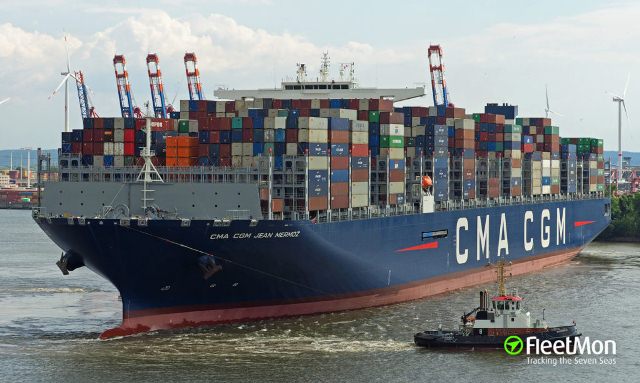
Container ship

The container ships carry about 52% of all seaborne trade.

And they are specially designed to transport standard containers according to the ISO standard, including standard containers of 10, 20, 40, and 45 feet, high-cube containers, open-top containers, flat rack and platform containers (used for oversized cargo), containers cistern (for liquids/gases) and refrigerated containers that require a source of energy to control the temperature.

Container ships are loaded/unloaded using gantry cranes that move containers directly between the ship and the truck that supplies the need for storage and makes the entire process of land transportation more efficient.

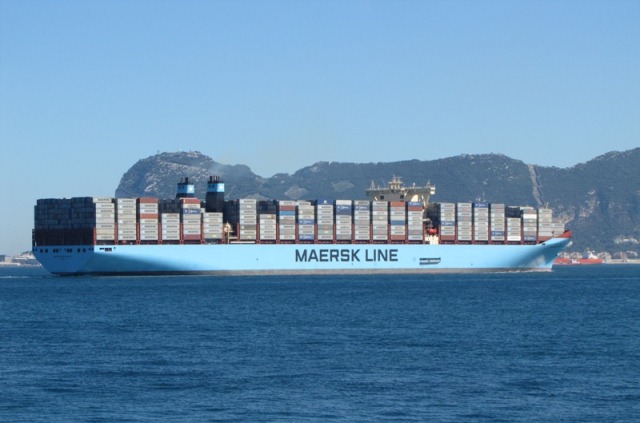
Container ships can have different sizes, the largest in the world is the Maersk class Triple-E with 1306 feet long and a capacity of 18,340 TEU.

It would give all the sensation that to operate this type of ship a great crew is needed but it is not thus, due to the high degree of automation in its controls of command and a huge motor of 109,000 HP, the crew does not exceed the 13 men.

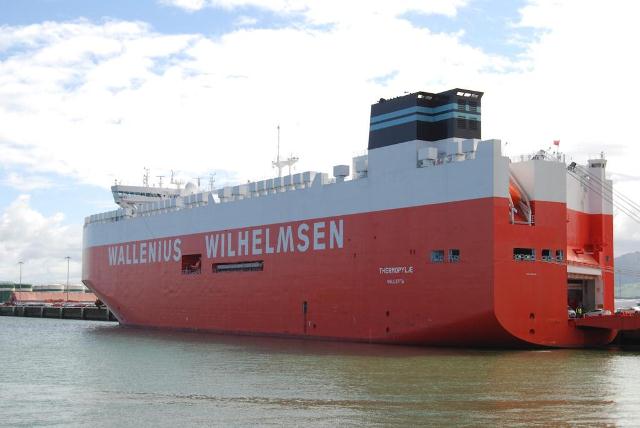
RORO ship

RO-RO ships or ro-ro cargo ships are designed to transport the merchandise with wheels that are loaded and unloaded by their own means or by means of tractors.

They are characterized by having a large gate that can be found on the stern or bow or on both sides depending on the complexity of the boat, making this ramp gate where the merchandise ascends and descends

Roll on roll off ship

The cargo is conditioned on Ro-Ro ships on different decks connected by ramps or lifts.

The largest Ro-Ro ship in the world is the Mark V Class, owned by Wilh. Wilhelmsen with 869 feet in length and three elevating decks that provide a total of 138,000 cubic meters of space.

The most common loads in this type of ship are, automotive vehicles of different characteristics, trucks, diverse machinery on wheels, rolling stock of different types, and trailers loaded with containers.

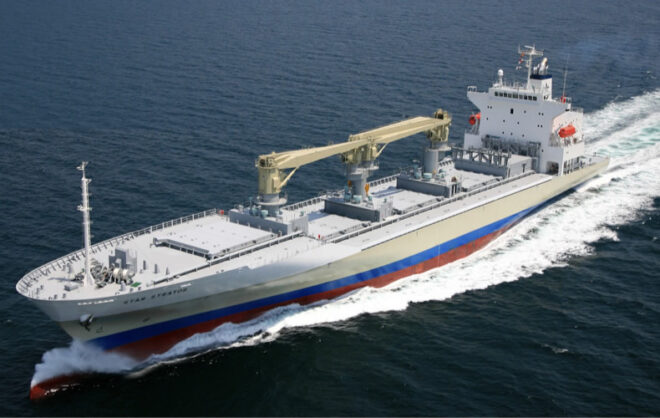
Refrigerated shipping

A reefer ship is one destined for the transport of merchandise that needs a thermal treatment to be able to conserve itself in good condition.

This thermal treatment can consist of cooling or freezing, ranging between 12ºC and -30ºC of temperature.

This type of vessel is usually white or similar to reflect the sun’s rays as much as possible, thus preventing the heating of the hull, and consequently, that of the holds and cargo.

As for the structure, they are usually designed with between 3 and 5 wineries with a size between 90 and 150 meters in length.

The stores are divided into one plan and several interlocks (usually two).

If the boat has been designed for the transport of refrigerated cargo such as fruit, vegetables, etc., its curves and lines are thin to allow a speed of up to 18-21 knots.

This is due to the characteristics of the product, as it is a living and perishable commodity, and the ship’s speed plays a very important role in this trade.

Different types of cargo vessels

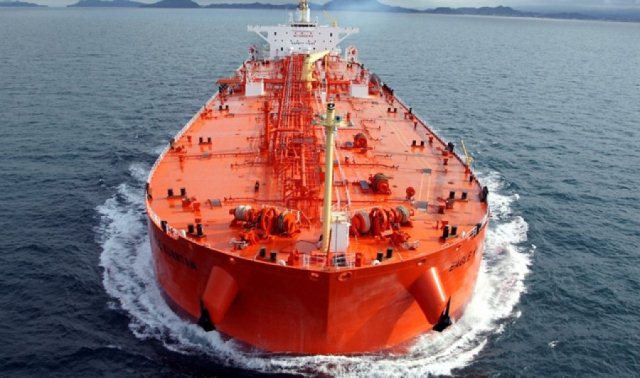
Oil products tanker

Crude Oil Ships are designed (as the name implies) to transport crude oil to refineries where it will be processed. The largest ships in the world are the VLCCs (Very Large Crude Carriers) and them ULCCs (Ultra Large Crude Carriers).

Due to the size of these supertankers, many can not dock at the ports, so they are unloaded at terminals/pumping stations on the high seas.

The Supertankers (VLCC and ULCCs) can transport approximately 2 million barrels of oil or 318 thousand metric tons. The “Knock Nevis” is considered the largest ULCC supertanker ever built with a length of 1504 feet, although it stopped operating in 2009.

The construction of these supertankers brings enormous advantages from the point of view of logistics, but in case of accidents, the consequences are catastrophic due to the enormous volume of cargo they transport.

Attentive to this, the construction of these ships is currently questioned and there is a tendency to transport them on smaller ships.

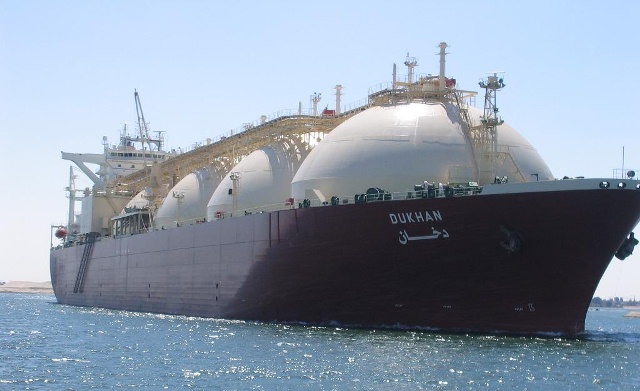
Gas carrier ship

This type of vessel is specially designed for the transport of Liquefied Natural Gas (LNG) or Liquefied Petroleum Gas (LPG).

They are quickly identified since large spherical, cylindrical tanks or a high cover for the new transport system known as the “Technigaz System” appear on its cover.

Gas carrier

There are two types of gas tankers that are known by the acronym LNG and LPG. The difference is due to the fact that the former transport the liquid gas at temperatures of up to -170 ° C and the latter at -50 ° C and at a pressure of 18 kg / cm2.

The load is stored in special spherical tanks under high pressure and often at low temperatures.

The loading and unloading of these vessels require specialized terminals and equipment.

LNG is generally larger than GPLs, the largest vessel for transporting Liquefied Gas is the Q-Max, a special LNG vessel with 1132 feet long and a capacity of 266,000 m3.

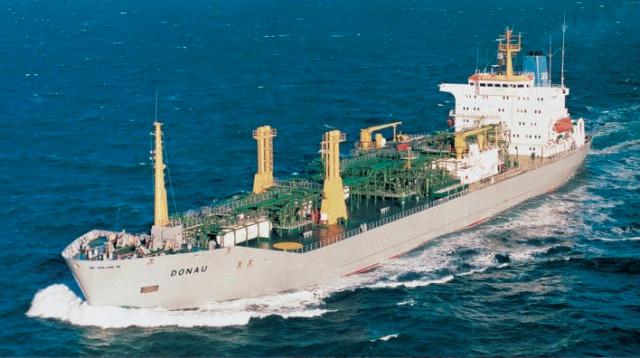
Chemical Ship

Ships for chemical substances are used to transport a wide range of chemical products, each with its different properties, characteristics, and respective risks.

Chemical tankers generally have a number of individual tanks coated with special coatings such as phenolic/zinc resins or are completely manufactured in stainless steel.

The material used for the tanks or the coating determines what type of cargo can be stored, the resin coatings can store loads as vegetable oils while other types of cargo such as aggressive acids and other dangerous cargoes (for example phosphoric and sulfuric acid) are due load in stainless steel tanks.

Due to the construction characteristics, since they have several tanks, it greatly favors the transport of several types of products in the same trip.

They are vessels of a high manufacturing cost due to the construction requirements such as double hull, stainless steel tanks, and sophisticated painting systems.

They are identified by their smaller size compared to the tanker (about 150 meters in length) and a complex branch of pipes distributed over the entire deck.

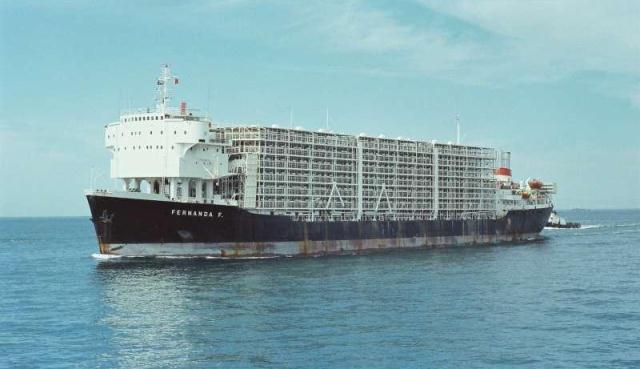
Cattle ship

Normally ships for the transport of cattle are originally other types of vessels that have subsequently been suitable for the transport of as many animals as possible.

They are designed to provide the right amount of water, food, and ventilation to each animal

There are two types of livestock ships; open livestock ships with pens installed on open-air decks, allowing natural ventilation and avoiding dependence on artificial ventilation mechanisms, and closed livestock ships that have pens installed on indoor decks.

Closed vessels require artificial ventilation systems and this is why they have a much more controlled environment than in case of severe climate changes, it serves as protection and protection.

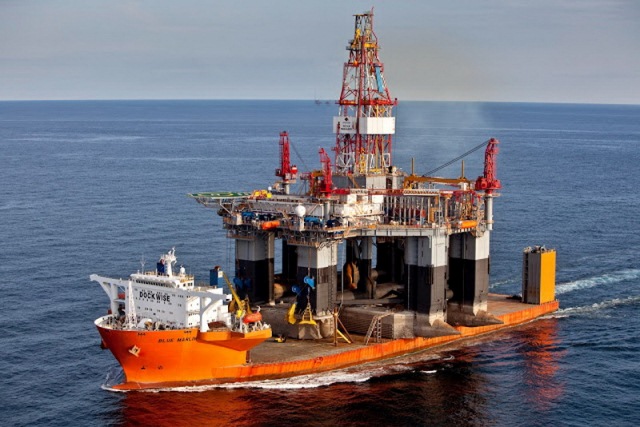
Heavy lift vessel

they are special vessels for extremely heavy and/or bulky loads, such as specialized industrial machinery and other vessels such as Yates.

There are several types of vessels that can transport project loads, many of them are semi-submersible vessels that, to facilitate unloading, allow loads to float to the proper position before being lifted out of the water together with the semi-submersible vessel and finally discharged.

Likewise, several of the project cargo ships have their own unloading equipment, facilitating the unloading of their special loads in smaller ports and with less specialized equipment.

How is cargo transported?

Shipping is a method of transporting large amounts of goods using shipping vessels. Goods are packed into containers and then loaded onto a ship. A typical cargo ship can carry around 18,000 containers, which means that shipping is a cost-effective way to transport large quantities over long distances.

The type of vessel used to transport cargo would depend on what is to be transported, from containers to minerals.

How many types of cargo ships are there?

How many types of cargo ships are there?

Cargo ships are classified under different categories based on their size, dimension, and weight. The most common classifications (at the time of this post) are Handy size, ships weighing between 28,000-40,000 DWT. Handymax, ships weighing between 40,000-50,000 DWT.

What kind of cargo do ships carry?

Tankers carry petroleum products or other liquid cargo. Dry bulk carriers carry coal, grain, ore, and other similar products in loose form. Multi-purpose vessels, as the name suggests, carry different classes of cargo – e.g. liquid and general cargo – at the same time.

What is wet bulk?

Bulk cargo is commodity cargo that is transported unpackaged in large quantities. It refers to material in either liquid or granular, particulate form, as a mass of relatively small solids, such as petroleum/crude oil, grain, coal, or gravel.

What is the difference between bulk and breakbulk cargo?

In shipping, break bulk cargo or general cargo are goods that must be loaded individually, and not in intermodal containers nor in bulk as with oil or grain. These goods may not be in shipping containers. Breakbulk cargo is transported in bags, boxes, crates, drums, or barrels.

How many people can be in a cargo ship?

These ships can fit much larger crew sizes, but the crew tends to be composed of no more than about 20-30 people. There are usually 6-14 main officers responsible for overseeing each deck, maintaining safety systems, and keeping the ship going. Besides the officers, there will be 6-14 crew members who assist them.

The most read

Super Container Ship

How many containers does a super container ship have? What is the largest container ship in the world?

More on this story

Ship to Shore Crane

The gantry crane for containers: Panamax, Post Panamax, operator, uses, characteristics, ports, docks, transport, maneuvers, parts, container

Storage Logistics

Storage logistics: management, transport, and inventory in warehouses with drive-through shelves, forklifts, and stacker cranes. cold storage warehouse.

Super Container Ship

We take a look at the world’s ten super container ships (ordered by number of TEUs) built to date. Our top ten is opened by the Maersk-E class, a family of container ships with 14770 Teu belonging to the Maersk container line.

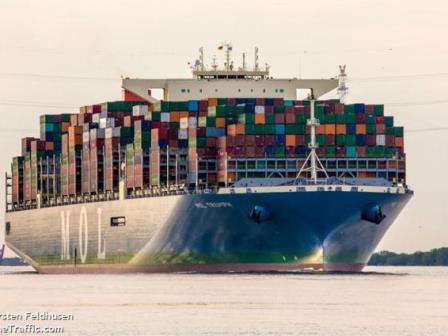
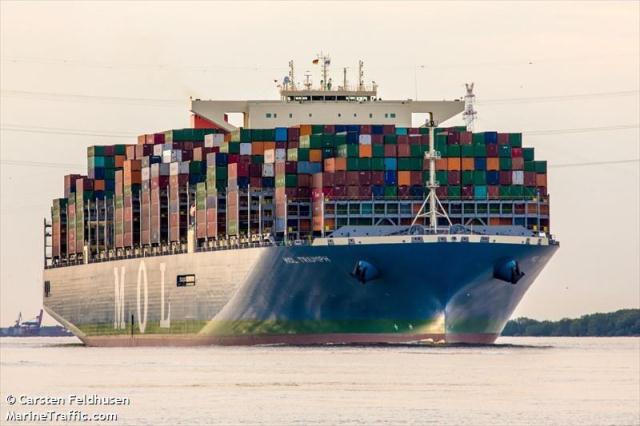
In 2017 we published the new classification, which includes the MOL Triumph, with a capacity of 20,100 TEUs, which eliminates the 14,000 TEU containership series.

Although this lead will be short-lived, Samsung Heavy Industries will begin construction of the first of six 21,000 TEU container ships for the Orient Overseas Container Line later this year.

The world’s largest container ship

1 – TRIUMPH CLASS: On March 14th the MOL Triumph was baptized and its delivery is scheduled for next Monday, March 27.

The Japanese shipping company Mitsui OSK Lines (MOL) commissioned four container ships of 20,150 Teu capacity from Samsung Heavy Industries, Ltd. in February 2015 and which builds it in its Geoje shipyard.

But the series will be complete when the last two units are built, making a total of six, at the Japanese shipyard Imabari Shipbuilding.

These will be chartered by Shoei Kisen Kaisha. In just 15 months this ship has been built (construction began in January 2016) and no accidents have been recorded.

These vessels are 400 m in length, 58.8m in the beam, and 32.8m in the draft. According to the shipping company, these new vessels will be able to reduce CO2 emissions by up to 50% per container transported compared to containers of 8.00 TEU.

The largest container ship in the world

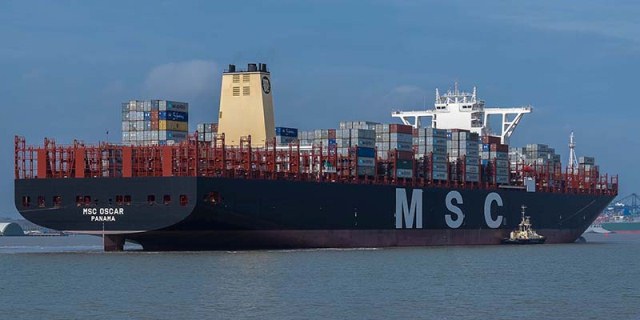
2 – Olympic Class of MSC of the Mediterranean Shipping Company holds the first position with its 19,200 TEU capacity.

The series will be completed with the MSC-Maya, which like the rest, the shipbuilding shipyard is the South Korean Daewoo.

Super post-Panamax ship

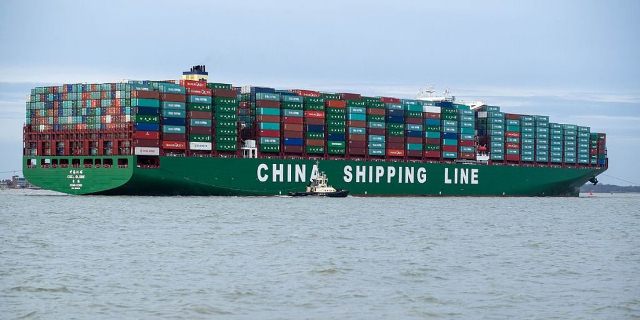
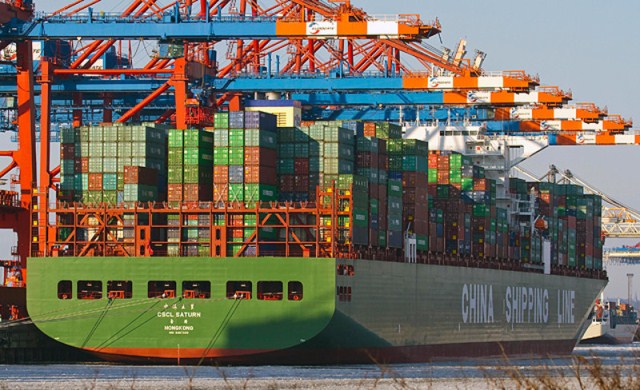
3. Class Globe of CSCL completes the series of ships of greater capacity (19,100 Teu) of the fleet of China Shipping Container Lines (CSCL).

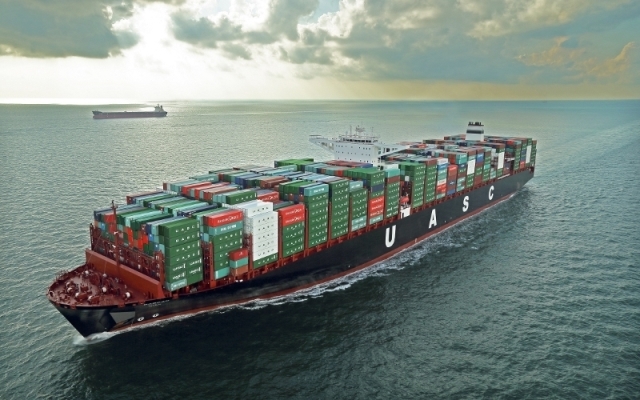
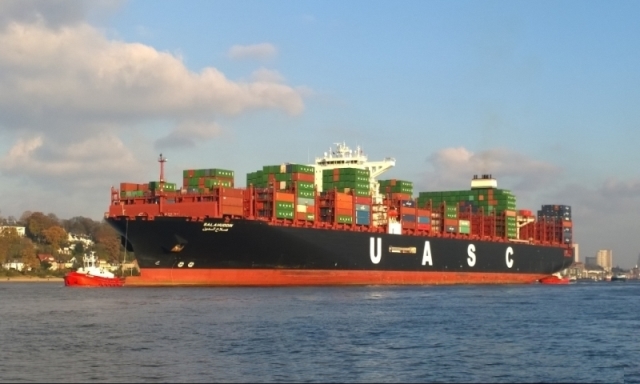
4. Class A19 of the UASC Barzan; they are 18,800 teu capacity and built at the South Korean shipyard Hyundai Samho Heavy Industries (HSHI) for the United Arab Shipping Company (UASC).

The series will be completed until it reaches six units. The Barzan was the first container ship with the class notation of DNV GL Gas REady.

MAERSK

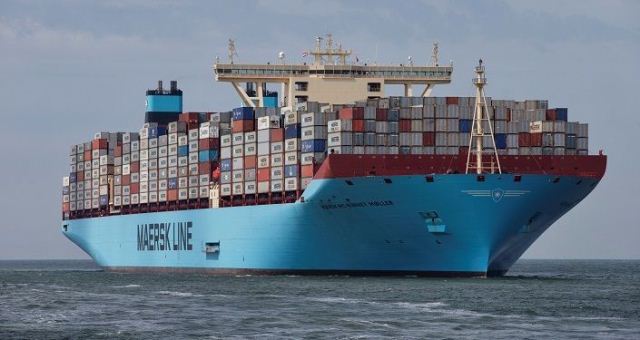
5. Triple E Class of Maersk Maersk_MajesticSerie composed of twenty vessels of 18,340 teu, which occupied the first position with the construction of the first in 2013. Under the ABS classification, they were built in the shipyard DSME.

Post Panamax

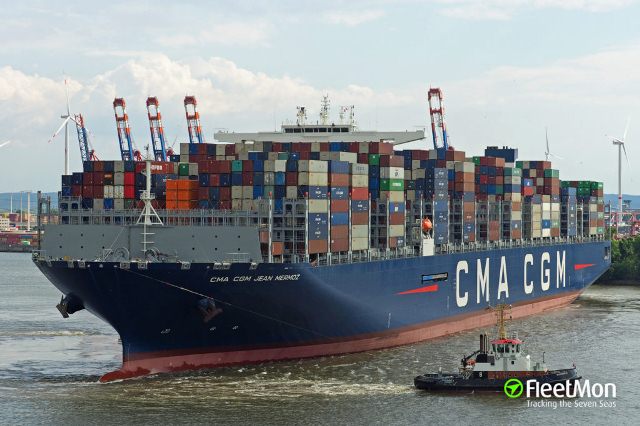
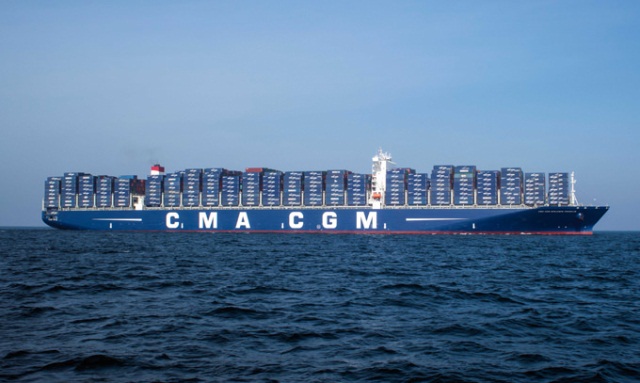
6. Explorer class of CMA CGM cma_cgm-benjamin-franklin The complete series consists of 15 container ships of different capacities. The ones that make him in the middle of our classification are the last six with his 18,000 TEU: the CMA CGM Kerguelen, the CMA CGM Georg Forster, the CMA CGM Vasco de Gama, the CMA CGM Bougainville, the CMA CGM Zheng He, and the CMA CGM Benjamin Franklin.

Panamax

7. Explorer class of CMS CGM CMA_CGM_Marco_Polo: As we mentioned before, this series consists of 15 ships of different capacities. Of these, the Jules Verne has a capacity of 16,020 teu.

8. Class A15 of UASC Sajir Composed of five vessels of 15,000 teu capacity: El Sajir, in 2014 became the first container vessel of this capacity prepared to use liquefied natural gas as fuel.

Megamax

9. E-Class Maersk Line Maersk_Mc-Kinney_Moller: This series of eight containers of 14,770 teu, consists of the following vessels. All of them have a length of 397.7 m, a beam of 56.4 m and 151.687 gt.

10. Star Class of CSCL CSCL_Mars: Eight ships built between 2010 and 2012 of 14,074 teu enter this seventh position, and second time their shipowner appears.

Super panamax vessels

Container ship design

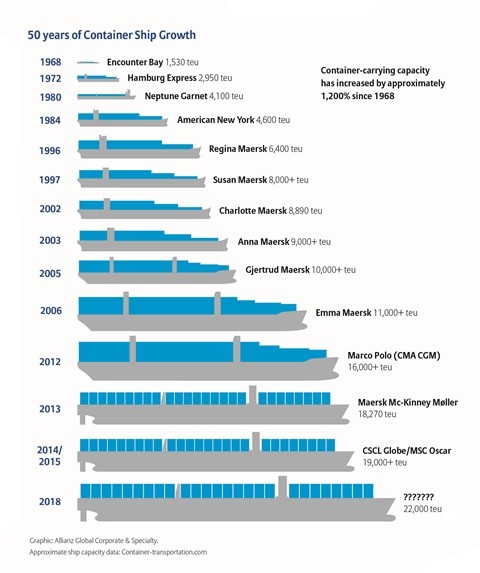
Container ships have been getting bigger since they began operating in liner services over 50 years ago because the increased size produces increased operating efficiency and improved environmental performance.

Some of the world’s biggest container ships are about 1,300 feet long – that’s nearly 400 meters or the distance around an Olympic running track – with a maximum width of 180 feet (55 meters).

Their engines weigh 2,300 tons, their propellers 130 tons, and there are twenty-one storeys between their bridge and their engine room.

They can be operated by teams of just thirteen people and a sophisticated computer system and carry an astonishing 11,000 20-foot containers. If that number of containers were loaded onto a train it would need to be 44 miles or 71 kilometers long!

And now, as the graph below depicts, there are ships even larger than that in operation.

Some other facts about containers ships:

  • A large container ship engine has about 1,000 times more power than a family car.
  • The gantry cranes that load and unload container ships can be 430 feet tall and weigh up to 2,000 tons.
  • Container ships are technologically advanced. A good example is the computer software that enables precise planning for the loading and unloading of containers and keeps the vessel balanced by increasing and decreasing ballast at the touch of a button.
  • A recent study by Lloyd’s Register found that the fuel efficiency of container ships (4,500 TEU capacity) improved 35% between 1985 and 2008.
  • It is estimated that on average a container ship emits around 40 times less CO2 than a large freight aircraft and over three times less than a heavy truck.
  • Container shipping is estimated to be two and a half times more energy-efficient than rail and 7 times more so than the road.
  • Weekly safety and fire drill sessions take place for all crewmembers when the vessel is at sea to make sure that they are practiced for any real emergencies.

Fastest cargo ship in the world

What is the fastest cargo ship?

What is the fastest cargo ship?

The Algol-class vehicle cargo ships, also known as Fast Sealift Ships (FSS) or SL-7s, are currently the fastest cargo ships in the world, capable of speeds in excess of 33 knots (61 km/h).

How many containers does a super container ship have?

This year’s new class of container ships, the Triple E. When it goes into service this June, it will be the largest vessel plowing the sea. Each will contain as much steel as eight Eiffel Towers and have a capacity equivalent to 18,000 20-foot containers (TEU).

How much does a container ship cost?

In March 2012, the average price for a geared 500-TEU container ship was $10 million, while gearless ships of 6,500 and 12,000 TEU averaged prices of $74 million and $105 million respectively.

How fast can a container ship go?

Most containerships are designed to travel at speeds around 24 knots. Slow steaming (18-20 knots; 33.3 – 37.0 km/hr).
Running ship engines below capacity to save fuel consumption but at the expense an additional travel time, particularly over long distances (compounding effect).

What is the longest shipping container?

The 48-foot (14.63 m) shipping container is a High Cube container in that it is 9 ft 6 in (2.90 m) tall on the exterior. It is 8 ft 6 in (2.59 m) wide which makes it 6 inches (15 cm) wider than ISO-standard containers.

How do you ship a container?

The cheaper option is to allow a freight company to use your containers for a single shipment of goods (also known as one trip). If you do this, then the freight company will pay to ship your container to your local port.

The most read

More on this story

Ship to Shore Crane

The gantry crane for containers: Panamax, Post Panamax, operator, uses, characteristics, ports, docks, transport, maneuvers, parts, container

Container Crane

Container cranes consist of a supporting framework that can traverse the length of a quay or yard on a rail track..

Container Straddle Carrier

What is a straddle carrier system? How much does a straddle carrier cost? Is a straddle carrier a crane?

Storage Logistics

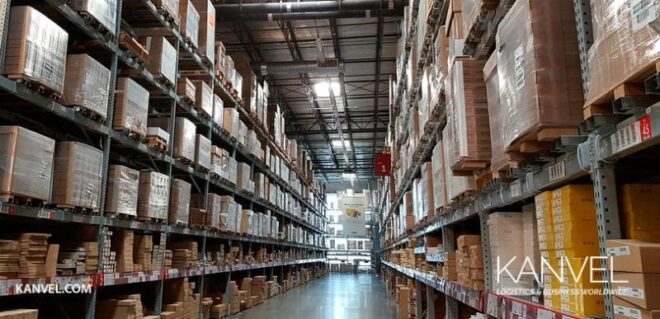
Definition of storage logistics: We define storage logistics, such as the management and operations necessary for the reception, storage, and movement of the products of an online store.

E-commerce, like any other type of business that sells physical products, needs to have control of the stock of its products. Know how many units are left of a certain article. The moment in which a product is out of stock, or where the store is located. These are some of the questions that online stores ask themselves every day.

These questions are answered in adequate storage logistics and inventory control.

Storage logistics definition

Warehouse Management

From their point of origin, until they leave e-commerce. All the tasks carried out by the online store for the supply, storage, and access to the products of its warehouse would, therefore, be included in the storage logistics.

  • All the tasks of warehouse logistics seek to achieve a series of objectives. How it can be to maximize the space.
  • Minimize inventory costs
  • Reduce the routes in the picking process.
  • Perform all store operations in the shortest possible time.
  • Avoid stock breakages or guarantee the supply of products.

Logistics and storage

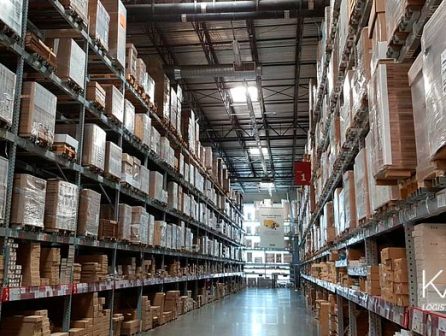
What is the warehouse?

The classification of the warehouses according to their degree of mechanization; not all warehouses have the same degree of mechanization, mainly because not all goods can be treated with the same mechanical means, therefore the warehouses according to their degree of mechanization in conventional warehouses, high-density warehouses, and automatic warehouses.

Conventional stores: Those whose height does not exceed 10 meters in height. And that they are equipped with shelves and simple means for the internal transport, of the type of a forklift truck, which forces that the distance between shelves is greater due to the maneuverability of the forklift.

Due to the importance of forklifts (forklifts) in the actions to be carried out in warehouses, we can classify the warehouses depending on the use of these cranes in:

Warehouses that use counterbalanced forklifts

The height of the shelves can not exceed 4 meters in height which are the length of the mast of the conventional forklift. The width of the corridors will be a function of the maneuverability of the truck and the weight of the load to be handled, being normal width of about 3.5 meters, although if some type of accessory for the truck is needed, this width could reach be older

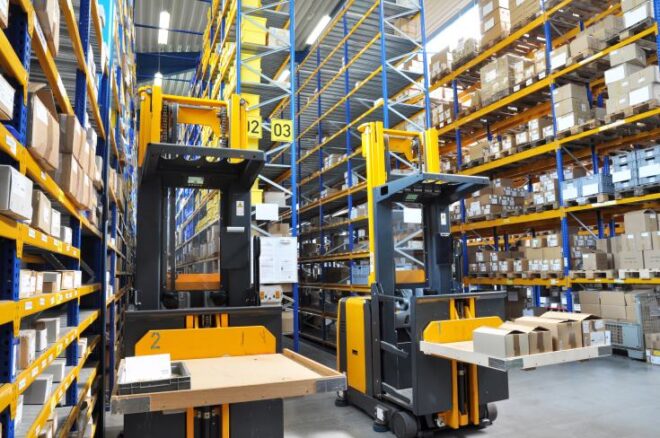
Warehouses using retractable mast forklifts

The use of forklift trucks of the retractable mast, allows stores to gain in height since already mast can reach 10 meters in height, so unlike conventional trucks the mast cannot be tilted, it is also reduced the width of the corridors, since by design it allows the mast to retract on lower guides that are introduced in the chassis of the machine, being able to be the width of the corridors of 2.5 meters.

Drive-thru storage

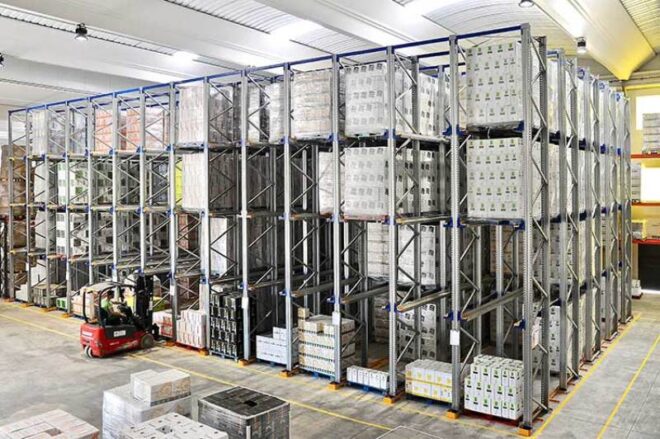
Conventional warehouses with drive-in and drive-through shelves: The drive-in and drive-through shelves are ideal for storing large quantities of heavy goods with a small variety of items. The shelving system combines the advantages of block stacking and stacking of shelves: compact use of space with high stacking heights and care of stored goods.

Before entering the desired channel, the truck raises the pallet to the level of the desired shelf level. The truck must not be wider than the pallet. The stacker with a transversal seat is very appropriate for this job since it also offers the driver good visibility in reverse.

These types of shelves are capable of storing several load units, one behind the other, distributed in-depth and on two brackets.

Industrial Racks

For storage and storage, one cycle must be maintained per shelf module, from top to bottom (and vice versa).

The trucks have the possibility to enter the shelving modules. If it is a drive-in bookcase, it can only be accessed from one side, the Lifo method, that is, the merchandise that first enters the store is the first one to leave.

On the other hand, with a drive-through shelf it can be stored on one side and, simultaneously, stored on the other side, the Fifo method, that is, the last merchandise that has entered the warehouse is the first one that comes out.

For this reason, the performance in the shipment of goods from the drive-through shelves is higher than that of the drive-in shelves.

Dynamic Rack

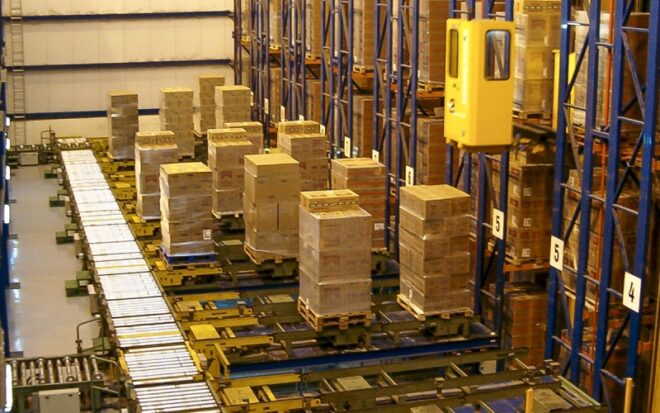
Warehouses equipped with dynamic shelves: The warehouses equipped with dynamic shelves can be considered to constitute an intermediate stage toward the systems in which the product flows to the operator without it having to move.

The FIFO principle is applied (first palette that enters, first one that leaves). The pallets are moved by slightly inclined rollers.

  • They present the possibility of incorporating small reducing motors or air cylinders for the drive of the roller rows.
  • They are recommended especially for intermediate warehouses, shipping areas, etc.
  • They are recommended for homogeneous and perishable products.
  • They provide organized storage for a quick location and with them, the displacements of the trucks are minimized.
  • Increase the number of articles of direct access, greatly reduce the trajectory times to the product and downtime, reduce the superfluous areas.

High-Density storage

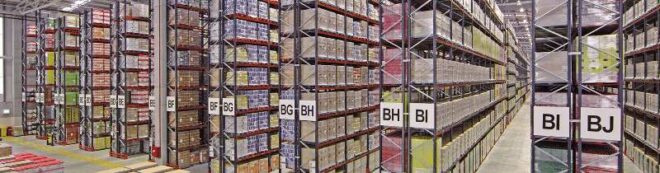
High-density warehouses: They require the use of specific means in order to achieve the highest possible density of packages located per square meter of storage area.

  • High-density warehouses require shelves adapted to the dimensions of the packages.
  • The dimensions of the corridors for the same machine must be the same.

Due to the difficulty to use material handling equipment outside the high-density areas, it implies the use of very specific machines and not conventional means, trilateral forklifts are generally used.

Due to the characteristics of this type of warehouse, there is a high demand in terms of the resistance and flatness of the floor and the leveling of shelves so that it is possible to maneuver the trucks safely.

Smart Warehousing

With this type of warehouse, total accessibility to the products and high use of the volume of storage, and optimization of surfaces and routes are achieved.

The warehouses, due to the use of space, have a normally high height and are therefore reduced in the maneuvering corridors. These warehouses are usually used in companies that have a dimensional homogeneity of the merchandise and that present the impossibility of having a larger storage surface.

Warehouse Automation

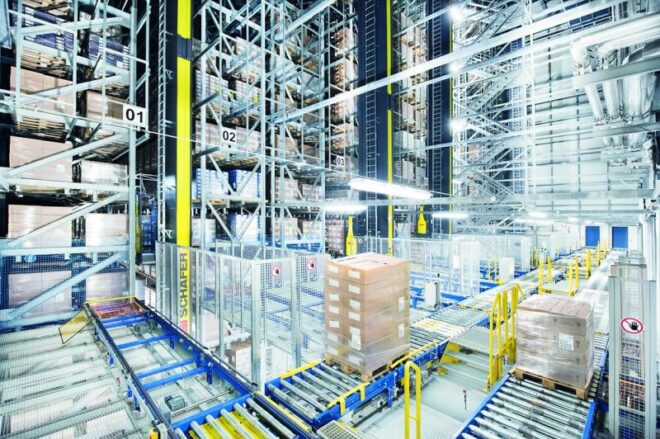
Automatic warehouses are structures, generally, high-rise, where the storage elements and the maintenance elements are integrated and controlled by a computer system.

Depending on the size of the cargo, we can distinguish two types of warehouses.

Modular Rack

If the load is large, they are called ASRS, meaning, in this case, loads greater than one pallet.

This type of warehouse usually exceeds 35 meters in height, and is usually formed by self-supporting structures, which support all the loads of the structure of the building.

They are recommended for companies with a high rotation of articles, a very wide range of references, of homogeneous units of pallet volume or higher where the available surface requires high storage heights.

Mini loader

If they are used for small units, they are called “Mini-Load”.

When using smaller cargo volumes than in the case of ASRS, the height of these warehouses does not usually exceed 12 meters in height.

They are recommended for articles of low volume and a high number of references. With a very high movement of articles.

Stacker crane

In both cases, when the order is given to the computer system to locate or remove material, it does so through the stacker crane.

The advantages of this type of warehouse lie in the optimum use of the available land, the absolute control of the stock, and the reduction in direct workers dedicated to storage and maintenance.

However, they have the disadvantage of having to support a very high initial investment, the need to implement a very robust computer system, and the maintenance costs.

Importance of storage in logistics

Storage is the activity of storing products in warehouses and logistics centers. Its function is to provide a constant supply of goods to the market to fill the temporary gap between producers and consumers. It also plays an important role in maintaining quality in souls.

What is the difference between logistics and warehousing?

Warehousing and logistics are two different sides of the same coin. Warehousing is the safe & economical storage of goods, inventory, information, etc. within a specified area or building. Logistics is generally the detailed organization and implementation of a complex operation in different management tomes.

How is supply chain management different from logistics?

Logistics focuses on transporting goods while supply chain focuses on the finished products and/or customers. Logistics has to do with the coordination and movement of goods. The supply chain involves multiple facets such as operations and procurement that keep a company running smoothly.

What are warehousing services?

It may involve warehouse pickup, packaging, and labeling. There are many variations depending on the client, but the most basic services provided are storage and warehousing, order processing, pick and pack, shipment of product, returns and exchanges, call center, invoicing, and order administration.

What is logistics in warehousing?

In the simplest possible terms, logistics may be defined as the detailed planning, organization, management, and implementation of complex operations. In many industries, including warehousing, logistics also extends to the flow of both physical goods and information.

What is the difference between warehouse and warehousing?

A warehouse is a place for storing large amounts of products (wares) in logistics, a place where products go from the manufacturer before going to the retailer while warehousing is the act of storing goods in a warehouse.

The most read

Container Crane

Container cranes consist of a supporting framework that can traverse the length of a quay or yard on a rail track. Instead of a hook, they are equipped with a specialized handling tool called a spreader.

More on this story

Straddle Carrier

Globalization combined with the success of containerization has brought about tremendous increases in the transportation of containers across the world.
Automated Stacking Cranes

One of the basic infrastructures for the handling of merchandise and ships in all types of ports is the mechanical automated Stacking Cranes.