All posts by Loganx

Professional Web Writer | Motor Enthusiast | Content Creator | Logan is a dedicated and skilled web writer, passionate about engines and machines and with a talent for creating engaging and informative content. She specializes in writing about a diverse range of topics including construction, forklifts, heavy equipment, excavators, etc. SEO Optimization: Proficient in SEO best practices, ensuring high visibility and engagement for all published content.

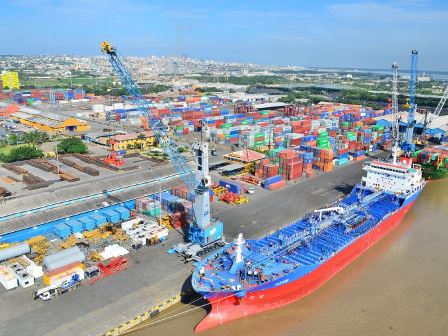
Port cranes

At present, there are many different types of cranes, depending on where they work, the loads they have to hoist and the tons they support, as well as the mechanisms they use (pulleys, counterweights, rails, wheels, etc.). The most common cranes are:

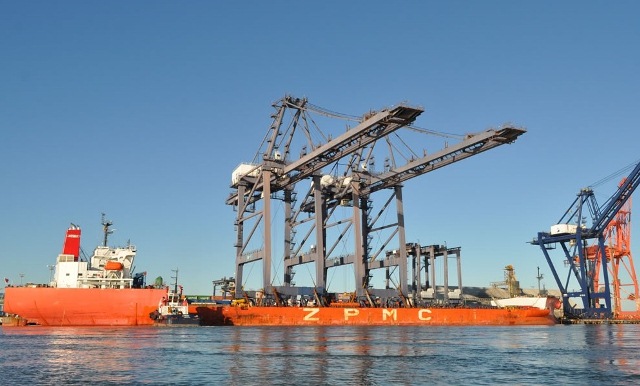
Port Operations

Efficiency is a decisive factor when handling cargo in both seaports and in inland ports. The loading and unloading times must be minimal, the logistics infrastructure must be flexible and the price-quality ratio must be optimal.

All these elements make port facilities stand out in the competitive international panorama.

The port equipment contributes enormously to the success of these facilities with a range of products that offers specific answers for all types of cargo. The most advanced technologies and the highest levels of quality guarantee the maximum performance and the highest availability of the equipment.

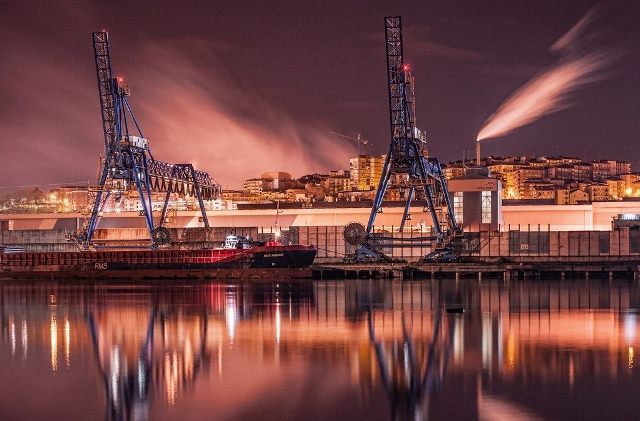
Cargo Cranes

Customized solutions for loading and unloading vessels of any size with port cranes:

  • cranes for containers,
  • mobile port cranes,
  • crane installed fixedly on a foundation column,
  • Translation cranes on rails.

Each of them includes a variety of optional equipment to adapt them to the nature of the work with the highest quality and availability of a first class product.

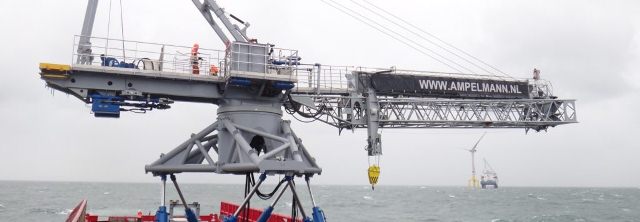
Stacking crane

  • Stacking cranes on rails
  • the stacking cranes on container tires,
  • the bridge elevators and
  • Reachstacker

They stand out for their technical superiority, which is demonstrated thanks to the precise handling, the synchronized movements and the great speed of work offered by these machines.

In addition, with very low costs per container. These first quality standards allow the team to operate safely 24 hours a day

Load handling

It also occupies the first position in flexibility: for general cargo and bulk, it offers a range of specially adapted equipment, from handling machines to cranes on chains, hydraulic excavators, loaders on chains and on tires.

The fast operating cycles and the high handling volume make these machines highly profitable.

Types of cranes used in shipyard

Different types of cranes used in ports

Ports have different lifting and lowering mechanical devices, some of which include cranes. These machines are capable of lifting different weights for and from various heights and from any boat or ship. To work effectively, hoists use cables and pulleys. There are different types of cranes used in ports, and which include the following names.

Floating Crane

These are vessels that consist of winches attached to them. They are mostly used in the construction of harbours and bridges.

These devices are also used in loading and unloading of unusually heavy objects in the port. Vessel hoists have the ability to lift over ten thousand tonnes.

The floating type can also be used to recover sunken ships by use of the crane hook. Another important feature is that these vessels can move from one place to another. This means that they are flexible enough to move objects to designated locations. Some common types include semi-submersible and sheer legs.

Bulk Handling Crane

In ports, the most efficient and reliable method of handling the numerous amounts of bulky goods is by the use of grabbing hoists, which are operated through riggings. Bulk-handling winches are very efficient when it comes to controlling such materials as gravel, coal, and foodstuffs like grain.

Basically, they are useful in loads that prove difficult for man and other machines to handle. These devices are available as mobile or fixed devices. Bulk-handling machines can help a crane operator to handle about 2,300 tonnes every hour.

Gantry Crane

Gantry cranes can be used in different industries. These machines are available in fixed or adjustable heights and are either made of steel or aluminum, depending on their purpose.

The basic design of these machines features two upright beams that are attached to each other by a horizontal one. These two upright beams are linked to two A-shaped frames, which have wheels attached to them.

This feature makes them movable and portable. The smaller version of gantry cranes is mostly used to move larger objects in the construction industry and in docks to move containers. In other instances, larger versions of this lifting device are used in such working areas as warehouses.

Hammerhead Crane

This is one of the most common types of cranes used in ports and it’s also known as a giant cantilever. Hammerhead winch consists of a tall steel tower, which holds a horizontal double cantilever fitted with a lifting trolley that has a crane hook. The jib extends backward, an important aspect for weight balancing.

Note that the hammerhead wrench system is made with a racking motion that allows back and forth movements of the trolley. This motion also prevents interference with the height of the load. These cranes are also created in huge sizes and can lift loads of over 350 tones.

Tower Crane

This is a modern type of balance wrench that is usually fixed on the ground. Tower cranes give a good combination of lifting capacity and height. They are mostly used to lift loads to very high heights, especially in shipyard constructions and to lift containers in havens. Extremely tall cranes can reach up to 1,000 meters high with a base of about 3.5 meters.

Deck Crane

A deck crane can be found on a ship or boat. They are mostly used for cargo operations such as loading and unloading. These machines are also very useful for goods retrieval on shores that do not have unloading devices. Most of them are hydraulically operated. This means that they either use the electric or diesel-hydraulic system.

Types of cranes used in ports

Other types of cranes used in ports include:

Rough Terrain Crane

Normally, this is mounted on a carriage that is fitted with four wheels and is designed for places with rough terrain. When hoisting, the outriggers extend both horizontally and vertically to balance and keep it stable.

These rough terrain hoists use a single engine to power both its winch and undercarriage. The ability of this machine to maneuver through rocky and gravel filled places makes it very effective for carrying heavy loads through construction sites.

Overhead Crane

This device is also called a suspended crane. Although they are mostly used in factories to lift heavy loads, a goliath crane is also used in a shipyard. They consist of hoists that are set on trolleys.

The trolley is fitted in a way that allows it to travel along one or two beams. It also moves at angles in the same direction along the ground and elevated level.

Overall, these mechanical devices that are very interesting and powerful machines. A crane operator is highly trained to control and maintain these devices. Due to their ability to lift heavy and bulky loads for great heights, the gadgets are very useful for construction and port operations.

How tall are container cranes?

How tall are container cranes?

Megaships can be up to 1,300 feet long and carry nearly 23,000 cargo containers. Containers are stacked up to 12-high above deck on the largest vessels. Taller cranes are required to reach the top of the stacks.

What is Port Equipment?

The fast and efficient transfer of cargo between ships and land-based modes of transport is the goal of ports throughout the world. The TTS range of port equipment offers a number of flexible options for access and for the management of traffic when loading or unloading ships.

What is a container handler?

The Loaded Container Handler is the king of the port. Popular in ports, terminals and shipping yards, the Loaded Container Handler will provide fast lifting cycles, high stacking and reduced freight costs.

What is a marine terminal?

A terminal is a place where the loading and unloading of people or goods take place e.g. a bus terminal or a train terminal. Marine terminals just form a part of the port where goods and cargo can be loaded into a ship and unloaded in case a ship comes to the port.

The most read

Types of Port Cranes

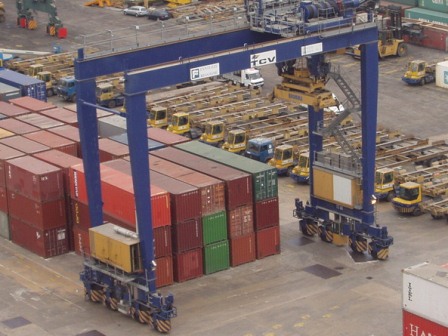
One of the basic infrastructures for handling merchandise and ships are all types of port cranes.
More on this story

RTG Crane

Rubber Tyred Gantry Crane, Container Terminal, what is an RTG crane? RTG crane parts name, RTG crane manufacturers, specification.

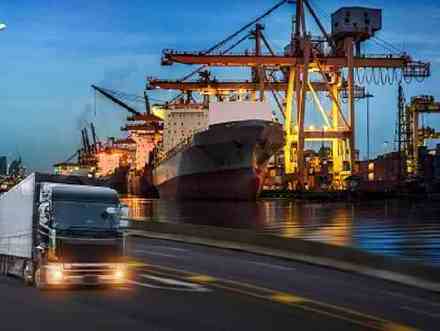
Types of Sea Ports

A container port or container terminal is a facility where cargo containers are transshipped between different transport vehicles, for onward transportation.

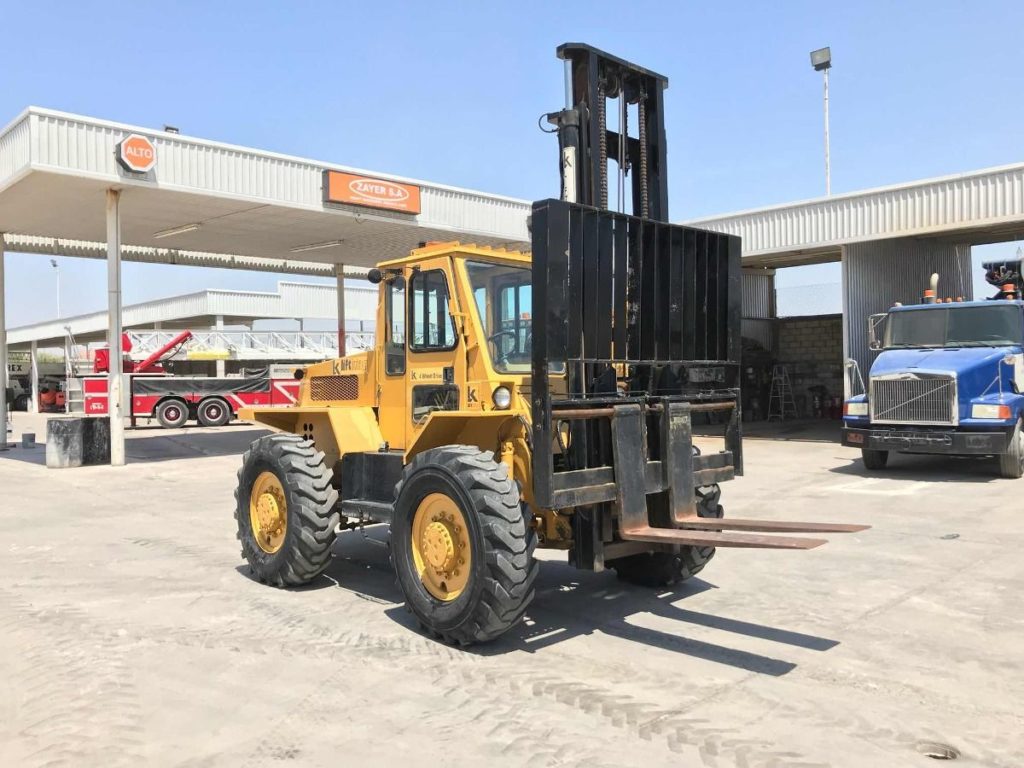
Warehouse Forklift Driver

Warehouse Forklift Driver – How to handle a forklift? safety standards, operation manual, preventive handling, Warehouse Forklift Driver dangers when operating a fork crane.

The forklift is a vehicle used to raise and lower heavy material. These types of vehicles are commonly used in the industry.

How to handle a forklift? Warehouse Forklift Driver

  • For a worker to make use of the forklift it is necessary that he is trained, certified and that he knows well each of the parts that make up the forklift.
  • The operator who uses the forklift must know what the load capacity of the vehicle is.
  • The capacity of the warehouse forklift must never be exceeded. Before raising the load, it must be ensured that it is placed uniformly, that is, that it is correctly arranged so that the forklift does not tip over to the sides or forward.
  • The places where the forklift moves must be delimited and with safety signs where it is indicated that there is a forklift in motion and the passage of other people to the place is prohibited unless it is a worker trained to use the forklift.
Warehouse Forklift Driver

Warehouse forklift operator

Forklift training – Warehouse forklift operator:
Warehouse Forklift Driver: Safe procedure for handling warehouse forklifts. How to prevent your fork crane from overturning

  • At any job site that involves loading, unloading and stacking large pallets or other heavy materials, a forklift is a common tool.
  • Every day, the operators of these vehicles perform a juggling act, moving products from one location to another safely and efficiently.
  • However, that does not always happen. The Occupational Safety and Health Administration (OSHA) estimates that more than 95,000 people are injured and at least 100 die in rollover crashes each year.
  • Most of these deaths are caused by forklift rollovers.
  • When a forklift overturns, the operator can be thrown from the vehicle and get trapped under it.
  • In a warehouse, the forklift can collide with shelving systems and cause the inventory to collapse, possibly on top of the driver and anyone else nearby.
  • If the work is being done on a loading platform, the forklift can fall off the platform to a lower level several floors below.

Forklift operator training

What your employees need to know: Warehouse Forklift Driver

  • Set a speed limit
  • Make sure the load is balanced
  • Use the right forklift for work

Forklift handling

Set a speed limit: Warehouse Forklift Driver

  • Driving too fast is one of the most common causes for a forklift to tip over.
  • Communicate the speed limit to your staff and make sure it is posted throughout the worksite.
  • Many forklifts do not have speedometers, but some may be equipped with controllers that prevent the vehicle from exceeding a certain speed.

Workers must know what equipment is installed on the forklift and whatnot, and act accordingly to maintain a safe speed. If the floor is slippery or if there are pedestrians or other nearby vehicles, you must drive below the speed limit.

Forklifts transport

Warehouse Forklift Driver: Make sure the load is balanced

  • When the transported load is not balanced, neither is the forklift. This can cause the vehicle to overturn.
  • Take the time to center the load as much as possible so that it does not tilt to one side or the other.
Warehouse Forklift Driver

Uses of forklift

Warehouse Forklift Driver: Use the right forklift for the job

  • Workers should consult the load capacity of the forklift they are using and never exceed that value.
  • If an operator lifts a load that is too heavy, that can also cause him to lose the balance of the forklift and increase the risk of rollovers.
  • The weight limit information must be clearly labeled on the unit.
  • If it is not, that should be communicated to you and you must address the problem before the forklift is used.
Warehouse Forklift Driver

Warehouse forklift operator safety tips

Warehouse Forklift Driver: Buckle up.

  • Just like driving a car, the first thing that forklift operators should do is fasten their seat belts.
  • While some may consider this an inconvenience, especially if they need to enter and exit the forklift frequently, the seatbelt protects them from being thrown out of the vehicle and trapped beneath it.

Forklift safety training

Rollover: If a rollover occurs, employees should know how to protect themselves.

  • Stay on the forklift. Never jump to leave.
  • Jumping can cause an operator to be trapped under a forklift.
  • Hold firmly on the steering wheel.
  • Support the feet.
  • Lean forward and away from the point of impact.

Forklift operator

Warehouse Forklift Driver: What your employees need to do.

  • All forklift operators must have employment authorization and be certified on how to operate the vehicle safely.
  • The training should consist of a combination of formal instruction such as lectures and discussions, hands-on training that includes a hands-on demonstration and evaluation of the operator’s performance in the workplace.
  • The refresher training must be done at least annually or with any incident.
  • No one under the age of 18 should operate a forklift.

Warehouse Forklift Driver: Other steps to follow include.

  • Plan the route and anticipate any turns along the route.
  • Be careful and keep the speed low when making turns.
  • If a turn is taken too fast or too tight, the risk of a rollover increases.
  • Never turn on a slope, since the forklift can overturn even on a small hill.
  • Never turn with the forks in an elevated position.
  • Drive the loaded forklifts forward when going up a ramp and in reverse when going down.
  • Do not perform any acrobatics.

Forklift safety

At your security meeting: Warehouse Forklift Driver.

  • Review the space available for forklift operations, and analyze the challenges such as an uneven, sloping floor or narrow spaces.
  • Also, remind employees about the limits of speed and weight because they must comply with them.
  • You might consider showing them training videos or carrying out demonstrations on how to operate forklifts safely, and include information about the consequences when operators drive too fast, perform stunts, or break the rules in some way.
  • When properly used, forklifts provide a quick and easy method of moving inventory, no matter how heavy, to the intended location.
  • When not used properly, forklifts can cause serious and even tragic accidents.

Forklift operator job description

Warehouse Forklift Driver:

Since forklifts are used today in a wide variety of indoor and outdoor environments, you can expect there to be a significant number of differences in the job description from one employer to the next.

Despite the varied environments, there are a few basic responsibilities that tend to remain constant regardless of the employer. If you are thinking about enrolling to get your warehouse forklift certification this list will give you a general idea of what to expect. Just keep in mind that depending on where you work, you could have significantly more or fewer responsibilities.

Basically, a warehouse forklift operator usually has to load and unload things. In some cases, these items need to only be moved steps away, but other times, the destination could be clear across a warehouse.

As an operator, you will probably be required to inspect your equipment before you use it. You may even have a checklist you need to fill out and sign daily. Even if your employer does not require a pre-shift inspection it is strongly recommended that you still do one. Just arrive at your shift a few minutes early to do one anyway. After all, it is your safety being affected by faulty equipment.

You may need to physically move things onto your fork, and you will always be responsible for ensuring your load is centered and stacked properly.

Warehouse Forklift Driver

What does a forklift operator do?

Forklift operators drive around forklifts (shocker, we know), moving materials around warehouses, storage yards, factories, construction sites, and other work sites The machine itself has a hydraulic lifting mechanism, and forks for moving heavy and large objects.

What is the average salary of a forklift operator?

The average pay for a Forklift Operator is $13.66 per hour.

How do you get your forklift license?

A forklift license is actually a certificate. The certificate indicates that the employee has been trained and evaluated by the employer to operate the equipment. It is required by OSHA that the employer certifies the training.

How much do forklift drivers make at Walmart?

The typical Walmart Forklift Operator salary is $18. Forklift Operator salaries at Walmart can range from $15 – $22.

How much does a forklift driver make at Home Depot?

The typical The Home Depot Forklift Operator salary is $15. Forklift Operator salaries at The Home Depot can range from $11 – $20.

How much does a forklift driver at Costco make?

Costco Wholesale Forklift Operator Hourly Pay. The typical Costco Wholesale Forklift Operator salary is $17. Forklift Operator salaries at Costco Wholesale can range from $13 – $26.

How much money does a forklift driver make at Coca Cola?

The typical The Coca-Cola Company Forklift Driver salary is $16. Forklift Driver salaries at The Coca-Cola Company can range from $14 – $18.

Do you need a Licence to drive a forklift in the UK?

You don’t need to hold the UK driving license to operate a forklift truck and there is no legal requirement to do so unless you also wish to drive the forklift on the public highway. In this instance, you and the vehicle would have to comply with the appropriate road traffic legislation.

How much does it cost for forklift training?

Forklift certification with CertifyMe.net costs only $59.95 per individual. The beauty of this OSHA forklift certification card training is that you can complete the training from anywhere at any time.

The most read

Duties of a Forklift Operator

Since forklifts are used today in a wide variety of indoor and outdoor environments, you can expect there to be a significant number of differences in the job description from one employer to the next.

More on this story

Forklift Operator Responsibilities

There are many different ways to handle a forklift and a diverse array of different vehicles. Nevertheless, there are fundamental responsibilities that are paramount.

What is a Tower Crane?

What is a tower crane? – Tower cranes are widely used for lifting operations in the construction industry. Tower cranes are a common fixture at any major construction site. They are pretty hard to miss… they often rise hundreds of feet into the air and can reach out just as far. The construction crew uses the tower crane to lift steel, concrete, large tools – like acetylene torches and generators, and a wide variety of other building materials.

What is a tower crane

What are tower cranes used for?

The operating characteristics of a tower crane are largely determined by its type of mounting, type of tower and type of jib.

Static tower crane

A tower crane with a static base only occupies a limited area but is able to cover, from its fixed position, all points at which loads are to be handled within the maximum slewing radius. They can be set at varying heights up to their maximum free-standing height. They can also be extended beyond this limit by tying the crane back to the supporting structure.

Rail mounted tower crane

Rail-mounted tower cranes have a larger area of coverage as they can travel along their tracks carrying their rated loads. However, the height requirement should not exceed the free-standing height as recommended by the manufacturer.

On the other hand, the crane service would be disrupted whenever work must be done on or near the track. The advantage of mobile tower cranes lies in great inward reach without the long jib which would normally be required to reach over the top of the structure.

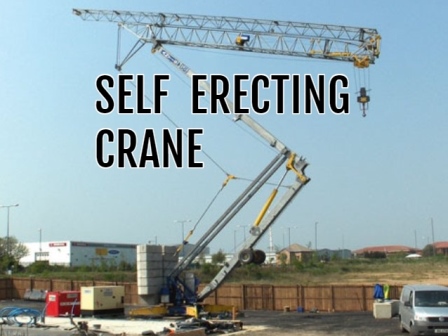
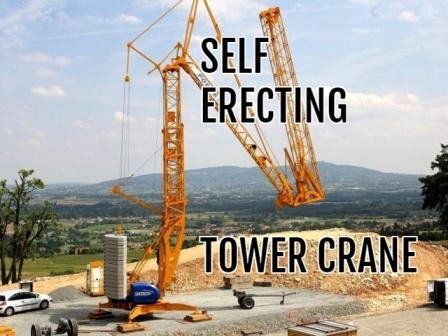
Self erecting crane

Generally, truck-mounted tower cranes are completely self-contained and can be driven along roads. They are generally capable of comparatively rapid erection and dismantling. They are however generally unable to travel in their fully erected state and cannot handle loads while traveling.

Crawling tower crane

Crawler-mounted tower cranes are required to be transported on a low-loader or towed on special road axles when traveling on public roads. Inside the workplace, some can travel over a firm, flat, level ground carrying loads up to a specified proportion of their rated loads.

They are also able to travel in a partially erected state but without load over unprepared ground provided it is within certain limits of level and compaction.

Tower crane jib

A horizontal trolley jib usually has a smaller minimum operating radius than the equivalent luffing jib and is thus able to handle loads closer to the tower of the crane. For a given height of the tower, however, a greater height of lift is available with a luffing jib, and the jib can be raised or lowered to clear obstacles. One advantage of a fixed luff jib is that its extra height at the jib head enables it to clear objects that would obstruct a horizontal trolley jib. The advantage of a rear-pivoted luffing jib is that it has a smaller minimum hook radius than an ordinary luffing jib.

Articulated jib crane

For articulated jibs, some designs are not required to weather vane. In this case, the crane is made to withstand storm winds with the jib drawn into minimum radius; there is then no need for a 360° obstruction-free slewing path. One type of this crane has a hinged jib arranged so that the outer portion remains horizontal. As the jib is folded, the outer portion rises, giving increased height and the ability to pass over obstructions.

What is a tower crane

What type of crane do I need?

The selection of a crane for any job should be made only after a thorough examination of all the factors involved. In general, it is good practice to select a machine that has a working margin in respect of the load capacity and other anticipated requirements.

The crane should have a permanent durable plate bearing the manufacturer’s name, machine model, serial number, year of manufacture and weight of the unit for identification purposes.

Every major structural, electrical and mechanical component of the machine should have a permanent durable plate or a clear indication bearing the manufacturers’ name, machine model number, serial number, year of an original sale by the manufacturer and weight of the unit.

Besides, identification numbers should be clearly marked on all basic removable components and attachments of the machine (such as counterweights, etc.) to show that they belong to that machine. It is important that these components should be used only on that machine or identical models or equipment for which they were specifically intended by the manufacturer.

What is a tower crane

What is a tower crane?

What is a tower crane?

The tower crane is a fixed Crane and has to be mounted On-Site. The Tower Crane presents itself like a vertical metallic structure having a horizontal boom that can turn over an angle up to 360°.

How is a tower crane built?

Tower cranes are mainly fixed on construction sites. Construction sites use tower cranes from large tools such as lift steel, concrete, acetylene torch and generators, and a variety of other building materials. Tower cranes are mainly used to transport and lift capacity from one place to another.

What wind speed Do cranes stop working?

A common “rule of thumb” is considering stopping the crane if the wind speed reaches 20 mph. Project managers and Appointed persons should reconsider lifts if the wind speed increases dangerously, even before it reaches 20 mph.

The most read

More on this story

Tower Crane Equipment

A tower crane is a construction machine designed to load and unload different materials. This load is distributed through the use of a hook that remains suspended thanks to the use of a cable.

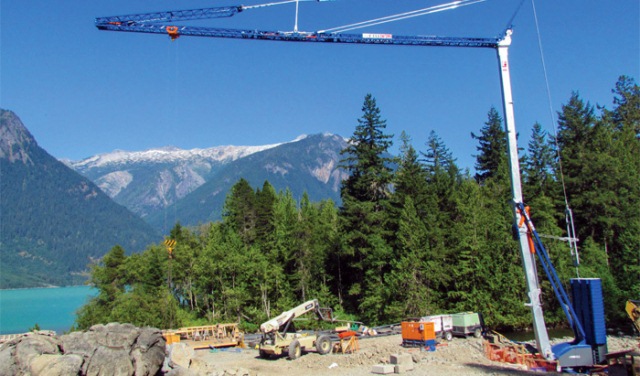
Self Erecting mobile Tower Cranes

Self-erecting tower cranes have long been commonplace in Europe. Their versatility and reliability have made them a mainstay on the European Jobsite.

Remote Control Tower Crane

Radio remote controls are now standard equipment on most self-erecting tower cranes and are even becoming common in some parts of Europe for a flat-top tower crane.

Almost all self-erecting tower cranes come with remote control. A growing number of top-slewing tower cranes use them as well.

“In Europe, remote controls are used only with small top-slewing tower cranes, up to 100tm or 120tm,” The limiting factor, he says, is that operators of larger cranes need to feel the crane reacting to the load so they do not operate too roughly.

Remote Control Tower Crane

Tower Crane remote controls

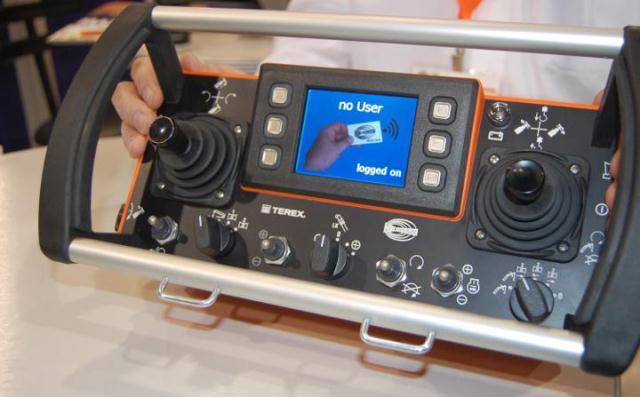
With digital readouts wedged in between the controls, remote controls have started to look more and more like the load-moment indicator inside the cabin of a mobile crane. They tell users how much the load weighs, and what percentage of the maximum it is, how high the load is, and even how strong the wind is blowing.

What is remarkable is how quickly this has happened. Tower cranes have moved from simple electric machines to computer-control in about 20 years- perhaps half the development time of mobile cranes.

Remote controls have played a key role in this development. Early on, crane owners realized that small cranes are not busy all the time, and so operators who use remote controls can help out with rigging and other site jobs during downtime. Although of course, it costs more, adding a remote control could save an entire salary.

Remote Control Tower Crane

Tower crane joystick

“Sometimes nothing is happening, and then it is possible for the driver to do other things. If you have a remote control, you can walk beside the load. If you have to put a load down softly, you can stand beside the load, and see everything very well.”

These early remote controls would have only replicated the main levers of the crane. Remote controls were an aftermarket business.

Remote controls have evolved away from being a specialty thing

“Twenty years ago, a crane operated by remote without a cable was some kind of magic. Now it is becoming standard for all crane applications, especially tower cranes, and loader cranes and mobile crushers.”

RC Tower Crane

Hetronic remote control

A key milestone was the manufacturers’ decision to start to work directly with remote control vendors in the development of the crane. In 2000, Potain teamed up with German remote control manufacturer Hetronic, according to Potain global product manager.

About the same time, Liebherr’s Biberach tower crane factory also started working closely with HBC-Radiomatic.

The decision was taken with the Igo range in 2000, that because of the evolution in the market toward radio remote controls, we should offer it as standard. It was then a gradual process to roll out standard remote controls.

“This was not about cost; the market was pulling for a solution, and we thought we should follow.”

This move was important because it integrated the remote control into the technical architecture of the crane. Since the manufacturers were buying one unit for every crane, remote control manufacturers could expect much larger orders. By moving from an aftermarket addition to an OEM business, radio remote controls reached the mainstream.

Remote Control Tower Crane

RC Tower crane

PLC remote control

The other feature of this new arrangement was technical cooperation. When OEMs started to work together with radio remote design engineers, remotes became many higher-performance products.

The trend in the industry is for radio remotes to move from being simply transmitter-receivers to going toward the receiver having the features of a PLC, referring to a programmable logic controller (a computer). Receivers need to become more intelligent, and programmable.

“It is necessary to have a long-term partner,” Frech at Liebherr says. “You have to give many things to the partner so that they can provide control signals to the PLC, and give them the possibility to log into our control system. You don’t give someone you don’t know such access.”

A remote control unit based on a computer is also more efficient to manufacture. Instead of having to make 50 different circuit boards for different customers, Hetronic can, for argument’s sake, make five, and adapt each one of those 10 different ways using its H-Link configuration software. The H-Link software can assign buttons to outputs, and program speed increases or decreases, for example.

The next generation of remotes will be even more programmable.

Remote controlled tower crane

Remote control construction crane

The stage looks set to make tower cranes more computer-controlled in the future. “If you look at the market generally, there wasn’t a computer network on the crane; there wasn’t CAN-Bus architecture.”

In the old days, if an operator was unsure of the weight of a load, he would try to raise it on the crane. If the crane’s limit switches to cut out the hoisting motion, then he would know that it was too heavy to lift. Now, control software available in the Potain Igo T and MCT ranges will interpret the crane’s load chart and warn the operator before the limit switches to cut out.

This same software will help crane operators determine how far they can trolley out a given load on the hook.

Now, on the latest cranes, there is, and optional extras such as site signaling lamps or zone limits can be slotted in without detailed set-up, extra programming, or complex troubleshooting.

“That is pretty recent, and I have not seen that elsewhere on self-erectors.” Tooled-up end-users or dealers will configure the crane using an input screen inside the electrical cabinet of the crane itself.

Describes the interface as similar to a mobile phone’s menu-type system.

Remote Control Tower Crane

Potain tower crane

The Hetronic control for the Potain T85 displays trolley radius, hook height, weight, percentage capacity remaining, battery power, signal strength, wind speed, whether the crane is in two-fall or four-fall configuration, and warnings at 90% and 100% of crane capacity.

The first models displayed one piece of information; now screens display all of it.

Remotes with data feedback have become something more than just levers connected to the crane by a wireless radio link. Now a computer- or several computers – sit between the levers and the crane motors. The software that interprets the signals that display the information also moderate the crane operator’s actions.

“What is most interesting in tower cranes now is the control system,” “A tower crane is a steel construction, but there are more and more control and monitoring systems.”

Tower crane design

The main objective of the project is to design robust, fast, and practical controllers for tower cranes to transfer loads from point to point in a short time as fast as possible and at the same time, keep the load swing small during the transfer process and completely eliminate it at the load destination.

Moreover, variations of the system parameters, such as the load weight are taken into account.

A tower crane is one of the major items of equipment used in the construction of high-rise buildings. However, crane operators do not receive adequate information, such as the target space conditions and the material being lifted, to control the crane. This limitation degrades productivity and safety. This study describes a prototype of a tower crane equipped with wireless control (IR remote control) technology.

With these advanced technologies, the tower crane can provide the crane operator with an enhanced view of the workspace and various other functions providing up-to-date material status. The tower crane can also provide faster information flow with greater accuracy and improved driving efficiency.

The tower crane was used to test its performance. The main objective of the project is to design robust, fast, and practical controllers for tower cranes to transfer loads from point to point in a short time as fast as possible and at the same time, keep the load swing small during the transfer process and completely eliminate it at the load destination.

Moreover, variations of the system parameters, such as the load weight are taken into account. The results confirmed considerable improvement in operational speed and significantly enhanced performance in workplace safety and communication efficiency.

Remote Control Tower Crane

Remote Control Tower Crane

What is the use of remote control?

A remote control (RC) is usually hand-held, an electronic device for controlling another device, such as a television, radio or audio/video recording device. Remote controls commonly operate via infrared signals but sometimes by radio frequency signals.

How do IR remotes work?

An IR remote (also called a transmitter) uses light to carry signals from the remote to the device it controls. It emits pulses of invisible infrared light that correspond to specific binary codes. Radio-frequency remotes work in a similar way.

What is a jib on a tower crane?

A jib crane is a type of crane where a horizontal member (jib or boom), supporting a moveable hoist, is fixed to a wall or to a floor-mounted pillar. Jib cranes are used in construction sites and industrial premises.

What is a pendant on a crane?

Pendant crane is a type of pendant Overhead Crane, used in an industrial environment. A pendant overhead crane consists of parallel crane runways with a traveling bridge spanning the gap. An electric hoist or trolley travels along the bridge as the lifting mechanism.

What is a pendant control?

A pendant control hangs down from the hoist or off of a separate festoon track and allows the operator to control the crane and the load as it moves down the runway. A handheld controller with push buttons is directly wired into the hoist or a separate festoon track and hangs down to be used by the operator.

The most read

More on this story

Self Erecting Tower Crane

A self-erecting tower crane is compact, easy to erect and operate, and has several transport options

Remote tower crane

Self-erecting tower cranes have long been commonplace in Europe. Their versatility and reliability have made them a mainstay on the European Jobsite.

Electric Forklift Specifications

Electric Forklift Truck – electric forklift specifications – the electric motor for forklift: batteries and chargers, manual and maintenance, models, features, uses, operation, new and used, images, repair

A variety of Lift truck is available for industrial use, including an electric forklift truck. An electric forklift truck provides companies with a workplace that is friendly and healthy with the environment.

The use of an electric forklift truck has drawbacks that must be considered before joining the workforce. Each manufacturer incorporates unique features in their models of an electric forklift truck.

electric forklift specifications : HOW TO KNOW HOW TO CHOOSE?

You have to take into account the budget you have, space where you intend to work, interior or exterior, and the frequency with which this lift will be used.

Electric forklift specifications

Electric forklift specifications

Lift Truck Specification:

  • An optimal alternative to reduce pollution with greenhouse gases.
  • Very silent operation.
  • Less maintenance and reduction of useful life costs.
  • It has fewer moving parts involved in the operation of a team.
  • The battery lasts for five years or more, according to the conditions and recommendations followed for loading and maintenance.
  • The night charge of the battery is usually economical.
  • The electric forklift truck are usually compact and therefore the simplest and lightest maneuvers.
  • Minor modifications to the mast at a high elevation.
  • High adaptability: the operation, inclination, acceleration, and various speeds can be easily adapted to the operator’s functions.
  • In general, they are not suitable for outdoor use or where a high number of relative humidity pre-exists.

Electric Forklift Truck battery

In a time when the problems arising from global warming are becoming more evident and complex, seeking “clean” energy solutions is a subject of almost imperious social responsibility.

This is where electric forklift trucks come into play, offering an ideal way to reduce greenhouse gas (GHG) emissions.

electric forklift specifications:

  • The electric forklift truck by virtue of their operation, are really silently benefiting the operators in closed spaces.
  • On the other hand, the electric motor takes the energy from a rechargeable battery and converts it into motor rotations.
  • This motor contains a single moving part known as a rotor.
  • Unlike combustion engines, which are formed by many parts such as the pistons, the connecting rod, and the crankshaft, the said rotor significantly decreases the energy consumption.
  • In addition to this, electric cars are designed for a longer life because all parts work more efficiently and with less wear.
  • This leads to obtaining a more attractive look for the consumer and more friendly with the environment.

Lift truck motor

Advantages: electric forklift specifications

  • They avoid noise pollution since they do not produce noise.
  • Its use makes it possible to dispense with fuel, which in addition to avoiding CO2 emissions also saves oil, a limited raw material.
  • They help to reduce the greenhouse effect and the contamination of spare parts and brassware.

The emissions of CO2 and other polluting gases are one of the main factors of climate change.

Therefore, electric forklift truck are already a tangible reality and the big brands strive to produce new models and increase their performance.

electric vs gas powered forklifts

Electric forklift Truck Battery

Lithium-ion batteries are the best on the market. Thousands of companies in Europe have implemented them improving their efficiency not only economically, but also in time and infrastructure.

Let’s review some of the advantages of changing the old lead-acid batteries:

Maintenance: electric forklift specifications

They do not use water, so not only do they save time, but they also avoid problems such as spills, personnel oversights and all the inconveniences associated with this type of batteries.

Forklift Truck battery charger

Charging time: A quarter battery is not required or skilled labor is needed to operate as in the case of lead-acid batteries. The best thing is that they take advantage of the opportunity load, that is, they are loaded in idle time, thus saving valuable resources for your company. They can reach the average load in 30 minutes and with only 80 minutes will be fully charged.

Environment: They do not produce gas emissions or use corrosive acids or any type of toxic product that could damage the environment or contribute to the carbon footprint.

Durability: The useful life in lithium-ion batteries is up to 3 times longer than in the old lead-acid batteries, reaching up to 3000 cycles.

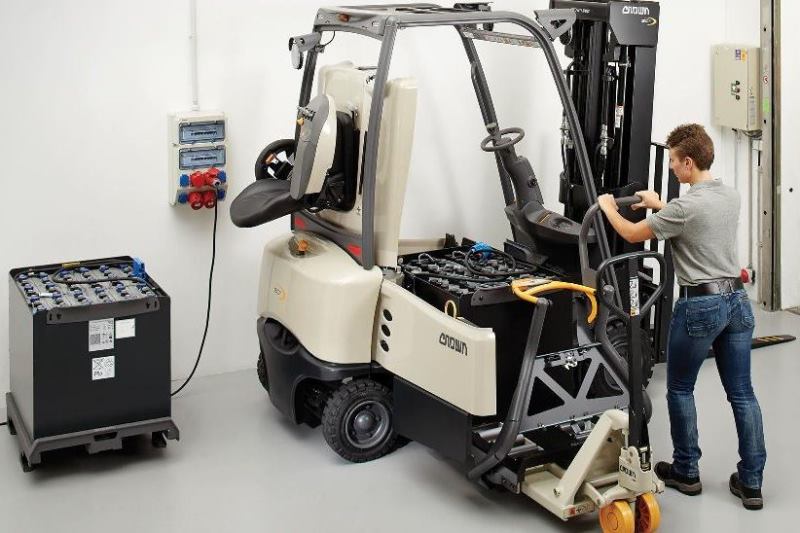
Electric Forklift battery changer

Battery change:

  • No additional infrastructure is required, saving on economic resources, time and personnel.
  • Thanks to the growth of the electric car industry, it is estimated that lithium sales will rise from 2,000 million dollars in 2016 to 7,700 in 2022.
  • You will no longer have to deal with the cumbersome task of recharging the old lead-acid batteries.
  • Simply plug the cable into a power source and in less than two hours your forklift will be fully charged and ready to continue working.

Forklift electric motor

Electric forklift advantages:

  • Environmentally friendly
  • Usable in small areas and indoors
  • Electric forklifts have a longer life span compared to other types of forklifts
  • Cheaper consumption when it comes to hourly work compared to gas/diesel
  • At a national average peak rate of 15¢/kWh, most electric forklift trucks cost around $1.10 per hour to operate for fuel. 
  • Helps with communication amongst workers by providing a low level of noise
  • Greater maneuverability
  • Low center of gravity – more stable at greater lift heights
  • Controls simple and user-friendly
  • More mechanically simplistic (no transmission, torque converter, etc)

Electric Forklift Truck maintenance

  • The battery is required to be charged for 8 hours and additionally, you must let it cool down for another 8 hours after charging before you can actually use it. Therefore if needed for a lot of work, you would need extra batteries which are expensive.
  • Can take between 10 – 45 minutes to swap over a battery
  • You need to have a battery charging station (around 200 square feet) that is well ventilated, dry and temperature controlled.
  • Aren’t appropriate for use outside, especially in wet weather.

Electric vs gas forklift

Internal combustion engine (ICE) forklifts were standard equipment for years. But just like in the car world, electric forklifts have evolved and became more popular. The batteries require less maintenance, and electric trucks are no longer limited to indoor use.

So which is better, a gas-powered or electric forklift? Let’s review the Pros and Cons of each:

Electric motor for forklift – Why Choose an Electric Forklift?

  • Generally speaking, electric forklifts have a longer life than Internal Combustion Engine (ICE) forklifts.
  • This is because electric forklifts have far fewer moving components than ICE forklifts.
  • Electric forklifts also require less maintenance. There are no engine tune-ups, no spark plugs, etc.
  • Another important selling point: electric forklifts have zero tailpipe emissions, which means a cleaner, safer work environment for your staff.
  • Lastly, an electric forklift is also much quieter. This can also be beneficial to your employees’ comfort and safety.

Electric forklift brands

As in all products, also in the forklifts, we have brands that work better than others depending on the size of the load as well as the size and conditions of the place where they will work.

Electric motor for forklift: Which forklift is the best for my warehouse?

Warehouse equipment can be expensive. Therefore, it is important to obtain a good and reliable forklift truck because defective or unreliable products can lead to delays in your distribution center or, what is worse, injuries. The recognized brands in the world are:

  • Raymond
  • Mitsubishi
  • Nissan
  • Clark
  • Jungheinrich
  • Yale
  • Caterpillar
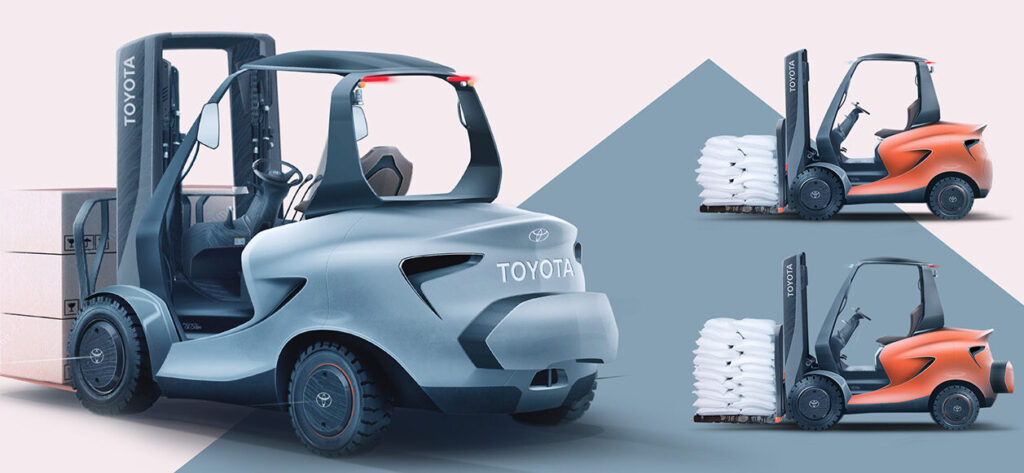
  • Toyota

How much does an electric forklift cost?

Forklift costs can vary widely depending on exact specifications and customer needs, but there are some ranges to keep in mind. A brand new, electric forklift with standard capacity might cost $20,000 – $45,000 dollars and up with an increase of $2,500 – $5,000 for a battery and charger. A comparable internal combustion forklift costs around $15,000-$30,000 and up.

Electric motor for forklift

What is an electric forklift?

An electric forklift is a forklift truck powered by an electric motor instead of an internal combustion (IC) engine using either rechargeable industrial batteries or external ways of conveying power (wire, rail, etc.).

Can you use a gas forklift inside?

Though we cannot argue the fact that gas or diesel-powered forklifts perform better than electric counterpart, there is one unique limitation – you cannot use internal combustion forklift indoors. An only propane-fueled truck can be used indoor and it can only be operated in places with sufficient ventilation.

What is the life expectancy of a forklift?

Forklift “age” is measured in hours. For a single-shift operation with an 8-hour workday, the average forklift runs 2,000 hours/ year. The average lifespan of a forklift is 10,000 hours, but this depends on the manufacturer. Above-average machines, such as Toyota forklifts, commonly last more than 20,000 hours.

How much is a forklift license?

Forklift certification with CertifyMe.net costs only $59.95 per individual. The beauty of this OSHA forklift certification card training is that you can complete the training from anywhere at any time.

What are electric forklifts for?

If you are involved in working indoors or in cold climates (freezers or cold storage) or even in food processing; you must use an electric forklift. The reason being is that it doesn’t emit fumes which will raise the temperature in the area in which it is being operated.

Can electric forklifts be used in the rain?

However, you should never use an electric forklift outside where it can possibly rain or snow as it can cause the machine to short circuit.

The most read

Stand-up Forklift

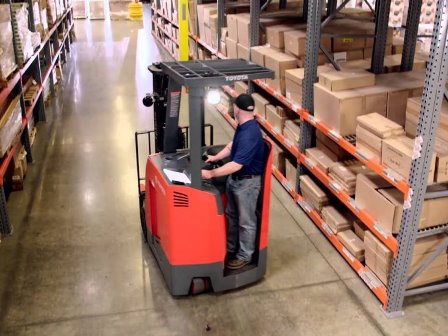
Stand-up forklifts (also known as stand-on and electric riders) are designed for applications where the operator must get on and off the lift truck frequently. They are more maneuverable and need less space to operate than sit-down forklifts.

More on this story

Forklift rules and regulations

Forklift loader rules, guidelines, and regulations, forklift rules and regulations, fork truck safety, and forklift training license.

Flat Top Tower Crane

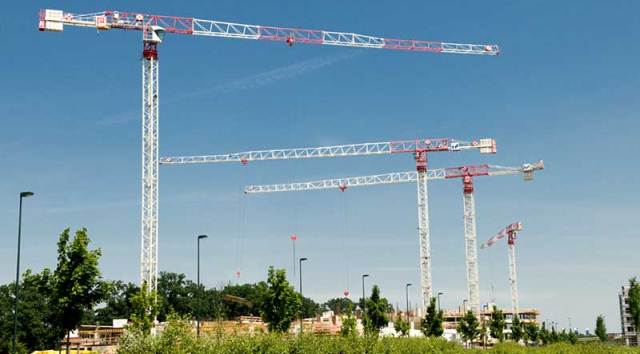
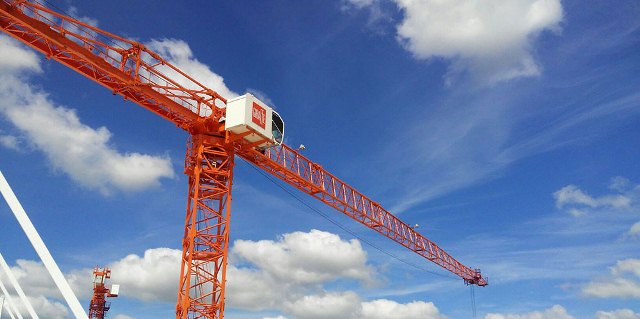
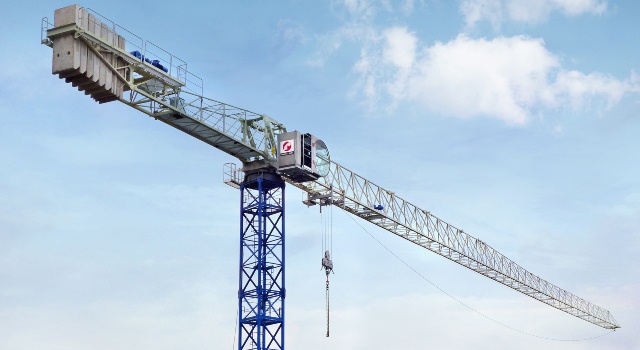
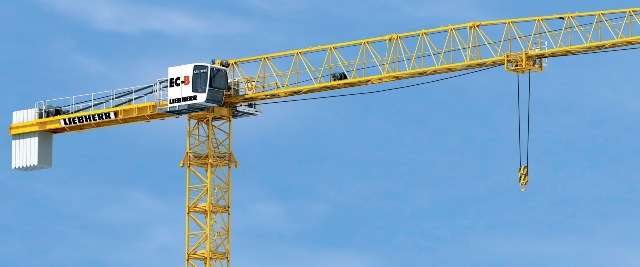
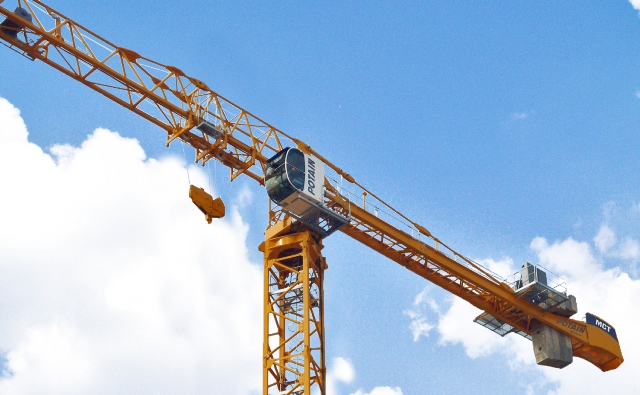
The flat-top tower crane is characterized by its quick, easy assembly. The compact head is mounted by an auto crane in a single lift. All drive pedestals and rails are designed to last. All drives are easy and safe to reach for maintenance work straight from the compact head.

The newly designed comfort cab is attached and removed by means of quick-release fastenings and is identical for all small and medium-sized cranes. This cuts crane fleet costs.

Flat top tower crane advantages

The most important advantage is related to the useful life of the crane. It is a well-known fact that alternating stresses cause bigger fatigue in structures than unidirectional forces.

Flat top cranes, due to the design, have practically no alternative stresses in the jib or counter-jib structure. Regardless of where the trolley and load are situated, the upper part of the jib is always working in tension and the lower part of the jib is always working in compression.

In the same way, the lattice tubes and welds on the jib are always working in tension or compression only.

This means that there is no fatigue in the structure because the efforts are transmitted always in the same way. There are no alternative efforts.

Tower Crane

In the pendant lines tower cranes, the jib is transmitting the forces through the structure to the pendant line and then to the head, but the structure of the jib is not as strong of the one in the flat-top cranes.

So the jib of the crane is moving continuously up and down, transmitting the movements of the load to the pendant line, creating great fatigue in the structure due to the efforts are transmitted not always in the same way.

Construction crane

The most typical is very clear: if there is a project in which there will be several cranes working at the same time, and some of them are going to work over between them, working with flat top cranes could give the project manager some definitive advantages by reducing the height between the cranes.

There is no need to add extra height just to get over the pendant lines of the neighboring crane, which means not only extra mast sections but sometimes even wall-ties if the additional height exceeds the free-standing height of the crane. Law requires a minimum height between the highest part of one crane and the lowest part of the other crane (where cranes are going to overlap).

Flat top crane

Flat top cranes allow getting maximum hook height, with minimum overall height. The last result is that the final cost of the crane is smaller by reducing mast sections and time to erect them.

Flat top tower cranes mean fewer complications and more safety for the erector.

When sire conditions and access are bad, the jib can be erected in several jib sections one after the other, direct from the truck instead of being placed on the ground, preassembled and then lifted and placed in one piece, which makes the erection fast, simple and economic.

With pendant lines, at least the part, up to the pendant line is connected, must be assembled in one part and then the rest of jib could be done by piece.

Flat top tower cranes, a smaller mobile crane is required due to the lower weight of the single jib sections, as opposed to a complete jib. Furthermore, the erection of the jib sections is very simple, because the upper part of the union between two jib sections is normally pinned together without even needing a hammer. The lower rails automatically locate together just by lowering the jib section and final fixing of the side rails is by one simple longitudinal bolt on each side of the jib.

Also during the erection work of the jib the erectors are always in a safe position because they never have to leave the jib structure to erect tie ropes as on conventional pendant lines cranes.

Tower crane maintenance

The design of the Flat top tower cranes allows reducing time and therefore costs in the maintenance works done by the technical people.

The slewing motor (s), the hoisting motor (depends on the model) and the electrical cabinets are installed in the slewing part of the crane.

All the most important parts to do the minimum maintenance are installed much close to others, so erectors don´t need to move from one side to the other of the crane.

Tower crane specifications

The Flat tower crane is designed according to their production line and trying to reduce storage costs in the final customers and in the rental fleets.

Because of this, all the cranes in every series have the same structural parts and components.

So having different cranes from the same series (and from other series), the number of parts needed to have in their yard is reduced up to a minimum. The interchangeability between cranes from the same family is total.

Also, having the most important components in the slewing part assemble together, the possibility of having a loss during the storage time is reducing a lot.

Tower crane design

Flat top tower cranes are designed to save money, not only during the erection works but during transportation.

The structure of the crane is ready to be combined between them in a truck and in containers to adjust up to the maximum space and the final load and save money by using fewer trucks and containers than the competitors.

One important feature of the Flat top tower cranes is that the mast sections are designed by panels.

Each mast section comprises 4 identical panels. All are joined together by double shear bolts.

This prevents the joints from coming loose and flaring, as they may in single shear systems, and also aligns stresses with the joints to the uprights.

The main stress (compression) is transmitted by contact between uprights, with the joint (bolts & lugs) working only under traction.

These panels sections are designed as a modular system so that different sections can be combined for better height performance.

The manufacturing systems used assured full interchangeability of components in sections, so that any panel can be replaced by another of the same type, and guarantees the structural function for stress transmission as per the design.
This is guaranteed via:

  • The precision in length of the main uprights, achieved by machining them.
  • The precision with which joints between section and diagonals are carried out, with multiple drills designed especially for this purpose.
  • The use of universal materials for panels.

Tower crane jib

There are 2 points to be considered at the time of designing a flat top tower crane:

Tower crane jib length

Flexion of the jib

Tower cranes are designed following some calculations referring to the flexion of all the structure, not only the jib but also when the crane is working with load, minimum and maximum and working without load.

Both systems, conventional pendant lines tower crane and flat top tower cranes, are going to have a deformation of the structure due to the forces. The difference between these two concepts is how many meters the deformation is and what would be the way of absorbing it by the structure.

In every crane, the deformation of the structure depends on the load, the height, etc, so there are as many deformations as loads, etc you can have in your crane. The most important is designing the crane under calculations following security standards.

In the Flat Top cranes, the whole jib is having a deformation from the beginning of the jib, so this movement is not affecting to the stress of the steel structure because this movement is a natural movement.

In a conventional pendant lines tower crane, the jib is bending the complete jib, but there is a point under a big concentration of stress: where the pendant line is joined to the jib.

In the conventional pendant, lines tower crane, the last part of the jib, from the pendant line is joined up to the end, is bending more than in the flat top tower crane because there is nothing holding it and the structure is not as strong as in the flat top tower crane.

Tower crane safety

Problems in case of load fall

A load fall is not easy to happen, because there are many systems to control these difficult situations.

But in case of the load falls, the structure of the jib in the flat top cranes will move like if there was just a unique piece. The complete jib will absorb this movement.

By the design of the structure, the jib is ready to work in tension and compression at any time so this impact will have less effect in a flat top tower crane than in a pendant line, and the movement of the crane will decrease faster than in a conventional pendant lines tower crane.

In a conventional pedant lines tower crane, because the jib is not designed to absorb such a big force, this movement will be transmitted from the first part of the jib to the pendant line. It is ready for being worked just in tension, but not in compression so the upward movement of the structure will be bigger and larger than in the flat top tower cranes. And this movement will be uncontrolled

What is a tower crane?

What is a tower crane?

Tower cranes are a common fixture at any major construction site. … The construction crew uses the tower crane to lift steel, concrete, large tools like acetylene torches and generators, and a wide variety of other building materials.

How does a tower crane not fall over?

The base of the crane is bolted into the ground and weighed down by giant blocks of concrete. The stiffness of the supporting structure also helps counteract bending caused by unbalanced loads. Incorrect ballast will cause a crane to fall over.

Why do cranes have Counterweights?

A counterweight is a weight that, by exerting an opposite force, provides balance and stability of a mechanical system. Its purpose is to make lifting the load more efficient, which saves energy and is less taxing on the lifting machine.
In these applications, the expected load multiplied by the distance that load will be spaced from the central support (called the “tipping point”) must be equal to the counterweight’s mass times its distance from the tipping point in order to prevent over-balancing either side. This distance times mass is called the load moment.

The most read

More on this story

Tower Crane safety

Tower Crane Safety: Construction safety meeting topics, tower crane safety training, crane operator training, construction tower crane lighting requirements.

Hammerhead Tower Crane

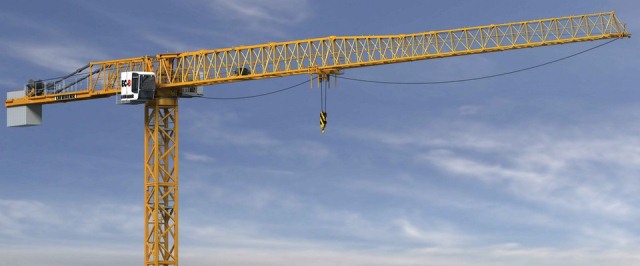
A hammerhead tower crane is one of the most common types of cranes used around the world. They are especially reliable for precise, accurate handling of a wide variety of heavy materials.