All posts by Loganx

Professional Web Writer | Motor Enthusiast | Content Creator | Logan is a dedicated and skilled web writer, passionate about engines and machines and with a talent for creating engaging and informative content. She specializes in writing about a diverse range of topics including construction, forklifts, heavy equipment, excavators, etc. SEO Optimization: Proficient in SEO best practices, ensuring high visibility and engagement for all published content.

Tower Crane Controls

Today, tower cranes are in widespread use on construction sites all around the world. An important issue that arises when operating these cranes is the oscillatory behavior that occurs during payload transportation, which can have severe effects on safety as well as the accuracy of payload delivery.

Due to the nonlinear nature of the rotating crane motion, controlling these oscillations is a complex task. Additionally, the lack of sensors on many cranes that are in use today requires extra effort to design effective control strategies.

While current research has made good progress on the subject of tower crane control, less attention has been given to the practical implications of applying these control methods to industrial tower cranes.

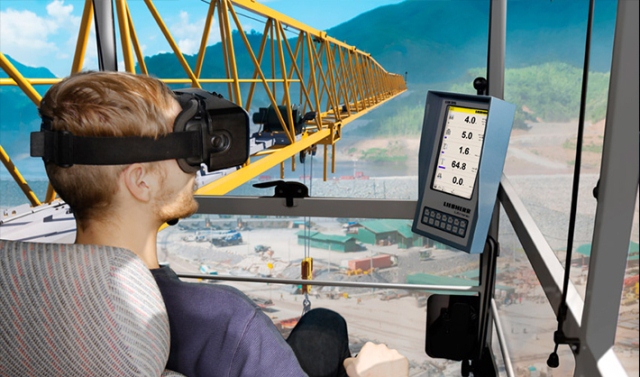
Construction crane

All around the world, cranes have played a dominant role in helping with the task of lifting and transporting heavy payloads. They are used in many different places such as shipyards, construction sites, and industrial workplaces.

Today, many different crane types exist, each type is specifically designed for the environment in which it is being used. One of the more common crane types is the tower crane, which is the type of crane that this thesis will focus on.

The tower crane is mainly used on construction sites and has proven its usefulness in the construction of very tall buildings. This type of crane has a small footprint but is still able to cover a very wide working area.

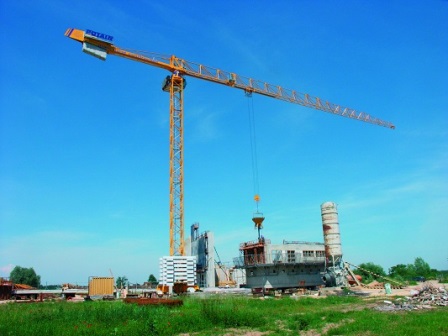
It basically consists of a high vertical mast on top of which a long horizontal movable jib is attached. One side of the jib is used to carry the heavy payload attached on a cable, while the other, shorter side of the jib (also called the counter jib) acts as a counterweight.

Tower crane components

A crane with such a configuration has three degrees of freedom. The first one is the rotational (slew) motion of the horizontal jib.

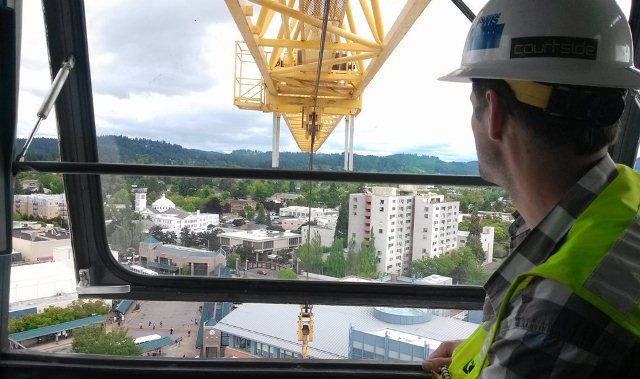
The other two are the horizontal movement of the cable base along the jib (trolley) and the vertical movement of the payload (hoist). The crane is controlled by a human operator, who is usually sitting in a cab at the top of the crane.

As the crane can be used to carry very heavy payloads, the necessary attention needs to go to assure the continued safety of all the people involved. When in motion, the payload and cable assembly will act as a pendulum and is therefore also susceptible to strong swinging.

It is the responsibility of a skilled crane operator to counteract these swinging motions, and at the same time maintain an adequate speed. A good operator is able to suppress the oscillations as much as possible, thereby improving the overall safety on the site as well as increasing the accuracy of the payload delivery.

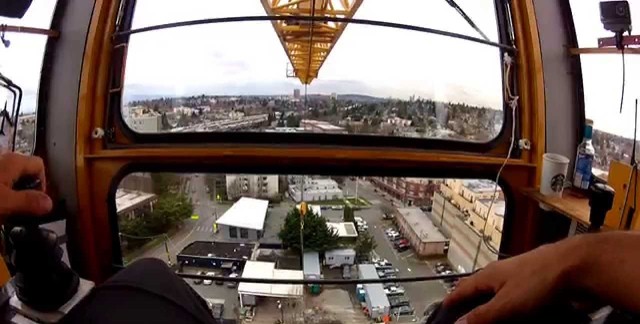
Tower crane operator

Despite the high level of competence of skilled tower crane operators, it is practically impossible to completely remove payload oscillations in all possible circumstances.

External disturbances such as wind can easily initiate an oscillation. After a while, the oscillations can become larger, until the point is reached where the crane operations have to be stopped and the oscillation has to die out, which can take a very long time. Even without these disturbances, due to the complex effects of the rotary crane movements on the payload, oscillations are still hard to suppress.

Researchers have therefore tried to find different ways to control the movement of the crane in order to prevent or reduce this payload swinging, with varying levels of success.

This aims to further investigate the current state-of-the-art control concepts that have been found promising for operator-in-the-loop control of tower cranes. Additionally, the benefits of equipping existing tower cranes with complementary sensors will be investigated.

In the line of this, an attempt to answer the following research questions will be made:


• Can a tower crane control system be developed that enables the operator to move a payload at a requested speed with a certain minimal swing?

• What are the benefits of using additional sensors in tower crane control?
It is clear that the scope of these questions overlap, since control concepts that use different sensor configurations will also have different effects on the payload swing.

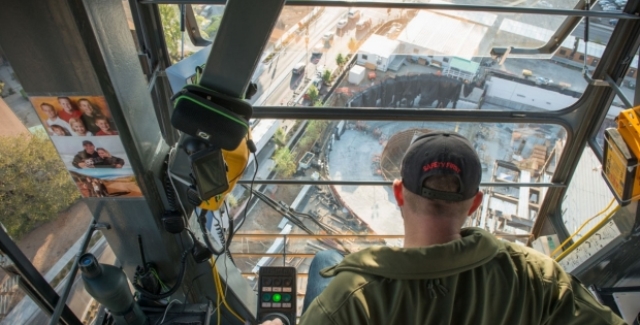
Tower crane specs

A conclusion from this paper is that it is hard to find a control strategy with good robustness properties, which also allows for operator flexibility. A lot of research effort is spent on crane automation strategies, while operator-in the-loop control methods are given less focus.

Much of the research on crane vibration reduction is focused on a gantry and overhead cranes, because of some important reasons. First of all, these types of cranes can move in one or two perpendicular horizontal directions, which results in some nice properties in the dynamics of the payload. The payload motion can be described by the equations for a planar pendulum, and for small pendulum angles, the motions in both directions become decoupled

For small pendulum angles, a linear model can then accurately represent the crane dynamics, enabling the use of the many existing linear control strategies. Gantry cranes are also often used to perform a repetitive task, repeating the same movements over and over. Therefore, optimal trajectory calculation strategies can be employed for this type of crane.

What is a jib on a tower crane?

What is a jib on a tower crane?

A jib crane is a type of crane where a horizontal member (jib or boom), supporting a moveable hoist, is fixed to a wall or to a floor-mounted pillar. Jib cranes are used in construction sites and industrial premises.

How much is a tower crane rental?

A typical monthly fee for a 150-foot-tall tower crane is approximately $15,000, with an additional charge to rent the climbing frame and extra mast sections.

How much weight can a tower crane lift?

The maximum load that the crane can lift is 18 metric tons (39,690 pounds), but the crane cannot lift that much weight if the load is positioned at the end of the jib. The closer the load is positioned to the mast, the more weight the crane can lift safely. The 300 tonne-meter rating tells you the relationship.

The most read

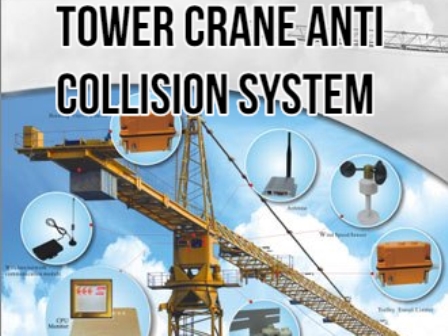
Tower Crane anti-collision System

How does an anti-collision device work in a tower crane?
More on this story

Tower Crane safety

What precautions should be taken on tower cranes?

Mecanum Wheels Forklift

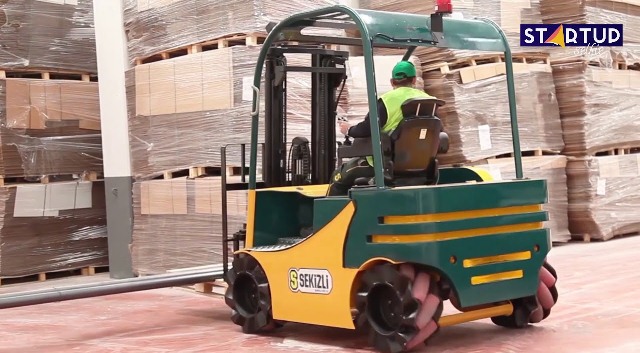
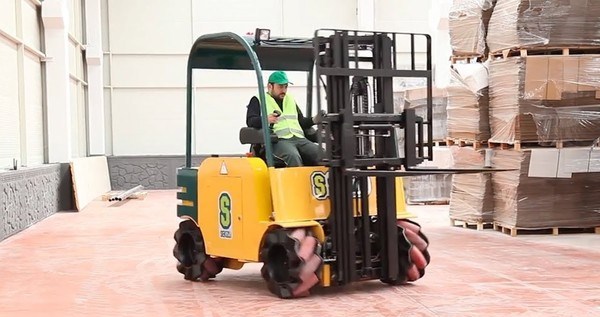
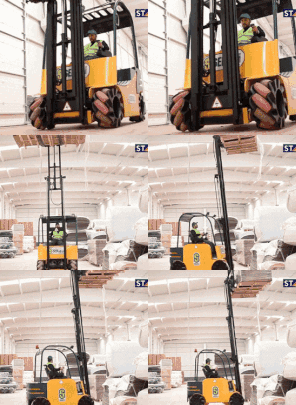
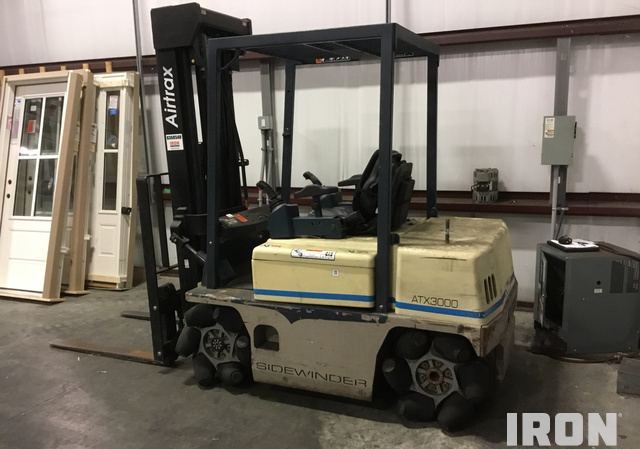
Mecanum Wheels Forklift: The fork truck mecanum utilizes uniquely designed wheels for omnidirectional movement.

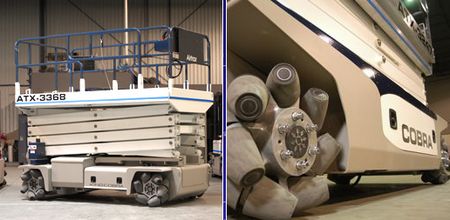
Around the circumference of each wheel are spindles canted at an angle, with each spindle containing a pair of rollers. Each wheel is independently controlled; the speed and direction with which each wheel moves determines the trajectory of the vehicle.

Forklift with mecanum wheels

The wheels can be used for normal directional control for forwarding and backward movement with all wheels going in the same direction. They can also pivot on the spot like a tank using skid steering with one sides wheel goes forward and the other side goes backward. The controls for the forklift is done using 2 joysticks

So how does a machine face forward and drive sideways? It all has to do with the wheels, mecanum wheels consist of a hub with rollers oriented 45° to the axis of rotation.
The angle is important because each wheel can be operated separately which forces of the wheels working in opposite directions to let the rollers to come into play and cause the sideways movement.

These mecanum wheels have been used in robotics for a few years at this point but these new tires for forklifts allow to navigate tight spaces letting you optimize every square foot of space in a warehouse. The full 360 degrees of mobility is perfect for reaching hard to get locations.

Unfortunately, these can’t just put slapped on any old forklift, you have to have the proper controls and motors set up but the benefits on mobility seem worth it. It might be interesting to see on other types of vehicles with these wheels, and I have to say these would make parallel parking a lot easier.

Mecanum forklift

Industrial forklifts excel in applications requiring tight maneuvering or transporting long loads sideways through standard sized doors or narrow aisleways.

The unique, Omni-Directional movement allows it to travel in all directions thus making it an ideal vehicle to work in tight spaces where turns are not possible and finite control is a necessity.

The forklift truck features 48-volt transistor controls with state-of-the-art technology, infinitely variable travel, lift and lower speeds, excellent visibility, ergonomic controls, and operator comfort.

The unique design of the four 21×12 independently driven Mecanum wheels enables the Omni Directional capabilities.

Each wheel is directly driven by individual transaxles. The wheels consist of a large, heavy-duty hub with 12 uniquely designed polyurethane rollers. The wheel and roller design provide the Omni-Directional movement of the vehicle based on the speed and direction of each wheel as determined by the operation of the traction joystick. Each roller incorporates bearings that do not require periodic greasing or maintenance under most conditions. Since each roller rotates freely, scrubbing against the floor is minimized while turning or moving sideways.

How do mecanum wheels work?

Mecanum wheels, also known as Omni wheels or ilon wheels, consist of a hub with rollers oriented 45° to the axis of rotation. Perfect for tight spaces, they enable conventional forward & backward movement as well as side to side and even rotation. To accomplish this, each wheel turns independently.

Omnidirectional forklift

Forklifts have greatly facilitated indoor and outdoor materials movement in manufacturing and logistics companies all over the world. The Omnidirectional forklift is a unique kind of forklift that is equipped with omnidirectional wheels. Unlike regular or 4-way forklifts, Omnidirectional forklift not only moves in two or four directions but in all directions. This has the potential to ease the handling of materials and products in production facilities or warehouses.

Forklift design

Design and Features

Omnidirectional forklift: is designed based on a unique mobility technology that allows 360 degrees movement. The machine is equipped with a synchronous motor drive that is responsible for its high-energy efficiency. Omnidirectional forklift consumes about 30-50% less power than similar devices. There is also a patented SAE safety system that helps the driver to avoid collisions and crashes.

Versatility

One of the many unique features of the Omnidirectional forklift is its admirable level of versatility. With a wide range of attachments such as service platforms, lifting beams and alternative forks, the device can act as more than a forklift. The device is designed such that the service tools can be changed easily.

Battery-powered forklift

Special battery trolley

In addition to its energy-saving operation, Omnidirectional forklift further comes with a special battery trolley that houses an extra battery. The operator can easily replace the machine’s battery, giving room for 24-hour operation.

Driving a forklift

Two driving modes

To suit the needs of a wide variety of factories, Omnidirectional forklift has two driving modes. The driver has the freedom to choose between driving the forklift like the omnidirectional truck it is designed to be or driving it like a conventional forklift. Switching between the two modes could prove very useful for drivers that alternate between straightforward and difficult terrains.

Perfect control

The patented safety system ensures the driver has perfect control over the Forklift at all points in time. All important operating parameters such as speed and stability are controlled by the safety system. The driver can concentrate on the core task at hand, rest assured that the machine would not overspend or tilt over.

Ergonomic design

An omnidirectional forklift is designed to be comfortable and safe for both the driver and other workers alike. The design is such that the driver has a full view of the work environment thus minimizing collisions. All the controls of the machine are also situated at points where they can be easily seen or operated by the driver.

What is Mecanum drive?

What is Mecanum drive?

Mecanum drive is a method of driving using specially designed wheels that allow the forklift to drive in any direction without changing the orientation of the robot. A mecanum forklift can move in any direction without first turning and is called a holonomic drive.

How do mecanum wheels work?

Mecanum wheels, also known as Omni wheels or ilon wheels, consist of a hub with rollers oriented 45° to the axis of rotation. Perfect for tight spaces, they enable conventional forward & backward movement as well as side to side and even rotation. To accomplish this, each wheel turns independently.

How are forklift tires measured?

Usually, the tire size is printed on the sidewall. However, if it isn’t printed on the tire or it has worn off then you’ll need three measurements to determine the correct size tire for your machine. You’ll need to measure: Outside Diameter, Width Of The Steel Band, and Inside Diameter.

When should forklift Tyres be replaced?

As a general rule, when there is less than one inch from the lettering on the tires to the top of the tires, it is time to change the tires. Did you know: after a tire has worn 40%, the forklift and the driver will absorb over 84% of the shock if it’s being run over a rough surface.

What is a solid pneumatic forklift tire?

There are two types of pneumatic tires – solid and air. Solid pneumatic tires are made of solid rubber. These are more expensive than air pneumatic tires because you can’t pop, puncture or gouge them as they are 100% rubber.
They’re ideal for lumber yards and scrap yards where there is a lot of sharp metal scrap debris and nails. Like solid pneumatics, air pneumatics work well outdoors on asphalt, in gravel, and in yards, but they can be punctured so you’ll want to make sure your work area is free of any sharp objects before you begin making your lifts. Air tires also tend to give a bouncy ride and thus, air pneumatic users foam fill their tires, giving themselves a smoother ride than the one experienced on solid pneumatic tires yet a less bouncy ride than pure air-filled.

The most read

Forklift Tires for Sale

Forklift Tires are one of the decisions that affect the budget of a company, so you have to find out and compare what models exist in distributors.

More on this story

Forklift rules and regulations

FORKLIFT SAFETY: forklift loader rules, guidelines and regulations, forklift rules and regulations, fork truck safety, forklift training license.

What is a Counterbalance Forklift?

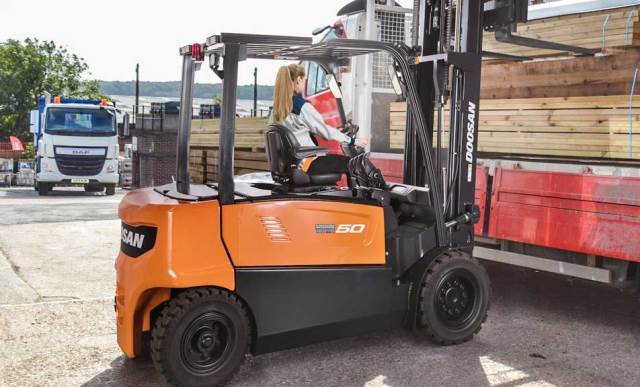
It is the most common forklift truck, the counterbalanced forklift has two forks in the front and has the ability to get close to a load to lift and move it.

The name comes from the counterweight at the rear of the vehicle. This is to compensate for the heavy load that is lifted in the front.

Counterbalanced forklifts are versatile and can be operated both indoors and outdoors. They drive best on flat, smooth surfaces and should be used in more open spaces due to their large turning radius.

What is a counterbalance Forklift?

Counterbalanced forklift types

The counterbalanced forklift, without this weight your forklift would become unbalanced and tip over due to the added weight on the forks.

Comes in a variety of three and four wheels and can run on gasoline, diesel, and electric. They are very powerful trucks and useful for several different environments, lifting a variety of heavy loads.

counterbalance vs reach forklift

Counterbalanced forklifts are designed with the forks protruding from the front of the vehicle and do not have protruding legs or arms to stabilize them.

This means that you can drive your forklift to the precise points where your load or rack is located.

You don’t need a reach facility to access and deposit your cargo. The rear wheels are the rotating wheels of a counterbalanced forklift.

Reach Truck Forklifts:

As the name implies, the Reach Truck is primarily designed for lifting tall loads on shelves or storage. They serve a different type of work than counterbalanced forklift in a number of ways.

Reach forklifts work best indoors, in environments like warehouses. They are very maneuverable and are perfectly suited for weaving between narrow aisles.

They have the ability to reach high-sitting loads and can extend distances beyond their stabilizing legs. It is the combination of these stabilizer legs and the battery that eliminates the need for a cumbersome counterweight to balance the truck.

A reach truck offers a variety of functions to help you get the job done. Some reach trucks come with a tilt mechanism in the cab to help the driver get a better view of the operation.

Others have an open protective roof to optimize the view of the unit. In addition to this, reach trucks can be equipped with a camera that shows the driver what is happening overhead on a video screen.

What makes a forklift counterbalanced?

The counterbalance forklift features two forks at the front and has the ability to drive up close to a load to pick it up and move it. The name comes from the counterweight in the rear of the vehicle. This is to compensate for the heavy load being lifted at the front.

More on this story

Forklift Brands

Forklift Brands and models: Which forklift brand is best? Top brands in the world: Caterpillar, Toyota, Volvo, Hyundai, forklift brands and models, top 10 forklift brands.

Forklift Safety Procedures

Forklifts are extremely useful workplace vehicles, as long as they are used safely and appropriately by operators who are appropriately trained and competent to use them

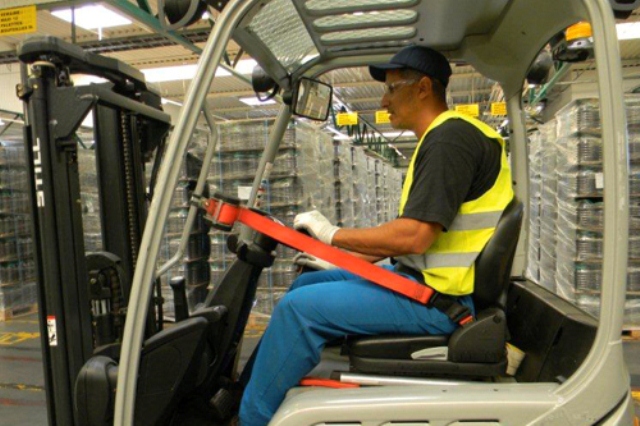
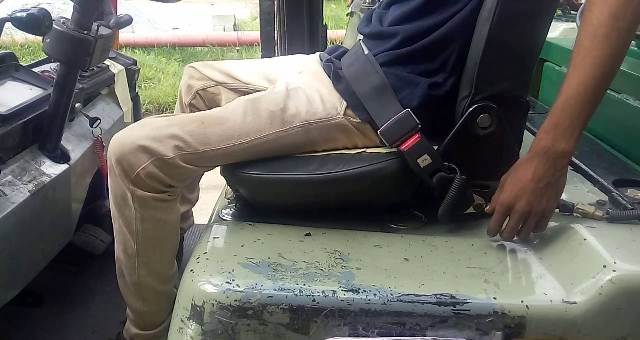
Forklift Seat Belt

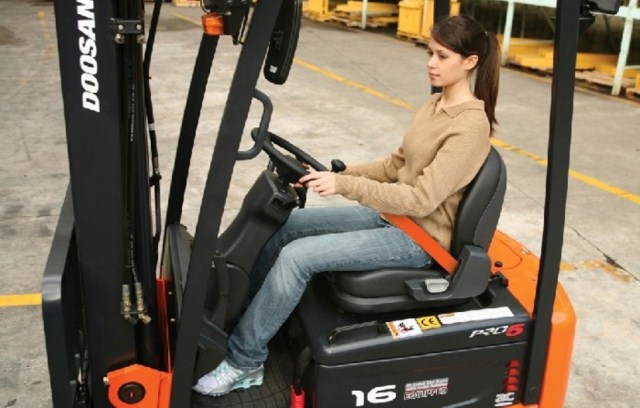
Forklift Seat Belt: Unlike cars, forklift seat belts are not meant to protect drivers from high-speed collisions. Instead, forklift seat belts are intended to protect drivers from being crushed, or “mousetrapped,” in the event the forklift tips over. As the forklift begins to tip, the driver’s natural urge is to jump out. This can lead to the driver becoming crushed between the forklift and the ground. The seat belts save lives by preventing drivers from jumping.

Forklift Seat Belt

OSHA forklift seat belt

Forklift Seat Belt:

Requirements: OSHA does not have a specific rule requiring forklifts to have seat belts. However, employers are required to protect employees from “serious and recognized hazards.” All powered industrial trucks manufactured after 1992 are required by OSHA to have seat belts or another type of restraint specifically to reduce the risk of being crushed, or “mousetrapped,” in the event that the forklift overturns. Mousetrapping is a recognized and serious hazard, and OSHA would enforce the need to have seat belts on forklifts under this rule.

Retrofitting: If a forklift does not have a seat belt, OSHA can mandate the installation of one. This requires the employer to be notified by the forklift manufacturer that mousetrapping hazard exists and that a retrofitting program has been initiated. If the employer does not take advantage of the retrofitting program, once it knows it exists, OSHA can cite the company for failure to comply.

Forklift Seat Belt

Forklift safety belt

Fork lift Seat Belt: Wearing Seat Belts

OSHA requires that operators use seat belts when they are furnished. Employers are responsible for ensuring that forklift operators are wearing their seat belts. If the operator does not use seat belts, the employer could be cited for failure to comply with OSHA standards which require companies to protect employees from recognized hazards.

Forklift Seat Belt: Penalties and Compliance

An OSHA compliance officer who observes a forklift operator not using a seat belt can issue a citation to the employer for failing to comply with OSHA regulations. Before issuing the citation, the compliance officer is required to check with the manufacturer of the forklift to make sure that the machine either was manufactured with a seat belt or that a retrofit kit had been made available to the employer.

If the forklift has a seat belt, or if there is a retrofit kit available, the officer will issue a citation. The employer also may have to pay a penalty to OSHA. The amount of the penalty depends on the degree of danger and whether the employer had previous citations

Forklift Seat Belt

Forklift seat belt safety

We are all aware of the importance of safety when operating forklifts. A forklift can cause just as much injury as an average dump truck. Yet the refusal to comply with safety regulations has led to many dismissals and fines for both employees and employers. This raises some important questions:

  • What are the dangers of not wearing a seatbelt when operating a forklift?
  • If an accident occurred, resulting in injury or death as a consequence of the operator not wearing a seatbelt, who should be held accountable?

The Dangers of not wearing a Seatbelt whilst operating a Forklift

Overturning poses the biggest threat of danger to forklift operators and is the leading cause of deaths involving forklifts, accounting for one in every six. When a forklift overturns, the safest place for an operator is in the cabin with the seatbelt on. This ensures the operator cannot try to jump out of the way or fall underneath the forklift if it tips. (Forklift Seat Belt)

Forklift Seat Belt

Forklift safety regulations

Forklift Seat Belt:

Work Health and Safety regulations state that a seatbelt must be worn in a forklift. An employee must not be exposed to the risk of falling out of the vehicle. An employer must think of the risk of:

  • Powered mobile plant overturning
  • Objects falling on the operator
  • The operator being ejected from the plant

Risk must be eliminated as far as reasonably practicable, or if not practicable to eliminate the risk, reduced so far as reasonably practicable.

Work Health and Safety regulations place accountability on the employer. But what if the employer has followed regulations and an accident occurs? Should they still be held accountable?

Forklift Seat Belt

Forklift seat belt interlock

Forklift Seat Belt:

“Many don’t realize the power they wield when using forklifts or how deadly even a bump to a person can be. Seat belt use is better at big companies these days, but small to mid-size companies it is enforced much less. If you have the belt on and tip over, you live 99.9% of the time, if not you may get severely injured or killed.”

Forklifts can average around 9,000 lbs. As strong drivers think they are, 9,000 lbs is not a weight they can even begin to compete with. No amount of training or machine maintenance will ever eliminate the risk of industrial accidents, but the death and injuries from tip-overs can be avoided by simply taking a moment to put on a seat belt.

Forklift injuries can be life-altering for not only you but for your friends and family. A couple of seconds is all it takes. It’s worth it. Buckle up.

Forklift Seat Belt

Forktrack system

Forklift Seat Belt: Safety Mechanisms

Some cases see experienced and trained forklift drivers continuing to ignore safety procedures. A way around this for employers is the use of systems such as Forktrack. Forktrack reduces the likelihood of employees failing to wear their seatbelts. In particular, Forktrack features an intelligent seat/seatbelt interlock that ensures operators are wearing their seatbelts at all times. Attempts to bypass the system will alert the management of tampering and stop equipment from starting.

Fork truck seat belts

Fork lift Seat Belt:

Ignoring safety warnings and failing to wear a forklift seatbelt or failing to enforce the use of seatbelts is dangerous. One should not take the attitude that an accident will never happen to them or their employees.

Depending upon the situation accountability can land on either the forklift operator or the employer. Experienced operators who work for companies, who enforce safety regulations and provide refresher training, should know the importance of wearing a seatbelt.

If they do not follow company policy the employer should have in place appropriate consequences for the breach in company policy. Employers who do not have safety procedures in place should and will be held accountable in the face of an accident. The correct training needs to be in place in every working environment to ensure the safety of all forklift operators.

Forklift safety tips

Forklift seat belt: Tips for Mounting and Dismounting Safely

When mounting or dismounting a forklift, always:

  • Face the vehicle
  • Never jump off
  • Use a three-point stance (always have both hands and one foot or vice-versa in contact with the unit)
  • Wear certified safety shoes (oil resistant and non-slippery)
  • Wear suitable clothing (do not wear loose clothing or dangling jewelry)
  • Check the area around the forklift to make sure the floor is free of fluid or other debris that could cause a slip
  • Check for other traffic

forklift seat belt: Once aboard a counterbalanced forklift, the operator is required to wear a seatbelt.

There is a litany of reasons why operators do not wear seat belts, such as that they have to get on and off far too often, or that in the event of a tip-over, they could jump clear more quickly. The reality is that operators rarely jump clear more quickly. Tip-overs happen in extreme rapidity and can be fatal if the operator is not wearing a seatbelt. Additionally, operators tend to think that a tip-over situation simply would not happen for them. Operators do not anticipate a tip over until it is too late. Be prepared for the unexpected by wearing a seatbelt.

Forklift seat belt extender

Fork lift Seat Belt: forklift seat belt extender.

Seat belts were introduced on forklifts during the late 1980s. Although not all, many manufacturers offered retro-fit kits to install seat belts on older forklifts. In many cases, the adjustment went beyond bolting on a seat belt. Instead, the requirements included a change in the hood, latch and hinge design or battery retention systems.

Some forklifts went as far as to require an overall seat redesign. Because of the complexity, some manufacturers offered kits, others did not and some offered solutions for select models only.

The best safety precaution is to replace a pre-1988 forklift. If that option is not possible, record the model and serial number on the forklift and contact the manufacturer to inquire about installing a seat belt retrofit kit.

Forklift seat belt policy

Why is forklift safety important?

As you can see, forklift driver safety training is crucial. It can minimize accidents and fatalities on the job while also reducing financial losses from damaged goods. Forklift drivers who operate this machinery without training pose an immediate danger to both themselves and everyone in the work area.

Are you required to wear a seatbelt on a forklift?

Employers are responsible for ensuring that forklift operators are wearing their seat belts. If the operator does not use seat belts, the employer could be cited for failure to comply with OSHA standards under the Occupational Safety and Health Act, which requires companies to protect employees from recognized hazards.

Forklift Seat Belt

Why don’t forklift operators wear seat belts?

There are several different reasons as to why forklift operators do not wear seat belts while operating a forklift. Material Handling and Logistics compares it to the transformation a driver takes on when operating a car. “An interesting transformation happens when someone gets into a car. The vehicle becomes a suit of armor and the occupant becomes a warrior.”
Unfortunately, this warrior mentality also exists in the warehouse “where forklifts become industrial-strength suits of armor in the minds of poorly trained operators.”

What is a safe speed for a forklift?

Regulating an industrial lift truck’s speed plays an important part in keeping the workplace safe. The maximum allowable speed of a forklift truck is 8 mph, but in areas where pedestrians move about, the forklift should not move faster than 3 mph.

Are seat belts required on forklifts?

OSHA does not have a specific rule requiring forklifts to have seat belts. However, employers are required to protect employees from “serious and recognized hazards.”

Why do forklifts have seat belts?

The Occupational Safety & Health Administration requires that operators use seat belts when they are furnished. Employers are responsible for ensuring that forklift operators are wearing their seat belts.

Do forklifts have to have fire extinguishers?

Federal OSHA does not specifically require employers to equip forklifts with portable fire extinguishers. However, depending on the hazards present in an area where the trucks travel, OSHA may have requirements for fire protection in that specific hazardous location.

The most read

Forklift Safety Procedures

Forklifts are extremely useful workplace vehicles, as long as they are used safely and appropriately by operators who are appropriately trained and competent to use them.

More on this story

Forklift rules and regulations

Forklift loader rules, guidelines, and regulations, forklift rules and regulations, fork truck safety, and forklift training license.

Tower Crane Equipment

A tower crane is a construction machine designed to load and unload different materials. This load is distributed through the use of a hook that remains suspended thanks to the use of a cable. This heavy machine is essential in the work of modern construction.

In addition, it performs its corresponding displacement on a car and has rotating support that is usually mounted on top of a vertical tower.

A common modern engineering technique is to fix the crane to the liftshaft site – lifting it to higher elevations as the construction progresses – and ending the well once the crane has been dismantled.

The tower crane is often secured to the ground within the structure, where the space around the building is limited.

Tower crane specifications

  1. The crane has a base that is attached to the bottom of said tower.
  2. Uploads and downloads made with great frequency
  3. Make many transfers between various locations.
  4. Where the tower crane is most used are the construction works,
  5. They have the ability to reach great heights.

Tower crane mast

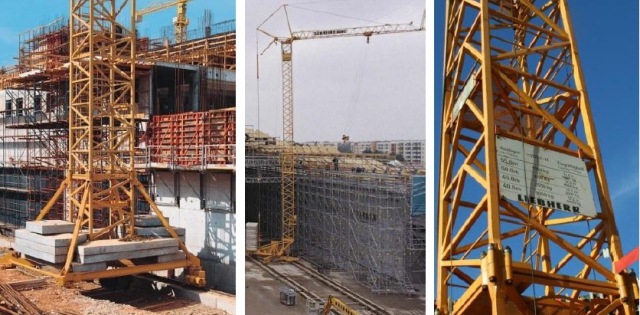
Tower Crane Parts – The tower crane is composed of several parts that are fundamental to perform the work in the construction of a work, these parts are:

It is a metal lattice structure with a normally square section, whose main mission is to provide the tower crane with sufficient height.

Normally it is formed by lattice modules that facilitate the transport of the crane. For assembly, these modules will be joined by screws, all of which will be connected to the projected height. Its shape and dimension vary according to the necessary characteristics of weight and height.

In the upper part of the mast is the rotating area that gives the crane a 360º horizontal movement. Also depending on the model, you can have a cabin for its operation by an operator.

Tower crane counterweight

They are structures of concrete prefabricated that are placed to stabilize the weight and inertia that occurs in the arrow of the crane. They must stabilize the crane both at rest and in operation. Both these blocks and those that form the ballast must have identified their weight legibly and indelibly.

Crane tower counterweight

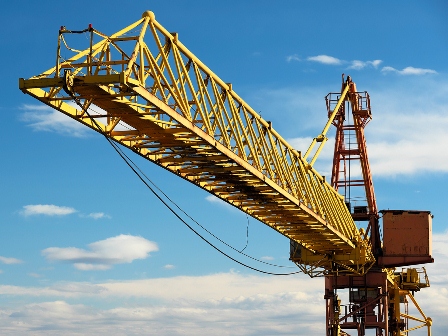
Tower crane jib

It is a metal lattice structure of a normally triangular section, whose main mission is to provide the crane with the necessary radius or range. It is also called a jib. Like the mast, it usually has a modular structure to facilitate its transport.

To move the specialized personnel during the assembly, revision and maintenance work along the arrow, there will be a longitudinal element, a safety cable, to which the safety belt carabiner can be attached.

Tower crane counter jib

The length of the counterjib oscillates between 30 and 35% of the length of the pen. At the end of the counterjib, the counterweights are placed. It is attached to the mast in the area opposite the union with the arrow.

It is formed a robust base formed by several metal profiles, forming on them a kind of catwalk to facilitate the passage of personnel from the mast to the counterweights. The sections of the profiles will depend on the counterweights that will be placed.

Central ballast

It can be formed by a buried shoe or by several pieces of prefabricated concrete at the base of the crane.

Its mission is to stabilize the crane against its own weight, the weight it can transfer and the adverse environmental conditions

Crane trolley

It consists of a car that moves along the arrow through some lanes. This movement gives the necessary maneuverability in the tower crane. It is metallic so that it supports the weight to be lifted.

crane truck and electric hoist tower

Crane hook

Cables and hook: The lifting cable is one of the most delicate parts of the crane and, to give an adequate performance, it must be used and maintained correctly.

It must be perfectly tensioned and a periodic follow-up will be carried out so that, during its winding in the drum, it does not cross over, as it would cause crushing.

cables and tower crane hook

Tower crane motor specifications

The most generic tower crane consists of four electric motors:

  • Lifting motor: allows vertical movement of the load.
  • Distribution motor: gives the movement of the car along the jib.
  • Motor of orientation: it allows the rotation of 360º, in the horizontal plane, of the upper structure of the crane.
  • Translational motor: displacement of the crane, as a whole, on rails. To perform this movement it is necessary that the crane is at rest.

The tower of the crane can be embedded in the ground, immobilized without wheels or movable on straight or curved tracks. Assembly operations must be carried out by specialized personnel.

Likewise, the maintenance and conservation operations will be carried out in accordance with the standards given by the manufacturer.

Movable tower crane

Is one whose base is equipped with own means of translation on rails or other means and whose maximum height of assembly is such that without any additional anchoring means is stable both in service and out of service, for the solicitations to which it goes to be submitted

crane tower on rails

Fixed tower crane

Its base does not possess means of translation or, being possessed, they are not usable on the site. They are those in which the base is a foundation or any other fixed set.

Mobile tower crane

Removable single-body tower crane: Temporary installation designed for frequent assemblies, disassemblies, and transfers.

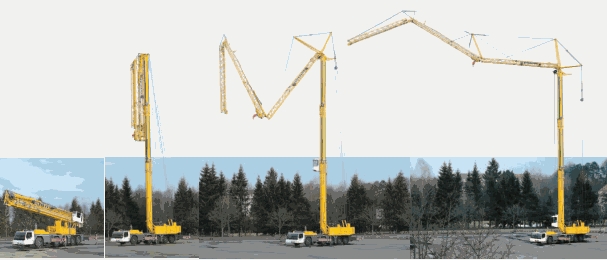
Self erecting tower crane

Tower crane whose tower is constituted by a single block and that does not require additional structural elements for its installation. It can be provided with wheels to facilitate its movement.

crane self-folding tower

Climbing tower crane

The climbing tower crane is an auxiliary means for lifting loads.

It is installed on the structure of work under construction and moves from bottom to top by its own means; to the rhythm and as the construction progresses.

crane operator

Tower crane operators use tower cranes to lift, move, position and place materials and equipment.

They calculate the lifting capacity of the crane and determine the weight of the load, participate in the configuration and disassembly of the crane and place and stabilize the crane before lifting.

They also perform regular inspections, and minor repairs and equipment maintenance

Tasks and work tasks for: “Crane and tower operator”.

  • Determine the load weights and compare them with the lifting capacities to avoid overloads.
  • directs direct aides dedicated to the placement of blocking and stabilization under the cranes.
  • Load and unload the packages from the trucks and move the containers to the storage containers.
  • Move the levers, press the pedals and turn the dials to operate electromagnets or other mobile equipment to lift, move and place loads.
  • Review daily work and delivery schedules to determine orders, delivery sequences, and special loading instructions.
  • Weigh the packages, using floor scales and record the weights for the company records.
  • It cleans, lubricates and maintains mechanisms such as cables, pulleys, and gripping devices, making the necessary repairs.
  • It directs the truck drivers who drive the vehicles back to the loading bays and secures the loads for delivery.
  • Inspect and adjust the mechanisms of the crane and lifting accessories to avoid breakdowns and damage.
  • Inspect the cargo packing to verify that it complies with the regulations and customer requirements.
  • Inspect the cables and gripping devices for wear, and install or replace the cables as necessary.

operator crane tower

How much can a tower crane lift?

How much can a tower crane lift?

The maximum load that the crane can lift is 18 metric tons, but the crane cannot lift that much weight if the load is positioned at the end of the jib. The closer the load is positioned to the mast, the more weight the crane can lift safely. The 300 tonne-meter rating tells you the relationship.

What are the parts of a tower crane?

Tower crane mast
Tower crane jib
Tower crane counter jib
Tower crane counterweight
Central ballast
Crane trolley
Crane hook
Motor crane

The base is bolted to a large concrete pad that supports the crane. The base connects to the mast (or tower), which gives the tower crane its height. Attached to the top of the mast is the slewing unit, the gear, and motor, that allows the crane to rotate.

What is the difference between tower crane and mobile crane?

The biggest difference between mobile cranes and tower or fixed cranes is their mobility. As their names suggest, fixed cranes are fixed to a single spot once they have been set up. Whereas, mobile cranes can be moved as needed. The mobility of a mobile crane holds many advantages for any construction site.

Why do tower cranes have lights on them?

When high-rise structures are being constructed temporary cranes are erected which quickly pose a hazard to airborne traffic.

What is tower crane safety?

Tower cranes are widely used for lifting operations in the construction industry. Statistics show that tower cranes contribute to quite a number of serious accidents. Property damage and bodily injuries can be avoided if they are properly used.

The most read

More on this story

Types of Tower Cranes

Types and designs of cranes for construction and industry: Flat Top, Hammerhead, Luffing crane, self-erecting, etc.

Tower Crane Specifications

The study of the tower crane will include knowing the structures that make it up, as well as knowing the elements that are part of this and that will allow the crane to perform the tasks for which it has been designed.

Tower Crane Companies

Tower Crane Companies: Cranes are designed to lift, lower, and move heavy loads using pulleys and cables. Cranes are used in the construction and logistics industries as well as in the manufacturing of heavy equipment.

Tower Crane Companies

Construction Tower crane companies

There are various types of cranes designed to operate under different circumstances. These include mobile cranes, telescopic cranes, tower cranes, and truck-mounted cranes, rough terrain cranes and all-terrain cranes among others.

Tower Crane Companies

Comansa tower crane

The COMANSA range of tower cranes is one of the most complete on the market, boasting a wide range of models and versions that adapt to all kinds of construction projects: residential, commercial, infrastructure, industrial, mining, energy, shipbuilding, etc. Comansa

Stafford crane

Stafford Crane Group is a worldwide provider of lifting services and equipment headquartered in Phoenix, Arizona. From depots in Phoenix, Denver, San Diego and Miami, SCG provides a complete range of services to meet all your lifting needs including sales and rentals, erection and dismantle, inspection, repair and consulting on tower cranes, mobile cranes, self-erecting cranes and overhead cranes

Morrow tower crane

As the exclusive distributor of Liebherr tower cranes in the United States, Canada, and Mexico, Morrow is able to offer the widest range of new and used cranes available. A motivated, highly trained sales and sales support staff, knowledgeable in the advantages of the tower crane, are in place to provide you with the best in customer services. Morrow tower crane

Tower crane manufacturers

  • Terex tower cranes
  • Liebherr tower crane
  • Potain tower crane
  • Manitowoc tower crane
  • Zoomlion tower crane
  • Raimondi tower crane

Terex tower cranes

Available in self-erecting, hammerhead, flat top and luffing jib varieties, each with a wide range of sizes and capacities, Terex tower cranes can be seen hard at work on some of the most formidable job sites around the world. Strong, yet quick to set up, their rugged construction and advanced technology provide reliable performance for many productive years to come. Terex Tower Crane

Liebherr tower crane

Liebherr’s tower crane program is unsurpassed in terms of versatility. It comprises machines of all systems and size categories, with the ideal lifting technology for any civil engineering task.

The efficient top-slewing cranes have proved their worth both in the construction of residential buildings and on large-scale industrial projects all over the world

Tower cranes are the main pivot point for the success of all types of sites. The important thing is to select the correct crane types, their quantity, positioning and dimensions. These are important factors for meeting deadlines and budget targets.

Potain tower crane

Potain has led the world in tower cranes. Self-erecting and top-slewing cranes have been produced since Potain’s inception in La Clayette, France, in 1928. More than 100,000 Potain cranes have been sold and installed on some of the most prestigious job sites around the world. The company offers more than 60 models in a variety of product ranges.

Tower Crane Companies

Manitowoc tower cranes

Simple, rapid and entirely autonomous, Self-erecting tower cranes (GMA cranes) are especially suited to construction sites which are of short duration, requiring frequent operations of transport, setting up, erection and dismantling. Manitowoc crane

Tower Crane Companies

Zoomlion tower crane

Zoomlion is a Chinese manufacturer of construction machinery and the sixth-largest construction machinery enterprise.

Raimondi tower crane

Raimondi Cranes prides itself on incorporating the latest in safety developments, paired with a high functioning and intelligently-designed technological edge. Fully designed and manufactured in our ancestral home of Legnano, Milan, Raimondi Cranes (Raimondi) has more than 150 years of history of the finest European craftsmanship. Raimondi tower crane

Tower Crane Companies

Tower Crane Companies

How much is a construction crane?

The typical fee for installation and disassembly runs around $60,000. This price includes shipping the crane to the site, renting the mobile crane used to assemble the tower crane, the cost of the crew that handles the assembly, etc.

What is a tower crane?

The tower crane is a fixed Crane and has to be mounted On-Site. The Tower Crane presents itself like a vertical metallic structure having a horizontal boom that can turn over an angle up to 360°. From his particular set up, the tower crane is ideal for all king of a high building or high structure Construction.

What is a spider crane?

A spider crane is a perfect tool if you require heavy lifting in between floors in a building, lifting anything from air conditioning units or wooden beams on to upper floors or dropping down lower levels. The LIFT-094 is the smallest and most compact spider crane in our range and highly effective in confined space.

How is a tower crane built?

Tower cranes arrive at the construction site on 10 to 12 tractor-trailer rigs. To rise to its maximum height, the crane grows itself one mast section at a time! The crew uses a top climber or climbing frame that fits between the slewing unit and the top of the mast.

The most read

More on this story

Remote Control Tower Crane

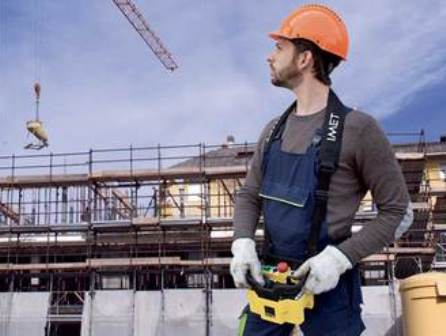
Radio remote controls are now standard equipment on most self-erecting tower cranes and are even becoming common in some parts of Europe for a flat-top tower crane.

Tower Crane Cab

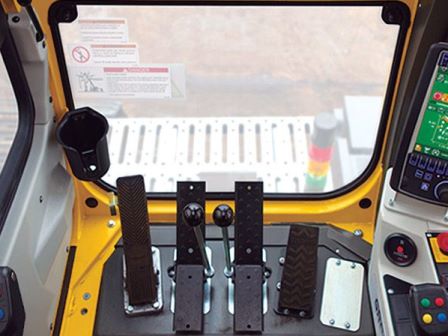
Cab features include improved seat position and access, a USB port and optional Bluetooth. A user-friendly multifunction touch screen emits warning lights and sounds, as well as controls the interior temperature, interior, and exterior lighting and other features.