Category Archives: forklift

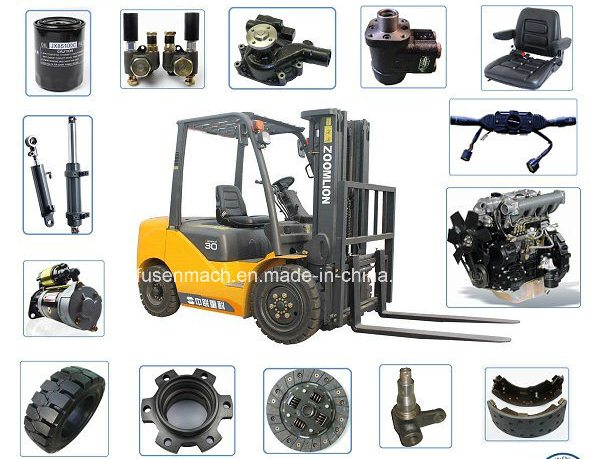
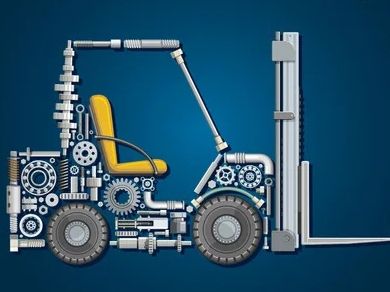
Forklift Parts and Functions

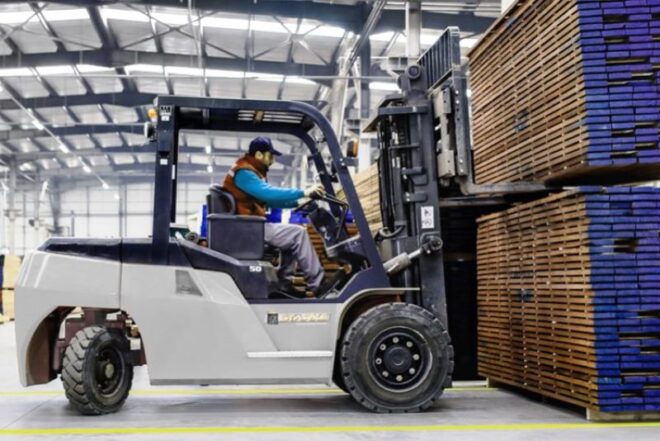
Forklift Components – Parts of a Forklift: A forklift is a small industrial vehicle, having a power-operated forked platform attached at the front that can be raised and lowered for insertion under a cargo to lift or move it. Forklifts serve the needs of various industries including warehouses and other large storage facilities.

Locating the common parts of a forklift is vital to make certain that your operators are reliably using equipment as intended in a safe manner. The following list of forklift terminology will help to ensure all associates are prepared to use the equipment effectively and identify the forklift parts that require the attention of a maintenance technician.

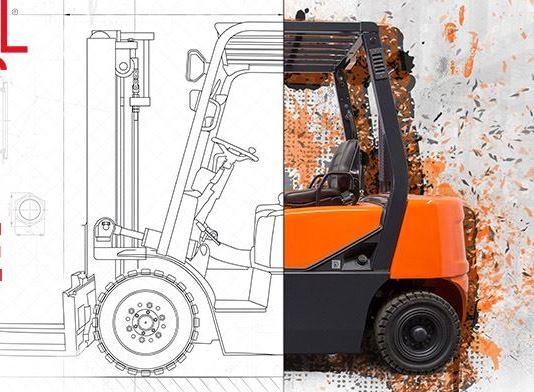
Parts of a Forklift

Forklift parts name

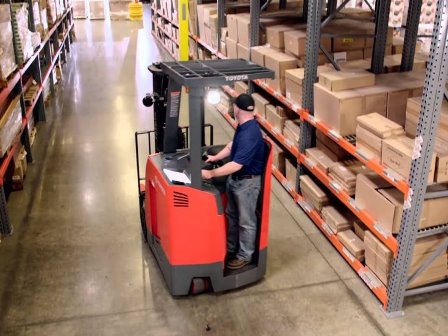
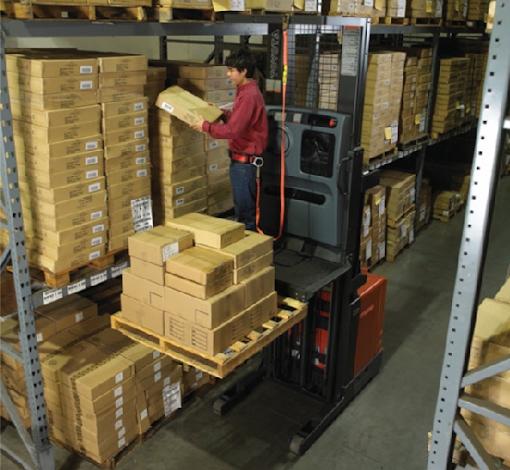
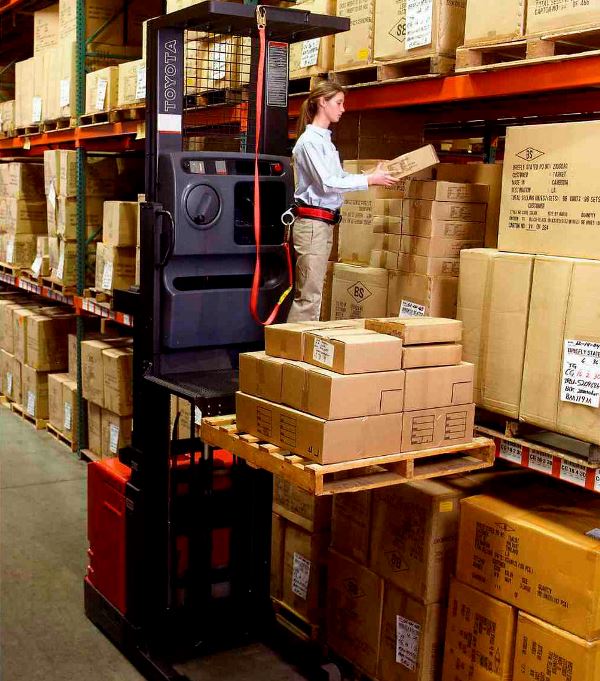
Forklifts are powered by electric batteries or combustion engines. Some Forklifts allow the operators to sit while driving and operating the machine while others require the operator to stand. It is being extensively used throughout the industry for transporting materials and goods.

If you could list the most essential forklift components, what would they be? Every part of a forklift is “important” in some way, but which ones really stand out? Certain forklift parts and functions are designed to maintain the safety of the equipment and to help prevent malfunctions that can lead to severe accidents.

  • tires
  • frame
  • counterweight
  • cab
  • fuel
  • main lift cylinder
  • mast
  • carriage
  • load backrest
  • attachments
Parts of a Forklift

Forklift parts and functions

Forklift tires

Tires: There are many types of tires available, both for indoor and outdoor use*, but not all tires are made the same. It is important to consult with a tire expert who can make sure that the correct rubber compound and traction pattern are used. Then you must check to make sure you are not being sold recycled tires or cheaper versions made overseas.

Forklift frame

Truck Frame: is the base of the machine to which the mast, axles, wheels, counterweight, overhead guard, and power source are attached. The frame may have fuel and hydraulic fluid tanks constructed as part of the frame assembly.

Counterweight forklift

Counterweight – is a mass attached to the rear of the forklift truck frame. The purpose of the counterweight is to counterbalance the load being lifted. In an electric forklift, the large lead-acid battery itself may serve as part of the counterweight.

Forklift overhead guard

Overhead Guard: this is a metal roof supported by posts at each corner of the cab that helps protect the operator from any falling objects. On some forklifts, the overhead guard is an integrated part of the frame assembly.

Forklift main lift cylinder

Tilt cylinders are hydraulic cylinders that are mounted to the truck frame and the mast. The tilt cylinders pivot the mast backward or forward to assist in engaging a load.

Cab forklift

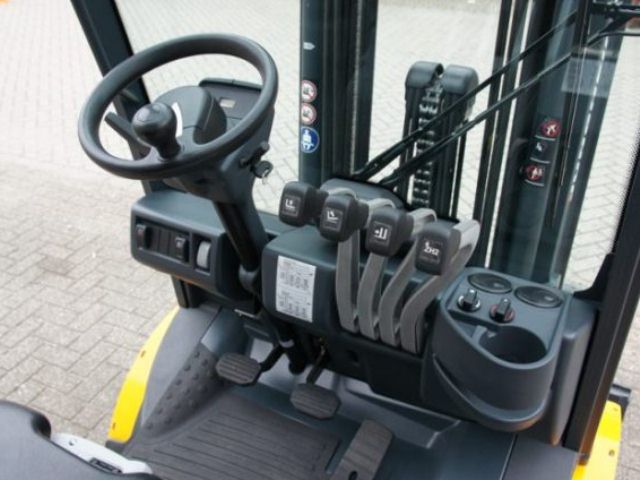
Cab: is the area that contains a seat for the operator along with the control pedals, steering wheel, levers, switches, and a dashboard containing operator readouts. The cab area may be open-air or enclosed but it is covered by the cage-like overhead guard assembly. When enclosed, the cab may also be equipped with a cab heater for cold climate countries along with a fan or air conditioning for hot weather.

Forklift mast

Mast: is the vertical assembly that does the work of raising and lowering the load. It is made up of interlocking rails that also provide lateral stability. The interlocking rails may either have rollers or bushings as guides.

The mast is driven hydraulically, and operated by one or more hydraulic cylinders directly or using chains from the cylinder/s. It may be mounted to the front axle or the frame of the forklift. A ‘container mast’ variation allows the forks to raise a few meters without increasing the total height of the forklift. This is useful when double-loading pallets into a container or under a mezzanine floor.

Forklift components

Each part and component on a counterbalanced forklift is designed to perform a specific job and the safe operation of a forklift includes the operator understanding its moving parts, capabilities, and limitations.

Forklift carriage

Carriage: is the component to which the forks or other attachments mount. It is mounted into and moves up and down the mast rails by means of chains or by being directly attached to the hydraulic cylinder. Like the mast, the carriage may have either rollers or bushings to guide it in the interlocking mast rails.

Forklift load backrest

Load Back Rest: is a rack-like extension that is either bolted or welded to the carriage in order to prevent the load from shifting backward when the carriage is lifted to full height.

Attachments forklift

Attachments: may consists of a mechanism that is attached to the carriage, either permanently or temporarily, to help in the proper engagement of the load. A variety of material handling attachments are available. Some attachments include side shifters, slip sheet attachments, carton clamps, multipurpose clamps, rotators, fork positioners, carpet poles, pole handlers, container handlers, and roll clamps.

Forklift forks

The forks are long extensions (like arms) that are attached to the carriage. They are used to support the load from the bottom. They come in a variety of widths and adjust from right to left on the carriage.

Forklift Power Source

Power Source: may consist of an internal combustion engine that can be powered by LP gas, CNG gas, gasoline or diesel fuel. Electric forklifts are powered by either a battery or fuel cells that provide power to the electric motors. The electric motors used on a forklift may be either DC or AC types.

Components and parts of forklift

What are the three major parts of a forklift?

The three major parts of a lift truck are the body (truck), overhead guard, and hydraulic lift.

What are the prongs on a forklift called?

Forks, Also known as the tynes, the forks on a forklift are used to make direct contact with a load for transport. They are attached to the forklift carriage and are designed to carry a load from the bottom.

What are forklifts made of?

The technological advances in the forklift have made the forklift truck one of the most vital components of today’s speedy material handling industry. The welding robots used to assemble these forklift trucks are top-notch and produce an incredibly sound structure. First, the body is constructed from steel and painted.

What is the mast on a forklift?

Also referred to as an ‘Upright’, the mast is the vertical assembly on the front of the forklift that does the work of raising, lowering, and tilting the load. Most masts are ‘three stages’ meaning there are three channels on each side.

How heavy is a forklift?

The average automobile weighs approximately 3,000 lbs and the average forklift weighs close to 9,000 lbs. Also, forklifts are heavier in the rear to counter the weight of items being carried in the forks.

The most read

Forklift Parts name

Forklifts are designed to last, but like any other machinery, forklift parts are susceptible to wear and tear.

Forklift Spare Parts Name

Looking for a replacement part for your forklift parts or reach truck?
Forklift Brands

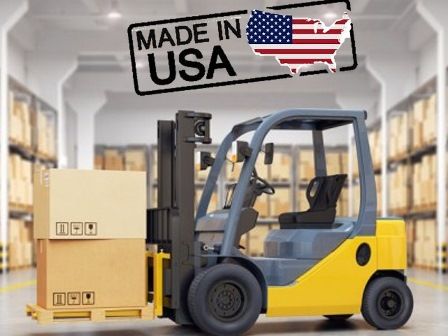
Forklift Brands and models: Which forklift brand is best? Caterpillar, Toyota, Volvo, Hyundai, forklift brands and models, top 10 forklift brands.
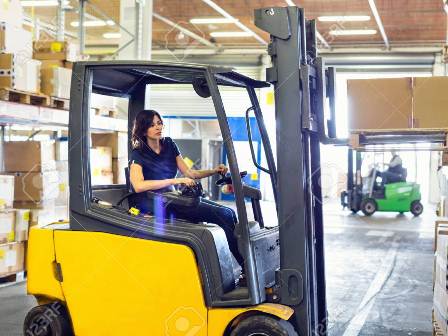
Forklift Safety Procedures

Forklifts are extremely useful workplace vehicles, learn about the rules for driving forklifts.

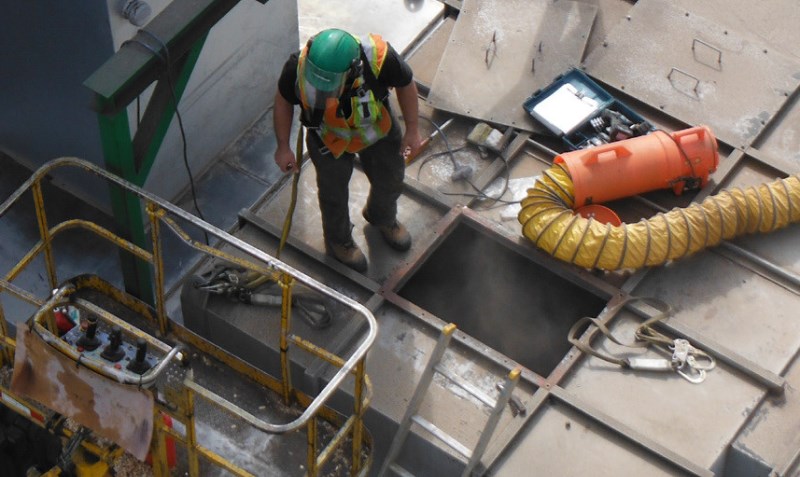
Confined Space Entry Procedures

“Entry” means the action by which a person passes through an opening into a permit-required confined space. The entry includes subsequent work activities in that space and is considered to have occurred as soon as any part of the entrant’s body breaks the plane of an opening in the space.

“Entry permit” means the written or printed document provided by the employer to allow and control entry to a permit space.

Confined Space Entry Procedures

Confined space procedure

There’s no way to avoid it. Complying with the Occupational Safety and Health Administration (OSHA) confined space standard is a demanding task. From record-keeping requirements, training, permits, and a written program, the standard requires a lot of effort on the part of the security professional.

But that’s no excuse for overlooking the dangers.

Sometimes oversights happen because workers don’t know the rules. Other times are when they choose shortcuts. In any event, a control services team has determined that serious accidents can often be attributed to one or more key function failures, and offer the following tips for confined space safety.

Enclosed space entry procedure

The purpose of these procedures is to ensure that entry into any confined space is planned and documented as required in order to identify and control hazards.

They cover the entry method selection, planning, and documentation of entry into confined spaces of both classifications: non-permit-required confined space (NPRCS) and permit-required confined space (PRCS).

They apply to workers (as entrants and attendants), confined space entry supervisors, confined space owners, area and building managers, line management, field construction and service managers, and the confined space program manager.

  • Obtain a copy of the entry permit and hazard assessment and review the hazards associated with the space
  • Ensure that the appropriate PPE, Rescue Retrieval Equipment and Communications. Equipment is available and in good working condition
  • Lockout or Tagout any hazardous energy that the entrant could be exposed to
  • Conduct continuous air monitoring utilizing a multi-gas air monitor
  • The space must be labeled with a confined space “DANGER” sign
  • Review the confined space “DANGER” sign and make sure the information corresponds with the information on the hazard assessment
  • Notify the Operations Center and wait for authorization to begin the entry.

Rescue plan for confined space

When working in confined spaces, an important question for safety professionals to consider is what to do if someone is injured, incapacitated, or trapped in a space and must be rescued.

The steps below will help guide safety professionals through preparing for and executing a confined space rescue in a timely manner.

One of the best ways to prepare is to practice. There are many theories about best practices for confined space rescue, and rescue drills allow professionals to put those theories to the test.

Rescue drills give personnel the experience of working in different scenarios to become familiar with situations they might encounter in confined spaces.

There are time-sensitive and non-time-sensitive rescues. Urgent or “emergency” rescues typically involve oxygen-deficient atmospheres where there is a small window of time, usually six minutes, to extricate someone.

An example of a non-time-sensitive rescue would be a situation where someone falls and breaks an ankle while entering a confined space.

In these types of circumstances, there are sufficient O2 levels and therefore the rescue is not as time sensitive and can be performed without the use of supplemental oxygen.

Understanding both types of rescue helps security professionals develop strategies to implement and execute an appropriate response. (PDF)

More on this story

Forklift Safety Procedures

Forklifts are extremely useful workplace vehicles, as long as they are used safely and appropriately by operators who are appropriately trained and competent to use them.

Standard Operating Procedure for Driving a Forklift

Safe Forklift Operation according to OSHA

Heavy Equipment Safety Topics

Any person who operates, leases, rents, or borrowed heavy equipment must take many hours of safety training for each type of equipment before they operate the equipment.

Deep Cycle Forklift Batteries

Forklift batteries are deep cycle batteries and for this reason, they can be discharged to lower levels without causing damage.

Forklift batteries are much like the lead acid batteries you see in cars, although forklift batteries are much heavier, larger, and more difficult to repair or recondition.

Deep Cycle Forklift Batteries

Are forklift batteries deep cycle?

Forklift batteries are much like the lead acid batteries you see in cars, although forklift batteries are much heavier, larger, and more difficult to repair or recondition.

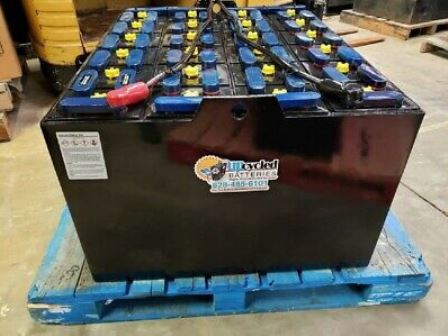
The humble forklift or industrial battery used in electric forklifts or pallet jacks. It’s simply an incredibly durable, incredibly large, and amazingly cost-effective deep-cycle lead-acid battery.

Forklift batteries come in a variety of voltages (12, 24, 36, or 48) and sizes (from 1,000 pounds to several thousand pounds). They are available from local industrial battery suppliers or from the manufacturer.

The lead plates in a forklift battery are much thicker and should last much longer than any battery.

The battery is made up of 2-volt cells, all packed in a sturdy metal case and joined with metal bars in the proper configuration to add up to the voltage indicated on the label.

When used with a forklift every day, these batteries typically last no more than seven or eight years, but the expected lifespan is up to 15 or more than 20 years when used with a renewable energy system, with proper maintenance. and without deep discharges.

More on this story

Forklift Batteries for Sale

How to buy the right forklift battery? Before you spend hundreds of dollars on a battery, take a moment to learn how to choose the battery for your forklift.

Forklift Battery for Solar

If you’ve decided to power your off-grid homestead with solar power, you may be considering using rechargeable forklift batteries to store the power from the sun.

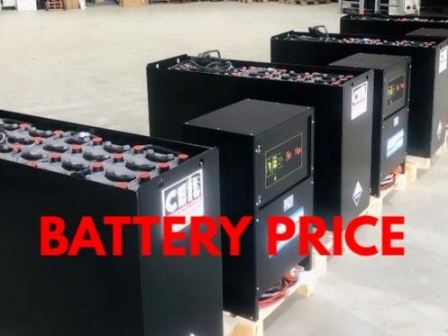
Forklift Battery Price

When it comes to buying a battery for your forklift, the true cost of a forklift battery involves much more than just the initial price.

Forklift Pedals: How many pedals do a forklift have?

  • Why does a forklift have two brake pedals?
  • How to use a 3 pedal forklift?
  • What is a 4 pedal car called?
  • What is the 3 foot rule for forklifts?
  • What is the middle pedal on a forklift for?
  • What are dual-sided pedals?
  • How many types of brakes are on a forklift?

OSHA Forklift Trainingh Handbook

The purpose of this book is to help companies comply with the Powered Industrial Trucks Standard. Powered industrial trucks make the top ten cited violations from OSHA every year.

In other types of hydrostatic forklifts, there are two accelerator pedals that act like directional controls. The first pedal when pushed moves the forklift forwards, and the other one moves the truck in reverse. The operator shifts his foot from pedal to pedal to drive the forklift in the desired direction.

Additionally, what is the inching pedal used for?

The purpose of the inching pedal is to disengage the transmission without having to shift the gear lever into neutral every time a lift is performed. This pedal allows you to bring the forklift to a stop or to slow it down.

Forklift Pedals

what are the 3 pedals on a forklift for?

To begin with, every forklift comes equipped with an accelerator and a brake pedal. That third pedal is called an Inching Brake. Its function is twofold. It initially acts as a brake and secondly disengages the transmission, allowing the engine speed to increase or decrease without affecting the drive of the forklift.

Forklift pedals explained

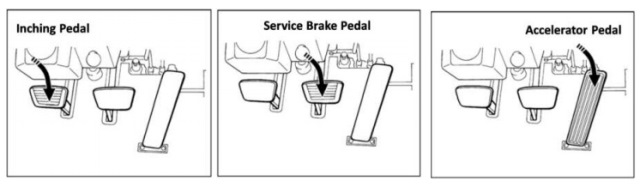
Inching pedal

The purpose of the inching pedal is to disengage the transmission without having to shift the gear lever into neutral every time a lift is performed.

To inch (creep) in either direction.

  • Slowly push down on the inching pedal. This will gradually disengage drive through the transmission in preparation for a load to be lifted.
  • Vary the position of the inching pedal and the accelerator pedal to control the travel speed.
  • Pushing down further on the inching pedal will disengage the transmission completely and apply the service brakes fully to stop and hold the lift truck while allowing full engine power for a fast hydraulic lift.
    Note: It is strongly recommended NOT to use the inching pedal when creeping into racking with raised loads.

Service Brake pedal

This pedal allows you to bring the forklift to a stop or to slow it down. Additionally, a “hill start” should be performed using the service brake pedal and not the inching pedal.

To stop the lift truck when traveling in either direction.

  • Release the accelerator pedal.
  • Push down on the service brake pedal and bring the truck to a smooth stop.
  • If the need arises to stop on a ramp or slope, the handbrake must be engaged. To drive out of this situation, the service brake pedal should be fully depressed & the transmission engaged, then gently accelerate as the handbrake is released.

Accelerator pedal

This pedal allows you to adjust the rotational speed of the engine. The engine speed changes according to the degree to which the accelerator pedal is depressed.

To increase or decrease travel speed in either direction.

  • Push down on the accelerator pedal to obtain the desired travel speed.
  • Release the accelerator pedal and push down on the service brake pedal to decrease travel speed.

Forklift pedals warning

Before operating a forklift, read and study the operator’s manual discussion on controls. Locate each control and understand how to use each one.

Inching pedal

Instead, use the brake pedal only to keep the transmission fully in gear and minimize the risk of jerky operation.

A forklift must be stationary when lifting a load.

  • DO NOT leave your foot on the inching pedal when driving the forklift.
  • DO NOT “ride” the inching pedal.

It will cause the transmission to slip and generate a large amount of heat which may cause the transmission to overheat, wear down in a short time or seize up in the worst case.

Do not release the inching pedal suddenly when engine revs are high as this can cause drive wheel slippage and premature tire wear. Additionally, it can cause loads to shift and become unbalanced and dangerous.

Service Brake pedal

  • Do not brake the forklift too hard. Doing so may cause the forklift to become unbalanced or cause loss of load and could result in a serious accident.
  • Adjust the braking effort according to the load weight and surrounding conditions.
  • Do not leave your foot on the brake pedal while driving. Doing so may cause the brakes to fail because of overheating. Also, it increases brake wear

Accelerator pedal

Do not depress the accelerator pedal quickly. Depress it slowly to prevent a sudden or rapid start, which could make the load unstable or fall.

More on this story

Forklift Controls levers

Although forklifts are capable of doing many jobs, they are also dangerous and must be safely operated.

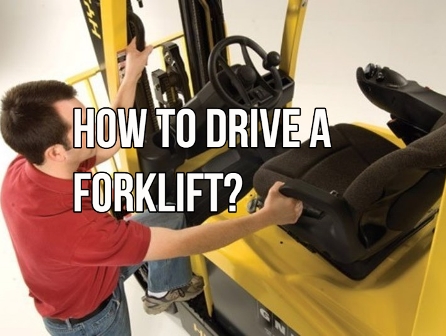
How to drive a Forklift?

Forklift safety is of the utmost importance, and driving a forklift improperly presents various risks to both yourself and others, as well as your surroundings and the things you’re lifting.

How to operate a stand-up forklift?

Two main ways of operating a forklift exist. Operating while sitting down, and operating while standing up.

Material Handler Forklift Operator job description

Material Handler Forklift Operator job description: A Material Handler is in charge of storing, moving, and managing hazardous or non-hazardous materials. Also referred to as the warehouse forklift driver, their work includes moving stock, documenting deliveries, and monitoring supplies.

This group includes workers who handle, move, load and unload material manually or using various material handling equipment. They work for transport and storage companies, moving companies, as well as a wide range of manufacturing and treatment plants, or retail and wholesale warehouses.

Material Handler Forklift Operator job description

Forklift Operator material handler

Job duties include organizing supplies, delivering necessary supplies to the production line, pulling orders for shipping and arranging finished products.

Material Handler Forklift Operator job description
Where do material handlers work?

Given the universal skillset that a material handler brings to the table, this position can be seen in many different industries. Forklift operator material handlers will typically work in warehouse, factory or construction-site industries.

There are many other industries that can utilize a material handler’s skill. An automotive garage may need a material handler who understands how to move, store and maintain flammable liquids like oil and gas.

A grocery store may need a material handler who understands how to manage and store food with expiration dates. One thing to keep in mind with these other industries is they may not label the job as a “material handler.”

A grocery store may call the position “Inventory Manager” and the automotive garage may call the job “Hazardous Materials Specialist.” While the job title may vary, the overall duties remain the same.

Material Handler Forklift Operator job description
What is the difference between a forklift driver and forklift operator?

Forklift driving is a subcategory of material handling, forklift driver uses a motorized machine to transport product from one location to another.
A material handler uses hand truck, electric fork jacks as well at forklifts to move product. Just depends on your knowledge of different ways to move product.

What is a material handler?

Material handlers work in warehouses and production facilities to move products. This might mean finding materials on the shelves and wrapping them and putting them on a delivery truck, or pulling materials off the truck and putting them in the proper shelf spot.

What is Industrial Material Handling Equipment?

Industrial material handling equipment encompasses a diverse range of tools, vehicles, storage units, appliances and accessories involved in transporting, storing, controlling, enumerating and protecting products at any stage of manufacturing, distribution consumption or disposal.

The most read

How to drive a Forklift?

Forklift safety is of the utmost importance, and driving a forklift improperly presents various risks to both yourself and others, as well as your surroundings and the things you’re lifting.

More on this story

How to operate a stand-up forklift?

Two main ways of operating a forklift exist. Operating while sitting down, and operating while standing up.

Forklift operator meaning – Duties of a Forklift Operator

Forklift operator job description
Duties of a forklift operator
Machine operator jobs
Forklift operator meaning:

Duties of a Forklift Operator: Since forklifts are used today in a wide variety of indoor and outdoor environments, you can expect there to be a significant number of differences in the job description from one employer to the next. Despite the varied environments, there are a few basic responsibilities that tend to remain constant regardless of the employer.

Duties of a Forklift Operator

Forklift operator job duties

All operators of lift trucks must be trained and receive a certificate or license to indicate the employee’s knowledge, skill, and ability to safely operate a powered lift truck. The certification must include the name of the trainee, the date of the training, and the signature of the person performing the training and evaluation.

Refresher training of the operator’s performance must be conducted at least every 3 years by completing the practical training.

Duties of a Forklift Operator

Forklift daily inspection

Safety Inspection
• The safety inspection is performed once per day or shift
• All defects are to be logged daily

Forklift operators must make judgment calls from the beginning to the end of each job.

Some things which must be considered include the weight of the load and the forklift capacity, the stability of the load, the height at which a load must be lifted, obstacles both in the path and overhead where the forklift operator is operating, and blind-spots or individuals who might be sharing the workspace with the forklift operator and vertical incline.

Duties of a Forklift Operator

Forklift job duties

Forklift job description:

Before using the forklift, always check to see that the charge is at least ½ full for normal loads and ¾ full for heavy loads. If the load to be lifted is rated at 90% or more of capacity, the charge should be full.

Safety inspections are important because using damaged equipment has the potential for serious accident scenarios.

Operating a forklift that is not fully charged is a recipe for disaster when lifting a heavy load.

Forklift operator responsibility

  • Pre-op safety inspection
  • Driving to pick-up load
  • Load pick-up
  • Driving load
  • Setting down a load

Each forklift operator has many responsibilities whenever he or she is engaged in picking up and moving a load. It is easy to become complacent from routine operations. This is why training is an important part of any safety program. Training should include initial hands-on experience, encompassing each element of forklift operation.

Retraining is also necessary to diffuse bad habits and to reiterate important situations, which might have been forgotten by the casual forklift operator. Training always reduces risks.

Duties of a Forklift Operator

Forklift pre start checklist

Pre-start checklist safety inspections are fundamental to safe operations of the forklift. In addition to knowing the load capacity, operators must be knowledgeable regarding the use of all forklift levers. Always test proper operation and electrical charge of a forklift prior to beginning any lift.

Operators should be cautious of driving forklifts up or down inclines, whether or not they are carrying a load. Drivers should engage forks completely when picking up a load. Loads should only be lifted to a height to clear stacks and then lowered to a position that gives both maximal stability and clearance of obstacles.

Operators should always be aware that they may have to share their space with pedestrians. Therefore, they should always use spotters when driving around blind corners or other areas where visibility is impaired. When approaching a stack to set down a load, the operator must ensure that the area of approach is clear of personnel.

Forklift battery charging

Electric Forks – electric forklift:

  • Make sure the forklift is charged before using
  • Minimum charge should be ½ of capacity (3/4 for heavy loads)
  • Heavy loads drain the battery more quickly

Electrical forklifts have many advantages and disadvantages. There is no exhaust, and therefore they are the vehicle of choice for closed indoor work. Fumes from diesel or gas-powered vehicles will rapidly degrade indoor air quality. However, electrical forklifts must be routinely recharged.

An operator should never begin to use an electric forklift that does not have at least a ¾ charge on the battery. Further, operators must be aware that heavy loads [greater than 90% of load capacity] will significantly and rapidly deplete the load charge on the battery. This is because more work is being done on a heavy load than on a light load.

Topping off batteries must only be done when the battery is disconnected and in an area where there is adequate room for the task. Only qualified [trained] personnel should be permitted to oversee the task of recharging electrical forklifts.

  • Having been certified as a forklift operator does not automatically confer the ability to recharge the forklift.
  • Inform your supervisor or facility manager if you feel your electrical forklift requires recharging.

Forklift speed control

Checking Controls

  • Check that the horn functions
  • Check the steering mechanism with the engine running
  • Check the breaks (not more than ½ inch travel)
  • Check the seat brake
  • Check that the clutch disengages the transmission
  • Check the hydraulic controls-lift and tilt levers

All forklift work begins by going through a mental checklist. After checking tires, make sure that the horn and warning backup lights perform as specified when the forklift is put in reverse.

Check that the forklift steers properly both in the forward and reverse directions. Always check the foot brake to ensure it engages when pressed. The travel on a foot brake should be no more than ½ inch.

forklift seats:

Seat brakes are provided on a forklift as a safety device. When someone is seated on the seat, it is possible to operate the forklift. By lifting yourself out of the seat, you should no longer be able to move the forklift either in the forward or backward direction.

Some forklifts are equipped with a clutch. This should always be checked to see whether it will disengage the transmission before making a lift.

Forklift speed limiter

Operators should test all hydraulic controls before attempting to pick up a load.

This includes lift, tilt and horizontal [used for centering a load] hydraulic levers. At the same time, the operator can ensure that all chains move smoothly. All of these actions are required before attempting to lift a load. It does the operator no good to be stuck with an elevated load, which will not move because he or she neglected to test the controls before lifting the load.

It is the responsibility of the forklift operator to ensure that the forklift is in proper working order before attempting to lift or move a load. Operators who have time limits should not bypass these important checklist items in an effort to save time. They should reschedule or pass on their responsibility.

Duties of a Forklift Operator

Forklift inspection and load testing requirements

Checking Loads

  • Check that the pallet is undamaged.
  • Check that load is banded.
  • Check that the area is clear of people and debris.

One of the most important aspects of forklift operation is checking the load to be lifted. Most forklift loads are moved on pallets. Alternately loads may be lifted via sling onto a sling a single or both forks.

When using sling care should be taken to ensure that the sling is fitted towards the back of the fork (I.e closest to the forklift frame) to prevent or reduce the risk of sling slippage.

  • All pallets should be inspected for integrity.
  • Broken or pallets of insufficient mechanical strength should be replaced.
  • Small materials on pallets should be shrink wrapped in place before attempting to move any pallet.
  • Pallet height should also be kept to a minimum in order to increase driver visibility and overall stability.
  • If vision is impaired by the load height, the driver may elect to drive the load backward.

Also, check to make sure the forklift travel path has been cleared of all obstacles and personnel. Remember pedestrians always have the right of way.

Duties of a Forklift Operator

What are some warehouse forklift driver skills?

Warehouse driver skills that should be included on a resume include organization, planning, time management, inventory control, equipment maintenance, teamwork, documentation, and data entry, and attributes listed should include dependability.

How do you get forklift experience?

It is possible to get a forklift operator job with no experience, but the employee must then go through training and pass all certification requirements. There are stringent regulations that forklift operators and their employers must follow. An individual who is not trained and does not have a proper certification cannot operate a forklift. A forklift operator must have certification or training that follows all local and state laws.

What is the definition of forklift operator?

Forklift operator meaning: A forklift operator is someone who is responsible for operating a forklift to move, locate, relocate, stack, and count merchandise around warehouses, storage yards, factories, construction sites, and other work sites.

The most read

Forklift Safety Procedures

Forklifts are extremely useful workplace vehicles, as long as they are used safely and appropriately by operators who are appropriately trained and competent to use them. Learn about the rules for driving forklifts.
More on this story

Forklift Brands

Forklift Brands and models: Which forklift brand is best? Top brands in the world: Caterpillar, Toyota, Volvo, Hyundai, forklift brands and models, top 10 forklift brands.