Professional Web Writer | Motor Enthusiast | Content Creator | Logan is a dedicated and skilled web writer, passionate about engines and machines and with a talent for creating engaging and informative content.
She specializes in writing about a diverse range of topics including construction, forklifts, heavy equipment, excavators, etc. SEO Optimization: Proficient in SEO best practices, ensuring high visibility and engagement for all published content.
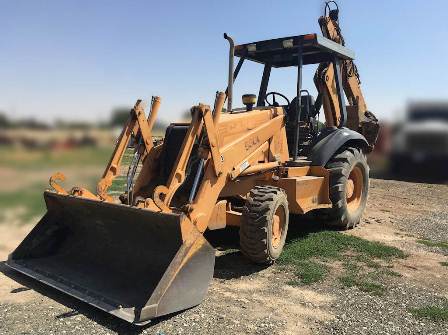
Aftermarket parts for backhoe loaders are also referred to as non-original equipment manufacturer parts, generic parts, or competitive replacement parts.
Some consumers worry about the quality or safety of aftermarket parts, but these fears are unfounded, depending on where you get the parts.
Using aftermarket parts can be more cost-effective than using original equipment parts.
Aftermarket Backhoe Attachments
What are aftermarket parts?
Aftermarket parts are replacement parts that are not manufactured by the original equipment manufacturer.
Aftermarket parts are used to replace damaged parts in excavators, backhoes, and all types of machinery, but their use can alter the coverage of an insured item.
They are similar to generic drugs in that they are cheaper than brand-name drugs, but they are likely to have similar efficacy.
Aftermarket accessories for tractor
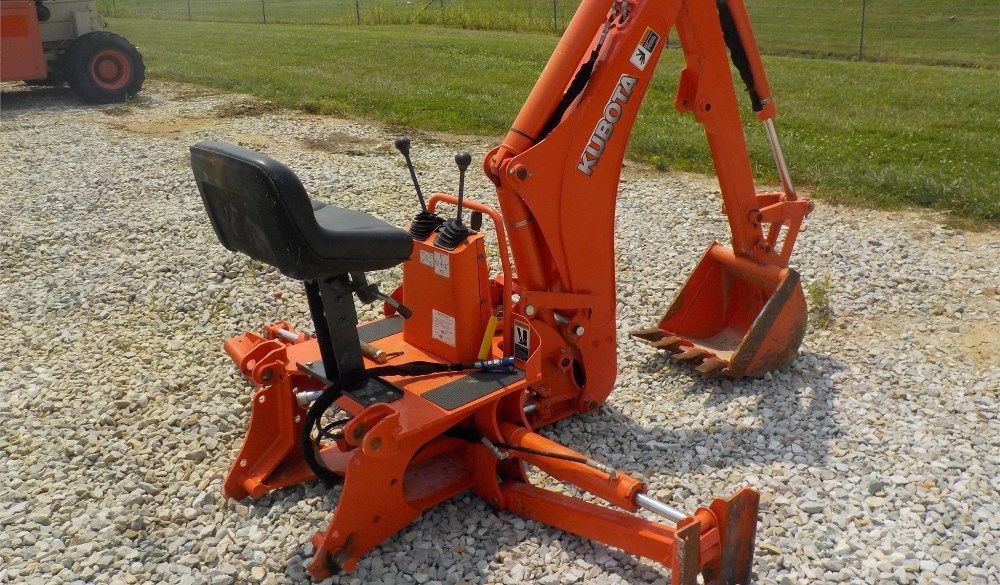
If you currently own a tractor and are considering adding a backhoe, it’s important to understand a few basics before buying a backhoe.
There are two ways to connect a backhoe to a tractor; some manufacturers use the tractor’s three-point hitch attachment, while other models use a more integrated frame mount configuration.
The three-point hitch attachment is the preferred method for lighter duty backhoes, while the frame-mounted backhoe provides a more rigid coupling to the tractor that helps eliminate frame stress on the tractor chassis on models bigger.
Other considerations when considering adding a backhoe include knowing if the unit requires hydraulic power for the backhoe or if it is powered by the tractor connected to a hydraulic system built into the backhoe.
Does your tractor have the ability to run another hydraulic line to the backhoe?
How about horsepower?
It goes without saying that you need enough power to operate the corresponding backhoe.
It is always a good idea to call a dealer for your tractor to make and model to find out exactly what type of backhoe will suit your particular tractor.
Aftermarket parts
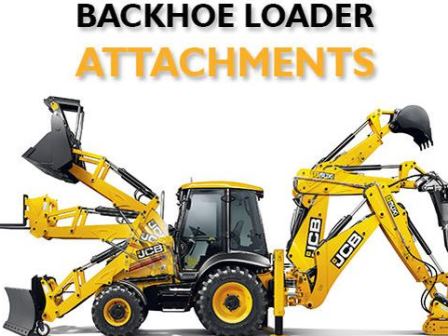
Different types of attachments might include front forks and grapples, various digging buckets, tampers and breakers, and other hydraulically driven attachments such as concrete saws and cold planers.
Backhoes can be equipped with a multitude of parts and accessories to enhance machine versatility and revenue potential.
These attachments will allow you to perform a wide range of tasks, which will complete your work schedule and maximize the overall use of the backhoe.
Many backhoe manufacturers have begun implementing technology that increases fuel economy.
Hydraulic refinements have also made the backhoe loader easier to control, decreasing operator fatigue and increasing the amount of time an operator can spend using the backhoe productively.
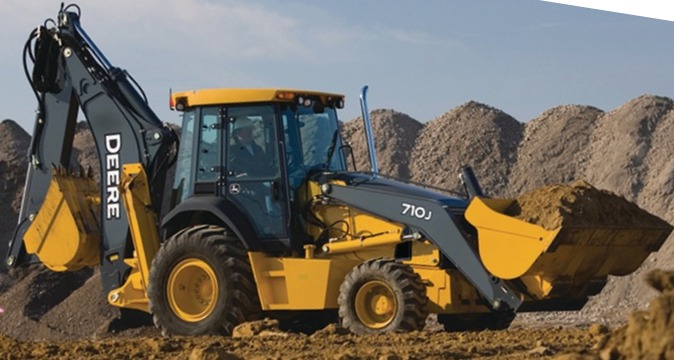
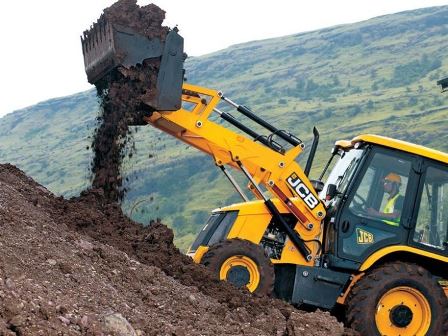
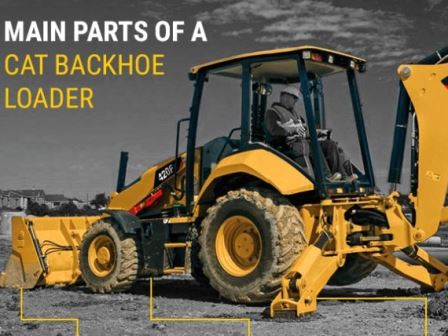
The backhoe is the main tool of the backhoe loader. It’s used to dig up hard, compact material, usually earth, or to lift heavy loads, such as a sewer box.
Heavy equipment means such construction machinery as backhoes, dump trucks, and front-end loaders.
Heavy equipment means self-propelled, self-powered, or pull-type equipment and machinery, including engines, weighing 5000 pounds or more, primarily employed for construction, industrial, maritime, mining and forestry uses.
For anyone who ever stood in awe of a three-story-high dump truck or marveled at the engineering revolution propelling mechanical vehicles into the robotic age.
Ultra Haulers presents the past, present, and future of the worlds greatest haul trucks.
Ultra Haulers: Global Giants of the Mining Industry
Dump trucks are heavy machinery used to transport large volumes of loose materials such as dirt, sand, minerals, gravel, and demolition waste at construction sites, mines, and quarries.
If your next construction or mining project requires the transportation of loose material, chances are you’re going to need a dump truck. The two most popular dump trucks for hire include rigid rear dump trucks and articulated dump trucks.
Mining companies of all sizes can run into problems if they aren’t using modern equipment, such as robust and effective mining trucks and blasting tools. Mining can happen at the surface or underground.
The environment and type of material mined dictate the form of mining required and the equipment used. Both surface and underground mining have three main steps:
Extraction: This involves drilling, blasting, or digging to remove materials from the mine site.
Material handling: This includes sorting and loading materials to either go to a waste area or the processing site.
Material processing: The final step involves grinding, separating, crushing, refining, and smelting mined ore or other goods at an off-site plant to turn them into finished products.
Dump truck capacity
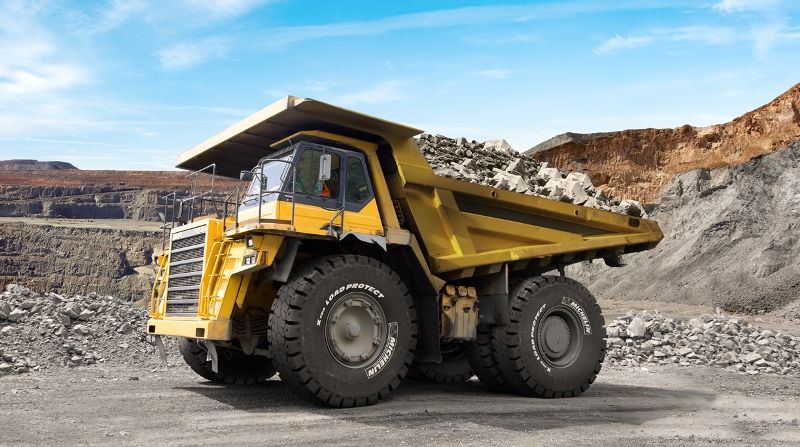
To move materials around a mine site, workers need heavy-duty trucks. Also known as off-highway trucks, large mining trucks include both powerful mechanical models and electric drive models.
Unlike conventional trucks, these mining vehicles have extra-large tires to support the heavy loads over uneven terrain commonly found around surface mines.
Additionally, these trucks can carry high payload capacities to accommodate the need for moving weighty mined minerals or ore out of the site.
Large mining trucks also need to perform in the most extreme conditions — cold, heat, heavy dust, high altitudes, and steep slopes while hauling heavy loads.
Common applications of these off-highway vehicles include:
Moving materials at surface mines.
Hauling materials up steep slopes.
Carrying up to a 400-ton payload.
For above-ground mining, earthmovers and dump trucks are utilized regularly to carry loose soil and earth from one location to another.
Earthmovers play an important role in the mining industry because the equipment is specifically designed to work on large earth-moving and mining projects for a faster and more practical process.
Used for digging, pushing, and transporting the earth, they require the specialized skills of an operator. Investing in high-quality machinery can yield superior results and overall higher financial returns.
Technical innovation, brand reliability, and excellent productivity make dump trucks impressive.
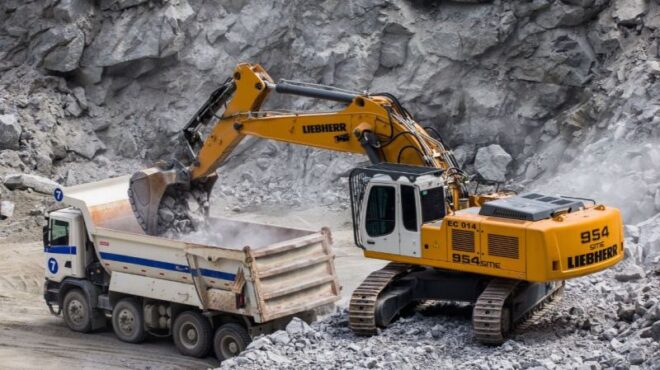
The trusted diesel-electric drive concept ensures the highest level of cost-effectiveness and, when paired with a mining excavator, the trucks are perfectly suited for the demands of mining environments.
Customers can expect a high level of performance from these machines at the lowest cost per ton.
Rising prices of raw materials
The prices of raw materials used to make almost everything are skyrocketing, and the upward trajectory looks set to continue as the world economy roars back to life. From steel and copper, commodities started 2021 with a bang, surging to levels not seen for years. Now more than ever, mining trucks are necessary to transport raw materials.
Big dump truck for transporting minerals and raw materials
Dump trucks, also known as dump trucks, are widely used in the construction and mining industry for handling heavy materials. These trucks are equipped with a loading platform at the rear that can be used for material handling and unloading.
The dump truck market is expected to show nominal growth due to the steady growth of the construction and mining industry around the world.
Rapid urbanization and industrialization have caused a boom in construction activities, especially in the developing economies of the world, such as India, China and Brazil, among others; in addition to industrial countries with economies based on the exploitation of raw materials such as Canada or Australia.
The boom in infrastructure development in various world economies due to impressive economic growth has also led to the development and improvement of commercial infrastructure, which in turn is projected to increase the demand for dump trucks.
Increasing demand for minerals has also led to increased activities across the mining sector globally, so significant growth in mining sector investments in major developing economies is further expanding opportunities for manufacturers for the next five years.
Furthermore, the consistent participation of major manufacturers operating in the market is playing a significant role in shaping the growth of the global dump truck market during the forecast period.
Major players are investing heavily in R&D and launching new vehicles with advanced features to meet the increasing requirements of end-users.
Considerable effort and research are needed to determine the minimum signaling and lighting systems for tower cranes or the quality of materials that will produce an acceptable level of aviation safety.
The FAA will recommend only those signaling and lighting systems that meet established technical standards.
While additional lights may be desirable to identify an obstruction to air navigation, and sometimes more than one may be recommended, the FAA will recommend minimum standards in the interest of safety.
Therefore, to provide an adequate level of safety, obstruction lighting systems should be installed, operated, and maintained in accordance with the recommended standards herein.
Crane Lighting Regulations
Structures to be Marked and Lighted.
Any temporary or permanent structure, including all appurtenances, that exceeds an overall height of 200 feet (61m) above ground level (AGL) or exceeds any obstruction standard, should be marked or lighted.
The absence of signage or lighting impairs aviation safety, the object may present such extraordinary hazard potential that higher standards for increased visibility may be recommended to ensure aviation safety.
In general, commercial outside lighting should not be used in lieu of FAA-recommended marking or lighting.
Recommendations on marking or lighting structures can vary, depending on terrain features, weather patterns, geographic location, and in the case of wind turbines, the number of structures and overall design layout.
The FAA may also recommend marking or lighting a structure that does not exceed 200 (61m) feet standards because of its particular location.
Guidelines for Crane Obstruction Lights
Since there is such a variance in cranes, each case should be assessed individually.
Cranes segment is enormous: from floating cranes to mobile cranes, to tower cranes, to telescopic cranes, to self-erecting cranes, to level luffing cranes, to deck cranes, to jib cranes, to loader cranes, to stacker cranes.
There is no single standard defining minimum mandatory requirements governing the design and installation of obstruction lighting.
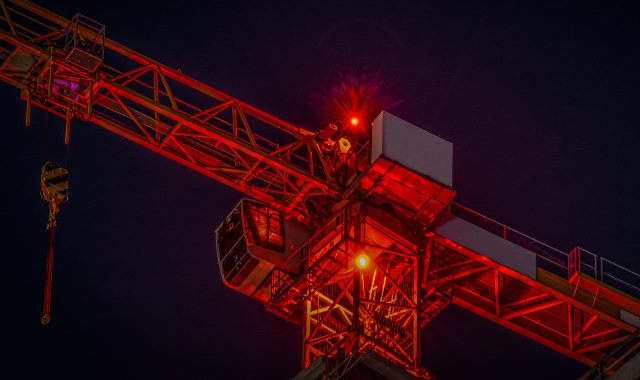
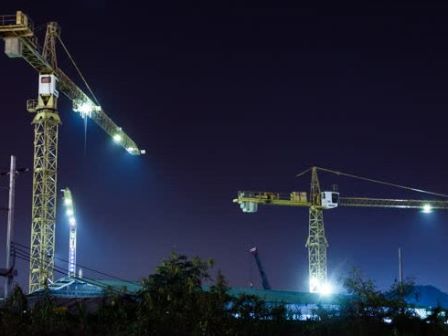
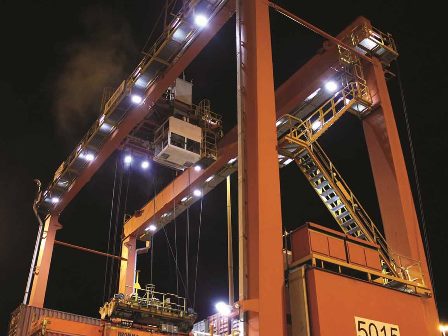
Most important points to night marking cranes lights and their arrangement on the crane shall be such that the structure is indicated from every angle in azimuth; the number of lights to be installed at the top and at each level depends on the type of crane; the number of light levels depends on the height of the structure.
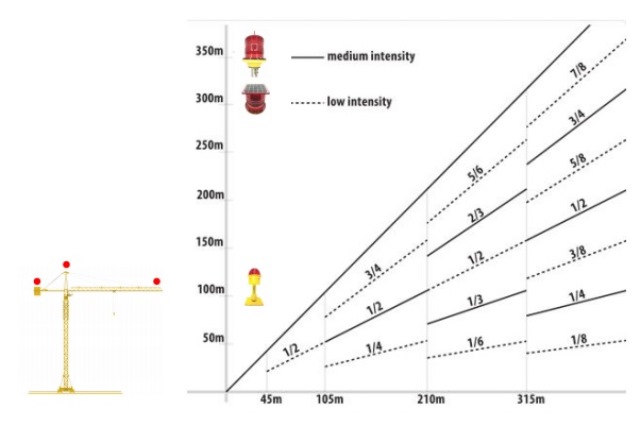
Lighting Levels
Number and types of lighting levels (structure height)
Hight
Lighting Levels
H < 45m
1 level of low-intensity obstruction lights shall be used
45m < H < 105m
2 levels of obstruction lights shall be used: top level with medium intensity, intermediate with low intensity
105m < H < 210m
4 levels shall be used: top with medium intensity, 1st intermediate with low intensity, 2nd intermediate with medium intensity, lower level with low intensity
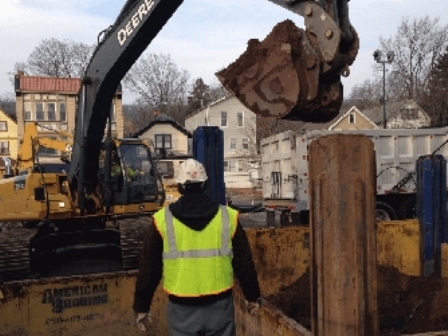
The hydraulic excavator, those machines of great production, powerful and self-propelled on caterpillars, can perform spectacular operations of excavation, extraction, unloading, etc.
Indispensable in the mining sector, at the beginning of the 20th century they evolved, and with the passage of time they were incorporating hydraulics, automation, electronics, computing, etc., typical of the development of engineering and materials,
With this, they gained performance, capabilities, and size, becoming true giants that can weigh 1,000 tons, as is the case with the largest model.
How excavator works?
There are construction works that require digging in-depth to move large amounts of material, so an excavator is necessary to perform such work. From operations in sewers, water pipes, wiring, through the construction of urban complexes, roads, highways, and paving, excavators are really useful to do deep work with high performance.
Here we will know the highlights of the excavators:
history,
characteristics,
functions,
parts,
brands and
prices.
In such a way that we have the necessary information when choosing a model.
Hydraulic excavator working principle
What is a hydraulic excavator?
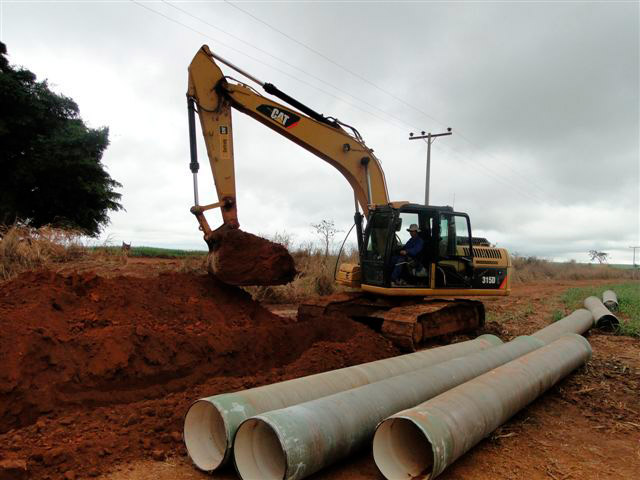
A hydraulic excavator is a heavy machine that has various sizes, a hydraulic arm with a blade at the tip, designed to move on wheels or chains, and also has the ability to rotate 360 degrees on its own axis.
Among its functions are to excavate, rotate, move, load, mobilize and demobilize objects.
The machine is generally used to open the grooves where pipes, drains, cables will be installed, as well as to excavate foundations or ramps.
Uses of the Hydraulic Excavator:
Dig large ditches
Excavation of materials and structures
Slope combing above the machine’s support plane
Excavator engine
A hydraulic excavator is a machine that has mechanical, electronic, and hydraulic components used together to achieve excellent performance in the areas of mining and construction. In general, the engine of a hydraulic excavator is a 4-stroke diesel engine.
Its mechanical arm has the facility to incorporate different tools to perform work on land, concrete, rock, or steel.
Excavator operator
Functions of an excavator operator:
Make material start and load it in transport units
It also performs trenching, load handling, as well as demolition and breaking of blocks when a hydraulic hammer is incorporated.
It can be adapted to different arm ranges, bucket capacities, soft or hard floors.
When there is very high hardness, it can incorporate more resistant wear parts.
How to operate excavator?
What is the use of the excavator: The excavator is generally used to start materials such as rocks and earth. With its accessories you can also make steel cuts, break concrete, drill holes in the ground, make gravel foundations before paving, shredding rocks, steel, and concrete.
Excavator training
How does an excavator work?
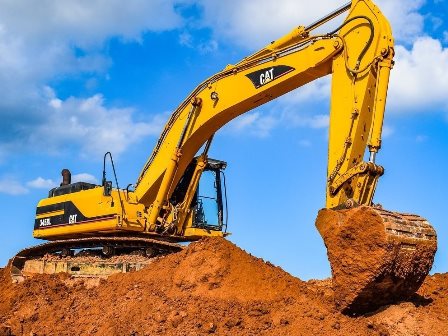
How an excavator works: To understand the operation of an excavator we must know that its boom consists of two hydraulic cylinders, a bucket, and the boom.
This piece simulates the movement of the human arm, just as the wrist and elbow would. Then we have the engine which works through a change in hydraulic power.
It has the ability to rotate in a circle, for which it requires the outer race, inner race, the ball bearing, and a pinion.
In the cabin are the operator’s seat and the controls of the machine. It has some feet that can be of normal wheels or caterpillars.
Excavator parts
Parts and components of a hydraulic excavator: An excavator is composed of the following parts.
Joining point between arm and pen
Hydraulic bucket cylinder
Arm
Link of articulation
Ladle
Filming trains
Chassis or frame
Engine compartment
Operator’s cabin
Hydraulic boom or boom cylinders
Feather or boom
Hydraulic Arm Cylinder
Excavator types
Types of excavators in construction: There are several types of excavators for construction. Here we will know what each of them is used for.
Compact excavator
Compact Excavator: It is one of the most used for its performance that helps reduce work times. It serves for work in small streets, forests, fields, and gardens. You can even load up to 8 tons at a time for your hydraulic arms.
Crawler crane
Crane on tracks: It is one of the largest machines for construction sites, designed for deep excavations in mines or large areas. It has a robust cabin structure with its train, boom held with fixing cables and drums to house the cables.
Suction excavator
Suction Excavator: Also known as “vacuum excavators” it works as a digger and sucks materials from the surface of the earth with very high pressure. It drains by means of pipes to deposit in a tank destined for the storage of waste.
Crawler excavator
Crawler Excavator: It is an excavator that works with a train system instead of tires, which allows you to move through uncomfortable places like deserts and mountains. Its large arm facilitates excavation and carries material to where other machines can not reach.
Wheel excavator
Wheel excavator: It is used for projects that must be carried out in short periods of time because its large wheels allow it to move more easily. It has a boom arm on the base and a bucket with hydraulic action.
Excavator manufacturers
Among the most recognized brands of excavators we have the following:
New Holland
Volvo
Hitachi
Bobcat
Caterpillar
John Deere
JCB
Liebherr
Excavator Price
Prices of Hydraulic Excavators: The prices of the excavators vary according to their model, brand, and function. We can find some small excavators from $ 80000 US dollars, going through more robust models of $ 100, $ 200, and up to $ 300 thousand American dollars.
Excavator bucket
Performance: The wrong bucket can easily reduce your production and increase your operating costs from 10% to 20% or more. It can also cause unnecessary wear and fatigue of the machine and bucket.
Alternatives: The industry offers a wide range of specialized buckets, each designed and tested to function as an integral part of your excavator and provide the best possible performance in your particular application.
Manufactured to last: Buckets are designed and manufactured according to the required specifications. The high-strength hardened steel provides a longer life without the need for thicker and heavier plates, allowing longer life and higher payload.
Excavator bucket capacity calculation
General-purpose bucket: To dig in moderately abrasive and low-impact materials, such as dirt, mud, gravel, and clay.
The large folding radius optimizes the ability of the easy-to-penetrate floor bucket.
Lighter structures reduce loading time and increase the weight that can be lifted.
Pre-pierced sidebars for optional lugs.
Ladles with the greatest capacities
Excavator attachments
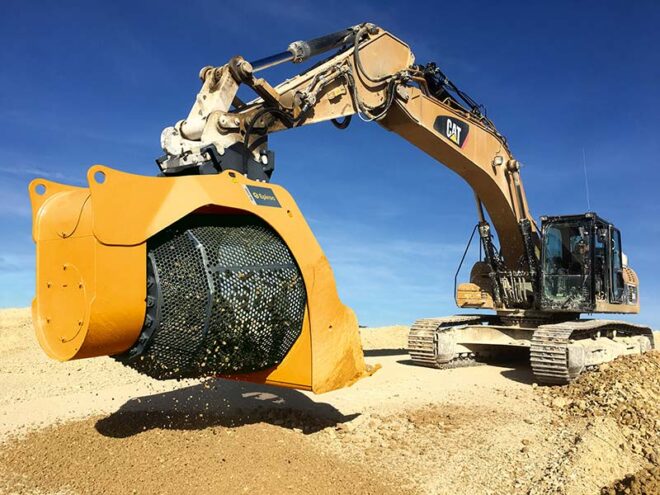
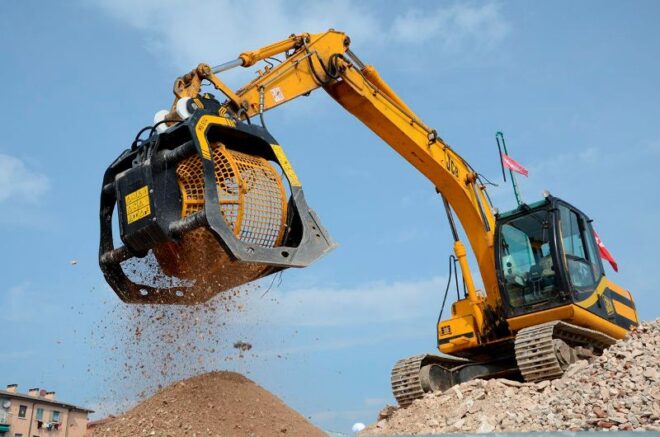
Excavator grapple: It is used for the selection of demolition debris, excavations, and earthworks in general. It is also useful for the mixing of peatlands. The screening is done by a hydraulic screen with rotating blades. The thickness of the screening material can vary from 0-20 mm to 0-35 mm in the standard configuration. Upon request, it is possible to make axes suitable for the needs of the user.
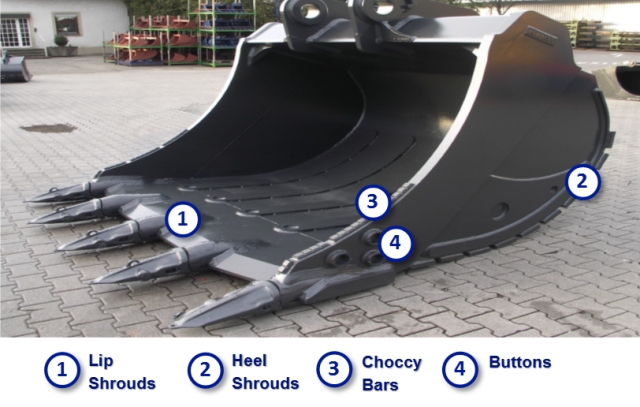
Heavy duty bucket
Designed for use in abrasive applications such as a mixture of earth, clay and rock.
The smaller folding radius provides a larger detachment force at the tips.
Side plates and bottom thicker to increase its duration.
Construction is more robust than that of general purpose buckets.
Pre-drilled lateral bars for lugs and optional sidebar guards.
Larger adapters and tips to increase performance and durability.
Less capacity than general purpose buckets to maintain operating performance
Heavy duty metal bucket
Heavy-duty rock bucket: For aggressive loading of the bucket in very abrasive applications such as dynamite rock and granite.
The smaller folding radius provides a larger detachment force at the tips.
The same folding radius as heavy-duty buckets.
The thicker side plates are available to extend the life of the bucket in severe applications.
Construction is more robust than that of heavy-duty buckets.
Wear side plates further extend the bucket for maximum protection in rocky materials.
Pre-drilled lateral bars for lugs and optional sidebar guards.
Larger adapters and tips to increase performance and durability. Same capacity as heavy-duty buckets.
How does a hydraulic excavator work?
What is an excavator?
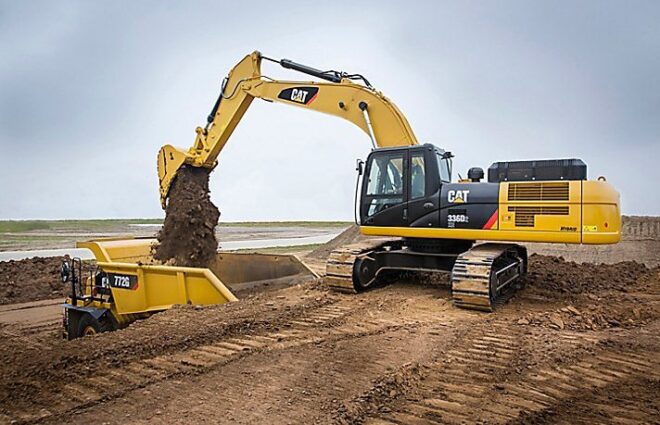
Excavators are pieces of heavy construction equipment that consist of a boom, dipper, bucket, and cab that are mounted on a rotating platform called the house. The house is mounted on an undercarriage with tracks or wheels. An excavator can be used for a lot more than just digging.
How does the excavator work?
The operator of the excavator uses pedals and levers to steer the equipment and to move backward and forwards. Tracks, similar to tank tracks, are activated by the diesel-powered engine, and hydraulic motors control the arm of the excavator.
How does an excavator hydraulic pump work?
When a hydraulic pump operates, it performs two functions. First, its mechanical action creates a vacuum at the pump inlet which allows atmospheric pressure to force liquid from the reservoir into the inlet line to the pump. A pump produces liquid movement or flow: it does not generate pressure.
Do you need a license to operate an excavator?
A driver’s license is required for excavator operator positions, and some employers require a commercial driver’s license (CDL). Requirements for a CDL vary by state. Employers may also prefer that workers hold industry certification related to the equipment they operate.
What is the purpose of the excavator?
The house sits atop an undercarriage with tracks or wheels. They are a natural progression from the steam shovels and are often mistakenly called power shovels. All movement and functions of a hydraulic excavator are accomplished through the use of hydraulic fluid, with hydraulic cylinders and hydraulic motors.
What’s the difference between a digger and an excavator?
As nouns, the difference between an excavator and a digger is that excavator is a person who excavates while a digger is a large piece of machinery that digs holes or trenches; an excavator.
What does an excavator contractor do?
Contractors who work in landscaping and hardscaping, sewer and septic service, and foundation repair often perform excavation services, in which they use heavy machinery to dig up or transport large or heavy items like dirt, rocks, construction materials, and even trees.
Mining dump trucks productivity, safety, and efficiency are among the most important factors contributing to the unit cost of mining, and measuring and comparing them is one of the best ways to identify room for improvement.
What would the mining industry be without the dump truck?
With a design that has long played a vital role in the mining business.
Although the history of mining trucks began before the combustion engine, modern innovations have kept “dump trucks” useful and in demand.
In fact, there are nearly 50 manufacturers around the world working to meet the needs of the industry.
Productivity is the primary concern of every mining operation. Nowhere is this more true than in open-pit or underground mining operations.
Technologies are changing the way mines address those challenges by taking into account everyone who works in and around the mine.
Dump trucks and mining equipment
Dump trucks sizes
The variety of sizes isn’t the only thing that changed the course of dump truck history. In the 1920s, winches and lift gates also became hydraulic. During the following decades, mining trucks evolved even more.
Super dump trucks have a loaded axle that can be lifted, allowing them to carry a larger “super” payload than typical standards.
Also, transfer dumper trucks are capable of pulling an additional dump trailer that has its own engine. Also, altering the rear dump function on some trucks made them more useful in special conditions.
For example, some dump trailers have a bottom dump feature that empties the load through a dump gate under the trailer. Side dumper trucks dump their contents to the right or left side of the trailer.
Rolling trucks unload the dump bed from the vehicle frame, rather than the cargo it contains.
Types of dump trucks
Off road dump trucks
The off-road dump truck category includes only two sub-categories: ADT and rigid haulage trucks. Off-road dump trucks aren’t just trucks that drive off-road; they are not legally allowed on the roads.
On-road dump trucks
On-road dump trucks have capacities in the 20-30 ton range and encapsulate the nine remaining dump truck types:
Standard truck
Superdump truck
Transfer truck
Truck and pup
Winter service vehicles
Side dump truck
Semi-trailer end dump truck
Semi-trailer bottom dump truck
Double and triple trailer bottom truck
Off road dump trucks
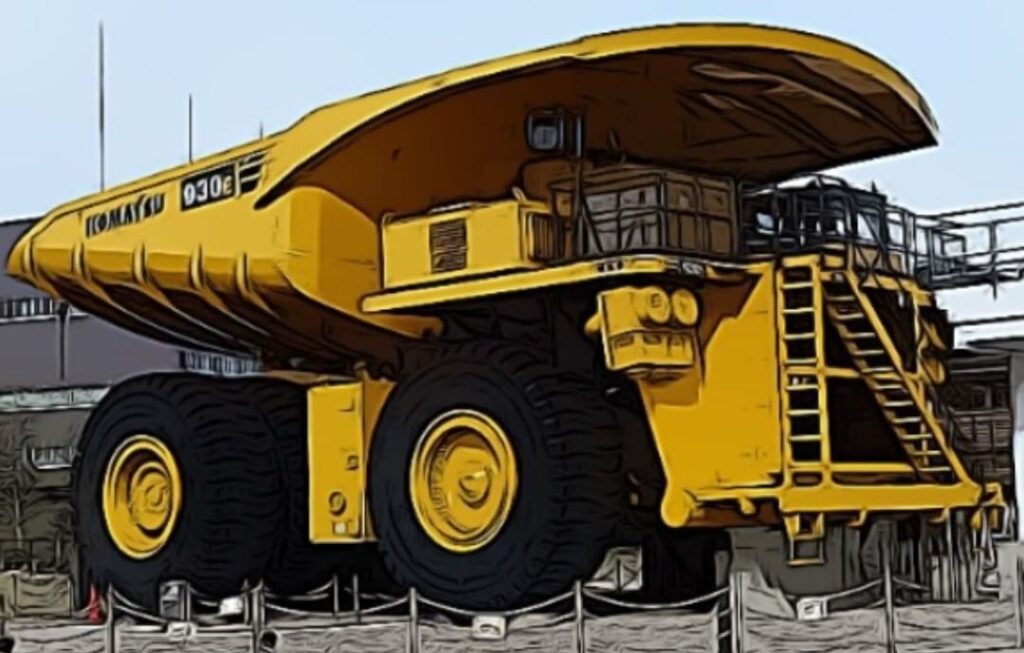
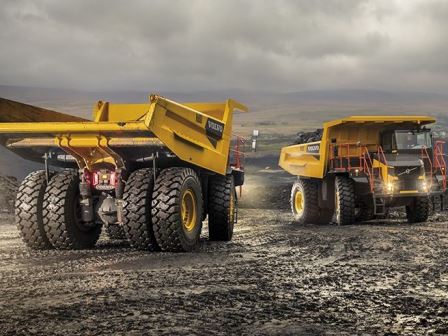
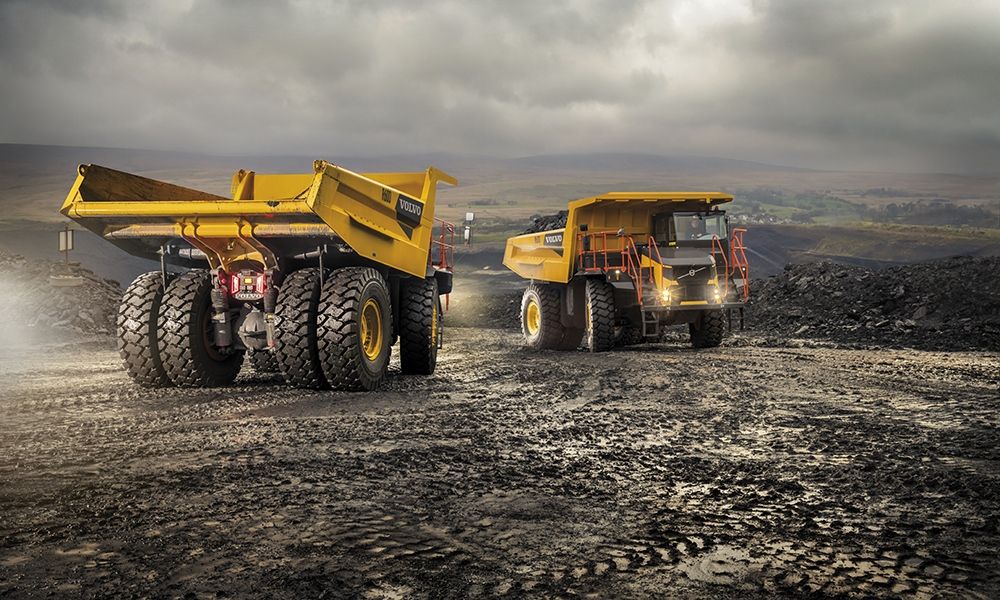
Rigid dump trucks
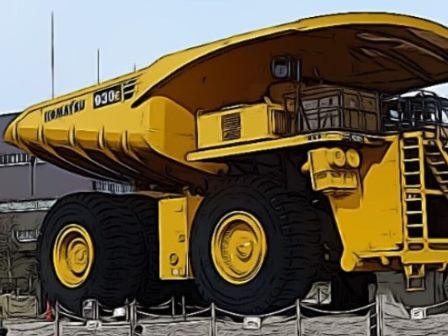
Smaller rigid haul trucks, on the other hand, have capacities of around 60 tons. At the larger end, these trucks have capacities of up to 500 tons.
They are used exclusively in mining applications, while ADTs are used in earthmoving, road construction, heavy civil applications, quarrying, and mining.
Rigid Dump Trucks have been developed to efficiently transport resources excavated at large-scale mines around the world.
Among these, the dumper truck boasts one of the largest loading capacities.
Rigid trucks are better suited for operating at longer-term job sites with well-maintained haul roads, which provide a lower tire rolling resistance, such as a limestone quarry, rigid trucks can typically offer a lower total cost of ownership.
A graded surface, such as found in mining applications, is another area in which a rigid dump truck is best suited, they also typically have larger capacities than ADTs.
A rigid frame is chosen for those jobs that could last years or decades, such as at a quarry.
They are only rear wheel drive, so they need constant manicured haul road and grades. They can handle 15 to 20% grades, but the sweet spot for a rigid frame is about 10 to 12%.
Rigid dump trucks
Articulated dump trucks
As mentioned, articulated dump trucks have a center point of articulation; rigid haul trucks don’t. The articulation allows for greater maneuverability on rough terrain, but they can’t haul as much as rigid haul trucks.
Manufacturers of articulated mining trucks typically make models in the 25-45 ton capacity range, and a few, international manufacture models in the 10-30 ton capacity range.
What is articulated dump truck?
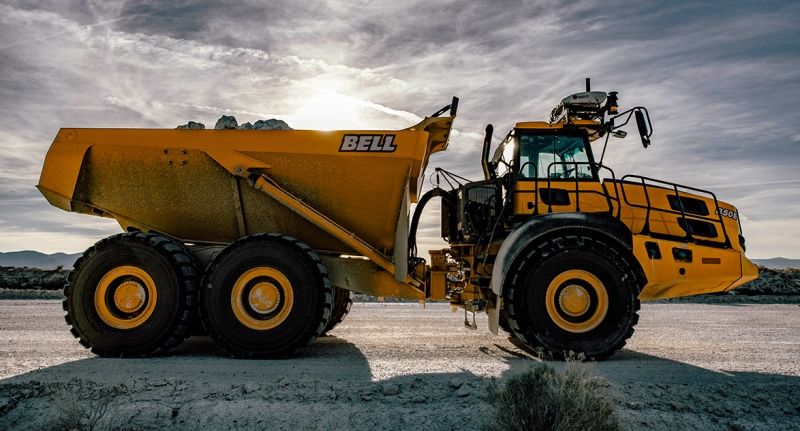
A rock truck, or articulated dump truck (ADT), is made up of two parts: the front section of the tractor and the rear section of the truck or trailer. The two pieces are connected by hydraulic cylinders. This allows the rear section of the trailer to move horizontally relative to the front tractor. This creates a more dynamic movement for the trailer to unload at angles or around corners.
Articulated dumper trucks are ideal for rough terrain and for driving over an unfinished construction site. An articulated miming truck can travel on city roads to transport materials if necessary.
Articulated dump trucks
Dump truck brands
Many companies have played an important role in the history of dump trucks.
If you are looking for the best dump truck manufacturer, there are many to choose from. The top 5 are a combination of recognized names from around the world in trucks, construction and technology. Starting with American companies, they include:
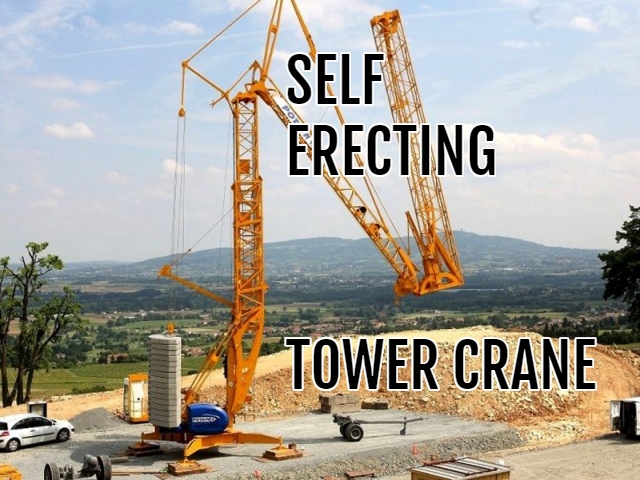
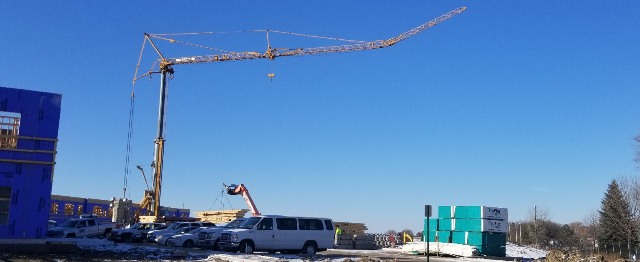
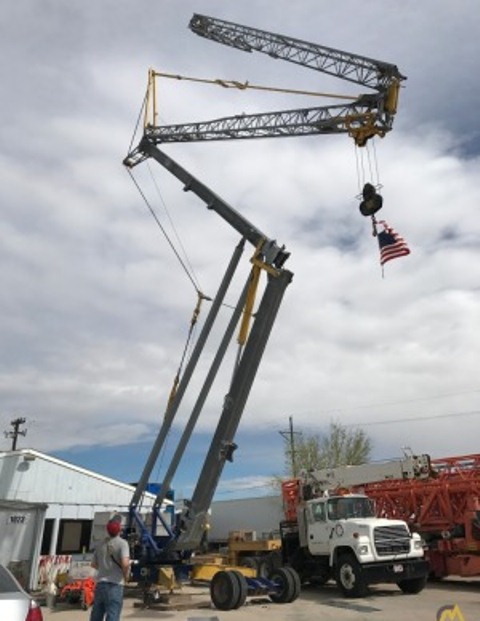
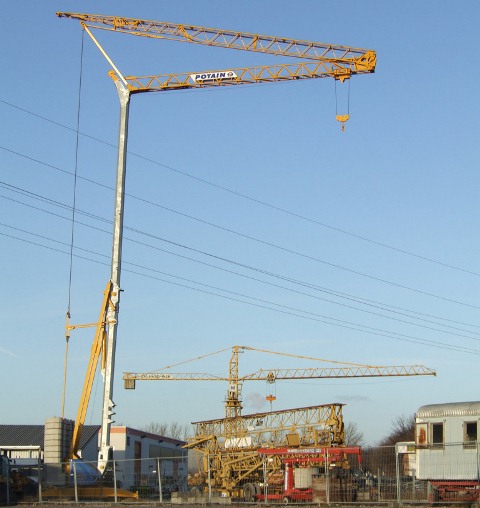
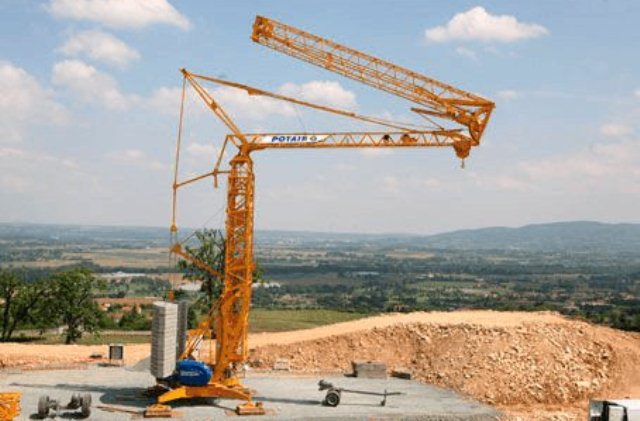
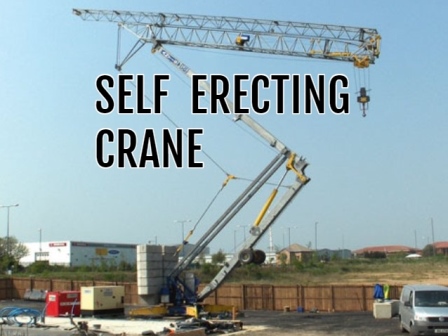
A self-erecting tower crane is compact, easy to erect and operate, and has several transport options. Wireless remote controls, quiet and efficient electric motors, state-of-the-art variable frequency motor drives, and overload protection systems are standard.
Self Erecting Tower Crane
Self-erect portable tower cranes
The Self-erect portable tower cranes represent a new type of technology, which is increasingly utilized in Europe to construct and service low to mid-rise buildings.
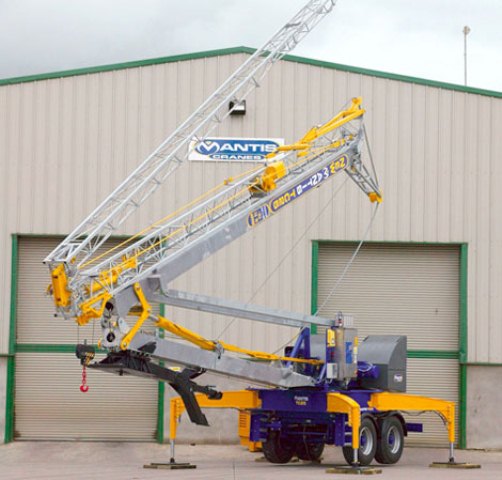
Despite the similar name, self-erecting tower cranes are not assembled or operated as traditional high-rise tower cranes. Self-erecting tower cranes are driven to the Jobsite and can be set up in under an hour by unfolding in a controlled sequence.
They provide good reach and lifting capacity while having a small footprint, making them suited to operating within tight spaces.
The current crane regulations do not address self-erecting tower cranes. It is recommended that develop a regulatory and licensing system specific to self-erecting tower cranes. This will enable the industry to utilize the flexibility and efficiencies offered by self-erecting tower cranes while ensuring safe operation.
Self erecting tower crane specifications
Benefits of using a Self Erecting Tower Crane: (SETC)
Self Erecting Tower Cranes (SETCs) are all operated by radio remote control, allowing the Crane Operator the flexibility to move with his load and deliver it exactly to where it is required.
SETC will improve productivity by delivering the material exactly to point of use thus reducing additional labor costs.
SETC occupies a small footprint and could service your site from the one location, giving you more storage space for materials.
SETC can reduce the requirement for vehicle movements on-site and also reduce the amount of material handling on-site, thus increasing site safety whilst saving you money.
Self Erecting Tower Crane
Mobile Tower Crane
Tower cranes are mounted on a mast and fixed in place. They are divided into two general categories:
Luffing boom: A tower crane with a boom that can be raised or lowered
Hammerhead: A tower crane with a horizontal boom equipped with a trolley that can traverse the boom.
A hammerhead tower crane as the building under construction rises, new mast sections can be added to the tower crane to increase its height, a process known as jumping. A jump can take up to a day.
Separate from the traditional types of tower cranes described above, manufacturers are introducing new technology, the self-erecting tower crane.
Despite the similar name, self-erecting tower crane is not assembled or operated as a traditional high-rise tower crane.
Self-erecting tower cranes are driven to the Jobsite and can be set up in a short amount of time by unfolding in a controlled sequence. They provide good reach and lifting capacity while having a small footprint, making them suited to operating within tight spaces. Unlike traditional tower cranes, currently available models of self-erecting tower cranes are limited in height and cannot be jumped to a newer height.
Self-erecting tower cranes are not common in the United States but are increasingly utilized in Europe to construct and service low to mid-rise buildings.
Self Erecting Tower Crane
Self erecting mobile tower cranes
Self-erecting tower cranes (SETCs) have become increasingly popular on small construction sites where the size of the project does not justify the installation of a conventional top slew tower crane. The management of the installation and use of self-erecting tower cranes follows exactly the same principles as top slew tower cranes.
The details, however, vary between the two generic types and the purpose of this Best Practice Guide is to provide guidance on the safe siting, erection, use, maintenance, thorough examination, and dismantling of SETCs, together with the management and planning of these activities.
Self Erecting Tower Crane
Self erecting tower
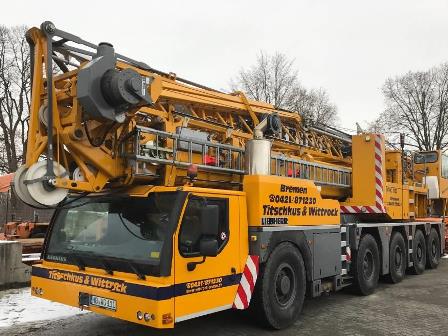
In addition to Self-erecting tower cranes -SETCs- that are towed or transported to the site on a vehicle, truck-mounted tower cranes have become popular in the UK over the past few years. These cranes, which have many of the attributes of the self-erecting tower crane, are permanently mounted on a mobile crane carrier chassis and in operational requirements fall between SETCs and conventional mobile cranes. This Best Practice Guide does not address many aspects of truck-mounted tower crane operation.
This distinct type of crane will be covered by a future Best Practice Guide SETCs are sometimes referred to as “pedestrian operated tower cranes”. This may not always be correct, as although the majority of SETCs are operated with the operator standing on the ground adjacent to the crane using remote controls, some are provided with cabs at a high level or operating stations at the base. It is also possible for some conventional top-slew tower cranes to be operated by remote controls at ground level.
Erecting a tower crane
The crane supplier/manufacturer will be able to advise on the maximum in-service and out-of-service wind conditions for the specific model of a crane to be used.
The out-of-service wind loadings will often be much greater than the in-service loads and the load-bearing capability of the ground (foundation) must be sufficient for the extra imposed loads due to the out-of-service wind. Where the SETC is to be taken down when high winds are anticipated, the operator must be made aware of any wind speed restrictions for dismantling.
There have been a number of accidents where the ground conditions were not suitable for the out-of-service loadings or SETC have been dismantled at wind speeds in excess of the manufacturer’s maximum recommended speeds.
SETC’s should be left in free slew when out of service to allow the crane to “weathervane”, to ensure that the out-of-service foundation loads are not exceeded.
The Approved Code of Practice to LOLER says that “Where lifting equipment, and/or its load, may be affected by the high wind the equipment should be fitted with appropriate devices so as to detect dangerous situations and allow measures to be taken to cease using the equipment”. Consequently, all SETCs should be fitted with an anemometer (many new cranes are now supplied with an anemometer as a standard fitting). A record of wind speed monitoring should be kept and electronic wind recording systems are now available for this task.
All operating personnel should be aware of wind speed action levels for the particular crane in use. It is important to note that the maximum wind speed at which the jib of an SETC can be safely folded back is often lower than the maximum in-service wind speed. Ignoring this has led to a number of accidents.
Self Erecting Tower Crane
Self erecting crane hire
The area in which a self-erecting tower crane -SETC- is to be sited must be carefully assessed to ensure that it is suitable before the crane is taken to the site and put into service. During this assessment, the following points should be considered.
Tower crane clearance requirements
The area chosen must be of sufficient size to enable the SETC to be maneuvered into position, set up, operated, and dismantled, with sufficient clearances between the crane and surrounding structures, as detailed in the manufacture’s operation and instruction manual. This is to ensure that trapping points are not created and that damage does not occur to either the crane or the surrounding structures (including the building under construction).
Tower crane installation
Insufficient consideration and assessment of ground conditions have been found to be a major cause of accidents with self-erecting tower crane -SETC-.
All SETCs rely for their stability on the ability of the ground on which they are standing to safely absorb the loads imposed by the crane. Most SETC manufacturers supply information on the loads imposed by the crane on the ground in the various operating and set-up configurations of the crane.
These generally consist of :
Maximum vertical load per stabilizer
Maximum horizontal reactions
Dimensions of the stabilizer support plate (pad)
Ground-level pressure under the stabilizer support plate
Self Erecting Tower Crane
Ground conditions in the construction
An assessment of the ability of the ground to accept these loads should be made by a competent person.
This assessment may indicate that the ground has the insufficient bearing capacity to accept the loads imposed by the crane, in which case additional measures will need to be taken before the crane can be set up. These may include using timber sleepers, proprietary mats or concrete pads to spread the applied load to an acceptable bearing pressure.
In extreme circumstances, piled foundations may be required. Wherever a concrete pad, steel grillage or piled foundation is constructed to accept the loads from an SETC, the contractor constructing the foundation should complete a foundation completion form to certify that the foundation has been correctly designed and constructed before the erection of the crane starts.
Where timber is to be used it is important that the timber sections employed are of sufficient dimensions and strength to transmit the applied loads to the ground and that the timbers are pinned together to form a grillage. The use of individual loose timbers has been found to be a major cause of accidents.
When siting the crane, consideration should be given to the length of time that the crane will be erected in one position and the likely deterioration of the supporting ground or foundation over time (e.g. timber rotting, undermining by water or frost, drying out, adjacent excavations).
Tower cranes and trespass to airspace
If the siting of the crane will result in oversailing of an adjacent property, not in control of the Principal Contractor, oversailing rights must be obtained in advance by the Principal Contractor (hirer).
Consideration needs to be given to inadvertent oversailing whilst the crane is left, when not in use, in free slew. Should the crane need to be guyed, tethered, or the slew locked, when out of service this must be considered at the initial planning stage and foundation loads for the specific configuration obtained from the manufacturer.
This information must be provided to the hirer and included in both the erection and use method statements. Cranes should not be left in a part erected condition overnight ( i.e. jib partially folded back) unless allowed for in the manufacturer’s manual or without prior written approval from the crane manufacturer.
Tower crane air rights
A self-erecting tower crane was erected on a site adjacent to a row of occupied houses. Over the first weekend, the occupants of the houses became alarmed when the crane, which had been left in free slew, moved over their houses. Their concern was heightened by the presence of a generator slung from the hook. A complaint to the Health and Safety Executive resulted in a prohibition notice being served on the construction company.
Where the crane’s jib and/or mast is to be folded to avoid oversailing when out of service the operator must be competent to carry out this procedure. The maintenance schedule for the crane will need to be adjusted accordingly.
What is a self erecting tower crane?
What is a self-erecting tower crane?
A Self Erecting Tower Crane (SETC) is a Tower Crane that can be easily inserted on a site with restricted space in a short period of time. These cranes operate from a fixed position and must be safely placed on-site by qualified field engineers familiar with the mechanisms that they are using.
Who invented the self-erecting tower crane?
Hans Liebherr helped develop the mobile tower crane in the late 1940s with the help of a team of design engineers. They invented the very first mobile tower crane, which was, as its name would suggest, a crane that construction companies could move around while still enjoying the benefits of the tower crane.
What is tower crane safety?
Tower cranes are widely used for lifting operations in the construction industry. Statistics show that tower cranes contribute to quite a number of serious accidents. Property damage and bodily injuries can be avoided if they are properly used.
What is Crane checklist?
This crane safety checklist covers: -Checking and inspecting the area of operation -Checking for visible damages including wire ropes, crane hook, outriggers. etc. -Checking the machine condition such as control, brakes, warning signs and more -Checking for adequate housekeeping and other machinery house inspection