All posts by Loganx

Professional Web Writer | Motor Enthusiast | Content Creator | Logan is a dedicated and skilled web writer, passionate about engines and machines and with a talent for creating engaging and informative content. She specializes in writing about a diverse range of topics including construction, forklifts, heavy equipment, excavators, etc. SEO Optimization: Proficient in SEO best practices, ensuring high visibility and engagement for all published content.

Overhead Crane Cable

Overhead Crane Cable: Imagine the following situation: An inspector has examined the hoist rope and he has found 10,000 wire breaks. He insists that the rope is still in good working condition. Could this be true?

Before wire ropes were invented in 1834, chains were the most common lifting means. They have, however, one inherent disadvantage: Chains are linear arrangements of load-bearing elements. If only one chain link fails, the whole system will fail.

Overhead Crane Cable

Crane wire rope specification

Steel wire ropes, Overhead Crane Cable, on the other hand, are parallel arrangements of load-bearing elements. If one rope element fails, the breaking strength of the wire rope is reduced only locally, and usually by less than 1%.

Wire ropes are multiple redundant systems of load-bearing elements. In a redundant system, every element which is necessary for the proper functioning of the system exists at least twice. For example, some of the parts of our human body are redundant: If we lose sight in one eye, we can still see. And if we lose the hearing in one ear, we can still hear. If in a wire rope one wire fails, there are still about 250 other wires to carry the load.

But what will happen if during the service life of the rope more and more of these wires fail? If we have lost the sight in both eyes, we can no longer see. And if we have lost the hearing in both ears, we can no longer hear. Therefore, should not also the wire rope fail if every single one of its 250 wires is broken?

No. It sounds incredible, but a wire rope can still be in good condition even if every single one of its wires is broken 200 times!

Overhead Crane Cable

Wire rope hoist crane

The figure shows a schematic arrangement of the 250 wires making up a wire rope (for space reasons, only 30 wires are displayed). Along the rope length, every single one of the 250 wires is broken once. Each wire break, however, merely represents a local reduction of the rope’s breaking strength. A few millimeters away from the location of the break the broken wire will again bear its full share of the load.

Overhead Crane Cable:

If we have a very uniform distribution of the wire breaks along the rope length so that in every short piece of rope only one wire break can be found, the breaking strength of every single one of these sections is weakened by less than one percent only. In a pull test, this wire rope might achieve its full catalog breaking strength even though every single one of its elements is broken! Still, there must be rules about how many broken wires per rope unit length that can be tolerated.

The discard number of wire breaks is defined in the applicable national or international standards and in the rules of the classification societies as a permissible number of wire breaks per multiple of the wire rope diameter, e.g. per 6 x rope diameter (one rope lay length) or per 30 x rope diameter (5 rope lay lengths). Our inspector has found 10,000 wire breaks, but the discard number was not reached in any single rope section of a length of 6 x d or 30 x d. So he was perfectly right in his decision to keep the rope in service. This example shows that under normal conditions a wire rope is a very safe and reliable machine element.

Overhead Crane Cable

Installing wire rope on crane

Choosing a crane wire rope: Overhead Crane Cable

Items to be taken into account when choosing a wire rope:

Breaking strength

The workload that the wire rope is to be subjected to is the first item to be taken into account when choosing a wire rope. Depending on the workload and the safety factor we wish to apply, we will have the wire rope breaking strength.

Corrosion resistance

If the wire rope is to be used in corrosive environments, a wire rope with galvanized wires should be used. If there is any risk of moisture entering the wire rope, a plastic-coated core wire rope can be an option.

Twisting torque and rotation

We have to take into account that when a wire rope is bearing a load, it causes the following effects:

  • When the two ends of a wire rope are fixed, the force applied causes twisting at the fixed points.
  • When one of the ends of the wire rope is free and a load is attached, the wire rope tends to rotate.

The wire rope’s tendency to rotate increases with the load that it is bearing and the height. The degree to which the wire rope generates twisting torque depends on its construction. Non-rotation wire ropes have each layer of strands in a differing direction of lay to the previous one, which means that the twisting torque of each layer is compensated by the twisting torque of the next layer. For this reason, we call wire ropes with three layers of strands Non-Rotation, whereas we call wire ropes with two layers of strands ROTATION RESISTANT.

Fatigue resistance

Wire ropes deteriorate due to the bending fatigue they are subjected to when bearing a load and flexing on the sheaves and drums. The level of deterioration is determined by the number of sheaves, sheave´s diameters, drum diameter and the diameter of the strands in the wire rope. If there is high bending fatigue, a wire rope with small diameter outer strands or a compacted finish should be chosen.

Abrasion resistance

Abrasion takes place between the wire rope and the sheaves and drums. To prevent it, a wire rope with a high outer strand diameter should be used.

Crushing strength

In multi-layer winding applications, the wire rope should be installed with a tension of between 2% and 10% of the breaking strength in order to avoid crushing between layers and deterioration of the wire rope. Compacted wire ropes are recommended for multilayer winding. Always use wire ropes with a metal core and high filling factor.

Swivels

Swivel use is only recommended when using non-rotation wire ropes and the load might rotate in high lifting operations.

Hoist cable trolley

What is the requirements to overhead crane cable?

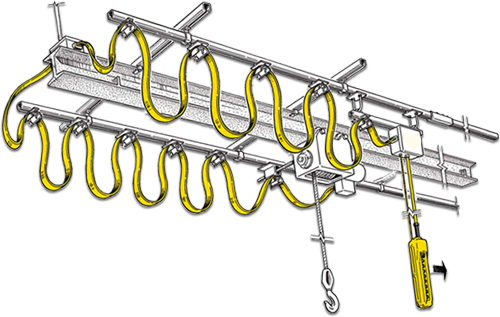
The use of suspension overhead crane (or crane cable guide), should prevent the crane cable in the movement was worn and over bending.

For crane cable diameter greater than 8mm, the crane cable hanging curved plate diameter should be at least the crane cable diameter For the outer diameter of more than 8mm of the crane cable, at least 8 times the outer diameter; for the diameter of more than 12.5mm crane cable, at least 10 times the outer diameter; for flat crane cable, the crane cable thickness is equivalent to the diameter of the round crane cable.

Overhead Crane cable arrangement should ensure that the crane cable length is equal, the pressure plate crimps firmly, the same layer of crane cable diameter as close as possible to avoid a root or a few crane cables too much force. Suspension crane cable trolley should be set between each other to pull the wire rope, the operation, when the adjacent two hanging crane cable trolley spacing between the crane cable so that the angle between the 120 °, the traction wire rope should be completely straightened force.

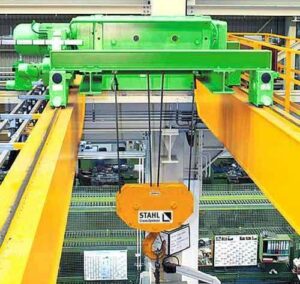
Overhead Crane Cable

Crane pendant wire rope

The use of crane cable reel power supply should be prevented during the movement of the crane cable was worn, the diameter of not more than 21.5mm crane cable, crane cable drum diameter should be at least 10 times the crane cable diameter; for the diameter of more than 21.5mm crane cable, The crane cable drum diameter should be at least 12.5 times the crane cable diameter.

The crane cable reel shall be capable of automatically winding the crane cable.

The drive torque of the crane cable reel shall be not less than the maximum winding torque required for the winding crane cable. In the process of crane cable laying, the traction force acting on the crane cable conductor should be as small as possible. For crane cables with no reinforcement core, the maximum allowable tension on the copper conductor cross-section is 20N / mm2. For crane cable winding speed or crane cable weight Heavier, should be added to withstand the required traction to strengthen the wire rope for the core.

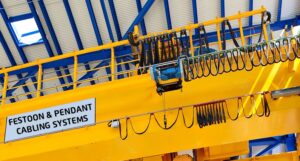
Overhead Crane Cable

what type of wire rope is used on cranes?

What are crane cables made of?

Steel wires for wire ropes are normally made of non-alloy carbon steel with a carbon content of 0.4 to 0.95%. The very high strength of the rope wires enables wire ropes to support large tensile forces and to run over sheaves with relatively small diameters.

What is Strand in wire rope?

Cable construction is the combination and arrangement of wires in a rope. Many individual steel wires are helically-laid together to form a wire rope. A strand is when two or more wires are wound concentrically in a helix. These strands are typically wound around a center wire and then around the core.

What is the difference between cable and wire rope?

The term cable is often used interchangeably with wire rope. However, in general, wire rope refers to diameters larger than 3/8 inch. Sizes smaller than this are designated as cable or cords. Two or more wires concentrically laid around a center wire is called a strand.

The most read

Overhead Cranes

  • What are the parts of an overhead crane?
  • What is the purpose of an overhead crane?
  • How much does an overhead crane cost?
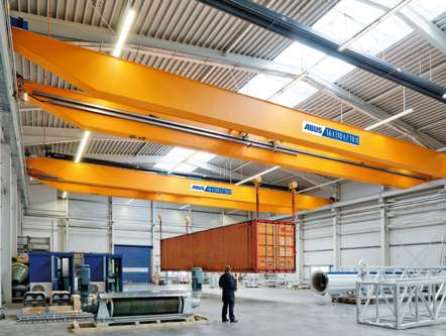
More on this story

Overhead Crane Test Questions and Answers

  • Crane operator interview questions and answers
  • Rigging test questions and answers

Overhead crane manufacturers in the USA

Some have wondered if in the United States they fix, manufacture, elaborate parts, and components of overhead cranes.

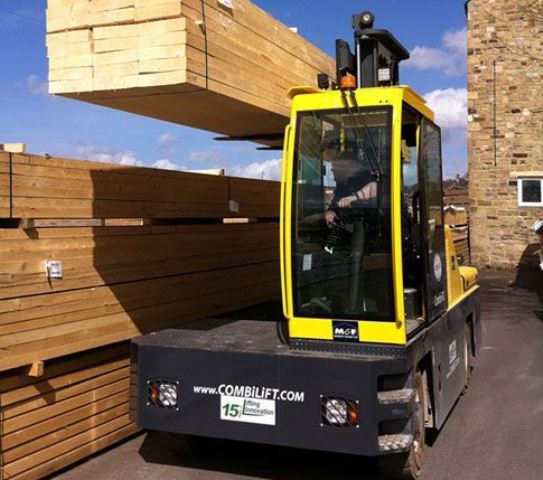
Side Loader Forklift

Side load forklift or Side Loader Forklift: There are various types of forklift trucks today, from the three-wheel counterbalanced lift truck, the teletruck, powered pallet lift trucks, pump trucks, reach trucks, and, of course, side loaders.

A side loader forklift truck pretty much does what it says on the tin. Side loader forklifts are powerful industrial trucks that lift loads from the side, so they are well suited to carry wide or long loads. Narrow aisles which may be a problem for regular forklift trucks can be easily navigated through in a side loader.

Side Loader Forklift

Side loader forklift for sale

Buying the right-side loader forklift can be time-consuming and uncertain. How can you avoid buying equipment that won’t meet your needs within a year or overpaying for capacity or features that you may never use?

Whether you want to buy a new or used side loader forklift, key considerations will help you choose the right forklift for your application, now and in the future.

You can also take a shortcut by contacting one of the side loader forklift experts who can help you find the best forklift for your application and budget.

Side loading forklift truck

Side loader forklift trucks may be considered safer than conventional forklift trucks because they pick loads up from the side, meaning that the driver of the forklift truck has a full view of what is in front of and behind them, whereas a regular forklift truck may sometimes have reduced visibility at the from due to large loads.

Side Loader Forklift

Forklift safety procedures

Side Loader Forklift: Safety is a priority where forklift trucks are concerned. Forklifts are often a huge help in the workplace, reducing the need for manual labor as they carry bulky and heavy loads – sometimes loads that can cause the forklift to tip over! Moreover, the load on the forklift (whether it be on the side or otherwise) can seriously reduce the driver’s visibility and this can cause accidents in the workplace.

So, it is imperative that anyone wishing to operate a forklift undergo training so that they can safely operate the vehicle. Many accidents in the workplace can be caused by those who are not properly qualified to operate such a dangerous machine; bumping into employees on the ground or moving the vehicle too fast so that it topples over. Accidents may also occur when forklifts are left unattended without first shutting off the power, setting the brakes and lowering the forks.

Side Loader Forklift

Narrow aisle side loader forklift

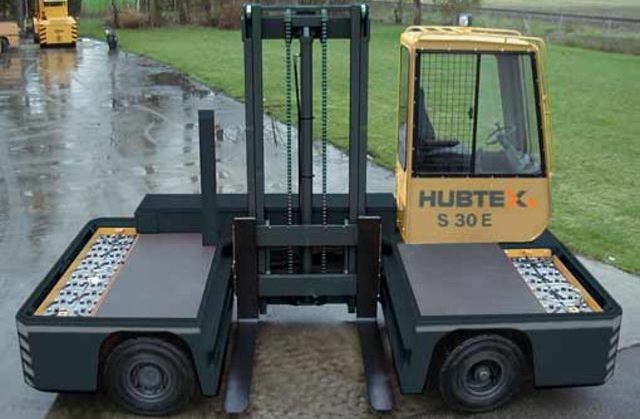
Side loader Forklifts are forklifts fitted with the lifting forks perpendicular to the drive direction of the forklift. By configuring the forks perpendicular to the drive direction this allows the forklift to operate in close spaced isles. Sideloader forklifts normally are capable of extending the forks with a scissor-like action to place the load on to the storage space.

Small side loader forklift

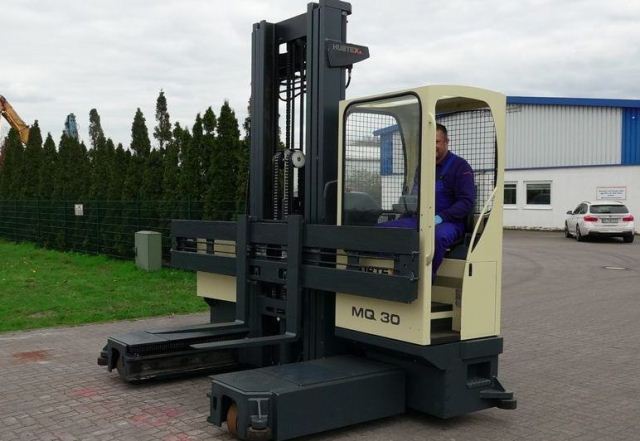
Side Loader Forklift: The lifting mechanisms are provided as hydraulic, pneumatic, electric or mechanically operated. Side-loader forklifts can be either man-up or man-down configurations. The man-up version has the advantage of locating the operator close to the load. One of the main advantages of a side-loader forklift is that storage area requirements are reduced because forklifts can travel, load, and unload within much narrower aisles. This is facilitated by the forklift’s ability to extend and retract the lifting forks perpendicular to the forward and reverse driveline of the forklift.

Side loader forklifts are available in diesel, gas, or electric power.

Warehouse forklift

It’s often said the key to an effective shipping or warehousing operation relies on knowing your options and applying the right solution for your application.

When it comes to standard pallet operations utilizing counterbalance forklift trucks on tarmac yards, the options are straightforward – diesel, LPG, or electric power, mast heights and types, and a few added extras to boost safety, management information, attachments, and such.

Inside the modern logistics warehouse, there are often other considerations – stacking, picking, loading bays, aisle widths, and, consequently, more exotic flavors of equipment available to choose from. Long load handling, however, presents some unique challenges.

Lumber, plastics, and steel structures are rarely produced in pallet-sized chunks. Moving long loads inside or out, storing them in racking, stacking them in blocks, carrying them over rough terrain, or simply getting them off a flatbed and into production areas can be difficult issues to solve.

Side Loader Forklift

Industrial side loader forklifts

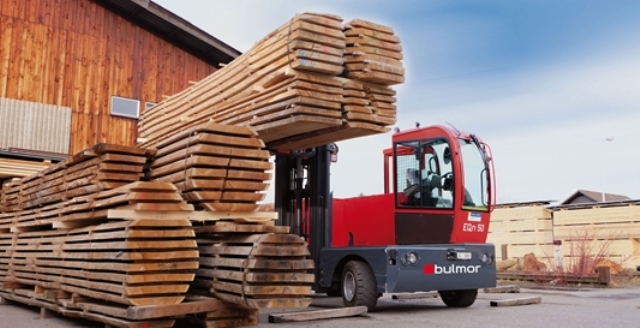
Step forward the Side loader forklift; a mainstay of lumber yards, steelworks, pipe producers, and hundreds of other industries around the globe. The name derives from the design, where the load is carried to the side of the truck on a deck or bed which can be tailored (specified) to suit the loads being handled. The forks of the side loader extend outwards from the center of the deck, like that of a warehouse reach truck, allowing a long load to be lifted at its middle and most stable point, then rested on the deck of the truck as it is driven.

As the load is being securely carried, in effect, sideways, it means the truck can travel through standard doorways, down narrower aisles, and across uneven ground. Moving the load is also far safer for the operator, who might otherwise have to raise a wide load, if using a forklift, to negotiate neighboring obstacles, and risking tipping the truck.

Side loader forklifts have quietly gone about their business for the past 50 years. They’ve dominated European markets, where the combination of practicality, safety, and durability have made them a must-have in lumber merchants where space is at a premium or steelworks where loads can reach up to 100,000 lbs in weight.

Those types of industries have taken to the side loader with gusto, often finding a practical solution where previously there was none. Perhaps somewhat ironically, the spread of side loaders to a wider audience has recently been driven by the success of another type of equipment – the multi-directional machine.

Side Loader Forklift

Combilift Sideloader

These side loader forklift traveling trucks have their origins in the portable truck or trailer mounted piggyback forklift and provide some of the benefits of a side loader. However, in many cases, the trucks are wider, less suitable for long runs or uneven ground, have no in-built deck leveling. Such leveling keeps loads securely horizontal both fronts to back and side to side.

Sideways movement adds lateral stress to both the mast and chassis. Masts have a bespoke profile to provide greater strength, whilst the standard chassis is built to withstand major loads in all directions.

Moving in and out of standard warehouse doorways means side loaders are now used as an in-out truck. Electric side loaders provide engine-like performance and the reduction in noise and exhaust emissions means operator comfort and co-workers’ environments are drastically improved.

The popularity of the side loader is undoubtedly on the rise. Whilst it will always remain a niche product in comparison to pallet handlers, it is also true to say that there are certain businesses that have come to rely on the side loaders ability to store products in cantilever racking or block stack steel or even operate efficiently and quietly in confined built-up areas.

Side loades forklift places a great deal of importance in the longevity and reliability of its products. This too has helped side loaders become an important tool for not just lumber yards and steel mills, but for businesses of all types. Today, energy companies, fabricators, building materials merchants, garbage handlers, insulation, crane and plastic tube manufacturers, amongst a host of others, are some of the latest companies that are experiencing the art of working sideways.

Side Loader Forklift

Side loader forklift manufacturers

Sideloader Suppliers:

To be eligible for Top lift truck suppliers ranking, companies must manufacture and sell lift trucks in at least one of the Industrial Truck Association’s seven truck classes: electric motor rider; electric motor hand trucks; internal combustion engine; pneumatic tire; electric and internal combustion engine tow tractors; and rough terrain lift trucks.

Rankings are based on worldwide revenue from powered industrial trucks during each company’s most recent fiscal year.

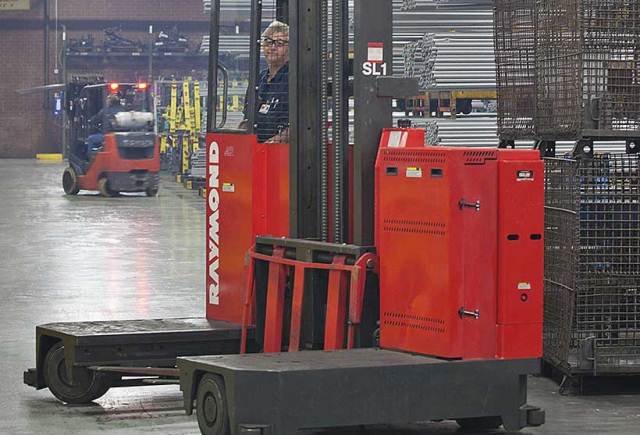
  • Raymond Sideloader
  • Toyota side loader
  • Crown side loader forklift
  • Hyster forklift side loader
  • Yale forklift side loader
  • Clark forklift side loader

Where are forklifts used?

A subtype of the warehouse forklift, side loaders are usually found in steel service centers and manufacturing facilities with heavy and bulky items. The operator stands in a sideways compartment and the side loader unloads objects on its side.

Due to its sideways operation, side load forklifts can easily drive up alongside racks and load and unload without having to turn. This makes them suitable for navigating narrow aisles and handling long loads like timber and pipes.

What is a side loader forklift?

What is a side loader forklift?

A side loader does exactly what its title suggests. It loads and unloads from the side of the machine. Instead of the forks being located in front of the equipment like on a standard forklift, a side loader forks are located on its side.

What is a Combilift forklift?

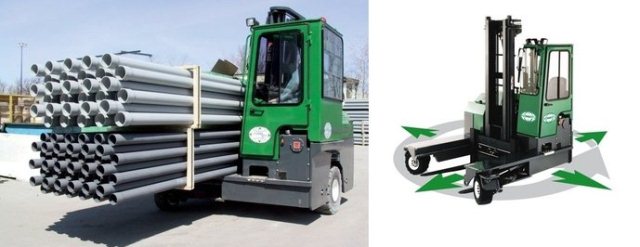
The Combilift Forklifts are the world’s first IC engine-powered all-wheel-drive multi-directional forklifts. Combilift Forklifts use patented, leading-edge 4-way steering technology enabling them to travel sideways with long loads.

What is a side loader forklift?

A narrow-aisle forklift made for lifting very heavy and long items is called a side loader lift truck. They work best for load handling in steel service centers and for manufacturing where long, bulky items are a normal product.

What is the purpose of a side loader forklift?

If you’re in need of a forklift truck that is ideally suited to easily handle wide or long and heavy loads a side loader forklift is purpose-built for these types of tasks.
As their name suggests, side loaders operate by lifting loads from the side. Where regular counterbalance forklifts may become unstable, the side loader fork truck specializes in easily handling long loads such as wood and piping. They are designed to work in narrow aisles and since the load is carried on the side, the driver has a clear view of whats in front and behind them.
There are a variety of different powered fork trucks such as diesel, LPG and even propane fuelled side loader forklifts.

How does a side loader forklift work?

Sideloader fork lifts come in three different variations. The first type of side loader has a large open bay with a mast and fork carriage built to travel perpendicular to the truck as it moves. The forks are extended out to the side of the fork truck allowing it to lift up a load and then retract the load over the large open bay allowing the fork truck to set the load down onto the bay.

More on this story

Forklift Manufacturers in USA

Because there are so many forklifts on the market, one of the best ways to start narrowing down your options is to consider the top forklift manufacturers and suppliers.

Forklift Brands

Forklift brands: ranking of manufacturers, world production, makes, and models.

Mobile Crane Hand Signals

Mobile Crane Hand Signals: Communication between the crane operator and the signal person shall be maintained continuously during all crane movements. If at any time communication is disrupted, the operator shall stop all crane movements until communication is restored and a proper signal is given and understood.

Printable mobile crane hand signals
Mobile Crane Hand Signals charts
Standard crane hand signals
Crane operator hand signals chart:

Mobile Crane Hand Signals: At Crane and machinery, we realize that not everyone at the job sites we go to is fully trained in mobile crane operation and safety.

For this reason, all mobile crane operators must have experience and education on all aspects of material handling and mobile crane procedures, including all common manual signals for mobile crane operators.

If the operator has any concerns regarding the requested movement of the crane or needs to communicate with the signal person, the operator shall stop all crane movement.

Crane movement shall not resume until the operator and the signal person agree on the issue at hand has been resolved. If it is desired to give instructions to the operator, other than those provided by the established signal

Mobile Crane Hand Signals

Crane signalman

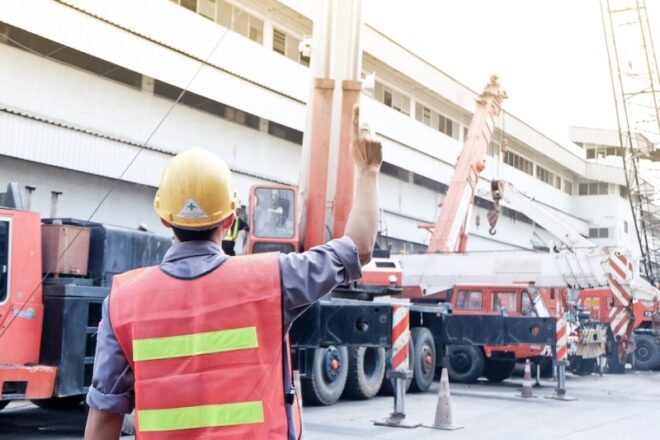
On construction sites, one of the most important jobs is that of the signal person. Sometimes known as the signalman, this individual is responsible for signaling the crane and giving the operator orders that pertain to the lift. In order to accurately and safely direct crane operators, the signal person must know and understand the relevant signals used in regulations.

Additionally, just like the machine operator, they must understand the operations and limitations of the equipment they are directing, including the crane dynamics involved in swinging, raising, lowering loads, stopping loads, and boom deflection.

Audible crane signals

While radio and other means of electronic communication with an operator are acceptable, using hand signals are the most effective and reliable way of communication.

Electronic methods communication could potentially fail to work, leaving the operator and the on-ground director without means to understand one another or give direction. When using radios or other methods, it must be through a dedicated channel so there is no interference.

Mobile crane hand signal chart

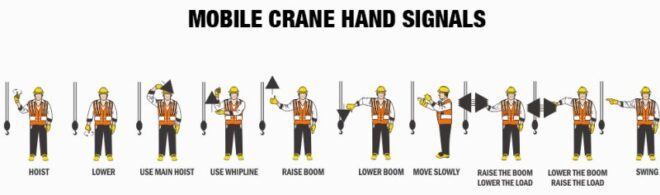
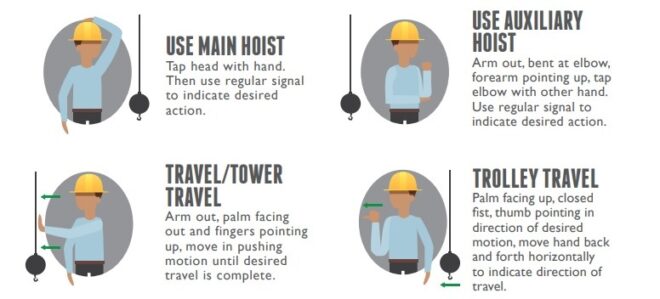
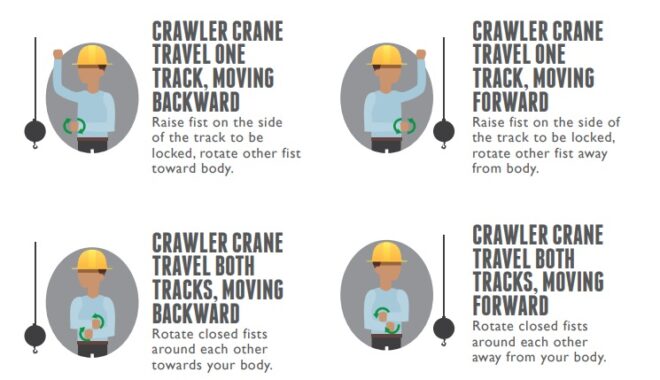
Successful communication between the signalman and the operator relies on both individuals fully understanding all hand signals used. Find below examples of standard hand signals used to control mobile crane operations

Standard crane signals

  • Communication between the crane operator and the signal person shall be maintained continuously during all crane movements. If at any time communication is disrupted, the operator shall stop all crane movements until communication is restored and a proper signal is given and understood.
  • If the operator has any concerns regarding the requested movement of the crane or needs to communicate with the signal person, the operator shall stop all crane movement. Crane movement shall not resume until the operator and the signal person agree on the issue at hand has been resolved.
  • If it is desired to give instructions to the operator, other than those provided by the established signal system, the crane movements shall be stopped.
Mobile Crane Hand Signals

Standard hand signals for crane operators

In some circumstances, radio communication between a crew and a crane operator is not an option. It is important to know the common signals for crane operation to ensure that it is still possible to properly operate the mobile crane. Some of the basic hand signals to use when working with a crane operator include:

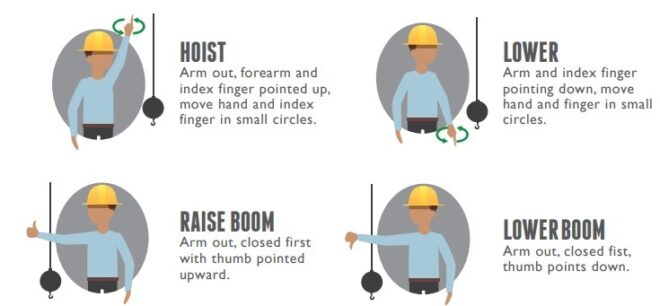
  • LOWER THE CRANE’S LOAD: If the load needs to be lowered in place, point your forefinger downward with your arm extended toward the ground and move your hand in small circles.
  • RAISE THE BOOM: When the boom needs to be raised, extend your arm horizontally from your body and give the thumbs-up sign.
  • LOWER THE BOOM: In a similar fashion to the signal for raising the boom, extend your arm horizontally and give the thumbs-down signal to lower the boom.
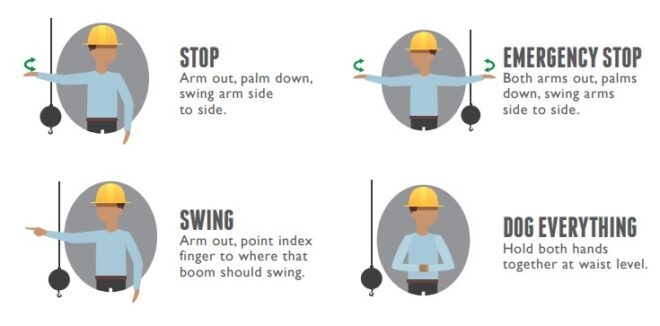
  • SWING THE BOOM: If the load needs to move side to side while remaining at its current height, extend your arm outward horizontally and point in the direction that the boom needs to swing.
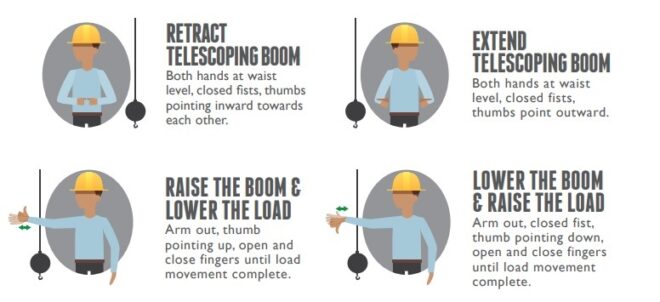
  • EXTEND THE BOOM: If the load needs to move farther away from the crane, lower your elbows to your waist and extend your forearms at a right angle so that your hands extend forward. Point both thumbs outwards, away from your body. This will indicate to the operator to extend the boom.
  • PROCEED SLOWLY: If any action needs to be done slowly and carefully, place your hand above the hand that is performing the action signal.
Mobile Crane Hand Signals

Printable mobile crane hand signals

Using standard hand signals is the most widely used manner of signaling a crane operator. A hand signal chart can usually be found on the side of the crane or it should be conspicuously posted in the vicinity of where hoisting operations are being conducted.

New signals can be given to the crane operator but they must be agreed upon beforehand by the crane operator(s), signalperson(s) and lift director (if one is used).

Mobile Crane Hand Signals

Crane signal person training

A signal person must be provided in each of the following situations:

  • The point of operation, meaning the load travel or the area near or at load placement, is not in full view of the operator.
  • When the equipment is traveling, the view in the direction of travel is obstructed.
  • Due to site-specific safety concerns, either the operator or the person handling the load determines that it is necessary.
Mobile Crane Hand Signals

Crane operator hand signals

Types of signals. Signals to operators must be by hand, voice, audible, or new signals.

Crane hand signals

  1. When using hand signals, the Standard Method must be used. Exception: Where use of the Standard Method for hand signals is infeasible, or where an operation or use of an attachment is not covered in the Standard Method, non-standard hand signals may be used in accordance with paragraph (2) of this section.
  2. Non-standard hand signals. When using nonstandard hand signals, the signal person, operator, and lift director (where there is one) must contact each other prior to the operation and agree on the non-standard hand signals that will be used.
Mobile Crane Hand Signals

New signals

Signals other than the hand, voice, or audible signals may be used where the employer demonstrates that:

  • The new signals provide at least equally effective communication as voice, audible, or Standard Method hand signals, or
  • The new signals comply with a national consensus standard that provides at least equally effective communication as voice, audible, or Standard Method hand signals.

Suitability

The signals used (hand, voice, audible, or new), and means of transmitting the signals to the operator (such as a direct line of sight, video, radio, etc.), must be appropriate for the site conditions.

Crane operations hand signals

During operations requiring signals, the ability to transmit signals between the operator and signal person must be maintained. If that ability is interrupted at any time, the operator must safely stop operations requiring signals until it is reestablished and a proper signal is given and understood.

Verbal crane signals

If the operator becomes aware of a safety problem and needs to communicate with the signal person, the operator must safely stop operations. Operations must not resume until the operator and signal person agree that the problem has been resolved.

Mobile Crane Hand Signals

Where are crane operator hand signals found?

Using standard hand signals is the most widely used manner of signaling a crane operator. A hand signal chart can usually be found on the side of the crane or it should be conspicuously posted in the vicinity of where hoisting operations are being conducted.

Who can give signals to the crane operator?

During crane operation, only one person can give signals, unless it’s for an emergency stop – then anyone on the Jobsite can give the signal. Once the qualified signal person is identified, the signal person and the crane operator must identify each other prior to giving any signals.

More on this story

The most read

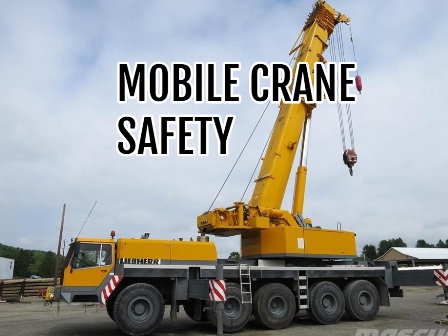
Mobile Crane Safety

This article focuses on hazards, including where they might be found in different workplaces. We also provide you with a range of further resources to make your risk assessment process as smooth as possible.

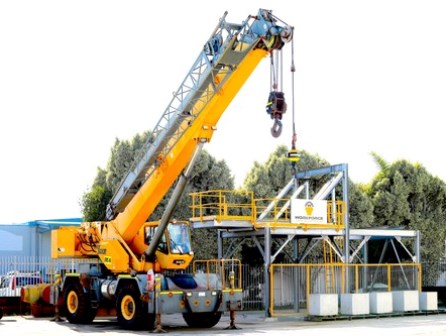
Slewing Mobile Crane

Slewing mobile cranes incorporate a boom or jib that can be rotated. It excludes front-end loader, back-hoe, excavator or other earth moving equipment when configured for crane operation.

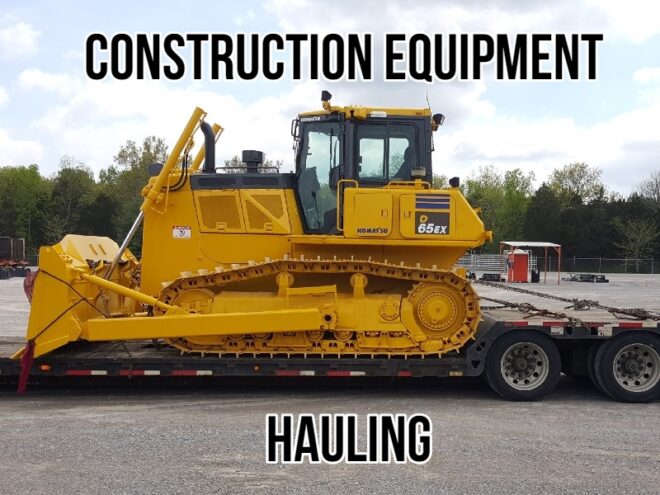
Construction Equipment Hauling

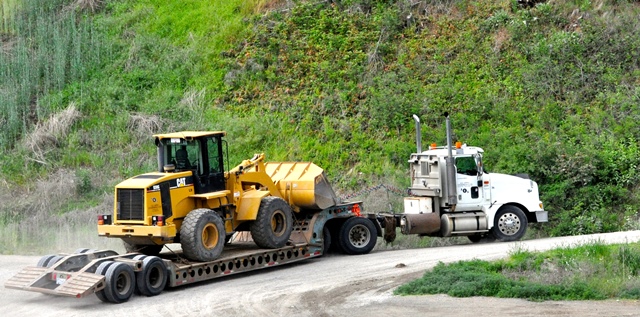
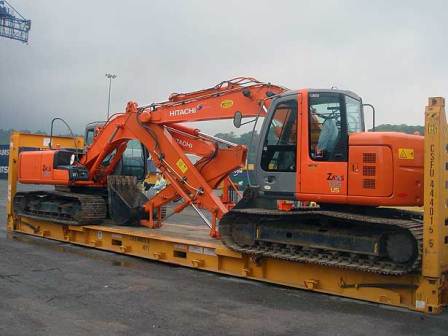
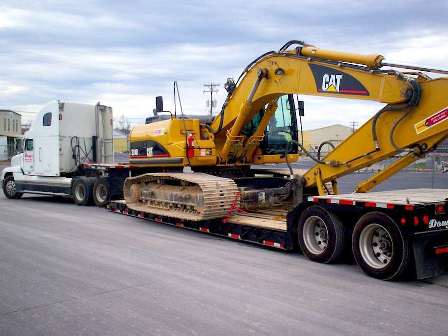
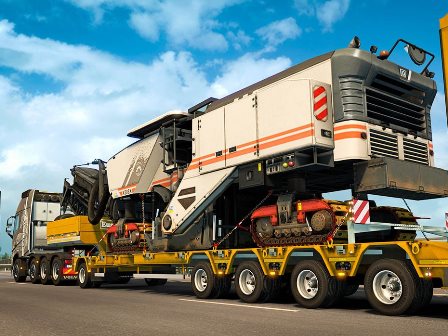
Construction Equipment Hauling: What kind of trailer should I use? Safety is the most important element in transporting construction equipment. To make sure the equipment and the driver are safe, you want to be sure you use the best trailer for the job. The capacity of the trailer is the first thing to consider, followed by state regulations and laws. Construction equipment hauling companies use the following types of trailers:

  • Flatbed Trailers
  • Removable Gooseneck Trailers
  • Double Drop Trailers
  • Specialized trailers
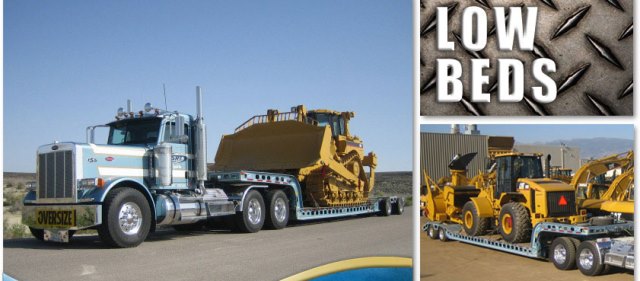
  • Lowboy Trailers
  • Step Deck Trailers
  • Hotshot Trailers
  • Extendable Trailers
Construction Equipment Hauling

Best trailer for hauling heavy equipment

Types of trailers for hauling heavy equipment

The most common hauling equipment used for any construction work are the 5- and 20-ton dump trucks, both of which are organic to most engineer units. Equipment trailers are used to transport heavy construction equipment not designed for cross-country travel. They are also used to haul long, oversize items and packaged items.

Construction Equipment Hauling

Dump Trucks

The 5-ton family of medium tactical vehicles and the 20-ton dump trucks can be used for a variety of purposes. This manual, however, discusses dump trucks used primarily for hauling, dumping, and spreading earth, rock, or processed aggregates.

Capacity

The capacity of hauling equipment is expressed in one of three ways:

Gravimetrically by the weight of the load it will carry (in tons), by its struck rear-dump body volume (in cubic yards), or by its heaped rear-dump body capacity (in cubic yards). The hauling capacity of Army dump trucks is normally expressed gravimetrically: 5-ton and 20-ton.

Conversely, the capacity of loading equipment is normally expressed in cubic yards. The unit weight of the various materials to be transported may vary from as little as 1,700 pounds per LCY for dry clay, to 3,500 pounds per LCY for trap rock. Always make sure that the volumetric load does not exceed the gravimetric capacity of the truck.

Loading

For maximum efficiency, fill trucks as close to their rated hauling capacity as practical. Adjust the load size if haul roads are in poor condition or if the trucks must traverse steep grades. Overloading will cause higher fuel consumption, reduced tire life, and increased mechanical failures.

Use spotting markers when trucks are hauling from a hopper, a grizzly ramp, or a stockpile. Spotting markers are also beneficial when excavators (such as a dragline, a clamshell, a loader, a backhoe, or a hoe) are used to load hauling equipment. They facilitate prompt and accurate vehicle spotting which improves loading efficiency.

Spot trucks as close to the bank as possible when loading with an excavator. Ensure that the trucks are within the working radius of the dragline, the clamshell, or the hoe bucket. When using a loader, position the truck and loader so that the two machines form a V. This arrangement will reduce the loader cycle time.

Maintaining Proper Speed

10-6. Haul at the highest safe speed and in the proper gear, without speeding. Speeding is unsafe and hard on equipment. When several trucks are hauling, it is essential to maintain the proper speed to prevent hauling delays or bottlenecks at the loading and dumping sites. Use separate haul roads to and from the dumpsite, if possible. Keep haul roads well maintained, with a minimum grade. Use one-way traffic patterns to increase efficiency.

Dumping (Unloading)

Always use spotters to control dumping operations. When dumping material that requires spreading, move the truck forward slowly while dumping the load. This makes spreading easier. Establish alternative dumping locations to maintain truck spacing when poor footing or difficult spotting slows the dumping operation.

Preventive Maintenance

Keep truck bodies clean and in good condition. Accumulations of rust, dirt, dried concrete, or bituminous materials hamper production. Consider the time spent cleaning and oiling dump bodies, particularly for asphalt or concrete hauling, when computing transportation requirements.

  • Clean truck bodies thoroughly at the end of the day. When used to haul wet concrete mix, spray the dump beds with water before loading and clean them thoroughly as soon as practical after dumping.
  • Coat the walls and sides of truck bodies with diesel fuel or oil to prevent bituminous materials (plant-mix asphalt) from sticking
Construction Equipment Hauling

Heavy equipment hauling

Heavy Equipment Trailer Rental

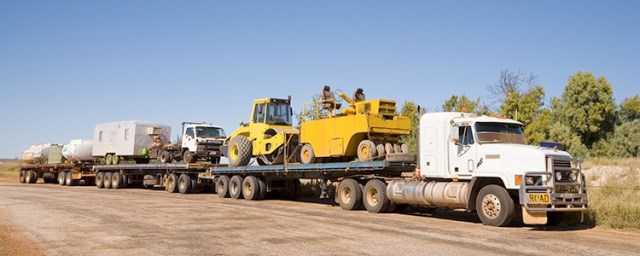
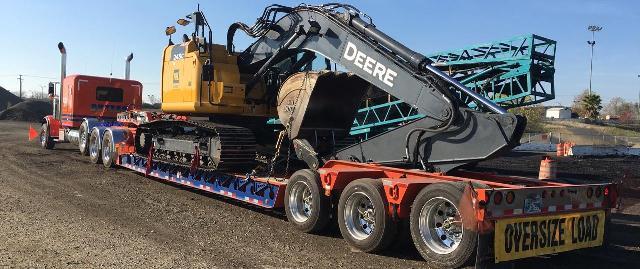
Use equipment trailers to transport heavy construction equipment such as cranes, dozers, or any equipment not designed for long-distance movement by their own power. Also use the trailers to haul long items such as pipes or lumber, or packaged items such as landing mats or bagged cement.

Loading

For maximum efficiency, load trailers are as close to their rated load capacity as possible. When loading, always place a spotter on the trailer to direct the equipment operator and keep the machine centered on the ramps and trailer.

With rear-loading trailers, use low slopes or constructed dirt ramps when possible. Some trailers have loading ramps for loading from level ground.

When using loading ramps to load a bulldozer, run the machine slowly up the ramps (with the blade raised) and when balanced, slow or stop, then lower the blade and let the front of the blades tracks sit smoothly on the trailer bed.

Then move the excavator slowly towards the trailer. Some low bed trailers are designed for front-loading.

In areas that restrict rear loading, load the trailer from the side. Be careful not to damage the trailer bed.

Note: Refer to the unit’s SOP or to the appropriate technical manual for proper techniques for loading and securing equipment.

Positioning and Securing

After positioning the equipment on the trailer bed, block and chock it and chain it to the trailer. Properly distribute the weight of large equipment on the trailer. Trailers have their load-weight centering position marked.

Unloading

Unload heavy equipment slowly to prevent damage to the trailer or the equipment. Always use ramps to load and unload.

Construction Equipment Hauling

Heavy equipment hauling companies

Preparing for heavy haul transport:

To be ready at pick up, speak to your transporter beforehand and make sure they have all the necessary permits for transport. Also, ask them how you can help prepare your equipment for transport.

They will give you tips based on their experience and your specified shipment. For example, your transporter may advise you to bubble wrap fragile levers within the cab of a tractor or secure the doors of a crane shut with zip-ties. Talk with your provider ahead of time to work out any necessary permits.

Construction equipment transport

There are a few steps you can take to prepare your equipment for shipping:

Consult the manufacturer’s manual, it is the first step to preparing your machinery. You can have the manual yourself, or you can look it up on the manufacturer’s website. This manual may recommend that you take certain actions, such as disconnecting batteries, draining fluids from the engine, or securing loose parts.

Obtain the necessary permits: There are specific guidelines for securing and transporting heavy equipment.

Oversized and overweight cargo will require special permits to be transported by road.

Remember that large equipment loaded on a trailer may be too tall to drive under power lines and bridges, or to travel on certain roadways.

You must work with the carrier prior to the pickup date to obtain these permits, avoiding delays or legal complications.

Cover vulnerable parts – Remember that your equipment will likely be transported outdoors and therefore exposed to the elements.

Cover any part that is vulnerable to rain and wind. In the winter months, be prepared for damage to tanks and lines due to cold and freezing temperatures.

You may also need to protect your computer from heat. Consulting your owner’s manual should provide guidance on protection.

Be prepared to pick up and drop off: You will need an open area at the pick-up and drop-off points to load and unload your equipment. Necessary equipment for loading and unloading, such as loading docks, ramps, or cranes, can also be added.

Construction Equipment Hauling

Construction Equipment Hauling

How Much Does Heavy Equipment Transport Cost?

The cost to transport heavy equipment varies greatly based on the equipment being transported. The cost to ship heavy equipment longer distances, over 500 miles, averages $1.75 per mile, while shorter distance shipments average $5.00 per mile

What is hauling in construction?

There are several different types of hauling equipment that can be used for building and construction. Some of the most typical types include cranes, bulldozers, forklifts, dump trucks, and excavators, as well as many others.

How much do heavy equipment haulers make?

Heavy haulers pay an average of $80,000 or more in 2018. They earn their pay in extra responsibility and work. You usually can’t go into hauling heavy equipment right out of trucking school.

What is heavy haul trucking?

In the U.S. a superload is a truck tractor with an attached trailer that has an over-dimensional or overweight object (the load) on it that exceeds the ordinary permit limits commonly associated with oversize or overweight loads.

The most read

Heavy Equipment Transport

Unlike shipping standard freight, heavy equipment transport requires special handling, oversize load permits, and special freight carriers.

More on this story

Heavy Equipment Movers

If you’re looking at moving some heavy equipment, it’s important to work with a skilled professional who’s capable of taking that job on, as it requires a lot of knowledge to get the task done safely.

Heavy Equipment Hauling

Consider carefully all your options for hauling your construction equipment.

Heavy Equipment Rental

Rental is a prominent and growing model in the construction business. The development of the rental industry in new markets requires a certain level of trust in a country and in society.

Topographic Map definition

What is a topographic map? Topographic map definition

Topographic maps produced by Natural Resources, offer detailed information on a particular area and are used for several types of activities such as emergency preparedness, urban planning, resource development, and surveying to camping, canoeing, adventure racing, hunting, and fishing.

This guide will help the user understand the basics of topographic maps. The guide provides an overview of mapping concepts, along with tips on how to use a topographic map, explanations of technical terminology and examples of symbols used to represent topographic features on topographic maps.

Why? Topographic maps represent the Earth’s features accurately and to scale on a twodimensional surface. Topographic maps are an excellent planning tool and guide and, at the same time, help make outdoor adventures enjoyable and safe.

topographic map definition

Topographic map definition

What is a topographic map? topographic map definition

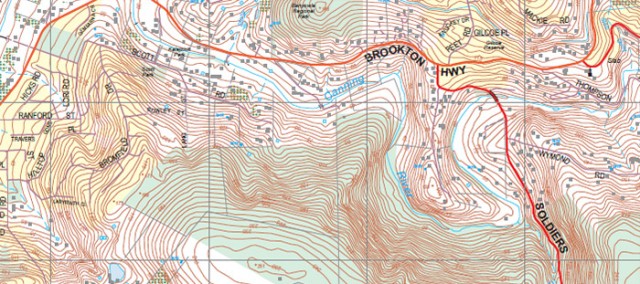
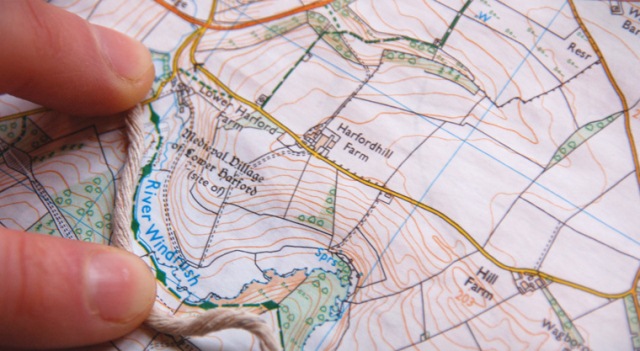
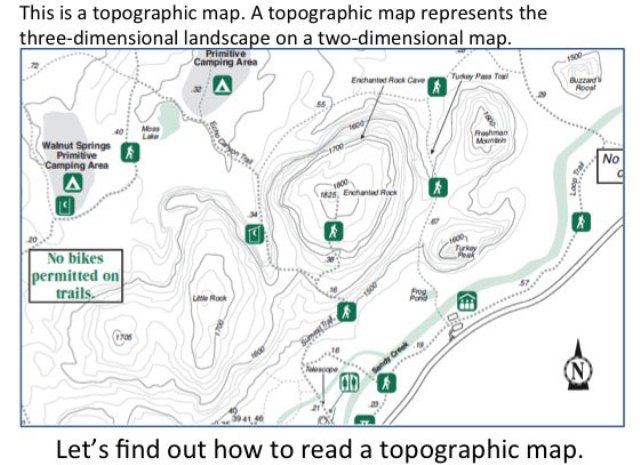
A topographic map is a detailed and accurate illustration of man-made and natural features on the ground such as roads, railways, power transmission lines, contours, elevations, rivers, lakes and geographical names.

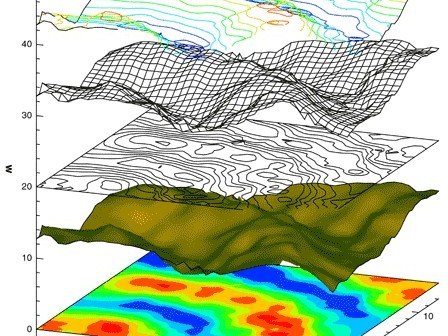
The topographic map is a two-dimensional representation of the Earth’s three-dimensional landscape. The most frequently used Canadian topographic map is at a scale of 1:50 000.

topographic map definition

What is a topographic map?

Topographic map definition: What information is on a topographic map?

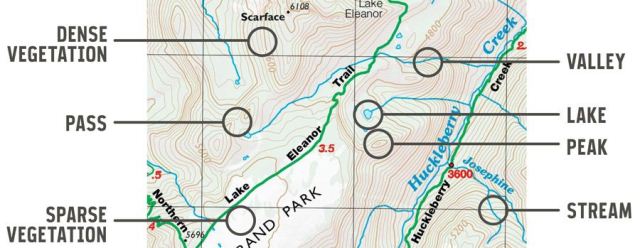
Topographic maps identify numerous ground features, which can be grouped into the following categories:

  • Relief: mountains, valleys, slopes, depressions as defined by contours
  • Hydrography: lakes, rivers, streams, swamps, rapids, falls
  • Vegetation: wooded areas
  • Transportation: roads, trails, railways, bridges, airports/airfield, seaplane anchorages
  • Culture: buildings, urban development, power transmission line, pipelines, towers
  • Boundaries: international, provincial/territorial, administrative, recreational, geographical
  • Toponymy: place names, water feature names, landform names, boundary names

Refer to the map legend for a complete listing of all features and their corresponding symbols. Information along the map borders provides valuable details to help you understand and use a topographic map. For example, here you will find the map scale and other important information about the map such as the year, the edition and information pertaining to the map data.

topographic map definition

Topographic map example

Topographic map definition: Is a topographic map similar to a road map?

Both types of maps show roads, water features, cities, and parks, but that’s where the similarity ends.

  • Topographic maps show contours, elevation, forest cover, marsh, pipelines, power transmission lines, buildings and various types of boundary lines such as international, provincial and administrative, and many others.
  • Topographic maps show a universal transverse Mercator (UTM) grid, allowing the user to determine precise positions. In basic terms, topographic maps allow the user to see a threedimensional landscape on a two-dimensional surface.

Topographic map definition: What do the colors mean?

A variety of colors can be found on a map, each relating to different types of features.

  • Black shows cultural features such as buildings, railways, and power transmission lines. It is also used to show geographical names (toponymy), certain symbols, geographic coordinates, and precise elevations.
  • Blue represents water features, such as lakes, rivers, falls, rapids, swamps, and marshes. The names of water bodies and watercourses are also shown in blue, as are magnetic declination and UTM grid information.
  • Green indicates vegetation such as wooded areas, orchards, and vineyards.
  • Some areas are mapped in black and white (monochrome).
topographic map definition

Topographic contour lines

Topographic map definition: What are contour lines?

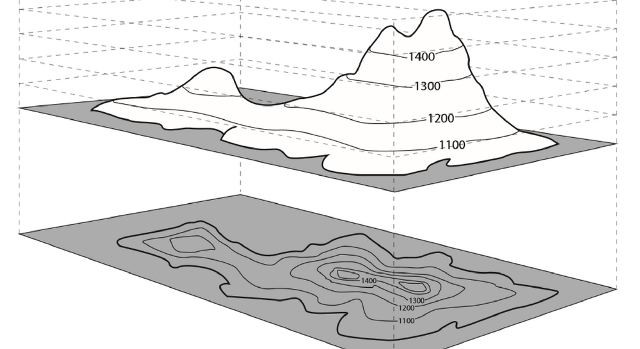
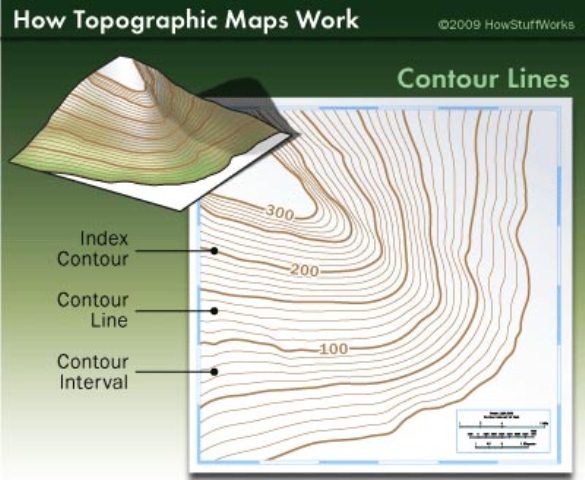
Contour lines connect a series of points of equal elevation and are used to illustrate relief on a map. They show the height of ground above mean sea level (MSL) either in meters or feet and can be drawn at any desired interval. For example, numerous contour lines that are close to one another indicate hilly or mountainous terrain; when further apart they indicate a gentler slope; and when far apart they indicate flat terrain.

topographic map definition

Topographic map scale

What is scale? Topographic map definition.

Maps are made to scale. In each case, the scale represents the ratio of a distance on the map to the actual distance on the ground. A standard topographic map is produced at 1:50000, where 2 cm on the map represents 1 km on the ground.

Medium-scale maps (e.g. 1:50 000) cover smaller areas in greater detail, whereas small-scale maps (e.g. 1:250 000) cover large areas in less detail.
A 1:250 000 scale national topographic system (NTS) map covers the same area as sixteen 1:50 000 scale NTS maps.

Measure distance on map

Topographic map definition: How do I measure distance on a map?

Use the scale bar found at the bottom of every NRCan topographic map to determine distances between points or along lines on the map sheet. Use the secondary division on the left of the scale bar for measuring fractions of a kilometer.

Topographic map definition: What is a grid?

A grid is a regular pattern of parallel lines intersecting at right angles and forming squares; it is used to identify precise positions. To help you locate your position accurately on the surface of the Earth (or map sheet), topographic maps have two kinds of referencing systems:

  • universal transverse Mercator (UTM) projection (easting/northing)
  • geographic: degrees and minutes (longitude/latitude)

The projection used for topographic maps is UTM.

The UTM grid is a square grid system of lines depicted on maps and based on the transverse Mercator projection. It can be used to accurately locate the position of features on the map by distance or direction. To express your location in grid coordinates or geographic coordinates, read the following section.

topographic map definition

what features are shown on a topographic map?

Topographic map latitude longitude: How can I find or express a location on a map?

You can find or express a location on a map by using geographic coordinates (longitude, latitude) or by using UTM grid coordinates (easting, northing).

Geographic coordinates are expressed in degrees, minutes and seconds and can be determined on the map by using the longitude and latitude graticules placed along the edges of the map.

Latitude graticules are placed along the east and west edges of the map and longitude graticules are placed along the north and south edges of the map. The longitude and latitude of your location can be determined by projecting your location to the map edges and then by reading the corresponding latitude and longitude values.

UTM grid coordinates are expressed in meters and can be determined on the map by using the UTM grid lines. These grid lines are equally spaced horizontal and vertical lines superimposed over the entire map.

The coordinate value for each grid line can be found along the edge of the map. Northing values can be read along the east or west edges of the map and easting values can be read along the north or south edges of the map. The easting and northing of your location can be determined by projecting your location to the nearest horizontal and vertical grid lines and then reading the corresponding easting and northing values.

GPS latitude and longitude

How can I determine where I am on a map using a GPS receiver?

If you have a GPS receiver, your location can be determined very quickly. This satellite receiving system displays a position in terms of latitude, longitude, and height, providing you with precise coordinates for map reference. (Some receivers also provide direct conversion of position to a selected map grid such as UTM.)

With this GPS coordinate, you can then use the geographic or UTM grid reference system on the map to determine where you are

How can I determine where I am on a map without using a GPS?

If you do not have a GPS receiver, identify as many features around you as you can, man-made or natural, and locate those same features on your map. Then orient the map, in relation to yourself, so that its orientation corresponds to the ground features that you have identified. If this is difficult to do, use a compass to help you orient the map to north and try again to identify surrounding features.

By estimation, or by using a compass, take bearings to the known features and then from the known features, plot the bearing lines. The intersection of these lines should indicate your location.

topographic map definition

How to navigate with a compass and a topographic map?

Navigating by compass requires determining bearings with respect to true or grid north from a map sheet and converting them to magnetic bearings for use with a compass.

One way of doing this is described in the following steps:

  1. Place the compass on the map with the direction-of-travel arrow pointing along the desired line of travel.
  2. Rotate the compass dial so that the parallel lines within the capsule line up with the grid lines on the map. Convert the grid bearing to a magnetic bearing by using the information given (as in the accompanying diagram) on the map sheet. If the declination is west, add it to the grid bearing; if declination is east, subtract it from the grid bearing
  3. Adjust the dial to read the value of the magnetic bearing opposite the direction-of-travel arrow. Make certain to account for the difference between grid north and true north.
  4. Now pick up and rotate the whole compass until the red end of the needle points to the north marker on the dial. The direction-of-travel arrow on the compass card will point to your destination. Choose a landmark in that direction and walk toward it.
topographic map definition

Topographic map definition

What is a topographic map?

A topographic map is a detailed and accurate illustration of man-made and natural features on the ground such as roads, railways, power transmission lines, contours, elevations, rivers, lakes and geographical names.

What information is on a topographic map?

Topographic maps identify numerous ground features, which can be grouped into the following categories:
-Relief: mountains, valleys, slopes, depressions as defined by contours
-Hydrography: lakes, rivers, streams, swamps, rapids, falls
-Vegetation: wooded areas
-Transportation: roads, trails, railways, bridges, airports/airfield, seaplane anchorages

Is a topographic map similar to a road map?

Both types of maps show roads, water features, cities, and parks, but that’s where the similarity ends.
-Topographic maps show contours, elevation, forest cover, marsh, pipelines, power transmission lines, buildings and various types of boundary lines such as international, provincial and administrative, and many others.
-Topographic maps show a universal transverse Mercator (UTM) grid, allowing the user to determine precise positions. In basic terms, topographic maps allow the user to see a threedimensional landscape on a two-dimensional surface.

How can I determine where I am on a map using a GPS receiver?

If you have a GPS receiver, your location can be determined very quickly. This satellite receiving system displays a position in terms of latitude, longitude, and height, providing you with precise coordinates for map reference.

What is a topographic map used for?

A topographic map is a detailed and accurate two-dimensional representation of natural and human-made features on the Earth’s surface. These maps are used for a number of applications, from camping, hunting, fishing, and hiking to urban planning, resource management, and surveying.

What features are shown on a topographic map?

Like General Reference Maps, Topographic Maps are a summary of the landscape and show important physical (natural and man-made) features in an area. The primary difference is that they show an elevation in detail. Characteristics of topographic maps include: they show elevation using contour lines.

What is a topological map?

In cartography and geology, a topological map is a type of diagram that has been simplified so that only vital information remains and unnecessary detail has been removed. These maps lack scale, and distance and direction are subject to change and variation, but the relationship between points is maintained.

what is a topographic map used for?

Topographic maps are maps at large and medium scales that incorporate a huge variety of information. The basic coverage is based on measurements made in the field and/or from aerial photographs. Derived topographical maps are prepared by reduction and generalization from the original basic maps.
All components of a topographic map at a specified scale are of equal importance: water, terrain, communication, built-up areas, vegetation, etc., as well as the lettering of place-names and geographical and cultural features.

More on this story

Types of Topographical Survey

While most people think of land surveys in the most basic sense—that is, the drawing of the boundaries of property—there are actually many different ways of surveying that service many different industries.

Topographic Survey

Surveying has to do with the determination of the relative spatial location of points on or near the surface of the earth.

Heavy Equipment Rental

Heavy Equipment Rental: Rental is a prominent and growing model in the construction business. The development of the rental industry in new markets require a certain level of trust in a country and in society. Rental agreements, in the end, are based on trust that the renter is not stealing the equipment.

During the study, it was identified that the few large construction companies, who still have their own equipment fleet, operate it through a division or a subsidiary which acts much like a rental company.

The rental business model is used to efficiently manage the fleet, but the reason to still own is often attributed to the higher confidence of always getting what is needed.

Heavy Equipment Rental

Heavy machinery rental

Equipment rental, also called plant hire in some countries, is a service industry providing mostly machinery, equipment and tools of all kinds and sizes (from earthmoving to powered access,
power generation to hand-held tools) for a limited period of time to the final users.

Rental Association defines equipment rental as written in Statistical classification of economic activities: “Renting of construction and civil engineering machinery and equipment without operator”.

However, the definition of equipment rental is not universal. For example, the American Rental Association (ARA) includes in it also party and event equipment rental in addition to construction and industrial equipment rental, and general tool rental. The final users are mainly construction contractors but also industry, public entities, and individual customers.

According to ARA total North American equipment rental revenue in 2015 was $38 billion. Out of this, construction and industrial equipment had the largest share with $22.3 billion, the general tool segment $8.5 billion, and the party and event segment contributed $2.5 billion.

Numbers by European Rental Association (ERA) declare that in the EU-27 and EFTA countries a total rental turnover in 2013 was € 22.63 billion (European Rental Association, 2014).

Heavy Equipment Rental

Equipment rental industry

The equipment rental industry is a relatively new one. The first mentions are from North America at the beginning of the 20th century. The American Rental Association was founded in 1955 (Roth et al., 2007). Europe followed a few decades later as many still thriving companies were established in the 50s and 60s such as Cramo and Loxam (Loxam, 2013; Rakentajain Konevuokraamo, 2003).

The European Rental Association was founded in 2006 (European Rental Association, 2014).

In Finland, the pioneer of construction equipment rental was Rakentajain Konevuokraamo which was founded in 1953 to serve the post-war reconstruction.

Heavy Equipment Rental

Heavy equipment fleet management

The management of heavy construction equipment is a difficult task. Equipment managers are often called upon to make complex economic decisions involving the machines in their charge. These decisions include those concerning acquisitions, maintenance, repairs, rebuilds, replacements, and retirements.

The equipment manager must also be able to forecast internal rental rates for their machinery. Repair and maintenance expenditures can have significant impacts on these economic decisions and forecasts.

Construction equipment is a high cost of capital investment necessary for the successful existence of a private construction company.

The highest impact cost factor other than the initial purchase investment is the expenses related to maintenance and repair. As the equipment ages, the ownership costs decrease and the operating expenses, increase as the maintenance and repair requirements grow.

Both private and public entities desire to manage this high capital investment for the optimization of a perceived profit.

Heavy Equipment Rental

Rent vs buy equipment analysis

This article recommends a decision support model that can be used by private and public entities alike to determine the best fit acquisition method between rent-buy and guidance for profitability optimization.

Methods of life cycle cost estimating and decision methods were researched and compared. Data was acquired from equipment rental companies, private construction companies.

  • This data was analyzed to select the appropriate decision factors and develop the Construction Equipment Profitability Optimization Model.
  • This model can be implemented by small private construction companies with minimal overhead and a small charging base, and a public entity.
  • The most common method of deciding whether to rent-buy is by comparison of the calculated hourly costs of the different methods for the same piece of equipment.
  • Though not considered within this study, the same cost comparison could be applied to selecting the highest benefit-cost ratio equipment for acquisition.
  • Tool and equipment rental can save construction company money for storage space, maintenance or investment in equipment.

Successfully operating an equipment rental company presents a unique set of challenges not unlike manufacturing or retail sales. However, there is still the need to maintain the usual accounting and customer information common to all companies. Companies that own more than just a few pieces of rental equipment need an efficient operational data system for all operations. They also need a computer system that can be used by every employee handling transactions and is involved in the company’s financial matters.

Heavy Equipment Rental

Heavy equipment rental status

Besides inventory control, accounting and customer data, there are the additional tasks of monitoring rental equipment status. The status of each rental item needs to be known:

  • Is the equipment item available or rented?
  • Who is renting a piece of equipment or where is it currently located?
  • Is an item planned to, or currently undergoing maintenance or repairs?
  • For a multi-location enterprise, what equipment is at each location?
  • Does the equipment have recommended components or is it a single object?
  • Are the items managed as a fixed asset before it is rented to the customer?
  • What is the most profitable piece of equipment in the inventory?
  • These are only some of the specific data referencing tasks for an equipment rental company.
Heavy Equipment Rental

Heavy equipment rental rates

Innovation is often recognized as one of the leading methods of reducing costs for modern businesses (not to mention the fuel for breakthrough products and services that lead to revenue and profit gains). Across the industrial spectrum, people are doing more with less while, at the same time, working safer and with fewer repetitive strain injuries.

But technology can be cost-prohibitive, a fact that is especially true of heavy equipment. This restraint leads many buyers toward used machinery, multifunction equipment, and alternative means of financing – but not all in the same measure.

To better understand the exact needs and motivating factors of those interested in heavy equipment, conduct the first two parts of an ongoing survey, polling a comprehensive and diverse group of buyers from 2011 through 2014.

We addressed the types of machinery and class sizes currently in demand, the specific features that are driving their popularity, and financing preferences.

Providing decision-makers with an in-depth look at past purchase activity and insight into future trends, analyzed inquiries related to the financing and condition preferences of the following heavy construction machinery:

  • Backhoe Loaders
  • Bulldozers
  • Compact Track Loaders
  • Excavators
  • Rough Terrain Forklifts
  • Skid Steer Loaders
  • Wheel Loaders
Heavy Equipment Rental

Construction equipment rental

For the above dates, respondents were asked the same two questions regarding their purchasing preference:

  • How do you plan to finance your machine?
  • Do you have a preference for a new or used machine?

Professionals within construction and equipment financing circles are optimistic that local non-residential construction projects will continue to increase in number in the final months.

Notably, the “Optimism Quotient” (the survey’s main standard for gauging the outlook of construction industry executives) is at a historic high of 124, up 18 points from 2013 and up 42 points from the recession low in 2009. This rate of growth is driving an increase in heavy equipment use. But as we discovered, that does not mean purchase. Nor did all of the previously-mentioned machines hold onto their popularity among industrial consumers.

Our survey uncovered two notable shifts. The first is a drive toward rental equipment.

Heavy Equipment Rental

Equipment rental companies

Companies and individuals continue to make use of multiple options when financing heavy equipment, including leases and rentals as well as outright purchases on wheel loaders and similar machines. Often mixing and matching finance options, such as renting before purchase, financial alternatives in combination with environmental regulations were shown to impact the condition and type of machine the buyer would be acquiring.

With only three exceptions (skid steer loaders, excavators, and rough terrain forklifts), rental preference soared in popularity across the board among our survey respondents. One notable example is an increase of 400% for consumer interest in renting compact track loaders.

Track loaders are also at the center of the second trend we spotted: a jump in requests for multifunction equipment adaptable to a variety of tasks. Increasingly preferred for the cost-saving versatility they provide, compact track loaders are being used to replace larger single-function items like bulldozers.

In our survey, compact loaders took a leap in popularity among buyers (up 69.6%) due in large part to their ability to accommodate an extensive selection of tools and accessories. Notably, there was also a 52.8% decrease in the number of bulldozer requests between parts one and two of our survey, dropping from 2,200 requests in part one to 1,050 in part two.

These are just a few of the examples we found in the equipment analyzed, encompassing both full-size and compact models. Overall, individual products have seen drastic fluctuations due to a number of economic, industrial, and technological changes affecting these purchase decisions.

Heavy Equipment Rental

Heavy Equipment Rental

What is the equipment rental?

Equipment rental, also called plant hire in some countries (in the UK for instance), is a service industry providing machinery, equipment, and tools of all kinds and sizes (from earthmoving to powered access, from power generation to hand-held tools, etc.) for a limited period of time to final users.

How do you price rental equipment?

To calculate a rental, you would multiply the total cost of a piece of equipment x 5%/month x 13 x 80% to arrive at the estimated annual rental dollars a rental company wants to achieve. By doing this, they would generate a 35% to 40% gross profit, which includes maintenance, insurance and the limited fuel they fund.

Do I need a license to rent an excavator? Do you need an excavator license?

The short answer is no, but it’s not that easy. While you no longer need to possess an excavator license to operate an excavator for typical excavation jobs, you will need to prove competency in way of certification (DIY use of an excavator on private property is an exception to this)

What is the hourly rate for excavation?

Professional excavators rent themselves out by the hour or subcontracted by the project. Rates can run anywhere from $100 to $180 an hour for a machine and operator. These rates are going to vary greatly depending on the market factors in your location.

How much is it to rent a bulldozer?

If you need to rent an 80 hp bulldozer on a weekly basis, this will cost you around $1,540 and the monthly rate for the same bulldozer will be around $4,600. If you want an 80 hp bulldozer with wide tracks, this will cost you $630 for a daily rental, $1,700 for a weekly rental and $5,000 for a monthly rental.

How do you calculate ROI on rental equipment?

Return on investment (ROI) is an indicator of the profits the business will earn from its investment and is calculated by dividing the net income generated by the equipment by the cost of the investment. The resulting number, expressed as a percentage, can be a good indicator of whether the investment is worth making.

The most read

Heavy Equipment Transport

Unlike shipping standard freight, heavy equipment transport requires special handling, oversize load permits, and special freight carriers.

More on this story

Heavy Equipment Hauling

Consider carefully all your options for hauling your construction equipment. Use too much trailer, and you’re wasting money. Skimp on your trailer choice, and you risk a big headache.